5
#000000
#FFFFFF
To donate by check, phone, or other method, see our More Ways to Give page.
Daily news & progressive opinion—funded by the people, not the corporations—delivered straight to your inbox.

Our right to have a say in what comes next is on the line. We have an opportunity to demand a future that puts our families and caregivers first.
This country depends on caregivers, but too often it fails the very people holding our families and communities together. As we head into the midterms, we have the chance to make our voices heard on the policies that affect our lives and families’ futures.
A 2025 AARP and National Alliance for Caregiving survey found that 63 million Americans identify as caregivers—nearly 50% more than the decade prior. That’s millions of people raising children, caring for aging parents, supporting loved ones with disabilities, all while balancing that labor with jobs and bills of their own. Caregiver needs and experiences deserve to be represented in the decisions we make at the ballot box.
Both of us are parents (one of us is a mother to six beautiful children and leads an advocacy organization and the other is a father and maternal health advocate).
Caregivers deserve a voice in the decisions that shape our lives, but exercising that right can be difficult when we’re already stretched thin.
We understand personally and professionally that the burden of caregiving is not shared equally, that mamas are expected to do more with less. There is an absolute need for fathers to do more as engaged parents. Black mamas make up nearly 40% of caregivers in the US. Yet, Black women continue to die from pregnancy-related causes at three times the rate of our white counterparts. When mothers lack support, the whole family feels it.
These inequities are not inevitable. They reflect decisions about whose health, time, and communities our systems prioritize—and whose needs are overlooked. Those priorities are shaped by the people we elect as leaders and the policies they enact.
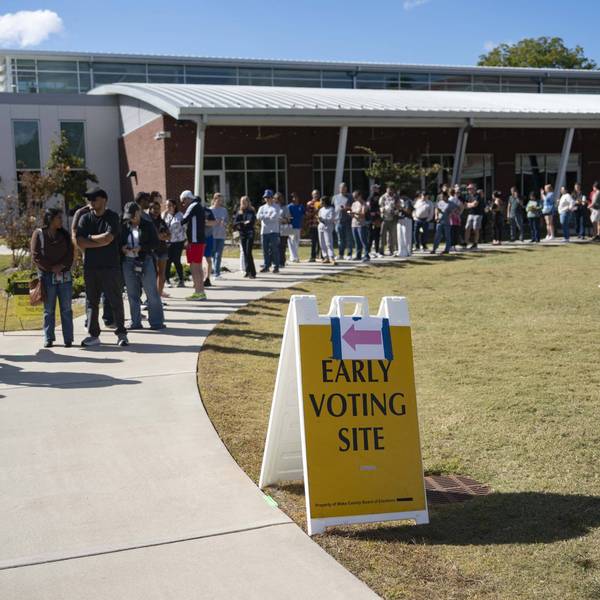
As we head into the midterm elections, we cannot afford to let confusion, misinformation, or intimidation efforts stop us from making our voices heard. For parents and caregivers, these are not abstract policy fights. They are about whether we have a say in the decisions that determine our access to affordable childcare, quality healthcare, and the support we deserve.
That’s what we mean when we say care is on the ballot this November. Our right to have a say in what comes next is on the line. We have an opportunity to demand a future that puts our families and caregivers first.
Care is about more than what happens in a doctor’s office. It is whether we can afford groceries, find childcare, and take time off for a sick loved one. It is whether moms receive support before, during, and after pregnancy, and whether dads have the resources to be the parents they want to be. And it is whether our children have the tools they need to not only survive, but thrive.
From pregnancy through postpartum, care should be full-spectrum, comprehensive, and supportive. It should protect maternal health, provide direct cash during and after pregnancy, offer support to fathers, and help care for our kids while we work to put food on the table.
Caregivers deserve a voice in the decisions that shape our lives, but exercising that right can be difficult when we’re already stretched thin. We should not have to navigate a maze just to exercise our right to vote while juggling the demands of caring for our families. And we cannot hold elected officials accountable if we are shut out of the process.
Yet, changing voting rules are making it harder to understand when, where, and how to cast a ballot. From new mail-in voting shifts and voter ID requirements to redistricting efforts and the gutting of federal protections under the Voting Rights Act, these changes create additional uncertainty for busy families and caregivers—especially Black voters and other historically marginalized communities who have long faced barriers to the ballot. We cannot allow these barriers to deepen or history to repeat itself.
Every eligible voter deserves to cast a ballot free from intimidation, with confidence that their vote is private, and that their voice will be counted. Our democracy works best when everyone has a free and fair chance to participate.
Moms and dads alike know what it takes to care for what matters. Now is the time to bring the same determination to the ballot box.
This country and this world are at a monumental crossroads. US voters have an opportunity to beat back the forces of fascism and confront the billionaires who are rigging the economy, our media system, and our democracy, making it increasingly impossible for ordinary people to get by. We’re not just talking about the election. We’re talking about what must be done once these fascist elements are vanquished from power. We need a bolder set of solutions than what either major party has so far been willing to offer and a working-class movement ready to fight like hell for it. Trump didn't emerge from nowhere. The conditions that fueled MAGA authoritarianism were created by decades of radical neoliberal economic policies and a corrupt political system dominated by corporate interests. They slashed taxes on the super-rich, promising that the benefits would trickle down. They said giveaways to the corporate titans would make life more affordable for the rest of us. It was all bullshit. And when a bitter, betrayed populace searches for someone to blame, right-wing demagogues have little trouble finding scapegoats. People know when they're being lied to, but you won't hear any of this from the corporate media. Only independent journalism—powered and funded by people who believe in building a better world—can deliver truly trustworthy daily news. If you share our vision, please contribute whatever you can to sustain our work. |
This country depends on caregivers, but too often it fails the very people holding our families and communities together. As we head into the midterms, we have the chance to make our voices heard on the policies that affect our lives and families’ futures.
A 2025 AARP and National Alliance for Caregiving survey found that 63 million Americans identify as caregivers—nearly 50% more than the decade prior. That’s millions of people raising children, caring for aging parents, supporting loved ones with disabilities, all while balancing that labor with jobs and bills of their own. Caregiver needs and experiences deserve to be represented in the decisions we make at the ballot box.
Both of us are parents (one of us is a mother to six beautiful children and leads an advocacy organization and the other is a father and maternal health advocate).
Caregivers deserve a voice in the decisions that shape our lives, but exercising that right can be difficult when we’re already stretched thin.
We understand personally and professionally that the burden of caregiving is not shared equally, that mamas are expected to do more with less. There is an absolute need for fathers to do more as engaged parents. Black mamas make up nearly 40% of caregivers in the US. Yet, Black women continue to die from pregnancy-related causes at three times the rate of our white counterparts. When mothers lack support, the whole family feels it.
These inequities are not inevitable. They reflect decisions about whose health, time, and communities our systems prioritize—and whose needs are overlooked. Those priorities are shaped by the people we elect as leaders and the policies they enact.
As we head into the midterm elections, we cannot afford to let confusion, misinformation, or intimidation efforts stop us from making our voices heard. For parents and caregivers, these are not abstract policy fights. They are about whether we have a say in the decisions that determine our access to affordable childcare, quality healthcare, and the support we deserve.
That’s what we mean when we say care is on the ballot this November. Our right to have a say in what comes next is on the line. We have an opportunity to demand a future that puts our families and caregivers first.
Care is about more than what happens in a doctor’s office. It is whether we can afford groceries, find childcare, and take time off for a sick loved one. It is whether moms receive support before, during, and after pregnancy, and whether dads have the resources to be the parents they want to be. And it is whether our children have the tools they need to not only survive, but thrive.
From pregnancy through postpartum, care should be full-spectrum, comprehensive, and supportive. It should protect maternal health, provide direct cash during and after pregnancy, offer support to fathers, and help care for our kids while we work to put food on the table.
Caregivers deserve a voice in the decisions that shape our lives, but exercising that right can be difficult when we’re already stretched thin. We should not have to navigate a maze just to exercise our right to vote while juggling the demands of caring for our families. And we cannot hold elected officials accountable if we are shut out of the process.
Yet, changing voting rules are making it harder to understand when, where, and how to cast a ballot. From new mail-in voting shifts and voter ID requirements to redistricting efforts and the gutting of federal protections under the Voting Rights Act, these changes create additional uncertainty for busy families and caregivers—especially Black voters and other historically marginalized communities who have long faced barriers to the ballot. We cannot allow these barriers to deepen or history to repeat itself.
Every eligible voter deserves to cast a ballot free from intimidation, with confidence that their vote is private, and that their voice will be counted. Our democracy works best when everyone has a free and fair chance to participate.
Moms and dads alike know what it takes to care for what matters. Now is the time to bring the same determination to the ballot box.