SUBSCRIBE TO OUR FREE NEWSLETTER
Daily news & progressive opinion—funded by the people, not the corporations—delivered straight to your inbox.
5
#000000
#FFFFFF
To donate by check, phone, or other method, see our More Ways to Give page.
Daily news & progressive opinion—funded by the people, not the corporations—delivered straight to your inbox.
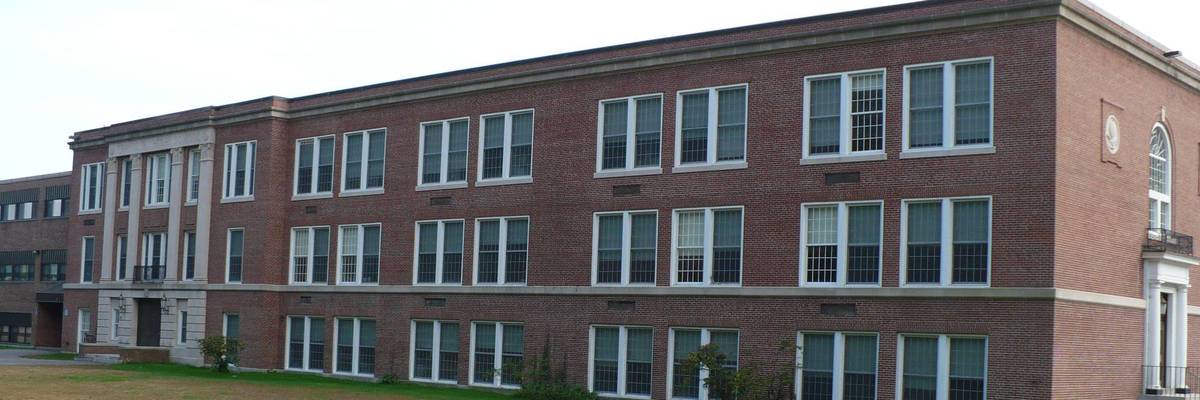
Franklin High School is pictured in Franklin, New Hampshire.
Our students deserve so much better than the chaos the legislature has thrown at our public schools. It’s vital that communities across New Hampshire vote no on the tax cap on November 3.
On Election Day, New Hampshire residents will face a ballot initiative that aims to place a tax cap on every public school district in the state. Similar proposals to cap property taxes or eliminate them for certain property owners are on the ballots this November in multiple states. But regardless of where the initiatives are being considered, if successful, the financial consequences will threaten school sports, extracurriculars, and even basic academic programming statewide. In the case of New Hampshire, the consequences will be especially negative to schools, families, and children.
At least since the Covid-19 pandemic, New Hampshire school districts have struggled to stay afloat. In September 2026, the town of Milton, New Hampshire was shocked by revelations of a $2.5 million hole in its school district’s budget. Nearby, the Farmington School District was forced to reduce teaching positions in the 2025-2026 school year due to a growing budget deficit. In the western part of the state, Claremont schools cut teaching positions and students washed cars to raise funds. At the same time, New Hampshire launched a universal voucher program to the tune of $102 million, sending a record amount of public money to private schools.
Historically, New Hampshire has largely left local communities to fund public schools on their own. In the 2024-2025 academic year, according to data from the National Education Association, New Hampshire ranked 50th in the share of state revenue contributed to public schools, at 28%. While some argue that New Hampshire has maintained level funding in real tax dollars, the state has simply not made budget increases on pace with rising costs, leaving local taxpayers holding the bill.
The new approach intrudes on that time-honored process of collective decision-making through deliberation. Instead, it places school funding into the hyper-partisan environment of the midterms.
In 2026, a superior court ruled the state had not been fulfilling its constitutional responsibility to provide adequate funding to public schools. New Hampshire Attorney General John Formella is appealing the case to the state’s supreme court, where he is also attempting to overturn the landmark 1993 case that established the state’s responsibility to provide fair funding to all public schools.
In this context, a local tax cap for schools would be detrimental for students and communities in general. While New Hampshire does not allow for statewide referendums on its ballots, legislators supporting the tax cap circumvented this with clever legislation. In 2025, Republican Gov. Kelly Ayotte signed HB 1300 into law, a measure that automatically places a tax cap question on the ballot of every municipality in the state in 2026 and in 2028.
The ballot measure was challenged on multiple fronts in court, including on the lack of clear constitutional standing and on account of being difficult to understand. The state supreme court, which has been plagued by scandals—including the chief justice’s resignation in September over an ethics violation—ultimately rejected these challenges.
The tax cap will require a three-fifths approval of local voters to go into effect. If enacted, it would limit local control of the schools with a tax cap that is linked to the Consumer Price Index (CPI), which, by nature of being tied to non-salary costs, is unpredictable on a year-to-year basis and can easily be outpaced by school costs, especially with rising fuel prices. It would also impose a limit on administrative spending as a proportion of the total school budget.
The effort to institute a tax cap defies New Hampshire’s long history of local control. It’s a tradition that brings residents of towns across the state together for town halls each spring, where school budgets are debated publicly. The process honors the citizens’ right to petition and write warrant articles that meet the specific needs of the locality, including placing limits on spending, if that is the collective will of the people. The new approach intrudes on that time-honored process of collective decision-making through deliberation. Instead, it places school funding into the hyper-partisan environment of the midterms.
Marianne Doane, who has taught in Milton for more than 40 years, is dedicated to its youth. As the president of the local teachers association, Doane has worked across differences to build support for her students and their education. She has organized babysitting services during town meetings to help provide childcare for parents who otherwise might not be able to participate. She has encouraged families to vote by sponsoring civic engagement programming for children outside of polling places. One year, she facilitated an activity for kids to design “I Voted” stickers and handed them out at the polls. In an interview, Doane shakes her head in disbelief about the tenuous position of the schools in her small town.
“Right now if the tax cap passes, the oil bill is $51,000 and the anticipated budget for special education is $500,000,” she says. “In order to come up with that amount, we are looking at losing 12 teachers. We only have 12 teachers at the elementary school. Who’s going to be left to teach?”
Down the road in Farmington, school administrator and veteran classroom teacher Kimberly McGlinchey is running for state representative. Her campaign is centered on defending public schools and addressing the school funding crisis. The district she seeks to represent is split between two towns as part of a legislative gerrymander.
Undeterred by the challenges of running a school and running for office, McGlinchey is clear-eyed about what the tax cap will mean for students.
“The problem with the school property tax cap is it does not consider local needs,” McGlinchey tells The Progressive. “The inflation rate of fuel, food, and materials has increased far more than the CPI. This means there will be a direct impact on programming and staffing that affects student learning and instruction, depleting the quality of New Hampshire students’ education. Limiting the funds without proper budgeting in relationship to needs will ultimately leave schools shortchanged.” McGlinchey has taken this message to the streets, most recently at the town center.
Some communities, like the town of Franklin, New Hampshire, have had tax caps in place for decades. Franklin teacher and union leader Jennifer Weaver says the town struggles to recruit and retain teachers, adding another burden to the long-term staff.
“We’ve been under a tax cap since the 1980s,” Weaver says. “Our [current] tax cap is strangling our community and school.”
Weaver’s warning about the harm of tax caps must be heeded before it’s too late. It’s all part of a multipronged attack against public schools over the last six years that includes the expansion of school voucher programs that funnel public money to private schools.
Our students deserve so much better than the chaos the legislature has thrown at our public schools. It’s vital that communities across New Hampshire vote no on the tax cap on November 3, and learn more about the systematic effort underway to erode public education.
This country and this world are at a monumental crossroads. US voters have an opportunity to beat back the forces of fascism and confront the billionaires who are rigging the economy, our media system, and our democracy, making it increasingly impossible for ordinary people to get by. We’re not just talking about the election. We’re talking about what must be done once these fascist elements are vanquished from power. We need a bolder set of solutions than what either major party has so far been willing to offer and a working-class movement ready to fight like hell for it. Trump didn't emerge from nowhere. The conditions that fueled MAGA authoritarianism were created by decades of radical neoliberal economic policies and a corrupt political system dominated by corporate interests. They slashed taxes on the super-rich, promising that the benefits would trickle down. They said giveaways to the corporate titans would make life more affordable for the rest of us. It was all bullshit. And when a bitter, betrayed populace searches for someone to blame, right-wing demagogues have little trouble finding scapegoats. People know when they're being lied to, but you won't hear any of this from the corporate media. Only independent journalism—powered and funded by people who believe in building a better world—can deliver truly trustworthy daily news. If you share our vision, please contribute whatever you can to sustain our work. |
On Election Day, New Hampshire residents will face a ballot initiative that aims to place a tax cap on every public school district in the state. Similar proposals to cap property taxes or eliminate them for certain property owners are on the ballots this November in multiple states. But regardless of where the initiatives are being considered, if successful, the financial consequences will threaten school sports, extracurriculars, and even basic academic programming statewide. In the case of New Hampshire, the consequences will be especially negative to schools, families, and children.
At least since the Covid-19 pandemic, New Hampshire school districts have struggled to stay afloat. In September 2026, the town of Milton, New Hampshire was shocked by revelations of a $2.5 million hole in its school district’s budget. Nearby, the Farmington School District was forced to reduce teaching positions in the 2025-2026 school year due to a growing budget deficit. In the western part of the state, Claremont schools cut teaching positions and students washed cars to raise funds. At the same time, New Hampshire launched a universal voucher program to the tune of $102 million, sending a record amount of public money to private schools.
Historically, New Hampshire has largely left local communities to fund public schools on their own. In the 2024-2025 academic year, according to data from the National Education Association, New Hampshire ranked 50th in the share of state revenue contributed to public schools, at 28%. While some argue that New Hampshire has maintained level funding in real tax dollars, the state has simply not made budget increases on pace with rising costs, leaving local taxpayers holding the bill.
The new approach intrudes on that time-honored process of collective decision-making through deliberation. Instead, it places school funding into the hyper-partisan environment of the midterms.
In 2026, a superior court ruled the state had not been fulfilling its constitutional responsibility to provide adequate funding to public schools. New Hampshire Attorney General John Formella is appealing the case to the state’s supreme court, where he is also attempting to overturn the landmark 1993 case that established the state’s responsibility to provide fair funding to all public schools.
In this context, a local tax cap for schools would be detrimental for students and communities in general. While New Hampshire does not allow for statewide referendums on its ballots, legislators supporting the tax cap circumvented this with clever legislation. In 2025, Republican Gov. Kelly Ayotte signed HB 1300 into law, a measure that automatically places a tax cap question on the ballot of every municipality in the state in 2026 and in 2028.
The ballot measure was challenged on multiple fronts in court, including on the lack of clear constitutional standing and on account of being difficult to understand. The state supreme court, which has been plagued by scandals—including the chief justice’s resignation in September over an ethics violation—ultimately rejected these challenges.
The tax cap will require a three-fifths approval of local voters to go into effect. If enacted, it would limit local control of the schools with a tax cap that is linked to the Consumer Price Index (CPI), which, by nature of being tied to non-salary costs, is unpredictable on a year-to-year basis and can easily be outpaced by school costs, especially with rising fuel prices. It would also impose a limit on administrative spending as a proportion of the total school budget.
The effort to institute a tax cap defies New Hampshire’s long history of local control. It’s a tradition that brings residents of towns across the state together for town halls each spring, where school budgets are debated publicly. The process honors the citizens’ right to petition and write warrant articles that meet the specific needs of the locality, including placing limits on spending, if that is the collective will of the people. The new approach intrudes on that time-honored process of collective decision-making through deliberation. Instead, it places school funding into the hyper-partisan environment of the midterms.
Marianne Doane, who has taught in Milton for more than 40 years, is dedicated to its youth. As the president of the local teachers association, Doane has worked across differences to build support for her students and their education. She has organized babysitting services during town meetings to help provide childcare for parents who otherwise might not be able to participate. She has encouraged families to vote by sponsoring civic engagement programming for children outside of polling places. One year, she facilitated an activity for kids to design “I Voted” stickers and handed them out at the polls. In an interview, Doane shakes her head in disbelief about the tenuous position of the schools in her small town.
“Right now if the tax cap passes, the oil bill is $51,000 and the anticipated budget for special education is $500,000,” she says. “In order to come up with that amount, we are looking at losing 12 teachers. We only have 12 teachers at the elementary school. Who’s going to be left to teach?”
Down the road in Farmington, school administrator and veteran classroom teacher Kimberly McGlinchey is running for state representative. Her campaign is centered on defending public schools and addressing the school funding crisis. The district she seeks to represent is split between two towns as part of a legislative gerrymander.
Undeterred by the challenges of running a school and running for office, McGlinchey is clear-eyed about what the tax cap will mean for students.
“The problem with the school property tax cap is it does not consider local needs,” McGlinchey tells The Progressive. “The inflation rate of fuel, food, and materials has increased far more than the CPI. This means there will be a direct impact on programming and staffing that affects student learning and instruction, depleting the quality of New Hampshire students’ education. Limiting the funds without proper budgeting in relationship to needs will ultimately leave schools shortchanged.” McGlinchey has taken this message to the streets, most recently at the town center.
Some communities, like the town of Franklin, New Hampshire, have had tax caps in place for decades. Franklin teacher and union leader Jennifer Weaver says the town struggles to recruit and retain teachers, adding another burden to the long-term staff.
“We’ve been under a tax cap since the 1980s,” Weaver says. “Our [current] tax cap is strangling our community and school.”
Weaver’s warning about the harm of tax caps must be heeded before it’s too late. It’s all part of a multipronged attack against public schools over the last six years that includes the expansion of school voucher programs that funnel public money to private schools.
Our students deserve so much better than the chaos the legislature has thrown at our public schools. It’s vital that communities across New Hampshire vote no on the tax cap on November 3, and learn more about the systematic effort underway to erode public education.