

SUBSCRIBE TO OUR FREE NEWSLETTER
Daily news & progressive opinion—funded by the people, not the corporations—delivered straight to your inbox.
5
#000000
#FFFFFF
To donate by check, phone, or other method, see our More Ways to Give page.
Daily news & progressive opinion—funded by the people, not the corporations—delivered straight to your inbox.
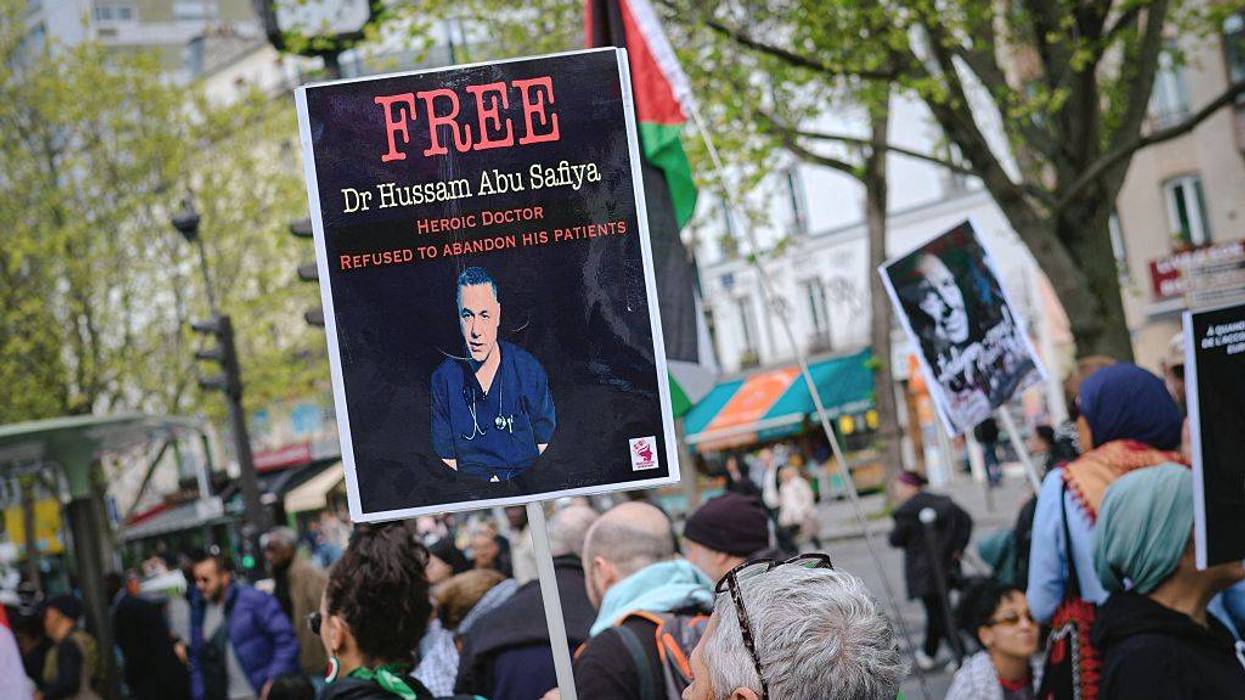
“The international community cannot remain silent while a respected physician is reportedly subjected to harsh conditions, denied adequate medical care, and isolated from the outside world."
A prominent human rights group on Friday sounded alarms upon learning that Dr. Hussam Abu Safiya, director of the Kamal Adwan Hospital in Gaza, has been sent to solitary confinement.
As reported by Haaretz, Physicians for Human Rights Israel (PHRI) said it learned on Thursday that Abu Safiya was moved to solitary confinement this week without any explanation.
According to a report from The Palestine Chronicle, an attorney representing Abu Safiya claimed that his client was placed into solitary confinement in retaliation for appealing his continued detention.
Abu Safiya was first taken into custody by Israeli forces in December 2024 and has been held since then without being charged with any criminal offenses.
In a Friday statement, the Council of American-Islamic Relations said news of Abu Safiya's solitary confinement was "deeply disturbing" and raised "even more urgent concerns about his welfare and basic human rights."
"Congress must demand his immediate release and insist that Israel end the arbitrary detention, abuse, and mistreatment of Palestinian medical professionals and civilians," CAIR added. “The international community cannot remain silent while a respected physician is reportedly subjected to harsh conditions, denied adequate medical care, and isolated from the outside world without any legal justification. Dr. Abu Safiya must be released immediately."
PHRI has for months been raising concerns about Abu Safiya's detention, long before he was transferred to solitary confinement.
While demanding the physician's release in April, for instance, PHRI said Abu Safiya was being held "in harsh conditions, without access to medication or medical care, as his health continues to deteriorate."
A 2025 report from Amnesty International, which has also called for Abu Safiya’s release, said that the Gaza-based physician “was detained in the course of caring for his patients and carrying out his medical duties.”
Amnesty also noted that, prior to his detention, Abu Safiya and other colleagues at the Kamal Adwan Hospital had “provided human rights and humanitarian organizations with reliable information about the health situation” in Gaza, which has been left devastated by years of Israeli attacks that have killed at least 72,000 Palestinians.
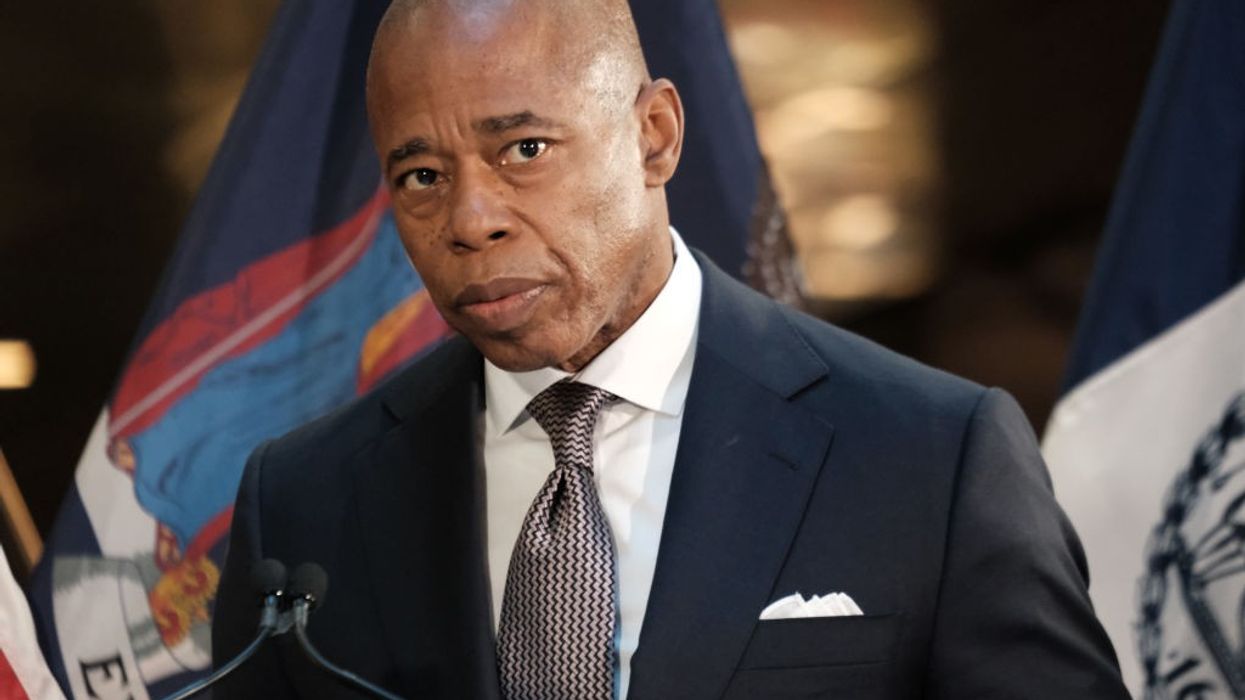
"With this veto, the mayor has condemned New Yorkers to suffer in solitary confinement and isolation, and he did so after the cameras were turned off and backs were turned," the bill's sponsor said.
New York City Mayor Eric Adams vetoed a New York City Council bill on Friday that would have banned the practice of solitary confinement in city jails.
Also on Friday, Adams vetoed another bill that would have increased transparency and oversight of the New York Police Department (NYPD). However, both bills passed the council with more votes than is required to override a veto.
"To recap: Police transparency is good. Solitary confinement is bad. And Mayor Adams is committed to manufacturing controversy where there is none," Brooklyn Borough President Antonio Reynoso wrote on social media in response to the news. "The Mayor shouldn't be spending time sowing dissent on veto-proof bills that will pass regardless of his actions today."
"Solitary confinement is torture. It often results in lasting psychological damage, and undermines public safety both inside and outside New York City's jails."
Solitary confinement is an increasingly controversial practice that has been recognized as torture by the United Nations and human rights groups if it lasts for more than 15 days in a row, according to the New York Civil Liberties Union. Its use at New York's Rikers Island has been linked to at least two recent deaths: Layleen Polanco Xtravaganza, who died after having a seizure while in solitary in 2019 and Kalief Browder, who took his own life after being placed in solitary confinement for two years.
"Solitary confinement is inhumane, and its presence in our city is indefensible," Public Advocate Jumaane Williams, who sponsored the legislation, said ahead of its passage last month. "Committing an infraction in jail can cause you to lose privileges, not basic human rights. People in solitary are isolated, denied human contact and connection, denied support, and come out of these deplorable conditions worse than when they went in—and some don't come out at all."
The bill, 549A, would have required that everyone in jail in New York City be allowed to gather with other inmates for at least 14 hours every day, except during emergency lock-ins or to deescalate conflict, ABC News reported. In those cases, inmates could only be confined for up to four hours.
Adams announced the veto by press release, and not during an earlier press conference when he announced his veto of the police transparency measure, as New York Magazine reported.
"Our administration does not support solitary confinement in our jails, and New York City has not used the practice for years. In fact, we have achieved significant reductions in key indicators of violence in our correction system without solitary confinement," Adams said in a statement. "But despite the misleading nickname, had [the bill] taken effect, the Department of Correction would no longer be able to protect people in custody, or the union workers charged with their safety, from violent individuals. I implore the City Council to work with our administration and follow the federal monitor's guidance to abandon this misguided bill."
Williams criticized the mayor's decision.
"With this veto, the mayor has condemned New Yorkers to suffer in solitary confinement and isolation, and he did so after the cameras were turned off and backs were turned. It's cowardly, weak, shameful, and entirely expected from this version of this mayor," Williams said in a statement.
"I don't think there's a single person in the city outside the mayor's office who thinks the status quo on Rikers right now is good and effective," Williams continued. "The ongoing use of solitary confinement and isolation in New York City—no matter what the administration calls it—is indefensible, and vetoing the ban is inexcusable."
Other city council members and rights groups spoke out against the mayor's action.
Speaker Adrienne Adams and Criminal Justice Chair Sandy Nurse promised to "take the steps to enact this law over the Mayor's veto." The measure passed 39-7, and an override requires 34 votes.
"The Council passed Intro. 549-A to ban solitary confinement with more than a veto-proof majority because it is imperative to make the city's jails safer for those who are detained and staff alike," Adams and Nurse said. "We cannot allow the human rights and safety crisis on Rikers to continue by maintaining the status quo of failed policies and practices."
The #HALTsolitary Campaign thanked Adams and Nurse for promising to override the mayor's veto.
"He's on the wrong side of history, human rights, and public safety," the group, which is led by impacted New Yorkers, posted on social media.
The NYCL also encouraged the city council to pass the legislation.
"Solitary confinement is torture," the group wrote on social media. "It often results in lasting psychological damage, and undermines public safety both inside and outside New York City's jails."
Council members and rights groups also criticized Adams' veto of the NYPD transparency measure—5862A or the "How Many Stops Act,"—which passed by a 35-9 margin.
"The Mayor's veto betrays his stated goal of public safety and harms the Black and Latino communities that bear the brunt of these stops."
This bill would have mandated that New York police officers report on civilian stops and searchers and give more detailed information about vehicle stops and searchers, ABC News explained.
In justifying his veto, Adams said that while the legislation "has good intentions behind it, the bill is misguided and compromises our public safety."
"Our administration supports efforts to make law enforcement more transparent, more just, and more accountable, but this bill will handcuff our police by drowning officers in unnecessary paperwork that will saddle taxpayers with tens of millions of dollars in additional NYPD overtime each year, while simultaneously taking officers away from policing our streets and engaging with the community," he said.
In response, Council Speaker Adams said the council was "prepared to override this veto," issuing a joint statement with Public Safety Chair Yusef Salaam.
"The false narrative that we cannot have transparency is bad for our city, and belies the fact that accountability is vital to improving public safety by increasing trust," Adams and Salaam said. "The Mayor's veto betrays his stated goal of public safety and harms the Black and Latino communities that bear the brunt of these stops."
The NYCLU wrote on social media: "The mayor's veto leaves another stain on an administration that has been winding back checks on hyper-aggressive, biased, and unaccountable policing. We are confident the city council will heed the call of impacted New Yorkers and advocates and override the Mayor's veto."
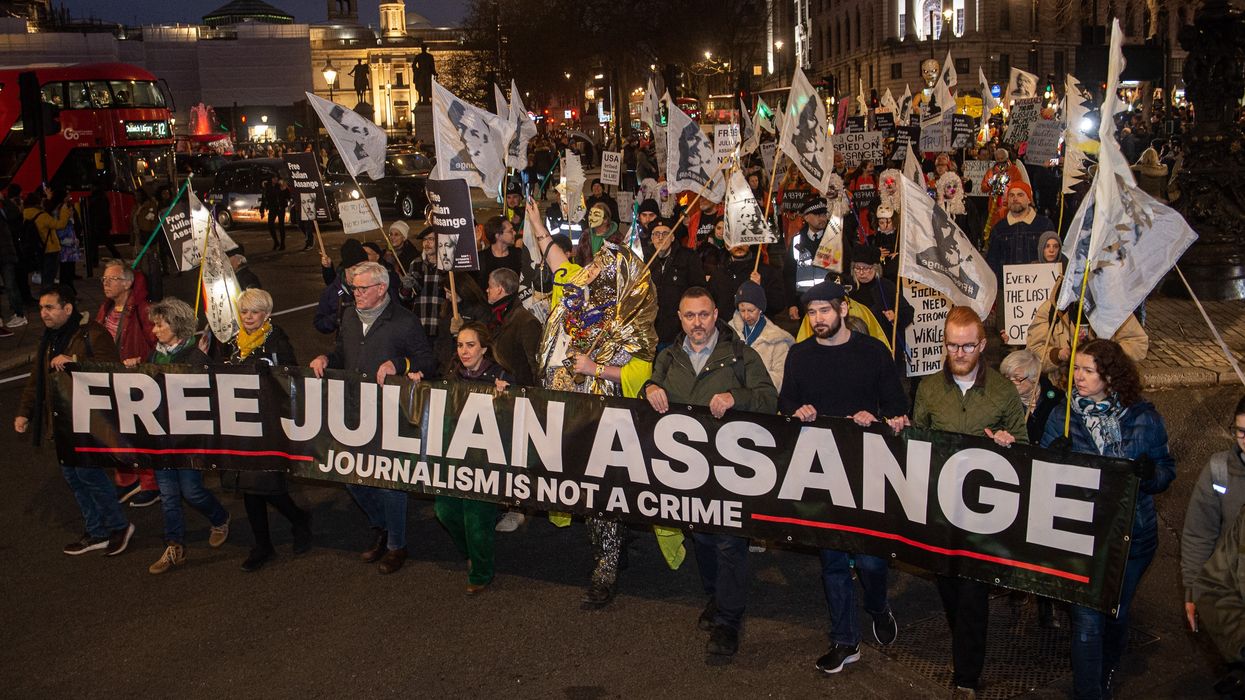
It’s long overdue for the United States to cancel its request for extradition of Julian Assange and for Assange to be able to be free from the bogus charges of the past decade.
President Joe Biden, you defeated Trump, yet your administration has not rolled back all of the evil caused by his administration.
Take the case of journalist Julian Assange.
Under the Obama administration of which you, Biden, were vice president for eight years, journalist and publisher Julian Assange was not prosecuted for publishing the “Collateral Murder” video of the U.S. Army murder by hellfire missile of Reuters reporters nor the classified Afghanistan and the Iraq war files.
It wasn’t Biden’s administration had cooked up the novel legal theory under which Assange was charged—it was the Trump administration.
However, you and the Obama administration did prosecute and won conviction of U.S. Army PFC Chelsea Manning for disclosing those classified materials.
As you will know from being the head of the Senate’s Judiciary Committee, journalists and publishers are protected by the First Amendment which allows them to publish classified materials given to them by whistleblowers. But, the First Amendment does not protect those who release classified information to journalists, like Manning, whom you prosecuted.
Fifty years ago, no U.S. publisher, including The New York Times, Washington Post, Los Angeles Times, or any other newspaper in the U.S. or abroad was prosecuted for publishing the classified history of the U.S. war on Vietnam, the Pentagon Papers.
Daniel Ellsberg, who released the 4,000-page sordid classified tale of U.S. military involvement, fully expected to be prosecuted as he was the one who gave classified information to the media. The Nixon administration’s theft of Ellsberg’s medical records torpedoed Nixon’s attempt at prosecuting Ellsberg. Nixon continued to rail against Ellsberg as “the most dangerous man in America” because he, Nixon, was unable to put Ellsberg in jail.
No publisher in the history of the United States has been prosecuted until the Trump administration came into power. After WikiLeaks and other media published in 2017 “Vault 7,” the most CIA materials about CIA hacking capabilities ever to come into the public domain, Trump’s Attorney General William Barr, at the command of CIA director Mike Pompeo, decided to try a new legal theory, one that had never been used in U.S. history.
CIA director Pompeo described WikiLeaks as a “non-state hostile intelligence service,” and the Department of Justice charged non-U.S. citizen, Julian Assange, with espionage against the U.S. and demanded his extradition from England.
A conviction of U.S. charges of espionage could result in Assange being sentenced to 175 years in prison.
At the time of the U.S. charges, Assange had requested asylum from the Ecuadorian government and had been protected by living in the Ecuadorian Embassy in London for five years.
With a change in Ecuadorian government and under intense pressure from the British and U.S. governments, in April 2019 the new Ecuadorian administration allowed British police to break the embassy’s sovereignty and enter the embassy. London police carried Assange out of the embassy, put him into a police van, and immediately locked him up in the highest security prison in the U.K., Belmarsh Prison.
Prior to the police breaching the Ecuadorian Embassy, Assange had been denied his razor for weeks. His haggard appearance as he was carried out of the embassy was part of an orchestrated negative publicity campaign orchestrated by the British government and, without a doubt, the U.S. government.
For the past for four years and nine months, Assange has been in Belmarsh Prison, a high security prison for those convicted of violent crimes. He has been in solitary confinement for 22 hours a day, a violation of the right not to be tortured, according to former U.N. Special Rapporteur Nils Melzer.
Yet, Assange has not been convicted of any crime. Despite no conviction, he has been incarcerated by the British government on behalf of the U.S. government until extradition proceedings to the U.S. are successful.
Almost three years ago in January 2021, lower court judge Vanessa Baraitser ruled that Assange should be released from Belmarsh Prison. She denied the U.S. request for extradition based on Assange’s mental health, his propensity to commit suicide, and conditions of U.S. prisons.
The U.S. appealed her decision, issuing “diplomatic assurances” that Assange would not be mistreated in a U.S. prison. The High Court, after a two-day hearing in March 2022, accepted those “assurances” and rejected Assange’s appeal. His application to the U.K. Supreme Court to hear the case was then denied. Assange then applied for a new appeal of Baraitser’s legal decisions and the home secretary’s extradition order. His 150-page argument was rejected in a three-page ruling. The appeal of that decision will now take place on February 20 to 21, 2024.
As a former U.S. diplomat, I can guarantee Julian that U.S. “diplomatic assurances” mean absolutely nothing. The U.S. breaks its word to individuals and countries frequently, and the U.S. Department of State has no jurisdiction over the Federal Bureau of Prisons which makes decisions unilaterally about how prisoners are treated.
At the Belmarsh Tribunal held in Washington, D.C. on December 9, 2023, former CIA officer John Kiriakou, who spent nearly two years in federal prison for talking about the CIA’s waterboarding program, the existence of which had been in the public domain for years, said that the guarantees that the State Department had made in court documents were meaningless. He said that the Bureau of Prisons makes its own decisions on whether a person will be in solitary confinement, and the recommendations of the State Department and Department of Justice are disregarded.
The United States has more prisoners in solitary confinement that any other country. In May 2023, the watchdog group Solitary Watch and the advocacy coalition Unlock the Box released a groundbreaking joint report showing that at least 122,840 people are locked daily in solitary confinement in U.S. prisons and jails for 22 or more hours a day.
In October 2023, a group of bipartisan members of the Australian Parliament traveled to the U.S. and lobbied the U.S. government to drop the charges against Assange.
At the end of October, Australian Prime Minister Anthony Albanese visited Washington where he raised the Assange issue in a meeting with Biden and repeated his call for President Biden to bring the matter to a close.
On November 8, 2023, 16 Congresspeople from across the political spectrum signed a letter to President Biden, calling on him to drop all charges and withdraw the extradition request.
In the letter, the members of the U.S. Congress said, “We believe the Department of Justice acted correctly in 2013, during your vice presidency, when it declined to pursue charges against Mr. Assange for publishing the classified documents because it recognized that the prosecution would set a dangerous precedent.”
The letter continued that they are “well aware that should the U.S. extradition and prosecution go forward, there is a significant risk that our bilateral relationship with Australia will be badly damaged.”
What is so ironic is that the Biden administration could immediately withdraw the request for extradition from the U.K. It wasn’t Biden’s administration had cooked up the novel legal theory under which Assange was charged—it was the Trump administration.
The Obama administration, of which Biden was the vice president for eight years, never charged Julian Assange with a crime.
Is it that Biden fears the right-wing Republican party members will call him soft on the Trump-era cooked up “non-state actor” legal theory of espionage?
Surely, the former chair of the Senate’s Judiciary Committee can see through that smear attempt.
It is long past time for U.S. Attorney General Merrick Garland to tell President Biden that the Trump charges against Assange that are the basis for the extradition request are without merit.
It’s long overdue for the United States to cancel its request for extradition of Julian Assange and for Assange to be free from the bogus charges of the past decade.
Call (Comments: 202-456-1111; Switchboard: 202-456-1414) or write the White House and the U.S. Department of Justice today and demand that charges be dropped.
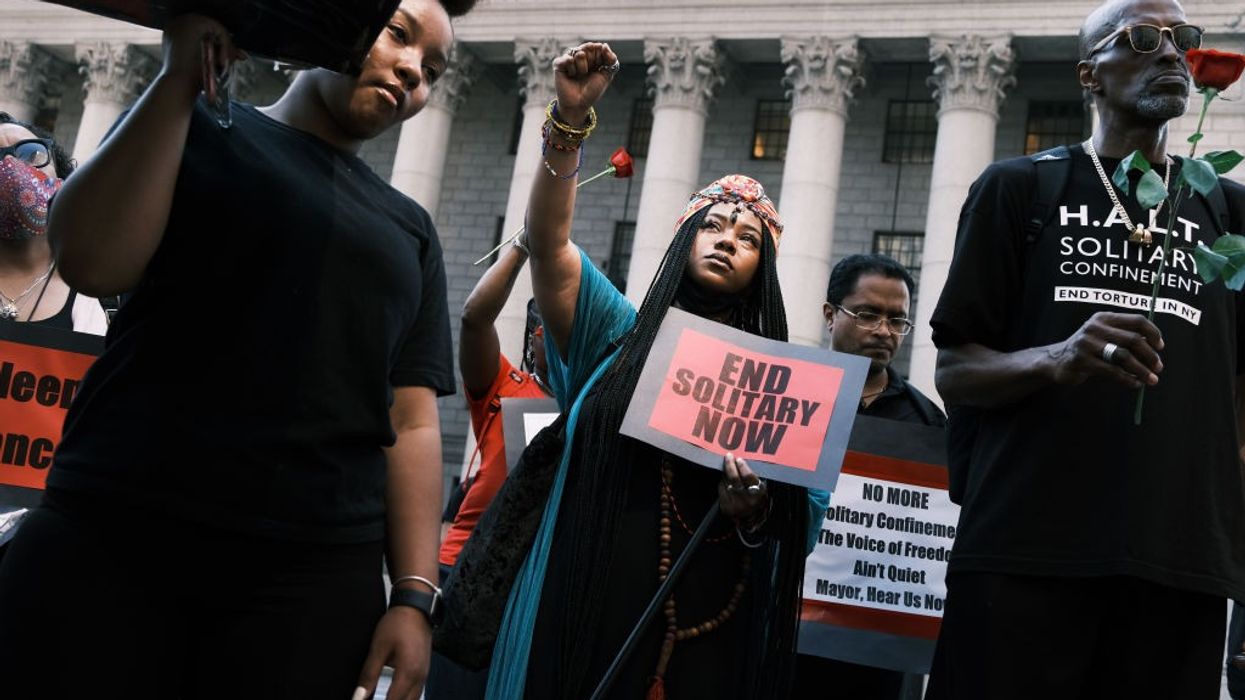
Rep. Cori Bush, who is leading the End Solitary Confinement Act, argues that "we are using taxpayer money to torture people."
The U.S. Supreme Court's three liberal justices issued a scathing dissent this week as the tribunal's right-wing supermajority rejected the appeal of an Illinois inmate with mental illness imprisoned in solitary confinement without access to fresh air for three straight years.
The nation's high court declined to hear the appeal of Michael Johnson, an inmate at Pontiac Correctional Center northeast of Peoria, whose attorneys argued he was being subjected to unconstitutional "cruel and unusual punishment" as he was deprived of fresh air and outdoor exercise while enduring horrific conditions in a tiny, filthy cell.
Justice Ketanji Brown Jackson wrote in a dissent joined by Justices Sonia Sotomayor and Elena Kagan that during three continuous years in solitary, "Johnson spent nearly every hour of his existence in a windowless, perpetually lit cell about the size of a parking space."
"His cell was poorly ventilated, resulting in unbearable heat and noxious odors. The space was also unsanitary, often caked with human waste," the dissent continued. "And because Pontiac officials would not provide cleaning supplies to Johnson unless he purchased them from the commissary, he was frequently forced to clean that filth with his bare hands. Johnson was allowed out of his cell to shower only once per week, for 10 brief minutes."
According to The New York Times:
Mr. Johnson suffered from what the corrections system acknowledged was profound mental illness. He violated countless prison rules, disobeying guards' orders, spitting at them, and damaging property.
As a punishment for those violations, prison authorities took away the hour of exercise that prisoners in solitary were generally afforded five days a week, typically in a small, secured cage outdoors.
"Each yard restriction was imposed for a period of between 30 and 90 days, but the restrictions were stacked such that, in total, Johnson received over three years' worth of yard restrictions," Jackson's dissent noted. "The cramped confines of Johnson's cell prevented him from exercising there. Thus, for three years, Johnson had no opportunity at all to stretch his limbs or breathe fresh air."
"The consequences of such a prolonged period of exercise deprivation were predictably severe," Jackson added. "Most notably, Johnson's mental state deteriorated rapidly. He suffered from hallucinations, excoriated his own flesh, urinated and defecated on himself, and smeared feces all over his body and cell. Johnson became suicidal and sometimes engaged in misconduct with the hope that prison guards would beat him to death."
Responding to the ruling, U.S. Sen. Peter Welch (D-Vt.)
wrote on social media Tuesday that "excessive use of solitary confinement is cruel, violates the Constitution, and doesn't rehabilitate individuals. Disappointing that SCOTUS ducked this case."
While praising the three liberal justices' dissent, Daniel Greenfield, an attorney at the Roderick & Solange MacArthur Justice Center said in a
statement that "three years of 24/7 solitary confinement unrelieved by any opportunity for exercise would have appalled the Founders. It should be no less shocking to us today."
On Tuesday, just a day after the ruling, the Federal Anti-Solitary Task Force—a coalition of the Center for Constitutional Rights, ACLU, #HALTSolitary, National Religious Campaign Against Torture, Unlock the Box Campaign, and Zealous—held a National Day of Action Against Solitary Confinement.
The day's main event was an afternoon virtual rally during which U.S. Rep. Cori Bush (D-Mo.) asserted that "we are using taxpayer money to torture people."
"As we convene today, there are still over 122,000 people being held in solitary confinement across our country," said Bush, who in July led the introduction of the End Solitary Confinement Act, which according to the congresswoman now has 20 co-sponsors.
"And the problem, we know, is getting worse," she added. "As of last year, solitary confinement has increased nearly 12% in the Federal Bureau of Prisons, despite President [Joe] Biden's campaign pledge to end this horrific practice once and for all."
"Let's be clear," she stressed. "This is shameful, and another example of how our government talks a big game about human rights, but does little to affirm and protect them in actual practice."
"The catastrophic harms of solitary confinement are indisputable," Bush continued, listing suicide and other forms of self-harm, heart disease, depression, and other serious physical and mental ailments. "Placement in solitary for any length of time... can cause severe long-term harm."
"This punitive and violent tactic does not improve safety. It is long past time to prohibit its use," the congresswoman added. "The people of this country agree; that's why recent polling shows that a majority of voters across the political spectrum support federal legislation ending solitary confinement entirely, beyond a limit of four hours."
In addition to ending solitary confinement in federal facilities for over four hours, Bush's bill would protect vulnerable prisoners from being placed in solitary confinement, establish alternatives for longer-term inmate separation from the general prison population, impose strict due process protections, create oversight and enforcement mechanisms, and incentivize states and municipalities to enact similar legislation.
Solitary confinement has long been recognized as torture. Research including a 1990s study of dozens of former Yugoslavian prisoners of war held for an average of six months in isolation found that people locked up in solitary confinement registered brain abnormalities comparable to those who suffered physical head trauma.
"In moments like these, we are called upon to recognize the common humanity in one another," Bush said during Tuesday's online rally. "Ending solitary confinement is one of these ways."
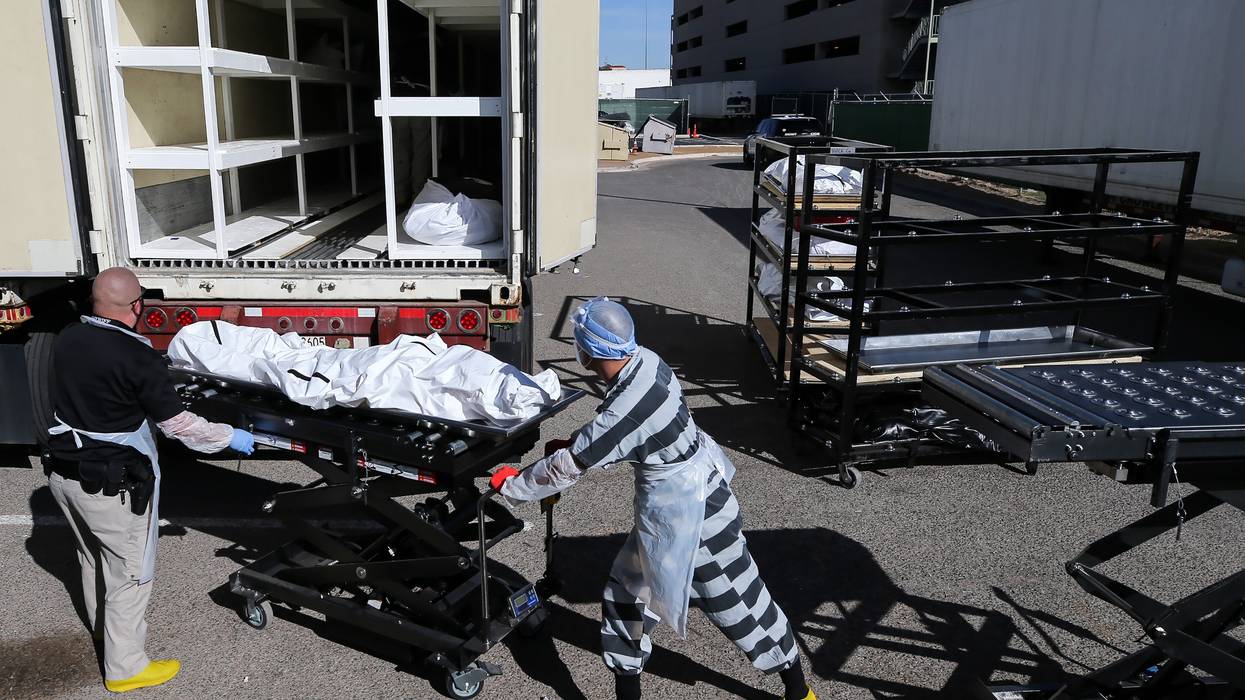
One of the U.N. experts who compiled the report after visiting the U.S. earlier this year said its findings "point to the critical need for comprehensive reform."
A report published Thursday by United Nations human rights experts condemns systemic racism in the U.S. criminal justice system and policing, while describing "appalling" prison conditions and decrying forced unpaid convict labor as a "contemporary form of slavery."
The U.N. International Independent Expert Mechanism to Advance Racial Justice and Equality in the Context of Law Enforcement report follows a visit to the U.S. earlier this year by a team of human rights experts. The U.N. officials collected testimonies from 133 affected people, visited five prisons and jails, and held meetings with advocacy groups and numerous government and police officials in Atlanta, Chicago, Los Angeles, Minneapolis, New York City, and Washington, D.C.
"In all the cities we went to, we heard dozens of heartbreaking testimonies on how victims do not get justice or redress. This is not new, and it's unacceptable," Tracie Keesee, an expert member of the mechanism, said in a statement. "This is a systemic issue that calls for a systemic response."
"Law enforcement and criminal justice institutions in the United States share and reproduce values, attitudes, and stereotypes of U.S. society and institutions. These must be reformed."
The experts found that "racism in the U.S.—a legacy of slavery, the slave trade, and 100 years of legalized apartheid that followed slavery's abolition—continues to exist today in the form of racial profiling, police killings, and many other human rights violations."
The report cites instances of prisoners locked away in solitary confinement—widely recognized as a form of psychological torture—for a decade or longer, children sentenced to life in prison, and pregnant inmates chained during childbirth, "who due to the chaining, lost their babies."
"All these practices—including shackling pregnant women before, during, and after labor—are an affront to human dignity and the best interest of the child," the report states. "Instruments of restraint shall never be used on women during labor, during childbirth, and immediately after childbirth, in accordance with the U.N. Standard Minimum Rules for the Treatment of Prisoners," also known as the Nelson Mandela Rules.
The experts were "astonished" that forced unpaid or poorly paid convict labor "exists to this day in the United States, constituting a contemporary form of slavery." The 13th Amendment to the U.S. Constitution outlawed slavery and involuntary servitude, "except as punishment for crime," and congressional efforts to close the loophole have been unsuccessful.
The report notes:
The delegation received shocking information over "plantation-style" prisons in Southern states, in which contemporary forms of slavery are reported. Commonly known as "Angola," the Louisiana State Penitentiary occupies an 18,000-acre former slave plantation, larger than the island of Manhattan. The plantation prison soil worked by incarcerated labor today is the same soil worked by slaves before the Civil War. Angola currently houses nearly 5,000 adult men, the majority of them Black men, forced to labor in the fields (even picking cotton) under the watch of white "freemen" on horseback, in conditions very similar to those of 150 years ago. The mechanism received direct testimonies from Angola victims and allegations of children being transferred to this prison, held in solitary confinement, and in general under appalling detention conditions.
Earlier this month, a federal judge ordered Louisiana officials to stop imprisoning children on Angola's former death row by September 15.
Addressing the more than 1,000 people killed annually by U.S. law enforcement officers—only 1% of which result in the killer being criminally charged—the report warns that such killings will continue unless police use of force regulations are aligned with international standards.
"We reject the 'bad apple' theory," There is strong evidence suggesting that the abusive behavior of some individual police officers is part of a broader and menacing pattern," said mechanism expert member Juan Méndez. "Law enforcement and criminal justice institutions in the United States share and reproduce values, attitudes, and stereotypes of U.S. society and institutions. These must be reformed."
To that end, the report contains a lengthy list of over 30 recommendations, including:
"Our findings," said Méndez, "point to the critical need for comprehensive reform."
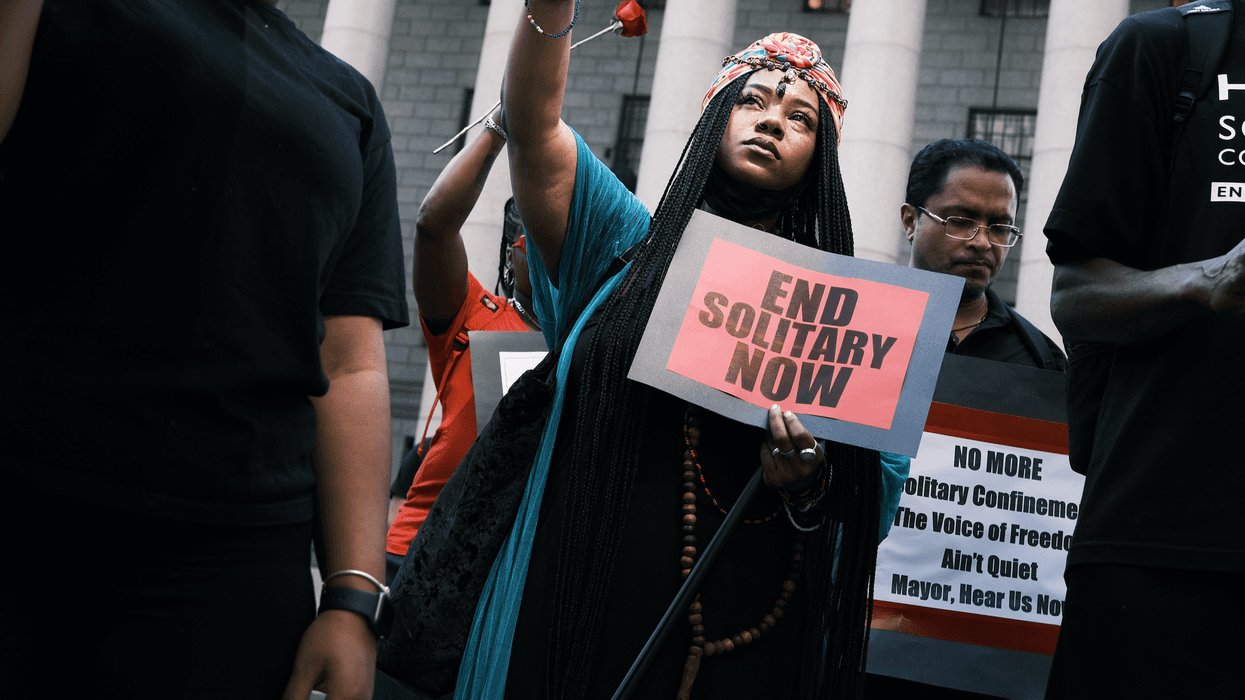
"Experts have condemned solitary as psychological torture—and that's exactly what it is," said Rep. Cori Bush.
U.S. House Democrats led by Missouri progressive Cori Bush on Thursday introduced a bill that would end solitary confinement—which survivors and experts call torture—in federal prisons and other detention facilities.
Noting that solitary confinement "causes devastating harm and constitutes a form of torture" and that such isolation for "any length of time" can cause self-harm including suicide and a wide range of physical and psychological afflictions, the End Solitary Confinement Act would:
"Moreover, it is disproportionately inflicted on Black and Brown folks, young people, LGBTQ+ people, and other marginalized communities," Bush added. "I'm proud to lead my colleagues, advocates, and survivors of solitary confinement in introducing this groundbreaking legislation. Together we will save lives by ending this heinous and immoral practice once and for all."
In addition to lead sponsor Bush, the End Solitary Confinement Act is sponsored by Democratic Reps. Jamaal Bowman (N.Y.), Adriano Espaillat (N.Y.), Sydney Kamlager-Dove (Calif.), Rashida Tlaib (Mich.), and Bonnie Watson Coleman (N.J.).
"Solitary confinement is torture, and it has no place in America," Bowman asserted. "Merciless practices like solitary confinement directly target marginalized groups—including people of color, young people, LGBTQ+ individuals, and disabled individuals who are already disproportionately impacted by our prison industrial system—and cause lifelong trauma. We must end this form of cruel and traumatic punishment for everyone."
According to Bush's bill, "over 120,000 people are estimated to be in solitary confinement on any given day in federal, state, local, and immigration detention facilities."
"Survivors of solitary confinement often carry significant trauma and other physical and psychological harm with them for the rest of their lives," the proposed legislation notes.
Research like a 1990s study of dozens of former Yugoslavian prisoners of war held for an average of six months in isolation found that people locked up in solitary confinement registered brain abnormalities comparable to those who suffered physical head trauma.
"As someone who has personally endured the torment of solitary confinement, I can attest to the devastating toll it takes on one's mental and emotional well-being," said Johnny Perez, who directs the U.S. prison program at the National Religious Campaign Against Torture. "The End Solitary Confinement Act is a beacon of hope for those incarcerated in federal facilities nationwide, offering a chance for reform and redemption within our criminal justice system."
"I implore Congress to swiftly pass this critical legislation," he added, "for it is not only a matter of justice, but a matter of preserving human dignity and restoring hope for those who have been silenced and isolated for far too long across the United States."
Jerome Wright, co-director of the #HALTsolitary campaign, contended that "solitary confinement is one of human beings' greatest inhumanity to other human beings. It is torture."
"Solitary causes devastating harm and death, while worsening safety for everyone. It should have no place in our society," Wright added. "The End Solitary Confinement Act would be an urgent and critical step in the struggle for human rights and racial justice. Congress must waste no time to pass this act, and the president must sign it into law."
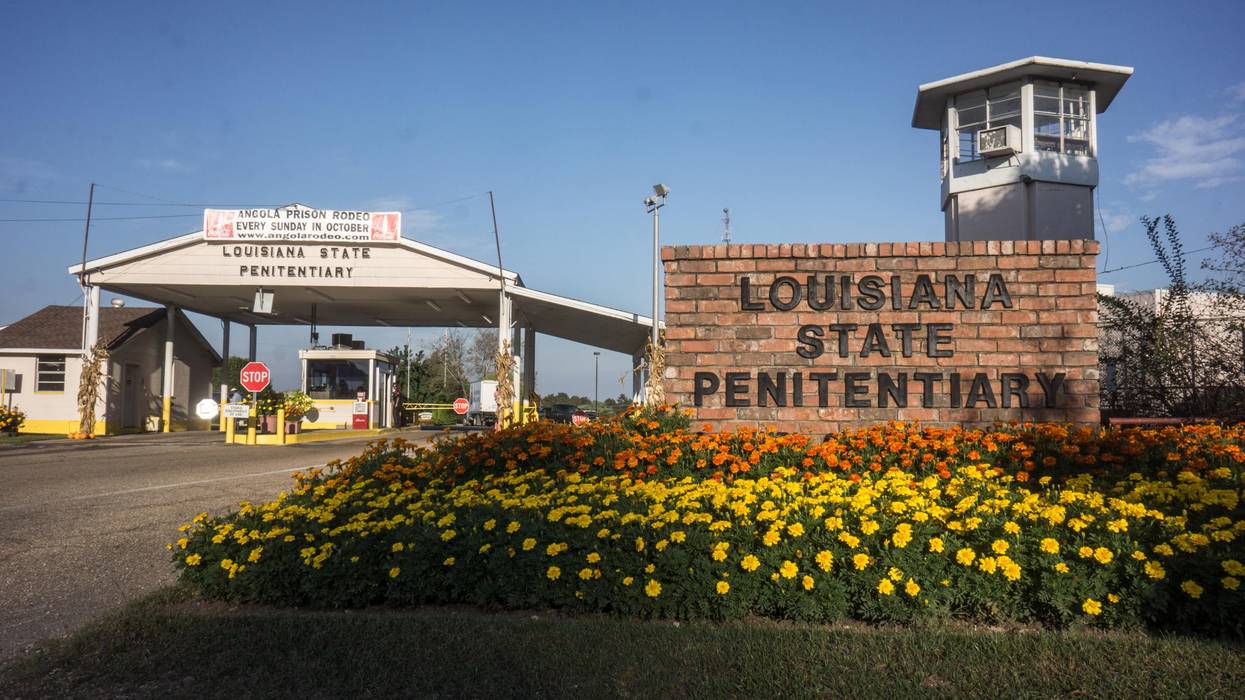
"It has been dangerously hot in Angola so far this summer," said one medical expert. "Confining children for all or most of the day to concrete and cement buildings without air conditioning is foolhardy and perilous."
The ACLU and other legal advocacy groups on Monday issued an emergency plea for a federal court to order the transfer of children incarcerated at the Louisiana State Penitentiary—better known as the notorious Angola prison—in potentially deadly temperatures exceeding 130°F on the heat index without air conditioning.
Scores of teenagers imprisoned on Angola's former death row were locked in windowless cells without air conditioning for nearly 24 hours a day for several days this month as temperatures soared, the groups claim. At least 13 people in Texas and Louisiana have died from the scorching heat in recent weeks.
It's getting worse. On Tuesday, the mercury topped 97°F at the prison, with high temperatures forecast to approach 100°F later this week. The heat index makes it feel even hotter—as hot as 133°F, according to The Appeal.
"I would not dare to keep my dog in these conditions for fear of my dog dying," Dr. Susi U. Vassallo, a medical expert for the prisoners, wrote in a statement to the U.S. District Court for the Middle District of Louisiana. "It has been dangerously hot in Angola so far this summer. Confining children for all or most of the day to concrete and cement buildings without air conditioning is foolhardy and perilous."
"My personal knowledge of the unconstitutional and inadequate medical care provided to adults at Angola heightens my fear that a child will deteriorate or die at Angola due to the conditions and the poor health care provided at the prison," Vassallo added.
According to The Appeal:
The ACLU and other legal advocates sued in August to stop the transfers to Angola due to what they said were inhumane conditions inside the facility. But a federal judge let the plan commence after [Louisiana Office of Juvenile Justice] promised it would provide children with education, programs, and services at the facility.
But David Utter, lead counsel in the lawsuit and executive director of the Fair Fight Initiative, told The Appeal in an interview that the agency has failed to deliver in the months since.
"What the state promised that they were going to do before they put any young people in that facility has not happened, and it's time to stop taking the state at his word," Utter said. "The trauma that the state is inflicting on these young people is immeasurable."
The civil rights groups' emergency filing claims child prisoners at Angola are locked up in solitary confinement for 72 hours straight, and that they're confined to their cells for 23 hours a day as punishment and only allowed out to shower or to a recreation area while handcuffed and shackled.
While state officials say the youth unit at Angola will be closed this autumn, critics say the teens can't wait that long. Many also question why children—most of them Black—are imprisoned on the former death row of one of the country's most infamous penitentiaries, which was built on the site of a former slave plantation.
Last year, Chief U.S. District Judge Shelly Dick, an appointee of former President Barack Obama, ruled that minors could be imprisoned at Angola, even though she found Louisiana's plan to do so "disturbing."
"You're sending Black kids to this facility and you're calling it something else," Antonio Travis, youth organizing manager and the New Orleans chapter lead for the group Families and Friends of Louisiana's Incarcerated Children, told The Appeal. "You're calling it something different as if it's not what it is. It's Angola."
After being mistakenly abducted in Macedonia and detained in a secret CIA prison in Afghanistan, Khaled El-Masri told his interrogators that his ongoing detention was like "a Kafka novel." A cable to CIA headquarters reported that El-Masri said he "could not possibly prove his innocence because he did not know what he was being charged with."
After being mistakenly abducted in Macedonia and detained in a secret CIA prison in Afghanistan, Khaled El-Masri told his interrogators that his ongoing detention was like "a Kafka novel." A cable to CIA headquarters reported that El-Masri said he "could not possibly prove his innocence because he did not know what he was being charged with."
Much has been reported on this tragic case of mistaken identity at the hands of the CIA. But this week, additional details on El-Masri's case emerged when the CIA released a new batch of documents in response to an ACLU Freedom of Information Act lawsuit. Among the many disturbing details relating to the CIA's post-9/11 torture and rendition program was a revealing investigation carried out by the CIA's inspector general into the rendition and torture of El-Masri, an innocent German citizen who was disappeared, detained, and abused by the CIA for over four months in early 2004. (The ACLU now represents El-Masri in a pending case against the U.S. before the Inter-American Commission on Human Rights.)
The investigation makes clear that El-Masri's unlawful rendition and detention were rife with neglect, abuse, and incompetence, reaching to the highest levels of the CIA.
The investigation makes clear that El-Masri's unlawful rendition and detention were rife with neglect, abuse, and incompetence, reaching to the highest levels of the CIA. It reveals that even as the CIA "quickly concluded he was not a terrorist," two CIA officers who had been involved in his rendition justified his continued detention "despite the diminishing rationale, by insisting that they knew he was 'bad.'"
The document also confirms that former CIA Director George Tenet "was informed about the ... January 2004 ... rendition shortly after it happened and then again in late April 2004." Yet El-Masri was not freed and allowed to return to his family in Germany until May of that year after former National Security Advisor Condoleezza Rice ordered it. The CIA didn't inform Congress of the mistaken rendition until after his repatriation and after it learned that he had retained an attorney.
The report confirms the grueling psychological torture that El-Masri was subjected to, along with the CIA's blatant disregard for his physical and mental health while in custody. In protest of his wrongful detention, El-Masri went on a hunger strike and lost 50 pounds. A CIA psychologist described him as "openly tearful and speechless" and suffering from "feelings of helplessness, hopeless ... [and] wishing he was dead." Another psychologist confirmed the intensity of his "depression, loneliness, hopelessness, and anger."
The source of his deteriorating mental health, the psychologists believed, was "the unknown status of his case and the uncertain length of his detention, complicated by lack of interaction with Agency personnel." The psychologists recommended releasing him. Their reason was not his innocence or his mental health, but the need to avoid "potential long-term issues for HQs."
The CIA's inspector general report confirms that El-Masri's prolonged arbitrary detention and cruel, inhumane, and degrading treatment included solitary confinement in a "small cell with just a bucket for his waste." The report concludes:
"[T]here was an insufficient basis to render and detain al-Masri and the Agency's prolonged detention of al-Masri was unjustified. His rendition and long detention resulted from a series of breakdowns in tradecraft, process, management, and oversight. CTC and [redacted] failed to take responsible steps to verify al-Masri's identity. ALEC Station exaggerated the nature of the data it possessed linking al-Masri to terrorism. After the decision had been made to repatriate al-Masri, implementation was marked by delay and bureaucratic infighting."
Yet after it was decided that El-Masri should be freed, he languished in the CIA prison for more than two months because of "bureaucratic infighting" and "bureaucratic differences." At one point, the CIA considered transferring El-Masri to the custody of the U.S. military. This option was ultimately ruled out because "such a move could complicate matters"; "the U.S. military would register al-Masri and notify the Red Cross of his detention"; and, without grounds to suspect he had a role within al-Qaida, "the US military would have no grounds on which to detain him" and "he could be a free man within hours."
After it was decided that El-Masri should be freed, he languished in the CIA prison for more than two months because of "bureaucratic infighting" and "bureaucratic differences."
Despite recognizing a terrible mistake, the Bush administration pressed the Supreme Court to refuse to hear El-Masri's (brought by the ACLU) case against Tenet. The court acquiesced, deciding not to review the case—which had been dismissed by the lower courts on "state secrets" grounds—the very same month the inspector general report was submitted to the administration.
Beyond an "oral admonition" given to three CIA attorneys, no one has been held accountable for El-Masri's ordeal. The CIA's inspector general referred El-Masri's case to the Department of Justice for prosecution -- but in May 2007, the Office of the U.S. Attorney for the Eastern District of Virginia declined to pursue the case.
This report confirms what the ACLU has said for years: At the height of the so-called "War on Terror," the CIA made grave mistakes and committed outrageous violations of domestic and international law. Yet, no one responsible for these acts has been held accountable. Despite the CIA's best efforts to keep this and so many other stories secret -,- the CIA told El-Masri that a condition for his release was "that he would not reveal his experiences to the media or local authorities" -- the truth is steadily coming out. And still, El-Masri and other victims of CIA torture continue to wait for what they deserve -- a full criminal investigation into those responsible for overseeing and implementing the program, an acknowledgment of what they went through, an official apology, and compensation to help them rebuild their lives. This is the very least President Obama can do for them before leaving office.
Shortly after arriving at a makeshift military jail, at Camp Arifjan, Kuwait, in May 2010, I was placed into the black hole of solitary confinement for the first time. Within two weeks, I was contemplating suicide.
After a month on suicide watch, I was transferred back to US, to a tiny 6 x 8ft (roughly 2 x 2.5 meter) cell in a place that will haunt me for the rest of my life: the US Marine Corps Brig in Quantico, Virginia. I was held there for roughly nine months as a "prevention of injury" prisoner, a designation the Marine Corps and the Navy used to place me in highly restrictive solitary conditions without a psychiatrist's approval.
For 17 hours a day, I sat directly in front of at least two Marine Corps guards seated behind a one-way mirror. I was not allowed to lay down. I was not allowed to lean my back against the cell wall. I was not allowed to exercise. Sometimes, to keep from going crazy, I would stand up, walk around, or dance, as "dancing" was not considered exercise by the Marine Corps.
To pass the time, I counted the hundreds of holes between the steel bars in a grid pattern at the front of my empty cell. My eyes traced the gaps between the bricks on the wall. I looked at the rough patterns and stains on the concrete floor - including one that looked like a caricature grey alien, with large black eyes and no mouth, that was popular in the 1990s. I could hear the "drip drop drip" of a leaky pipe somewhere down the hall. I listened to the faint buzz of the fluorescent lights.
For brief periods, every other day or so, I was escorted by a team of at least three guards to an empty basketball court-sized area. There, I was shackled and walked around in circles or figure-eights for 20 minutes. I was not allowed to stand still, otherwise they would take me back to my cell.
I was only allowed a couple of hours of visitation each month to see my friends, family and lawyers, through a thick glass partition in a tiny 4 x 6ft room. My hands and feet were shackled the entire time. Federal agents installed recording equipment specifically to monitor my conversations, except with my lawyers.
The United Nations special rapporteur on torture, Juan Mendez, condemned my treatment as "cruel, inhuman and degrading treatment", describing "the excessive and prolonged isolation" I was placed under for that period of time. However, he didn't stop there. In a preface to the 2014 Spanish edition of the Sourcebook on Solitary Confinement, written by Mendez he strongly recommends against any use of solitary confinement beyond 15 days.
As Mendez explains:
Prolonged solitary confinement raises special concerns, because the risk of grave and irreparable harm to the detained person increases with the length of isolation and the uncertainty regarding its duration. In my public declarations on this theme, I have defined prolonged solitary confinement as any period in excess of 15 days. This definition reflects the fact that most of the scientific literature shows that, after 15 days, certain changes in brain functions occur and the harmful psychological effects of isolation can become irreversible.
Unfortunately, conditions similar to the ones I experienced in 2010-11 are hardly unusual for the estimated 80,000 to 100,000 inmates held in these conditions across the US every day.
In the time since my confinement at Quantico, public awareness of solitary confinement has improved by orders of magnitude. People all across the political spectrum - including some who have never been in solitary or known anyone who has - are now beginning to question whether this practice is a moral and ethical one. In June 2015, US supreme court justice Anthony Kennedy called the prison system "overlooked" and "misunderstood", stating that he welcomes a case that would allow the court to review whether or not solitary confinement is cruel and unusual under the US constitution.
The evidence is overwhelming that it should be deemed as such: solitary confinement in the US is arbitrary, abused and unnecessary in many situations. It is cruel, degrading and inhumane, and is effectively a "no touch" torture. We should end the practice quickly and completely.
When President Obama in January announced plans to limit federal prisons' use of solitary confinement--a practice a UN expert described as "torture" and "cruel"--human rights activists applauded.
Those activists were still skeptical, however, that such a measure would reach far enough to enact meaningful change, as the vast majority of solitary confinement happens in state-level prisons. A total of about 90,000 people are imprisoned in solitary in state prisons, compared to about 10,000 incarcerated in segregated cells in federal facilities. (The nationwide total of approximately 100,000 people in solitary confinement surpasses the total prison populations of countries such as France, Japan, Germany, and the UK, as the Yale Law Journal points out.)
"Most of the battle is at the state level."
--Amy Fettig, ACLU senior staff counsel
The White House is currently urging states to adopt Obama's reforms. "Without support at state level," the Guardian notes, Obama "is stymied in his wider ambitions."
Roy Austin, the president's deputy assistant for urban affairs, justice and opportunity, and "a leading architect of the administration's drive to reduce the use of solitary confinement," as the Guardian writes, told the newspaper that the federal government understood how necessary it was to ensure states would also institute reforms.
"We know a lot of change is local," Austin said. "In the criminal justice space we represent a small percentage of the number of people arrested and incarcerated, so we are here to provide technical assistance, to learn from states that are getting it right and to serve as a shining example of what can be done."
The White House has pushed for local reform on multiple stages: it has hosted a round table discussion on the issue for state leaders and another for NGO advocacy groups, incorporated its new "guiding principles" into the National Institute of Corrections training program, and worked with organizations as diverse as the prison reform group Vera Institute of Justice in New York and national labor groups such the American Correctional Association and the Association of Correctional Administrators.
"Most of the battle is at the state level," Amy Fettig, senior staff counsel for the ACLU's national prison project, told the Guardian. "Having President Obama speak out on this issue is huge, and having the largest prison system in the country, the federal one, move to reduce solitary confinement is very meaningful, but that still leaves us having to go state by state, calling on individual jurisdictions to change."
There have been recent reports of specific cases where Obama's push for change had tangible effects. In Tennessee, for example, a federal judge issued a temporary restraining order on Wednesday against the Department of Children's Services and the Rutherford County Juvenile Detention Center to prevent the facility from keeping a 15-year-old boy with developmental disabilities in solitary confinement for 23 hours a day.
"The unnamed boy was ordered into confinement on April 19 by Rutherford County Juvenile Judge Donna Davenport at the request of Rutherford County detention officials, according to the lawsuit," the Tennessean reports. "He remained there 23 hours per day for two days in a cell containing only a mattress and toilet, with no access to reading materials or other activities and with the only window covered by a board."
The boy's lawyers and his mother are pushing for an end to all solitary confinement for children in the prison, citing Obama's recent push for such reforms.
Meanwhile, the Guardian reports, "Colorado has slashed the number of inmates it holds in isolation over the past five years by giving prisoners in segregation cells the chance to claw their way back to the general prison population, including via activities outside their cell, education classes and counselling. [...] At least 13 other states have already rewritten their rules or are in the process of pushing bills through their legislatures to cut down on the practice."
"We're paying twice as much a day to keep them in solitary and we're doing everything in our power to make their behavior more and more out of control--and then they get out."
--Dr. Stuart Grassian, psychologistOther states are falling behind--such as Louisiana, where Albert Woodfox, the last of the Angola Three, was released from decades of solitary confinement in February. "We've put this solitary-confinement issue before American people, before the people of the world," Woodfox said upon his release.
"Another is Texas," writes the Guardian, "where the ACLU has calculated there are 6,564 prisoners in bare concrete cells with solid steel doors. And then there is Florida, which holds more than 12,000 prisoners in segregation--more than the whole federal prison system."
And change can't come soon enough for those tens of thousands still languishing in solitary's inhumane conditions. One such prisoner in Washington state, who recently heard a radio report about Obama's efforts to limit solitary confinement, reached out to local news outlet MyNorthwest.com to share his own ordeal in solitary.
The inmate, Kyle Payment, has spent his entire adulthood in solitary confinement: currently age 30, he was first sent to solitary when he was only 18. The first time he was sent to a juvenile correction facility--which he described as a prison--he was just 11.
Payment says he's had 18 extra years added to his sentence for assaults that he committed while in solitary. He claims that he can't stop himself from being violent; he's been driven insane by his years spent in an 80-square-foot cell without any human contact.
"Payment was evaluated by psychologist Dr. Stuart Grassian, the nation's top SHU Syndrome expert, who has evaluated hundreds of inmates over the past 30 years," MyNorthwest.com reports.
"These people were so clearly ill, frightened of how ill they were," Grassian says. "Things like suicidal attempts, periods of confusion and disorientation. The symptoms they were describing were really unusual. They weren't the kind of things you see in ordinary clinical practice. Symptoms of stupor and delirium, disoriented, confused, agitated, paranoid, hallucinations in multiple spheres, feeling bugs crawling up their skin."
"This is the worst thing we could do for our community to keep ourselves safe," Grassian continued. "We're paying twice as much a day to keep them in solitary and we're doing everything in our power to make their behavior more and more out of control--and then they get out. It just makes no sense."
"I'm not innocent. I've done my fair share of wrong," Payment said. "I acknowledge that. But at the same time, I think there's a bigger scheme going on, as far as solitary confinement goes."
Indeed, an ACLU report details the vast profits being made from the nation's skyrocketing incarceration rates of the past four decades.