

SUBSCRIBE TO OUR FREE NEWSLETTER
Daily news & progressive opinion—funded by the people, not the corporations—delivered straight to your inbox.
5
#000000
#FFFFFF
To donate by check, phone, or other method, see our More Ways to Give page.
Daily news & progressive opinion—funded by the people, not the corporations—delivered straight to your inbox.
Another journalist called the assault "the latest instance of unacceptable and alarming settler violence toward journalists and Palestinians."
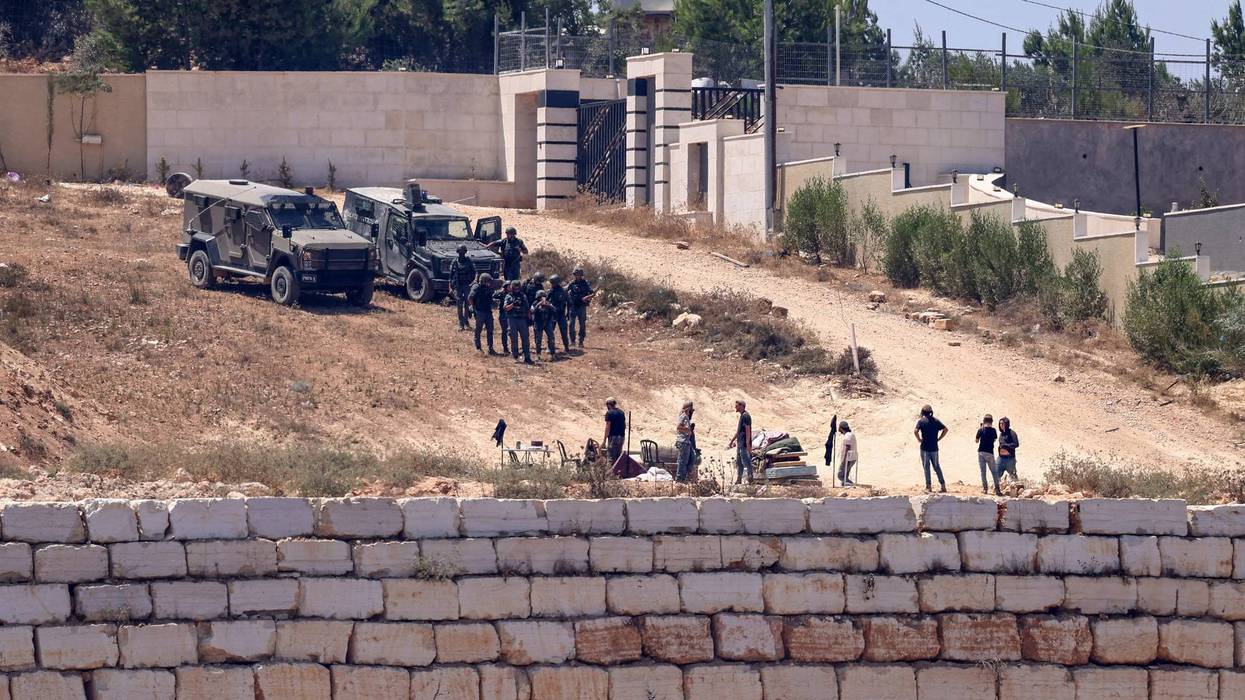
Israeli settlers attacked and wounded a Palestinian woman and four NBC team members who were interviewing her in the West Bank on Saturday, amid ongoing settler violence in the occupied Palestinian territory.
The settlers, who were wearing masks, drove up as Aida Ahmed Abdullah and her family were telling NBC about how settlers forced them from their home in the town of Jalud.
“They jumped out, beat us, then jumped back in the car,” NBC News international correspondent Matt Bradley told the outlet.
Make This Go VIRAL
Masked Israeli Settlers ATTACK Palestinian Woman and NBC News Crew in the West Bank
NBC correspondent Matt Bradley was struck twice pic.twitter.com/EMmWGsNk2X
— Ryan Rozbiani (@RyanRozbiani) August 30, 2026
Bradley was hit twice on the arm by the attackers, who carried sticks. They also threw rocks. Abdullah, Bradley, West Bank-based cameraman Khaldoon Eid, producer Producer Lawahez Jabari, and a driver were all injured in the ambush and treated afterword. Abdullah remained in the hospital as of Saturday night.
Both Eid and Jabari also described the assault.
“We didn’t expect that—that they would come to attack,” Eid told NBC. “We were in the middle of a Palestinian area next to Palestinian houses.”
Jabari said, "Suddenly a car came to us,” adding, "the settlers had sticks, I saw a gun, but they didn’t use the gun.”
Jeremy Diamond, a CNN correspondent in Jerusalem, called the incident "horrific" on social media and said it was "the latest instance of unacceptable and alarming settler violence toward journalists and Palestinians."
The NBC crew and their interviewee were not the only targets of such violence on Saturday, as attacks continued in the town of Qusra, where settlers have been conducting a nearly three-week siege of three Palestinian homes. Settlers pepper sprayed Palestinian workers, threw rocks at a building, and besieged a fourth home with at least four Palestinian residents inside, according to Hareetz and Al Jazeera.
Israeli Prime Minister Benjamin Netanyahu condemned Saturday's attacks, characterizing them as “criminal acts of violence committed in the villages of Qusra and Jalud by a handful of rioters who violate the law, cause enormous injustice to the law-abiding settler public, hinder the IDF [Israel Defense Forces] in fulfilling its missions, and harm Israel’s standing in the world.”
Yet Trita Parsi, executive vice president of the Quincy Institute for Responsible Statecraft, argued on social media:
1. The settler wouldn't do this to Americans had they not received a green light from the Israeli gov.
2. Israel's gov would not have given such a green light unless it felt confident that the US gov—and Amb. [Mike] Huckabee—wouldn't lift a finger to defend the Americans.
Journalists trying to report in both Gaza and the West Bank have long been targets of both settlers and the Israeli military. The IDF was found to be the leading killer of journalists worldwide for the third year in a row in 2025, and even before the Gaza genocide began in 2023, there were cases like the IDF killing of Palestinian-American reporter Shireen Abu Akleh in the West Bank in 2022.
The attacks on the NBC team also come amid an uptick in setter violence in the West Bank since 2023, which humans rights observers say is enabled by the Israeli government. Netanyahu's government has expanded settlements in the West Bank despite the fact that they are illegal under international law.
What emerged in Qusra was not simply settler violence but a division of labor: Settlers create the crisis; the army imposes the restrictions; Palestinian movement is curtailed; and the victims themselves are pressured to leave.
If you want to understand the bleak future awaiting the occupied West Bank, do not look away. Just pay attention to the events unfolding in the small Palestinian town of Qusra, south of Nablus.
The story of the future of the West Bank begins here.
While much of the media is treating reports emerging from the area as simply another episode of “settler violence,” it is not. Qusra represents something far more consequential: a glimpse into the new Plan Dalet that Israel has in store for Palestinians.
Plan Dalet was the military blueprint through which Zionist forces conquered much of historic Palestine, village by village, during the Nakba.
The Nakba did not simply "happen," but followed years of planning and incremental military schemes. That is why Qusra matters.
The plan did not suddenly emerge in 1948. It built on military schemes dating back to 1945, developing into a strategy for conquering Palestinian towns and villages, destroying communities, and expelling their inhabitants.
The significance of this history today is not merely symbolic. The Nakba was a process, implemented in stages. So, too, is the annexation of the West Bank.
Nor is this merely an intellectual argument. Israeli officials have openly invoked a new Nakba as an intended outcome. In November 2023, Avi Dichter declared: “We are now rolling out the Gaza Nakba,” adding, “Gaza Nakba 2023. That’s how it’ll end.”
True to form, this new Nakba carries many of the characteristics of the old one: coordinated violence, massacres, ethnic cleansing, forced displacement, and land confiscation.
The genocide in Gaza represents the zenith of this violence—a more devastating manifestation, but a continuation of the original sin upon which the Israeli state was established.
While all eyes were on Gaza beginning on October 7, 2023, the West Bank was largely ignored, allowing Israel the space to escalate violence in all its forms to levels unseen in decades.
The result has been staggering. Since October 7, 2023, Israeli forces and settlers have killed more than 1,100 Palestinians in the West Bank, including over 240 children, and wounded thousands more. Tens of thousands have been detained, while more than 33,000 Palestinians remain displaced from the Jenin, Tulkarem, and Nur Shams refugee camps alone.
Now, back to Qusra.
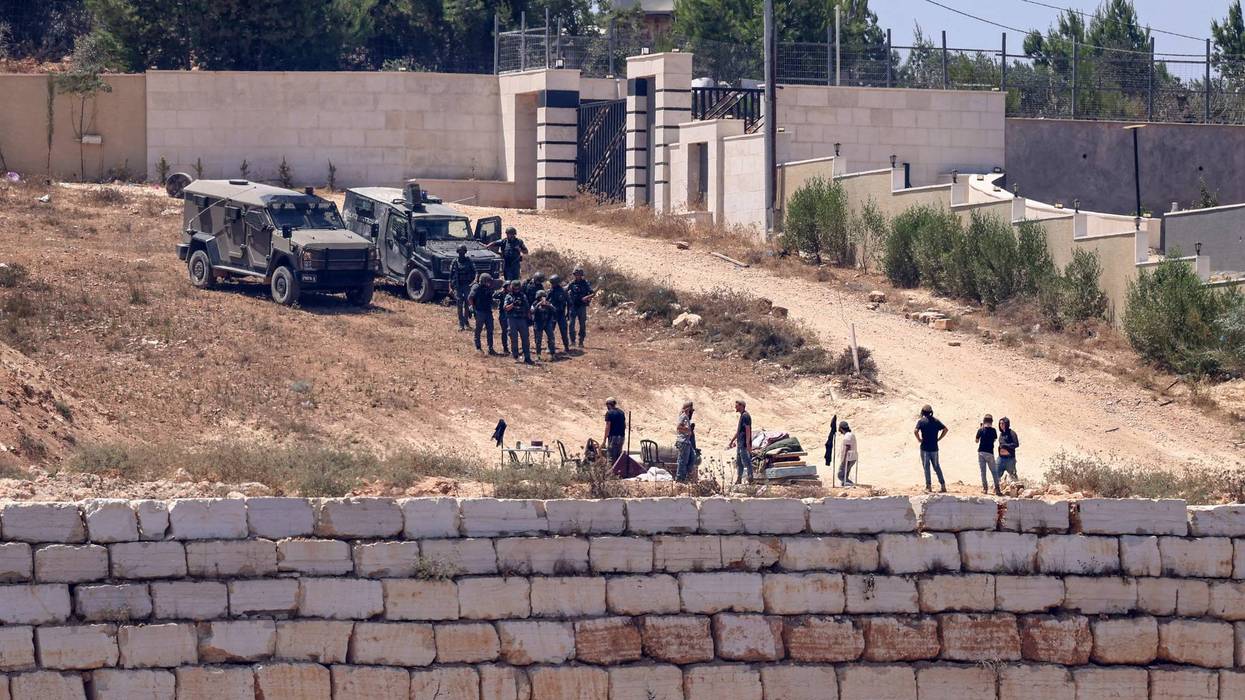
Beginning on August 9, armed Israeli settlers surrounded three Palestinian homes in the Ras al-Ain area on the outskirts of the town.
They blocked access to the houses, erected tents outside them, and cut water and electricity supplies. Families, including young children, were effectively trapped inside.
The Israeli military subsequently declared the surrounding area a closed military zone, restricting access by Palestinians, activists, and journalists.
What emerged was not simply settler violence but a division of labor: Settlers create the crisis; the army imposes the restrictions; Palestinian movement is curtailed; and the victims themselves are pressured to leave.
And the siege continued. As I write these words, the siege of the Qusra homes has concluded its second week.
Qusra is not incidental to this strategy. Israel has already confiscated its land for the settlement of Migdalim, while nearby outposts including Esh Kodesh have long been associated with attacks and attempts to seize Palestinian agricultural land.
Control of such areas is essential to the larger project of connecting settlement blocs, fragmenting Palestinian territory, and transforming Palestinian communities into isolated enclaves.
A few years ago, the Israeli government behaved as though its plan to formally annex large swathes of the West Bank had been placed on hold. Yet, since October 7, annexation has moved from aspiration to obsession—in both words and action.
National Security Minister Itamar Ben-Gvir oversaw the mass distribution of weapons after October 7, arming thousands of civilian security-squad members with rifles amid an already heavily armed settler population.
Meanwhile, Finance Minister Bezalel Smotrich has systematically worked to transfer powers over the West Bank from military administration to Israeli civilian authorities—one of the clearest institutional mechanisms of annexation.
And now another piece is falling into place: Defense Minister Israel Katz has ordered preparations to transfer law-enforcement responsibility over Israeli settlers in the West Bank from the military to the Israeli police, another critical legal step toward annexation.
The picture is becoming complete: settler militias, government funding, weapons, the army, police, civilian bureaucracies, courts, and political decisions originating at the highest levels of the Israeli state.
Seen in this wider context, Qusra becomes a microcosm—and potentially a testing ground—for the mechanisms through which larger-scale annexation can be implemented. These realities echo the past. The Nakba did not simply "happen," but followed years of planning and incremental military schemes. That is why Qusra matters.
Some governments are warning of accelerating annexation; others sanction individual settlers, as though targeting a few extremists could reverse a blueprint implemented by an entire state apparatus.
Palestinians in the West Bank are fully aware of the challenge awaiting them. Urging the Palestinian Authority, which maintains security coordination with Israel, to suddenly devise a "strategy" is painfully redundant.
But for the rest of us who understand the horrors of the Nakba—and the reverberations of that catastrophe from Deir Yassin to the genocide in Gaza—recognition is no longer enough.
The price of silence is already being paid by every Gazan living among the ruins of the strip and every Palestinian in the West Bank confronting the violence of settlers and their military partners.
It needs to end now, before Qusra becomes the blueprint for what comes next: today, Qusra; tomorrow, the whole of the West Bank.
"If you want to 'target sanctions at those who participate in illegal settlement expansion,' you're going to have to sanction the entire Israeli government, so we look forward to seeing that."
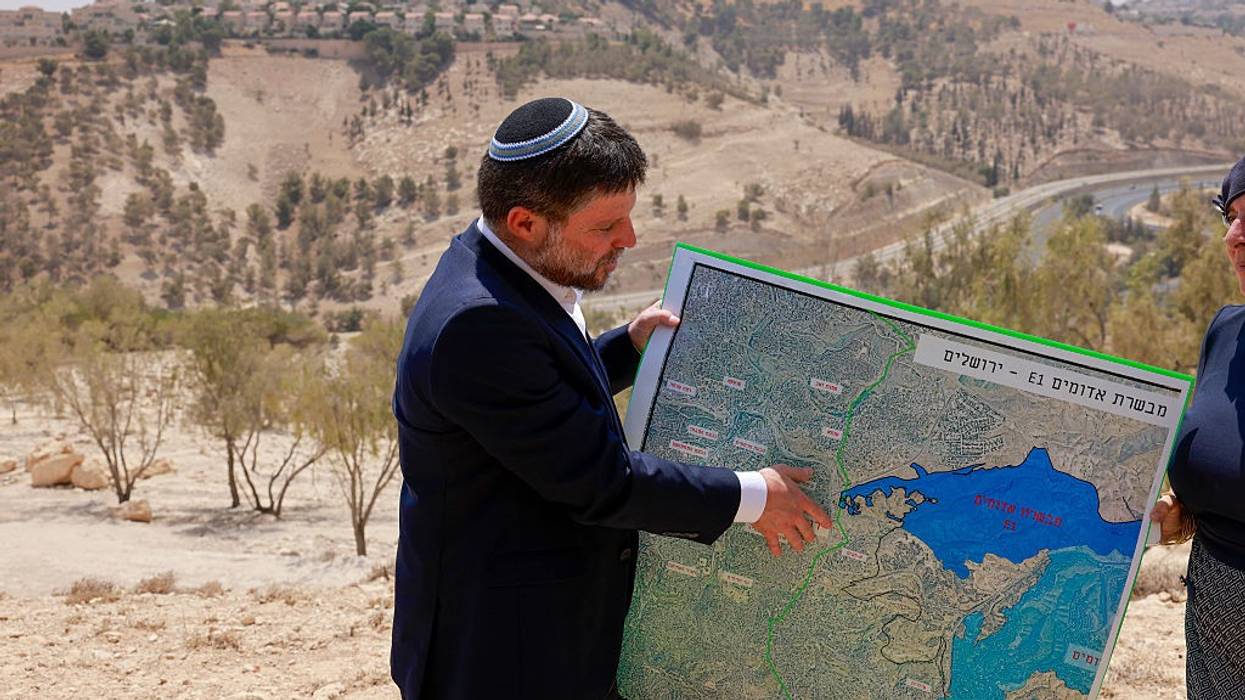
As the Canadian and several European governments on Thursday denounced Israel's latest move to divide the illegally occupied West Bank with its E1 settlement project, the critical countries faced fresh calls to actually respond with sanctions.
When the Israeli government last August approved a plan to build 3,401 housing units for settlers in the E1 area east of Jerusalem, Finance Minister Bezalel Smotrich proclaimed that the proposal "buries the idea of a Palestinian state," a comment that came as his country was nearly two years into a military operation in the Gaza Strip globally condemned as genocide.
Bedouin Palestinians who live in the area and Israeli peace groups are challenging the E1 plan in court, but that didn't deter the Ministry of Construction and Housing from issuing a tender to build seven residential compounds with 1,234 units on Wednesday. Contractors can submit bids until October 19, a week before Israel's October 27 parliamentary election. Criticism was swift.
The Israeli watchdog group Peace Now said that "this is a last-minute maneuver that is part of the scorched-earth policy the government is pursuing at the end of its term to secure long years of conflict and bloodshed for Israel. Building in E1 will ruin the possibility of reaching an end to the conflict and a peace arrangement based on two states. The government is trying to sign contracts with contractors before the elections so that it will be much harder for the next government to cancel the construction."
Sarah Sanbar, acting Israel and Palestine researcher at the US-based organization Human Rights Watch (HRW), stressed that "the E1 project isn't just housing; it's erasure of Palestinians, their homes, and their livelihoods... Israel cannot be allowed to alter 'facts on the ground' and entrench apartheid with impunity."
"Behind housing units in E1 are Palestinian families facing displacement. Companies bidding to build those houses are bidding on complicity in a war crime," Sanbar said. "Other countries have a duty to prevent companies under their jurisdiction from profiting off illegal settlement construction."
J Street, a liberal Zionist group also based in the United States, called for immediate action from the White House and Congress, which have long given Israel billions of dollars a year in military aid, even as the death tolls have soared in Gaza and the West Bank, where Israel Defense Forces troops are often accused of refusing to stop or even enabling settler violence against Palestinians.
"The E1 project would build an Israeli city in the heart of the West Bank—territory that should form the core of a future Palestinian state. It would also sever East Jerusalem and other major Palestinian population centers from one another, further restricting Palestinian movement," J Street noted. "Combined with this government's approval of more than 100 new settlements and its support for hundreds of new outposts across the West Bank, the E1 tender can only be understood as a key part of a systematic effort to undermine the viability of Palestinian statehood."
The United Kingdom's foreign secretary, Ed Miliband, on Wednesday put out a lengthy statement declaring the publication of the tender as "an unacceptable and destructive act," and that "settlement expansion and attempts to create irreversible divisions on the ground threaten peace, security, and the prospects for a viable Palestinian state."
"Britain will not stand back and accept the destruction of the two-state solution," he pledged. "In the coming weeks we will set out a comprehensive set of measures to respond to Israeli government policies, protect the viability of the Palestinian state, target sanctions at those who participate in illegal settlement expansion, and support a just and lasting peace for Israelis and Palestinians."
While Israel's Foreign Minister Gideon Sa'ar and Minister of National Security Itamar Ben-Gvir responded to Milliband with hostility, Kenneth Roth, a senior fellow at Yale University and former longtime leader of HRW, said it is "nice to see this."
Welcoming the "strong words from Britain objecting to Israel's continuing settlement expansion," Roth wondered, "Will the UK refer these war crimes (Art. 49 of the Fourth Geneva Convention) to the International Criminal Court for prosecution?"
Zarah Sultana, a member of the UK Parliament for Coventry South who co-founded Your Party with former Labour Leader Jeremy Corbyn, responded on social media with a jab at her country's Labour leadership: "Stop selling them arms then, Ed."
Rohan Talbot, director of advocacy and campaigns at the British charity Medical Aid for Palestinians, told Miliband, "If you want to 'target sanctions at those who participate in illegal settlement expansion,' you're going to have to sanction the entire Israeli government, so we look forward to seeing that."
On Thursday, the office of UK Prime Minister Andy Burnham announced that he joined leaders from Canada, France, Germany, Italy, the Netherlands, and Norway for a joint statement slamming the tender for the E1 settlement project as "unacceptable" and all Israeli settlements in the West Bank as illegal under international law, as "reaffirmed by the United Nations Security Council."
"At a time of grave instability in the West Bank with unprecedented levels of violence by settlers against civilians, and serious restrictions on the Palestinian economy, this decision is even more concerning," the coalition said, urging the Israeli government to "retract these plans immediately" and businesses to "not consider bidding for construction tenders."
Businesses considering bids "should be aware of legal and reputational consequences including the risk of involving themselves in serious breaches of international law," the seven governments said. "We reiterate our commitment to a comprehensive, just and lasting peace based on the two-state solution. We will continue to act in its interest."
Replying on social media, Canadians for Justice and Peace in the Middle East said that "Israel will not back down from its 'doomsday' E1 settlement expansion until there are real consequences. If countries like Canada are serious, they must immediately impose sanctions against any person, organization, or company involved in this war crime."
"These criminal actions by the settlers, supported or acquiesced to by Israel, the occupying power, are making life unbearable for these Palestinian families, and are clearly aimed at forcing them to leave."
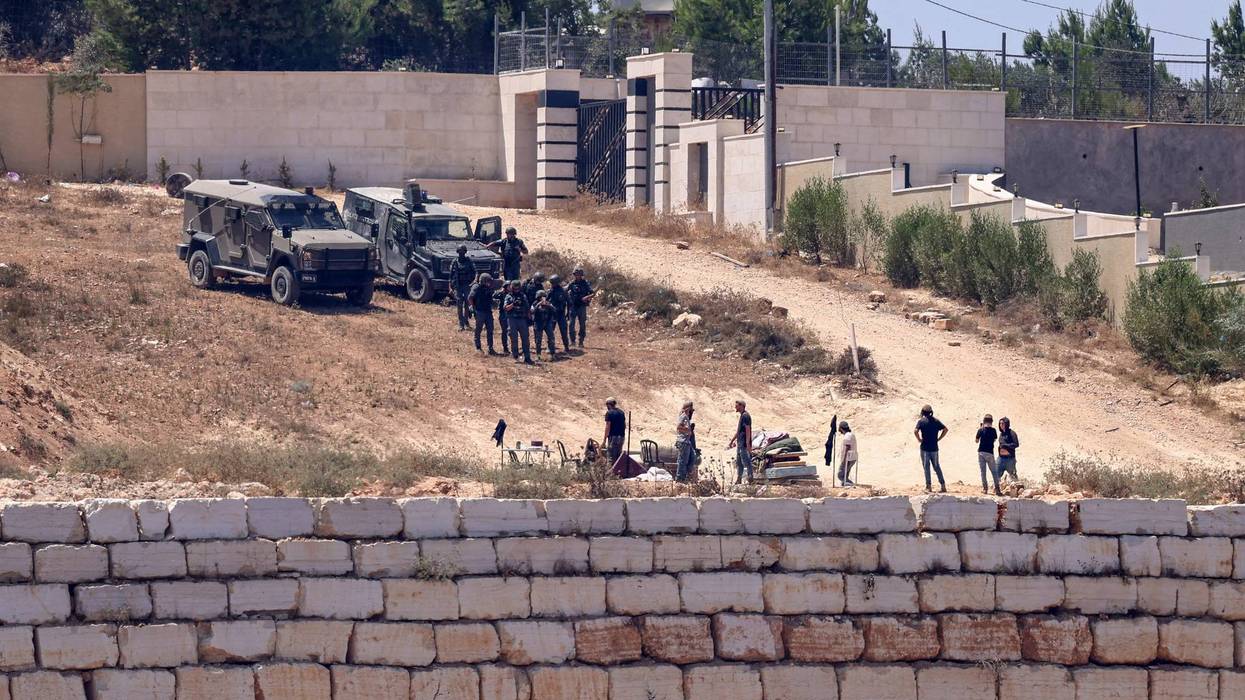
"The horrors unfolding in Qusra are far from an isolated incident," a leader at Amnesty International declared Friday as the Israel Defense Forces and police failed to remove Israeli settlers who have besieged Palestinian homes in the illegally occupied West Bank since Sunday.
Erika Guevara Rosas, Amnesty's senior director for research, advocacy, policy, and campaigns, said that the events in the village over the past week "reflect the relentless escalation and expansion of an accelerating and well-documented pattern of coordinated and strategic settler terror, enabled, backed, and funded by the state of Israel, with the aim of displacing Palestinians across the occupied West Bank."
"The three families under siege have been threatened, harassed, and attacked by Israeli settlers from nearby outposts for several months," she stressed. With settlers having cut off the water and electricity, residents are "running out of food, and lack access to basic necessities," she added, and local activists have been unable to deliver supplies.
The Amnesty statement followed similar condemnation from the Office of the United Nations High Commissioner for Human Rights (OHCHR), which said Thursday that "these criminal actions by the settlers, supported or acquiesced to by Israel, the occupying power, are making life unbearable for these Palestinian families, and are clearly aimed at forcing them to leave their homes and land. Time is running out for these three families before they are forcibly displaced."
The Palestinian Ministry of Foreign Affairs also said Thursday that it "condemns in the strongest terms the dangerous escalation in settler terrorism," highlighting that the attack has involved "sabotage of electricity and water networks, shooting at houses, and attempts to burn children, in systematic assaults that can only be described as terroristic, aimed at the displacement and extermination of the Palestinian people."
The Israeli newspaper Haaretz reported Friday that "IDF and Border Police forces have attempted several times this week to evacuate the settlers, but they have remained at the site. The group initially put up a shade canopy there, despite the presence of soldiers. Border Police forces arrived at the site and dismantled the canopy, yet the settlers remained at a nearby location, waiting for the forces to leave."
Ziv Stahl, executive director of the Israeli rights group Yesh Din, told The Associated Press that "it's like a kids' game, like cat and mouse... It's clearly not a matter of capability but a matter of will."
Qusra resident Abdul Kareem Hassan similarly told Al Jazeera that "this is all a charade," and if the IDF "were serious, the whole operation would not take them one hour. We're talking about 20 settlers. If they would treat them the same way they treat Palestinians, they could finish in less than an hour."
IDF troops have long been accused of and documented not interfering with or even aiding in Israeli settler violence against Palestinians in the West Bank.
One of the besieged homes is owned by Palestinian-American Loui Ridi, who is based in Ohio. His brother and nephew are among those trapped.
US Ambassador to Israel Mike Huckabee said on social media Thursday that his embassy "has been VERY involved and the IDF and Israel police have gone at our request to remove the Israeli terrorists doing this. The actions of those doing this to this family’s home is criminal... Actions by those who carried out this horrific act of terror meant to intimidate and harass this family are disgusting. No excuse for such thuggish behavior."
Huckabee later shared a video from the scene, then claimed on Friday that Israeli "'settlers' are not the problem," and the violent ones are a "very small minority who do great damage to Palestinian families and to Israel." The ambassador also pointed to The Jerusalem Post's reporting on one settlement leader, Ysrael Ganz, condemning the outpost in Qusra.
Reuters reported that Ridi welcomed Huckabee's initial remarks but also said they were not enough. He told the news agency that "we need protection. We need supplies. We need to live freely in our house."
As Common Dreams reported Wednesday, Ramiz Alakbarov, the United Nations special coordinator for the Middle East peace process, told the UN Security Council the previous day that demolitions of civilian infrastructure, mass displacement of Palestinians, and illegal settlement expansion have brought the West Bank to a "breaking point."
While settler attacks were once concentrated in the Israeli-controlled Area C, Alakbarov said, settlers are increasingly behaving violently toward Palestinians in Areas A and B. Guevara Rosas noted that "the homes targeted in these attacks are located in Area B of the West Bank, supposedly under Palestinian administrative control and Israeli military control, according to the classification of the Oslo Accords."
"Yet Palestinian Red Crescent ambulances trying to deliver food and water to the homes were also attacked by settlers. Despite these violent attacks, Israeli forces allowed the settlers to remain [in] close proximity to the Palestinian families' homes," she said. Sources told Amnesty that for several hours on Thursday, the IDF forced two besieged families and six neighboring households to evacuate their homes.
Al Jazeera's Nida Ibrahim similarly reported that "Israeli soldiers initially tried to move the trapped families out of their homes while settlers remained camped outside. The families refused, not trusting that the Israeli soldiers would allow them back into their homes, and were eventually grouped together in one home."
Guevara Rosas argued that "for far too long, the world has ignored the immense, unfathomable suffering of Palestinians being uprooted and erased from land they have inhabited for generations. The international community must stop treating such incidents as ‘isolated’ and instead hold Israel accountable."
"Israel, as the occupying power, has a legal obligation to protect the Palestinian population under its control and not to stand by or worse, stand with settlers—while they lay siege to Palestinian homes and cut off families’ access to healthcare, electricity, and water for days on end" she continued.
"States must end any form of direct and indirect support for Israel's unlawful occupation of the occupied Palestinian territory and its brutal system of apartheid, including its illegal settlement enterprise," said the Amnesty leader, whose group has also joined advocates and experts around the world in denouncing Israel's ongoing violence against Palestinians in the Gaza Strip as genocide.
"This includes banning trade and investment that contribute to the maintenance of Israeli settlements, as well as ending any cooperation and assistance to entities and individuals involved in the settlement enterprise," Guevara Rosas said. "States should also show no further hesitation in imposing targeted sanctions on senior Israeli officials allegedly responsible for international crimes, including the crimes against humanity of apartheid, and forcible transfer of Palestinians in the unlawfully occupied West Bank."
She added that "it is imperative that states demonstrate unequivocal resolve by increasing protective measures for Palestinian communities at risk of displacement and using all their diplomatic and political leverage to secure the return of forcibly displaced Palestinians to their homes. Failure to act would further embolden Israel and state-backed Israeli settlers to continue their unlawful and violent actions against Palestinians, who are left unprotected and without any recourse to justice."
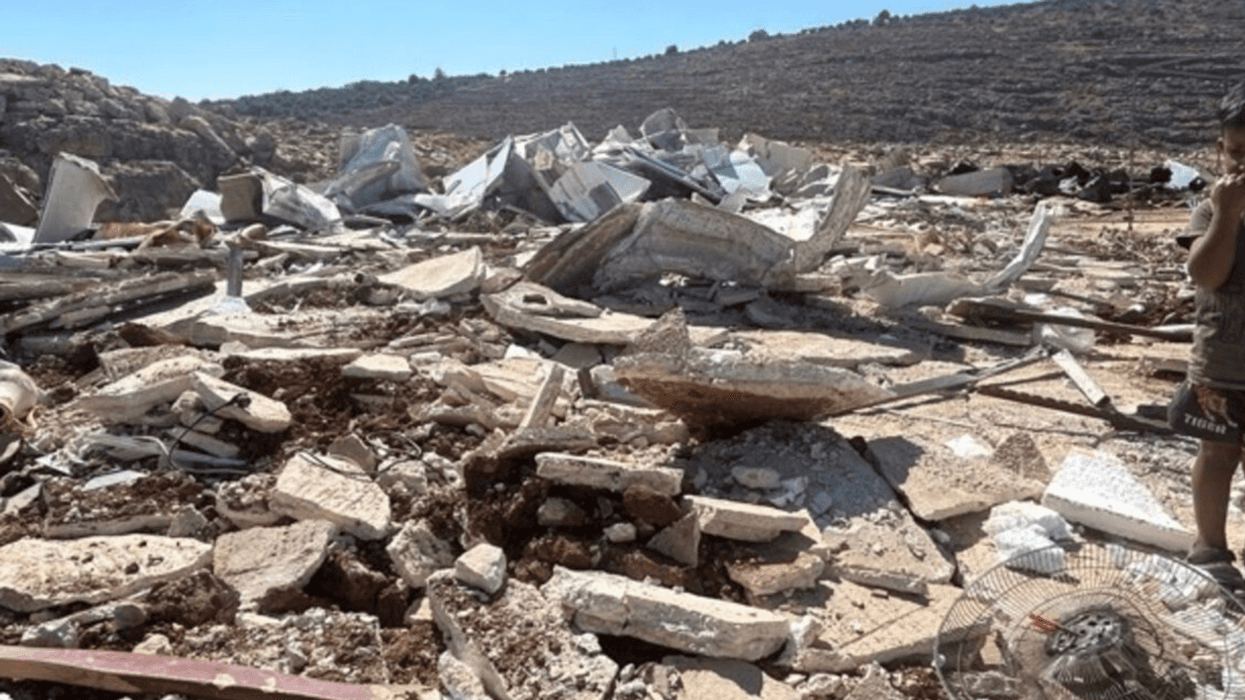
"Settler violence has reached unprecedented levels," said a coordinator for the Middle East peace process. "Many incidents occurred in the presence of Israeli forces."
Home demolitions by Israeli forces; attacks on healthcare infrastructure, homes, and schools; mass displacement of Palestinians; and the expansion of illegal settlements across the West Bank have brought the occupied Palestinian territory to "the breaking point," said a top humanitarian official at the United Nations Security Council Tuesday, calling for a "coordinated international effort" to end the violent Israeli occupation.
At a meeting on the situation in the territory, Ramiz Alakbarov, the UN special coordinator for the Middle East peace process, addressed the council as families in the town of Qusra, northern Nablus, were facing days of attacks by Israeli settlers.
That violence exemplified what the Israeli human rights group B'Tselem called an escalating "ethnic cleansing" operation that Israel's military allows.
As B'Tselem said Wednesday, settlers had established an illegal outpost in the yards of two Palestinian families' homes, “forcing the families out and taking over their homes," and the US-backed Israel Defense Forces (IDF) had done nothing to protect the Palestinian residents.
“Israeli ethnic cleansing in the West Bank is accelerating and expanding in full view of everyone,” Yuli Novak, president of B'Tselem, told Anadolu Agency, adding that the settlers' seizure of the Palestinian homes was “not an isolated incident."
Breaking the Silence, an organization run by former IDF members who oppose the occupation, explained how settlers, with the backing of the military, essentially blockade individual homes as a method of driving Palestinians out.
"Violent settlers may do the 'dirty work' of daily terror against Palestinian men, women, and children, but neither this terror nor ethnic cleansing would be possible without the army’s support," said the group. "Village after village, house after house. It keeps happening because it is policy."
At the Security Council meeting, Alakbarov said Israeli forces have killed 76 Palestinians, including 18 children, in the West Bank in 2026 so far, while children make up nearly half of the 3,800 Palestinians who have been displaced by settler attacks, demolitions, and evictions.
"One hundred and twenty-seven Palestinian communities have experienced full or partial displacement since January 2023, including 47 that have been entirely displaced, affecting more than 6,390 Palestinians," said Alakbarov. "Settler violence has reached unprecedented levels. So far this year the UN has documented more than 1,430 incidents involving Israeli settlers that resulted in casualties, property damage, or both, affecting approximately 260 Palestinian communities. Many incidents occurred in the presence of Israeli forces."
As Alakbarov spoke Tuesday, the World Health Organization warned that the West Bank has also seen an uptick in violence against healthcare infrastructure, with Israeli carrying out 83 attacks on healthcare transport such as ambulances and 11 attacks on medical centers and facilities, injuring at least 33 people and killing four. July saw a surge in healthcare attacks—a hallmark of Israel's assault on Gaza that began in 2023—with 37 strikes on infrastructure.
Settler attacks were once mainly concentrated in Area C, which comprises about 60% of the West Bank and is under Israeli control.
But Alakbarov said settlers are increasingly waging violence against Palestinians in Areas A and B, which are under the administration of the Palestinian Authority.
“The future of the region is at stake,” the UN permanent observer for the state of Palestine, Riyad Mansour, told the Security Council. “International will cannot bow before the colonial whims of the Israeli government.”
Israeli officials in recent months have advanced and approved about 12,360 housing units in settlements across the West Bank this year, with the Security Cabinet signing off on 13 new settlements in the central part of the territory last month. The move further isolates East Jerusalem, which Palestinians consider the capital of a future Palestinian state, from the rest of the West Bank.
Last year Prime Minister Benjamin Netanyahu also signed an agreement to develop 3,400 new units in the E1 settlement, which would also cut off access to East Jerusalem. The prime minister said as he approved the deal, "There will be no Palestinian state."
The approvals of more settlement housing this year and the escalation in IDF-sanctioned violence against Palestinian communities across the West Bank "are interconnected steps, not isolated developments,” Alakbarov said Tuesday.
"The situation in the West Bank must be treated as an emergency requiring urgent action," he said. "The concern is not only the continued expansion of settlements, but the speed and systematic manner in which new facts are being created on the ground. New outposts are established, often with state support, and can be retroactively authorized or incorporated into the wider settlement system. From these outposts, settler violence and intimidation have driven the displacement of Palestinian communities."
He added that the spread of settler outposts in agricultural and grazing areas is "deeply troubling."
"Requiring only a small number of settlers, they enable control over vast areas of land," said Alakbarov. "Israeli monitoring organizations report that agricultural and pastoral outposts now exercise effective control over close to 20% of the West Bank."
Israeli forces also arrested 23 Palestinians on Tuesday, including two children, days after a large-scale operation at Qalandia refugee camp resulted in the detentions of more than 60 people.
Hannah Sulieman, deputy executive director of the UN Children's Fund (UNICEF), emphasized that 355 Palestinian children are currently being detained in Israeli military prisons—"the highest number in eight years."
The arrests and the violence mean that for children and their families in the West Bank, "the fundamental spaces of childhood—the home, the classroom, the street, the community—are becoming increasingly unsafe," said Sulieman.
“Children in the West Bank have the same rights as children everywhere,” she said. "To live, to learn, to be protected, and to imagine a future beyond violence and fear."

As The Times of Israel described, "Israel has largely failed to crack down on such attacks, with arrests rare, indictments even rarer, and convictions almost unheard of."
As the Israeli government faces increasing scrutiny for its enabling of settler violence against Palestinians in the West Bank, the Israel Defense Forces has reportedly closed an investigation into one of the most brutal assaults documented in recent memory. Nobody has been charged.
Haaretz reported on Friday that the Military Advocate General’s Office has closed its investigation into an incident from October 12, 2023, in which about two dozen armed settlers attacked the village of Wadi as-Seeq, about 10 miles east of Ramallah, where most residents had been driven out by violence by a nearby Israeli outpost.
Three Palestinian men who'd remained in the village to help evacuate the local Bedouin community were detained by the gang of Israelis, who they said tortured them for hours, stripping them naked, beating them, urinating on them, burning them with cigarettes, and sexually abusing them.
Several Israeli peace activists also said they were attacked during the incident and corroborated much of the testimony of the Palestinian victims.
A photo of the three men stripped, bound, and blindfolded quickly made international headlines and drew condemnation from human rights organizations and even some pro-Israel groups like the US-based Israel Policy Forum, which called the reports "sickening and inexcusable."
The military prosecutor's office apparently found it very excusable. According to Haaretz:
The Military Advocate General's Office decided that the evidence collected did not establish the involvement of specific soldiers to the standard required for criminal prosecution.
The decision was made even though, following the initial publication, several soldiers who were present at the scene—including the unit's commander—were dismissed.
The soldiers were from the IDF Desert Frontier unit, a unit that recruits "hilltop youth," radical and often violent settler youths from illegal West Bank outposts. Some of the victims said that settlers also took part in the assault alongside the soldiers.
The dismissal of the case comes amid what the Armed Conflict Location and Event Data (ACLED) described as "an unprecedented surge in settler-related violence" this year, particularly this summer. June saw a record 460 settler-related attacks, and the trend has continued into July, with 360 documented incidents between July 1-24.
The Office of the United Nations High Commissioner for Human Rights warned on Wednesday that settler violence was at an "all-time high," noting that 18 Palestinians have been killed so far this year in incidents linked to settler attacks, more than the 17 who were killed all of last year.
The Israeli government, meanwhile, approved over $430 million to establish 34 new settlements in the West Bank earlier this year.
"The increase is part of a broader upward trend in settler violence that has been developing since 2023 but has accelerated significantly in 2026," said Nasser Khdour, Middle East Assistant Research Manager at ACLED. "Recorded incidents include attacks on Palestinians and their property, land seizures, looting activities, uprooting trees, grazing on Palestinian land, and clashes with Palestinians."
As The Times of Israel noted on Friday: "Israel has largely failed to crack down on such attacks, with arrests rare, indictments even rarer, and convictions almost unheard of. The current government has been accused of turning a blind eye to the phenomenon or even tacitly supporting it."
Members of the IDF have often been documented either directly participating in the violence or providing protection to settlers who are.
Earlier this month, Israeli Prime Minister Benjamin Netanyahu claimed during a CNN interview that his government was working hard to bring violent settlers to justice and conducting "real investigations."
But he also minimized the problem of settler violence that has become rampant, boiling it down to about “150 or so juvenile delinquents" causing mayhem while stating that they don't represent the broader settler community.
There have been no reported charges coming from this month's deadly attacks, which have resulted in the deaths of at least eight Palestinians and many more injuries, according to the United Nations Office for the Coordination of Humanitarian Affairs.
A Guardian analysis on July 21 found that Israel has not once prosecuted any of its citizens for killing a Palestinian in the West Bank at any point this decade.

"Governments need to act urgently so that the Israeli government does not continue to act as if it has a green light to commit further atrocities," said a researcher at Human Rights Watch.
As Israeli Prime Minister Benjamin Netanyahu prepares to meet with US President Donald Trump this week, Israeli soldiers stormed into several villages across the occupied West Bank on Monday, expanding a rolling campaign of violence waged by illegal settlers in recent days.
Over the weekend, armed settlers rampaged across more than a dozen Palestinian communities, torching homes and farmland, vandalizing buildings and cars, and burning a pair of mosques in Qusra and Kour.
They were acts of retaliation after two armed Israelis were killed while helping dozens of settlers carry out what Palestinian physician and political leader Mustafa Barghouti described as a “terrorist attack” in the village of Tell, near Nablus in the northern West Bank. That assault killed four Palestinians.
Tell was one of dozens of Palestinian communities to be attacked in recent weeks as part of a campaign of escalating settler violence egged on by the Israeli government as it seeks to cement total control over the West Bank.
More than 150 settler attacks involving killings or property damage have been documented in the West Bank so far this month, according to the United Nations Office for the Coordination of Humanitarian Affairs (UNOCHA).
The Palestinian Health Ministry reports that 21 Palestinians have been killed by settlers this year, already more than were killed in all of 2025.
While the Israeli military has said it was working with police to investigate the desecration of the two mosques, which were burned and spray-painted with graffiti calling for "revenge" and "blood," settlers have almost never faced accountability in Israeli courts.
This weekend's violence, meanwhile, has been openly egged on by members of Netanyahu's government, which ordered more troops into the territory, where they have raided over 20 towns as of Monday morning.
Finance Minister Bezalel Smotrich, an architect of Israel's accelerating settlement construction, said Tell should “look like the refugee camps in Nablus and Tulkarem,” referring to West Bank villages devastated by Israeli home demolitions that displaced tens of thousands of Palestinians last year.
Security Minister Itamar Ben-Gvir said the town should be treated like the village of Beit Hanoun in Gaza, which has largely been reduced to rubble by Israeli attacks. He also said he’d demand that Israel bomb and bulldoze Palestinian homes.
The military said it arrested at least 130 Palestinians across the West Bank over the weekend, while just two Israeli settlers tied to extremist violence have been arrested, with no details released about charges or what attack they were involved in.
Nida Ibrahim, a reporter for Al Jazeera, said on Monday this was typical: “Israeli settlers continue their attacks against Palestinians, mostly in their homes, at night, intimidating them. And what happens is that usually Israeli forces would come in and instead of curbing these settlers, they would conduct arrests in the occupied West Bank among Palestinians."
She said Palestinians felt like they had "no one to protect them,” while "the Israeli settlers have the support of the Israeli army and have the impunity to continue attacking Palestinians without any accountability.”
Shaiel Ben-Ephraim, an Israeli analyst who specializes in settlement policy, argued that settlers' confrontations with Palestinians were meant to provoke retaliation and a military response that allows them to deepen Israeli control of the territory.
"What everyone needs to understand is that the settlers in the West Bank intentionally cause these violent confrontations," Ben-Ephraim wrote on social media. "Ninety-nine percent of the time, the Palestinian victims don't even react. Then in the 1% when they do, the IDF treats it as terrorism and starts killing and arresting the victims and giving the land to the settlers."
"This is a method," he said. "It will not stop until there is nothing left."
This weekend's escalation was met with renewed international outcry from governments and human rights groups who demanded accountability for illegal settlers and the officials enabling them.
Francesca Albanese, the UN’s special rapporteur on the occupied Palestinian Territories, described the ongoing attacks against Palestinians as “pogroms against defenseless civilians.”
Sarah Sanbar, an Israel-Palestine researcher for Human Rights Watch, said this weekend's conflagration occurred because "the Israeli government didn’t prevent the settler attacks on Tell village, so now it needs to stop settler reprisals and escalating military action that will make a bad situation worse."
She added that "governments need to act urgently so that the Israeli government does not continue to act as if it has a green light to commit further atrocities.”
Jordan's foreign ministry condemned the “escalating settler terrorism" in the West Bank, while the state of Qatar said the attacks were a "flagrant violation of international law and international legitimacy resolutions."
The European Union issued a more muted statement, without naming Israel or mentioning the involvement of illegal settlers and instead calling on "all parties to avoid inflammatory language."
Spain, meanwhile, was much more direct, calling out "violence perpetrated by Israeli settlers, who continue to act with impunity" and calling on Israel to "reverse its policies of settlement expansion and of shielding settler violence."
As of Monday morning, the Trump administration has remained silent on the violent events of the past weekend, beyond a generic State Department statement condemning violence “by any party."
This is consistent with its policy of unrestrained military support for Israel and legitimation of its project to settle occupied Palestine in violation of international law.
Nabil Fahmy, the secretary general of the Arab League, urged Trump to push Netanyahu this week to restrain “the Israeli government’s extremist ambitions,” including its implementation of a “de facto annexation in the West Bank.”
Nearly 600 Israeli military, police, and intelligence officials with the group Commanders for Israel Security likewise urged Trump to pressure Netanyahu to rein in the violence, saying it was in the interest of US and Israeli security.
"Unless arrested swiftly and decisively, escalating violence in the West Bank is poised to ignite the region and carries severe ramifications for both Israeli security and US regional interests," wrote former IDF Chief of Staff, Retired Maj. Gen. Matan Vilnai in an open letter sent to the president on Monday. "It is no secret that certain members of our current government orchestrate much of this chaos, including by shielding their followers—who are armed and driven by messianic impulses—from the law and its enforcement."

"These hoodlums come in with machine guns—M4, an American-made machine gun—and they detain us. They block off the road."
Rep. Ro Khanna this week was detained by a group of Israeli settlers whom he described as "hoodlums... with machine guns" while making a visit to a Palestinian village in the occupied West Bank.
In an interview with Reuters published on Saturday, Khanna (D-Calif.) said he and his tour group were surrounded by armed settlers as they were traveling through the West Bank on Wednesday.
"We were at a village that Israeli settlers had destroyed, they had destroyed the school, they had destroyed that village, and we were just looking at it," said Khanna. "And these hoodlums come in with machine guns—M4, an American-made machine gun—and they detain us. They block off the road."
The California Democrat said that the settlers called in members of the Israel Defense Forces (IDF) to help them deal with him and his group.
"The IDF is on their side," Khanna remarked, "not on the side of the Americans."
Cameron Kasky, an aide to Khanna, told Reuters that the group was held for over an hour before officials whom he believed to be police intervened and secured their release.
The IDF told Reuters that both military troops and police officers dispersed the settlers who had set up a roadblock near the small Palestinian village of Khirbet Zanuta.
Khanna wasn't the only American to have a run-in with Israeli settlers this week, as CNN reported that four settlers attacked groups of journalists, including CNN reporters and crew, who were traveling through an area north of the Palestinian city of Ramallah on Saturday.
As the journalists were driving, four settlers blocked off the road with their cars and began attacking the reporters' vehicles with wooden clubs and metal rods.
"The settlers then began to jump on the vehicle behind CNN's—carrying another group of journalists—and smashed the windshield of that vehicle," the network reported. "Another group of settlers tried to block a separate exit route before chasing the journalists towards the town of Sinjil."
Israeli police arrived on the scene and arrested four settlers who were allegedly responsible for the attacks, CNN reported.
"The Israel Police and the IDF view any manifestation of violence or causing damage to property very seriously," the Israeli officers said after the arrests, "especially when it concerns media personnel performing their work."
Israeli settlers for years have carried out violent attacks on Palestinians living in the West Bank, and witnesses have regularly described IDF soldiers at the scene either standing by as the attacks occur or even actively helping the attackers.
In an interview with CNN on Tuesday, Israeli Prime Minister Benjamin Netanyahu said that claims about settler violence have been "blown up beyond belief," describing attacks as being carried out by a small number of "juvenile delinquents."
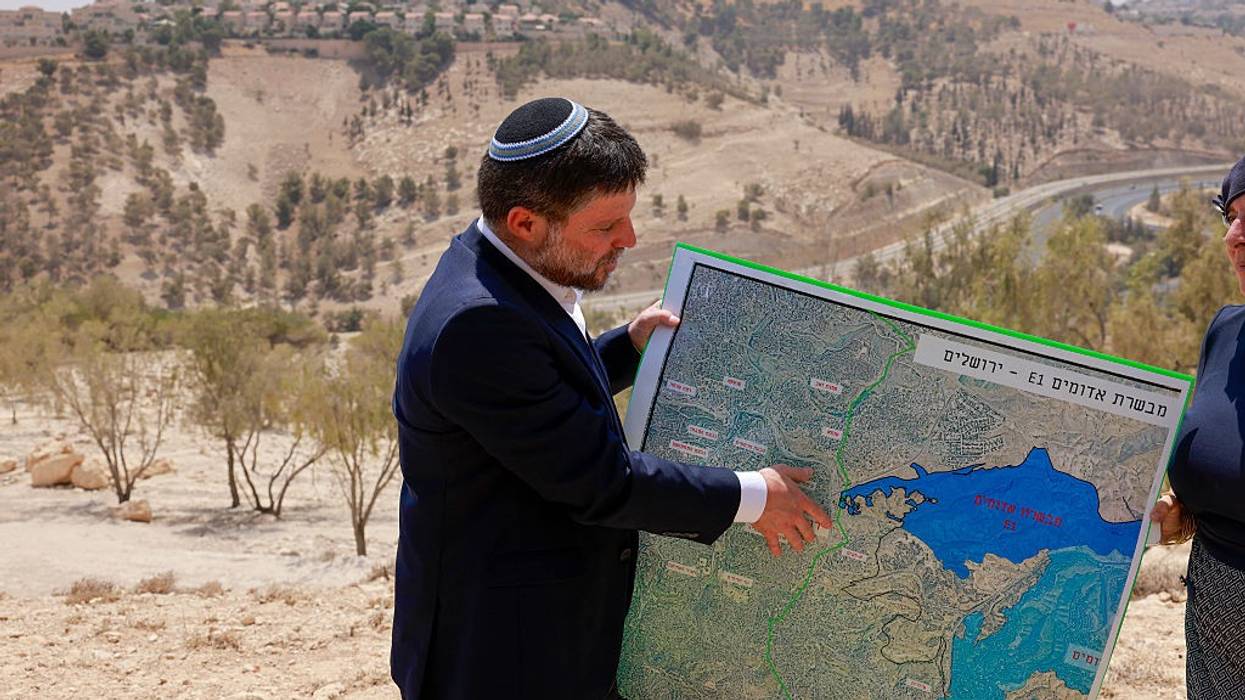
"These are tiny and piecemeal steps which will not prevent Israel from continuing to act with impunity in its genocide and crimes against the Palestinian people," said one group.
While some advocates for Palestinian rights welcomed Tuesday's joint announcement by a group of Western nations of new sanctions targeting "extremist" Israeli settlers amid their escalating ethnic cleansing efforts in the illegally occupied West Bank, many others called the measures inadequate and urged stronger action against Israel's government for enabling settler violence.
The foreign ministers of Australia, Canada, France, Norway, and the United Kingdom issued a joint statement announcing "coordinated action to introduce sanctions and other measures to hold extremist settlers accountable for the horrific levels of settler violence against Palestinian civilians."
France joined the other four nations and New Zealand—which is coordinating sanctions with the group—in banning Israeli Finance Minister Bezalel Smotrich, who seeks to annex the West Bank and Gaza and lives in the illegal settlement of Kedumim, from entering their countries. Members of the coalition also slapped an entry ban on four leaders of settler organizations and 21 individual settlers.
"We are today imposing new sanctions against those responsible for intensifying colonization and violence in the West Bank," French Foreign Minister Jean-Noël Barrot said on social media. "Smotrich actively promotes the annexation of the West Bank, which he openly claims, the creation of new settlements in the West Bank, the recolonization of Gaza, the economic collapse of the Palestinian Authority, and its deleterious consequences on the Palestinian population."
British Foreign Minister Yvette Cooper said Tuesday during a speech in Parliament that “settler expansion and violence is illegal and a fundamental threat to the viability of a two-state solution, and to long-term peace and security for Palestinians and Israelis.”
"I have strengthened our business risk guidance to make it clear and unambiguous: If you are a British citizen or business, you should not conduct any economic and financial activities in illegal Israeli settlements,” Cooper added.
Coalition countries previously banned Israeli National Security Minister Itamar Ben-Gvir from entry. The International Criminal Court in The Hague has reportedly requested arrest warrants for Smotrich and Ben-Gvir for the crime of apartheid related to their plans, backed by the Trump administration in the United States, to expand illegal settler colonies in the West Bank and annex the occupied territory. The ICC issued warrants in 2024 for the arrest of Israeli Prime Minister Benjamin Netanyahu and Yoav Gallant, his former defense minister, for alleged crimes against humanity and war crimes in Gaza.
"Extremist violent settlers, with the backing of their supporters, continue to attack Palestinians and abuse their human rights," Tuesday's announcement states. "They use violence to displace Palestinians, destroy property, and perpetuate the illegal settlement enterprise, undermining the viability of the state of Palestine and the prospects for peaceful coexistence."
"For too long, violent settlers have been able to act with near impunity, and settlement expansion and creation of outposts continue with the support and facilitation of the government of Israel," the ministers said. "In some cases, settler violence takes place under the protection of Israel’s security forces. We continue to urge the government of Israel to take action to ensure meaningful accountability for violence in the West Bank."
The statement noted that the five countries "have all taken the historic decision to recognize the state of Palestine, reflecting the rights of the Palestinian people and as part of our common efforts to protect the viability of the two-state solution."
"Today, we are acting together again in support of the same objectives," the ministers asserted. "We stand ready to take more action if the government of Israel does not take urgent steps to address the situation on the ground."
Many Palestinians and their advocates said the sanctions don't go far enough.
“While this is a step in the right direction, it is woefully inadequate," Palestinian Ambassador to the UK Husam Zomlot said on social media. “We are beyond words of condemnation. Israel has demonstrated, time and again, its disregard for international law."
"Words without action are not diplomacy. It is abdicating responsibilities," Zomlot continued. “What is needed now is clear: a ban on settlement products, comprehensive sanctions on those profiting from illegal settlements and the state sponsoring them, and guarantees that British companies, banks, and financial institutions are not contributing to Israel’s illegal occupation.“
"Justice cannot wait," the ambassador added. "The time for meaningful action is now.”
Amnesty International UK crisis response manager Kristyan Benedict called the new sanctions "a step, but not enough."
"If ministers are serious about sanctioning those 'who support and sponsor violence against Palestinian communities in the West Bank', they must act on the reality that settlements and settler violence are state policy—directed and funded from the top," Benedict argued.
“Targeting settler financing networks while the ministers who run this campaign face no consequences is not meaningful accountability—it leaves the architects untouched," he stressed, calling on the UK government to also sanction Netanyahu, Gallant, current Israeli Defense Minister Israel Katz, and Settlement Minister Orit Strock.
“The legal obligation is clear, but the political will is still not strong enough," Benedict added. "Successive UK governments have failed to take meaningful action to stop Israel's crimes and those that enable them. That failure sends a dangerous message that Palestinian lives are not valued and that unlawful occupation and apartheid are acceptable. This must end now.”
The Palestine Solidarity Campaign said in a statement that "whilst any move towards additional sanctions is correct, these are tiny and piecemeal steps which will not prevent Israel from continuing to act with impunity in its genocide and crimes against the Palestinian people."
"In addition to these limited sanctions, the government has announced that it will ‘firmly advise’ British businesses against illegal activity, sending the disgraceful message that acting according to international law is optional," PSC added.
This week, around 140 Labour members of UK Parliament urged Cooper to take “urgent, concrete action to counter the escalation of violations against Palestinians” by “ending trade with illegal Israeli settlements.”
Adil Haque, executive editor at Just Security and distinguished professor at Rutgers Law School in New Jersey, said on X: "Better something than nothing, but if the aim is the removal of *all* illegal settlements, then targeted sanctions against a few groups and individuals will not do much."
Iranian-Canadian journalist Samira Mohyeddin replied to a social media post from Canadian Foreign Minister Anita Anand saying her country's government "continues to oppose the expansion of settlements," asking, "How?"
"How do you oppose them? Sanction ISRAEL," Mohyeddin asserted. "Those supporting the settlers are the Israeli state. Those who are arming them are the Israeli state. And it is Canadian Zionist charities that are funding them."
Israel's Ministry of Foreign Affairs said the country's government "firmly rejects the disgraceful measures adopted by foreign governments against Israeli citizens, entities, and a government minister," accusing the six nations of attempting to “impose a political stance regarding the right of Jews to settle in the Land of Israel and concerning the Israeli-Palestinian conflict—camouflaged as measures against violence.”
The ministry also blasted what it called the countries' "resounding failure" to "combat the antisemitism that is rampant in their own countries,” adding that “anti-Israeli policies of the kind adopted today only serve to fuel that antisemitism.”
In July 2024, the International Court of Justice—where Israel is currently facing a genocide case related to the Gaza war, which has left more than 250,000 Palestinians dead or wounded—found the occupation of Palestine to be an illegal form of apartheid that must be ended as soon as possible. The ICJ also ruled that Israeli settler colonization of the West Bank amounts to annexation, also a crime under international law.
Efforts by the Israeli government, military, and settlers to expand West Bank settlement activity have accelerated dramatically since the Hamas-led attack of October 7, 2023. With the world's attention focused on Israel's genocidal assault on Gaza, Israeli soldiers and settlers have ramped up the ethnic cleansing of Palestinians from the occupied territory.
Attacks on West Bank Palestinians, including pogroms carried out by mobs of settlers protected and sometimes joined by Israeli troops, have killed at least 1,098 Palestinians between October 7, 2023 and May 18, according to the UN agency for Palestinian refugees. At least 240 of the slain victims were children.
Israeli settlers frequently attack Palestinian homes, businesses, and farms, and other critical infrastructure. The attackers burn homes, destroy crops, kill or steal livestock, and sometimes forcibly expel residents. Journalists who document the assaults and international activists trying to protect locals from the rampaging assailants have also been attacked.
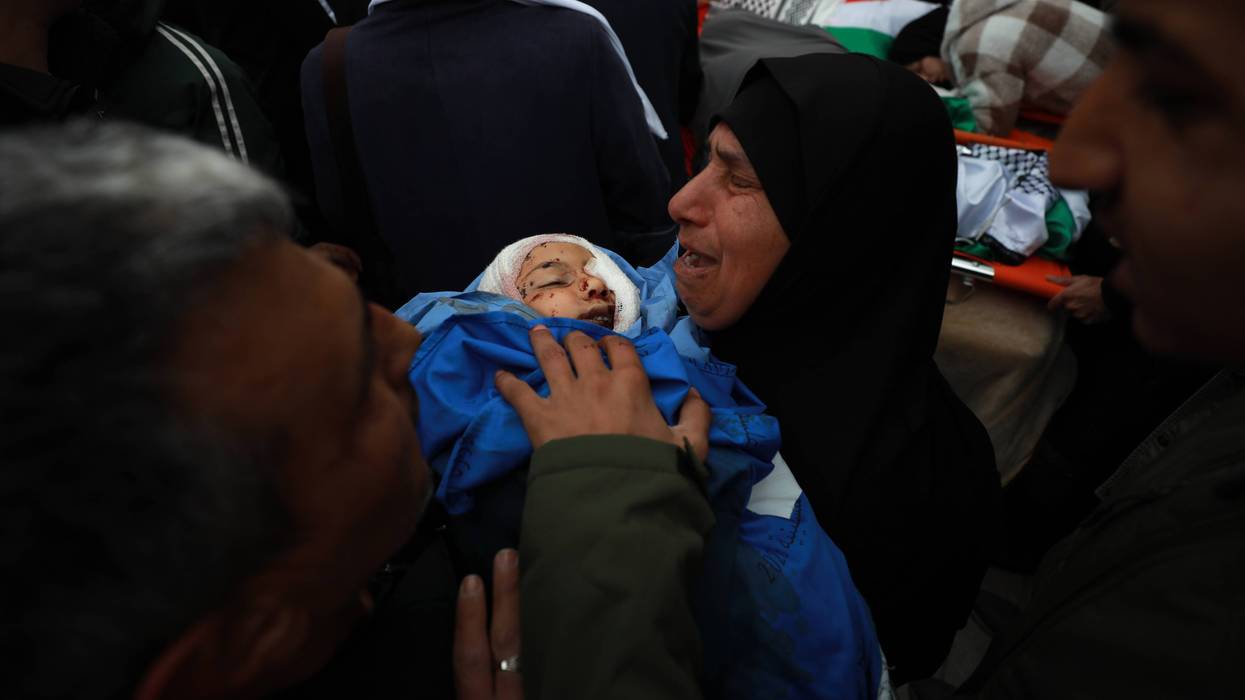
"Targeting an entire family in this savage manner reveals the true nature of the Israeli occupation and its policies based on killing and extermination, destruction and displacement," the Palestinian Ministry of Foreign Affairs said.
The Israeli Defense Forces killed a Palestinian couple and two of their children in the West Bank on Sunday, on one of the deadliest days for Palestinians in Gaza and the West Bank in weeks.
The soldiers opened fire on a car in the village of Tammun in which 37-year-old Ali Khaled Bani Odeh, his 35-year-old wife Waad, and their four sons Mohammad, Othman, Mustafa, and Khaled were traveling. Odeh, Waad, 5-year-old Mohammad, and 7-year-old Othman were shot in the head and died, leaving behind two injured children.
"We came under direct fire, we didn't know the source. Everyone in the car was martyred, except my brother Mustafa and me," one of the surviving children, 12-year-old Khaled, told Reuters from the hospital.
He said that after the shooting was over, the Israeli soldiers pulled him out of the car and began to beat him, telling him, "We killed dogs."
"These crimes occur within a systematic policy pursued by the occupation authorities using lethal force against Palestinian civilians."
The soldiers also beat his other surviving brother, according to Al Jazeera.
The Israeli military said that it had been operating in Tammun to make arrests on "terrorist" charges and that soldiers had fired on a vehicle when it accelerated toward them, according to Reuters. It said it was reviewing the incident.
Al Jazeera journalist Nida Ibrahim said that the family had been totally shocked by the shooting.
“The extended family says the father and the mother did not know that Israeli forces were there as they were in a Palestinian car,” she said.
The Palestinian Ministry of Foreign Affairs condemned the killing on social media as a "terrifying arbitrary execution crime that targeted an entire Palestinian family inside their vehicle."
The Israeli soldiers also prevented Red Crescent workers from reaching the family, the ministry said, leading to the families' "deliberate and cold-blooded execution."
The ministry continued: "The Ministry affirms that targeting an entire family in this savage manner reveals the true nature of the Israeli occupation and its policies based on killing and extermination, destruction and displacement, amid a systematic impunity, and it further affirms that these crimes, concurrent with the escalation of settler crimes and their organized terrorism in the occupied West Bank, are not isolated incidents, but part of a comprehensive and systematic aggression aimed at exterminating the Palestinian people and displacing them, in clear exploitation of the escalation occurring in the region."
In a statement issued on social media, the Palestinian Centre for Human Rights (PCHR) also blamed the deaths on the Israeli occupation of the West Bank, which has been deemed illegal by the International Court of Justice.
"This escalation in these crimes comes as a direct result of the expansion of shooting instructions in the Israeli army, the rising violence of settlers amid the prevalence of an impunity policy, and the entrenchment of ethnic cleansing amid unprecedented international silence," PCHR said.
It continued: "While the Palestinian Centre for Human Rights condemns the unjustified murder crimes committed by occupation forces and settlers, it affirms that these crimes occur within a systematic policy pursued by the occupation authorities using lethal force against Palestinian civilians, in flagrant violation of the principles of necessity and distinction that form fundamental pillars of international humanitarian law and international human rights law. Moreover, they come as part of a pattern aimed at terrorizing citizens, intimidating them, and entrenching ethnic cleansing policies, and replicating acts of genocide, albeit in a less overt manner."
Also on Sunday, Israeli settlers killed a Palestinian man in Nablus Governorate, making him the sixth man killed by settlers since the US and Israel launched their war on Iran. Movement restrictions imposed due the war have emboldened setters to attack, knowing that ambulances will be delayed in reaching their victims, human rights advocates and healthcare workers told Reuters.
In total, Israeli settlers and soldiers have killed 25 Palestinians in the West Bank since the beginning of the year, PCHR said.
In Gaza, where Israeli strikes at first declined following the beginning of the Iran war, the death toll is rising again. On Sunday, Israeli strikes killed nine police officers in Zawayda and a pregnant woman, her husband, and son in Nuseirat.