SUBSCRIBE TO OUR FREE NEWSLETTER
Daily news & progressive opinion—funded by the people, not the corporations—delivered straight to your inbox.
5
#000000
#FFFFFF
To donate by check, phone, or other method, see our More Ways to Give page.


Daily news & progressive opinion—funded by the people, not the corporations—delivered straight to your inbox.
"This is unprecedented, but the WHO got unprecedented criticism," an expert said after the agency changed course on drinking water guidelines.
The World Health Organization has scrapped its draft guidelines for "forever chemicals" in drinking water and restarted scientific review following criticism that its previous process was unduly influenced by industry-linked science, The Guardian reported Wednesday.
Leading scientists and public health experts from around the world had for the last two years called on the WHO to reverse course after the organization released draft guidelines they deemed to be far too weak to protect human health. Regulators in the United States and the European Union now have much stricter standards for per- and polyfluoroalkyl substances (PFAS) than those the WHO was proposing.
WHO guidelines are consequential because regulators in many countries use them to set standards, and they can be cited in industry-backed lawsuits that argue that a national or subnational regulatory standard is too strict.
The WHO's reversal was highly unusual and showed the level of scrutiny its PFAS process was under, experts said.
"This is unprecedented, but the WHO got unprecedented criticism," Betsy Southerland, the former director of science and technology at the U.S. Environmental Protection Agency (EPA) Office of Water, told The Guardian.
Southerland herself was one of the leading critics. Last year, she and Linda Birnbaum, the former director of the U.S. National Institute of Environmental Health Sciences, wrote a commentary in Environmental Science & Technology, a peer-reviewed journal, in which they called the WHO's approach "stunning" and argued for extensive revision of the guidelines.
In November 2022, a group of more than 100 scientists wrote an open letter to the WHO calling for a reconsideration of the guidelines to include the raft of research on the dangers of PFAS to human health, more transparency about the process, and better enforcement of the organization's conflict-of-interest policy.
PFAS are a class of roughly 16,000 synthetic compounds that were developed by the chemical industry, including companies such as 3M and DuPont, in the mid-20th century. The compounds, which are called forever chemicals because they break down only very slowly, are found in many household and industrial products and are now found in the blood of most humans, raising public health concerns because their links to many types of cancer and other diseases.
Two of the most well-known and well-studied PFAS are perfluorooctanoic acid (PFOA) and perfluorooctane sulfonate (PFOS), and it's these two compounds that have been the focal point of the WHO rulemaking process. The WHO proposed guidelines of limits of 100 parts per trillion for the two compounds—well above the 4 ppt the EPA recently instituted, based on research showing there was "no safe level of exposure" to the contaminants—citing unclear research and inadequate filtration systems for PFOA and PFOS removal at very low levels.
Critics said those arguments came from flawed reasoning and research. For example, the WHO had, in a key document, repeatedly cited the work of Michael Dourson, a controversial toxicologist whom then-President Donald Trump had named to lead the EPA's chemical safety division in 2017 but who ultimately ended up in another position, due to criticism over his ties to industry. The New York Times that year published emails Dourson had exchanged with the American Chemistry Council, a lobby group, that showed a close relationship.
Dourson told The Guardian that the work that he and other scientists whom the WHO cited in its 2022 draft guidelines did was independent of industry influence and that the guidelines had been sound, given the uncertainty about PFAS science.
But Birnbaum told the newspaper that invoking uncertainty and casting doubt on the science is an industry tactic. That's one of the approaches being used in legal challenges to the EPA's stricter rules.
A public health watchdog on Wednesday praised California's proposal to add one of the so-called "forever chemicals" PFOA to the state's list of chemicals known to cause cancer.
PFOA, or perfluorooctanoic acid, was formerly used to make DuPont's Teflon and other products. It's part of a group of chemicals called per- and polyfluoroalkyl substances (PFAS). Dubbed forever chemicals because they don't break down and can accumulate in the human body, PFAS contamination is widespread. Humans can be exposed through workplace environments, groundwater contamination, or household products.
The U.S. EPA says there's evidence PFOA can cause adverse health effects including reproductive and developmental, liver and kidney, and immunological harm.
The proposed listing decision was announced last Friday by the California Environmental Protection Agency's Office of Environmental Health Hazard Assessment (OEHHA). It said products with PFOA should carry a warning label that the chemical is known to the state to cause cancer under the Safe Drinking Water and Toxic Enforcement Act of 1986, or Proposition 65. That determination, said OEHHA, is based on findings from the National Toxicology Program.
PFOA is already on the Proposition 65 list, but for reproductive toxicity.
The public comment period on the new proposed listing ends May 3.
Adding the cancer warning to PFOA would be good news for public health, says the Environmental Working Group (EWG), because such labeling "historically has pushed manufacturers to remove listed chemicals from their products."
EWG president Ken Cook, in a statement Wednesday, welcomed the California regulator's move as a "landmark decision" that "underscores the state's longstanding commitment to protecting its citizens from cancer-causing chemicals like PFOA."
"The damage to communities nationwide from PFOA-contaminated drinking water and exposure through everyday consumer products is almost unimaginable," said Cook, "but California's action underscores the urgency of addressing the crisis."
The proposal also drew praise from environmental attorney and Right Livelihood laureate Robert Bilott, who, following a two-decade legal battle, helped reach a $671 million settlement in class-action lawsuit against DuPont on behalf of thousands of people who said their drinking water was contaminated by the corporation.
Bilott said in a statement that the "more information and scientific data that is uncovered and revealed, the more concerned scientists and regulators all over the planet become."
"The current action in California is just the latest within the scientific and regulatory community to reject the manufacturers' claims that these forever chemicals present 'no risk' to humans," said Bilott.
Public health experts and legal observers say PFAS-making companies knew of the chemicals' harm for decades but continued their production, leaving some affected residents to feel they "collateral damage" while companies try to dodge accountability.
PFOA has been phased out of production in the U.S., but public health watchdogs say there remain concerns about ongoing contamination, existing stockpiles, imported products, and the fact that some replacement chemicals present health dangers of their own.
For years, I've been trying to impart a simple concept that Superman is not coming.
Dare I say, I had hopes that this new administration would usher in the dawning of a new day. As picks for President-elect Joe Biden's Environmental Protection Agency (EPA) transition team were announced, I felt concerned and disheartened about a chemical industry insider being on the list. Are you kidding me?
Michael McCabe, a former employee of Biden and a former deputy Environmental Protection Agency administrator, later jumped ship to work as a consultant on communication strategy for DuPont during a time when the chemical company was looking to fight regulations of their star chemical perfluorooctanoic acid (PFOA) also known as C8. The toxic manmade chemical is used in everything from waterproof clothes, stain-resistant textiles and food packaging to non-stick pans. The compound has been linked to lowered fertility, cancer and liver damage. The Guardian reported this week that Harvard school of public health professor Philippe Grandjean, who studies environmental health, warns that PFAS chemicals, of which PFOA is one, might reduce the efficacy of a Covid-19 vaccine.
This smells of the dawn of the same old. To quote the Who: meet the new boss, same as the old boss.
It should go without saying that someone who advised DuPont on how to avoid regulations is not someone we want advising this new administration.
PFOA pollutes the blood of nearly every American and can pass from mother to unborn child in the womb. This toxic product of industry is a stable compound not easily broken down in the environment or in the human body, giving it the nickname "forever chemical". Scientists have found it in living beings across the globe - from animals living in the depths of the sea to birds on remote islands.
The Environmental Protection Agency has set no enforceable national drinking water limits for perfluorinated chemicals, including PFOA. Tens of thousands of community drinking water systems across the country have never even tested for these contaminants.
McCabe started managing DuPont's communications with the EPA about the toxic chemical in 2003, according to an article in the Intercept. This was the time in which DuPont faced a barrage of litigation after the company dumped 7,100 tons of PFOA-filled waste in West Virginia, which made its way into the drinking water of 100,000 people. Countless members of the community faced debilitating illnesses as a result. The legal battle with the company was turned into the film Dark Waters in 2019.
Mind you, DuPont suspected that their product was harmful since the 1960s - experiments they conducted in 1961 showed that PFOS affected the livers of dogs and rabbits. McCabe's work inevitably contributed to staving off costly clean-up and additional regulation headaches for the company.
Are we the people supposed to trust a former DuPont man in a transition team tasked with reviewing the Chemical Safety Board? Is this how the newly elected leadership wants to start what is supposed to be a healing and unifying administration? Are we already falling back on the old and antiquated, hide-and-seek, conceal, dodge and deny leadership or are you going to come out and be the change and the hope needed when it comes to the environment?
I don't see how picking someone from industry is moving us toward that goal.
The science is in. Research has linked exposure to this chemical to the following illnesses: kidney and testicular cancer, ulcerative colitis, thyroid disease, pregnancy-induced hypertension and high cholesterol.
What will it take to get our leadership to work with the people?
This newly elected president says we need to listen to the science. Are you really listening to the science or are you listening to an industry insider, who is controlling the message?
With a lack of federal guidance on these dangerous chemicals, states have been left to create their own rules to enforce guidance and regulations. This chemical, and others like it, have been poisoning us for decades. Now is the time to act.
This is not about being rightwing or leftwing. It doesn't matter what side of the aisle you are on. We cannot keep making picks from this inside, leaving we the people, once again on the outside.
What will it take to get our leadership to work with the people?
Stop working against and separately from your communities. Put your transition team on the ground and make them talk with those affected by these chemicals. Go out and see for yourself, learn and hear from those who you represent about what the heck is happening to them on the ground - those living and breathing in the toxic mess we have created.
It is time to keep your promise and give the people a voice and a seat the table in order to find a meaningful solution for the environment and for the people. Don't close the door on us again.
We are in this mess because we continue to do the same old thing.
Let us not forget where these chemicals came from and who is responsible for putting them in our environment. Let us not bring the fox back into the hen house. DuPont executives should have no place in the Environmental Protection Agency.
I call on Joe Biden to do the right thing.
Even as the scientific case for regulating 'forever chemicals' grows clearer and more urgent every year, the EPA under President Trump delays and obfuscates.
A year ago, the Environmental Protection Agency (EPA) promised Congressional leaders that, after years of stalling, it would finally move forward on regulation of two notorious "forever chemicals," PFOA and PFOS. The notice that eventually appeared in the Federal Register on March 10, 2020, however, is not a regulation; it is merely a proposal to consider regulation. Worse, the timeline it sets out pushes actual regulation off for as long as five more years -- if it happens at all.
This marks the latest in a decades-long string of failures by EPA to protect Americans from these dangerous chemicals. Even as the scientific case for regulation grows clearer and more urgent every year, the EPA under President Trump delays and obfuscates.
PFOA and PFOS are the oldest of a class of synthetic per- and polyfluoroalkyl chemicals known collectively as PFAS. Over 5,000 variations of PFAS are currently used in the manufacture of consumer goods including cookware, flame-retardants, waterproofing, furniture and take-out containers.
The Environmental Working Group estimates up to 110 million people could be drinking water with PFAS in it.
Nonetheless, the EPA has dragged its feet on regulating PFAS. Industry voluntarily began phasing out the original "long-chain" PFAS, starting with PFOS in 2002 and PFOA by 2015. It set a non-binding "lifetime health advisory" for drinking water contaminated with PFOA and PFOS in 2016, near the end of the Obama administration.
Meanwhile, the more numerous and less-studied "short-chain" PFAS continue to proliferate. Indeed, the EPA has approved new versions without testing their safety and never finalized key toxicity studies.
On Feb. 14, 2019, the EPA issued a PFAS Action Plan that promised the establishment of a maximum contaminant level (MCL) for PFOA and PFOS in drinking water. The EPA promised it would propose a regulatory determination under the Safe Drinking Water Act by the end of that year and said it was "also gathering and evaluating information to determine if a SDWA [Safe Drinking Water Act] regulation is appropriate for a broader class of PFAS."
The Federal Register notice that appeared more than a year later, however, shows EPA is actually proposing only to consider developing regulations for PFOA and PFOS, and merely continuing to gather information on other PFAS chemicals.
The nearly five-year regulatory timeline it describes makes it abundantly clear that EPA has no intention of protecting Americans from PFAS contamination as long as President Trump is in office.
Trump's EPA has taken only one definite action on PFAS, proposing to restrict imported products containing PFOA and PFOS. However, Sen. Tom Carper (D-Del.) recently released documents that show the White House has worked to create glaring loopholes in this proposal so that many products containing PFOA and PFOS could enter the U.S.
Several bills introduced in Congress have tried to force the EPA to do its job, only to earn a veto threat from President Trump.
Finally this year, the National Defense Authorization Act for Fiscal Year 2020 added 172 PFAS chemicals to the Toxic Release Inventory, which requires reporting by facilities that manufacture or process chemicals included on the list.
But reporting is not enough. The Environmental Working Group estimates that at least 2,500 industrial facilities across the U.S. could be discharging PFAS into the air and water.
Some states have begun filling the regulatory void, but many PFAS-contaminated sites are the result of Department of Defense (DoD) pollution and DoD is refusing to comply with state clean-up laws and standards. For example, at Cannon Air Force Base in New Mexico, the State was forced to sue DoD, but the Air Force continues to ignore the state environmental laws.
While the number of sites with PFAS contamination continues to grow, Trump's EPA continues to do nothing to address this toxic mess.
"It is not a radical idea to demand that when people in the world's richest country turn on their taps, the water they drink is free of toxic chemicals."
"It lays out a plan to finally hold polluters accountable to pay for cleanup of the worst contamination, while providing much needed financial relief for rural homeowners and local governments that need to upgrade treatment plants to remove these forever chemicals."
--Wenonah Hauter, Food & Water Action
So said Sen. Bernie Sanders (I-Vt.) Wednesday as he introduced new legislation that would required a national cleanup effort of drinking water contaminated by the toxic "forever chemcials" per- and polyfluoroalkyl substances, collectively known as PFAS.
Studies have tied this class of chemicals--which have been used in products ranging from nonstick pans and stain-resistant furniture to firefighting foam--to health issues including various cancer, weakened childhood immunity, and endocrine disruption.
The Prevent Future American Sickness (PFAS) Act says the chemicals "have so far been confirmed in the groundwater or tap water of more than 1,400 communities" nationwide, though scientists estimate that more than a million people in the country could be living with PFAS-contaminated tap water.
Noting that, in the absence of federal regulations, "states such as Vermont, New Hampshire, New Jersey, and Michigan are leading the way in terms of setting robust drinking water standards for PFAS chemicals," the bill (pdf) aims to address the issue at a national level.
The bill would direct the U.S. Environmental Protection Agency to designate PFAS as hazardous under both the Clean Air and and the Comprehensive Environmental Response, Compensation, and Liability Act--commonly called CERCLA or Superfund. As Sanders' office summarizes (pdf), it also would set up "authorizations for EPA grants for drinking and wastewater infrastructure to address PFAS contamination in publicly owned water treatment plants, and residential water wells."
The legislation would further ban these "forever chemicals" in food packaging and ban the incineration of PFAS firefighting foam. It would direct the EPA to examine other contaminated waste that shouldn't be burned and require the Pentagon to put out a report detailing where in the country its firefighting foam is now and where it has been incinerated over the past decade.
"As hundreds of communities across the country are dealing with toxic PFAS contamination in their drinking water," Sanders said Wednesday, "it is unconscionable that huge corporations like DuPont have, for decades, concealed evidence of how dangerous these compounds are in order to keep profiting at the expense of human health. Congress must pass this legislation to put an end to corporate stonewalling and criminal behavior and tackle this public health crisis."
"Congress needs to come together to put the health of our communities above the wish lists of American's biggest polluters, and that means establishing and enforcing chemical standards that protect Americans from PFAS substances."
--Sen. Jeff Merkley
According to a statement from Sanders' office, the bill incorporates both the Water Affordability, Transparency, Equity and Reliability (WATER) Act that he introduced last year as well as an effort with Sen. Shelley Moore Capito (R-W.Va.) to direct the Pentagon to disclose details about storing and disposing of firefighting foam.
Sanders, a leading candidate in the 2020 Democratic presidential primary race, unveiled the PFAS Act with support from Sens. Jeff Merkley (D-Ore.) and Ed Markey (D-Mass.).
"Every American--regardless of the color of their skin, their zip code, or their income--has the right to be free from exposure to a slew of carcinogens and hazardous chemicals," said Merkley. "But millions of people are ingesting dangerous PFAS chemicals against their will through the air they breathe, the water they drink, and the food they eat. Congress needs to come together to put the health of our communities above the wish lists of American's biggest polluters, and that means establishing and enforcing chemical standards that protect Americans from PFAS substances."
Markey--who introduced the Green New Deal with Rep. Alexandria Ocasio-Cortez (D-N.Y.) in February 2019--highlighted that landmark climate and economic resolution, which Sanders supports, in the statement Wednesday. "PFAS pose a serious health risk to residents across Massachusetts and the country," he said. "Cleaning up our air, soil, and water of these forever chemicals is an important component of the Green New Deal, as we fight to provide our communities with a future free of the legacy of corporate pollution."
The PFAS Act also already has the backing of at least one advocacy organization: Food & Water Action, which also supported last year's WATER Act.
"Senator Sanders has proposed an urgent solution to address the widespread PFAS contamination of our food and water," said Food & Water Action executive director Wenonah Hauter. "His Prevent Future American Sickness Act of 2020 would rapidly speed up the remediation of toxic PFAS sites across our country. It lays out a plan to finally hold polluters accountable to pay for cleanup of the worst contamination, while providing much needed financial relief for rural homeowners and local governments that need to upgrade treatment plants to remove these forever chemicals."
"This is the sort of concrete and swift action we need to take to help ensure that every American has access to safe water," Hauter declared. "Our communities can't wait; we need Congress to act now to address America's toxic water crisis."
Sanders will discuss the bill tonight on Facebook Live at 6:30 pm ET. He will be joined by activist and actor Mark Ruffalo, scientist Dr. Anna Reade, and Rep. Debbie Dingell (D-Mich.). Dingell, who has been a leading force for federal PFAS regulation in the Democrat-controlled House, is the lead sponsor of the PFAS Action Act, which passed the lower chamber earlier this month in a 247-159 vote, largely along party lines.
The measure--like Sanders' bill--faces an uncertain future in a Republican-held Senate. Even if Dingell's bill were to pass the upper chamber, President Donald Trump has threatened to veto it.
Plastic by-products were found in an alarming 97-100% of blood and urine samples from 2,500 children tested between 2014 and 2017, according to a new study by the German Environment Ministry and the Robert Koch Institute.
Der Spiegel, the German weekly magazine, published the findings Saturday, which were part of a federal study focused on "human biomonitoring" of 3 to 17-year-olds. Traces from 11 out of 15 plastic ingredients were found in the test samples.
"Our study clearly shows that plastic ingredients, which are rising in production, are also showing up more and more in the body. It is really worrying that the youngest children are most affected as the most sensitive group," Marike Kolossa-Gehring, one of the study's authors, told the magazine.
Researchers said that they were especially concerned about high levels of perfluorooctanoic acid (PFOA) that were found in the study. PFOA is an extremely persistent, bioaccumulative, and toxic chemical frequently used in non-stick cookware and in waterproof clothing.
In 20 percent of those examined, they were above the limit, in the younger children, the proportion was even higher. The study also showed children from poorer families had more plastic residue in their bodies than children from higher-income families, according to German public broadcaster ARD
"It can not be that every fourth child between the ages of three and five is so heavily burdened with chemicals that long-term damage cannot be reliably ruled out," says Hoffmann. "The Federal Government must make every effort to protect people from harmful chemicals," says Hoffmann, "Provision is an obligation."
The chemical is dangerous for the reproductive system and is toxic to the liver. While a global ban of perfluorooctanoic acid is to take effect in 2020, a group of international NGOs has criticized the EU for requiring an exemption for medical textiles from a global ban on the use of perfluorooctanoic acid (PFOA) agreed at the UN Conference of the Parties (COPs) last May.
In a statement, NGOs, including the Health and Environment Alliance (HEAL), Health Care Without Harm (HCWH) and Arnika, expressed "deep regret and disapproval" for the request, which could "undermine an otherwise effective worldwide ban.
"Delegates from more than 180 countries agreed the prohibition of the use of the chemical, adding it to Annex III of the Stockholm Convention at the conference in Geneva. However, several exemptions for the substance, including one for medical textiles, were requested by the EU delegation - along with China and Iran - and approved
The new German research was made available by the government upon request by a Green Party inquiry into the effects of chemicals on public health.
Hoffmann said that there has not been enough research on how plastic chemicals affect the body, and how they are ingested.
The results of the study also show an increase in exposure to substitutes for previously banned chemicals. Hoffmann sees this as a critical signal: Substances that are classified as dangerous should not be replaced by similar chemicals with likewise questionable properties, she says. In addition, it must be better researched, which entry routes chemicals enter the human body, the Green politician told Der Spiegel. The results of the study include, for example, the exposure to substances contained in cosmetics, children's toys or medical devices.
After more than a year of community meetings and deliberations, the U.S. Environmental Protection Agency announced in February 2019 that it would begin the process of regulating two drinking water contaminants, seeking to stem a growing national public health crisis. If EPA follows through, this would be the first time in nearly 20 years that it has set an enforceable standard for a new chemical contaminant under the Safe Drinking Water Act.
The chemicals at issue, PFOA and PFOS, have contaminated drinking water supplies across the country affecting millions of Americans. They belong to a class of synthetic chemicals called PFAS, or per- and polyfluoroalkyl substances, that are widely used in products including firefighting foams, waterproof apparel, stain-resistant furniture, food packaging and even dental floss.
These chemicals have been linked with numerous health problems, including cancers, thyroid disease, high cholesterol, low birth weight, and effects on the immune system. Studies show exposure to PFAS in children can dampen the effectiveness of vaccines--a topic my colleagues and I are currently investigating as part of a project called PFAS-REACH. In laboratory studies, low levels of PFAS can alter mammary gland development, which could have implications for increasing breast cancer susceptibility later in life.
What's more, PFAS are highly persistent. Once released into the environment, they don't break down--a fact that has led many to dub these substances "forever chemicals."

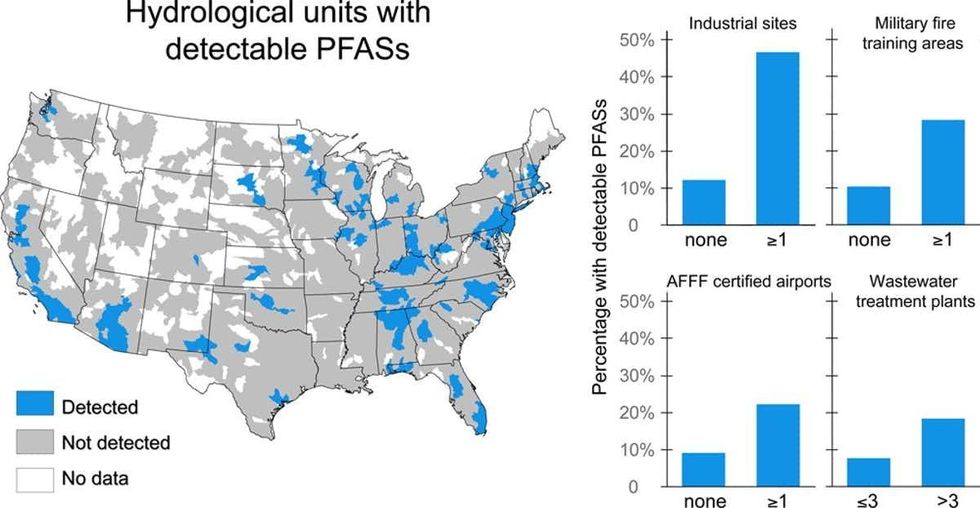
PFAS have been used for decades, but only in the last few years have we begun to grasp the full extent of contamination. A 2016 study reported that over 16 million Americans are exposed to these contaminants in drinking water, and a more recent estimate put that number at 110 million.
PFAS find their way into water supplies from military fire training areas and airports, as well as industrial sites and wastewater treatment plants. For instance, in 2010 my colleagues and I at the nonprofit Silent Spring Institute, which studies links between environmental chemicals and women's health, first detected PFAS in public and private drinking water wells on Cape Cod, Massachusetts. The Department of Defense has identified approximately 400 current or former military sites with known or suspected contamination, stemming mostly from use of firefighting foams.
Today there are more than 4,700 PFAS substances in use. All are chemically similar and highly persistent. The United States phased PFOS out of products in 2000 and PFOA in 2006, but they are still turning up widely in drinking water, which is why states want EPA to set standards specifying what levels of exposure are safe. Meanwhile, studies suggest that some newer PFAS chemicals have similar health effects, and most have not been studied at all.
Scientists are working hard to better understand these chemicals in order to mitigate the public's exposure. For example, researchers at the STEEP Superfund Research Program, a multi-institutional effort which I am a part of, are investigating how these chemicals move through the environment, their chemical characteristics, how they accumulate in our bodies, and their impacts on our health.
EPA has been considering regulating PFOS and PFOA in drinking water since 2009. The agency's recent announcement is a step in the right direction, but still only addresses these two chemicals in drinking water and any new federal standard won't be fully implemented for years.
Earlier this year my colleagues and I published an analysis in which we showed wide variation in the way state and federal regulators manage these contaminants in drinking water. We found that seven states have their own guideline levels for PFOA and PFOS. Of these, Vermont, Minnesota, and New Jersey have adopted levels that are more stringent than EPA's current non-enforceable levels.
More recently, New Hampshire, New York, and California have also proposed guideline levels lower than EPA's. The day after EPA announced its plan, Pennsylvania officials announced they would create their own standards, citing concerns about EPA's sluggish efforts to address the issue.
Meanwhile, some states are developing their own guidelines covering additional PFAS chemicals. For instance, Minnesota has included in its guidelines a chemical called PFBS, which is used in Scotchgard. North Carolina regulators are focusing their efforts on a substitute called GenX that seeped into local water supplies from a plant upstream and has been detected in their air and soil.
A key question now is how EPA's drinking water standard for PFOA and PFOS will compare with what states are doing. Will the agency consider the full body of scientific evidence on health risks associated with exposure to this class of chemicals when setting a "safe" limit in drinking water? Will it consider effects on sensitive populations, such as pregnant women and children? Although the science is still evolving, one thing is clear: The more we learn about these chemicals, the more we see health effects at lower and lower levels.
It is important to give states latitude to adopt more stringent approaches than those set by EPA, and a lot can be learned from how states set guidelines. However, the emerging regulatory patchwork raises concerns that some Americans are not adequately protected. Some states have the resources and technical know-how to conduct their own risk assessments, but others may lack the funding and expertise.
Political and social factors, as well as pressure from industry, can lead to wide disparities in exposure, with some communities protected and others left vulnerable. A federal standard would ensure that everyone is protected, regardless of whether their states have the will and the resources to develop their own standards.
EPA's plan includes other steps that sound promising, such as listing PFOS and PFOA as "hazardous substances" under the Superfund law to establish liability for contamination and support cleanup, enhanced monitoring in drinking water, and better reporting of releases from industry. But the plan largely focuses on addressing problems at existing contaminated sites, not on keeping these chemicals out of water supplies and the environment.
Conducting risk assessments on individual PFAS compounds one at a time is impractical. As a result, many advocacy groups and scientists--including my colleagues at the Green Science Policy Institute--are calling for these chemicals to be regulated as a class.
Under the Toxic Substances Control Act, EPA has authority to restrict approval of new toxic chemicals. But in reality, new ones are approved all the time without thorough evaluations. Given concerns about the extreme persistence and mobility of PFAS compounds, in my view it makes good sense to restrict this entire class of chemicals.
There are precedents for such action. In 1979 the United States banned PCBs after these persistent and toxic chemicals became widespread in the environment. The global community banned chlorofluorocarbons in 1996 when scientists learned that they damage Earth's stratospheric ozone layer. And in 2017 the U.S. Consumer Product Safety Commission voted to ban an entire class of toxic flame retardants from consumer products.
There is ample evidence for treating PFAS the same way. The question is whether federal regulators have the will.
In response to reports this week that the Environmental Protection Agency (EPA) doesn't plan to impose drinking water limits on two toxic chemicals linked to various forms of cancer and other health issues, 20 senators on Friday sent a letter to acting Administrator Andrew Wheeler imploring him to craft nationwide restrictions.
"While our nation's water quality is among the highest in the world, we now face a serious challenge: aggressively addressing the health and environmental threats connected with PFAS."
--20 senators
The chemicals in question are PFOA and PFOS, which belong to a group called PFAS. Politico reported Tuesday that Wheeler had signed off on an unreleased plan that would leave the pair off the list of materials regulated under the Safe Drinking Water Act.
The EPA's Office of Water Assistant Administrator David Ross on Tuesday issued what one journalist described as a "non-denial denial" (Ross claimed that "any information that speculates what is included in the plan is premature") while public health advocates decried the reported move as unsurprising but also "absolutely unconscionable."
In the letter (pdf) spearheaded by Sens. Jeanne Shaheen (D-N.H.) and Shelley Moore Capito (R-W.V.), federal lawmakers call for "immediate actions to protect the public from contamination" and warn that "EPA's inaction would be a major setback to states and affected communities."
Noting that a lack of federal rules has led to states imposing "a patchwork of conflicting drinking water standards and guidelines," and that health advisories put out by the EPA are inadequate, the letter argues:
Without enforceable drinking water standards for PFOA and PFOS, it is doubtful that a national management strategy will sufficiently confront the challenges PFAS chemicals pose to states and affected communities. This decision would also fail to consider the ongoing interagency efforts to determine the human health implications of contamination from PFAS, including the nationwide study being conducted by the Agency for Toxic Substances and Disease Registry (ATSDR).
"Safe drinking water is essential to the health and well-being of every American," the senators conclude. "And while our nation's water quality is among the highest in the world, we now face a serious challenge: aggressively addressing the health and environmental threats connected with PFAS."
In addition to calling for national rules for the water contaminants, the senators' request that the EPA provide lawmakers with briefings on the agency's efforts to limit PFAS contamination as well as regular progress updates.
The letter was also signed by Sens. Maggie Hassan (D-N.H.), Debbie Stabenow (D-Mich), Thom Tillis (R-N.C.), Tom Carper (D-De.), Tom Udall (D-N.M.), Patty Murray (D-Wash.), Bob Casey (D-Penn.), Patrick Leahy (D-Vt.), Maria Cantwell (D-Wash.), Jack Reed (D-R.I.), Martin Heinrich (D-N.M.), Sherrod Brown (D-Ohio), Bernie Sanders (I-Vt.), Joe Manchin (D-W.V.), Bob Menendez (D-N.J.), Kirsten Gillibrand (D-N.Y.), Elizabeth Warren (D-Mass.), and Gary Peters (D-Mich.).
In a decision deemed by critics unsurprising but also "absolutely unconscionable," the Trump administration's Environmental Protection Agency (EPA) reportedly plans to refrain from regulating a pair of toxic chemicals linked to kidney and testicular cancer, even though they are contaminating millions of Americans' drinking water.
"This administration prioritizes corporate profits over public safety, pure and simple."
--Wenonah Hauter, Food & Water Watch
Sources familiar with an unreleased draft plan approved last month by acting EPA Administrator Andrew Wheeler told Politico that the chemicals PFOA and PFOS, known as 'forever chemicals, will remain unregulated under the Safe Drinking Water Act, meaning that "utilities will face no federal requirements for testing for and removing the chemicals from drinking water supplies, although several states have pursued or are pursuing their own limits."
The chemicals "have been used for decades in products such as Teflon-coated cookware and military firefighting foam, and are present in the bloodstreams of an estimated 98 percent of Americans," Politico pointed out. That means, given that they have "contaminated groundwater near hundreds of military bases and chemical plants," any intensive regulation of them would force companies such as 3M as well as the Defense Department to spend billions of dollars on cleanup efforts.
"If these sources are right, the EPA is essentially telling the more than 110 million Americans whose water is likely contaminated with PFAS: 'Drink up, folks,'" warned Environmental Working Group senior scientist David Andrews, Ph.D. "The most efficient and equitable way to remove these chemicals from the nation's drinking water supply is to use the agency's authority to set legal limits... It's a national problem, and it needs a national solution."
"It is absolutely unconscionable for the Trump administration to refuse to even start the process of setting a limit on these poisonous chemicals," declared Erik Olson of the Natural Resources Defense Council (NRDC). "Communities around the country need swift, meaningful action from the government. Punting responsibility to the private sector and states is a total abdication of EPA's role in protecting the American people."
"It is absolutely unconscionable for the Trump administration to refuse to even start the process of setting a limit on these poisonous chemicals."
--Erik Olson, NRDC
"Sadly, it's no surprise the Trump administration is failing to protect Americans from these dangerous chemicals," Food & Water Watch executive director Wenonah Hauter said in a statement.
"It's time for state governments and Congress to step up, since it's obvious we can't rely on Andrew Wheeler and Trump's EPA to protect us from dangerous chemicals in our drinking water," she added, calling on federal lawmakers to enact the Water Accountability, Transparency, Equity, and Reliability (WATER) Act.
"More than ever, we need strong federal legislation to protect drinking water," Hauter said. The WATER Act "would upgrade our aging infrastructure and help keep vital water systems under local public control. But it would also provide funding to help keep drinking water safe from toxins like PFOA and PFOS, in spite of this administration's failure to act."
The news out of the EPA on Monday came after the agency and White House blocked the release of a federal study on PFOA and PFOS last year over concerns that it would produce a "public relations nightmare." The move was widely condemned by public health experts, reporters, and American lawmakers, with critics charging that then-EPA Administrator Scott Pruitt was "more worried about journalists than poisoning millions of Americans."
Noting that decision and, more broadly, the federal government's failures to protect the American public from industry pollution during the Trump era, Hauter concluded, "This administration prioritizes corporate profits over public safety, pure and simple."
We're an egoistical, delusional lot, us humans. We're the only species on the planet who despoils its own life support system and who does not live within biological limits. Does that make us the most intelligent or least intelligent species?
Charlatan academics, ecomodernists, and tech giants would have you believe that we are living in the greatest era known to man and that our human intelligence and innovation--particularly of the technological sort--will carry us through these perilous ecological times.
Preservation of our environment remains well toward the bottom of our priorities. Personally and collectively, in our daily lives and in the media, we fixate on career, financial accumulation, economic growth, political performance, consumerism, entertainment, social media, and external validation. None of these aspects of our lives mean anything without a livable planet full of basic resources, and every one of these fixations contribute directly or indirectly to our planetary degradation.
Noam Chomsky has even begun to recognize that our precarious environmental predicament--primarily envisioned as the issue of climate change, though it encompasses so much more--is the most crucial existential threat to human life on the planet. Of late, whenever you see Chomsky interviewed or hear him speak, he tends to emphasize that of many injustices and dire risks to the people of the United States, the people oppressed by U.S. empire, and humanity as a whole, all pale in comparison to the our environmental crisis.
In the fall of 2017, a group of world scientists issued a second warning to humanity (the first of which was delivered in 1992): if we do not make significant changes to our way of life immediately, we will no longer be able to ward off the inevitable precipitous decline of our planetary ecosystem as a result of our poor environmental stewardship. Still more scientists cautioned as recently as Aug. 6, 2018 that if we do not undertake a societal transformation, a host of positive feedback mechanisms would be unleashed that could soon render the Earth uninhabitable to many species, including humans. The scientific tendency toward conservatism in predictions of risk, as evidenced by the underestimation of the timing and severity of climate change by the Intergovernmental Panel on Climate Change (IPCC), would imply that time is of the essence. While an individual ecosystem is able to withstand and adapt to deleterious forces for a certain amount of time, if that injurious bombardment continues unabated, the ecosystem will finally reach a threshold, at which point it will collapse. The Earth's entire biosphere is no different.
And yet charlatan academics who cherry-pick data outside of their fields to support their elitist perspective, like Steven Pinker, as well as ecomodernists, such as Ted Nordhaus and Michael Shellenberger at the Breakthrough Institute, and tech giants such as Elon Musk, would have you believe that we are living in the greatest era known to man and that our human intelligence and innovation--particularly of the technological sort--will carry us through these perilous ecological times. It's an optimistic message that everyone likes to hear, but it is hollow at its core. Just read through their proclamations and manifestos. What you will find is wishful-thinking based on flimsy, unsubstantiated premises that we all want to believe so that we in the first world can carry on in our daily lives with little disruption to our usual profligate consumption, and especially, to corporate capitalism. Indeed, fourth-wave environmentalism, which too many of the large environmental non-profit organizations like the Environmental Defense Fund, the Nature Conservancy, and the World Wildlife Fund promote, is predicated on corporate-environmental partnerships and technological modernization. It is touted as "win-win"--yet in practice, it is nothing but a loss for the biosphere.
On Aug. 1, 2018 we celebrated "Earth Overshoot Day," the day when human beings had utilized more resources than the planet would be able to replenish in a year. The Global Footprint Network has been calculating this day since 1970, when it took us, on average, until December to utilize all of the resources that the planet held for us annually. Now, we use our allotted natural resources by August. Regardless of the margin of error in this estimate, it is clear that since all of this yearly overuse is cumulative and compounded over time, we have long overused planetary resources by this point, and we'd need decades for the Earth to compensate for our past and continuing gluttony. Obviously, some of us are more responsible for this conspicuous consumption than others, which the Global Footprint Network breaks down by country; also obviously, the United States sits near the top of the list of planetary abusers.
The more one lives in excess of one's needs and more extravagantly in one's wants, the more responsible one is for the degradation of the planet.
While the ecological footprint is derived from a variety of factors, a simple axiom provides the truth about our resource use: those people and societies who adhere to their basic needs live more sustainably than those who partake in their wants. The more one lives in excess of one's needs and more extravagantly in one's wants, the more responsible one is for the degradation of the planet. Thus, the richest among us, regardless of how "green" they purport to be, are the most destructive to the environment, and it follows that the richest and largest conglomerates and corporations will contribute the most to environmental destruction.
Concurrent with Earth Overshoot Day on Aug. 1, The New York Times Magazine released (online before print) Nathaniel Rich's lengthy piece entitled "Losing Earth," which sought to chronicle the historical political atmosphere surrounding the climate change debate in America from 1979-1989. Rich's premise is that during this crucial decade the United States government had a chance to save the planet from the catastrophic global warming that we are currently experiencing throughout the globe, but because of their failure to act, we are left with our current climatic predicament. Immediately after the publication of this piece, critics countered that Rich largely ignored the role of climate change deniers within the Republican Party and from the fossil fuel sector, who engaged in a concerted corporate disinformation campaign about climate change for decades. Instead, they say, Rich's piece placed too much blame on the collective human "we."
In a way, Rich and his critics are both right and wrong. We are all to blame for our ecological catastrophe, but our American government--which is now a de facto subsidiary of major corporations--along with the corporations themselves and the rich who benefit most from corporate profits, are far more to blame than the rest of us because they have far more power and ability to enact changes and control societal norms. The poor basically bear no burden because when you are struggling to meet your basic needs, it's nearly impossible to prioritize anything beyond those simple human requirements.
In any event, both Rich and his critics miss the big picture; resource depletion and climate change are only part of the problem. Even if the U.S. government and the entire planet had tackled climate change--the solutions offered, at this point, mainly concern switching to 100 percent renewable energy and possibly utilizing questionable geoengineering technofixes with untold unintended consequences--we would still be left with enormous global ecological issues. Our over-consumption, as evidenced by Earth Overshoot Day (and simple observation), stems in a large part from our over-production, which stems from our economic assumption that we must live in a world with incessant economic growth. Furthermore, what we produce and consume most, other than fossil fuels themselves, are synthetic substances--often derived from fossil fuels. Synthetic toxics, the likes of which did not exist for more than 99 percent of the Earth's lifespan, pose specific threats to organisms because organisms have had little time to evolve and adapt to them.
The excessive production of, consumption of, and resultant pollution from these toxic substances may pose as large of a risk to the planet, if not a larger one, than climate change itself.
The excessive production of, consumption of, and resultant pollution from these toxic substances may pose as large of a risk to the planet, if not a larger one, than climate change itself. (Side note: toxicsor toxicantsare manmade substances that pose health threats to organisms. Toxins, by contrast, are produced by organisms, like the venom of a snake or the poison from a bee sting. This is an important distinction that scientists, doctors, advocates, and journalists should keep in mind, especially when discussing the danger of toxics to human health and the health of entire ecosystems.) Indeed, when asked about the environment, some prominent people, such as controversial biologist Paul Ehrlich, have suggested that "the toxic chemicals that we are distributing from pole to pole may turn out to be a worse problem" than global warming. Even renowned British investment banker Jeremy Grantham surmised, "I think chemicals will turn out to be a hotter button than climate change." Yet, we continue to produce, consume, and dispose of these toxics unrelentingly.
One of the most major toxic pollutants we boundlessly produce and consume is plastic. As recently as this year, many people first became aware of the enormous problem of plastic pollution. Perhaps largely because of the BBC documentary series "Blue Planet II," which took time away from its beautiful, awe-inspiring footage of marine flora and fauna to show the profound problem of macro and micro plastic pollution in our oceans, or because of National Geographic's comprehensive series of reports, some people were finally alerted to a problem that was right before their eyes, but commonly disregarded. In response to the newfound knowledge, several companies and municipalities banned plastic straws and urged a reduction of our consumption of "single use" plastics. Yet these measures will barely begin to curb the plastic problem, considering production of plastic is still on course to soar by 40 percent in the next decade. Not only is it vital that we try to eliminate the pollution already created, but we must curtail the stream of pollution that rolls of off assembly lines every day if we are to make any progress whatsoever. The only real method to deal with the problem of waste stemming from our over-consumption is cutting it off at its source. That also means we must have the foresight and ethical fortitude to stop creating such unsustainable and toxic substances in the first place, no matter what fortunes we forgo in the process.
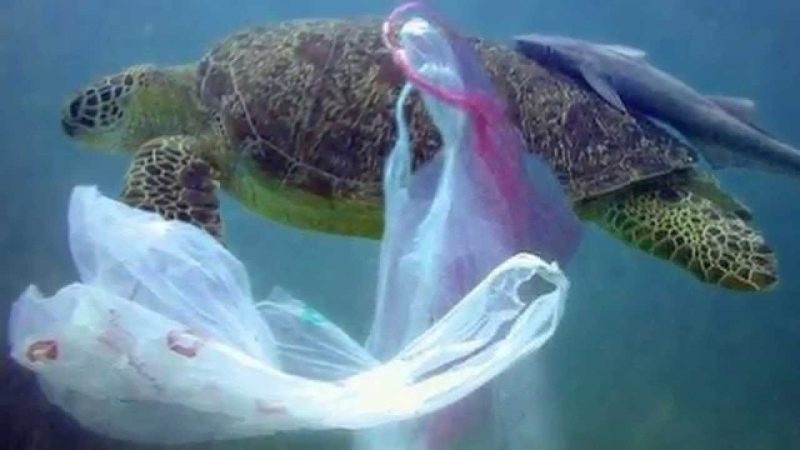
Plastic became an issue partially because it became too large and obvious to continue to ignore (see: plastic gyres in seas, plastics ingested into the bellies of birds, sea turtles entwined in plastic debris, for just a small sampling), much like rivers catching on fire or cities filled with smog in the 1970s. Still, there are so many other insidious problems with production and consumption and its attendant waste. In addition to plastics, we have numerous other persistent organic pollutants (POPs)--pesticides, industrial chemicals like PCPs and PFOAs, and pharmaceuticals--lingering throughout the globe and harming the health of organisms and ecosystems in ways we have only begun to recognize.
Many of these pollutants act as endocrine disrupting chemicals (EDCs) and can potentially cause a host of health effects through their endocrine mimicking ability. One of the major documented effects is the feminization of male animals--which has been consistently found in all vertebrates and most recently in sharks. Males turning into females may not sound like a huge ecological problem on its surface, unless you consider the fact that the loss of a male population could lead to the extinction of a species. Consequently, scientists are now wondering about what effects we may be seeing in humans--effects such as decreased fertility, increased reproductive cancers, even ambiguous gender identity.
We also have an epidemic of e-waste from the constant production, consumption, and disposal of our consumer electronics. Our desire for non-essential products of convenience and entertainment, along with our technological gadgetry (computers, tablets, smartphones) has left the third world awash in a toxic stew.
We also have an epidemic of e-waste from the constant production, consumption, and disposal of our consumer electronics. Our desire for non-essential products of convenience and entertainment, along with our technological gadgetry (computers, tablets, smartphones) has left the third world awash in a toxic stew, as some of our e-waste is shipped overseas to be dismantled for parts and burned for valuable elemental compounds if it is not buried in our own landfills. And much like all of these other troubles linked to over-consumption, the problem of e-waste just continues to grow.
We currently have no true solutions to the waste and pollution from our over-consumption. Unless and until we have the means of dealing with the waste stream of such items, they probably should not be produced or consumed in the first place. Recycling is not the answer, though "green" consumers would like to think it is. It both utilizes tremendous energy and produces toxic byproducts of its own (particularly the recycling of plastic) and it cannot possibly absorb all of the products discarded. Plus, since recycling is just a market industry, and with China's decision to stop buying waste, most of what we hope to recycle is ending up in landfills, which are completely unsustainable at their core.
For the past century or two, we've gone down a slippery slope of permissiveness in terms of environmental responsibility as a civilization, and we may never ascend from the bottom. The only true sustainability is biodegradability--meaning whatever resources we take from the Earth are able to be returned to the Aarth. Ultimately, sustainability means that what we use returns to the Earth in a timely manner that does not pollute, causing ill health or irreparable ecological damage. Consequently, almost nothing we call "sustainable" within our corporate industrial civilization truly is. For the most part, we barely even compost the organic, decomposable items that could easily go back to the Earth, replenishing the nutrients to and enhancing the quality of the Earth's soil. Instead, these too end up in a landfill.
Most of what we take for granted as benign is not. A lot of what we expect is safe at acceptable levels is not. For example, we spread over one billion pounds of biological poisons on our food supply each year in the U.S., but we call them pesticides. We hype their safety and necessity while we ingest immeasurable amounts of them and while they migrate to our air, water, and ecosystems, all under the guise of progress, even sometimes, sustainability. This is utter insanity. Maybe the alarming increase in mental health issues, such as depression and anxiety, is a reflection of a natural and normal attempt to cope in an utterly insane, overwhelming, unsustainable world rather than being reflective of physiological disease or genetic defect, both of which have yet to be found. We are polluting our minds with too much junk content, our bodies with too much junk food, and our planet with just too much junk.
No one field is responsible for the predicament we are in, and no one sector will solve the problem. Every field, every industry in their current form is unsustainable and grossly polluting. This includes the military, finance, fashion, entertainment, information technology (IT), agriculture, medicine, transportation (driving, flying, cruising, boating), engineering, construction, real estate, publishing, art, scientific research, even education. But again, we do not need scientific evidence to notice what is right in front of us. I used to conduct a thought exercise with my students in Environmental Studies. I would ask them to pick any item from anywhere and to perform an informal life cycle analysis of that item: that is, try to find out about all of the resources and energy needed to create that item, used during the life of the item, and emitted as pollution or toxic waste throughout the lifespan of the item through its end of use. Through this exercise, if you work in a hospital setting, you might discover that a chemical utilized in the process of MRI could end up as a toxic pollutant in certain ecosystems. If you work in IT, you might learn that server farms and promising new applications such as Bitcoin require extensive amounts of energy and resources to function. If you do this with any part of any industry, you will not need any special scientific training to discover our sustainability problem.
The fact is, we need to make the environment a priority in every field. Sustainability cannot be a novelty or a footnote; environmental impact must be the foundation of all disciplines. All students should be required to take introductory environmental studies classes. All academic subjects need to have sustainability as the base of their field. We cannot make "green" or "eco-friendly" niches within industries. Rather, we must strive to eliminate any practices and products that are not within our ecological limits and that are not necessary to our survival, because the overwhelming consensus of all scholars suggests that we are, without a doubt, imperiling our own survival if we continue on with business as usual.
We need to deconstruct our lives. We need to take things away and abstain from what cannot be sustainable. We need to create new norms, new stories, and new values. Perhaps the genius is not in the tech billionaire that creates unsustainable technology of questionable merit, but the wise person who could have intellectually created the technology, but who considered the social, psychological, and environmental ramifications, and decided against it.
Years ago I read an anecdote about refugee immigrants from a third world nation who had settled in America. As a welcoming gesture, they were brought to a shopping mall, but rather than being awestruck by the array of products and consumer choices, they were overwhelmed and repulsed by the excess. If we are to survive as a species, we should all learn to feel this way.
At this point, we cannot count on our government officials to offer real solutions... The rest of us, in every sector of society, in every field, need to pick up the slack and make necessary large-scale changes in production and consumption on both the individual and systemic levels.
At this point, we cannot count on our government officials to offer real solutions--or at least solutions substantial enough to tackle the multitude of issues we face. It's as if we have a preventable and reversible illness that could be solved through a change of lifestyle. We go to the doctor to be diagnosed. The Republicans react by denying the illness altogether. The Democrats ask for a magic pill, because they do not want to go through the trouble of exercising, eating less, and only ingesting quality, nutritious food. The rest of us, in every sector of society, in every field, need to pick up the slack and make necessary large-scale changes in production and consumption on both the individual and systemic levels. What these changes amount to most of all is living simply, personally and collectively. This is the true #resistance.
We cannot take for granted, as economists and industrialists do, that we will continue to produce and consume more. This premise, which undermines all of our research and policy initiatives pertaining to the environment, has been completely ineffective and must be abandoned.
Americans and other first-world citizens have the notion that their happiness, their desire for comfort, their want of cool gadgetry, their egos, their power, and their careers are more important than life itself. As a result, even the most environmentally-minded middle class people are too tied to their creature comforts (a.k.a., consumer excesses) that they still rank among the biggest consumers and polluters. Americans often deride others for living beyond their means (meaning their financial abilities), but no one ever worries about living beyond our needs, which is perhaps the fundamental cause of our suicidal path as a species.
Anyone who did not grow up rich or even upper middle class knows what it is like to sacrifice, knows what it is like to have to pick and choose--to only buy or use what is needed, rather than what is desired. You know you have to live without. You can't afford to splurge. This is where we are with life on the planet. We can't splurge anymore as individuals, but more critically, as industries and as societies. In fact, we couldn't afford to overindulge decades ago, and we should have never done so in the first place. We don't need science to understand this, and we don't need an ecological footprint calculator. We need empathy and a sense of connection with all life on the planet. If we can learn to consume according to our needs rather than our decadent desires, not only might we all live more enjoyable, fulfilling, and healthy lives, but we all might just continue to be able to live.