

SUBSCRIBE TO OUR FREE NEWSLETTER
Daily news & progressive opinion—funded by the people, not the corporations—delivered straight to your inbox.
5
#000000
#FFFFFF
To donate by check, phone, or other method, see our More Ways to Give page.
Daily news & progressive opinion—funded by the people, not the corporations—delivered straight to your inbox.
"Even with these new protections in place, too many people's health will still be at risk from dangerous exposures to PM2.5," one expert said.
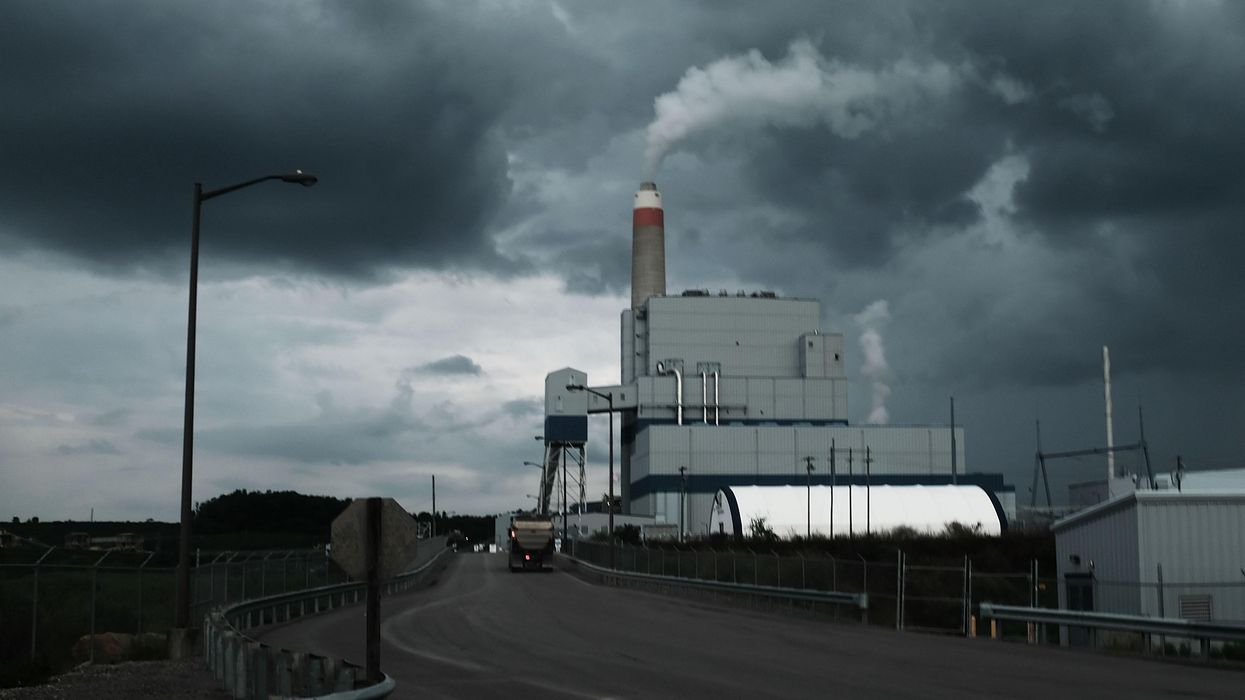
The U.S. Environmental Protection Agency announced on Wednesday that it had finalized tougher standards on soot, or fine particulate matter pollution, one of the deadliest types of air pollution.
In a move largely applauded by environmental and public health groups and protested by industry, the EPA said it was strengthening the national ambient air quality standard for soot from an annual limit of 12 micrograms per cubic meter to nine micrograms per cubic meter, which—according to the agency—would prevent as many as 4,500 early deaths each year.
"This final air quality standard will save lives and make all people healthier, especially within America's most vulnerable and overburdened communities," EPA Administrator Michael S. Regan
said in a statement. "Cleaner air means that our children have brighter futures, and people can live more productive and active lives, improving our ability to grow and develop as a nation."
Fine particulate matter (PM 2.5) kills almost 50,000 people in the U.S. every year and led to 4.2 million early deaths worldwide in 2019. It is released primarily by the burning of fossil fuels by factories, power plants, and vehicles and causes health problems like respiratory ailments, cardiovascular disease, and cancer. It is also a major environmental justice issue, as low-income communities of color tend to experience a higher pollution burden.
"Particulate matter pollution is deadly, especially for children and older Americans. The Biden administration's new air quality standards will save thousands of lives and help address unjust disparities in air quality for communities of color and low-income communities," Patrice Simms, Earthjustice's vice president of litigation for healthy communities, said in a statement. "We applaud EPA for issuing a rule that will help reduce heart disease, asthma, and other serious illnesses. We look forward to EPA's implementation efforts, which must include robust enforcement and rigorous monitoring."
The World Health Organization has set its annual target for PM2.5 to five micrograms per cubic meter and its 24-hour target to 15. It calculates that 99% of people on Earth breath air that exceeds its health limit for several pollutants including PM2.5. Despite this, the EPA has not updated its PM2.5 standards since 2012.
"It's shameful that, in the face of such clear and compelling evidence of the public health and economic benefits of stronger soot standards, big polluters and their allies in Washington do everything in their power to undermine these commonsense air pollution standards."
The Clean Air Act requires the agency to review the science and decide whether or not to update the standard every five years. However, while the EPA under former President Donald Trump did complete an assessment, it chose not to strengthen the standards in December 2020. Its own scientists concluded that lowering the safety limit from 12 to nine micrograms would decrease yearly deaths by 12,150, but various industry groups urged the administration not to make any changes, according to The New York Times. Trump EPA Administrator Andrew Wheeler also dismissed an outside group of expert scientists who were consulting on the measure. In response, the Union of Concerned Scientists (UCS) reassembled the panel in 2019. The experts concluded that the EPA should raise its standards to protect public health.
"The delays in updating this standard come at a steep cost, and lingering pollution impacts are too often borne by communities of color and low-income communities already facing disproportionate cumulative pollution burdens," Chitra Kumar, managing director of the UCS' Climate & Energy Program, said in a statement. "Those delays are due in large part to the previous administration dismissing a key science advisory board and ignoring the overwhelming evidence that the PM2.5 standard was insufficient."
While the UCS applauded the new standards, it argued the agency could have gone even further.
"New rules are long overdue, and today's final rule is a step toward cleaner air and healthier communities," Kumar said. "However, even with these new protections in place, too many people's health will still be at risk from dangerous exposures to PM2.5."
One gap in EPA regulations is that there are no standards in place to protect people from ultrafine particulate matter.
"The science is clear—ultra-fine particles make their way into the bloodstream contributing to premature death," said Beto Lugo Martinez, an environmental and climate justice leader who is part of the group Coming Clean.
American Lung Association president Harold Wimmer told the Times that the EPA should have set the limit at eight instead of nine, which was the safest standard in the 8 to 10 micrograms range recommended by the EPA's Clean Air Scientific Advisory Committee. while the Sierra Club pointed out that the agency did not tighten the limit on 24-hour exposure, which remains at 35 micrograms. Lowering this number was also a committee recommendation.
However, the EPA under Regan and President Joe Biden has resisted industry pressure by strengthening the standards at all. In October 2023, representatives from sectors including fossil fuels, manufacturing, and mining sent a letter to Chief of Staff Jeffrey Zients arguing that a nine-microgram standard would "risk jobs and livelihoods by making it even more difficult to obtain permits for new factories, facilities, and infrastructure to power economic growth" as well as hamper Biden administration efforts like the implementation of the Inflation Reduction Act.
In responding to journalists Tuesday, EPA officials pushed back against the economic arguments, according to The Guardian. They said that the country would in fact see up to $77 in health benefits in 2032 for every $1 spent on complying with the update, and that 99% of U.S. counties were already on track to meet the new standard by that date, which is most likely the date by which states would face fines for not complying with the new standard.
"It's shameful that, in the face of such clear and compelling evidence of the public health and economic benefits of stronger soot standards, big polluters and their allies in Washington do everything in their power to undermine these commonsense air pollution standards," Sierra Club executive director Ben Jealous said in a statement. "Their resistance is a stark reminder that the fight for clean air and a healthier future is far from over, and we will continue working to ensure the benefits of these stronger air pollution standards reach the communities that need them most."
The next step is for the EPA to spend the coming two years determining which areas do not meet the revised standards. After that point, the states that do not meet them would have 18 months to draft a plan to lower pollution levels.
Environmental advocates see the new standards as a chance to improve air quality and health in frontline communities such as the nation's ports.
"We're elated by the EPA's decision to finalize a significantly stronger air quality standard that will better protect all Americans, especially port communities," Terrance Bankston, Friends of the Earth's senior ports and freights campaigner, said in a statement. "Many Americans have been subjected to disproportionate health risks from air pollution via port operations for decades. The biggest offender has and continues to be soot pollution from port emissions. For LatinX residents, the exposure to soot pollution is 75% higher. For Black Americans, the risk of dying from soot pollution is the highest, with a rate of over triple that of white Americans."
Ports now have an opportunity to use the $3 billion from the EPA's Clean Port Program to switch to zero-emissions technology.
"We encourage port stakeholders to use the EPA's announcement as an opportunity to be on the right side of history," Bankston said.
The rule, and the science behind it, is also a reminder that fossil fuels harm human health even beyond driving the climate crisis, and that both regulating their pollution and transitioning away from them can have multiple benefits.
"Air pollution used to be the price we had to pay to heat our homes, commute, or produce goods by burning coal, oil, and gas. Thankfully, in the rapidly accelerating renewable energy era, that's no longer the case," Lisa Frank, executive director of Environment America Research & Policy Center's Washington Office, said in a statement. "These soot standards will save lives, clear our skies, and alleviate the burden of asthma and other illnesses. That's something all Americans should celebrate."
Across the nation, the success of the new rule will also depend on the degree to which the EPA holds violators to account.
"EPA must support the new standard with strong enforcement on polluters," Martinez said. "The continued influence of polluters on EPA does not align or meet with the administration's claimed priorities on environmental justice. Weak standards and weak enforcement give a green light to polluters and the government to continue business as usual."
Environmental and Indigenous advocates on Friday cheered as a federal judge rejected a Biden administration request to temporarily keep in place a Trump-era Clean Water Act rule that one attorney said would have "devastated" states' ability to manage their rivers.
"The Trump administration took an industry wish list and ran with it, trampling over state and tribal authority and public rights to clean water in the process."
On Thursday, Judge William H. Alsup of the United States District Court for the Northern District of California in San Francisco threw out a June 2020 Environmental Protection Agency (EPA) rule changing the Clean Water Act Section 401 certification process to allow federal agencies to approve large projects--including fossil fuel pipelines, hydroelectric dams, industrial plants, wetland developments, and municipal facilities--against the wishes of states and Native American tribes.
In July 2020, 20 states and the District of Columbia sued the Trump administration over the rule change. That September, Indigenous tribes and green groups also filed suit against the administration, claiming the new rule would jeopardize tribal and state efforts to protect their water quality.
"We feel vindicated by this win today," Western Environmental Law Center (WELC) attorney Sangye Ince-Johannsen said in a statement following the ruling. "The court's order immediately restores an essential clean water safeguard--and the careful balance of state and federal power to protect clean water--that Congress intended when it wrote the Clean Water Act."
Ince-Johannsen added that "the Trump administration took an industry wish list and ran with it, trampling over state and tribal authority and public rights to clean water in the process."
The rule change, which was first proposed in 2019 and finalized in June 2020 during the tenure of former coal lobbyist and then-EPA Administrator Andrew Wheeler, set a one-year deadline for permitting decisions and limited the factors that state and tribal officials could consider.
At the time, Food & Water Action executive director Wenonah Hauter called the move--part of a broader regulatory rollback aggressively pursued during the administration of former President Donald Trump--"vindictive, spiteful, and capricious."
The Biden administration in July asked the California federal court to keep its predecessor's controversial rule in place until 2023 pending revision. Alsup found that "plaintiffs have established that significant environmental harms will likely transpire" if he granted the administration's request.
Alsup wrote:
This order finds particularly persuasive the state of Washington's example concerning three hydropower dams on the Skagit River. These dams will each require Section 401 certifications prior to EPA's promulgation of a replacement for the current certification rule.
As noted in the state of Washington's brief, "because [Federal Energy Regulatory Commission] licenses for dams will last between 30-50 years, the lack of adequate water quality conditions attached to these licenses will have adverse impacts for a generation"...
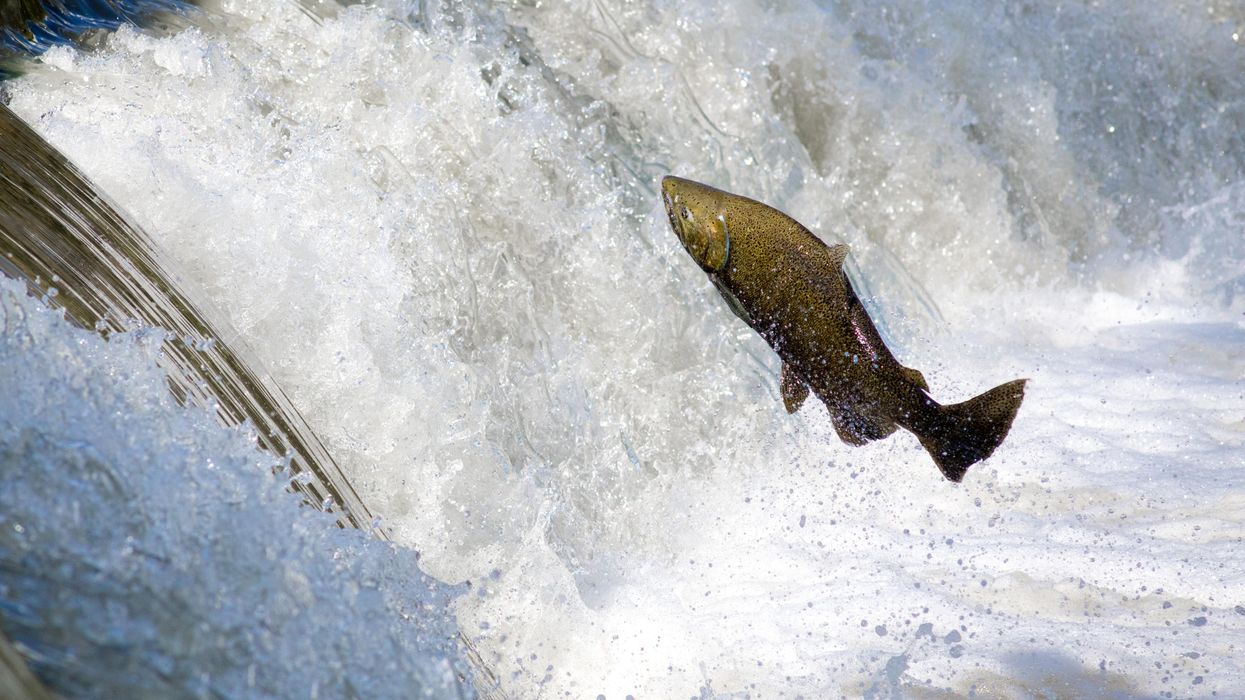
The new certification rule curtails restrictions certifying authorities can impose on dams to limit increases in water temperature. The threatened Chinook salmon that reside in the Skagit River are vulnerable to these changes in water temperature, which puts at risk a primary food source for the endangered southern resident orca population in Puget Sound, of which there are currently only 73, the lowest number in over four decades.
According to WELC, Alsup's ruling "restores the broad authority of states and tribes to halt such projects, and alternatively to impose conditions on them, and restores opportunities for robust public participation in permit decisions."
Washington Attorney General and case co-plaintiff Bob Ferguson welcomed the ruling, contending in a statement that the Trump administration "did everything it could to yield to the interests of polluting industries."
"Today's ruling stopped one of his most egregious attempts to strip states' ability to protect their communities against threats to water quality," he added.
California Attorney General Rob Bonta, also a plaintiff in the case, said that "as the state records its driest year in nearly a century, Californians are acutely aware of the value of water and its critical importance to sustaining our communities, ecosystems, and agriculture."
"We're pleased that the district court agreed to vacate this unlawful Trump-era rule and restore California's authority under Section 401 of the Clean Water Act," Bonta added. "State agencies rely on Section 401 to safeguard our precious resources by ensuring that federal projects meet the state's robust water quality requirements."
Jennifer Marshall, general counsel for American Rivers, said that "the Trump administration's unlawful 401 rules abandoned the Clean Water Act's commitment to provide a voice for states and communities to protect and manage their rivers and streams, allowing potentially harmful projects to escape critical local review."
"We're proud to have played a role in protecting the rights of states and tribes to defend clean water safeguards," she added.
Redgie Collins, legal and policy director at California Trout, asserted that "the rule changes would have devastated California's ability to manage its rivers. We are relieved hydroelectric projects must still comply with local and state rules to provide flowing water and protect fish."
American Whitewater legal director Bob Nasdor said his organization is "thrilled to have defended the Clean Water Act from an attack that would have undermined the public's ability to protect rivers and communities from harms to the environment and recreation opportunity at hydropower dams and other federally-licensed energy projects."
Nasdor added that "this victory restores our access to information, time for review, and ability of the states to protect water quality that we've counted on for the past 50 years to ensure our rivers are safe, healthy, and accessible."
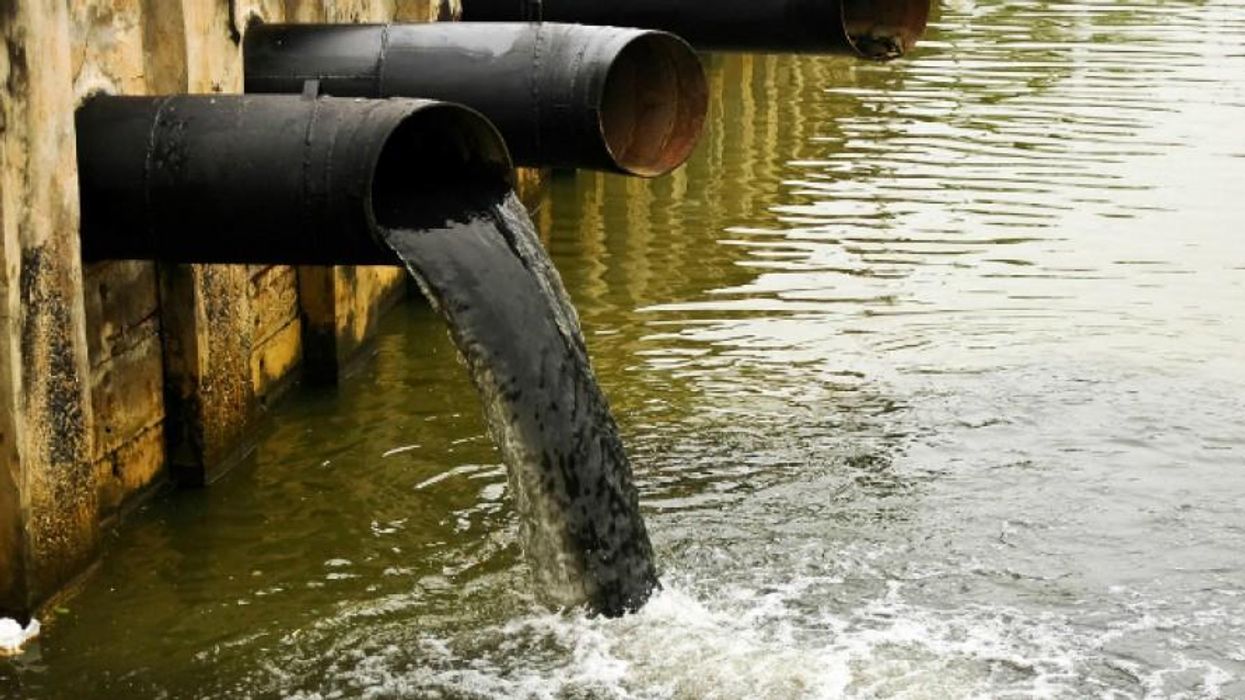
With its "Waters of the United States" rule, President Obama's administration enacted unprecedented protections of rivers and streams. The Trump administration, ignoring science and the importance of wetlands, tried to return many of those waterways back to polluters by rolling back the Waters of the US rule.
Now Michael Regan, President Biden's EPA administrator, says he wants to forge a compromise.
"We don't have any intention of going back to the original Obama 'Waters of the U.S.' [rule] verbatim and we don't necessarily agree with everything that was in the Trump administration's version as well," Regan told a House Appropriations Committee last month. "We've learned lessons from both, we've seen complexities in both, and we've determined that both rules did not necessarily listen to the will of the people."
The attempt at middle ground is understandable as Regan is in the first months of a new administration dealing with the highly organized powers of manufacturing and factory agriculture. But this sounds dangerously close to a false equivalency when it throws some of Obama's efforts under the bus while suggesting that the previous administration's reversal of the rules was anything more complex than a hatchet job by industry hacks, most notably former EPA Administrator and ex-coal-industry lobbyist Andrew Wheeler.
Before Administrator Regan tries to form one edible fruit out of an apple and an orange in the EPA's new rules, he must remember one thing: Obama's regulations for aquatic preservation were based on science.
The science behind the Waters of the US rule
When the Obama administration issued its Clean Water Rule in 2015, it expansively redefined waters eligible for federal protection as Waters of the United States (WOTUS). At that time, nearly half of the nation's rivers and streams and a third of our wetlands were in "poor biological condition," according to the EPA's water quality report to Congress.
So the administration sought to protect about 60 percent of water in the nation, including many intermittent and ephemeral streams that experience natural dry periods but flow during rainy periods. Most people don't realize it but 59 percent of streams in the United States--and 81 percent of the streams in arid Southwestern states--are of this nature. A 2008 EPA report, published during the George W. Bush administration, said it was "critical" to consider the cumulative human impacts on such streams as 117 million people, a third of the populace, drinks water that relies at least in part on them.
"Given their importance and vast extent," the EPA said back then, "individual ephemeral or intermittent stream segment[s] should not be examined in isolation." The science is clear: even seasonal waterways are interconnected.
Unfortunately, industry and its political enablers went on a rampage to exempt as much water as possible from federal protection. The US Chamber of Commerce, the American Petroleum Institute, the American Farm Bureau Federation, the National Mining Association, the National Association of Home Builders, and the National Association of Manufacturers all opposed the rule, often propping up "small farmers" as poster children who would be burdened by having to worry that every "ditch" would be considered federally protected water.
The scare campaign reached such a level that a blogger for the Iowa Farm Bureau speculated, "You may not be able to weed and feed your lawn, spray for bugs, landscape with treated lumber and wood chips, fill in a low area with soil, or even dig a hole" without a federal permit. Iowa Senator Joni Ernst went so far as to invoke the horror of federal regulation for every "tire track that collects rain water."
Discarding science to eliminate protections for wetlands
Playing on these trumped-up fears, the last administration, led by Wheeler, rewrote the rules to say, essentially, that if you cannot visibly see the connection of small creeks to large rivers and lakes on the surface, then there is no connection deserving of federal protection. The reversal removed half of wetlands and a fifth of streams and tributaries from protection. This change came despite the strenuous objection of a host of scientists, including Wheeler's own scientific advisory board.
In a February 2020 admonishment, the board wrote Wheeler to say that his narrow definition of WOTUS "does not incorporate best available science." Reasserting how science has established major hydrologic connections between tiny tributaries and intermittent and ephemeral streams to large bodies of water, the board rebuked Wheeler for offering "no comparable body of peer reviewed evidence, and no scientific justification for disregarding the connectivity of waters" saying that it found "a scientific basis for the proposed rule. . . lacking."
Perhaps most ominously, the board warned that the administration's proposed rule excluded industrial and agricultural irrigation canals that can carry harmful contaminants into the nation's waterways, such as E.coli bacteria from vegetable farms or steroids from confined animal feeding operations.
Seconding the board, specifically on behalf of wetlands, were the leaders of seven research institutions concerned with freshwater science. In letters to the previous administration and Congress, they wrote that even though wetlands comprise less than six percent of the landscape, they play a massive, outsized role in filtering urban and agricultural runoff, trapping sediments, mitigating floods and being a nursery for a myriad of wildlife. They noted that clean water is the backbone of an $400 billion-a-year outdoor recreation industry. "Like diamonds," the seven research organizations said of wetlands, "they can be small but extremely valuable."
That is exactly what Administrator Regan needs to pay attention to as he crafts the Biden administration's rule to protect the nation's rivers and streams. When he was secretary of environmental quality for the state of North Carolina, he was lauded by both environmentalists and industry for his ability to craft compromise. The Natural Resources Defense Council praised Regan, who links his childhood asthma to coal plant pollution in his native Goldsboro, N.C., for an agreement with Duke Energy that resulted in the largest coal ash cleanup in the nation and a settlement with former DuPont subsidiary Chemours to better prevent PFAS" forever chemicals" from contaminating the Cape Fear River.
He also established the state's first Environmental Justice and Equity Board. One of the members of the board, Naeema Muhammad, told Grist, "We didn't get a real voice until he came into office."
Despite those positive testimonials, though, some questioned whether Regan also gave too much deference to other powerful industries in North Carolina. Top on the list is the pork industry, infamous for toxic waste lagoons, spills, and stench in nearby communities. Too often, some critics said, Regan should have suspended operations in severe cases of environmental injustice from hog farm pollution from concentrated animal farming operations (CAFOs) instead of merely fining chronic offenders.
Some activists said in a Rolling Stone profile that Regan often displays a style that appears to bring stakeholders to the table as equals, when in reality, industry arrives with a loaded deck of money and lawyers. Elizabeth Haddix of the Lawyers Committee for Civil Rights Under Law, said, "It's not an equal playing field. The industry controls everything here." She told E&E News that Regan's decision not to use his executive authority to pull permits from hog polluters, who she said are disproportionately situated near communities of color, "was a horrible disappointment for us."
EPA Administrator Regan must follow the science
Under both the second President Bush and President Obama, the EPA said that even streams that flow seasonally are still critical to our water infrastructure. The EPA under the previous administration chose to overlook this fact. In the short time between last June and September, Bloomberg Law found that, of 1,085 exemptions sought by polluting industries and developers to escape federal water regulation for their projects, the Army Corps of Engineers granted 758, or 70 percent of them. About 200 of the exemptions were granted on the very first day the rollback took effect, a complete abandonment of the scientific analysis that previously often took up to three years to complete.
Regan said last week, "I don't believe we have to choose between good water quality ... and overly burdening our small farmers." It's certainly acceptable for the Biden administration to factor in true burdens to small farmers in its rewrite of the WOTUS rule. But Regan must prioritize science and water quality over the demands of big industry. Because the prior administration had no scientific justification for disregarding the connectivity of waters, the burden is on him to reconnect science to regulation--and thereby reconnect the nation's waterways.
On that, there can be no compromise.
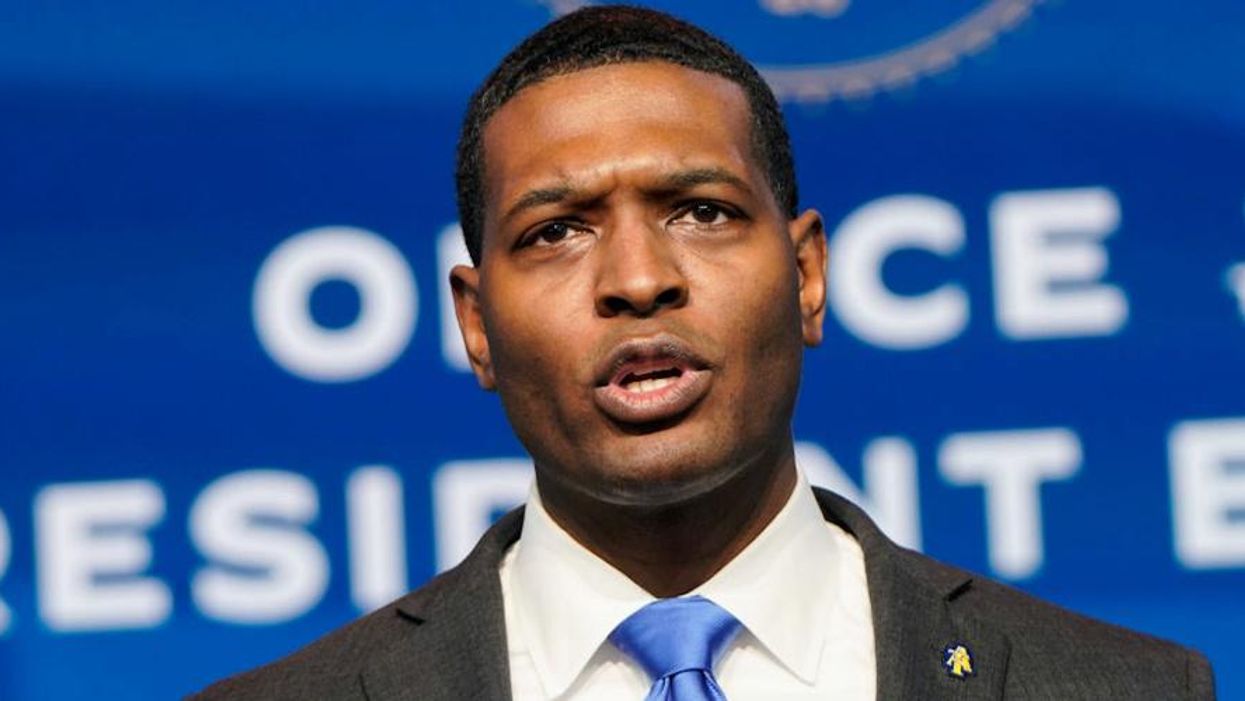
In a move aimed at restoring the role of science at--and public trust in--the Environmental Protection Agency, Administrator Michael Regan announced Wednesday that more than 40 advisers appointed by former President Donald Trump will be fired from the agency.
"When politics drives science rather than science informing policy, we are more likely to make policy choices that sacrifice the health of the most vulnerable among us."
--EPA Administrator Michael Regan
The Washington Post reports Regan's purge will include Trump appointees who informed EPA policies and actions that favored the agenda of polluting corporations and industries over protecting the environment and addressing the climate crisis.
Trump-appointed members on two EPA panels--the Science Advisory Board (SAB) and Clean Air Scientific Advisory Committee (CASAC)--helped thwart or roll back regulations related to air pollution, fracking, and other environmental issues.
"Resetting these two scientific advisory committees will ensure the agency receives the best possible scientific insight to support our work to protect human health and the environment," Regan--a former EPA regulator and head of the North Carolina Department of Environmental Quality--said in a statement.
EPA Administrator Michael Regan has dismissed more than 40 Trump-appointed advisory panel members, in an effort to focus on science and reduce Industry influence.
He has also revived the EPA's climate change web page that was removed by Trump. https://t.co/WMEzDqWjBG
-- Keith Boykin (@keithboykin) March 31, 2021
Regan's move is one of numerous steps taken by the Biden administration to restore scientific integrity throughout the federal government after the anti-science years of the Trump administration.
The former administration downplayed or outright denied the climate crisis; the coronavirus pandemic; the harmful effects of fossil fuel extraction and use; the dangers of carcinogenic pesticides, asbestos, and other toxins; and many other facts that conflicted with its pro-corporate and pro-polluter agenda.
Declaring that the American people "deserve access to science and data," Regan earlier this month restored the EPA's climate change website, which had been shut down under former Administrator Scott Pruitt.
Pruitt also led a purge of scientific advisers who refused to toe the fossil fuel industry line, and along with his successor Andrew Wheeler--a former coal lobbyist--raised alarm by elevating individuals with industry connections and often scientifically dubious views to imporant agency panels.
One of these people, former Big Oil and chemical consultant Tony Cox, was chosen by Pruitt in 2017 to lead an EPA air pollution advisory board.
In a letter to EPA staff earlier this month, Regan wrote that "when politics drives science rather than science informing policy, we are more likely to make policy choices that sacrifice the health of the most vulnerable among us."
Regan added that "manipulating, suppressing, or otherwise impeding science has real world consequences for human health and the environment."
Environmental advocates applauded Regan's dismissals.
"It only makes sense to go back to the drawing board," Genna Reed, a senior analyst at the Union of Concerned Scientists, told the Post.
Christopher Zarba, a retired EPA official who led the agency's office that coordinates with scientific panels, called Regan's move "absolutely warranted." Zarba told the Post that during the Trump era, "lots and lots of the best people were excluded from being considered" for positions on science committees, and that individuals who were tapped for posts "did not accurately represent mainstream science."
While green groups and activists welcomed moves like restoring the EPA climate site and purging advisory boards, they stressed that the Biden administration must act more urgently to combat the climate crisis, protect the planet, pursue environmental justice, and curb the influence of polluters.
Donna Chavis, senior fossil fuels campaigner at Friends of the Earth, said earlier this month that "Regan and the EPA have a new opportunity to place environmental justice at the center of the agency and the United States' approach to the climate crisis."
Chavis, who is also an elder of the Lumbee Nation, urged Regan to "take bold and visionary steps to rebuild the EPA and address the very real climate crisis we face in the U.S. and globally."
In a development welcomed by environmental and public health advocates, a federal judge on Monday invalidated the Trump administration's last-minute rule change dictating which types of research the Environmental Protection Agency can use to regulate polluting industries and toxic chemicals.
Judge Brian Morris, chief judge for the U.S. District Court for the District of Montana, Great Falls, vacated the rule at the request of the Biden administration, overturning one of former President Donald Trump's last actions taken prior to leaving office.
"Had this rule censoring science been allowed to stand, it could have done massive damage to the EPA's ability to regulate dangerous chemicals and pollutants."
--Rep. Don Beyer
"It took a federal court just days to reject the Trump EPA's obvious lawbreaking," Vijay Limaye, a climate and health scientist at the Natural Resources Defense Council (NRDC), said in a statement. "This is a major victory for people's health."
"Science matters again," said Limaye, "and it will again guide how to best protect people from dangerous pollution and toxic chemicals."
Just two weeks before the inauguration of President Joe Biden, then-EPA Administrator Andrew Wheeler, previously a coal lobbyist, finalized the "Strengthening Transparency in Regulatory Science" rule, which required scientists to disclose raw data, including personal medical records, from their public health studies before the agency could enact new regulations based upon the research.
Because the EPA relies heavily on data that cannot, for ethical and legal reasons, be made public, the rule change would force the EPA "to stick its head in the sand and pretend the most vital science about people's health doesn't exist," Emily Knobbe of the Center for Biological Diversity said in early January.
The Washington Post noted that "the rule, which was made effective immediately, would assign less weight to studies built on medical histories and other confidential data from human subjects where the underlying information was not revealed. That sort of research--including dose-response studies, which evaluate how much a person's exposure to a substance increases the risk of harm--have been used for decades to justify EPA regulations."
As Common Dreams reported last month, the Trump administration's so-called "secret science" rule was widely condemned, with Knobbe calling it a "nightmarish giveaway to polluters [that] will sicken millions of the most vulnerable people across this country."
The Environmental Defense Fund, Montana Environmental Information Center, and Citizens for Clean Energy sued to block the implementation of the "censored science" rule.
Last Wednesday, as Bloomberg Law reported, Morris ruled that the Trump administration's EPA "failed to justify its decision to make the controversial rule take effect right after its publication in the Federal Register, instead of after 30 days, as is typical."
By "casting doubt on the rule's legality," Bloomberg Law noted, Morris created an opening for Biden to quickly undo Trump's rule change, which the White House took advantage of.
Officials in the Biden administration's EPA on Sunday pointed to Morris' January 27 ruling and asked him to vacate the "censored science" rule and send it back to the agency, a request the judge granted on Monday. According to Bloomberg Law, Monday's decision saves the Biden administration "the significant time and resources it would have had to spend to unwind the Trump administration rule through a standard rulemaking process."
Rep. Don Beyer (D-Va.), a member of the House Science Committee, has been a vocal opponent of what he and committee colleagues, Reps. Suzanne Bonamici (D-Ore.) and Paul Tonko (D-N.Y.), recently called the Trump administration's "anti-science rule and its underlying agenda, which is to protect polluters rather than people and the planet."
In a celebratory Twitter thread shared on Tuesday, Beyer described the Republican Party's years-in-the-making attempt to undermine EPA regulations "by weakening the scientific basis behind the agency's rulemaking process under the guise of 'transparency.'"
Beyer characterized the federal judge's decision to invalidate Trump's attack on scientific integrity and evidence-based policymaking as yet another loss for the former president in court, "this time with huge implications for public health."
"Had this rule censoring science been allowed to stand," he said, "it could have done massive damage to the EPA's ability to regulate dangerous chemicals and pollutants."
"The court's decision," the congressman added, "opens the doors to vital progress to protect the environment and the public."
As the NRDC's Limaye noted, "Polluters--who backed the Trump EPA's insidious scheme--have no more excuses than to follow our bedrock environmental laws."
This story has been updated to correct that the name of the organization is the Montana Environmental Information Center, not Montana Information Center as it originally stated.
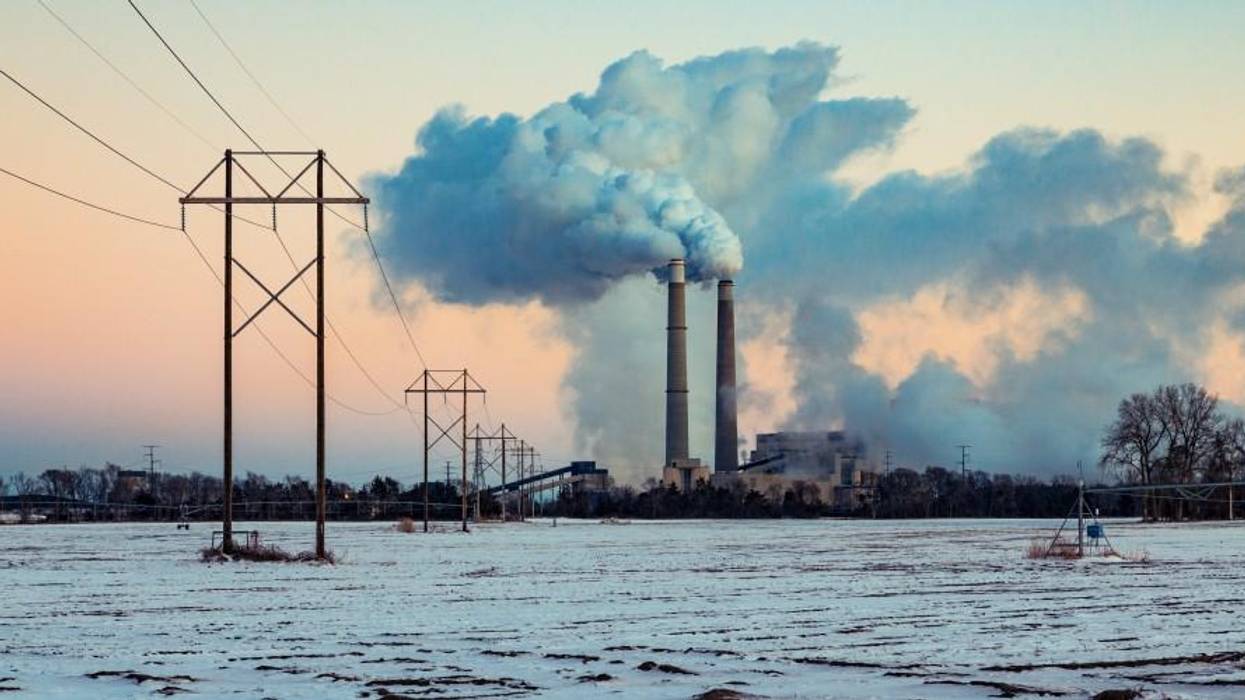
Climate campaigners welcomed a federal court's decision Tuesday to strike down the Trump administration's Affordable Clean Energy rule--dubbed by its critics the "Dirty Power" rule--which loosened restrictions on greenhouse gas emissions from coal plants.
"A failure by Trump is a major win for the planet," said Clare Lakewood, legal director of the Center for Biological Diversity's Climate Law Institute. "The court has wisely struck down another effort by this administration to shred environmental protections in service of polluters."
Finalized in 2019 and signed by Environmental Protection Agency (EPA) chief Andrew Wheeler, a former coal lobbyist, the Affordable Clean Energy (ACE) rule was a replacement to the Obama-era Clean Power Plan. ACE was met with fierce outrage and lawsuits from environmental groups and dozens of states and cities who said it was an industry-friendly rule that rejected science to the detriment of public health and the climate crisis.
The U.S. Court of Appeals for the District of Columbia Circuit said Monday that "promulgation of the ACE rule and its embedded repeal of the Clean Power Plan rested critically on a mistaken reading of the Clean Air Act." The court remanded the rule back to the EPA.
According to Bloomberg,
Tuesday's decision rejects the Trump EPA's position that the Clean Air Act only allows the agency to craft emissions restrictions that apply directly "at the source" of power plants. The position was a departure from the Obama administration's sector-wide approach to reducing emissions.
"In other words, the EPA reads the statute to require the Agency to turn its back on major elements of the systems that the power sector is actually and successfully using to efficiently and cost-effectively achieve the greatest emission reductions," the court said.
It added that there is "no basis-grammatical, contextual, or otherwise-for the EPA's assertion."
Andrea McGimsey, senior director for Environment America's Global Warming Solutions campaign, saw the ruling as "a major step in the right direction" that affirms ACE "was clearly a disastrous and misconceived regulation from the start."
The Sierra Club also applauded the appeals court's decision and expressed hope the incoming Biden administration would put the EPA back on the right course.
"The court's decision to vacate former coal lobbyist Andrew Wheeler's Dirty Power Plan is the apt bookend to the Trump administration's EPA, which was defined by a general subservience to the fossil fuel industry and dozens of legal defeats brought by public health and environmental organizations," Joanne Spalding, the organization's chief climate counsel, said in a statement.
She said that "the EPA's role is to protect the American people from dangerous pollution and act on the greatest threat to our country: the climate crisis," but the "Dirty Power Plan didn't do either of these things and the court rightly vacated it."
"We now look forward to the Biden administration keeping its promise and acting aggressively to restore the EPA to its institutional mandate and put its resources and expertise toward solving problems, not creating more of them," said Spalding.
Center for Biological Diversity's Lakewood added that the ruling "frees up the new Biden administration to begin working immediately on the science-based greenhouse pollution rules we desperately need to make up for lost time."
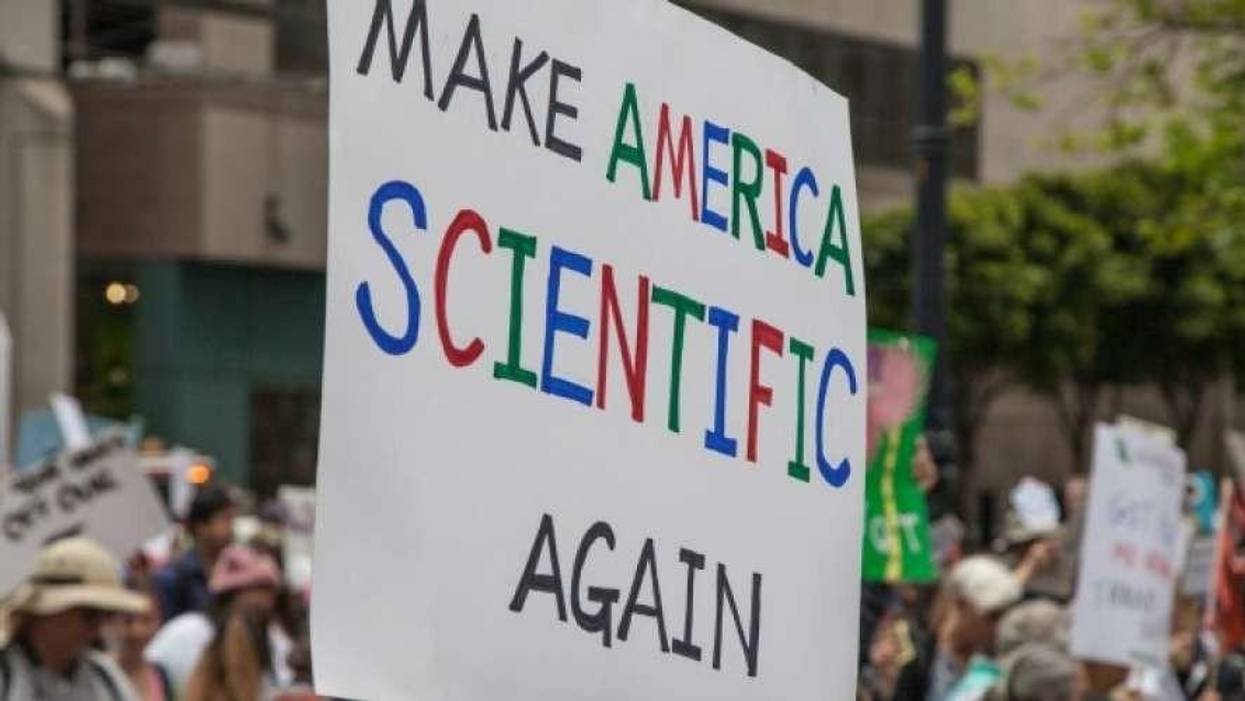
Public health and environmental science experts on Tuesday said the EPA's newly-finalized rule limiting the research that can be used to pass regulations must be reversed by the incoming Biden administration, to end President Donald Trump's "coddling of polluting industries."
Basing its decision on what one former EPA scientist called a "conspiracy theory" about secrecy at the agency, administrator Andrew Wheeler finalized the "Strengthening Transparency in Regulatory Science" rule, which will require researchers to disclose raw data, including personal medical records, from their public health studies before the agency will pass new regulations relying on the research.
"Unwinding this action must be at the top of the agenda for the new leadership at EPA, because it undermines everything else the agency wants and needs to do."
--Vijay Limaye, Natural Resources Defense Council
The rule will apply to "dose-response studies," in which scientists evaluate how much of a substance creates adverse health outcomes in people.
With what the Trump administration has called the "secret science" rule in place, the EPA could decline to regulate dangerous emissions if it doesn't have access to raw data, including many records that are confidential.
"Trump's nightmarish giveaway to polluters will sicken millions of the most vulnerable people across this country," said Emily Knobbe, EPA policy specialist at the Center for Biological Diversity. "This absurd rule forces the EPA to stick its head in the sand and pretend the most vital science about people's health doesn't exist."
In an op-ed in the Wall Street Journal Monday, former coal lobbyist Wheeler framed the rule as one aimed at protecting Americans' personal freedom, writing, "If the American people are to be regulated by interpretation of these scientific studies, they deserve to scrutinize the data as part of the scientific process and American self-government."
The fact that "most human health data cannot legally be given to the EPA" to help it make regulatory decisions, said epidemiologist Eric Feigl-Ding, is an "evil catch."
"The people pushing it are claiming it's in the interest of science, but the entire independent science world says it's not," Chris Zarba, a former director of the EPA's Science Advisory Board, told the Washington Post. "This is a bold attempt to get science out of the way so special interests can do what they want."
Now that the rule is finalized, President-elect Joe Biden and his incoming team at the EPA will likely face months of work to overturn the measure, according to the Post. Scientists called on Biden to begin working immediately on reversing the rule when he takes office on January 20.
The final EPA "transparency" rule drops.
The Trump EPA claims the rule has been "narrowed" but make no mistake, this rule will cause all the damage that the scientific community has always warned it would. This must be undone. https://t.co/Zv2lzmzWqv
-- Gretchen Goldman, PhD (@GretchenTG) January 5, 2021
"Thankfully, this administration and its coddling of polluting industries is finally coming to an end," said Vijay Limaye, a climate and health scientist at the Natural Resources Defense Council. "Unwinding this action must be at the top of the agenda for the new leadership at EPA, because it undermines everything else the agency wants and needs to do. We look forward to working with the incoming Biden administration to get back to using sound science to guide policies that protect our health and combat the climate crisis."
Several members of the science community debunked the notion that disclosing raw, personal data is necessary to effectively regulate pollution.
"There's no evidence EPA practices secret science," former head of the Office of the Science Advisor Thomas Sinks told the Post. "I'm unaware of an example where EPA hasn't clearly stated what science it is using in its rulemaking."
Dr. Gretchen Goldman of the Union for Concerned Scientists (UCS) pointed to what she called "excessive" requirements scientists must fulfill in order for their research to be used by the EPA.
At UCS, Dr. Andrew Rosenberg noted that the EPA is weakening its own ability to regulate pollution in the midst of a pandemic and climate crisis in which poor health outcomes have been linked to heavy exposure to emissions.
"EPA has chosen to finalize these restrictions on science during the worst public health crisis in our lifetimes," said Rosenberg in a statement. "This rule would interfere with the agency's urgent, ongoing work on a range of issues--including links between environmental factors and Covid-19, the impacts of wildfire smoke on public health, and the effects of the pesticide chlorpyrifos on children--by undermining the EPA's ability to use the best available science. It's a willful decision to throw away the exact tools the agency needs now."
"That EPA leadership has overruled the input of the scientific community, the voices of environmental justice advocates and simple common sense to push this rule is beyond disappointing," he added. "It's a deliberate refusal to protect people's lives."
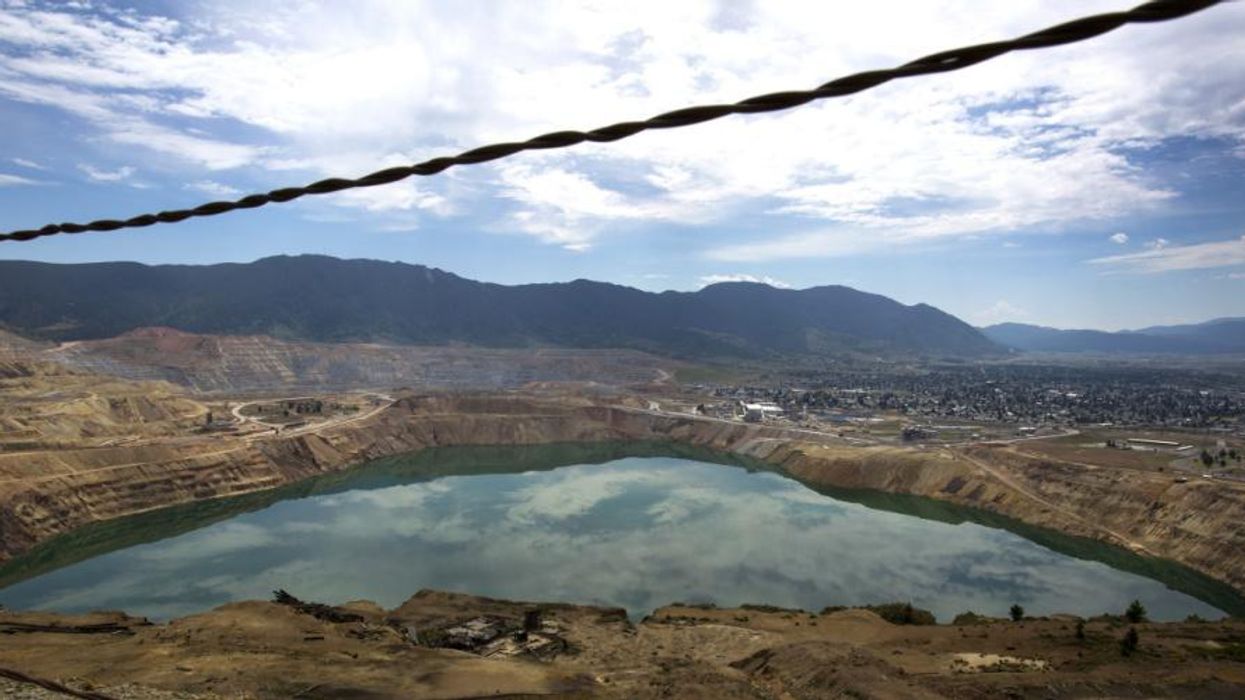
A joint report on Monday highlighted the pressure that President-elect Joe Biden is already facing to deliver on his environmental justice campaign promises--particularly when it comes to the 34 Superfund sites nationwide for which there is no reliable cleanup funding--the largest backlog of "unfunded" sites in 15 years.
The federal Superfund program began with the Comprehensive Environmental Response, Compensation, and Liability Act (CERCLA), passed by Congress in 1980. While cleanup efforts were initially paid for by a trust fund created by taxing the chemical and petroleum industries, lawmakers let the tax expire 25 years ago.
The new report on the cleanup program from NBC News, InsideClimate News, and The Texas Observer is the fifth installment of the "Super Threats" series about Superfund sites and climate change. The first report, published in late September, detailed how hundreds of hazardous waste sites across the United States are threatened by hurricanes, floods, and wildfires, which are all exacerbated by a climate crisis that the Trump administration often refused to acknowledge let alone act to address.
Both reports pointed to a 2019 Government Accountability Office (GAO) analysis which found that 945 Superfund sites are vulnerable to extreme weather events that are intensifying because of human-caused climate change, including hurricanes, flooding, sea level rise, increased precipitation, or wildfires. The news outlets behind the series created an interactive map for all the locations on the office's list, which includes over half of the unfunded sites--19 of 34.
The outlets reported Monday that Democrats in Congress, environmentalists, and former officials at the Environmental Protection Agency are urging Biden to consider climate change when creating cleanup plans for not only the unfunded backlog--which has grown under President Donald Trump--but all 1,570 Superfund sites.
"Even before taking office, the Biden administration accomplished one of the GAO's key recommendations: acknowledge the climate threat," said Sen. Sheldon Whitehouse (D-R.I.). "A Biden EPA will need to assess every federal Superfund project and help states do the same. As the GAO showed, climate change brings a new priority to rapid Superfund cleanup work."
As the outlets reported:
Beyond Whitehouse's call for climate-threat assessments at every site, one senior former EPA official said the incoming Biden administration should review all of the agreements negotiated by the Trump EPA at Superfund sites with corporations liable for cleanups.
"You will want to see if the responsible parties were being given preferential treatment," said Mathy Stanislaus, who served as assistant administrator of the EPA's Office of Land and Emergency Management during the Obama administration.
Stanislaus said such reviews should focus first on any agreements negotiated since the election by the lame-duck Trump EPA.
Earlier this month, Public Citizen launched an online tool to track Trump's "most corrupt, norm-breaking, dangerous, and unjust actions during the lame-duck session," noting that the past four years have featured "cruelty, recklessness, and cronyism" from the outgoing administration.
The watchdog group has been critical of Trump's EPA administrators. Currently the agency is run by former coal industry lobbyist Andrew Wheeler, who was confirmed by the Republican-controlled Senate in early 2019. His predecessor, Scott Pruitt, stepped down in July 2018 in the face of several ethics scandals.
The Monday report noted that "the Superfund program is led by Peter C. Wright, a lawyer who previously worked for Dow Chemical and represented the company in negotiations with the EPA over Superfund sites."
Although party control of the Senate will be determined by a pair of runoff elections in Georgia on January 5, Biden has already announced several of his preferred Cabinet picks, including Michael Regan, the top environmental official in North Carolina, to head the EPA--a move that drew a range of responses from campaigners.
On the campaign trail, Biden promised to take bold climate action with a focus on frontline communities. His $2 trillion green energy and environmental justice plan, unveiled in July, earned praise from various activists, including Varshini Prakash, co-founder and executive director of the youth-led Sunrise Movement.
Writing for The Hill on Monday, Prakash and Green 2.0 executive director Andres Jimenez welcomed Biden's selection of Regan for EPA and Rep. Deb Haaland (D-N.M.) for interior secretary as "an encouraging sign that his administration is prioritizing the voices of the populations who are most in need of serious attention and aggressive action on some of the most important environmental challenges our nation faces."
"Still, much difficult work remains to be done if the concerns of frontline and at-risk communities are to be truly prioritized with forging and implementing equitable environmental policies," Prakash and Jimenez wrote, emphasizing that "communities of color have been disproportionately affected by our federal government's lack of action to solve ongoing environmental problems" and "are also at higher risk of the consequences of human-induced climate changes."
The pair urged Biden to "follow through on his promises to root out systemic racism when it comes to our nation's environmental policy," appoint environmental leaders of color to positions at all levels of his administration, and "take urgent action to curb the global climate crisis and to restore justice for communities impacted by air, water, and land polluters."
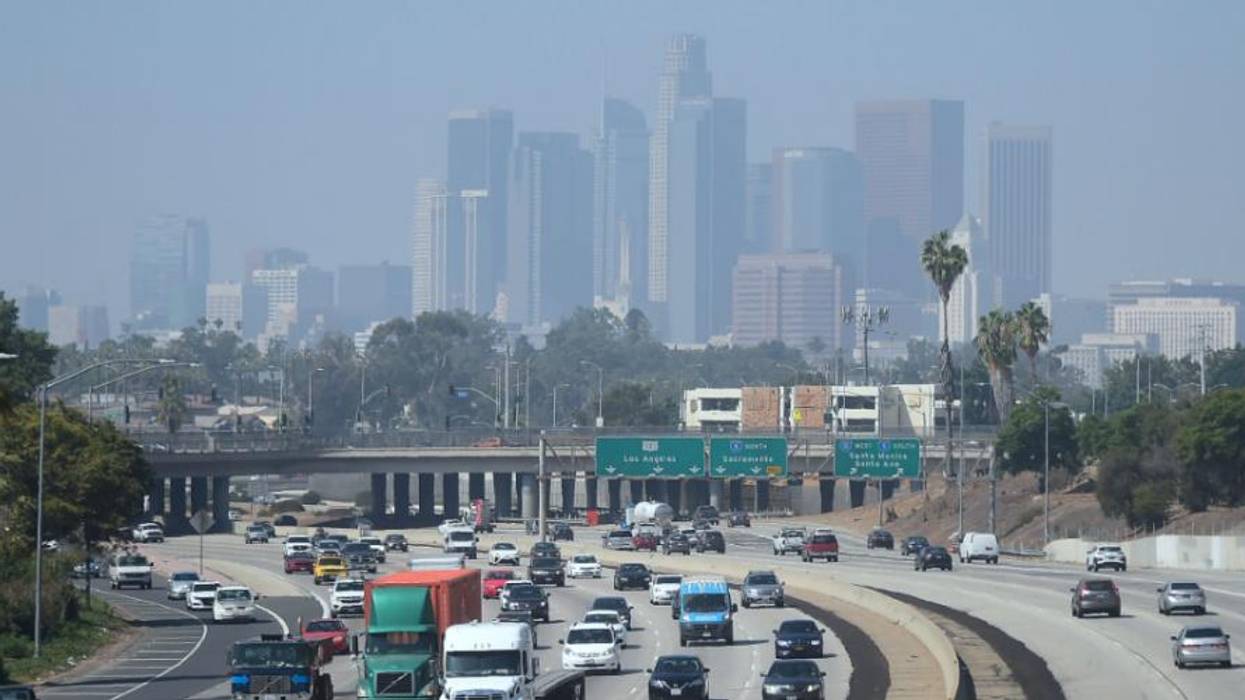
President Donald Trump's Environmental Protection Agency on Wednesday finalized a rule maintaining current standards for ozone pollution, in a decision public health and environmental advocates said blatantly flouted the advice of scientists.
Despite evidence that ground-level ozone--the main component of smog--contributes to and can worsen health conditions like asthma, bronchitis, and emphysema, EPA Administrator Andrew Wheeler announced the agency will maintain standards set by President Barack Obama, allowing 70 parts per billion (ppb) of ozone in the ground level atmosphere.
"People deserve to breathe clean air. We will fight this feeble, anti-science approach to dangerous air pollution with all tools available. And we'll urge the Biden team to deliver cleaner, healthier air for all."
--Vijay Limaye, NRDC
Advocates have long called for the standard to be tightened to 60 ppb. An EPA analysis conducted during the Obama administration showed that a stricter standard could prevent nearly 4,000 premature deaths linked to long-term exposure to air pollution; the 70 ppb standard would prevent only 680 deaths.
Another study by researchers at Harvard T.H. Chan School of Public Health, published in 2017, showed "significant evidence of adverse effects" of exposure to ozone "at concentrations below current national standards," among older Americans and particularly among racial minorities and people with low incomes.
Wheeler's decision comes after the EPA disbanded a panel of scientific experts which would otherwise have recommended pollution limits.
"The EPA, which is in charge of protecting our environment and human health, has taken the unconscionable step of ignoring its own scientists and finalizing a rule that allows polluters to keep emitting unacceptable levels of smog into our air," said Morgan Folger, director of Environment America's Destination: Zero Carbon Campaign. "In the middle of the Covid-19 pandemic, Americans are more keenly aware than ever of the need to take care of our health. Our lungs especially are highly susceptible to the exponential danger of the coronavirus and pollution."
The EPA's announcement also comes weeks after the agency declined to strengthen standards for particulate matter pollution, commonly known as soot, and a week after a London coroner, for the first time ever, listed air pollution as a cause of death on the death certificate of a nine-year-old girl who died in 2013.
Moms Clean Air Force slammed the agency for finalizing standards that "blatantly expose children, older adults, and other vulnerable groups to unacceptable health risks."
"Administrator Wheeler's refusal to strengthen national standards for smog will lead to more kids having asthma attacks that could have been prevented, more missed school days, more lung infections, worsening of dangerous chronic conditions like chronic obstructive pulmonary disease (COPD), and more children whose lung development is impaired," said Molly Rauch, the public health policy director for the group.
"With today's finalization of the ozone rule, Administrator Wheeler has continued a longstanding habit of flouting science and public health to protect dirty industries from having to clean up their pollution," she added.
The Natural Resources Defense Council (NRDC) said Trump's EPA blatantly declined an opportunity to "protect the 122 million people living today in areas that exceed the current unhealthy standard."
"People deserve to breathe clean air," said Vijay Limaye, a climate and health scientist at the NRDC. "We will fight this feeble, anti-science approach to dangerous air pollution with all tools available. And we'll urge the Biden team to deliver cleaner, healthier air for all."
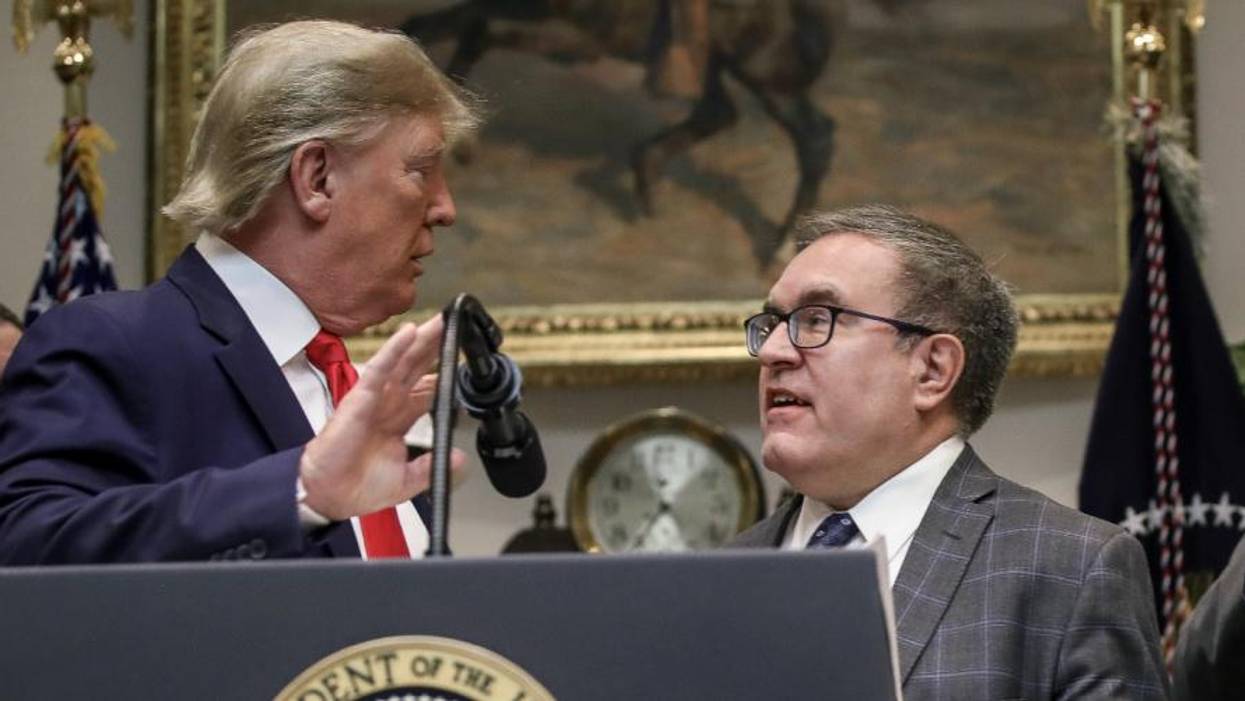
With President Donald Trump's first term soon coming to an end, the Environmental Protection Agency on Wednesday finalized a rule that critics are calling a last-minute attempt to "sabotage" future efforts by President-elect Joe Biden's incoming administration to tackle the intertwined climate and pollution crises.
Capping off nearly four years of Trump and members of his administration working to roll back over 100 environmental and public health protections in the service of corporate polluters, the new rule changes how the EPA calculates the costs and benefits of new policies on air pollution under the Clean Air Act.
The new requirements, as the Washington Post reports, "instruct the agency to weigh all the economic costs of curbing an air pollutant but disregard many of the incidental benefits that arise, such as illnesses and deaths avoided by a potential regulation. In other words, if reducing emissions from power plants also saves tens of thousands of lives each year by cutting soot, those 'co-benefits' should be not be counted."
Former coal lobbyist and current EPA Administrator Andrew Wheeler announced the finalization during a virtual event with the Heritage Foundation, saying, "thanks to President Trump's leadership, we are ensuring that future rulemakings under the Clean Air Act are transparent, fair, and consistent with EPA governing statutes."
Environmental and public health advocates pushed back against Wheeler's framing, blasting the rule as not only yet another piece of the outgoing administration's deregulatory agenda but also a blatant attempt to hamstring Biden, who ran on a promise to deliver environmental and climate justice.
"For four years, this administration has waged war on public health by kowtowing to polluters," Environmental Working Group president Ken Cook said of Trump's first term. "Now, on the way out the door, this amounts to sabotaging the efforts of the incoming administration to protect Americans from dirty air."
"It will literally be a breath of fresh air to soon have a president and an EPA working each day to make Americans and the planet healthier and safe," he added of Biden's planned January 20 inauguration. "But Administrator Wheeler and President Trump are hellbent on making that job as difficult as possible."
Proposed in June, the final rule comes in the midst of the deadly coronavirus pandemic, noted Chris Saeger, a spokesperson for Accountable.US. Early research has tied air pollution to a heightened risk of dying from Covid-19, which had killed over 288,700 people in the United States, according to Johns Hopkins University's tracker.
" Donald Trump must be held accountable for selling out Americans' air quality to big oil companies and fossil fuel lobbyists during a public health emergency," Saeger said. "To restore our nation, the Biden administration must raise standards for the air we breath by rejecting these irresponsible policies that reward the special interests the Trump administration used to work for."
Emily Davis, senior attorney in the Natural Resources Defense Council's Climate & Clean Energy Program, also called on the next administration to forge a new path on pollution policy.
"This is an egregious 11th-hour attempt to handcuff the incoming administration and undercut the benefits of clean air--in the worst days of a global health crisis," she said of the new rule. "Our country is struggling to address racial injustice and a deadly pandemic magnified by pollution, which all heavily impact Black, Latino, and low-income people."
"The Biden administration should deep-six this dishonest and dangerous rule--and allow EPA to re-embrace its core mission, which is to protect public health and our environment," Davis added. "We'll use every tool, and look forward to working with the Biden team, to ensure that healthier future for all."