

SUBSCRIBE TO OUR FREE NEWSLETTER
Daily news & progressive opinion—funded by the people, not the corporations—delivered straight to your inbox.
5
#000000
#FFFFFF
To donate by check, phone, or other method, see our More Ways to Give page.
Daily news & progressive opinion—funded by the people, not the corporations—delivered straight to your inbox.
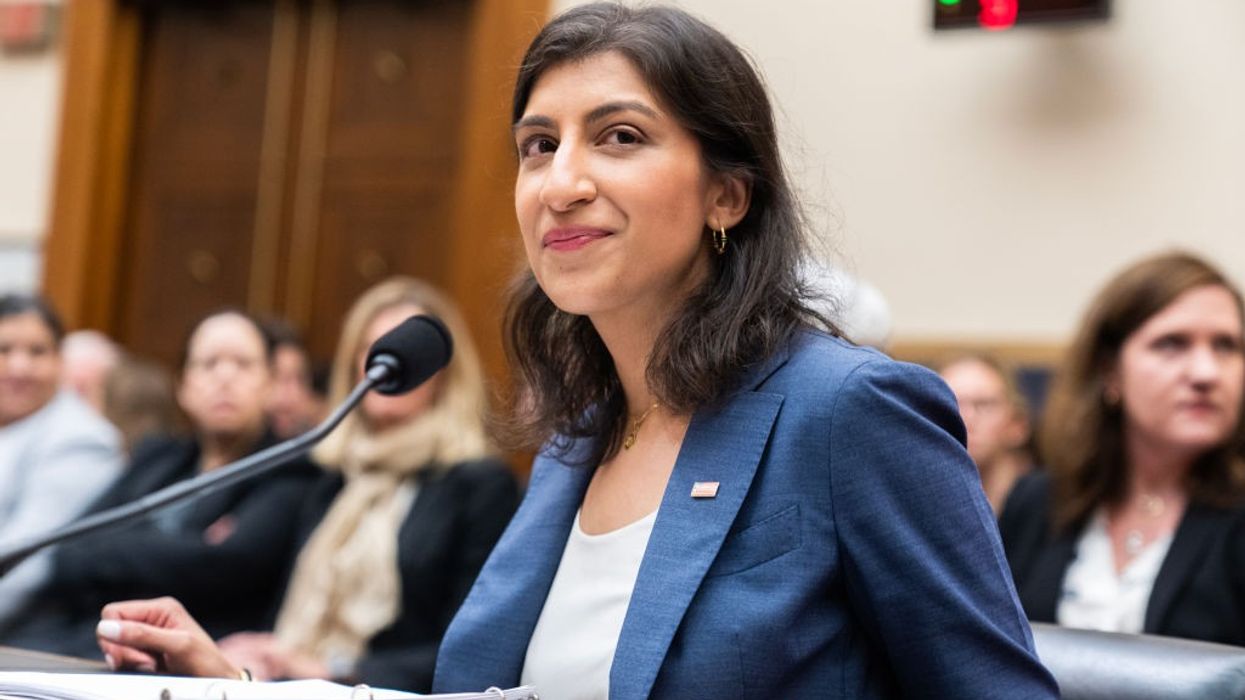
Khan’s FTC has scored historic victories for consumers and workers—even as she’s faced powerful industry opposition and obstruction from right-wing judges.
In June 2021, just months into the Biden era, Zephyr Teachout argued that Lina Khan’s appointment to the Federal Trade Commission “may be the best thing Joe Biden has done” in office. With a firm reputation as a leader in the anti-monopoly movement, her nomination to the FTC was a clear victory for progressives in an administration otherwise primarily staffed by moderates.
Three years on, it’s clear that this optimistic outlook about a Khan-run FTC has been vindicated. In her position, Khan’s FTC has scored historic victories for consumers and workers—even as she’s faced powerful industry opposition and obstruction from right-wing judges.
Understanding the significance of Khan’s tenure means understanding how antitrust enforcement has been sabotaged in recent decades by right-wing ideologues. The federal government adopted antitrust laws beginning in 1890, which would become a crucial tool for reining in corporate abuses for decades to come. But beginning in the 1970s, federal courts would embrace a right-wing reimagining of antitrust law under the guise of promoting “consumer welfare.” Unsurprisingly, this hands-off approach helped create an economy defined by extreme corporate concentration, leading to fewer and worse choices for American consumers.
While the leadership of both agencies are set to change under President-elect Donald Trump, the new merger guidelines mean that Khan’s pro-competition vision will help shape FTC decision-making well past her tenure.
While still in law school, Khan rose to prominence in 2017 for her critique of laissez-faire antitrust enforcement. Given her reputation, observers were quick to speculate on how she’d be able to put her principles to action at the FTC. For one, the commission in recent decades has built a track record of being deferential to the very monopolies it’s tasked to regulate. Additionally, the commission has long suffered from inadequate funding, which has hindered its capacity to police monopolies. But despite these institutional constraints, Khan’s FTC has secured major wins for American consumers, all while facing down hostile corporate actors and their allies in the judiciary.
Monopolistic behavior in the food industry over the past few decades has robbed consumers of choice while increasing grocery costs. Two years ago, grocery giants Kroger and Albertsons announced a massive merger deal that quickly raised alarms among consumer advocates. While such a merger may have gone through unscathed a decade or so prior, the Khan-led FTC filed suit to block the deal. Last month, the FTC won one of its biggest victories in recent years by blocking the merger in court. This victory, along with the FTC’s successful effort to block Tapestry’s acquisition of Capri, shows that Khan’s view of antitrust is increasingly finding support in court.
Sharing jurisdiction on antitrust matters with the Department of Justice (DOJ) Antitrust Division, the two agencies successfully modernized merger guidelines to help identify illegal mergers in their tracks. Observers have credited both the FTC and DOJ Antitrust Division’s aggressive enforcement efforts with a recent decline in merger efforts. And while the leadership of both agencies are set to change under President-elect Donald Trump, the new merger guidelines mean that Khan’s pro-competition vision will help shape FTC decision-making well past her tenure.
These developments, of course, only scrape the surface of the FTC’s accomplishments under Khan. The commission notably blocked an effort by Nvidia to acquire Arm, which was set to be the biggest merger deal in semiconductor industry history. The ultimate failure of Amazon to acquire iRobot, which caused concern among various international antitrust regulators, has been at least partially credited to the FTC’s scrutiny. Among the most meaningful impact of renewed FTC antitrust scrutiny may be felt on private equity firms, a welcome development given said firms’ harms to competition and American society at large.
The Khan-led FTC’s ability to build bipartisan support for efforts such as recent rulemaking on junk fees, as well as on merger guidelines, should be seen as a model for Democratic governance. Moreover, the Khan-led FTC should be applauded for using long-neglected tools at the commission’s disposal, such as its ability to police price discrimination as interlocking directorates.
With Khan set to be succeeded by Andrew Ferguson, Trump’s pick to lead the FTC, it's likely that the FTC will soon shift its approach on antitrust and consumer protection. Nevertheless, it’s clear that Khan will leave behind a legacy that will influence antitrust enforcement for decades to come. And in doing so, Khan will also leave behind a track record that shows what successful progressive governance looks like.
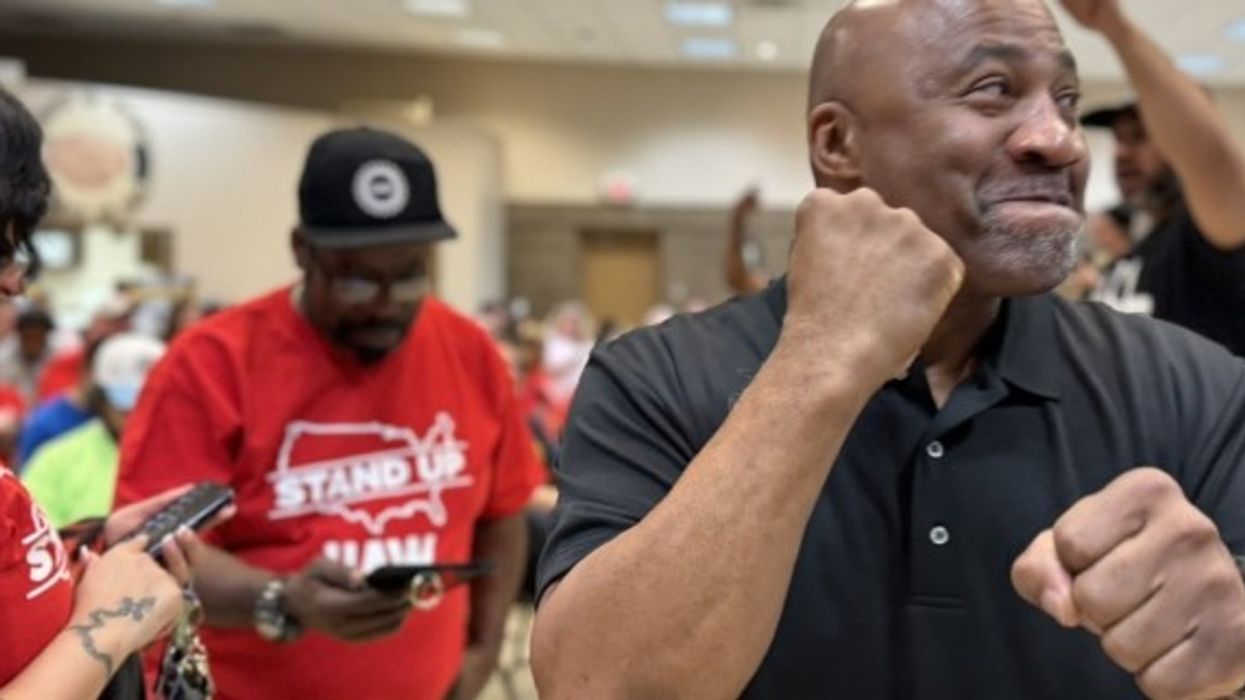
Champions in the fight against inequality face formidable challenges in 2025. But by working together at all levels—from the shop floor to state houses to the halls of Congress—we can still find ways to build power.
In dark times like these, shining a light on successful efforts to reverse our country’s extreme inequality is more important than ever. As we looked back on 2024, we actually found plenty to celebrate. Here are 10 inspiring wins that deserve more attention.
Volkswagen workers in Chattanooga, Tennessee voted overwhelmingly in April to join the United Auto Workers (UAW), a landmark win for labor organizing in the South. The region has suffered deeply because of its low-road, anti-union economic model. Seven out of ten states with the highest levels of poverty are in the South, according to the Economic Policy Institute.
Whatever happens on the national political stage over the next four years, local communities can still win important fights for a more just society.
Another UAW election, at a Mercedes-Benz facility in Vance, Alabama, where management was more aggressively anti-union, went the other way in May. But the union has vowed to continue organizing in the region. “This is a David and Goliath fight,” UAW President Shawn Fain said after the Mercedes loss. “Sometimes Goliath wins a battle. But David wins the war.”
Organizing workers at Amazon—now the nation’s second largest private employer—has been a white whale of the labor movement for years. Aside from a breakthrough union election win in Staten Island, puncturing the e-commerce giant’s anti-labor strategy has been challenging. That is, until this year, when the Teamsters made sizable gains.
The National Labor Relations Board ruled this summer that Amazon should be considered a joint employer of the delivery drivers it subcontracts, opening up that class of workers to organize. And organize they did—according to the Teamsters, over 5,000 drivers have joined the union at nine Amazon locations. Warehouse workers have made advances as well. In California, Amazon employees in San Francisco and at the company’s air hub in San Bernardino are now demanding union recognition.
For the past two years, the United Food and Commercial Workers union has led a coalition of more than 100 organizations against the proposed merger of grocery giants Kroger and Albertsons. The union predicted the mega-merger would result in “lost jobs, closed stores, food deserts, and higher prices.”
By contrast, corporate executives stood to make a killing. At Albertsons alone, the proposed merger agreement would’ve delivered as much as $146 million to the firm’s top 10 officials.
On December 10, one federal court judge and another in Washington state sided with the Federal Trade Commission and issued temporary injunctions against the deal. The following day, Albertsons threw in the towel on what would’ve been the biggest grocery store merger in U.S. history. “This is the first time the FTC has ever sought to block a merger not just because it’s gonna be bad for consumers, but also for workers,” FTC chair Lina Khan said shortly after the decision.
Despite the red wave on November 5, voters in several states passed ballot initiatives to adopt inequality-fighting policies that most Republican politicians oppose.
In the red states of Nebraska, Missouri, and Alaska, voters approved guaranteed paid leave, while Missouri and Alaska also passed state minimum wage hikes.
Washington state voters rejected a hedge fund-financed ballot proposal to repeal the state’s path-breaking capital gains tax on the rich. They also beat back an effort to gut a state-operated long-term care insurance program. In Illinois, voters adopted a nonbinding measure expressing support for an extra 3% tax on income of over $1 million.
In 2024, for the first time ever, over 100,000 Americans filed their tax returns digitally directly to the IRS. The agency’s Direct File system went live in 12 pilot states, breaking the dominance that for-profit tax preparation companies have enjoyed for years.
“This is an important fight to ensure greedy tax prep companies don’t continue to rake in money from filers who are simply doing their civic duty,” wrote Public Citizen’s Susan Harley for Inequality.org.
Direct file also advances racial justice. Color of Change and the Groundwork Collaborative exposed how Intuit’s TurboTax and H&R Block target Black and low-income communities for costly and unnecessary services.
Unfortunately, this fight is not over. House Republicans are urging President-elect Donald Trump to kill the IRS’s free direct file service on day one of his second administration.
President Joe Biden adopted a range of pathbreaking executive actions to protect U.S. workers—including safeguards against toiling in extreme heat, broader overtime pay coverage, and new measures protecting organizing rights. He also authorized rules to crack down on bosses who misclassify employees as independent contractors or force them to sign noncompete agreements.
The beauty of executive actions: no need for Congressional approval. The downside: The next president has the power to roll them back.
Will that happen under Trump, a self-declared but dubious champion of the working class? We shall see. In the meantime, the National Employment Law Project and several other organizations have put together a guide on how state policymakers could enact similar standards at the subfederal level.
Did you know that private jets pollute 10 to 20 times more per passenger than commercial airplanes? And the typical private jet owner, with a net worth of nearly $200 million, actually pays a far smaller share of air safety fees than commercial coach passengers, according to Institute for Policy Studies research.
In 2024, Stop Private Jet Expansion, a 100-organization coalition, won two major victories in their campaign to block the expansion of New England’s largest private jet airport, Hanscom Field outside Boston. Massachusetts state rejected the developer’s environmental impact submission, demanding supplemental information. As part of a comprehensive climate bill, the state legislature also updated the charter of Massport, the agency that will decide the future of the airport, to require them to consider carbon emissions and climate change in their decision-making.
Elon Musk has called for “deleting” the Consumer Financial Protection Bureau. What’s his problem with this federal agency? For Musk and his finance bro buddies, it appears the CFPB has been overly effective in helping ordinary Americans stand up to big money interests.
Recently the agency announced it’s forcing shady “credit repair” companies to return $1.8 billion in illegal junk fees to 4.3 million Americans. The agency also just issued new limits on overdraft fees that will save consumers billions more. During its nearly 14-year history, the CFPB has won nearly $21 billion in compensation for victims of fraud, racial discrimination in lending, and other financial abuse.
“Weakening the CFPB, slowing its work, or steering it to favor industry over the public interest,” explains the advocacy group Americans for Financial Reform, “would give bad actors a green light to do their worst and further deepen this country’s racial wealth gap.”
For four decades, procurement rules made it difficult for local and state policymakers to ensure that federally funded projects create good jobs. With megabillions in new public investment about to flow into infrastructure and clean energy projects, a labor-community alliance known as the Local Opportunities Coalition led the charge to get rid of these anti-worker vestiges of the conservative Reagan era.
Finally, in 2024, the Biden administration got the job done. Now state and local governments can give companies a leg up in bidding competitions if they commit to creating specific numbers of jobs with minimum levels of pay and benefits. They can also require hiring preferences for local workers and disadvantaged communities, ban the use of contract funds for union-busting, and prohibit employers from misclassifying workers as “independent contractors” to skirt labor laws.
Whatever happens on the national political stage over the next four years, local communities can still win important fights for a more just society.
One particularly inspiring example from 2024: the battles to protect county-owned nursing homes in rural Wisconsin against privatization. Study after study has shown that private equity-owned facilities have lower-quality care and higher mortality rates. And yet many Republican lawmakers are backing for-profit corporations’ efforts to take over this critical service.
As veteran community organizer George Goehl has reported, Wisconsin seniors put up a strong fight this year. They succeeded in ousting pro-privatization members of at least three county boards and are continuing to organize to protect their healthcare from corporate greed.
Champions in the fight against inequality face formidable challenges. But by working together at all levels—from the shop floor to state houses to the halls of Congress—we can still find ways to build power and move our country towards a just economy that works for everyone.
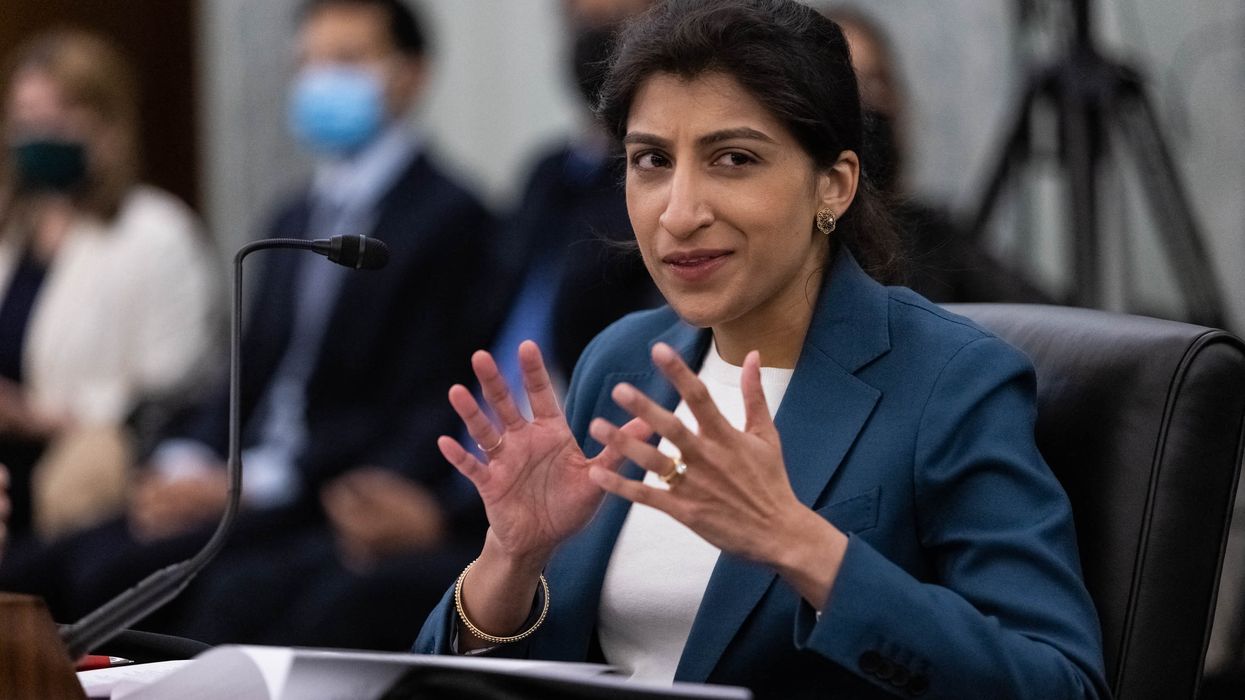
"The FTC is doing what our government should be doing: using every tool possible to make life better for everyday Americans," said one advocate.
The U.S. Federal Trade Commission on Thursday sued Southern Glazer's Wine and Spirits, alleging that the nation's largest alcohol distributor, "violated the Robinson-Patman Act, harming small, independent businesses by depriving them of access to discounts and rebates, and impeding their ability to compete against large national and regional chains."
The FTC said its complaint details how the Florida-based company "is engaged in anticompetitive and unlawful price discrimination" by "selling wine and spirits to small, independent 'mom-and-pop' businesses at prices that are drastically higher" than what it charges large chain retailers, "with dramatic price differences that provide insurmountable advantages that far exceed any real cost efficiencies for the same bottles of wine and spirits."
The suit comes as FTC Chair Lina Khan's battle against "corporate greed" is nearing its end, with U.S. President-elect Donald Trump announcing Tuesday that he plans to elevate Andrew Ferguson to lead the agency.
Emily Peterson-Cassin, director of corporate power at Demand Progress Education Fund, said Thursday that "instead of heeding bad-faith calls to disarm before the end of the year, the FTC is taking bold, needed action to fight back against monopoly power that's raising prices."
"By suing Southern Glazer under the Robinson-Patman Act, a law that has gone unenforced for decades, the FTC is doing what our government should be doing: using every tool possible to make life better for everyday Americans," she added.
According to the FTC:
Under the Robinson-Patman Act, it is generally illegal for sellers to engage in price discrimination that harms competition by charging higher prices to disfavored retailers that purchase similar goods. The FTC's case filed today seeks to ensure that businesses of all sizes compete on a level playing field with equivalent access to discounts and rebates, which means increased consumer choice and the ability to pass on lower prices to consumers shopping across independent retailers.
"When local businesses get squeezed because of unfair pricing practices that favor large chains, Americans see fewer choices and pay higher prices—and communities suffer," Khan said in a statement. "The law says that businesses of all sizes should be able to compete on a level playing field. Enforcers have ignored this mandate from Congress for decades, but the FTC's action today will help protect fair competition, lower prices, and restore the rule of law."
The FTC noted that, with roughly $26 billion in revenue from wine and spirits sales to retail customers last year, Southern is the 10th-largest privately held company in the United States. The agency said its lawsuit "seeks to obtain an injunction prohibiting further unlawful price discrimination by Southern against these small, independent businesses."
"When Southern's unlawful conduct is remedied, large corporate chains will face increased competition, which will safeguard continued choice which can create markets that lower prices for American consumers," FTC added.
Southern Glazer's published a statement calling the FTC lawsuit "misguided and legally flawed" and claiming it has not violated the Robinson-Patman Act.
"Operating in the highly competitive alcohol distribution business, we offer different levels of discounts based on the cost we incur to sell different quantities to customers and make all discount levels available to all eligible retailers, including chain stores and small businesses alike," the company said.
Peterson-Cassin noted that the new suit "follows a massive court victory for the FTC on Tuesday in which a federal judge blocked a $25 billion grocery mega-merger after the agency sued," a reference to the proposed Kroger-Albertsons deal.
"The FTC has plenty of fight left and so should all regulatory agencies," she added, alluding to the return of Trump, whose first administration saw
relentless attacks on federal regulations. "We applaud the FTC and Chair Lina Khan for not letting off the gas in the race to protect American consumers and we strongly encourage all federal regulators to do the same while there's still time left."
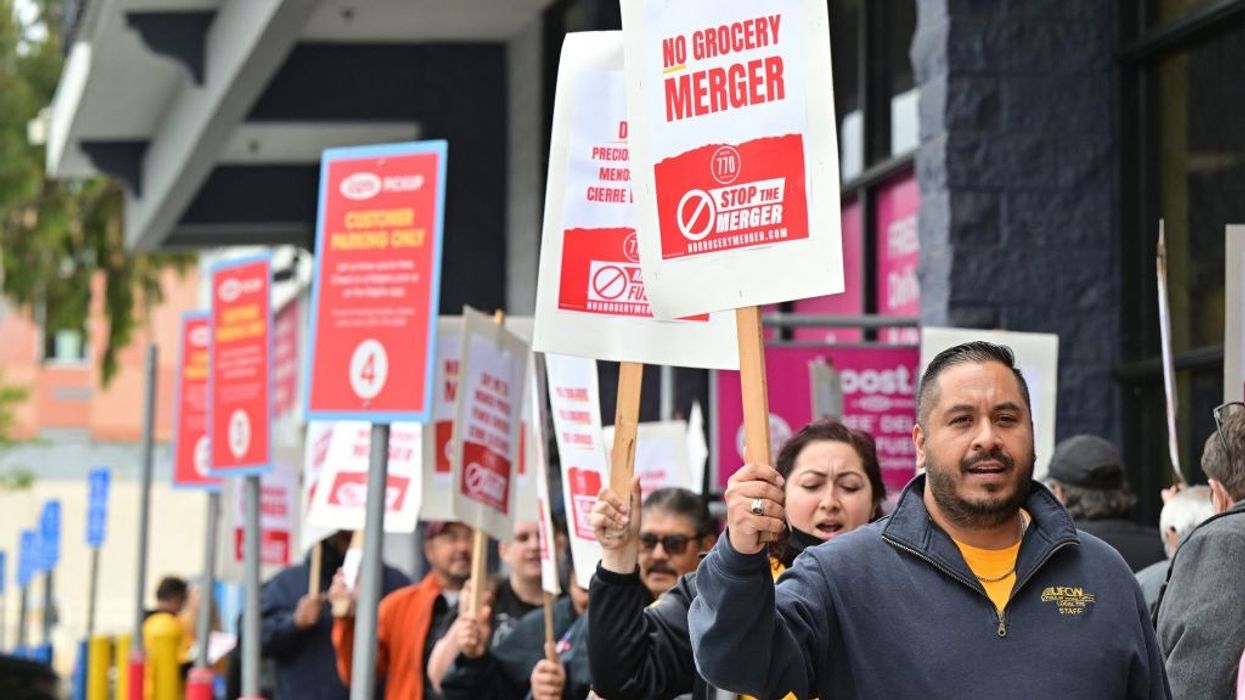
"We applaud the FTC for securing one of the most significant victories in modern antitrust enforcement," said one advocate.
Antitrust advocates on Tuesday welcomed a pair of court rulings against the proposed merger of grocery giants Kroger and Albertsons, which was challenged by Federal Trade Commission Chair Lina Khan and multiple state attorneys general.
"The FTC, along with our state partners, scored a major victory for the American people, successfully blocking Kroger's acquisition of Albertsons," said Henry Liu, director of the commission's Bureau of Competition, in a statement. "This historic win protects millions of Americans across the country from higher prices for essential groceries—from milk, to bread, to eggs—ultimately allowing consumers to keep more money in their pockets."
"This victory has a direct, tangible impact on the lives of millions of Americans who shop at Kroger or Albertsons-owned grocery stores for their everyday needs, whether that's a Fry's in Arizona, a Vons in Southern California, or a Jewel-Osco in Illinois," he added. "This is also a victory for thousands of hardworking union employees, protecting their hard-earned paychecks by ensuring Kroger and Albertsons continue to compete for workers through higher wages, better benefits, and improved working conditions."
While Liu was celebrating the preliminary injunction from Oregon-based U.S. District Court Judge Adrienne Nelson, later Tuesday, King County Superior Court Judge Marshall Ferguson released a ruling that blocked the merger in Washington state.
"We're standing up to mega-monopolies to keep prices down," said Washington Attorney General Bob Ferguson. "We went to court to block this illegal merger to protect Washingtonians' struggling with high grocery prices and the workers whose jobs were at stake. This is an important victory for affordability, worker protections, and the rule of law."
Advocacy groups applauding the decisions also pointed to the high cost of groceries and the anticipated impact of Kroger buying Albertsons—a $24.6 billion deal first announced in October 2022.
"American families are the big winner today, thanks to the Federal Trade Commission. The only people who stood to gain from the potential merger between Albertsons and Kroger were their wealthy executives and investors," asserted Liz Zelnick of Accountable.US. "The rest of us are letting out a huge sigh of relief knowing today's victory is good news for competitive prices and consumer access."
Describing the federal decision as "a victory for commonsense antitrust enforcement that puts people ahead of corporations," Food & Water Watch senior food policy analyst Rebecca Wolf also pointed out that "persistently high food prices are hitting Americans hard, and a Kroger-Albertsons mega-merger would have only made it worse."
"Already, a handful of huge corporations' stranglehold on our food system means that consumers are paying too much for too little choice in supermarkets, workers are earning too little, and farmers and ranchers cannot get fair prices for their crops and livestock," she noted. "Today's decision and strengthened FTC merger guidelines help change the calculus."
Like Wolf, Farm Action president and co-founder Angela Huffman similarly highlighted that "while industry consolidation increases prices for consumers and harms workers, grocery mergers also have a devastating impact on farmers and ranchers."
"When grocery stores consolidate, farmers have even fewer options for where to sell their products, and the chances of them receiving a fair price for their goods are diminished further," Huffman explained. "Today's ruling is a win for farmers, workers, and consumers alike."
Some advocates specifically praised Khan—a progressive FTC chair whom President-elect Donald Trumpplans to replace with Andrew Ferguson, a current commissioner who previously worked as chief counsel to Senate Minority Leader Mitch McConnell (R-Ky.) and as Republican counsel on the Senate Judiciary Committee.
"Today's decision is a major win for shoppers and grocery workers. Families have been paying the price of unchecked corporate power in the food and grocery sector, and further consolidation would only worsen this crisis," declared Groundwork Collaborative executive director Lindsay Owens in a statement.
"FTC Chair Lina Khan's approach is the blueprint to deliver lower prices, higher wages, and an economy that works for everyone," Owens argued. "The rebirth of antitrust enforcement has protected consumers against the worst of corporate power in our economy and it would be wise to continue this approach."
Laurel Kilgour, research manager at the American Economic Liberties Project, called the federal ruling "a resounding victory for workers, consumers, independent retailers, and local communities nationwide—and a powerful validation of Chair Khan and the FTC's rigorous enforcement of the law."
"The FTC presented a strong case that Kroger and Albertsons fiercely compete head-to-head on price, quality, and service. The ruling is a capstone on the FTC's work over the past four years and includes favorable citations to the FTC's recent victories against the Tapestry-Capri, IQVIA-Propel, and Illumina-Grail mergers," Kilgour continued.
"The court also cites long-standing Supreme Court law which recognizes that Congress was also concerned with the impacts of mergers on smaller competitors," she added. "We applaud the FTC for securing one of the most significant victories in modern antitrust enforcement and for successfully protecting the public interest from harmful consolidation."
Despite the celebrations, the legal battle isn't necessarily over.
The Associated Press reported that "the case may now move to the FTC, although Kroger and Albertsons have asked a different federal judge to block the in-house proceedings," and Colorado is also trying to halt the merger in state court.
Why stopping the Kroger-Albertsons merger is an important step along the way to a more fair and balanced economy.
In front of the Federal Trade Commission building on Pennsylvania Avenue in Washington, D.C., where I used to work, stands a giant sculpture of a runaway horse being reined in. It’s called “Man Controlling Trade.” The allegorical sculpture by Michael Lantz is one of a pair installed in 1942, part of a New Deal-era program administered by the Section of Painting and Sculpture of the Treasury Department to commission works of art for federal buildings.
The idea that government should rein in the wild forces of capitalism was by 1942 well established. America had gone through a catastrophic Great Depression that revealed the need for stronger regulation of business and finance. The nation had also begun to mobilize the economy to fight World War II.
America then understood that stable prices and good wages depended on government taming corporate greed for the common good. This wasn’t socialism or communism. It was democratic, progressive capitalism. It was a means of saving both capitalism and democracy.
 “Man Controlling Trade” by Michael Lantz
Last week, in a court in Oregon, the Federal Trade Commission began to rein in two giant runaway grocery chains — Kroger and Albertsons — that want to merge into the biggest grocery combination in history and gallop away with your money and many workers’ wages.
It’s the first time anti-monopoly law has been used both to tame consumer prices and help workers gain better wages. The case illustrates how the Biden-Harris administration is seeking to restructure the economy for the common good — and what the Harris-Walz administration will, hopefully, have the opportunity to do even more of.
Three arguments undergird the FTC’s case:
(1) Grocery prices are already through the roof, in part because there’s not sufficient competition in most local grocery markets to force chains to lower their prices. Kroger and Albertsons are the two biggest grocery chains in America. If they’re allowed to merge, the combined company, plus Walmart, will control 70 percent of the grocery market in over 150 cities. That means even higher prices.
(2) The proposed $24.6 billion merger would not only put 5,000 American grocery stores under one corporation. It would put 41 retail grocery brands and 4,000 pharmacies under the same corporation. It would signal to every other industry they can make big profits by further monopolizing.
(3) If allowed to combine, Kroger and Albertsons would also put their combined 700,000 workers under one corporation. These workers would then have to bargain with just one take-it-or-leave-it giant grocery chain. This would erode their bargaining power, leading to lower wages, worse benefits, and weaker worker protections.
This last point — the relationship between corporate concentration and lower wages and benefits — is almost never raised in antitrust litigation yet it’s hugely important for understanding the current structure of the American economy and why so many American workers justifiably feel shafted.
**
Since the late 19th century, the U.S. government has been deciding the extent to which corporations can join together to gain market power, and workers can join together in labor unions to gain bargaining power. This balance of power has had as much effect on prices and wages as supply and demand — in fact, it undergirds supply and demand.
In 1890 and then again in 1914, the United States enacted anti-monopoly laws. Teddy Roosevelt and Woodrow Wilson were fierce trust-busters. In 1935, FDR signed into law the National Labor Relations Act, which allowed workers to form labor unions and required employers to negotiate in good faith with those unions.
By 1950, big business and big labor were in rough balance. That balance of power was central to the growth of both the American economy and the American middle class. It fostered a basic bargain: As corporations became more profitable, their workers did, too.
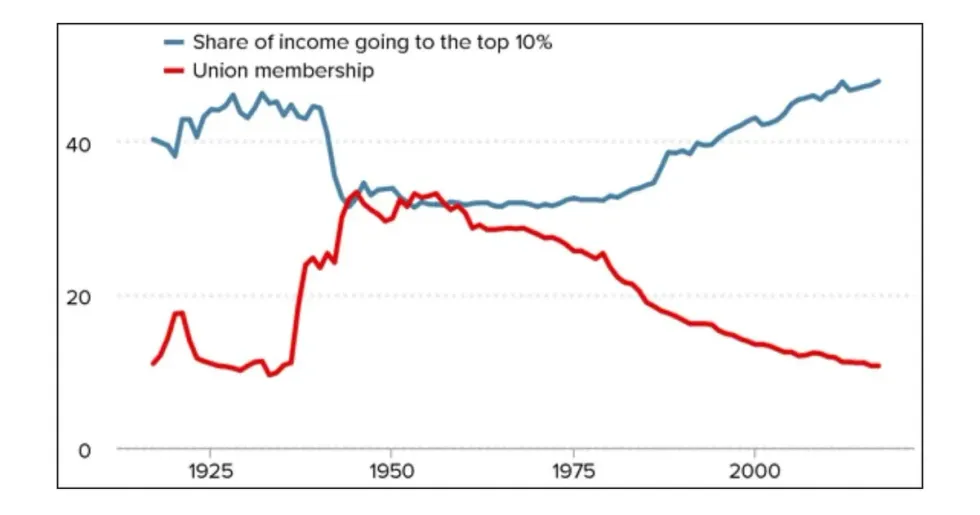 Sources: Historic Statistics of the United States, Unionstats.com.
Over the last 40 years, though, union power has dropped precipitously while corporate power has soared. The result has been near-record levels of inequality (see chart, above).
In 1955, over a third of all workers in the private sector were unionized, which gave them considerable bargaining power to get higher wages. (Employers whose workers weren’t unionized often offered their workers almost the same wages and benefits as those in the unionized sector, to fend off unionization.)
Now, only 6 percent of private sector workers are unionized.
Meanwhile, over just the last two decades, more than 75 percent of U.S. industries have become more concentrated.
Four beef packers now control over 80 percent of their market, domestic air travel is now dominated by four airlines, and many Americans have only one choice of reliable broadband provider. Just four companies — Walmart, Costco, Kroger, and Albertsons — dominate the grocery industry.
When few workers are unionized, wages remain stagnant or decline. Without adequate competition, prices and corporate profits rise. The result: Wealth is siphoned off from workers and consumers to large corporations and shareholders.
In the late 1970s, I worked at the Federal Trade Commission, which actively fought anti-competitive mergers and monopolies. But the Reagan administration eased up on them. Reagan also encouraged attacks on unions, as exemplified by his firing of striking air traffic controllers (who, in truth, had no right to strike).
The Biden administration has made priorities of both cracking down on corporate concentration and strengthening labor unions.
Lina Khan, chair of the FTC, and Jonathan Kanter, assistant attorney general for the antitrust division of the Justice Department, have been aggressively fighting corporate power. Jennifer Abruzzo, general counsel of the National Labor Relations Board, has been aggressively protecting workers’ organizing rights.
But there is far, far more to do. Last week, Khan, Kanter, Abruzzo, and Labor Secretary Julie Su signed a memo of agreement, enabling them to coordinate their efforts even more.
But they also need more resources to do their important work. Inequality is out of control. Big corporations are more profitable than ever. CEO pay is bonkers. (Kroger paid its CEO $15 million last year, which was 502 times what the typical Kroger employee earned. If the merger goes through, Albertsons’ CEO would receive $43 million, on top of his $15.1 million compensation.)
Yet most workers are still receiving a small portion of the economic gains. According to the latest estimates, the median household income is $74,580.
Both sides of the economic equation — corporate power and worker power — must be addressed. The Biden-Harris administration has made a good start at reining in corporate power and strengthening worker power. Stopping the Kroger-Albertsons merger is an important step along the way.
Here’s hoping the Harris-Walz administration will take many more such steps.
Happy Labor Day.
"As grocery store 'price gouging' reaches the top of the political ticket, the FTC is intervening to protect consumers and workers from further harm."
As grocery giants Kroger and Albertsons faced the U.S. Federal Trade Commission in a federal court Monday, economic justice advocates said Americans should be wary of the corporate media's reporting on the FTC's lawsuit, which aims to block the companies' proposed $24.6 billion merger.
"Get ready for more takes like these from corporate media," said the American Economic Liberties Project (AELP), posting on social media a clip from CNBC in which anchor Joe Kernen echoed Kroger and Albertsons' claims that the merger would help them compete with big box stores like Walmart, lower prices for consumers, and benefit workers.
"With a merger this blatantly harmful to consumers, workers, and countless local communities, Wall Street cheerleaders can't help but rely on misleading arguments," said AELP.
The trial, kicking off in a U.S. District Court in Portland, Oregon, centers on a claim by the FTC along with eight states and the District of Colombia that the merger would reduce industry competition—creating "a straight-up monopoly" in small communities like Gunnison, Colorado where 6,000 residents "would have to drive 65 miles to reach a non-Kroger supermarket," according to AELP.
FTC Chair Lina Khan is also opposing the merger because it would weaken unionized workers' bargaining power, particularly in parts of the country where dozens of Kroger and Albertsons stores are located near each other.
With 115 of 159 Albertsons stores located within two miles of a Kroger in Los Angeles County and Orange County, California, the United Food and Commercial Workers International Union (UFCW) has warned that hundreds of unionized workers could see their stores close if the merger is finalized.
As the trial began Monday, The New York Times published an interview with an employee of an Albertsons subsidiary in Woodland Hills, California. Leonard De Monte was represented by the UFCW in 2015 when the grocery store he was working at was sold as part of Albertsons' merger with the store's parent company—a deal that was called "an unmitigated disaster" for workers by AELP senior legal counsel Lee Hepner.
De Monte found another job at the Albertsons subsidiary, but was demoted to minimum wage. Now nine years later, after working his way up to a $27-per-hour union wage, the store De Monte works at is once again at risk of being sold if the merger goes through, and he fears being demoted to minimum wage again and losing his benefits.
"I have great health benefits because I've been with the company so long," he told the Times. "If I lose my health benefits, I would have to pay out of pocket."
Despite the stores' claim that they need to compete with Walmart and Amazon, AELP pointed out in March that Kroger and Albertsons acknowledge one another as their top competition. Without the two stores competing, said the group, "grocery workers will lose bargaining power, both because individually they won't have a competing employer to go work for, and because unions will lose leverage during contract negotiations. As a result, workers will potentially face lower wages, worse working conditions, and layoffs."
According to an analysis by the Economic Policy Institute, the merger would reduce the total annual earnings of grocery store workers in affected metropolitan areas by $334 million.
In court on Monday, the FTC displayed text messages showing that Kroger executives have complained that Albertsons has forced it "to accept more worker compensation."
The progressive think tank Roosevelt Institute said the trial, which is expected to go on for three weeks, shows that Khan and the FTC are "taking the harms of corporate consolidation on workers seriously."
Kroger's arguments and business practices—including using "dynamic pricing" to price gouge and its exorbitant CEO pay—represent "corporate greed at its absolute worst," said former U.S. Labor Secretary Robert Reich.
"The Kroger-Albertsons merger would eliminate head-to-head competition between grocery stores across the country," said Hepner. "As grocery store 'price gouging' reaches the top of the political ticket, the FTC is intervening to protect consumers and workers from further harm."
"By suing to block the Kroger-Albertsons merger, the FTC is keeping grocery bills down and workers in their jobs," said one anti-monopoly campaigner.
The Federal Trade Commission and a bipartisan group of state attorneys general joined forces Monday on a lawsuit aimed at blocking the supermarket giant Kroger from buying up the Albertsons grocery chain, warning the merger would hamper competition, further drive up food prices, and harm workers.
If completed, the $24.6 billion deal would mark the largest supermarket merger in U.S. history at a time when grocery chains are facing growing scrutiny for driving up prices to pad their bottom lines. A Kroger-Albertsons grocery behemoth would control more than 5,000 stores and 4,000 retail pharmacies across the country, according to the FTC.
"This supermarket mega merger comes as American consumers have seen the cost of groceries rise steadily over the past few years," said Henry Liu, director of the FTC's Bureau of Competition. "Kroger's acquisition of Albertsons would lead to additional grocery price hikes for everyday goods, further exacerbating the financial strain consumers across the country face today."
"Essential grocery store workers would also suffer under this deal, facing the threat of their wages dwindling, benefits diminishing, and their working conditions deteriorating," Liu added.
The attorneys general of Arizona, California, Washington, D.C., Illinois, Maryland, Nevada, New Mexico, Oregon, and Wyoming are joining the FTC's suit, which was filed in the U.S. District Court for the District of Oregon.
The lawsuit drew immediate praise from progressive advocacy groups and opponents of food industry consolidation.
Stacy Mitchell, co-executive director at the Institute for Local Self-Reliance (ILSR), said the decision to sue shows that the FTC "sees what we have long argued—there was no upside to this merger for anybody other than the top executives at these two companies and their investors."
ILSR has estimated that if the deal survives legal challenges, Kroger-Albertsons and Walmart—the largest low-wage employer in the U.S.—would control 70% of the grocery market in over 160 cities.
"Concentration in grocery retail has already caused food prices to skyrocket," said Mitchell. "We know from past grocery mergers that this one would have sent prices for consumers even higher. It would have left many communities, especially on the West Coast, with little to no competition or choice about where to shop. And it would have hurt retail workers by giving the combined companies even more leverage to push down wages and dictate terms."
Grocery prices have outpaced overall inflation in the U.S. over the past four years, surging by roughly 25%—and they remain stubbornly high even as inflation has fallen substantially from its peak of 9.1% in the summer of 2022.
The FTC, which has been assessing the proposed merger for more than a year, said Monday that because Kroger and Albertsons are direct competitors, a merger of the two "would eliminate head-to-head price and quality competition, which have driven both supermarkets to lower their prices and improve their product and service offerings."
"If the merger takes place, grocery prices will increase, and Kroger and Albertsons' incentive to improve product quality and customer service will decrease, further harming customers," the agency said.
The deal would also bring economic pain for workers, according to merger opponents. The Economic Policy Institute (EPI) has estimated that if the acquisition is completed, roughly 746,000 grocery store workers in over 50 metropolitan areas of the U.S. would see their annual earnings fall by a combined $334 million.
"Workers' ability to negotiate better pay and working conditions rests on their capacity to switch jobs," EPI senior economist Ben Zipperer explained in a 2023 memo. "By decreasing the number of outside options available to workers, the merger will limit competition for hiring and retaining employees, and grocery store worker earnings will fall as a result."
The FTC said Monday that executives at both Kroger and Albertsons have admitted that the proposed merger is anticompetitive. The agency quotes one unnamed executive as saying, "You are basically creating a monopoly in grocery with the merger."
Morgan Harper, director of policy and advocacy at the American Economic Liberties Project, said in a statement that "by suing to block the Kroger-Albertsons merger, the FTC is keeping grocery bills down and workers in their jobs."
"From higher prices for consumers, worse wages and benefits for workers, a tighter squeeze on producers and farmers, to an increased risk of grocery and pharmacy deserts across the 48 states this merger affects, the harms of this deal were clear from the start," said Harper. "No divestiture or concession would make it work—which is why over 100,000 workers and countless advocates have spoken out against this disastrous merger."
"Kroger and Albertsons would be wise to save everyone's time and abandon this deal," she added.
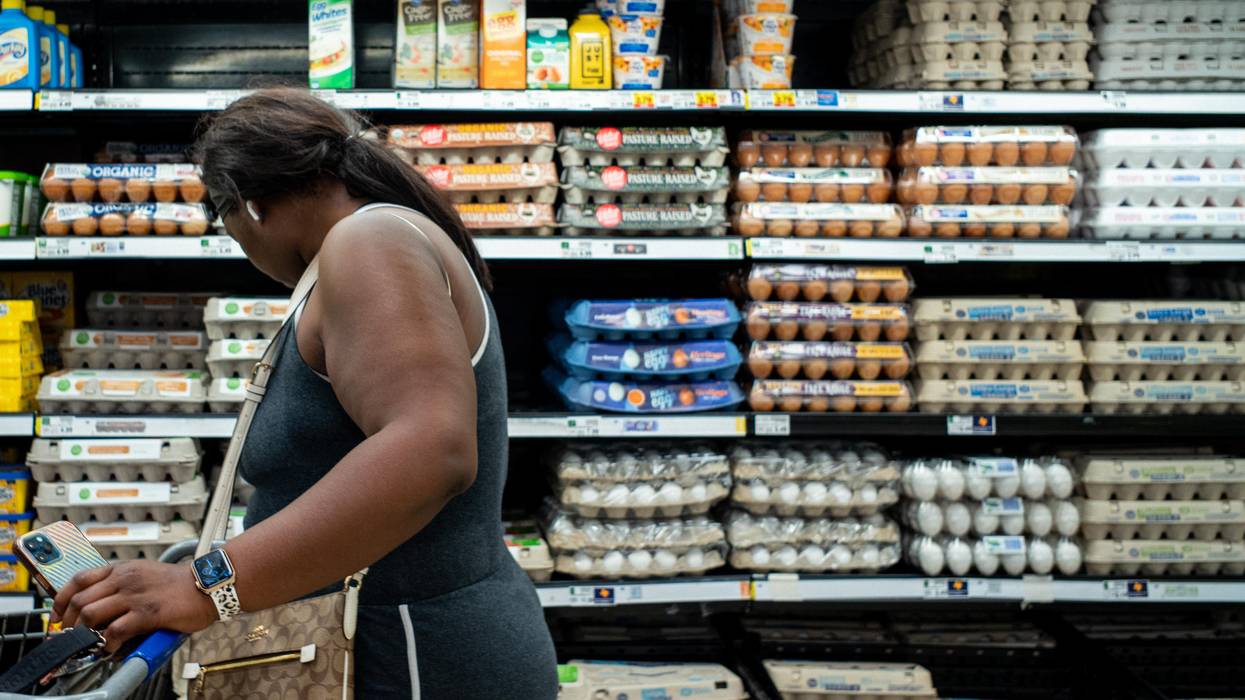
Workers’ ability to negotiate better pay and working conditions rests on their capacity to switch jobs. By decreasing the number of outside options available to workers, the merger will limit competition.
In October 2022, Kroger, the largest supermarket chain in the U.S., announced plans to acquire Albertsons, the second largest, for $24.6 billion—a deal that faces antitrust scrutiny from the Federal Trade Commission and state regulators. Historically, antitrust concerns have focused on the damage to consumers caused by concentration in product markets that gives large firms pricing power. However, a recent wave of economic research has called attention to potential damages to workers’ bargaining power over wages stemming from concentration in labor markets. In this policy memo, we discuss these labor market implications of the proposed merger. We find that the merger of two of the largest supermarket chains in the country will increase employer concentration and reduce the wages of all grocery store workers in affected cities across the country.
Workers’ ability to negotiate better pay and working conditions rests on their capacity to switch jobs. By decreasing the number of outside options available to workers, the merger will limit competition for hiring and retaining employees, and grocery store worker earnings will fall as a result. Crucially, the wage effects we identify are solely driven by this increase in labor market concentration. If the merger also leads to layoffs or hours cuts, this would add another dimension of damage to affected workers.
Our analysis uses grocery store employment and earnings data and the specific locations of Kroger and Albertsons stores. We find that:
Recent research has established that concentrated labor markets can reduce worker pay. As explained in Abdela and Steinbaum (2018), much of this research estimates the expected change in average wages for a given change in employer concentration in a particular industry- or occupation-specific labor market.
This analysis uses estimates from that research and applies them to labor markets, which we define as grocery store industry employers or employees in metropolitan areas using the 4-digit North American Industry Classification System (NAICS) industry 4451, Grocery and Convenience Retailers. For each of these metropolitan area labor markets, total grocery store wage losses are calculated by estimating percent changes in employer concentration due to the merger and multiplying those concentration changes by the wage responses estimated in the research literature described above.
To estimate the percent change in concentration due to the merger, we first estimate the level difference in the metropolitan area grocery store industry concentration before and after the merger and then divide that level change by an estimate of the baseline, pre-merger concentration.
On average, each of the affected 746,000 workers will lose about $450 in annual wage income.
To estimate the pre-merger concentration levels, we choose an average pre-merger concentration level by relying on the existing research literature that calculates trends in retail or grocery concentration. Measuring concentration as the Herfindahl-Hirschman Index (HHI) for 4-digit NAICS industries in commuting zones, Rinz (2022) found that the average HHI for the retail trade sector trended between 0.1 and 0.2 between 1976 and 2015. Zeballos, Dong, and Islamaj (2023) also calculated that the average HHI for two 6-digit industries associated with food retail markets in metropolitan areas rose from about 0.1 in 1990 to about 0.2 in 2019. In the following analysis, we choose a constant 0.15 as the average pre-merger concentration level in metropolitan areas for the grocery store industry. Coincidentally, 0.15 is the threshold at which the Department of Justice considers a market to be “moderately concentrated.”
In our analysis, the pre- and post-merger difference in concentration levels assumes Kroger and Albertsons act as two separate firms prior to the merger and as one single firm after the merger, and then we calculate the level change in HHI where it is possible to estimate store-level employment for each Kroger and Albertsons store. This estimate is a linear prediction based on a subset of 153 stores for which we have employment estimates, square footage data, and Quarterly Census of Employment and Wages (QCEW) metropolitan area-level average employment per establishment.
All told, this analysis covers 205 metropolitan areas containing 3,770 Kroger and Albertsons stores for which we can estimate store-level employment—and hence potential concentration changes—and for which we have 2022 QCEW data for baseline metropolitan area grocery store employment and earnings levels. According to the 2022 QCEW data, there are about 1.6 million grocery store workers in these cities and about 2.8 million grocery store workers nationwide. In 55 of these metropolitan areas, concentration will increase after the merger because these areas contain both Kroger and Albertsons stores.
Wages will fall on average for all grocery store workers in these areas due to the decrease in employer competition. (In other metropolitan areas, we assume there will be no wage change due to the merger because there is no estimated change in concentration.) The exact magnitude of the wage response is based on estimates published in Rinz (2022): Specifically, our analysis assumes that a 10% increase in concentration in a labor market will lower the average wage by 0.4%.
Table 1 summarizes the results. The metropolitan areas with concentration increases contain 746,000 grocery store workers, and the total annual wage bill is $26.3 billion. Across these areas, earnings-weighted average concentration will increase by 32% because of the merger. As a result, wages will decline by 1.3%, given the assumed elasticity of wages with respect to a concentration of -0.04. The Kroger-Albertsons merger will cause annual wages to fall in these affected cities by a total of $334 million. On average, each of the affected 746,000 workers will lose about $450 in annual wage income.
Because the wage losses will, on average, affect every grocery store worker in a metropolitan area where there is a merger of Kroger and Albertsons’ stores, cities with large grocery employment bases will experience particularly large losses in total wage income. Table 2 shows the 10 largest wage losses by metropolitan area. For example, the merger will cause annual grocery store wages to fall by $51 million in the Los Angeles-Long Beach-Anaheim, California, metropolitan area and $32 million in the Chicago-Naperville-Elgin, Illinois-Indiana-Wisconsin, metropolitan area
The effects described above represent average losses, and some individual workers may experience larger or smaller wage declines. In particular, the losses may be reduced in labor markets where workers have more bargaining power. Benmelech, Bergman and Kim (2022), in the case of manufacturing, and Prager and Schmitt (2021), in the case of hospital workers, show that the negative wage effects of employer concentration are larger in areas where union density is below average or right-to-work laws reduce unions’ bargaining power. For example, union coverage rates in the grocery store industry are only 8% in the South, but 20% in the Northeast.
As wage declines entail significant losses for grocery store workers, they simultaneously represent sizable parts of Kroger and Albertsons’ bottom lines. Some reports estimate total employment at Kroger and Albertsons to be about 710,000 workers, about one quarter of the total 2.8 million employees in the grocery store industry. Accordingly, a reasonable expectation for wage losses for employees at Kroger and Albertsons is one quarter of the $334 million, or about $84 million. Since Kroger’s profits were $2.3 billion and Albertsons profits were $1.5 billion in 2022, the merger-induced decline in grocery store worker wages is equivalent to about a 2% increase in Kroger and Albertsons’ profits. Because grocery profits were relatively high in 2022, the wage reductions would represent an even higher share of “normal” pre-pandemic profits. The wage losses also represent a significant windfall for company executives: Wage losses for workers at Kroger and Albertsons are about three times the size of the total CEO compensation of the two companies.
The Kroger and Albertsons merger will reduce the number of outside employment options available to workers and place downward pressure on grocery store workers’ wages. Based on existing empirical research showing the labor market effects of employer concentration, we find that the merger will permanently reduce the wages of 776,000 grocery store workers. Their annual earnings will fall by $334 million—about a $450 loss in annual wages per worker. If unionization rates were significantly higher in areas affected by the merger, union contracts and bargaining power could mitigate some of these losses.
For additional notes and references, see the original Economic Policy Institute report.
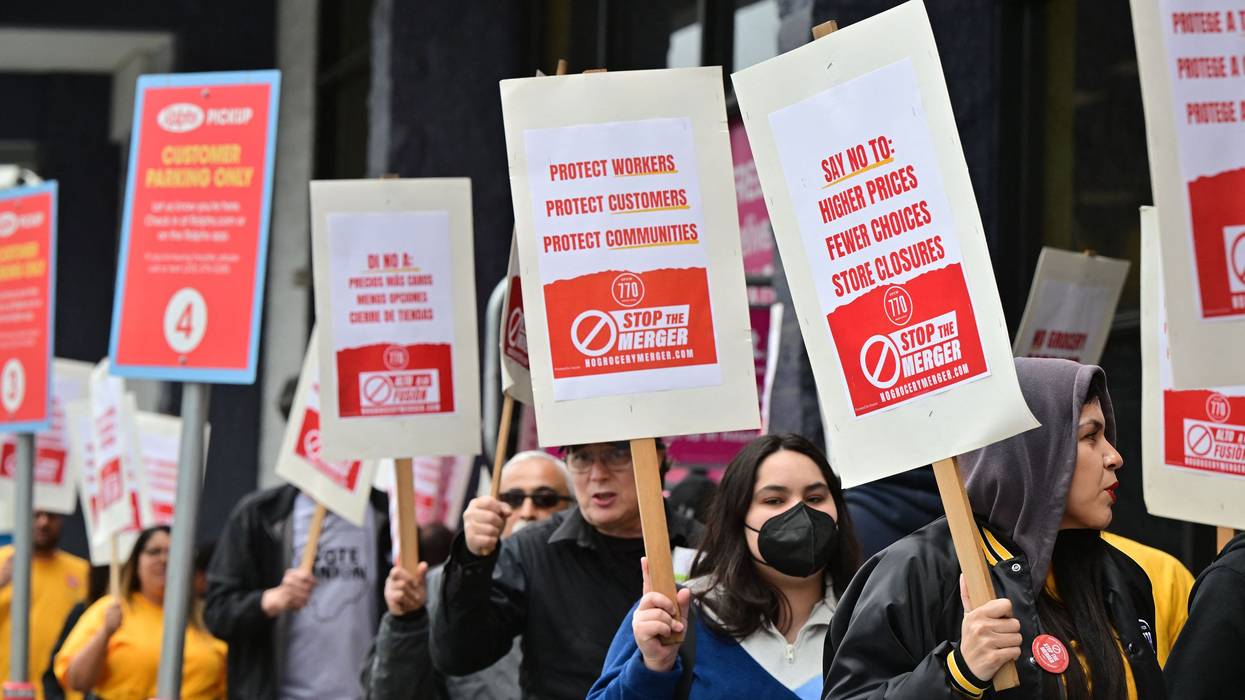
"This deal is an antitrust travesty and it must be stopped," says a letter urging the FTC to block the proposed $25 billion merger between two of the nation's largest grocery chains.
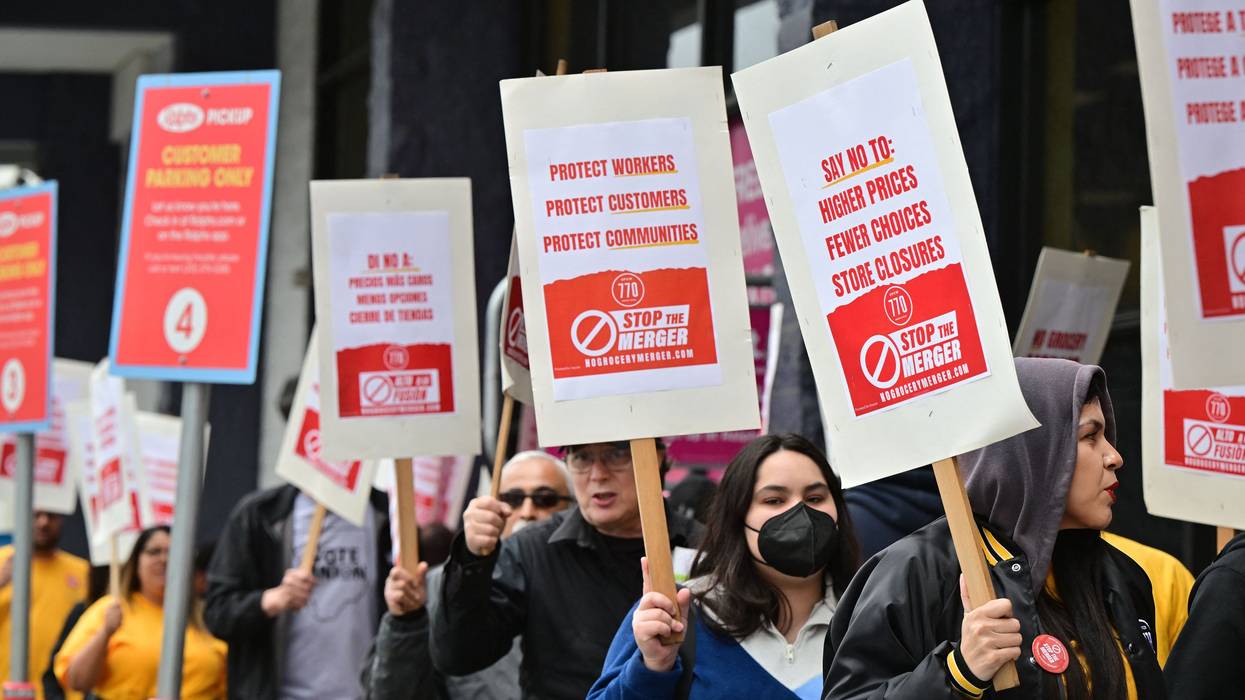
A progressive coalition of more than 100 unions and consumer advocacy groups from across the United States has come together to build the "Stop the Merger" campaign, a national and state-level effort to prevent Kroger from acquiring Albertsons and establishing the country's most powerful grocery cartel.
On Tuesday, the coalition announced the launch of NoGroceryMerger.com, which includes information about the negative impacts of the proposed $25 billion merger between two of the nation's largest grocery chains, testimony from unionized grocery workers and elected officials, and tools for people to express their opposition to the potential deal.
Individuals and organizations can sign the coalition's letter to the Federal Trade Commission (FTC), which is currently reviewing the grocery giants' proposal and has the regulatory authority to reject it.
If approved, the merger would likely "lead to store closures, worsen food deserts, increase prices for consumers, and destroy thousands of unionized grocery jobs," the letter warns. "This deal is an antitrust travesty and it must be stopped."
Since the Covid-19 pandemic and Russia's invasion of Ukraine disrupted international supply chains—rendered fragile by decades of neoliberal globalization—Kroger, Albertsons, and other mega-grocers have capitalized on these crises as well as the bird flu outbreak, citing them to justify price hikes that far outpace the increased costs of doing business.
Such price gouging has been exacerbated by preceding rounds of supermarket consolidation, and the coalition warns that if the proposed merger between Kroger and Albertsons goes through, it "will no doubt create a monopoly in the grocery industry."
Less competition, says the coalition, would result in even higher food prices and hundreds of shuttered stores—intensifying unequal access to healthy food. It also threatens to destroy thousands of jobs and hurt the ability of farmers and other suppliers to sell their products.
"It's simple: This merger will be bad for workers, bad for customers, and bad for our communities."
Cincinnati-based Kroger trails only Walmart in grocery sales, while Boise-based Albertsons is the fourth largest grocery chain in the U.S., behind Costco. Together, Kroger and Albertsons, including their numerous subsidiaries, employ more than 700,000 workers at roughly 5,000 retail stores and more than 50 manufacturing facilities across 48 states plus Washington, D.C.
According to the campaign's fact sheet, "If this merger goes through, the resulting company will become the largest supermarket by revenue in the United States with a current national market share of 36% and a combined annual sales of more than $200 billion."
As Michelle Freitas, a United Food and Commercial Workers (UFCW) Local 7 member who works at a Safeway in Gunnison, Colorado, noted: "My town only has two standalone grocery stores. If one closes and we only have one option, it will be a monopoly which means this new grocery company could raise food prices to exorbitant amounts."
"If the prices for essential goods go up, how are people who are lower-income or middle-income going to be able to survive?" she asked. "Many people who work at my store live paycheck to paycheck, including parents with small children and single moms."
Lawanna Archer, a UFCW Local 770 member who works at a Vons in Gardena, California, described the devastation that accompanied a merger between Albertsons and Haggen eight years ago.
"The deal between Albertsons and Haggen in 2015 was really bad for workers," said Archer. "I saw massive layoffs, cars being repossessed, foreclosures, and loss of benefits. I am a single mother and I provide for my daughter and myself. The Kroger and Albertsons merger could possibly impact us in the most harmful way ever."
Christina Robinett, another UFCW Local 770 member who endured that merger and now works at a Vons in Ojai, California, said, "After Haggen went bankrupt and shut down my store, I applied for work at four different stores."
"I wasn't able to get a job for three months and I had to take side jobs as a seamstress and cleaning houses to make ends meet," she said. "That merger caused me a lot of anxiety. No worker should go through this kind of hardship again."
The campaign's website features several videos, including one in which Robert Reich, a professor at the University of California, Berkeley and former U.S. labor secretary, explains how the proposed merger "could send skyrocketing food prices through the stratosphere unless government sees the deal for what it is: a rotten egg."
Soon after the proposed deal was announced in October, Sens. Bernie Sanders (I-Vt.) and Elizabeth Warren (D-Mass.) implored the FTC to block it.
Although consolidation in the grocery sector has, according to the American Economic Liberties Project, "previously been mismanaged by antitrust enforcers," approval of Kroger's buyout of Albertsons—the largest supermarket deal since Supervalu, CVS, and a group of investment firms bought Albertsons for $9.7 billion in 2006—is far from guaranteed.
Federal officials, including FTC Chair Lina Khan and Jonathan Kanter, assistant attorney general of the U.S. Department of Justice's Antitrust Division, have both taken a more hard-nosed approach to mergers following decades of lax enforcement.
The decision before regulators should be easy, the coalition argues.
Its members have "written numerous letters to the FTC and state attorneys general, held meetings with federal and state elected officials and regulators, held press conferences and virtual town halls, attended public events on the merger hosted by government officials, and participated in various local community activities opposing the merger," the coalition said in a statement. "All this activity has helped reveal growing evidence that shows the real motives for the proposed merger: corporate greed at the hands of C-suite executives and the private equity firms that are significant owners of their stock."
"It's simple: This merger will be bad for workers, bad for customers, and bad for our communities," reads the campaign website. "Union grocery workers, consumers, elected officials, and community members are standing together to fight for access to nutritious food, safe shopping experiences, and investment in good jobs in our communities."
"Even as your company was failing to address concerns about systemic wage theft, you have been pushing through a $24.6 billion merger with Albertsons Companies, Inc. that further threatens workers' wages and jobs."
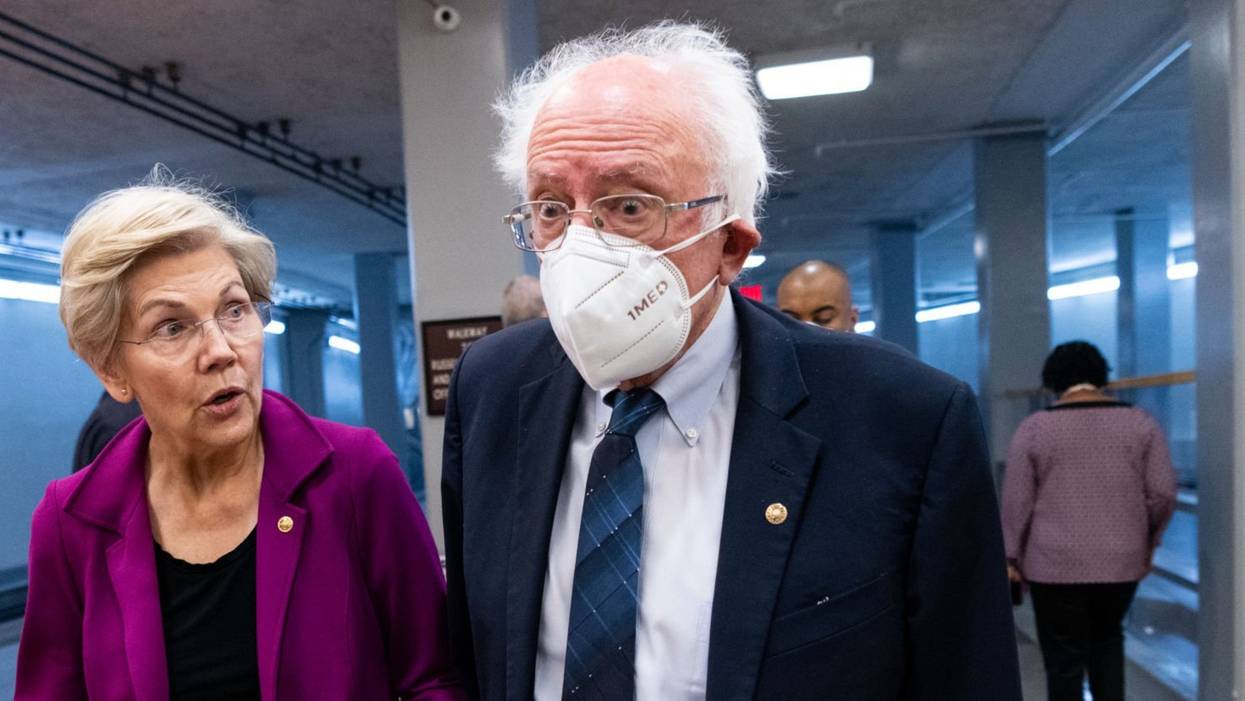
A trio of progressive U.S. senators on Wednesday pressed the CEO of Kroger to answer longtime worker allegations of rampant wage theft, accusations that continue as the supermarket giant pursues a contentious megamerger with erstwhile competitor Albertsons.
"We are writing today regarding alarming new reports of Kroger's involvement in the mistreatment of workers and consumers through widespread and unresolved wage theft," Sens. Elizabeth Warren (D-Mass.), Bernie Sanders (I-Vt.), and Ron Wyden (D-Ore.) wrote in a letter to Kroger Company chairman and CEO Rodney McMullen. "These reports indicate that 'systemic and widespread errors' by Kroger resulted in thousands of your employees experiencing delays and missing wages in their paychecks in late 2022."
Warren explained on Twitter that "Kroger stiffed its own workers while pushing a merger deal with Albertsons that could harm both consumers and workers," and that the senators "are calling them out for lining their pockets at the expense of their employees."
Kroger workers say a big part of the problem is MyTime, a new payroll system rolled out last year that McMullen claimed would "simplify day-to-day work" but instead has resulted in problems including missing pay and incomplete checks.
"I'm tired of having to beg for pay that's due to me," one Kroger employee told Popular Information last month.
In January, hundreds of Kroger employees, most of them members of the United Food & Commercial Workers (UFCW) Local 400 Union, filed a class-action lawsuit alleging widespread wage theft.
The senators' letter states that "given your company's record of anti-worker policies, and your ongoing attempt to push through a merger that would harm both consumers and workers, we are writing to request a full explanation of how your workers will be compensated for any lost or delayed wages, and how you will prevent future wage theft."
The lawmakers asked McMullen to answer questions including:
Warren, Sanders, and Wyden are among the many progressive and labor voices urging the federal government to reject Kroger's proposed merger with Albertsons. Together, the two supermarkets and their subsidiaries employ more than 710,000 workers at around 5,000 stores in 48 states and Washington, D.C. and rake in $208 billion in annual revenue, second only to Walmart.
In a bid to fend off antitrust challenges to the proposed merger, Kroger and Albertsons announced earlier this week that they would sell off as many as 300 stores, mostly in areas where the two chains overlap, GlobeSt reported.
"Even as your company was failing to address concerns about systemic wage theft, you have been pushing through a $24.6 billion merger with Albertsons Companies, Inc. that further threatens workers' wages and jobs and hurts consumers by reducing competition among grocers," the lawmakers' letter asserts. "This merger would exacerbate corporate consolidation in the grocery sector, and likely result in the shuttering of some stores across the country and the firing of workers from both Kroger and Albertsons."
A Kroger spokesperson told Common Dreams via email that "while the majority of issues have been resolved, we understand these issues have caused undue difficulty for the impacted associates," and that "we are taking multiple steps to pay our associates as quickly as possible, including overnighting checks to impacted associates."
According to the left-leaning Economic Policy Institute, more than $3 billion in stolen wages were recovered for U.S. workers between 2017 and 2020—a fraction of the $50 billion EPI says is stolen by employers each year. By contrast, the FBI said the total value of all 267,988 reported U.S. robberies in 2019 was around $482 million.
The lawmakers' letter came as Communications Workers of America and the National Employment Law Project published a study in which 9 in 10 surveyed workers at independent authorized retailers of telecom titans AT&T, T-Mobile, and Verizon in 43 states said they've experienced wage theft.