
SUBSCRIBE TO OUR FREE NEWSLETTER
Daily news & progressive opinion—funded by the people, not the corporations—delivered straight to your inbox.
5
#000000
#FFFFFF
To donate by check, phone, or other method, see our More Ways to Give page.


Daily news & progressive opinion—funded by the people, not the corporations—delivered straight to your inbox.
"Reckless tariff policy is wreaking warrantless chaos on our economy, with grocery giants shifting market uncertainty onto consumers," said Accountable.US president Caroline Ciccone.
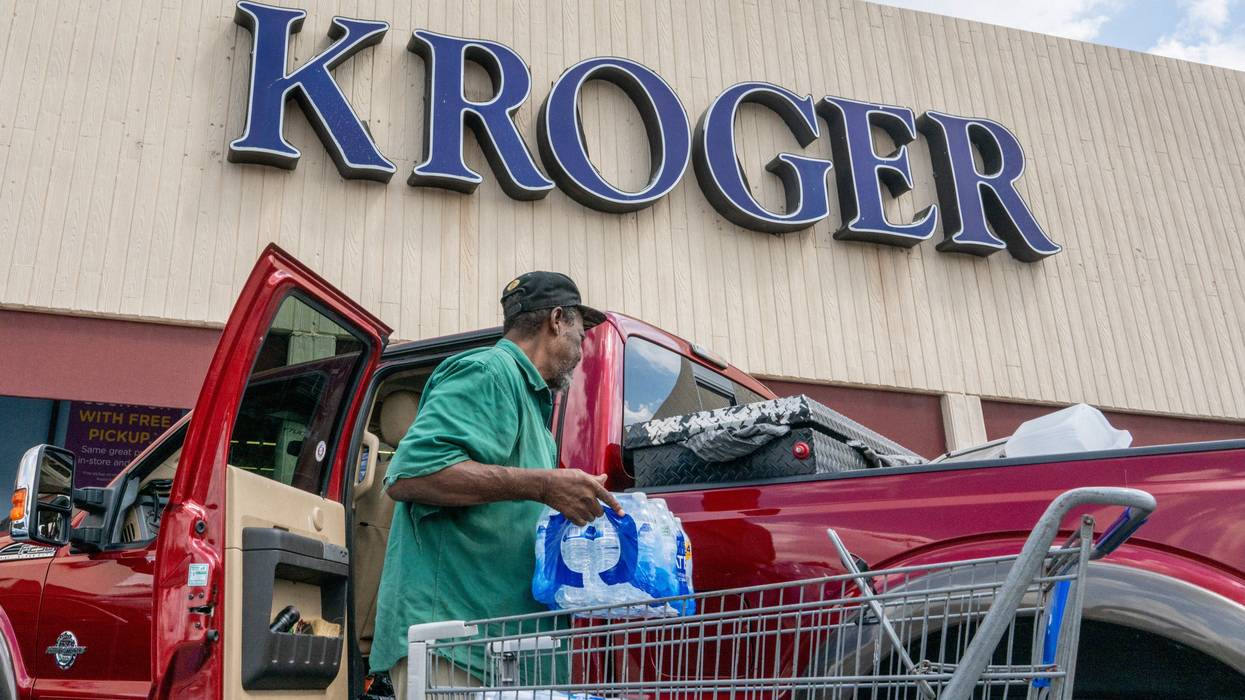
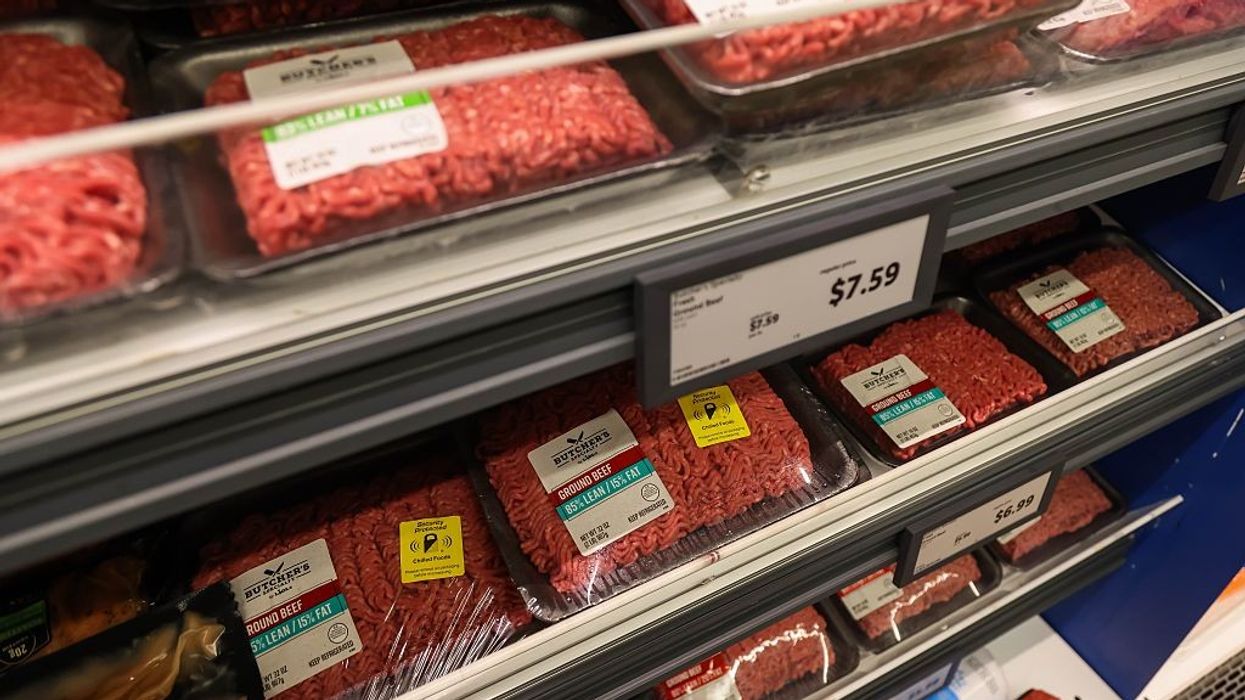
As leading grocery chains increase prices on essentials, they are blaming US President Donald Trump's tariffs for raising the cost of living for households across the country.
According to the Consumer Price Index, the price of food has increased by 3% in the past year, with meats, poultry, fish, and eggs getting 5.6% more expensive from June 2024 to June 2025.
In a poll published this month by the Associated Press and the National Opinion Research Center, 90% of Americans reported that they considered the cost of groceries a source of stress, with 53% describing it as a "major" source of stress.
In earnings calls and public statements, executives of many of America's largest and most profitable grocery retailers are citing Trump's tariffs as justification for passing on the costs to consumers, according to a new report released on Tuesday by Accountable.US.
In a first-quarter earnings call in May, Walmart CEO Doug McMillon said that while the company was better positioned than others to absorb the cost of tariffs, they would still "result in higher prices" for consumers. Since then, some grocery items at America's largest retailer have shown 40% hikes that have outraged consumers, fueling calls for a boycott.
On another call Thursday, McMillon said, "We've continued to see our costs increase each week, which we expect will continue into the third and fourth quarters."
"Trump's tariffs are making groceries more expensive," said Accountable.US. "Everyday Americans pay the cost while corporations and the wealthy profit."
Costco's chief financial officer, Gary Millerchip, told shareholders in May that the company "saw inflation as a result of tariffs because we import certain fresh items from Central and South America."
Kroger's CFO, Todd Foley, projected similar hikes to fresh food prices beginning in March. Though Foley said the impact would not likely be as significant as those experienced by their international competitors, he said the tariffs would likely cause "mid-single digit effects" on the costs of produce imported from Mexico and Canada.
Albertsons CEO Susan Miller has acknowledged that the company is raising prices on some goods to compensate for tariffs. But it has also turned the screws on its suppliers, demanding that they eat the cost of the new levies.
In the American Prospect, David Dayen described the latter as an example of how the tariffs were helping monopolies consolidate their power.
"Albertsons holds a significant market share in the grocery market, particularly in the western United States," he wrote. "Independent grocers, however, typically don't have the same ability to dictate terms to suppliers, and therefore will have to take whatever they can get."
Many of the companies currently raising prices have previously been caught or even admitted to price-gouging consumers to take advantage of inflation in the wake of the Covid-19 pandemic. The tariffs, a regressive tax that Trump has suggested as a way to offset the massive tax cuts given to the wealthy, have further exacerbated that pain.
"While Trump grants massive tax cuts to massive corporations and the ultra-rich," said Accountable.US President Caroline Ciccone, "his reckless tariff policy is wreaking warrantless chaos on our economy, with grocery giants shifting market uncertainty onto consumers."
"The idea that employers would leverage surveillance data to exploit a worker in a desperate position and offer them a lower wage is appalling," said Rep. Rashida Tlaib.
A pair of U.S. House progressives have introduced a bill that would stop companies from using artificial intelligence to set prices and wages based on the personal information of customers and workers.
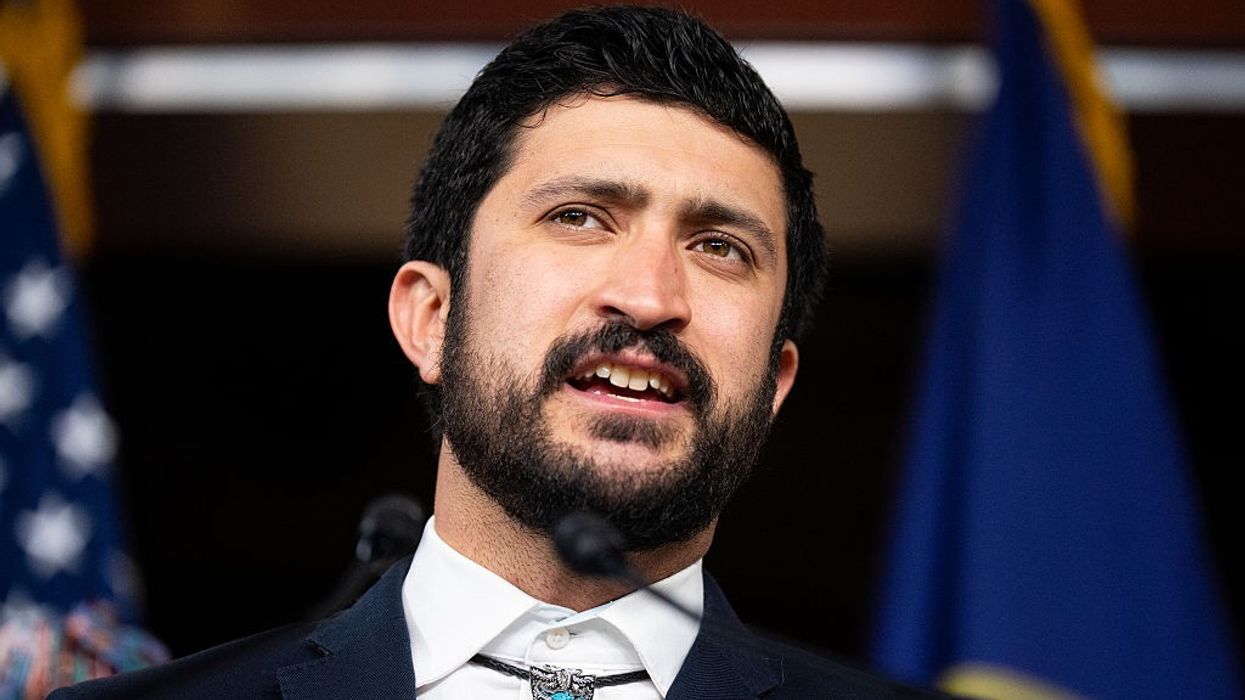
The "Stop AI Price Gouging and Wage Fixing Act," introduced Wednesday by Reps. Greg Casar (D-Texas) and Rashida Tlaib (D-Mich.), is an effort to curb the growing trend of "surveillance-based price setting," where companies use data from customers to determine how much they are willing to pay for a service.
According to a recent report by the Federal Trade Commission, "Retailers frequently use people's personal information to set targeted, tailored prices for goods and services—from a person's location and demographics, down to their mouse movements on a webpage."
Casar said that "giant corporations should not be allowed to jack up your prices or lower your wages using data they got spying on you."
"Whether you know it or not, you may already be getting ripped off by corporations using your personal data to charge you more," he added. "This problem is only going to get worse, and Congress should act before this becomes a full-blown crisis."
Earlier this month, Delta Airlines announced a pilot program using an AI model to charge individual consumers the maximum amount it determines they are willing to pay for plane tickets. Delta has described the change as "a full reengineering of how we price, and how we will be pricing in the future."
Other companies have been accused of using similar forms of "surge pricing."
Uber, which has been suspected of jacking up prices on riders with low cellphone batteries, pioneered the method. Kroger and Walmart have used digital price tags on goods to rapidly change prices, and Kroger also says it is using facial recognition to track customers in order to offer targeted coupons.
Amazon has been accused of setting personalized prices based on customers' location and browsing history, and the Princeton Review has even been caught charging greater amounts for SAT prep services in Asian communities.
Companies also frequently use hidden algorithms based on personal data to pay workers different wages for the same work—an especially pervasive practice in gig economy jobs like rideshare and delivery driving.
A 2024 report by the Roosevelt Institute found that these algorithms were also being applied to nurses, who were offered shifts by an opaque algorithm based on who was willing to work for the lowest pay and a number of other undisclosed factors.
"It is shameful that companies would use our neighbors' sensitive personal information against them to raise prices," said Tlaib. "The idea that employers would leverage surveillance data to exploit a worker in a desperate position and offer them a lower wage is appalling."
The bill still allows companies to change prices for individuals based on certain circumstances. For example, they would still be allowed to offer discounts to certain groups like college students, veterans, and senior citizens or enact loyalty programs.
Likewise, wage-earners would still be allowed to receive overtime pay or bonuses for good work or have their salaries changed to accommodate the cost of living.
The bill instead targets companies that use underhanded and invasive tactics to take advantage of their customers' and employees' desperation.
"This bill draws a clear line in the sand: Companies can offer discounts and fair wages—but not by spying on people," said the consumer advocacy group Public Citizen. "Surveillance-based price gouging and wage setting are exploitative practices that deepen inequality and strip consumers and workers of dignity."
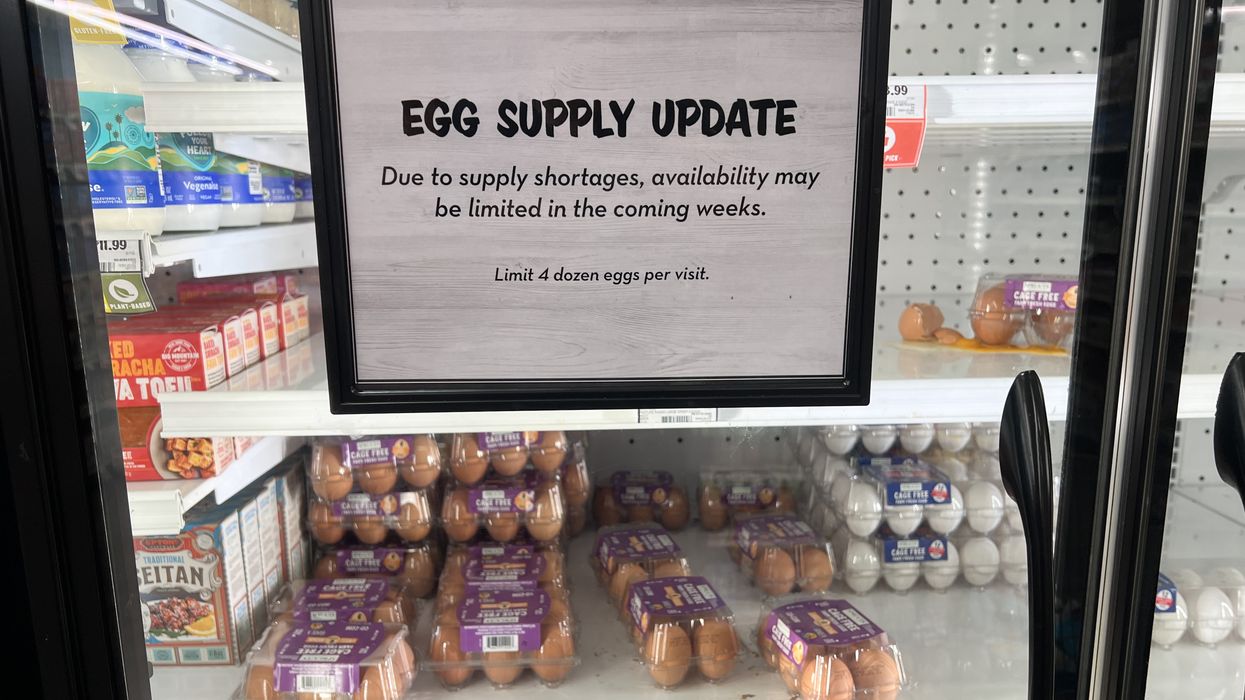
"Evidence indicates that by not increasing their supply, the five dominant egg firms are forcing prices to stay high while reporting dramatic profit increases and level sales," according to the group Farm Action.
An advocacy group dedicated to fighting corporate agriculture monopolies on Wednesday urged federal antitrust enforcers to take action against egg producers that the group accuses of taking advantage of the bird flu crisis in order to raise prices, inflate their profits, and consolidate their market power.
What's more, the slow recovery of "flock size"—the total number of egg-laying hens—"despite historically high prices, further suggests coordinated efforts to restrict supply and sustain inflated prices" that warrants investigation, according to a letter sent by Farm Action president Angela Huffman to Federal Trade Commission Chair Andrew Ferguson and Acting Assistant Attorney General Omeed Assefi, who has been tapped to temporarily lead the DOJ antitrust division.
The letter, which invokes the behavior of "dominant egg producers," largely provides data on one company, Cal-Maine Foods, the biggest producer and marketer of shell eggs in the country.
Separately, Democratic voices are urging the Trump administration to take action around corporate conduct as it relates to food prices. FTC Commissioner Alvaro Bedoya, a Biden appointee, has also urged Ferguson to open an investigation into egg production and marketing practices—pointing to a 2023 request from Farm Action to the FTC to investigate potential antitrust violations in the egg industry.
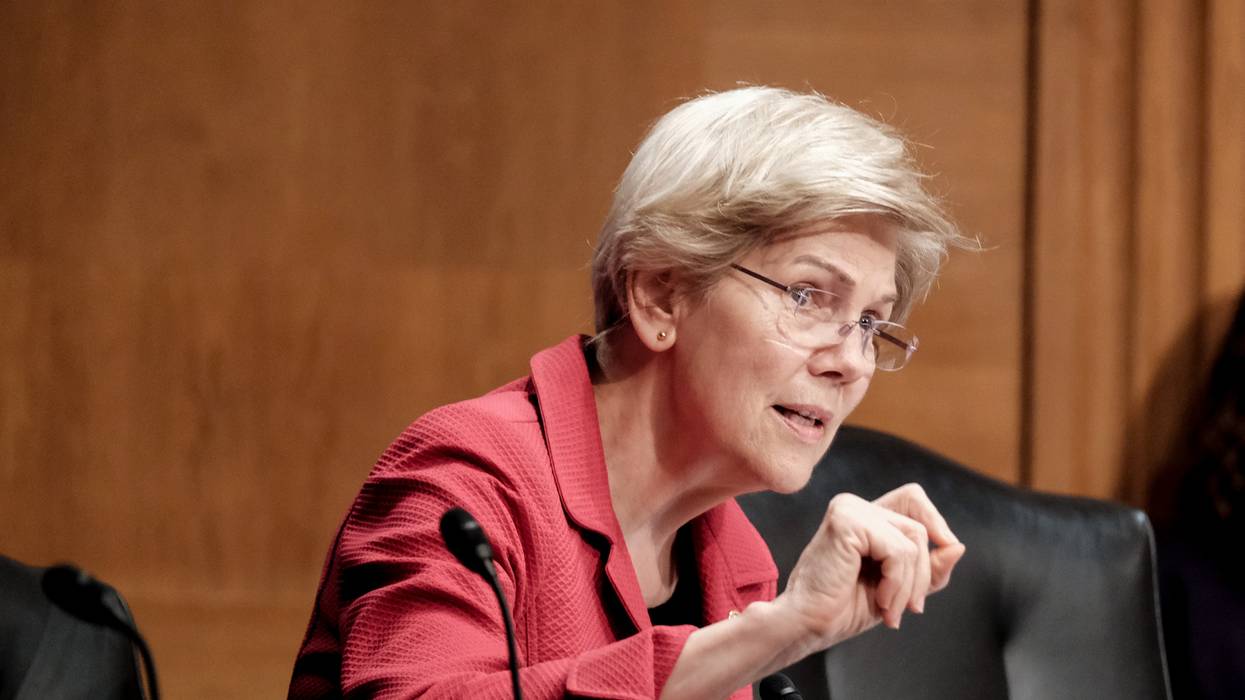
And last week Sen. Elizabeth Warren (D-Mass.) wrote that she had sent President Donald Trump a list of ways he "can use his executive authority to tackle high food costs by focusing on corporate profiteering."
Egg prices have risen starting in 2022, coinciding with the arrival of bird flu in the United States, and are likely to keep rising in 2025.
The wholesale price of "Grade-A, Large, White, Shell Eggs" rose from $0.50-$1.30 per dozen in 2021 to $1.50-$5.00 per dozen in 2022, and then eased in 2023 before climbing up again in 2024. As of January 2025, the national index of weekly prices for that same type of eggs was up to $6.00-$8.00 per dozen, according to Farm Action.
"The previous all-time high [for wholesale prices] was late December 2022 heading into Christmas, when we touched $5.46 per dozen," Ryan Hojnowski, a market reporter at Expana, wrote in an e-mail to CNBC. "Of course we have blown way past that this time."
Retail prices have also increased. Retail prices for large, Grade-A eggs reached an average of $4.25 per dozen in December 2022 after never reaching above $3 a dozen in the 2010s. Retail prices declined in 2023 and then rose again throughout 2024, reaching $4.15 per dozen in December of last year.
Farm Action argues that while bird flu has been cited as the main driver for rising egg prices, its actual impact on production has been minimal. According to the letter, bird flu has forced the culling of roughly 115 million egg-laying chickens, but the impact of these losses on the total size of the U.S. supply of egg-laying flock has been "relatively modest." Huffman wrote that this culling has caused egg production to drop from 8.1 billion eggs per month in 2021 to 7.75 billion eggs per month at the end of 2024.
But crucially, according to the letter, per capita production of eggs has not been below per capita consumption of eggs in any year between 2022 and the present—while the total value of egg production has risen from $8.8 billion in 2021 to $17.9 billion in 2023.
Cal-Maine specifically has seen its profits soar. The company tallied gross profits of $179.6 million in fiscal year 2020, but the producer reported $1.2 billion and $541.6 million in gross profits in fiscal year 2023 and 2024, respectively, according to the letter. Between fiscal year 2020 and fiscal year 2024, sale levels have remained fairly consistent, wrote Huffman.
"Evidence indicates that by not increasing their supply, the five dominant egg firms are forcing prices to stay high while reporting dramatic profit increases and level sales. These same firms are then using their increased profits to acquire their competition, further driving market consolidation instead of investing in replenishing or expanding their flocks," Farm Action wrote in a statement on Wednesday.
As evidence, they cite a number of mergers that took place in the industry in 2023, and point to the fact that the top five egg producers' share of the "U.S. layer hen flock" increased from 37% to 46% between 2023 and 2025.
"There appears to be a remarkable unwillingness among large egg producers to invest in the internal reconstruction or expansion of their egg-laying flocks in response to persistently high prices," wrote Huffman, which she contrasts with the quicker flock recovery that took place during the first bird flu outbreak in 2014-2015.
The "lagging recovery" and "the fact that egg producers are showing unusual discipline in their pricing and output decisions" indicates that market forces are not "operating as they should be." The letter suggests a few factors that may contribute to the lack of competition.
The group is urging the two agencies to launch investigations, specifically encouraging the FTC to launch an investigation into pricing and production practices of dominant egg producers and their hatchery suppliers to make sure the market is "truly free and fair."
This is far from the first time that the food and grocery industry has been accused of inappropriately raising prices.
In August 2024, a top executive at the supermarket chain Kroger even admitted under questioning from a Federal Trade Commission attorney that the grocery chain raised its egg and milk prices above the rate of inflation.
You know you’re making an impact when you’re challenging the status quo and ruffling feathers on both sides of the aisle. Regardless of Trump's arrival, she should stay at the FTC as long as she possibly can.
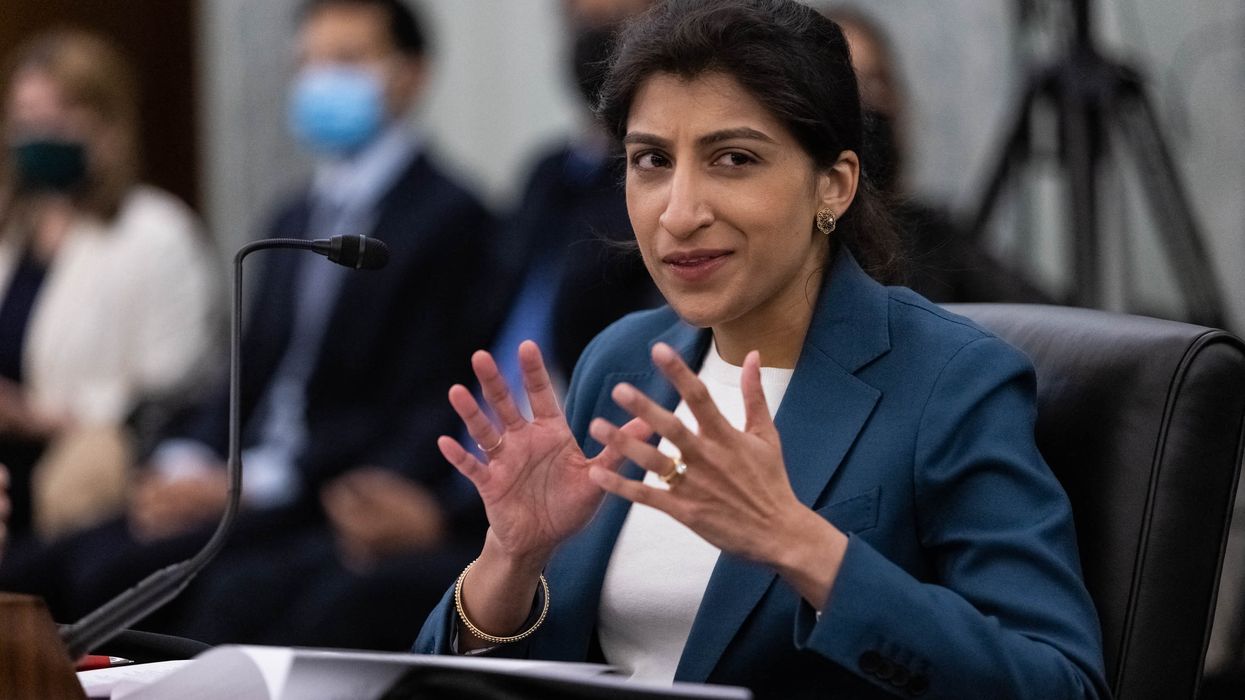
This month, the FTC opened an investigation into tech giant Microsoft, which some have called Federal Trade Commission Chair Lina Khan’s “last swing” at Big Tech before her term concludes. But if you think Khan is slowing down, think again. Pencils-down orders be damned, Khan is sprinting through the tape, continuing her fearless crusade to rein in Silicon Valley’s excesses.
But who says her term is over? There are no laws requiring an agency Chair to resign from her post—it’s tradition. While her term expired this fall, she can remain on the Commission until her replacement is confirmed. After President-elect Trump’s norm-shattering run for president, followed by an array of questionable cabinet appointments, why are Democrats so obsessed with tradition? During this transition, it feels like we’re playing checkers when we should be playing chess. Here’s where we start.
We need a warrior like her to continue this fight, and we hope she does.
Given the uncertainty about what’s ahead, we strongly encourage FTC Chair Lina Khan to remain on the Commission. By staying, she could prevent Republicans from gaining a majority for months and help ensure she remains a bulwark against any rollbacks to the FTC’s tough-on Big Tech approach. And if you listen to the rhetoric from Republicans and the president-elect himself, they would be lucky to have her.
Most consider it wildly out of the realm of possibility. They’ll say that the president-elect has already named FTC Commissioner Andrew Ferguson as Chair and nominated Mark Meador to fill Khan’s seat. Both have expressed concerns about market power, but will they be as aggressive?
They’ll point to Trump confidant and billionaire Elon Musk’s tweet that Khan “will be fired soon.” But that’s the beauty of an independent agency. Khan can’t be fired or forced to resign without cause. Does that matter to the incoming president-elect? Probably not, but the courts could be an important backstop. In the meantime, she can continue to serve until Mr. Meador is confirmed.
My question to the American public is this: why change the driver in the middle of the proverbial antitrust highway? During Khan’s tenure, the FTC has faced down tech giants like Amazon, Facebook, and Microsoft, banned almost all noncompetes, sued to prevent grocery heavyweight Kroger from acquiring Albertsons, and stopped Nvidia from attempting a bloated merger. Under her leadership, the FTC has investigated and sued more than three dozen merger proposals and racked up a long list of accomplishments.
This isn’t to suggest that Khan’s achievements are only popular on one side of the aisle.
Vice President-elect JD Vance has not been shy about his approval of Khan’s leadership, previously saying, “I look at Lina Khan as one of the few people in the Biden administration that I think is doing a pretty good job.” While pro-business conservatives have accused her of “overstepping,” those Republicans are out of touch with the voters who put the president-elect back in power. Even some liberals have called her a “dope.” But as the saying goes, you know you’re making an impact when you’re challenging the status quo and ruffling feathers on both sides of the aisle.
There’s a real threat that the new administration’s anti-Big Tech rhetoric from the campaign trail will fizzle out, and CEOs will work quickly to rebuild bridges with the president-elect. It’s rare for a new administration to alter the course of ongoing antitrust cases significantly. However, what could change significantly are the remedies the government seeks for companies found guilty. If you agree that the only remedy for companies like Apple and Google is to be broken up, we need Lina Khan to stay.
She deserves to finish the job she started. Her work has benefited consumers, competition, and the country at large. We need a warrior like her to continue this fight, and we hope she does.
Chair Khan, your move.
"We applaud the FTC for securing one of the most significant victories in modern antitrust enforcement," said one advocate.
Antitrust advocates on Tuesday welcomed a pair of court rulings against the proposed merger of grocery giants Kroger and Albertsons, which was challenged by Federal Trade Commission Chair Lina Khan and multiple state attorneys general.
"The FTC, along with our state partners, scored a major victory for the American people, successfully blocking Kroger's acquisition of Albertsons," said Henry Liu, director of the commission's Bureau of Competition, in a statement. "This historic win protects millions of Americans across the country from higher prices for essential groceries—from milk, to bread, to eggs—ultimately allowing consumers to keep more money in their pockets."
"This victory has a direct, tangible impact on the lives of millions of Americans who shop at Kroger or Albertsons-owned grocery stores for their everyday needs, whether that's a Fry's in Arizona, a Vons in Southern California, or a Jewel-Osco in Illinois," he added. "This is also a victory for thousands of hardworking union employees, protecting their hard-earned paychecks by ensuring Kroger and Albertsons continue to compete for workers through higher wages, better benefits, and improved working conditions."
While Liu was celebrating the preliminary injunction from Oregon-based U.S. District Court Judge Adrienne Nelson, later Tuesday, King County Superior Court Judge Marshall Ferguson released a ruling that blocked the merger in Washington state.
"We're standing up to mega-monopolies to keep prices down," said Washington Attorney General Bob Ferguson. "We went to court to block this illegal merger to protect Washingtonians' struggling with high grocery prices and the workers whose jobs were at stake. This is an important victory for affordability, worker protections, and the rule of law."
Advocacy groups applauding the decisions also pointed to the high cost of groceries and the anticipated impact of Kroger buying Albertsons—a $24.6 billion deal first announced in October 2022.
"American families are the big winner today, thanks to the Federal Trade Commission. The only people who stood to gain from the potential merger between Albertsons and Kroger were their wealthy executives and investors," asserted Liz Zelnick of Accountable.US. "The rest of us are letting out a huge sigh of relief knowing today's victory is good news for competitive prices and consumer access."
Describing the federal decision as "a victory for commonsense antitrust enforcement that puts people ahead of corporations," Food & Water Watch senior food policy analyst Rebecca Wolf also pointed out that "persistently high food prices are hitting Americans hard, and a Kroger-Albertsons mega-merger would have only made it worse."
"Already, a handful of huge corporations' stranglehold on our food system means that consumers are paying too much for too little choice in supermarkets, workers are earning too little, and farmers and ranchers cannot get fair prices for their crops and livestock," she noted. "Today's decision and strengthened FTC merger guidelines help change the calculus."
Like Wolf, Farm Action president and co-founder Angela Huffman similarly highlighted that "while industry consolidation increases prices for consumers and harms workers, grocery mergers also have a devastating impact on farmers and ranchers."
"When grocery stores consolidate, farmers have even fewer options for where to sell their products, and the chances of them receiving a fair price for their goods are diminished further," Huffman explained. "Today's ruling is a win for farmers, workers, and consumers alike."
Some advocates specifically praised Khan—a progressive FTC chair whom President-elect Donald Trumpplans to replace with Andrew Ferguson, a current commissioner who previously worked as chief counsel to Senate Minority Leader Mitch McConnell (R-Ky.) and as Republican counsel on the Senate Judiciary Committee.
"Today's decision is a major win for shoppers and grocery workers. Families have been paying the price of unchecked corporate power in the food and grocery sector, and further consolidation would only worsen this crisis," declared Groundwork Collaborative executive director Lindsay Owens in a statement.
"FTC Chair Lina Khan's approach is the blueprint to deliver lower prices, higher wages, and an economy that works for everyone," Owens argued. "The rebirth of antitrust enforcement has protected consumers against the worst of corporate power in our economy and it would be wise to continue this approach."
Laurel Kilgour, research manager at the American Economic Liberties Project, called the federal ruling "a resounding victory for workers, consumers, independent retailers, and local communities nationwide—and a powerful validation of Chair Khan and the FTC's rigorous enforcement of the law."
"The FTC presented a strong case that Kroger and Albertsons fiercely compete head-to-head on price, quality, and service. The ruling is a capstone on the FTC's work over the past four years and includes favorable citations to the FTC's recent victories against the Tapestry-Capri, IQVIA-Propel, and Illumina-Grail mergers," Kilgour continued.
"The court also cites long-standing Supreme Court law which recognizes that Congress was also concerned with the impacts of mergers on smaller competitors," she added. "We applaud the FTC for securing one of the most significant victories in modern antitrust enforcement and for successfully protecting the public interest from harmful consolidation."
Despite the celebrations, the legal battle isn't necessarily over.
The Associated Press reported that "the case may now move to the FTC, although Kroger and Albertsons have asked a different federal judge to block the in-house proceedings," and Colorado is also trying to halt the merger in state court.
Kroger executives have "proven they'll take advantage of their customers to bolster their profits," said watchdog Accountable.US.
Grocery giant Kroger's practice of price gouging in order to pass on its "inflation to consumers," as one executive recently said, has paid off for the $37 billion company, according to its quarterly earnings posted on Thursday.
The company, which is facing a legal challenge from the Federal Trade Commission (FTC) over its proposed acquisition of rival store Albertsons, reported that it earned $466 million in the second quarter of 2024, with year-to-date earnings of $1.4 billion—nearly double the amount it earned last year.
The government watchdog Accountable.US accused Kroger of profiting off "rising costs" for families across the United States—ones that are caused not by inflation but by "greedflation": the practice of purposely keeping prices high to increase profits, even though higher labor costs and supply chain woes from the coronavirus pandemic era have subsided.
"Should consumers pay the price for corporate greed?" said the group.
The Biden administration is working to block Kroger's proposed merger with Albertsons, which the FTC says would result in "a straight-up monopoly" in some communities where Albertsons stores would likely close.
The FTC has raised concerns both about how the merger would raise prices at stores whose owners already engage in price gouging and would no longer have to compete with Albertsons, and about likely job losses for many employees. In two counties in Southern California, for example, 115 out of 159 Albertsons stores are located within two miles of a Kroger, raising concerns among unionized workers that their stores could be seen as "redundant" after the potential merger.
"Corporate price gouging has cost consumers enough, yet Kroger wants to make matters worse by cornering the market to maximize profits."
Accountable.US said Thursday that the merger could cost $334 million in wages for nearly 1 million grocery workers.
"The Biden-Harris administration is putting American families first by challenging the ill-advised merger between Kroger and Albertsons," said Liz Zelick, director of the group's Economic Security and Corporate Power Program. "Corporate price gouging has cost consumers enough, yet Kroger wants to make matters worse by cornering the market to maximize profits. Make no mistake: If the merger goes through, it will leave many families worse off with higher prices and fewer store locations."
Late last month, Kroger's senior director of pricing, Andy Groff, told an FTC attorney during questioning that the grocery chain had raised the prices of milk and eggs above the rate of inflation.
The company has also used "dynamic pricing" in some of its stores for years—changing prices throughout the day—and has partnered with an artificial intelligence company to develop software that could tailor the cost of products to individual shoppers by collecting their personal data.
While reporting a massive financial windfall, said Accountable, Kroger executives have "proven they'll take advantage of their customers to bolster their profits."
Why stopping the Kroger-Albertsons merger is an important step along the way to a more fair and balanced economy.
In front of the Federal Trade Commission building on Pennsylvania Avenue in Washington, D.C., where I used to work, stands a giant sculpture of a runaway horse being reined in. It’s called “Man Controlling Trade.” The allegorical sculpture by Michael Lantz is one of a pair installed in 1942, part of a New Deal-era program administered by the Section of Painting and Sculpture of the Treasury Department to commission works of art for federal buildings.
The idea that government should rein in the wild forces of capitalism was by 1942 well established. America had gone through a catastrophic Great Depression that revealed the need for stronger regulation of business and finance. The nation had also begun to mobilize the economy to fight World War II.
America then understood that stable prices and good wages depended on government taming corporate greed for the common good. This wasn’t socialism or communism. It was democratic, progressive capitalism. It was a means of saving both capitalism and democracy.

Last week, in a court in Oregon, the Federal Trade Commission began to rein in two giant runaway grocery chains — Kroger and Albertsons — that want to merge into the biggest grocery combination in history and gallop away with your money and many workers’ wages.
It’s the first time anti-monopoly law has been used both to tame consumer prices and help workers gain better wages. The case illustrates how the Biden-Harris administration is seeking to restructure the economy for the common good — and what the Harris-Walz administration will, hopefully, have the opportunity to do even more of.
Three arguments undergird the FTC’s case:
(1) Grocery prices are already through the roof, in part because there’s not sufficient competition in most local grocery markets to force chains to lower their prices. Kroger and Albertsons are the two biggest grocery chains in America. If they’re allowed to merge, the combined company, plus Walmart, will control 70 percent of the grocery market in over 150 cities. That means even higher prices.
(2) The proposed $24.6 billion merger would not only put 5,000 American grocery stores under one corporation. It would put 41 retail grocery brands and 4,000 pharmacies under the same corporation. It would signal to every other industry they can make big profits by further monopolizing.
(3) If allowed to combine, Kroger and Albertsons would also put their combined 700,000 workers under one corporation. These workers would then have to bargain with just one take-it-or-leave-it giant grocery chain. This would erode their bargaining power, leading to lower wages, worse benefits, and weaker worker protections.
This last point — the relationship between corporate concentration and lower wages and benefits — is almost never raised in antitrust litigation yet it’s hugely important for understanding the current structure of the American economy and why so many American workers justifiably feel shafted.
**
Since the late 19th century, the U.S. government has been deciding the extent to which corporations can join together to gain market power, and workers can join together in labor unions to gain bargaining power. This balance of power has had as much effect on prices and wages as supply and demand — in fact, it undergirds supply and demand.
In 1890 and then again in 1914, the United States enacted anti-monopoly laws. Teddy Roosevelt and Woodrow Wilson were fierce trust-busters. In 1935, FDR signed into law the National Labor Relations Act, which allowed workers to form labor unions and required employers to negotiate in good faith with those unions.
By 1950, big business and big labor were in rough balance. That balance of power was central to the growth of both the American economy and the American middle class. It fostered a basic bargain: As corporations became more profitable, their workers did, too.

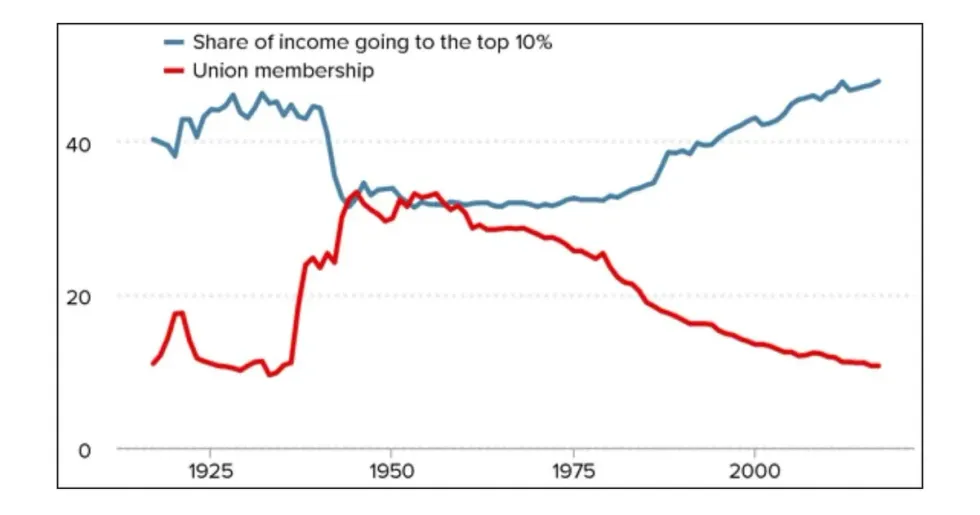
Over the last 40 years, though, union power has dropped precipitously while corporate power has soared. The result has been near-record levels of inequality (see chart, above).
In 1955, over a third of all workers in the private sector were unionized, which gave them considerable bargaining power to get higher wages. (Employers whose workers weren’t unionized often offered their workers almost the same wages and benefits as those in the unionized sector, to fend off unionization.)
Now, only 6 percent of private sector workers are unionized.
Meanwhile, over just the last two decades, more than 75 percent of U.S. industries have become more concentrated.
Four beef packers now control over 80 percent of their market, domestic air travel is now dominated by four airlines, and many Americans have only one choice of reliable broadband provider. Just four companies — Walmart, Costco, Kroger, and Albertsons — dominate the grocery industry.
When few workers are unionized, wages remain stagnant or decline. Without adequate competition, prices and corporate profits rise. The result: Wealth is siphoned off from workers and consumers to large corporations and shareholders.
In the late 1970s, I worked at the Federal Trade Commission, which actively fought anti-competitive mergers and monopolies. But the Reagan administration eased up on them. Reagan also encouraged attacks on unions, as exemplified by his firing of striking air traffic controllers (who, in truth, had no right to strike).
The Biden administration has made priorities of both cracking down on corporate concentration and strengthening labor unions.
Lina Khan, chair of the FTC, and Jonathan Kanter, assistant attorney general for the antitrust division of the Justice Department, have been aggressively fighting corporate power. Jennifer Abruzzo, general counsel of the National Labor Relations Board, has been aggressively protecting workers’ organizing rights.
But there is far, far more to do. Last week, Khan, Kanter, Abruzzo, and Labor Secretary Julie Su signed a memo of agreement, enabling them to coordinate their efforts even more.
But they also need more resources to do their important work. Inequality is out of control. Big corporations are more profitable than ever. CEO pay is bonkers. (Kroger paid its CEO $15 million last year, which was 502 times what the typical Kroger employee earned. If the merger goes through, Albertsons’ CEO would receive $43 million, on top of his $15.1 million compensation.)
Yet most workers are still receiving a small portion of the economic gains. According to the latest estimates, the median household income is $74,580.
Both sides of the economic equation — corporate power and worker power — must be addressed. The Biden-Harris administration has made a good start at reining in corporate power and strengthening worker power. Stopping the Kroger-Albertsons merger is an important step along the way.
Here’s hoping the Harris-Walz administration will take many more such steps.
Happy Labor Day.
"The thing is, execs all over the economy were saying this stuff on their earning calls back in 2021," said one progressive economist. "This was not a secret."
A top Kroger executive admitted under questioning from a Federal Trade Commission attorney on Tuesday that the grocery chain raised its egg and milk prices above the rate of inflation, a concession that came as no surprise to economists who have been highlighting corporate price gouging across the U.S. economy in recent years.
Andy Groff, Kroger's senior director for pricing, said during a court hearing on the FTC's legal challenge to the company's proposed acquisition of Albertsons—its primary competitor—that Kroger's objective is to "pass through our inflation to consumers."
Groff's comment came in response to questioning about an internal email he sent to other Kroger executives in March. In that note, Groff observed that "on milk and eggs, retail inflation has been significantly higher than cost inflation."
A Kroger spokesperson told Bloomberg in a statement that the email was "cherry-picked" and "does not reflect Kroger's decadeslong business model to lower prices for customers by reducing its margins."
But Rakeen Mabud, chief economist at the Groundwork Collaborative, noted Wednesday that "execs all over the economy were saying this stuff on their earning calls back in 2021."
"This was not a secret," Mabud added.
Bloomberg reported Tuesday that "in Illinois, where Kroger operates the Mariano's chain, company executives create a weekly report on egg prices, comparing prices from Walmart, Meijer Inc., and Albertsons' Jewel-Osco, said Matthew Marx, president of the Kroger division overseeing Mariano's."
"The FTC walked Marx through several of the weekly egg reports from 2022 and 2023," the outlet added. "In May 2022, for example, both Walmart and Meijer dropped egg prices by 14 cents a dozen, but Mariano's opted to keep its pricing the same to match the higher price at Jewel-Osco, Marx said. A year later, in April 2023, as egg prices again soared, Mariano's opted to keep its pricing near Jewel-Osco's even as Walmart was lowering its own."
The U.S. grocery sector—dominated by Kroger, Walmart, and a handful of other major companies—profited hugely during the Covid-19 pandemic as corporate giants exploited supply chain disruptions to aggressively jack up prices.
"The grocery industry, as represented by four of its largest players, became more profitable in the pandemic, and it has stayed that way for a couple of years at least," The Financial Times noted Monday. "It is a good guess that price increases in excess of cost increases have played a role in this."
In its legal challenge against Kroger's proposed merger with Albertsons, the FTC argues that the deal would further drive up costs for consumers by eliminating "fierce competition" between the two grocers.
Laurel Kilgour, research manager at the American Economic Liberties Project, said after opening arguments in the case earlier this week that the FTC "previewed concrete evidence that a Kroger-Albertsons merger would lead to higher prices for millions of Americans and worse working conditions for hundreds of thousands of workers."
"By contrast, lawyers for Kroger and Albertsons touted fake promises of utopian outcomes that are not legally enforceable. Indeed, Albertsons has a track record of profiting from similar fake promises that turned out disastrously for competition and for communities, and this time is no different," Kilgour continued. "At a time when working families are especially concerned with costs and access to food, we need more—not less—competition between grocery stores on prices, wages, the freshness of produce, and service quality."
"As grocery store 'price gouging' reaches the top of the political ticket, the FTC is intervening to protect consumers and workers from further harm."
As grocery giants Kroger and Albertsons faced the U.S. Federal Trade Commission in a federal court Monday, economic justice advocates said Americans should be wary of the corporate media's reporting on the FTC's lawsuit, which aims to block the companies' proposed $24.6 billion merger.
"Get ready for more takes like these from corporate media," said the American Economic Liberties Project (AELP), posting on social media a clip from CNBC in which anchor Joe Kernen echoed Kroger and Albertsons' claims that the merger would help them compete with big box stores like Walmart, lower prices for consumers, and benefit workers.
"With a merger this blatantly harmful to consumers, workers, and countless local communities, Wall Street cheerleaders can't help but rely on misleading arguments," said AELP.
The trial, kicking off in a U.S. District Court in Portland, Oregon, centers on a claim by the FTC along with eight states and the District of Colombia that the merger would reduce industry competition—creating "a straight-up monopoly" in small communities like Gunnison, Colorado where 6,000 residents "would have to drive 65 miles to reach a non-Kroger supermarket," according to AELP.
FTC Chair Lina Khan is also opposing the merger because it would weaken unionized workers' bargaining power, particularly in parts of the country where dozens of Kroger and Albertsons stores are located near each other.
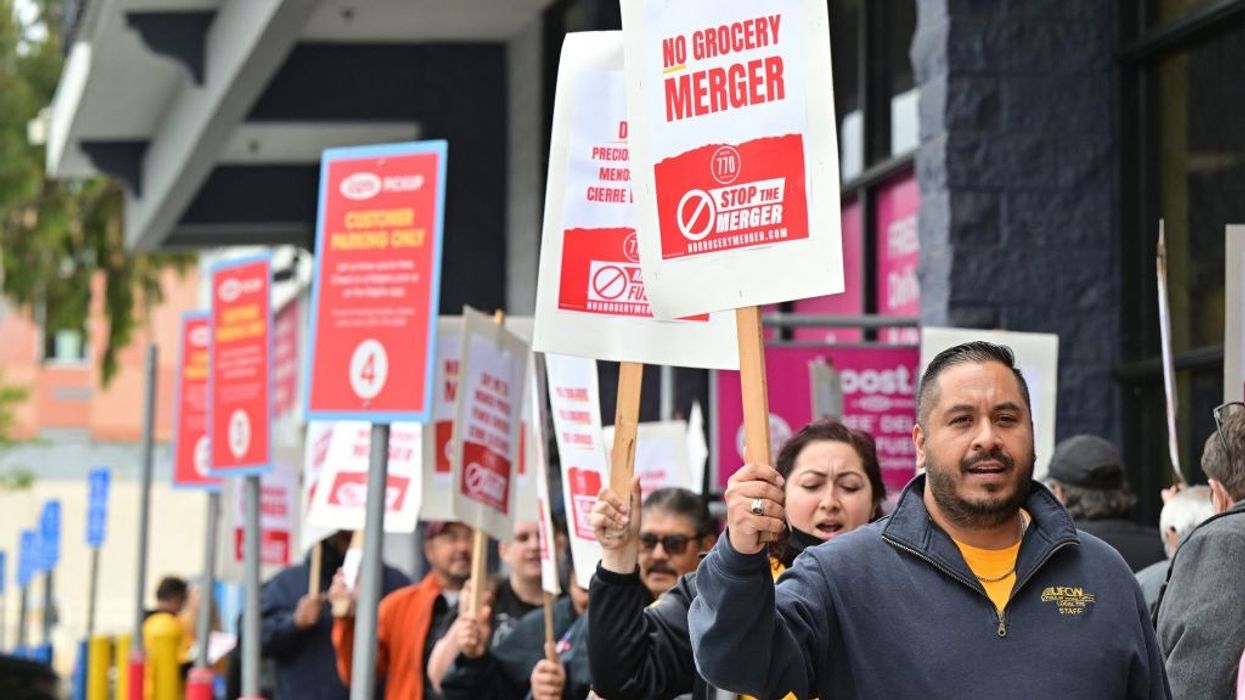
With 115 of 159 Albertsons stores located within two miles of a Kroger in Los Angeles County and Orange County, California, the United Food and Commercial Workers International Union (UFCW) has warned that hundreds of unionized workers could see their stores close if the merger is finalized.
As the trial began Monday, The New York Times published an interview with an employee of an Albertsons subsidiary in Woodland Hills, California. Leonard De Monte was represented by the UFCW in 2015 when the grocery store he was working at was sold as part of Albertsons' merger with the store's parent company—a deal that was called "an unmitigated disaster" for workers by AELP senior legal counsel Lee Hepner.
De Monte found another job at the Albertsons subsidiary, but was demoted to minimum wage. Now nine years later, after working his way up to a $27-per-hour union wage, the store De Monte works at is once again at risk of being sold if the merger goes through, and he fears being demoted to minimum wage again and losing his benefits.
"I have great health benefits because I've been with the company so long," he told the Times. "If I lose my health benefits, I would have to pay out of pocket."
Despite the stores' claim that they need to compete with Walmart and Amazon, AELP pointed out in March that Kroger and Albertsons acknowledge one another as their top competition. Without the two stores competing, said the group, "grocery workers will lose bargaining power, both because individually they won't have a competing employer to go work for, and because unions will lose leverage during contract negotiations. As a result, workers will potentially face lower wages, worse working conditions, and layoffs."
According to an analysis by the Economic Policy Institute, the merger would reduce the total annual earnings of grocery store workers in affected metropolitan areas by $334 million.
In court on Monday, the FTC displayed text messages showing that Kroger executives have complained that Albertsons has forced it "to accept more worker compensation."
The progressive think tank Roosevelt Institute said the trial, which is expected to go on for three weeks, shows that Khan and the FTC are "taking the harms of corporate consolidation on workers seriously."
Kroger's arguments and business practices—including using "dynamic pricing" to price gouge and its exorbitant CEO pay—represent "corporate greed at its absolute worst," said former U.S. Labor Secretary Robert Reich.
"The Kroger-Albertsons merger would eliminate head-to-head competition between grocery stores across the country," said Hepner. "As grocery store 'price gouging' reaches the top of the political ticket, the FTC is intervening to protect consumers and workers from further harm."
"Kroger is trying to pull a fast one on us by using digital price tags—a move that could let them use surge pricing for water or ice cream when it's hot out," said the senator.
Expressing doubt that a new artificial intelligence-powered "dynamic pricing" model used by the Kroger grocery chain is truly meant to "better the customer experience," Sens. Elizabeth Warren said Friday that the practice shows how "corporate greed is out of control."
Warren (D-Mass.) was joined by Sen. Bob Casey (D-Pa.) on Wednesday in writing a letter to the chairman and CEO of the Kroger Company, Rodney McMullen, raising concerns about how the company's collaboration with AI company IntelligenceNode could result in both privacy violations and worsened inequality as customers are forced to pay more based on personal data Kroger gathers about them "to determine how much price hiking [they] can tolerate."
As the senators wrote, the chain first introduced dynamic pricing in 2018 and expanded to 500 of its nearly 3,000 stores last year. The company has partnered with Microsoft to develop an Electronic Shelving Label (ESL) system known as Enhanced Display for Grocery Environment (EDGE), using a digital tag to display prices in stores so that employees can change prices throughout the day with the click of a button.
As Warren said on social media on Friday, digital price tags allow stores to "use surge pricing for water or ice cream when it's hot out," or raise the price of turkeys just before Thanksgiving.
Through its work with IntelligenceNode and Microsoft, Kroger has gone beyond just changing prices based on the time of day or other environmental factors, and is seeking to tailor the cost of goods to individual shoppers.
As the senators explained:
The EDGE Shelf helps Kroger gather and exploit sensitive consumer data. Through a partnership with Microsoft, Kroger plans to place cameras at its digital displays, which will use facial recognition tools to determine the gender and age of a customer captured on camera and present them with personalized offers and advertisements on the EDGE Shelf. EDGE will allow Kroger to use customer data to build personalized profiles of each customer... quickly updating and displaying the customer’s maximum willingness to pay on the digital price tag—a corporate profiteering capability that would be impossible using a mere paper price tag.
"I am concerned about whether Kroger and Microsoft are adequately protecting consumers' data, and that as Kroger expands the personalized customer experience, customers will ultimately be offered a worse deal," wrote Warren and Casey.
The lawmakers noted that the high cost of groceries is a key concern for workers and families in the U.S., as chains adopt numerous methods to price-gouge customers including "shrinkflation" and "greedflation"—filling packages with less product and keeping prices high even though supply chain issues have largely resolved since inflation was at high during the coronavirus pandemic.
Kroger, which could soon increase its number of stores by several thousand with a potential $24.6 billion acquisition of Albertsons, had an operating budget of $3.1 billion last year, with gross profit margins above 20% over the last five years.
Meanwhile, said Warren and Casey, U.S. households spent an average of 11.2% of their budgets on food in 2023.
"The increased use of dynamic pricing will drive company profits higher—leaving consumers with the bill," wrote the senators. "It is outrageous that, as families continue to struggle to pay to put food on the table, grocery giants like Kroger continue to roll out surge pricing and other corporate profiteering schemes."
Warren and Casey demanded the McMullen provide information about its use of ESL platforms including EDGE, asking how the company establishes prices using dynamic pricing and whether it has ever used EDGE to change the price of an item more than once in a day, among other questions.
The senators have previously introduced legislation to prevent shrinkflation, urged the Biden administration to use its executive authority to lower food prices, and proposed a bill to prohibit price gouging by empowering states and the Federal Trade Commission to enforce a federal ban.