
SUBSCRIBE TO OUR FREE NEWSLETTER
Daily news & progressive opinion—funded by the people, not the corporations—delivered straight to your inbox.
5
#000000
#FFFFFF
To donate by check, phone, or other method, see our More Ways to Give page.


Daily news & progressive opinion—funded by the people, not the corporations—delivered straight to your inbox.
As we reflect on the wonder of migratory birds, and the spotlight focuses on how our cities and communities can be made more bird-friendly, we must also consider how our food system is posing a threat to their very existence.
For migratory and other wild birds, bird flu is a disaster. The U.S. Centers for Disease Control and Prevention, or CDC, states that 169 million U.S. poultry have been affected by highly pathogenic bird flu since January 2022. Yet worldwide, tens of millions of wild birds have died of bird flu—which has also spread to mammals, including over 1,000 US. dairy herds.
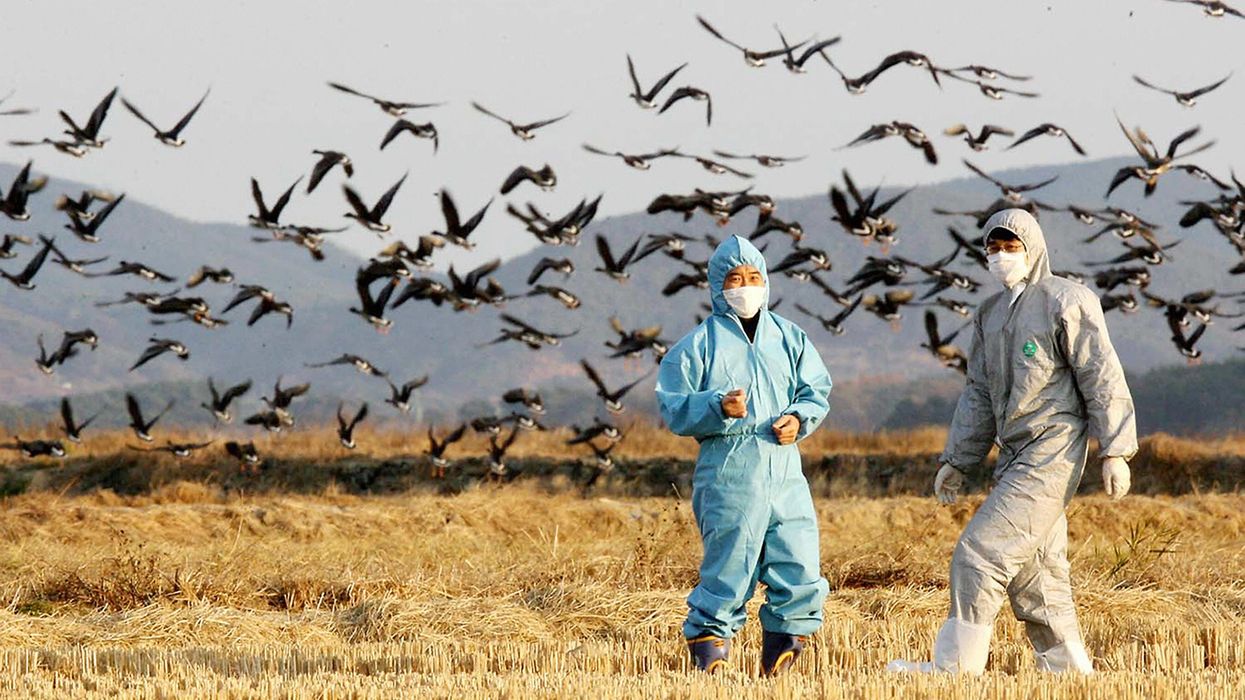
Saturday 10 May is World Migratory Bird Day, a global event for raising awareness of migratory birds and issues related to their conservation. The poultry industry and governments like to blame wild birds for bird flu. However, the Scientific Task Force on Avian Influenza and Wild Birds—which includes the United Nations Food and Agriculture Organization (FAO) and the World Organization for Animal Health (WOAH) stresses that wild birds are in fact the victims of highly pathogenic bird flu; they do not cause it. As a recent study states, “This panzootic did not emerge from nowhere, but rather is the result of 20 years of viral evolution in the ever-expanding global poultry population.”
Until recently, the bird flu viruses that circulate naturally in wild birds were usually of low pathogenicity; they generally caused little harm to the birds. It is when it gets into industrial poultry sheds—often on contaminated clothing, feed, or equipment—that low pathogenic avian influenza can evolve into dangerous highly pathogenic avian influenza.
Governments worldwide appear to have no strategy for how to end these regular bird flu outbreaks other than to hope they will eventually die down.
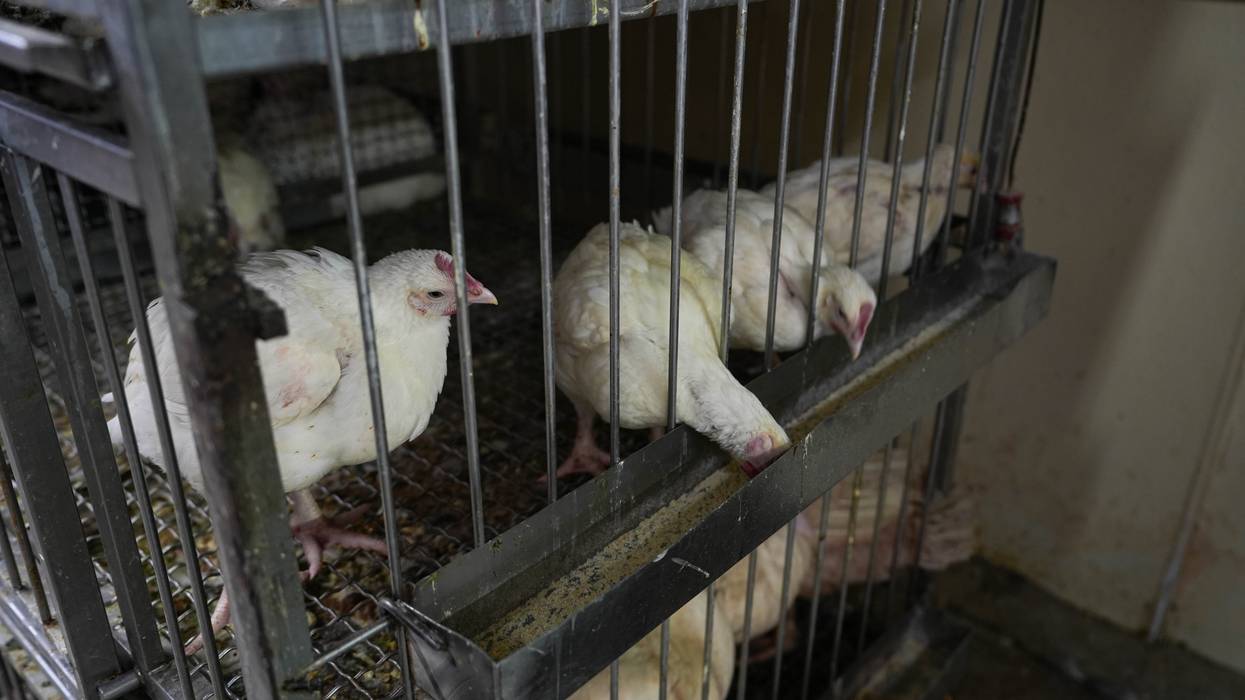
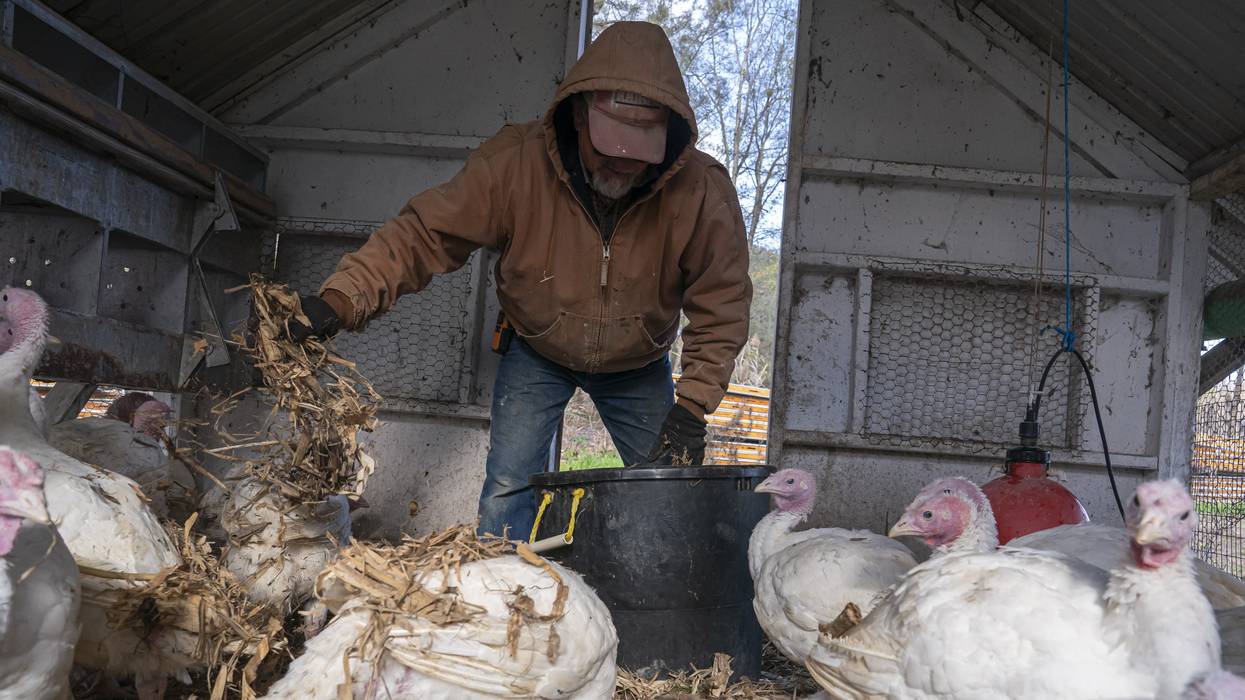
Industrial poultry production, in which thousands of genetically similar, stressed birds are packed into a shed, gives a virus a constant supply of new hosts; it can move very quickly among the birds, perhaps mutating as it does so. In this situation, highly virulent strains can rapidly emerge. The European Food Safety Authority warns that it is important to guard against certain low pathogenic avian influenza subtypes entering poultry farms “as these subtypes are able to mutate into their highly pathogenic forms once circulating in poultry.”
Once highly pathogenic avian influenza strains have developed in poultry farms, they can then be carried back outside—for example, through the large ventilation fans used in intensive poultry operations—and spread to wild birds. The Scientific Task Force states that since the mid-2000s spillover of highly pathogenic bird flu from poultry to wild birds has occurred “on multiple occasions.”
So, low pathogenic bird flu is spread from wild birds to intensive poultry where it can mutate into highly pathogenic bird flu, which then spills over to wild birds and can even return back to poultry in a growing and continuing vicious circle.
Following its evolution in farmed poultry, the highly pathogenic virus has adapted to wild birds, meaning that it is circulating independently in wild populations, with some outbreaks occurring in remote areas that are distant from any poultry farms.
While the health risk to humans from bird flu may be low, it cannot be ignored. Highly pathogenic avian influenza has spread to mammals including otters, foxes, seals, dolphins, sea lions, dogs, and bears. Worryingly, it has been found in a Spanish mink farm where it then was able to spread from one infected mink to another.
The U.S. Department of Agriculture has said that cow-to-cow transmission is a factor in the spread of bird flu in dairy herds. The ability for bird flu to move directly from one mammal to another is troubling as a pandemic could ensue if it could move directly from one human to another.
Scientists at Scripps Research reveal that a single mutation in the H5N1 virus that has recently infected U.S. dairy cows could enhance the virus’ ability to attach to human cells, potentially increasing the risk of passing from person to person.
A 2023 joint statement from the World Health Organization, the FAO, and WOAH stated that, while avian influenza viruses normally spread among birds, “the increasing number of H5N1 avian influenza detections among mammals—which are biologically closer to humans than birds are—raises concern that the virus might adapt to infect humans more easily.”
Some mammals may also act as mixing vessels, leading to the emergence of new viruses that could be more harmful.
Pigs can be infected by avian and human influenza viruses as well as swine influenza viruses. Pigs can act as mixing vessels in which these viruses can reassort (i.e. swap genes) and new viruses that are a mix of pig, bird, and human viruses can emerge. The U.S. CDC explains that if the resulting new virus infects humans and can spread easily from person to person, a flu pandemic can occur.
Governments worldwide appear to have no strategy for how to end these regular bird flu outbreaks other than to hope they will eventually die down. There is no sign of this happening. Without an exit strategy we are likely to face repeated, devastating outbreaks of bird flu for years to come. We need an action plan to restructure the poultry and pig sectors to reduce their capacity for generating highly pathogenic diseases.
We need to:
In light of pigs’ capacity for acting as mixing vessels for human, avian, and swine influenza viruses, the pig sector too needs to be restructured to make it less vulnerable to the transmission and amplification of influenza viruses. As with poultry, this would involve reducing stocking densities, smaller group sizes, and avoiding concentrating large numbers of farms in a particular area.
As we reflect on the wonder of migratory birds, and the spotlight focuses on how our cities and communities can be made more bird-friendly, we must also consider how our food system is posing a threat to their very existence. Failure to rethink industrial farming leaves us vulnerable, with the continued devastation of wild birds and poultry, and perhaps even a human pandemic.
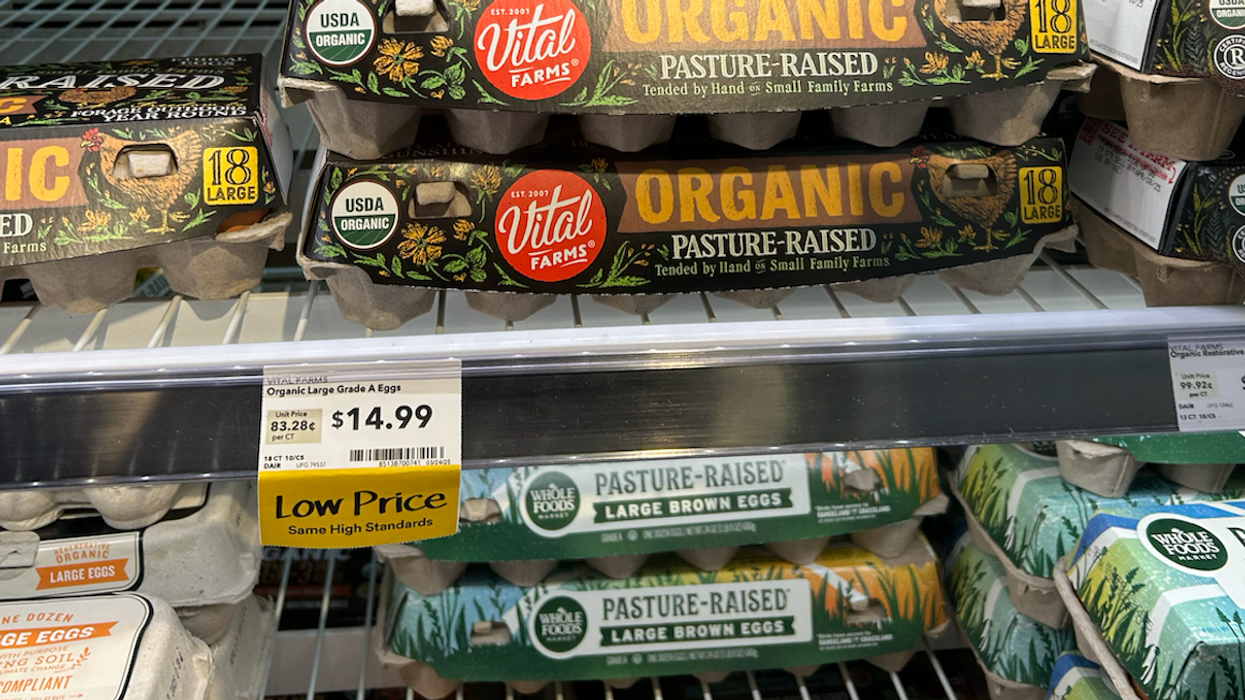
"The only egg prices Donald Trump is lowering," quipped the DNC chair, "is our nest eggs."
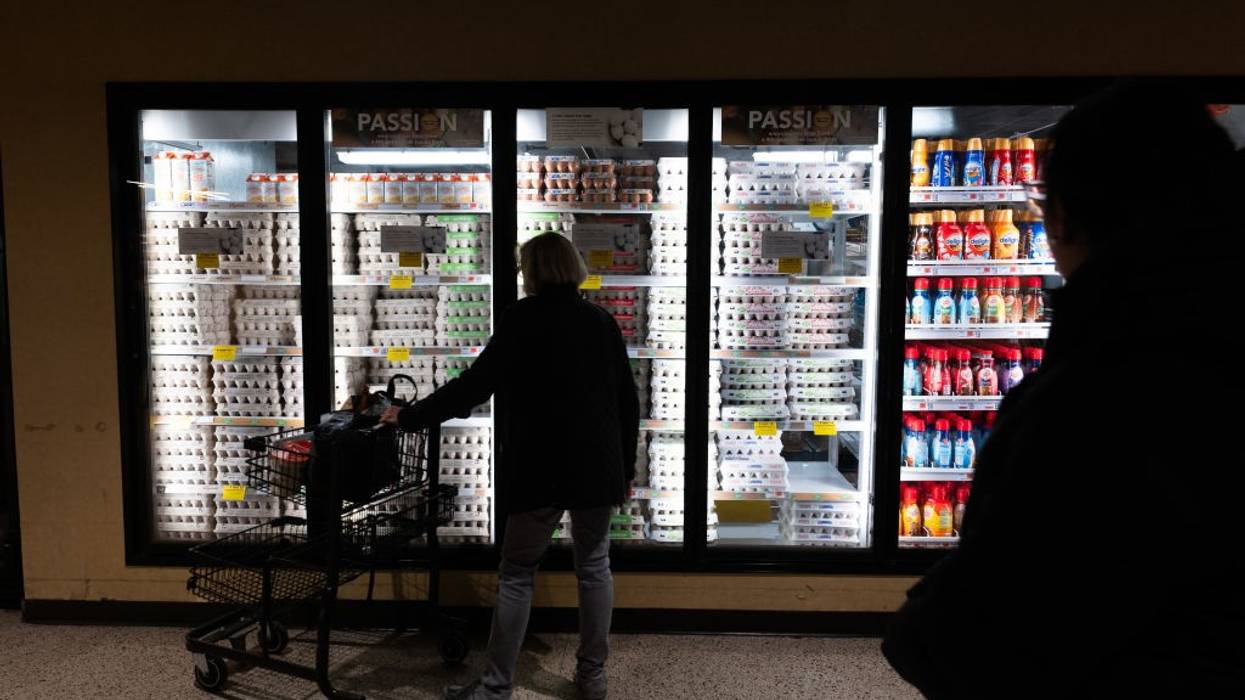
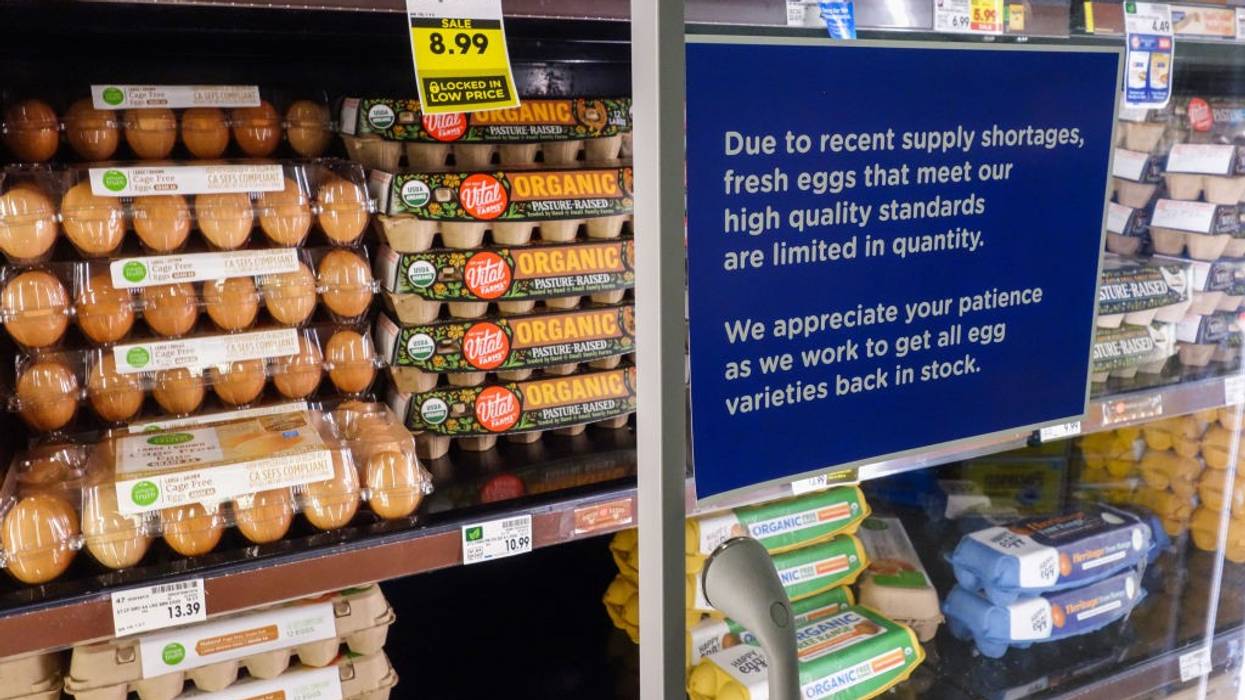
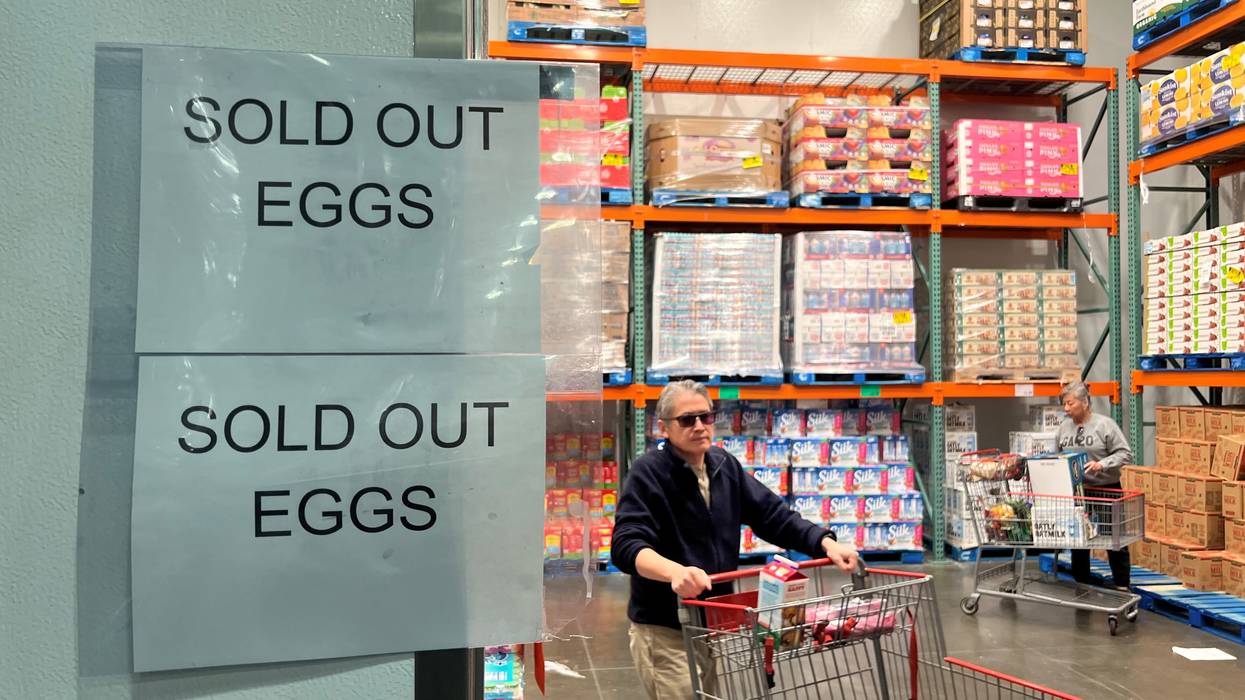
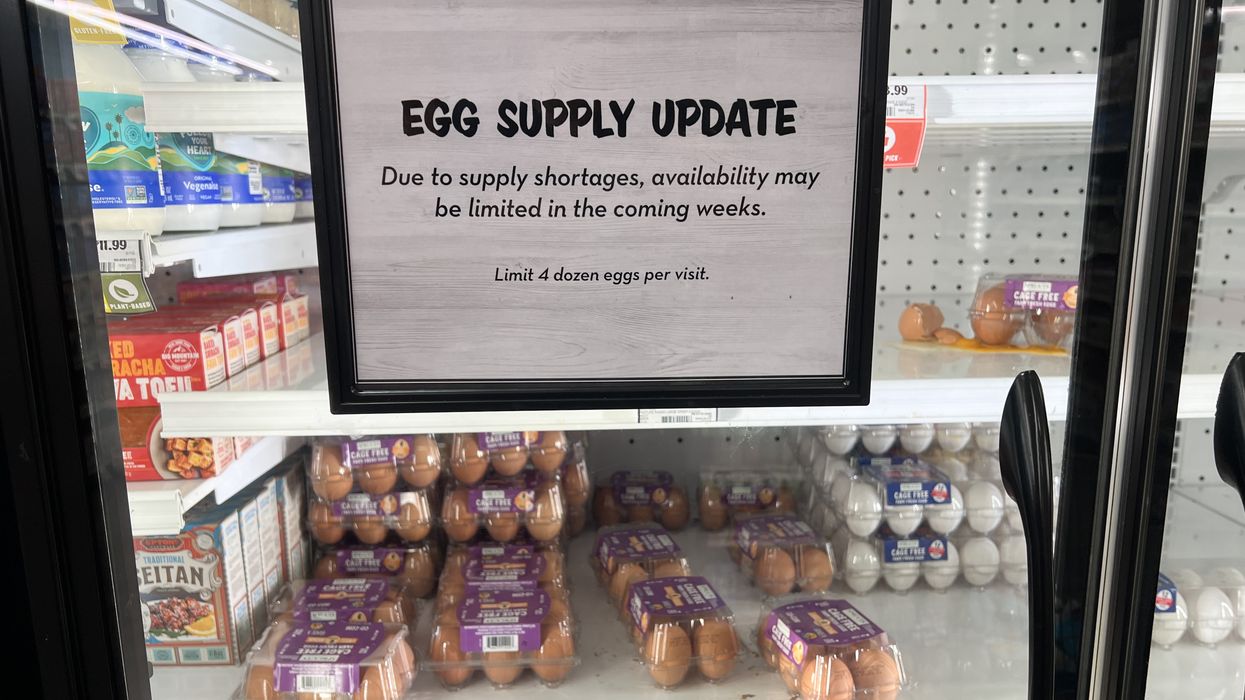
For the third straight month, U.S retail egg prices have hit a record high, despite falling wholesale prices, no bird flu outbreaks, and President Donald Trump's campaign promises—and recent misleading claims.
On Thursday, the U.S. Bureau of Labor Statistics' Consumer Price Index (CPI) reported the average retail cost of a dozen eggs rose from $5.90 in February to $6.23 last month.
Egg prices continue to increase despite bird flu outbreak slowing finance.yahoo.com/news/egg-pri...
[image or embed]
— Yahoo Finance (@yahoofinance.com) April 10, 2025 at 6:22 AM
Earlier this week, Trump claimed that "eggs are down 79%" due to his administration's work, a possible reference to the wholesale price, which does not reflect retail cost due to the role that profit-hungry industrial producers and grocery cartels play in inflating prices.
Trump also said that egg prices "are going down more," a statement that contradicts not only recent trends but also his own administration's Food Price Outlook, which forecasts a 57.6% increase in egg prices for 2025, with a prediction interval of 31.1%-91.5%.
Recent record egg prices have largely been driven by an avian flu epidemic that has forced farmers to cull over 166 million birds, most of them egg-laying hens. However, no farms are currently reporting any bird flu outbreaks.
On Tuesday, Cal-Maine Foods, the nation's largest egg producer, announced quarterly profits of $509 million, more than triple its gains from a year ago. The Mississippi-based company, which produces around 20% of U.S. eggs, also enjoyed a more than 600% increase in gross profits between fiscal years 2021-23, according to the consumer advocacy group Food & Water Watch (FWW).
Yet even as its profits soared, Cal-Maine still took $42 million in federal compensation for losses due to bird flu.
The top five egg producers own roughly half of all U.S. laying hens. The biggest of those corporations is Cal-Maine, which just announced quarterly profits of $509 million — more than 3x what it made a year ago. Corporate concentration + bird flu = a price-hiking free for all.
— Robert Reich (@rbreich.bsky.social) April 9, 2025 at 10:31 AM
Last month, the U.S. Justice Department's antitrust division launched an investigation of alleged price-fixing by the nation's largest egg producers, including Cal-Maine, which isn't even the largest recipient of avian flu-related government assistance. Versova, which operates farms in Iowa and Ohio, has been allotted more than $107 million in federal bird flu relief, The Washington Post reported Wednesday. Hillandale Farms, a Pennsylvania-based company sold last month to Global Eggs, received $53 million in avian flu-related subsidies.
"For those companies to be bailed out and then turn around and set exploitative prices, it just adds insult to injury for consumers," Thomas Gremillion, director of food policy at the Consumer Federation of America, told the Post. "Absolutely, it's unfair."
FWW research director Amanda Starbuck took aim at the corporate food system, saying Thursday that "the industry is proving itself effective at extracting enormous profits out of American consumers."
"We are all paying for it—at the store, with food shortages, and with the growing threat of the next pandemic," she continued.
"Restoring sanity to the grocery aisle will require immediate action to transform our food system," Starbuck added. "To lower egg prices, the Trump administration must take on the food monopolies, hasten and prioritize its investigation into corporate price fixing, and stop the spread of factory farms."
The fresh CPI figures weren't all bad news, as the index saw its first decline in five years, falling 0.1% mainly on the strength of lower oil prices. The 12-month increase in consumer prices also slowed from 2.8% to 2.4%.
However, the mildly positive CPI news was overshadowed by the economic uncertainty caused by Trump's mercurial global trade war, including a ramped-up 145% tariff on imports from China, one of the top U.S. trading partners, and ongoing stock market chaos.
"The only egg prices Donald Trump is lowering," Democratic National Committee Chair Ken Martin quipped earlier this week, "is our nest eggs."
"These are not people who want to make America healthy," said one advocate for people with disabilities. "They want to make the sick disappear."
The U.S. Department of Health and Human Services canceled more than $12 billion in federal funding for state health departments across the nation, money that is used to track infectious diseases and provide mental health services, addiction treatment, and other critical care.
NBC News reported Wednesday that $11.4 billion of the canceled grants were earmarked by the Centers for Disease Control and Prevention (CDC) for state and community health departments, nongovernmental organizations, and international recipients following the Covid-19 pandemic. Around $1 billion worth of grants are being pulled from the Substance Abuse and Mental Health Services Administration.
"The Covid-19 pandemic is over, and HHS will no longer waste billions of taxpayer dollars responding to a nonexistent pandemic that Americans moved on from years ago," Andrew Nixon, a spokesperson for the Department of Health and Human Services said in a statement. "HHS is prioritizing funding projects that will deliver on President [Donald] Trump's mandate to address our chronic disease epidemic and Make America Healthy Again."
This is just stunning. HHS has abruptly canceled more than $12 billion in federal grants to states that were being used for tracking infectious diseases, mental health services, addiction treatment and other urgent health issues.
[image or embed]
— Charles Ornstein ( @charlesornstein.bsky.social) March 26, 2025 at 1:36 PM
However, experts point to the certainty of future pandemics—like an avian flu strain that mutates to pass between humans—in urging public health policy planners to maintain or even increase preparedness and response funding.
NBC News reported that the 13 agencies overseen by HHS were sent notices starting Monday, which informed them that they have 30 days to reconcile their expenditures.
For some state and community healthcare providers, the effects of the cuts were immediate.
There was an abrupt $11B cut to local/state public health (PH) infrastructure yesterday. I don't think people realize what this means: -Want an updated system to check your immunizations instead of digging through docs? PH no longer able to carry out upgrades to immunization information systems
— Katelyn Jetelina ( @kkjetelina.bsky.social) March 26, 2025 at 11:34 AM
As The New York Times reported:
In Lubbock, Texas, public health officials have received orders to stop work supported by three grants that helped fund the response to the widening measles outbreak there, according to Katherine Wells, the city's director of public health.
On Tuesday, some state health departments were preparing to lay off dozens of epidemiologists and data scientists. Others, including Texas, Maine, and Rhode Island, were still scrambling to understand the impact of the cuts before taking any action.
In interviews, state health officials predicted that thousands of health department employees and contract workers could lose their jobs nationwide. Some predicted the loss of as much as 90% of staff from some infectious disease teams.
"We learned yesterday that the federal government has unilaterally terminated approximately $226 million in grants to Minnesota Department of Health related to the Covid-19 pandemic," Minnesota Commissioner of Health Dr. Brooke Cunningham said in a statement. "This termination is effective immediately and impacts ongoing work and contracts. This action was sudden and unexpected."
Lori Freeman, CEO of the National Association of County and City Health Officials, told CBS News that much of the funding would have expired soon anyway.
"It's ending in the next six months," she said. "There's no reason—why rescind it now? It's just cruel and unusual behavior."
Colorado Department of Public Health and Environment communications director Kristina Iodice told NBC News, "We are concerned that this sudden loss of federal funding threatens Colorado's ability to track Covid-19 trends and other emerging diseases, modernize disease data systems, respond to outbreaks, and provide critical immunization access, outreach, and education—leaving communities more vulnerable to future public health crises."
The first Trump administration was widely criticized for shortcomings in these fields. A congressional panel issued a 2022 report accusing top administration officials of "failed stewardship" and a "persistent pattern of political interference" that undermined the nation's response to Covid-19, which to date has killed more than 1.2 million people in the United States and is still claiming hundreds of lives each week, according to CDC figures.
Wednesday's reportingd came as HHS, CDC, and other critical agencies braced for more cuts and layoffs ordered by Elon Musk's Department of Government Efficiency, or DOGE. HHS Secretary Robert F. Kennedy Jr. and his aides are also "nearing their final decisions on a sweeping restructuring of the department," CBS News reported last week.
Last month, Senate Democrats demanded answers from Kennedy regarding the purge of more than 5,000 HHS workers after the agency "blindly followed" a "baseless directive" by Trump and DOGE that the lawmakers said is "blatantly undermining Americans' health and safety."
As Common Dreams reported Wednesday, public health experts have also condemned the administration's decision to terminate funding for Gavi, the global vaccine alliance—a move critics warned could result in the deaths of over 1 million children in the Global South.
"Investing in Gavi brings other benefits for our world and the American people," the alliance said. "Here's why: By maintaining global stockpiles of vaccines against deadly diseases like Ebola, mpox, and yellow fever, we help keep America safe. These diseases do not respect borders, they can cross continents in hours and cost billions of dollars."
"Instead of trying to lower the cost of living, he's doubling down on his plans to give massive tax breaks to billionaires and giant corporations," said one Trump critic.
As the U.S. Department of Labor released its monthly consumer price index report on Wednesday, President Donald Trump's new tariffs for steel and aluminum imports took effect, highlighting his threat to the economy and working-class Americans.
The CPI, "a key gauge of inflation, showed that prices rose by 2.8% in February from a year earlier, driven by price relief from airfares and gas," The Washington Post reported. "That was cooler than the 3% annual gain reported for January and an unexpected signal of progress in combating high inflation."
While gasoline prices fell 1.0% and airline fares dropped 4%, the cost of food and shelter rose 0.2% and 0.3% respectively. The bird flu continued to drive up egg prices, which jumped 10.4%. The report adds, "Indexes that increased over the month include medical care, used cars and trucks, household furnishings and operations, recreation, apparel, and personal care."
The White House celebrated the inflation data, but economists were quick to point out that the numbers don't account for the latest developments in Trump's trade war: the new tariffs taking effect on Wednesday—after chaos-causing mixed messages from the president on Tuesday—and Canada and Europe's swift retaliatory measures.
"It's a classic head fake," Joe Brusuelas, chief economist at RSM, told the Post. "Going forward, tariffs are going to increase the costs of manufacturing in general and autos in particular."
Chris Low, chief economist at FHN Financial, similarly told Reuters that "trade wars are expected to raise prices in future inflation reports," though he also said the odds that the Federal Reserve can cut interest rates "again this year once the smoke from the tariff back-and-forth clears increased today nonetheless."
Trump's trade policies and other recent decisions, including letting billionaire Elon Musk gut the federal government, have elevated fears of a recession—which one economist suggested naming after the president—and even sparked speculation that he is tanking the economy on purpose.
In a Wednesday statement about the CPI report, Groundwork Collaborative chief of policy and advocacy Alex Jacquez said that "while families are still struggling to put food on the table and a roof over their head, the administration's response is that they should raise their own chickens in their backyards."
"Every economic indicator suggests that President Trump has us barreling toward a recession and stagflation. But instead of trying to lower the cost of living, he's doubling down on his plans to give massive tax breaks to billionaires and giant corporations," Jacquez added, referring to congressional Republicans' efforts to send Trump legislation that would fund tax giveaways by slashing Medicaid and the Supplemental Nutrition Assistance Program (SNAP).
In addition to Jacquez's comments, Groundwork and Data for Progress also released a poll showing that over a fifth of U.S. voters across the political spectrum are most frustrated with rising grocery costs. Another 10% are most frustrated with high bills for utilities like electricity, gas, and water. They were followed by around voters frustrated with out-of-pocket healthcare costs, rent or mortgage, or health insurance premiums.
Groundwork Collaborative warned that "Trump's threat of new tariffs risks making the housing crisis worse. By driving up the cost of construction materials, his trade war with Canada could shrink the supply of new housing, keeping overall prices high. That, in turn, forces the Federal Reserve to keep interest rates elevated, making mortgages more expensive."
The think tank also stressed that the Trump administration is "destroying affordable healthcare" by fighting to cut Medicaid and Medicare, reinstate work requirements, and limit Affordable Care Act enrollment; "raising energy bills" by freezing funds for clean energy projects while advocating for planet-wrecking fossil fuels; and "making groceries more unaffordable" by pushing SNAP cuts "instead of tackling corporate price gouging and market consolidation in the food industry."
Food & Water Watch similarly responded to the new CPI data by calling out failures to crack down on corporate price gouging—as detailed in the group's report from last week titled, The Rotten Egg Oligarchy.
"Record-high egg prices have everything to do with corporate greed," Food & Water Watch research director Amanda Starbuck said Wednesday. "While skyrocketing prices transform eggs into a luxury item, the food monopolies are seeing green. President Trump needs to get serious about lowering American food prices—starting with cracking down on the food monopolies exploiting the worsening bird flu crisis for profit."
A new Food & Water Watch report details how "corporations use the worsening bird flu crisis to jack up egg prices, even as their own factory farms fuel the spread of disease."
The nation's largest egg producers would have American consumers believe that avian flu and inflation are behind soaring prices, but a report published Tuesday shows corporate price gouging is the real culprit driving the record cost of the dietary staple.
The fourth installment of Food & Water Watch's (FWW) Economic Cost of Food Monopolies series—titled The Rotten Egg Oligarchy—reports that the average price of a dozen eggs in the United States hit an all-time high of $4.95 in January 2025. That's more than two-and-a-half times the average price from three years ago.
"While egg prices spiral out of reach, making eggs a luxury item, Big Ag is profiting hand over fist," FWW research director Amanda Starbuck said in a statement. "But make no mistake—today's high prices are built on a foundation of corporate price gouging. Our research shows how corporations use the worsening bird flu crisis to jack up egg prices, even as their own factory farms fuel the spread of disease."
FWW found that "egg prices were already rising before the current [avian flu] outbreak hit U.S. commercial poultry flocks in February 2022, and have never returned to pre-outbreak levels."
Furthermore, "egg price spikes hit regions that were bird flu-free until recently," the report states. "The U.S. Southeast remained free of bird flu in its table egg flocks until January 2025, and actually increased egg production in 2022 and 2023 over 2021 levels. Nevertheless, retail egg prices in the Southeast rose alongside January 2023's national price spikes."
"The corporate food system is to blame for exacerbating the scale of the outbreak as well as the high cost of eggs," the publication continues. "Factory farms are virus incubators, with the movement of animals, machines, and workers between operations helping to spread the virus."
"Meanwhile, just a handful of companies produce the majority of our eggs, giving them outsized control over the prices paid by retailers, who often pass on rising costs to consumers," the paper adds. "This highly consolidated food system also enables companies to leverage a temporary shortage in one region to raise prices across the entire country."
Cal-Maine, the nation's top egg producer, enjoyed a more than 600% increase in gross profits between fiscal years 2021-23, according to FWW. The Mississippi-based company did not suffer any avian flu outbreaks in fiscal year 2023, during which it sold more eggs than during the previous two years. Yet it still sold conventional eggs at nearly three times the price as in 2021, amounting to over $1 billion in windfall profits. Meanwhile Cal-Maine paid shareholders dividends totaling $250 million in 2023, 40 times more during the previous fiscal year.
The report highlights how factory farming creates ideal conditions for the spread of avian flu, a single case of which requires the extermination of the entire flock at the affected facility, under federal regulations.
"These impacts cannot be understated," FWW stressed. "Today's average factory egg farm confines over 800,000 birds, with some operations confining several million. This magnifies the scale of animal suffering and death, as well as the enormous environmental and safety burden of disposing of a million or more infected bird carcasses."
Citing U.S. Department of Agriculture (USDA) figures, The Guardian reported Tuesday that more than 54 million birds have been affected in the past three months alone.
Egg producers know precisely how the supply-and-demand implications of these outbreaks and subsequent culls can boost their bottom lines. Meanwhile, they play a dangerous game as epidemiologists widely view a potential avian flu mutation that can be transmitted from birds to humans as the next major pandemic threat—one that's exacerbated by the Trump administration's withdrawal from the World Health Organization and cuts to federal agencies focused on averting the next pandemic.
"We cannot afford to place our food system in the hands of a few corporations that put corporate profit above all else."
So far, 70 avian flu cases—one of them fatal—have been reported in the United States, according to the U.S. Centers for Disease Control and Prevention. However, under Trump, the CDC has stopped publishing regular reports on its avian flu response plans and activities. The USDA, meanwhile, said it "accidentally" terminated staffers working on avian flu response during the firing flurry under Elon Musk's Department of Government Efficiency. The agency is scrambling to reverse the move.
"We cannot afford to place our food system in the hands of a few corporations that put corporate profit above all else," the FWW report argues. "Nor can we allow the factory farm system to continue polluting our environment and serving as the breeding ground for the next human pandemic."
"We need to enforce our nation's antitrust laws to go after corporate price fixing and collusion," the publication adds. "We also need a national ban on new and expanding factory farms, while transitioning to smaller, regional food systems that are more resilient to disruptions."
That is highly unlikely under Trump, whose policies—from taxation to regulation and beyond—have overwhelmingly favored the ultrawealthy and corporations over working Americans. Meanwhile, one of the president's signature campaign promises, to lower food prices "on day one," has evaporated amid ever-rising consumer costs.
According to the USDA's latest Food Price Outlook, overall food prices are projected to rise 3.4% in 2025. Eggs, however, are forecast to soar a staggering 41.1% this year—and possibly by as much as 74.9%.
"If President Trump has any interest in fulfilling his campaign pledge to lower food prices," Starbuck stressed, "he must begin by taking on the food monopolies exploiting pandemic threat for profit."
"New information and transmission countermeasures can and must be developed and shared as rapidly as the virus evolves," wrote the letter's authors.
A broad coalition of environmental, health, and animal groups is demanding greater transparency from the U.S. Centers for Disease Control and Prevention when it comes to disseminating information about H5N1, or bird flu, that has sickened hundreds of dairy cattle herds, killed millions of chickens, and also infected dozens of humans.
The Monday letter, which was signed by two staff members at the Center for Biological Diversity on behalf of a larger group that includes Earthjustice, the Animal Legal Defense Fund, the Institute for Agriculture and Trade Policy, and others, was sent to CDC acting Director Susan Monarez.
"New information and transmission countermeasures can and must be developed and shared as rapidly as the virus evolves," according to the letter, which says that it has been over a month since the CDC issued a regular update about its bird flu response activity.
On the CDC's "News & Spotlight" page on the section of its website dedicated to bird flu, no update has been posted since January 17. Prior to that date, the page featured regular updates, such as a post about the agency's accomplishments related to curbing bird flu in 2024-25.
Also, the CDC "appears to have delayed or denied the publication of key scientific research on avian influenza in its Morbidity and Mortality Weekly Report, including a study suggesting that infected house cats may be transmitting [highly pathogenic avian influenza] to humans," according to the letter. The letter links to February 6 reporting from The New York Times, which says that the CDC briefly posted but then took down a report that discussed cases of potential human-to-cat and cat-to-human transmission of bird flu.
That report now appears online and was posted as part of the CDC's Morbidity and Mortality Weekly Report for February 20.
"This is exactly the kind of information that concerns the public and should have been shared broadly—not withheld—so that Americans could avoid this route of infection and researchers and public health officials could understand and defeat this virus," the letter states.
According to the authors of the letter, publicizing data about bird flu is crucial, especially given reports of federal personnel cuts potentially impacting the government's bird flu response. Last week, the U.S. Department of Agriculture said it had sent termination letters to "several" staff working on the government's bird flu response, and that the agency was working to reverse the firings.
"The CDC should release to the public all information related to the avian influenza outbreak as soon as it is confirmed. This commitment to public transparency is essential to an effective, whole-of-society response to this growing disease threat," the letter concludes.
"This incompetence and arson is about to hit Americans in multiple ways," said one senator.
Reducing the price of groceries—a key campaign promise made by U.S. President Donald Trump—has thus far ranked low on his administration's list of priorities, but mass firings at numerous federal health agencies over the weekend suggested that scaling back efforts to ensure proper nutrition for infants, the safety of medical devices, and better maternal health outcomes are all part of Trump's upside-down vision for improving Americans' lives.
Roughly 3,600 federal employees across the Centers for Disease Control and Prevention (CDC), the National Institutes of Health (NIH), the Food and Drug Administration (FDA), and other agencies were out of a job Monday after receiving emails over the weekend claiming that their "performance has not been adequate to justify further employment" in the federal government.
The terminations targeted probationary employees—those who have been working in their positions for less than a year—and came amid the spread of bird flu, or H5N1, among wild bird flocks and commercial poultry across the country.
The Administration for Strategic Preparedness and Response (ASPR) at the Department of Health and Human Services (HHS), which works to prevent and prepare for public health emergencies and oversees pandemic stockpiles, was among the offices hit.
In a separate action, 25% of staffers at the U.S. Department of Agriculture's program office for its network of animal research laboratories were fired. The National Animal Health Laboratory Network program office manages data related to the protocols followed by federal labs across the country, ensuring that scientists can accurately track animal diseases like bird flu.
"On top of firings at the USDA national testing lab this weekend too... this is VERY BAD," said Michigan state Rep. Carrie Rheingans (D-47) of the ASPR firings.
The spread of H5N1 among millions of birds, alongside price-gouging by corporate giants, has been linked to the skyrocketing price of eggs—a topic Trump raised frequently on the campaign trail and said he would address promptly when he took office.
About two dozen workers at the CDC's Laboratory Leadership Service (LLS), a fellowship program that trains scientist to detect and address public health threats, were also among those who were swept up in the HHS purge led by the Department of Government Efficiency, the advisory body run by billionaire Trump donor Elon Musk.
"We have come up with a new slogan for LLS: 'the disease detectors,'" one fellow told NBC News. "If you're not testing, you don't know what disease is there."
The series of health agency firings came as a tuberculosis outbreak has caused recent alarm in Kansas and an ongoing measles outbreak in Texas spread to at least 49 people, with more than a dozen school-age children hospitalized and officials warning 200-300 people could currently be infected.
At Food Safety News, Dr. Peter G. Lurie, executive director of the Center for Science in the Public Interest, wrote that the widespread purge of federal employees will likely "make it harder to recruit qualified staff to fill the roles moving forward"—with consequences for people across the country who rely on the work of experts in public health and nutrition.
"Many candidates with high qualifications will likely opt not to work for a new boss whose vision for progress includes the arbitrary mass elimination of new employees," wrote Lurie. "The FDA has struggled in recent years to recruit and retain qualified staff with expertise in topics like infant nutrition, where specialized training may be critical to make policy decisions affecting millions of Americans."
While Congress recently tried to address staffing difficulties by granting new hiring authorities to the FDA, "new employees brought in recently could be subject to cuts, impacting current teams and making it harder to recruit moving forward," wrote Lurie.
One policy analyst at the Center for Medicare and Medicaid Innovation, Arielle Kane, told Politico that before she received a termination email on Saturday she was working on a pilot program for Medicaid in 15 states aimed at improving maternal health outcomes. Other fired employees had been working to implement a ban on surprise medical bills which was passed during Trump's first term.
" Donald Trump fired the people who make sure you and your parents get the healthcare you need," said Sen. Elizabeth Warren (D-Mass.). "The people who make sure medical devices are safe for you to use. The people who approve the lifesaving drugs you rely on. How does this help working people?"
Sen. Brian Schatz (D-Hawaii) said the mass firings underscored the "multiple ways" in which the Trump administration's "incompetence and arson is about to hit Americans."
The mass firings came days after anti-vaccine conspiracy theorist Robert F. Kennedy Jr. was confirmed as Trump's secretary of health and human services after confirmation hearings in which he appeared to confuse Medicaid and Medicare and refused to affirm that vaccines do not cause autism—a debunked claim he has amplified in the past.
"On day one, the new HHS secretary is gutting the agencies that would be necessary to 'make America healthy again,'" Reshma Ramachandran, a Yale health professor who chairs an FDA task force, told Politico, referring to a slogan embraced by Kennedy.
"Evidence indicates that by not increasing their supply, the five dominant egg firms are forcing prices to stay high while reporting dramatic profit increases and level sales," according to the group Farm Action.
An advocacy group dedicated to fighting corporate agriculture monopolies on Wednesday urged federal antitrust enforcers to take action against egg producers that the group accuses of taking advantage of the bird flu crisis in order to raise prices, inflate their profits, and consolidate their market power.
What's more, the slow recovery of "flock size"—the total number of egg-laying hens—"despite historically high prices, further suggests coordinated efforts to restrict supply and sustain inflated prices" that warrants investigation, according to a letter sent by Farm Action president Angela Huffman to Federal Trade Commission Chair Andrew Ferguson and Acting Assistant Attorney General Omeed Assefi, who has been tapped to temporarily lead the DOJ antitrust division.
The letter, which invokes the behavior of "dominant egg producers," largely provides data on one company, Cal-Maine Foods, the biggest producer and marketer of shell eggs in the country.
Separately, Democratic voices are urging the Trump administration to take action around corporate conduct as it relates to food prices. FTC Commissioner Alvaro Bedoya, a Biden appointee, has also urged Ferguson to open an investigation into egg production and marketing practices—pointing to a 2023 request from Farm Action to the FTC to investigate potential antitrust violations in the egg industry.
And last week Sen. Elizabeth Warren (D-Mass.) wrote that she had sent President Donald Trump a list of ways he "can use his executive authority to tackle high food costs by focusing on corporate profiteering."
Egg prices have risen starting in 2022, coinciding with the arrival of bird flu in the United States, and are likely to keep rising in 2025.
The wholesale price of "Grade-A, Large, White, Shell Eggs" rose from $0.50-$1.30 per dozen in 2021 to $1.50-$5.00 per dozen in 2022, and then eased in 2023 before climbing up again in 2024. As of January 2025, the national index of weekly prices for that same type of eggs was up to $6.00-$8.00 per dozen, according to Farm Action.
"The previous all-time high [for wholesale prices] was late December 2022 heading into Christmas, when we touched $5.46 per dozen," Ryan Hojnowski, a market reporter at Expana, wrote in an e-mail to CNBC. "Of course we have blown way past that this time."
Retail prices have also increased. Retail prices for large, Grade-A eggs reached an average of $4.25 per dozen in December 2022 after never reaching above $3 a dozen in the 2010s. Retail prices declined in 2023 and then rose again throughout 2024, reaching $4.15 per dozen in December of last year.
Farm Action argues that while bird flu has been cited as the main driver for rising egg prices, its actual impact on production has been minimal. According to the letter, bird flu has forced the culling of roughly 115 million egg-laying chickens, but the impact of these losses on the total size of the U.S. supply of egg-laying flock has been "relatively modest." Huffman wrote that this culling has caused egg production to drop from 8.1 billion eggs per month in 2021 to 7.75 billion eggs per month at the end of 2024.
But crucially, according to the letter, per capita production of eggs has not been below per capita consumption of eggs in any year between 2022 and the present—while the total value of egg production has risen from $8.8 billion in 2021 to $17.9 billion in 2023.
Cal-Maine specifically has seen its profits soar. The company tallied gross profits of $179.6 million in fiscal year 2020, but the producer reported $1.2 billion and $541.6 million in gross profits in fiscal year 2023 and 2024, respectively, according to the letter. Between fiscal year 2020 and fiscal year 2024, sale levels have remained fairly consistent, wrote Huffman.
"Evidence indicates that by not increasing their supply, the five dominant egg firms are forcing prices to stay high while reporting dramatic profit increases and level sales. These same firms are then using their increased profits to acquire their competition, further driving market consolidation instead of investing in replenishing or expanding their flocks," Farm Action wrote in a statement on Wednesday.
As evidence, they cite a number of mergers that took place in the industry in 2023, and point to the fact that the top five egg producers' share of the "U.S. layer hen flock" increased from 37% to 46% between 2023 and 2025.
"There appears to be a remarkable unwillingness among large egg producers to invest in the internal reconstruction or expansion of their egg-laying flocks in response to persistently high prices," wrote Huffman, which she contrasts with the quicker flock recovery that took place during the first bird flu outbreak in 2014-2015.
The "lagging recovery" and "the fact that egg producers are showing unusual discipline in their pricing and output decisions" indicates that market forces are not "operating as they should be." The letter suggests a few factors that may contribute to the lack of competition.
The group is urging the two agencies to launch investigations, specifically encouraging the FTC to launch an investigation into pricing and production practices of dominant egg producers and their hatchery suppliers to make sure the market is "truly free and fair."
This is far from the first time that the food and grocery industry has been accused of inappropriately raising prices.
In August 2024, a top executive at the supermarket chain Kroger even admitted under questioning from a Federal Trade Commission attorney that the grocery chain raised its egg and milk prices above the rate of inflation.
"Officials in sane and scientific states must band together to report data on their own," said one journalist.
"The censorship begins," said one public health expert as the Trump administration directed federal health agencies to suspend all external communications, like those that have updated people across the U.S. in recent weeks amid outbreaks of Covid-19, influenza, and norovirus.
The Washington Post reported Tuesday evening that administration officials delivered the directive to staff members at the Food and Drug Administration (FDA), the Centers for Disease Control and Prevention (CDC), and the National Institutes of Health (NIH).
The agencies operate under the Health and Human Services Department (HHS), which President Donald Trump has nominated vaccine conspiracy theorist Robert F. Kennedy Jr. to lead. Kennedy has signaled that if confirmed he would purge the ranks of the FDA and change federal vaccine guidelines, including potentially limiting or eliminating the CDC's program that provides free immunizations to uninsured and underinsured children.
The pause on external communications will be in place for an indeterminate amount of time, according to the Post, and applies to the Morbidity and Mortality Weekly Report (MMWR) compiled by the CDC. The epidemiological record includes "timely, reliable, authoritative, accurate, objective, and useful public health information and recommendations" for healthcare professionals and the public.
During the last year of Trump's first term, as the coronavirus pandemic spread across the country, HHS officials denounced the MMWR as "hit pieces on the administration" and pushed to delay and prevent the CDC from releasing new information about the pandemic that didn't align with the White House's views.
While changes to the operations and communications of federal health agencies after a new administration enters the White House are "not unprecedented," said epidemiologist Ali Khan, the MMWR "should never go dark."
The health agencies were instructed to halt communications about public health as the news media reported on a so-called "quad-demic" of four viruses that have been circulating for several weeks across the country.
CDC data shows that the spread of influenza A, Covid-19, and respiratory syncytial virus (RSV) is "high" or "very high," and norovirus cases have been rising in recent weeks.
The country is also facing an "ongoing multi-state outbreak" of the H5N1 avian flu among dairy cattle, with 67 total human cases also reported during the current outbreak.
The CDC had been scheduled to publish three MMWR updates this week on H5N1 when the new directive was announced.
The Post reported that it was unclear whether the ban on external communications would apply to reports of new avian flu cases or foodborne illness outbreaks.
Journalist Jeff Jarvis said Trump's new policy will give way to "forced ignorance on health data" and called on officials "in sane and scientific states" to continue reporting public health information on their own.
The suspension of external communications will apply to website updates and social media posts, advisories that the CDC sends to clinicians about public health incidents, and data releases from the National Center for Health Statistics, according to the Post.
"Asking health agencies to pause all external communications is NOT typical protocol for administration changes," said Lucky Tran, director of science communication at Columbia University. "Generally website updates, disease case counts, and other typical day-to-day work continues."
Tran noted that during his first term, Trump officials halted external communications for the Environmental Protection Agency and the Interior Department.
"In their second term," he said, "they appear to be targeting health agencies too."
"The focus should be on the dairy farmworker" as the government tries to stop the spread of H5N1, said one advocate.
U.S. health officials in recent months have said the avian flu that's been detected in chickens and cows in some states poses little risk to the general population and to commercial dairy products, but as a third farmworker's diagnosis with the illness was reported Thursday, advocates said officials must do more to protect the laborers who are most at risk.
A farmworker in Michigan was the second person in the state to test positive for H5N1, the avian flu that's currently circulating, and was the first person to report respiratory symptoms. A worker in Texas was also diagnosed with the illness in March and had mild symptoms.
The person whose case was announced Thursday contracted the disease after being exposed to infected cows.
As of late last week, there were 58 cow herds known to be infected across the United States.
The Guardian reported on Wednesday that there have been "anecdotal reports" of other farmworkers exhibiting mild symptoms, and last week federal officials said an unspecified number of people are being "actively monitored" for signs of avian flu, but noted that only 40 people connected to dairy farms had been tested.
Dawn O'Connell, assistant secretary for preparedness and response at the U.S. Department of Health and Human Services, told reporters on May 22 that authorities are preparing 5 million doses of a vaccine against H5N1, often referred to as bird flu. Offiicals have not yet decided whether shots will be offered to farmworkers when they're deployed later this year.
Elizabeth Strater, director of strategic campaigns for United Farm Workers (UFW), said that while vaccines are being prepared, authorities must ramp up a testing campaign to stop the spread of the virus and protect the country's 150,000 dairy farmworkers.
The U.S. Department of Agriculture unveiled a push earlier this month to encourage workers at affected dairy farms to get tested, offering them a financial incentive of $75.
But with undocumented immigrants who lack health insurance making up a large portion of the agricultural workforce, said Strater, many will likely feel they can't risk testing positive and being required to stay home from work for just $75.
"That's not even a day's lost work," Strater told The Guardian on Wednesday. "And that's a very bad gamble for someone that might miss weeks... They're unlikely to go to the emergency room for anything that isn't life-threatening. In fact, they're avoiding testing because they know they won't get any compensation if they're ordered to stop working."
Bethany Boggess Alcauter, director of research and public health programs at the National Center for Farmworker Health, told USA Today that farmworkers are currently being treated as "canaries in the coal mine," but "they could be trained to be frontline public health defenders," with authorities sharing far more information about the disease with them.
"Education needs to be a part of testing efforts, with time for workers to ask questions," Alcauter told the outlet.
As the third human case of H5N1 was reported on Thursday, UFW called for "protective equipment and paid sick leave" for farmworkers.
Earlier this month, the Centers for Disease Control and Prevention asked states to provide personal protective equipment to farmworkers. USA Today reported this week that the response has varied from state to state:
State health departments in California, Texas, and Wisconsin, which have large dairy industries, all said they have offered to distribute such equipment.Amy Liebman, chief program officer for the Migrant Clinicians Network, criticized the federal government's current response to the spread of H5N1, and told The Guardian that "the focus should be on the dairy farmworker."
Chris Van Deusen, a Texas health department spokesperson, said four dairy farms had requested protective equipment from the state stockpile. He said other farms may already have had what they needed. Spokespeople for the California and Wisconsin health departments said they did not immediately receive requests from farm owners for the extra equipment.