

SUBSCRIBE TO OUR FREE NEWSLETTER
Daily news & progressive opinion—funded by the people, not the corporations—delivered straight to your inbox.
5
#000000
#FFFFFF
To donate by check, phone, or other method, see our More Ways to Give page.
Daily news & progressive opinion—funded by the people, not the corporations—delivered straight to your inbox.
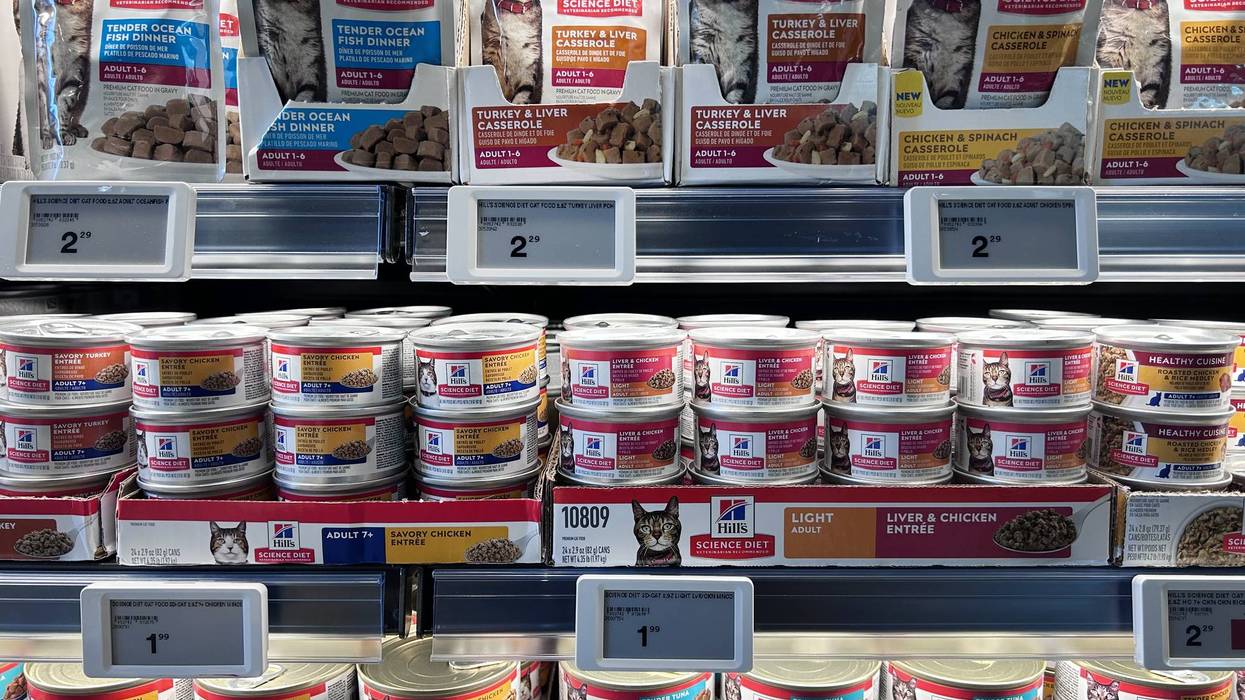
Some states are cracking down on "surveillance pricing." But a report out from the AFL-CIO suggests that the risk of electronic shelf labels are much broader than just price gouging.
Lawmakers are already raising concerns that electronic shelf labels could be used by grocery chains to jack up prices on shoppers. But the technology could also be used to shrink paychecks and kill jobs, according to a report out Wednesday from the research arm of the AFL-CIO.
The new report examines marketing materials used by electronic shelf label (ESL) companies to sell their products to grocery chains. It finds that they are often billed as a tool allowing retailers to save on labor costs, automate work, and reduce hours for real employees.
"Grocery giants like to claim that electronic shelf labels will free up workers to serve customers directly, but this report shows this is not the case," said Ademola Oyefeso, the international vice president of the United Food and Commercial Workers International Union (UFCW), which represents over 800,000 grocery industry employees. "Using studies and marketing material from the manufacturers pushing the technology, we know ESLs could actually cost workers and their families billions of dollars in lost income."
The AFL-CIO Tech Institute, which conducted the report, examined studies from two ESL manufacturers, Pricer and Vusion Group, that examined how their systems were used at specific stores.
The 2022 study by Pricer found that by automating price changes, its system saved one store about 5,200 worker hours annually. Vusion, meanwhile, found in 2024 that its technology saved about 600 hours of work over about six months, or 1,200 annually.
Using data from the US Bureau of Labor Statistics, the AFL-CIO projected that at these rates, were the technology to be adopted at all of the nearly 60,000 grocery stores in the US, it would reduce the number of worker hours annually by anywhere from 71 million to 308 million.
Using hourly wage data, they found that this translated to the loss of between $1.61 billion-$6.97 billion in annual wages and between 44,000-192,000 full-time jobs. That's anywhere from $608 to $2,633 per employee.
The issue of using ESLs to gouge customers has already become an area of focus for lawmakers in Congress. Earlier this year, Democrats in the US House and Senate introduced legislation to prohibit "surveillance pricing," which involves targeting individual shoppers with increased prices by analyzing their personal data.
Surveillance pricing has been used in e-commerce to fluctuate prices for individual consumers of everything from grocery delivery to airline tickets. But as facial recognition and other surveillance technologies grow more powerful, fears have grown that ESLs could be used to bring surveillance practices into the physical realm.
“Through our analysis, we found that the implementation of electronic shelf labels are likely going to drive prices even higher. The reason being that these labels are connected to the same algorithmic pricing software that online retailers are already using,” said Sunny Glottmann, the policy and programs manager at the AFL-CIO Tech Institute and co-author of the report.
"Electronic shelf labels create the infrastructure that would make rapid algorithmic price changes easier to implement at scale, and this raises concerns for consumers that are already struggling with grocery costs," Glottmann said.
At least three states—Connecticut, Maryland, and New Jersey—have banned some forms of surveillance pricing, and other states are also considering a ban.
Unions like the AFL-CIO and UFCW say that legislating only against surveillance pricing is much too narrow, encompassing only a small segment of the dangers posed by ESLs.
"Policymakers should ban ESLs outright, rather than rely on narrower disclosure or dynamic-pricing laws that leave the underlying technology in place," the AFL-CIO report says, noting New Jersey's one-year moratorium on the technology as a good starting place.
"When grocery store workers lose income, that means less money to spend at other stores and businesses in the community," Oyefeso said. "Banning this technology should be a top priority for lawmakers at every level, like New Jersey has done with a moratorium on ESLs and a ban on predatory pricing practices outright. More states should follow suit to protect both shoppers and workers.”
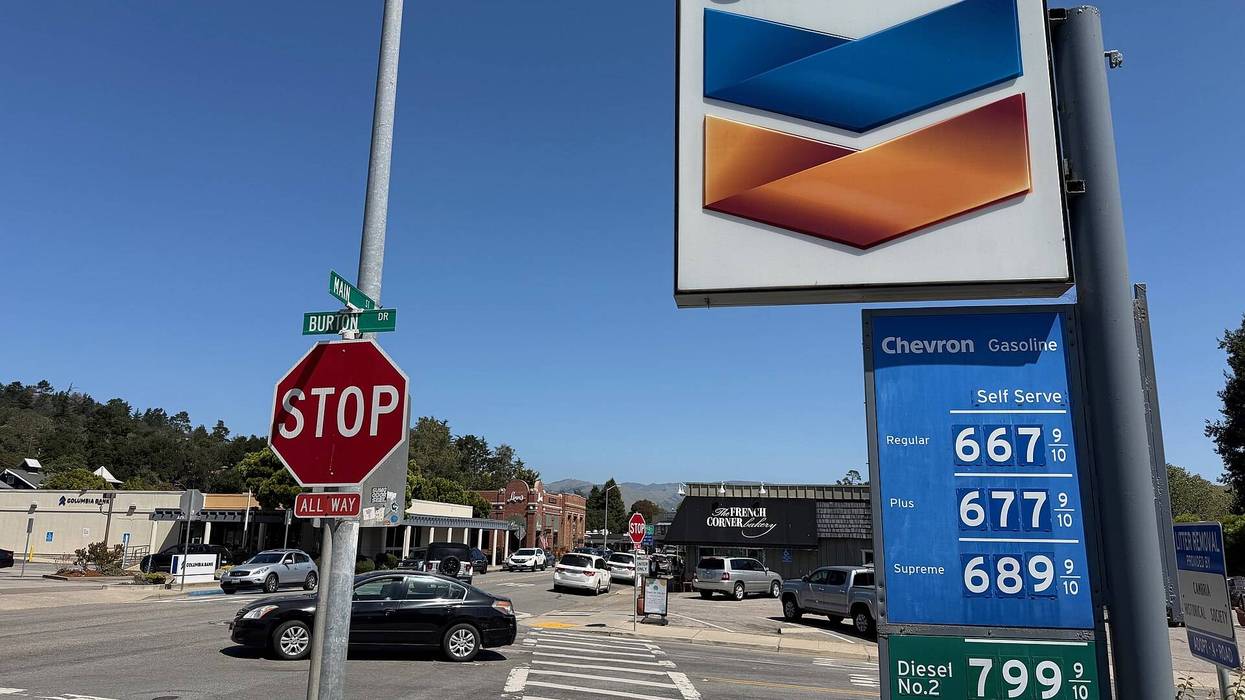
"Mr. President: I have a windfall excess profits bill you could support," said one Democratic senator.
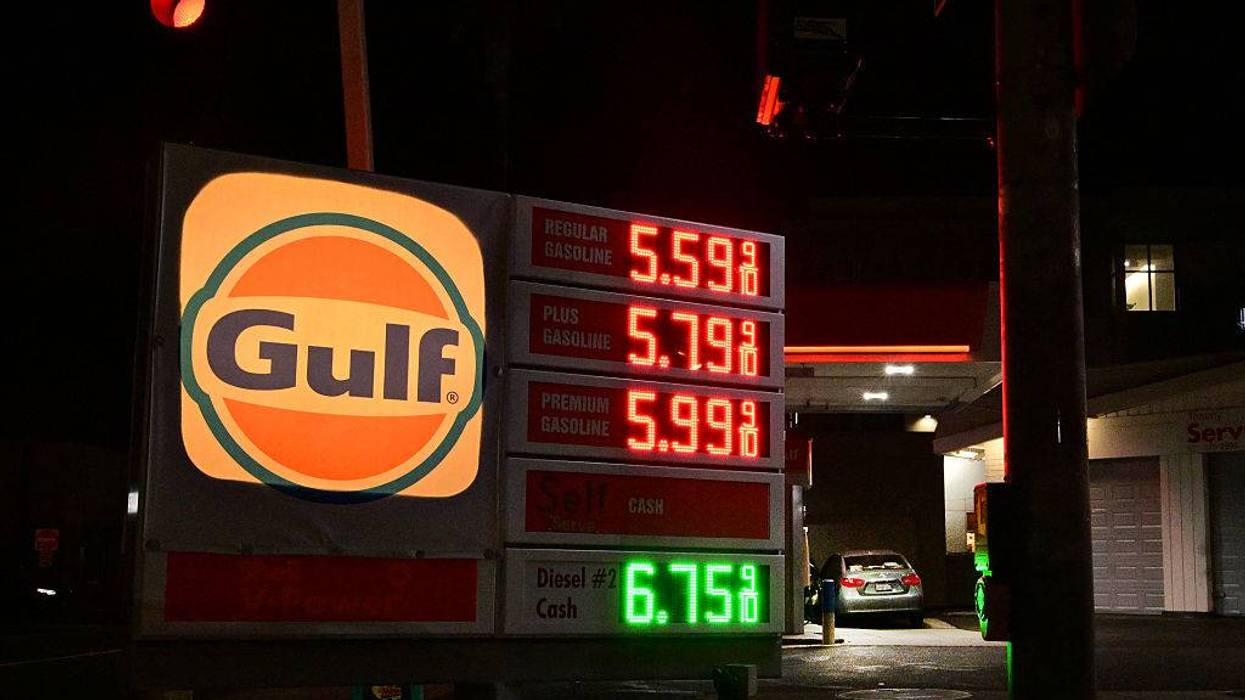
President Donald Trump said Tuesday that he has directed the US Department of Justice to investigate fossil fuel companies for not lowering gasoline prices as the cost of oil declines amid the prospect of an end to the Iran War.
"The big Oil Companies are not dropping their price at the pump commensurate with the sharply lower prices they are paying for Oil. Those prices are dropping like a rock! In other words, customers are being 'gouged,'" Trump said on his Truth Social network.
"I have instructed the DOJ to immediately start looking into this," he added. "Gasoline prices better start going down a lot faster than what I’m seeing!"
While benchmark West Texas Intermediate and Brent Crude oil prices have fallen to their lowest levels since Trump launched the illegal US-Israeli war of choice on Iran on February 28, the average price for a gallon of unleaded gasoline in the United States was $3.93 per gallon on Wednesday, around one-third higher than it was the day before the war started but down from a high of $4.52 a month ago, according to the American Automobile Association.
"The price of fuel is not only a national security issue, it impacts the wallet of every American," an unnamed Trump administration official told ABC News on Wednesday following the president's post. "We will always commit to ensuring affordability in this nation."
Responding to Trump's post, US Sen. Sheldon Whitehouse (D-RI) noted on social media that he has a solution for Big Oil price gouging.
In March, Whitehouse and Rep. Ro Khanna (D-Calif.) reintroduced the Big Oil Windfall Profits Tax Act “to curb profiteering by oil companies and provide Americans relief at the gas pump.”
The legislation—which only applies to large oil companies—would impose a per-barrel tax “equal to 50% of the difference between the current price per barrel of oil and the average price per barrel last year, when big oil companies were already earning large profits.”
Democrats in both chambers of Congress have also called for the prosecution of corporations that use the war as a pretext for price gouging.
Polling has shown that Americans largely support a tax on Big Oil windfall profits, which, according to The Guardian, amounted to $23 billion in the first month of the war alone—or $30 million per hour.
NEW: As Americans face rising oil costs, Maine Senate candidate Graham Platner has released an energy plan aiming to “End Big Oil Price Gouging.”We find voters support key elements of the plan, including an oil windfall tax to freeze or lower electricity rates.
[image or embed]
— Data for Progress (@dataforprogress.org) June 18, 2026 at 11:49 AM
Trump has been a staunch supporter of fossil fuel companies. While running for reelection on a "drill, baby, drill" energy platform, he reportedly promised Big Oil executives that he would eviscerate climate regulations enacted by the Biden administration if they gave $1 billion to his campaign.
Fossil fuel interests spent nearly $450 million during the 2024 election cycle on campaign contributions, lobbying, and efforts supporting Republican causes and candidates, including Trump.
As pump prices soared and Americans suffered amid Trump's war, the president—who promised gas under $2 a gallon and no new wars—said that “when oil prices go up, we make a lot of money."
Last week, the Institute on Taxation and Economic Policy estimated that Americans have paid nearly $54 billion extra for gas and fuel—more than $400 per household—than they would have if the war never happened.
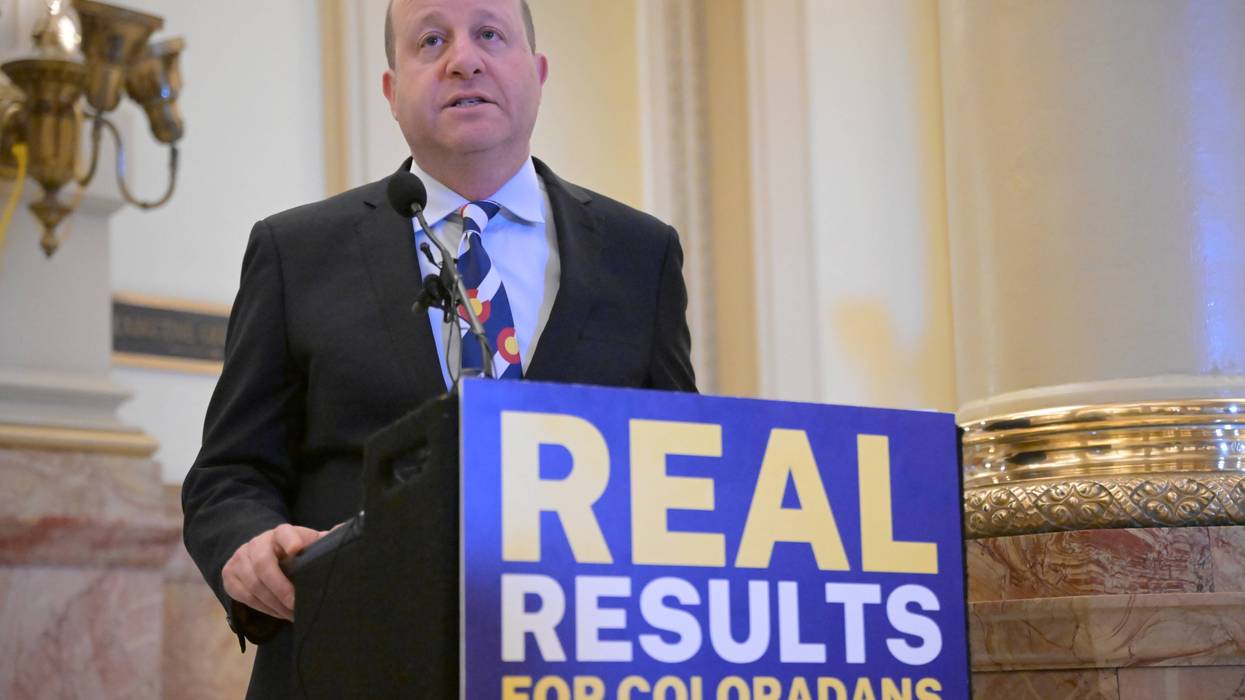
"Polis had an opportunity to stand with working Coloradans, but instead chose to side with the dominant corporations using invasive surveillance data to pick their pockets.”
Colorado's Democratic governor faced backlash on Wednesday after vetoing legislation that would have cracked down on surveillance pricing, an increasingly common practice whereby corporations use personal data to set individualized prices on groceries and other goods.
Gov. Jared Polis, who is term-limited and thus not up for reelection, said in his veto letter that he "appreciate[s] the intentions" of the legislation, which advocates described as the strongest surveillance pricing proposal in the US. But Polis claimed the bill passed by state lawmakers is overly broad and would have had unintended consequences, echoing industry objections.
Pat Garofalo, director of state and local policy at the American Economic Liberties Project, said in a statement Wednesday that "Polis had an opportunity to stand with working Coloradans, but instead chose to side with the dominant corporations using invasive surveillance data to pick their pockets."
"The legislators who sponsored this bill worked hard to craft strong, fair protections for Colorado families, and we look forward to continuing to support them in the future," said Garofalo.
Colorado State Rep. Javier Mabrey (D-1), one of the lead sponsors of HB 1210, vowed that "we’ll be back next session" to revive the proposed surveillance pricing ban.
"The question for the Dems running to be our next governor is simple: Will you sign it, or side with the companies using our data against us?" Mabrey wrote on social media.
Gov. Polis is vetoing our bill banning surveillance pricing, allowing corporations to keep using your personal data to set prices. We’ll be back next session. The question for the dems running to be our next governor is simple: will you sign it, or side with the companies using… pic.twitter.com/HLXAogDfDy
— Rep. Javier Mabrey (@javier_mabrey) June 2, 2026
The Denver Post noted that HB 1210 "was the latest in a slew of pro-tech and pro-business vetoes by Polis in recent years." Last year, Polis vetoed legislation that would have banned rent-setting algorithms that corporate landlords have used to push up housing costs across the US.
A recent survey found that nearly 70% of Americans support banning surveillance pricing, fearing that the practice drives up the costs of basic necessities, harming unwitting consumers while lining the pockets of corporations. Public anger over surveillance pricing has spurred legislative and regulatory action in states across the US.
Lee Hepner, senior legal counsel at the American Economic Liberties Project, wrote in response to Polis' veto that "his career will be over soon, and our work is just beginning."
"Polis might have the most pathetic legacy of any outgoing Dem governor," Hepner added.

A new law will ban retailers from using shoppers' personal data to hike grocery prices—but consumer advocates warn it contains loopholes that companies could exploit.
Maryland will become the first US state to outlaw "surveillance pricing" for groceries after Democratic Gov. Wes Moore signed a bill on Monday barring retailers and food delivery services from using customers' personal data to alter prices.
The practice has already become rampant in online commerce, with companies like Amazon, Uber, and Delta Air Lines accused of using everything from browsing history and location to demographic information to squeeze every possible cent from consumers.
The Protection from Predatory Pricing Act, which takes effect in Maryland beginning on October 1, targets the growing use of such tactics by grocery chains and delivery apps, which Moore has accused of using "new technologies to drive up the bill for working families."
These include electronic shelf labels, which advocates have warned could allow companies to instantly change grocery prices based on the time of day, weather, and other factors that influence consumer demand.
“Digital price tags are replacing paper ones. It’s happening because we are having cameras that are watching aisles, it’s happening because we have apps that are moving from search-based to predictive,” Moore said.
Moore has cited an investigation published in December by Consumer Reports and the Groundwork Collaborative, which found that Instacart was running a “pricing experiment” that charged some customers as much as 23% more for the same items than others based on shoppers' personal data.
Another investigation by Consumer Reports last May found that Kroger was collecting lengthy profiles of individual customers, including estimates of their household size, education level, income, and even perceived "loyalty" to the company, along with sometimes dozens of other pages of personal data.
"Surveillance pricing can drive up the price of food," said Grace Gedye, senior policy analyst at Consumer Reports. "Retailers have a lot of data about individual shoppers: how often we search for or hover over particular items, whether we live near competitor stores, inferences about our likes and dislikes, our dietary needs, our income, our family size, and more."
"Surveillance pricing," she said, "allows companies to take advantage of that information asymmetry and charge you as much as they think you’re individually willing to pay.”
To combat this, Maryland's new law requires that shelf prices remain steady for one full business day. It also bars retailers from using surveillance data, such as inferred income, ethnicity, family size, neighborhood, or purchasing history, to raise prices for individuals.
Companies that violate the law will receive civil penalties of up to $10,000 for first offenses and $25,000 for repeat offenses. They will also be given 45 days to correct violations before these fines apply.
Gedye said, "While it’s encouraging to see the Maryland Legislature take up this issue, this law has loopholes that will limit its real-world impact."
The law faced fierce opposition from industry groups, including the Maryland Retailers Alliance. The group ultimately withdrew its opposition, but only after several new provisions were introduced that Consumer Reports said "undercut" the law's effectiveness.
While the law bans the use of personal data to set higher prices, the group said there is no way to determine what constitutes a "baseline or standard price," meaning price fluctuations could easily be marketed as discounts. It also said companies could use loyalty and subscription programs—which are exempt from the law—to raise prices.
The group also warned that the law is too hard to enforce, since only the Maryland attorney general, not customers themselves, can bring suits, which it said is a "departure from Maryland’s primary consumer protection law."
Many other states—including California, New York, and Illinois—are considering similar bans, and legislation has been proposed at the federal level to outlaw surveillance and surge-pricing practices nationwide.
Gedye said, "We urge other state legislatures considering personalized pricing legislation to build in stronger consumer protections and avoid loopholes that weakened this bill.”
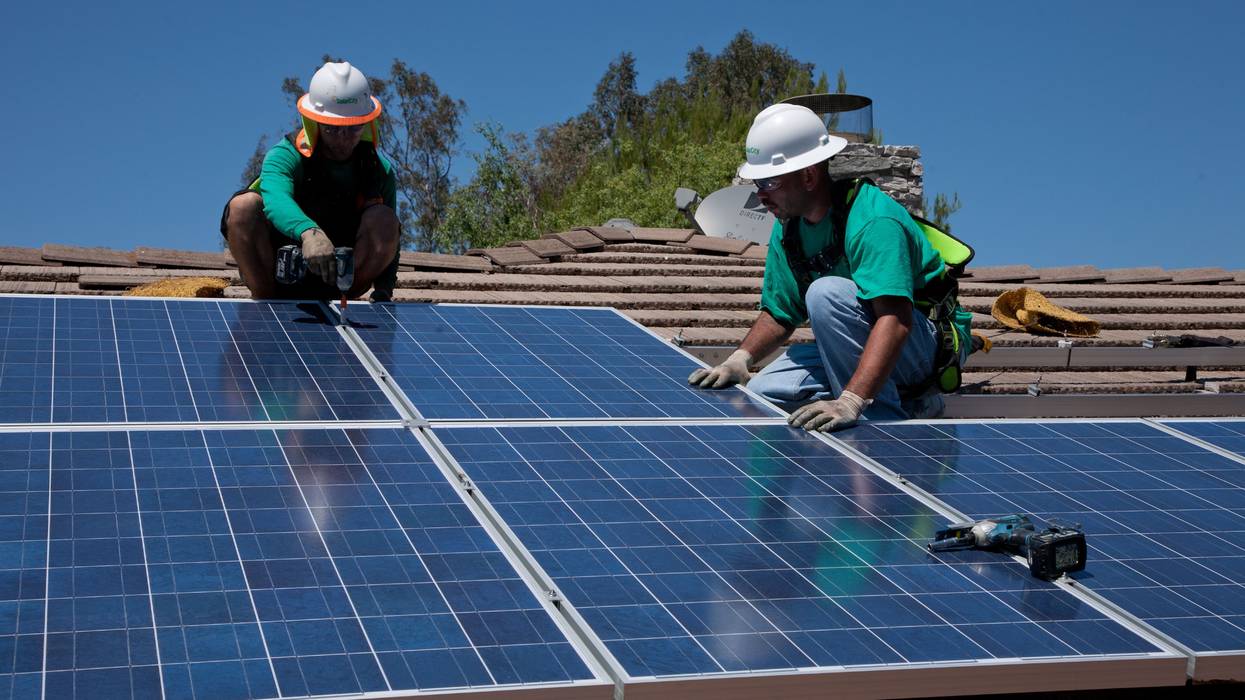
Built on a simple premise to lower energy costs, modernize the grid, and protect consumers where they are most vulnerable, the Energy Bills Relief Act is an urgent path forward that deserves swift passage by Congress.
As tensions in the Middle East once again drive oil prices upward, the ripple effects are hitting household budgets at the worst possible time. While the economy took center stage in 2024 and energy affordability was at the crux of the 2025 elections in Georgia, New Jersey, and Virginia, today, millions of Americans are still opening astronomical utility bills and struggling to make the payments. Nearly 20 million households nationwide are behind on their utility bills, and Americans collectively owe more than $20 billion in unpaid energy costs. If gas prices continue to climb, more families will have to make difficult trade-offs every month just to keep the lights on.
To make matters worse, instead of addressing the cost-of-living crisis, Congress scaled back the very policies designed to expand domestic energy supply, modernize the grid, and lower bills, despite energy prices being a bipartisan priority. Dismantling programs and incentives, such as production credits for wind and solar projects, through the One Big Beautiful Bill, has injected instability into energy markets at precisely the moment when Americans need relief most. With an aging grid that is too old to keep up with rising demand from data centers and electrification, compounded by extreme weather, states are completely unprotected, facing spiraling costs and potential blackouts.
The reality is that a majority of voters support solar energy, as demonstrated by recent polling and GoodPower’s own research, which shows broad support across the ideological spectrum. Even in today’s polarized climate, lawmakers in red and blue states alike have found common ground on protecting ratepayers. Congress came together as recently as 2021 to pass the Bipartisan Infrastructure Law, while historically, federal programs like the Weatherization Assistance Program and ENERGY STAR have drawn long-standing bipartisan support for their focus on lowering costs. We have seen how, when lowering costs is the priority, progress is possible.
That’s why the Energy Bills Relief Act isn’t just welcome, but an urgent path forward that deserves swift passage by Congress. Built on a simple premise to lower energy costs, modernize the grid, and protect consumers where they are most vulnerable, the bill was introduced by Reps. Sean Casten (D-Ill.) and Mike Levin (D-Calif.) to put workers and families at the center of America’s energy future.
The bill is built on tested programs to lower energy bills, strengthen reliability, and protect households from unfair costs.
For one, the legislation would restore incentives for domestic clean energy production, cut permitting delays that hold up critical projects, expand access to community and household solar, and invest in modernizing the grid. We know this strategy works to lower costs. A recent analysis shows that states with more renewable power didn't experience the price spikes seen elsewhere.
Just as important, the legislation cracks down on price gouging by energy companies and prevents the administration from using “energy emergencies” to prolong more expensive, outdated coal plants. It reinforces accountability, ensuring that large new energy users, including massive data centers, contribute to grid upgrades instead of shifting costs onto existing ratepayers. States such as Michigan have already moved in this direction by adopting policies to protect ratepayers from unfair cost allocation, but we need a consistent federal standard. Voters agree, with our polling showing they overwhelmingly show strong support for policies that crack down on price gouging by energy companies (74%).
Some may argue that now is not the time and that there are other policies, but the truth is, we can’t afford to wait. Every year we delay grid upgrades, households pay billions more because of grid congestion, outages, and fuel price swings. These disruptions aren’t mere inconveniences. They impact families’ livelihoods.
The bill is built on tested programs to lower energy bills, strengthen reliability, and protect households from unfair costs. Right now, families care far more about their monthly bills than about partisan victories. If lawmakers are serious about lowering energy bills and helping the American families they claim to serve, advancing this legislation would be a real step forward toward an energy system that is reliable, affordable, and built for the future.
"As costs soar from Trump’s illegal war with Iran, any attempt by big corporations to jack up prices is unacceptable," said Rep. Jan Schakowsky.
Democratic lawmakers are warning corporate America to not use President Donald Trump's unconstitutional war with Iran as an excuse to jack up prices on US consumers.
US Sens. Elizabeth Warren (D-Mass.), Richard Blumenthal (D-Conn.), and Ed Markey (D-Mass.), along with Reps. Jan Schakowsky (D-Ill.) and Chris Deluzio (D-Pa.), sent a letter on Tuesday to the Federal Trade Commission demanding that it investigate and prosecute any unlawful price gouging by corporations during Trump's war, which has raised the cost of oil, gasoline, fertilizer, and other essential goods.
While the Democrats acknowledged that Trump's war created "broad supply chain disruptions and widespread uncertainty in the global economy," they warned that "big corporations may capitalize on this uncertainty to hike prices more than is warranted by actual input cost increases, price gouging everyday Americans while enriching executives and padding investors’ pockets."
The lawmakers accused big corporations in recent years of using assorted crises—including the global Covid-19 pandemic, the 2022 Russian invasion of Ukraine, and Trump's massive "Liberation Day" tariffs on foreign goods—to justify hiking prices beyond what could be warranted by input increases caused by external shocks.
The lawmakers also touted the Price Gouging Prevention Act that they introduced in July 2025 that would expand the authority of the FTC and state attorneys general to stop sellers from charging a "grossly excessive price, regardless of where the price gouging occurs in a supply chain or distribution network."
The proposed bill would also require public companies to "clearly disclose costs and pricing strategies" used to justify any price increases during periods of economic disruption.
In a social media post, Schakowsky said that "as costs soar from Trump’s illegal war with Iran, any attempt by big corporations to jack up prices is unacceptable," emphasizing that "we must crack down on price gouging and protect consumers."
The call to stop price gouging comes as concerns are mounting about the major economic damage that Trump's Iran war could produce.
Larry Fink, CEO of hedge fund BlackRock, predicted during an interview with BBC on Wednesday that there would be a "stark and steep recession" throughout the world if the war dragged on and the price of oil hit $150 per barrel, which he said would raise costs on products everywhere.
"Rising energy prices are a very regressive tax," Fink said. "It affects the poor more than the wealthy, because it's a larger component of their pocketbook."
CNBC reported on Wednesday that forecasters have been increasing their odds of a recession in the US economy this year, as the Iran war puts a strain on oil prices at a time when job growth in the country has already ground to a halt.
"Moody’s Analytics’ model has raised its recession outlook for the next 12 months to 48.6%," wrote CNBC. "Goldman Sachs boosted its estimate to 30%. Wilmington Trust has the odds at 45%, while EY Parthenon has it at 40%, with the caveat that 'those odds could rapidly rise in the event of a more prolonged or severe Middle East conflict.'"

There are real challenges that must be addressed to transition to a clean energy economy while maintaining affordability. And there are difficulties that are intentionally caused by the fossil fuel industry’s insistence on fighting a transition away from dependence on its products.
In California, as in the rest of the country, there is a war going on between two visions of the future. In one we have affordability, sustainability, and democracy. In the other we have poverty, extreme inequality, authoritarianism, and environmental disaster. Movement toward the first is powered by many organizations and a variety of forms of people power. Movement toward the second is powered by the fossil fuel industry, big tech, white nationalism, and the neofascist wing of the Republican Party. Deciding who will win that battle is the most dramatic question of our time.
The fossil fuel industry is a central player in this story. At the federal level, this was exemplified by President Donald Trump choosing the head of ExxonMobil to be secretary of state in his first term. In the run-up to the 2024 election it was exemplified by the $450 million dollars the industry donated to Republican candidates, with $96 million going directly to Trump’s election campaign. We will probably never know the extent of indirect donations. The industry’s centrality to the story is exemplified by the work done to shut down clean energy projects funded by the Biden administration. It is exemplified by the kidnapping of the president of Venezuela to take over that country’s fossil fuel resources. The industry is showing no signs of changing its strategy of putting profits over climate, over affordability, and over democracy.
Here in California we are at the crux of that battle. California is a global leader in making the transition to a clean energy economy. We have some of the strongest environmental legislation in the world. At the same time, California also produces 118 million barrels of oil per year. The fossil fuel industry is the largest contributor to our state’s politicians. The Western States Petroleum Association is the largest political contributor. Chevron is the second largest.
Most of our politicians would like for California to be a leader in building an affordable and sustainable society, and yet the structural limitations imposed by the political power of the fossil fuel industry are making the transition difficult. Finding a way through that contradiction at the core of our politics is an urgent need for those of us wanting to build a just, sustainable society in California.
In this period, environmentalists cannot afford to ignore the issues of energy prices and job loss. But neither can we allow the fossil fuel industry to slow our progress on getting off of fossil fuels.
Californians, like most people in the US, are being squeezed economically. Prices are rising and wages are stagnating. Politicians who focus on affordability are finding deep resonance with voters and the public. Some California politicians are becoming wary of bold climate legislation, out of concern that voters’ struggles with affordability will lead them to blame politicians’ support for clean energy for rising energy prices. Gas prices in California are some of the highest in the country. No Democratic lawmaker wants to be blamed for high energy bills. Gov. Gavin Newsom is more wary of that than anyone, as he positions himself to run for the presidency.
There are real challenges that must be addressed to transition to a clean energy economy while maintaining affordability. And there are difficulties that are intentionally caused by the fossil fuel industry’s insistence on fighting a transition away from dependence on its products. Politicians and advocacy organizations need to be wary of the traps that the fossil fuel industry is laying to prevent the transition to a just, sustainable society. Industry has laid traps by spiking gas prices and blaming environmental regulation for prices and by pretending that environmental laws are bad for labor. As the world weans itself from fossil fuels, it needs to wean itself from the political power of the fossil fuel industry and from its manipulative messaging.
To fight the traps laid by the fossil fuel industry, environmental organizations need to redouble their efforts to build alliances with those in labor who are not beholden to the fossil fuel industry; to work for regulations that prevent industry from spiking gas prices for political reasons; and to work to keep energy affordable. In this period, environmentalists cannot afford to ignore the issues of energy prices and job loss. But neither can we allow the fossil fuel industry to slow our progress on getting off of fossil fuels. In order to work our way through the maze of challenges in this struggle it is important to understand what impacts gas prices and the tools we have to combat the climate crisis while maintaining affordability and protecting democracy.
In California, Chevron stations have QR codes prominently displayed that will take you to a site that will tell you how much of the price of gas can be attributed to taxes. They hope to build political support for lowering those taxes and to put the blame for high gas prices on environmental regulations. On those sites, Chevron fails to tell you the amount of the price that is attributed to profits, or even to the cost of the lobbying they do to convince you they need to be able to continue to despoil our environment.
The price of gas at the pump is driven by many things: 37% of the price of gas in California is set by the price of crude oil on the global market, 25% comes from California taxes and fees, and 4% is from federal taxes. Finally, 33% goes to the fossil fuel industry for refining and distribution costs, and profits.
How much of that 33% that goes to the industry is profits? According to the Environmental Working Group, in 2022, the year of a major price spike that made gas prices a political football, “Four of California refiners posted a combined $72.5 billion in record-breaking windfall profits last year, nearly tripling 2021 profits.”
In 2023 Gov. Newsom called a special session of the legislature to pass a law to limit price gouging. The bill created a new agency, the Division of Petroleum Market Oversight, to monitor profits within the industry. It was supposed to also charge penalties for price gouging, but in 2025 the governor put a 5-year moratorium on that out of fears of backlash from refinery closures.
In 2024 the agency published a report that showed that after accounting for other legitimate reasons for California gas to be more expensive than in other states, between 2015 and 2024 excess profits over industry averages of profits in other states were “$0.41 per gallon, costing Californians $59 billion.” If gas is at $4.10 per gallon now, that means that 10% of the price at the pump can be attributed to excess profits. Excess, or windfall profits, are profits over the industry average.
Californians get good roads and clean air as a result of the 25% of the price of gas that comes from state taxes. They gain nothing positive from the 10% that goes to excess profits for fossil fuel companies.
Gas production in California is complicated by a few factors. One is that we have high clean air standards, so gas cannot easily come from other places. Refiners are able to make excess profits because there are very few of them in the state. They are able to act as an oligopoly. Twenty-nine of California’s refineries closed between 1982 and 2024. At the present moment, 90% of our state’s refining capacity is controlled by four companies. We are in a very, very difficult situation of dependence on those few companies.
As we transition to a just and clean economy, we will see more refinery closures. California is slowly and steadily consuming less gasoline: “In-state consumption of gasoline has been declining since 2017, a trend projected to continue. Californians consumed around 13.8 billion gallons of gasoline in 2021, this is expected to drop to 8 billion by 2030 and to less than 2 billion gallons by the 2040s.”
The state has found a few ways to deal with this difficult situation. In 2024 California Attorney General Rob Bonta won a $50 million settlement with two gas trading firms for price manipulations. That same year the legislature passed ABX21, which required refiners to keep a certain amount of supply on hand to help deal with temporary refinery closures. A longer-term solution may need to involve the state taking refineries over and running them in the public interest to smooth the transition away from the use of fossil fuels.
Refinery closures are good news for the health of people living in the communities near them. They are not such great news for the tax base of those communities or for the people who work at them. There are around 100,000 people employed by the fossil fuel industry in California now, and several thousand have already lost their jobs in recent years.
A major study on a just transition for California was published in 2021. It was done by economists at the Political Economy Research Institute (PERI) and commissioned by the American Federation of State, County, and Municipal Employees Local 3299, the California Federation of Teachers, and the United Steelworkers Local 675. The report lays out in detail the kinds of policies needed to help workers transition to new jobs at comparable pay to what they have had, and what is needed to support the economic viability of communities facing the transition, and ways to pay for a just transition.
As we have learned with Trump, you don't deal with a bully by giving them your sandwich.
One of the most promising ways the state can support displaced refinery workers is by employing them in the work of plugging abandoned wells. In 2022 the state appropriated $20 million to a Displaced Oil and Gas Worker Fund. The 2022 budget included $20 million to train workers to plug oil wells. The state has budgeted $30 million to workforce organizations to retrain refinery workers for new jobs.
It is possible for California to transition to a clean energy economy while maintaining price affordability, good jobs, and a just transition for fossil fuel industry workers and impacted communities. But that possibility will only be a reality if we get the politics of the transition right. If we don't get it right the industry will continue to continue to punish consumers as a way to threaten politicians, while maintaining excess profits.
In October of 2025 Gov. Newsom shepherded through a set of bills aimed at taming energy prices. Some of them were supported by environmentalists and some of them were opposed. The one that was most forcefully opposed by environmentalists was SB 237, which streamlines permitting for oil extraction in Kern County. It supersedes laws that restrict production near communities and ecologically sensitive areas.
In the lead up to that fight a coalition of environmental groups sent a letter to the governor and legislature arguing that there were other ways to deal with the affordability problem. Their argument boiled down to two main points.
The first was that the sooner we reduce our dependency on fossil fuels, the sooner we are freed from the price of gas. We free ourselves from dependence on oil with renewable energy, public transportation, electric vehicles, and charging infrastructure. California is well along the way in making this transition happen.
The other point they made was that there are ways to regulate the fossil fuel industry to prevent it from punishing consumers. Politicians need to lean into and expand ABX21, the bill that requires refiners to keep a certain amount of supply on hand to help deal with temporary closures. The organizations called for the bill to be expanded to prevent future supply shocks.
The other big thing that happened in 2025 was that a bill that would raise money to clean up the mess left behind by the fossil fuel industry was stopped for the time being, in part because politicians were afraid of a backlash by consumers over the price of gas. The Polluters Pay Climate Superfund Act was pulled by supporters when it became clear that legislators, many of whom have been strong environmental allies, did not have the stomach to push the bill forward. Supporters continue to do the groundwork to pass the bill in the future.
That bill would raise money for public goods and would only be paid for by the companies which have caused environmental damage in the state. It would be very good for consumers. But as long as the fossil fuel industry has the power to punish California consumers and blame politicians, the bill is not likely to pass.
For years many in the environmental movement have called for a just transition, where we take seriously the needs of workers whose good union jobs are being displaced in the transition to a clean energy economy. The PERI report of 2021 lays out in detail how that transition could happen with minimal suffering for workers or consumers. But of course the dirty energy industry is not interested in a just transition away from the use of their products. Rather than working to help society wean itself off of its dependence on fossil fuels, the industry has denied the reality of the climate crisis; propagated misinformation; formed alliances with the right wing of labor; and bought politicians willing to use the levers of government to suppress alternatives, stop regulation, and subsidize their dirty energy.
We need to always be sure that we propose solutions that don't benefit one part of society while causing another to suffer.
There are many unions in California ready to fight hard for policies that sit at the intersection of affordability, environment, and democracy. Several of them came out in support of the Polluters Pay Climate Superfund Act. But many unions are wary of supporting anything that labor is not unified on. And part of labor in California is committed to supporting the interests of the fossil fuel industry. The Western States Petroleum Association has an alliance with the Building Trades Council, which advocates for shared interests. The building trades have consistently come out in opposition to environmental legislation, even when there were no jobs the legislation put at risk.
Finding ways to form an alliance between labor and environment that is stronger than the alliance between the Building Trades and WSPA is an important part of freeing California politicians to be able to support moves toward a pro-affordability, democracy, and sustainability agenda.
We are in the middle of a transition from a dirty energy economy that requires political control over geographies, which requires dictators and war, to an economy based on sunshine and wind, which can develop into a sustainable system where no concentrations of power are needed, and where all people can have access to the things they need to live well.
Navigating the bumps and difficult spots in the transition requires us to be very thoughtful about how our work sits at the intersection of affordability, sustainability, and democracy. It requires that we maintain as much solidarity as possible among those who are fighting for a world that works for us all. And it requires that we be proactive in dealing with the political machinations of an industry that will stop at nothing to protect its ability to profit.
Solidarity means we are all in this together, we look for solutions that serve a multiplicity of needs, and use our intersectional lenses to make sure no one is left behind. We need to always be sure that we propose solutions that don't benefit one part of society while causing another to suffer.
One response to refinery closure and rising gas prices is to give industry what it wants and hope that they will not punish the state too much. We can slow the transition and allow industry to continue to profit, allow frontline communities to continue to suffer health impacts, and the climate to be destroyed. The other approach is to challenge industry head on, and risk them causing all sorts of damage in retaliation. As we have learned with Trump, you don't deal with a bully by giving them your sandwich. Bullies need to be taken on directly. But as we are also learning from Trump you need to be smart in how you disarm a bully; you need to be proactive in managing and limiting his ability to retaliate.
Some of the steps we need to take to move through the difficult phase of the transition we are in in California are:
That’s why billionaire techno-fascists are trying so hard to imprison us within their AI-dominated world.
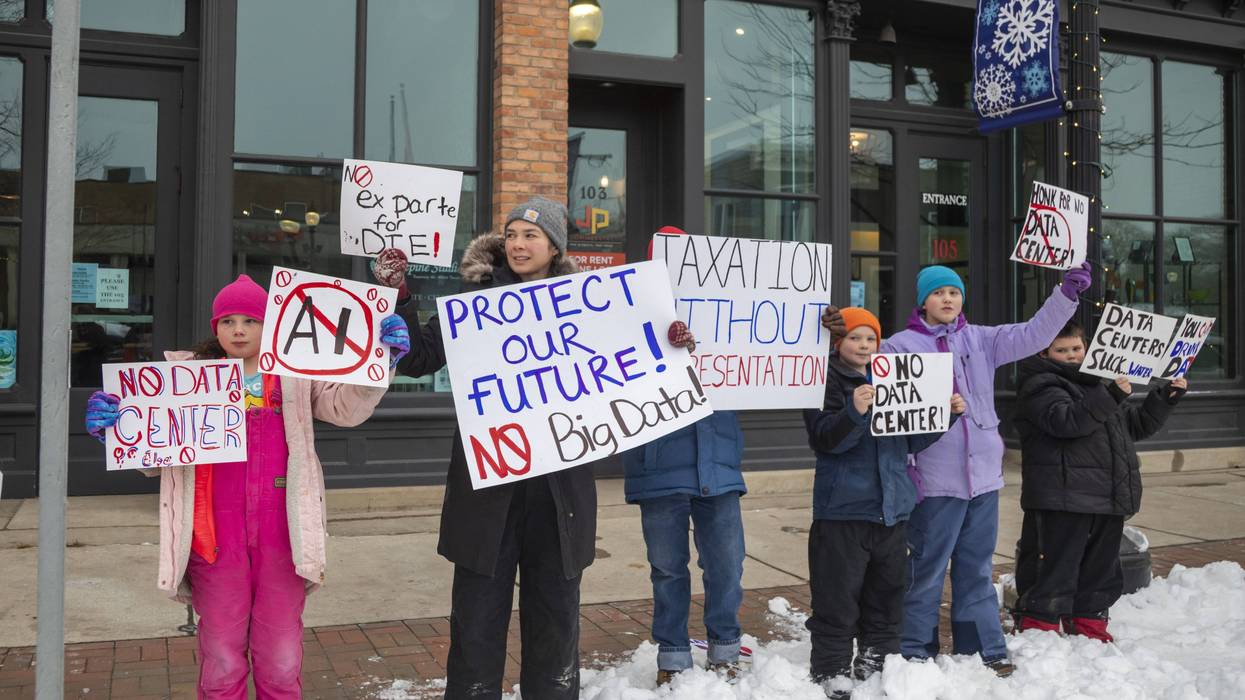
More focus is needed on the downsides of the AI “revolution,” which is better understood as a speculative bubble (built in part through shaky circular financing deals between chip maker Nvidia, cloud provider Oracle, and model builder OpenAI, among others) that’s liable to burst. If and when that happens, OpenAI CEO Sam Altman’s preemptive lobbying for a taxpayer-funded bailout is likely to pay off, leaving the public on the hook. That would be outrageous, of course, considering how much direct and indirect financial support tech giants have already received from federal and state governments, before and throughout the ongoing artificial intelligence frenzy. On the other hand, if AI “succeeds”—destroying millions of jobs, pillaging communities, and despoiling ecosystems in the process—working people will have subsidized our own subjugation. Widespread opposition to planned data centers across the political spectrum suggests that the public understands this.
Here’s a tangible downside: The prices of many essential goods are already rising as a result of the anti-democratic rush to build hyperscale data centers and the growing use of AI programs in numerous sectors. In what follows, we explain how the proliferation of both AI software (i.e., seemingly immaterial computational tools) and hardware (i.e., the resource-intensive and highly polluting infrastructure underpinning those tools) is driving up the costs of necessities now and in the future.
Energy-hungry AI systems require immense amounts of computing power. That’s why tech giants like Amazon, Google, Meta, and Microsoft are investing billions of dollars to expedite the construction of massive, primarily gas-powered data centers across the United States. This AI-driven surge in electricity demand, combined with the Trump administration’s ongoing attacks on renewable energy supply and battery storage, is putting increased strain on the power grid. The result? Higher utility bills.
According to a Bloomberg analysis published in 2025, “Wholesale electricity costs as much as 267% more than it did five years ago in areas near data centers. That’s being passed on to customers.” The rapid development of data centers connected to PJM Interconnection—the largest power grid operator in the United States, serving 67 million customers throughout the Midwest and Mid-Atlantic—increased the cost of procuring electricity by $9.3 billion from June 2024 to June 2025, with expenses only expected to rise further.
If this trend continues and data centers become the majority-users of a utility, then utilities may demand even deeper sacrifices from everyday ratepayers to keep their most powerful customers happy.
Residential ratepayers are shouldering this burden unfairly. As the beneficiaries of state-granted monopolies, for-profit utilities are subject to state regulation of prices. Public utility commissioners are supposed to set rates that enable customers to receive affordable power and utilities to cover operating costs and make enough profit to attract investors to fund infrastructure expansions and upgrades. For years, however, increasingly captured commissioners have been approving rate hike requests that pad the pockets of utility executives and shareholders (to the tune of $50 billion per year in excess profit, according to the American Economic Liberties Project).
Now, there’s mounting evidence that state regulators are subsidizing Big Tech’s out-of-control power consumption by forcing customers to fund discounted rates for data centers. This is a boon for investor-owned utilities, which profit from greater energy use. For the rest of us, it makes it harder to scrape by every month. If this trend continues and data centers become the majority-users of a utility, then utilities may demand even deeper sacrifices from everyday ratepayers to keep their most powerful customers happy.
Earlier this month, the US Centers for Medicare and Medicaid Services (CMS) launched the so-called Wasteful and Inappropriate Service Reduction (WISeR) Model. This pilot program allows six companies in six states to use AI to determine whether traditional Medicare enrollees’ requested medical care should be covered.
Reporting on this AI-powered prior authorization program last year, the New York Times noted that “similar algorithms used by insurers have been the subject of several high-profile lawsuits, which have asserted that the technology allowed the companies to swiftly deny large batches of claims and cut patients off from care in rehabilitation facilities.” Firms tapped to manage the WISeR Model “would have a strong financial incentive to deny claims,” the newspaper observed. “Medicare plans to pay them a share of the savings generated from rejections.”
An early warning that CMS Administrator Mehmet Oz is imposing “AI death panels” aimed at preventing seniors from accessing needed healthcare is apt. It’s also worth stressing that Medicare Advantage and private insurance plans have already been using AI-powered prior authorization, with costly and deadly effects for ordinary people.
Property insurers, too, are increasingly relying on AI to project—with zero transparency and questionable accuracy—climate risks, which is contributing to coverage withdrawals and rate hikes in communities around the United States. According to a recent report from McKinsey & Company, the insurance industry’s growing use of AI has led to “a 10 to 15% increase in premium growth.” While industry profits and executive compensation are on the rise, homeowners and renters alike are being hurt by the declining availability and affordability of home insurance. A climate and insurance-driven foreclosure wave, which would starve municipal budgets and could trigger a broader economic crisis, is a real possibility.
Two shoppers could walk into the same grocery store at the same time and purchase the same product—and yet be charged different prices. This was the conclusion of a recent experiment conducted by Groundwork Collaborative, Consumer Reports, and More Perfect Union. The study, which focused on online grocer Instacart, found that nearly three-quarters of items tested were offered to customers at multiple price points, with an average difference of 13% between the lowest and highest prices.
What the hell are we doing building ruinous housing for super-computers when we could—and should—be building healthy housing (and clean energy and mass transit) for people?
How is this possible? Unfortunately, this increasingly common practice of “surveillance pricing” is the logical outcome of allowing rent-seeking firms to transform our personal data into an asset that can be endlessly mined. AI is turbocharging this phenomenon, from RealPage’s rent-gouging software to Delta Air Line’s use of Fetcherr, an AI-fueled pricing technology.
AI is already wreaking profound havoc on public and environmental health. The rare earth elements used in the microchips that power AI systems tend to be mined in ecologically harmful ways. Data center construction implies habitat destruction, and completed facilities produce significant amounts of toxic electronic waste, which typically contains mercury, lead, and other hazardous materials. Data centers consume tremendous amounts of water, sometimes dispossessing local residents of access in the process. Making matters worse, Big Tech’s quest for cheap electricity is leading it to build data centers in all kinds of places, including drought-stricken states like Arizona and Nevada, compounding preexisting water shortages.
Moreover, most data centers are being powered by planet-heating fossil fuels, especially methane gas. In addition, forecasted AI-related energy shortfalls are leading utilities to keep aging coal plants running and even to revive particularly dirty “peaker” plants, while the use of on-site diesel generators is also growing.
On top of the fact that fossil fuel-powered data centers spew heat-trapping gasses into the atmosphere, research has shown that AI degrades air quality in other ways. Specifically, across its full lifecycle—from chip manufacturing to data center operation—AI contributes to the emission of fine particulate matter or soot, sulfur dioxide, and nitrogen dioxide. These pollutants are linked to numerous adverse health impacts, including lung cancer, asthma, heart attacks, cardiovascular disease, strokes, cognitive decline, and premature mortality. One study estimates that data centers are on track to account for at least 1,300 premature deaths and $20 billion in public health-related costs per year in the United States by 2030. These deleterious consequences are poised to hit already-disadvantaged populations the hardest. That includes the low-income, predominantly Black neighborhoods currently fighting back against Elon Musk’s xAI data centers in South Memphis.
What the hell are we doing building ruinous housing for super-computers when we could—and should—be building healthy housing (and clean energy and mass transit) for people? The opportunity costs of supporting Big Tech’s AI data center buildout are striking.
A new analysis from the Rhodium Group estimates that for the first time in two years, US greenhouse gas emissions increased in 2025. The 2.4% uptick in national GHG pollution was driven in large part by data centers and crypto mining. This regressive form of economic development is destabilizing the climate and leaving people less materially secure. It is also being pursued as a reactionary alternative to green economic populism.
It seems clear that a major reason why the ruling class is so heavily invested in AI’s triumph is because they dream of burying organized labor and worker demands once and for all.
Despite recent efforts to decouple climate and affordability, the two issues remain inextricably linked. There’s mounting evidence that climate inaction is exacerbating the cost-of-living crisis. The best way forward is to fight for policies that would simultaneously decarbonize and democratize our society, to confront climate chaos and grotesque inequality at the same time.
Failing to do so, as we are now amid AI-mania, will only lock-in more fossil fuel pollution, thus aggravating extreme weather and with it, supply chain disruptions and price shocks. Current and future generations will be forced to endure a more brutish and expensive world full of economic insecurity and uneven, but rampant, suffering.
Some AI-related costs have not yet been realized. But if Silicon Valley oligarchs succeed in empowering firms all across the economy to eliminate jobs (and deskill further pockets of the workforce), skyrocketing unemployment would empower bosses to suppress wages. It seems clear that a major reason why the ruling class is so heavily invested in AI’s triumph is because they dream of burying organized labor and worker demands once and for all. Meanwhile, the collision of declining pay and rising prices would push more and more people closer to the brink.
How are people supposed to enjoy the leisure time ostensibly provided by AI advancements if they can’t afford basic necessities? Is rapid access to information a net-positive no matter the quality of that information? Isn’t it more likely that society’s capacity for critical thinking will be further degraded? And if we deprive the next generation of literacy while immersing them in a poisoned information ecosystem, doesn’t that increase the likelihood that authoritarian demagogues will retain power?
That’s why billionaire techno-fascists are trying so hard to imprison us within their AI-dominated world. Whether by preempting regulation of AI inside existing borders or violently establishing new, regulation-free jurisdictions where they can impose their will, a tiny class of digital overlords and their political allies are seeking to end democracy so they can extract rents with no constraints. We can’t afford to let their dystopian vision become reality.
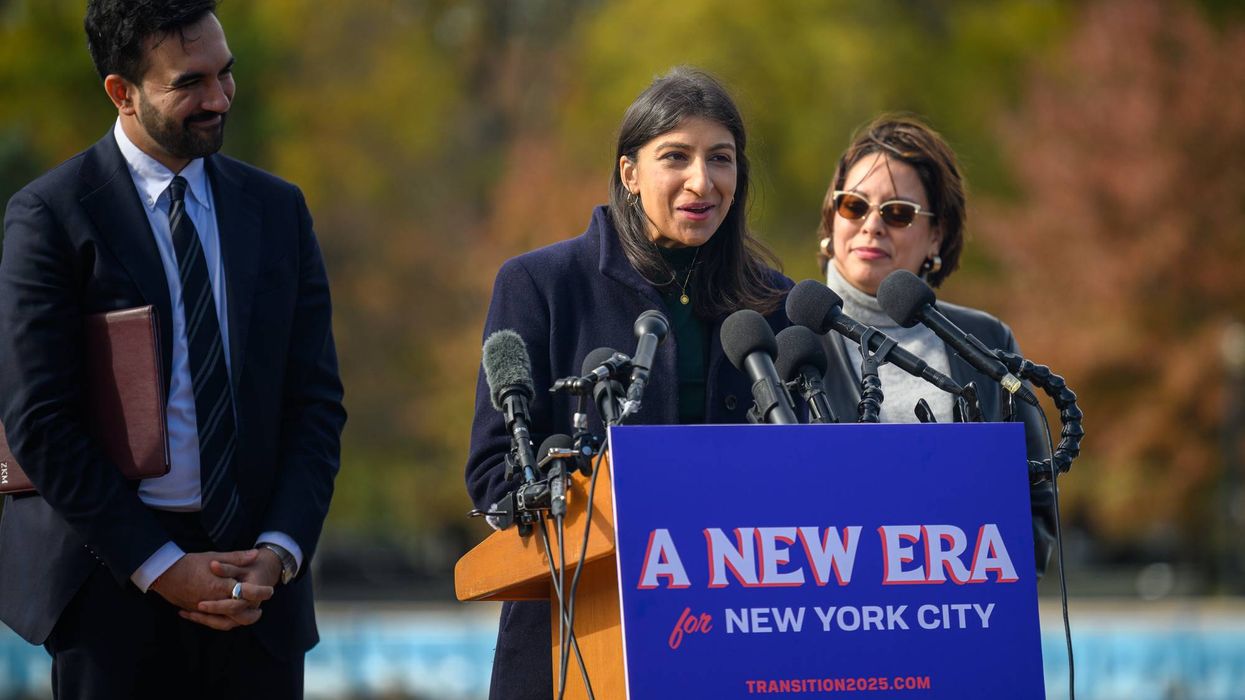
Khan and members of her team are reportedly "dusting off a little-used 1960s price-gouging statute" in an effort to bolster the mayor-elect's affordability push in New York City.
Former Federal Trade Commission chair and antitrust trailblazer Lina Khan is reportedly poring over New York City's laws to help Democratic Mayor-elect Zohran Mamdani fulfill the central promise of his campaign: making the metropolis more affordable.
According to the New York Times, Khan—in her capacity as co-chair of the mayor-elect's transition team—"has spent weeks scouring New York City’s laws to find dormant or underused mayoral authority that could allow Mr. Mamdani to take action in a hurry."
Potential actions "include specific attempts to drive down apartment rental fees and utility costs and compel businesses to be more transparent about pricing," as well as "dusting off a little-used 1960s price-gouging statute and policing new protections for food delivery workers," the Times reported, citing three unnamed people familiar with internal discussions.
As head of the FTC under former President Joe Biden, Khan took groundbreaking legal action against major corporations such as Amazon and, in the words of one antitrust advocacy group, "reinvigorated enforcement of the Robinson-Patman Act, a long-dormant law designed to prevent price discrimination by big corporations, through two separate cases against PepsiCo and Southern Glazer’s—major victories for smaller and independent businesses."
Khan, according to the Times, hopes to spur similar action in New York City. Members of her team, which includes former federal regulators, have "studied a 1969 consumer protection law meant to prohibit 'unconscionable' business tactics, to potentially target hospitals and sports stadiums where consumers typically have little choice but to pay high prices for products that are cheaper elsewhere."
Additionally, the newspaper reported, "they have looked at whether food delivery companies, which wield significant power in the city, are complying with laws that protect their drivers, and whether landlords are complying with a newly enacted law barring many real estate brokers from collecting thousands of dollars in fees."
Douglas Farrar, a spokesman for Khan, told the Times that the former FTC chair and her team have "worked closely" with the Mamdani transition "to provide key research support on ideas for hitting the ground running."

"Instacart is far from the only corporation using AI technologies to determine exactly how much profit they can extract from their customers by overcharging them," said the executive director of Groundwork Action.
The watchdog group that exposed Instacart's artificial intelligence pricing scheme is rejoicing after the company announced on Monday that it was ending the controversial program.
Earlier this month, Consumer Reports joined the Groundwork Collaborative and More Perfect Union to report that the grocery shopping app—which calls itself the "largest online grocery marketplace in North America"—was using the AI pricing software Eversight to charge up to 23% more for some customers than others for the same items, subjecting users to a "pricing experiment" that could cost them as much as $1,200 extra each year.
The Federal Trade Commission (FTC) took notice of the report, saying it was "disturbed" by the findings, and launched an investigation on Thursday, which caused the company's stock price to plummet by about 7%. It also attracted attention from members of Congress, including Senate Minority Leader Chuck Schumer (D-NY), who demanded government action on what he called "shakedown pricing."
Instacart agreed that same day to pay the FTC $60 million in a settlement for what the commission said was "a variety of deceptive tactics that misled consumers and caused them to pay more in fees." These included falsely advertising "free delivery" to consumers on their first order, implying that customers would receive a full refund if they were dissatisfied with their delivery, and failing to disclose membership charges.
The settlement does not mention Instacart's use of AI pricing experiments, but on Monday, the company said it would hit the brakes on that as well, following customer backlash.
"Effective immediately, Instacart is ending all item price tests on our platform. Retailers will no longer be able to use Eversight technology to run item price tests on Instacart," the company said in a statement. "Now, if two families are shopping for the same items, at the same time, from the same store location on Instacart, they see the same prices—period."
While it acknowledged that the pricing scheme "missed the mark for some customers," the company maintains that it was not using "dynamic pricing or surveillance pricing" and that it was not changing prices "based on supply or demand, personal data, demographics, or individual shopping behavior."
Alex Jacquez, Groundwork's chief of policy and advocacy, celebrated on social media that "Instacart has ended all item pricing experiments on its platform," calling it a "big win for consumers."
Groundwork Action's executive director, Lindsay Owens, likewise took pride in the fact that "once we pulled back the curtain on Instacart’s hidden pricing experiments, the company had no choice but to close the lab," but also said "it shouldn’t take investigative research, public outcry, and the threat of FTC action to convince companies not to treat consumers like lab rats."
"Instacart is far from the only corporation using AI technologies to determine exactly how much profit they can extract from their customers by overcharging them," she added.
Though the investigation did not find evidence that Instacart was using these methods, other companies—including Amazon, Delta Air Lines, and Home Depot—have been accused of fluctuating prices for consumers based on ZIP code or income level.
Owens said, "It’s time for regulators to put a stop to corporate pricing schemes and take action to restore fair, predictable, and transparent pricing.”