SUBSCRIBE TO OUR FREE NEWSLETTER
Daily news & progressive opinion—funded by the people, not the corporations—delivered straight to your inbox.
5
#000000
#FFFFFF
To donate by check, phone, or other method, see our More Ways to Give page.


Daily news & progressive opinion—funded by the people, not the corporations—delivered straight to your inbox.
"Our bipartisan movement in defense of civil liberties is holding strong," a Demand Progress campaigner said after Congress passed a short-term extension to continue talks on a longer renewal.
Just a day after Democrats in the GOP-controlled US House of Representatives helped Republicans send a major spying bill to the Senate, despite warnings that it was dead on arrival there, both chambers on Thursday passed a 45-day extension to continue negotiations.
The Senate approved the stopgap bill for Section 702 of the Foreign Intelligence Surveillance Act (FISA)—which allows the federal government to spy on electronic communications of noncitizens located outside the United States without a warrant—by a voice vote. The House signed off with a 261-11 vote, just hours before a previous short-term extension was set to expire.
President Donald Trump and his homeland security adviser, Stephen Miller, have been demanding a "clean" extension of the program, while critical lawmakers from both parties and over 100 civil society groups have called for privacy reforms to protect Americans whose data is swept up in federal surveillance efforts.
Hajar Hammado, senior policy adviser at Demand Progress, one of the organizations leading reform calls, said in a Thursday statement that "intelligence agencies, the White House, and their allies in Congress have tried every trick in the book from fearmongering to misinformation, but they still can't get their warrantless FISA reauthorization across the finish line."
"The reason we keep ending up at this point is congressional leaders' refusal to allow votes on overwhelmingly popular, bipartisan reforms," she continued. "This 'my way or the highway' approach needs to stop."
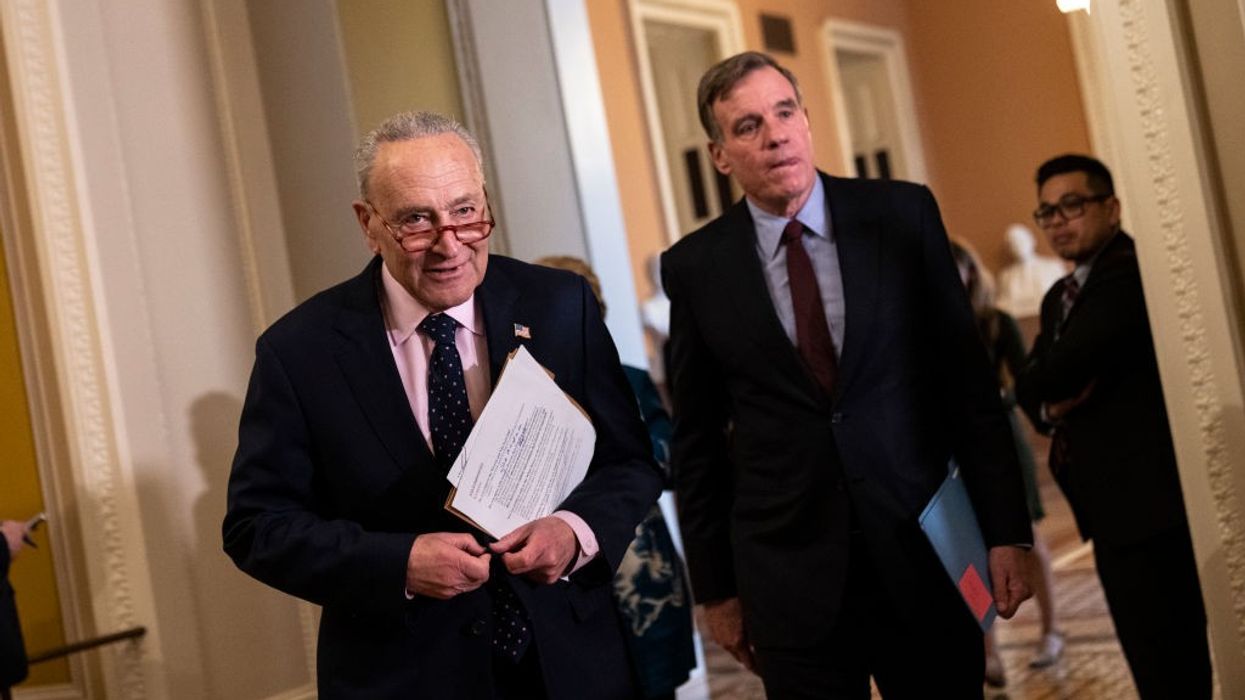
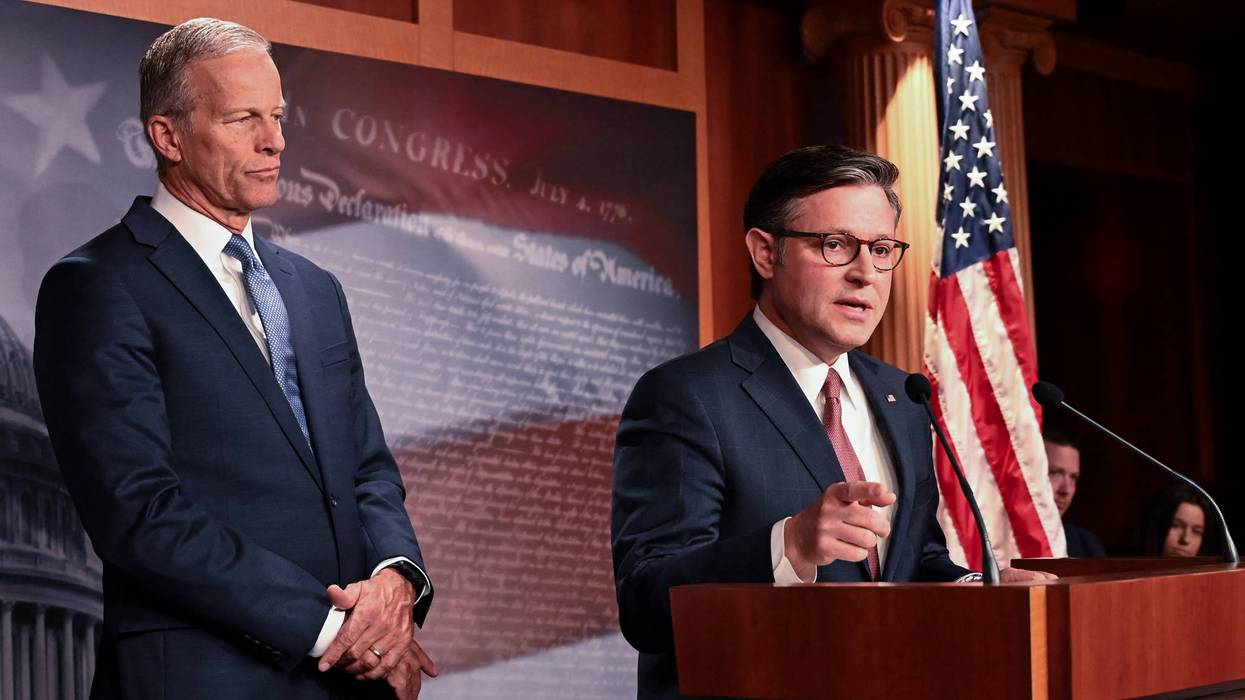
According to Politico, US Senate Majority Leader John Thune (R-SD) told reporters on Thursday that he and House Speaker Mike Johnson (R-La.) discussed the short-term extension during a closed-door meeting the previous day.
"I think there's already a pretty substantial dialog going on" between key Democrats and Republicans in both chambers, Thune added. "We're interested in looking at some ways in which it can be reformed... So we're entertaining those ideas at the moment."
Hammado declared that "when Congress returns, Speaker Johnson and Leader Thune must allow votes on amendments for real privacy protections or we'll keep repeating this farce over and over again. Our bipartisan movement in defense of civil liberties is holding strong, and we won't accept anything less."
Sen. Ron Wyden (D-Ore.), a longtime defender of privacy rights who had threatened to block the extension, highlighted on social media Thursday that he "secured a commitment that the FISA court opinion revealing abuses of Americans' rights will be DECLASSIFIED before Congress votes on reauthorization."
"The more Americans know about these abuses," he said, "the more they'll demand real reforms."
"It was these Democrats' responsibility to stand up against this administration, and they voted to stand down instead," said one campaigner.
Dozens of Democrats in the Republican-controlled US House of Representatives helped the GOP send a key spying bill to the Senate on Wednesday, earning sharp condemnation from the diverse movement that has called for privacy reforms.
The House voted 235-191 in favor of the bill released last week by Speaker Mike Johnson (R-La.), who has been trying for months to get an extension of Section 702 of the Foreign Intelligence Surveillance Act (FISA) to President Donald Trump's desk.
FISA's Section 702 allows the US government to surveil electronic communications of noncitizens located outside the United States to acquire foreign intelligence information, without a warrant. However, Americans' data is also swept up, and civil society, along with some lawmakers from both major parties, has demanded reforms to prevent further abuse by federal agencies.
In the lead-up to the vote, progressives such as Rep. Ilhan Omar (D-Minn.) warned that "this bill has no meaningful reforms to stop warrantless surveillance, directly undermining the Fourth Amendment" to the US Constitution, which is supposed to protect Americans against unreasonable searches and seizures.
Another "Squad" member, Rep. Rashida Tlaib (D-Mich.), took to the House floor to blast Section 702 as "a dangerous mass surveillance tool" that "has been used to spy on Black Lives Matter protesters, members of Congress, journalists, and more."
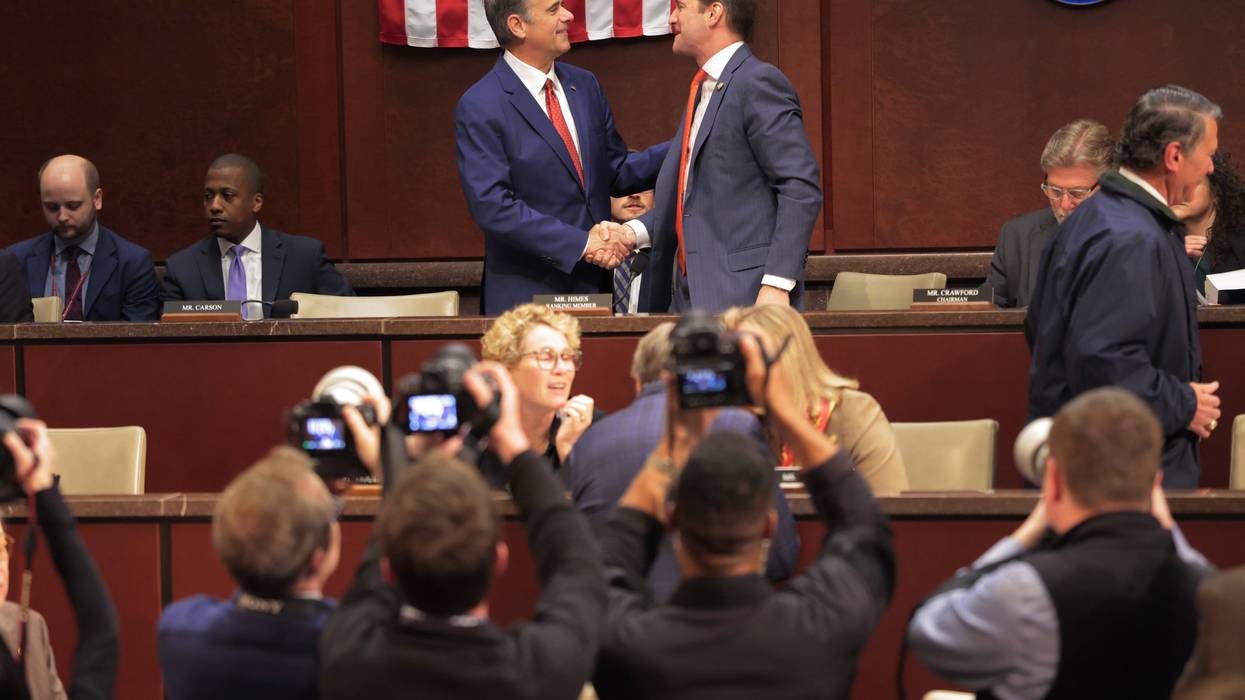
However, 42 Democrats—including House Permanent Select Committee on Intelligence Ranking Member Jim Himes (Conn.)—still joined most House Republicans in advancing the legislation.
In addition to Himes, the Democrats who voted for the bill are Pete Aguilar (Calif.), Ami Bera (Calif.), Sanford Bishop (Ga.), Nikki Budzinski (Ill.), Janelle Bynum (Ore.), Ed Case (Hawaii), Kathy Castor (Fla.), Gil Cisneros (Calif.), Herb Conaway (NJ), Henry Cuellar (Texas), Don Davis (NC), Lois Frankel (Fla.), Laura Gillen (NY), Jared Golden (Maine), Vicente Gonzalez (Texas), Josh Gottheimer (NJ), Josh Harder (Calif.), Chrissy Houlahan (Pa.), Steny Hoyer (Md.), Greg Landsman (Ohio), Susie Lee (Nev.), Kristen McDonald Rivet (Mich.), Jared Moskowitz (Fla.), Frank Mrvan (Ind.), Donald Norcross (NJ), Marie Gluesenkamp Perez (Wash.), Scott Peters (Calif.), Mike Quigley (Ill.), Josh Riley (NY), Brad Schneider (Ill.), Kim Schrier (Wash.), Terri Sewell (Ala.), Eric Sorensen (Ill.), Darren Soto (Fla.), Marilyn Strickland (Wash.), Tom Suozzi (NY), Derek Tran (Calif.), Gabe Vasquez (NM), Marc Veasey (Texas), Debbie Wasserman Schultz (Fla.), and George Whitesides (Calif.).
"It's incredibly disappointing the House approved this measure," said Jake Laperruque, deputy director of the Center for Democracy and Technology's Security and Surveillance Project, in a statement. "This bill is empty calories through and through. It contains no warrant for querying Americans' messages, and no meaningful reforms of any kind. The razor-thin procedural vote this afternoon makes clear that there's an appetite for reform, but House leadership took meaningful reforms off the menu."
"There is nothing in this bill that would have prevented the abuses of FISA 702 we've already seen—snooping on lawmakers, protesters, and campaign donors—and there is nothing that would stop even worse abuses in the future. A vote for this bill was a vote to give the FBI and other intelligence agencies a three-year blank check for surveillance abuse."
Hajar Hammado, senior policy adviser at Demand Progress—which helped convene over 100 artificial intelligence, civil rights, and other progressive groups pressuring Congress to include privacy protections in any renewal bill for the spying power—took aim at the House Democrats who supported the legislation.
"The 42 Democratic votes to advance Speaker Johnson and Donald Trump's surveillance agenda are dangerous and shameful," she declared.
"These Democrats defied their constituents and common sense to undercut meaningful privacy reforms in the House and instead voted to hand over sweeping spy powers to the Trump administration," she stressed. "This means continuing warrantless backdoor searches and allowing an increasing number of federal agencies to exploit the data broker loophole to supercharge AI and fuel mass domestic surveillance."
Hammado said that "their vote today has major consequences, as even 22 Republicans put principles over politics and voted against renewing FISA without warrant protections. It was these Democrats' responsibility to stand up against this administration and they voted to stand down instead."
While stressing that "no administration should have these powers," Free Press Action advocacy director Jenna Ruddock directed attention at "the champions for a clean extension of Section 702 in the Trump administration in particular," including the president's homeland security adviser, Stephen Miller.
"Stephen Miller has advocated against reforms to Section 702, claiming it is critical to his and Trump’s homeland security agenda, even as members of the administration refer to political opponents as 'enemies within,'" she noted. "Today, 42 Democrats joined 192 Republicans to co-sign Donald Trump and Stephen Miller's domestic surveillance agenda, jeopardizing the civil rights and liberties of every person in the United States."
Zeteo News reporter Prem Thakker pointed out that House "Democratic leadership did not whip their members, enabling them to vote with Republicans and give Trump the surveillance powers."
While calling out the House Democrats who backed the bill, campaigners also set their sights on the Senate, where Punchbowl News reporter Anthony Adragna predicted that "it's DOA," or dead on arrival. Republicans have a slim majority in the chamber and, due to its rules, need at least some Democratic support to pass most bills, including this one.
A key issue is the central bank digital currency ban included in the House bill. Senate Majority Leader John Thune (R-SD) told reporters on Wednesday that he may try to pass a 45-day extension instead. After a recent short-term extension, the spying authority is set to expire Thursday night.
"Now the fight moves to the Senate, where privacy champions in both parties are gearing up to try and stop this reckless giveaway to the surveillance state," Hammado said. She urged members of the upper chamber to join "bipartisan reformers" like Sens. Dick Durbin (D-Ill.), Mike Lee (R-Utah), Rand Paul (R-Ky.), and Ron Wyden (D-Ore.) "in voting against any FISA measure that lacks real reforms like a warrant requirement to close the backdoor search and data broker loopholes."
Laperruque similarly said that "we hope senators will stand strong and reject this dangerous proposal."
Ruddock highlighted that "there is bipartisan legislation already introduced in both the House and Senate that would make desperately needed reforms to government surveillance powers."
"The Senate should reject the fake reforms in the current House bill and demand a vote on real reforms to Section 702, including a warrant requirement, and closing the data broker loophole," she said. "Our constitutional rights depend on it."
This article has been updated to include the names of the Democrats who voted for the bill.
"We won't stop fighting for a self-evident truth: The government should not be able to bypass the courts to surveil Americans," said one privacy campaigner.
A controversial federal spying power is set to expire next week, but Republican leadership in the US House of Representatives again delayed a reauthorization vote on Wednesday amid persistent demands for reforms from across the political spectrum.
President Donald Trump is pushing for a "clean" 18-month extension of Section 702 of the Foreign Intelligence Surveillance Act (FISA), which allows for warrantless spying on the electronic communications of noncitizens located outside the United States.
House Speaker Mike Johnson (R-La.) "canceled a vote scheduled for Wednesday evening... amid a hard-liner rebellion, making it more likely the program could expire in five days—but said the House would try again Thursday," Politico reported.
As for whether there would be the necessary votes on Thursday to adopt a rule to proceed to consideration of the bill, Johnson said: "I think we will... We're working through some final details."
Although GOP leaders are plowing ahead with their reauthorization effort, Demand Progress senior policy adviser Hajar Hammado still welcomed the delay, declaring that "this time, fearmongering was not enough to overcome a bipartisan movement fighting for the privacy rights of all Americans."
"We rarely ever see the full force of the White House and the intelligence agencies fail to browbeat Congress into giving them what they want," Hammado noted. "That this happened today is a testament to the tireless work of our movement, which has been successfully bringing Republicans, Democrats, and Independents together for a common cause."
"Of course, this fight is nowhere near over," she added. "Speaker Johnson can still force a vote any time with extremely short notice, but our coalition feels the wind at our backs, and we won't stop fighting for a self-evident truth: The government should not be able to bypass the courts to surveil Americans."
Hammado's group has been a leader in the growing coalition calling for reforms—including for lawmakers to close the "data broker loophole" that intelligence and law enforcement agencies use to buy their way around the Fourth Amendment to the US Constitution, which is supposed to protect Americans against unreasonable searches and seizures.
It's not just congressional Republicans under pressure. Demand Progress Action and Fight for the Future took aim at House Intelligence Committee Ranking Member Jim Himes (D-Conn.)—who has signaled that he will support renewal and vote against adding privacy protections—with a Sunday print advertisement in the Connecticut Post.
We teamed up with @demandprogress.bsky.social to call out @jahimes.bsky.social for supporting Trump's mass surveillance efforts by trying to push through Section 702 without reform.
[image or embed]
— Fight for the Future (@fightforthefuture.org) April 14, 2026 at 8:38 PM
On Tuesday, Congressional Asian Pacific American Caucus Chair Grace Meng (D-NY), Congressional Hispanic Caucus Chair Adriano Espaillat (D-NY), and Congressional Progressive Caucus Chair Greg Casar (D-Texas) spearheaded a letter to Democratic and Republican leaders in both chambers arguing that "this authority ought to include meaningful Fourth Amendment protections for Americans in its renewal package."
"The Trump administration has demonstrated an unparalleled appetite for collecting and exploiting Americans' personal data," the caucus leaders and members wrote. "The administration has built profiles on American citizens, demanded that artificial intelligence (AI) companies assist in mass domestic surveillance, and paid hundreds of millions of dollars to build a megadatabase of Americans' personal data. Without independent guardrails on Section 702, this administration has
repeatedly shown that it cannot be trusted to police its own use of this sweeping surveillance authority."
Over 30 civil society organizations—including Demand Progress, Fight for the Future, Indivisible, Project On Government Oversight, RootsAction, and more—endorsed the congressional letter. POGO policy counsel Donald Bell commended the leadership of the caucuses "in seeking real guardrails and accountability that protect our constitutional rights," while Hammado urged "all members of Congress to follow the lead" of the three groups.
Meanwhile, The American Prospect reported Monday that "the Congressional Black Caucus will quietly support an effort to reauthorize surveillance powers that were used to spy on Black Lives Matter activists in 2020," which "comes after Rep. Gregory Meeks (D-NY), the powerful ranking member of the House Committee on Foreign Affairs, successfully lobbied CBC leadership to stand down on reforming the vast intelligence authority."
After publication, Meeks told the outlet that "I support FISA reauthorization, but the only vote I've been whipping is my war powers resolution to end the war in Iran. Whip operations are traditionally conducted by the ranking member of the committee that has jurisdiction over the legislation being considered. Any claim that I'm whipping the CBC on FISA is false."
In response to that reporting,Re Access Now, Fight for the Future, and STOP Spying NYC said in a joint statement that "if the heat of the glares aimed at Rep. Meeks right now could melt him, he'd be dripping like a snowman on the pavement in July. No one in Queens wants everybody in the federal government to have total access to the intimate details of their lives with the tap of a mouse."
Highlighting the danger of continuing the spying power sans privacy protections as Trump's Immigration and Customs Enforcement officers roam US streets, the groups said that "it is a total betrayal of the Fourth Amendment and the dignity of everyday people in this country to treat us all as if we are guilty until Big Brother Trump proves us innocent by watching our every move. And worse—it's impossible to predict how these troves of records may be weaponized in the future against racial justice activists, trans and queer families, abortion patients and providers, anti-war activists, or anyone who acts out of step with MAGA."
"It's supposed to be the Foreign Intelligence Surveillance Act, not the Forever Indiscriminate Surveillance Act. Rep. Meeks' colleagues are proposing real safeguards to protect people against this indiscriminate government surveillance," the trio added. "He is not only failing his constituency, he is disrespecting them and putting them in danger. It's not too late for Rep. Meeks to get on the right side of history."