

SUBSCRIBE TO OUR FREE NEWSLETTER
Daily news & progressive opinion—funded by the people, not the corporations—delivered straight to your inbox.
5
#000000
#FFFFFF
To donate by check, phone, or other method, see our More Ways to Give page.
Daily news & progressive opinion—funded by the people, not the corporations—delivered straight to your inbox.
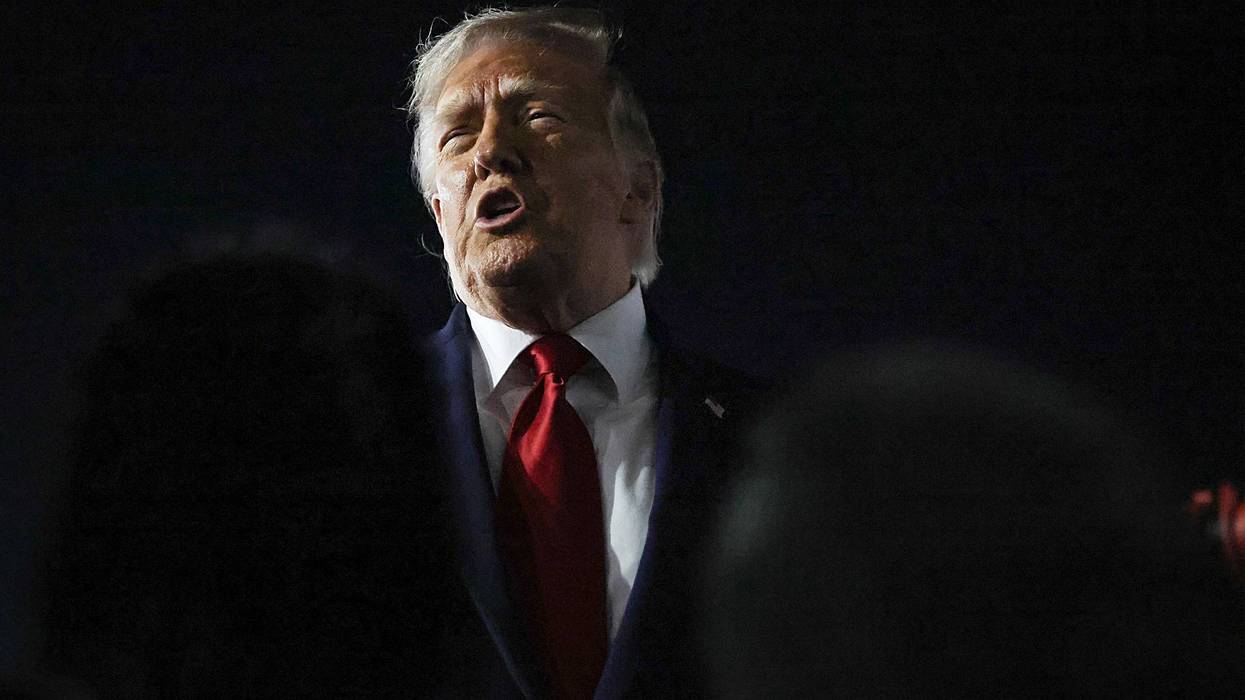
This is now the second time Trump has derailed renewal of FISA’s Section 702, which US intelligence agencies have widely abused to spy on Americans without a warrant.
President Donald Trump threw a wrench into bipartisan efforts to renew the federal government's widely abused warrantless spying powers on Wednesday by demanding it be paired with the passage of Republicans' voter suppression legislation.
In a Truth Social post, Trump announced that he would not approve the renewal of Section 702 of the Foreign Intelligence Surveillance Act (FISA) "without THE SAVE AMERICA ACT going along with it," a reference to Republican-backed legislation that would create nationwide voter ID and proof-of-citizenship requirements.
Passing the SAVE America Act, which critics have warned could be used to disenfranchise millions of eligible voters, would require scrapping the filibuster in the US Senate, and Senate Majority Leader John Thune (R-SD) has said that there are not enough votes in his caucus to make this happen.
This is now the second time Trump has derailed renewal of FISA's Section 702, which allows for warrantless spying on noncitizens located outside the US. Intelligence agencies have routinely used the authority, which lapsed over the weekend, to collect Americans’ data without a warrant.
Earlier this month, Trump appointed Federal Housing Finance Agency Director Bill Pulte to be his acting director of national intelligence (DNI). Many critics expressed horror at Pulte's appointment, given that he has no experience working in intelligence and has been instrumental in pushing the US Department of Justice to prosecute the president's political enemies.
This led many Senate Democrats, including Senate Intelligence Committee vice-chairperson Mark Warner (D-Va.), to withdraw their support for a FISA extension until the president nominated a more acceptable permanent replacement for outgoing DNI Tulsi Gabbard.
FISA renewal appeared to be back on track last week after Trump nominated Jay Clayton, former chairman of the Securities and Exchange Commission, to be DNI.
However, in the same Truth Social post where Trump announced his intent to veto a FISA extension without the SAVE America Act, the president said that he was "canceling" Clayton's scheduled Wednesday Senate hearing.
Senate Intelligence Committee Chair Tom Cotton (R-Ark.) announced shortly after Trump's post that the hearing for Clayton would still take place unless the president formally pulled the nominee.
"Jay Clayton is a pending nominee before the Intelligence Committee," Cotton wrote in a social media post. "We will proceed with his hearing as scheduled unless the president directs him not to appear or withdraws his nomination."
According to The New York Times, the latest chaos and drama caused by Trump "all but guarantee that Mr. Pulte... would take the job at the end of this week as the acting director of national intelligence."
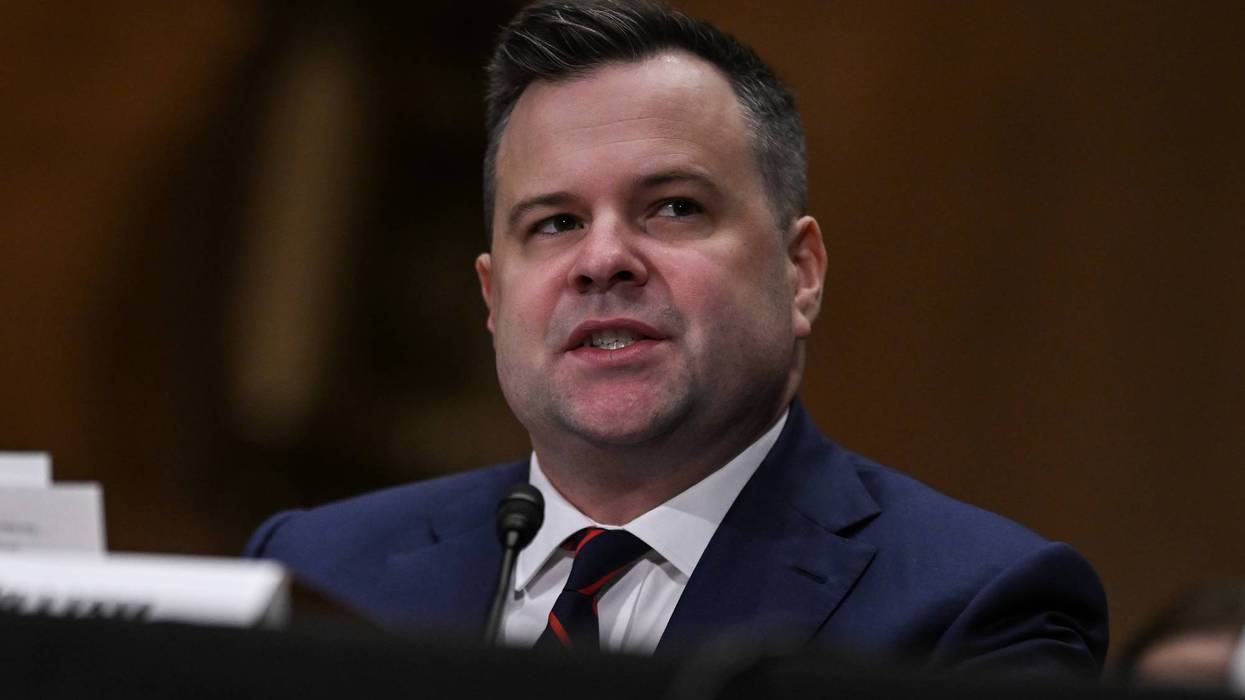
"There is a path to reauthorizing FISA, but it will require enacting meaningful reforms," said House Democratic leaders.
After privacy advocates in Congress blocked proposed extensions of an expiring federal spying power on Thursday over a lack of reforms and concerns about newly appointed acting Director of National Intelligence Bill Pulte, President Donald Trump announced a different man as his official nominee for the post.
"I am pleased to announce the Nomination of very Highly Respected Jay Clayton, former Chairman of the Securities and Exchange Commission, the former Head of Sullivan & Cromwell, one of the most prominent and successful Law Firms anywhere in the World, and the current United States Attorney for the Southern District of New York, to be the next Director of National Intelligence and, importantly, to serve in my Cabinet," Trump wrote on Truth Social. "Few people anywhere in the Legal Community are respected at the level of Jay. I encourage the United States Senate to confirm Jay as soon as possible."
Trump's announcement came shortly after Senate Republicans' unsuccessful requests for unanimous consent to extend Section 702 of the Foreign Intelligence Surveillance Act (FISA)—which lets the US government spy on electronic communications of noncitizens located outside the country without a warrant—and a failed vote in the GOP-controlled House of Representatives.
"If Trump had announced this last night, or even this morning, it could've helped avoid a FISA/702 lapse," Punchbowl News reporter Andrew Desiderio said of Clayton's nomination. "Now the House is gone (and out next week) and the Senate is holding its final vote of the week right now—but most senators have already voted and dashed to the airport."
House Democratic leaders who opposed the extension pointed to Trump's appointment of Pulte following Tulsi Gabbard's recent announcement that she's resigning from the Office of the Director of National Intelligence (ODNI). As Federal Housing Finance Agency director, Pulte has sent criminal referrals to the US Department of Justice, alleging mortgage fraud by four of the president's political foes.
The Senate is due back on Monday, but Minority Leader Chuck Schumer (D-NY) told reporters after the Clayton announcement that it "doesn't matter what else they do, Pulte's got to be gone. He's still in that role."
Meanwhile, the top Democrats on the intelligence panels in both chambers of Congress, Vice Chair Mark Warner (Va.) and Ranking Member Jim Himes (Conn.), praised Clayton. Sean Vitka, executive director at Demand Progress—a leader in the massive coalition of civil society groups demanding FISA reforms—said that "no Democrat should find solace in the fact that Trump has once again named a partisan hatchet man to be the nation's top spy."
"Just as Trump asked Bill Pulte to investigate Letitia James and Adam Schiff, he also has asked Jay Clayton to investigate Democrats' ties to Jeffrey Epstein," Vitka noted. "The fact that Sen. Warner and Rep. Himes would gush so effusively over Clayton shows their clear desire to sabotage a deal on FISA privacy reforms and hand President Trump the unfettered surveillance powers that he is asking for."
"Both Pulte and Clayton have already shown that they will carry out Trump’s directive to weaponize the government against his political enemies," he added. "Putting either of them at ODNI at a time when Trump is asking for warrantless surveillance powers through FISA is too big of a risk."
With both the House recess and Section 702's Friday expiration looming, Speaker Mike Johnson (R-La.) had tried to get two-thirds majority support for an extension on Thursday. He secured support from seven Democrats—Reps. Henry Cuellar (Texas), Don Davis (NC), Jared Golden (Maine), Vicente Gonzalez (Texas), Josh Gottheimer (NJ), Susie Lee (Nev.), and Marie Gluesenkamp Perez (Wash.)—but 19 Republicans joined the rest of the Democratic members present for the 198-218 vote.
"Section 702 is a critical foreign intelligence authority, but we cannot in good conscience vote for reauthorization without significant reforms to protect both national security and the constitutional privacy rights of Americans," said House Minority Leader Hakeem Jeffries (D-NY), Democratic Whip Katherine Clark (D-Mass.), Caucus Chair Pete Aguilar (D-Calif.), Judiciary Committee Ranking Member Jamie Raskin (D-Md.), and Himes.
"Bill Pulte has no relevant national security experience. Consequently, his appointment is in defiance of the law that requires the director of national intelligence to have 'extensive' national security experience. The apparent motivation for his elevation is the demonstrated willingness of Bill Pulte to search government databases for alleged dirt on President Trump's chosen political enemies," they continued. "There is a path to reauthorizing FISA, but it will require enacting meaningful reforms. We oppose this bill to kick the can further down the road."
Explaining her vote against "this sham extension of FISA that would allow continued spying on the American people," Rep. Pramila Jayapal (D-Wash.), a key progressive leader in the chamber, said that "a warrant requirement would pass today if Republican leadership put it up for a vote."
"However, Trump is doubling down on his appointment of Bill Pulte, closing any pathways for negotiation," she said before Clayton was announced. "I voted no today, and will continue to vote no until a warrant requirement is in place to protect our civil liberties."
Hajar Hammado, senior policy adviser at Demand Progress, said in a statement that "Speaker Johnson keeps trying and failing to jam through a no-reform FISA reauthorization, expecting different results—this time without even getting a simple majority of the House."
"If Johnson wants a FISA deal, all he has to do is allow amendment votes on privacy reforms," Hammado continued. "Adding warrant requirements to FISA is a path forward that has clear, bipartisan support. The only reason we're up against the deadline now is that congressional leaders and the White House keep ignoring this obvious reality and obstructing privacy reforms from getting a fair vote."
Elizabeth Goitein, co-director of the Brennan Center for Justice's Liberty and National Security Program, similarly said on social media that "Section 702 was in trouble well before Trump announced the appointment of Pulte as acting DNI (and by the way, Pulte could still be in that role through the midterm elections). The 702 renewal hit a wall because Republican leaders wouldn't allow votes on widely supported reforms."
After Johnson complained to reporters about the vote and said that "I pray that we do not have a serious calamity on our shores over the next few weeks," Jake Laperruque at the Center for Democracy & Technology said: "I'm sorry, you cannot demand the high ground claiming to be distraught about our national security when you are treating FISA as less important than blocking all reform votes. You sure as hell can't claim the high ground when treating it as less important than going on vacation."
While national security hawks have tried to use the deadline to force an extension, suggesting that a lapse would cause "a potential significant gap in foreign intelligence collection," privacy advocates such as Laperruque have emphasized that "the text of the law makes clear that this threat of collection suddenly going dark... is fearmongering and not a genuine possibility."
As Laperruque explained earlier this week: "So long as an approved FISA 702 certification is active, collection from communications providers based on directives stemming from that certification will continue. Because the FISA Court approved the most recent annual certifications this March, this lapse would not occur until 2027."
The House and Senate GOP's failures to extend Section 702 on Thursday came a day after Sen. John Cornyn (R-Texas) objected to a proposal from Sen. Ron Wyden (D-Ore.)—a leading privacy advocate—to pass by unanimous consent a nine-month renewal with warrant requirements. The Republican also opposed a five-week offer.
Calling out Cornyn's moves, Hammado said Wednesday that "surveillance hawks have spent all day screaming about how important it is to renew FISA, but then they just objected to a good faith deal that would reauthorize Section 702 with popular, bipartisan privacy reforms. The only thing stopping FISA from being renewed is congressional leadership's unexplained, persistent opposition to making the government get a warrant when it tries to access the private communications of Americans."
"Clear majorities in both parties, and of Americans in general, want a warrant requirement before renewing FISA," the Demand Progress campaigner added. "Why does congressional leadership prefer sunset over privacy?"
This article has been updated with additional comment from Sean Vitka of Demand Progress and Elizabeth Goitein of the Brennan Center for Justice.
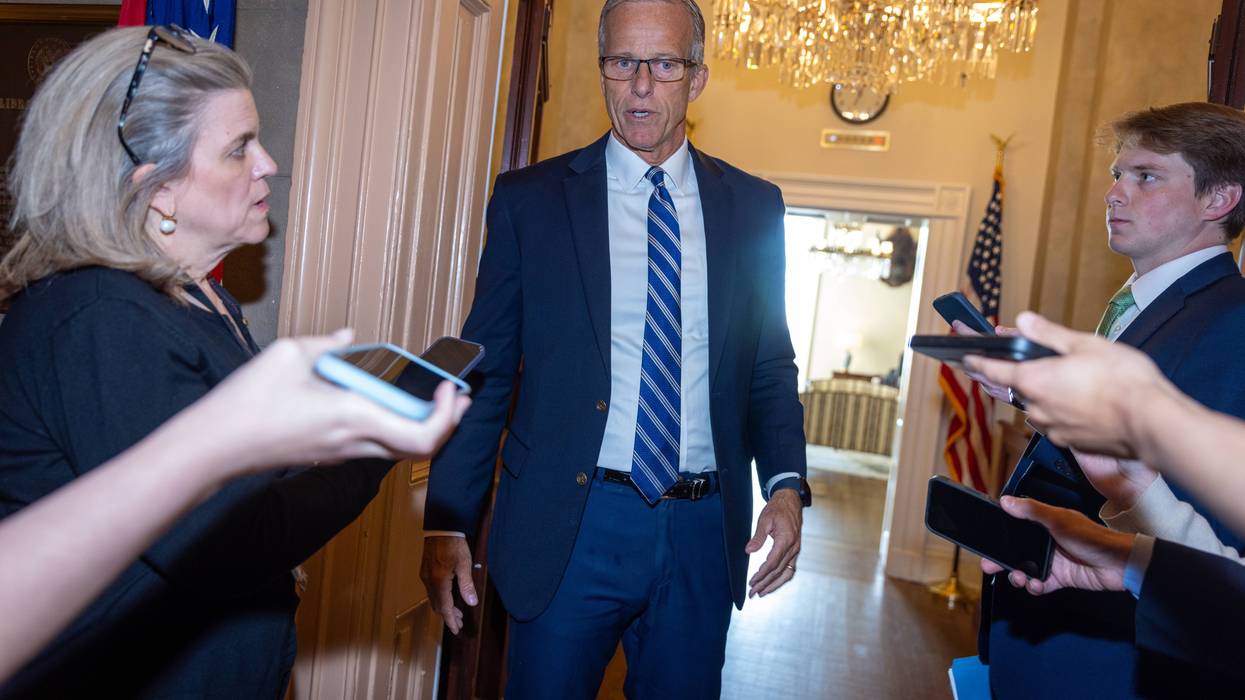
"Clear majorities of Americans across the nation, and in Congress, do not want the government bypassing the courts to hoover up our private, personal data."
Privacy advocates celebrated Friday after a Republican-led effort to extend warrantless spying powers failed to advance in the US Senate in the early hours of the morning, with seven GOP lawmakers joining every Democrat except Sen. John Fetterman in opposition.
The failed vote was another stumble for supporters of renewing Section 702 of the Foreign Intelligence Surveillance Act (FISA), which lets the federal government surveil the electronic communications of noncitizens located outside the US. The authority is set to lapse next Friday.
Advocates have long demanded reforms to the law, noting that US intelligence agencies have relentlessly abused it to spy on Americans.
Sean Vitka, executive director of Demand Progress, called Friday's vote a "resounding defeat for opponents of privacy," arguing it "shows that there is no path forward for FISA without a warrant requirement."
"Clear majorities of Americans across the nation, and in Congress, do not want the government bypassing the courts to hoover up our private, personal data," said Vitka. "If the White House and congressional leadership want to renew FISA, they have to stop ignoring this obvious fact and allow votes on real privacy reforms."
Elizabeth Goitein, co-director of the Liberty and National Security Program at the Brennan Center for Justice, called the vote "an interim victory" but warned that some senators "who would have voted to advance the bill changed their vote" due to President Donald Trump's selection of loyalist Bill Pulte to serve as acting director of national intelligence—a choice that drew bipartisan backlash.
Sen. Mark Warner (D-Va.), who supports extending Section 702 spying powers, voted against advancing the FISA legislation on Friday after decrying Pulte as an "enormously bad choice" who is "grossly unqualified."
Goitein noted that Pulte, who currently heads the Federal Housing Finance Agency (FHFA), is currently "under investigation by the nonpartisan Government Accountability Office for misusing his position and his access to government records to trigger dubious charges of mortgage fraud against Trump’s perceived political enemies."
"If Pulte can do that with the limited access to Americans’ information he has as head of the [FHFA], imagine what he could do with all the authorities and capabilities of the intelligence community—including, of course, Section 702," she added. "What wouldn’t make sense? Handing Section 702 to whomever Trump could nominate in Pulte’s place without ensuring that they can’t use it as a tool for domestic spying."
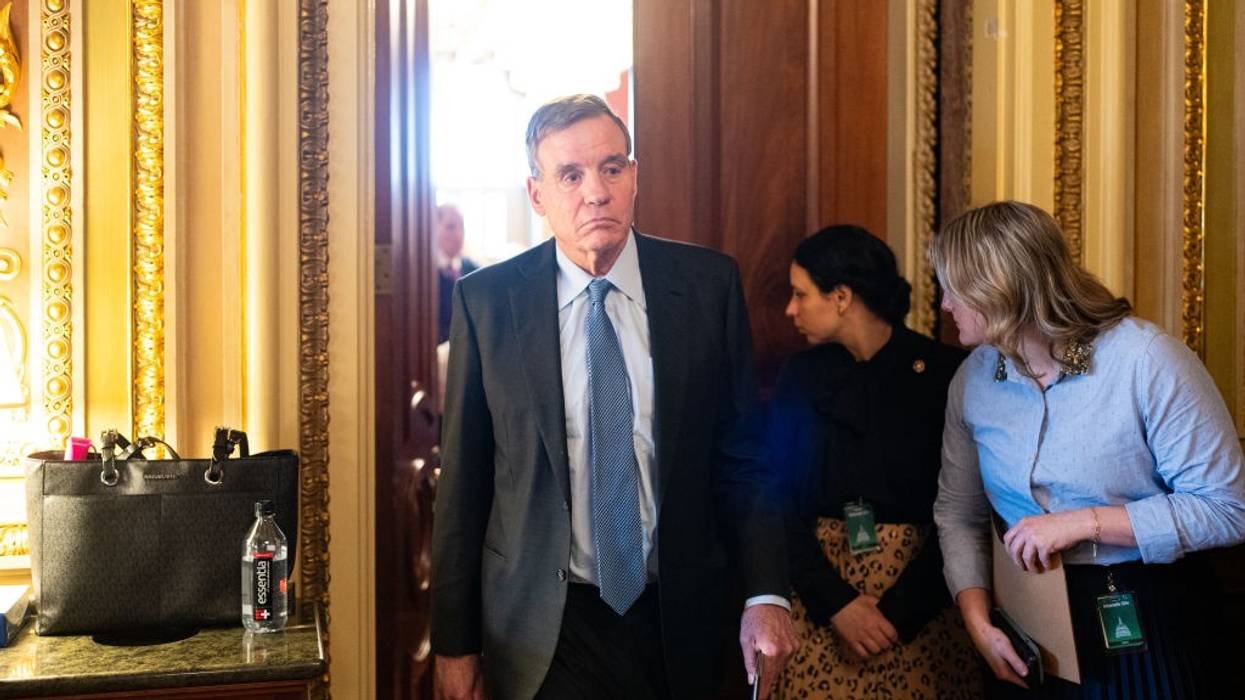
“Warner’s opposition to Bill Pulte masks the fact that he is still the Democrats’ chief advocate for handing over unchecked spying powers to the Trump administration," said one progressive campaigner.
The watchdog group Demand Progress on Thursday warned that the Senate Intelligence Committee's top Democrat is attacking civil liberties by collaborating with Republicans and the Trump administration to renew warrantless spying powers—even as he sounds the alarm over President Donald Trump's appointment of unqualified loyalist Bill Pulte as acting director of national intelligence.
Sen. Mark Warner (D-Va.) is pressing Senate Majority Leader John Thune (R-SD) to use his influence to persuade Trump to reconsider appointing Pulte—a private equity firm founder and homebuilder who is currently director of the Federal Housing Finance Agency (FHFA) and chairman of Fannie Mae and Freddie Mac—to the top intel post, which current Director of National Intelligence (DNI) Tulsi Gabbard will officially vacate on June 30.
Warner this week called out Pulte's lack of relevant experience, as well as his "eagerness to use the authorities of government to pursue political retribution" against a number of Trump’s political foes for politically motivated mortgage fraud investigations.
However, critics including Demand Progress have pointed out Warner's critical role in whipping Democratic support for renewing Section 702 of the Foreign Intelligence Surveillance Act (FISA), which allows the US government to collect electronic communications of noncitizens located outside the United States without a warrant. Experts note that Americans’ data is also swept up during such surveillance, and civil society groups and some lawmakers from both parties have demanded reforms to prevent further abuse by federal agencies.
Section 702, which was reauthorized for two years in 2024, is set to expire next week. There is a legislative battle between lawmakers and intelligence officials who want to extend Section 702 largely intact—the so-called "clean" reauthorization backed by Trump and his allies—and privacy-focused legislators from both parties who want reforms, especially a requirement for warrants before searching Americans' communications.
A three-year proposal passed by House lawmakers in April did not include a warrantless requirement.
“Sen. Warner’s opposition to Bill Pulte masks the fact that he is still the Democrats’ chief advocate for handing over unchecked spying powers to the Trump administration," Demand Progress executive director Sean Vitka said Thursday. "Pulte obviously must go, but he’s also proof that this administration is eager and willing to use the Office of the Director of National Intelligence as a weapon."
"If Trump pulls Pulte, he can easily appoint another eager goon to fill the slot," Vitkaco stressed. "By focusing on Pulte and not broader reforms, Sen. Warner is not standing up for Americans or the Constitution, he is disguising his work to engineer warrantless mass surveillance against us."
"We know this because he’s been doing it publicly for months," he added. "An unprecedented, bipartisan movement is demanding privacy reforms, but Sen. Warner’s machinations threaten to derail this progress and hand Trump the surveillance powers he needs to threaten Americans and democracy itself for the rest of his administration.”
Demand Progress said that Warner "has conspicuously failed to join the chorus of Democrats and Republicans calling for reforms to FISA that would protect privacy and democracy itself."
"Warner, who is negotiating with Republicans and the Trump administration to renew FISA, has only commented on how bad Pulte is and notably stopped short of saying anything about FISA reform," the group continued. "This is particularly telling considering Warner’s history of promising future reforms to get FISA renewed and failing to deliver."
Demand Progress contrasted Warner's actions with those of his fellow Democrats, including Catherine Cortez Masto of Nevada, who explicitly called for “reforms to ensure Americans’ privacy and rights are protected.”
Senate lawmakers could hold an initial procedural vote on extending Section 702 as soon as Thursday, with just a simple majority needed for the measure to advance. Future votes would require the support of 60 senators in order to avoid a Republican filibuster.
Elizabeth Goitein, co-director of the Liberty and National Security Program at the Brennan Center for Justice, warned Wednesday in a social media thread that the Section 702 extension supported by Trump, his Republican allies in Congress, and Warner "doesn’t just fail to curb warrantless domestic spying, it actually expands the government's ability to use 702 against Americans."
"Trump’s allies and Warner have produced a bill that purports to include reforms, but that makes no change whatsoever to existing standards and procedures for conducting backdoor searches, let alone a warrant requirement," she continued.
A "backdoor search" occurs when the government collects information about a US citizen when the surveillance was originally authorized for foreign targets and the government did not obtain a warrant before collecting the communications.
"These 'backdoor searches' are an affront to the Fourth Amendment," Goitein asserted. "They have led to widespread abuses, including FBI searches for the communications of members of Congress, campaign donors, journalists, and protesters across the political spectrum."
"There is broad bipartisan support in Congress for requiring the government to get a warrant before accessing Americans’ communications obtained under Section 702," she continued. "This reform has twice passed the House, and 76% of Americans support it."
"Unsurprisingly, Trump and his allies in Congress oppose this reform," Goitein wrote. "What’s more surprising is that key Democratic surveillance hawks, including Mark Warner and [Rep.] Jim Himes [D-Conn.], have teamed up with the Trump camp to ensure that his administration has continued warrantless access."
"Even more disturbing is the provision titled 'Restriction on Use of United States Person Information Acquired Under Section 702 in Criminal Prosecutions,'" she said. "Notwithstanding the Orwellian title, this provision actually *removes* existing restrictions on such use.
"Any member who is concerned with Pulte’s appointment should be aghast at the prospect of handing this administration warrantless access to Americans’ private communications and expanding its power to use those communications against Americans in court," Goitein added. "There is only one way senators can force leadership to permit amendment votes or otherwise negotiate: vote NO on the procedural motion that will take place in the coming days. Senators who support reform are the majority; they have real leverage. They must use it."
The Brennan Center for Justice and Demand Progress were among dozens of civil society groups that on Monday sent a letter to congressional leaders urging them to "not abandon Americans' constitutional rights" and "reject any extension that does not include key bipartisan reforms that would protect Americans' privacy and civil rights and liberties."
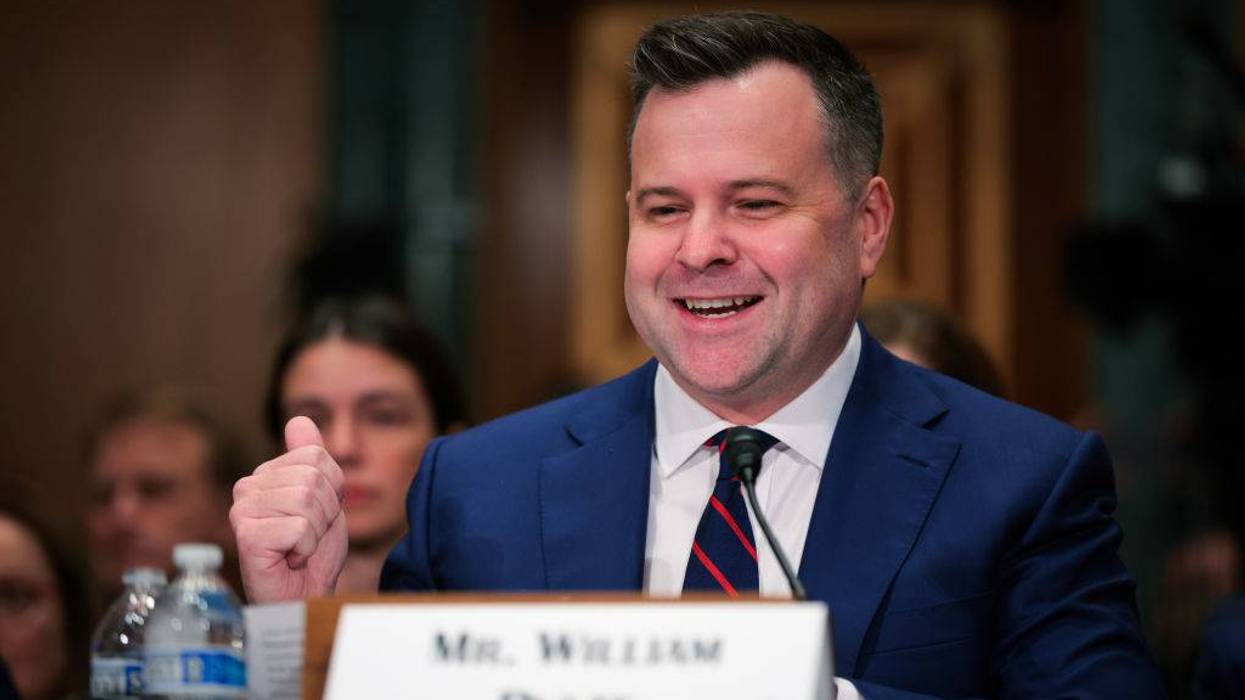
"The president has chosen an official who has demonstrated not just willingness but eagerness to use the authorities of government to pursue political retribution," said US Sen. Mark Warner.
President Donald Trump shocked many observers on Tuesday when he appointed Federal Housing Finance Agency Director Bill Pulte to be his acting director of national intelligence, weeks after Tulsi Gabbard stepped down from the role.
In a Tuesday morning social media post, Trump announced that Pulte would be taking over as DNI while also remaining at his current post at the FHFA, which regulates government-sponsored housing enterprises Fannie Mae and Freddie Mac.
As noted by a Tuesday CNBC report, Pulte "has no prior experience in an intelligence role. His tenure at FHFA has been marked by his criminal referrals for mortgage fraud against Trump's political foes, including New York Attorney General Letitia James and Federal Reserve Governor Lisa Cook, whom the president has been trying to fire in an effort to stack the US central bank with political loyalists.
James was targeted for prosecution after she won a $450 million judgment against the president and his business in a civil fraud case.
Sen. Mark Warner (D-Va.), vice chairperson of the Senate Committee on Intelligence, delivered a scathing response to Trump's announcement.
"This appointment speaks volumes about what this president expects from the nation's top intelligence official," he said. "Rather than selecting a respected national security professional capable of delivering independent judgments, the president has chosen an official who has demonstrated not just willingness but eagerness to use the authorities of government to pursue political retribution."
Sen. Catherine Cortez Masto (D-Nev.) also denounced the president's decision.
"Bill Pulte led Donald Trump’s efforts to charge and jail his political enemies, now he’s being rewarded with a job he has no business doing," Cortez Masto said. "Putting Pulte at the helm of the intelligence community risks American lives just so Trump can keep going after his political opponents."
Sean Vitka, executive director of Demand Progress, argued that Pulte's appointment was yet another reason for Democrats to oppose further extension of warrantless spying powers under Section 702 of the Foreign Intelligence Surveillance Act (FISA).
"Congress must not sign away unchecked spying powers to the government," said Vitka, "when Donald Trump’s top spy is a man whose primary qualification is his willingness to weaponize sensitive information held by the government against the president’s political enemies."
Vitka specifically urged Warner to change course on his push to renew Section 702, particularly in light of Pulte's appointment.
"By supporting a FISA extension without any independent checks like warrant protections, Sen. Warner is putting the entire country at serious risk and enabling perhaps the greatest threat to American democracy we have seen in modern history," he said.
Journalist James Surowiecki expressed horror at Pulte's elevation to acting DNI.
"Even for Trump, this is nuts," Surowiecki wrote. "Bill Pulte, who's a [private equity] guy/real-estate developer with exactly zero intelligence experience, is going to be the new Director of National Intelligence—while also continuing to run FHFA and Fannie Mae/Fredde Mac!"
Don Moynihan, a professor of public policy at the University of Michigan, issued a dire warning about Pulte potentially abusing US intelligence services to target Trump opponents.
"Fuck me, this is Bill Pulte," Moynihan wrote. "The guy who was using mortgage data to launch DOJ investigations against Lisa Cook, Letitia James, and [US Sen.] Adam Schiff (D-Calif.). He is being put in charge of national intelligence because of his track record of being willing to manufacture false allegations to target Trump's enemies."
Political commentator Keith Boykin described Pulte as Trump's "personal henchman" who "abused his position as chairman of Fannie Mae and Freddie Mac to send baseless criminal referrals against Letitia James and Lisa Cook."
National security attorney Bradley Moss, meanwhile, could not hide his disgust at Pulte's appointment in an all-caps social media post.
"WHAT THE... I QUIT," Moss wrote. "I GIVE UP. BILL PULTE??"

The administration is using national security as a pretext to target protesters, civil rights groups, and vulnerable communities. Here is how we fight back.
On May 6, 2026, the Trump administration released its latest conspiracy-laden attack on “the left,” this time in the form of a “counterterrorism strategy". While laughably lacking in evidence or regard for laws, the “strategy” will have serious, deadly consequences. It sets our country’s counterterror apparatus and racist, anti-Muslim goals against the Global South, Europe, and all those here at home who have the nerve to demand their rights and oppose full-fledged autocracy.
In this post, I will focus on the domestic implications, although the global impacts are both frightening and impossible to fully separate, as the strategy conflates everything from domestic resistance movements to people with disfavored ideologies to drug trafficking with international terrorism.
The strategy is authored by Sebastian Gorka, a known anti-Muslim bigot whom former counterterrorism officials pan as “ill-informed” and a “huckster.” It should come as no surprise, therefore, that this so-called “strategy” is basically a cocktail of fearmongering and post-9/11 playbook, but on steroids. It incorporates and expands on the president’s National Security Presidential Memorandum-7, which casts a sweeping set of dissenting views as (domestic) terrorism, plays up fears of a “new alliance” between leftists and “Islamists,” and completely ignores the documented threats of right-wing and white supremacist extremists.
This is all hauntingly familiar. For generations, federal agencies have surveilled, monitored, and targeted Black, immigrant, Muslim, Middle Eastern, Asian, Indigenous, and other people of color, using surveillance as a tool of intimidation and enforcement that deepens racial inequities instead of making people safer.
Communities that have historically borne the brunt of government overreach will once again suffer the greatest harm. But this sweeping attack on dissent affects everyone, threatening the foundations of our free society.
For example, the strategy promises to wield massive law enforcement, surveillance, and other counterterror powers to “map” and "neutralize" groups it describes as "anti‑American, radically pro‑transgender, and anarchist." In the post-9/11 era, the New York Police Department attempted to map all Muslims and their institutions in the Tri-State Area, for which Muslim Advocates, the Center for Constitutional Rights, and Gibbons P.C. successfully sued in 2012. We have long seen our community and sacred spaces violated by informants and oppressive surveillance.
The document also states that the US government will "[i]dentify terror actors and plots before they happen,” (emphasis added) which sounds dystopian, but is the same false logic underlying the notorious Countering Violent Extremism program that targeted American Muslims in the post-9/11 era.
In Gorka's reported comments to the press, he doubled down on targeting "ideology” and preventive policing: “We see a threat… we will crush it, whether it is the cartels, the jihadists, or violent left-wing extremists like antifa and like the transgender killers, the non-binary, the left-wing radicals.”
These practices have caused lasting trauma and generational impact for Muslims, stifling our religious and political expression and wrecking intra-community trust. Now the government is wolfishly expanding while few seem to notice. Gorka himself said, “We are moving so fast, they just can’t keep up with us, which is delicious.”
Indeed, the breadth of attacks on protesters, dissenters, and civil rights organizations is overwhelming. A few examples:
Communities that have historically borne the brunt of government overreach will once again suffer the greatest harm. But this sweeping attack on dissent affects everyone, threatening the foundations of our free society.
Make noise: Call attention to the harms of this counterterror “strategy.” Its release during congressional recess let it fly under the radar, although Ranking Member of House Homeland Security Committee Bennie Thompson (D-Miss.) noted its lack of strategy and called again for a hearing with officials. Other elected officials should likewise take action to condemn this latest attack on dissent, demand transparency about its implementation and adherence to the Constitution, and protect our rights.
Congress also has an immediate opportunity to curb vast surveillance powers enabled by Foreign Intelligence Surveillance Act Section 702. Congressional leadership has so far blocked bipartisan efforts to pass a warrant requirement for searches of people in the US, and before accessing our intimate details through data-broker purchases. Lawmakers have until June 12 to enact basic protections for people in the US. This counterterror strategy—along with the recent whispers of its potential use against right-wing dissenters from Trumpism—shows exactly why we must urgently rein in the government's massive counterterror arsenal, starting with 702’s warrantless spy power.
Demand that local governments refuse to cooperate with the federal government, divest and remove surveillance technology, and withdraw from Joint Terrorism Task Forces (JTTF’s), which deputize local law enforcement to do the feds’ bidding and share information pursuant to its permissive interpretations of federal law.
Collectively, we must continue to demand our rights: to protest, to speak, to commune, and to live free from Big Brother—especially Big Brother with a gun. Remember: The overwhelm we feel isn’t an accident; it’s tactical. Refuse to allow the administration’s intimidation tactics to succeed. Our mass, unapologetic refusal to comply, is what’s truly “delicious.”
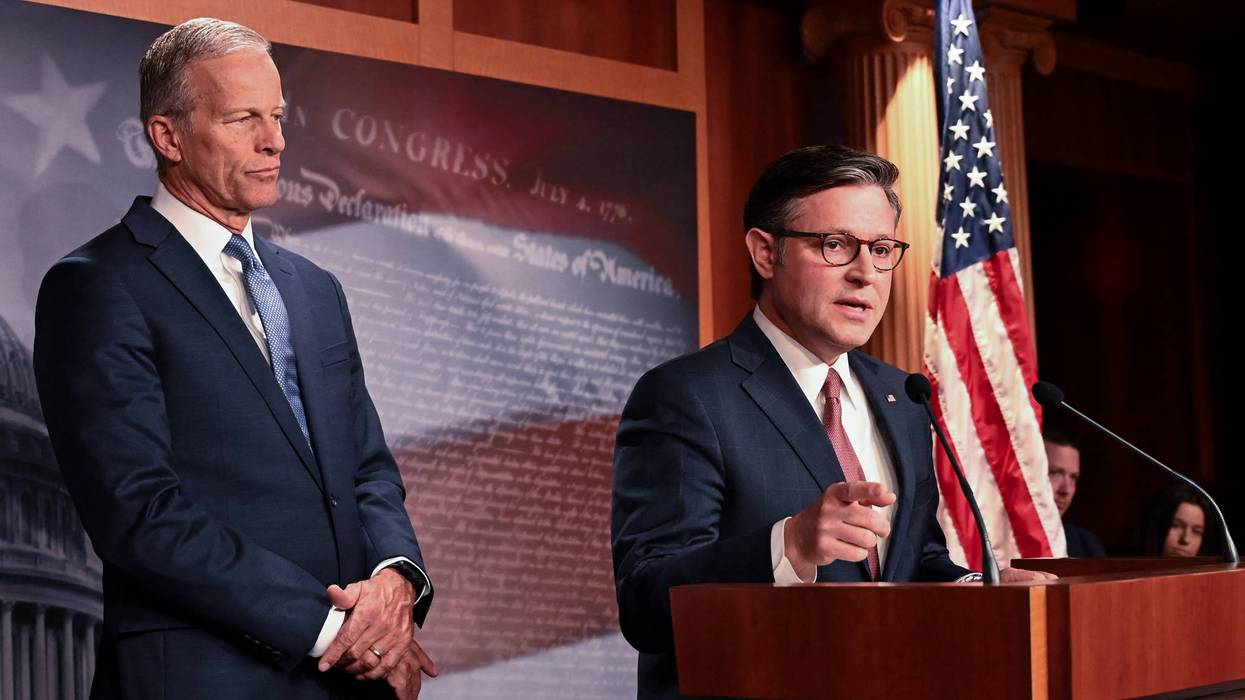
"Our bipartisan movement in defense of civil liberties is holding strong," a Demand Progress campaigner said after Congress passed a short-term extension to continue talks on a longer renewal.
Just a day after Democrats in the GOP-controlled US House of Representatives helped Republicans send a major spying bill to the Senate, despite warnings that it was dead on arrival there, both chambers on Thursday passed a 45-day extension to continue negotiations.
The Senate approved the stopgap bill for Section 702 of the Foreign Intelligence Surveillance Act (FISA)—which allows the federal government to spy on electronic communications of noncitizens located outside the United States without a warrant—by a voice vote. The House signed off with a 261-11 vote, just hours before a previous short-term extension was set to expire.
President Donald Trump and his homeland security adviser, Stephen Miller, have been demanding a "clean" extension of the program, while critical lawmakers from both parties and over 100 civil society groups have called for privacy reforms to protect Americans whose data is swept up in federal surveillance efforts.
Hajar Hammado, senior policy adviser at Demand Progress, one of the organizations leading reform calls, said in a Thursday statement that "intelligence agencies, the White House, and their allies in Congress have tried every trick in the book from fearmongering to misinformation, but they still can't get their warrantless FISA reauthorization across the finish line."
"The reason we keep ending up at this point is congressional leaders' refusal to allow votes on overwhelmingly popular, bipartisan reforms," she continued. "This 'my way or the highway' approach needs to stop."
According to Politico, US Senate Majority Leader John Thune (R-SD) told reporters on Thursday that he and House Speaker Mike Johnson (R-La.) discussed the short-term extension during a closed-door meeting the previous day.
"I think there's already a pretty substantial dialog going on" between key Democrats and Republicans in both chambers, Thune added. "We're interested in looking at some ways in which it can be reformed... So we're entertaining those ideas at the moment."
Hammado declared that "when Congress returns, Speaker Johnson and Leader Thune must allow votes on amendments for real privacy protections or we'll keep repeating this farce over and over again. Our bipartisan movement in defense of civil liberties is holding strong, and we won't accept anything less."
Sen. Ron Wyden (D-Ore.), a longtime defender of privacy rights who had threatened to block the extension, highlighted on social media Thursday that he "secured a commitment that the FISA court opinion revealing abuses of Americans' rights will be DECLASSIFIED before Congress votes on reauthorization."
"The more Americans know about these abuses," he said, "the more they'll demand real reforms."
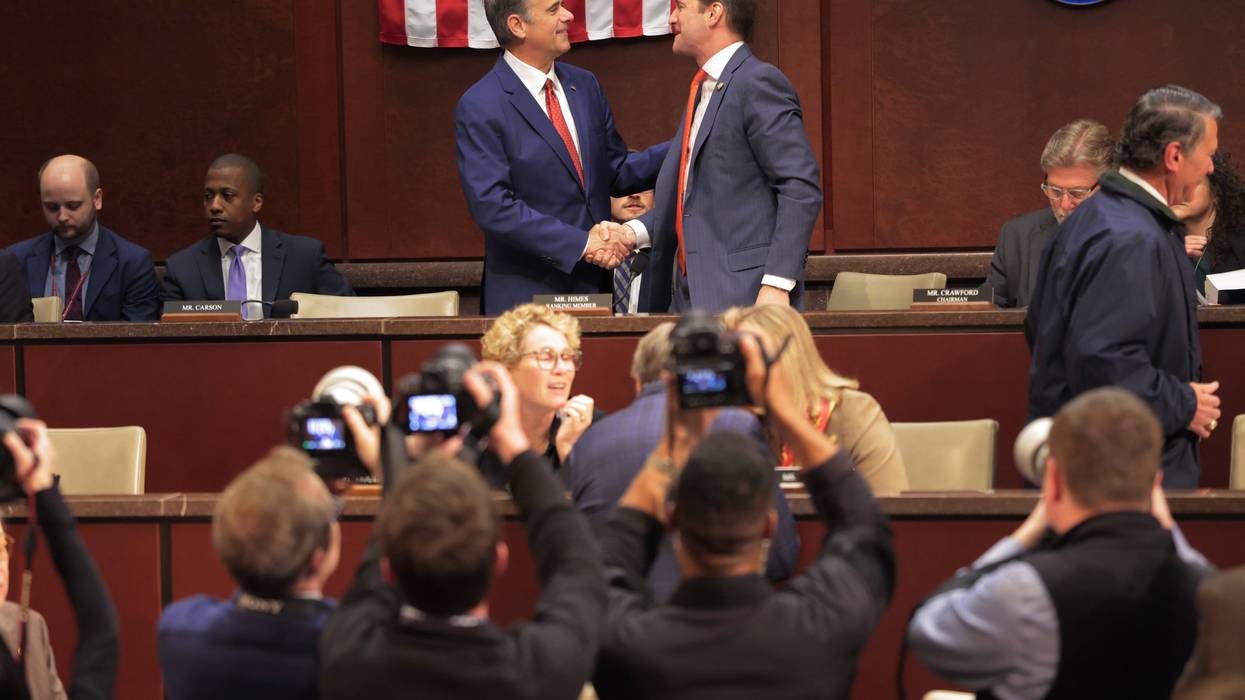
"It was these Democrats' responsibility to stand up against this administration, and they voted to stand down instead," said one campaigner.
Dozens of Democrats in the Republican-controlled US House of Representatives helped the GOP send a key spying bill to the Senate on Wednesday, earning sharp condemnation from the diverse movement that has called for privacy reforms.
The House voted 235-191 in favor of the bill released last week by Speaker Mike Johnson (R-La.), who has been trying for months to get an extension of Section 702 of the Foreign Intelligence Surveillance Act (FISA) to President Donald Trump's desk.
FISA's Section 702 allows the US government to surveil electronic communications of noncitizens located outside the United States to acquire foreign intelligence information, without a warrant. However, Americans' data is also swept up, and civil society, along with some lawmakers from both major parties, has demanded reforms to prevent further abuse by federal agencies.
In the lead-up to the vote, progressives such as Rep. Ilhan Omar (D-Minn.) warned that "this bill has no meaningful reforms to stop warrantless surveillance, directly undermining the Fourth Amendment" to the US Constitution, which is supposed to protect Americans against unreasonable searches and seizures.
Another "Squad" member, Rep. Rashida Tlaib (D-Mich.), took to the House floor to blast Section 702 as "a dangerous mass surveillance tool" that "has been used to spy on Black Lives Matter protesters, members of Congress, journalists, and more."
However, 42 Democrats—including House Permanent Select Committee on Intelligence Ranking Member Jim Himes (Conn.)—still joined most House Republicans in advancing the legislation.
In addition to Himes, the Democrats who voted for the bill are Pete Aguilar (Calif.), Ami Bera (Calif.), Sanford Bishop (Ga.), Nikki Budzinski (Ill.), Janelle Bynum (Ore.), Ed Case (Hawaii), Kathy Castor (Fla.), Gil Cisneros (Calif.), Herb Conaway (NJ), Henry Cuellar (Texas), Don Davis (NC), Lois Frankel (Fla.), Laura Gillen (NY), Jared Golden (Maine), Vicente Gonzalez (Texas), Josh Gottheimer (NJ), Josh Harder (Calif.), Chrissy Houlahan (Pa.), Steny Hoyer (Md.), Greg Landsman (Ohio), Susie Lee (Nev.), Kristen McDonald Rivet (Mich.), Jared Moskowitz (Fla.), Frank Mrvan (Ind.), Donald Norcross (NJ), Marie Gluesenkamp Perez (Wash.), Scott Peters (Calif.), Mike Quigley (Ill.), Josh Riley (NY), Brad Schneider (Ill.), Kim Schrier (Wash.), Terri Sewell (Ala.), Eric Sorensen (Ill.), Darren Soto (Fla.), Marilyn Strickland (Wash.), Tom Suozzi (NY), Derek Tran (Calif.), Gabe Vasquez (NM), Marc Veasey (Texas), Debbie Wasserman Schultz (Fla.), and George Whitesides (Calif.).
"It's incredibly disappointing the House approved this measure," said Jake Laperruque, deputy director of the Center for Democracy and Technology's Security and Surveillance Project, in a statement. "This bill is empty calories through and through. It contains no warrant for querying Americans' messages, and no meaningful reforms of any kind. The razor-thin procedural vote this afternoon makes clear that there's an appetite for reform, but House leadership took meaningful reforms off the menu."
"There is nothing in this bill that would have prevented the abuses of FISA 702 we've already seen—snooping on lawmakers, protesters, and campaign donors—and there is nothing that would stop even worse abuses in the future. A vote for this bill was a vote to give the FBI and other intelligence agencies a three-year blank check for surveillance abuse."
Hajar Hammado, senior policy adviser at Demand Progress—which helped convene over 100 artificial intelligence, civil rights, and other progressive groups pressuring Congress to include privacy protections in any renewal bill for the spying power—took aim at the House Democrats who supported the legislation.
"The 42 Democratic votes to advance Speaker Johnson and Donald Trump's surveillance agenda are dangerous and shameful," she declared.
"These Democrats defied their constituents and common sense to undercut meaningful privacy reforms in the House and instead voted to hand over sweeping spy powers to the Trump administration," she stressed. "This means continuing warrantless backdoor searches and allowing an increasing number of federal agencies to exploit the data broker loophole to supercharge AI and fuel mass domestic surveillance."
Hammado said that "their vote today has major consequences, as even 22 Republicans put principles over politics and voted against renewing FISA without warrant protections. It was these Democrats' responsibility to stand up against this administration and they voted to stand down instead."
While stressing that "no administration should have these powers," Free Press Action advocacy director Jenna Ruddock directed attention at "the champions for a clean extension of Section 702 in the Trump administration in particular," including the president's homeland security adviser, Stephen Miller.
"Stephen Miller has advocated against reforms to Section 702, claiming it is critical to his and Trump’s homeland security agenda, even as members of the administration refer to political opponents as 'enemies within,'" she noted. "Today, 42 Democrats joined 192 Republicans to co-sign Donald Trump and Stephen Miller's domestic surveillance agenda, jeopardizing the civil rights and liberties of every person in the United States."
Zeteo News reporter Prem Thakker pointed out that House "Democratic leadership did not whip their members, enabling them to vote with Republicans and give Trump the surveillance powers."
While calling out the House Democrats who backed the bill, campaigners also set their sights on the Senate, where Punchbowl News reporter Anthony Adragna predicted that "it's DOA," or dead on arrival. Republicans have a slim majority in the chamber and, due to its rules, need at least some Democratic support to pass most bills, including this one.
A key issue is the central bank digital currency ban included in the House bill. Senate Majority Leader John Thune (R-SD) told reporters on Wednesday that he may try to pass a 45-day extension instead. After a recent short-term extension, the spying authority is set to expire Thursday night.
"Now the fight moves to the Senate, where privacy champions in both parties are gearing up to try and stop this reckless giveaway to the surveillance state," Hammado said. She urged members of the upper chamber to join "bipartisan reformers" like Sens. Dick Durbin (D-Ill.), Mike Lee (R-Utah), Rand Paul (R-Ky.), and Ron Wyden (D-Ore.) "in voting against any FISA measure that lacks real reforms like a warrant requirement to close the backdoor search and data broker loopholes."
Laperruque similarly said that "we hope senators will stand strong and reject this dangerous proposal."
Ruddock highlighted that "there is bipartisan legislation already introduced in both the House and Senate that would make desperately needed reforms to government surveillance powers."
"The Senate should reject the fake reforms in the current House bill and demand a vote on real reforms to Section 702, including a warrant requirement, and closing the data broker loophole," she said. "Our constitutional rights depend on it."
This article has been updated to include the names of the Democrats who voted for the bill.
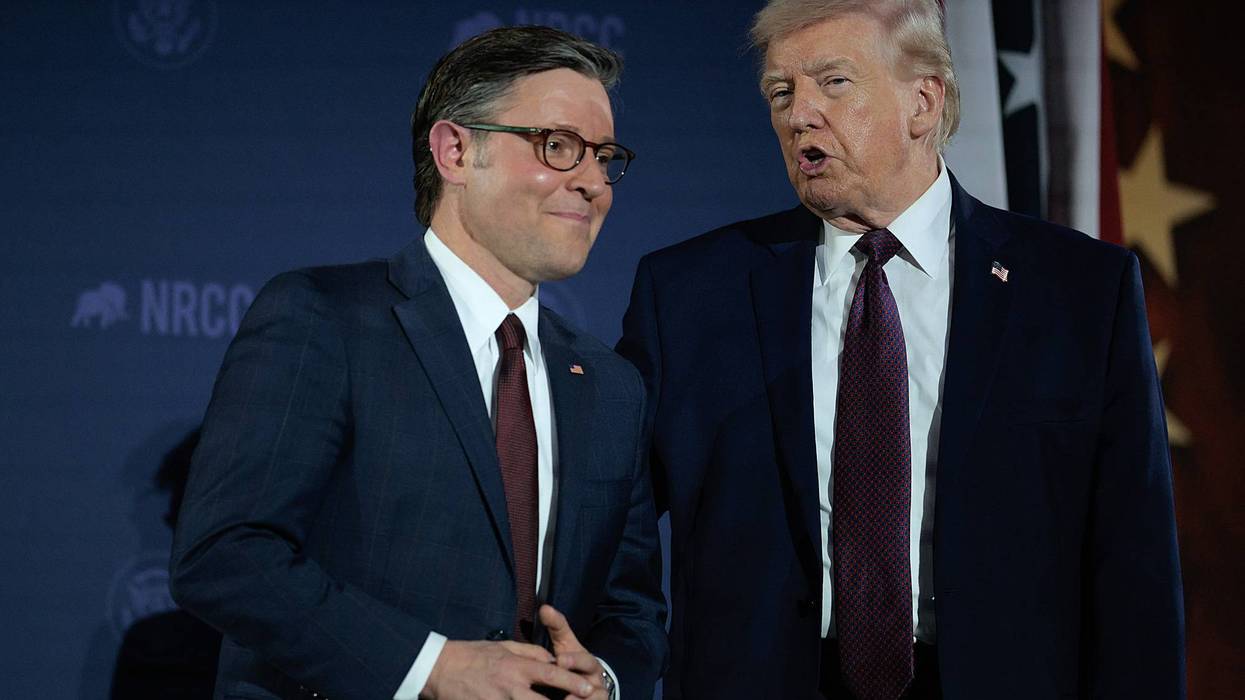
Section 702 of the Foreign Intelligence Surveillance Act is set to expire Thursday, and the president is claiming Saturday's shooting proved "the safety of our nation" depends on the program.
An exchange of gunfire between an armed suspect and law enforcement outside the White House Correspondents' Dinner on Saturday came days ahead of a deadline for extending far-reaching government surveillance powers, and President Donald Trump wasted no time in claiming that the attempted attack on the event proved that the FBI must be permitted to spy on Americans without obtaining warrants.
In an interview with Fox News Sunday, Trump repeated his previous remarks that he is "willing to give up [his] security" in favor of extending Section 702 of the Foreign Intelligence Surveillance Act (FISA), which is set to expire on Thursday—and suggested other Americans should do the same for "the safety of our nation."
Section 702 allows US intelligence agencies to surveil the electronic communications of foreign nationals overseas without a warrant. Since some of the nearly 350,000 foreign nationals whose communications have been collected under the law are in touch with Americans, Section 702 allows for the collection of emails, text messages, and phone calls of US citizens.
Fox anchor Jacqui Heinrich emphasized that "we don't know right now" whether the suspect in Saturday's shooting, Cole Tomas Allen, "was radicalized" by a foreign individual or group, but asked whether the attack drove home "the importance of having these tools to protect our country from these kinds of threats."
The president responded by complaining that former FBI Director James Comey used FISA to obtain warrants to surveil a former Trump aide as part of the agency's investigation into the 2016 Trump presidential campaign's communications with Russia, before saying FISA has been used in the US-Israeli war on Iran and in the US military's invasion of Venezuela earlier this year.
"It's really needed for national security," said Trump. "Iran is decimated, and we got a lot of information by using FISA... I'm willing to give up my security for the military because ultimately that's to me the highest cause is, you know, the safety of our nation."
Pres. Trump, under prodding from Fox News, exploits White House Correspondents' Dinner shooting to push for Congress to approve FISA domestic spying program: "It's really needed for national security…"
He reiterates that he's willing to give up his liberties for safety. pic.twitter.com/tmcepp0Wgn
— Chris Menahan 🇺🇸 (@infolibnews) April 26, 2026
Jordan Liz, an associate professor of philosophy at San José State University, wrote last week in a column at Common Dreams that while Trump, Republican lawmakers, and US intelligence agencies "make sweeping claims about the terror attacks that Section 702 has prevented, there is little publicly available evidence to support this."
"According to the Cato Institute, there is only one well-documented, independently corroborated case of Section 702 preventing a terrorist attack on American soil: the 2009 New York subway bombing plot," wrote Liz. "In that case, Section 702 was used by the [National Security Agency] to track an exchange between an al-Qaeda courier and Najibullah Zazi, who was living in the US. The NSA passed this information to the FBI, which identified Zazi and disrupted the attack before it took place. Importantly, however, the NSA allegedly received the courier’s foreign email address from the government’s British intelligence partners. At best then, this success was a byproduct of productive intelligence sharing between allies. Rather than proving the necessity of Section 702, this incident underscores how Trump’s inane attacks against key US allies undermine our national security."
The suspect in Saturday's shooting is believed to have acted alone, and no evidence has been released that he was in communication with any foreign entities. A document he wrote alluded to his Christian beliefs and to reports of the administration's abuse of immigrants in detention centers, its boat-bombing operations in the Caribbean Sea and eastern Pacific Ocean, and the bombing of an elementary school in Iran.
The president has been pushing in recent weeks for an extension of Section 702. The program was last reauthorized in 2024, and earlier this month two efforts to extend the program—one for 18 months and the other for five years—failed, with opponents objecting to a lack of privacy reforms and to a loophole allowing data brokers to sell private information about Americans to government agencies that have not obtained judicial approval to seize the data.
After those proposals failed, House Speaker Mike Johnson (R-La.) last week unveiled a new bill to extend Section 702 for three years and require the FBI to submit monthly reports on its reviews of Americans' private data to an oversight official, as well as imposing penalties for abuse—provisions that were dismissed by privacy advocates.
The House Rules Committee was set to convene on Monday, a step toward advancing the new bill toward a vote in the House, and according to NPR, Rep. Jamie Raskin (D-Md.) circulated a memo late last week urging his colleagues to reject the Republicans' latest proposal.
The bill, he wrote, "continues the disastrous policy of trusting the FBI to self-police and self-report its abuses of Section 702 and backdoor searches of Americans' data... FBI agents can still collect, search, and review Americans' communications without any review from a judge."
Four Democrats in the House—Reps. Josh Gottheimer (D-NJ), Tom Suozzi (D-NJ), Marie Gluesencamp Perez (D-Wash.), and Jared Golden (D-Maine)—broke with the party and joined the GOP earlier this month in supporting a procedural vote to advance the reauthorization of Section 702, and privacy advocates are ramping up pressure on them to oppose the latest proposal for an extension.
"It all comes down to those four and where they are going to land,” Hajar Hammado, a senior policy adviser at Demand Progress, told The Intercept Monday, “and if they are going to continue to try to hand Trump and [White House homeland security adviser] Stephen Miller warrantless surveillance authorities without any sort of checks or reforms that make sure they’re not violating civil liberties.”
Trump is more than willing to risk your rights and privileges for the sake of the America he desires. For a petty narcissist obsessed with revenge, section 702 of FISA is another dangerous and powerful tool for furthering his authoritarian agenda.
On April 17, Congress voted to pass a brief 10-day extension of section 702 of the Foreign Intelligence Surveillance Act, or FISA. This sets the new expiration date for April 30, 2026.
Section 702 was added to FISA in 2008 with a provision that requires Congress to periodically reauthorize it. The measure allows national security agencies like the National Security Agency (NSA), Federal Bureau of Investigation (FBI), and Central Intelligence Agency (CIA) to collect and monitor—without a warrant—any electronic communications sent to and from non-US persons “reasonably believed to be located” outside the US. Notably, Americans who send messages to people abroad may likewise have their data surveilled.
Law enforcement agencies have consistently abused this loophole to spy on US citizens in clear violation of their Fourth Amendment rights. The Brennan Center for Justice reports that, in recent years, the government has conducted warrantless “searches for the communications of 141 Black Lives Matter protesters; 19,000 donors to a congressional campaign; members of Congress; multiple US government officials, political commentators, and journalists; and tens of thousands of Americans engaged in ‘civil unrest.’”
Even President Donald Trump alleges being a victim of these “backdoor searches.” Ahead of the last renewal vote in April 2024, Trump posted on Truth Social, “KILL FISA, IT WAS ILLEGALLY USED AGAINST ME, AND MANY OTHERS. THEY SPIED ON MY CAMPAIGN!!! DJT.”
The Trump administration perfectly encapsulates the dangers that section 702 presents to the American public and the wider international community. Far from preventing terrorism, section 702 enables it.
Since returning to the White House, however, his tone has notably shifted. On April 15, Trump posted that Republicans must “UNIFY” to pass a “clean extension of FISA 702.” He continues, “While parts of FISA were illegally and unfortunately used against me in the Democrats’ disgraceful Witch Hunt and Attack in the RUSSIA, RUSSIA, RUSSIA Hoax, and perhaps would be used against me in the future, I am willing to risk the giving up of my Rights and Privileges as a Citizen for our Great Military and Country!”
Trump’s strong endorsement of section 702 is unsurprising. His administration has actively worked to undermine the rights and protections the Constitution guarantees. This includes: (i) subpoenaing social media sites to turn over the personal data of users who have criticized Immigration and Customs Enforcement; (ii) actively exploring a proposal to detain US citizens and deport them to prisons in El Salvador; (iii) violating states’ rights by threatening to cut funding to sanctuary cities as well as commandeering state and local officials to do the federal government’s bidding; (iv) working to disenfranchise voters via the election-rigging SAVE America Act; and (v) his administration’s efforts to restrict birthright citizenship, among many other examples.
Trump is more than willing to risk your rights and privileges for the sake of the America he desires. For a petty narcissist obsessed with revenge, section 702 is another dangerous and powerful tool for furthering his authoritarian agenda.
Already, Trump is actively exploiting section 702 to advance his illegal wars. On April 14, he posted, “Our Military desperately needs FISA 702, and it is one of the reasons we have had such tremendous SUCCESS on the battlefield, both in Venezuela and Iran.” These ‘successes’—or more accurately, war crimes and violations of international law—include kidnapping Venezuelan President Nicolás Maduro; assassinating Iran’s Ayatollah Ali Khamenei; and inciting a reckless war of choice that has seen the US and Israel deliberately target schools, hospitals, and residential buildings.
The Trump administration perfectly encapsulates the dangers that section 702 presents to the American public and the wider international community. Far from preventing terrorism, section 702 enables it.
To be clear, however, the reasons for ending section 702 go beyond the Trump administration. First, the measure undermines the very rationale for FISA. FISA was enacted in 1978 following the revelations of widespread warrantless surveillance under the Nixon administration. This included not only the infamous Watergate scandal, but also spying on anti-war protesters and civil rights activists under the guise that they were linked to foreign communist groups. FISA requires intelligence agencies to obtain authorization for electronic surveillance and other investigative actions. It also establishes the FISA court to oversee requests for surveillance warrants.
Section 702 bypasses these safeguards. Once the government collects a target’s data, the FBI and other agencies can search through it to find Americans’ phone calls, text messages, and emails without a warrant or approval from the FISA court. Section 702 allows the government to engage in the very kinds of Nixonian abuses FISA was designed to prevent.
Keeping in line with Trump’s interests, Johnson’s proposal would permit the federal government to continue its assault against the American public and the global community unimpeded.
In fact, section 702 originally grew out of a secret warrantless surveillance program authorized by the Bush administration following the 9/11 attacks. The New York Times exposed the Terrorism Surveillance Program (TSP) to the public in 2005, triggering a wave of lawsuits. In 2006, Judge Anna Diggs Taylor ruled that TSP violated FISA and the Constitution. Despite this, as the American Civil Liberties Union notes, “Congress weakened FISA in 2007 and then again in 2008 to permit the warrantless wiretapping that the law had previously prohibited.” Instead of shutting down Bush’s unconstitutional program, Congress effectively codified it.
Second, and relatedly, section 702 cannot be meaningfully reformed precisely because the measure is antithetical to FISA itself. In 2023, amid another FISA renewal debate, then-FBI director Christopher Wray told Congress that he was “especially concerned” about a proposal that would require the government to obtain a warrant or court order before accessing information obtained using section 702. He remarked that, “A warrant requirement would amount to a de facto ban, because query applications either would not meet the legal standard to win court approval; or because, when the standard could be met, it would be so only after the expenditure of scarce resources, the submission and review of a lengthy legal filing, and the passage of significant time.”
This makes sense. After all, the entire point of section 702 is to authorize a warrantless surveillance program. A warrant requirement would effectively render it useless.
More modest attempts at reform have been proposed and even implemented. The 2024 Reforming Intelligence and Securing America Act (RISAA), for instance, introduced a few provisions aimed at restricting backdoor searches. Yet, within a few months, the FBI was already violating those new requirements. While the Office of the Director of National Intelligence (ODNI) contends that RISAA has led to a steep decline in backdoor searches, the reality is that the FBI failed to track all such queries in 2024 and 2025. Whether RISAA has had any real impact is thus unknown. That said, even if a decline occurred, RISAA—and similar proposals—would still have failed at solving the fundamental problem: prohibiting warrantless government surveillance and mass data collection.
This is the dilemma reformists face: A warrant requirement is a “de facto ban,” but any other form of restrictions will, at best, only lessen the number of people whose constitutional rights are violated.
The proposed three-year extension unveiled by Speaker of the House Mike Johnson (R-La.) on April 23 is no better. It includes minimal new oversight and penalties for abusing the spy program, but no warrant requirements. As Senator Ron Wyden (D-Ore.) remarked: “Instead of ending warrantless surveillance or creating more transparency about government spying, this bill only requires a few more Trump administration officials to check a box. That always leads to more abuses, not less.” Keeping in line with Trump’s interests, Johnson’s proposal would permit the federal government to continue its assault against the American public and the global community unimpeded.
Third, while Trump and the CIA make sweeping claims about the terror attacks that section 702 has prevented, there is little publicly available evidence to support this. According to the Cato Institute, there is only one well-documented, independently corroborated case of section 702 preventing a terrorist attack on American soil: the 2009 New York subway bombing plot. In that case, section 702 was used by the NSA to track an exchange between an al-Qaeda courier and Najibullah Zazi, who was living in the US. The NSA passed this information to the FBI, which identified Zazi and disrupted the attack before it took place. Importantly, however, the NSA allegedly received the courier’s foreign email address from the government’s British Intelligence partners. At best then, this success was a byproduct of productive intelligence sharing between allies. Rather than proving the necessity of section 702, this incident underscores how Trump’s inane attacks against key US allies undermine our national security.
Congress should end section 702 and shift their focus to implementing more meaningful guardrails and oversight to FISA. At a time when constitutional rights are under unprecedented threat, Congress must act in the best interest of the public. While there’s still time, I urge everyone to contact their representatives and express their opposition to extending section 702.