
SUBSCRIBE TO OUR FREE NEWSLETTER
Daily news & progressive opinion—funded by the people, not the corporations—delivered straight to your inbox.
5
#000000
#FFFFFF
To donate by check, phone, or other method, see our More Ways to Give page.


Daily news & progressive opinion—funded by the people, not the corporations—delivered straight to your inbox.
Exploiting a "trade finance" loophole, the bank dumped an estimated $3.7 billion into oil and gas projects in 2022.
An analysis released Tuesday by the German nonprofit Urgewald estimated that the World Bank spent nearly $4 billion on fossil fuel financing last year, when it was under the leadership of a climate denier nominated by former U.S. President Donald Trump.
The World Bank pledged in 2017 to end financing for upstream oil and gas—with narrow exceptions—after 2019. But Urgewald observed in its new report that the World Bank's pledge applied only to direct finance, allowing the powerful institution to funnel cash to oil and gas projects through "trade finance" dished out by its private-sector arm, the International Finance Corporation (IFC).
"Despite trade finance's vast and still-growing share of the IFC’s budget, over 70% of it is given out in secrecy," Urgewald noted. "The types of goods and businesses it is funding are not even reported to the World Bank's shareholders, i.e., our governments. The public has a right to know where all this money is going."
Citing the IFC's "severe lack of transparency," Urgewald stressed that it was only able to "formulate an estimate" for oil and gas transactions. The group calculated that the World Bank spent roughly $3.7 billion on oil and gas trade finance in 2022.
"This would more than triple the current annual level of fossil fuel finance attributed to the World Bank and cast serious doubts on Bank claims of alignment with the Paris Climate Agreement," Urgewald's Heike Meinhardt said in a statement.
"The easiest way for a big oil company or coal operation to escape attention surrounding public assistance is to cloak it in trade finance."
The World Bank has long been accused of reneging on its climate commitments. A report released last year by Big Shift Global estimated that the World Bank has spent nearly $15 billion supporting fossil fuels since the adoption of the Paris Climate Agreement in 2015.
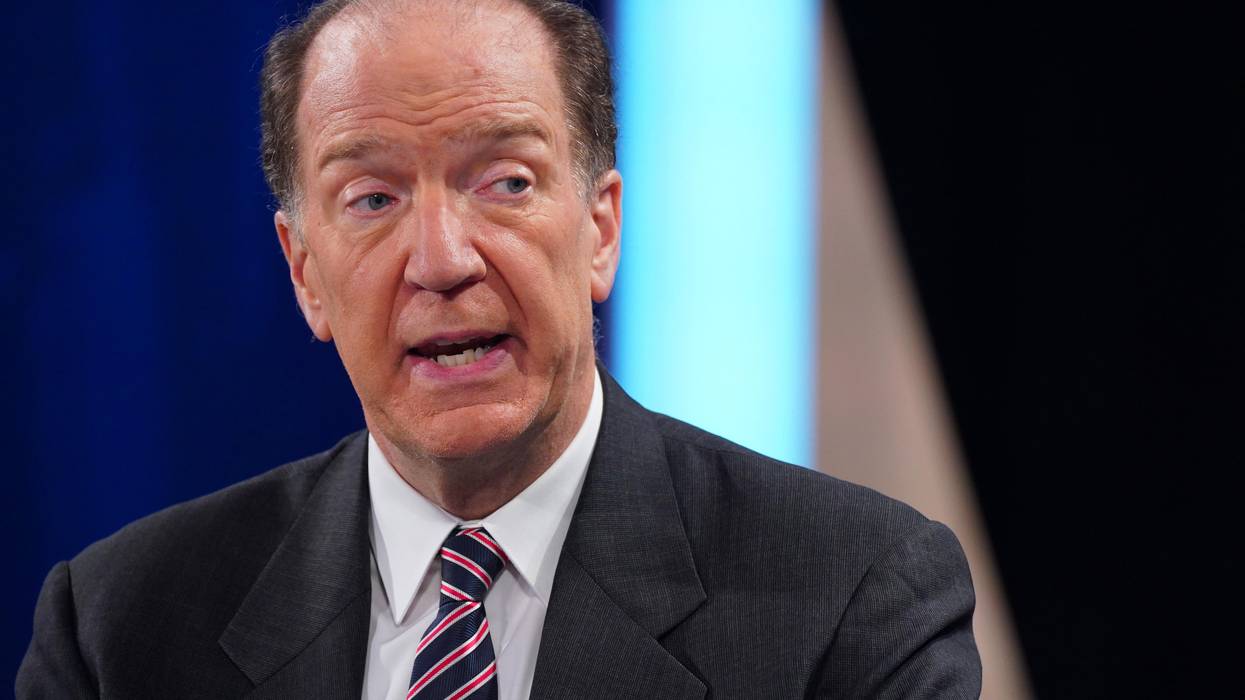
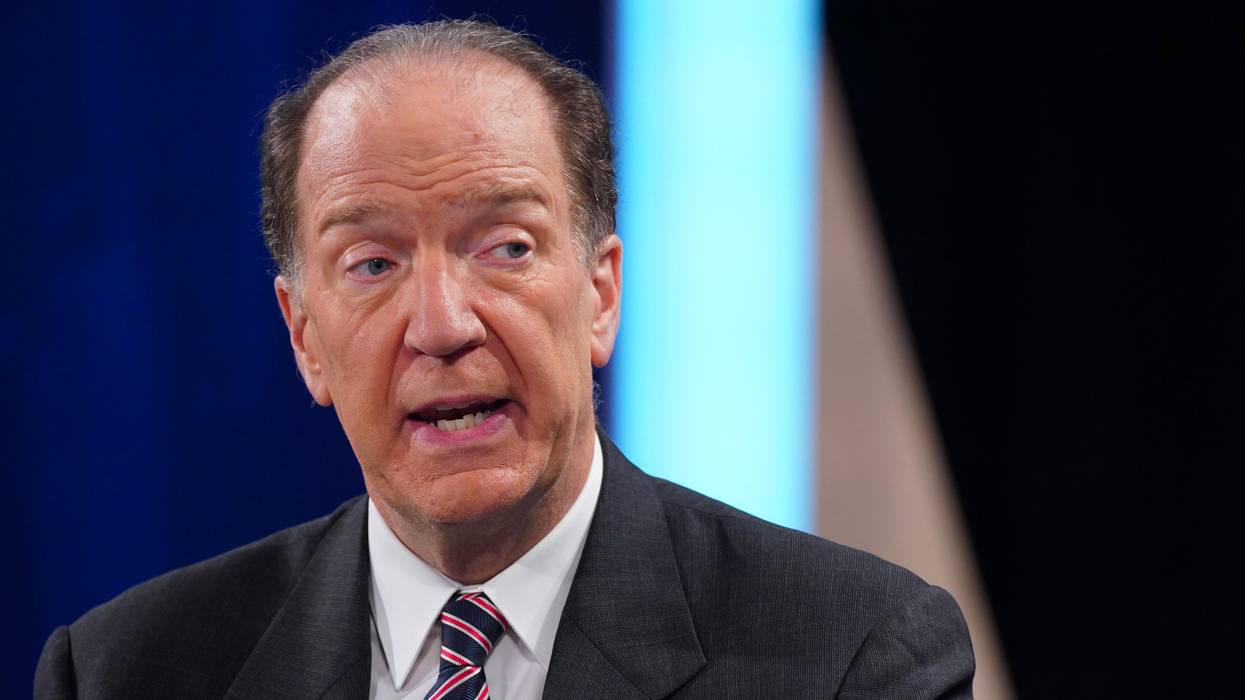
Late last year, former World Bank President David Malpass sparked global outrage by saying he's not sure whether he accepts the scientific consensus that climate change is caused by the burning of fossil fuels, further validating climate activists' longstanding calls for systemic reforms at the bank.
"I don't know," Malpass said in response to a reporter's question about his views on climate change. "I'm not a scientist."
The comments prompted widespread calls for Malpass to step down, which he did in June. Current World Bank President Ajay Banga, who U.S. President Joe Biden nominated to replace Malpass, is a former private equity executive who has worked for Nestlé, PepsiCo, and Citibank.
Urgewald warned in its report Tuesday that the World Bank will remain a major source of funding for the fossil fuel industry until it enacts reforms that prevent the IFC from bolstering oil and gas under the guise of "trade finance."
"The easiest way for a big oil company or coal operation to escape attention surrounding public assistance is to cloak it in trade finance," the group said. "It is a huge loophole that must be closed and evaluated through public disclosure."
Urgewald added that "there is no doubt" the World Bank and IFC "are going to deny" its findings and "claim the figures are inaccurate."
That's exactly what an IFC spokesperson did on Tuesday, telling The Guardian that "Urgewald's report contains serious factual inaccuracies and grossly overstates IFC's support for fossil fuels."
"IFC regularly reports accurate and timely project information through various channels," the spokesperson added.
Urgewald disputed that narrative in its report, asserting that the "continued secrecy surrounding trade finance makes it impossible to determine how much fossil fuel business the IFC is ultimately facilitating and whether the World Bank is actually aligned with the goals of the Paris Climate Agreement."
"An exorbitant amount of IFC money, i.e., more than half its budget, is streaming through banks without any oversight by the [World Bank Board of Directors], without any opportunity for public scrutiny, without any accountability," the group said.
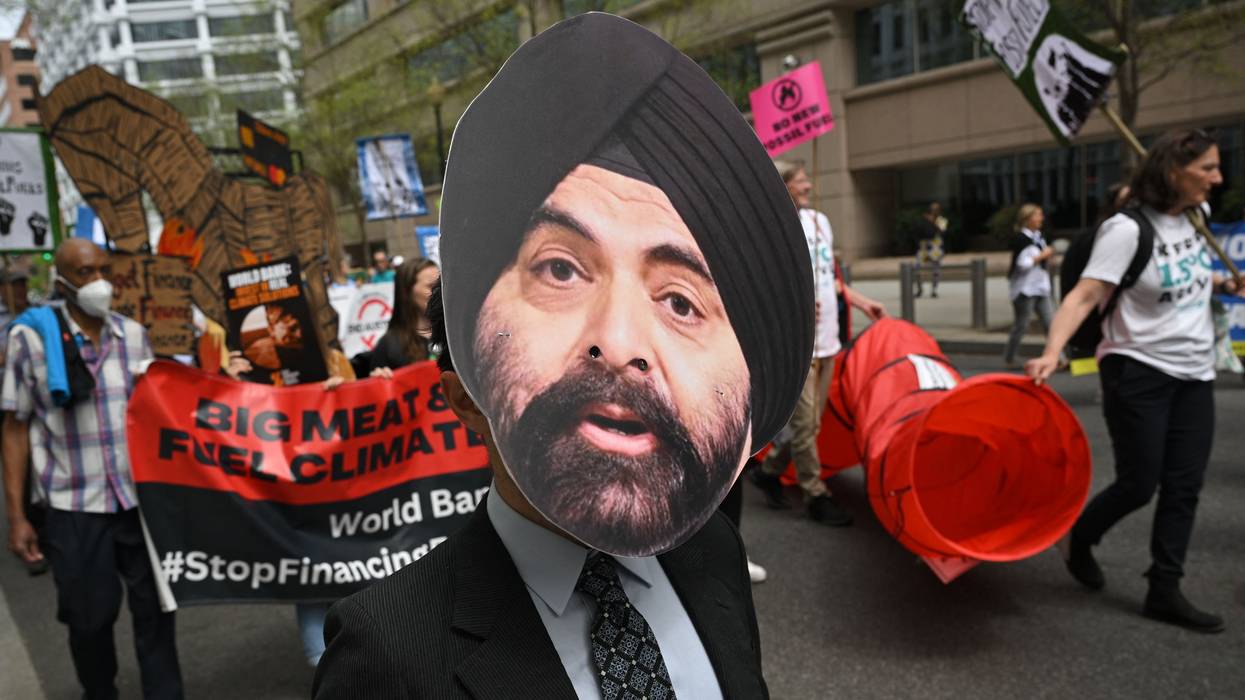
"You can't address poverty in a world of climate chaos," one advocacy group told Ajay Banga. "End fossil fuel finance now!"
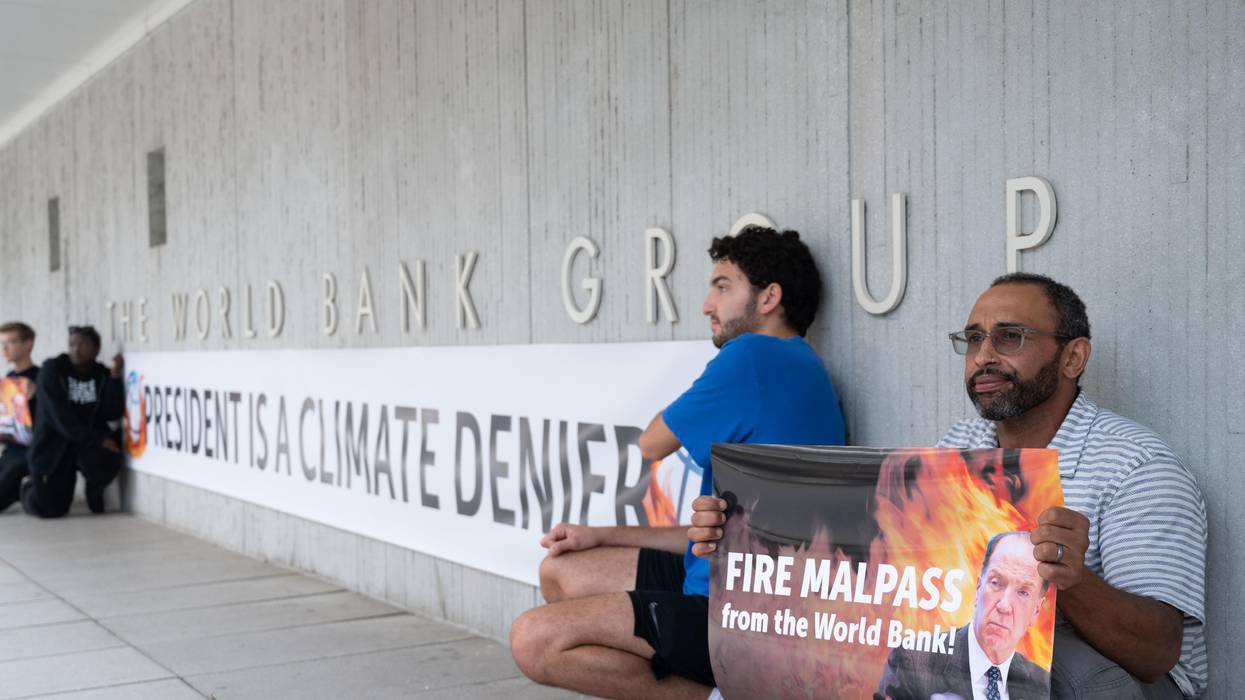
Climate advocates on Friday held a demonstration outside the World Bank Group's headquarters in Washington, D.C., where they welcomed the bank's new president, Ajay Banga, and implored him to immediately begin pursuing a global just transition.
Campaigners from the Glasgow Actions Team, Global Citizen, Friends of the Earth, and Big Shift Global handed their "First 100 Days" demands to World Bank staffers as they entered the building, making the case on Banga's first day at the helm that he should prioritize four key goals over the next few months: end fossil fuel finance, ramp up clean energy funding, cancel debt for poor nations facing myriad crises, and align the bank's policies with the Paris agreement's goal of limiting global warming to 1.5°C.
"It's not often we feel hope in the climate movement, but today, with a new World Bank president having publicly committed to taking climate change seriously, we're feeling hopeful," Glasgow Actions Team director Andrew Nazdin said in a statement. "But President Banga doesn't have a moment to lose; the time is now to announce plans to move away from fossil fuels and help the globe transition to clean energy in a just and equitable manner."

Climate advocates cheered in February when former World Bank President David Malpass, nominated to lead the bank by then-U.S. President Donald Trump in 2019, said that he would step down this spring, nearly a year ahead of schedule.
The early resignation announcement followed a sustained pressure campaign against Malpass, who was condemned as a "climate denier" after refusing to acknowledge that burning fossil fuels causes the planet-heating pollution underlying increasingly frequent and intense extreme weather disasters.
U.S. President Joe Biden's ensuing decision to tap Banga for the role angered progressives, who argued that the erstwhile private equity executive and former Mastercard CEO is likely to advance the powerful international financial institution's historically pro-corporate and pro-fossil fuel agenda. When the World Bank's board of governors ratified Banga's presidency in early May—appointing the Biden nominee to a five-year term with a June 2 start date—the bank's new leader suggested that a "climate change shift" was coming.
On the eve of Banga's first day in office, Big Shift Global acknowledged that his stated belief in climate science is an improvement over the status quo. But whether he leads the World Bank in "the right direction on climate" remains an open question, the international campaign noted, reiterating its demands for "a phaseout of fossil fuel finance and support for a just, clean energy transition."
Luisa Abbott Galvao, senior international policy campaigner at Friends of the Earth U.S., pointed out that "Ajay Banga has spent his career chasing profits for shareholders rather than working in the public interest."
"But he could still commit to a different legacy from his climate change-denying predecessor, David Malpass," said Galvao. "We call on Banga to pledge an end to World Bank financing for fossil fuels on his first day in office. When science says new fossil fuel developments are incompatible with the 1.5°C pathway, a failure to act is effectively climate denial."
For its part, the Glasgow Actions Team tweeted, "While Ajay Banga is inside addressing his staff, we're outside showing him how easy it is to truly shift the World Bank to act on climate change!"
"You can't address poverty in a world of climate chaos," the group added. "End fossil fuel finance now!"
Big Shift Global showed in a recent report that the World Bank has directly financed at least $14.8 billion in fossil fuel production since the signing of the Paris agreement in 2015—reneging on its 2017 pledge to stop supporting oil and gas projects within two years.
The Intergovernmental Panel on Climate Change and the International Energy Agency have made clear that fossil fuel expansion will cause the climate emergency's consequences to grow even deadlier, especially for humanity's poorest members who have done the least to cause the crisis.
Global Citizen noted Friday that impoverished countries on the frontlines of mounting socio-ecological catastrophes "can't tackle climate change when they're drowning in debt" and urged Banga to implement a debt jubilee in addition to subsidizing a green overhaul of the global economy.
The group also took out a full-page ad in The Wall Street Journal, calling on Banga to begin transforming the World Bank into an instrument for genuinely sustainable development on his first day.
"As the new president, what will your legacy be?" the ad asks. "In the face of the triple climate, poverty, and hunger crises, the world's biggest development bank stands at a critical juncture."
"Under your guidance, the World Bank could serve as an invaluable partner for low-income countries and those vulnerable to climate change," it continues. "The solutions are on the table."
"Make your first steps bold," says the ad. "Working alongside other multilateral development banks, help mobilize $1 trillion more in financing to help the world's poorest and most vulnerable countries quicken their transition to clean energy, withstand disasters, and power our planet."
"After years of David Malpass in the president's office, we cannot afford another second of climate denial leading the bank," said one campaigner.
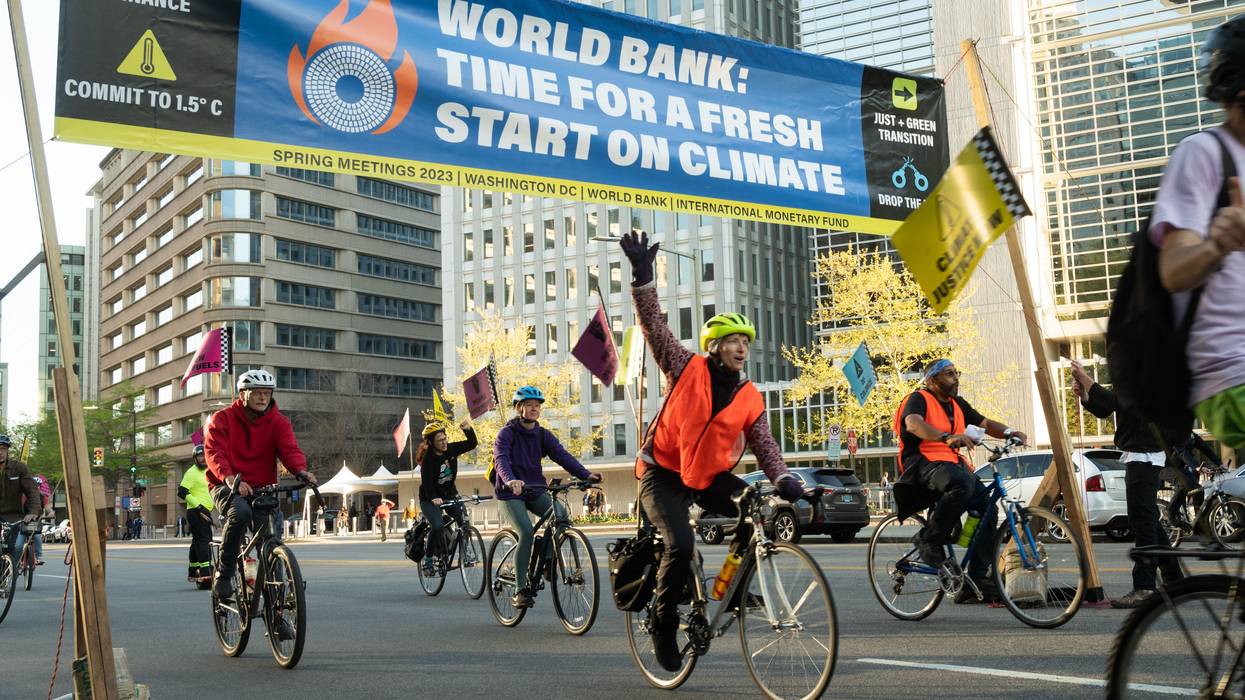
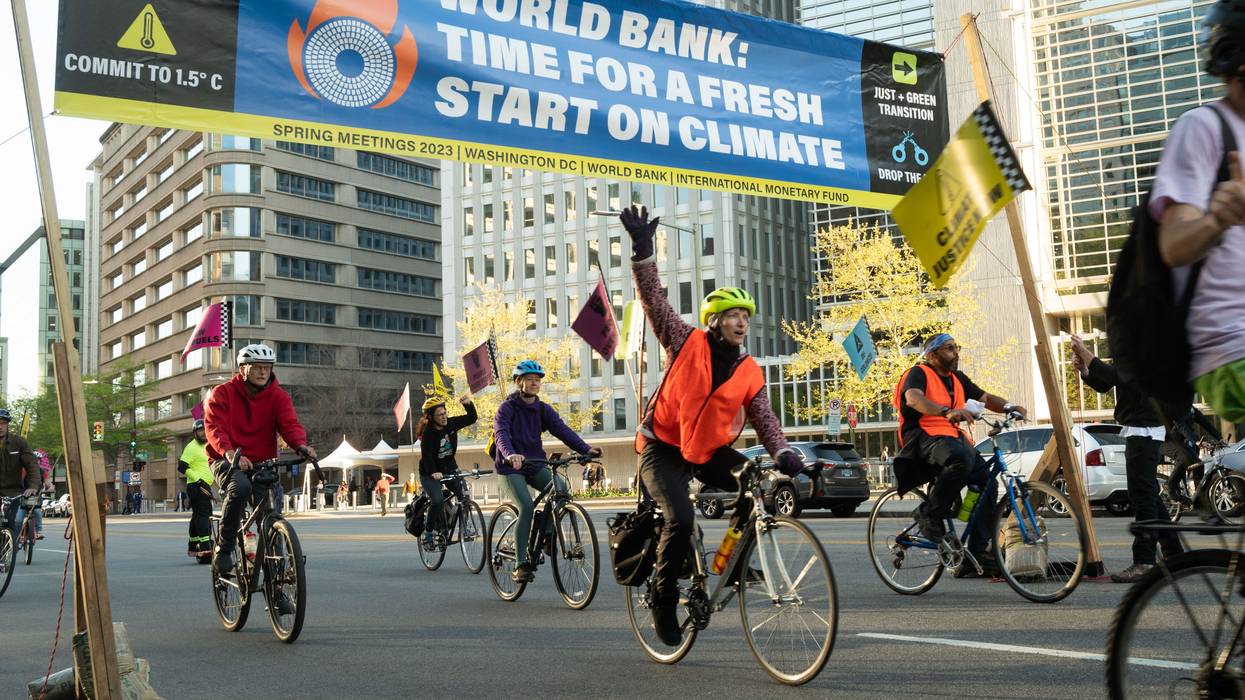
Roughly 100 activists marked the opening day of the World Bank Group spring meetings by riding bicycles through the streets of Washington, D.C. on Monday night, calling on incoming bank president Ajay Banga to halt fossil fuel financing and ramp up clean energy and climate justice investments.
While demanding a turnaround on green funding in developing countries, the "Wrong Way on Climate" bike protest blocked rush-hour traffic outside World Bank headquarters as finance ministers traveled to dinner parties and backroom meetings.
"Bikes are very literally people-powered," Hope Neyer, a public health student and organizer with Shutdown D.C., said in a statement. "They're the ultimate zero-emission vehicles. We chose to gather on bikes tonight to remind the World Bank of the potential we have as individuals and communities to show up for what we believe in—the need to protect our planet, the international right to make healthy choices for our families, and a future that is just and livable for us all."
The action took place on the first day of the bank's 2023 spring meetings, which are being run this week by outgoing World Bank President David Malpass. Climate advocates cheered in February when Malpass, tapped to lead the bank by then-U.S. President Donald Trump in 2019, said that he plans to step down by the end of June, nearly a year ahead of schedule. The early resignation announcement followed a sustained pressure campaign against Malpass, who was condemned as a "climate denier" after refusing to acknowledge that burning fossil fuels causes the planet-heating pollution underlying increasingly frequent and intense extreme weather disasters around the globe.
Activists—whose bike ride started under a banner that reads, "World Bank: Time for a Fresh Start on Climate"—are now looking to Malpass' replacement, Banga, to reverse course and scale up decarbonization efforts. Progressives in February denounced U.S. President Joe Biden for nominating the private equity executive and former Mastercard CEO to the role, arguing that he's likely to advance the powerful international financial institution's historically pro-corporate and pro-fossil fuel agenda. Campaigners are wasting no time in pressuring Banga to make the World Bank an instrument for genuinely sustainable development.
"Nominee Banga has the opportunity of a lifetime, if he can rise to the climate challenge."
"After years of David Malpass in the president's office, we cannot afford another second of climate denial leading the bank," Andrew Nazdin, director of the Glasgow Actions Team, said Monday. "Nominee Banga has the opportunity of a lifetime, if he can rise to the climate challenge—ending financing oil or gas, ramping up investment in renewables, and becoming the transformative leader the world is begging for."
In an attempt to defend his record amid criticism last September, Malpass said the World Bank allocated $31.7 billion to climate finance in 2021, with half of it aimed at bolstering adaptation efforts. Not only is that a tiny fraction of the trillions of dollars in green investment the Intergovernmental Panel on Climate Change (IPCC) says is needed each year to maintain a habitable planet, but according to reporting by the Financial Times, Malpass was directly involved in weakening multilateral development banks' (MDBs) joint announcement on climate lending at COP26.
After the World Bank described itself last year as "the largest multilateral funder of climate investments in developing countries," Bronwen Tucker of Oil Change International pointed out that "the World Bank Group still funds more fossil fuels than any other MDB, and they continue to lock Global South countries into expensive and volatile fossil fuel contracts through their heavy-handed policy lending programs."
The Big Shift Global coalition showed in a recent report that the World Bank has directly financed at least $14.8 billion in fossil fuel production since the signing of the Paris agreement in 2015—negating its 2017 pledge to stop supporting oil and gas projects within two years.
The IPCC and the International Energy Agency have made clear that fossil fuel expansion is incompatible with limiting global warming to 1.5°C above preindustrial levels, beyond which the climate emergency's consequences will grow even deadlier, especially for humanity's poorest members who have done the least to cause the crisis.
"As the World Bank and IMF meet behind closed doors to advance the agenda of concentrated corporate and political power, a coalition of D.C.-area activists in solidarity with movements worldwide, especially in the Global South, manifested a very different vision outside," Basav Sen, member of the For People For Planet coalition, said Monday. "We encircled the meetings on bicycle and on foot, to assert the power of organized people."
Concerned citizens from around the globe are demonstrating throughout the week to demand that the World Bank stop financing fossil fuels. They also plan to call for an overhaul of both Bretton Woods institutions—the World Bank and the International Monetary Fund—to "prioritize justice, helping developing countries to green to follow a 1.5°C roadmap with poverty alleviation at its heart," according to the Glasgow Actions Team. "They will also call to end the 'gentlemen's agreement' that has thus far allowed only the U.S. to nominate the World Bank president."
On Tuesday morning, activists held a "First 100 Days" protest outside World Bank headquarters. They unveiled a first 100 days checklist that outlines what they want incoming bank president Banga to achieve at the start of his five-year term.
Campaigners also plan to gather outside the World Bank on Wednesday for a "Stop Fossil Gas" demonstration, where they will draw attention to the bank's continued funding of a worldwide expansion of gas pipelines.
Activists plan to cap off the week of action with a large march and rally on Friday that features a "Trojan Horse" of debt impacts on low-income nations the World Bank works with.
The move could open the way "for serious climate finance," said 350.org co-founder Bill McKibben.
In a move cheered by climate advocates, World Bank President David Malpass—who sparked outrage last year by refusing to affirm that burning fossil fuels is heating the planet—said Wednesday that he would step down from his post by the end of June, nearly a year ahead of schedule.
"Serving as president of the World Bank Group has been my enormous honor and privilege," Malpass said in a LinkedIn post announcing his decision. "We've worked hard together to reduce poverty, increase economic growth, reduce government debt burdens, and improve living standards across the full range of human development, including education, health, social protection and jobs, gender, and access to clean water and electricity."
Malpass—who was nominated by then-U.S. President Donald Trump in 2019—also touted "new records in financing levels, including climate financing."
However, climate campaigners and progressives noted Malpass' fossil-friendly tenure while welcoming his impending resignation, which will enable U.S. President Joe Biden to nominate a replacement.
"His support for fossil fuels and abject failure to fund climate action is unacceptable."
"Under David Malpass, the World Bank lost valuable time in fighting climate change, which put the bank further behind on its mission of ending poverty and ensuring shared prosperity," Luisa Abbott-Galvao, senior international policy campaigner at Friends of the Earth U.S., said in a statement.
"Malpass not only failed to stop actions that fuel climate chaos and injustice, he pushed for Wall Street-friendly policies that go against the public interest," Abbott-Galvao added.
Andrew Nazdin, director of Glasgow Action Teams, said that "we need a 21st-century bank, ready to tackle 21st-century problems. Malpass' position had become untenable, and his resignation is a golden opportunity to get leadership in place that's ready to tackle the climate crisis."
"It's time to end the gentleman's agreement that's given the U.S. a stranglehold on the World Bank presidency," Nazdin added, referring to the policy of always having an American World Bank president and a European International Monetary Fund chief.
In a statement, Oil Change International public finance campaign co-manager Bronwen Tucker asserted that "despite David Malpass’ departure, the World Bank Group is still far from its stated aim of being a climate leader."
"The World Bank Group still funds more fossil fuels than any other multilateral development bank," Tucker noted. "Ending this support for oil, gas, and coal needs to be priority number one in the next six weeks ahead of the bank's Spring Meetings."
U.S. Sen. Ed Markey (D-Mass.)—one of many congressional Democrats who urged Biden to push for Malpass' removal—tweeted: "I'm glad David Malpass has heeded my calls to resign as World Bank president. His support for fossil fuels and abject failure to fund climate action is unacceptable."
"Now," added Markey, "the World Bank must make up for his missteps and get ready to be part of the solution for a livable future."
Over two dozen House Democrats sent a letter Thursday urging U.S. President Joe Biden to "advocate for the removal or forced resignation" of World Bank president David Malpass, who has come under fire for his recent refusal to acknowledge the indisputable connection between planet-heating fossil fuel emissions and increasingly catastrophic wildfires, hurricanes, and droughts.
"People and governments now more than ever need a World Bank leader who listens to the science and is a global leader in combating climate change."
Last week, when asked at a climate policy summit whether he accepts the scientific consensus that the burning of coal, oil, and gas is driving rapid and life-threatening global warming, Malpass--nominated to lead the World Bank in 2019 by then-U.S. President Donald Trump--declined to answer, saying: "I don't even know. I'm not a scientist."
The comment, which seemingly proved former U.S. Vice President Al Gore's allegation, made hours earlier at the same event, that the World Bank chief is a "climate denier," set off a firestorm of reaction. Over the past week, climate justice campaigners have rallied to demand that Malpass be replaced with someone who will do more to finance clean energy projects in developing countries.
In their letter, which amplifies the growing chorus calling for Malpass to be fired, the lawmakers characterized Malpass' remarks as "unacceptable."
"The policy and programming of the World Bank Group needs to be fully based on the findings of the Intergovernmental Panel on Climate Change (IPCC) and aligned with the goals of the Paris agreement," they wrote, referring to the effort to limit global temperature rise to 1.5degC above preindustrial levels to avert the deadliest consequences of the climate emergency.
"People and governments now more than ever need a World Bank leader who listens to the science and is a global leader in combating climate change and adapting to the impacts that are unavoidable," says the letter, which was led by Reps. Jared Huffman (Calif.) and Sean Casten (Ill.).
Signatories include Reps. Jesus "Chuy" Garcia (Ill.), Rashida Tlaib (Mich.), Alexandria Ocasio-Cortez (N.Y.), Raul M. Grijalva (N.M.), Jamaal Bowman (N.Y.), Pramila Jayapal (Wash.), Raja Krishnamoorthi (Ill.), and Ayanna Pressley (Mass.).
In an effort at damage control, Malpass last Thursday apologized and tried to walk back his non-answer, telling CNN: "It's clear that greenhouse gas emissions are coming from man-made sources, including fossil fuels... I'm not a denier." He also indicated that he has no plans to resign.
But Malpass' apology hardly makes up for his lackluster record at the helm of the world's most powerful multilateral development bank (MDB), critics have stressed. For instance, the $31.7 billion that Malpass says the World Bank allocated to climate finance in 2021 is a small fraction of the trillions of dollars in green investment the IPCC says is needed each year to secure a livable planet.
Moreover, while the World Bank told Bloomberg last week that it "is the largest multilateral funder of climate investments in developing countries," reporting by the Financial Times following last year's COP26 meeting revealed that Malpass was directly involved in watering down a joint announcement by MDBs on climate lending at the United Nations conference.
As Bronwen Tucker of Oil Change International pointed out recently, "The World Bank Group still funds more fossil fuels than any other MDB, and they continue to lock Global South countries into expensive and volatile fossil fuel contracts through their heavy-handed policy lending programs."
This point was echoed in Thursday's letter from House Democrats:
Since the Paris Agreement, the World Bank Group has provided over $14 billion in project financing to the fossil fuel industry, more than any other multilateral development bank. The figure does not include billions more in support to fossil fuels through policy-based lending and financial intermediaries. One of the most troubling sectors where the funding for climate-destroying fossil fuels continues unchecked is international fossil fuel financing for development projects, further continuing the reliance on fossil fuel with damaging results to communities and countries' economies.
Furthermore, the data is clear that the markets are shifting away from fossil fuels towards cleaner, cheaper sources. Renewables outperform fossil fuel investments, and the cost of capital remains lower for renewable energy companies than fossil fuel companies. For example, First Solar is trading at a price/earnings ratio more than 10x higher than Shell and Tesla is trading similarly in comparison to Exxon. Capital markets understand the impacts of climate change, but they are leaving behind regions that depend on fossil fuel extraction. The World Bank is uniquely positioned to respond to this, through the prudent redirection of capital, away from those assets that are contributing to the problem and towards those resources that help solve the problem while still helping humanity meet their energy needs.
Bloomberg, citing an unnamed senior official in the Biden administration, reported last week that Malpass' September 20 statement "raised eyebrows within the White House and... the administration was planning to look more closely at the matter."
According to Axios, Malpass' ignorance of or indifference to the causes of anthropogenic climate change "provides ammunition to officials who want Biden to spend some political capital to attempt to remove him. But officials know that replacing Malpass would be a messy process and they are unsure how--or even if--the U.S. can orchestrate his ouster."
Although Biden doesn't have the authority to remove Malpass before his term ends in 2024, he can request his resignation or work with other shareholders--the World Bank is owned by the governments of its member nations--to pressure the board of directors to fire him.
In their letter, House Democrats reminded Biden that "the United States is the largest shareholder in the World Bank, and our influence can determine the direction of their investments for years to come."
"The United States has significant influence to push the institutions to end their support for fossil fuel investments and significantly increase the quality and quantity of their climate finance," the lawmakers wrote. "We must pursue bold steps, both at home and through our investments abroad, to avoid the most disastrous impacts of the climate crisis and transition toward clean energy."
"The World Bank Group must be a global leader of responsible and sustainable financing for developing countries and it is unacceptable for David Malpass, as president [of] this leading international development institution, to be so brazenly ignorant toward the impacts of the climate crisis," they continued.
"We need a World Bank Group leader," they added, "who fully appreciates the threat of climate change and the need to accelerate the global transition to a clean just energy future to improve living standards, reduce poverty, and encourage sustainable growth."
Climate justice campaigners are ramping up pressure on the World Bank to fire its president, David Malpass, after he refused to acknowledge that burning fossil fuels causes the planet-heating pollution underlying increasingly frequent and intense extreme weather disasters around the globe.
Activists on Thursday unfurled a banner in front of the institution's building in Washington, D.C. that labels Malpass a "climate denier" and called on U.S. President Joe Biden and other leaders to ditch the World Bank chief.
"A self-pronounced climate denier at the helm of the World Bank at this stage of the climate emergency is inexcusable!" Climate Action Network executive director Tasneem Essop said Wednesday in a statement.
"The World Bank continues to use public money to finance fossil fuel projects in Global South countries where people are already suffering the worst impacts of climate change, said Essop. "For the World Bank to maintain any shred of decency, Malpass cannot remain as president."
"There is no time for climate denialism."
When asked at a Tuesday event whether he accepts the scientific consensus that fossil fuel emissions are driving rapid and dangerous global warming, Malpass refused, declaring: "I don't know. I'm not a scientist."
The non-answer validated former U.S. Vice President Al Gore's contention, made earlier that day at the same event, that Malpass is a "climate denier." Gore urged Biden to do everything in his power to replace Malpass--leader of the World Bank since then-U.S. President Donald Trump appointed him in 2019--with someone who will do more to finance clean energy projects in developing countries.
Although Biden doesn't have the authority to remove Malpass before his term ends in 2024, he can request his resignation or collaborate with other shareholders--the World Bank is owned by the governments of its member nations--to push the board of directors to fire him. As the bank's largest shareholder, the U.S. exerts significant influence over the organization and its operations.
In the words of Oil Change International, ousting Malpass is "the only acceptable response" to his climate change denialism, which is precisely what it and more than 40 other groups in the Big Shift Global coalition are demanding.
"The World Bank must not be led by a climate denier and President Biden should call on the bank's board to fire him immediately," Luisa Galvao of Friends of the Earth U.S. said Wednesday. "The ancient agreement where the United States nominates bank presidents also needs to end. We need democratic and globally equitable governance."
Bloomberg, citing an unnamed senior official in the Biden administration, reported Wednesday that Malpass' recent comments "have raised eyebrows within the White House and... the administration was planning to look more closely at the matter."
The Treasury Department also weighed in, saying in a statement: "We expect the World Bank Group to be a global leader of climate ambition and the mobilization of significantly more climate finance for developing countries. We have--and will continue--to make that expectation clear to World Bank leadership. The World Bank must be a full partner in delivering on this global agenda."
"The World Bank Group cannot align its portfolio with the Paris agreement goal of keeping global warming below 1.5oC with a climate change denier at its helm!"
Sonia Dunlop, program lead on multilateral development banks and public banks at the E3G think tank, called Malpass' refusal to accept the reality of the climate crisis "a step too far."
"It is time for the White House and governments all over the world to think hard as to who they want at the helm of the World Bank," said Dunlop. "The World Bank is critical to the global fight against climate change. You don't need to be a scientist to understand climate science. The facts are clear, and there's no alternative but to act."
Malpass has drawn the ire of progressives since he was nominated to lead the World Bank by Trump, with advocates predicting that his reign would be defined by climate policy failures. Last year, more than 70 groups from around the world sent a letter imploring World Bank governors and executive directors to terminate Malpass over climate inaction.
Soon after, a World Bank staffer wrote in a blistering opinion piece that Malpass "has neither the vision nor credibility to make the World Bank a climate leader," and the climate adviser to United Nations Secretary-General Antonio Guterres blasted the World Bank for being "an ongoing underperformer" on climate.
In an attempt to defend his record on Tuesday, Malpass said the World Bank directed $31.7 billion to climate finance in 2021, with half of it aimed at bolstering adaptation efforts.
Not only is that a tiny fraction of the trillions of dollars in green investment the Intergovernmental Panel on Climate Change says is needed each year to maintain a habitable planet, but according to reporting by the Financial Times, Malpass was directly involved in weakening multilateral development banks' (MDBs) joint announcement on climate lending at COP26.
While the World Bank told Bloomberg earlier this week that it "is the largest multilateral funder of climate investments in developing countries," Bronwen Tucker of Oil Change International pointed out Wednesday that "the World Bank Group still funds more fossil fuels than any other MDB, and they continue to lock Global South countries into expensive and volatile fossil fuel contracts through their heavy-handed policy lending programs."
"Given Malpass' climate crisis denial stance, it is no wonder the World Bank provides more finance, tax breaks, and higher tariffs to benefit fossil fuels than any other public development bank," said Heike Mainhardt, senior advisor with Urgewald.
"We stand with U.N. leadership and call on the World Bank's shareholders to step in--to stop the World Bank's public funding of fossil fuels," Mainhardt added, referring to a plea Guterres repeated Tuesday during his opening remarks at this year's General Assembly.
"Every day that Malpass serves as World Bank president is a missed opportunity to tackle climate chaos."
Jake Hess, a former researcher at the World Bank turned whistleblower who now works with Glasgow Actions Team, called it "deeply irresponsible for World Bank shareholders, and especially the Biden administration, to allow a climate denier to run this vital institution."
"Every day that Malpass serves as World Bank president is a missed opportunity to tackle climate chaos," Hess said Thursday in a statement. "Joe Biden should have sacked him on day one, but it's never too late to do the right thing."
"If the U.S. and Europeans are serious about climate action, they should prove it by pushing Malpass out of the World Bank," he added. "Climate advocates have warned about Malpass from the very beginning of his tenure, and now is the perfect time for World Bank decision-makers to listen."
Dean Bhekumuzi Bhebhe of Power Shift Africa stressed that "the investments by the World Bank in Africa continue to fuel the impacts of the climate crisis experienced by communities across the continent."
"There is no time for climate denialism," Bhebhe continued. "The World Bank must act now to end all fossil fuel finance and invest in sustainable, renewable energy for all. It is critical Africa attracts increased investments to leapfrog dirty energy and become a green leader and not just a victim of the climate emergency."
Fran Witt of Recourse noted that "the World Bank Group cannot align its portfolio with the Paris agreement goal of keeping global warming below 1.5oC with a climate change denier at its helm! Malpass must go!"
Former U.S. Vice President Al Gore called the head of the World Bank a "climate denier" on Tuesday and urged President Joe Biden to take steps to replace him with someone who will do more to finance clean energy projects in low-income nations.
"Since almost 90% of the increased emissions going forward are coming from developing countries, we have to take the top layers of risk off the access to capital in these developing countries," Gore said at a climate policy summit hosted by the New York Times.
"That's the job of the World Bank--to coordinate the other multilateral development banks--and they're simply not doing it," said Gore.
"We need to get rid of that leadership" and "put new leadership in," Gore continued, calling on Biden to do everything in his power to initiate such a change.
It "is ridiculous to have a climate denier the head of the World Bank," he added.
Speaking on a separate panel hours later at the same event, World Bank President David Malpass defended the institution's approach to climate finance, calling Gore's criticism "very odd."
But Malpass, nominated to lead the World Bank in 2019 by then-U.S. President Donald Trump, proceeded to validate Gore's charge of climate denialism.
Pressed multiple times to say whether he accepts the scientific consensus that burning fossil fuels produces the planet-heating emissions now endangering life on Earth, Malpass refused, declaring: "I don't know. I'm not a scientist."
United Nations Secretary-General Antonio Guterres has repeatedly implored the World Bank and its regional counterparts to increase and improve access to financing to help impoverished and vulnerable countries meet the U.N.'s Sustainable Development Goals and adapt to climate shocks, including during his opening remarks at the General Assembly on Tuesday.
"Multilateral development banks must step up and deliver," said Guterres. "Major economies are their shareholders and must make it happen."
In an emailed statement, the World Bank told Bloomberg that it "is the largest multilateral funder of climate investments in developing countries."
According to Malpass, the World Bank allocated $31.7 billion to climate finance in 2021, half of it to strengthen adaptation to extreme weather events. That's a small fraction of the trillions of dollars in green investment the Intergovernmental Panel on Climate Change says is needed annually to secure a habitable planet.
Currently, there is "unequal access to private capital," with state-owned enterprises often supporting fossil fuel projects, Gore said. "That has to be fixed."
As the Times reported:
In another panel at the same event, John Kerry, the U.S. special envoy for climate change, declined to comment on whether the Biden administration had confidence in Mr. Malpass' leadership, saying, "that's the president's decision."
But Mr. Kerry said he and others in the administration have been pushing for a broader rethinking of the global approach to climate change and other issues that would allow entities like the World Bank and the International Monetary Fund to act more aggressively.
"We need to have major reform, major restructuring" of multilateral development banks, Mr. Kerry said. "It's up to us to pull people together and get that reform, and there's a lot of discussion about us doing that right now."
"The presidency of the World Bank has been held by a citizen of the United States, its largest shareholder, since the bank was founded after World War II," the newspaper noted. "Mr. Malpass' term runs until 2024 and Mr. Biden wouldn't be able to remove him early, although he could pressure Mr. Malpass to resign or work with other shareholders to get the board of directors to remove him."
As Bloomberg explained, being the World Bank's biggest shareholder gives the U.S. "considerable influence over its operations" as well as those of other global financial institutions. For instance, "earlier this year, the International Monetary Fund--with the support of the U.S.--replaced a Trump appointee who was serving as its No. 2 official."
Gore's Tuesday comments come roughly six weeks before the start of the U.N.'s COP 27 climate conference in Egypt and in the wake of multiple climate change-driven disasters, including historic droughts in China and Europe as well as catastrophic floods in Pakistan that have killed more than 1,500 people to date.
"When every night on the TV news is like a nature hike through the Book of Revelation, that builds demands for meaningful action," Gore said in a recent interview. "And these events aren't representative of a so-called random walk, they're getting worse every single year in the last decade."