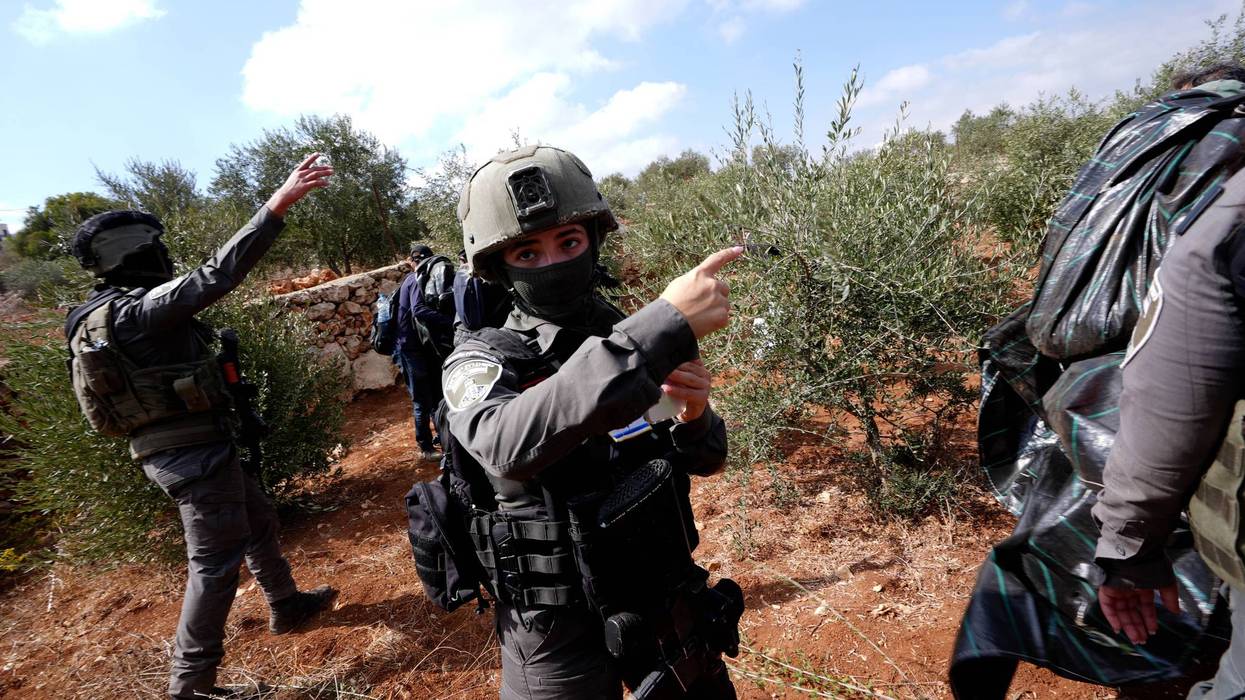
'Flat-Out Lying,' Israel Claims Palestinian Farmers, Brad Lander Entered Restricted Area Before Detention
Aside from the indignity of Israel forcing Palestinians to get permission to work their own land, the farmers and those with them—including a US congressional candidate—were not even in an area requiring coordination.
An official Israeli military map belies claims made Wednesday by Israel's government that Palestinian olive harvesters accompanied by activists and US congressional candidate Brad Lander had entered a restricted area of the illegally occupied West Bank prior to their detention earlier in the day.
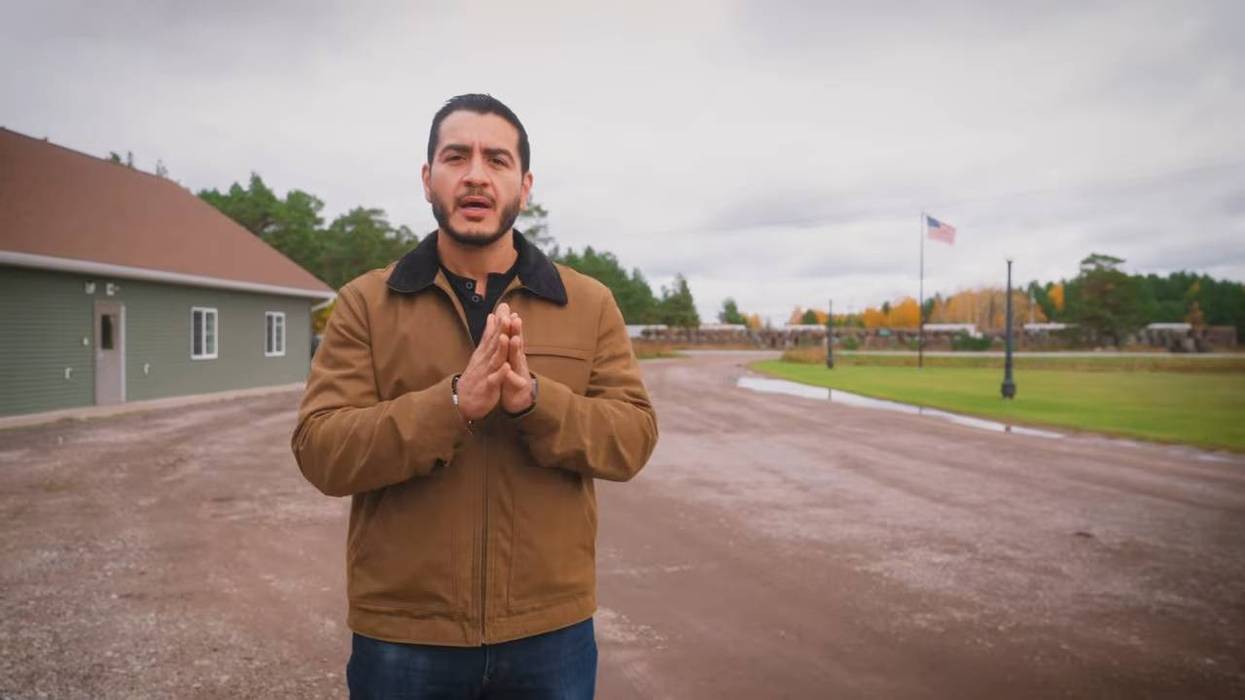
Israeli occupation forces detained Lander and scores of other people—including Israeli leftists, members of Rabbis for Human Rights, and Jewish American activists—near the town of Nahalin as they accompanied Palestinians who sought to harvest the olives that provide economic and cultural sustenance to their families and communities.
Lander, the Democratic nominee for New York's 10th Congressional District, was released after roughly three hours with what he called a "warning." Many of the other detainees remained in custody, according to The Times of Israel.
The Israel Defense Forces (IDF) and Israeli Foreign Ministry initially said that harvesting in the area required prior coordination with the authorities. But a map distributed to Palestinian farmers by Israel's Civil Administration, the military's administrative arm in the occupied territory, showed that the location did not require coordination.
The discrepancy prompted questions about why the farmers and their supporters were detained at all—and condemnation of an illegal occupation and apartheid system that forces Palestinians to get permission to work their own land.
"The occupation is a crime under international law. Harvesting olives isn’t a crime under any law I know," Lander posted on social media.
Responding to an Israeli Foreign Ministry social media post claiming "Brad Lander's latest stunt" was "not about harvesting olives," but rather "harvesting headlines," Palestinian human rights activist Ihab Hassan retorted, "If you stopped Israeli settler terrorists from storming Palestinian villages and communities, murdering civilians, stealing olives, setting homes on fire, and seizing land, there would be no headlines to harvest."
Hassab said in a separate post: "The Israeli Foreign Ministry is flat-out lying about Lander and the other activists entering a restricted area. The IDF’s own map shows they were not in a restricted area."
Some observers responded with mockery, like Jerusalem attorney Daniel Seidemann, who quipped that the apprehended Palestinians were guilty of "aggravated harvesting in the first degree."
New York social worker David Grossman posted a photo of an SUV belonging to World Central Kitchen that was bombed by Israeli forces in Gaza in one of multiple Israeli massacres of workers and volunteers for the food charity during the ongoing genocide.
Israeli journalist Haim Goldich acknowledged on X that "there's a chance there's a big mess here and 80 people were detained for no reason."
Wednesday's events took place against a backdrop of a particularly violent olive harvest season. The United Nations Office for the Coordination of Humanitarian Affairs (OCHA) said Monday that between September 1 and October 12, Israeli settlers carried out 199 attacks connected to the harvest, killing one Palestinian, injuring 124, and damaging more than 2,500 trees and saplings.
OCHA documented more than 2,060 settler attacks resulting in Palestinian death, injury, or property damage across the occupied West Bank since the beginning of 2026—an average of seven attacks a day.
According to OCHA, at least 1,138 Palestinians—at least 250 of them children—have been killed by Israeli soldiers and settlers in the West Bank since October 2023.
While Israeli leaders have sometimes condemned individual attacks—even while casting aspersions on victims like US photojournalist Heidi Levine—critics argue that the state's broader policies enable the violence. Settlements receive state infrastructure and protection, while Palestinians face restrictions on movement, land access, construction, and agricultural activity.
The result is a system in which Palestinians can face military detention for attempting to harvest their own trees, even as settlers attack Palestinian farmers and destroy their livelihood with impunity.
“The harvest orders tell the story of the government’s criminal policy: Settlers are illegally seizing more and more hilltops with government encouragement and support, while the military, for its part, closes off vast areas to Palestinians under the pretext of defending those illegal outposts," the Israeli group Peace Now said last week.
"This is a system of dispossession and plunder," the group continued, "and it is a disgrace to the State of Israel.”