

SUBSCRIBE TO OUR FREE NEWSLETTER
Daily news & progressive opinion—funded by the people, not the corporations—delivered straight to your inbox.
5
#000000
#FFFFFF
To donate by check, phone, or other method, see our More Ways to Give page.
Daily news & progressive opinion—funded by the people, not the corporations—delivered straight to your inbox.

"We expect every Republican who voted for the budget resolution to hold a town hall during recess on what parts of Medicaid and SNAP they want to cut," said the national director of the Working Families Party.
In the wake of their passage late Tuesday of a budget resolution that sets the stage for massive cuts to Medicaid and other key programs, House Republicans who supported the measure with near unanimity faced calls to explain their vote to constituents who will be directly harmed if the proposed cuts become law.
"We expect every Republican who voted for the budget resolution to hold a town hall during recess on what parts of Medicaid and SNAP they want to cut," Maurice Mitchell, national director of the Working Families Party, said in a statement following Tuesday's vote.
"If you stand behind this plan," Mitchell added, "stop cowering from your constituents."
In recent days, GOP lawmakers have faced angry audiences at town halls in their home districts as voters—including Republican constituents—express outrage over President Donald Trump and Elon Musk's lawless assault on federal agencies and the party's broader legislative agenda, which includes destructive attacks on key programs to help finance trillions of dollars in tax breaks largely for the rich.
"Every single swing district Republican voted to cut Medicaid so they can shovel cash to their billionaire backers."
The intensifying constituent wrath has left Republicans "weary and wary of in-person town hall meetings," NBC News reported Tuesday.
Citing an unnamed GOP aide, the outlet reported that "House Republican leaders are urging lawmakers to stop engaging in" town halls altogether.
In response to NBC's story, Indivisible co-executive director Ezra Levin noted that "there were like eight GOP town halls last week in the entire country."
"Ninety-five percent of GOP members were already hiding from constituents," Levin wrote on social media. "The fact that they think EIGHT is too many is a real sign of how scared they are of constituents and owning this agenda."
Last night, every single swing district Republican voted to cut Medicaid so they can shovel cash to their billionaire backers. If you’ve got an R representative, call now to let them know you’re furious: indivisible.org/resource/cal...
[image or embed]
— Leah Greenberg (@leahgreenberg.bsky.social) February 26, 2025 at 7:41 AM
Survey data indicates that the deep spending cuts congressional Republicans are pursuing are extremely unpopular, including with their own base. One poll released earlier this week found that 71% of Trump voters oppose Medicaid cuts and 60% oppose cuts to federal nutrition assistance.
Under the budget resolution that House Republicans passed late Tuesday, the committees that oversee Medicaid and SNAP are instructed to find over $1 trillion in combined cuts—a clear indication that the two programs are in the party's crosshairs, despite GOP leaders' claims to the contrary.
"This bill doesn't even mention the word Medicaid a single time," House Majority Leader Steve Scalise (R-La.) told reporters Tuesday.
But as The New York Times observed, the resolution's instructions to the House Energy and Commerce Committee—which has jurisdiction over Medicaid—to slash $880 billion in spending over the next decade leaves Republicans with few options other than large cuts to the program that provides healthcare to more than 70 million low-income Americans, including children.
"If Republicans want to avoid major cuts to Medicaid, the largest pot of available money is in the other big government health insurance program: Medicare," the Times observed.
House Speaker Mike Johnson (R-La.) claimed Tuesday that Republicans are only targeting "fraud, waste, and abuse" in Medicaid—a statement that one expert called "a smokescreen for the tired, harmful playbook to gut the Medicaid program that was tried and failed in 2017 as part of the highly unpopular effort to repeal" the Affordable Care Act.
"House Republican leaders have not really moved on," Edwin Park, a research professor at the Georgetown University McCourt School of Public Policy's Center for Children and Families, wrote earlier this week. "Today, they are still pursuing the same kind of draconian Medicaid cuts that would take away coverage and access from tens of millions of low-income children, parents, pregnant women, people with disabilities, seniors, and other adults."
Shortly after Tuesday's vote, Protect Our Care announced a new flurry of ads targeting Republicans in competitive districts who backed the budget resolution, which still must be approved by the GOP-controlled U.S. Senate before the party can begin crafting its filibuster-proof reconciliation package.
The first round of ads, according to Protect Our Care, is aimed at Reps. David Valadao (R-Calif.), Ken Calvert (R-Calif.), Young Kim (R-Calif.), Dan Newhouse (R-Wash.), David Schweikert (R-Ariz.), Ryan Mackenzie (R-Pa.), and Scott Perry (R-Pa.).
"Instead of standing up for their constituents' health, Republicans fell in line to vote in favor of ripping away healthcare from millions of Americans—all so they can give a tax break to billionaires and big corporations," said Leslie Dach, the chair of Protect Our Care. "Medicaid is popular across the board with voters, no matter where they live or who they voted for."
"By ignoring the impact of these cuts on their constituents, every House Republican who voted for this horrific budget is playing a dangerous game," Dach added. "If Republicans proceed with these cuts, we will hold them accountable."

The president's contradictory statements in recent days "cannot mask his betrayal to millions of people across the country who believed he would lower their costs," said one critic.
Beltway journalists reported Thursday on "confusion" spreading throughout the White House and the Republican caucus following U.S. President Donald Trump's endorsement of a House plan that would slash Medicaid and comments from the administration that suggested Trump will not protect Medicare—but Democratic lawmakers and progressive advocates said the message was crystal clear.
" Donald Trump and Elon Musk want to cut taxes for billionaires like themselves—and pay for it by gutting Medicare and Medicaid," Maurice Mitchell, national director of the Working Families Party, said in a statement. "They don't care if families have to take on crushing debt to pay for care, as long as it makes them much, much richer."
Mitchell offered the translation of contradictory statements from Trump that came Wednesday, with the president expressing support for a House resolution aimed at imposing his border and energy policies and extending his 2017 tax cuts that primarily benefited the wealthy.
The House resolution "implements my FULL America First Agenda, EVERYTHING, not just parts of it," the president said, suggesting his opposition to a Senate proposal that would push for two separate bills.
Calling for $2 trillion in spending cuts in order to fill the $4.5 trillion hole the tax cuts would blow in the deficit, the proposal would include potential cuts of $880 billion to Medicaid, which have made some Republicans in Congress express doubt that they could support the package without angering millions of constituents who rely on the low-income healthcare program.
Sen. Josh Hawley (R-Mo.) is among the Republicans who have expressed "concerns" about the "very deep cuts to Medicaid" included in the House proposal, which Larry Levitt of Kaiser Family Foundation said would "go well beyond eliminating fraud and abuse."
Hours before he endorsed the House plan, Trump said neither Medicaid nor Medicare "is going to be touched" in the Republican budget, and his later comments reportedly came as a surprise to his top aides who were unaware of what Medicaid cuts Trump would be willing to approve.
The White House further muddled its message about how it intends to fund tax cuts for the wealthiest Americans and corporations, including those who helped fund Trump's election campaign, when a spokesperson attempted to clarify that the government healthcare programs relied on by more than 100 million people would be preserved.
"The Trump administration is committed to protecting Medicare and Medicaid while slashing the waste, fraud, and abuse within those programs—reforms that will increase efficiency and improve care for beneficiaries," White House spokesperson Kush Desai told Politico Wednesday, before sending an updated statement that left out the mention of Medicare.
The administration's attempt to remove Medicare from the conversation about possible cuts didn't get past Democratic lawmakers including Sen. Ed Markey (D-Mass.), who said the original comments indicated "a war on Medicare."
Voters who supported Trump because they believed his promises to protect Medicaid and Medicare "were had," according to the administration's latest comments, said Helaine Olen of the American Economic Liberties Project.
"By endorsing House Republicans' budget plan, Trump once again is putting the interests of the ultrawealthy and corporations over the needs of everyday Americans, supporting a plan that devastates the healthcare of tens of millions of Americans," said Accountable.US executive director Tony Carrk. "Trump's statements to the contrary cannot mask his betrayal to millions of people across the country who believed he would lower their costs. Medicaid is more than a pawn in the administration's game: It's an essential program for millions of Americans of all ages."
Trump's newly confirmed commerce secretary, Howard Lutnick, further made the White House's objectives clear when he claimed on Fox News that Social Security, Medicaid, and Medicare are rife with "$1 trillion of waste, fraud, and abuse" and will be slashed.
"We have almost $4 trillion in entitlements and no one's ever looked at it before," said Lutnick. "You know Social Security is wrong, you know Medicaid and Medicare are wrong, so he's gonna cut $1 trillion, and then we're gonna get rid of all these tax scams that hammer Americans."
"Howard Lutnick, Trump's billionaire buddy turned commerce secretary, has confirmed that the administration was simply lying to MAGA supporters about not touching Social Security and Medicare," wrote Malcolm Ferguson at The New Republic on Thursday. "This is a long cry from the party that was telling its voters—many of whom are elderly conservatives on government benefits—that they wouldn't lay a finger on the programs they need most."
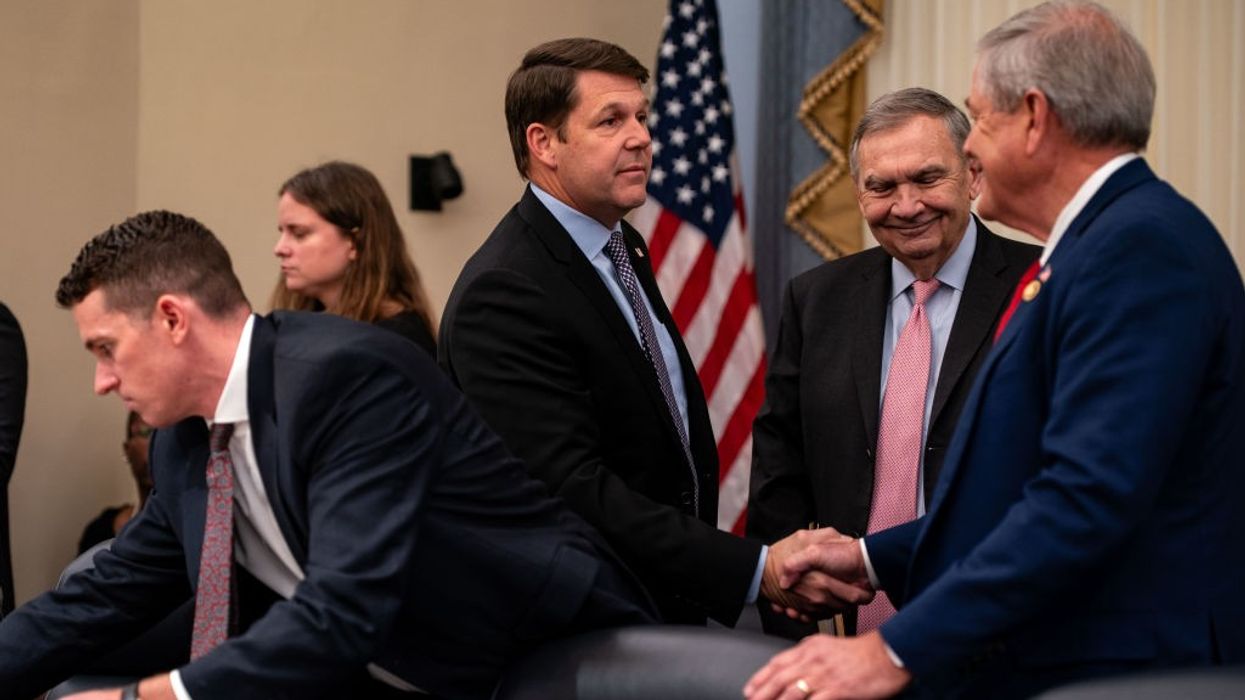
"Instead of choosing to protect the American people, they chose to protect billionaires and corporations," said the top Democrat on the House Budget Committee.
House Republicans advanced their budget plan out of committee Thursday night after a 12-hour markup session during which they rejected dozens of Democratic amendments, including proposed changes that would have protected Medicaid and federal nutrition benefits from the deep cuts the GOP hopes to impose to help finance trillions of dollars in tax breaks for the richest Americans.
The House Budget Committee advanced the Republican resolution, unveiled earlier this week, in a 21-16 vote along party lines. Prior to the vote, GOP members agreed to adopt an amendment offered by Rep. Lloyd Smucker (R-Pa.) that, according to Politico, effectively caps "the cost of the tax cuts at $4 trillion, with a dollar-for-dollar increase in that ceiling if Republicans cut more spending, up to a total of $2 trillion in cuts."
Democrats on the panel offered more than 30 amendments to the budget resolution, all of which Republicans rejected.
"Each of our amendments was a direct effort to shield the American people from the reckless cuts embedded in this proposal, cuts that will hurt the most vulnerable while giving trillions of dollars of handouts to the ultra-rich," Rep. Brendan Boyle (D-Pa.), the top Democrat on the House Budget Committee, said in his closing remarks at Thursday's hearing. "We fought to protect Medicaid and Medicare, ensuring that seniors, low-income families, children, and people with disabilities don't see their healthcare stripped away."
"We proposed amendments to maintain funding for public education, ensuring that schools remain adequately resourced and that teachers don't bear the burden of budget shortfalls," Boyle continued. "And we stood up for veterans who risked their lives for this country and deserve more than empty rhetoric. They deserve fully funded healthcare, food assistance, and the benefits they earned through their service. Yet, despite the clear benefits of these proposals, Republicans oppose all of them."
"Instead of choosing to protect the American people," he added, "they chose to protect billionaires and corporations."
"This isn't government of, by, and for the people; it's government of, by, and for billionaires."
The Republican budget blueprint calls for more than a trillion dollars in cuts to Medicaid and the Supplemental Nutrition Assistance Program (SNAP), which provide healthcare and food aid to tens of millions of low-income Americans.
"These aren't just numbers," Sharon Parrott, president of the Center on Budget and Policy Priorities, stressed in response to the House GOP resolution. "The loss of Medicaid means, for example, a parent can't get cancer treatment, and a young adult can't get insulin to control their diabetes. Cuts to food assistance mean a parent skips meals so their children can eat or an older person who lost their job has no way to buy groceries."
In addition to advancing the GOP's far-right ideological project, such cuts would partly offset the costs of Republicans' proposed tax breaks—which would disproportionately benefit the wealthiest people in the country, including the billionaires in President Donald Trump's Cabinet.
"Republicans are cutting Medicaid and SNAP to pay for tax breaks for the richest 1% of Americans," the progressive advocacy group Americans for Tax Fairness wrote in a social media post on Thursday. "They are literally taking $1.1 TRILLION away from you, and giving it to the wealthiest people in the country."
Thursday's vote marks a first step toward passage of a sprawling, filibuster-proof budget reconciliation package that will include a slew of Republican priorities.
But the House GOP must resolve its differences with Senate Republicans, who are pushing for two bills instead of one. The Senate plan, which Republicans advanced out of committee earlier this week, also calls for major cuts to Medicaid and SNAP.
"This Republican budget opens the door to massive cuts for families," Sen. Jeff Merkley (D-Ore.), ranking member of the Senate Budget Committee, said Thursday. "Democrats on the committee offered amendment after amendment to protect healthcare, housing, and education—all of the foundations working families need to thrive—and Republicans blocked every single one of them, all to later divert those cuts into massive tax breaks for the richest Americans."
"This is the Great Betrayal," Merkley added. "Trump campaigned on protecting families, but President Trump and Senate Republicans are all about protecting their billionaire friends. This isn't government of, by, and for the people; it's government of, by, and for billionaires."

"Congress has a choice—they can either extend a failed policy or create tax reform that actually works for Main Street and communities."
As the Trump administration and congressional Republicanspursue trillions of dollars in new tax giveaways for wealthy individuals and corporations, economists and pollsters this week are warning about how devastating the GOP's plan would be for small businesses and working families.
There Will Be Pain is the matter-of-fact title of a Thursday report from Josh Bivens, chief economist at the Economic Policy Institute (EPI). It details how extending the expiring provisions from the tax law that Republican lawmakers passed and Trump signed in 2017 "will have painful trade-offs for the U.S. economy and most Americans."
"The U.S. 'fiscal gap'—how much taxes need to be raised or spending cut to keep public debt stable as a share of gross domestic product—was entirely created by the Republican tax cuts of 2001, 2003, and 2017," Bivens wrote. "The 'tax gap'—the amount of taxes owed but not paid each year—is currently larger than the overall fiscal gap. It is driven by the richest U.S. households and businesses cheating the law and underpaying taxes."
Extending the Tax Cuts and Jobs Act (TCJA) provisions, currently set to expire at the end of this year, "would increase the fiscal gap by nearly 50%, from 2.1% to 3.3%," Bivens explained. "No matter how these tax cuts are financed, the result will hurt most working families, especially low-income households."
"Cuts to key social insurance and income support programs like Supplemental Nutrition Assistance Program (SNAP, commonly called food stamps) or Medicaid would do substantial damage to the nation's future workforce by depriving millions of children today of key health and developmental supports," he warned.
"Further, cuts of this size, if phased in quickly, would at minimum require the Federal Reserve to aggressively cut interest rates to avoid a recession," Bivens continued, "and could quite easily overwhelm any attempt by the Fed to buffer the economy from their effect, leading to recession and job losses."
The Republican playbook offers normal people crumbs and gives the cake to the rich. Extending Trump's 2017 tax cuts will give the bottom 60% $1.10 per day - but will give the top 1% $165 per day. Paying for this generosity to the top will cost working families dearly.
— Economic Policy Institute ( @epi.org) February 13, 2025 at 12:21 PM
Bivens argued that "expanding public investment and raising federal revenue via taxes that mostly come from high-income households is the most optimal way to close fiscal gap, boost economic productivity, and produce a fairer economy."
"If TCJA expansions for the rich are inevitable, this leaves three options: running deficits, increasing regressive taxes (in the form of tariffs, for example), or spending cuts," he added. "While none of these options is ideal, running deficits has the potential to be less harmful for American families, whereas regressive taxation and spending cuts will categorically cause the most harm."
The think tank published Bivens' report as a national coalition, Small Business for America's Future, released its findings from a survey of 863 small business owners' sentiments on the tax code, conducted from mid-December to late January.
The survey shows that just 3% of small business owners hired more workers as a result of the TCJA, 6% increased investments or employee wages, and 9% were able to pay down debts. Meanwhile, 43% reported no positive impact from the 2017 law.
The coalition found that small business owners are critical of the U.S. tax code in general and the TCJA specifically. Of those surveyed, 91% of said the tax code "favors large corporations over small businesses" and 76% report that wealthy individuals and big companies benefited most from the 2017 law, which critics have long called the "GOP Tax Scam."
The TCJA's small business pass-through deduction lets owners exclude up to 20% of their qualified business income from federal income tax. However, critics have called it complex and the survey shows that 39% of owners weren't sure if they claim the benefit.
The survey also highlights solutions that are popular with owners, such as exempting the first $25,000 of profit from federal income tax, creating a simplified standard deduction, making the tax code less complicated, and modernizing the Internal Revenue Service. Additionally, 61% of respondents support raising the corporate tax rate to pay for new small business tax benefits.
"By slashing the corporate tax rate permanently from 35% to 21%, while offering most small business owners only a temporary and complex 20% tax deduction, the TCJA created a two-tier tax system that overwhelmingly favored large corporations," said Walt Rowen, co-chair of Small Business for America's Future and president of the Susquehanna Glass Company in Pennsylvania.
"This isn't just hurting business owners—it's failing workers, families and local economies in every community across the country," Rowen added. "Now, Congress has a choice—they can either extend a failed policy or create tax reform that actually works for Main Street and communities."
The GOP controls the White House and both chambers of Congress, but those surveyed by the coalition were divided in terms of political parties: 23% said they didn't know or preferred not to say while 29% identified as Republicans, 25% as Democrats, and 19% as Independents. More than three-quarters were age 55 or older, 56% were white, and just over half were men. A quarter of owners listed themselves as the only employee, and nearly half had just 1-10 workers.
"Small businesses create jobs, drive innovation, and provide essential services in every community across America. But this law has done nothing to help them fulfill their potential," said Anne Zimmerman, a coalition co-chair and certified public accountant in Ohio. "When nearly 40% of small business owners can't even determine if they received the law's main small business tax deduction, while large corporations got an immediate and permanent tax cut, something is fundamentally wrong with our approach."
The small business survey and EPI's report followed polling released Tuesday by Data for Progress, Groundwork Collaborative, and the Student Borrower Protection Center that shows a majority of Americans believe not only that the rich pay too little in taxes but also that lawmakers shouldn't slash popular programs to give them more tax cuts.
"Americans might not always see eye to eye, but one thing's clear: Nearly every voter—across party lines—wants to protect Medicare, Medicaid, Social Security, and SNAP," said Groundwork Collaborative. "Meanwhile, the GOP is pushing to gut them for even more tax breaks for the wealthy."

Defeating Republican efforts to slash health coverage for the nation's poor, said one observer, is also an opportunity "to expose and deepen the fractures in Trump's coalition, and to shatter the illusion that he can't be stopped."
Defenders of Medicaid are sounding the alarm over plans by the Republican Party—led by President Donald Trump and House Speaker Mike Johnson—to eviscerate the nation's healthcare system used by low-income individuals and families, warning that the attack would jeopardize healthcare for tens of millions of the poorest Americans as part of an effort to give the wealthiest individuals and corporations massive tax breaks.
Internal divisions within the House GOP caucus have hinged on the overall size of cuts to federal spending in their yet-to-be-released budget blueprint, with competing proposals ranging from $1.25 trillion in cuts up to $2.5 trillion. Of that overall number, hundreds of billions in Medicaid cuts may come in the form of block grants to states, caps on per capita costs, and work requirements.
"For months," wrote Paul Heideman on Monday in Jacobin, "Republicans have said that their budget will cut spending in order to pay for making permanent Trump's tax cuts for the rich, which are set to expire this year."
One of the key targets of their austerity plan, he notes, is Medicaid, which Republicans, as reported by Politico on Tuesday, believe they can cut by an estimated $800 billion or more over the next decade.
"They are cutting healthcare to pay for tax cuts for billionaires."
Echoing the call of other progressive voices, Heideman argues that opponents should seize on the tensions within the GOP—where right-wing hardliners are openly calling for cuts while those in more swing districts have expressed increasing anxiety about what happens politically if they take the axe to a program that is resoundingly popular with voters.
CNN reporting on Monday about the behind-the-scenes maneuvering within the caucus quoted one unnamed Republican lawmaker who said that some members want "to cut to the bone" when in it comes to Medicaid and other programs. While the lawmaker said they were "willing to cut a lot" from the federal budget, "if you cut the essential stuff that affects people every day, you will lose the majority in two years. I can guarantee it.”
Meanwhile, Politico offered more evidence that Trump and House Republicans are still not on the same page:
GOP leaders told senior Republicans in a series of private meetings Monday that Trump wasn’t yet on board with the major Medicaid cuts it would take to secure up to an additional $800 billion in savings, according to three people familiar with the conversations who, like the others, were granted anonymity to describe the private talks.
Johnson and senior Republicans are wary of pursuing the Medicaid reforms only for Trump to publicly bash the move. GOP leaders indicated in private meetings Monday that "they need to work with Trump" on the Medicaid issue before proceeding, according to one of the people.
As Heideman notes, one can't fully understand the attacks on Medicaid—which could boot tens of millions of people out of the program—without recognizing the GOP's parallel strategy for massive tax giveaways for the rich and corporations:
Republicans are hoping to extend the tax cuts passed in Donald Trump's first term. These tax cuts, which were the only substantial legislative accomplishment of Trump's first term, were massively skewed toward the rich. The average household in the top 1 percent of income earners received about $60,000, while the average of the bottom 80 percent of households received only $762.
All of this largesse for the rich was expensive; estimates are it will cost the government nearly $2 trillion over ten years. Because of this, a number of Republicans in Congress insist that any extension of the tax cut must be accompanied by spending cuts to prevent it from adding massively to the deficit. With a razor-thin majority in the House, these deficit hawks could sink any attempt by Trump and the GOP leadership to ram the cuts through in spite of their impact on the deficit. Finding a way to substantially cut Medicaid spending has thus become central to the larger GOP budget plan.
On Tuesday, the Center on Budget and Policy Priorities (CBPP) detailed how one Republican approach to cutting Medicaid—a federal spending freeze that would cap per capita costs—would drastically increase financial pressure on the state programs that administer Medicaid programs.
"If federal funding drops sharply," warned Elizabeth Zhang, a CBPP research assistant, "states would be forced to scale back Medicaid by cutting people from the program, slashing benefits for remaining enrollees, reducing payments to hospitals and physicians—or a combination of all three. This would harm Medicaid enrollees across the program."
Pushing back against the proposed assault on a program that serves over 80 million people each year, all 47 members of the Senate Democratic Caucus on Monday sent a letter to Majority Leader John Thune (R-S.D.) saying he and his Republican colleagues should "reject proposals that use Medicaid as a piggy bank for partisan priorities and continue to defend the importance of this vital program." According to the letter:
Republicans are proposing cuts to the Medicaid program from hundreds of billions to multiple trillions of dollars. Cuts to Medicaid through drastically changing the program's financing structure or imposing additional barriers to coverage are dangerous to the millions of people who rely on the program. These proposals will also force states to make difficult decisions that will result in millions getting kicked off their coverage and providers struggling to keep their practices open. States simply cannot absorb these massive funding cuts without hurting children, seniors, people with disabilities, tribal populations, patients with chronic illnesses, and many other Americans who rely on Medicaid.
"The American people should be assured," the letter concluded, "that Medicaid will be protected."
Last week, as Common Dreams reported, a separate CBPP report estimated that a GOP proposal to institute work requirements for Medicaid recipients could result in 36 million people being axed from the life-saving program. Predictions such as this could be why, as Politico noted, "Trump and his team are worried those cuts will invite political blowback."
The problem for progressives is that Republicans have discovered that while cuts to Medicaid are demonstrably unpopular with the voting public, the implementation of so-called "work requirements" has received more traction in opinion polls. As such, GOP leaders, including House Majority Leader Rep. Steve Scalise (R-La.), may believe they have a new way to trick people into helping them undermine or destroy the program.
This is why Heideman argues it is key for Medicaid defenders to be adamant in their opposition and clear in their messaging when it comes to work requirements or other deceptive messaging about Republican intentions.
Work requirements for Medicaid, Heideman argues, should be called exactly what they are: cuts. As he explains:
During the first Trump administration, states were granted waivers to institute work requirements. Only Arkansas actually implemented the policy, and the results are instructive. About a quarter of Medicaid recipients subject to the requirement (about 18,000 people) lost coverage while the waiver was in effect. Yet the requirement produced zero effect on employment. People kicked off Medicaid were no more likely to have jobs than they were while they were on it.
The reason for this is simple. Most people on Medicaid are already working. Among those that aren’t, most are either disabled, taking care of a family member, or going to school. There simply aren’t that many people on Medicaid who could go get a job, even if their health care is cut off. Moreover, work requirements often lead to people who technically shouldn’t be removed from the program being kicked off because they haven’t supplied the proper paperwork establishing their employment. Work requirements do nothing to make people work more. They simply kick people off the rolls.
Larry Levitt, executive vice president for health policy at Kaiser Family Foundation, pointed out last week that "92% of Medicaid adult enrollees are working, or are not working due to caregiving, an illness or disability, or school attendance."
So while Speaker Johnson and other Republican leaders have tried to say they are not proposing cuts to Medicaid in their pending budget blueprint, informed critics are pointing out that this a blatant falsehood.
Heideman says that the battle to defend the program is important in its own right but also has broader political implications.
"Defeating Medicaid cuts is an urgent priority over the coming months," he argues. "It's an opportunity to reestablish the popularity of the welfare state as a principle of American politics and to hand Trump and the GOP a much-needed defeat. Because of the GOP's disarray, it also has the potential to hamstring the party's only substantive legislative priority. Finally, this kind of work can provide some balance and ability for longer-term coordination amid the daily outrage that the administration is committing. The Left should not let this opportunity slip by."

"Ending the process to replace stolen benefits for victims will also make it more difficult to track and stop the individuals behind these crimes, because fewer people will report the crime," wrote one food assistance advocate.
Congressional budget watchers concerned with food insecurity are lamenting the loss of a provision impacting the Supplemental Nutrition Assistance Program in the final spending deal Congress passed Saturday, which very narrowly averted a government shutdown. The measure is a continuing resolution that will keep the government funded through mid-March at current levels, and includes funding for a few select priorities, like disaster relief.
The final bill did not extend protections for victims of SNAP benefit theft after it was axed from an original spending deal—a move that Bobby Kogan, the senior director of federal budget policy at the Center for American Progress, called "true Ebenezer Scrooge stuff." Kogan laid blame at the feet of billionaire Elon Musk, who whipped up opposition to the earlier, bipartisan version of the spending deal.
Under the original deal, the SNAP benefit theft protections would have been continued for another four years, according to the Center on Budget and Policy Priorities.
SNAP benefits, a far-reaching social program that helps low-income Americans buy groceries, is vulnerable to theft through "skimming"—a practice where thieves can take advantage of the relatively low security on SNAP EBT cards by hiding devices in payment machines that allow them to clone card information, including users' PINs.
"Today, I'm thinking about the low-income families across the country who are about to discover that the SNAP benefits they were counting on to buy groceries were stolen after 11:59 pm last night—and who no longer have a way to get those benefits replaced because of this decision," wrote Katie Bergh, senior policy analyst on the food assistance team at the Center on Budget and Policy Priorities, on Saturday.
Congress approved federal funding for states to reimburse the stolen benefits in 2022. A couple of states reinstate skimmed SNAP funds using state money, according to NBC. Federal funds have so far replaced $53.5 million in stolen SNAP benefits, a dollar amount that has impacted 115,596 households, according to the U.S. Department of Agriculture.
"Ending the process to replace stolen benefits for victims will also make it more difficult to track and stop the individuals behind these crimes, because fewer people will report the crime," wrote Ty Jones Cox, vice president for food assistance at the Center on Budget and Policy Priorities, in a statement Monday.
Cox said that omitting this protection will lessen SNAP benefits by roughly $1.5 billion over the next ten years, citing Congressional Budget Office estimates.
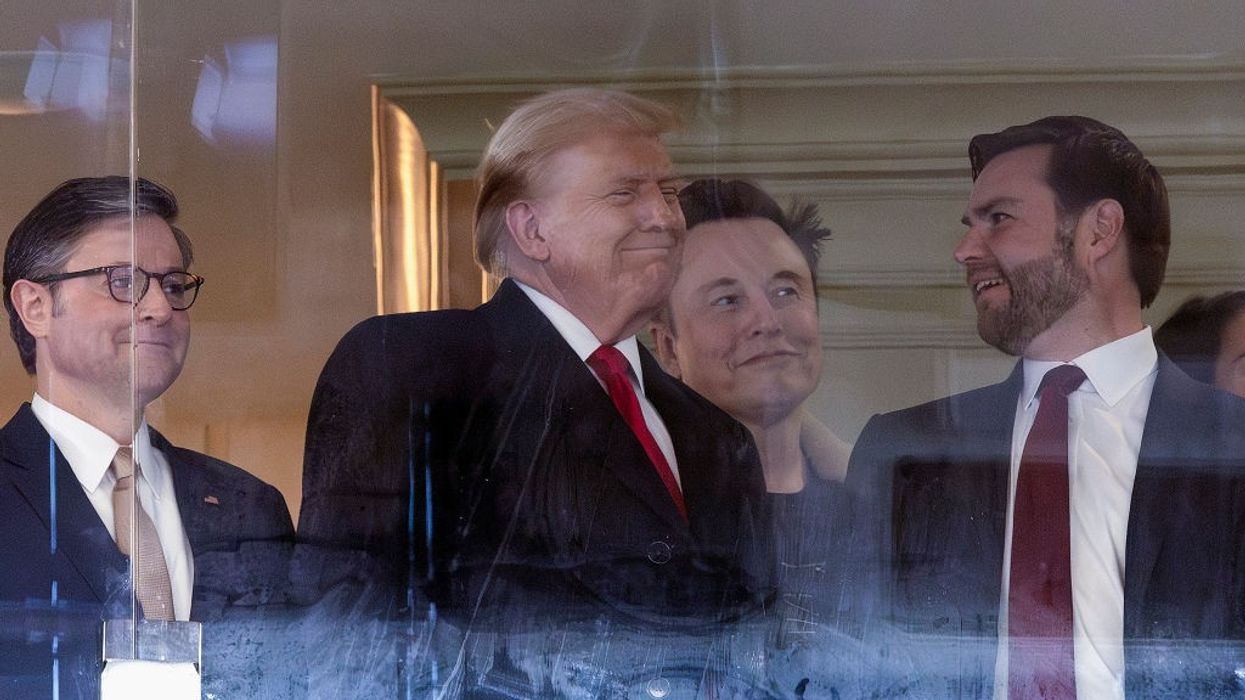
"Nothing like a couple billionaires wreaking havoc on working families right before the holidays," said Rep. Mark Pocan.
U.S. President Trump and his allies, including billionaires Elon Musk and Vivek Ramaswamy, are blowing up bipartisan efforts to prevent a government shutdown that could begin this weekend with statements opposing a proposed stopgap measure.
"Currently reading the 1,547-page bill to fund the government through mid-March. Expecting every U.S. congressman and senator to do the same," Ramaswamy posted on Musk's social media platform X late Tuesday. Trump has asked the two billionaires to co-lead the forthcoming Department of Government Efficiency (DOGE), which they have said will pursue massive cuts to federal regulations and spending.
Musk responded to Ramaswamy early Wednesday, asserting that "this bill should not pass," a sentiment he repeated in several posts throughout the day, as the clock ticked closer to the Friday night deadline set by September legislation.
Ramaswamy also came out against the continuing resolution (CR) Wednesday morning, declaring that a "debt-fueled spending sprees may 'feel good' today, but it's like showering cocaine on an addict." He blasted various provisions, including $100 billion in disaster relief needed after hurricanes as well as funding to renew the Farm Bill for a year, replace the Francis Scott Key Bridge, and raise federal lawmakers' pay.
Donald Trump Jr. then weighed in, taking issue with a provision about subpoenas for U.S. House of Representatives data.
Appearing on "Fox & Friends" Wednesday, House Speaker Mike Johnson (R-La.) said that he was on a text message thread with Ramaswamy and Musk, claimed that "they understand the situation," and suggested he convinced them that the CR must pass.
However, later Wednesday, the president-elect and Vice President-elect JD Vance—who still represents Ohio in the Senate—released a lengthy statement opposing the CR and calling out specific policies, including the subpoena provision and the pay hike for lawmakers.
Trump and Vance—who are set to take over for Democratic President Joe Biden and Vice President Kamala Harris next month—also argued that "the most foolish and inept thing ever done by congressional Republicans was allowing our country to hit the debt ceiling in 2025. It was a mistake and is now something that must be addressed."
"Increasing the debt ceiling is not great but we'd rather do it on Biden's watch," the incoming Republican leaders said. "If Democrats won't cooperate on the debt ceiling now, what makes anyone think they would do it in June during our administration?"
"Republicans want to support our farmers, pay for disaster relief, and set our country up for success in 2025," they claimed. "The only way to do that is with a temporary funding bill WITHOUT DEMOCRAT GIVEAWAYS combined with an increase in the debt ceiling. Anything else is a betrayal of our country."
Trump echoed that point in a series of posts on his platform Truth Social, saying that "if Republicans try to pass a clean Continuing Resolution without all of the Democrat 'bells and whistles' that will be so destructive to our Country, all it will do, after January 20th, is bring the mess of the Debt Limit into the Trump Administration, rather than allowing it to take place in the Biden Administration."
"Any Republican that would be so stupid as to do this should, and will, be Primaried," Trump added. "Everything should be done, and fully negotiated, prior to my taking Office on January 20th, 2025."
Citing unnamed sources familiar with Johnson's thinking, outlets including The Hill and Politico reported Wednesday that the House speaker is now considering trying to pass a "clean" CR that would cut provisions such as disaster aid and economic assistance for farmers.
According to Politico, "As GOP members streamed into Johnson's office to pick up gifts and stop by an ironically timed Christmas party, they didn't voice enthusiasm for Trump's demands."
White House Press Secretary Karine Jean-Pierre said in a Wednesday statement that "Republicans need to stop playing politics with this bipartisan agreement or they will hurt hardworking Americans and create instability across the country."
"President-elect Trump and Vice President-elect Vance ordered Republicans to shut down the government and they are threatening to do just that—while undermining communities recovering from disasters, farmers and ranchers, and community health centers," she continued. "Triggering a damaging government shutdown would hurt families who are gathering to meet with their loved ones and endanger the basic services Americans from veterans to Social Security recipients rely on. A deal is a deal. Republicans should keep their word."
Progressive leaders in Congress suggested that Trump's eleventh-hour statements on the CR were guided by his billionaire allies.
"Democrats and Republicans spent months negotiating a bipartisan agreement to fund our government," noted Sen. Bernie Sanders (I-Vt.). "The richest man on Earth, President Elon Musk, doesn't like it. Will Republicans kiss the ring? Billionaires must not be allowed to run our government."
Also taking aim at Musk, Rep. Maxwell Alejandro Frost (D-Fla.) said that "an unelected billionaire was crowned co-president by the Republican Party. They've given him the influence to make a damn post that throws a spending bill into limbo cause House Republicans are scared of him. No greater example of oligarchy. Where the ultrawealthy run the show."
Outgoing Congressional Progressive Caucus Chair Pramila Jayapal (D-Wash.) accused House Republicans of "bowing to Elon Musk and pushing us toward a shutdown," which would force active duty service members to work without pay, pause rent and food assistance, and cancel and delay flights right before major holidays.
Rep. Mark Pocan (D-Wis.) quipped: "'President-elect' Elon Musk and former President Donald Trump want to shut down the government. Nothing like a couple billionaires wreaking havoc on working families right before the holidays."
Lisa Gilbert, co-president of the watchdog Public Citizen, similarly said that "an unelected billionaire should not be allowed to shut down the government. Musk's temper tantrum this afternoon—and the speed at which Trump fell in line after being cornered—is a terrifying preview of what a Trump-Musk co-presidency will look like."
House Minority Leader Hakeem Jeffries (D-N.Y.) was also critical, saying: "House Republicans have been ordered to shut down the government. And hurt the working-class Americans they claim to support. You break the bipartisan agreement, you own the consequences that follow."
Sen. Chris Murphy (D-Conn.) tied the anti-CR push to Republicans' ambitions to pass another round of tax cuts for the superrich.
"Remember what this is all about: Trump wants Democrats to agree to raise the debt ceiling so he can pass his massive corporate and billionaire tax cut without a problem," he said. "Shorter version: tax cut for billionaires or the government shuts down for Christmas."
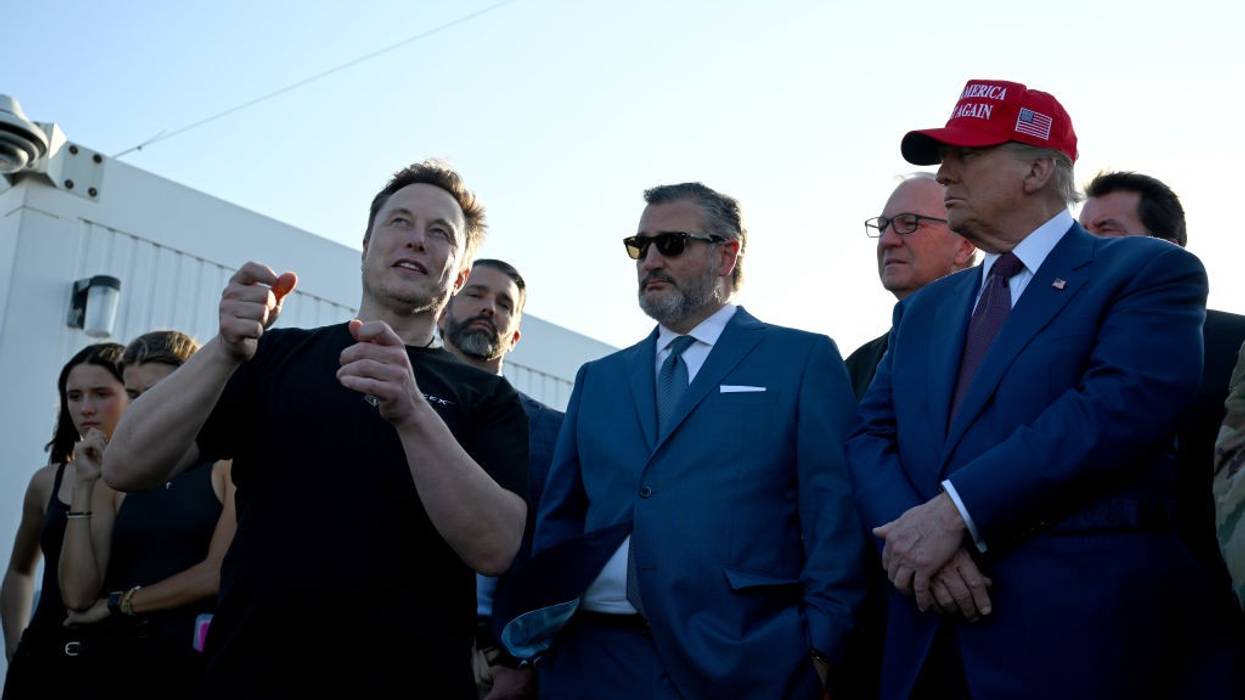
"The so-called Department of Government Efficiency is poised to make far-reaching recommendations that could have a devastating impact on Americans and enormously benefit insiders, starting with Musk himself."
The two right-wing billionaires President-elect Donald Trump has tasked with spearheading a new "government efficiency" commission outlined their vision Wednesday for the mass firing of federal employees, large-scale deregulation, and major spending cuts that could impact antipoverty programs, drug research and development, and more.
For the first time since Trump announced plans to create the Department of Government Efficiency (DOGE)—which, despite its name, would be an advisory commission rather than an actual federal department—Tesla CEO Elon Musk and biotech entrepreneur Vivek Ramaswamy offered a detailed look at how they plan to achieve their stated objective of taking a "chainsaw" to federal operations.
"We are assisting the Trump transition team to identify and hire a lean team of small-government crusaders, including some of the sharpest technical and legal minds in America," the pair wrote in an op-ed in The Wall Street Journal. "The two of us will advise DOGE at every step to pursue three major kinds of reform: regulatory rescissions, administrative reductions, and cost savings. We will focus particularly on driving change through executive action based on existing legislation rather than by passing new laws."
Decrying rules crafted by "unelected bureaucrats," Musk and Ramaswamy—unelected outside advisers—wrote that they intend to present to Trump "a list of regulations" they believe should be eliminated. The culling of regulations would, they argued, provide the justification for "mass headcount reductions"—corporate-speak for sweeping firings—across federal agencies, a plan the two wrote would not be deterred by civil service protections.
Watchdogs have noted that the regulatory cuts envisioned by the commission's co-leaders would likely benefit Musk's companies, at least three of which are currently under scrutiny from nine federal agencies.
"Based on Elon Musk's comments, the so-called Department of Government Efficiency is poised to make far-reaching recommendations that could have a devastating impact on Americans and enormously benefit insiders, starting with Musk himself," Public Citizen co-president Robert Weissman said Wednesday.
"A second Trump term will undoubtedly see a multipronged attack on any institution that seeks to constrain big business, and DOGE will lead the charge."
Musk and Ramaswamy also laid out a plan under which Trump would evade existing federal statutes such as the Impoundment Control Act to cut spending already allocated by Congress.
"DOGE will help end federal overspending by taking aim at the $500 billion-plus in annual federal expenditures that are unauthorized by Congress or being used in ways that Congress never intended, from $535 million a year to the Corporation for Public Broadcasting and $1.5 billion for grants to international organizations to nearly $300 million to progressive groups like Planned Parenthood," they wrote.
As The Washington Post's Jacob Bogage recently observed, the federal programs "without separate spending authorization" that Musk and Ramaswamy are targeting "represent more than $516 billion" and encompass key areas including veterans' healthcare, education spending, housing assistance, childcare aid, student loan programs, Head Start, opioid addiction treatment, and NASA.
Musk, a megadonor to Trump's 2024 presidential bid, claimed on the campaign trail that he would be able to identify "at least $2 trillion" in possible cuts to federal spending.
Casey Wetherbee, an Argentina-based writer, warned Wednesday that "Musk and Ramaswamy's admiration of Argentine president Javier Milei offers us a glimpse into their ideal end state."
"Ramaswamy tweeted on November 18: 'A reasonable formula to fix the U.S. government: Milei-style cuts, on steroids,'" Wetherbee wrote for Jacobin. "When Milei assumed office last year, he declared that conditions would worsen before things would get better; Musk similarly warned that DOGE’s recommendations may cause 'temporary hardship.' Meanwhile, in Argentina, Milei's austerity measures have targeted the country's social safety net, causing the poverty rate to skyrocket while only lowering taxes for the country's wealthiest citizens, a troubling outlook for a second Trump administration if DOGE's advice is ever implemented."
"A second Trump term will undoubtedly see a multipronged attack on any institution that seeks to constrain big business, and DOGE will lead the charge," Wetherbee added. "After all, in DOGE's public call for collaborators, it seeks 'super high-IQ small-government revolutionaries'; that's how they see themselves. We can only hope that, by virtue of how evidently insufferable they are, DOGE's relationship with the Trump administration flames out spectacularly."
"We cannot allow indiscriminate and harmful cuts to happen because House Republicans are incapable of doing their jobs," said Rep. Brendan Boyle.
The Congressional Budget Office said Thursday that nonmilitary federal spending could face tens of billions of dollars in automatic cuts if lawmakers fail to agree on full-year government funding bills for 2024.
Under the Fiscal Responsibility Act (FRA)—bipartisan legislation passed last year to avert a debt ceiling catastrophe—automatic spending cuts are required if lawmakers don't pass annual appropriations bills by April 30. Congress is currently working under a two-tiered continuing resolution that funds government agencies through January 19 and February 2.
With negotiations at an impasse as Republicans demand lower spending levels than were agreed upon in the FRA as well as draconian anti-immigrant policies, House Speaker Mike Johnson (R-La.) has suggested that he could pursue a full-year continuing resolution that would mean major cuts to key federal programs.
According to the CBO, nondefense spending would be cut to $736 billion, down from the current level of $777 billion. Military spending would take a much smaller hit, falling from $860 billion to $850 billion.
Rep. Brendan Boyle (D-Pa.), the top Democrat on the House Budget Committee, said Thursday that the CBO's analysis "confirms what we already knew: Speaker Johnson's attempt to trigger devastating across-the-board cuts is not an actual government funding plan, but another dangerous threat that would put American families on the chopping block."
"House Republicans have governed through brinkmanship for more than a year now—first with a default threat, then a series of shutdown threats, and now this sequestration threat," said Boyle. "Their reckless attempts to achieve steep budget cuts failed time and time again last year, and they will fail again this year."
"Passing full-year government funding bills is the most basic task of Congress," Boyle added. "We cannot allow indiscriminate and harmful cuts to happen because House Republicans are incapable of doing their jobs."
The FRA caps discretionary federal spending at $1.59 trillion for fiscal year 2024, leaving $886 billion for the U.S. military and $704 billion for nonmilitary spending, which covers healthcare, housing, transportation, and more.
But as part of an FRA "side deal," lawmakers agreed to an additional $69 billion in nonmilitary spending. Now, however, House Republicans are trying to ditch "some if not all of the $69 billion in extra nondefense spending," Roll Call reported last month.
As the Senate Budget Committee stressed in a memo released late Thursday, the CBO's analysis examines only the letter of the FRA, excluding the $69 billion side deal.
"If negotiators limit themselves to only the portion of the agreement that is in law, as many House Republicans are demanding, nondefense programs will be cut 9% from current levels and defense programs will be leaving a 3% increase on the table," the memo noted. "CBO's report should serve as a wake-up call that Congress must reject these harmful cuts."
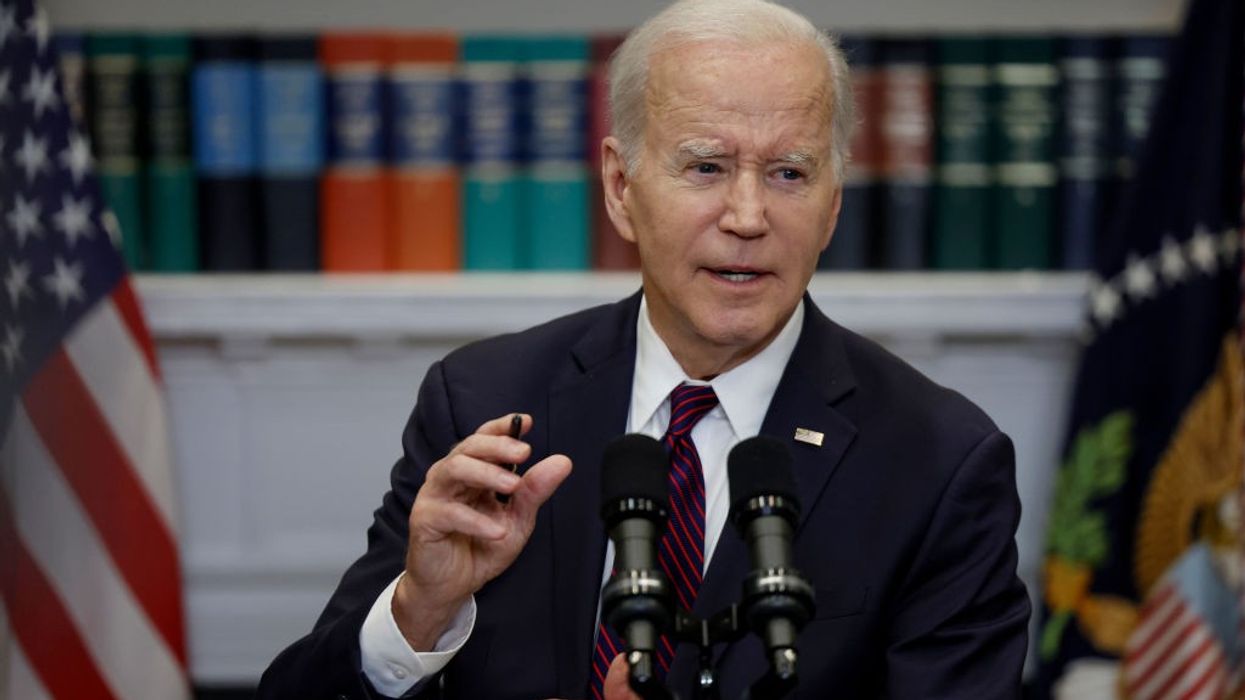
"There is no room to negotiate when it comes to our communities," said a coalition of 87 groups.
As a potential government shutdown once again looms, a coalition on Wednesday urged U.S. President Joe Biden to reject any spending bills that include "inhumane" cuts to programs that working and low-wealth people rely on every day.
The 87 labor groups, civil society organizations, and policy experts demanded that Biden and congressional Democrats "brush aside the threats of a small group of extremists" to slash crucial spending.
The White House reached a deal with Republicans in Congress in September to keep the government open until November 17, and progressives celebrated the bill that was passed without cuts to housing assistance, the Women, Infants, and Children (WIC) nutrition program, scientific research, and other domestic spending.
But when the 45-day stopgap measure was passed, progressive lawmakers and advocates knew House Republicans, now led by hard-right House Speaker Mike Johnson of Louisiana, still aim to cut social spending.
The coalition, under the name ProsperUS and including groups such as Communications Workers of America, the Friends Committee on National Legislation, and Groundwork Collaborative, thanked Biden for requesting emergency supplemental funding for disaster relief at the Federal Emergency Management Agency, childcare stabilization for one year, and other domestic programs, and credited the administration with spending that has helped keep unemployment low.
"But extremists in Congress are trying to undo these successes," the groups wrote, citing the so-called Fiscal Responsibility Act that was passed in June in exchange for an increase to the nation's arbitrary debt limit. The package included work requirements for the Supplemental Nutrition Assistance Program (SNAP) and other safety net programs and cut Internal Revenue Service (IRS) funding meant to stop tax evasion by wealthy Americans.
Even with those cuts, ProsperUS warned, "House Republicans have signaled they are willing to make even more draconian cuts in a potential stopgap bill."
Extremists in the party have proposed substantial cuts to the U.S. Department of Education, agricultural programs, violence prevention initiatives at the U.S. Department of Justice, and the IRS. Other social spending they aim to reduce includes home heating assistance for low-income families and SNAP, which they would take away from 1.3 million people with low incomes, according to the Center for Budget and Policy Priorities.
"Polls consistently show that Americans oppose cuts to essential programs and support reinvesting our tax dollars back into our communities, whether it's for teachers' salaries, clean drinking water, or ensuring that every child has enough healthy food to succeed," said ProsperUS. "These public investments make our economy more stable, families more secure, and our nation safer."
Jhumpa Bhattacharya, co-president of the Maven Collaborative, which is part of the coalition, said that considering the White House has requested $14 billion in aid for Israel this month, "it's way past time for our policymakers to give programs that help feed, educate, and care for American families the value they deserve."
"If we can find money to fund war and destruction internationally, we should be able to also fund programs that save lives domestically," said Bhattacharya. "All Americans deserve to have a roof over their heads, food on the table, and their children educated and cared for. We should never let extremist, racist ideology take that away from us."
The groups noted that housing assistance, Social Security, and nutrition programs are among the "lifesaving, economy-building" initiatives that have faced "chronic underfunding."
"Cutting critical programs and failing to invest more in our communities undermines our economic progress," said Bilal Baydoun, director of policy and research at Groundwork Collaborative. "The president must reject any proposal that cuts the public investments that pushed unemployment to record lows and restarted our economic engine. There is no room to negotiate when it comes to our communities."