SUBSCRIBE TO OUR FREE NEWSLETTER
Daily news & progressive opinion—funded by the people, not the corporations—delivered straight to your inbox.
5
#000000
#FFFFFF
To donate by check, phone, or other method, see our More Ways to Give page.
Daily news & progressive opinion—funded by the people, not the corporations—delivered straight to your inbox.

Elon Musk embraces Republican presidential nominee and former President Donald Trump during a campaign rally at the Butler Farm Show fairgrounds on October 5, 2024 in Butler, Pennsylvania.
"As eccentric and provocative as Elon Musk wants people to think he is, he's really just another corporate billionaire who wants to avoid accountability."
Tesla founder Elon Musk has spent his career cultivating the image of a provocateur who's driven by a passionate commitment to free speech and technological innovation—but a new report by consumer advocacy group Public Citizen makes the case that when it comes to Musk's political priorities, there's nothing unique or trailblazing about him.
Musk, said Public Citizen research director Rick Claypool, is galvanized by the same concerns that lead oil executives to pour money into the campaigns of pro-fossil fuel politicians like Republican presidential nominee Donald Trump: self-preservation.
Claypool published research cataloguing the numerous business-related incentives Musk has for supporting Trump, whose rallies the billionaire has spoken at recently and for whose campaign he has created a super political action committee.
At least three of Musk's businesses—electric car maker Tesla, space exploration company SpaceX, and social media platform X—face a total of at least 11 criminal and civil investigations over alleged fraud, labor violations, and other accusations.
"Enforcement priorities can shift significantly when administrations change," wrote Claypool. "Musk's self-serving desire to thwart the numerous civil and criminal investigations into his businesses seems a likely reason for the billionaire's increased involvement in electoral politics."
"Trump has promised to put Musk in charge of government efficiency. Since Musk's companies receive billions in government contracts every year—and often clash with government regulators—Musk would in effect be given the power to trim the very agencies that regulate him."
The report points to federal investigations into Tesla's claims about the "self-driving" capability of its vehicles, with the Department of Justice (DOJ) examining whether the claims constitute criminal fraud, and a case at the Equal Employment Opportunity Commission (EEOC) charging that Tesla retaliated against Black workers who reported being subjected to racist harassment at work.
The Securities and Exchange Commission is also investigating Musk's $44 billion takeover of X and the Federal Trade Commission has received reports that Musk gave orders to employees that would have breached an FTC consent decree which the company, formerly called Twitter, entered in 2011 as part of a settlement for alleged deceptive practices and privacy violations.
SpaceX has been accused by the Environmental Protection Agency of pollution that violated the Clean Water Act, and the Federal Aviation Administration (FAA) last month accused the company of safety violations in its rocket launches in Florida.
Musk, who is the richest person in the world with a net worth of nearly $250 billion, has attempted to fight federal investigations and cases against his companies by threatening a lawsuit against the FAA alleging "regulatory overreach" and challenging the constitutionality of the National Labor Relations Board and a DOJ case.
Last October, as the DOJ was expanding its probe of Tesla and just after the EEOC sued the company over racial discrimination, Musk called for "comprehensive deregulation."
"As eccentric and provocative as Elon Musk wants people to think he is, he's really just another corporate billionaire who wants to avoid accountability," said Claypool. "Nobody—not government officials or massive corporations or billionaire executives—is above the law. But if self-serving campaigns to the contrary succeed, the injustice of America's two-tiered justice system will only deepen."
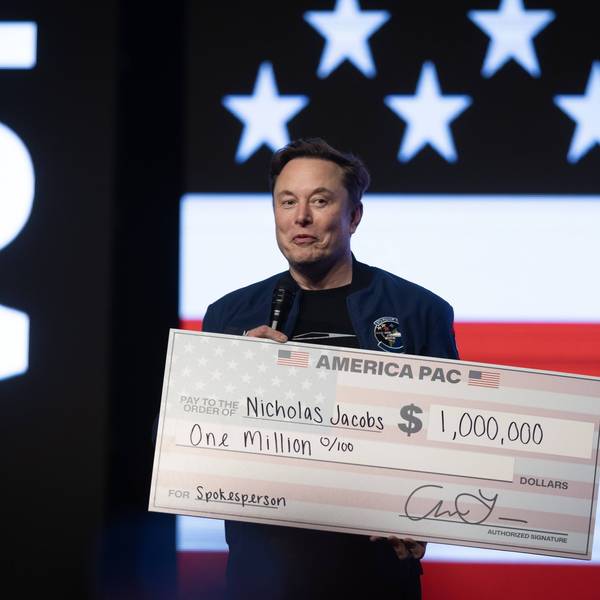
The Public Citizen report comes days after Musk urged his followers to sign his petition supporting "free speech and the right to bear arms," promising a random $1 million payment each day to one registered voter who signs—a scheme legal experts say amounts to illegal vote-buying for Trump.
At The Nation on Monday, Jeet Heer noted that Trump has pledged to put Musk in charge of a “government efficiency commission” that could help eliminate federal regulations and advised Democrats to fight Musk's attempts to influence voters by calling attention to what he really is: "an oligarch threatening democracy."
"Musk's eagerness to elect Trump is clearly rooted in a squalid quid pro quo," Heer wrote. "Trump has promised to put Musk in charge of government efficiency. Since Musk's companies receive billions in government contracts every year—and often clash with government regulators—Musk would in effect be given the power to trim the very agencies that regulate him."
"Musk," wrote Heer, "is the perfect face of the new American robber barons."
Dear Common Dreams reader, It’s been nearly 30 years since I co-founded Common Dreams with my late wife, Lina Newhouser. We had the radical notion that journalism should serve the public good, not corporate profits. It was clear to us from the outset what it would take to build such a project. No paid advertisements. No corporate sponsors. No millionaire publisher telling us what to think or do. Many people said we wouldn't last a year, but we proved those doubters wrong. Together with a tremendous team of journalists and dedicated staff, we built an independent media outlet free from the constraints of profits and corporate control. Our mission has always been simple: To inform. To inspire. To ignite change for the common good. Building Common Dreams was not easy. Our survival was never guaranteed. When you take on the most powerful forces—Wall Street greed, fossil fuel industry destruction, Big Tech lobbyists, and uber-rich oligarchs who have spent billions upon billions rigging the economy and democracy in their favor—the only bulwark you have is supporters who believe in your work. But here’s the urgent message from me today. It's never been this bad out there. And it's never been this hard to keep us going. At the very moment Common Dreams is most needed, the threats we face are intensifying. We need your support now more than ever. We don't accept corporate advertising and never will. We don't have a paywall because we don't think people should be blocked from critical news based on their ability to pay. Everything we do is funded by the donations of readers like you. When everyone does the little they can afford, we are strong. But if that support retreats or dries up, so do we. Will you donate now to make sure Common Dreams not only survives but thrives? —Craig Brown, Co-founder |
Tesla founder Elon Musk has spent his career cultivating the image of a provocateur who's driven by a passionate commitment to free speech and technological innovation—but a new report by consumer advocacy group Public Citizen makes the case that when it comes to Musk's political priorities, there's nothing unique or trailblazing about him.
Musk, said Public Citizen research director Rick Claypool, is galvanized by the same concerns that lead oil executives to pour money into the campaigns of pro-fossil fuel politicians like Republican presidential nominee Donald Trump: self-preservation.
Claypool published research cataloguing the numerous business-related incentives Musk has for supporting Trump, whose rallies the billionaire has spoken at recently and for whose campaign he has created a super political action committee.
At least three of Musk's businesses—electric car maker Tesla, space exploration company SpaceX, and social media platform X—face a total of at least 11 criminal and civil investigations over alleged fraud, labor violations, and other accusations.
"Enforcement priorities can shift significantly when administrations change," wrote Claypool. "Musk's self-serving desire to thwart the numerous civil and criminal investigations into his businesses seems a likely reason for the billionaire's increased involvement in electoral politics."
"Trump has promised to put Musk in charge of government efficiency. Since Musk's companies receive billions in government contracts every year—and often clash with government regulators—Musk would in effect be given the power to trim the very agencies that regulate him."
The report points to federal investigations into Tesla's claims about the "self-driving" capability of its vehicles, with the Department of Justice (DOJ) examining whether the claims constitute criminal fraud, and a case at the Equal Employment Opportunity Commission (EEOC) charging that Tesla retaliated against Black workers who reported being subjected to racist harassment at work.
The Securities and Exchange Commission is also investigating Musk's $44 billion takeover of X and the Federal Trade Commission has received reports that Musk gave orders to employees that would have breached an FTC consent decree which the company, formerly called Twitter, entered in 2011 as part of a settlement for alleged deceptive practices and privacy violations.
SpaceX has been accused by the Environmental Protection Agency of pollution that violated the Clean Water Act, and the Federal Aviation Administration (FAA) last month accused the company of safety violations in its rocket launches in Florida.
Musk, who is the richest person in the world with a net worth of nearly $250 billion, has attempted to fight federal investigations and cases against his companies by threatening a lawsuit against the FAA alleging "regulatory overreach" and challenging the constitutionality of the National Labor Relations Board and a DOJ case.
Last October, as the DOJ was expanding its probe of Tesla and just after the EEOC sued the company over racial discrimination, Musk called for "comprehensive deregulation."
"As eccentric and provocative as Elon Musk wants people to think he is, he's really just another corporate billionaire who wants to avoid accountability," said Claypool. "Nobody—not government officials or massive corporations or billionaire executives—is above the law. But if self-serving campaigns to the contrary succeed, the injustice of America's two-tiered justice system will only deepen."
The Public Citizen report comes days after Musk urged his followers to sign his petition supporting "free speech and the right to bear arms," promising a random $1 million payment each day to one registered voter who signs—a scheme legal experts say amounts to illegal vote-buying for Trump.
At The Nation on Monday, Jeet Heer noted that Trump has pledged to put Musk in charge of a “government efficiency commission” that could help eliminate federal regulations and advised Democrats to fight Musk's attempts to influence voters by calling attention to what he really is: "an oligarch threatening democracy."
"Musk's eagerness to elect Trump is clearly rooted in a squalid quid pro quo," Heer wrote. "Trump has promised to put Musk in charge of government efficiency. Since Musk's companies receive billions in government contracts every year—and often clash with government regulators—Musk would in effect be given the power to trim the very agencies that regulate him."
"Musk," wrote Heer, "is the perfect face of the new American robber barons."
Tesla founder Elon Musk has spent his career cultivating the image of a provocateur who's driven by a passionate commitment to free speech and technological innovation—but a new report by consumer advocacy group Public Citizen makes the case that when it comes to Musk's political priorities, there's nothing unique or trailblazing about him.
Musk, said Public Citizen research director Rick Claypool, is galvanized by the same concerns that lead oil executives to pour money into the campaigns of pro-fossil fuel politicians like Republican presidential nominee Donald Trump: self-preservation.
Claypool published research cataloguing the numerous business-related incentives Musk has for supporting Trump, whose rallies the billionaire has spoken at recently and for whose campaign he has created a super political action committee.
At least three of Musk's businesses—electric car maker Tesla, space exploration company SpaceX, and social media platform X—face a total of at least 11 criminal and civil investigations over alleged fraud, labor violations, and other accusations.
"Enforcement priorities can shift significantly when administrations change," wrote Claypool. "Musk's self-serving desire to thwart the numerous civil and criminal investigations into his businesses seems a likely reason for the billionaire's increased involvement in electoral politics."
"Trump has promised to put Musk in charge of government efficiency. Since Musk's companies receive billions in government contracts every year—and often clash with government regulators—Musk would in effect be given the power to trim the very agencies that regulate him."
The report points to federal investigations into Tesla's claims about the "self-driving" capability of its vehicles, with the Department of Justice (DOJ) examining whether the claims constitute criminal fraud, and a case at the Equal Employment Opportunity Commission (EEOC) charging that Tesla retaliated against Black workers who reported being subjected to racist harassment at work.
The Securities and Exchange Commission is also investigating Musk's $44 billion takeover of X and the Federal Trade Commission has received reports that Musk gave orders to employees that would have breached an FTC consent decree which the company, formerly called Twitter, entered in 2011 as part of a settlement for alleged deceptive practices and privacy violations.
SpaceX has been accused by the Environmental Protection Agency of pollution that violated the Clean Water Act, and the Federal Aviation Administration (FAA) last month accused the company of safety violations in its rocket launches in Florida.
Musk, who is the richest person in the world with a net worth of nearly $250 billion, has attempted to fight federal investigations and cases against his companies by threatening a lawsuit against the FAA alleging "regulatory overreach" and challenging the constitutionality of the National Labor Relations Board and a DOJ case.
Last October, as the DOJ was expanding its probe of Tesla and just after the EEOC sued the company over racial discrimination, Musk called for "comprehensive deregulation."
"As eccentric and provocative as Elon Musk wants people to think he is, he's really just another corporate billionaire who wants to avoid accountability," said Claypool. "Nobody—not government officials or massive corporations or billionaire executives—is above the law. But if self-serving campaigns to the contrary succeed, the injustice of America's two-tiered justice system will only deepen."
The Public Citizen report comes days after Musk urged his followers to sign his petition supporting "free speech and the right to bear arms," promising a random $1 million payment each day to one registered voter who signs—a scheme legal experts say amounts to illegal vote-buying for Trump.
At The Nation on Monday, Jeet Heer noted that Trump has pledged to put Musk in charge of a “government efficiency commission” that could help eliminate federal regulations and advised Democrats to fight Musk's attempts to influence voters by calling attention to what he really is: "an oligarch threatening democracy."
"Musk's eagerness to elect Trump is clearly rooted in a squalid quid pro quo," Heer wrote. "Trump has promised to put Musk in charge of government efficiency. Since Musk's companies receive billions in government contracts every year—and often clash with government regulators—Musk would in effect be given the power to trim the very agencies that regulate him."
"Musk," wrote Heer, "is the perfect face of the new American robber barons."