SUBSCRIBE TO OUR FREE NEWSLETTER
Daily news & progressive opinion—funded by the people, not the corporations—delivered straight to your inbox.
5
#000000
#FFFFFF
To donate by check, phone, or other method, see our More Ways to Give page.

Daily news & progressive opinion—funded by the people, not the corporations—delivered straight to your inbox.
A Chinese state-controlled newspaper has blamed the Trump administration's mishandling of the COVID-19 pandemic to cause the spread of the virus to go "completely out of control."
Describing the disease as a "U.S. epidemic", the paper warned that the administration's failure poses a threat to the rest of the world. "Lies are dominating US society's recognition of the epidemic," the Global Times wrote.
The dramatic spike in the numbers of US COVID-19 infections continues this weekend. New coronavirus cases in Florida on Sunday exceeded 10,000 in a day for the third time in the past week, after the state posted a record high of 11,458 the previous day. And Texas on Saturday reported 5,815 more coronavirus cases, the state's sixth straight day above 5,000
In a Friday, July 3, 2020, editorial titled, "Rampant US epidemic to hurt the world" China's Global Times wrote:
The US set another record for novel coronavirus cases on Thursday. Reuters reported that the country confirmed more than 55,000 new COVID-19 cases that day, which is "a new daily global record" for the pandemic.
Earlier this week, US epidemiologist Dr. Anthony Fauci warned that the US may soon see as many as 100,000 new cases of COVID-19 a day if the current trajectory of the outbreak is not changed.
Scott Gottlieb, a former commissioner for the US Food and Drug Administration, even suggested the true number of US daily infections is between 400,000 and 500,000, though there is not enough testing to find them all.
The current epidemic in the US is completely out of control. However, the US federal government still insists that the rapid increase in infection figures is due to more testing. Data released by the US Labor Department on Thursday showed the country added 4.8 million jobs in June. The White House soon boasted about its economic achievements. But people doubt whether the US government is making utmost efforts to rein in the virus and save more American lives.
Lies are dominating US society's recognition of the epidemic. Political parties have put their interests in campaigning in the first place, which has distorted the society's attention and allocation of resources. The US fight against the virus is paralyzed. There is no national strategy to alleviate the epidemic. Political calculations have stunted the battle against COVID-19.
Americans are not willing to temporarily sacrifice their freedom for the fight against the virus. The federal government has not corrected the attitude. Worse, it used the sentiment to promote the resumption of economic activities in a risky manner. It is making ordinary people responsible for the out-of-control epidemic.
The US economy has slightly recovered, yet the price it is paying is too high. It will surely become a burden for the US' future economic development. The US government's approach seems to be shaping US society's greater tolerance toward the virus, making people less afraid of being infected.
As the only superpower, the US can shape global public opinion as it wishes. The country has manipulated the understanding over the novel coronavirus in many societies worldwide. It has not contributed to the global fight against the crisis. On the contrary, it is setting a terrible example.
No matter how the virus surfaced, the US plays the most negative role in making sure the novel coronavirus spreads fast across the globe, and we are far from ending it.
Can anyone in the world recall of outstanding contributions the US has made to the global efforts against COVID-19? The only thing people can remember is the US' repeated accusations against China, apart from its astonishingly large number of infections and deaths. Washington has distracted the world's attention.
The US is supposed to lead the world in establishing a global anti-pandemic front. But it continued to criticize the World Health Organization (WHO), and announced it would sever ties with the body.
As long as its epidemic continues to spread, the global anti-virus fight can hardly take a fundamental turn for the better.
In the coming fall and winter, the US epidemic will likely run rampant, and more countries and regions will be forced to suffer because of the US.
Meanwhile, Donald Trump's top trade adviser Peter Navarro pushed several COVID-19 conspiracy theories on MSNBC Friday. Navarro said China deliberately allowed hundreds of thousands of people infected with coronavirus to leave the country "to seed and spread the virus" abroad.
At one point in the interview, MSNBC's Ali Velshi had to ask, "What are you talking about?"
"They spawned the virus, they hid virus, they sent hundreds of thousands of Chinese nationalists over here to seed and spread the virus before we knew," Navarro said. He claimed the virus "probably" came from a Chinese lab and argued, "this looks like a weaponized virus" and that the "Chinese communist party" is responsible for forcing Americans to "stay locked in our homes and lose our jobs."
Conservative governors are now openly at odds with epidemiologists as plans move ahead for more than half the states to loosen social distancing and permit many businesses to re-open this month despite none of them meeting White House Coronavirus Taskforce guidelines.
Unlike re-openings in China, Hong Kong and South Korea where new cases fell rapidly after aggressive containment efforts, the United States, with nearly 1.4 million cases and over 81,000 COVID-19 deaths (as of May 11), must follow a different model.
Many critics blame the Trump Administration's laggard scale-up of testing for the dilemma. But studies of past emerging disease epidemics have taught us that testing alone will not prevent new outbreaks. To re-open the economy we must undertake the most massive effort to trace and isolate new infections in history.
Ironically, the states moving most rapidly to restore commerce--eg. Georgia, Texas, and Florida--not only have regions with high case loads, but also inadequate public health workers to contain new outbreaks, according to a study by Politico. In the Midwest, despite high case loads per capita in Iowa and Nebraska, officials are jumping ahead of federal criteria calling for two weeks of falling cases before relaxing stay-at-home rules. Robert Redfield, director of the Centers for Disease Control and Prevention (CDC), warns that re-opening requires not only ramped up testing, but "very aggressive" contact tracing of new cases. Such disease tracking, together with testing, was critical to controlling spread of the virus in South Korea, New Zealand, Germany and China.
An April 27 letter released by former public health officials, including Andy Slavitt, who ran Medicare and Medicaid in the Obama administration, and Scott Gottlieb, a former Food and Drug Administration chief under President Trump, estimated 180,000 contact tracers are needed to re-open the economy. Tom Frieden, who directed the CDC from 2009 to 2017, extrapolated from experiences in Asia to estimate that up to 300,000 such workers may be needed across the country. At present local health departments and the CDC have only about 2,200 professional "disease detectives," although other health staff often assist during a contagious outbreak.
Until early May, federal officials and the media have tended to ignore contact tracing despite the critical role it has played in every infectious disease outbreak. The labor-intensive nature of the task is probably why. Our chronically underfunded, and now overwhelmed, public health departments have no capacity for such a massive scale up without significant new funding.
A recent NPR survey and follow-up report on 44 state health departments turned up a total count of 11,142 workers trained in contact tracing. As a point of contrast, at the height of China's viral crisis it took 9,000 contact tracers in Wuhan alone to contain the outbreak. Officials in state health departments surveyed described a variety of plans to expand capacity, some relying on volunteers, with the goal of scaling up to 66,197. Most will need federal aid for the new hires.
Unfortunately, there is no federal health workforce or emergency fund up to the task. The closest we have to a US rapid response team might be the Medical Reserve Corps (MRC), which matches over 175,000 volunteers with public health and medical assistance needs across the country. Thousands of MRC volunteers are now deployed in call centers or administering tests during the coronavirus crisis. Some may be trained as contact tracers in coming months.
We also entered into the COVID-19 crisis with a shortage of nurses and primary care doctors. The Chinese government sent 42,000 health workers to the Wuhan from other parts of the country. Despite the likelihood that many new hot spots will crop up here as we re-open, the United States lacks a coherent mobile medical corps of professionals who can be deployed rapidly. Given the perpetual shortages of physicians in US rural areas, another program that deserves to be scaled up is the underfunded "National Health Service Corps" which ties medical school loan forgiveness to commitments by new doctors to practice for two years in underserved areas.
Our urgent need to scale up infectious disease control is not unlike the impetus for the Green New Deal (GND) jobs & infrastructure proposal to support a just energy/climate transition.
Our urgent need to scale up infectious disease control is not unlike the impetus for the Green New Deal (GND) jobs & infrastructure proposal to support a just energy/climate transition. Both ideas draw inspiration from President Franklin D. Roosevelt's response to mass unemployment in the Great Depression by creating the Works Progress Administration which hired millions of unemployed people over an eight-year period for public works projects.
Clearly the need to address the climate crisis remains urgent, but first we have to get out of the house safely. Jeremy Brecher, of the Institute for Policy Studies, has called for such an emergency GND that includes health. Such a new health corps could offer a win-win solution to our two acute (and simultaneous) dilemmas: record levels of unemployment and a vital need for more feet-on-the-ground to reduce our viral case load.
At present, many political observers predict that after the pandemic, citizens will demand more investment in health care and disease surveillance. Thus, a plan to strengthen health staffing--including new professional and community health workers--could address future needs as well as our current emergency. Besides containing new infections and providing vital paychecks to our unemployed, like other "essential" workers, new health workers would spend their funds into the economy boosting demand for goods and services.
Dr. Frieden argued in early May that lockdowns, while effective at stopping spread, are blunt tools that cause unemployment and bankruptcies. Instead, he said, "we have a sharper tool, (a strategy) to stop chains of transmission by widespread testing, isolation of cases, contact tracing and quarantine of contacts."
Frieden, who now directs the non-profit Resolve to Save Lives, gained extensive experience overseeing responses to the H1N1 influenza, Ebola and Zika epidemics while running the CDC. But the importance of contact tracers was brought home to him many years earlier in New York City. I did post-doctoral research in 1999 comparing two epidemics of resurgent multi-drug-resistant tuberculosis (MDR-TB) - one in New York City and one in Lima, Peru. I learned that Frieden, while working in the CDC's Epidemic Intelligence Service in 1991, helped demonstrate that MDR-TB was widespread in many poor neighborhoods of New York City, a finding that spurred the mayor to replace city health officials who had ignored mounting signs of the epidemic.
Frieden was appointed to lead the city's tuberculosis division and later credited for innovative policies thar brought the deadly outbreak under control. One key initiative was the hiring and training of community health workers (who did not have professional degrees) to do outreach, track cases and administer doses of anti-TB drugs, effectively cutting the chain of contagion and drug-resistance.
Community health workers were also the key to controlling MDR-TB in Peru. TB drug resistance was first identified in a barrio of Lima in the late 1990s by the Boston-based non-profit Partners in Health (PIH). Drs. Paul Farmer and Jim Yong Kim, who directed PIH, built a program at an urban clinic in Lima to address the deadly outbreak using a similar strategy of outreach and treatment with lay workers doing home visits and social programming with patients. In both the New York and Lima epidemics, a training staple for successful community outreach was cultural sensitivity and a willingness to establish relationships and trust with patients and their families. PIH's Peru work helped established a model for treating MDR-TB outbreaks in low-income countries.
PIH is now applying that experience to COVID-19 in Massachusetts where the health department recently contracted with PIH to hire 1,000 fulltime community health workers as half of a 2,000 person contingent who will do contact tracing statewide. Another model may be California which has invested in a well-designed disease tracking system, and now aims to combine hired staff and volunteers to ramp up to 10,000 contact tracers.
Since April 1 new US cases per day have exceeded 20,000 on every day except one, and have ranged as high as 38,000. Epidemic models predict the infection will continue to spread across the country in the months ahead, producing not hundreds of thousands, but millions of new infections, especially in places where social distancing is lax. Many states project using new electronic tracing systems for COVID-19 exposure which have been heavily hyped by tech companies, such as Google and Apple. But even if the serious privacy concerns raised by these apps are resolved, such systems will only be an aid, not a replacement for humans who follow-up with contacts exposed to the virus.
The work of a contact tracer, ideally hired from the same area where he or she would serve, starts with interviewing infected patients and following leads to find people that person was recently in contact with. These workers then help arrange testing for new contacts, advise them on self-isolation, and assist those who become sick with treatment and access to humane quarantine options like hotel rooms or other facilities for patients in crowded households so as to avoid infecting immune-compromised or elderly members. Support for patients in quarantine would include food and daily follow-up on medical needs. This level of support is the only way to prevent super-spreader events--such as the widely reported outbreaks at funerals or nursing homes that contributed to the US having a quarter of all reported cases globally.
When locally-based and trained well, community health workers are also the ideal outreach personnel to educate others on coronavirus prevention and treatment, including advice on chronic problems that contribute to high COVID-19 mortality rates in Latino and Black families. In the long run such a workforce could help address the long-standing shortage of primary care in the United States--including community-based programming to assist families with preventive health, nutrition, exercise, chronic diseases and mental health needs.
In their public letter, Drs. Gottlieb and Slavitt called for $46 billion in national support for states to trace contacts and isolate infected patients, with an additional $4.5 billion for quarantine facilities, including rental of otherwise vacant hotel rooms. While the last Congressional stimulus package (HR 266) contained $25 billion for state health departments, the bulk of those funds were aimed at scaling up testing, with only a small slice likely to be spent for tracing contacts.
To re-open safely, the country needs a more comprehensive approach. One promising bill, introduced by Sens. Kirsten Gillibrand (D-N.Y.) and Michael Bennet (D-Colo.), would allocate $55 billion a year for a new "Health Force"--training and hiring hundreds of thousands of new public health workers to do testing, contact tracing and eventually vaccinating the population. The Senators even cite FDR's Great Depression work program as an inspiration.
It is clear that re-opening alone will not rapidly reduce unemployment, and federal stimulus efforts to date to keep working people afloat are woefully inadequate. The country needs to look beyond welfare solutions. There is much work to be done. Why not hire the unemployed to find and stem new viral outbreaks so we can reopen without recurring waves of deadly outbreaks? Until we have an army of disease detectives, the virus will continue its massive crime wave.
It's become a truism, almost trite, that with the coronavirus crisis, "we're all in this together."
But not everyone agrees.
A small but highly influential group of billionaires, executives and right-wing pundits have a different view: Some of them urge that we must "normalize" the economy as soon as possible, implicitly - and in some cases, explicitly - accepting that this would mean sacrificing lives. Others, apparently, just don't care about those risks, or conveniently believe against evidence that they are not real or overblown
Proponents paint this callous approach as the kind of "tough" decision that strong leaders must make. They have had a dangerous influence on policy. And although their recommendations have been shunted aside for now, there's a great risk that save-the-economy-and-let-the-chips fall-where-they-may chorus again gains the president's favor, with potentially horrifying consequences.
On March 16, the Trump administration announced its "15 Days to Slow the Spread" initiative. Surgeon General Jerome Adams conceded 15 days would likely not be enough time. Treasury Secretary Steven Mnuchin said to expect social distancing measures to last at least through late May or mid-June.
Less than a week into the "15 Days" initiative, Trump posted a tweet that seemed to signal his growing impatience with social distancing and frustration with its impact on the market.
Two days later, the president and Vice President Mike Pence reportedly huddled with billionaire Wall Street executives including:
According to CNBC reporter Kayla Tausche, Vice President Mike Pence's former chief of staff arranged the call and was "running backchannel" between the White House and corporate America.
After the meeting, Trump held a press conference to announce he intended to push for a hastened end to the social distancing measures, saying "America will again -- and soon -- be open for business. [...] Very soon, a lot sooner than three or four months that somebody was suggesting. A lot sooner. We cannot let the cure be worse than the problem itself."
In the meantime, a chorus of corporate executives, free-market extremists and right-wing ideologues started backing the president's push to hasten the resumption of normal business activity.
When criticized for this reckless, aggressive timeline despite credible forecasts that millions could die absent aggressive measures, Trump doubled down and accused the experts pushing back on his Easter reopening date of being politically motivated. "I think there are certain people that would like it not to open so quickly [...] I think there are certain people that would like [the economy] to do financially poorly, because they think that would be very good as far as defeating me at the polls."
Dr. Anthony Fauci, the top federal authority on infectious diseases, pushed back against the president's arbitrary timeline on CNN: "And you've got to understand that you don't make the timeline, the virus makes the timeline. So you've got to respond, in what you see happen. And if you keep seeing this acceleration, it doesn't matter what you say. One week, two weeks, three weeks - you've got to go with what the situation on the ground is."
Several days later, Trump relented and postponed his aspirational reopening of the country to June 1 after his health advisors persuaded him the casualty cost could be massive. Trump ally Sen. Lindsey Graham (R-S.C.) reportedly told the president he would own the deaths if coronavirus lockdowns are prematurely ended.
For the moment, Trump has decided to avoid the worst-case scenario and listen to public health experts instead of Wall Street billionaires.
But it's still a scandal that the profiteers' advice to the president - which could have cost millions of lives - was taken so seriously that the nation's top public health experts had to force a course correction in order to avert that catastrophe.
The heartlessness undergirding the advice to end or diminish social distancing is jaw-dropping. What's plain is that, despite a few members of the chorus saying they are willing to sacrifice themselves, purportedly to assist the younger generation, the proponents of a "return to normalcy" are treating coronavirus deaths as a statistical abstraction. They don't imagine that actual humans' lives are in the balance, or at least not the lives of anyone they know.
Perhaps the super wealthy believe that in their bubble they can protect themselves. This in fact may be true to some extent (the super rich are rushing to second homes in the Hamptons and elsewhere and some billionaires are opting to self-isolate on super-yachts). It's a certainty in our harshly unequal society that the coronavirus will take a far worse toll on lower-income communities.
But it's not just the callousness of the "return the economy to normal" advocates that is so shocking. So too is their blinkered outlook. The economic costs of lockdowns and social distancing are in fact severe, catastrophically so for many, and impose their own health costs. There is good reason to believe these costs could have been significantly ameliorated if the United States had responded far more aggressively to the coronavirus, including especially with scaled-up testing. Somehow, the billionaires and pundits who want to re-start the economy seem to ignore this point. They also seem oblivious to the stark reality that the economy cannot simply be re-started, no matter what Trump or anyone else decrees.
The real problem is the virus, not the restrictions. Loosening social distancing restrictions would spike the public health disaster we are facing and bring disastrous economic consequences almost surely as severe as what we now are experiencing. At some point in the future, it will be possible to loosen restrictions - but making sensible decisions on this score and being able to maintain a less restrictive environment requires adequate testing, which is still unavailable, as well as having in place a massive system to do contact tracing. People who are serious about doing everything possible about getting the economy going as soon as possible, without sacrificing hundreds of thousands of lives or more, would be demanding on these fronts and screaming about the administration's patent and ongoing failures.
Here is a sampling of those voices who recklessly pushed to suspend life-saving social distancing measures during the coronavirus crisis. Many are millionaires and billionaires with great influence in Washington, and with the Trump White House in particular. Some are more crass than others. A few of them come right out and admit that they are OK with seeing more deaths so that the economy can get going again. The milder voices call for partial social distancing suspensions - at best, a foolish undermining of medical advice. The worst peddle outright conspiracy theories that the lockdowns are politically driven. Generally, they couch their concern as helping everyday Americans avoid the real economic pain caused by social distancing, but it is very hard to avoid the conclusion that their concerns are with profit and an ideological zeal for unregulated markets.
Surely there is nothing patriotic about their call to sacrifice American lives during a global pandemic in a self-defeating effort to return to normalcy. This is not a normal time.
1. Lloyd Blankfein
Former CEO of Goldman Sachs
Net worth: $1.3 billion
2. Gary Cohn
Former Goldman Sachs executive and former Trump administration economic advisor
Net worth: $252 million - $611 million
Reportedly spoke "for many on Wall Street arguing for a need to 'normalise' the economy. 'Decision will be difficult but it must be made,' he said. (Source: Financial Times)
3. Tilman Fertitta
Owner, Golden Nugget casinos, Houston Rockets, Bubba Gump Shrimp
Net worth: $3.2 billion
Feritta complains his company is "doing basically no business" wants authorities to let businesses reopen in a limited capacity by mid-April. (Source: Bloomberg News)
4. Tom Golisano
Founder and chairman of Paychex, Inc.
Net worth: $3 billion
"The damages of keeping the economy closed as it is could be worse than losing a few more people." Golisano has subsequently apologized for his comments. (Source: Bloomberg News)
5. Charles Koch and Americans for Prosperity
Chairman and CEO of Koch Industries; founder and funder of Americans for Prosperity
Net worth: $40.3 billion
While Charles Koch has personally been silent on the pandemic, the organization he heavily backs, Americans for Prosperity, has forcefully pushed back against governors ordering the closures of non-essential businesses. Emily Seidel, the group's CEO, released a statement opposing the closures and arguing that, "Rather than blanket shutdowns, the government should allow businesses to continue to adapt and innovate to produce the goods and services Americans need, while continuing to do everything they can to protect the public health."
The group's state chapters have followed suit, with both the Pennsylvania and Michigan state directors opposing state closures of nonessential businesses.
Unlike millions of frontline workers, Americans for Prosperity employees, it should be noted, can work from home, as the organization reportedly has gone "totally remote" in light of social distancing requirements. (Source: The Intercept)
6. Dick Kovacevich
Former CEO and chairman of Wells Fargo & Co.
Compensated more than $188 million over last five years at Wells Fargo (2002-2007)
Regarding requiring workers aged 55 and younger to return to work: "We'll gradually bring those people back and see what happens. Some of them will get sick, some may even die, I don't know. [...] Do you want to suffer more economically or take some risk that you'll get flu-like symptoms and a flu-like experience? Do you want to take an economic risk or a health risk? You get to choose." (Source: Bloomberg News)
7. Elon Musk
CEO, Tesla, SpaceX
Net worth: $32 billion
Musk has repeatedly downplayed the coronavirus pandemic in an email to employees on March 13, comparing the death toll to the death toll from car crashes.
Since March 21, Musk seems to have taken a turn, and has subsequently distributed 1,000 ventilators from China to Los Angeles and pledged to repurposing Tesla factories to produce ventilators. (Source: Buzzfeed News / Vox)
8. Michael Saylor
CEO of MicroStrategy
Net worth: Once worth $7 billion and dubbed "the richest person in Washington, D.C.," Saylor famously lost $6 billion in one day when the tech bubble burst.
In a March 16 email to 2,000 MicroStrategy employees saying he expected them to keep coming to the office despite public health warnings, Saylor said:
[T]he "economic damage" of social distancing and quarantines was greater than "the theoretical benefit of slowing down a virus" and suggested that it would make more sense to "quarantine the 40 million elderly retired, immune compromised people who no longer need to work or get educated" and described "the absolutely worse case" as "the overall life expectancy worldwide would click down by a few weeks ... Instead of 79.60 years to live we would have 79.45 years to live. 1 out of 500 people will pass on a bit sooner, or not, or die from a celebrated disease instead of just old age."
After numerous media outlets reported on the email, Saylor sent another message to employees allowing them to work from home.
(Source: The Guardian / The Wall Street Journal)
9. Barry Sternlicht
Founder of investment firm Starwood Capital Group and donor to South Bend, Ind., Mayor Pete Buttigieg's presidential campaign
Net worth: $3 billion
"I kind of agree with the president, frankly, because you cannot kill the economy, the largest economy in the world. We don't have enough money to fix it, and it's not fixable. It's a balance, is all I'm saying. I've never seen a counter of deaths every day of my life. I've never seen that. And if I saw it for the flu, I'd probably freak out, for regular flu I'd probably be freaking out too. [...] To say we're going to shut the economy down for two years or 18 months is just ridiculous. I mean it is a flu. It will pass. [...] Let's get on with it." (Source: CNBC)
10. Mark Wilson
President and CEO of the Florida Chamber of Commerce
Led the Florida Chamber of Commerce's effort of lobbying Florida Gov. Ron DeSantis against a statewide shutdown of nonessential businesses. "We're recommending that the governor continue to do what he's doing [...] I don't think the data says we need to do a statewide shutdown." Gov. DeSantis was among the governors holding out against announcing a statewide shutdown of nonessential businesses until finally relenting on April 1. (Source: Tampa Bay Times)
1. Glenn Beck
Former Fox News Channel host and CEO of The Blaze
Net worth: At least $100 million
"I'm in the danger zone. I would rather have my children stay home and all of us who are over 50 go in and keep this economy going and working, even if we all get sick, I would rather die than kill the country. 'Cause it's not the economy that's dying, it's the country." (Source: Media Matters)
2. John Cardillo
Newsmax TV host
3. Sean Davis
Co-founder of The Federalist, former staffer for Texas Gov. Rick Perry and Sen. Tom Coburn (R-Okla.) On Twitter, Davis attacked Dr. Scott Gottlieb, a physician, former pharmaceutical executive and FDA commissioner under President Trump until 2019.
It is not known who funds The Federalist, which published an article declaring, "It seems harsh to ask whether the nation might be better off letting a few hundred thousand people die. Probably for that reason, few have been willing to do so publicly thus far. Yet honestly facing reality is not callous, and refusing even to consider whether the present response constitutes an even greater evil than the one it intends to mitigate would be cowardly."
4. Tom Fitton
President of Judicial Watch, a conservative activist group
Fitton has made numerous posts agitating for an end to the closure of nonessential businesses resulting from social distancing measures.
In another post, Fitton links to a blog post showing top epidemiologist Dr. Anthony Fauci praising Hilary Clinton with a video of himself saying, "Well isn't that interesting," fueling conspiracy theories that Fauci is seeking to undermine President Trump. (Source: The New York Times)
Personal attorney for President Trump and former mayor of New York City
Net worth: $45 million
Posted a tweet quoting Candace Owens, a former director of urban engagement for the right-wing group Turning Point USA, minimizing the number of deaths caused by the coronavirus outbreak.
6. Ed Henry
Fox News Channel host
"The best estimate of the mortality rate is less than 1%, every life matters, and you don't want to minimize any of them, *but* when the mortality rate is that low, what is the balance" (Source: MediaMatters)
7. Brit Hume
Fox News Channel political analyst
"He is saying, for his own part, that he'd be willing to take a risk of getting the disease if that's what it took to allow the economy to move forward. And he said that because he's late in life, you know, that he would be perhaps more willing then he might've been and a younger age. Which seems to me to be an entirely reasonable viewpoint." (Source: MediaMatters)
8. Steve Hilton
Fox News Channel host and former advisor to David Cameron, Prime Minister of the United Kingdom
"You know that famous phrase, 'The cure is worse than the disease?' That is exactly the territory we are hurting towards. [...] You think it is just the coronavirus that kills people? This total economic shutdown will kill people. [...] "Save small businesses. Flatten the curve, but not the economy, and do it before it's too late." (Source: The Hill)
9. Ron Johnson (R-Wis.)
Net worth: Holds assets worth at least $10.8 million
"Every premature death is a tragedy, but death is an unavoidable part of life. More than 2.8 million die each year -- nearly 7,700 a day. The 2017-18 flu season was exceptionally bad, with 61,000 deaths attributed to it. Can you imagine the panic if those mortality statistics were attributed to a new virus and reported nonstop?" (Source: USA Today op-ed)
10. Charlie Kirk
Founder and president of Turning Point USA, a right-wing group that does on-campus organizing.
11. Dan Patrick
Lieutenant Governor of Texas
"No one reached out to me and said, 'As a senior citizen, are you willing to take a chance on your survival in exchange for keeping the America that all America loves for your children and grandchildren?' And if that is the exchange, I'm all in [...] My messages is that let's get back to work, let's get back to living. Let's be smart about it and those of us who are 70+, we'll take care of ourselves. But don't sacrifice the country." (Source: CNN)
12. Bill Mitchell
Host of a right-wing talk show YourVoice America ("We're all MAGA all the time!")
13. David McIntosh
President of Club for Growth
"We need to act to contain the virus, but at the same time more people would be hurt and have terrible health and life consequences if they don't reopen the economy," Mr. McIntosh said. "They have to put an end to the social distancing some time in the near future to restore economic activity." (Source: The New York Times)
14. Buck Sexton
Host of The Buck Sexton Show, a conservative talk show
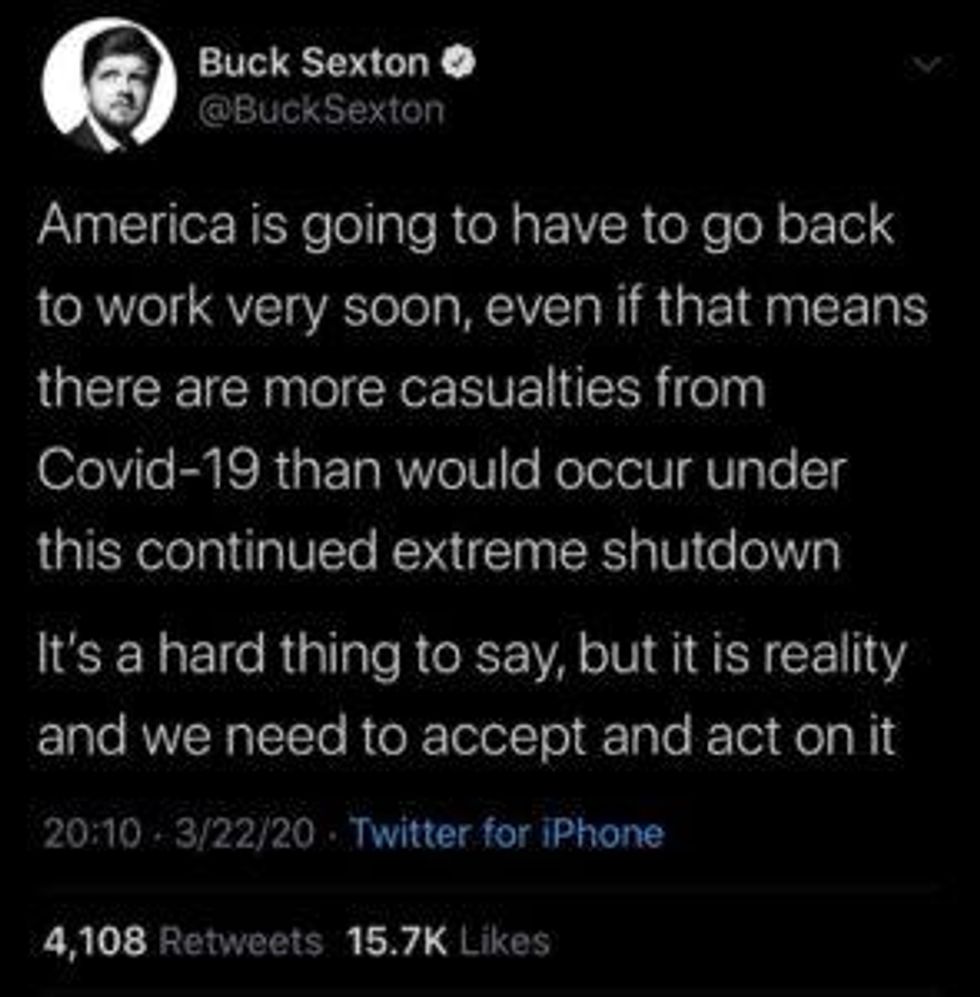
Sexton posted and then later deleted a tweet that said, "America is going to have to go back to work very soon, even if that means there are more casualties from Covid-19 than would occur under this continued extreme shutdown[.] It's a hard thing to say, but it is reality and we need to accept and act on it."
If you're like, well, much of the population of the planet right now, you're doing little other than obsessively reading news sites for the latest on the spread of the COVID-19 coronavirus, maybe taking an occasional break to check whether you're really developing a dry cough or just imagining it. Between coverage of Italian quarantine riots and stranded cruise ships, and the latest Trump fictions, there's plenty to absorb anyone's attention, even without the added distraction of concern over the health of yourself and your loved ones.
Unfortunately, because this is the corporate-controlled, understaffed, underexperienced news media we're talking about, much of that coverage has been incomplete, misleading or sometimes just plain wrong. Reading up on the new coronavirus can feel like a rabbit hole of conflicting reports: Is COVID-19 an unprecedented new threat, or just the equivalent of a really bad flu? Is closing schools a pointless danger to students in need of school lunches, and one that could risk spreading the virus farther and keeping needed healthcare workers at home to care for children, or a measure that was proven to work during the 1918 flu epidemic? And amid the rushed coverage of an evolving news story, attempts to paint a full picture that cross-references all that has been learned about the virus and how to fight it have been few and far between.
Fortunately, there are a few tricks that can make the miasma of coronavirus coverage easier to fight through. Some of these are just good media literacy, while some are more specific to keeping sane during public health scares in particular.
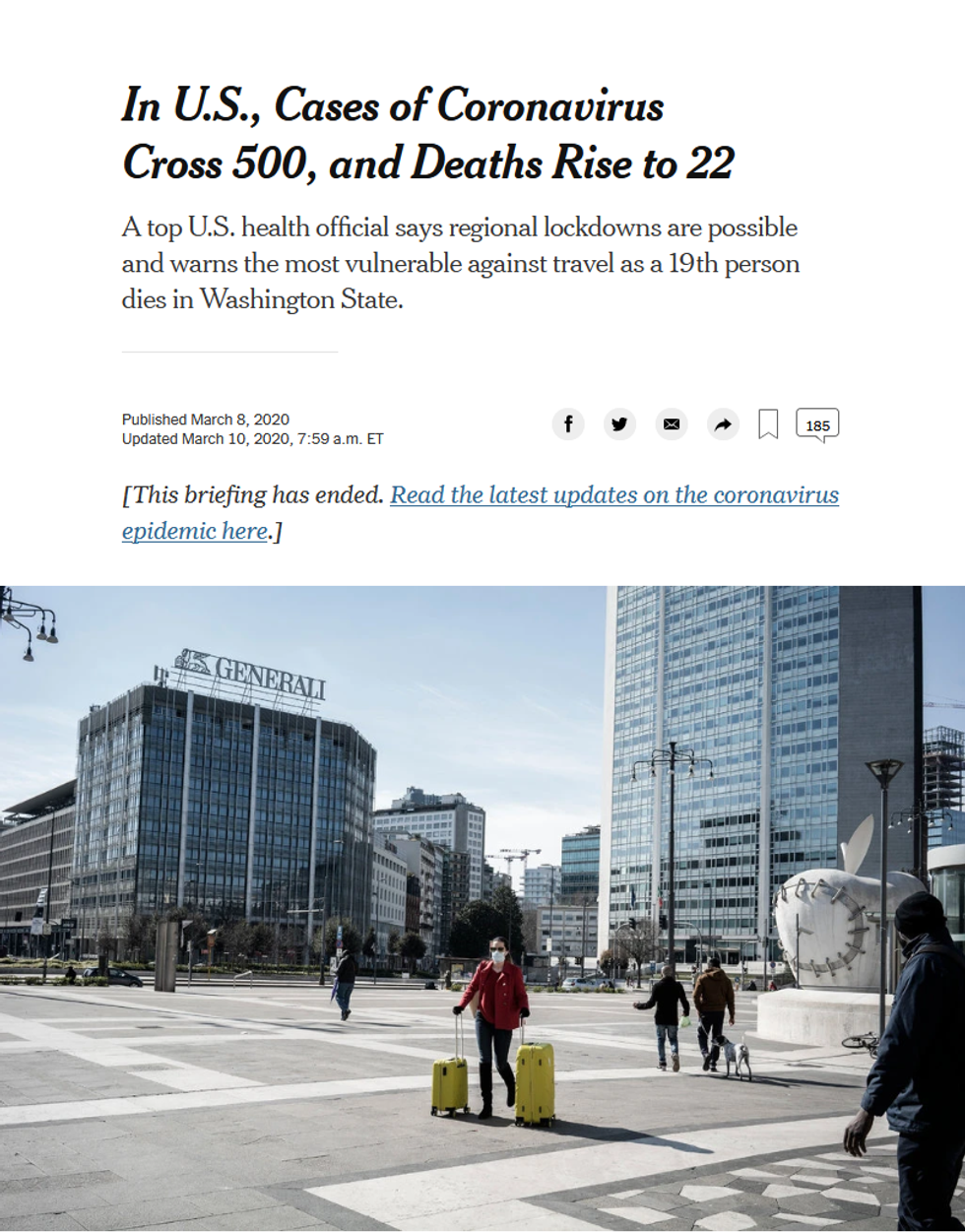
Don't worry too much about the ever-changing numbers. Much of the coronavirus coverage has focused on the one set of facts that seem incontrovertible: how many people have been infected, and how many have died as a result of the disease (ABC News, 3/6/20; New York Times, 3/8/20; Reuters, 3/8/20).
But even what appear to be simple numbers can be misleading in the case of a rapidly developing outbreak. The death rate from COVID-19 has bounced around from 2% (Washington Post, 2/22/20), to between 0.1% and 3% (New York Times, 2/28/20), to 3.4% (New York Times, 2/29/20). (The mortality rate from seasonal flu viruses, by comparison, averages around 0.1%.)
That's in part because the numbers continue to evolve as the virus spreads, but also because calculating an accurate death rate is "PhD-level hard," according to BBC News (3/4/20). Most of the death rate coverage did not specify what these figures were percentages of: A 2% mortality rate, for example, is far scarier if it's the percentage of all those infected (including many people who may develop few or no symptoms) than if it's a percentage solely of those who require hospitalization. Most mild cases are never reported to medical officials, and different nations with different levels of medical care -- and healthcare professionals who are more or less overwhelmed by a quick rise in cases -- will see wildly varying numbers of fatalities. (Writing in Slate--3/4/20--Boston emergency physician Jeremy Samuel Faust noted that initial death-rate estimates in the 2009 H1N1 epidemic were as much as ten times higher than the eventually determined rate.)
At the same time, numbers for total infections -- as seen on widely disseminated maps of the spread of the virus (New York Times, NBC News, Washington Post) -- are worthless without knowing how many people in those nations have been tested. An article in the Atlantic (3/9/20) noted that the US could only confirm having tested 4,384 people for COVID-19, when at an equivalent stage in its outbreak, South Korea had tested more than 100,000; Harvard epidemiologist Marc Lipsitch told the magazine that journalists should stop referring to US reports of infections as "new cases," and instead "should refer to them as 'newly discovered cases,' in order to remove the impression that the number of cases reported has any bearing on the actual number."
Even otherwise informative articles can fall victim to this kind of mathematical shorthand. An unusually useful article in Bloomberg News (3/8/20) on what makes coronavirus symptoms severe for some patients and not for others -- "danger starts," it cautions, when an infection advances beyond the nose and throat and reaches the lungs -- briskly stated that "one in seven patients develops difficulty breathing and other severe complications, while 6% become critical." But that's out of "laboratory-confirmed patients" in China, according to the WHO study (2/16-24/20) that first reported these numbers, which is likely to be skewed toward more serious cases, since those with mild cases are less commonly subjected to testing.
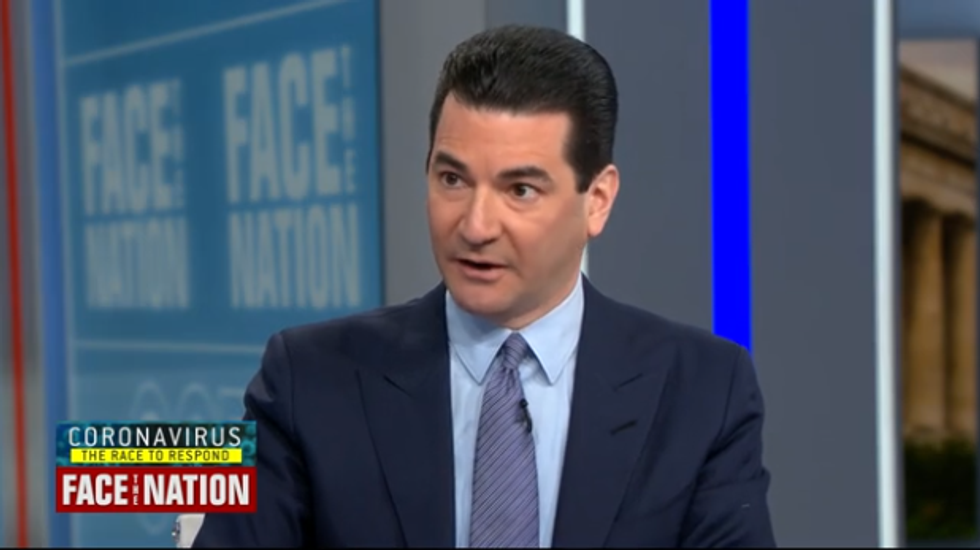
Learn the difference between "containment" and "mitigation": These terms entered widespread media use after former Trump FDA commissioner Scott Gottlieb told Face the Nation (CBS, 3/8/20): "We're past the point of containment. We have to implement broad mitigation strategies." As some news reports noted (LA Times, 3/8/20), this meant moving to broader societal measures like closing schools, canceling large public events and having more employees work from home.
But what news coverage didn't always get across was that this was not just a response to a worsening epidemic, but a distinctly separate phase of addressing any disease outbreak: When only a relative handful of people have gotten infected, it's still possible to try to isolate them and prevent spread of the disease to the broader population. Once microbes are at large in much of a community, however, the best approach is to practice what epidemiologists call "social distancing": reducing contacts between as many people as possible, in order to keep a disease from spreading like wildfire.
Importantly, containment and mitigation have very different aims. The former is about targeting specific populations (say, people who have arrived recently from China or Italy) and keeping them away from the general public as much as possible, to keep more people from being exposed. Mitigation, however, is less about keeping people from getting sick than about keeping them from getting sick all at once.
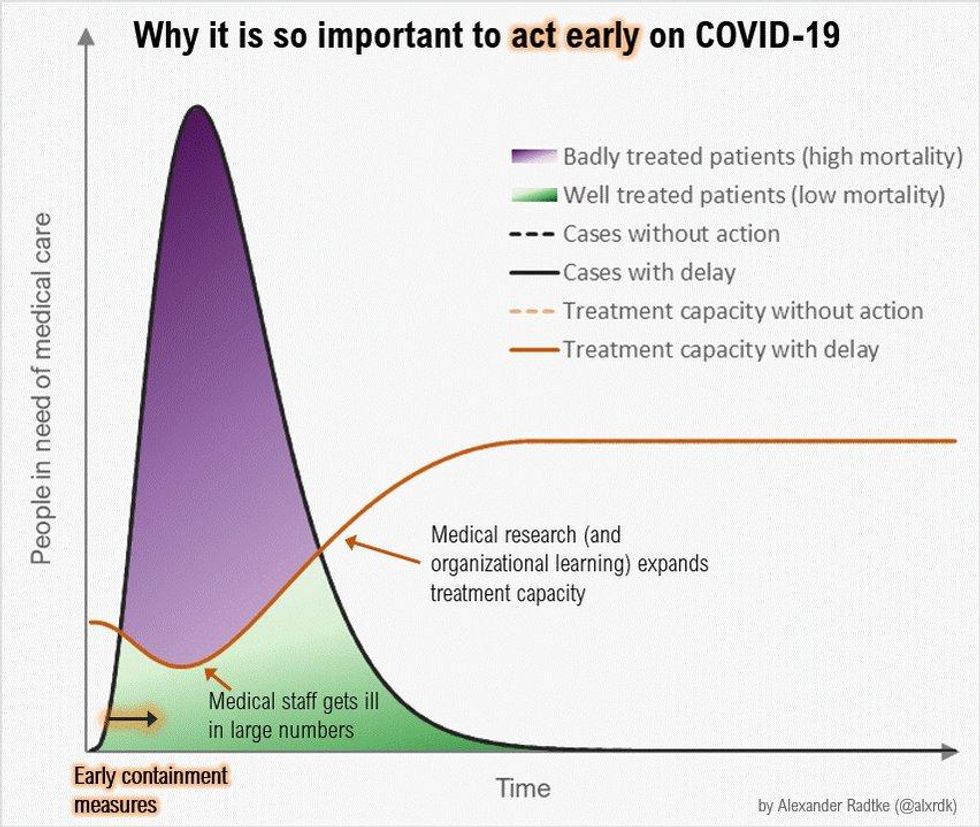
The best illustration of this remains the "Flatten the Curve" graph, first made by Rosamund Pearce of the Economist and turned into an animation by German engineer Alexander Radtke. Mitigation measures are put in place when it's all but certain that the majority of a population will eventually be infected, a tipping point some experts believe we may inevitably reach (CBS News, 3/2/20). At that point, the goal is to slow the infection rate so that hospitals and other medical treatment facilities don't get overwhelmed -- something can help bring down the fatality rate significantly.
The media coverage, however, hasn't always gotten this message across clearly. The New York Times (3/8/20), for example, ran an article with the potentially misleading headline "US Health Experts Say Stricter Measures Are Required to Limit Coronavirus's Spread," though the experts cited actually called for a switch from containment to mitigation measures. The Times described this as "telling people in affected areas not to go out" -- but in fact, under containment, some people (those who may have had contact with infected people, or who have high risk factors) are already being told to remain home. Even more confusingly, the second half of the article focused on quarantining those on infected cruise ships or nursing homes, which are containment measures, not mitigation.
Understand the likely timeline of an outbreak. School closures so far have mostly been for a matter of days (Atlantic, 3/8/20) or weeks (New York, 3/6/20); meanwhile, Gottlieb's statement that "we're looking at two months probably of difficulty" was widely cited in news reports.
Some of this has to do with uncertainty over the spread of the coronavirus: The number of cases ramped up quickly in parts of China and Italy, and no one is sure how quickly it will die down. But, also, looking at this as a crisis that will soon pass may end up being the wrong approach.
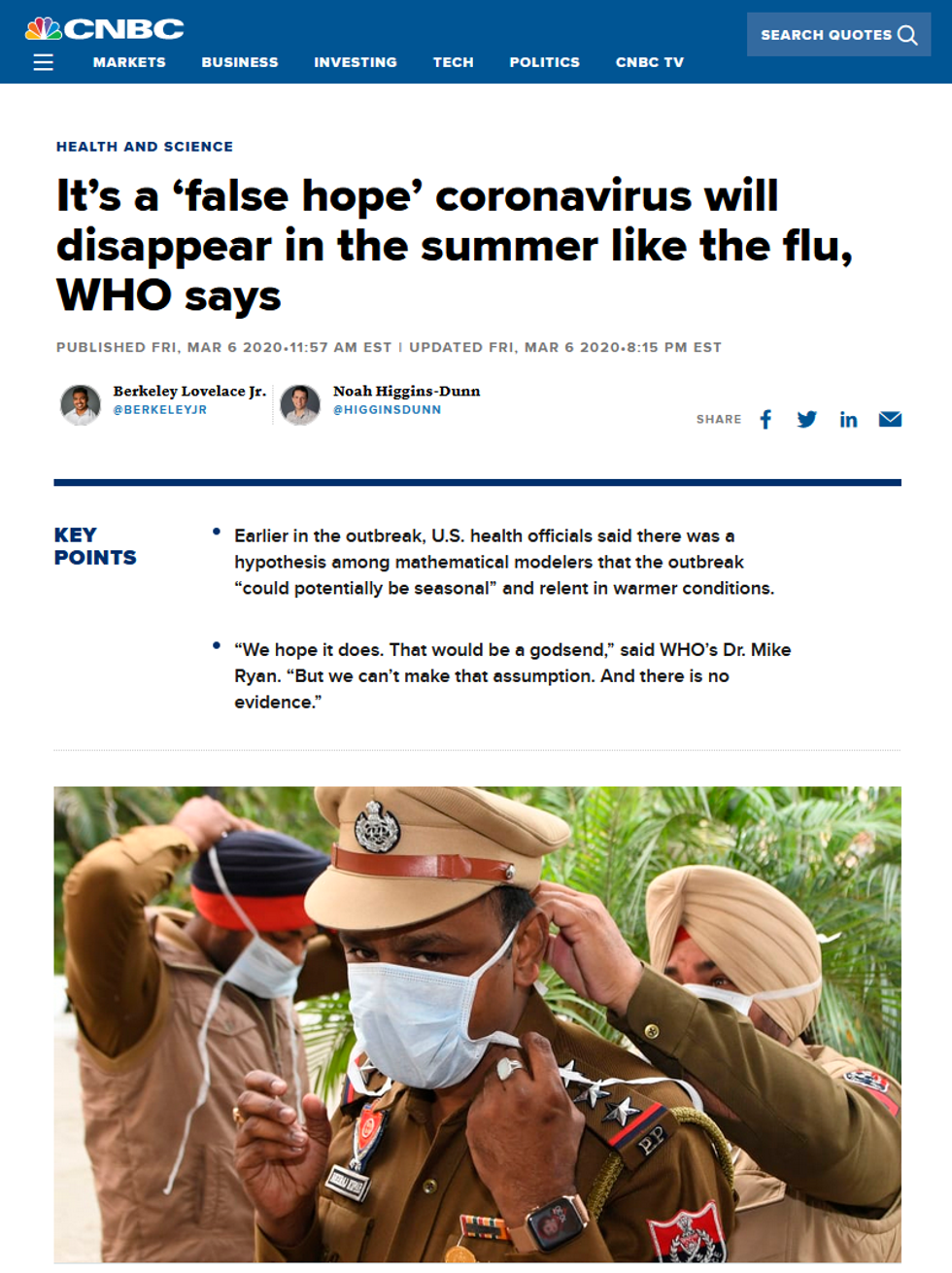
Disease experts have been predicting for weeks now (Business Insider, 2/28/20) that the arrival of warmer weather could help -- many viruses survive longer in cold, dry weather, and staying indoors reduces immune response and keeps more people breathing recirculated air -- though we won't know for sure until we see whether this virus behaves like others (CNBC, 3/6/20). But even if COVID-19 does wane in the summer, it will likely return and spread more rapidly again in the fall and become another endemic seasonal infection, like the flu. This isn't necessarily a disaster -- vaccines and other treatments could eventually be developed, meaning all other things being equal, it's better to fall sick later than sooner -- but it also means that any and all predictions of when things will return to normal should be taken with a grain of salt.
Read firsthand reports from nations where the virus has already hit. Many of the US media reports on Italy's expansion of travel and event restrictions on March 9 (CNN, 3/9/20; Washington Post, 3/9/20) described it as a "lockdown," conflating containment measures (such as travel restrictions) and social distancing ones (such as limits on public events), without ever clearly explaining precisely what rules had been put in place. (CNN asserted that Italian officials would use "thermoscan appliances" to enforce rail travel bans, implying that Italians would only be prohibited from traveling if they had a fever; the Washington Post explained that no one was permitted to travel except for "essential work, health reasons or other emergencies.")
Meanwhile, Daniele Macchini, an ICU doctor in Bergamo, Lombardy, wrote a long Facebook post, later translated into English and posted to Twitter by a colleague, describing an "epidemiological disaster" where 15 to 20 mostly elderly new patients arrive every day, overwhelming staff and facilities alike:
Every ventilator becomes like gold: those in operating theatres that have now suspended their non-urgent activity become intensive care places that did not exist before.
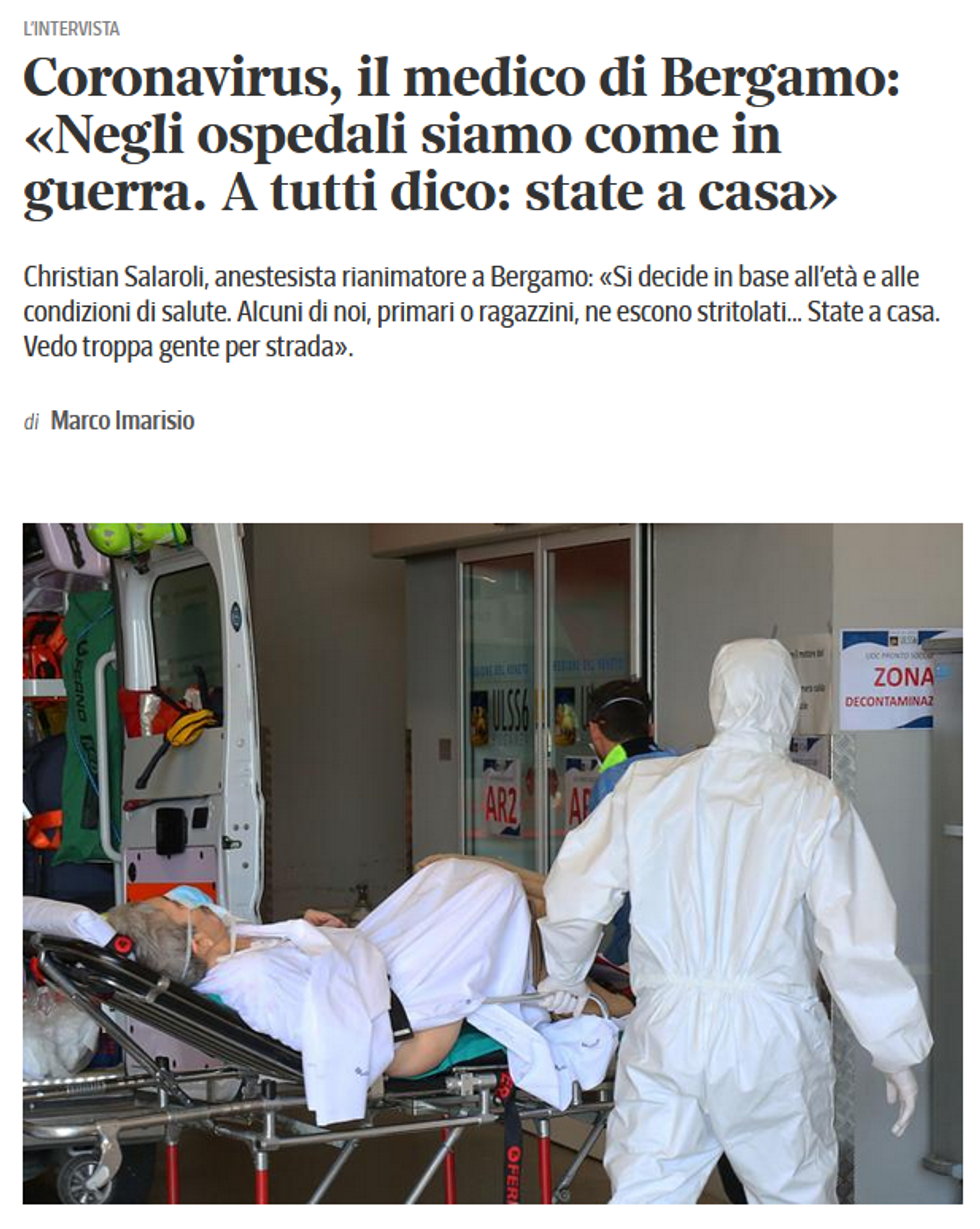
Added Christian Salaroli, medical director of a Bergamo hospital, told the Milan newspaper Corriere Della Sera (3/9/20) that
if a person between 80 and 95 has severe respiratory failure, you probably won't proceed. If he has a multi-organic failure of more than three vital organs, it means he has a 100% mortality rate. He is now gone.
For those still healthy, meanwhile, European English-language newspaper The Local (3/9/20) reported that stores and restaurants were open, but for limited hours and with limits on how many people could enter, to keep shoppers and diners at least six feet apart, the distance considered necessary to prevent easy transmission of the virus; newspapers also printed the self-certification form (Il Messaggero, 3/9/20) that Italians can print out and present to officials to indicate that they need permission to travel.
Ask the questions that the media coverage is not. When it's reported that the CDC has directed older adults and those with "severe chronic medical conditions" to stay home as much as possible and avoid crowds when going out (CNN, 3/6/20), what kind of conditions are included, and what age groups? (The CDC release specifically warned those with "heart disease, diabetes or lung disease," and didn't outline an age cutoff, though other studies have shown that the death rate begins to spike above age 50, as noted in Talking Points Memo, 3/7/20.) If you're supposed to stay home when sick with COVID-19, does that mean you should avoid going out even to be tested? (As one opinion writer in the New York Times--3/9/20--found out, even health professionals aren't yet sure about that one.) Why has northern Italy seen such a high hospitalization and death rate when it has advanced medical facilities? (No one is exactly certain, but one theory is that it has to do with Italy having the largest proportion of residents over age 65 -- 22.6% -- of any European nation, as reported in The Local--3/5/20.)

And if all else fails, follow John Oliver's rule of thumb on Last Week Tonight (3/1/20):
It's really about trying to strike a sensible balance. Basically, if you're drinking bleach to protect yourself right now, you should probably calm the fuck down. If you're, say, licking subway poles because you're certain nothing can hurt you, maybe don't do that. You want to stay somewhere between those extremes. Don't be complacent, and don't be a fucking idiot.
Words to live by, whether you're a reader trying to understand a growing epidemic, or just a news reporter or editor trying to cover one.
The coronavirus outbreak in mainland China is spiraling out of the country's ability to control it and spreading across the world as health experts warn that it may be impossible to fully control what could be turning into a global epidemic.
Experts in infectious diseases told Scientific American's health vertical STAT on Monday that despite the efforts of the Chinese government to contain the virus it may be too late.
"Despite the enormous and admirable efforts in China and around the world, we need to plan for the possibility containment of this epidemic isn't possible," Imperial College London health professor Neil Ferguson told STAT.
The number of publicly reported infections in China jumped 60% overnight, from 2,835 cases to 4,515. The number of deaths now exceeds 100. As the New York Times reported, a shortage of test kits may mean the number of infected is far higher.
On CNBC's "Squawk Box" Tuesday, former FDA Commissioner Scott Gottlieb said the number of cases could be in the tens of thousands.
"I think we are dramatically underestimating" the number of cases in China, Gottlieb said.
The virus has now been confirmed in 13 other countries and human to human transmission has been confirmed in both Japan and Germany.
Face masks are selling out in the U.S. and other regions of the world.
The semi-autonomous Chinese city of Hong Kong has blocked travel from the mainland to control the outbreak. Hong Kong Chief Executive Carrie Lam acknowledging that "draconian measures" were now being taken to control the outbreak and quarantine people possibly infected.
There have been no deaths from the virus thus far outside of China and the Chinese deaths are reportedly from elderly and immuno-compromised individuals who contracted the illness.
Mark Parrish, the regional medical director of Northern Europe at medical securities firm International SOS, told CNBC that the death rate should be understood in perspective.
"Putting it into perspective, 100 deaths or so, so far, all in elderly people and those that have other co-existing diseases unfortunately," said Parrish. "And those are the ones that are most likely to be affected by this as their respiratory systems find it difficult to deal with these things."
Ferguson and the other experts consulted by STAT said that the virus could end up uncontained and that it may be a disease humans have to live with.
"The more we learn about it, the greater the possibility is that transmission will not be able to be controlled with public health measures," said Toronto-based microbiologist Dr. Allison McGreer.
Vaccine and infectious disease researcher Trevor Bedford told STAT that he fears the outbreak is still in the early stages.
"If it's not contained shortly," said Bedford, "I think we are looking at a pandemic."
Maybe Scott Gottleib thought he could avoid scrutiny by making the move to the board of pharmaceutical giant Pfizer just over two months after leaving his position as President Donald Trump's commissioner of the U.S. Food and Drug Administration--but if so, he didn't count on Sen. Elizabeth Warren.
"Philosophically, [Gottleib is] returning to the ecosystem where he's most comfortable. And he'll get paid very well for it, too."
--Sidney Wolfe, Public Citizen
Warren, a Democrat from Massachusetts who is also running for her party's nomination for president in 2020, released a letter (pdf) Tuesday morning calling on Gottleib to step down from the board in the name of government ethics.
"You will be on the board of a company that has billions of dollars at stake in the decisions made by the agency you used to head and the employees you used to lead," states Warren's letter.
It's a profitable venture for Gottleib.
"According to Pfizer," Warren notes, "board members in 2018 were paid $142,500 in cash retainers, plus received $192,500 worth of Pfizer stock."
Appointed by Trump, Gottleib was the head of the FDA from 2017 until he resigned on April 5 of this year. After leaving the government, he took a job with right-wing think tank The American Enterprise Institute. The move to Pfizer, however, came later and was only announced on June 27.
In Warren's letter, which Common Dreams obtained exclusively and is reproduced below, the senator refers favorably to Gottleib's work with the FDA before hitting him on joining Pfizer and tying that move to the behavior of other officials in President Donald Trump's White House who have left the administration for big money payouts.
"You are the second high-level Trump Administration official in less than two months to join the board of a corporation soon after leaving government service," reads the letter. "In May 2019, former Trump Administration DHS Secretary and Chief of Staff John Kelly joined the board of Caliburn, Inc., the parent company of the Comprehensive Health Services, which runs the notorious Homestead Temporary Shelter for Unaccompanied Children in Florida."
"You should rectify your mistake and immediately resign from your position as a Pfizer board member," Warren adds.
Warren's letter cites her Anti-Corruption and Public Integrity Act as a possible solution to government officials behaving in this way in the future. As Common Dreams reported in June, Warren and the legislation's sponsor in the House, Rep. Pramila Jayapal (D-Wash.), see the problem as systemic to Washington's public-private revolving door. Rep. John Sabarnes (D-Md.) is co-sponsoring Jayapal's version of the law.
Gottleib's move to Pfizer was also noticed by Public Citizen Health Research Group co-founder Sidney Wolfe.
"This is classic and it's not surprising," Wolfe told health news site Stat. "Philosophically, he's returning to the ecosystem where he's most comfortable. And he'll get paid very well for it, too."
Read Warren's letter:
With Thanksgiving and Christmas comes the U.S. Department of Agriculture's reminder to cook turkey to 165 degrees to kill salmonella, a harmful bacteria, as in "Why a Salmonella Outbreak Shouldn't Ruin Your Thanksgiving." The reminder is particularly timely since an outbreak of salmonella-infected turkey resulting in foodborne illness was officially detected a bit more than a year ago. USDA, while active in detecting the slaughterhouse sites of the infected turkey, has yet to name those sites publicly and issue a whole turkey or turkey parts recall. USDA has recalled Jennie-O ground turkey products and issued a list of retailers carrying those products.
This inadequate response should raise serious questions about the proposed USDA takeover of all federal food safety duties. In July, the Trump administration proposed to transfer the food safety duties of the Food and Drug Administration (FDA) to the USDA. The proposal has many hurdles to realization, not the least of which is that new legislation would be required to transfer to USDA the duties assigned to FDA in the Food Safety Modernization Act. Even if such legislation were proposed, any Congressional hearings on the proposal must review USDA's performance history of protecting consumers, other than reminding them of how to prepare turkey and other foods to prevent foodborne illness.
On November 15, the Safe Food Coalition asked the USDA's Food Safety Inspection Service (FSIS) to declare a public health alert and recall turkey products from the 22 slaughterhouses and seven processing plants where FSIS identified the presence of Salmonella Reading, a particularly virulent serotype that is resisting a multi-drug antibiotic given to consumers of the infected turkey. The letter noted that FSIS' recommendation for "proper handling" of turkey, with separate knives, cutting boards and preparation areas, "subjects consumers to an unrealistic standard for 'proper' handling and cooking." The groups added that the "World Health Organization has estimated that cross-contamination [e.g. between infected meat and fresh vegetables] causes ten times as many Salmonella infections as eating undercooked poultry." FSIS rejected the Safe Food Coalition request, characterizing it as "Monday morning quarterbacking" by NGOs in comfortable offices remote from turkey production facilities.
However, despite the dismissal of the Safe Food Coalition letter, on November 26, FSIS released data, naming names, on chicken processing plant compliance with FSIS permitted salmonella thresholds. For the first time in the FSIS monthly salmonella performance report, the data were based on sampling of chicken parts, which consumers commonly eat, rather than of whole chicken carcasses. Performance grades varied greatly. For example, Tyson Foods slaughterhouses complied with the performance standard, while three-quarters of Perdue Farms slaughterhouses did not.
The Centers for Disease Control and Prevention (CDC) have laboratory confirmed 164 cases of the Salmonella Reading strain in turkey, which has caused one death and 63 hospitalizations in 35 states as of November 5. The first case was detected on November 20, 2017. According to an undated presentation by Dr. Patricia M. Griffin, Chief of the CDC's Enteric Diseases Epidemiology Branch, based on 2015-2017 data, the CDC estimates there are 29 cases of all serotypes of Salmonella infection for every laboratory confirmed case (slide 7). (This presentation, "Salmonella Enteritiditis Infections in the United States," is not posted to the CDC website.)
Thanks to Food and Water Watch's analysis in September of data obtained through the Freedom of Information Act, we know that of 34 chicken processing plants that failed to meet the FSIS permitted thresholds for salmonella, 16 had implemented FSIS's New Poultry Inspection System (NPIS). NPIS, launched in 2012, delegated FSIS inspection authority to chicken and turkey slaughterhouses and processing plants. The purpose of NPIS was to "modernize" poultry inspection to reduce the incidence of salmonella and other foodborne illness-causing pathogens.
However, under NPIS, plant inspectors have as little as one second on average to determine if a turkey carcass meets FSIS standards. According to a Food and Water Watch letter to USDA's Acting Undersecretary for Food Safety, FSIS inspectors are pressured by poultry processing plants to maintain line speeds and not interrupt production, even when inspectors report fecal matter on carcasses. A Food and Water Watch press release cited Stan Painter, Chairman of the National Joint Council of Food Inspection Local Unions: "I have been an inspector for over 30 years and inspection has deteriorated because FSIS management has permitted it to do so."
Even if the FSIS privatized inspection program performed as promised to reduce pathogen levels and foodborne illness from meat and poultry products, however, consumers cannot be complacent about what is on their plate, at Thanksgiving or any time of the year. On November 20, the CDC reported that 32 consumers in 11 states had become sick from eating E. coli contaminated romaine lettuce. The CDC advised consumers to throw out their romaine lettuce, even if they had not become ill by eating it.
On Thanksgiving Day, FDA Commissioner Scott Gottlieb tweeted to explain the November 20 alert, "Some lettuce packing is labeled in a way that doesn't make it clear where the product was grown. If you look at a package of lettuce, it's most likely going to have the address of the company on the back; not the location of the growing fields." Produce industry officials urged FDA to identify the growing region of the infected romaine lettuce, so that shipping of the product could resume from uninfected growing regions.
On November 26, FDA announced that romaine lettuce not grown in the Central Coast region of central and northern California was safe to eat, if the growing region and harvest date were clearly labeled on the lettuce packaging or on a retail sign if the lettuce was not packaged. Over Thanksgiving weekend, FDA and the Produce Marketing Association agreed on a voluntary labeling plan for romaine lettuce. FDA Commissioner Scott Gottlieb announced, "The leafy greens industry has agreed to establish a task force to find solutions for long term labeling of romaine lettuce and other leafy greens for helping to identify products and to put in place standards for traceability of product." The plan for long-term labeling of leafy greens follows repeated infected produce outbreaks.
As of June 2018, the CDC had not been able to determine the origin of an outbreak of E. coli (STEC) contaminated romaine lettuce that had first been detected in late 2017. The FDA concluded in May 2018 that there had been yet another outbreak of pathogenic E. coli contaminated romaine lettuce: "Any contaminated product from the Yuma [AZ] growing region has already worked its way through the food supply and is no longer available for consumption."
As IATP noted in June about that FDA conclusion: "If these words were intended to comfort consumers, a highly-detailed diagram in the blog, redacted to prevent publication of what FDA regarded as Confidential Business Information (CBI) (i.e. the commercial contamination sites), will irritate, if not infuriate, them." The categorization of public and environmental health information as CBI, together with the failure of FDA and USDA to work to prohibit and prevent the fertilization of fields with non-composted manure from Confined Animal Feed Operations (CAFOs), all but ensures that leafy greens will continue to be a high-risk food every day. Because pathogenic E. coliis in the romaine lettuce tissue, no chemical rinse can disinfect it--few would wish to eat leafy greens cooked to 165 degrees.
Although the FDA has the legal responsibility to prevent contamination of horticulture products, it cannot do so without the cooperation of the USDA. The Food Safety Modernization Act requires FDA to develop standards for biological soil amendments, and FDA has approved two scientifically validated methods for composting manure to reduce pathogens. However, FDA does not have the staff nor the infrastructure in the field to determine if CAFOs manage and apply manure in a way that prevents pathogens from entering fruit and vegetable plant tissues when that manure is applied on fields. USDA has staff that it could use to help implement FSMA manure standards, but it doesn't do so.
Indeed, proponents of having USDA take over FDA's food safety duties should read the series of USDA Office of the Inspector General audits and General Accountability Office (GAO) reports that have documented FSIS shortcomings to effectively manage its present duties. For example, a GAO report from March 2018 notes that FSIS has yet to develop Salmonella standards for turkey breasts and other commonly consumed meat products, such as pork chops. To judge by these audits and reports, FSIS is struggling to carry out its present obligations and must not be the headquarters for all federal food safety duties.
Dear President Trump,
Let us all wish and work for a peaceful and just New Year.
The American people are spending a significant amount of time observing and thinking about your presidency and its robust tweeting operation as President. Three areas of interest and concern comprise this letter's purpose:
The other concern relates to your diets and habits. You have what some nutritionists colloquially call a "cardiac diet" - full of foods containing fat, salt and sugar. A recent report said you drink about 12 cans of artificially sweetened diet coke a day! With artificial sweeteners. You have said you sleep less than normal people. You are overweight. Not a good combination, say physicians and health scientists, that is conductive to good health. And then there is the added stress of just being President and constantly being viscerally angry at critics here and abroad. People just doing things with their constitutional freedom, to which you strenuously object, seems to aggravate you.
Please release your full medical records with the necessary technical details and explanations to give the public confidence in your health
Since you have not fully divested from your properties, there is all the more reason for you to release several years of your tax returns, including the most recent return. Even your supporters have wondered, "Why not, what has he got to hide?" Or more benignly, "Why not, he's got nothing to hide, everyone knows he is rich and has done lots of deals with lots of businesses and partnerships."
Will you recognize that you are a public official and owe the people the full tax information, most importantly, your assets, debts and other business dealings and partnerships?
By contrast, you have selected men and women to run your health and safety regulatory agencies and departments who were and are openly hostile to these agencies' official statutory missions. Like you, those you have appointed are boastful about their intention to dismantle limits on lethal or injurious impacts and actions that have been saving the lives, health and safety of the American people and protecting consumer dollars. You are aware of their sworn oath of office to uphold the laws under their jurisdiction - an oath preceded by similar assurances in their sworn congressional testimony at their Senate confirmation hearings.
The destruction of these federal agencies' missions, the degrading and marginalizing of their scientists, engineers, ecologists, economists and other professional public servants are without precedent. What is also unique is that your heads of EPA, the Departments of Interior, Agriculture, Education, Labor and the Consumer Financial Protection Bureau are contemptuous of the missions of their agencies. The neglect, reversals or replacements are letting more Americans, including children, die, get sick or be injured - on your Presidential watch! And the enablers of unprosecuted corporate crime and wrongdoing that are just getting underway -revoking or suspending rules and even brazenly pulling back on enforcement actions which are nearing settlements, sanctions or prohibitions. This abdication also creates a climate than can increase corporate abuses of workers and consumers.
Of course, there is prosecutorial or enforcement discretion, with priorities for action. That is not the situation here. This is a wholesale wrecking crew of non-enforcement of laws, taking the federal cops off the corporate crime, fraud and abuse beat. This is a demolition death dance cutting enforcement budgets, pushing conscientious enforcement officials out the door or leaving them with nothing to do, thereby wasting taxpayer money. Such zealotry keeps pushing the envelope until preventable disasters occur or serious scandals emerge. That's when it reaches your desk.
Pay attention to what those you have appointed are undoing, if only because they will be doing in your congressional supporters in November. You should start with the Rogue's gallery of Mick Mulvaney, grinding down the CFPB, Alex Acosta, the Secretary Against Labor, Scott Pruitt, Chief Toxifier at the EPA, Ryan Zinke, Oil-Driller-in-Chief on the federal lands and offshore, Sonny Perdue, the anti-nutritionist at USDA, Scott Gottlieb, the drug industry's man at the FDA, and Betsy DeVos, the corporatist, jeopardizing students at the Department of Education.
It would help if you are seen working on your empathy for the tens of millions of deprived and innocent people, including children, exposed to various forms of risk and exploitation in their daily lives here and abroad whom you are adversely affecting.
Sincerely yours,
On Wednesday, the U.S. Food and Drug Administration on Wednesday approved a new cancer therapy developed by the pharmaceutical company Novartis that experts hope may revolutionize the way doctors treat cancer--but the half-million dollar price tag has sparked a national conversation the costs of life-saving treatments.
In a clinical trial of this CAR-T cell therapy--which will hit the market as "Kymriah"--83 percent of children with acute lymphoblastic leukemia were cancer free after just three months and one dose.
"This is an amazing therapy, but there has to be a limit at which point companies can no longer charge desperate patients, or taxpayers, enormous sums."
--Dr. Walid Gellad, University of Pittsburgh
"The therapy," STAT reports, "is made by harvesting patients' white blood cells and rewiring them to home in on tumors. Novartis's product is the first CAR-T therapy to come before the FDA, leading a pack of novel treatments that promise to change the standard of care for certain aggressive blood cancers."
"We're entering a new frontier in medical innovation with the ability to reprogram a patient's own cells to attack a deadly cancer," said FDA commissioner Scott Gottlieb. "New technologies such as gene and cell therapies hold out the potential to transform medicine."
But at what cost?
The price for one treatment set of Kymriah is at $475,000, which does not include any doctors' fees or additional bills for time spent at the hospital, meaning the end cost could be much higher. That is actually lower than anticipated--Wall Street analyst predicted as high as $750,000 per dose, and U.K. regulators said $700,000 "would be fair," STAT reports--but priced at nearly half a million dollars, the treatment has provoked a fierce debate about notoriously high costs for necessary, life-saving healthcare.
Despite Kymriah's success in the clinical trial, Walid Gellad, a doctor and professor at the University of Pittsburgh, suggested to Axios that treatments with undetermined effectiveness--even if they have the potential to save lives--shouldn't cost more than proven measures such as bone marrow or kidney transplants, adding: "This is an amazing therapy, but there has to be a limit at which point companies can no longer charge desperate patients, or taxpayers, enormous sums."
"While Novartis' decision to set a price at $475,000 per treatment may be seen by some as restraint, we believe it is excessive," said David Mitchell, founder and president of the advocacy group Patients For Affordable Drugs, and a cancer patient himself. "The drug pricing system in America is completely broken. Until policy in this country changes, the vicious cycle of patients struggling under high drug prices will continue."
Mitchell's group calculated that over $200 million in federal funding has been allocated to research related to the treatment, and Mitchell said, "Novartis has not acknowledged the significance of taxpayers' investment," but Novartis chief executive Joseph Jimenez insisted to Forbes' Matthew Herper that his company's undisclosed investments "dwarf anything the government has invested through NIH grants."
The pharma exec also told Herper he hopes the discussion about Kymriah's cost could lead to a change in the way patients are charged for life-saving treatments. Writing for Forbes, Herper reports:
Jimenez sees Kymriah as his chance to put into practice new ideas about drug pricing he has advocated for years as a solution to the pharmaceutical industry's bad reputation and unsustainably rising prices: "indication-based" or "value-based" pricing. Drugs, he says, should be priced on the value they bring to the healthcare system, and insurers and governments should pay based on whether the medicines work. That's why Novartis has approached the Centers for Medicaid and Medicare Services and insurers about schemes where only patients who have responded to Kymriah in a month will incur a charge, despite the high cost of administering the treatment.
Journalists who cover the pharmaceutical industry noted that Jimenez's endorsement of response-based payments is a big deal in the debate about healthcare treatment pricing, but even if the government negotiates a deal for those who rely on Medicare and Medicaid, for cancer patients with private insurance or no insurance at all, this and other life-saving treatments could still remain out-of-reach.
High costs are already impacting cancer patients across the U.S. Recent analysis by Kaiser Health News found that because of continuously increasing costs for cancer treatments, "hundreds of thousands of cancer patients are delaying care, cutting their pills in half, or skipping drug treatment entirely."
And although there are more than 600 gene and cell therapies in clinical trials today, according to Bloomberg Technology, future treatments that resemble Kymriah, for different types of cancer and other diseases, are expected to come at similar or even higher costs.
Peter Bach, the director of Memorial Sloan Kettering's Center for Health Policy and Outcomes, who studies drug prices, told Bloomberg he see the industry's prices increasing with no end in sight.
"We have gotten so comfortable with these numbers that are just beyond belief for these agents," Bach said. "And this is a highly profitable sector.... They just continue to move the goal posts" for how much companies can charge.
If present trends continue, experts predict, the tobacco toll in the 21st century will reach one billion premature deaths, ten times the 100 million people who died from tobacco use in the 20th century. To avert that future will require changing the focus of current tobacco control strategies from a primary focus on changing the behavior of present and future smokers to one that seeks to change the practices of the tobacco industry itself.
Without a more direct effort to change the practices of the powerful corporations that drive the world's leading cause of death, ending the tobacco epidemic will remain a distant goal.
Last week, two events shed light on current strategies the global tobacco industry uses to counter threats to profitability. In London, shareholders of British American Tobacco (BAT) and in Winston-Salem, Reynolds shareholders approved a BAT buyout of Reynolds that will create the world's largest tobacco company. In Geneva, the World Health Organization (WHO) released its 2017 report on the global tobacco epidemic, calling on member states to counter the rising tide of tobacco corporate lobbying and litigation that undermines public health measures around the world.
Effective tobacco control will require responding to four global trends. First, the tobacco industry is consolidating. By approving BAT's buy-out of the 57 percent of Reynolds it didn't already own, the shareholders made Big Tobacco a more powerful and concentrated threat to global health. With the merger, BAT and Altria, the maker of Marlboros, will sell eight of the ten top U.S. cigarette brands. In Asia, the largest tobacco companies in Japan, China and South Korea are buying up smaller rivals throughout the continent, further consolidating the world's largest market for tobacco. In 2016, the world's top five tobacco companies sold enough cigarettes to produce more than 300 smokes for every man, woman and child on the planet, with total sales of $150 billion. Consolidation gives bigger companies more to spend on marketing, lobbying, campaign contributions, and litigation, strategies used to undermine public measures to reduce tobacco use.
Second, the tobacco industry is becoming more skilled at interfering in government operations. Big Tobacco learned that occupying government is an effective complement to resisting government. For example, the industry has placed key allies within President Trump's administration. Vice-President Mike Pence claimed in 2001 that "smoking doesn't kill," and has since been a regular recipient of tobacco campaign contributions. Health Secretary Tom Price has long connections to the tobacco industry, and FDA head Scott Gottlieb served on the board of an e-cigarette company. Trump's nominee for Solicitor General, Noel Francisco, represented Reynolds in its successful lawsuit against graphic warning labels on cigarette packs.
In Africa, a growing market for tobacco, the Guardian reports that BAT and other transnational tobacco corporations have threatened at least eight governments, insisting that they repeal, delay or dilute public health measures to reduce tobacco use. "Tobacco industry interference in government policy-making represents a deadly barrier to advancing health and development in many countries," said Dr. David Bettcher, director of WHO's Department on Prevention of Noncommunicable Diseases.
A third trend is the tobacco industry focus on marketing to vulnerable populations. In the United States, poor people are have become a prime target. Compared to three decades ago, more of the 45 million Americans who still smoke are low-income. They have less access to cessation programs, more life stressors that trigger nicotine addiction and are more likely to be targeted by the $9.1 billion a year the tobacco industry spends on marketing. In Africa, women, young people and those moving to cities are the favored targets of tobacco marketers. Between 2010 and 2030, the number of smokers in Africa is expected to grow by 40 percent. As a result, tobacco use will widen current global and domestic gaps in premature death and preventable illness rates between the well off and poor.
Fourth, tobacco continues to be a profitable industry across the globe. In the United States, reports the Wall Street Journal, the operating profits of U.S. tobacco manufacturers have grown 77 percent between 2006 and 2016. This country generates more tobacco profits than any other market in the world outside China. Although smoking rates in the U.S. have declined, the number of smokers has stayed stable and addicted smokers guarantee that steep price increases lead to rising profits.
To reverse the trends that are helping Big Tobacco thrive and prosper will require health officials and advocates to rethink their goals and strategies. Without a more direct effort to change the practices of the powerful corporations that drive the world's leading cause of death, ending the tobacco epidemic will remain a distant goal.
Bringing tobacco litigation into the 21st century and extending it globally could help to thwart the new strategies Big Tobacco uses to defeat public health measures.
In the long run, only approaches that make tobacco companies less attractive to investors will deprive the industry of its lifeline of capital. In the 1980s, Warren Buffet explained why he loved tobacco stocks: "It costs a penny to make. Sell it for a dollar. It's addictive. And there's fantastic brand loyalty." But a few years later, he changed his mind. "I'm wealthy enough where I don't need to own a tobacco company and deal with the consequences of public ownership," he said. A reinvigorated global campaign to urge investment managers, hospital and university endowments, and pension funds to fully disinvest from tobacco would deprive the industry of capital and might make other investors decide, like Buffet, that profiting from a killer industry is not worth the reputational risk.
In the United States, lawsuits against Big Tobacco won new resources for prevention and treatment of tobacco addiction. Revelations in court documents discredited the industry, shrinking its outsized influence in politics. Bringing tobacco litigation into the 21st century and extending it globally could help to thwart the new strategies Big Tobacco uses to defeat public health measures.
Finally, taxes remain a pillar of effective tobacco control. Increasing tobacco taxes reduces consumption, especially among the most vulnerable groups, and provides new resources for effective prevention and treatment.
It took 50 years for the United States to cut smoking rates in half. By doing so, eight million lives were saved and 800,000 lung cancer deaths averted. With 100 billion lives around the world at stake, it's time to start disrupting business as usual.