

SUBSCRIBE TO OUR FREE NEWSLETTER
Daily news & progressive opinion—funded by the people, not the corporations—delivered straight to your inbox.
5
#000000
#FFFFFF
To donate by check, phone, or other method, see our More Ways to Give page.
Daily news & progressive opinion—funded by the people, not the corporations—delivered straight to your inbox.
"Congress must say enough is enough and immediately open an investigation into just how deep the rot at Burgum’s Interior goes," said one critic.
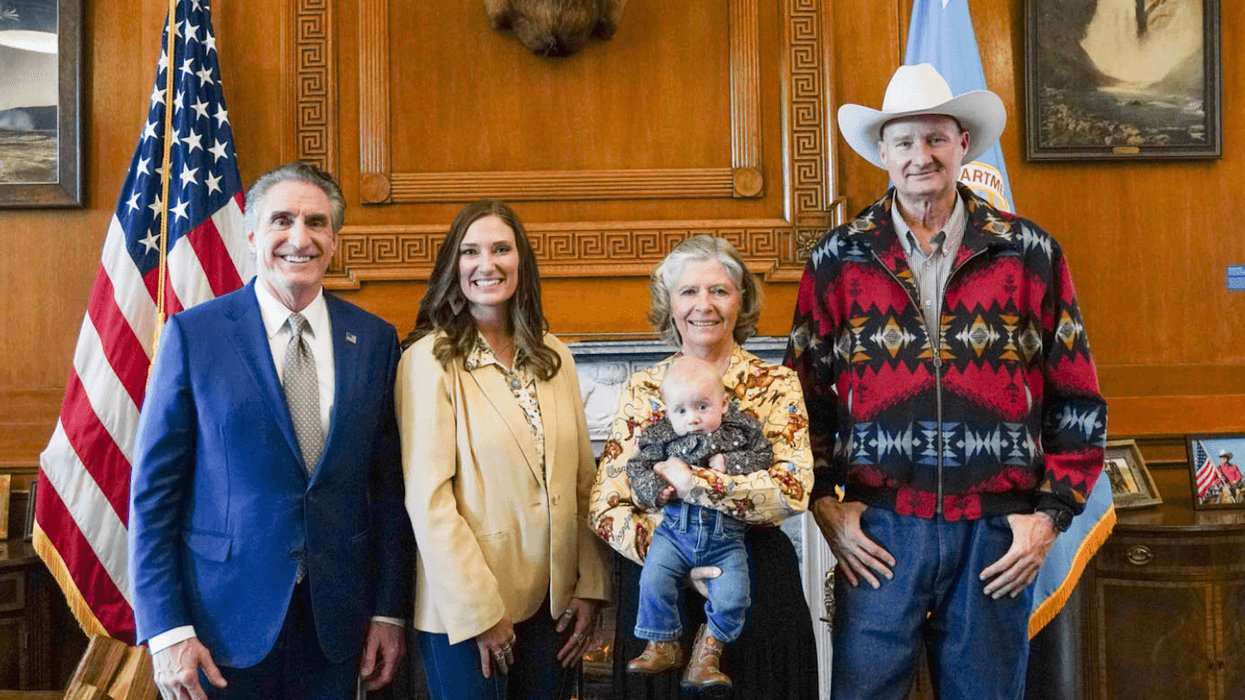
Ethics experts this week raised red flags over a senior US Interior Department official's failure to disclose her family's financial interest in the nation's largest lithium mine, which opponents say was illegally approved by the Trump administration.
In 2018, Frank Falen, husband and former law partner of current Associate Deputy Interior Secretary Karen Budd-Falen—the third-highest ranking Department of Interior (DOI) official—sold the water rights from a family ranch in Humboldt County, Nevada to a subsidiary of Lithium Americas for $3.5 million.
The subsidiary, Lithium Nevada, wanted to build a highly controversial $2.2 billion open-pit lithium mine—Thacker Pass—that required both massive amounts of water and approval from the DOI. Falen's water rights sale also hinged upon DOI approving the mine.
At the time, Budd-Falen worked as the DOI's deputy solicitor for wildlife. In 2019, she sat down for a lunch meeting with Lithium Americas executives in the DOI cafeteria.
“They just happened to mention to me they were going to DC, and I was like, ‘Well, my wife is back there,’” Falen said of the Lithium Americas executives in a New York Times interview. “It was my fault because I just said, ‘Yeah, you should stop by and say hi to my wife.’"
The US Bureau of Land Management (BLM), part of DOI, approved the mine during the final days of Trump's first administration via an expedited process to circumvent lengthy environmental review. Indigenous and conservation groups, working together in the Protect Thacker Pass coalition, subsequently sued over what they argued was the mine's illegal approval.
A Lithium Americas spokesperson told the Times: "We haven’t worked directly with Karen Budd-Falen related to Lithium Americas, nor have we ever met with her in a formal capacity regarding our project.”
However, ethics experts question the financial ties between Falen and Thacker Pass and why Budd-Falen did not publicly disclose her husband's $3.5 million water deal.
“Did she have any oversight of the environmental review process regarding Thacker Pass?" Kyle Roerink, executive director of the Great Basin Water Network, a Nevada conservation group, said during an interview last week with High Country News. “If she didn’t recuse herself, it would fly in the face of the impartial decision-making that Americans expect from government officials.”
Doug Burgum’s third-in-command Karen Budd-Falen made millions after the Trump administration fast-tracked what’s now the nation’s biggest lithium mine. Illegal, conflict of interest, corruption, or whatever you want to call it, there’s a rot in our Interior Department. https://nyti.ms/3LfBVWM
[image or embed]
— Save Our Parks (@saveourparks.us) January 5, 2026 at 1:00 PM
Robert Weissman, co-president of the watchdog group Public Citizen, told the Times: "It’s not clear that Karen Budd-Falen knew she had a conflict, but it’s clear she should have known, and that the public should have known. It’s also clear that she should not have met with Lithium Nevada."
Green groups and Indigenous peoples—including the the Reno-Sparks Indian Colony, Burns Paiute Tribe, and Summit Lake Paiute Tribe—fiercely oppose the mine. Opponents argue the project lacks consent, had a rushed environmental review, and that the mine would threaten wildlife and water and desecrate sacred Indigenous sites.
Thacker Pass, whose name means "rotten moon" to all three tribes, is also the site of an 1865 massacre of dozens and perhaps scores of Northern Paiute men, women, and children by US Cavalry troops. The tribes want it listed on the National Register of Historic Places.
In September, the Trump administration and Lithium Americas reached a deal under which the government will take a 5% equity stake in both the company and the Thacker Pass mine in return for Department of Energy loan money as demand for lithium—a key component of electric vehicle batteries, cellphones, and laptops—is surging worldwide.
The apparent conflict of interest involving Budd-Falen continues a history of corruption at Trump's DOI in both the president's first and current terms. First-term Interior Secretary Ryan Zinke's tenure was plagued by ethics violations and abuse of office. Federal investigators found that Zinke lied to them about his involvement in private land deals while in office, had improper relationships with developers, and improperly used taxpayer funds to pay for chartered aircraft and helicopter flights.
Zinke resigned in 2019. His eventual successor, David Bernhardt, was called a "walking conflict of interest" and "as corrupt as it gets" due to his prior work as a fossil fuel lobbyist.
Budd-Falen could also benefit from the Trump administration's invasion of Venezuela. According to reporting from Public Domain's Jimmy Tobias and Chris D'Angelo, Budd-Falen or her husband hold tens of thousands of dollars worth of stock in fossil fuel companies including ExxonMobil and pipeline firm Enterprise Products Partners.
Responding to Budd-Falen's failure to disclose her family's interest in the Thacker Pass mine, Save Our Parks spokesperson Jayson O’Neill said Monday:
This raises substantial questions about the lack of transparency, clear conflicts of interest, and potential illegal self-dealing at the Interior Department under [Interior Secretary] Doug Burgum. It wasn’t enough for Burgum’s top lieutenant, Karen Budd-Falen, to hold tens of thousands of dollars in Big Oil stocks while advancing their interests at Interior. Now we find out that she worked behind the scenes with Lithium Americas’ representatives and lobbyists, which received fast-track approval, making her and her husband millions.
"This naked corruption and self-dealing is par for the course at Doug Burgum’s Interior Department, which is more focused on self-serving and special interests than the American people and our outdoor heritage," O'Neill added. "Congress must say enough is enough and immediately open an investigation into just how deep the rot at Burgum’s Interior goes.”
The stark difference between the House and Senate versions of a funding measure have some observers speculating that the upcoming impasse may be unresolvable, leading to yet another full or partial government shutdown.
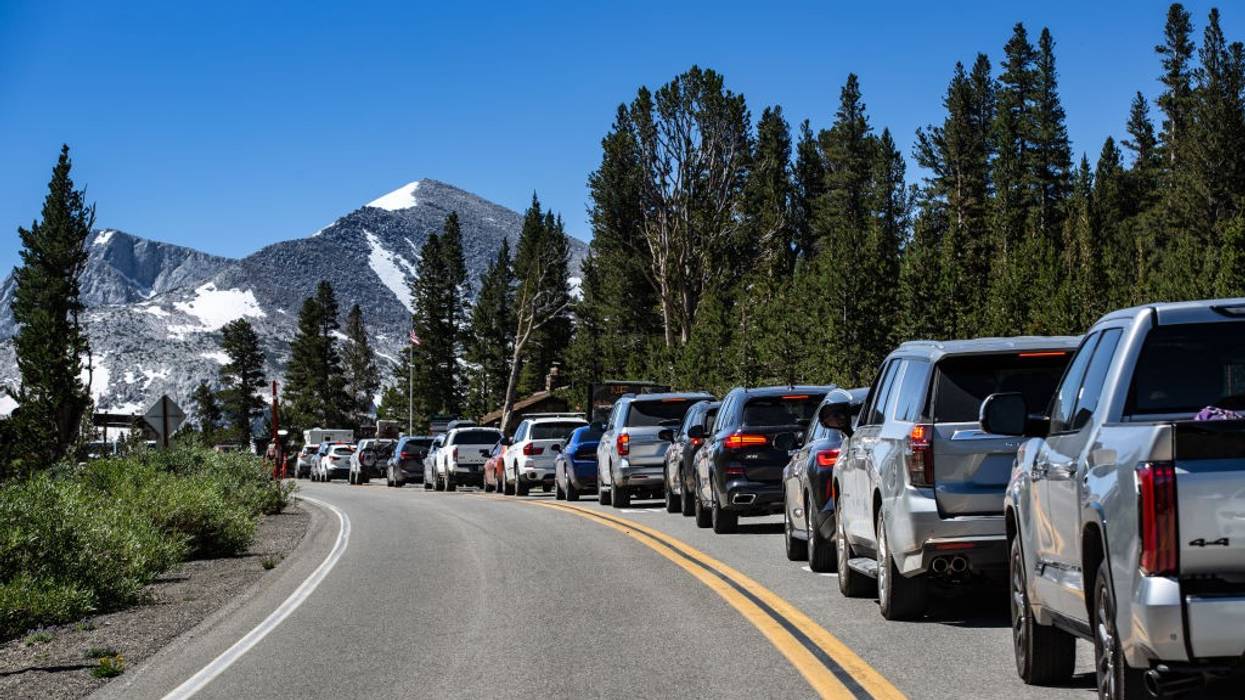
On a partisan 33-27 vote, the House Appropriations Committee has passed a spending bill that will cause the National Park Service to shed more than 1,000 staff positions as it copes with the return of record-breaking crowds.
If it stands, this 12.5% cut in operating funds would reverse Biden administration efforts to stem the overall decline in Park Service staffing. Between 2010 and 2020, the agency shrank by nearly 30%, losing around 6,000 net employees.
During this period, the ranks of permanent law enforcement rangers also fell substantially while those of seasonal law enforcement rangers deployed during peak seasons have dropped even more. Meanwhile, all these new visitors are getting into more trouble, like trying to take selfies with bison—and getting lost. In just the past six years, there has been explosive growth in park search and rescue operations, with such incidents more than tripling.
In past decades, America’s best idea was one of the few domestic programs enjoying bipartisan support.
However, the House’s impending actions are not based on any workload analyses or targeted to safeguard visitor services. In fact, some riders tacked onto the bill make the effects of overcrowding worse, such as forbidding Glacier National Park from continuing its car reservation system to reduce traffic jams in one of the many popular parks being loved to death.
This Glacier rider is the work of former Interior Secretary Ryan Zinke, who has returned to the House of Representatives after a close election to again represent Montana. Arguably, Zinke should have learned something about Park Service problems and come prepared to offer solutions—but no such luck.
Adding further insult to this impending injury are a posse of other nasty riders stapled into this funding measure, such as stripping any remaining endangered species protections from lower-48 grizzlies and gray wolves, as well as park-specific nuggets, such as
Meanwhile, the Senate version of this 2024 fiscal year spending bill does not contain big cuts or any of these nasty riders. The stark difference between the House and Senate versions of this funding measure have some observers (including me) speculating that the upcoming impasse may be unresolvable, leading to yet another full or partial government shutdown when the current fiscal year funding runs out at the end of the federal fiscal year next month.
Recently, Fitch Ratings cut the U.S. debt by one notch, from AAA to AA+, partly in response to the brinksmanship in how the federal government handled the debt crisis. This appears to be a recognition by the markets of the growing governance concerns with the current Congress. It apparently has reached the point where we can no longer even manage parks.
In past decades, America’s best idea was one of the few domestic programs enjoying bipartisan support. Ironically, this former font of consensus may have morphed into the source for a new paralyzing partisan divide.

House Minority Leader Hakeem Jeffries and Speaker Kevin McCarthy were among the no votes on the resolution led by Rep. Matt Gaetz and backed by progressives.
More than 170 House Republicans and 150 Democrats teamed up Wednesday to defeat a resolution aimed at withdrawing all remaining U.S. troops from Syria, a proposal led by right-wing Rep. Matt Gaetz and supported by members of the Congressional Progressive Caucus.
The measure, just the latest House push to bring the nation's yearslong military presence in Syria to an end, failed by a vote of 103 to 321, with Democratic House Minority Leader Hakeem Jeffries of New York and Republican Speaker Kevin McCarthy of California among the no votes.
The resolution would have required the president to remove 900-plus U.S. troops from Syria within 180 days of passage, barring congressional action to authorize their continued presence.
Opponents of the resolution who support prolonging the occupation echoed the Pentagon claim that U.S. forces are needed in Syria to prevent a resurgence of ISIS and to ensure "stability" in the region.
"Either we fight 'em in Syria, or we'll fight 'em here," said Republican Rep. Ryan Zinke of Montana.
While lamenting the proposal's defeat, peace advocates noted that it garnered more Republican support than any previous war powers resolution, with 47 GOP yes votes. Fifty-six House Democrats—including Reps. Ilhan Omar of Minnesota, Ro Khanna of California, Alexandria Ocasio-Cortez of New York, and Cori Bush of Missouri—voted for the resolution.
“There is a new generation of thinking on two central issues," Khanna told The Intercept following Wednesday's vote. "A concern about wars and entanglements over the last 20 years that have not made us safer, and a concern over the offshoring of our domestic production over bad trade deals that have left the working class and middle class poorer."
"I believe that this new generation of political leaders can help fix those two mistakes that the country has made, and that there is an emerging consensus that we should not have our troops fighting overseas without congressional authorization," Khanna added. "If the president wants to make the case for a certain presence that is required for America to protect the Kurds, then he should come to Congress and work with us to make that case."
As The Intercept's Ryan Grim and Daniel Boguslaw noted, "the legal rationale for U.S. occupation" of Syria is "dubious at best."
Opponents of the Syria war powers resolution, including Zinke, pointed to the 2001 Authorization for Use of Military Force (AUMF)—a law that U.S. presidents have cited to give legal cover for airstrikes and ground operations in Afghanistan, Iraq, Yemen, Somalia, and elsewhere.
"With ISIS suppressed," Grim and Boguslaw wrote, the Biden administration "has suggested the purpose of the occupation is to act as a bulwark against Iran."
Pointing to U.S. officials' claim that the presence of American troops prevents Iranian forces from establishing a "land bridge" to shuttle weapons to allies in Lebanon, Grim and Boguslaw observed that Iran "already has a direct 'land bridge' through eastern Syria to Lebanon; the U.S. occupation merely adds some time to the Iranian truckers' journey."
Critics of the U.S. troop presence in Syria have stressed that Congress did not specifically authorize a military operation to confront "Iran-backed militias" in Syria.

Climate and Indigenous activists on Friday applauded the reinstatement of an Obama-era moratorium prohibiting new coal leases on all public lands until after the completion of a thorough environmental review.
"The coal leasing program on public lands is harmful to wildlife, waterways, our fragile climate, and taxpayers' pocketbooks."
Brian Morris, chief judge of the U.S. District Court in Montana, issued an order reinstating the 2016 moratorium, which Ryan Zinke, former President Donald Trump's disgraced interior secretary, reversed the following year.
"It's past time that this misguided action by the Trump administration is overturned," Anne Hedges of the Montana Environmental Information Center said in a statement.
"The coal leasing program on public lands is harmful to wildlife, waterways, our fragile climate, and taxpayers' pocketbooks," she continued, also urging action by the Biden administration.
"There's no excuse for how long it has taken to require the administration to follow the law and protect public resources," Hedges added. "This administration needs to act quickly and protect the climate from its deeply flawed coal leasing program."
In 2019, Morris--an appointee of former President Barack Obama--ruled in favor of a coalition of tribal and environmental groups and ordered a fresh environmental analysis under the National Environmental Policy Act (NEPA). The groups sued again in 2020 after finding the review insufficient.
Earlier this month, Morris also rejected Trump-era U.S. Bureau of Land Management (BLM) coal mining plans that were defended in court by the Biden administration.
President Joe Biden angered environmentalists for refusing to immediately reinstate the coal leasing moratorium, and for approving fossil fuel drilling permits on public and tribal lands at a faster rate than Trump or Obama.
Morris' new ruling states that the BLM's NEPA analysis "should have considered the effect of restarting coal leasing from a forward-looking perspective, including connected actions."
"The 'status quo' that existed before the Zinke order was a moratorium on coal leasing," Morris added, "because the baseline alternative must consider the status quo, BLM was required to begin its analysis from that point."
Other activists from groups that are plaintiffs in the case also cheered Morris' ruling.
"This order marks a big win for our public lands and climate future," Taylor McKinnon at the Center for Biological Diversity (CBD) said in a statement. "Federal coal isn't compatible with preserving a livable climate. The Biden administration must now undertake a full environmental review to bring the federal coal program to an orderly end."
Serena Wetherelt, president of the Northern Cheyenne Tribe, said that her people "fought and sacrificed to protect our homelands for generations, and our lands and waters mean everything to us."
"We are thrilled that the court is requiring what we have always asked for: serious consideration of the impacts of the federal coal leasing program on the tribe and our way of life," she continued.
Wetherelt added that her group hopes Biden and Interior Secretary Deb Haaland "fulfill their trust obligation to take a hard look at the overall energy program on federal lands, and really consider how to make it best serve the tribe, taxpayers, and the climate."
Related Content

Jeremy Nichols, climate and energy program director WildEarth Guardians, asserted that "to protect our climate, we have to start keeping coal in the ground."
"Today's ruling is a major step forward in that direction and ensures the Biden administration stays on track to fulfill its promise to end federal fossil fuel leasing," he added.
In other environmental news Friday, conservation groups and the BLM finalized an agreement to block new oil and gas leases across 2.2 million acres of southwestern Colorado until the agency supplements its environmental review and publishes an updated plan for area lands.
"Any fossil fuel expansion is flatly incompatible with avoiding climate catastrophes and preserving a livable world," CBD's McKinnon--a plaintiff both in the Colorado fossil fuel and national coal lease cases--said in a statement, adding that "the Biden administration must end new leasing here, once and for all."

An inspector general report made public Wednesday accuses former Interior Secretary Ryan Zinke--who is currently running for U.S. Congress in Montana--of misusing his federal office to push a commercial development project in the state, prompting calls for the Biden Justice Department to hold him accountable.
"It's time for Congress and the Justice Department to make him answer."
Over the course of its investigation--one of many probes Zinke faced during his tenure--the Interior Department inspector general's (IG) office found that "Secretary Zinke failed to abide by his ethics obligations in which he committed not to manage or provide any other services" to a foundation that played a key role in the development deal, which was backed by a senior executive at the oil giant Halliburton.
Zinke helped establish the foundation in question in 2007. According to the IG report, "Zinke repeatedly communicated with the developers of the 95 Karrow project and negotiated with them on behalf of the foundation by discussing the use of foundation property for the project, specific design aspects of the project, and the development of a microbrewery on the property."
The report also states that Zinke lied to a federal ethics official when questioned about "his continued involvement in foundation matters, including the 95 Karrow project."
Zinke's campaign dismissed the IG report as a "political hit job." The Associated Press reported that Zinke contends his "family's involvement in the foundation had led to the restoration of land that was made into a park where children can sled."
The IG's office said it referred its findings to the Biden Justice Department, but the DOJ "declined prosecution of this matter in the summer of 2021."
Rep. Raul Grijalva (D-Ariz.), one of the lawmakers who requested the IG report back in 2018, said in a statement that "today's report shows us yet again that former President Trump's appointees didn't view their positions at the highest level of our government as an opportunity to serve our country, but as an opportunity to serve the interests of their personal pocketbooks."
Kyle Herrig, president of the government watchdog group Accountable.US, added that "the inspector general has raised several serious ethical and legal questions about Ryan Zinke's conduct as Interior secretary during the Trump administration."
"It's time for Congress and the Justice Department to make him answer," said Herrig.
Donald Trump promised to "drain the swamp" of corruption in Washington, DC. Instead, he not only brought his own corruption and that of his family to the nation's capital. He also opened the door of his administration to a whole slew of influence-peddlers, scam artists, and sleazy lobbyists.
Here are just a few of the worst examples:
Rot Starts at the Top: Donald Trump has violated the U.S. Constitution by using his office to enrich himself. He took from taxpayers more than a million bucks alone for the rooms the Secret Service detail used at his hotels. In his first two years of office, the president raked in $73 million from his foreign businesses and deals with autocratic countries like the Philippines and Turkey. Despite all the profits, the president paid virtually no income tax.
Where's Jared and Ivanka? Since Trump took office, the firm that his son-in law Jared Kushner founded earned more than $90 million from foreign sources channeled through off-shore accounts. While Jared worked on a Middle East peace deal, he tried to get the Qatari government to bail out his father's teetering real estate empire. Ultimately, a Qatar-linked fund provided over a billion dollars. In 2018, as her father was negotiating with the Chinese, Ivanka Trump acquired 34 trademarks from Beijing to sell her apparel and bling in China.
Profiting from the Pandemic: In the government bailout package to help businesses weather the pandemic-induced economic crisis, 27 clients of Trump-connected lobbyists received up to $10.5 billion. And as much as $273 million went to more than 100 companies owned or operated by major donors to Trump's election efforts.
Cabinet Corruption Scandals: Several Trump administration officials have resigned under a cloud. Scott Pruitt stepped down as head of the Environmental Protection Agency during several ethics investigations over his cozy relations with lobbyists. Secretary of the Interior Ryan Zinke resigned over corrupt real estate deals. Health and Human Services Secretary Tom Price was forced out for using almost $1 million in taxpayer money for traveling on private jets and military planes instead of cheaper commercial flights.
They're Corrupt and They Haven't Resigned! At the Department of Transportation, Elaine Chao has orchestrated deals to help her family's Hong-Kong-based shipping business as well as the state of Kentucky, which husband Mitch McConnell represents in the Senate. Interior Secretary David Bernhardt, once a lobbyist for western mining, oil, and gas companies, has taken at least 25 actions favorable to the interests of former clients. Commerce Secretary Wilbur Ross profited from foreign holdings - Chinese state-owned enterprises, a Russian shipping company - even as he was involved in negotiations with those countries.
For more details on the administration's corruption, check out this map of Trump's swamp.
The resignation of Trump's Labor secretary, Alex Acosta, is only the most recent in a string of such scandals for Trump. In fact, what with all the things Trump himself has done plus those around him, his is surely the most scandal-ridden presidency in history. Let us just review the record, because it gets hard to remember them all after a while.
1. Secretary of Labor Alex Acosta resigned because when he was a South Florida federal prosecutor, he gave accused pedophile and Trump party-buddy Jeffrey Epstein an incredibly soft plea deal in 2008. Also a scandal: he was no friend of labor.
2. Scott Pruitt is former secretary of the EPA (which in the age of Trump does not stand for Environmental Protection Agency but for Environmental Protection Abolition). He accepted a $50 a night sweet condo deal from an oil and gas lobbyist for his pied-a-terre when he was occasionally in DC, and charged taxpayers $4.8 million for his security detail and made it a point always to fly first class on the taxpayer dime, amid other financial irregularities too numerous to mention. Oh, and the real scandal was that he destroyed the environment, including allowing the pesticide chlorpyrifos, even small amounts of which can damage babies' brains.
3. Former Interior Secretary Ryan Zinke is under scrutiny for a Montana land deal and fully 17 other possibly illegal activities while in office. Oh, and he also helped destroy the environment.
4. Nominee to be secretary of defense, Patrick Shanahan, withdrew over a 2010 domestic abuse investigation launched by the FBI. But the real scandal was that Shanahan had been a career high executive of Boeing and so would have been running the US government agency that buys all those shiny weapons Boeing produces.
5. Not a cabinet secretary, but former National Security Adviser Michael Flynn had to resign over repeated calls before Trump was sworn in to the Russian ambassador to the US, Sergey Kislyak, which he lied about. But Flynn's security company also developed a harebrained scheme to kidnap Turkish religious figure Fethullah Gulen, who was granted asylum in the US in 1998, and render him back to Turkey. Flynn may also have been an agent of Turkish influence in Ankara's attempt to help elect Trump and defeat Hillary Clinton.
There is so much more, I just have to go to bed sometime and this subject of Trump administration scandals is fit for a multi-volume book set, not a little blog entry.
And we haven't even gotten into Trump himself.

Trump has been ramping up his "Deep State" rhetoric again. He's back to blaming a cabal of bureaucrats, FBI and CIA agents, Democrats, and "enemies of the people" in the mainstream media, for conspiring to remove him from office in order to allow the denizens of foreign shi*tholes to overrun America.
But with each passing day it's becoming clearer that the real threat to America isn't Trump's Deep State. It's Trump's Corrupt State.
Not since Warren G. Harding's sordid administration have as many grifters, crooks and cronies occupied high positions in Washington.
Trump has installed a Star Wars Cantina of former lobbyists and con artists, including several whose exploits have already forced them to resign.
Trump has installed a Star Wars Cantina of former lobbyists and con artists, including several whose exploits have already forced them to resign, such as Scott Pruitt, Ryan Zinke, Tom Price, and Michael Flynn. Many others remain.
When he was in Congress, the current White House acting Chief of Staff Mick Mulvaney pocketed tens of thousands of dollars in campaign contributions from payday lenders, then proposed loosening regulations on them. Trump appointed Mulvaney acting head of the Consumer Financial Protection Bureau, of all things.
When he was Trump's special adviser on regulatory reform, Wall Street billionaire Carl Icahn sought to gut EPA's rule on ethanol credits which was harming his oil refinery investments.
Last week it was reported that a real estate company partly owned by Trump son-in-law and foreign policy advisor, Jared Kushner, has raked in $90 million from foreign investors since Kushner entered the White House, through a secret tax haven run by Goldman Sachs in the Cayman Islands. Kushner's stake is some $50 million.
All this takes conflict-of-interest to a new level of shamelessness.
What are Republicans doing about it? Participating in it.
Secretary of Transportation Elaine Chao, who also happens to be the wife of Senate Majority Leader Mitch McConnell, has approved $78 million in grants for her husband's home state of Kentucky, including a highway-improvement project that had been twice rejected in the past. Chao has even appointed a special liaison to coordinate grants with McConnell's office.
Oh, did I say, McConnell is up for reelection next year?
News that a Cabinet secretary is streamlining federal funding for her husband's pet projects would be a giant scandal under normal circumstances. But in the age of Trump, ethics are out the window.
Congressman Greg Pence, who just happens to be the brother of Vice President Mike Pence, has spent more than $7,600 of his campaign funds on lodging at the Trump International Hotel in Washington since he was elected in November, although federal election law forbids politicians from using campaigns dollars to cover housing costs.
The Corrupt State starts with Trump himself, giving new meaning to the old adage about a fish rotting from the head down.
When foreign governments aren't currying favor with Trump by staying at his Washington hotel, they're using state-owned companies to finance projects that will line Trump's pocket, like China's $500 million entertainment complex in Indonesia that includes a Trump-branded hotel.
Trump claims the Deep State allows foreigners to take advantage of America. The reality is Trump's Corrupt State allows Vladimir Putin and his goon squad to continue undermining American democracy.
"I'd take it" if Russia again offered campaign help, Trump crowed last week, adding that he wouldn't necessarily tell the FBI about it. Just days before, Trump acknowledged "Russia helping me get elected" the first time.
Despite evidence that Russia is back hacking and trolling its way toward the 2020 election, Republican defenders of Trump's Corrupt State won't lift a finger.
Mitch McConnell refuses to consider any legislation on election security. He and Senate Republicans even killed a bill requiring campaigns to report offers of foreign assistance to the FBI and federal authorities.
The charitable interpretation is McConnell and his ilk don't want to offend Trump by doing anything that might appear to question the legitimacy of his 2016 win.
The less charitable view is Republicans oppose more secure elections because they'd be less likely to win them.
Trump and his Republican enablers are playing magicians who distract us by shouting "look here!" at the paranoid fantasy of a Deep State, while creating a Corrupt State under our noses.
But it's not a party trick. It's the dirtiest trick of our time, enabled by the most corrupt party in living memory.

It's only been a week, but newly-confirmed Interior Secretary David Bernhardt's conflicts of interests are already raising questions about his involvement in the very same scandals for which his predecessor is now under investigation.
The Guardian reported Wednesday that Bernhardt, who was confirmed last week over the objections of climate action and conservation groups, met in 2018 with a lawyer for the Schaghticoke tribal nation of Connecticut, which opposed the operation of a new casino in the state by two other tribes.
Former Interior Secretary Ryan Zinke resigned in December after coming under scrutiny for a number of conflicts of interest, including allegations that he was involved in blocking the Mohegan and Mashantucket Pequot tribes' approval for the casino.
Bernhardt's meeting with Marc Kasowitz, a former lawyer for President Donald Trump, took place in April 2018 and was not previously included on the secretary's public schedule. Roll Call reported Tuesday that Bernhardt scrubbed a number of meetings with timber, fossil fuel, and water interests from his calendar before making it public.
The Democratic consulting firm American Bridge said Wednesday that Bernhardt's meeting with Kasowitz embodies the very conduct opponents of Zinke hoped to be rid of when he resigned.
"It's no wonder former oil lobbyist David Bernhardt--who is now under ethics investigation by his own department--kept his calendars secret for so long," spokesman Andrew Bates said in a statement. "If he met with one of the president's personal lawyers about helping a major international corporation bully tribal nations out of fairly competing with them, then it absolutely epitomizes the 'swamp' that Donald Trump promised to drain but is in fact flooding."
The Interior Department claimed Wednesday that Bernhardt's meeting with Kasowitz related to the Schaghticoke's federal recognition, but Chief Richard Velky told the Guardian that it was focused on a state-level lawsuit--like the one the tribe filed along with MGM Resorts International to stop the Mohegan and Mashantucket Pequot tribes from potentially taking away business from MGM with a new casino.
Zinke is currently under investigation by a grand jury for his role in blocking the casino proposal.
The news of Bernhardt's meeting with Kasowitz comes two days after reporting revealedthat the Interior Department's own inspector general had opened an investigation into the secretary's numerous conflicts of interest.
The investigation centers on Bernhardt's role in blocking the release of a study on a pesticide which may threaten 1,400 protected species.
"We now have an Interior Secretary who has been on the job for one full business day and is already under investigation," said Sen. Ron Wyden (D-Ore.), who had called for the probe, on Monday. "With Bernhardt's track record and the number of allegations against him, it's no surprise."
"Like with so many of his colleagues in Donald Trump's cabinet," he continued, "Secretary Bernhardt has extensive conflicts of interests and is hostile to the mission of the Department he leads."

Environmental activists are calling on senators to reject the nomination of former fossil fuel lobbyist David Bernhardt to lead the U.S. Department of the Interior.
"Bernhardt has already shown us that he's the most dangerous person to be in charge of our public lands and endangered species."
--Randi Spivak, CBD
The calls come ahead of the Senate Energy and Natural Resources Committee's Thursday morning hearing to consider his nomination.
"David Bernhardt is a walking, talking conflict of interest," said Alissa Weinman, a senior organizer for the nonprofit Corporate Accountability. "Between his Big Polluter ties and corporate lobbying connections, it's clear Bernhardt will continue to serve the corporate interests to whom he owes his career, not the people or our public lands."
Bernhardt has been under fire for his fossil fuel past since the Senate confirmed him as the agency's deputy administrator in July of 2017. He currently serves as the department's acting administrator, a position he has held since scandal-ridden Ryan Zinke resigned in December. President Donald Trump nominated Bernhardt to the permanent post last month.
"David Bernhardt heading the Interior Department would be a dream come true for fossil fuel companies, but a nightmare for the American people," warned Greenpeace USA climate and energy campaign director Janet Redman.
Noting that "people who care about clean air, safe water, and a healthy climate have been sounding the alarm about Bernhardt's history" for the past two years, Redman charged that "he's done nothing since but prove he's not fit for this job."
A coalition of more than 160 conservation groups, including Greenpeace USA, sent a letter (pdf) to the chairman and ranking member of the Senate Energy and Natural Resources Committee, Sens. Lisa Murkowski (R-Alaska) and Joe Manchin (D-W.Va.), on Tuesday imploring them to oppose Bernhardt's nomination:
In his 18 months serving as the Interior Department's deputy secretary, Mr. Bernhardt has been at the center of a culture of corruption that has been the Interior Department's hallmark under the Trump administration. He consistently puts private profit above the public interest, crafting policies to benefit past clients and rolling back longstanding rules to protect habitat, imperiled species, and public health. These actions come straight from the fossil fuel and mining industry's wishlist, including some corporations for which Bernhardt used to work as a lobbyist and lawyer.
The letter outlines the ways in which Bernhardt has helped facilitate a siege on science, put fossil fuels first, imperil wildlife, promote development in the Arctic Refuge, harm national parks and monuments, and block transparency and oversight by Congress and the public.
Campaigners at various groups that signed on to the letter spoke out about Bernhardt's record and urged senators to reject him.
"His sorry record in protecting America's natural resources, wildlife, and waters makes Bernhardt uniquely unfit for the job."
--John Bowman, NRDC
Nicole Ghio of Friends of the Earth denounced Bernhardt as "a fossil fuel industry hack" while Leda Huta of the Endangered Species Coalition called him "a prime example of the culture of special-interest, big-money, influence peddling surrounding this administration."
"His sorry record in protecting America's natural resources, wildlife, and waters makes Bernhardt uniquely unfit for the job," said John Bowman, managing director of government affairs at the Natural Resources Defense Council (NRDC).
Randi Spivak, public lands director at the Center for Biological Diversity (CBD), concluded that "Bernhardt has already shown us that he's the most dangerous person to be in charge of our public lands and endangered species."
Bernhardt has so many potential conflicts of interest due to his history as a lobbyist that, as the Washington Post revealed last year, he carries around a pocket-sized card listing all of them.
Public Citizen, another signatory of the letter, printed out a poster-sized version of the card and delivered it to senators voting on his confirmation. As the watchdog group put it, "An oil shill has no business overseeing our natural resources."