

SUBSCRIBE TO OUR FREE NEWSLETTER
Daily news & progressive opinion—funded by the people, not the corporations—delivered straight to your inbox.
5
#000000
#FFFFFF
To donate by check, phone, or other method, see our More Ways to Give page.
Daily news & progressive opinion—funded by the people, not the corporations—delivered straight to your inbox.
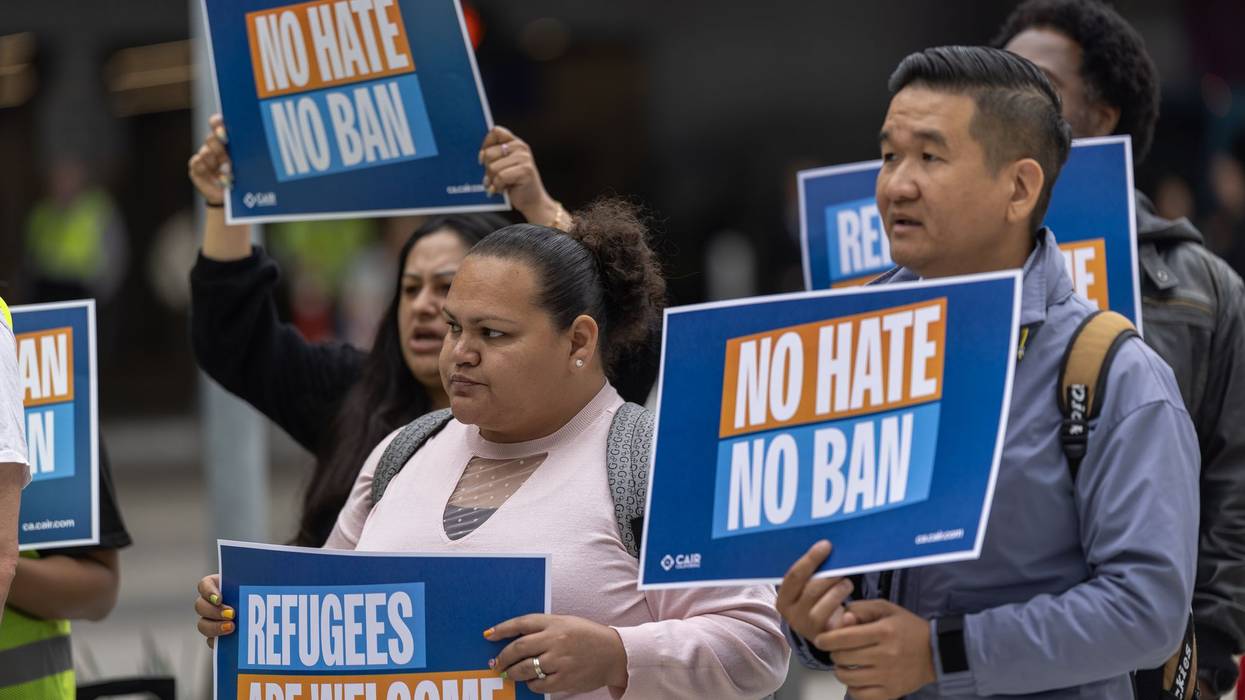
With its blatant bigotry and Islamophobia, today’s Republican Party betrays the vision of the United States held by the nation’s founders.
September 11, 2026, was the 25th anniversary of the attack on the World Trade Center by hijackers who were part of al Qaeda and followers of Saudi religious fundamentalist Osama bin Laden who had sworn revenge against the United States because of its actions in the Middle East.
Twenty-five years ago, less than a week after the attack, in the midst of national mourning, President George W. Bush visited the Islamic Center of Washington, DC, where he explained: “These acts of violence against innocents violate the fundamental tenets of the Islamic faith. And it's important for my fellow Americans to understand that... The face of terror is not the true faith of Islam. That's not what Islam is all about. Islam is peace. These terrorists don't represent peace. They represent evil and war... America counts millions of Muslims amongst our citizens, and Muslims make an incredibly valuable contribution to our country. Muslims are doctors, lawyers, law professors, members of the military, entrepreneurs, shopkeepers, moms, and dads. And they need to be treated with respect. In our anger and emotion, our fellow Americans must treat each other with respect.”
Sadly, leading members of the Republican Party have especially short memories as their party has morphed into what has become an Un-American party. President Donald Trump has repeatedly demonized Muslims in the United States and around the world. As recently as July the president shared a social media post mocking Muslim children in Minnesota for wearing hijabs to their kindergarten graduation ceremony.
Former New York City Mayor Rudy Giuliani and former Gov. George Pataki, both Republicans, joined two Republican members of the New York City Council demanding that New York City Mayor Zohran Mamdani not participate in the 25th-anniversary September 11 memorial ceremony. Giuliani said that participation by Mamdani, who is Muslim, “Offends him.” Zohran Mamdani ignored their demands and attended with dignity.
Other leading Republicans, including Nassau County Executive Bruce Blakeman, the Republican Party candidate for governor of New York, have joined the attacks on Mamdani because of his religious identification. During Ramadan in March, Sen. Tommy Tuberville, Republican from Alabama, recirculated an image of Mayor Mamdani paired with an image of the attack on the Twin Towers with the caption, “The enemy is inside the gates.” Blakeman called Mamdani “un-American” because “He shares the philosophy of the people that murdered my nephew and all those other people.” But as George W. Bush would have explained to Blakeman, he is the one who is being un-American.
Today’s Republican Party betrays the vision of the United States held by the nation’s founders. In 1790, President George Washington wrote a letter to the Hebrew Congregation of Newport, Rhode Island. In the letter, the president explained:
The Citizens of the United States of America have a right to applaud themselves for having given to mankind examples of an enlarged and liberal policy: a policy worthy of imitation. All possess alike liberty of conscience and immunities of citizenship. It is now no more that toleration is spoken of, as if it was by the indulgence of one class of people, that another enjoyed the exercise of their inherent natural rights. For happily the Government of the United States, which gives to bigotry no sanction, to persecution no assistance requires only that they who live under its protection should demean themselves as good citizens, in giving it on all occasions their effectual support.
Washington told the Newport Congregation, “If we have wisdom to make the best use of the advantages with which we are now favored, we cannot fail, under the just administration of a good Government, to become a great and a happy people.” These are sentiments that need to be reborn in this country.
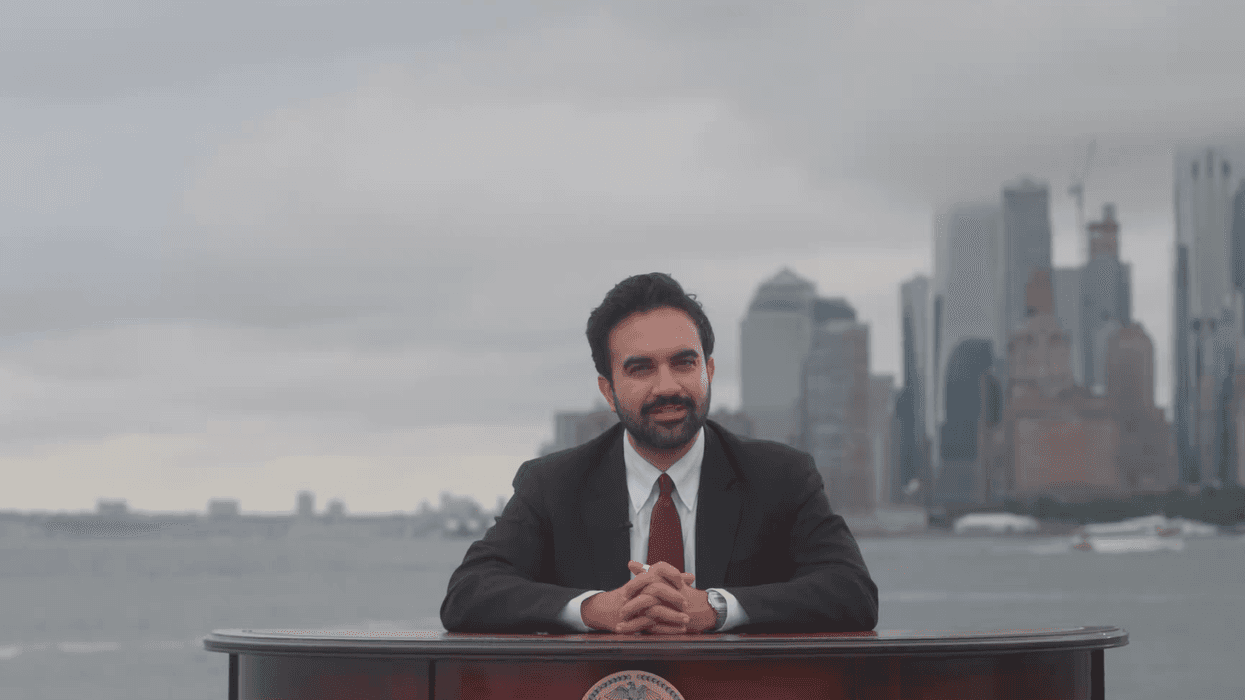
"Let us remember the extraordinary compassion, resilience, and bravery that carried our city through its darkest day."
With Lower Manhattan and the site of the September 11 attacks in the background, New York City Mayor Zohran Mamdani on Friday called on people to honor the memory of the nearly 3,000 victims—as well as those who have died of illnesses stemming from toxic air at the site of the attacks—by caring "for one another" as thousands of people "cared for strangers" as the tragedy was unfolding exactly 25 years ago.
Mamdani honored the 2,753 New Yorkers—"parents and children, husbands and wives, friends and colleagues, 2,753 universes gone in an instant"—and said the city and country remember September 11 as "the darkest day" when hijackers flew airplanes into the World Trade Center and the Pentagon, and passengers aboard a fourth plane fought to stop another target from being struck.
The mayor urged viewers to remember the actions of thousands of New Yorkers in the immediate aftermath of the attack—those who donated blood and "opened their homes to those who could not get home."
"We remember the workers who carried their colleagues down hundreds of stairs, then turned around and went back up to find someone else who needed help," said Mamdani.
On social media, as the country marked the 25th anniversary of the attacks, many users spoke about specific acts of bravery, including those of Rick Rescorla, the head of security at Morgan Stanley, who was killed at the World Trade Center after he led roughly 2,700 of his colleagues to safety.
In a separate social media post on Instagram, Mamdani highlighted several lesser-known New Yorkers who "sprang into action to help however they could," including teachers, firefighters, sanitation workers, and healthcare providers.
His office interviewed Roseann Caruana of the city's Department of Transportation, who described a triage center that was set up for victims, and Rashel Dorleans—now a New York City public school teacher, and a high school student at the time of the attacks.
"I think it's a credit to the teachers that were there," said Dorleans. "They did not seem panicked. I'm sure they were panicked on the inside, but they were kind and calm with us."
Mamdani said that "we have a sacred obligation to those who were stolen from us to care for one another as they cared for strangers, to live lives worthy of the sacrifices they made, and to build a city worthy of their courage, a city where we run toward one another. That is how we remember."
Ahead of the anniversary this week, the mayor released long-hidden files regarding how New York residents were misled about the toxicity of the air at the World Trade Center attack site. He said the number of people who have died thus far from related cancers and other health issues has likely surpassed the number of victims on September 11.
Mamdani was also the target of attacks this week from Republicans including former Mayor Rudy Giuliani and City Council members Vickie Paladino and Joann Ariola, who explicitly cited Mamdani's Muslim faith as they said he did "not belong" at the September 11 memorial ceremony held on Friday.
“I’m proud to be the mayor of this city. I love this city. I love this country,” Mamdani said when asked about the racist remarks. “What I want this week to be a focus on is the families whose loved ones were stolen from them 25 years ago in the horrific act of terror of September 11, and a focus also on the first responders who did everything they could.”
The mayor was seen shaking Giuliani's hand and speaking to him at the ceremony.
"Let us remember the extraordinary compassion, resilience, and bravery that carried our city through its darkest day," said Mamdani. "Today, New York remembers."

"He created a fictitious event featuring himself, who did nothing, as the hero of 9/11."
While Republicans express "offense" at plans for New York City Mayor Zohran Mamdani to attend September 11 remembrances this week due to his Muslim faith, President Donald Trump provoked outrage on Tuesday when he told what seems to be a fabricated story about his heroism following the terrorist attack.
Before a crowd that included over 100 first responders, Trump described being at ground zero with a construction crew he said he'd deployed to help with the aftermath of the attack. He described walking beneath the US Steel building, now known as One Liberty Plaza, which was believed to be at risk of collapsing.
“The United States Steel Building was creaking, really creaking, and we thought it was going to fall down. The truth is, it creaked a lot. It creaked. It still creaks, but it never came down,” Trump recalled. “And I'll never forget two firemen. We thought it was coming down on top of us, and two firemen, big, strong guys—and I'm not the smallest guy in the world—they grabbed me under the arm, said, ‘Got to get out of here!’ And they literally lifted me up."
“This is not easy to do. I'm big," Trump continued. "They lifted me up, and they started running with me. I said, ‘Fellas, I can run myself,’ but they were amazing. But they thought it was coming down. It didn't come down."
Trump has claimed on multiple occasions to have been present in the immediate aftermath of the attacks and has told a version of the same story before, including on the 2016 campaign trail.
But many aspects of the tale are in doubt or contradicted by both the public record and others known to be involved in the recovery.
Trump said he saw the attacks happen from his office in Trump Tower, about four miles away from the World Trade Center. In an interview with WWOR-TV that day, he infamously boasted (incorrectly) that he now had the tallest building in downtown Manhattan after the collapse of the World Trade Center.
While Trump himself was documented on September 13 to have been a few blocks from ground zero and said he'd visited the site, his claim to have sent over 100 of his construction workers in the immediate aftermath of the attack and to have "helped a little" himself has been disputed.
In 2019, Richard Alles, a New York City Fire Department battalion chief on the day of the attack, who said he was on the scene about 20 minutes after the second tower collapsed, told PolitiFact that he had no knowledge of Trump sending a crew of men to help with the wreckage.
“I was there for several months—I have no knowledge of his being down there," Alles said, adding that if Trump had sent a crew of 100 workers, "there would be a record of it. Everybody worked under the direct supervision of the police and fire department and the joint commander for emergency services. Is there a chance he was ever down there by himself and I didn’t know it? It’s possible, but I know of no one who ever witnessed him there.”
Other outlets, including The Associated Press and The Washington Post, said they contacted Trump's 2016 campaign to ask for details about his activity following the attacks, but received no response.
Neither of the two firefighters who supposedly carried Trump to safety has ever publicly come forward to discuss their run-in with the famous New York developer, and Trump did not mention the incident during interviews at the time.
Trump has a history of lies surrounding 9/11, including that he saw "thousands" of Muslims "cheering" in Jersey City as the towers fell and that he personally "predicted" the attacks in one of his books.
He has also been found to have misled the public about his philanthropy related to the tragedy: In 2001, he pledged to donate $10,000 to a recovery fund for victims and first responders, which the city comptroller's office ultimately found was never delivered. More than 15 years later, his foundation gave $100,000 to the National September 11 Memorial and Museum.
His business empire also received $150,000 from a post-9/11 recovery program meant for businesses affected by the attacks, which Trump has claimed was reimbursement for allowing victims to use his building at 40 Wall Street to take shelter. But the application made no mention of shelter and instead stated that the request was for compensation for lost rent, cleanup, and repairs following the attacks, according to a 2016 investigation by the New York Daily News.
Journalist Ron Filipkowski described Trump's tale about the firefighters as yet another instance of what he's called "stolen valor," but was astonished by its specificity.
"I know he's lied about his non-role in 9/11 rescue and recovery before, but never this level of detail," he said. "Trump could have made the ceremony with 9/11 first responders today about the many heroes who died attempting to rescue people and others who risked their lives and long-term health. But instead, he created a fictitious event featuring himself, who did nothing, as the hero of 9/11."
Making it more offensive, other commentators said, was the double standard from Republicans, like former New York City Mayor Rudy Giuliani, who have claimed "offense" at the fact that Mamdani, as a Muslim, was planning to attend 9/11 memorials on Friday.
"The people mad about the Mayor of New York attending the 9/11 event must be ENRAGED that Trump just lied about being at ground zero on 9/11," wrote Tim Fullerton, a former digital strategist for the Obama administration, on X. "This is all about honoring the victims and not just to score points. Right???"
Mamdani on Tuesday released around 170,000 pages of records indicating that Giuliani's administration had misled New Yorkers about the severity of air quality risks near ground zero after the attacks.
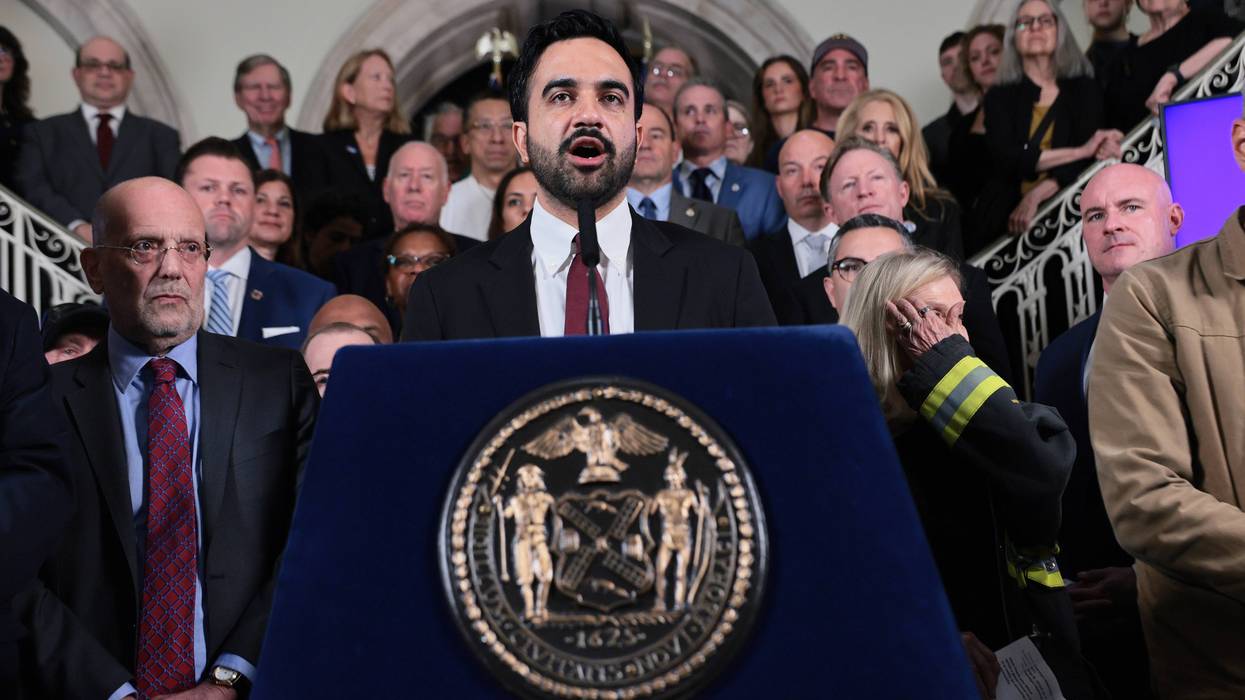
"People got sick because the leaders they trusted lied and told them they were safe to breathe in toxic air," Mamdani said, announcing the release of 170,000 files.
A watchdog group representing 9/11 first responders and survivors applauded New York Mayor Zohran Mamdani on Tuesday as his administration released a trove of long-buried files that shed new light on how New Yorkers were misled about air quality and health risks in the wake of the terrorist attack.
“I want to thank Mayor Mamdani for being the mayor, after 25 years, who finally begins to answer the question, ‘What did the city know about the dangers from the toxic cloud at ground zero, and when did it know it?’” said Benjamin Chevat, a longtime advocate for programs to help survivors and first responders, who leads the group 9/11 Health Watch.
Days before the 25th anniversary of the attack that took nearly 3,000 lives, Mamdani's office is releasing around 170,000 pages of records that were stored in a city office and kept from public view for more than two decades. The New York Times, which reviewed the documents prior to their release, said they contain "air quality reports, contamination records and correspondence among city officials."
There is no definitive total of the number of people who have died as a result of health complications caused by the attack, but as Mamdani noted during a press conference on Tuesday, it has almost surely far surpassed the number killed in the attack itself.
"The devastating truth is that the suffering did not end once the smoke cleared and the dust settled," Mamdani said. "For so many New Yorkers who lived, or worked, or studied near ground zero, and for the thousands of others who worked on the pile, recovering those we'd lost and clearing the rubble, that was only the beginning of years of hardship and illness."
These survivors, he said, were forced to remember September 11, not just on its yearly anniversary, but "each time they take a struggling breath, each time they have to swallow a pill, each time another chemo dose is administered."
The documents released by Mamdani's office were uncovered following a yearslong fight between 9/11 Health Watch and New York City's Department of Environmental Protection (DEP), which initially claimed the files had gone missing.
Following pressure from the City Council and a lawsuit from 9/11 Health Watch, DEP later revealed that the files had been stored in 68 highly organized boxes in the agency's possession, which fueled speculation about a cover-up by the city and led a New York City judge to rule that the city's denial was "arbitrary and capricious."
"For 25 years," Chevat said, "four different mayoral administrations kept from the public, the US Congress, and the City Council documents showing what the city actually knew about the danger of the toxic chemicals in Lower Manhattan and Western Brooklyn after the World Trade Center collapse, even as city officials continued messaging to the public that the air was 'safe and acceptable.'"
The first tranche, released on an online portal Tuesday, shows that while city and federal officials assured Americans that the air was safe to breathe, asbestos and other toxic chemicals were being detected at and around Ground Zero until at least July 2002, more than 10 months after the attacks. It also shows that analyses by the Environmental Protection Agency found carcinogens around lower Manhattan, in some cases above acceptable limits.
Also released was an October 2001 memo sent to former Mayor Rudy Giuliani's deputy mayor, Robert Harding, showing that the then-mayor's administration expected as many as 10,000 claims from plaintiffs harmed, including by toxic exposure, after public health advisories assured them it was safe to return to Lower Manhattan, and from first responders who had inadequate safety equipment.
The records also point to apparent efforts by the city to downplay the substandard air quality in order to ease the public’s fears about returning to business as usual following the attacks.
Documents show that even as test results revealed worrying levels of asbestos, city officials sought to massage those findings, avoiding the word "risk" in public advisories. Another document acknowledged that the city may have given residents a dangerous recommendation when it advised them to use wet mops and rags to clean up asbestos dust in their homes, a task that typically requires licensed crews.
The release of the files gives credence to the concerns raised at the time by Rep. Jerry Nadler (D-NY), whose district included ground zero.
“They knew about the air quality, and they essentially did nothing about it,” Nadler said of the Giuliani and Bloomberg administrations in an interview with the Times last week. "I suspect that all they cared about was getting Wall Street reopened, and they didn’t give a damn about the health of the people down there.”
Mamdani's release of the files comes as his opponents launch attacks against his Muslim identity and imply he bears sympathy with the al Qaeda jihadists who carried out the 9/11 attacks.
Over the weekend, Giuliani said in an appearance on the right-wing cable channel Newsmax that Mamdani should be banned from participating in the ground zero commemoration because the attack was carried out "in the name of the Muslim religion” and that the perpetrators "weren’t hiding it like Mamdani is trying to hide it.”
Mamdani has responded that he would attend multiple 9/11 remembrance events on Friday to support first responders and families who lost loved ones.
“I’m proud to be the mayor of this city. I love this city. I love this country,” he said. “What I want this week to be a focus on is the families whose loved ones were stolen from them 25 years ago in the horrific act of terror of September 11, and a focus also on the first responders who did everything they could.”
Mamdani said on Tuesday that his release of the files was part of an effort to do right by New Yorkers harmed by the shortcomings of the city's response to the attacks.
"It would be one thing if the government had stood alongside survivors and provided them with everything they needed at every step of the way. And yet, we know that could not be further from what actually happened," Mamdani said. "People got sick because the leaders they trusted lied and told them they were safe to breathe in toxic air."
"Administration after administration has ignored those calling for answers and clarity, instead choosing to bury them in legal arguments and in red tape," he continued. "We will do no such thing as we mark 25 years."
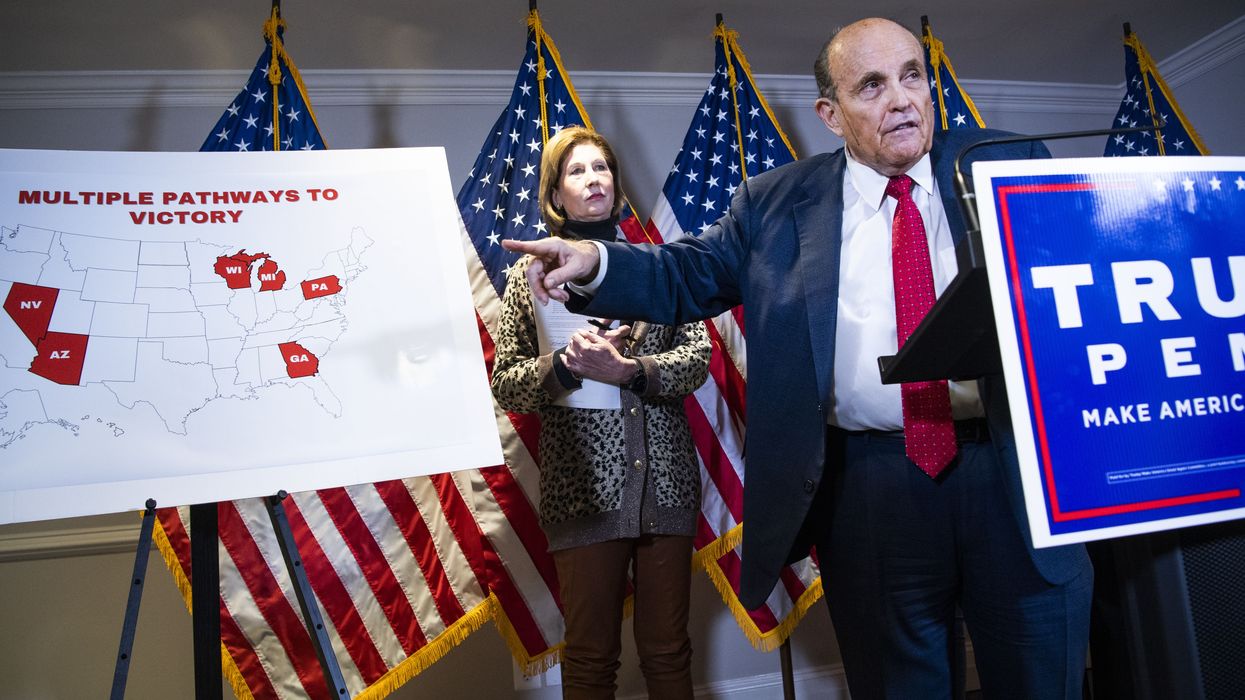
One policy expert warned the move was likely meant to signal to Republican election officials that if they take actions to steal future elections, "they'll be pardoned."
President Donald Trump has given a "full, complete, and unconditional” pardon to a long list of allies who conspired to help him overturn his loss in the 2020 election.
Late Sunday night, Justice Department attorney Ed Martin posted a list of over 70 people who would receive pardons. Many of the figures included were named as unindicted co-conspirators or charged at the state level for their roles in the plot to knowingly spread false claims of widespread voter fraud in an attempt to push states to reject former President Joe Biden's victories in key swing states and pressure Vice President Mike Pence into stopping the certification of the election.
Among those pardoned are Trump lawyers Rudy Giuliani and Sidney Powell, who publicly promoted baseless claims of a vast conspiracy against the president to the public, claiming that the election was stolen by a cabal of foreign infiltrators and scheming election officials. They later faced defamation lawsuits for these claims, and in legal proceedings, Giuliani conceded he made false statements about election workers, while Powell's lawyers argued that "no reasonable person" would conclude her public claims were statements of fact.
Trump also pardoned former chief of staff Mark Meadows, who acted as a facilitator between the president and state officials he attempted to bully into saying he won the election. Aside from the president himself, Meadows was the highest-ranking White House staffer on the phone call in which Trump asked Georgia's Republican Secretary of State Brad Raffensperger to "find" him enough votes to be declared the winner of the election.
Also receiving pardons were attorneys John Eastman and Kenneth Chesebro. They were part of what Pence called Trump's "gaggle of crackpot lawyers," who concocted the tortured legal theory that the vice president could declare Biden's victory in swing states illegitimate and anoint Trump as the winner. Eastman privately admitted to Trump that the scheme was illegal but pressed ahead with it anyway, culminating in the January 6, 2021, insurrection at the US Capitol, during which Trump supporters chanted, "Hang Mike Pence," and tried to stop the election results from being certified.
Also pardoned were several of the right-wing activists who signed documents falsely claiming to be electors from states that had certified the election for Biden.
Crucially, the individuals listed never faced federal criminal indictments for their election subversion attempts. However, dozens of those on the list were charged with crimes in swing states—including Georgia, Arizona, Wisconsin, and Nevada—related to the effort. The pardons mean these officials cannot be indicted at the federal level for these crimes.
Though the pardon list is broad, giving clemency to "all United States citizens for conduct relating to the advice, creation, organization, execution, submission, support, voting activities, participation in or advocacy for or of any slate or proposed slate of presidential electors… as well for any conduct relating to their efforts to expose voting fraud and vulnerabilities in the 2020 presidential election," it explicitly states that it "does not apply" to Trump himself, indicating that his legal team is not yet ready to test the theory that the president can pardon himself.
Still, the language Martin used in the announcement—"No MAGA left behind"—signaled the goal of creating a two-tiered justice system where those who display loyalty to Trump are immune from the law.
"The stated goal of the pardon attorney is to reward the president's political supporters," wrote Matt Gertz, a senior fellow for Media Matters for America on social media.
It coincides with Trump's broader efforts to give get-out-of-jail-free cards to anyone who gives him political support. Immediately after returning to office, he gave blanket pardons to more than 1,500 people who participated in the violent effort to overturn the election on his behalf on January 6. Since then, his Justice Department has moved to fire or suspend those who brought cases against them, even for unrelated crimes.
Simply being a public Trump supporter has often been enough for people to be let off the hook for petty crimes. Florida healthcare executive Paul Walczak, who was convicted of federal tax evasion, reportedly got a pardon after his mother made a substantial donation to Trump's Super PAC. He later gave pardons to reality stars Todd and Julie Chrisley, a pair of vocal supporters, who were convicted of bank and tax fraud. He also pardoned Virginia Sheriff Scott Jenkins, another prominent supporter, who was convicted in a bribery scandal for accepting "cash for badges."
"Pardon attorney Ed Martin explicitly linked the pardons to his 'No MAGA left behind' mantra—tweeting the news in reply to a post that said exactly that," noted senior Lawfare editor Anna Bower. "Ironically, Martin also leads the Weaponization Working Group, which probes alleged 'politicization' of the Justice Department."
Tyson Slocum, an energy policy expert at Public Citizen, warned that these pardons send a clear message to those hoping to help Trump subvert future elections.
"Trump's pardons of Republicans who have committed crimes," he said, "is a setup to encourage state-level Republican election officials to take actions to illegally steal the election, knowing that if they succeed, they'll be pardoned."
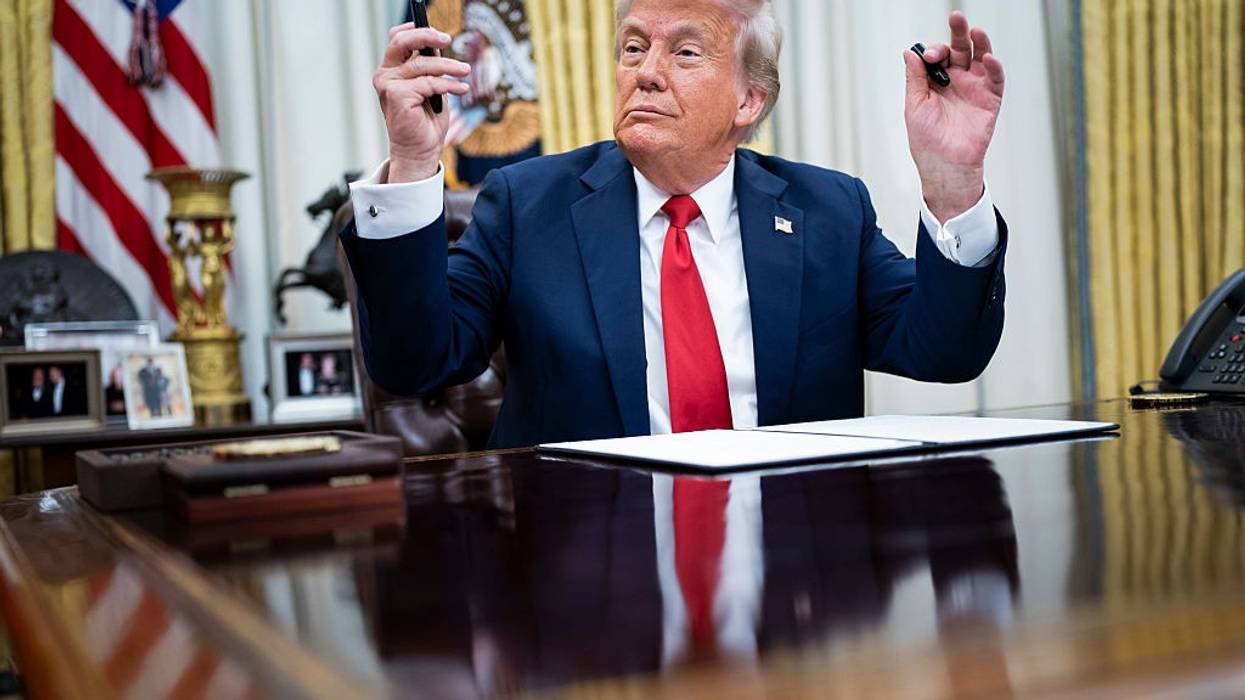
Willkie Farr & Gallagher LLP—where former Vice President Kamala Harris' husband is a partner—investigated the Capitol insurrection and successfully represented Georgia election workers defamed by Rudy Giuliani.
In the latest capitulation to his retributive attacks on Big Law, U.S. President Donald Trump on Tuesday announced that his administration struck a deal with a law firm that took part in the investigation into the January 6, 2021 Capitol insurrection and whose partners include the husband of former Democratic Vice President Kamala Harris.
"Willkie Farr & Gallagher LLP proactively reached out to President Trump and his Administration, offering their decisive commitment to ending the Weaponization of the Justice System and the Legal Profession," Trump said on his Truth Social network. "The President is delivering on his promises of eradicating Partisan Lawfare in America, and restoring Liberty and Justice FOR ALL."
According to Trump, Willkie—whose partners include former Second Gentleman Doug Emhoff—will provide a total of at least $100 million in pro bono services to veterans, active duty U.S.en troops, and Gold Star families; law enforcement and first responders; to "ensuring fairness in our justice system;" and combating antisemitism.
The firm also agreed to commit to "merit-based hiring" and refrain from "illegal" diversity, equity, and inclusion hiring, promotion, and retention. It must also "not deny representation to clients, such as members of politically disenfranchised groups... who have not historically received legal representation from major national law firms... because of the personal political views of individual lawyers."
Willkie said in a statement that "we reached an agreement with President Trump and his administration on matters of great importance to our firm. The substance of that agreement is consistent with our firm's views on access to legal representation by clients, including pro bono clients, our commitment to complying with the law as it relates to our employment practices, and our history of working with clients across a wide spectrum of political viewpoints."
"The firm looks forward to having a constructive relationship with the Trump administration, and remains committed to serving the needs of our clients, our employees, and the communities of which we are a part," the statement added.
The agreement averts what could have been a ruinous executive order from Trump targeting the firm. Willkie drew Trump's ire for actions including employing a top investigator for the House committee that examined his role in fomenting the attack on the U.S. Capitol and for representing two Georgia election workers who sued his former attorney and adviser, Rudy Giuliani, for defamation. In December 2023, the former New York City mayor was ordered to pay $148 million to the workers for falsely accusing them of engaging in a nonexistent conspiracy to "steal" the 2020 U.S. presidential election from Trump.
According to The Associated Press, "Emhoff made it known internally that he disagreed with this deal and told firm leadership they should fight, according to a person familiar with the situation who insisted on anonymity to discuss internal deliberations."
Tuesday's deal outraged democracy defenders.
Absolutely shameful. Doug Emhoff of all people should understand the danger that will come from lawyers capitulating to a man hell-bent on destroying our democracy. Emhoff and other partners need to show they stand on the side of the rule of law by quitting—there’s absolutely no other option.
[image or embed]
— Molly Coleman ( @mollycoleman.bsky.social) April 1, 2025 at 2:19 PM
"Emhoff and other partners need to show they stand on the side of the rule of law by quitting—there's absolutely no other option," argued Molly Coleman, executive director of the People's Parity Project and PPP Action and a St. Paul, Minnesota City Council candidate.
The Willkie agreement follows
similar surrenders by white-shoe law firms including Paul, Weiss, Rifkind, Wharton & Garrison LLP and Skadden, Arps, Slate, Meagher & Flom. Trump accused these and other law firms of weaponizing the judicial system, and last month, he issued a memo directing U.S. Attorney General Pam Bondi to "seek sanctions" against firms and lawyers that the administration says have engaged in "frivolous, unreasonable, and vexatious litigation against the United States."
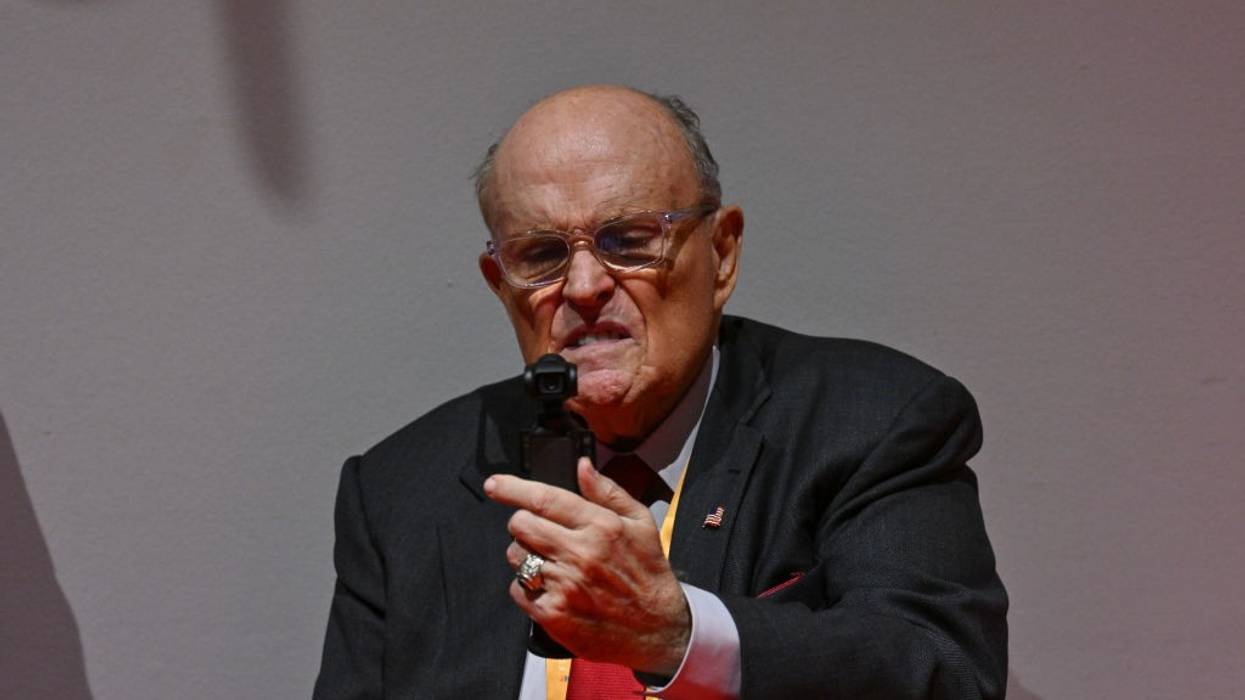
'This outcome should send a powerful message that there is a price to pay for those who choose to intentionally spread disinformation," said a lawyer representing the two women.
Rudy Giuliani, the disgraced and disbarred former New York City mayor and personal attorney for ex-President Donald Trump, was ordered by a federal judge on Tuesday to hand over all of his valuable possessions—including everything from a New York City penthouse co-op to his television set—to a pair of Georgia election workers whom he defamed in service of Trump's "Big Lie" that the 2020 presidential election was stolen by Democrats.
In August 2023, Judge Beryl Howell of the U.S. District Court for the District of Columbia found Giuliani liable for defaming Ruby Freeman and ArShaye "Shaye" Moss—who worked as election officials in Fulton County, Georgia—by falsely accusing the pair of engaging in a nonexistent conspiracy to "steal" the 2020 U.S. presidential election from Trump by taking part in a fake ballot harvesting scheme. Freeman and Moss endured death threats and harassment from Trump supporters as a result of the bogus accusation.
Last December, a Washington, D.C. jury ordered Giuliani to pay $148 million in damages to the women. He subsequently declared Chapter 11 bankruptcy.
On Tuesday, Judge Lewis Liman of the U.S. District Court for the Southern District of New York issued an order for Giuliani "to transfer all personal property specified" in an attached list, including "cash accounts, jewelry and valuables, a legal claim for unpaid attorneys' fees, and his interest in his Madison Avenue co-op apartment to a receivership" benefiting Freeman and Moss.
In addition to the co-op—which according to the real estate website Zillow has three bedrooms, three bathrooms, and is worth an estimated $20.6 million—items on the list include watches gifted by European leaders after the September 11, 2001 attack on the United States, a 1980 Mercedes-Benz 500SL formerly owned by the actress Lauren Bacall, and sports memorabilia including a signed Joe DiMaggio jersey.
"We are proud that our clients will finally begin to receive some of the compensation to which they are entitled for Giuliani's actions," Aaron Nathan, an attorney who represented Freeman and Moss, said in a statement. "This outcome should send a powerful message that there is a price to pay for those who choose to intentionally spread disinformation."
"The road to justice for Ruby and Shaye has been long, but they have never wavered," Nathan added.
Giuliani has paid a heavy price for purveying election fraud lies that culminated in the January 6, 2021 Capitol insurrection by supporters of Trump, the 2024 Republican nominee. His credibility is now in tatters and he has been permanently stripped of his New York and Washington, D.C. law licenses.
And his troubles are far from over—Giuliani also faces criminal charges related to alleged election subversion in
Arizona and Georgia.
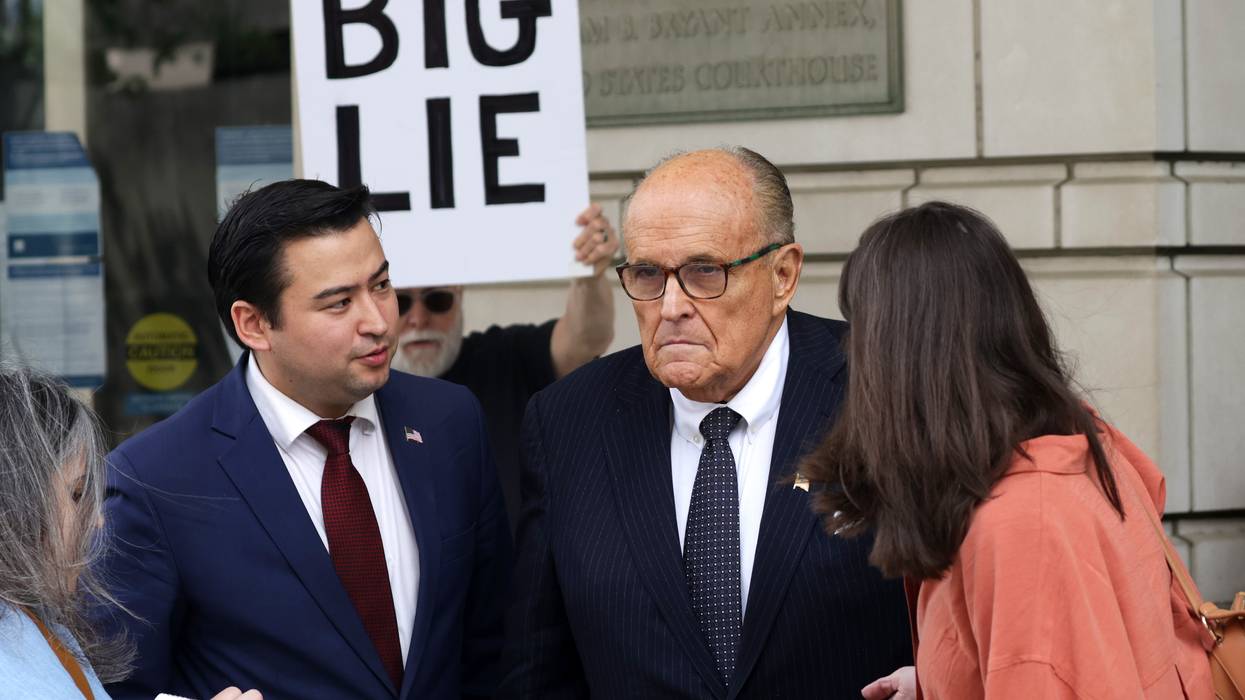
"Imagine once being dubbed 'America's Mayor' and having an illustrious legal and political career, and throwing it all away for Donald Trump," said one observer.
Former Republican New York City Mayor Rudy Giuliani can no longer practice law in the nation's capital after a federal appeals court on Thursday concurred with a disciplinary committee's recommendation for permanent disbarment over his efforts to "undermine the results of the 2020 presidential election" in service of then-President Donald Trump's "Big Lie."
In a one-page ruling, the Washington, D.C. Court of Appeals permanently revoked Giuliani's law license, finding that the former federal prosecutor and personal attorney for Trump failed to explain why he should not be subject to reciprocal punishment after the New York Supreme Court's Appellate Division disbarred him in July for lying about the 2020 election.
The New York tribunal found that Giuliani "repeatedly and intentionally made false statements, some of which were perjurious, to the federal court, state lawmakers, the public... and this court concerning the 2020 presidential election, in which he baselessly attacked and undermined the integrity of this country's electoral process."
Giuliani is also facing criminal charges related to alleged election subversion in Arizona and Georgia. He filed for Chapter 11 bankruptcy last December following a $148 million defamation judgment for falsely accusing two former Georgia election workers of engaging in a nonexistent conspiracy to "steal" the 2020 election.
These blows, culminating in Thursday's D.C. disbarment, mark a stunning fall from grace for Giuliani, who, as "America's Mayor" in the wake of the September 11, 2001 attacks on the United States, was named Time's "Person of the Year." Giuliani parlayed his popularity into a 2008 run for president in which he was an early GOP front-runner.
Giuliani spokesperson Ted Goodman slammed the D.C. court's ruling as a "miscarriage of justice."
"Members of the legal community who want to protect the integrity of our justice system should immediately speak out against this partisan, politically motivated decision," Goodman said in a statement.
Some observers linked Giuliani's disbarment to Thursday's indictment of current New York City Mayor Eric Adams, a Democrat, on corruption charges.
"Tough day for New York City mayors,"
quipped Democracy Docket founder Marc Elias.

A court found that the former Trump lawyer "flagrantly misused his prominent position" and "repeatedly and intentionally made false statements, some of which were perjurious," about the 2020 election.
Rudy Giuliani—onetime mayor of New York City, federal prosecutor, and attorney for former President Donald Trump—was permanently disbarred in New York state on Tuesday for lying about the 2020 presidential election being "stolen" by Democrats.
The New York Supreme Court's Appellate Division unanimously disbarred Giulian, calling his propagation of Trump's "Big Lie" about 2020 election fraud a threat to the public interest and the legal profession.
The panel found that Giuliani—whose law license was suspended in 2021—"flagrantly misused his prominent position as the personal attorney for former President Trump and his campaign" and "repeatedly and intentionally made false statements, some of which were perjurious, to the federal court, state lawmakers, the public … and this court concerning the 2020 presidential election, in which he baselessly attacked and undermined the integrity of this country's electoral process."
"The seriousness of [Giuliani's] misconduct cannot be overstated," the court stressed.
As the New York Law Journal reported:
Once known as "America's Mayor," the 80-year-old has faced mounting legal battles and financial ruin in recent years.
Giuliani was indicted in Arizona in May alongside 17 others for his alleged role in an attempt to overturn Trump's loss in the state during the 2020 presidential election.
Giuliani filed for bankruptcy protection in December following a $148 million defamation judgment leveled against him for false statements in the wake of former President Donald Trump's failed attempt to retain the presidency.
He is also facing multiple actions in New York state—including a $10 million complaint from an alleged former employee who accuses him of sexual assault and wage theft—though many were stayed in the wake of his Chapter 11 filing.
Giuliani—who is also facing felony charges in Georgia along with Trump and others who allegedly tried to subvert the 2020 election—denies these and other accusations, including that he tried to sell presidential pardons for $2 million each.
Barry Kamins, the retired judge who represented Giuliani as he fought to keep his New York law license, said his client "is obviously disappointed in the decision" and that they are weighing their appeals options.
A bar disciplinary committee in the District of Columbia has also recommended that Giuliani be disbarred.
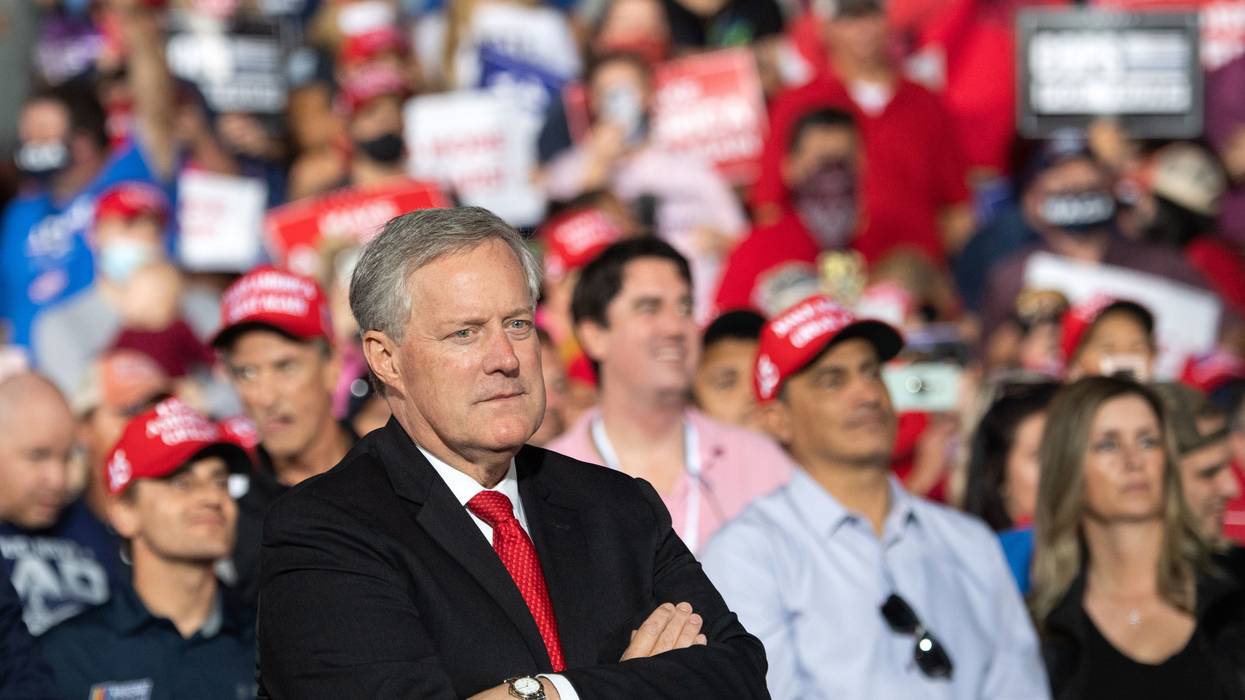
Had it succeeded, said the state's attorney general, the scheme would have "deprived Arizona's voters of their right to have their votes counted for their chosen president."
A grand jury in Arizona on Wednesday charged seven aides to Donald Trump and nearly a dozen Republican officials over a "fake electors" scheme in the state that aimed to keep the former president in power after his 2020 loss to President Joe Biden.
Trump, who is currently facing nearly 90 charges across four criminal cases as he runs for another White House term, was described as "unindicted co-conspirator 1" in the 58-page indictment, which was announced by Arizona Attorney General Kris Mayes.
"The people of Arizona elected President Biden," Mayes, a Democrat, said Wednesday. "Unwilling to accept this fact, the defendants charged by the state grand jury allegedly schemed to prevent the lawful transfer of the presidency. Whatever their reasoning was, the plot to violate the law must be answered for."
The indictment names former Arizona Republican Party Chair Kelli Ward, sitting state Republican Sens. Jake Hoffman and Anthony Kern, former U.S. Senate candidate Jim Lamon, and seven others as the "fake electors" who sought to declare Trump the rightful winner of the state's presidential contest.
The names of other individuals indicted by the state grand jury are redacted, but the document's descriptions make clear that former White House Chief of Staff Mark Meadows, former Trump attorney Rudy Giuliani, and top Trump legal strategist Boris Epshteyn are among those facing felony charges—including fraud, forgery, and conspiracy.
"In Arizona, defendants, unindicted coconspirators, and others pressured the three groups of election officials responsible for certifying election results to encourage them to change the election results," the document reads. "Discussions about using the Republican electors to change the outcome of the election began as early as November 4, 2020. Those plans evolved during November based on memos drafted by [an attorney for the Trump campaign, Kenneth Chesebro]."
Mayes said Wednesday that had the fake elector scheme succeeded, it would have "deprived Arizona's voters of their right to have their votes counted for their chosen president."
"It effectively would have made their right to vote meaningless," said Mayes.
A state grand jury, made up of everyday, regular Arizonans, has handed down felony indictments in the ongoing investigation into the fake elector scheme in Arizona. pic.twitter.com/Nu8GcD4ZqJ
— AZ Attorney General Kris Mayes (@AZAGMayes) April 24, 2024
Alex Gulotta, state director of All Voting Is Local Action Arizona, said Wednesday that "the indictment of the eleven fake electors is one of the first steps required in holding these election deniers accountable for their alleged attempts to take power away from voters by disrupting our free and fair elections."
"Arizonans deserve to trust the election officials responsible for administering our elections and preserving our democracy," said Gulotta, "and this is a positive step forward as we continue to strengthen the foundations of our democracy and restore faith in our elections."
The Arizona Republic reported Wednesday that "several of the Arizona electors have previously claimed they were merely offering Congress a backup plan, though nothing in the documents they sent to Congress and the National Archives backs up that assertion."
"The indictment includes several statements the false electors made on social media that contradict those claims," the newspaper observed.
Jenny Guzman, director of Common Cause's Arizona program, said the indictment "marks the start of a new chapter for the fake elector scheme that has plagued Arizona."
"Arizonans are still dealing with the fallout from the false electors and the Big Lie about the 2020 elections," said Guzman. "We are relieved that the investigation by Attorney General Mayes has concluded and Arizonans can now know that what comes next is accountability. These efforts by these fake electors to undermine the will of Arizona’s voters have had implications far beyond their failed attempt to overthrow the 2020 election."
"This indictment can reassure all Arizonans that if anyone, regardless of their political affiliation, attempts to undermine their vote, consequences will follow," Guzman added.