

SUBSCRIBE TO OUR FREE NEWSLETTER
Daily news & progressive opinion—funded by the people, not the corporations—delivered straight to your inbox.
5
#000000
#FFFFFF
To donate by check, phone, or other method, see our More Ways to Give page.
Daily news & progressive opinion—funded by the people, not the corporations—delivered straight to your inbox.

"The result will be some of the dirtiest power sources rushed into neighborhoods without giving communities any opportunity to weigh in," said one critic.
Critics are warning that President Donald Trump's Environmental Protection Agency is pushing through a rule that would let artificial intelligence data center builders off the hook for making public disclosures ahead of construction.
The rule, which first came to light during an EPA meeting last month, would delegate power to states over public participation in the permitting process for specific sources of air pollution, such as diesel generators that are frequently used by data centers.
According to a July report in Mother Jones, the proposed rule "could have major consequences for how ordinary people are given notice about new or expanded polluting facilities coming into their neighborhoods."
Late last week, a coalition of more than 200 environmental groups filed objections to the rule change, which they warned would make public notice for certain polluting projects entirely optional, depending on the whims of state and local governments.
Dori Jaffe, managing attorney at Sierra Club, said on Monday that the rule change would "help data center developers evade more health standards and do so secretly."
"We demand that the EPA rescind this attempt to further cut the public out of decisions made in their own backyards," said Jaffe. "We deserve to have a say about developments in our community that would impact our air quality and the health of our families."
Sheena Patel, attorney for the Natural Resources Defense Council, noted that the administration was attempting to limit public input into polluting projects at a time when opposition to AI data center construction has hit a record high among US voters.
If the rule change goes through, Patel added, "the result will be some of the dirtiest power sources rushed into neighborhoods without giving communities any opportunity to weigh in."
Brandon Jones-Cobb, senior attorney at the Center for Biological Diversity, said it was "beyond cruel" that the EPA seems determined to "silence front-line communities who bear the brunt of unhealthy air" generated by polluting industries.
"The agency has already turned its back on science, cut enforcement against industrial polluters and eliminated life-saving air pollution measures," said Jones-Cobb. "Now it wants to shut the public out of decisions to build or expand facilities that expose communities to dangerous air pollution, including data centers. This EPA is so out of touch with Americans and only focuses on making polluters happy."
In an interview with The Guardian published Tuesday, Joe Goffman, former assistant administrator for the EPA’s office of air and radiation, said the rule change would dismantle what he described as an "ironclad promise" made in the 1963 Clean Air Act to give ordinary citizens voices in where, how, and whether potential centers of air pollution are built.
"The administration is basically saying: 'You all may have thought this was an ironclad promise, but it no longer is,'" Goffman emphasized.

Want an easy New Years' resolution? Buy 100% recycled or alternative fiber toilet paper instead of rolls made from virgin forest pulp.
North America’s boreal forests are crucial for wildlife and the climate, but we’re literally trashing them to make pulp for toilet paper and other disposable paper products.
Companies are clear-cutting a million acres a year, according to a new report from the Natural Resources Defense Council (NRDC).
The northern boreal forests are Earth’s largest terrestrial biome. They’re the breeding grounds for 3-5 billion migrating birds that populate our backyards. And they’re a key carbon sink, storing 20% of global forest carbon and 50% of global soil carbon.
Studies show these forests have been overharvested and degraded to such a degree that the ecological damage will be difficult to reverse. They’re increasingly beset by global warming, melting permafrost, fires (including multi-year, spontaneously reigniting “zombie fires”), and pests, which threaten to destroy them and release their carbon back into the atmosphere.
If every American bought just one roll of toilet paper made from recycled paper rather than a conventional forest-fiber roll, it would save 1.6 million trees, 1 billion gallons of water, and 800 million pounds of greenhouse gases.
The United Nations recently warned of an approaching tipping point that could turn them from carbon sinks to carbon sources. That would be catastrophic. The recent COP30 climate summit, held in Brazil’s Amazon rainforest, was billed as “the forest COP.” But its outcomes were dubious for tropical forests—and nonexistent for boreal forests.
But if climate delegates don’t protect them, consumers can—by buying 100% recycled or alternative fiber products instead of toilet paper made from virgin forest pulp.
A market for these alternatives is emerging. The US toilet paper industry is worth $42 billion, but a whopping 68% of US consumers surveyed want eco-friendly toilet paper made from recycled pulp, bamboo, or cornstalks.
If every American bought just one roll of toilet paper made from recycled paper rather than a conventional forest-fiber roll, it would save 1.6 million trees, 1 billion gallons of water, and 800 million pounds of greenhouse gases—the equivalent of taking 72,000 cars off the road for a year, NRDC found.
Eco-friendly toilet paper start-ups have a $1 billion toehold on the overall market so far—little more than 2%. But they’re growing fast. Imagine how many trees, how much water, and how many emissions we’d save if they gained a 68% share.
The big paper companies are imagining it, too. Procter & Gamble (P&G) makes Charmin, the top US toilet paper brand. This year it launched a bamboo version. That gives the company a green-sounding talk point, and a theoretical way into the growing alternative market. But it isn’t really available in stores and doesn’t do anything to change P&G’s bad practices.
It’s well documented that P&G makes regular Charmin by clear-cutting Canadian boreal forests for pulp, cutting down old-growth groves that have stood for a century or more. Only about 20% of these old-growth trees are left.
Any remnant wood left (called “slash”) after logging gets burned, and the land gets plowed and sprayed with glyphosate (RoundUp), eradicating formerly diverse ecosystems that caribou and birds depend on. They’re replaced with monoculture plantations of softwood trees planted in tight rows, worsening vulnerability to wildfires.
Yet P&G has the chutzpah to claim its slash-and-burn practices “absolutely prohibit deforestation” and “incorporate sustainability.” No wonder the company is being sued for greenwashing, with plaintiffs demanding it be held accountable for “egregious environmental destruction of the largest intact forest in the world” and making “false and misleading claims of environmental stewardship.”
Ultimately though, the power to change practices resides with consumers, not courts. Some 90 million Americans buy regular Charmin—and another 5 billion consumers worldwide buy P&G products. Collectively they have enormous power, provided they’re alerted to the problem and aren’t fooled by greenwashing tactics.
But if those conditions are met, consumers can save the boreal forests, one roll at a time.
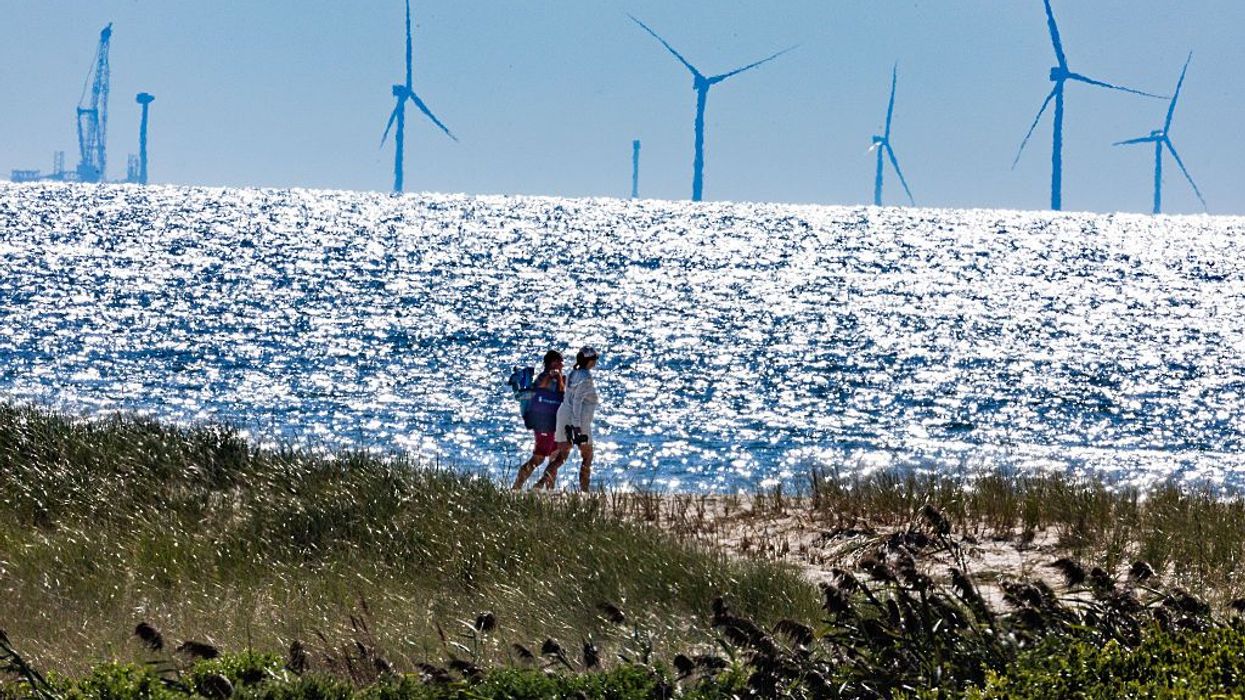
"Get out of the way of the expansion of renewable energy," one clean power advocate told the Trump administration.
Clean energy advocates have scored at least a temporary victory after a federal judge on Monday threw out President Donald Trump's executive order that banned new wind power projects in the US.
As reported by CNBC, Judge Patti Saris of the US District Court for the District of Massachusetts tossed Trump's executive order in its entirety after finding it "arbitrary and capricious and contrary to law," and arguing that the federal government did not provide a reasoned explanation for enacting such a policy.
The executive order, which Trump signed in January, halted all permits and leases for both offshore and onshore wind power projects.
A group of 17 states, led by New York Attorney General Letitia James, sued the Trump administration earlier this year to overturn the executive order, which they labeled "an existential threat to the wind industry" in the US.
In a social media post, James hailed the judge's ruling and called the decision "a big victory in our fight to keep tackling the climate crisis and protect one of our best sources of clean, reliable, and affordable energy."
Nancy Pyne, senior adviser for Sierra Club, declared the ruling "a victory for everyone who pays an electricity bill, is part of the clean energy workforce, and breathes air."
"Americans need cheaper and more reliable energy that does not come at the expense of our health and futures," Pyne added. "We are glad to see this illegal order get vacated, and we will continue to advocate for more wind energy projects across the country to lower the cost of energy and create stable, union jobs in our communities."
Kit Kennedy, managing director for power at Natural Resources Defense Council, also emphasized the benefits to US consumers of allowing more wind-power projects to move forward.
"From the beginning of its time in office, the Trump administration put a halt to the wind energy projects that are needed to keep utility bills in check and the grid reliable," Kennedy said. "In the months since, this action has been a devastating blow to workers, electricity customers, and the reliability of the power grid."
Kennedy added that the Trump administration should accept the judge's verdict and "get out of the way of the expansion of renewable energy."
The Trump administration has the option to appeal the judge's order, although it did not respond to questions from the New York Times on Monday about whether it had plans to do so.
Trump's war against wind power comes at a time when rising electric bills, caused in large part by increased demand from energy-devouring artificial intelligence data centers, have become a hot-button political issue.
A recent report from researchers at The Century Foundation and financial abuse watchdog Protect Borrowers found that the average overdue balance on utility bills has surged by 32% over the last three years, going from $597 in 2022 to $789 in 2025. The report also estimated that roughly 1 out of every 20 US households has utility debt that is “so severe it was sent to collections or in arrears."
"In one stroke, Trump is worsening three of our nation’s most vexing problems," said one critic.
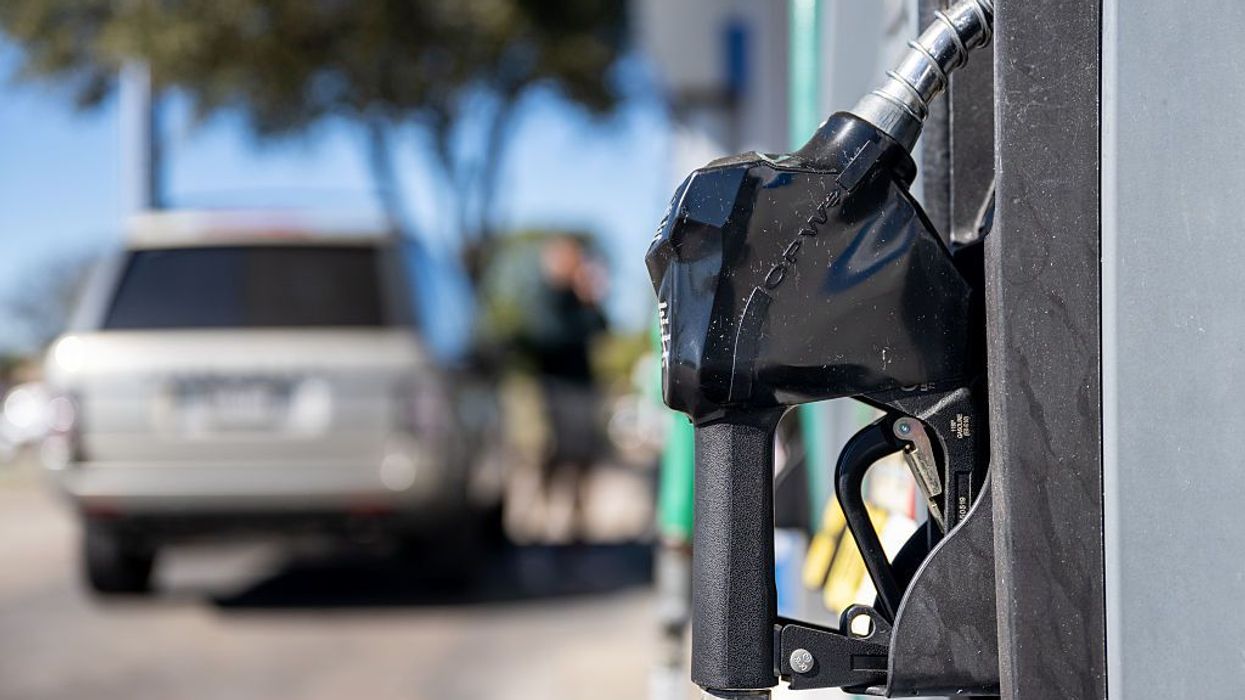
President Donald Trump's administration drew criticism from climate advocates on Wednesday for taking a hatchet to fuel efficiency standards aimed at reducing US gas consumption and mitigating the damage done by human-made climate change.
The National Highway Traffic Safety Administration (NHTSA) has proposed slashing former President Joe Biden's fuel economy requirements for new cars down from 50.4 miles per gallon down to just 34.5 miles per gallon on average by 2031.
NHTSA claims that the change in fuel-efficiency standards would slash up-front costs to cars by roughly $900, although it acknowledges that this would also increase US gasoline consumption, which could mean higher prices at the gas pump.
The move has the support of America's major automobile manufacturers, who said the new rules would give them more flexibility. Ford CEO Jim Farley, for instance, told the Washington Post that the rule change means that the auto industry "can make real progress on carbon emissions and energy efficiency while still giving customers choice and affordability."
Many environmental advocates were quick to hammer Trump for making what they described as a shortsighted policy decision that cost Americans more over the long run in terms of both higher gas prices and carbon emissions.
Kathy Harris, director of clean vehicles at the Natural Resources Defense Council, said that Trump is "sticking drivers with higher costs at the pump, all to benefit the oil industry" and predicted that "drivers will be paying hundreds of dollars more at the pump every year if these rules are put in place."
The rule change also drew a scathing review from Dan Becker, director of the Center for Biological Diversity's Safe Climate Transport Campaign, who said that the Trump administration's actions were self-destructive on a number of levels.
"In one stroke, Trump is worsening three of our nation’s most vexing problems: the thirst for oil, high gas pump costs, and global warming," he said. "Trump’s action will feed America’s destructive use of oil, while hamstringing us in the green tech race against Chinese and other foreign carmakers. The auto industry will use this rule to drive itself back into a familiar ditch, failing to compete."
The move on fuel-efficiency standards wasn't the only climate-related policy move the administration made this week, as Bloomberg reported on Tuesday that the US Department of Energy also began unwinding a Biden-era program aimed at decarbonizing the building sector by allowing for the certification of "zero emissions" buildings.
Amneh Minkara, deputy director of Sierra Club's Clean Heat Campaign, said that repealing this program was particularly nonsensical since it was a voluntary standard that "did not place any additional burden on builders or owners," and instead represented "a clear way to meet consumer demand for pollution-free buildings."
"Defining what makes a building ‘zero emissions’ gives consumers certainty that when builders or sellers say a building is clean that it actually meets a specific set of criteria," Minkara emphasized. "It also would reduce energy waste, at a time when energy demand is at an all-time high, and lead to lower utility bills."

One environmental attorney said that the EPA proposal "prioritizes chemical industry profits and utility companies' bottom line over the health of children and families across the country."
Public health and environment defenders on Friday condemned the Trump administration's announcement that it will no longer uphold Environmental Protection Agency rules that protect people from unsafe levels of so-called "forever chemicals" in the nation's drinking water.
In addition to no longer defending rules meant to protect people from dangerous quantities of per- and polyfluoroalkyl substances (PFAS)—called forever chemicals because they do not biodegrade and accumulate in the human body—the EPA is asking a federal court to toss out current limits that protect drinking water from four types of PFAS: PFNA, PFHxS, GenX, and PFBS.
The EPA first announced its intent to roll back limits on the four chemicals in May, while vowing to retain maximum limits for two other types of PFAS. The agency said the move is meant to “provide regulatory flexibility and holistically address these contaminants in drinking water.”
However, critics accuse the EPA and Administrator Lee Zeldin—a former Republican congressman from New York with an abysmal 14% lifetime rating from the League of Conservation Voters—of trying to circumvent the Safe Drinking Water Act's robust anti-backsliding provision, which bars the EPA from rolling back any established drinking water standard.
"In essence, EPA is asking the court to do what EPA itself is not allowed to do," Earthjustice said in a statement.
"Administrator Zeldin promised to protect the American people from PFAS-contaminated drinking water, but he’s doing the opposite,” Earthjustice attorney Katherine O'Brien alleged. “Zeldin’s plan to delay and roll back the first national limits on these forever chemicals prioritizes chemical industry profits and utility companies’ bottom line over the health of children and families across the country."
Jared Thompson, a senior attorney with the Natural Resources Defense Council (NRDC), said that "the EPA’s request to jettison rules intended to keep drinking water safe from toxic PFAS forever chemicals is an attempted end run around the protections that Congress placed in the Safe Drinking Water Act."
"It is also alarming, given what we know about the health harms caused by exposure to these chemicals," Thompson added. "No one wants to drink PFAS. We will continue to defend these commonsense, lawfully enacted standards in court."
PFAS have myriad uses, from nonstick cookware to waterproof clothing to firefighting foam. Increasing use of forever chemicals has resulted in the detection of PFAS in the blood of nearly every person in the United States and around the world.
Approximately half of the U.S. population is drinking PFAS-contaminated water, “including as many as 105 million whose water violates the new standards,” according to the NRDC, which added that “the EPA has known for decades that PFAS endangers human health, including kidney and testicular cancer, liver damage, and harm to the nervous and reproductive systems.”
Betsy Southerland, a former director of the Office of Science and Technology in the EPA's Office of Water, said in a statement Friday:
The impact of these chemicals is clear. We know that this is significant for pregnant women who are drinking water contaminated with PFAS, because it can cause low birth weight in children. We know children have developmental effects from being exposed to it. We know there’s an increased incidence of cardiovascular disease and cancer with these chemicals.
Two of the four chemicals targeted in this motion are the ones that we expect to be the most prevalent, and only increasing contamination in the future. With this rollback, those standards would be gone.
Responding to Thursday's developments, Environmental Advocates NY director of clean water Rob Hayes said that "the EPA’s announcement is a big win for corporate polluters and an enormous loss for New York families."
"Administrator Zeldin wants to strip clean water protections away from millions of New Yorkers, leaving them at risk of exposure to toxic PFAS chemicals every time they turn on the tap," he added. "New Yorkers will pay the price of this disastrous plan through medical bills—and deaths—tied to kidney cancer, thyroid disease, and other harmful illnesses linked to PFAS."
While Trump administration officials including Agriculture Secretary Brooke Rollins and Health and Human Services Secretary Robert F. Kennedy Jr. have claimed they want to "make America healthy again" by ending PFAS use, the EPA is apparently moving in the opposite direction. Between April and June of this year, the agency sought approval of four new pesticides considered PFAS under a definition backed by experts.
“What we’re seeing right now is the new generation of pesticides, and it’s genuinely frightening,” Nathan Donley, the environmental health science director at the Center for Biological Diversity, told Civil Eats earlier this week. “At a time when most industries are transitioning away from PFAS, the pesticide industry is doubling down. They’re firmly in the business of selling PFAS.”
"At a time when working families are getting crushed by skyrocketing energy costs and the planet is literally burning, sabotaging this program isn't just wrong—it's absolutely insane," said Sen. Bernie Sanders.
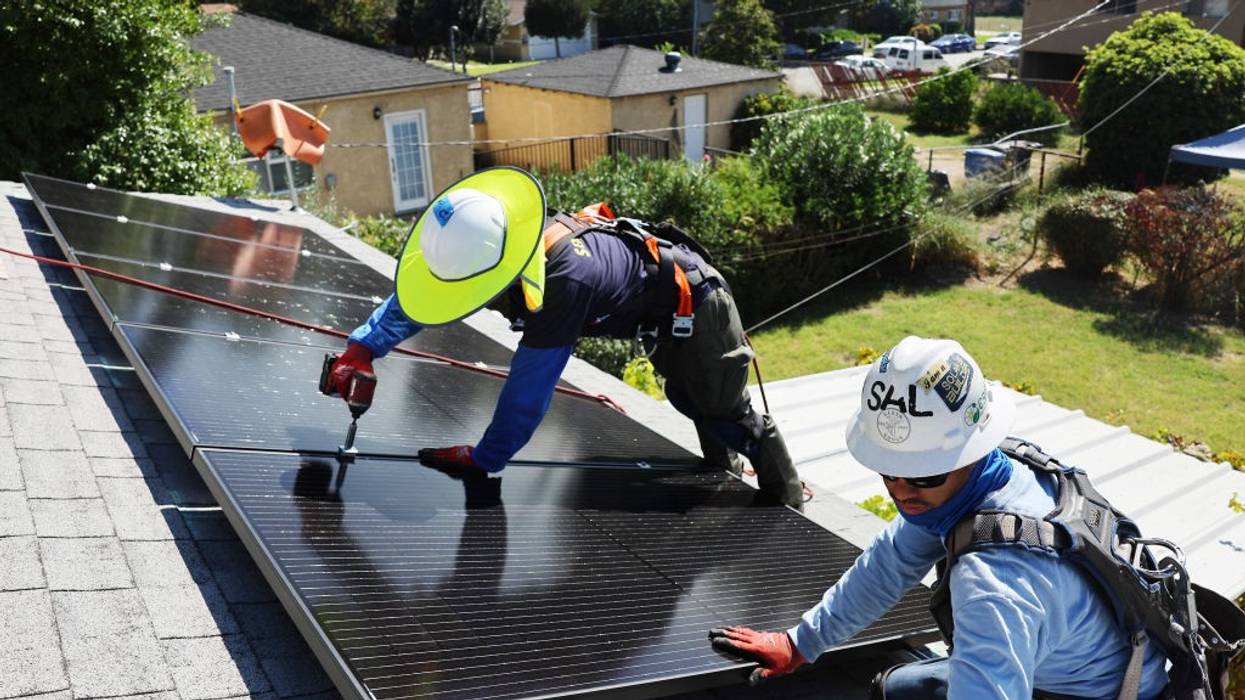
In a move denounced by climate and environmental justice defenders, the Trump administration is planning to claw back $7 billion in federal grants for low- and middle-income households to install rooftop solar panels, people briefed on the matter told The New York Times on Tuesday.
According to the Times, the Environmental Protection Agency (EPA) is drafting termination letters to the 60 state agencies, nonprofit groups, and Indigenous tribes that received the grants under the Solar for All program. The move is part of the Trump administration's efforts to cancel billions of dollars in climate- and environment-oriented grants included in former President Joe Biden's landmark Inflation Reduction Act, signed in 2022.
Solar for All was launched by the Biden administration in 2023 in conjunction with Sen. Bernie Sanders (I-Vt.). The program aimed to "develop long-lasting solar programs that enable low-income and disadvantaged communities to deploy and benefit from distributed residential solar, lowering energy costs for families, creating good-quality jobs in communities that have been left behind, advancing environmental justice, and tackling climate change."
The program was meant to help around 900,000 low- and middle-income households go solar.
Ripping away the Solar for All program means more families paying more on their bills—because God forbid people actually save money. www.nytimes.com/2025/08/05/c...
[image or embed]
— Climate Power (@climatepower.bsky.social) August 5, 2025 at 10:57 AM
The Trump administration froze Solar for All funding in February after President Donald Trump issued a day one executive order mandating a review of all Biden-era climate spending. The funds were reinstated in early March after EPA "worked expeditiously to enable payment accounts," according to the agency.
Responding to the Times report, Sanders said in a statement: "I introduced the Solar for All program to slash electric bills for working families by up to 80%—putting money back in the pockets of ordinary Americans, not fossil fuel billionaires. Now, Donald Trump wants to illegally kill this program to protect the obscene profits of his friends in the oil and gas industry. That is outrageous."
"Solar for All means lower utility bills, many thousands of good-paying jobs, and real action to address the existential threat of climate change," Sanders continued. "At a time when working families are getting crushed by skyrocketing energy costs and the planet is literally burning, sabotaging this program isn't just wrong—it's absolutely insane."
"We will fight back to preserve this enormously important program," he added.
Other Solar for All proponents also slammed the reported EPA move.
"Canceling these investments makes no sense," Adam Kent, green finance director amt the Natural Resources Defense Council, said in a statement reported by The Washington Post. "Every investment will save families at least 20% on their energy bills. Members of Congress need to step up and defend a program that focused on lowering energy bills for hardworking Americans."
"The Solar for All program has been embraced by both red and blue states and has so much promise."
Kyle Wallace, vice president of public policy and government affairs at the solar company PosiGen, said on social media: "This would be a shocking and harmful action that will hurt vulnerable families who are struggling with rising energy costs. The Solar for All program has been embraced by both red and blue states and has so much promise. EPA should not do this."
Solar for All defenders vowed to fight the EPA's move.
"If leaders in the Trump administration move forward with this unlawful attempt to strip critical funding from communities across the United States, we will see them in court," Kym Meyer, litigation director at the nonprofit Southern Environmental Law Center, told the Times.
"Trump is illegally delaying clean air laws from his desk because polluters make more money when they just dump their toxic chemicals in our air," said one critic.
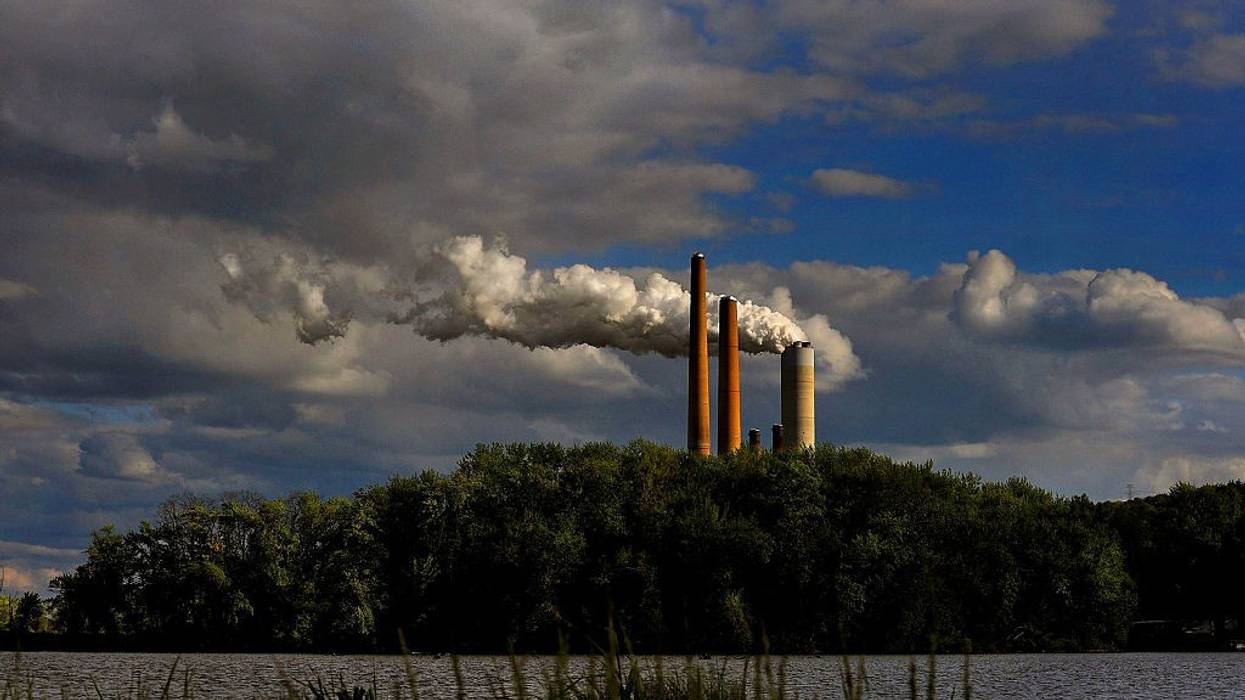
Continuing a trend of prioritizing polluters over public health and the planet, U.S. President Donald Trump late Thursday signed a series of proclamations to provide what the Republican called "regulatory relief" to various industries.
While the names of Trump's four proclamations suggest they are intended to promote American "security" regarding energy, chemical manufacturing, iron ore processing, and sterile medical equipment, what they actually do is allow over 100 facilities across the country to not comply with rules put in place under Democratic former President Joe Biden.
A Trump White House fact sheet describes the rules from Biden's Environmental Protection Agency (EPA) as "burdensome." Meanwhile, environmental and health advocates blasted Trump over his new exemptions for coal-fired power plants, ethylene oxide commercial sterilizers, and facilities that manufacture chemicals and process taconite iron.
"If your family lives downwind of these plants, this is going to mean more toxic chemicals in the air you breathe."
Patrice Simms, vice president of litigation at Earthjustice's Healthy Communities Program, said in a Friday statement that "Trump is illegally delaying clean air laws from his desk because polluters make more money when they just dump their toxic chemicals in our air."
"Trump's action on behalf of big corporate polluters will cause more cancer, more birth defects, and more children to suffer [from] asthma," Simms warned. "The country deserves better."
The proclamation is not the first handout Trump has given the coal industry since returning to office in January. As Earthjustice noted:
In April 2025, the Trump administration exempted 68 coal-fired power plants from pollution limits set in the strengthened MATS rule, even though pollution controls are widely available and already in use. These came after EPA Administrator Lee Zeldin invited corporations to email the agency to request exemptions from clean air standards. Companies were told they could cite "national security" or "lack of available technology" as justification.
John Walke, clean air director for the environmental group Natural Resources Defense Council, told The Associated Press that Trump's claims about national security concerns and technology issues were "pretexts" to further enrich large corporations.
"President Trump just signed a literal free pass for polluters," Walke said of the new proclamations. "If your family lives downwind of these plants, this is going to mean more toxic chemicals in the air you breathe."
The AP reported that "in a related development, the EPA said Thursday it will give utility companies an additional year to inspect and report on contamination from toxic coal ash landfills across the country," which Zeldin also called "regulatory relief."
Earthjustice senior counsel Lisa Evans told The New York Times on Thursday that while it may not seem like a lengthy delay, "a year's time is not irrelevant when you are living next to a coal plant."
"It's one more year of hazardous contaminants getting into the groundwater," Evans said. "And the more chemicals that get into the groundwater, the more difficult and expensive it is to remediate."
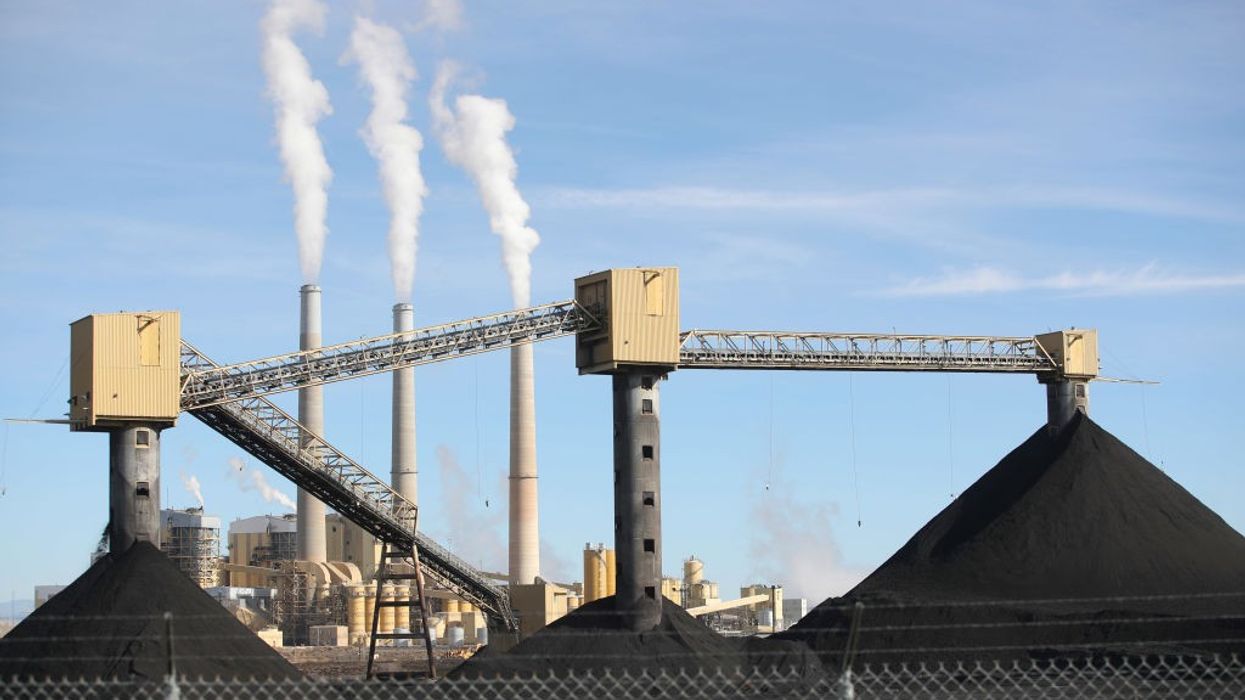
"The Trump administration is once again putting its thumb on the scale to help old, dirty power sources at the expense of air quality, public health, and higher energy bills," said one opponent.
Green groups warned Tuesday that the Trump administration's plan to invoke a bogus "energy emergency" in order to keep old, polluting coal-fired plants running will make electricity generation dirtier and more expensive while failing to produce enough power to keep up with surging demand.
On Tuesday, the U.S. Department of Energy published a resource adequacy analysis that includes plans for boosting fossil-fueled electricity generation, including at coal-fired plants. The report cites President Donald Trump's executive orders declaring a national energy emergency and strengthening the reliability and security of the nation's electric grid, and highlights the DOE's plan to classify aging fossil fuel plants as critical to system reliability. The administration is also likely to continue invoking Section 202(c) of the Federal Power Act and the Defense Production Act in order to extend the lifespans of older fossil fuel plants.
Although the analysis acknowledges that "old tools won't solve new problems," its methodology supports keeping expensive and polluting coal plants in operation. Dirty coal plants that continue to operate despite economic inefficiencies are sometimes called "zombie" plants.
"More clean energy will make the U.S. grid stronger, more reliable, and more resilient."
Not only does the report fail to state that the burning of fossil fuels is the leading driver of the climate emergency, it does not even mention the word "climate" once in its 73 pages. This tracks with the Trump administration's long-standing proscription of the term "climate change."
"The methodology released today is another attempt to push the false narrative that our country's energy future depends upon decades-old coal and gas plants, rather than clean renewables," said Sierra Club senior attorney Greg Wannier. "The only energy crisis faced by the American public is the catastrophic increase in costs that the Trump administration is forcing on the country's ratepayers."
Wannier noted that the Federal Energy Regulatory Commission and states "are already well equipped to meet any projected resource needs through the existing regulatory process, which ensures that electricity demand is reliably met at the least public cost."
"Any effort by DOE to override this process to forcibly keep coal plants online past their planned retirements would be an extraordinary and unlawful overreach of its regulatory authority," Wannier added. "It would be particularly harmful and costly to the communities living near these power plants who face the possibility of continued exposure to toxic levels of air and water pollution."
Ted Kelly, director and lead counsel for U.S. clean energy at the Environmental Defense Fund, said Tuesday:
The Trump administration is once again putting its thumb on the scale to help old, dirty power sources at the expense of air quality, public health, and higher energy bills for American families and businesses. This time it has issued a methodology that uses dodgy accounting to ignore all the clean energy we have at our disposal—including solar, wind, and battery technologies that are helping meet our nation's energy needs and support the reliability of our electric grid—in order to make a bogus case that these old, dirty power plants are needed. The administration's deeply flawed approach can't hide the fact that clean energy resources are helping keep lights on and lower electricity bills across the country, while keeping old, dirty power plants on life support will mean higher power bills for families and more toxic, cancer-causing pollution in the air we breathe.
The Trump administration has already used the nonexistent energy emergency in a push to fast-track fossil fuel permitting, keep fossil-fueled plants operating, and to wage lawfare against Democrat-controlled states trying to hold Big Oil financially accountable for its role in causing the climate emergency. In 2017, the first Trump administration also moved to bail out financially floundering coal and nuclear plants.
"No matter how they try to gussy it up, bailing out coal or other fossil fuels when low-cost solar and wind power is growing so quickly makes even less sense today than it did in 2017 when the previous Trump administration tried it before," Kit Kennedy, managing director for power at the Natural Resources Defense Council (NRDC), said in response to the DOE plan.
"It's ironic that the Energy Department is warning about reliability just days after Republicans in Congress repealed the clean energy tax credits," Kennedy added, referring to a provision in the so-called One Big Beautiful Bill Act signed by Trump on Friday.
NRDC cites analysts' predictions that the legislation will reduce additions of the electricity needed to meet rapidly growing demand and raise wholesale electricity prices as much as 25% by 2030 and up to 74% by 2035.
"More clean energy will make the U.S. grid stronger, more reliable, and more resilient—all while saving consumers money on their electricity bills," Kennedy said. "Bailing out old, dirty coal, gas, and oil plants would mean higher costs and a less reliable grid."
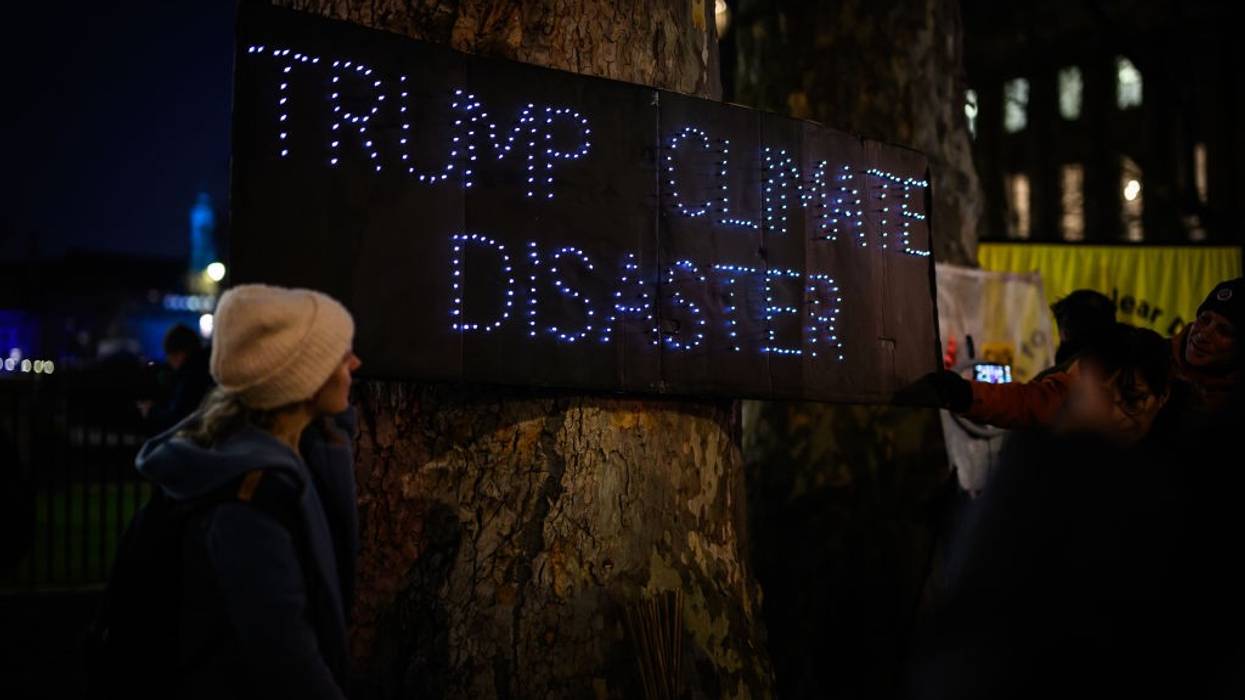
"Senate Republicans advanced the most anti-environment, anti-job, and anti-American bill in history," said one campaigner.
After U.S. Senate Republicans on Tuesday sent President Donald Trump's so-called "Big Beautiful Bill" back to the House of Representatives, defenders of the planet sounded the alarm on several provisions that remain in the massive budget reconciliation package.
"This is a vote that will live in infamy," said Greenpeace USA deputy climate program director John Noël after Vice President JD Vance broke a tie to advance the legislation. "This bill is what happens when a major political party, in the grips of a personality cult, teams up with oil company CEOs, hedge fund donors, and climate deniers. All you need to do is look at who benefits from actively undercutting the clean energy industry that is creating tens of thousands of jobs across political geographies."
"The megabill isn't about reform—it's about rewarding the superrich and doling out fossil fuel industry handouts, all while dismantling the social safety nets on which millions depend for stability," Noël added. "It is a bet against the future."
Although Sen. Mike Lee's (R-Utah) provision to force the sale of public lands as well as a proposed excise tax on wind and solar projects were removed, other controversial policies survived, including required onshore and offshore fossil fuel lease sales, mandates for timber harvesting, the recision of various Inflation Reduction Act funding, an end to a moratorium on new coal leasing, and attacks on clean energy.
"Make no mistake, while the Senate did not include a punitive new excise tax on wind and solar projects, the bill is still devastating for the clean energy transition," warned Union of Concerned Scientists (UCS) president Gretchen Goldman. "The bill would spike energy costs, threaten energy reliability, and strand hundreds of billions of dollars in clean energy and transportation investments along with the tens of thousands of domestic jobs that come with them. The provisions attacking clean energy and clean transportation are not about the budget, but rather Congress using the budget bill to boost fossil fuels by crushing these booming new industries."
Sierra Club executive director Ben Jealous declared that "today, Senate Republicans advanced the most anti-environment, anti-job, and anti-American bill in history."
"This shortsighted plan will put lives at risk, endanger our growing economy, and raise electricity rates on families and small businesses," he said. "The proposal expands drilling on public lands and in the Arctic, guts cost-cutting clean energy investments and the thousands of stable jobs they've created, and includes massive giveaways to corporate polluters and the very wealthiest Americans."
Jealous celebrated that public outrage led to the federal land sales and excise tax provisions getting axed, but added that "even with those important changes, a terrible bill is still a terrible bill, and this proposal fails the American people in every measure."
Margie Alt, director of the Climate Action Campaign, also highlighted how the legislation—if signed into law—will benefit rich individuals and corporations while causing working-class Americans to lose their jobs and pay higher energy bills.
"The Senate has turned its back on our clean energy future, raising our utility bills while mortgaging our health and environment to deliver massive tax breaks for billionaires," Alt said. She warned of job losses and increased climate pollution, meaning "kids will struggle with asthma and other respiratory problems. And, more people will suffer from devastating extreme weather catastrophes."
Manish Bapna, president of the Natural Resources Defense Council, similarly said that "with spiking power demand and rising bills, we need more clean, affordable American energy, but Senate Republicans just voted to kill jobs and deliver the largest utility bill increase in U.S. history."
"Every senator who voted for this bill chose tax cuts for the wealthiest over the rest of our health, pocketbooks, public lands and waters, and a safe climate," Bapna argued. "This is like Robin Hood in reverse. The very rich will get richer and the rest of us will have to pay the price."
After 27 hours, Republicans passed their Big Ugly Bill—a catastrophic assault on health care, food, and climate.They chose Trump and billionaires over families and our future.This fight isn't over. Now it’s the House’s turn to stop it.We can't agonize—we must organize.
[image or embed]
— Senator Ed Markey (@markey.senate.gov) July 1, 2025 at 1:22 PM
The bill not only "will race us toward climate catastrophe" while giving tax breaks to the wealthy, said Lisa Gilbert, co-president of the watchdog Public Citizen, it also "steals assistance from vulnerable Americans, the bill would supercharge Trump's barbaric mass deportation policy, and throw an extra $150 billion at Pentagon contractors."
"Any member of Congress with a conscience knows that this bill must not become law," she added. "It's time for the House to stand up to President Trump and vote against it."
The GOP-controlled House had already passed a version of the megabill before every Senate Republican but Sens. Susan Collins (Maine), Rand Paul (Ky.), and Thom Tillis (N.C.) advanced the latest edition on Tuesday. Now, the lower chamber's leaders plan to take up the new version in hopes of sending it to Trump's desk by his July 4 deadline.
"House members got it wrong the first time but have another chance now to do their jobs," said Goldman of UCS. "They must reject this bill, voting with their constituents in mind, not simply to avoid the ire of the president."

"It's a job killer, a planet killer, and an economy killer," Sen. Ed Markey said of Republicans' so-called Big Beautiful Bill.
While welcoming that U.S. Senate Republicans are removing a provision that would have forced the sale of public lands from their budget reconciliation package, Democratic lawmakers and environmentalists this weekend condemned other attacks on the planet that are part of the megabill making its way through the upper chamber.
After Senate Parliamentarian Elizabeth MacDonough blocked Sen. Mike Lee's (R-Utah) initial public land sale policy earlier this week, the Committee on Energy and Natural Resources chair tried to sneak in an amended version late Friday. However, as the chamber's Republicans scrambled to generate enough support for a procedural vote Saturday night, Lee announced the withdrawal of his provision from the package.
"This is a momentous win for conservation and a powerful reminder that Americans deeply value our public lands and waters. That was made crystal clear by the remarkable, bipartisan outcry opposing the liquidation of our natural heritage," said Tom Kiernan, president and CEO of American Rivers. "Future generations should be able to continue to use these lands for fishing, rafting, hiking, and swimming, and to enjoy the clean water that begins in these priceless places. It is our responsibility to protect that legacy."
Athan Manuel, director of the Sierra Club's Lands Protection Program, said that "from the moment Mike Lee first introduced this proposal, Americans across the political spectrum have made it clear they oppose selling off the natural heritage of our public lands to fund tax cuts for billionaires—not now, not ever. This is a victory for everyone who hikes, hunts, explores, and cherishes these places, but it's not the end of the threats to our public lands."
U.S. President Donald Trump "and his allies in Congress have made it clear they will use every tool at their disposal to give away our public lands to billionaires and corporate polluters, whether it's Mike Lee's fire sale, leasing them to Big Oil CEOs for pennies on the dollar, or gutting the permitting and oversight process for industrial development," Manuel warned. "This fight isn't over, and we are going to keep working to keep the 'public' in public lands."
We won this battle, but no doubt Republicans are going to keep trying to sell off your public lands any chance they get. Our public lands are worth fighting for, and as long as I have the honor of representing Oregon in the Senate that's what I'll be doing.
— Senator Ron Wyden (@wyden.senate.gov) June 28, 2025 at 11:08 PM
Anna Peterson, executive director of the Mountain Pact, which works with over 100 communities on climate, outdoor recreation, and public lands policy, said that "as millions of Americans and western communities have reminded people again and again over the past few weeks, public lands are bipartisan, deeply revered, sustain our communities, power our economies, and serve as the cornerstone of our outdoor way of life. We must remain steadfast in our commitment to defending public lands, and continue to fight to make sure they remain where they belong forever: in public hands."
The Natural Resources Defense Council had criticized both the axed public land sale provision and attacks on renewable energy, which remain in the megabill. NRDC executive director Christy Goldfuss said that "the new budget reconciliation bill text is a shocking fossil fuels industry fever dream come to life. The corruption on display is galling."
"The bill has gone from fossil fuels boosterism to an active effort from Congress to kill wind and solar energy in the United States. This cannot be viewed as anything other than a 'Trump energy tax,'" Goldfuss said, blasting Republican plans to not only end incentives for renewable energy, but also impose new taxes on wind and solar generation.
"This bill was already going to force the biggest utility bill increase in history, but the new language can only be interpreted as a corrupt effort to advance oil, gas, and coal on the backs of everyday Americans," she continued. "This is a shocking effort to manipulate energy markets, siphon money from every household in the country, kill jobs, and shut down the fastest growing segment of the energy economy--all to enrich the barons at the helm of the most profitable enterprise in history."
Referencing one of Trump's early executive orders, Goldfuss added that "the administration claims that we are in an energy emergency, making it the wrong time to choke off the cheapest and fastest-to-deploy sources of energy."
Adrian Deveny, founder and president of policy advisory firm Climate Vision and a former policy director to Senate Minority Leader Chuck Schumer (D-N.Y.), told Politico: "It's a kill shot. This new excise tax on wind and solar is designed to fully kill the industry."
Costa Samaras, a clean energy leader in former Democratic President Joe Biden's White House, also warned on the social media network Bluesky on Saturday that the policy would kill Americans.
"The new bill in Congress puts a new tax on wind and solar. They're taxing clean energy to give your money to billionaires," Samaras said. "Taxing clean energy and making it harder for new clean energy to be built in the U.S. at a time when the grid is under increasing stress from extreme weather, will lead to people dying in heatwaves."
"They are taxing wind and solar power. Not just taking away the credits in Biden's climate law. But actively taxing wind and solar. My god this bill is terrible," he continued. "If you have a [Republican] representative, call and leave a message saying you don't want to raise taxes on clean energy... If you're a reporter, there's a story here. Why is the Senate putting the grid and Americans' lives at risk?"
Senate Democrats are also speaking out about the GOP assault on renewable energy. Sens. Michael Bennet (D-Colo.), Ed Markey (D-Mass.), and Brian Schatz (D-Hawaii) are among those sounding the alarm.
"Big Oil has been getting tax breaks for more than a century," noted Markey. "Trump's big billionaire bill doesn't just cut clean energy incentives, it RAISES TAXES on wind and solar. It's a job killer, a planet killer, and an economy killer."