

SUBSCRIBE TO OUR FREE NEWSLETTER
Daily news & progressive opinion—funded by the people, not the corporations—delivered straight to your inbox.
5
#000000
#FFFFFF
To donate by check, phone, or other method, see our More Ways to Give page.
Daily news & progressive opinion—funded by the people, not the corporations—delivered straight to your inbox.

Mark Drajem, mdrajem@nrdc.org; Isabel Delgado-Betz, idelgadobetz@nrdc.org
The Department of Energy published the plans it will use to try to boost coal and other fossil fuels on the electric grid, falsely claiming it will need to keep old, polluting plants on-line to protect the reliability of the power grid.
The new report follows by just days the passage of the congressional tax bill in a party-line vote that stymies the additions of low-cost and much-needed new solar, wind and battery power. Analysts predict that the legislation will reduce additions of the electricity needed to meet surging power demand, and spike wholesale electricity prices by as much as 25% in five years.
DOE has already falsely invoked emergency powers to prevent two fossil fuel plants from retiring despite regional and state approval and against the plant owners' wishes. This report promises to continue to usurp the process at the cost of consumers' pocketbooks.
The following is a comment from Kit Kennedy, managing director for power at NRDC (Natural Resources Defense Council):
“It’s ironic that the Energy department is warning about reliability just days after Republicans in Congress repealed the clean energy tax credits. More clean energy will make the U.S. grid stronger, more reliable and more resilient – all while saving consumers money on their electricity bills. Bailing out old, dirty coal, gas and oil plants would mean higher costs and a less reliable grid.”
“No matter how they try to gussy it up, bailing out coal or other fossil fuels when low-cost solar and wind power is growing so quickly makes even less sense today than it did in 2017 when the previous Trump administration tried it before. That’s why we will be fighting this plan, too.”
For more, please see this blog from NRDC’s Christy Walsh.
NRDC works to safeguard the earth--its people, its plants and animals, and the natural systems on which all life depends. We combine the power of more than three million members and online activists with the expertise of some 700 scientists, lawyers, and policy advocates across the globe to ensure the rights of all people to the air, the water, and the wild.
(212) 727-2700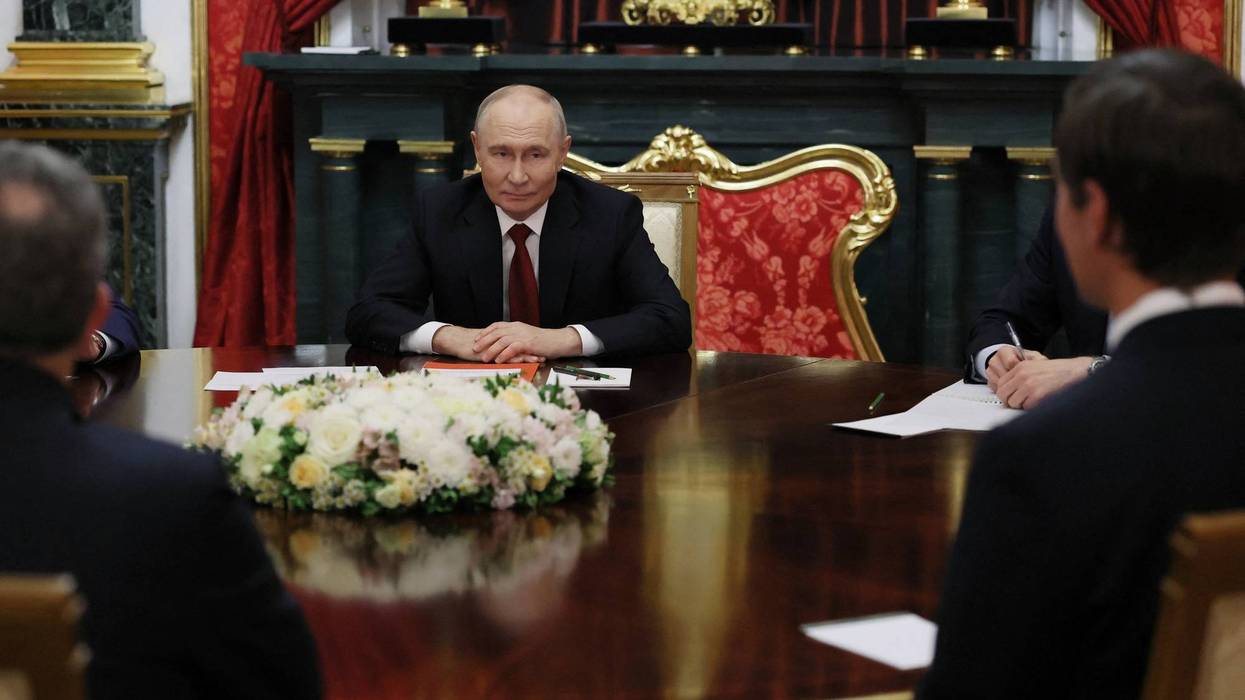
"He's helping fund Russia's war machine, while our allies pay the price," said one congressional Democrat.
Democrats in Congress and Ukrainian President Volodymyr Zelenskyy on Friday swiftly condemned US President Donald Trump's plan to secure diesel from Russia in hopes of combating fuel prices that have skyrocketed due to his illegal war on Iran.
"I have just concluded a highly successful discussion with President Vladimir Putin, of Russia, wherein it was agreed that Russia will immediately supply over 300,000 Tons of Diesel Fuel to the American and Global Marketplace, another 500,000 Tons during the month of November, and 1,000,000 Tons immediately thereafter," Trump wrote on his Truth Social platform, with the US midterm elections just weeks away, and voters frustrated by the country's affordability crisis.
"Additionally, based on the condition of their Diesel Refineries, Russia will then deliver, within a short period of time, 3,000,000 Tons of Diesel Fuel," Trump said. "Between our TOTAL CONTROL of the Strait of Hormuz, and this great announcement on Russian Energy, Diesel Prices for Americans and, indeed, the World, will be COMING DOWN, IN RECORD NUMBERS, AND FAST! Lower prices for Americans, especially our Great Farmers, Ranchers, and Truckers, is my Greatest Priority. This is a very big and important announcement. Additionally, it must be understood, that Iran will not have a Nuclear Weapon!"
After Trump's post, the Department of the Treasury's Office of Foreign Assets Control issued a general license "authorizing transactions related to the sale, delivery, offloading, and importation of diesel" from Russia—which launched a full-scale invasion of neighboring Ukraine in 2022. In response, Congress has appropriated over $170 billion to help Ukraine.
The Associated Press pointed out that Trump announced the deal with Putin after "he signed a sweeping Russia sanctions law last month that aimed at clamping down on Russia's energy revenues," and as "his envoy Steve Witkoff and son-in-law Jared Kushner were meeting with Ukrainian officials in Miami to discuss a proposal to try to end the Russia-Ukraine war."
In a lengthy statement, the Ukrainian president warned Friday that "any easing of sanctions against Russia without a clear and lasting de-escalation agreement with Russia is an obvious weakness. It plays into Russia's hands—allowing it to kill more, wage war for longer, have even less respect for America, and inflict even greater losses and damage on the world."
US Senate Minority Leader Chuck Schumer (D-NY) declared that "Trump is doing a deal with the devil to try to help his flailing political fortunes from the shockingly high diesel prices caused by his own reckless, illegal war in the Middle East. This filthy deal will only aid and abet the same Putin who is helping the Iranians to target and try to kill American troops in the Middle East and who illegally and viciously invaded our ally Ukraine."
According to an online tracker launched by Brown University's Costs of War Project, since Trump started bombing Iran without congressional authorization in February, Americans have paid over $130 billion more for fuel—$71.74 billion for gasoline and $58.56 billion for diesel—or nearly $1,000 per household.
Several other Democratic lawmakers from both chambers of Congress—which Democrats hope to reclaim from Trump's Republican Party in November—were also critical, including Sen. Richard Blumenthal (D-Conn.), who said that striking a deal "with a murdering dictator" to lift sanctions "is an embarrassment and makes us complicit in Putin's war against Ukraine."
"This poorly concealed attempt to mitigate the havoc caused by Trump's illegal war in Iran will only benefit the Chinese and Russian economies, and lead to the slaughter of more innocents in Ukraine," he argued. "The president should rescind this agreement immediately. To the American companies considering taking Putin's blood money: Congress is watching."
Denouncing Trump's announcement as "a disgrace," Sen. Elizabeth Warren (D-Mass.) said: "You know how Trump could bring down gas and diesel prices? By ending his illegal war with Iran. Instead, he's going to help fund Putin's war machine."
Sen. Andy Kim (D-NJ) described Trump's approach as "desperate and shortsighted," adding: "Trump ran on America First but has no idea how to actually deliver for the American people. We wouldn't be in this mess without his wasteful war with Iran. We need to build opportunity for Americans with our foreign policy, not Putin. End this war and not a single dime to Russia."
House Foreign Affairs Committee Ranking Member Gregory Meeks (D-NY) also slammed the president's reversal on sanctions against Russia, stressing that "instead of putting economic pressure on Putin for his invasion of Ukraine, Trump continues to appease him. His disastrous Iran War has sent gas and diesel costs soaring, and Americans are paying the price."
Congresswoman Madeleine Dean (D-Pa.) similarly said: "Desperate to escape the consequences of his failed Iran war, Trump is preparing to stab Ukraine in the back and buy diesel from Putin. He's helping fund Russia's war machine, while our allies pay the price."
"California will not be intimidated by Trump's fear campaign. He's afraid because he knows he's losing," said Los Angeles Mayor Karen Bass.
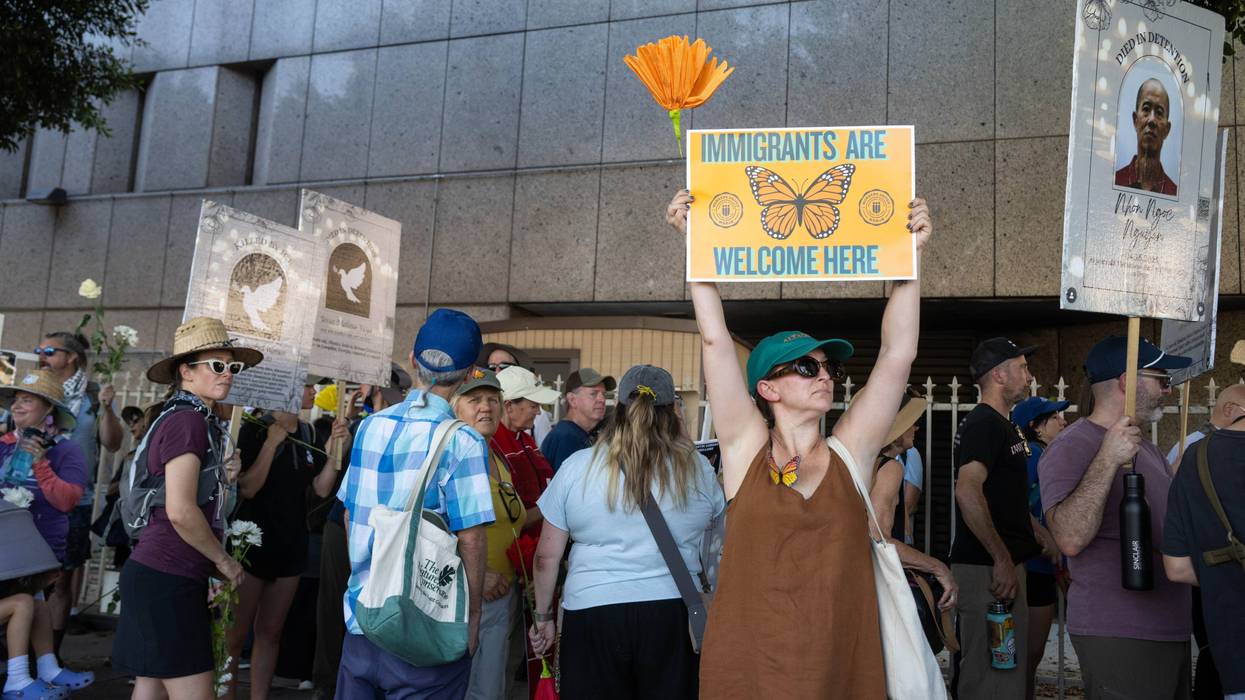
Politicians and activists are denouncing the Trump administration for initiating a surge in federal immigration enforcement operations less than a month before the 2026 midterm elections.
According to a Wednesday report in the Washington Examiner, US Immigration and Customs Enforcement (ICE) has launched an operation expected to last for six weeks that is targeting undocumented immigrants regardless of whether they have a past criminal record.
The Examiner's sources said that ICE officers have been "told to go after anybody," with one source saying that the agency's management wants "numbers."
Democratic California Gov. Gavin Newsom, a potential 2028 presidential candidate, on Thursday condemned the ICE surge in a social media post, accusing President Donald Trump of "using fear and panic as a weapon."
"No president is above the Constitution," Newsom wrote. "No one in this country is without rights. California will stand up for our communities and hold federal agents accountable. Know your rights and exercise them safely."
Rep. Robert Garcia (D-Calif.), ranking member of the House Oversight Committee, called for ICE to be abolished because of the agency's continued "assault on immigrants and US citizens with no criminal history."
Rep. Pete Aguilar (D-Calif.) called the current ICE surge "alarming," but warned the agency that its days of consequence-free lawlessness are coming to an end.
"House Democrats will continue to demand oversight over this out of control agency," Aguilar wrote, with the November midterm elections just weeks away. "Accountability is coming."
Sen. Alex Padilla (D-Calif.) released a statement accusing the Trump administration of conducting an "arrest first, questions later" policy that is sweeping up documented immigrants and even US citizens.
Los Angeles Mayor Karen Bass drew a straight line between the California ICE operation and Trump's declining political standing, as polling averages show his approval numbers hitting record lows.
"California will not be intimidated by Trump's fear campaign," Bass wrote. "He's afraid because he knows he's losing. My office has your back. Stay safe, know your rights, protect your neighbors, and vote if you're eligible."
Joel Payne, chief communications officer for MoveOn, similarly linked the ICE campaign with midterm elections.
"No one is safer because ICE is terrorizing and violently hunting down our neighbors," said Payne. "The surge of ICE activity in California is a clear attempt to intimidate Latino communities and force them to stay home in the midterm elections. It won’t work."
"I think he did great because it's impossible for Republican Mike Rogers to defend the most dangerous, reckless, and extreme president in the history of the United States."
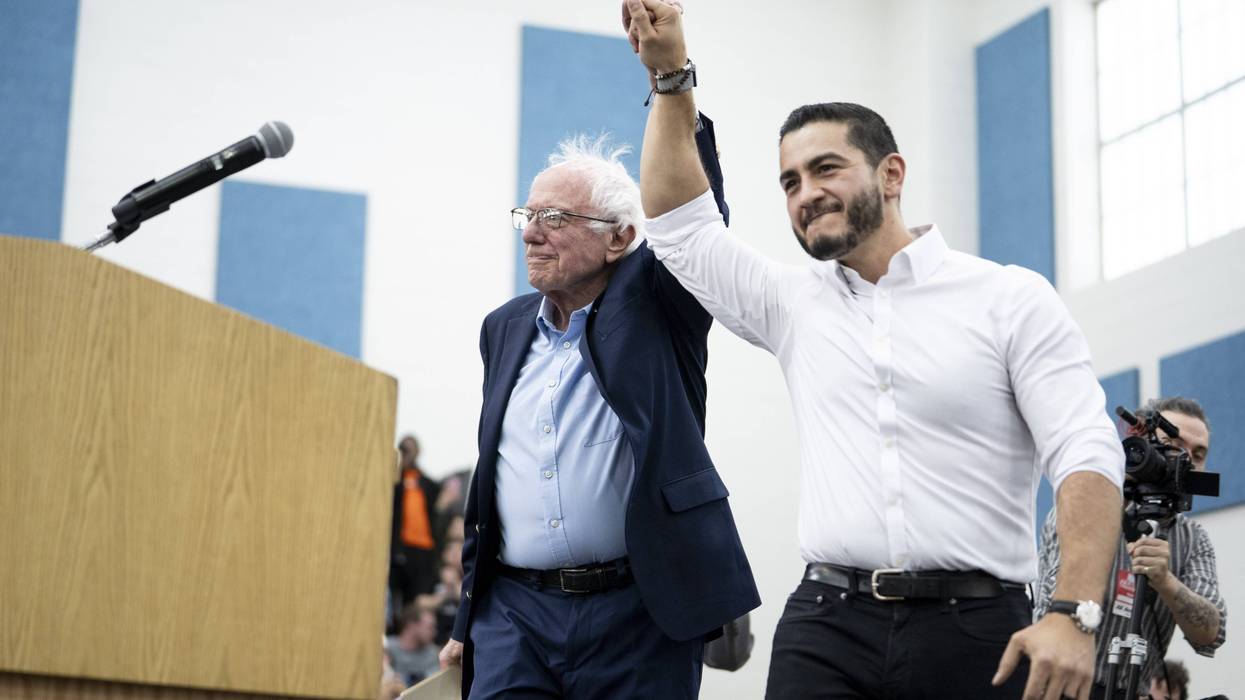
Sen. Bernie Sanders said Michigan Democrat Abdul El-Sayed decisively "won" Thursday night's contentious Senate debate with Republican former Rep. Mike Rogers, whom he leveled with attacks on his support for President Donald Trump's unpopular war with Iran and tariff regime.
Two public polls taken after the debate by the Detroit Free Press and WOOD-TV both show three-quarters of voters agreeing that El-Sayed prevailed.
During an interview with CNN's Kaitlan Collins following the debate, Sanders (I-Vt.), who has enthusiastically backed El-Sayed's bid for the Senate, argued that there was a simple reason why.
"I think Abdul did great," Sanders said. "I think he did great because it's impossible for Republican Mike Rogers to defend the most dangerous, reckless, and extreme president in the history of the United States."
Watch the full clip below:
The Michigan race is among the most closely watched for the November midterm elections, in which Democrats are trying to reclaim majorities in both the Senate and House of Representatives.
"No child should have to sit and watch while masked officers open fire on his father."
Two top progressive Democratic leaders were among those demanding an end on Friday to the 23-year-old federal agency that has provoked outrage and fear across US communities over the past 21 months under Trump administration—most recently on Thursday night, when a US Immigration and Customs Enforcement agent fired seven shots into a car being driven by an immigrant in New York City, while his 5-year-old son sat in the back seat.
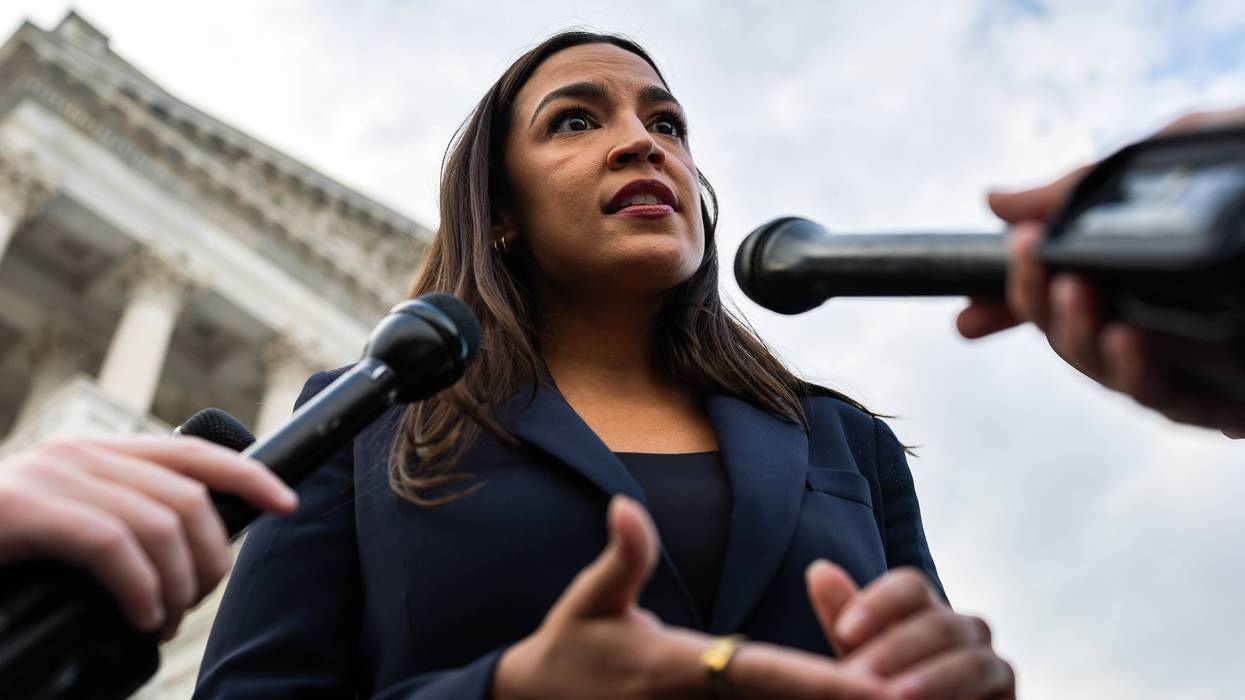
"ICE’s already unwelcome presence in our city has been growing more escalatory and dangerous by the day. Today’s shooting is a grave development that requires a swift and immediate response to protect the safety of all New Yorkers," said US Rep. Alexandria Ocasio-Cortez (D-NY), whose district lies near Marble Hill, the site of the shooting of 28-year-old Oscar Belgal.
Belgal was taken to a nearby hospital and treated for injuries to his neck before ICE agents took him away in an unmarked vehicle. His son was physically unharmed and was in the care of relatives on Friday, but a number of Democratic officials, including New York City Mayor Zohran Mamdani, condemned the agency for leaving the child "traumatized and terrified."
"ICE is a rogue, lawless paramilitary and surveillance agency," said Ocasio-Cortez, who has been named as a potential 2028 presidential candidate or a contender for US Senate in New York, where Senate Minority Leader Chuck Schumer (D-NY) is up for reelection in 2028.
"It does not belong in New York City and it should not exist in the United States of America," said Ocasio-Cortez. "Abolish ICE.”
Rep. Ro Khanna (D-Calif.), another potential candidate for president in 2028, joined the congresswoman in calling for ICE to be abolished—a demand once dismissed as a fringe viewpoint, but now shared by about half the country, including 77% of Democratic voters and 52% of independents.
Khanna said that Democrats in Congress must take action after the midterm elections, which are widely expected to put them in control of at least one if not both chambers of Congress.
"No child should have to sit and watch while masked officers open fire on his father," said Khanna. "House Democrats have a duty when we take the majority. Get ICE agents off our streets. Keep them away from our children. Abolish ICE."
No child should have to sit and watch while masked officers open fire on his father. House Democrats have a duty when we take the majority.Get ICE agents off our streets. Keep them away from our children.Abolish ICE. https://t.co/XW1mBz00dV
— Ro Khanna (@RoKhanna) October 9, 2026
A federal judge in New York City ordered ICE not to deport Belgal, an immigrant from the Dominican Republic, while the court considers an emergency petition requesting his release from detention.
Agents approached Belgal when he was parked in front of a fire hydrant on West 225th Street. The officers were dressed in construction vests and had face masks on, and one was wielding a long gun on the busy street where children were walking home from school.
Rep. Yassamin Ansari (D-Ariz.) noted that ICE's use of "disguises and masks" was not an isolated incident in Marble Hill, with some posing "as electricians in Phoenix last month to arrest a man in his own home."
Belgal was reportedly pulling away when an officer shot at him. It is against Department of Homeland Security policy to shoot into a moving vehicle, with limited exceptions.
Rep. Ayanna Pressley (D-Mass.) called on President Donald Trump and Secretary of Homeland Security Markwayne Mullin to "hold rogue ICE agents accountable."
"What type of president and country not only allows, but causes, our children to be traumatized?" said Pressley. "Abolish ICE NOW."
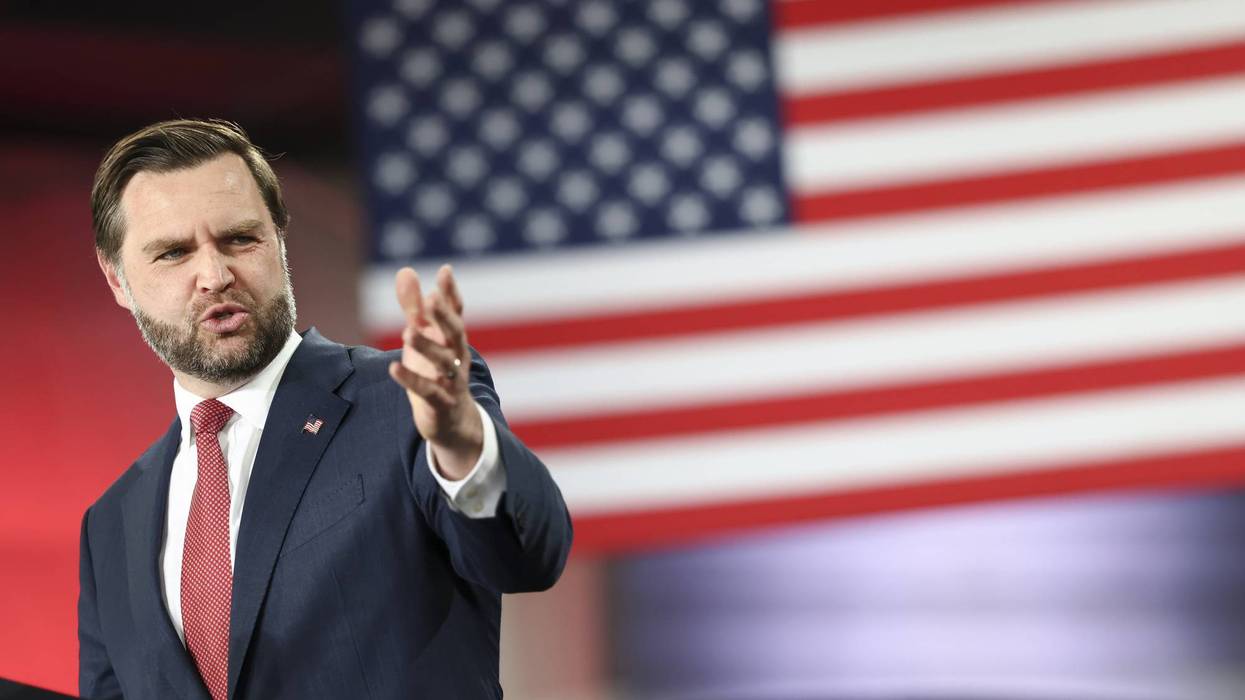
"The public execution even of one who has done grave harm will only further undermine the moral fabric of our nation and be a blight on the conscience of its people," Archbishop Paul Coakley.
While US Vice President JD Vance—a Catholic convert—suggested on Friday that the administration may not actually livestream a firing squad execution at a military base in December, the church's top bishop in the country denounced the widely decried plan.
US Secretary of Defense Pete Hegseth pledged this week to make the execution of Fort Hood mass shooter Nidal Hasan "public," and officials said that would mean a livestream. As Religion News Service noted, the Pentagon chief is an evangelical Christian who has often spoken about his faith and "attends a church led by Pastor Doug Wilson, a self-described Christian nationalist."
On Friday, the vice president—who recently published a book about his religious experiences, including his conversion to Catholicism—told reporters that despite those statements about a livestream, "I don't know that that's actually gonna happen."
Vance argued that Hasan, a former Army major and doctor, committed "the worst terrorist attack on American soil outside of 9/11," but also said that "if it's ultimately livestreamed, I'm not gonna be watching it."
Meanwhile, using President Donald Trump's preferred term for the Department of Defense, Archbishop Paul Coakley, president of the US Conference of Catholic Bishops, said in a statement that "it is with shock and great sorrow that I have learned of the Department of War's decision to publicly livestream the execution of Nidal Hasan."
"Our God is the God of life. In no way can Hasan's actions be condoned, but this decision is a barbaric promotion of a culture of death and must be reconsidered. The word of God exhorts us: 'Do not repay anyone evil for evil' (Romans 12:17)," declared Coakley, a "conservative culture warrior" elected to his leadership role last year.
"The public execution even of one who has done grave harm will only further undermine the moral fabric of our nation and be a blight on the conscience of its people," he added. "I pray for the intercession of Our Lady of Good Counsel that we as a nation may always choose life even in the most trying times and circumstances."
Coakley joined a growing chorus of critics who have condemned the Pentagon plan, including the Office of the United Nations High Commissioner for Human Rights, which said Friday that "the livestreaming of an execution is tantamount to a public execution and would breach the absolute prohibition of torture."
American Immigration Council senior fellow Aaron Reichlin-Melnick, who had blasted the livestream decision on Thursday, called the archbishop's statement a "strong response from the Catholic Church."
James Martin, a Jesuit priest and editor at large of America Magazine, explained that "the Catholic Church teaches that the death penalty is 'inadmissible,' primarily because every human being has God-given dignity, even a murderer, even a mass murderer. The televising of an execution is barbarism of the worst kind, offering up death as entertainment."
"Some Catholics still reject Pope Francis' magisterial pronouncement on the death penalty, which is now included in the Catechism," he noted. "But opposition to the death penalty, grounded in the respect for all human life, is not a brand new doctrine. Rather, it is one that took time to develop, as the church came to understand more deeply the innate dignity of every human life."
Sharing Coakley's comments on social media Friday, journalist Paul Blest wrote that "this happening so soon after the botched Tennessee execution is creating the conditions for real momentum against the death penalty."
Tennessee last week botched two attempts to kill Christa Pike with injections of pentobarbital, after which she was rushed to the hospital. Pike's legal team said Thursday that she "continues to experience cognitive challenges" but is taking "limited steps" with assistance. While Republican Gov. Bill Lee has responded by halting executions and ordering a probe, the incident has fueled fresh calls for the US to outlaw the death penalty at the state and federal level.
The Vatican's secretary of state, Cardinal Pietro Parolin, also weighed in on the livestream plan, saying Friday that "it is truly incomprehensible that anyone would want to use this method in this day and age. I do not know for what purpose. It is certainly unacceptable to turn death into a spectacle. However guilty the person may be, there are other ways."
"The church's position is one of total opposition to the death penalty. It is incompatible with human dignity and does not serve as a deterrent," Parolin said, acknowledging Coakley's comments and pledging that "there will be a statement from the Holy See."
As the Catholic leaders and others from various faiths spoke out against the Defense Department plan, Robert Jeffress, a Texas-based American Southern Baptist pastor and televangelist, wrote on social media that "I support the Pentagon's decision to livestream the execution of mass murderer Nidal Hasan. Capital punishment is commanded by God in Genesis 9:6 to remind people of the sanctity of human life. The more people that can see that truth illustrated through a public execution, the better."
Christa Brown, a former lawyer, sexual abuse survivor, and author of the memoirs This Little Light and Baptistland, responded: "Livestreaming an execution is barbaric. And no amount of Bible verses will change that."

"Accountability cannot be swept under the rubble."
A coalition of more than 100 humanitarian, human rights, and civil society organizations on Friday said that the Gaza ceasefire agreement signed one year ago exists in "name only" amid continued Israeli attacks on the enclave.
The groups noted that Israeli military operations over the last year have killed at least 1,400 Palestinians, including more than 300 children, despite a supposed ceasefire being in effect.
The Israeli military has also pushed Palestinians "into an increasingly small and overcrowded area" by moving forces beyond the withdrawal line agreed to in the ceasefire plan, the groups said.
In addition to outlining the toll on civilian life, the groups also pointed to extensive damage to civilian infrastructure, pointing to recently published satellite images showing "neighborhoods reduced to rubble, homes flattened, and agricultural land razed."
Jan Egeland, secretary general of the Norwegian Refugee Council, called it "utterly shameful" that so little had improved for Gaza residents since the ceasefire went into effect last year.
"Families are still being forced to make impossible choices," said Egeland, "between sheltering in damaged and dangerous buildings or living in tents facing unbearable temperatures. Israeli restrictions are still preventing the required equipment or materials, which are the only ways for communities to begin rebuilding their lives."
Inger Ashing, CEO of Save the Children, said the reality on the ground in Gaza shows that "a ceasefire is meaningless if children are still being killed and families are still unable to rebuild their lives."
"Governments that backed this agreement must use their influence to stop the killing and ensure children can access food, healthcare, shelter, and education," Ashing emphasized. "Gaza's children have a right to safety and a future. Governments have the power to help secure both, and they must use it."
Agnes Callamard, secretary general of Amnesty International, similarly called upon the international community to take responsibility not only for helping Palestinians, but also punishing Israel for violating the ceasefire plan.
“Accountability cannot be swept under the rubble," said Callamard. "The recovery and future of Gaza cannot be separated from a framework grounded in international law, justice, and the rights of victims. The persistent failure to hold Israel accountable and press Israel to comply with the International Court of Justice’s binding orders continues to fuel the atrocity crimes on a mass scale against Palestinians."
The groups' assessment of the ceasefire deal was echoed by Shayna Lewis, deputy director of Win Without War, who said on Friday that "the genocide continues" one year after the agreement was signed.
Lewis pointed the finger directly at US President Donald Trump for the continued suffering, arguing that the ongoing bloodshed in Gaza is his "peace plan in action."
"The ceasefire agreement failed to include any real accountability mechanisms that might restrain the Israeli government’s aggression in Gaza," Lewis said. "Moreover, his administration refuses to hold [Israeli Prime Minister Benjamin] Netanyahu’s government to its word on ending bombings, withdrawing troops, or expanding humanitarian access."
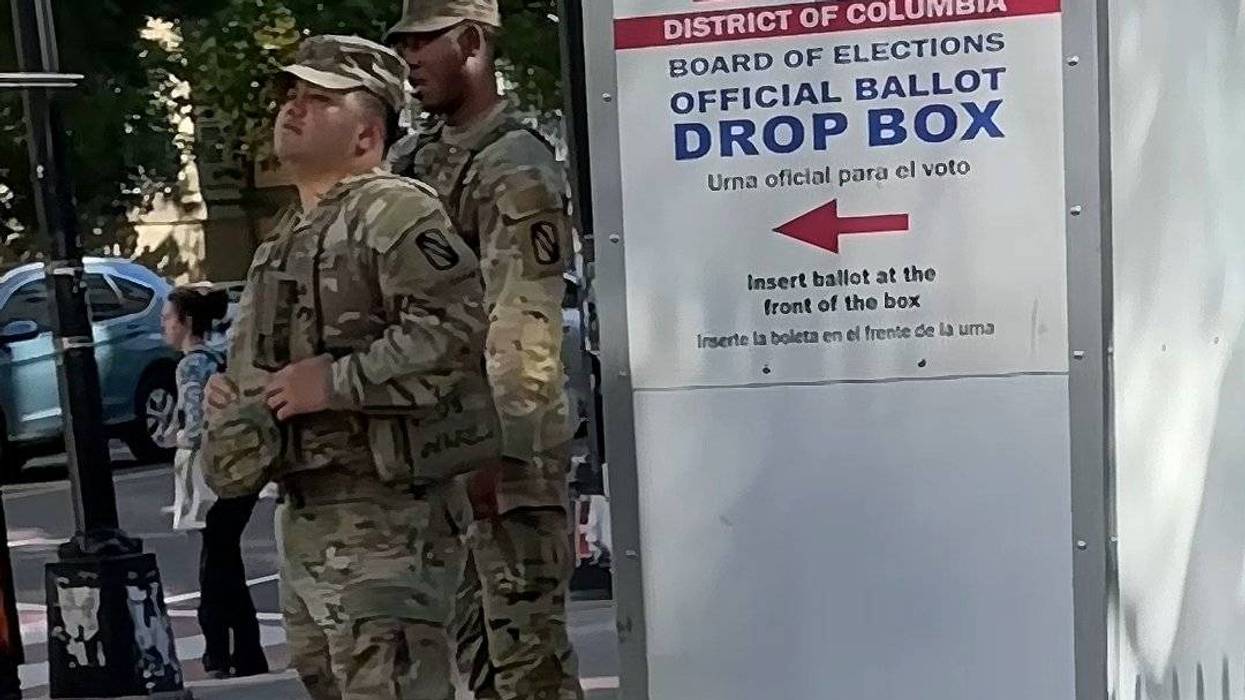
"Armed troops do not belong near ballot boxes," the head of the District of Columbia ACLU told Common Dreams.
Amid fears that President Donald Trump will send armed agents to intimidate voters during the midterms, the DC Board of Elections told Common Dreams on Friday that it is responding to complaints of National Guard troops stationed outside a ballot drop box near downtown Washington shortly before voting was set to open.
On Thursday, Bryan K. Randolph, a Washington, DC-based political and legal commentator, posted a video to TikTok showing what he said were three members of the National Guard stationed in front of a ballot box outside the Foggy Bottom Metro station, which is located on the campus of George Washington University.
"I stood and watched for a few minutes before I watched this video," Randolph said. "They were there for at least a few minutes. I don't know for how much longer they'd been there before that."
@brynodc 10/8 National Guard at Ballot Box, Washington, DC. Foggy bottom metro.
♬ original sound - BrynoDC
He said that minutes after he began filming, the troops left, possibly because they saw him recording.
Federal law explicitly prohibits the presence of "any troops or armed men at any place where a general or special election is held" unless their presence is necessary to repel armed enemies of the United States.
Though the statute does not specifically mention ballot drop boxes, legal experts have argued that the phrase "any place" means it should apply not just to traditional polling places, but also ballot drop boxes, election offices, and ballot counting facilities.
While he said it was unclear why the troops were stationed at the ballot box, Randolph noted that it was "a giant white box with the word 'ballot' pretty hard to miss," adding that "they clearly, at best, have not been told to stay away."
A spokesperson for the DC Board of Elections confirmed to Common Dreams that it "has received complaints regarding National Guard personnel posted near a ballot drop box next to the Foggy Bottom-GWU Metro station."
"We are addressing the concerns with the National Guard directly and have requested that they impose limitations on the placement of National Guard service members near drop boxes and other voting locations in the District," she said.
Joint Task Force-District of Columbia, the military command overseeing National Guard operations in the capital, did not respond to a request for comment.
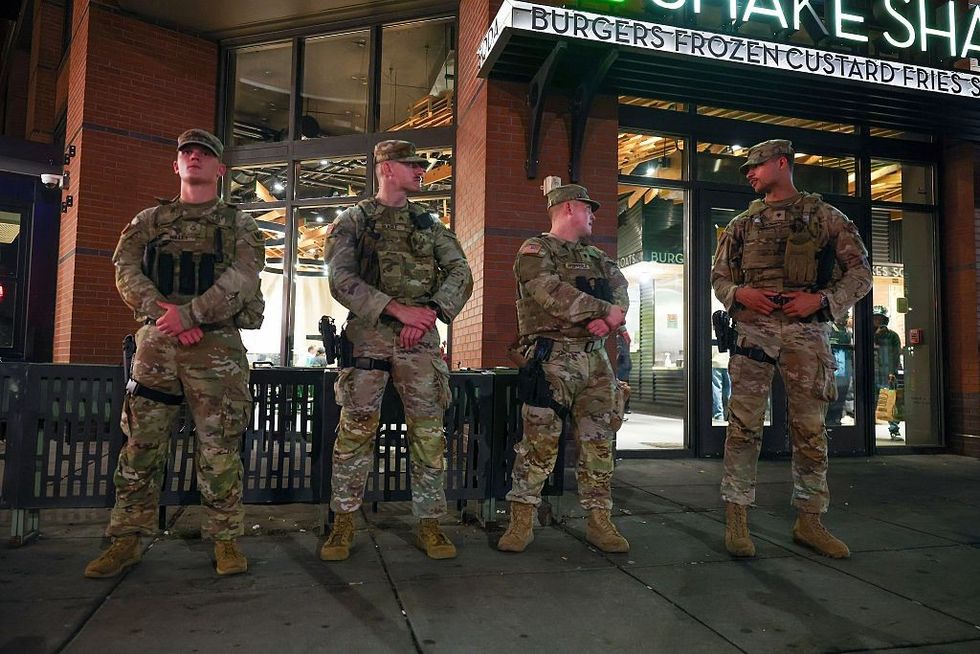 National Guard Members patrol 14th Street, working with Metro police on August 24, 2025, in Washington, DC. (Photo by Tasos Katopodis/Getty Images)
President Donald Trump deployed the National Guard to the streets of the nation's capital last summer. The troops have remained despite widespread public opposition and a federal judge's ruling that the deployment was unlawful, which an appeals court subsequently put on hold.
Asked about the possibility of deploying troops to polling places earlier this year, Trump did not rule it out. He has also lamented that he did not send National Guard troops to seize election materials while he tried to overturn his loss in the 2020 election.
Voting rights experts have warned about possible plans by Trump to use federal troops or agents—including US Immigration and Customs Enforcement (ICE) and the National Guard—to interfere with November's midterm elections. Though elections are administered by states under the Constitution, Trump has said that Republicans should "nationalize" voting.
Dan Herman and Devon Ombres, two national security and legal policy experts at the Center for American Progress, said that "there is little to no safe or democratic way for the military to be involved with the elections process."
"Voters may stay home if they fear military presence. Ballots may no longer be trusted if a machine’s chain of custody is broken. Military deployments elsewhere in a city might prevent voters from reaching their polling site in time," they wrote in a brief published Friday by Just Security.
The recording shared on Thursday is not the first instance of National Guard personnel seen gathered around ballot boxes in DC. In June, Rep. Eleanor Holmes Norton (D-DC), the nonvoting delegate from DC in the House of Representatives, demanded answers about another video in which a resident confronted several troops who were seen outside a drop box.
Asked whether they'd been told to stay away from the boxes, one of the Guard members responded, "No. Not at all."
"The fact that Guard personnel reportedly had not been instructed to avoid ballot drop boxes suggests a troubling lack of awareness by leadership of the impact these deployments are having on the district and its residents," Norton said.
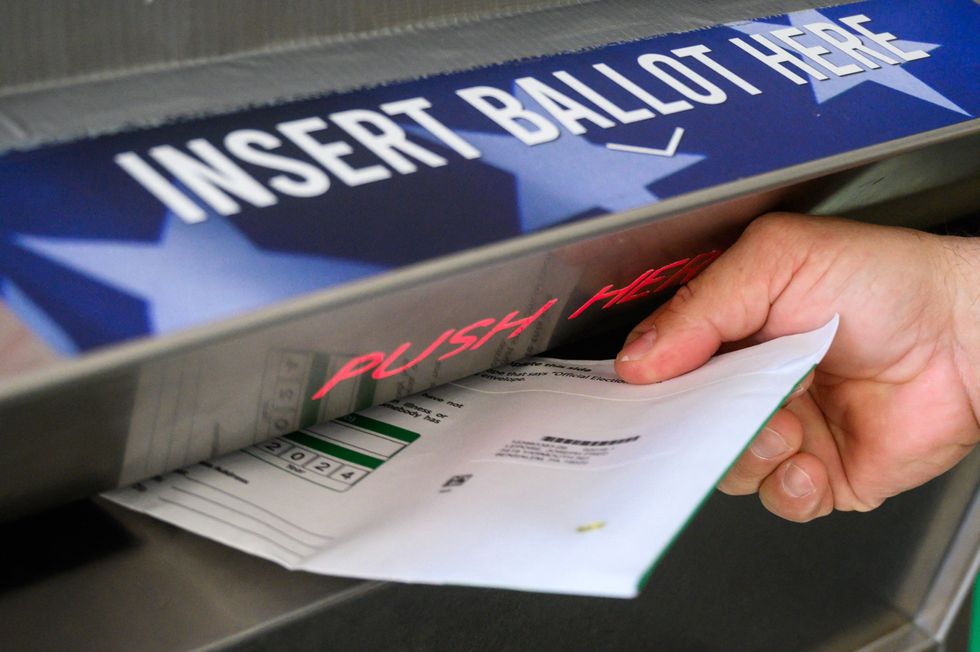 A voter uses a ballot drop box at the Bucks County Administration building voting on demand and ballot drop center in Doylestown, Pennsylvania on October 31, 2024. (Photo by Ed Jones/AFP via Getty Images)
With Republicans in Congress projected to take heavy losses in the midterms, proponents of his efforts to overturn his last election defeat have reportedly met with Trump in recent days, urging him to declare a "national emergency" that they claim would allow him to assert direct authority over the elections, an idea disputed by legal experts.
One plan that has reportedly circulated among election deniers has involved declaring the Insurrection Act, which they claim would allow Trump to flood polling locations with military and federal law enforcement.
While the Insurrection Act would permit some domestic law enforcement by the military, Herman and Ombres emphasized that it would not override the laws restricting troops from polling locations.
"Armed troops do not belong near ballot boxes," Monica Hopkins, executive director of the ACLU of the District of Columbia, told Common Dreams. "At minimum, troop presence at the ballot box creates the appearance of voter intimidation and risks discouraging DC residents from exercising our fundamental right to vote."
"The deployment of National Guard into the District without the consent of our local government is an affront to democracy here and around the nation," she said. "National Guard troops must go home."
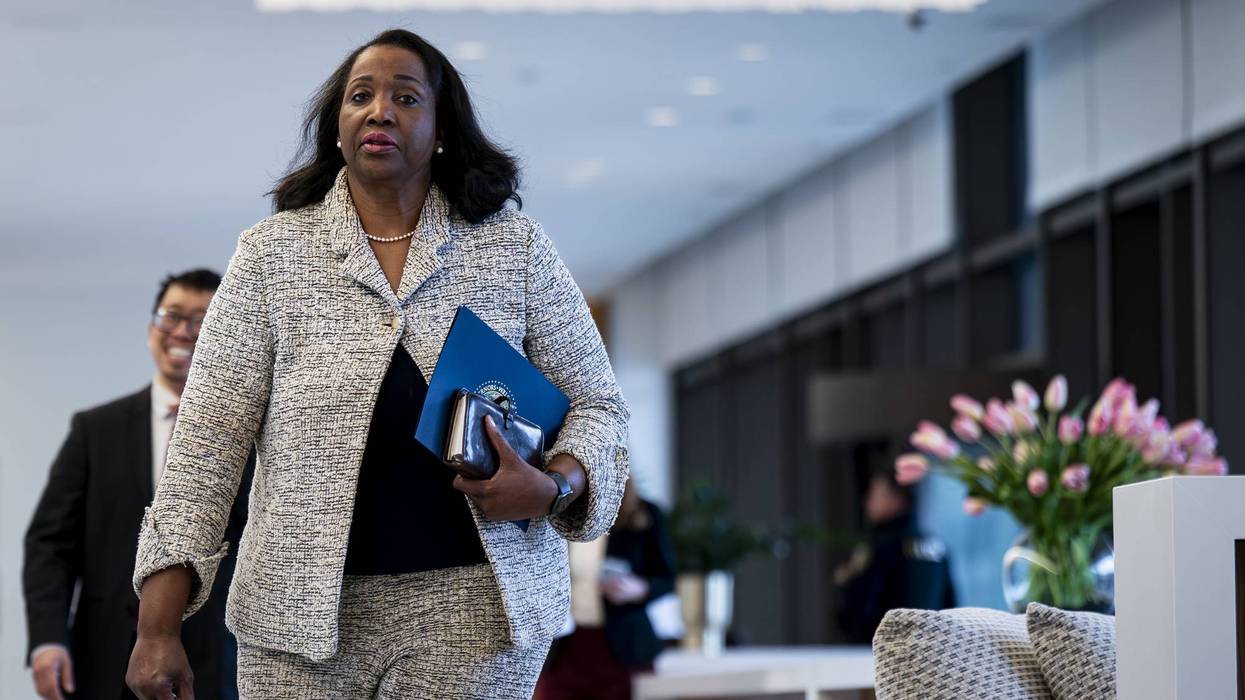
Sen. Elizabeth Warren said President Donald Trump's formation of a committee to investigate cook is part of his "dangerous quest to illegally take over our nation’s central bank."
Sen. Elizabeth Warren, the top Democrat on the Senate Banking Committee, said Friday that President Donald Trump's formation of a new committee to investigate Federal Reserve Gov. Lisa Cook amounts to "an illegitimate show trial in his dangerous quest to illegally take over our nation’s central bank."
"Instead of playing judge in a kangaroo court of his own making, Trump should end the war in Iran and cancel his chaotic tariffs," Warren (D-Mass.) said after the White House announced a "committee of inquiry" to investigate allegations that Cook "made false statements in connection with one or more mortgage instruments." Cook, a frequent target of the president's, has denied the White House's repeated accusations that she committed mortgage fraud.
The White House said that the new committee—which will consist of three officials including Trump economic adviser Kevin Hassett and the Trump-appointed acting director of the Office of Government Ethics—will hold an in-person hearing at the White House on November 5 to "consider the evidence and allegations against Gov. Cook."
In a Friday statement, Cook's lawyers said they "have grave doubts that this 'hearing' is a legitimate one that would conform to the law."
"If it is anything close to objective, the conclusion will be that Gov. Cook did not commit mortgage fraud," said Abbe Lowell and Norm Eisen. "We have engaged with the White House to evaluate whether the process proposed has a possibility of being a genuine one and not simply a box-checking exercise."
Trump attempted to fire Cook last year but was rebuffed by the US Supreme Court after the Fed governor took legal action to prevent her removal. Under federal law, the president can only remove members of the Fed Board of Governors "for cause."
Critics argue that the Trump administration has concocted baseless mortgage fraud allegations against Cook to justify a politically motivated termination.
"Trump is escalating his smear campaign against Lisa Cook while turning the presidency into a personal ATM: crypto schemes, taxpayer-funded propaganda ads, cash for his family—the list could go on forever," Senate Minority Leader Chuck Schumer (D-NY) said Friday. "This has nothing to do with 'ethical concerns.' It’s about Trump trying to seize control of the Fed, something that would mean even more economic chaos for American families."
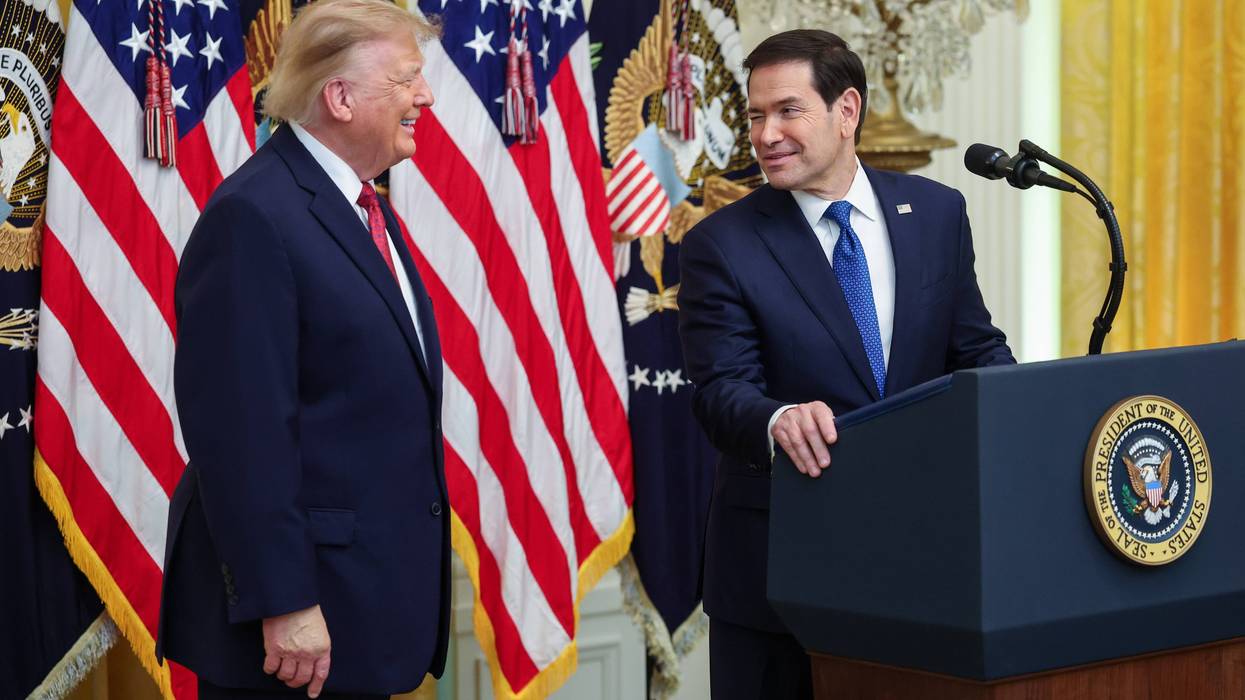
One US campaigner declared that "the Trump administration has taken a sledgehammer to the most important development in international justice in half a century."
Not long after a former International Criminal Court judge on Friday won the Nobel Peace Prize for "ensuring that war crimes, crimes against humanity, and genocide are prosecuted," US President Donald Trump—who has long sought the award—continued his administration's "campaign to dismantle" the ICC with new sanctions.
"Globalist experts that are an ocean away... want the International Criminal Court to do more, including the prosecution of American citizens and service members that are defending their country," US Secretary of State Marco Rubio claimed in a video posted on social media.
"They want to prosecute border patrol agents that are protecting our nation's borders, and they want to prosecute our elected leaders that are ensuring our national security," he continued. "President Donald Trump will never allow the International Criminal Court to prosecute Americans."
"We will ban transactions with this rogue court, cutting off their resources and crippling their ability to operate against us, because our message is clear: The United States and the American people are not subject to the jurisdiction of this fake ICC," Rubio said. "Both parties agree on this, but only President Trump has the resolve to take the action needed to end this threat once and for all."
"Either the ICC will end its threats, or we will end the ICC—and we expect our allies, many of whom are part of the ICC and that rely on American service members for their defense, to rein in this rogue court," he added. "If they do not, the United States will continue its campaign to dismantle the ICC piece by piece until Americans are threatened no longer."
The United States has never been a party to the Rome Statute, the treaty establishing the Hague-based tribunal to investigate genocide, crimes against humanity, war crimes, and the crime of aggression. Since 2002, a federal law known as the Hague Invasion Act has empowered the president to prevent the ICC from detaining US or allied personnel. Although the court has probed alleged crimes by US citizens, it has never prosecuted anyone from the United States.
Trump and Rubio have been particularly hostile toward the ICC and imposed a series of sanctions since the president returned to power last year. They are especially angry about the court's 2024 arrest warrants for Israeli Prime Minister Benjamin Netanyahu—who welcomed Friday's sanctions announcement—and his former defense minister, Yoav Gallant, over their ongoing US-backed assault on the Gaza Strip.
Israel's war on Gaza has killed over 74,000 Palestinians and has been widely denounced as genocide, including by a United Nations commission that was chaired by South African jurist Navanethem "Navi" Pillay, the recipient of the 2026 Nobel Peace Prize. In addition to serving on that panel and the ICC, she has been a High Court of South Africa judge, International Criminal Tribunal for Rwanda president, and UN high commissioner for human rights. She remains an International Court of Justice ad hoc judge.
Trump has publicly demanded the prize for years—while threatening to invade various nations, abducting a foreign leader, killing hundreds of people by blowing up dozens of boats on the high seas, and bombing more countries than any other US commander in chief this century, including Iran, where his and Israel's illegal war is ongoing. Late-night host Jimmy Kimmel, who often ridicules the president, even compiled a supercut of his frequent comments about the award on Thursday, in anticipation of Friday's announcement.
After Pillay was revealed as the winner, Trump predictably attacked her. However, rather than commenting directly, he shared a post on his Truth Social platform in which US lawyer David I. Schoen claimed that the selection committee "shamed itself beyond repair and demeaned the once great Nobel Peace Prize" by giving it to Pillay, calling her "an unabashed hater of America and Israel" who has "celebrated terrorists and rewarded Hamas."
Schoen also suggested that Trump should receive the prize for the Abraham Accords, as well as because "he is making best efforts to end the Russia/Ukraine war, to stop Iran, the number one sponsor of international terrorism, and he is trying to rebuild Gaza despite the terrorists' best efforts to control it."
Pakistani Prime Minister Shehbaz Sharif said Friday that the US leader "played a historic role in advancing peace in South Asia. His timely intervention helped bring Pakistan and India back from the brink and secure a ceasefire, that is holding till today. In recognition of his outstanding contribution, Pakistan had nominated President Trump for the Nobel Peace Prize."
Earlier this year, shortly after US troops invaded Venezuela to abduct President Nicolás Maduro and his wife, Cilia Flores, Venezuelan opposition leader María Corina Machado gifted her 2025 Nobel Peace Prize to Trump. Pillay joked to those applauding her on Friday that "if you clap a little bit more, I may share this prize with Trump."
"Navi Pillay has dedicated her career to defending human rights, fighting impunity and strengthening international justice," Alexis Deswaef, president of the International Federation for Human Rights, said Friday. "At a time when those who uphold international law are increasingly under attack, this award is a powerful reminder that justice is essential to peace, and that those who defend it must be protected."
While also celebrating Pillay's win, Amnesty International secretary general Agnès Callamard ripped the US war against the ICC on social media: "I am writing this from Nuremberg, where 80 years ago, American judges and lawyers played a crucial role in trying the highest Nazi leaders and commanders, and establishing the foundational principles of international criminal law. 80 years later, what a betrayal. The Trump administration's decision is appalling. But ultimately, it is not about them. It is about us."
The United States' "grotesque decision is a test for all European governments which have been tiptoeing, shying away from confronting and responding to the predatory actions from the Trump administration," said the French human rights leader. "They now need to rise to the moment. History demands of Europe that it stands for international justice and its institutions. There is only one possible response: impose immediately blocking orders. The US sanctions cannot and should not be implemented on European territory. This is not a USA moment. This is an 'Us' moment. Let's rise to it. Because humanity must win."
Isabelle Hayslip, advocacy associate at the US-based Democracy for the Arab World Now (DAWN), also highlighted that the European Union "has a tool built exactly for when rogue states use sanctions to further political aims: a blocking statute that can shield the court and Europeans from US sanctions."
"If states won't act now to protect the court as they have repeatedly vowed to do, then when?" Hayslip asked. "Every day they wait, European banks move closer to abandoning the court out of fear of Washington."
The European Commission—the EU's executive arm—said Friday that the bloc "has been a constant supporter" of the court, called the new sanctions "deeply regrettable," and pledged to "work closely with the ICC to ensure it continues to operate effectively."
"And we remain committed to working with all 125 states that are parties to the Rome Statute to preserve and respect its independence so that it can continue its vital mission," the commission continued. "As there is a six-month delay before the measures are applicable, there is room for dialogue. The EU stands ready to take any necessary measures to enable the court to carry out its work both in investigating and prosecuting war crimes and crimes against humanity, and to protect the interests of EU operators within the single market."
Noting that "ICC prosecutors also have tools when a state intimidates or retaliates to stop court officials from doing their jobs: The Rome Statute makes this a crime," DAWN's Hayslip argued that "they should investigate and prosecute Donald Trump, Marco Rubio, and other senior administration officials for obstructing justice."
Her organization and the Taxpayer Alliance Against Genocide previously took legal action in US court, suing over Trump's related Executive Order 14203 in July.
"In applying tools reserved for the most serious criminals to the world's only permanent international court, the US is claiming the power to jail for 20 years Americans who represent a victim, submit evidence, or handle payroll for the court," Raed Jarrar, DAWN's advocacy director, stressed Friday. "We have taken the Trump administration to court, because such brazen declarations trample the fundamental constitutional rights of millions of Americans. No president has that power."
The group's executive director, Omar Shakir, said that "by sanctioning the entire International Criminal Court, the Trump administration has taken a sledgehammer to the most important development in international justice in half a century."
Shakir warned that "US sanctions threaten to shut the last viable road to justice for millions of victims of serious crimes, from Gaza and Sudan to Afghanistan and Ukraine—all to shield Israeli officials who have perpetrated a genocide from justice."
The ICC itself forcefully condemned the Trump administration's latest "unprecedented" sanctions as "an attempt to obstruct the course of justice" as well as "an assault on the rule of law and on the very foundations of the international legal order which strikes at the simple principle that no one stands above the law."
ICC President Tomoko Akane vowed that "the court will continue to fully discharge its mandate, with independence and impartiality, acting only on the basis of the law and the evidence, for the sake of the countless victims of grave crimes."

Republicans' cuts to Medicaid and their refusal to extend enhanced Affordable Care Act subsidies are key factors in the coverage drop.
Independent healthcare analyst Charles Gaba on Thursday published an updated analysis estimating that up to 12 million Americans have lost their insurance coverage since the start of President Donald Trump's second term.
Gaba based his new estimate on updated data he compiled from recent reports for Medicare, Medicaid, and the Children's Health Insurance Program (CHIP), as well as some state enrollment data for Affordable Care Act (ACA) insurance exchanges.
In total, Gaba found that enrollment in Medicaid and CHIP has dropped by 6.2 million people since the start of Trump's second term, while enrollment in ACA exchanges is down by anywhere from 4.6 million to 6.1 million people, and enrollment in Basic Health Plans (BHP) is down by nearly 275,000 people over the same period.
While there are around 1.8 million more people enrolled in Medicare now than there were at the start of Trump's term, Gaba noted that this isn't nearly enough to make up for the loss of enrollment in other programs.
Adding everything up, Gaba estimated that "between 10.88 million and 12.40 million fewer Americans enrolled in a public healthcare coverage program as of June 2026 than in were as of January 2025."
As in prior analyses, Gaba examined the possibility that some of the people who lost coverage through these programs transitioned to employer-sponsored insurance, but deemed it "extremely unlikely... since unemployment is higher than it was in January 2025."
Over the last two years, Trump and congressional Republicans have taken a number of actions that have made healthcare less affordable and pushed people off coverage.
First, they cut spending on Medicaid by an estimated $900 billion over a 10-year period when they enacted the One Big Beautiful Bill Act in 2025. The Congressional Budget Office projects these cuts will leave more than 10 million fewer people enrolled in the program by 2034.
GOP lawmakers last year also refused to extend enhanced subsidies for insurance plans purchased through the ACA, even as insurers raised premiums on those plans by an average of 26% this year, according to an analysis published by KFF.
In a Thursday article published by Time, scholars Neale Mahoney and Abigail Sanchez of the Stanford Institute for Economic Research warned that the costs of private health insurance are set to spike even further in 2027.
"Employer health plan costs are projected to rise 8 to 10% next year," Mahoney and Sanchez explained, "the largest increase in more than 20 years and double the average increase of the 2010s."
The two researchers said there are three major reasons for the surge in insurance costs: The expiration of the enhanced ACA subsidies, an increase in premiums and out-of-pocket costs for employer-based insurance plans, and the upcoming Medicaid work requirements projected to push millions of people off the program.