
SUBSCRIBE TO OUR FREE NEWSLETTER
Daily news & progressive opinion—funded by the people, not the corporations—delivered straight to your inbox.
5
#000000
#FFFFFF
To donate by check, phone, or other method, see our More Ways to Give page.


Daily news & progressive opinion—funded by the people, not the corporations—delivered straight to your inbox.
The ruling creates a "dangerous regulatory gap that leaves consumers vulnerable and gives broadband providers unchecked power over Americans’ internet access," said one advocate.
Citing last year's U.S. Supreme Court decision that stripped federal agencies of their regulatory powers, an all-Republican panel on the U.S. Court of Appeals for the 6th Circuit on Thursday ruled that the Federal Communications Commission lacks the authority to reinstate net neutrality rules.
The panel ruled that broadband is an "information service" instead of a "telecommunications service," which is more heavily regulated under the Communications Act, and said the FCC did not have the authority to prohibit telecommunications companies from blocking or throttling internet content and creating "fast lanes" for certain web companies that pay a fee.
Last April the FCC voted to reinstate net neutrality rules, which were first introduced under the Obama administration but were repealed by former Republican FCC Chair Ajit Pai, who was appointed by President-elect Donald Trump.
The ruling cited by the 6th Circuit panel was Loper Bright Enterprises v. Raimondo, which overturned the so-called Chevron doctrine last year. Under the decades-old legal precedent, judges have typically deferred to federal agencies' reasonable interpretation of a law if Congress has not specifically addressed an issue.
"Applying Loper Bright means we can end the FCC's vacillations" between imposing and repealing net neutrality rules, said the judges on Thursday.
The ruling serves as "a reminder that agencies are going to be neutered across any and all industries," said one observer.
John Bergmayer, legal director for the free expression and digital rights group Public Knowledge, said that by "rejecting the FCC's authority to classify broadband as a telecommunications service, the court has ignored decades of precedent and fundamentally misunderstood both the technical realities of how broadband works and Congress' clear intent in the Communications Act."
The ruling creates a "dangerous regulatory gap that leaves consumers vulnerable and gives broadband providers unchecked power over Americans’ internet access," added Bergmayer. The decision could harm the FCC's ability to protect against everything from broadband privacy violations to threats to universal service programs for low-income and rural households.
Matt Wood, vice president of policy and general counsel for another media justice group, Free Press, said the ruling was "just plainly wrong at every level of analysis."
"In April, the FCC issued an order that properly restored the agency's congressionally granted oversight authority to protect people from any [internet service provider] discrimination and manipulation. That commonsense FCC order tried to ensure that the companies providing America with the essential communications service of this century don't get to operate free from any real oversight," said Wood.
Companies and industry groups that sued over the regulations, including the Ohio Telecom Association, "baselessly claim that any regulation will hurt their bottom line," Wood added. "Treating broadband like a common-carrier service does nothing to dampen or dissuade private investment in this crucial infrastructure. And the question for any court interpreting the Communications Act must be what is in the public's best interest, not just one industry sector's financial interests."
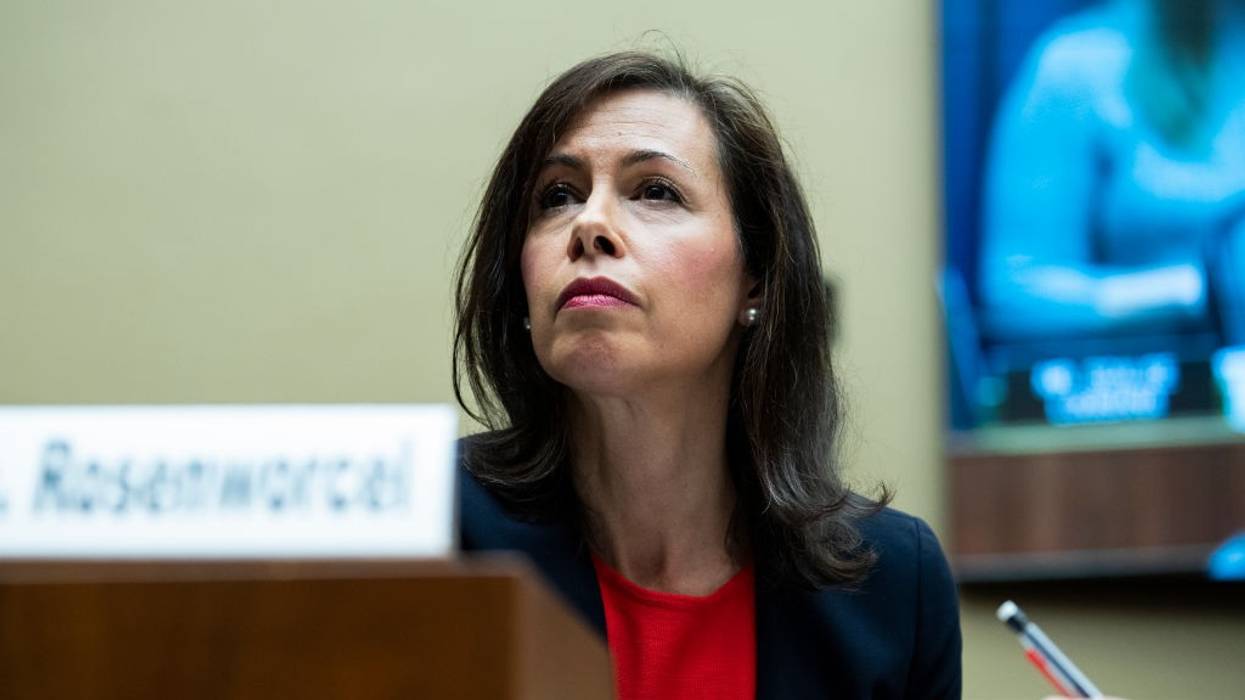
The groups, along with FCC Chair Jessica Rosenworcel, called on Congress to take legislative action to protect internet users and small web businesses from discrimination.
"Consumers across the country have told us again and again that they want an internet that is fast, open, and fair. With this decision it is clear that Congress now needs to heed their call, take up the charge for net neutrality, and put open internet principles in federal law," Rosenworcel said.
Congress must "clarify the FCC's authority—and responsibility—to protect the Open Internet and broadband users," said Bergmayer.
Bergmayer also noted that the ruling leaves states' ability to enforce their own net neutrality laws in place, and said the group "will continue to look to states and local governments to help lead on broadband policy."
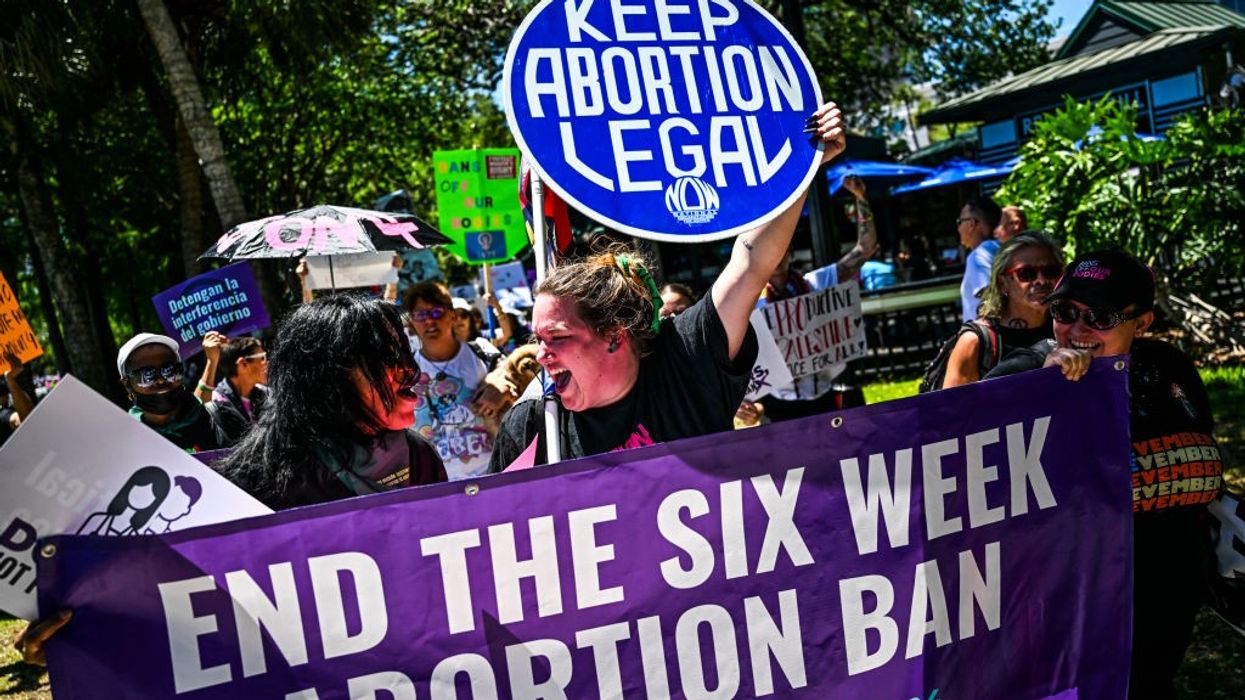
Another critic said that "this is the latest proof that there is no limit to how low DeSantis will stoop to censor free speech and punish dissent."
Federal Communications Commission Chair Jessica Rosenworcel on Tuesday called out a Florida agency for threatening a Tampa NBC affiliate with prosecution for airing an advertisement in support of a state abortion rights proposal on the November ballot.
"The right of broadcasters to speak freely is rooted in the First Amendment," Rosenworcel said in a statement. "Threats against broadcast stations for airing content that conflicts with the government's views are dangerous and undermine the fundamental principle of free speech."
Floridians Protecting Freedom's ad is designed to build support for Amendment 4, which if approved by voters next month would alter the Florida Constitution to outlaw pre-viability prohibitions on abortion care, including Republican Gov. Ron DeSantis' six-week ban, which took effect earlier this year and has already been shown to harm patients.
The 30-second ad features a Tampa resident who was diagnosed with brain cancer while pregnant. Caroline, who already had one child at the time, says that "the doctors knew if I did not end my pregnancy, I would lose my baby, I would lose my life, and my daughter would lose her mom."
"Florida has now banned abortion even in cases like mine," explains Caroline, who received abortion care in 2020, before the U.S. Supreme Court reversed Roe v. Wade and enabled bans like the one signed by DeSantis. "Amendment 4 is gonna protect women like me. We have to vote yes."
Florida journalist Jason Garcia revealed Monday that last week, John Wilson, general counsel at the state Department of Health (DOH), wrote to WFLA-TV vice president and general manager Mark Higgins, claiming that the ad contains information that is "categorically false" and constitutes a "sanitary nuisance," which could lead to criminal proceedings if it is not removed.
As HuffPost reported Tuesday:
It's unclear if the agency only sent the letter to the NBC affiliate, or to others as well. Either way, a threat like this could have a chilling effect on publicly advocating for the pro-choice measure, just weeks away from when it will be in front of voters. Florida's Department of Health did not respond to HuffPost's request for comment.
The sanitary nuisance law is meant to curb conditions that can threaten or impair Floridians' health. It normally pertains to issues like overflowing septic tanks and problematic garbage disposals.
Attorneys for Floridians Protecting Freedom swiftly sent a letter to WFLA leaders, arguing that the DOH interjection "raises serious First Amendment concerns—indeed, it reflects an unconstitutional attempt to coerce the station into censoring protected speech," and "the advertisement is true."
The DOH letter "vaguely outlines the limited instances where abortions are allowed in Florida but fails to provide any evidence showing that Caroline's statements are false," the lawyers wrote. "Caroline was diagnosed with stage four brain cancer when she was 20 weeks pregnant; the diagnosis was terminal."
Florida's ban has limited exceptions for abortions after six weeks—before many people even know they are pregnant. In cases of rape and incest, patients can receive care up to 15 weeks, if they can manage the burdensome paperwork. Abortions to protect the health or life of a pregnant person require two physicians to assert in writing that such care is necessary.
"The only instances where the Agency for Health Care Administration has provided guidance that abortions are permitted after six-weeks' gestation are when there is an immediate threat to the pregnant person's life," the lawyers noted. "Caroline's diagnosis was terminal. Practically, that means that an abortion would not have saved her life, only extended it. Florida law would not allow an abortion in this instance."
The group of attorneys is far from alone in criticizing the Florida DOH's attempt to get the ad off the air. Aaron Terr, director of public advocacy at the Foundation for Individual Rights and Expression (FIRE), told Popular Information that the department's letter stretches "the meaning of sanitary nuisance beyond recognition."
"Terr told Popular Information that even if the ad was false and violated Florida's sanitary nuisance law, the enforcement of the law against a political ad would be unconstitutional," the outlet added. "Terr notes that the First Amendment contains 'no general exception for false speech or misinformation, and that's because of the danger of the government having a general power to dictate what is true or false, especially when it comes to political speech.'"
As Slate's Mark Joseph Stern reported Monday:
Rebecca Tushnet, a professor at Harvard Law School and a First Amendment specialist, told me that the DeSantis administration's threat is "about as blatant a violation of the First Amendment as you'll see."
Jennifer Safstrom, director of the First Amendment Clinic at Vanderbilt Law School, condemned the administration's letter as an unconstitutional "weaponization of state law to suppress speech" that's "designed to have a chilling effect on advocates during a time critical to voter outreach." Alexander Tsesis, a professor at the Florida State University College of Law, said it seemed "absurd to threaten prosecution," and pointed out that stations' own "editorial decisions" are protected by the First Amendment. Ciara Torres-Spelliscy, a professor at Stetson Law, called the incident yet another episode in DeSantis' "long recent history of violating the First Amendment with abandon."
Seth Stern, director of advocacy of Freedom of the Press Foundation, similarly said in a Wednesday statement that "this is the latest proof that there is no limit to how low DeSantis will stoop to censor free speech and punish dissent."
"It comes on the heels of his efforts to rewrite defamation law to make it easier for the rich and powerful to bankrupt their critics, his Stop WOKE Act stunt, and other similarly unconstitutional nonsense," Stern noted. "A governor who is confident in his policies and secure in his leadership would welcome debate and correct statements he believes are misleading rather than trying to weaponize trash disposal laws against the free press."
"But DeSantis is not that governor. His administration's conduct would be silly if it weren't such a transparent bully tactic," he added. "Floridians care about the First Amendment, which is why DeSantis' outrageous censorship campaigns keep failing. We hope the news outlets he targets will not only ignore him but loudly shame him."
The governor has come under fire for various actions throughout the fight for Amendment 4. As Garcia highlighted on social media, while targeting Caroline's ad, "the DeSantis administration is running taxpayer-funded television commercials attacking Amendment 4 on ESPN, CNN, Fox News, The Weather Channel, and more."
The ads are part of what the ACLU of Florida has called an "unconstitutional misinformation campaign," which also includes a government website. Additionally, as Common Dreams reported last month, multiple state residents have had law enforcement come to their homes to confirm that they signed the petition to get Amendment 4 on the ballot.
"Today's ruling is a setback, but a temporary one," said one campaigner. "The nation's communications regulator must be able to oversee the nation’s communications infrastructure."
Net neutrality advocates on Thursday sharply condemned a U.S. appellate court decision blocking implementation of the Biden administration's broadband policy while a legal challenge launched by the telecommunications industry moves forward.
Federal Communications Commission Chair Jessica Rosenworcel joined with Commissioners Anna Gomez and Geoffrey Starks in April to reclassify broadband as a public service under Title II of the Communications Act—undoing damage done during the Trump administration.
Internet service providers (ISPs) are fighting to stop the FCC's order. After temporarily delaying the rules last month, the U.S. Court of Appeals for the 6th Circuit just granted a stay. Oral arguments aren't expected until October or November.
"The 6th Circuit's stay will leave Americans without critical net neutrality protections and leave the Federal Communications Commission without its rightful authority over broadband," warned U.S. Sens. Ed Markey (D-Mass.) and Ron Wyden (D-Ore.) in a joint statement Thursday.
"We need net neutrality to protect the free and open internet and ensure that internet gatekeepers cannot control what we see, who we talk with, and how we communicate online."
"That is unacceptable," added the senators, who have led the fight for reviving net neutrality rules in Congress. "We need net neutrality to protect the free and open internet and ensure that internet gatekeepers cannot control what we see, who we talk with, and how we communicate online."
Advocacy groups were similarly critical. John Bergmayer, legal director at Public Knowledge, said that "it is unfortunate that the court granted the ISPs' request for a stay of the FCC's net neutrality rules. These rules would bar broadband providers from throttling connection speeds, blocking websites, and discriminating in favor of preferred internet traffic."
"Millions of Americans have expressed support for these rules by submitting comments with the FCC urging the agency to enact these protections," he noted. "Consumers need net neutrality rules as well as the other consumer benefits provided by the FCC's recognition that broadband is a 'telecommunications' service, including online privacy, public safety and national security, and affordable, competitive broadband service."
"Despite this court's action, we remain confident that the FCC's rules—and classification of broadband as a telecommunication service under Title II of the Communications Act—will ultimately be upheld, just as they were before—or that Congress will step in to reinstate these popular and necessary protections," Bergmayer added.
Free Press vice president of policy and general counsel Matt Wood also characterized the stay as unfortunate but stressed that "we believe that the litigation to follow will dispel these unfounded phone-and cable-company arguments about Title II's supposed harms and about the commission's authority to classify broadband providers properly under the statute."
"Industry lobbyists and other net neutrality opponents have argued, loudly but cynically, that the Trump-era repeal somehow spurred broadband deployment and speed increases, claiming that the rules' presence impairs those upgrades. This is nonsense, as Free Press has shown time and time again by examining the companies' own financial statements and investor briefings," he highlighted. "Today's order unfortunately accepts the false premise that the FCC's rules prevent broadband providers from rolling out new products. ISPs make such claims only in court; they never make them to their investors."
"Today's ruling is a setback, but a temporary one. The nation's communications regulator must be able to oversee the nation’s communications infrastructure," Wood continued. "While we hit a procedural hurdle today, Free Press is determined to see the FCC's decision go into effect. The 6th Circuit will still need to evaluate the ISPs' and FCC's arguments in full when it reviews the case on the merits. We're confident that we will ultimately prevail in this case, even in the wake of this disappointing outcome and even in light of recent Supreme Court decisions aimed at weakening federal agencies' oversight."
Rosenworcel was also determined to defend the FCC's decision, declaring Thursday that "the American public wants an internet that is fast, open, and fair. Today's decision by the 6th Circuit is a setback but we will not give up the fight for net neutrality."
"Today marks the last day that internet service providers can continue to put profit over people," said one advocate.
Open internet advocates on Thursday applauded the Federal Communications Commission's long-anticipated vote to revive net neutrality rules and reestablish FCC oversight of broadband.
The 3-2 vote along party lines to reclassify broadband as a public service under Title II of the Communications Act came seven months after FCC Chair Jessica Rosenworcel announced the push in the wake of the U.S. Senate confirming Commissioner Anna Gomez.
Commissioner Geoffrey Starks joined Rosenworcel and Gomez to launch the rulemaking process last year and finalize the policy change on Thursday. Commissioner Brendan Carr and Nathan Simington both aligned with the powerful telecom industry by opposing the effort to prevent internet service providers from blocking, throttling, or engaging in paid prioritization of lawful online content.
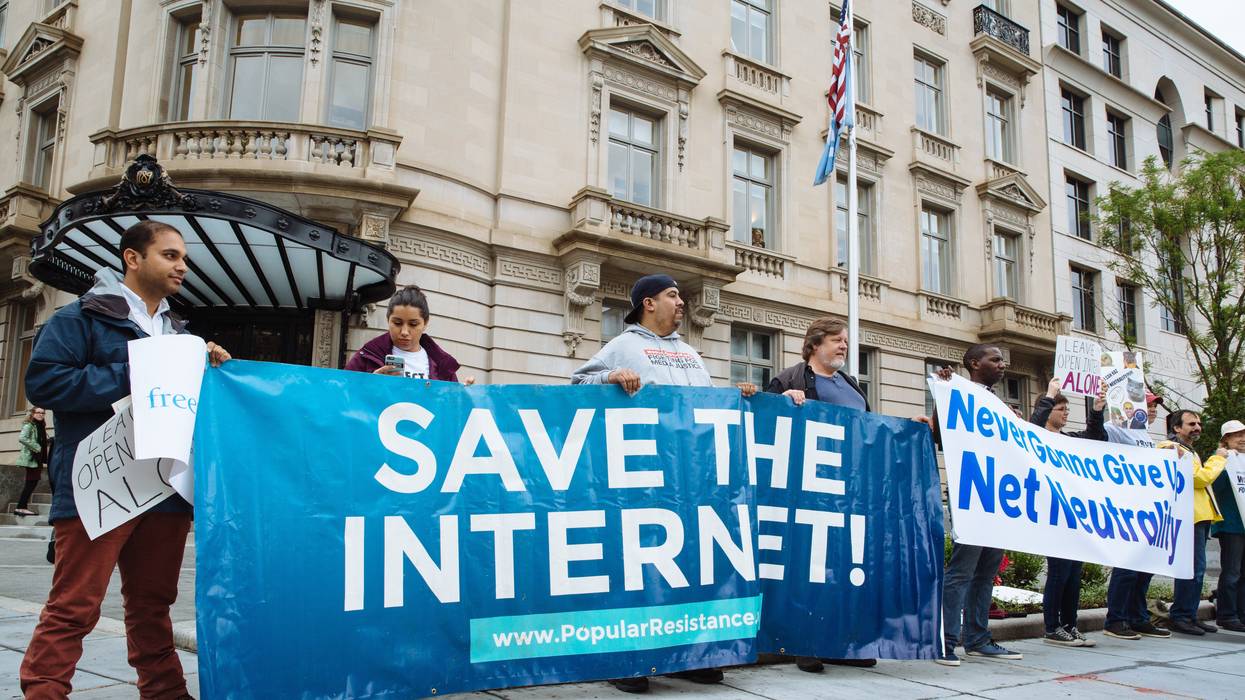
Demand Progress Education Fund senior campaigner Joey DeFrancesco said the revival "has been desperately needed" since former FCC Chair Ajit Pai—an appointee of former Republican President Donald Trump—led the "disastrous decision" in 2017 to gut a 2015 agency policy codifying the principle that has been foundational to the internet since its inception.
"Internet access is not a luxury, but a necessity to participate in society and survive in our modern economy," DeFrancesco stressed. "The FCC's new rule will ensure the commission has the full ability to expand broadband and the authority to ensure access to an open internet."
"The FCC's vote today returns the internet to the American people."
Free Press co-CEO Craig Aaron declared that "everyone should celebrate today's FCC vote."
"Public support for net neutrality is overwhelming, and people understand why we need a federal watchdog to protect everyone's access to the most essential communications platform of our time," he noted. "The FCC heard the outcry and did its job: delivering on promises to stand with internet users and against big telecom companies and their trade groups, which have spent untold millions of dollars to spread lies about net neutrality and thwart any oversight or regulation."
Aaron praised Rosenworcel and her staff for leading the restoration effort, as well as Starks and Gomez for working with her to reverse the Trump FCC's move and ensure "that the agency can once again protect internet users whenever big phone and cable companies like AT&T, Comcast, Spectrum, and Verizon attempt to harm them."
"Big cable and phone companies won't be able to pick and choose what any of us can say or see online. Net neutrality is a guarantee that these companies will carry our data across the internet without undue interference or unreasonable discrimination," he emphasized. "This is what democracy should look like: Public servants responding to public sentiment, taking steps to protect just and reasonable services and free expression, and showing that the government is capable of defending the public interest."
Michael Copps, a former FCC commissioner and current Common Cause special adviser, was similarly enthusiastic, saying that "if I weren't out of the country today, I would be personally at the FCC jumping up and down, saluting the majority for reinstituting the network neutrality rules that were so foolishly eliminated by the previous commission."
"Our communications technologies are evolving so swiftly, affecting so many important aspects of our individual lives, that they must be available to all of us on a nondiscriminatory basis. And they must advance the public interest, protecting consumers, fostering competition, and providing us all the news and information we need as we fight to maintain our democracy," he continued. "We still have much to do; but today, let's celebrate a huge step forward."
The vote notably comes during an election year—and as Democratic President Joe Biden, a net neutrality supporter, is gearing up for a November rematch against Trump.
"The internet is crucial to civic engagement in the United States today. It functions as a virtual public square where social justice movements organize and garner support," said Common Cause's Ishan Mehta. "The FCC's vote today returns the internet to the American people."
Jenna Leventoff, senior policy counsel at the ACLU, also piled on the praise, proclaiming that "today marks the last day that internet service providers can continue to put profit over people."
"We are thrilled that the FCC now has the authority it needs to protect consumers, promote the exercise of First Amendment rights online, and ensure that everyone has access to high-quality, affordable internet," she said. "However, we urge the commission not to exercise its authority to preempt consistent state laws that grant consumers additional protections."
John Bergmayer, legal director at Public Knowledge, also celebrated the vote while stressing that the commission's work is far from over. In addition to warning of court fights to come, he said that "broadband providers will continue attempting to rebrand their old plans for internet fast and slow lanes, hoping to sneak them through."
"The FCC will need to diligently enforce its rules," Bergmayer argued, "including clarifying that discrimination in favor of certain apps or categories of traffic 'impairs' and 'degrades' traffic that is left in the slow lane, and that broadband providers cannot simply take apps that people use on the internet every day and package them as a separate 'nonbroadband' service."
"The FCC must also ensure that practices that are not expressly prohibited but still unreasonably interfere with the ability of end users to freely use the internet, or of edge providers to freely compete, are disallowed," he added. "These practices include discriminatory zero-rating and network interconnection practices."
Like Leventoff, he also recognized the vital role of states with stricter policies, saying that those "with excellent net neutrality and broadband consumer protection statutes, like California, can be a nationwide model for other states and the FCC to adopt to strengthen their own rules."
"A healthy democracy requires a well-informed and educated public, but that's not possible without an open and accessible internet."
Open internet advocates on Wednesday welcomed the Federal Communications Commission's plan to vote on reestablishing FCC oversight of broadband and restoring net neutrality rules on April 25.
"The pandemic proved once and for all that broadband is essential," said FCC Chair Jessica Rosenworcel, who announced the restoration effort in September, shortly after the U.S. Senate confirmed Anna Gomez to a long-vacant seat on the five-member commission. The following month, the pair joined with Commissioner Geoffrey Starks to start the rulemaking process.
"After the prior administration abdicated authority over broadband services, the FCC has been handcuffed from acting to fully secure broadband networks, protect consumer data, and ensure the internet remains fast, open, and fair," Rosenworcel explained Wednesday. "A return to the FCC's overwhelmingly popular and court-approved standard of net neutrality will allow the agency to serve once again as a strong consumer advocate of an open internet."
The three Democratic commissioners aim to reverse a deeply unpopular rollback that happened under former Republican President Donald Trump by reclassifying broadband as a public service under Title II of the Communications Act and preventing internet service providers (ISPs) from blocking legal content, creating fast lanes, and throttling speeds.
"We've been fighting for this moment since Trump's FCC threw out strong Title II rules and abandoned net neutrality back in 2017—and really for nearly 20 years since net neutrality first came under threat," Free Press Action co-CEO Craig Aaron
said of the upcoming vote. "We welcome and celebrate the FCC's decision to move ahead and make sure that internet users will again be protected against harms by big phone and cable companies like AT&T, Comcast, and Verizon."
"Under these strong but flexible FCC rules, every ISP will be responsible for making resilient networks available to people on just and reasonable terms," he noted. "And they won't be able to pick and choose what any of us can say or see online. Net neutrality is a guarantee that the phone and cable companies will carry our data across the internet without undue interference or unreasonable discrimination."
Aaron warned that "without this clear authority over broadband access, the FCC is vastly weakened in its ability to protect internet users from ISPs' privacy invasions, promote broadband competition and deployment, and take action against hidden junk fees, data caps, and billing rip-offs."
Public Knowledge legal director John Bergmayer similarly applauded the commission's effort, stressing that "broadband is now a necessity for work, education, entertainment, healthcare, social connection, and civic engagement."
"Title II classification is the foundation of net neutrality," Bergmayer said. "With this legal tool, the FCC can reassert its role as the nation's top cop on the broadband beat. It will help the FCC more fully address digital redlining, ensuring that broadband access is not denied or degraded to low-income areas, or based on people's race or other protected characteristics."
"It will give the FCC clearer authority to promote network reliability and resiliency, so that users have a consistent internet experience that is ready for times of crisis and recovers quickly from outages," he continued. "It will also help the FCC combat cyber attacks and address other national security risks that could cripple our increasingly internet-dependent economy and society."
"Title II is also a pro-competition tool. It will help the FCC streamline the deployment of new broadband networks and reduce barriers to competition," Bergmayer added.
The FCC's vote is scheduled to happen just months away from the November presidential election, in which Trump is expected to again face Democratic President Joe Biden, who called for restoring net neutrality with a 2021 executive order.
"The internet is a gateway to democracy for many and every voter has the right to a free and fair internet. From looking up information about candidates to finding polling sites, this net neutrality proposal will make it easier for every voter to participate in our modern democracy," said Common Cause Media & Democracy Program director Ishan Mehta.
"We strongly encourage the FCC to restore net neutrality and return control of the internet to the people," he added. "Especially in a major election year, the FCC must do all it can to protect every voter's right to basic information online."
Former FCC Commissioner Michael Copps, now a special adviser to Common Cause, agreed that the pending rules are especially important for those participating in elections.
"A healthy democracy requires a well-informed and educated public, but that's not possible without an open and accessible internet," he said. "We look forward to strengthening a healthy communications ecosystem for all voters."
"We know that Big Cable is going to pull out all the stops in an attempt to water down or even block the rules," said one campaigner. "That's why we're mobilizing the grassroots."
Following the Federal Communications Commission's vote last week to start restoring FCC oversight of broadband and net neutrality rules rolled back under former President Donald Trump, more than 30 groups relaunched the Battle for the Net campaign.
"We are proud to relaunch Battle for the Net along with over 30 organizations representing millions of Americans," said Demand Progress communications director Maria Langholz in a statement. "It is absolutely critical for the FCC to succeed in this process to restore net neutrality and Title II protections."
Despite intense opposition from internet providers, broadband was previously treated as a public service under Title II of the Communications Act. However, in 2017, then-FCC Chair Ajit Pai—a former telecom industry lawyer appointed by Trump—led an unpopular rollback of the policy.
After the U.S. Senate last month finally confirmed Commissioner Anna Gomez to a long-vacant FCC seat, Chair Jessica Rosenworcel announced her plan to try to revive the policy—which prevents providers from blocking legal content, throttling speeds, and creating fast lanes. Commissioner Geoffrey Starks joined the two women in supporting the restoration effort.
"We applaud the FCC for moving forward this proposal, and especially commend Chair Rosenworcel's leadership on this issue," Langholz said Tuesday. "In addition to the commission, we impel members of Congress to stand with their constituents by supporting Title II reclassification."
The campaign website, BattleForTheNet.com, identifies "next steps" as FCC reinstatement of net neutrality and pressuring Congress to enshrine the policy into law.
"As the commission moves forward with this rulemaking, we know that Big Cable is going to pull out all the stops in an attempt to water down or even block the rules," Langholz explained. "That's why we're mobilizing the grassroots, making use of the years of organizing we and our partner organizations have done, to push this proposal through the finish line."
The campaign site currently features a form allowing U.S. voters to let members of the commission and Congress know that "I strongly support the FCC's current effort to reinstate net neutrality and Title II authority, which is critical for an open internet, expanding broadband access, privacy protections, and public safety."
The pre-written comment, which users are able to personalize before submitting, adds that "the agency must move forward a strong rule that rejects zero-rating, ensures interconnection, and allows for state preemption."
Caitlin Seeley George, campaigns and managing director at Fight for the Future, highlighted that "net neutrality has so much support across the political spectrum. And we've seen this support in action as millions of people have taken action over the years at the Battle for the Net hub in support of these commonsense protections against Big Telecom's abusive power."
"Now that the hurdles blocking the FCC from reinstating net neutrality have finally been cleared, they must listen to all of these supporters and swiftly move forward," she stressed. "Internet providers will do all they can to block the agency, spending obscene amounts of money to retain their power. But the FCC must listen to experts and the general public, and move forward with a strong rule to restore net neutrality and Title II protections."
Open internet advocates applauded on Thursday as Democrats on the Federal Communications Commission voted to begin reestablishing FCC oversight of broadband and reviving net neutrality rules rolled back under former President Donald Trump.
"Today's vote is an important start to restoring internet freedom and openness," said Public Knowledge president and CEO Chris Lewis. "Over the next few months, the FCC and the public at large will have an opportunity to look carefully at the benefits of having broadband included in the communications networks that fall under FCC authority."
FCC Chair Jessica Rosenworcel announced her plan to ensure broadband is treated as a public utility last month. Commissioners Anna Gomez and Geoffrey Starks on Thursday joined her in voting for the related notice of proposed rulemaking, which was opposed by Commissioners Brendan Carr and Nathan Simington.
"The notice of proposed rulemaking adopted today seeks comment on classifying fixed and mobile broadband internet service as an essential 'telecommunications' service under Title II of the Communications Act," the FCC explained. "The proposal also seeks to restore clear, nationwide open internet rules that would prevent internet service providers [ISPs] from blocking legal content, throttling speeds, and creating fast lanes that favor those who can pay for access."
Lewis asserted that "this commonsense classification is a no-brainer to the millions of Americans who want the FCC to work to ensure that all of us are connected to quality, affordable, open, and secure broadband networks."
The FCC previously voted in favor of net neutrality rules in 2015, under former President Barack Obama. Those regulations were rolled back in 2017, when the FCC was led by Ajit Pai—a former telecom industry lawyer and an appointee of Trump, the GOP's 2024 presidential front-runner.
In 2021, President Joe Biden signed an executive order encouraging the FCC to restore net neutrality rules. However, such efforts were stalled by a divided commission—until the U.S. Senate finally confirmed Gomez to a long-vacant seat early last month.
"When Trump's FCC Chair Ajit Pai led the repeal of net neutrality and rolled back Title II classification for broadband access, it was a huge win for the telecom industry and its executives," Demand Progress communications director Maria Langholz said Thursday. "We applaud the FCC for not giving up this fight in the face of the seemingly endless effort by corporate giants and their lobbyists to block commonsense and broadly popular open internet protections."
"By restoring Title II oversight, the FCC can prevent net neutrality violations at the hands of powerful ISPs, as well as expand affordable broadband access and stop dangerous privacy abuses," she continued. "Given the widespread public support for these reforms, it's vital the FCC continue to move decisively toward reinstating strong Title II protections, and that members of Congress stand with their constituents by publicly supporting this effort."
Free Press co-CEO Jessica J. González similarly stressed that "Pai ignored the overwhelming public consensus" with the rollback and "people across the country are demanding these open internet safeguards, which will allow the FCC to ensure that everyone in the United States—no matter their location, political persuasion, race or income—has affordable, reliable, and safe internet connections free from discrimination, blocking, or other ISP manipulation."
"In a last-ditch attempt to win over public opinion, these companies are bankrolling a disinformation campaign designed to paint the agency's popular Obama-era rules as bad for business and the American way," she noted. "But no amount of lies from the broadband industry and their congressional allies will change the fact that we need a watchdog protecting internet users' interests and defending their right to an open and affordable internet."
"Broadband providers and their spin doctors are deeply out of touch with people across the country who are fed up with high prices and poor customer service," González argued. "We need a referee on the field to call fouls and issue penalties when broadband companies are being unfair."
Lewis emphasized that "now is the time for the public to take action," and pledged that Public Knowledge will be "filing detailed comments in the record on behalf of the public interest in the coming months."
"Many commenters have focused only on net neutrality protections, however, there are many important protections that Title II authority brings on behalf of the public, from network reliability, outage, and public safety standards, to looking at the important values of universal service, privacy, and competition and fair pricing," he said. "We are already creating resources for those who are unfamiliar with the many benefits of placing broadband under FCC authority."
"We encourage all members of the public to make their voice heard at the FCC and in Congress where legislators are watching closely," he added. "Your senators and representatives need to know that you support FCC authority over broadband to protect open, secure, and affordable broadband access."
"To allow a handful of monopoly-aspiring gatekeepers to control access to the internet is a direct threat to our democracy," said Michael Copps, a Common Cause special adviser and former FCC commissioner.
Open internet advocates across the United States celebrated on Tuesday as Federal Communications Commission Chair Jessica Rosenworcel announced her highly anticipated proposal to reestablish FCC oversight of broadband and restore net neutrality rules.
"We thank the FCC for moving swiftly to begin the process of reinstating net neutrality regulations," said ACLU senior policy counsel Jenna Leventoff. "The internet is our nation's primary marketplace of ideas—and it's critical that access to that marketplace is not controlled by the profit-seeking whims of powerful telecommunications giants."
Rosenworcel—appointed to lead the commission by President Joe Biden—discussed the history of net neutrality and her new plan to treat broadband as a public utility in a speech at the National Press Club in Washington, D.C., which came on the heels of the U.S. Senate's recent confirmation of Anna Gomez to a long-vacant FCC seat.
Back in 2005, "the agency made clear that when it came to net neutrality, consumers should expect that their broadband providers would not block, throttle, or engage in paid prioritization of lawful internet traffic," she recalled. "In other words, your broadband provider had no business cutting off access to websites, slowing down internet services, and censoring online speech."
"Giant corporations and their lobbyists... will try every trick to block or delay the agency from restoring net neutrality."
After a decade of policymaking and litigation, net neutrality rules were finalized in 2015. However, a few years later—under former FCC Chair Ajit Pai, an appointee of ex-President Donald Trump—the commission caved to industry pressure and repealed them.
"The public backlash was overwhelming. People lit up our phone lines, clogged our email inboxes, and jammed our online comment system to express their disapproval," noted Rosenworcel, who was a commissioner at the time and opposed the repeal. "So today we begin a process to make this right."
The chair is proposing to reclassify broadband under Title II of the Communications Act, which "is the part of the law that gives the FCC clear authority to serve as a watchdog over the communications marketplace and look out for the public interest," she explained. "Title II took on special importance in the net neutrality debate because the courts have ruled that the FCC has clear authority to enforce open internet policies if broadband internet is classified as a Title II service."
"On issue after issue, reclassifying broadband as a Title II service would help the FCC serve the public interest more efficiently and effectively," she pointed out, detailing how it relates to public safety, national security, cybersecurity, network resilience and reliability, privacy, broadband deployment, and robotexts.
"Giant corporations and their lobbyists blocked President Biden from filling the final FCC seat for more than two years, and they will try every trick to block or delay the agency from restoring net neutrality now," Demand Progress communications director Maria Langholz warned Tuesday. "The commission must remain resolute and fully restore free and open internet protections to ensure broadband service providers like Comcast and Verizon treat all content equally."
"Americans' internet experience should not be at the whims of corporate executives whose primary concerns are the pockets of their stakeholders and the corporations' bottom line," she added, also applauding the chair.
Free Press co-CEO Jessica J. González similarly praised Rosenworcel and stressed that "without Title II, broadband users are left vulnerable to discrimination, content throttling, dwindling competition, extortionate and monopolistic prices, billing fraud, and other shady behavior."
"As this proceeding gets under way, we will hear all manner of lies from the lobbyists and lawyers representing big phone and cable companies," she predicted. "They'll say anything and everything to avoid being held accountable. But broadband providers and their spin doctors are deeply out of touch with people across the political spectrum, who are fed up with high prices and unreliable services. These people demand a referee on the field to call fouls and issue penalties when broadband companies are being unfair."
Like Rosenworcel, in her Tuesday speech, González also highlighted that "one thing we learned from the Covid-19 pandemic is that broadband is essential infrastructure—it enables us to access education, employment, healthcare, and more."
That "more" includes civic engagement, as leaders at Common Cause noted Tuesday. Ishan Mehta, who directs the group's Media and Democracy Program, said that "the internet has fundamentally changed how people are civically engaged and is critical to participating in society today. It is the primary communications platform, a virtual public square, and has been a powerful organizing tool, allowing social justice movements to gain momentum and widespread support."
After the Trump-era repeal, Mehta explained, "we saw broadband providers throttle popular video streaming services, degrade video quality, forcing customers to pay higher prices for improved quality, offer service plans that favor their own services over competitors, and make hollow, voluntary, and unenforceable promises not to disconnect their customers during the pandemic."
Given how broadband providers have behaved, Michael Copps, a Common Cause special adviser and former FCC commissioner, said that "to allow a handful of monopoly-aspiring gatekeepers to control access to the internet is a direct threat to our democracy."
Rosenworcel's speech came a day after U.S. Sens. Ed Markey (D-Mass.) and Ron Wyden (D-Ore.) led over two dozen of their colleagues in sending a letter calling for the restoration of net neutrality protections. The pair said in a statement Tuesday that "broadband is not a luxury. It is an essential utility and it is imperative that the FCC's authority reflects the necessary nature of the internet in Americans' lives today."
"We need net neutrality so that small businesses are not shoved into online slow lanes, so that powerful social media companies cannot stifle competition, and so that users can always freely speak their minds on social media and advocate for the issues that are most important to them," they said. "We applaud Chairwoman Rosenworcel for her leadership and look forward to working with the FCC to ensure a just broadband future for everyone."
If Gomez, Starks, and Rosenworcel prove ready to follow President Biden’s lead in cracking down on dangerous concentrations of private power and control, there is no shortage of items they can quickly address.
After spending the last two and half years deadlocked 2 to 2, the Federal Communications Commission, or FCC, has reentered the policy battlefield with the confirmation of new commissioner Anna Gomez last week. Democratic appointees now hold a majority for the first time since the Obama administration. The standoff has meant that few regulatory decisions of importance have been made since President Joe Biden took office.
Gomez’s quiet ascension follows a year-plus-long battle over former nominee Gigi Sohn, who withdrew from consideration in March, after a scorched-earth campaign against her nomination by large technology and telecommunications corporations undermined support among centrist members of the Senate Democratic caucus.
In recent months, FCC Chair Jessica Rosenworcel has shown signs she is willing to challenge platform and telecom monopolists, and Democratic commissioner Geoffrey Starks has demonstrated strong reformist instincts. This means the FCC’s direction appears to hinge on Gomez’s appetite for taking on these powerful corporations. Gomez’s mix of experience in both the public and private sectors smoothed her path to confirmation but led to some questions about whether she is up for big fights.
With every Democratic commissioner previously voicing support for re-reclassification, the restoration of net neutrality appears to be a foregone conclusion.
If Gomez, Starks, and Rosenworcel prove ready to follow President Biden’s lead in cracking down on dangerous concentrations of private power and control, there is no shortage of items they can quickly address, including:
In most advocates’ view, the commission’s top priority is to again categorize the internet as a “common carrier service” under Title II of the Communications Act of 1934. The 2015 implementation of net neutrality provisions under Obama-era FCC chair Tom Wheeler was the crowning achievement of the open internet movement, before being reversed by Trump-appointed FCC chair Ajit Pai in 2018. Net neutrality is a rare issue where public advocates and large tech companies mostly align, sharing distrust of a regulatory regime that gives ISPs the power to discriminate against some internet content by controlling the speed at which it is accessed. With every Democratic commissioner previously voicing support for re-reclassification, the restoration of net neutrality appears to be a foregone conclusion.
In a November 2017 speech sponsored by the Open Markets Institute, Senator Al Franken said the FCC’s authority under the Federal Communications Act of 1934 can also serve as a model for regulating big tech platforms. A reinvigorated FCC could swiftly move to take up this challenge from Franken, who earlier had been a leading champion of net neutrality, by declaring the platforms to be essential online communications infrastructure, and regulating them accordingly. Most importantly this would include requiring them to provide the same service at the same price to all users.
Taking this path would also enable the FCC to work more effectively with the Department of Justice (DOJ) and Federal Trade Commission (FTC) in addressing some of the threats to democracy posed by Facebook and Google. For instance, the FCC could target Facebook’s threat to block access to news in California, as Facebook is already doing in Canada, as punishment for legislation to force the platforms to pay the news publishers who employ the journalists who actually create the information that gives the platforms value. Such a move would also enable the FCC to join the DOJ and FTC in addressing the threats to democracy posed by Elon Musk’s control of Twitter and Starlink, as the Open Markets Institute called for them to do last November. Since taking control of Twitter, Musk has moved to throttle access to news sites and competing platforms and to directly interfere in Ukraine’s war of defense against Russia.
Under former chair Ajit Pai, the FCC drastically cut restrictions limiting cross-ownership of print media and television broadcast entities, allowing for greater concentration in smaller media markets. Building on the Obama-era FCC’s questionable decision to scale back restrictions on foreign investments in broadcast stations, the Trump-era FCC also took broad steps to make it easier for American television stations to bring on foreign investors, and weakened rules for reporting their identities. Rosenworcel has recently demonstrated an interest in combatting consolidation in the sector: When hedge fund Standard General moved to buy broadcast television giant Tegna Inc., Rosenworcel used regulatory maneuvers to block the deal without a full vote of the deadlocked commission.
The FCC can also ensure that the expansions of telecom infrastructure under the Infrastructure Investment and Jobs Act and the Inflation Reduction Act are implemented equitably. Pending rulemaking around “digital discrimination of access” language in the infrastructure bill will clearly indicate whether the new Democratic majority is willing to challenge telecommunications providers and large platforms on behalf of the public.
The president is under pressure to choose a candidate who "is free of industry conflicts of interest, someone who will prioritize net neutrality, privacy, network competition, broadband maps, and the digital divide."
More than five dozen advocacy organizations on Friday implored U.S. President Joe Biden to swiftly select a Federal Communications Commission candidate who will serve the public interest, not the telecommunications industry.
The coalition's letter stresses that a fifth commissioner is urgently needed to end the current 2-2 deadlock and enable the FCC to "increase digital equity and media diversity, bolster online privacy and safety protection, and reassert its rightful authority over broadband to ensure everyone in the United States has access to this essential service."
The message to Biden comes after Gigi Sohn removed herself from consideration last week, citing the "legions of cable and media industry lobbyists, their bought-and-paid-for surrogates, and dark money political groups with bottomless pockets" who distorted her "over 30-year history as a consumer advocate into an absurd caricature of blatant lies."
"We call on you to immediately put forth a new nominee—specifically, one who has a history of advocacy for the public interest and is free of industry conflicts of interest."
Sohn, the new letter states, "was eminently qualified to serve as a commissioner. But after 16 months of organized and well-funded attacks by dark-money groups—which were carried out by lobbyists, enabled by complicit elected leaders, and amplified in partisan media—Sohn made the understandable decision to withdraw from consideration."
Organizations behind the letter—including Common Cause, Demand Progress Education Fund, Electronic Frontier Foundation, Fight for the Future, Free Press Action, Our Revolution, Public Knowledge, Revolving Door Project, and RootsAction.org—were outraged over both the telecom industry smear campaign against Sohn and top Democrats' refusal to fiercely defend the nomination. Her withdrawal has sparked fears that Biden will choose an industry-friendly candidate.
"Now, we call on you to immediately put forth a new nominee—specifically, one who has a history of advocacy for the public interest and is free of industry conflicts of interest; demonstrates a clear commitment to championing the rights of low-income families and communities of color; and supports Title II oversight and laws that ensure the FCC the authority to prevent unjust discrimination and promote affordable access," the coalition wrote to Biden.
"We ask you to actively press the Democratic majority in the Senate to swiftly confirm your nominee," the groups added. "We cannot permit senators to prevent forward progress any longer at the behest of the very corporations the FCC is meant to regulate."
Free Press Action president and co-CEO Craig Aaron similarly argued in a Common Dreams opinion piece last week:
We must oppose and reject any return to business as usual that furthers industry capture of the FCC.
Instead, we need to demand an independent candidate with public-interest bona fides and a clear commitment to racial justice and civil rights. They must show they're willing to stand up to lies. They must be unequivocal in their support for restoring the FCC's authority, and making sure that the internet is open, affordable, available, and reliable for everyone. They must demonstrate a commitment to engaging the public, not just meeting with lobbyists.
Sohn's defeat also "has implications that go far beyond the FCC," Aaron noted. "The Republicans and their Democratic enablers are setting out markers for who's allowed to serve in government."
"They made clear that public servants will be pilloried while ex-corporate lobbyists sail through," he wrote. "Women and LGBTQIA+ folks—Sohn would have been the first lesbian to serve as an FCC commissioner—will be slandered. Tweeting about police violence can be disqualifying (in the Senate, retweets do equal endorsements). Questioning the propriety of Fox News—even as it's being exposed for aiding and abetting election lies and insurrection—is unacceptable. A basic understanding of U.S. history and racism may be disqualifying."
Sohn "deserved better," Aaron tweeted. "But I hope we—and the White House and Democratic Party, especially—can learn so it doesn't happen again."