

SUBSCRIBE TO OUR FREE NEWSLETTER
Daily news & progressive opinion—funded by the people, not the corporations—delivered straight to your inbox.
5
#000000
#FFFFFF
To donate by check, phone, or other method, see our More Ways to Give page.
Daily news & progressive opinion—funded by the people, not the corporations—delivered straight to your inbox.
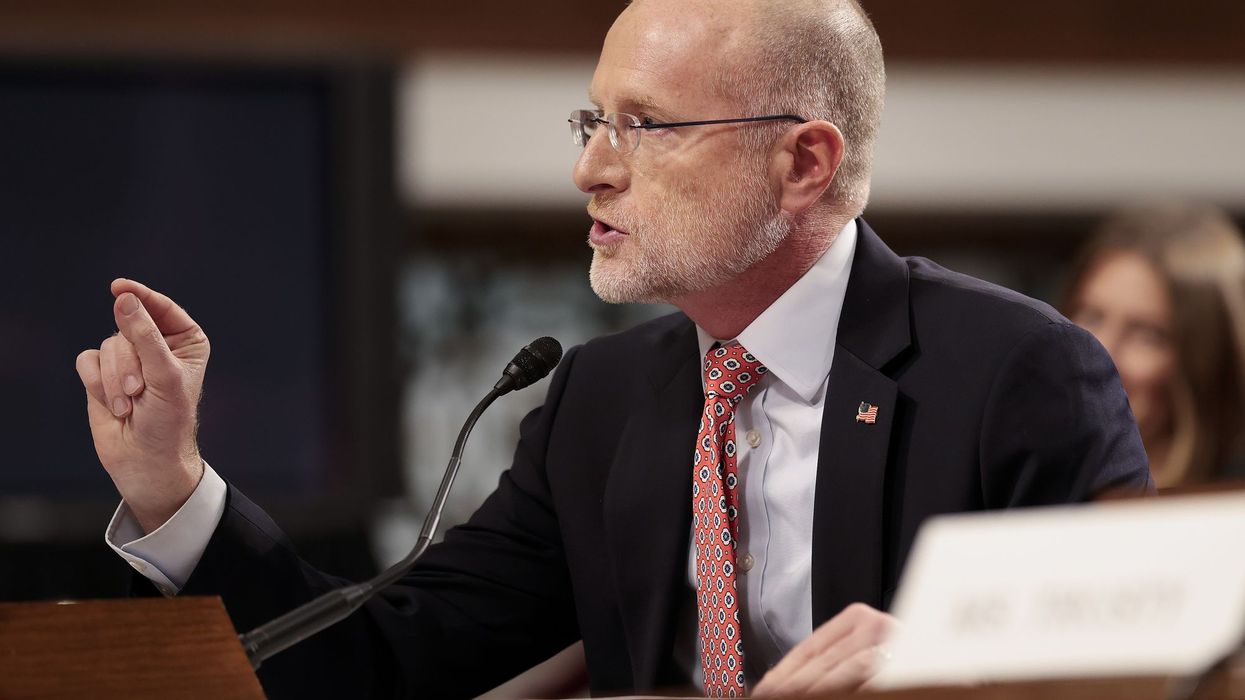
"We don't need Middle East dictators to control American media."
US Sen. Bernie Sanders on Friday joined a growing chorus of critics angered by the Federal Communications Commission's approval of foreign investment in the company that would be created if Paramount Skydance and Warner Bros. Discovery are allowed to merge.
Led by Chair Brendan Carr, an appointee of President Donald Trump, the FCC on Thursday approved Paramount's petition to allow foreign investors to hold over 25% of ownership. The commission concluded it would be in the "public interest" to greenlight a plan for 49.5% foreign ownership, including 38.5% from investment funds based in Qatar, Saudi Arabia, and the United Arab Emirates (UAE).
"Trump's FCC just approved Trump pal David Ellison's deal to allow Saudi Arabia, Qatar, and the UAE to own nearly 50% of a merged Paramount-Warner Bros," Sanders (I-Vt.) wrote on social media Friday, referring to Paramount's chair and CEO—and the son of billionaire Republican megadonor Larry Ellison.
The merged company would include CBS, CNN, HBO, the Discovery Channel, BET, Fandango, MTV, Nickelodeon, Paramount, PlutoTV, Showtime, TBS, The CW, TNT, Warner Bros., and more, the senator noted. He added: "Outrageous: We don't need Middle East dictators to control American media."
Anna Gomez, the sole Democratic commissioner, was similarly critical: "The FCC just let some of the most repressive governments in the world indirectly control nearly all of a combined Paramount-Warner Bros. An investment this large in one of America's biggest media companies doesn't just buy equity, it secures influence over what gets said and made."
"That's why I called for this new and novel issue to go to a full commission vote given what's at stake," she noted. "Instead, the FCC snuck this ruling out as a staff-level decision, with no public vote and no accountability for a call of this magnitude."
Welcoming Gomez's comments, Michael Sozan pointed to his and Andrew Miller's June article for the Center for American Progress highlighting that "the three Middle Eastern authoritarian regimes have deep financial relationships with Trump and his family, and... long records of human rights abuses and engage in media censorship."
"These autocracies could leverage Paramount's news outlets and other media properties to advance their own interests at the expense of the United States' national security and foundational rights, including press freedoms," the pair warned. "Given these factors, these foreign ownership levels are another reason why regulators must rigorously review this merger and take all lawful actions to block it."
As the Los Angeles Times reported:
Several groups, including the 1st Amendment nonprofit Free Press, asked the FCC to consider additional safeguards to shield the news organizations—CNN and CBS—from foreign control. One suggestion was to spin off CBS and CNN into a subsidiary that would be wholly owned by Americans.
Paramount and the FCC were dismissive, arguing "the concerns raised in the record... are speculative and unsupported," according to the FCC ruling.
While a Paramount spokesperson welcomed the FCC's decision not to block the plan—and pointed out that "when the proposed transaction with Warner Bros. Discovery closes, the Ellison family and RedBird will collectively hold the largest equity stake in the combined company and 100% of the voting shares, with no other equity participant having any governance rights"—fresh outrage mounted over the already widely criticized $111 billion merger.
Lee Hepner, an antitrust lawyer and senior legal counsel for the American Economic Liberties Project, addressed the questions: "But it's just indirect equity interests, right? What about the condition that the Saudis, UAE, and Qatar cannot interfere with or even comment on any decisions related to content?"
As he explained: "The only way that firewall is conceivably enforceable is if the FCC assigns an independent monitor to sit in on every meeting, taps every burner phone, and is invited to every Signal chat between any representative of Paramount and its new financial backers. The point is not that that should happen, but that this condition is patently unenforceable. Which is all to say, the FCC just approved the sale of a crown jewel of the entertainment and media industry to foreign interests that relish in exercising economic, political, and regional military leverage over the United States. All based on a pinky promise."
"The reality is that ownership alone, even of nonvoting, indirect equity interests, creates its own financial leverage and influence," he warned. "To the extent Paramount's new owners are prohibited from exercising influence, it's patently paradoxical. Paramount won't approve anything that risks losing half of its financial backing, including criticizing a regime that not too long ago ordered the execution of a Washington Post columnist, Jamal Khashoggi, who became an international figurehead for politically persecuted journalists."
"Does anyone think CBS' new leadership has the will, much less fortitude, to prioritize truth over financial ruin?" he added. "If this all sounds like a total mess, that's because it is. And it only becomes doubly worse if Paramount acquires Warner Bros.-Discovery."
Due to legal pushback from state attorneys general and unions, the merger—which some opponents have condemned as an "existential" threat—is on hold until the outcome of a trial scheduled to begin in March.
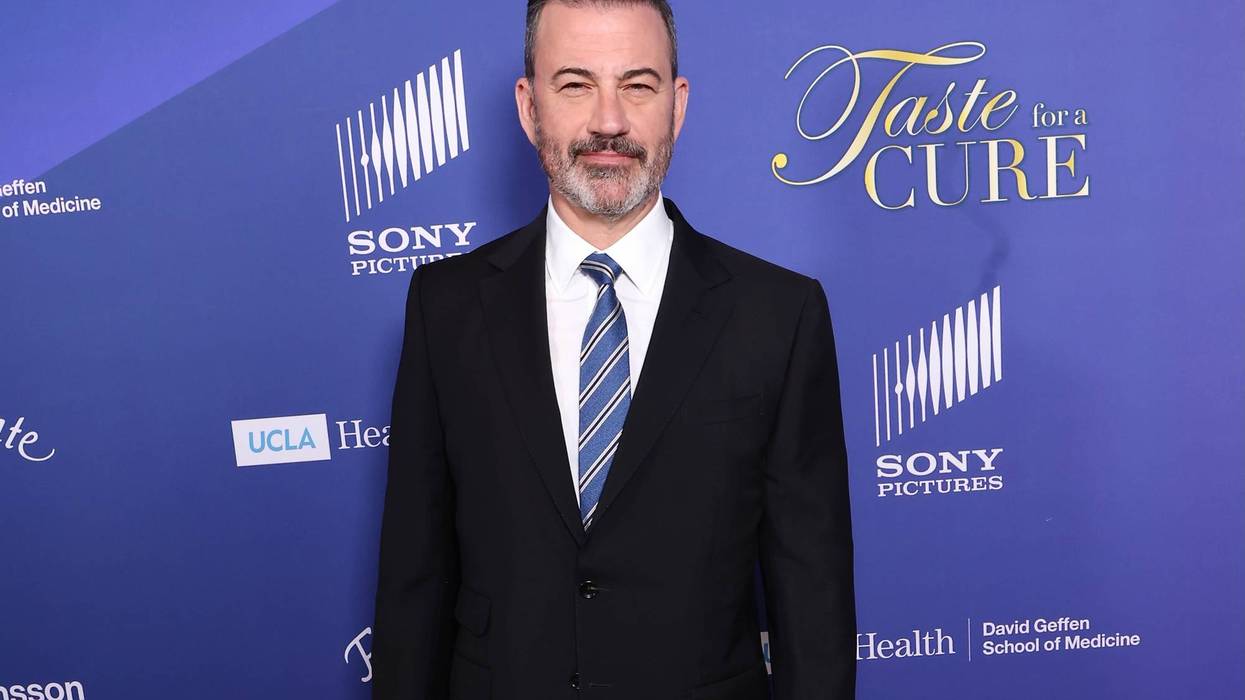
"Another day, another chilling effect on broadcast speech," said one free speech advocate, who added that "nothing about the FCC’s actions is normal—or legal."
Late-night host Jimmy Kimmel told viewers Wednesday night that his show was pulling an interview with Democratic Texas Senate nominee James Talarico from ABC stations amid threats from President Donald Trump's Federal Communications Commission, which press freedom groups are describing as another effort by the administration to "chill" the speech of the president's critics.
“Out of consideration for our local stations, especially our ABC affiliates in Texas who would have to deal with this nonsense, my interview tomorrow with James Talarico will not air on television,” the host said on Wednesday’s episode of “Jimmy Kimmel Live.”
He added that the interview “will be posted on YouTube instead. It will not be on TV.”
It's the second time a major US network has opted to spike a late-night interview with Talarico following FCC pressure. In February, CBS lawyers preemptively stopped Stephen Colbert from conducting an interview with the candidate over what they said were fears of retaliation from the agency, whose chair, Brendan Carr, has threatened to strip broadcast licenses from networks that give Trump unfavorable coverage.
Carr has confirmed that the FCC had opened an investigation and started an "enforcement proceeding" into ABC over whether Talarico's appearance on "The View" violated the equal-time rule, which requires that broadcast stations that host political candidates must give their opponents an equal opportunity to appear as well.
Late-night shows have long been considered exempt from this rule as “bona fide news interview” programs. But a public notice issued by the FCC Media Bureau in January stated that programs that advance “partisan” goals, including talk shows, would no longer be considered as such. Carr has said programs he considers to be “fake news” may not qualify for an exemption.
Kimmel on Wednesday emphasized the "unusual circumstances" of his network's decision to cancel the interview with Talarico.
"For the whole 20-plus years of our show, I've been interviewing Americans who are running for office with no problem at all... from Hillary Clinton, to Ted Cruz, to Donald Trump himself," he said.
Kimmel noted that when he interviewed Trump during his first presidential run in 2015, he seemed to have no issue with political candidates appearing on his show and eagerly returned for more interviews.
"For some reason, and I can't seem to figure out what that reason is, something has changed," Kimmel joked. "Now that he's president, his FCC has threatened me, threatened our show, threatened our network, ABC, our affiliates, our local stations—based on simple, traditional editorial decisions, guest bookings it would seem they don’t like."
For that reason, he said, if viewers "want to learn about a candidate for the Senate tomorrow, you will have to go to the 'Jimmy Kimmel Live' YouTube channel."
"Thank goodness we have that," Kimmel said. "Because in the America we have right now, that is the best that we can do, until November, of course."
In August, ABC parent company Disney sued the FCC on First Amendment grounds following the agency’s unusual request for its eight ABC stations to submit their broadcast renewal requests several years in advance, which it described as part of a “retaliatory campaign” against the network's negative coverage of Trump.
The complaint notes that ABC has felt compelled to alter its editorial judgment in order to avoid further retaliation, including passing on interviews with several other political candidates it felt would invite Trump's ire and choosing to air a lie-filled Trump address about supposed election fraud, which it noted it "ordinarily would not have done."
Last September, ABC briefly removed Kimmel from the air following direct threats from Carr to strip ABC stations of their broadcast licenses, which came after a critical monologue from the late-night host about Trump and Republicans in the wake of the assassination of right-wing activist Charlie Kirk.
The complaint notes Carr’s use of explicit coercion to pressure ABC to remove Kimmel, including telling the network that it could proceed “the easy way or the hard way."
Kimmel emphasized what he said was the political nature of the pressure campaign against him and the network, which has continued even after he was reinstated. Republicans, he said, "are very nervous about the midterms and very rightly so," as they are "in serious danger of losing 'bigly.'"
"They are in danger of losing a Senate seat in Texas of all places," he said to cheers from the crowd, "where James Talarico is leading a piece of human silly putty named Ken Paxton there," according to several recent polls.
Press freedom and civil liberties organizations described Carr's threats to networks as part of an effort to chill critical speech on behalf of the president, one that is ratcheting up as the midterms approach.
Timothy Karr, the senior director of strategy and communications for Free Press, told Common Dreams that Carr's "unconstitutional crusade against a free press has a clear bias against individuals and outlets that President Trump doesn't like."
"Combine that with Trump's desperation in the face of electoral polling that shows people ready to change political course come November, and you can see the real reason driving Carr's reckless fixation with silencing opposing views," Karr said.
Karr argued that networks were unnecessarily casting aside their rights to editorial judgment out of fear of retaliation.
"For years, the FCC has been very clear that bona fide news interviews, including on late-night talk shows, are entitled to editorial discretion," Karr said. "Carr's ongoing efforts to take this discretion away are part and parcel of his campaign to transform broadcast media into full-time megaphones for Trumpist propaganda."
He said, "What's doubly worrying is that many of these broadcast networks are too eager to cave to Trump and Carr's demands when the First Amendment is clearly on their side."
Jenna Leventoff, senior policy counsel for the ACLU, concurred, telling Common Dreams that the FCC "abusing its rules to chill speech" is "particularly problematic before an election, when voters need more information, not less."
Bob Corn-Revere, the chief counsel for the Foundation for Individual Rights and Expression (FIRE), told Common Dreams it was “another day, another chilling effect on broadcast speech," adding that ”nothing about the FCC’s actions is normal—or legal.“
Shiva Stella, the legal director at Public Knowledge, emphasized that networks capitulating helps to cement a climate of fear.
"This is a classic chilling effect," Stella told Common Dreams. "Once the FCC threatens stations over editorial decisions, it does not need to repeat the threat every time. Broadcasters begin changing their programming to avoid retaliation."
“The FCC needs to stop using its power to bully news organizations into silencing voices it simply disagrees with,” added Tim Richardson, journalism and disinformation program director at PEN America, in a statement to Common Dreams.
“When broadcasters alter decisions because they fear government retaliation," he said, "that damage extends beyond a single program and threatens the independence of the entire press and the public’s access to information. Which, unfortunately, seems to be the intent in this case.”
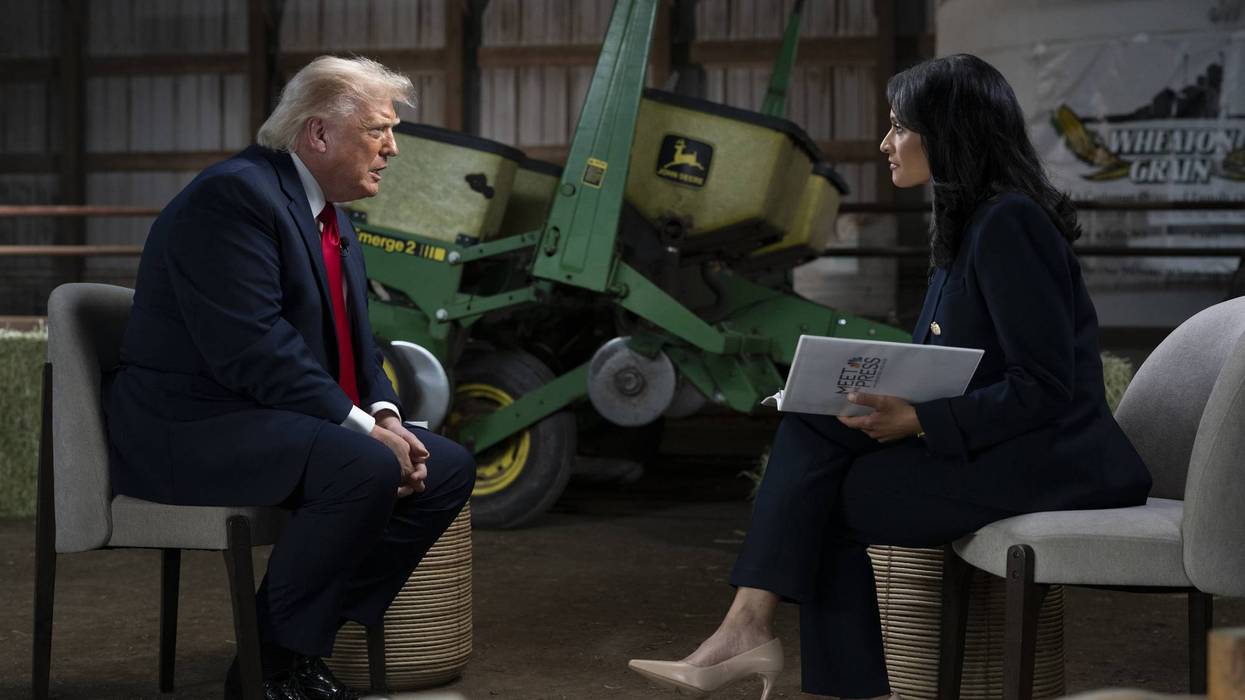
"Trump, like all authoritarians, wants to silence those who disagree with him," Sen. Bernie Sanders said in response.
President Donald Trump took to Truth Social on Sunday to threaten NBC journalist Kristen Welker with "rebuke or punishment" from the Federal Communications Commission, or FCC, after she accurately reported that his endorsement had netted "mixed" results for Republican candidates this election cycle.
In a second post on Sunday, Trump also lashed out against reported polling results, writing, "THE FAKE POLLS USED BY OUR CROOKED MEDIA ARE OUT OF CONTROL, AND SOMETHING MUST BE DONE ABOUT IT. FCC TO THE RESCUE!"
"Trump, like all authoritarians, wants to silence those who disagree with him," Sen. Bernie Sanders (I-Vt.) wrote on social media in response. "Now he's trying to punish an NBC journalist for reporting on his mixed endorsement record. Sorry, Mr. President. In America, we believe in democracy and the First Amendment. FIGHT BACK."
Welker made the remarks that enraged Trump during a pre-"Meet the Press" promotion on NBC's Washington, DC affiliate station. They were backed up by NBC reporting that six candidates Trump endorsed for House and governor had lost their Republican primary races in August.
"Trump makes clear that he thinks it's the government's role to go after journalists who anger him."
"Kristen Welker, the Unpopular 'Hostess' of the once great Meet the Press, now considered Meet the Fake Press, just stated that Donald Trump has 'mixed results' on his Endorsements of Candidates, when the recent WINS of Darline Graham and Mike Mazzei, stand at 100% for the US Senate, and 98% for the US House, recently and over the longterm. How can anyone be allowed to say this, working for freely given Public Airwaves? Results are attached. Because of this purposeful inaccuracy, she will be reported to the FCC for rebuke or punishment," Trump wrote.
He also appealed to the head of the FCC directly, saying, "I hope that Chairman Brendan Carr, and the fine people of his Commission, will take this Threat to our Country very seriously."
"Trump is getting more explicit about weaponizing the FCC," CNN chief media analyst Brian Stelter noted in a thread on social media. While he pointed out that the FCC cannot legally punish Welker and has limited power by design, its chair Carr "has been responsive to Trump's posts in the past..."
Indeed, Carr has a history of targeting Trump critics.
In September of 2025, he pressured ABC into briefly removing Jimmy Kimmel from the air following remarks he made surrounding the Trump administration's response to conservative activist Charlie Kirk's death.
In March, Carr wrote a post on social media that appeared to threaten to revoke the broadcasting licenses of news outlets that criticized Trump's war on Iran, responding directly to Trump's own social media rant against war coverage.
In April, he ordered Disney's eight ABC stations to file their broadcast renewal requests years early, prompting ABC and Disney to file a First Amendment lawsuit against the FCC earlier this month. The renewal requests, which Carr denies were retaliatory, came a day after Trump again criticized Kimmel for making jokes about First Lady Melania Trump.
Stelter concluded: "Trump invoked Carr's name, complimented the 'fine people' of the FCC, and said he hopes the commission will 'take this Threat to our Country very seriously.' ABC is already in court fighting the FCC's unprecedented actions; it's reasonable to think NBC will be targeted next."
Chief White House correspondent for The New York Times Pete Baker wrote on social media that, with his threats against Welker, "Trump makes clear that he thinks it's the government's role to go after journalists who anger him."
"Are there really any Americans left who think this man is paying any attention to any problem any person in the United States is having right now," Trump biographer Seth Abramson wrote on social media in response to Trump's tirade. "As far as I can tell there's not a single second of his day taken up by anything but what personally interests and enriches him."
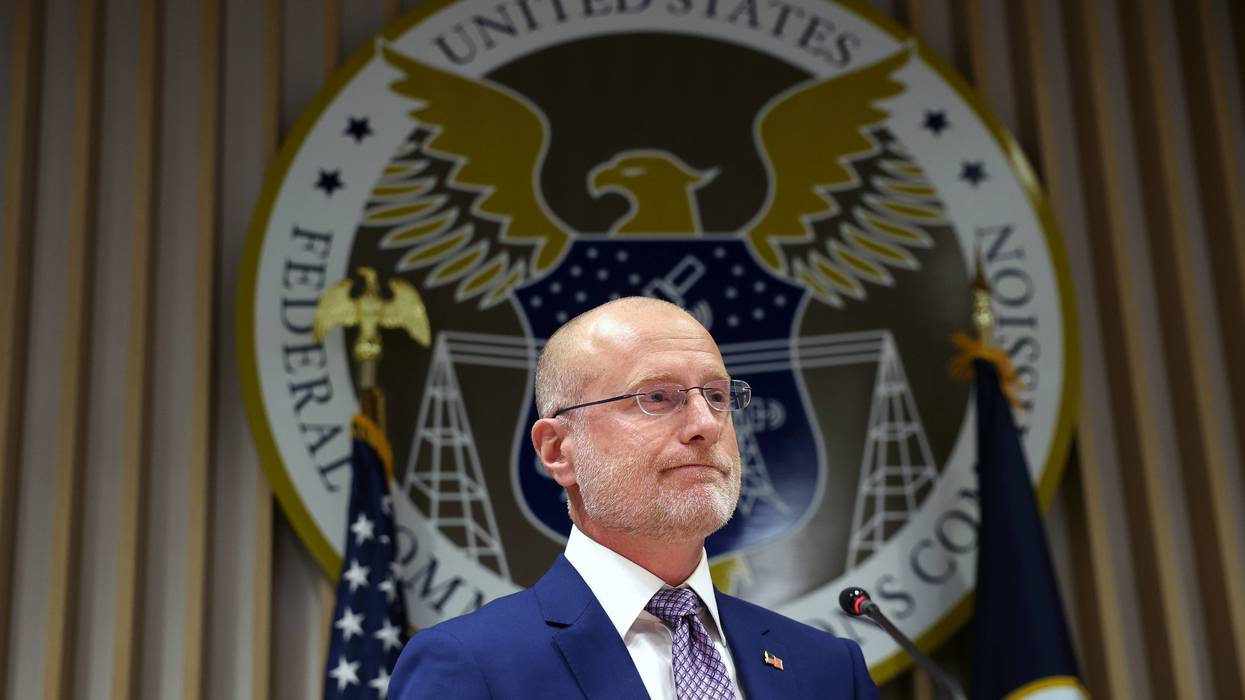
"At long last! A broadcast network has found a backbone," said one First Amendment advocate.
ABC and its parent company Disney filed a First Amendment lawsuit against the Federal Communications Commission on Tuesday over what it called a "deeply un-American" effort by the Trump administration to punish broadcasters for airing speech critical of the president.
The suit comes in response to an April order by the FCC requiring Disney's eight ABC stations to file their broadcast renewal requests years ahead of schedule. As the Knight First Amendment Institute pointed out, it's the first time the FCC has ordered a broadcast station to submit early license renewals in more than 50 years.
The unusual request came after President Donald Trump had repeatedly suggested that networks giving him "negative coverage" should have their broadcast licenses "terminated."
ABC has argued that the license renewal demand is part of an effort to "attack" its First Amendment-protected speech.
"Government censorship is deeply un-American," the lawsuit, filed before the US District Court for the District of Columbia, said. "Acting through the Federal Communications Commission, the administration has waged a retaliatory campaign against ABC for a single reason: it disapproves of what ABC broadcasts."
ABC specifically has found itself in the crosshairs of FCC Chair Brendan Carr, who used license authority to pressure the network to remove late-night host Jimmy Kimmel from the air briefly last year following a critical monologue about Trump and Republicans following the assassination of right-wing activist Charlie Kirk.
The lawsuit quotes what ABC said were blatant efforts by Carr to "coerce" the network into pulling Kimmel, including his ultimatum, "We can do this the easy way or the hard way."
It also notes that the request for the early renewal order was issued just one day after Trump went on another social media tirade against Kimmel over jokes he made about First Lady Melania Trump, which the president claimed inspired an assassination attempt at the White House Correspondents' Dinner. Trump said that Kimmel should “be immediately fired by Disney and ABC.”
Carr has defended the FCC's orders to Disney, stating that they were not about retaliation, but about ensuring that ABC stations operate "in the public interest" as they are required to do under law.
“If broadcasters don’t like that, that’s okay,” Carr told CNBC back in July. “They can become a cable channel, they can become a podcast, they can stream online. But if you want to uniquely be on the public’s airwaves, you have to comply with those obligations.”
Noting previous comments by Carr that public interest considerations should include the "political ideology” of a broadcaster's programming, Monday's lawsuit said the order "thus appears intended to broaden the scope of the agency’s review, including to impermissibly consider the content of ABC programming."
Earlier this year, the FCC also opened an investigation into the daytime talk show The View, alleging that its hosting of interviews with Texas Democratic US Senate candidate James Talarico in February may have violated a rule requiring broadcast stations to give political candidates "equal time" when appearing on air.
ABC has contended that The View has previously been ruled as a "bona fide news interview" program, which is exempt from the rule.
As part of the investigation, the FCC Media Bureau has probed ABC's editorial process, ordering it to produce internal communications among View staff, disclose the political donations of employees, and provide information about ABC's internal guidance for producing interviews
The White House, meanwhile, included The View on a public webpage listing so-called "media offenders." On this page, it singled out the program's co-hosts for the "offenses" of criticizing government officials for “visiting the Alligator Alcatraz ICE detention facility in Florida” and “claiming President Trump was overstepping his authority by constructing a White House ballroom.”
The lawsuit says the FCC's pressure has affected its editorial decision-making. It notes that since the investigation was launched, it has not booked any other congressional candidates on The View.
It also notes that, considering the "risk of resulting administration retaliation," ABC chose to broadcast a speech by Trump in July on its streaming channel ABC News Live in which he made unfounded accusations of rampant voter fraud in the 2020 election, which "it ordinarily would not have done."
Trump again called on the network to have its broadcast license stripped for not airing the speech on its main network. And Carr has said that the FCC would consider that decision as part of the review of ABC's renewal applications.
The lawsuit says the administration is seeking either to mire the company in costly legal fees and intimidate it into compliance or to rip it off the air entirely, as Trump demanded.
"In either scenario," the lawsuit says, "the administration accomplishes its goal of eliminating a perceived media critic: either it gets plaintiffs to fall in line, or it silences them if they refuse."
The lawsuit asks the court to issue a temporary restraining order to prevent the FCC from proceeding with the reviews. It ultimately seeks a ruling that the license-renewal proceedings constitute unconstitutional retaliation that violates the First Amendment.
It notes that the administration has been attempting to coerce other legacy news broadcasters in the same way.
"If the administration gets its way, the message to every media company in the country will be unmistakable: Tell only the stories the administration deems favorable, or face the coercive machinery of the federal government," the lawsuit says. "In such a world, the press could in no way be described as free."
CNN's chief media analyst Brian Stelter described Disney and ABC's lawsuit as "one of the stiffest challenges from any American media company against the Trump administration during Trump's return to office."
Press freedom advocates welcomed the lawsuit as a sign that media outlets were beginning to fight back against the administration's strong-arming tactics rather than appeasing them.
"At long last! A broadcast network has found a backbone and is suing to stop the administration’s bullying and censorship," said Nico Perrino, the executive vice president of the Foundation for Individual Rights and Expression (FIRE).
“It’s about time for someone to take Carr and his FCC to court over their endless campaign of intimidation and retaliation against journalism that displeases Carr’s thin-skinned boss,” said Seth Stern, chief of advocacy for the Freedom of the Press Foundation.
"Carr knows the FCC is not the journalism police and said so regularly himself before he decided to throw away any integrity he once had to kiss up to Trump," Stern added. "Countless others whose First Amendment rights have been chilled by Carr’s antics should follow Disney’s lead.”
ABC has faced criticism for bowing to pressure from Trump in the past. In 2024, after Trump won the presidential election, the network agreed to pay out $15 million after he sued over comments made by anchor George Stephanopoulos, who stated that the president had been found “liable for rape” by a jury when he’d technically only been found liable for “sexual abuse." The president's case against the network was widely viewed as legally dubious.
That lawsuit was seen as an opening of the floodgates for Trump's efforts to coerce and control the media during his second term, and other networks, fearful of retaliation, would follow with their own concessions to avoid his wrath.
Aaron Blake, a senior political reporter at CNN, said ABC's decision to fight back against the FCC showed that "today, we're in a different situation."
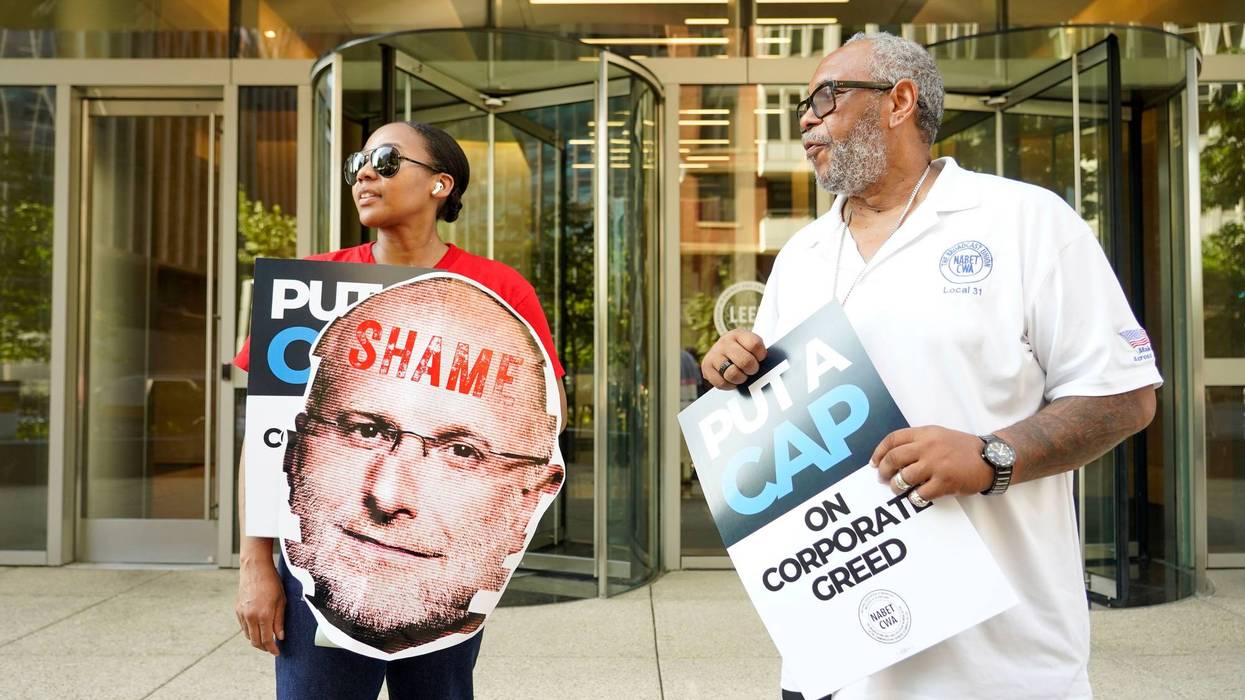
"Media consolidation and deal approvals are now explicitly a way for President Trump to further consolidate his dictatorial power," said a filing by Free Press, which is suing the FCC.
A press freedom group says it plans to take the GOP-controlled Federal Communications Commission to court after it voted along party lines on Thursday to enact a rule that could allow a small number of media conglomerates to consolidate even more control over local news stations.
In a 2-1 vote, the FCC eliminated a 22-year-old rule that prohibited a single company from owning stations that reach more than 39% of American households, replacing it with a rule allowing the FCC to make decisions on a case-by-case basis.
FCC chair Brendan Carr said the move was necessary to "restore balance to the broadcast airwaves" and "allow local broadcasters to remain competitive with national ones."
The FCC's lone Democrat and dissenting vote, Anna Gomez, argued that the move would not benefit local broadcasters so much as it would benefit the national conglomerates seeking to buy them up.
“The large station groups positioned to grow even larger under this decision are not local broadcasters; they are national companies that own local stations and increasingly dictate what airs on them," Gomez said. "Trading a squeeze from Big Tech for a squeeze from Big Media does nothing to protect the communities this cap was designed to serve.”
In a statement after the ruling, Reporters Without Borders said the FCC had "just abandoned one of the last significant safeguards against excessive concentration of media ownership."
The change is a big win for media conglomerates like Nexstar Media Group, which is seeking a merger with rival TV company Tegna to reach about 80% of households nationwide. The merger was approved earlier this year by the FCC, but blocked by a federal judge.
It would also allow the Sinclair Broadcast Group, a conglomerate known for forcing "must-run" segments with right-wing talking points into local news coverage from its corporate headquarters, the ability to continue gobbling up local news stations around the country.
Free Press, a media and technology watchdog, said it planned to appeal the FCC's decision in court, arguing that Carr had exceeded his power by overriding the 39% threshold, which was enshrined in federal law by the 2004 Consolidated Appropriations Act.
"His goal is to spur more media consolidation involving companies Donald Trump views as ideological allies and corporate cronies," said Matt Wood, the group's vice president of policy and general counsel.
Carr, a Trump appointee, has previously sought to use the FCC to crack down on the use of the airwaves by Trump's ideological enemies and consolidate control for his allies.
He has threatened the broadcast licenses of networks that criticize Trump, most infamously pressuring ABC to briefly pull late-night host Jimmy Kimmel off the air last year. He's also used the FCC's approval of the Paramount-Skydance merger to enforce ideological conformity at CBS News, which has dramatically altered its coverage and personnel to be more favorable to the administration.
Carr has argued that the FCC has the power to alter the consolidation cap because Congress technically directed the FCC to modify its own regulations to enact the 39% limit.
Gomez has disputed this, noting that when the FCC previously tried to move the cap, Congress "stepped in within months... and made clear the FCC did not have the authority to change it."
"Changing this limit requires congressional action, but Carr doesn’t care," Wood said. "He’ll do whatever it takes to clear the way for Trump-aligned billionaires to swallow up stations wherever and whenever they please."
John Bergmayer, legal director at the public interest group Public Knowledge, argued that removing the cap was not only illegal but "also bad policy."
"Consolidation does not serve local broadcast audiences or give them more local news and information," Bergmayer said. "It gives distant corporate headquarters more control of what is aired, and it creates pressure to cut local reporters and air the same programming across many markets."
Free Press' filing argues that Carr is not just violating the law but seeking to help Trump "use the commission’s licensing authority to exert total control over the media.”
"Media consolidation and deal approvals," the filing continues, "are now explicitly a way for President Trump to further consolidate his dictatorial power, through explicit loyalty tests and pledges to use the public airwaves as a propaganda tool against the American public."
The lone Democrat on the FCC said Brendan Carr's plan would "destroy local newsrooms, silence community reporting, and drive-up costs for the American families."
Federal Communications Commission Chair Brendan Carr announced Wednesday that his agency will soon vote to repeal a decades-old rule aimed at limiting consolidation among television broadcasters, a move that press freedom organizations say would be disastrous for journalism and American democracy.
Carr, a loyalist of President Donald Trump, outlined his proposal in an op-ed for the far-right online publication Breitbart, claiming his plan would "restore balance to the broadcast airwaves." But Anna Gomez, the lone Democratic FCC commissioner, warned in a fiery statement that "this unlawful effort to hand control of the public airwaves to billionaire buddies of this administration will destroy local newsrooms, silence community reporting, and drive-up costs for the American families who depend on local stations for news and emergency alerts."
Carr said the FCC will vote on August 6 on his proposal to eliminate a rule barring any single TV broadcaster from reaching more than 39% of US households—a limit designed to constrain television conglomerates. The FCC, which has a two-to-one Republican majority, is likely to approve the plan.
But Gomez argued in her statement on Wednesday that Carr's proposal is illegal, noting that "Congress wrote that specific [39%] number into federal law in 2004, and it did so on purpose."
"This is not the first time the FCC has tried to move on this issue," said Gomez. "In 2003, the commission raised the cap to 45% under its own authority. Congress stepped in within months, rewrote the law to set the cap at 39%, and made clear the FCC did not have the authority to change it. An FCC vote to raise the cap now would be unlawful, as it would mean doing the exact thing Congress has already said the commission cannot do."
Politico noted that Carr's proposal "marks a likely victory for the National Association of Broadcasters and its members such as Nexstar and Sinclair, which would be freer to pursue mergers that would breach the cap."
Earlier this year, the FCC approved Nexstar's $6.2 billion acquisition of rival TV company Tegna. A federal judge blocked the merger deal in April pending resolution of a legal challenge. If the merger is finalized, the new media conglomerate would reach roughly 80% of US households, blowing past the statutory 39% limit that Carr is now working to remove.
"Just as the FCC had no power to waive a congressional statute to grease the skids for Nexstar’s merger with Tegna, it has no power now to completely obliterate the limit Congress set," Matt Wood, vice president of policy and general counsel at Free Press, said in a statement on Wednesday. "The national cap remains good policy. It promotes competition, localism, and diversity in broadcasting, incentivizing stations to preserve local newsrooms and local-journalism jobs instead of duplicating stories nationwide and passing that off as local news."
"But whatever the law’s merits may be," Wood added, "the key point is that Brendan Carr cannot undo the limit that Congress set just because he feels like it.”

Some of the satellites "would be the brightest ever in orbit, with damaging consequences for dark skies on Earth," said the European Southern Observatory.
European astronomers on Wednesday urged the US Federal Communications Commission to block a plan led by SpaceX CEO Elon Musk to launch a total of 1.7 million satellites into the Earth's orbit, warning that the use of so many extremely bright satellites—partially to support artificial intelligence data centers—would have “devastating consequences for astronomy.”
SpaceX's Starlink telecommunications program has already rapidly increased the number of satellites orbiting the Earth, with the total now exceeding 14,000 since 2019.
Now the space exploration company led by Musk—a former special government employee under the Trump administration—has plans to send 1 million more satellites into space, which would "significantly alter the appearance of the sky," according to a new study by the European Southern Observatory (ESO).
Scientists found that 100,000 is the maximum number of satellites—ones that are faint enough to be invisible to the naked eye—that can orbit the Earth in order to allow astronomers to continue observing the sky with modern telescopes.
In addition to Musk's launches, the US startup Reflect Orbital has proposed launching a constellation of 50,000 "very large mirror-like satellites to provide sunlight at night," said ESO.
"These satellites would be the brightest ever in orbit, with damaging consequences for dark skies on Earth," said the observatory. "Seen from within a reflected beam, the satellite delivering sunlight would appear four times brighter than the full Moon. Even if no satellite points its beam directly at an observer, each would be as bright as the planet Venus, the ‘morning star.' From a light-polluted city, like Munich, Germany, these hundreds of satellites would be the only ‘stars’ visible in the night sky."
The startup E-Space and two Chinese constellations, CTC-1 and 2, would also add hundreds of thousands of satellites into orbit.
The companies' satellite project could hinder scientists' ability to observe far-away galaxies, Earth-like planets near other stars, and asteroids that could potentially endanger the planet.
"Satellites, illuminated by the sun, are much brighter than distant galaxies. When a satellite crosses what we observe, it makes a bright streak on our image, zapping whatever is behind it," said ESO astronomer Olivier Hainaut, who led the study.
Hainaut noted that the planned launches could have economic and ecological impacts on the planet and humankind as well as harming astronomy.
Extreme light pollution from the bright satellites could disrupt people's biological clocks and ecosystems across the planet, and the satellites could also directly impact air quality due to the numerous launches required to send them into space and the "atmospheric pollution caused as they burn up on reentry at the end of life."
ESO conducted the research as the FCC considers applications from SpaceX and Reflect Orbital regarding the satellite launches
“The FCC received over 1800 comments regarding Reflect Orbital and nearly 1,500 comments on the application by SpaceX,” said ESO institutional affairs officer Betty Kioko. “The ball is now in the FCC’s court, and we wait to see the determinations they make on both filings. For optical astronomy, this is an existential threat, and we hope that the regulators will share that view.”
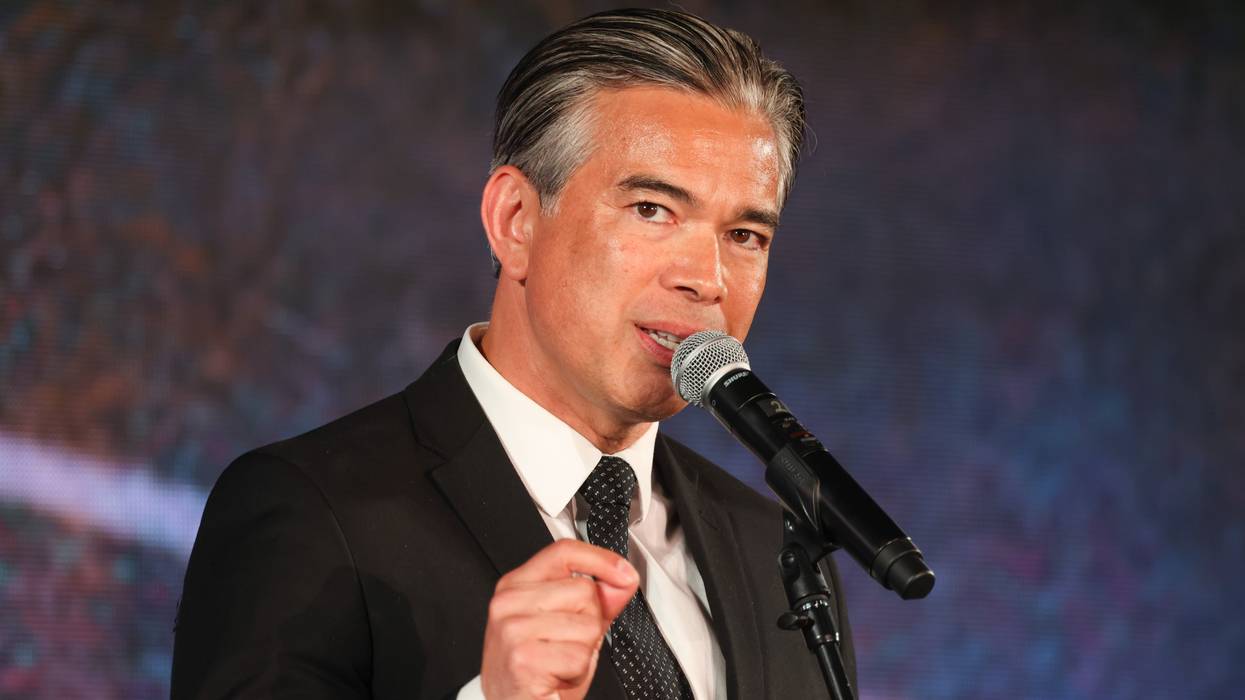
"Now that the federal government has abandoned antitrust enforcement in favor of cronyism and runaway consolidation, state attorneys general must step in to block this deal," said one critic.
The US Department of Justice on Friday approved Paramount Skydance Corporation's megamerger with Warner Bros. Discovery, prompting opponents of the $110 billion deal to place their hopes of blocking it in the hands of Democratic state attorneys general.
The DOJ's Antitrust Division approved the merger without requiring divestitures or behavioral remedies—a significant win for billionaire Paramount CEO David Ellison. Analysts and critics had suggested the DOJ might require sales of some of the corporation's numerous cable networks, streaming services, film and television studios, sports programming rights, or media outlets.
The DOJ also reportedly declined to impose conduct restrictions on bundling, distribution, licensing commitments, and other areas.
“If we had an uncorrupted Department of Justice, Paramount would not even have tried to merge with Warner Bros. Discovery, in plain violation of the law," Robert Weissman, co-president of the consumer advocacy group Public Citizen, said in response to the news of the DOJ approval. "If it had, a Department of Justice that was doing its job would have rushed to court to block the merger the moment it was announced."
“Now, however, a compromised DOJ has rubber-stamped a merger that consolidates power for the Ellisons, one of [President Donald]Trump’s preferred oligarch families," Weissman added. “This merger will jack up prices for consumers, cost workers their jobs and, most importantly, limit the range of viewpoints permitted to air on the major media or appear in movies and creative outlets. Put simply, this is an anti-free speech merger."
This is terrible news for every American who doesn't want Trump-aligned billionaires to control what they watch and how much they pay.The Paramount-Warner Bros. deal has reeked of corruption and influence-peddling.This fight isn't over. State AGs must block this merger.
[image or embed]
— Elizabeth Warren (@warren.senate.gov) June 12, 2026 at 1:48 PM
Craig Aaron, co-CEO of the advocacy group Free Press, said in a statement: “Despite all the talk about conducting a thorough investigation, the fix was in at the Trump Justice Department from the start. Paramount Skydance has fêted, flattered, and promised sweeping changes to news coverage to win the administration’s approval, despite evidence that giving one corporation this much media power—all the movie studios, cable channels, and newsrooms—will undermine competition, destroy jobs, slant the news, and endanger our democracy."
“We've already seen how far Paramount and the Ellison family are willing to go to diminish a once-proud network and news organization like CBS, and they promise to do worse if they get their hands on Warner Bros., HBO, CNN, and all the rest," he added. "The Ellisons aren’t hiding their intentions, and no weak concessions will make this deal any better."
Congressman Jamie Raskin of Maryland, the top Democrat on the House Judiciary Committee, warned earlier this week that approval of the merger would result in "the same kind of unprecedented pro-MAGA editorial control we have seen at CBS News and '60 Minutes.'"
Raskin also contended that the merger could mean that "American consumers, who already pay an average $69 a month for streaming on top of $100 a month for cable and $78 for internet," will pay "even more for sports, news, and entertainment."
As Politico's Yasmin Khorram reported Friday:
The [DOJ] decision... paves the way for Paramount to combine with the entertainment and media company behind a vast film and television studio, CNN, and the HBO Max streaming service, which would be combined with Paramount+ to create a new offering boasting about 200 million subscribers. The deal, which would upend the Hollywood ecosystem by combining two historic rival studios, is opposed by many in the entertainment industry who fear it could lead to mass layoffs, among other concerns.
The DOJ's reported approval of the merger does not necessarily mean the deal is done. Several states are weighing antitrust challenges, most notably California, where the office of Democratic Attorney General Rob Bonta is conducting what he called a "vigorous" review of the proposed merger to determine how it would impact competition in entertainment, streaming, advertising, and labor markets. Reuters reported earlier this month that California, New York, and other states are preparing a lawsuit aimed at blocking the merger.
“The good news is, this is not the last word on the matter," Weissman said. "Competition authorities in the states and other countries can still follow the law and stand up for the public interest against this media consolidation. Now that the federal government has abandoned antitrust enforcement in favor of cronyism and runaway consolidation, state attorneys general must step in to block this deal."
Aaron said that states "have strong case for blocking this merger, and many brave journalists, filmmakers, and workers in the entertainment industry have spoken out against the dangers of this deal despite threats to their livelihoods."
"They are warning us what will happen if this deal goes through, and we must listen," he added. "The attorney generals have the evidence they need to stop this deal; now the public needs them to take action.”
Last year's merger between Paramount Global, Skydance Media, and National Amusements was itself opposed by critics who sounded similar alarms over corruption, antitrust issues, labor concerns, and attacks on editorial independence.
CBS, a Paramount Global company, announced the cancellation of "The Late Show with Stephen Colbert" during the merger review period. While Paramount claimed the cancellation was a financial decision, critics said its timing suggested at least indirect political pressure, given Colbert's vocal criticism of Trump and the need for merger approval from the Federal Communications Commission. FCC Chair Brendan Carr was appointed by Trump and has been dogged by allegations that he's more loyal to the president's agenda than to his agency's stated mission.
One of the biggest recurring flashpoints involves claims of corporate pressure and censorship at CBS' venerable "60 Minutes" weekly current affairs program. Numerous former "60 Minutes" journalists and others have accused Bari Weiss—the right-wing podcaster who became CBS News editor-in-chief after the merger—of political censorship.
Earlier this month, a coalition of press freedom groups warned that recent firings of "60 Minutes" journalists were a “grotesque effort taken straight from an authoritarian handbook” that posed a much wider threat to democracy, and highlighted that an approved Paramount Skydance-Warner Bros. Discovery merger would hand control of CNN, a Warner Bros. company, to the same billionaire family that now owns CBS.
The coalition argued that the merger “would open the door to improper political meddling in journalists’ editorial decisions" and "alter CNN’s editorial direction (not to mention meddle with HBO’s documentaries) to be more friendly to the [Trump] administration, threatening press freedom."
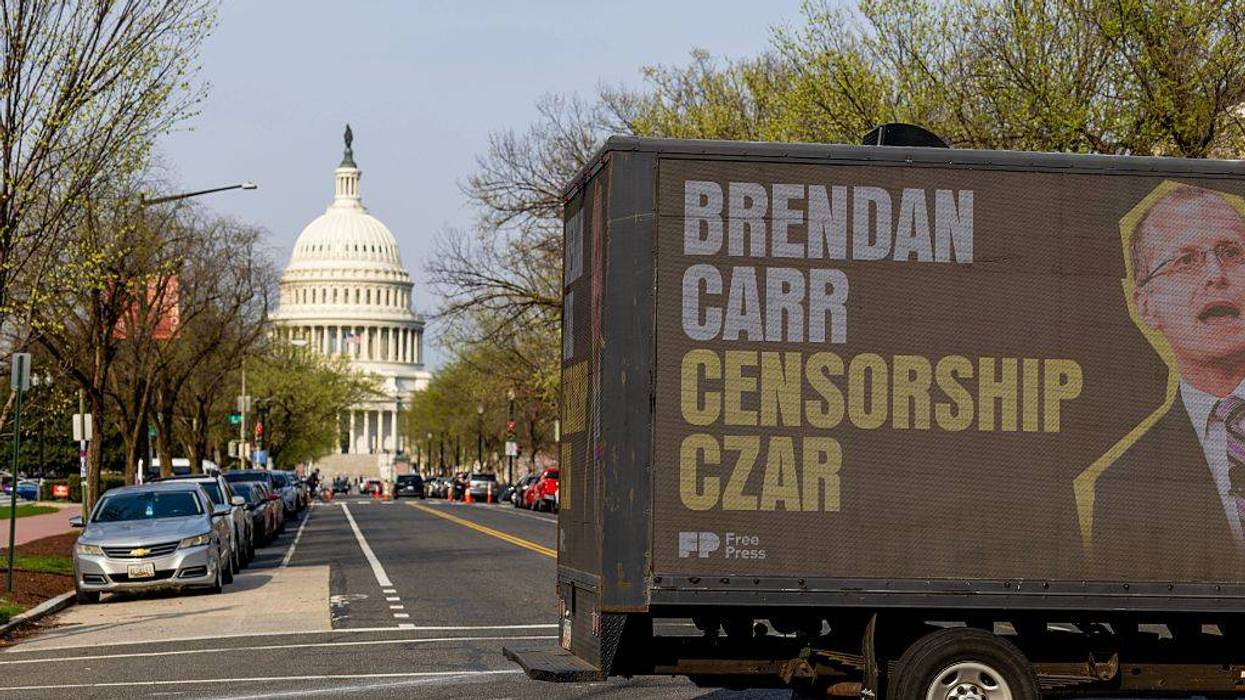
"You cannot buy this administration's favor. For the right price, you can only borrow it. And the price always goes up."
Anna Gomez, the lone Democrat on the Federal Communications Commission, delivered a scathing attack on her own agency in a letter sent on Monday to Walt Disney Company CEO Josh D'Amaro.
At the start of her letter, Gomez told D'Amaro that his company "has once again been made a target by this FCC," as part of "a sustained, coordinated campaign of censorship and control, carried out through the weaponization of the FCC’s authority as a federal regulator."
Gomez said that while Disney, the parent company of television network ABC, is not the first media firm targeted by the administration's censorship campaign, its case is "the most documented," and thus "worth laying... out plainly."
The FCC commissioner said that the campaign against Disney started shortly after it agreed to pay $15 million to settle a lawsuit brought by President Donald Trump, which signaled to the president and allies that "pressure works," while also telling other major media companies that "capitulation was an option."
And instead of getting the Trump administration to back off, Gomez explained, Disney's decision to cave only emboldened it to crack down further.
"You cannot buy this administration's favor," she wrote. "For the right price, you can only borrow it. And the price always goes up."
Since the settlement, Gomez continued, the administration has opened up investigations into Disney's diversity, equity, and inclusion (DEI) policies, pressured the company to pull late-night talk show host Jimmy Kimmel off the air, and opened up an investigation into the daytime talk show "The View" after it hosted Democratic US Senate candidate James Talarico of Texas.
On top of all that, Gomez said, the FCC has demanded that eight ABC-owned local TV stations file early for renewal of their broadcast licenses, which she described as "the most egregious assault on the First Amendment" the agency has taken so far.
Gomez concluded her "blistering" letter by urging Disney to fight against administration efforts to censor it, and she said that both the law and the American public would be behind the company if it decides to take a stand.
"Your journalists do work that matters to millions of Americans across the country, and the viewers who rose up to defend Jimmy Kimmel are the same viewers who will stand up again if this FCC follows through with its threat," she wrote. "I am encouraged to see that Disney is choosing courage over capitulation. The fight ahead may not be easy, but the law, the facts, and the public are on your side. This is a fight worth having, and one that I am confident you will win."
Disney last week came out swinging against the Trump FCC over the agency's investigation into "The View," accusing the administration of trying to "upend decades of settled law and practice and chill critical protected speech, both with respect to ‘The View’ and more broadly.”
"ABC has finally learned that bullies don’t stop when companies cower in a corner," said one free press advocate.
ABC News earned plaudits on Friday after it came out swinging against the Trump administration's investigation into its daytime talk show "The View."
In a filing with the Federal Communications Commission (FCC), first reported by The New York Times, ABC said the Trump administration's actions "threaten to upend decades of settled law and practice and chill critical protected speech, both with respect to 'The View' and more broadly."
The FCC launched an investigation into "The View" over its interview with Democratic US Senate candidate James Talarico of Texas earlier this year, as the agency questioned whether the program should be exempt from Section 315 of the Communications Act, which requires networks to provide equal access to candidates' political opponents.
Disney-owned ABC noted that "'The View' has been broadcasting under a bona fide news exemption granted to it more than 20 years ago," and argued that forcing the show to abide by equal-time rules "would risk restricting political discourse exactly when it is needed most."
The network's aggressive posture against the FCC inquiry earned it praise from press freedom watchdogs who have long criticized mainstream media outlets for timidity in the face of the Trump administration's authoritarianism.
Seth Stern, chief of advocacy for the Freedom of the Press Foundation, said ABC deserved kudos for "for standing up for itself and the First Amendment" amid attacks from President Donald Trump and FCC Chairman Brendan Carr, who has repeatedly threatened to pull broadcasters' licenses over unfavorable news coverage.
"It’s about time news outlets start telling Carr and his Donald Trump lapel pin to kick rocks," said Stern. "Otherwise, he’ll continue manufacturing bogus pretexts to harass and jawbone licensees that air content his boss doesn’t like."
Jessica J. González, co-CEO of Free Press, said she was "pleased that ABC has finally learned that bullies don’t stop when companies cower in a corner," referring to past settlements ABC and other networks made with Trump after his 2024 election victory.
"The FCC chairman has blatantly and repeatedly abused his power to silence speech that displeases Trump," said González. "This doesn’t just violate the First Amendment rights of broadcasters on the receiving end of Brendan Carr's tactics; it also harms the broadcasters’ audiences."
Mark Jacobs, former editor at the Chicago Tribune and the Chicago Sun-Times, similarly pointed to ABC's past capitulations to Trump, while expressing hope that the network had learned its lesson.
"Remember when ABC folded to Trump's shakedown scheme with a $15 million settlement?" he wrote in a social media post. "Maybe they thought it would buy peace with the dictator. It didn't. The regime demanded Jimmy Kimmel's firing and harassed 'The View.' Now ABC is fighting back after learning that fascists always come back for more."