

SUBSCRIBE TO OUR FREE NEWSLETTER
Daily news & progressive opinion—funded by the people, not the corporations—delivered straight to your inbox.
5
#000000
#FFFFFF
To donate by check, phone, or other method, see our More Ways to Give page.
Daily news & progressive opinion—funded by the people, not the corporations—delivered straight to your inbox.
"The FCC has a mandate to increase the diversity of local-media ownership and to ensure broadband access is affordable, open and reliable for all," said one advocate. "We need all five FCC commissioners as soon as possible to fully move this work forward."
Eager to end more than two years of deadlock at the Federal Communications Commission, digital rights advocates on Monday expressed relief at U.S. President Joe Biden nomination of former FCC legal adviser Anna Gomez and called on the U.S. Senate to confirm her appointment as quickly as possible.
"Finally!" tweeted media and technology advocacy group Free Press when the nomination was announced. "The agency has been deadlocked since January 2021 and this delay has harmed millions of people."
Gomez currently serves as a senior adviser for international information and communications policy at the State Department and worked for more than a decade at the FCC as a senior legal adviser to then-Chairman William Kennard.
She also worked in leadership roles at the National Telecommunications and Information Administration, whose work addresses broadband and internet policy.
The American Prospect's David Dayen noted that he recently wrote about Gomez's career, detailing her work within the telecom industry—which the FCC regulates—as well as her work in government.
"Gomez has plenty in her background to interest industry," wrote Dayen. "She was the vice president of government affairs (a nice term for lobbyist) at Sprint Nextel. She was an associate early in her career at corporate law firm Arnold & Porter, and more recently she spent several years as a partner at Wiley Rein, the biggest and most influential law firm that represents clients at the FCC."
Communications on unmanned aerial systems, or drones, were a large focus of her work at Wiley Rein, Dayen reported.
Gomez's nomination comes two months after longtime public advocate Gigi Sohn withdrew her nomination, which had been championed by progressives, after months of attacks by the telecom lobby.
More than 60 digital rights groups wrote to Biden after Sohn's withdrawal, calling for another nominee who would fight forcefully at the commission for net neutrality rules, the rights of low-income and rural communities, and privacy rights.
"We're now approaching two-and-a-half years without a fully functional Federal Communications Commission. Never before has the American public had to wait so long for a commissioner's seat to be filled," Jessica Gonzalez, co-CEO of Free Press, which signed the letter, said on Monday after Gomez's nomination was announced. "In addition to her corporate experience—which has often entailed working for competitive carriers instead of incumbents—Gomez has a long track record of public service, including high-ranking positions at the FCC and Commerce Department. She is eminently qualified for this role at the FCC."
Dayen noted that some of Gomez's positions on communications issues have not been publicized, including her views on congressional rules that punish internet service providers (ISPs) for underinvestment in low-income communities and on net neutrality rules, which prevent ISPs from creating internet "fast lanes" for companies that can pay for them and throttling other content by slowing down speeds.
"We expect Gomez to help restore the proper legal framework for broadband and the net neutrality protections that the FCC repealed during the Trump administration," said Gonzalez. "In poll after poll, people in the United States of all political stripes say they want enforceable rules for an open internet. We're confident that Gomez will give weight to this overwhelming public support and be responsive to public input on the full range of issues before the agency."
The 2-2 deadlock at the FCC has made it impossible for the commission to stop ISPs from "digitally redlining" low-income communities with slower service for the same rates as wealthier customers, as Common Cause said last October, and to restore net neutrality rules.
"The FCC has a mandate to increase the diversity of local-media ownership and to ensure broadband access is affordable, open and reliable for all," said Gonzalez. "We need all five FCC commissioners as soon as possible to fully move this work forward."
"Any further delay means big companies will have an easier time engaging in unjust, unreasonable, and discriminatory actions, because they know this vital watchdog agency isn't operating with the majority it needs," she added. "If these leaders want to improve the lives of internet users, cellphone customers, TV watchers, and radio listeners—meaning everyone—they need to speed up confirmation before the clock runs out at the FCC."
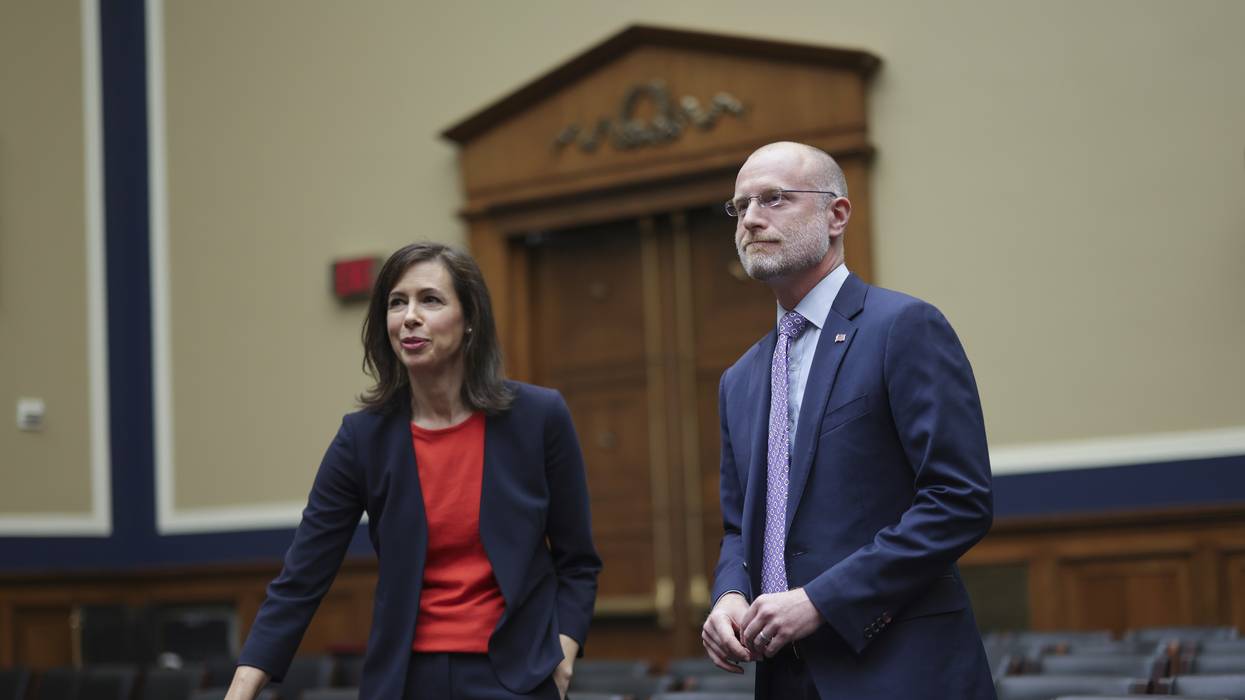
The president is under pressure to choose a candidate who "is free of industry conflicts of interest, someone who will prioritize net neutrality, privacy, network competition, broadband maps, and the digital divide."
More than five dozen advocacy organizations on Friday implored U.S. President Joe Biden to swiftly select a Federal Communications Commission candidate who will serve the public interest, not the telecommunications industry.
The coalition's letter stresses that a fifth commissioner is urgently needed to end the current 2-2 deadlock and enable the FCC to "increase digital equity and media diversity, bolster online privacy and safety protection, and reassert its rightful authority over broadband to ensure everyone in the United States has access to this essential service."
The message to Biden comes after Gigi Sohn removed herself from consideration last week, citing the "legions of cable and media industry lobbyists, their bought-and-paid-for surrogates, and dark money political groups with bottomless pockets" who distorted her "over 30-year history as a consumer advocate into an absurd caricature of blatant lies."
"We call on you to immediately put forth a new nominee—specifically, one who has a history of advocacy for the public interest and is free of industry conflicts of interest."
Sohn, the new letter states, "was eminently qualified to serve as a commissioner. But after 16 months of organized and well-funded attacks by dark-money groups—which were carried out by lobbyists, enabled by complicit elected leaders, and amplified in partisan media—Sohn made the understandable decision to withdraw from consideration."
Organizations behind the letter—including Common Cause, Demand Progress Education Fund, Electronic Frontier Foundation, Fight for the Future, Free Press Action, Our Revolution, Public Knowledge, Revolving Door Project, and RootsAction.org—were outraged over both the telecom industry smear campaign against Sohn and top Democrats' refusal to fiercely defend the nomination. Her withdrawal has sparked fears that Biden will choose an industry-friendly candidate.
"Now, we call on you to immediately put forth a new nominee—specifically, one who has a history of advocacy for the public interest and is free of industry conflicts of interest; demonstrates a clear commitment to championing the rights of low-income families and communities of color; and supports Title II oversight and laws that ensure the FCC the authority to prevent unjust discrimination and promote affordable access," the coalition wrote to Biden.
"We ask you to actively press the Democratic majority in the Senate to swiftly confirm your nominee," the groups added. "We cannot permit senators to prevent forward progress any longer at the behest of the very corporations the FCC is meant to regulate."
Free Press Action president and co-CEO Craig Aaron similarly argued in a Common Dreams opinion piece last week:
We must oppose and reject any return to business as usual that furthers industry capture of the FCC.
Instead, we need to demand an independent candidate with public-interest bona fides and a clear commitment to racial justice and civil rights. They must show they're willing to stand up to lies. They must be unequivocal in their support for restoring the FCC's authority, and making sure that the internet is open, affordable, available, and reliable for everyone. They must demonstrate a commitment to engaging the public, not just meeting with lobbyists.
Sohn's defeat also "has implications that go far beyond the FCC," Aaron noted. "The Republicans and their Democratic enablers are setting out markers for who's allowed to serve in government."
"They made clear that public servants will be pilloried while ex-corporate lobbyists sail through," he wrote. "Women and LGBTQIA+ folks—Sohn would have been the first lesbian to serve as an FCC commissioner—will be slandered. Tweeting about police violence can be disqualifying (in the Senate, retweets do equal endorsements). Questioning the propriety of Fox News—even as it's being exposed for aiding and abetting election lies and insurrection—is unacceptable. A basic understanding of U.S. history and racism may be disqualifying."
Sohn "deserved better," Aaron tweeted. "But I hope we—and the White House and Democratic Party, especially—can learn so it doesn't happen again."
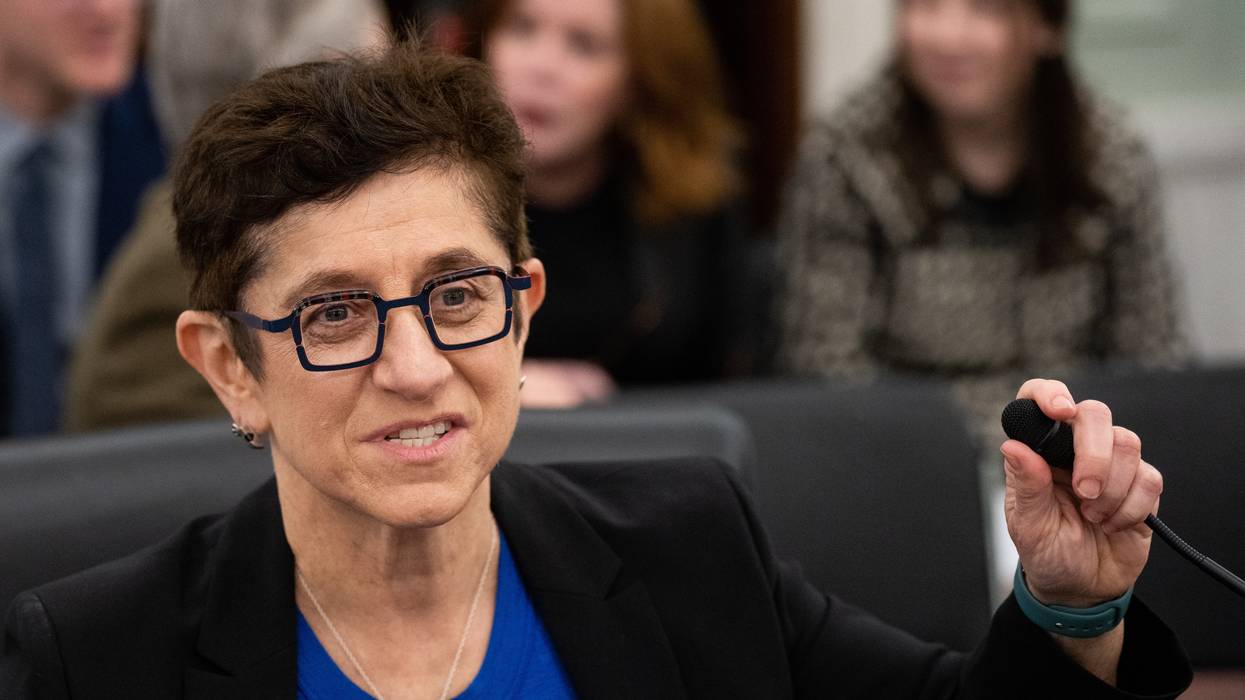
The failure of Democratic senators to advocate for their own nominee means that companies like Comcast and Fox will likely only double-down in the future on the kinds of deceitful tactics they deployed against a nominee who would have been an incredible addition to the FCC.
On Tuesday, Gigi Sohn withdrew her nomination to the Federal Communications Commission.
This ends a two-year fight to put an accomplished public servant in the important fifth seat on the FCC. In the —after nearly 500 days, multiple confirmation hearings, and a relentless industry-orchestrated campaign against her—Sohn didn't have enough votes in the Senate to move forward.
I'm furious—and determined to make sure this doesn't happen again.
They're celebrating today at Comcast and Fox, where their lobbyists deserve most of the credit for concocting lies to derail Sohn's nomination. They falsely portrayed her as radical and divisive, even though her years of experience tell a different story—about a highly regarded expert who has reached across political divides to support communications policies that help people.
Republicans who willfully spread those lies are thrilled, too. Their campaign of vile dog whistles, homophobic innuendo and false outrage worked. In fact, it was too easy.
But they're not the only ones to blame: The failure of Democratic leaders to defend their nominee cost the agency—and the nation—a true public servant. Their missteps and unforced errors were many.
From the start, infighting in the Biden administration delayed the nomination of a new FCC chair and commissioner for months—meaning Sohn wasn't nominated until late October 2021 and then got little time during debates around the infrastructure bills. Instead of moving on this nomination right away when the Biden team had the most political capital—they did it when they had the least.
While the GOP ganged up on her, most Democrats sat back, either using their time on the dais to ask questions about their home states or repeat industry-written talking points.
Then Senate leaders made Sohn endure an unprecedented three confirmation hearings, giving the right-wing noise machine numerous opportunities to badger her while extracting zero concessions from the other side. Despite her composure in the hot seat, this stage let Sohn's opponents test out numerous lines of attack. Sen. Ted Cruz (R-Texas) got endless opportunities to fulminate about her random retweets, while Sen. J.D. Vance (R-Ohio) cosplayed as a culture warrior from his new perch on the Commerce Committee.
While the GOP ganged up on her, most Democrats sat back, either using their time on the dais to ask questions about their home states or repeat industry-written talking points. (Notable and laudable exceptions who came to Sohn's defense include Sens. Ed Markey and Tammy Baldwin.)
Unfortunately, the failure of more Democratic senators to advocate for their own nominee means that companies like Comcast and Fox will likely only double-down in the future on the kinds of deceitful and dirty tactics they deployed against Sohn. What other lessons could they draw from how easily senators folded in the face of easily fact-checked lies and slanders? And what potential FCC nominee would want to subject themselves to this kind of character assassination?
Neither the White House nor Senate Majority Leader Chuck Schumer succeeded in getting the votes Sohn needed when she got through committee and to the verge of a floor vote last year. They didn't put enough pressure on holdout senators or create any real political costs for the holdouts' refusal to back the administration's nominees. Worse still, President Biden and Vice President Harris actually feted ISP execs in the Rose Garden—even as those same companies were sabotaging Sohn.
It says a lot about who they're willing to fight for—and who they won't.
Without real pressure from the top, rank-and-file Democrats invented excuses for why they couldn't vote before the midterms—and, once those were over, immediately recycled the same rationalizations about the 2024 election. As much as I might wish the FCC were a top-tier election issue, exactly zero swing voters are going to the polls thinking about Gigi Sohn. Yet multiple senators acted like a vote for their own party's nominee could sink their reelection chances.
Politicians who should know better all of a sudden took seriously the disingenuous pay-to-slay attacks by sock-puppet front groups (including one led by former North Dakota Sen. Heidi Heitkamp, now on the corporate payroll). I'm not sure what's worse: If they just made these excuses to placate corporate donors, or if they actually believed them.
What does it say when Democratic senators—like Sens. Cortez-Masto, Kelly, Rosen, and Tester, who all failed publicly support Sohn—take the specious claims of a disreputable group like the Fraternal Order of Police more seriously than they do the support of 400 of the nation's largest civil-rights, civil-liberties, labor and public-interest groups? What does it mean when they don't just let the lies fester but actually promote them? It says a lot about who they're willing to fight for—and who they won't.
This defeat has implications that go far beyond the FCC. The Republicans and their Democratic enablers are setting out markers for who's allowed to serve in government. They made clear that public servants will be pilloried while ex-corporate lobbyists sail through. Women and LGBTQIA+ folks—Sohn would have been the first lesbian to serve as an FCC commissioner—will be slandered. Tweeting about police violence can be disqualifying (in the Senate, retweets do equal endorsements). Questioning the propriety of Fox News—even as it's being exposed for aiding and abetting election lies and insurrection—is unacceptable. A basic understanding of U.S. history and racism may be disqualifying.
Of course, this is bad news for the FCC, too.
At a moment when media and tech are intertwined with every facet of our lives, our politics and the very state of our democracy, this vital agency cannot fully do its job. Which is just how the industry wants it.
One of the best things the Biden administration has done since 2021 is securing $65 billion for broadband expansion. FCC Chairwoman Jessica Rosenworcel has been making the most of the hand she was dealt, but a deadlocked FCC makes it harder to implement and maintain those programs and spend those funds in the best way possible. Net Neutrality and the restoration of Title II will remain in limbo without a fifth vote at the agency. As Sohn herself wrote in the statement announcing her withdrawal: "It means that the FCC will not have a majority to adopt strong rules which ensure that everyone has nondiscriminatory access to broadband, regardless of who they are or where they live."
At a moment when media and tech are intertwined with every facet of our lives, our politics and the very state of our democracy, this vital agency cannot fully do its job. Which is just how the industry wants it.
The next test is already here. The Biden administration needs to come up with a new nominee to the FCC, and it may be tempted to nominate an industry-friendly choice—someone who can "get through" and avoid a larger political fight. We must oppose and reject any return to business as usual that furthers industry capture of the FCC.
Instead, we need to demand an independent candidate with public-interest bona fides and a clear commitment to racial justice and civil rights. They must show they're willing to stand up to lies. They must be unequivocal in their support for restoring the FCC's authority, and making sure that the internet is open, affordable, available, and reliable for everyone. They must demonstrate a commitment to engaging the public, not just meeting with lobbyists.
This loss stings. Gigi Sohn deserved better. But we cannot let the industry pick its own regulators ever again.
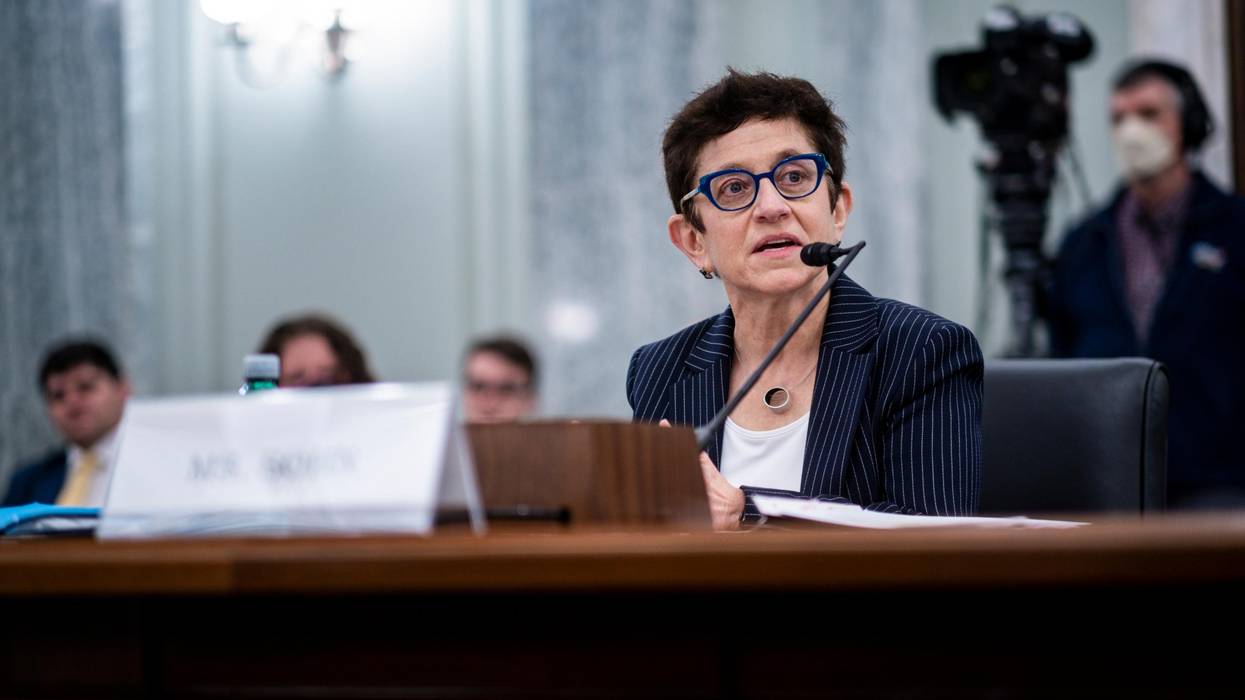
"I could not have imagined that legions of cable and media industry lobbyists, their bought-and-paid-for surrogates, and dark money political groups with bottomless pockets would distort my over 30-year history as a consumer advocate into an absurd caricature of blatant lies."
"I could not have imagined that legions of cable and media industry lobbyists, their bought-and-paid-for surrogates, and dark money political groups with bottomless pockets would distort my over 30-year history as a consumer advocate into an absurd caricature of blatant lies," Sohn said in a statement. "The unrelenting, dishonest, and cruel attacks on my character and my career as an advocate for the public interest have taken an enormous toll on me and my family."
While her announcement came just after U.S. Sen. Joe Manchin (D-W.Va.), a frequent obstacle to his own party's priorities, confirmed Tuesday that he would not support the nomination, Sohn's lengthy statement—shared with The Washington Post—signaled that she decided to bow out after speaking with her family on Monday.
According to Sohn:
Unfortunately, the American people are the real losers here. The FCC deadlock, now over two years long, will remain so for a long time. As someone who has advocated for my entire career for affordable, accessible broadband for every American, it is ironic that the 2-2 FCC will remain sidelined at the most consequential opportunity for broadband in our lifetimes. This means that your broadband will be more expensive for lack of competition, minority, and underrepresented voices will be marginalized, and your private information will continue to be used and sold at the whim of your broadband provider. It means that the FCC will not have a majority to adopt strong rules which ensure that everyone has nondiscriminatory access to broadband, regardless of who they are or where they live, and that low-income students will continue to be forced to do their school work sitting outside of Taco Bell because universal service funds can't be used for broadband in their homes. And it means that many rural Americans will continue the long wait for broadband because the FCC can't fix its Universal Service programs.
It is a sad day for our country and our democracy when dominant industries, with assistance from unlimited dark money, get to choose their regulators. And with the help of their friends in the Senate, the powerful cable and media companies have done just that.
After thanking Biden—who first nominated her to the post in October 2021 and has stood by the choice—as well as the hundreds of organizations and advocates who have supported her throughout the process, Sohn said that "I hope the president swiftly nominates an individual who puts the American people first over all other interests. The country deserves nothing less."
During a media briefing Tuesday afternoon, White House Press Secretary Karine Jean-Pierre praised Sohn.
"We appreciate Gigi Sohn's candidacy for this important role. She would have brought tremendous intellect and experience, which is why the president nominated her in the first place. We also appreciate her dedication to public service, her talent, and her years of work as one of the nation's leading public advocates on behalf of American consumers and competition," said Jean-Pierre, who declined to comment on what's next.
"The abject failure of Democratic leaders to stand up and advocate for their own nominee means that these companies will likely only double down on the kinds of deceitful and dirty tactics they deployed against Sohn."
Meanwhile, advocacy groups that rallied behind Sohn not only expressed disappointment that she won't be on the FCC but also took aim at Democratic leadership for failing to adequately stand up for her in the face of dishonest attacks.
"Gigi would have provided the final key vote needed to move forward on major White House priorities including net neutrality, digital discrimination, privacy, network competition, broadband maps, and the digital divide," said Demand Progress communications director Maria Langholz. "Sohn's nomination was marred by right-wing extremist attacks that centered on misinformation and politics of division and hate rather than her record and role at the FCC. While it would be easiest to blame the right-wing for her nomination failing, there was missing urgency and commitment from Democrats in the White House and Senate."
"With Sohn now out of consideration, we expect the White House to provide a strong nomination in the immediate future," Langholz added. "The American people cannot afford to have this stalemate at the FCC any longer. President Biden must expeditiously move forward a nominee who will be a champion on net neutrality and privacy, and avoid delivering big telecommunications companies a victory in the form of an industry-friendly pick."
Free Press president and co-CEO Craig Aaron similarly said that "they're probably celebrating at Comcast and Fox today, and their lobbyists deserve most of the credit for concocting lies to derail her nomination. Republicans who willfully spread those lies must be thrilled, too. But they're not the only ones to blame: The failure of Democratic leaders to stand up to industry-orchestrated smears cost the agency—and the nation—a true public servant."
"The abject failure of Democratic leaders to stand up and advocate for their own nominee means that these companies will likely only double down on the kinds of deceitful and dirty tactics they deployed against Sohn," he warned. "We're angry about how Sohn was treated, and we're disturbed that Democratic leaders by and large failed to speak out against the lies, bigotry, and innuendo surrounding her nomination. But the answer here is not going back to the way things used to be at the FCC, when the industry got to hand-pick commissioners. Going backward would be a terrible mistake."
"There will be temptation in the weeks ahead to put forward an industry-friendly nominee to avoid a larger political fight. That's how the agency has worked in the past," Aaron added. "But the public—now more than ever—needs an independent voice at this crucial agency, one who won't cave to the industries they are supposed to regulate. Though Gigi Sohn deserved much, much better, we can only hope this moment will finally serve as a wake-up call to the Biden administration and the Democratic Party."
"Democrats promised to restore net neutrality and FCC oversight of telecom monopolies, and instead they caved to corporate interests and homophobic smears."
Fight for the Future director Evan Greer also expressed concern that the development will be followed by an industry-backed pick.
"Let's be perfectly clear: Democrats promised to restore net neutrality and FCC oversight of telecom monopolies, and instead they caved to corporate interests and homophobic smears. The same telecom companies that were caught red-handed funding a flood of fraudulent comments to the FCC and paying for misleading robocalls to senior citizens to kill net neutrality rules now will seemingly get to pick their own regulator, just as they did with Ajit Pai," Greer said, referring to a former FCC chair.
Internet service providers (ISPs) "are under immense pressure to censor legitimate content, including websites with accurate information about abortion care and LGBTQ issues, with state legislatures passing bills demanding ISPs block entire websites," she noted. "Meanwhile, lack of FCC oversight has enabled collection and sale of cel phone location data that puts vulnerable communities at risk of stalking, harassment, and surveillance. A fully staffed FCC could address these issues. Biden's deadlocked FCC is utterly impotent. And marginalized communities will pay the price for Democrats' incompetence and cowardice."
As for Biden's next nominee, Greer said that "we will fight tooth and nail to ensure that they don't pick another Ajit Pai clone. We demand an FCC commissioner that will fight for the public interest, and one that has no ties to the telecom industry that the agency is supposed to regulate."
This post has been updated with comment from Fight for the Future.
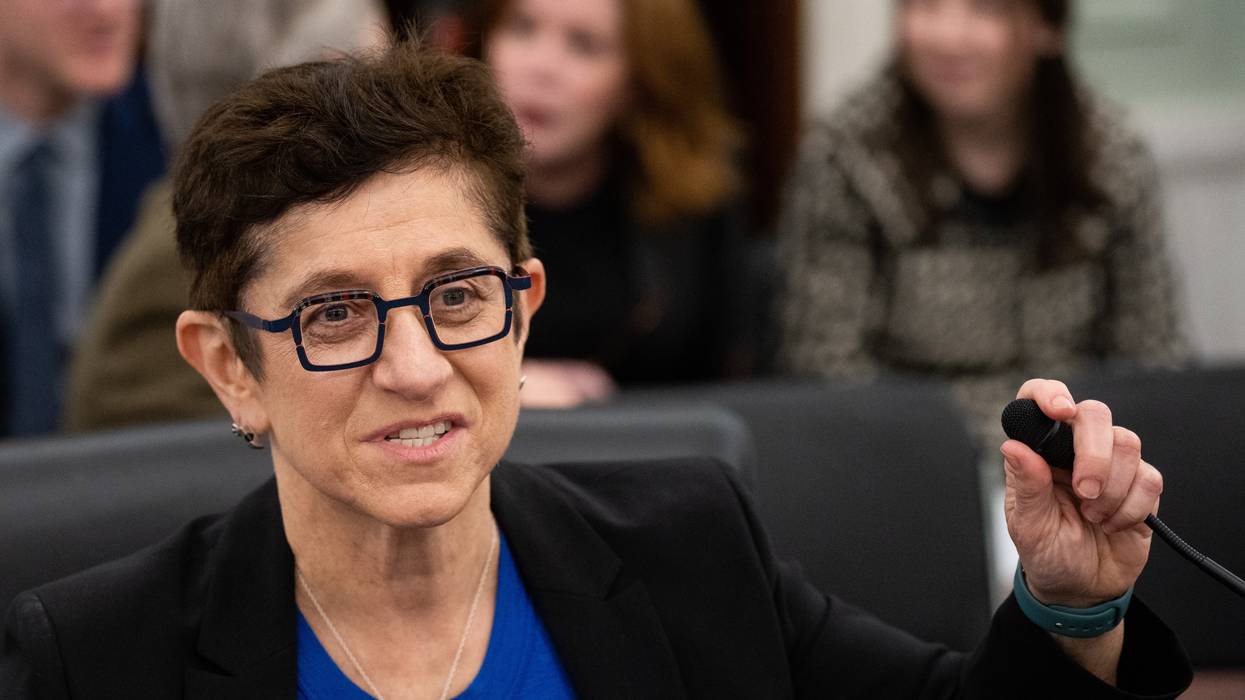
"The Commerce Committee and then the full Senate should advance this nomination without further delays, which only benefit those big companies orchestrating this impasse," declared one advocate.
The U.S. Senate's refusal to confirm Gigi Sohn in the nearly 500 days since President Joe Biden first nominated her to the Federal Communications Commission stands in stark contrast to the chamber's treatment of other candidates, including Ajit Pai.
Sohn on Tuesday attended her third U.S. Senate Committee on Commerce, Science, and Transportation hearing—during which Sen. Ted Cruz (R-Texas), the panel's ranking member, took aim at not only the candidate but also digital rights group Fight for the Future.
Meanwhile, advocacy groups supporting Sohn in the face of a telecommunications industry smear campaign and homophobic attacks yet again blasted the Senate's delay—which has not deterred Biden, who renominated Sohn last month.
Caitlin Seeley George, Fight for the Future's campaigns and managing director, compared the stalled votes for Sohn to the Senate's confirmation of GOP commissioners Ajit Pai and Nathan Simington under former President Donald Trump.
"It is absolutely absurd that Gigi Sohn, a dedicated advocate for the public interest, has gone through three hearings in front of the Senate Commerce Committee," she argued, "when controversial nominees with massive conflicts of interest like Ajit Pai and Nathan Simington sailed through Senate approval (almost as absurd as Sen. Cruz calling out Fight for the Future because we hold lawmakers from both sides of the aisle accountable!)."
Sohn, an attorney who co-founded the advocacy group Public Knowledge, previously served as counselor to former FCC Chair Tom Wheeler, who was appointed in 2013 by then-President Barack Obama.
Pai—an ex-Verizon attorney who destroyed net neutrality rules—was initially nominated to the FCC in 2011 by Obama and unanimously confirmed by the Senate the next year. After Trump took office in January 2017, he picked Pai as FCC chair, then renominated him to the leadership role that March, which the Senate confirmed that October.
The month after Trump lost to Biden in 2020, the Senate confirmed the outgoing president's nomination of Nathan Simington to the FCC, despite critics' warnings. Fight for the Future's Evan Greer said at the time that he was "even worse than Ajit Pai." Simington remains at the FCC, along with Republican Brendan Carr and Democrats Geoffrey Starks and Jessica Rosenworcel, the current chair. Sohn addressed the impact of the vacancy for the fifth commissioner post in her testimony Tuesday.
"The FCC has been without a majority for the entirety of the Biden administration—over two years—at a time when closing the digital divide is front and center," she said. "There are too many important issues in front of the commission to lack a full complement of members, including improving the broadband maps, fixing the Universal Service Fund, closing the homework gap, ensuring fair access to broadband, and protecting consumers' privacy. Americans deserve a full FCC where I could play a critical role in addressing every one of these, but time is of the essence."
Sohn also said that "I believe deeply that regulated entities should not choose their regulator. Unfortunately, that is the exact intent of the past 15 months of false and misleading attacks on my record and my character. My industry opponents have hidden behind dark money groups and surrogates because they fear a pragmatic, pro-competition, pro-consumer policymaker who will support policies that will bring more, faster, and lower-priced broadband and new voices to your constituents."
Rights groups echoed Sohn's criticism of industry attacks on her and agreed that the Senate needs to act urgently. As Seeley George put it: "There is no question that Gigi Sohn is qualified to sit on the FCC. The only reason we are going through yet another hearing is because telecom companies, and the lawmakers shilling for them, know that when she is appointed she will put what's best for the American people over industry profits."
"The opposition to Sohn has been unprecedented, and has included personal, blatantly homophobic attacks (something we're disappointed Democratic lawmakers did not condemn during the hearing). But, as Sohn said today, regulated entities should not get to pick their regulator," she continued. "Over the past year and a half the FCC could have been getting to work to restore net neutrality, ensure universal access to affordable broadband, address unregulated use of cellphone location data and the risk it poses to abortion rights, and protect the public from the abuses of telecom monopolies."
Free Press Action general counsel and vice president of policy Matt Wood similarly asserted that "confirming Gigi Sohn to serve at the FCC is the best thing the Senate can do to ensure media, tech, and broadband policy actually serves the public. No other nominee in the FCC's history has had to wait so long for a confirmation vote. She is obviously and supremely qualified to serve as a watchdog for ordinary people across the country."
He continued:
As commissioner, Sohn will fight on behalf of working families trying to pay their high monthly phone and internet bills. She will work to ensure that the benefits of broadband reach everyone, and to curb the runaway media consolidation that has decimated local journalism and harmed Black and Brown communities in particular. Without Sohn's crucial fifth vote at the agency, the FCC cannot fully accomplish its mission.
Sohn's impeccable credentials are the very things that have compelled the telecom and broadcast industry to hold her nomination in limbo. We've had to wait for far too long—with endless delays and bigoted attacks that have prevented the deadlocked agency from adopting some crucial policies that would help people connect and communicate.
After calling out Cruz for "aiding and abetting the smear campaign designed to benefit the massive communications firms subject to FCC oversight," Wood declared that "the Commerce Committee and then the full Senate should advance this nomination without further delays, which only benefit those big companies orchestrating this impasse."
According to Wood, "If the Senate genuinely wants to improve the lives of internet users, cellphone customers, TV watchers, and radio listeners—aka, everyone—it can start by confirming this excellent public servant to the FCC immediately."

"Homophobic and sexist fearmongering should have no place in the consideration of Gigi's qualifications," one coalition wrote to Senate leaders. "It's morally corrupt and antithetical to the high virtue of the chamber."
Digital and LGBTQ+ rights groups are condemning homophobic attacks against U.S. President Joe Biden's Federal Communications Commission nominee Gigi Sohn, whose Senate confirmation has been stalled for over a year largely due to opposition from the powerful telecom industry.
The LGBTQ Victory Institute and 21 other organizations sent a letter Monday to Senate Majority Leader Chuck Schumer (D-N.Y.), Minority Leader Mitch McConnell (R-Ky.), and the chair and ranking member of the Committee on Commerce, Science, and Transportation, Sens. Maria Cantwell (D-Wash.) and Ted Cruz (R-Texas), respectively.
Noting that Biden first nominated Sohn to the FCC in October 2021 and has continued to support her—formally renominating the candidate last month—the groups wrote that "we share the administration's view that Gigi is the right leader for this role given her extensive qualifications, superior leadership qualities, and deep technical background."
"Gigi is the right leader for this role given her extensive qualifications, superior leadership qualities, and deep technical background."
"Gigi is one of the nation's leading public advocates for open, affordable, and democratic communications networks. She demonstrated her dedication to ensuring that every American household has affordable and robust broadband internet for 30 years," they pointed out, while also stressing the necessity of a "fully functioning FCC."
The letter highlights that "Gigi's nomination has recently come under attack, not on the basis of qualifications or substance, but because she is openly LGBTQ+. Her barrier-breaking nomination as the first LGBTQ+ nominee to the FCC is being met with homophobic tropes and attacks, against herself and her family, in an attempt to stall her nomination. That cannot stand."
"Homophobic and sexist fearmongering should have no place in the consideration of Gigi's qualifications. It's morally corrupt and antithetical to the high virtue of the chamber," the letter concludes. "We call upon every member of the Senate to condemn homophobia and sexism and consider Gigi's nomination on its merits. We urge members to confirm Ms. Sohn to the seat she is so qualified for without delay."
The letter followed an opinion piece published Thursday by Fast Company, in which Fight for the Future director Evan Greer and National Digital Inclusion Alliance communications director Yvette Scorse called on both Biden and Senate Democrats to "stand up to homophobic attacks" on Sohn.
The pair explained that Sohn first endured the telecommunication industry's smear campaign—and now, "right-wing news outlets, emboldened by the internet service provider-funded smears, have crossed the line: They've launched a new round of blatantly homophobic attacks on Gigi that recycle QAnon and extreme right tropes conflating LGBTQ identity with deviance and predation."
As Greer and Scorse detailed:
Fox News, The Daily Mail, Breitbart, and other outlets have run nearly identical stories claiming that Gigi has "opposed" efforts to combat sex trafficking. Even these news outlets, who play fast and loose with the truth, have a hard time backing up that headline. Their argument is that Gigi sits on the board of the Electronic Frontier Foundation (EFF), a highly respected digital rights organization known for fighting to defend free speech and privacy online, and EFF opposes SESTA/FOSTA, legislation passed in 2018 that claimed to address sex trafficking. The rest of the articles go to melt down over the fact that EFF once gave an award to a consensual adult dominatrix for her advocacy work around issues of online free speech and human rights, as if that somehow implicates Gigi in some sort of scandal.
Here's the thing: EFF isn't the only group that opposes SESTA/FOSTA. The legislation has been condemned by almost every major human rights organization in the world including the ACLU, Human Rights Campaign, and the Wikimedia Foundation, because it has actually made it harder for the government to curtail online sex trafficking, while having devastating effects on online free speech and marginalized communities. A report issued by the U.S. government itself indicated that the law has not been useful in aiding prosecutions, and has almost never been used. Insinuating that opposition to SESTA/FOSTA somehow means support for sex trafficking is absurd on its face. Many anti-trafficking organizations also oppose the law, saying it hurts more than it helps. Even the Trump administration's Department of Justice agreed that the law was undermining their efforts to combat trafficking.
But none of that matters, because the FCC has absolutely no jurisdiction in this area whatsoever. Gigi has never taken a position on SESTA/FOSTA or any similar legislation, and EFF opposed SESTA/FOSTA long before Gigi became a board member. None of this is remotely relevant to Gigi's candidacy for a position at the FCC, the agency that oversees phone and cable companies.
The pair added that "we don't expect any better of Fox News pundits who want to block Gigi's appointment. But we are appalled by the complicit silence of the White House and Senate Democrats."
Their article came a day after Fight for the Future and Demand Progress launched a petition that similarly outlined recent attacks on Sohn, urged Biden and Senate Democrats to stop being "shamefully silent," and warned that "if they don't speak up now and condemn these attacks, this will become a go-to strategy for bigots looking to sink any LGBTQ person's nomination."
In a statement announcing the petition, Demand Progress communications director Maria Langholz said that "we're now closer to the end of President Biden's first term than we are to the beginning. These past two years, Democrats have controlled both the White House and Senate, yet the FCC remains without its fifth and final commissioner. The public is being failed."
Langholz emphasized that "in the absence of action, the FCC will stay deadlocked and the public will suffer the consequences" while "unhinged and discredited attacks on Ms. Sohn will continue to percolate in this vacuum."
“These attacks are as baseless as they are dangerous, and underscore more than ever the time is now for Senate leadership to end this delay," she added. "The Senate must reject the cynical and hate-filled politics the public has grown so tired of, and get to the actual work of governing by finally confirming Gigi Sohn to the FCC."
"The Senate must move swiftly to confirm Gigi Sohn so that the FCC can get back to work protecting people's basic human rights and ensuring access to affordable, open Internet for all," said Evan Greer of Fight for the Future.
Digital and consumer rights advocates on Wednesday called on the U.S. Senate to swiftly confirm longtime public advocate Gigi Sohn to the Federal Communications Commission after President Joe Biden announced her nomination for a second time, more than a year after the telecom industry launched a spending blitz to keep Sohn from joining the regulatory panel.
Biden first nominated the lawyer and longtime net neutrality defender in October 2021, but with a 50-50 deadlock in the Senate before the midterm elections and some corporate Democrats targeted by telecom lobbyists who pushed them to oppose Sohn, the president did not garner enough support for his nominee last year.
Following the elections of Sens. John Fetterman (D-Pa.) and Raphael Warnock (D-Ga.), Sohn could have a better chance of being confirmed this time around.
"The new Senate has a renewed mandate to serve the public interest. It can start by confirming Sohn immediately."
"After an unacceptable delay of over a year, the Senate must move swiftly to confirm Sohn so the FCC is empowered to prevent consumer abuses and work toward an open and affordable internet," said Maria Langholz, communications director for Demand Progress. "All eyes are on the Senate. It's time for the Senate to confirm Gigi Sohn, a public interest champion, and dismiss outright the bought-and-paid-for, false controversies spun up by the telecom industry and its lobbyists."
As Common Dreams reported in April, a nonprofit founded by former Sen. Heidi Heitkamp (D-N.D.) spent $250,000 on a social media campaign targeting Sens. Catherine Cortez-Masto (D-Nev.) and Mark Kelly (D-Ariz.), claiming Sohn was insufficiently committed to expanding rural broadband access. Two of Heitkamp's biggest donors when she was in office were AT&T and Comcast, which have fought against restoring net neutrality protections that were gutted by the FCC during the Trump administration.
With the FCC deadlocked, the panel has been unable to vote on the protections, which keep internet service providers from blocking or throttling service and offering paid "fast lanes" for certain websites.
The delay in confirming Sohn has "harmed millions, preventing the deadlocked agency from passing or strengthening crucial policies that would help people connect and communicate," said Craig Aaron, co-CEO of Free Press Action.
Contrary to the claims of Heitkamp's One Country Project and other telecom-aligned groups, said Aaron, as a commissioner Sohn will "ensure that the benefits of broadband reach everyone" as well as fighting "on behalf of working families trying to pay their rising monthly bills" and curbing "the runaway media consolidation that has decimated local journalism and harmed Black and Brown communities."
"Industry spent millions of dollars on astroturf groups to repeatedly misrepresent Sohn's record in the media and on Capitol Hill," added Aaron. "They've lied repeatedly about her record and principles—but their corrupt and dirty tricks aren't working anymore. The new Senate has a renewed mandate to serve the public interest. It can start by confirming Sohn immediately."
Evan Greer, director of digital rights group Fight for the Future, denounced the "smear campaign" that led to an "inexcusable" delay in Sohn's confirmation last year, helped in part by Senate Commerce Committee Chair Maria Cantwell's (D-Wash.) decision to hold a second hearing on Biden's nominee last February instead of bringing the nomination to the Senate floor for a vote.
"There's no mystery about what has caused the inexcusable delay in confirming Sohn, a highly qualified nominee with decades of experience and a powerful track record advocating for transparency and accountability," said Greer. "Gigi Sohn has been the target of a dark money smear campaign funded by telecom giants who want to pick their own regulator. Embarrassingly, Senate Democratic leadership have allowed these unfounded attacks to drag out the process."
While the Biden administration and Senate Democrats have said protecting the rights of those who seek abortion care are top priorities, Greer noted, they have allowed a delay that's been "disastrous for privacy and reproductive rights."
"The FCC has significant authority to protect the privacy of people seeking and providing abortions by cracking down on the collection, sale, and sharing of cell phone location data," she said. "But right now the agency is sitting on its hands, because it can’t do any of these things without a fifth commissioner."
"Enough is enough," she added. "The Senate must move swiftly to confirm Gigi Sohn so that the FCC can get back to work protecting people's basic human rights and ensuring access to affordable, open Internet for all."

Perhaps you've noticed there are several new phone companies offering very low-cost cell service, some for as little as $5/month. There's competition in the cellphone space that's driving down prices and driving up service, at least in many parts of the country.
Why are phone and internet service price-competitive around the world but here in America that competition is limited to cell phone service?
So why isn't the same thing happening on the internet side, with the company that brings the web into your home? Why can't Americans in as much as half the country pick among multiple companies offering high-speed internet and get the one whose price and service best matches their needs?
Similarly, why is it that in France , for example, internet service can run as little as $15 a month and bundles--for example, 2 cell phones with 2 different numbers, free unlimited international calling, no internet data caps, unlimited high-speed broadband into your home, and hundreds of cable TV channels--are as little as $90 a month?
Why are phone and internet service price-competitive around the world but here in America that competition is limited to cell phone service?
It didn't used to be this way here in the USA.
For those too young to remember, as recently as the late 1990s and early 2000s you could pick from dozens of phone companies to bring phone calls into your home and from hundreds of internet service providers (ISPs), all competing for your business with low prices and great, often local service.
When Louise and I moved to Montpelier, Vermont in 1999 we selected a local company based a few blocks from us in town to provide both phone and internet service to our home. Vermont was once, briefly, a sovereign nation so this company played on that with their name: Sovernet.
The bundled package cost us $25 a month (compared with Bell Atlantic, who charged more) and when I had a problem and called their service number, a guy a few blocks away answered the phone (and twice came to our house, at no charge, to help me figure things out).
And here's the amazing part: while Sovernet was giving Louise and me (and our radio show, started from our home in 2003) world class phone and internet service, the wires that carried them into our home were owned by Bell Atlantic (which later became Verizon).
Phone companies are regulated as what's called "common carriers" by the FCC under Title II of the Telecommunications Act. That means they can't charge you based on what you're saying or with whom you're talking. In fact, they can't even listen in on your calls.
The content of your calls is your own damn business and nobody else's.
While Bell Atlantic owned the "pipe" or cable carrying phone service into our home, they had to allow us to pick who we wanted to connect us to either the national telephonic system or the nation's internet.
We picked Sovernet out of dozens of possible providers, and Sovernet then paid a small monthly fee to Bell Atlantic for access to my home through their wires.
I don't know the math from back then, but if, to just guess at numbers, Sovernet was paying Bell Atlantic a $5/month "access fee" to use the wire coming into my home, they could use the remaining $20 of the $25/month they charged us to provide service and make a profit for themselves.
And Bell Atlantic, of course, had set their monthly access fee (or whatever it was called back then) high enough to cover the cost of maintaining the line to my home plus a small profit for themselves. Everybody won.
(But during the last years we lived in Vermont around the time of Bush's invasion of Iraq [as I recall], their legislature gave monopoly power to the phone companies that owned the wires, locking out competitors. The result of big-money lobbying legalized by theSupreme Court, this happened in state after state across the country.)
That wide variety of competition for your business is also how it used to be in America with internet service, because it was entirely carried over telephone lines.
For a while, CompuServe was the nation's largest internet service provider (and a business I owned moderated around 30 forums for them). Then AOL came along and, through aggressive marketing, price competition, and a great email product that endures to this day, replaced CompuServe as the nation's number one ISP.
Soon there were literally thousands of competitors. All over common carrier phone lines. Everywhere in the country.
So, what changed? Why is it that the only "wired" internet service I can buy in my neighborhood is from one single company (this is true of large parts of America) and I therefore pretty much must use them as my internet service provider (ISP)?
In large part it's because the companies bringing most of us the internet started out as Cable TV companies, and Cable TV was never regulated the same as phone companies. If you bought your cable from Comcast or AT&T, they were the only ones who could put a cable box/decoder in your home and become your singular source for TV programming.
One pipe into your house, one company controlling every aspect of what goes through it. And spying on you to make extra profits.
Here's where we get back to that somewhat wonky Daily Take I wrote to you last week about calling your two senators to get Gigi Sohn on the FCC.
When Donald Trump and former Verizon lawyer Ajit Pai (who Trump elevated to chairman of the FCC) ruled that the internet was no longer regulated under common carrier rules of Title II (as it had been for a few brief years under Obama), they kept you and me locked into the company that owns the wire that comes into our house. We have no choice.
Every ISP in the nation can now watch and record every single website you visit (even in "Private Mode"), track how long you're there, and record every message you send or receive. They can sell this information to anybody they choose and data brokerages have become a billion-dollar business, as I laid out in my book on Big Brother.
And there's no way for you to ever find out what they've recorded or what they've done with it because they simply refuse to make that information available, unless or until a government agency serves them with a subpoena and it ends up being used against you in court.
Your phone company can't listen into your phone calls because wiretapping is illegal, giving you privacy protections dating back to the 1930s. But that's not true with your internet provider, thanks in part to Trump, Pai, and the GOP.
And those companies are fighting like hell to keep it that way.
Monopolies are cash cows, as I laid out in The Hidden History of Monopolies: How Big Business Destroyed the American Dream. And ISPs are among the most profitable monopolies in the nation.
In most of the rest of the developed world that's illegal--whoever owns the cable into your home can charge an ISP an access fee but can't block them out--which is why internet service in most other developed countries is competitive, with hundreds of providers. And, with that competition comes lower prices and better service.
President Biden's choice for the open slot on the FCC, Gigi Sohn, is on record wanting Net Neutrality, which could result in ISPs being redefined back to being common carriers. So are the two sitting Democratic FCC commissioners. But they are blocked by the two Republicans, who oppose Net Neutrality.
Which is why the big ISPs are throwing millions every day at Congress right now to block her confirmation by the Senate, and keep the Democrats from gaining a majority at the FCC, something that previous administrations easily attained.
Let's join the rest of the developed world and bring competition to the business of providing the internet to our homes and businesses. And get them out of the business of spying on our every online action just to make an extra buck.
Call your two senators at 202-224-3121 and ask them to approve Gigi Sohn for FCC Commissioner during this final lame duck session of Congress.

You've probably never heard of Gigi Sohn, but America needs her and we need her now. This is a call to immediate action to restore Net Neutrality and stop a tiny slice of corporate America from spying on us and our lives.
Call your senator today at 202-225-3121 and tell them to support the nomination of Gigi Sohn to the FCC.
Donald Trump's first year in office was a big boon for the predatory companies that bring the internet into our homes and onto our cell phones, commonly referred to as Internet Service Providers or ISPs.
Because these companies stand between you and the internet, they have tremendous power over your online experience. They can choose what websites load fast for you and which take forever. They can track every single site you visit--including how long you're on each site--and record every single keystroke you send or receive over the internet.
Prior to Trump coming into office, it was illegal for Comcast or AT&T, for example, to slow down websites who hold political views those companies dislike or give lightning-fast loading time for sites that are closer to the companies' typically conservative politics.
On the commercial level, it was also illegal prior to Trump's presidency for your ISP to slow down pretty much everything that comes into your home but offer super-fast throughput to any website that kicked back to them a fee for a "fast lane" privilege.
Today, this sort of manipulation of your internet experience is perfectly legal. Trump and the GOP saw to that in December 2017, with help from former Verizon attorney Ajit Pai, who Trump elevated to chairman of the FCC.
Not only can your internet service provider pick and choose which websites you'll find pleasant or difficult to read, they can also track every site you visit, every keystroke you send or receive, and every email you compose or read.
They can store that data for as long as they want and can sell it to anybody they want. (There a few new state laws that somewhat limit this, but at the federal level and in most states it's a total wild west for the ISPs and prosecutions are nonexistent.)
All these activities are illegal across the European Union which embraces Net Neutrality, but this is America where five Republicans on the Supreme Court gave giant telecom companies the legal ability to bribe both Trump and any members of Congress they chose.
As a result, these billion-dollar-behemoths have spent millions "lobbying" and "making campaign contributions" to get to this point.
Right now, about the only way around their spying and speed control is to purchase and install on your computer or phone a Virtual Private Network or VPN, which uses encryption and its own servers to conceal your usage and data from your ISP. But many VPNs also spy on you and--particularly the "free" ones--also sell your information to giant data brokers and advertisers as their basic business model.
Reputable ones, however, like ExpressVPN (disclosure: I have used them for almost a decade and they have recently advertised on my program), have servers which are not even capable of tracking the sites you visit or the data you send and receive over the net. They just keep you safe from your own ISP.
This shouldn't be necessary.
Now the grim age of Trump and Pai are behind us, and President Biden has appointed Gigi Sohn to the FCC to clean up Trump's mess. She's an open advocate for "net neutrality," the law before Trump came into office, that requires ISPs to treat all internet traffic the same. It's also possible she would lead the FCC to do something about ISPs spying on us and selling our information.
But first she needs to make it through Senate confirmation.
And the more money the ISPs spread around Washington, DC, the more flipped out about Gigi Sohn the Republicans become. They've even begun attacking her for being openly lesbian, as if that has someting to do with how she'd perform her job.
All fourteen Republicans on the Senate Commerce, Science, and Transportation Committee that vets FCC nominations are opposed to her. John Thune, who apparently never saw a corporate donation he didn't like, recently said:
"In Ms. Sohn, President Biden has nominated someone who cannot fulfill part of the responsibilities of FCC commissioner, and whose record strongly suggests that she cannot be relied upon to fulfill any of her responsibilities in an impartial manner."
Committee members Ted Cruz, Mike Lee, Ron Johnson, and Rick Scott all seem equally skeptical, which will probably leave Kyrsten Sinema the swing vote on the panel.
Comcast has gone so far as to hire former Democratic Senate Majority Leader Tom Daschle to lobby on "the status of FCC nominations," along with a former Arizona legislative colleague of Senator Sinema, and Joe Manchin's former top aide, according to The Washington Post.
On the other hand, over 250 good government and consumer advocacy groups have written to the leaders of the Senate and this committee through which her nomination must pass, urging them "to bring to the floor the confirmation vote of Gigi Sohn for the Federal Communications Commission (FCC) before Congress adjourns."
"We call on the Senate," they add, "to give the consideration that is due to this highly qualified individual, who has dedicated her career to ensuring consumers have access to communications services available to everybody, regardless of income, race, ethnicity, gender identity, sexual orientation, geography, or political viewpoint. Her life's work is the embodiment of the FCC's mission, and we simply cannot have a less-than fully functioning FCC to persist any longer."
For a great in-depth story about Sohn, check out this piece published yesterday at The Daily Dot. But don't expect to see much or even any coverage of this nomination by mainstream media, who in many cases have interlocking business deals with our nation's ISPs.
If we want to recover our privacy and give small, progressive websites an even playing field against giant media and online players like the Murdoch empire (which has trashed Ms. Sohn in The Wall Street Journal, the New York Post, and on Fox "News") we need to push the senate now.
Call your senator today at 202-225-3121 and tell them to support the nomination of Gigi Sohn to the FCC.
Time is running out.
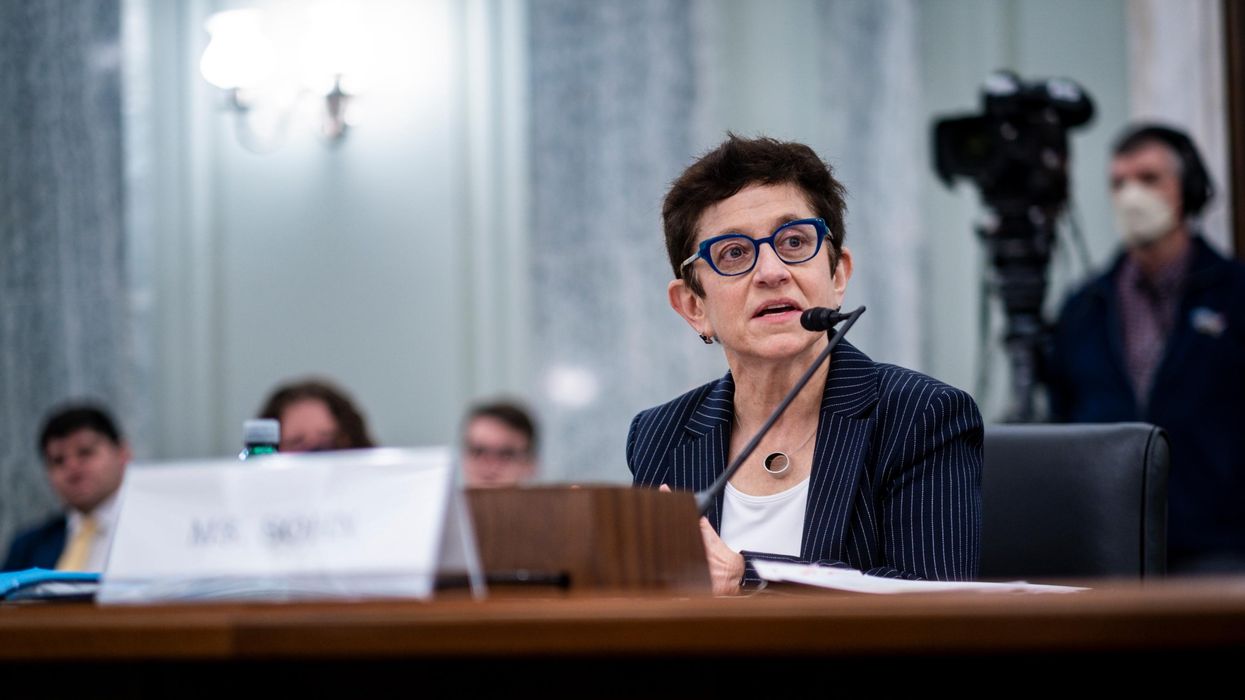
A coalition of nearly 250 advocacy groups sent a letter Friday urging U.S. Senate leaders to quickly confirm Democratic nominee Gigi Sohn as the fifth commissioner at the Federal Communications Commission following a year of relentless attacks on the open internet champion from telecom giants and right-wing media outlets.
"She's the decisive vote we need to close the digital divide, lower the cost of broadband, and hold companies like Comcast and AT&T accountable."
Twenty-one months into President Joe Biden's tenure, the FCC is still hampered by a partisan 2-2 divide. The ongoing lack of a Democratic majority at the key regulatory agency has undermined White House-backed efforts to secure universal access to high-speed internet and restore Obama-era net neutrality rules gutted by the Trump administration.
"The FCC needs a full commission as it begins to deliberate on upcoming critical decisions that will have profound impacts on the economy and the American people," wrote the coalition, which includes consumer protection and civil rights organizations such as Fight for the Future and MediaJustice.
The groups implored Senate Majority Leader Chuck Schumer (D-N.Y.), Senate Minority Leader Mitch McConnell (R-Ky.), and Sens. Maria Cantwell (D-Wash.) and Roger Wicker (R-Miss.)--the chair and ranking member, respectively, of the Senate Committee on Commerce, Science, and Transportation--to bring Sohn's FCC confirmation vote to the floor "before Congress adjourns."
"We call on the Senate to give the consideration that is due to this highly qualified individual, who has dedicated her career to ensuring consumers have access to communications services available to everybody, regardless of income, race, ethnicity, gender identity, sexual orientation, geography, or political viewpoint," the letter states. "Her life's work is the embodiment of the FCC's mission, and we simply cannot [allow] a less than fully functioning FCC to persist any longer."
Notably, former President Donald Trump tapped Ajit Pai to lead the FCC on the fourth day of his term, and by December 2017, the corporate-friendly commissioner was giving internet service providers the power to block or slow down certain websites--opening the door to charging extra fees for access to "fast lanes," which would betray the principle of treating online traffic equally.
By contrast, Biden waited until October--nine months into his term--to name then-acting FCC Chair Jessica Rosenworcel as the agency's permanent leader and nominate Sohn to fill the last seat on its five-person board. While Rosenworcel was confirmed in December, Sohn has faced a barrage of opposition since being nominated nearly one year ago.
Greg Guice, the director of government affairs at Public Knowledge--which was co-founded by Sohn and signed the letter--called the campaign against the nominee "insane," though he acknowledged that it's fueled by corporate opposition to Sohn's progressive policy positions.
Lobbyists, Guice told The Washington Post on Friday, "know that being down one seat means they can better control the agenda."
For the past year, Sohn, a distinguished fellow at the Georgetown Law Institute for Technology Law & Policy and longtime public interest advocate, has "been frequently attacked as a partisan in publications including Fox News, the New York Post, and The Wall Street Journal op-ed pages," the Post noted. "The process has taken a personal toll, opening Sohn up to threatening phone calls and emails and name-calling. Sohn, who would be the first openly gay FCC commissioner, has also faced attacks on her sexual orientation."
Sohn's nomination has been strongly opposed by GOP lawmakers, with all 14 Republicans on the Senate Commerce Committee refusing to advance her nomination.
Related Content

In addition, "some companies appear to be taking steps to target moderate Democrats who could decide her nomination," the Post reported. For instance, "Comcast this year paid former Senate Majority Leader Tom Daschle (D-S.D.) and his firm $30,000 to lobby on the 'Status of FCC nominations,' among other issues, according to a July disclosure filing. Sohn is the only pending nomination for the commission."
According to the newspaper:
The company in January also tapped a former state lawmaker who served alongside Sen. Kyrsten Sinema (D-Ariz.), widely seen as a crucial swing vote on the Sohn nomination, to lobby on FCC nominations. The filing disclosing the lobbying focus was later resubmitted and amended to scrub mention of the FCC nomination, as news outlets reported at the time. Comcast also retained Larry Puccio, the former top aide to Sen. Joe Manchin (D-W.Va.), another critical Democrat to lobby on telecommunications issues, though it did not mention nominations.
Preston Padden, a former top executive at Fox and Disney, said he could recall no other occasion where companies "microtargeted" specific lawmakers to oppose a FCC nominee.
"What Comcast has done to Gigi Sohn in my experience is absolutely unprecedented," Padden said.
"Don't be fooled by the latest Comcast-funded talking points," Joshua Stager, policy director at Free Press Action, which signed the letter, said in a statement. "The companies lobbying against Gigi Sohn are simply trying to do one thing: keep the FCC deadlocked for as long as possible."
"Sohn is an exceptionally qualified nominee and it's well past time to confirm her," said Stager. "We need a fully functioning FCC."
Friday's letter notes:
Over Ms. Sohn's 30 years of experience in telecommunications, broadband, and technology policy, she has shown a strong commitment to the First Amendment, and proven to be a leader in promoting innovation, U.S. jobs, and a strong economy. She has regularly worked with organizations representing diverse media interests and across the aisle to ensure all voices and views are heard both as a consumer advocate and as a government official...
Ms. Sohn has also worked extensively during her career to expand broadband access to those who can't afford it. Her work with industry and members of Congress in developing programs which support low-income Americans, including those in rural and tribal lands, is an example of her commitment to work with all sides to arrive at commonsense solutions. With the FCC having been tasked by Congress to ensure all Americans gain access to open, affordable, 21st-century ready broadband service under the bipartisan infrastructure law, the agency will benefit from Ms. Sohn's involvement as it works to expand work and business opportunities to Americans in unserved and underserved areas.
Stager said that "the hundreds of groups demanding Sohn's confirmation know that she's the decisive vote we need to close the digital divide, lower the cost of broadband, and hold companies like Comcast and AT&T accountable."
"Sohn is a dedicated public servant who won't cater to industry--which is why some of the nation's biggest phone and cable companies are spending tens of millions of dollars to lobby against her nomination," he added.
"We need a fully functioning FCC."
AT&T, Comcast, Verizon, and T-Mobile have spent more than $23 million lobbying Washington so far this year, according to Open Secrets.
Stager's assessment was echoed by David Segal, the founder of Demand Progress, another signatory.
The telecom lobby "still wields extraordinary political power" in Washington, which companies have used to thwart efforts to combat their "increasingly extractive business models," Segal told the Post, adding that the industry stands to benefit from an FCC without Sohn.
"The Biden administration has been strong on competition policy, and the FCC has important jurisdiction there that can't be deployed to full effect without a full commission," said Segal.
The absence of a Democratic majority at the federal agency tasked with reining in the telecommunications industry has coincided with a wave of corporate consolidation, including Amazon's $8.5 billion acquisition of MGM Studios, and AT&T's $43 billion merger of WarnerMedia and Discovery.
"It's outrageous that such underhanded tactics have kept people without the policies and protections they need to connect and communicate," Stager said.
"Sohn has a well-earned reputation for bipartisanship and consensus-building, which is why she has been endorsed by such a wide array of people and organizations from across the political spectrum," he added. "What's more, her confirmation would break barriers for the LGBTQIA+ community, helping the federal government better reflect the people it serves. Senate Majority Leader Schumer needs to call a vote on Sohn's confirmation as soon as possible."