

SUBSCRIBE TO OUR FREE NEWSLETTER
Daily news & progressive opinion—funded by the people, not the corporations—delivered straight to your inbox.
5
#000000
#FFFFFF
To donate by check, phone, or other method, see our More Ways to Give page.
Daily news & progressive opinion—funded by the people, not the corporations—delivered straight to your inbox.

"The very limited progress we've seen so far in the negotiations at COP16 is insufficient to address the very real implications of getting this wrong," one expert said.
As a major international biodiversity summit approaches its Friday conclusion, environmental advocates fear that world leaders will not make the conservation and financial commitments needed to halt the destruction of nature.
The 16th meeting of the Conference of the Parties (COP16) to the Convention on Biological Diversity launched in Cali, Colombia on October 21. It is the first international meeting since nations pledged to protect 30% of land and ocean ecosystems by 2030 and generate $700 billion a year to fund the protection of nature, with a smaller goal of $200 billion per year by 2030.
Yet nations are not on track to meet these goals, even as studies released this month warn that vertebrates have declined on average by nearly three-quarters in the last half-century and that over a third of analyzed tree species are at risk of extinction.
"Each passing day without the fulfillment of agreed commitments is a missed opportunity to protect biodiversity."
"The very limited progress we've seen so far in the negotiations at COP16 is insufficient to address the very real implications of getting this wrong," Yadvinder Malhi, a University of Oxford professor of ecosystem science, told The Guardian. "Biodiversity is continuing to decline at an alarming rate. I really hope that the crunch discussions this week yield those commitments, for the sake of a flourishing future for people and for our planet."
World leaders failed to meet a single one of the biodiversity targets set for 2020 in Aichi, Japan. There was hope, after nations agreed to a Global Biodiversity Framework during the Kunming-Montreal talks that concluded in December 2022, that the next decade would be different. Yet progress so far has been lagging.
Ahead of COP16, nearly 85% of countries missed the deadline to submit new national biodiversity strategies and action plans, according to an analysis from Carbon Brief. Since the deadline passed, only five more countries had submitted plans as of October 25.
An official progress report published Monday by the United Nations Environment Program World Conservation Monitoring Center and the International Union for Conservation of Nature concluded that only 17.6% of land and 8.4% of the ocean are currently protected. To meet the 30 by 30 goal, nations will need to protect a land area the size of Australia and Brazil put together and a marine area larger than the Indian Ocean within the next six years.
"This report is a clear reminder that with only six years remaining until 2030, the window is closing for us to equitably and meaningfully conserve 30% of the Earth," IUCN director general Grethel Aguilar said in a statement. "The '30 by 30' is an ambitious target, but one that is still within reach if the international community works together across borders, demographics, and sectors."
A major stumbling block to meeting any targets is the question of who will pay for it, how, and how much. This has emerged as a central point of contention in the talks, with Global South nations and environmental justice advocates calling on the wealthier nations of the Global North to do more.
Wealthier countries have pledged $20 billion a year in public money by 2025, yet the African delegation said that the idea these countries would reach the goal was "wishful thinking," The Guardian reported.
On Monday, the U.K., Germany, France, Norway, and four other countries promised $163 million. But Alice Jay, Campaign for Nature's director of international relations, said actually meeting the target "would require them to announce $300 million each month from now to 2025, and then keep that up each year until 2030."
"Countries from the Global South expect more from the Global North," Nigeria Environment Minister Iziaq Kunle Salako said. "Finance is key in the context of implementing all the targets."
Brian O'Donnell, director of the Campaign for Nature, told The Guardian that progress had been "too slow."
"I think political prioritization of nature is still too low," O'Donnell said. "This is reflected by progress on the targets. Several target[s] are very easy to measure: 30x30 has metrics on area and quality, finance has a dollar figure. We have new data on both that show we're not on pace."
O'Donnell added that it was "disturbing' to approach countries about their finance plans and be received as if making an unrealistic demand, rather than a follow-up on a pledge the country had already made.
"To me, that is a reflection of not a true commitment to this," he said.
As the second week of negotiations began on Sunday, Greenpeace called on wealthier nations to step up and also to offer funds for Indigenous and local communities that are on the frontlines of protecting biodiversity in their territories.
"Each passing day without the fulfillment of agreed commitments is a missed opportunity to protect biodiversity," Estefania Gonzalez, Greenpeace Andino's deputy campaigns director, said in a statement. "Countries with greater resources have both the capacity and responsibility to drive change, by meeting the agreed goals and supporting those facing the greatest impacts of biodiversity loss."
An Lambrechts, a biodiversity politics expert at Greenpeace International, said that progress had partly been held up by lobbying efforts from the private sector, as has notably been the case at international climate talks as well.
"Well-paid industry representatives are doing their worst to undermine progress to ensure they can continue profiting off nature for free," Lambrechts said. "We need less big promo shows for false solutions like 'biodiversity credits' and more of the new money for actual nature protection that is absent so far. What is clear in Cali is the world is ready for global action on biodiversity if governments can deliver a real outcome at COP16."
Indigenous advocates have also called for money to be sent to them directly, rather than through intermediaries.
"Very little reaches the territories," Tabea Cacique, a member of the Asháninka people of the Interethnic Association for the Development of the Peruvian Rainforest, said at the talks, as El País reported. "Do not look at us as Indigenous peoples who cannot manage the funds; teach us."
Yet even as funding remains illusive, the stakes are high.
"Nature is life," U.N. Secretary-General António Guterres said in an address at COP16 on Tuesday, "and yet we are waging a war against it. A war where there can be no winner."
"Every year, we see temperatures climbing higher," he continued. "Every day, we lose more species. Every minute, we dump a garbage truck of plastic waste into our oceans, rivers, and lakes. Make no mistake. This is what an existential crisis looks like."
In his address, Guterres called for "making peace with nature."
"Biodiversity is humanity's ally," he said. "We must move from plundering it to preserving it. As I have said time and again, making peace with nature is the defining task of the 21st century."
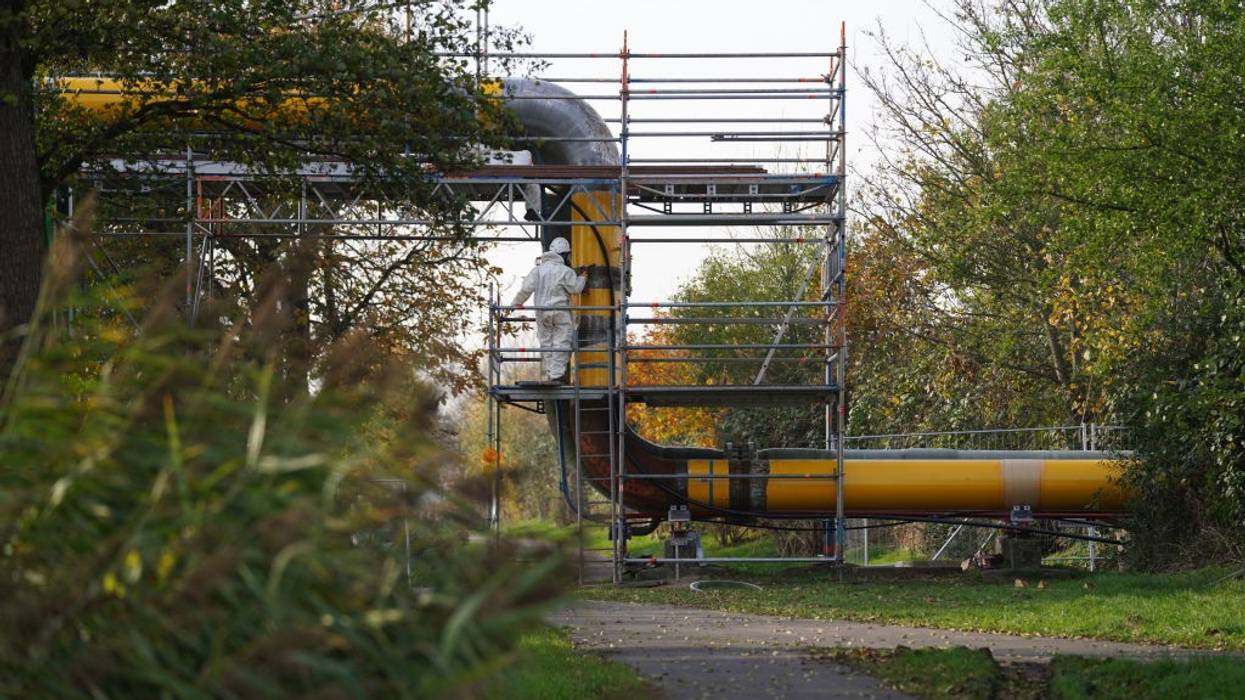
"The industry's operations and the use of its products disrupt fragile ecosystems, destroy habitats, and pollute air, water, and soil, pushing countless species to human-induced extinction."
With just a few more days of the United Nations biodiversity summit in Cali, Colombia, 140 organizations collectively called on government representatives to pursue "an immediate halt" to new planet-heating oil and gas projects and "a managed decline of existing activity."
The letter—signed by civil society groups, Indigenous peoples, and social movements—advocates "prioritizing areas of high biodiversity importance" and stresses the need for "a full, fair, fast, funded, and feminist phaseout of all fossil fuels and to halt and reverse biodiversity loss."
"Oil and gas activity threatens biodiversity at every stage—from exploration and production to transportation and end use," the letter states. "The industry's operations and the use of its products disrupt fragile ecosystems, destroy habitats, and pollute air, water, and soil, pushing countless species to human-induced extinction. The risk oil and gas activity poses to biodiversity grows as these operations expand into vulnerable ecosystems."
"Effective biodiversity protection is not possible without halting the expansion of oil and gas activity."
"Places like the Amazon, including the mouth of the Amazon River, are experiencing significant environmental and social impacts from oil and gas activity," the letter notes. "Deforestation, habitat destruction, and pollution of water sources are threatening biodiversity in one of the world's most critical ecosystems, and severely disrupting the fundamental human rights and livelihoods of Indigenous peoples."
The coalition—which includes Amazon Watch, Center for International Environmental Law, Earthjustice, Greenpeace, Oil Change International, Waterkeepers Alliance, and World Wide Fund for Nature—has a list of recommendations for attendees of the 16th meeting of the Conference of the Parties to the Convention on Biological Diversity (COP16).
The groups want summit attendees to "recognize the threat that oil and gas activity poses to all biodiversity, particularly in areas of high biodiversity importance." Regarding such vital areas, they want attendees to "identify concrete actions currently being taken and that will be taken in the future to immediately reduce oil and gas activities" as well as "adopt a decision to immediately halt" new fossil fuel activities in such spaces.
The organizations are also calling for a "fossil fuel-free zone" in the Amazon and prioritizing "the protection of environmental and human rights defenders." According to Global Witness, at least 196 such activists were killed in 2023 alone, bringing the total since 2012 to 2,106.
Additionally, the coalition wants COP16 attendees to "enhance equitable international cooperation to ensure that countries with the greatest historical responsibility for driving biodiversity loss and the production and use of fossil fuels move first and fastest to halt the expansion of oil and gas activity, and pursue new enforceable international mechanisms, such as a fossil fuel nonproliferation treaty."
"Faced with an unprecedented planetary crisis, the time is now for parties to the Convention on Biological Diversity to fulfill their legal obligations and reaffirm their mandate to protect global biodiversity," the letter argues. "Effective biodiversity protection is not possible without halting the expansion of oil and gas activity, and eliminating the threat from ongoing oil and gas activity, particularly in areas of high biodiversity importance."
COP16 kicked off in Cali on October 21 and is set to wrap up on November 1. Reuters reported Tuesday that "countries were at an impasse over how to fund conservation and other key decisions... with nations pledging millions of dollars rather than the billions needed."
At COP15 in late 2022, countries finalized the Kunming-Montreal Global Biodiversity Framework, which aims to protect 30% of all land and water vital to species and ecosystems by 2030. To reach that goal, "protected and conserved areas must almost double in area on land and more than triple in the ocean, the U.N. Environment Program World Conservation Monitoring Center and the International Union for Conservation of Nature (IUCN) said Monday.
The IUCN also
warned Monday as part of its "Red List" that more than 16,000 of 47,000 analyzed tree species worldwide are at risk of extinction. The report followed similar warnings of wildlife population decline released ahead of COP16.
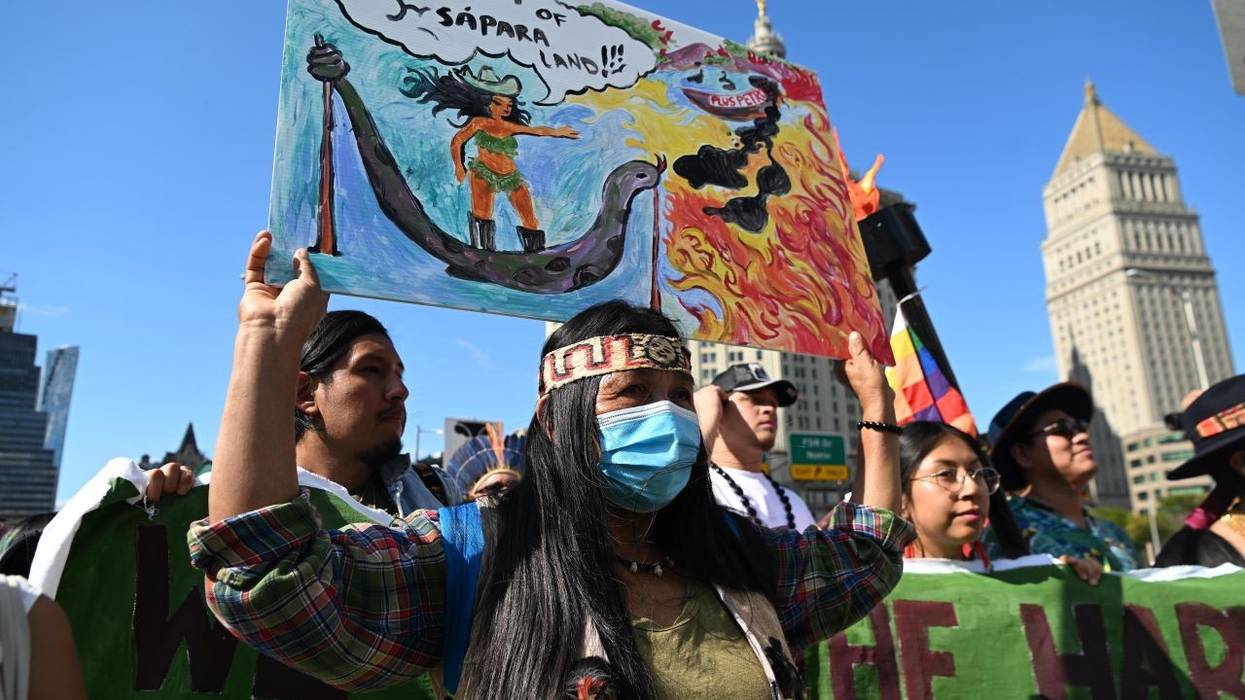
As global leaders converge in Colombia for the COP16 global biodiversity summit this week, they face a stark reality: Despite over a decade of pledges to protect biodiversity, not a single global target has been fully achieved.
Forests continue to burn, habitats are vanishing, and biodiversity is spiraling toward collapse. Without addressing the systemic drivers of environmental destruction—especially in the Global South—this failure will persist.
The last biodiversity summit (COP15) saw the adoption of decisions on instruments to reduce inequalities, ensure a gender-responsive approach to biodiversity action, take a human rights-based approach, and guarantee access to justice and participation in decision-making by communities. These points are found in the United Nations Convention on Biological Diversity’s Gender Plan of Action and the Global Biodiversity Framework’s Targets 22 and 23 and Section C on implementation.
The economic model that Global South countries are forced to pursue by the international financial institutions, based on natural resource extraction with highly unequal distribution of benefits and impacts, is driving extinction and global biodiversity loss.
In Cali, countries will take stock of the targets and commitments adopted so far. This meeting is a crucial opportunity to assess how well the 196 signatories of the convention—sadly, the United States is not one of them—have tackled biodiversity loss so far. And because the crisis we face is so urgent, it’s also a moment in which we must look toward the leadership of women, who play key roles in local agricultural production, family and local economies, and stewardship of biodiversity in key areas like the Amazon.
Picture women like Lucy Mulenkei, a Masai woman who has championed the interests of marginalized pastoralist and hunter-gatherer communities throughout Africa. Or Patricia Gualinga, who has led her Kichwa community in the Amazon in keeping oil drilling off their land and proposing a “living forest” model for rights-based conservation. And Xananine Calvillo, a young woman from Mexico who recently called on the World Bank to stop loaning money to factory farming companies that destroy forests and rivers in sensitive ecosystems.
Our governments and institutions have failed in the past, but they have a chance to listen to women leaders this week. It’s urgent that they do this, and start putting their money where their mouth is, ending subsidies for harmful industries that are behind biodiversity loss.
The strategy agreed in 2010 to guide global action during the U.N. Decade on Biodiversity (2011-2020) recognized the need to address the underlying drivers of biodiversity loss. The failure to tackle these root causes is one of the reasons cited in the third edition of the Global Biodiversity Outlook as to why we didn’t meet the first global biodiversity target in 2010.
Building on this analysis, the Strategic Plan for Biodiversity 2011-2020 structured the 20 Aichi Biodiversity Targets around five Strategic Goals, setting benchmarks for progress through relevant policies and enabling conditions.
However, at the global level, none of the 20 Aichi Targets were fully achieved.
Target 4 on sustainable production and consumption was deemed not achieved with “high confidence,” which means that actions to reduce the ecological footprint failed after a decade of commitment. Between 2011 and 2016, the ecological footprint remained at approximately 1.7 times the level of biocapacity—in other words, requiring “1.7 Earths” to regenerate the biological resources used by our societies.
The rate of loss of all natural habitats including forests, which is considered in Aichi Target 5, is not lower than that of previous decades, with South America surpassing a record for forest fires this year, with 433,000 fire hotspots and over 14.4 million hectares of forest cover burned or affected in different biomes of Argentina, Brazil, Bolivia, Colombia, Ecuador, Paraguay, and Peru. Brazil and Bolivia alone have seen their forest devastated by 7 million hectares each, while the Amazon river basin is reporting the lowest levels on record amid a severe drought driven by climate change.
Governments continue to provide billions of dollars in tax breaks, subsidies, and other perverse incentives to support deforestation, water pollution, and fossil fuel consumption which directly work against the goals of the 2015 Paris climate agreement and the Global Biodiversity Framework.
By some measures, countries spend at least $2.6 trillion a year on propping up polluting industries, which is equal to 2.5% of global GDP. And the wealthiest nations claim there isn’t enough money to help Global South countries respond to the crises of climate change and biodiversity loss.
The failure to tackle the underlying causes of biodiversity loss, including fossil fuel extraction, mining, industrial agriculture, intensive livestock farming, large-scale infrastructure projects, and monoculture tree plantations— estimated to drive up to 90% of biodiversity loss—are partly linked to the contradictions within the Global Biodiversity Framework. Biodiversity offsets and other market-based schemes considered in Target 19(d) undermine Goal C of the framework, which is to protect the integrity, connectivity, and resilience of all ecosystems.
Forest fires continue to rage in the Amazon, and there’s no time to let companies swoop in with false solutions to the problem.
Letting the market have its way with biodiversity policy is not the way to achieve biodiversity protection, either. So-called biodiversity investment projects have increasingly been exposed for human rights violations, social and gender impacts, conceptual flaws like inattention to ecosystem integrity, and problems with compliance and effectiveness.
The economic model that Global South countries are forced to pursue by the international financial institutions, based on natural resource extraction with highly unequal distribution of benefits and impacts, is driving extinction and global biodiversity loss. That’s why, if we really want to enable urgent and transformative action, government support for export-oriented economic sectors, subsidies, preferential tax subsidies, and diluting environmental regulations must end immediately.
The biodiversity summit this week in Colombia presents us with an opportunity to reaffirm our collective commitment to forest and biodiversity conservation.
Women in all their diversity, Indigenous peoples and local communities, Afro-descendants, peasants, youth, and grassroots movements must be central in shaping the policies that will guide our future. Governments must prioritize people and the planet over corporate profit in a way that is just and equitable, gender-responsive, rights-based, and rooted in a non-market-based approach led by real, community-led solutions.
Transformative change necessarily demands challenging the international financial and monetary systems that force Global South governments to maintain and expand extractive activities and perpetuate the destruction of nature, as well as gender and social inequalities.
As global leaders gather in Cali to review the state of implementation of the Global Biodiversity Framework and show the alignment of their National Biodiversity Strategies and Action Plans with the Framework, it is crucial that we critically examine the level of biodiversity commitments and address the structural drivers of biodiversity loss.
If we ignore those structural drivers, the harmful activities that are the same ones countries have been propping up with subsidies and favorable terms, there’s no way to halt the biodiversity crisis. Forest fires continue to rage in the Amazon, and there’s no time to let companies swoop in with false solutions to the problem. Transformative change is what is needed, and women like Xananine, Lucy, and Patricia will be there at COP16 with real solutions in their hands.
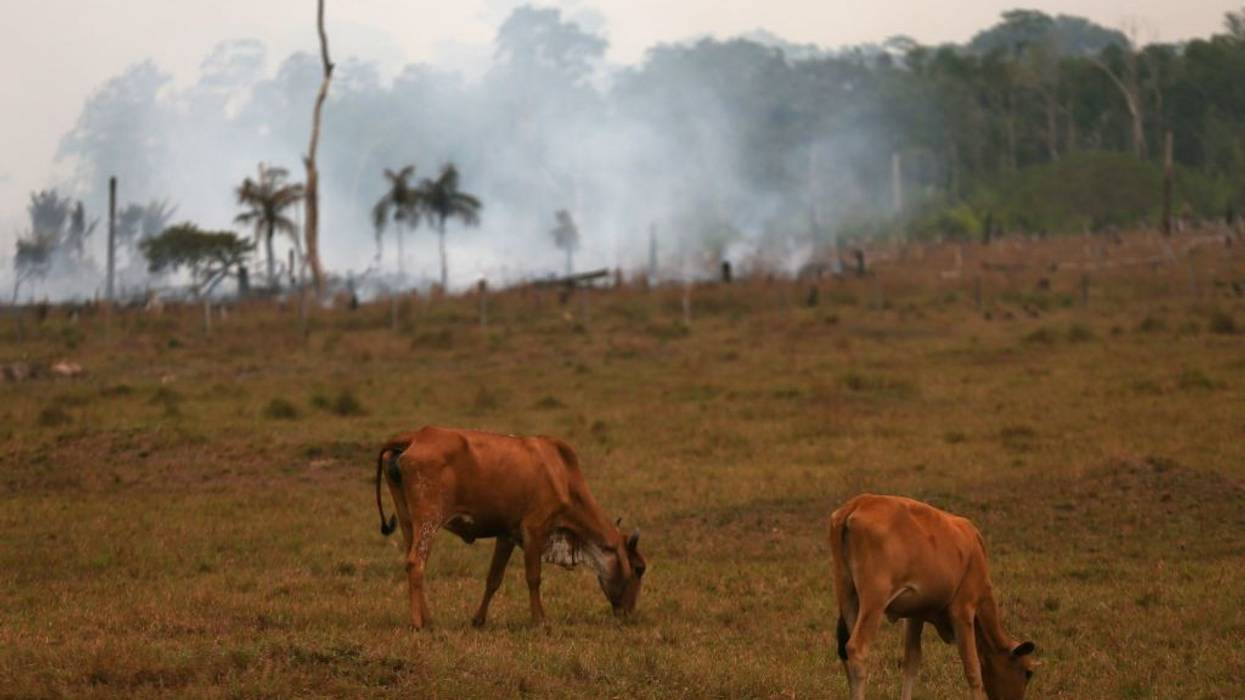
Animal livestock is the leading driver of biodiversity loss. At the U.N. biodiversity summit next week, leaders must agree to shift finance towards more sustainable forms of food production.
Correction: An earlier version of this article said that pig farms in Ecuador's Santo Domingo de los Tsáchilas region generated roughly 15 million pounds a day. It has been corrected to reflect the fact that 4.4 million pounds of waste are generated per day.
Our natural world is in crisis. An area the size of Portugal is deforested every year on average, and wildlife populations have declined by an average of 73% since 1970. Deforestation is a leading driver of the climate crisis, and wildlife loss can destabilize precious ecosystems.
To tackle this, two years ago governments agreed on the Global Biodiversity Framework (GBF), a set of goals and targets to protect nature. On October 21, leaders will meet at the United Nations biodiversity COP16 summit in Colombia to formally review their progress for the first time.
The industrial animal livestock sector is by far the largest driver of biodiversity loss, and must be where attendees at COP16 focus their attention.
“There is no nature anymore. Pollution in the air, pollution in the river.”
In the last 50 years, global milk production has more than doubled and meat production has more than tripled. This increase has been achieved through industrialisation—by putting more and more animals in smaller spaces, in worse conditions, feeding them more supplements and medicines, and using resources more intensely. It has led to poor animal welfare, low quality of food, and health risks for humans and other animals, including antibiotic resistance.
It has also led to hugely negative impacts on the environment, including for wild animals and their habitats. Livestock farming is the leading driver of deforestation—with clearing of forests for land for cattle accounting for 42% of all deforestation. The production of farmed animals and the feed for them now occupies 80% of the world’s agricultural land, yet provides just 17% of humans’ global calorie supply.
As a result of these factors, today 70% of all birds on Earth are farmed poultry, and 93% of all non-human mammals are livestock with just 7% wild. Overhauling the way we produce food is vital to protect our natural environment and to stem species loss.
Multilateral development banks (MDBs)—such as the World Bank Group—have made a series of commitments to protect nature, yet despite this the five biggest MDBs invested over $4.6 billion in factory farming between 2011 and 2021, and have shown no signs of reducing their spending since.
At the U.N. climate conference COP26 in 2021, leading MDBs released a Joint Nature Statement promising to support governments and the private sector to tackle nature loss. And at COP28 last year they went a step further, including committing to “tackl[e] the drivers of nature loss by fostering ‘nature positive’ investments” and “valu[e] nature to guide decision-making.”
In addition, Target 14 of the Global Biodiversity Framework agreed by world leaders requires public and private financial flows to be aligned with the goals of the GBF. This means MDBs must ensure their investments align with other GBF targets, like Target 4 to halt species extinction, and Target 10 to enhance biodiversity and sustainability in agriculture.
But rather than investing in sustainable forms of food production, MDBs are propping up a broken model of factory farming that is totally at odds with these pledges.
For example, the private sector branches of the World Bank Group and the Inter-American Development Bank Group have together invested over $200 million into PRONACA, Ecuador's largest pork and poultry producer. PRONACA used the funds to build and expand a series of factory farms, including in Santo Domingo de los Tsáchilas, an area of Ecuador home to Indigenous peoples and tropical forest.
According to a shocking report by the Ecuadorian Coordinator of Organizations for the Defense of Nature and the Environment (CEDENMA), PRONACA's pig farms in the area generate roughly 4.4 million pounds of toxic waste each day, fouling the soil, air, and waterways.
CEDENMA surveyed local communities about the impact of the factory farms. Interviewees told them that PRONACA contaminated rivers, killing off fish that local people rely on for food and jobs, and harming local tourism. One intensive pig breeding farm was set up just meters away from a sacred site.
“There is no nature anymore. Pollution in the air, pollution in the river,” said one local resident.
Investments like in PRONACA are unfortunately just one of hundreds of harmful factory farm investments made by MDBs. Similar investments have been made or are being planned in Bangladesh, Nigeria, Poland, and elsewhere all over the world.
Ahead of COP16, we and other members of the Stop Financing Farming coalition are calling on MDBs to stick to the commitments they’ve made to protect nature by ruling out any further finance for factory farming and instead supporting more nature-friendly forms of agriculture. This means investing in the production of more plant-rich foods, and when they do finance animal agriculture, ensuring it is sustainable, following the principles of agroecology.
Shifting finance in this way would not only help protect nature, but also promote nutritionally superior diets, create jobs, and tackle climate change.
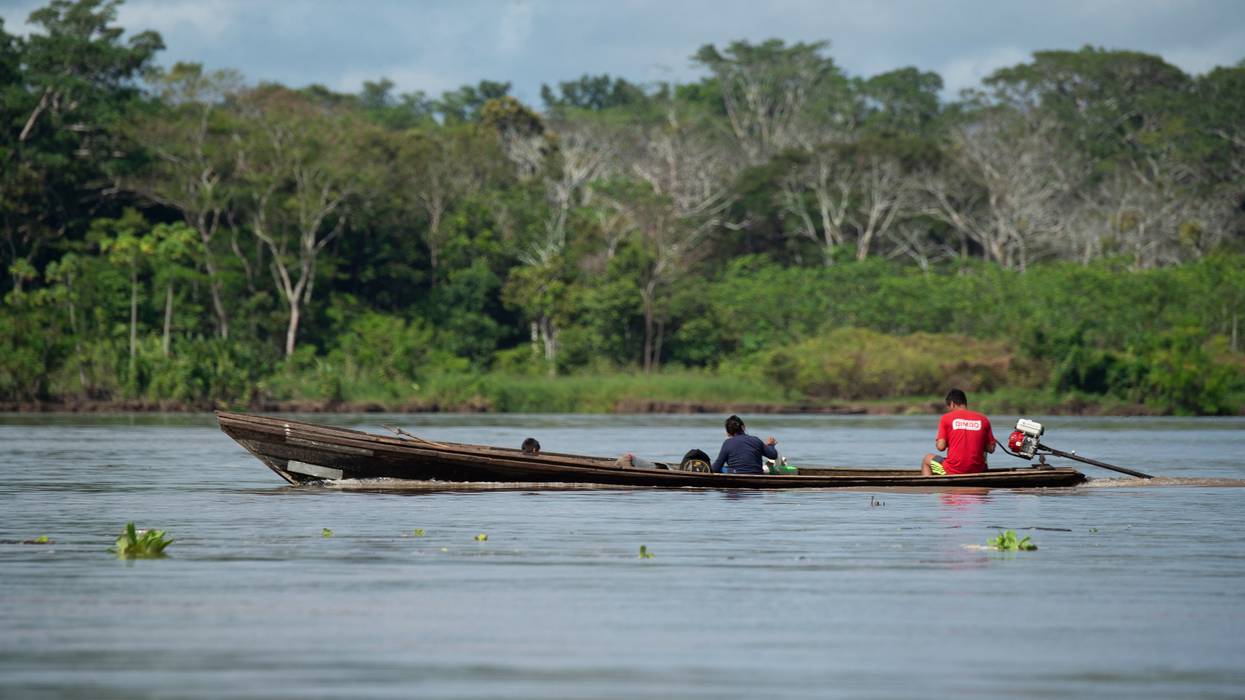
"Just as the Human Rights Declaration paved the way for peace after WWII, we must now make nature's rights a global priority."
A report released Thursday, ahead of a summit in Colombia, argues that "recognition of the Rights of Nature and national implementation of Mother Earth-centric actions are critical for meeting the 2030 and 2050 goals of the Kunming-Montreal Global Biodiversity Framework."
Finalized in late 2022, the framework aims to protect 30% of all land and water vital to species and ecosystems by 2030. The new publication urges governments to include ecocentric commitments in their National Biodiversity Strategies and Action Plans (NBSAPs), which are each country's proposal to meet the goals of the agreement.
"To halt and reverse the biodiversity crisis, nations must urgently transform their laws and societies to live in harmony with nature," said report co-author and Earth Law Center (ELC) executive director Grant Wilson in a statement.
"The Global Biodiversity Framework presents an unprecedented opportunity to advance the Rights of Nature and other transformative legal paradigms for the planet," Wilson continued. "For many countries, this could also mean receiving significant financial support, catalyzing a profound shift in how we relate to and protect the natural world."
"Acknowledging the Rights of Nature and Mother Earth should be at the top of the priority list of the biodiversity convention, not merely in the footnote."
As the Intergovernmental Science-Policy Platform on Biodiversity and Ecosystem Services explains, Rights of Nature "is a legal instrument that enables nature, wholly or partly, i.e. ecosystems or species, to have inherent rights and legally should have the same protection as people and corporations; that ecosystems and species have legal rights to exist, thrive and regenerate. It enables the defense of the environment in court—not only for the benefit of people, but for the sake of nature itself."
The new report emphasizes that Target 19 of the framework "seeks to mobilize at least $200 billion per year by 2030—from domestic, international, public, and private resources—to implement national biodiversity strategies and action plans," and "explicitly stipulates... funds will be available for enhancing 'Mother Earth-centric actions.'"
The paper was produced by ELC with support from End Ecocide Sweden, Keystone Species Alliance, Lawyers for Nature, and Rights of Mother Earth. It comes ahead of the next meeting of the Conference of the Parties to the Convention on Biological Diversity (COP16), set to be held in Cali from October 21 to November 1.
"To achieve COP16's theme of 'Peace with Nature,' acknowledging the Rights of Nature and Mother Earth should be at the top of the priority list of the biodiversity convention, not merely in the footnote," said Rights of Mother Earth co-founder Doris Ragettli. "Just as the Human Rights Declaration paved the way for peace after WWII, we must now make nature's rights a global priority."
Noting that the paper shows "over 30 countries already recognize Rights of Nature through constitutional provisions, laws, or court decisions," Lawyers for Nature affiliate Jeremie Gilbert similarly said that "achieving 'Peace with Nature' requires incorporating these rights into biodiversity conservation efforts globally."
Just last week, communities in Chile launched a Declaration of Rights to protect the Biobío River "against mounting environmental threats." While the river is the first ecosystem in the South American country protected by such action, the declaration followed other recent progress on the continent, including a court decision in Peru that granted rights to the Marañón River and a ruling in Ecuador that found pollution violated the rights of the Machángara River.
The recognition of the waterway's rights in Chile is "a bridge that not only guarantees the inherent value of rivers and natural entities, but is also key to the full realization of the human rights of their communities," said Constanza Prieto Figelist, Latin America director for ELC.
"It is incredibly inspiring to see people from all over the world with diverse interests uniting to uphold the intrinsic value of nature."
ELC noted that Thursday's report "was primarily authored by law school and undergraduate interns working alongside sponsoring organizations. These youth advocates, increasingly vocal in their support of Rights of Nature and ecocentric law, will join the Earth Law Center delegation at COP16 to engage with governments on how to implement transformative Earth-centered policies."
Emily Zinkula, a Stanford Law School student who contributed to the paper as an ELC intern, said that "it is incredibly inspiring to see people from all over the world with diverse interests uniting to uphold the intrinsic value of nature."
"For many of us, nature's right to be protected feels intuitive," Zinkula added. "Seeing ELC and its partners tirelessly work to turn that intuition into a global truth is empowering. The recognition of nature's rights by global leaders gives much-needed hope, courage, and validation to a generation longing for it."
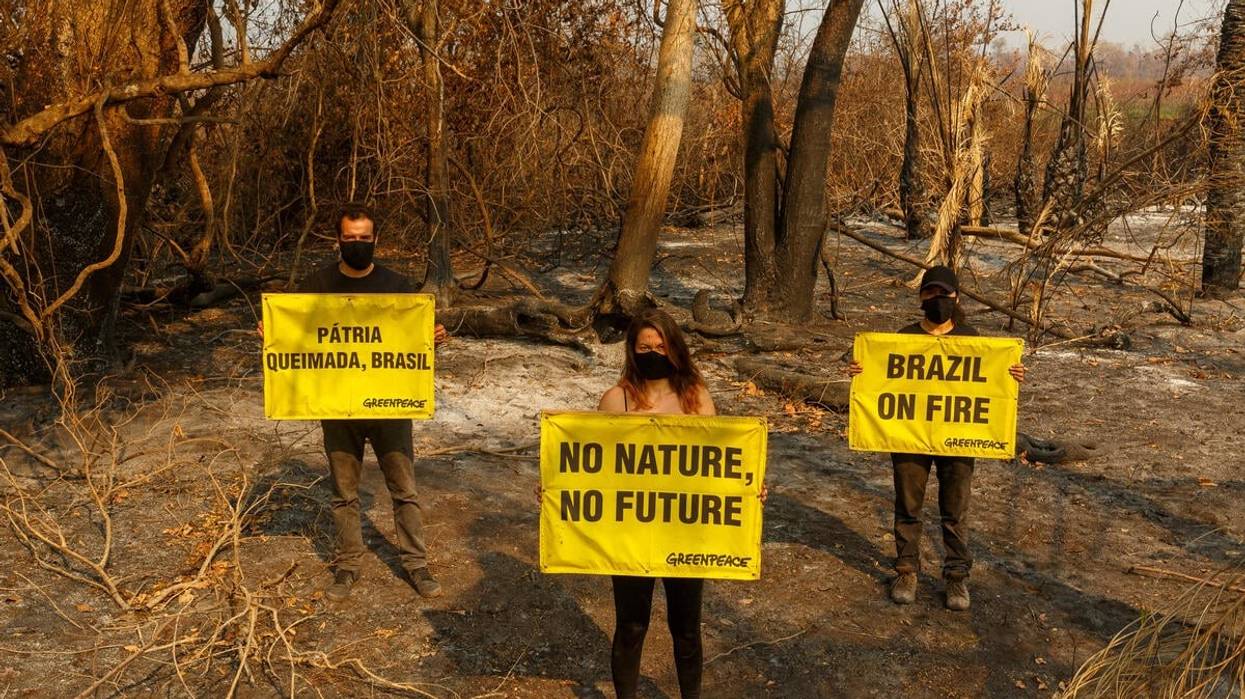
As long as money continues to flow towards expansion of economic activities that lead to nature destruction, there is no way we will be able to meet global commitments.
The world is facing multiple crises when it comes to our climate and environment—we know this too well. We are direct witnesses of this destruction and the suffering it causes in our respective countries, Brazil and Indonesia, two countries that are home to ecosystems vital to the ecological balance of our planet.
We follow international efforts to protect and restore nature with concern, determination and hope. As part of efforts to tackle the biodiversity crisis, nearly 200 governments signed the Global Biodiversity Framework (GBF) in December 2022. One of the goals of this agreement is to maintain, enhance and restore the integrity and resilience of ecosystems.
This means we need to stop the destruction of nature right now and allow the recovery of these ecosystems. This should apply not only to forests like the Amazon, Congo Basin, or Carpathian forests, but also to other essential ecosystems such as savannahs (like the Cerrado) and wetlands (like the Pantanal, South America’s largest wetland extending across Bolivia, Brazil, and Paraguay). This action would produce the highest impact in the shortest time. But how do we get there?
A drastic reform of the financial system is urgently needed to address the ongoing loss of species and natural areas
Commitments to tackle the climate and biodiversity crises are being undermined on a daily basis by a finance system that serves polluters and the funding of industries and projects that accelerate environmental degradation and species extinction. Billions continue to flow unabated into destructive activities.
Therefore, a drastic reform of the financial system is key to address the ongoing loss of species and natural areas, and emissions. As long as money continues to flow towards expansion of economic activities that lead to nature destruction, there is no way we will be able to meet these commitments.
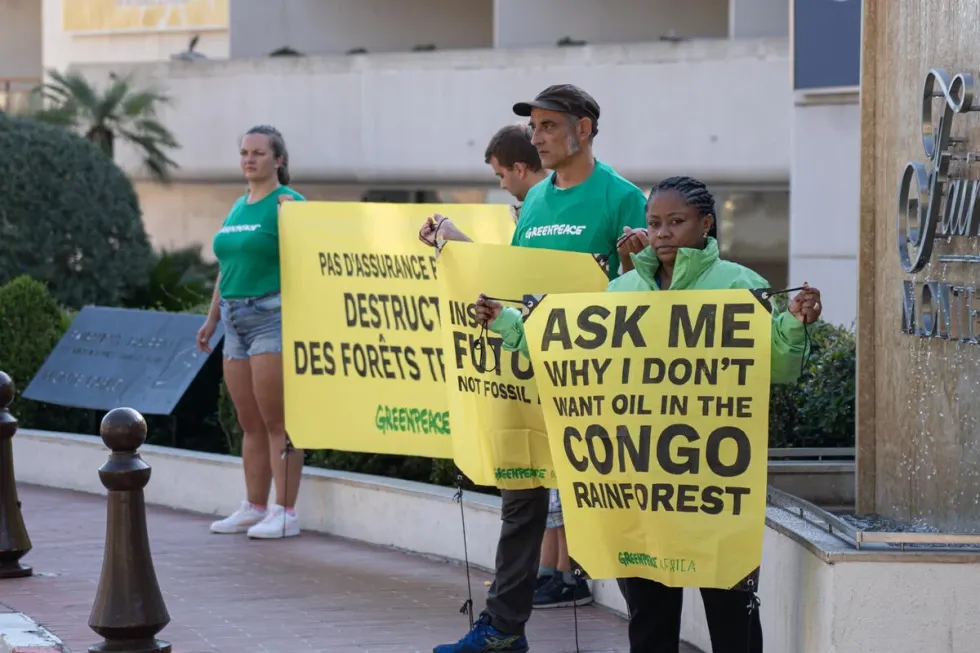 Activists attended the biggest annual insurance and reinsurance conference in 2023. (Photo: Greenpeace)
In the Global Biodiversity Framework, governments committed (target 14) to ensure that all financial flows would be aligned with the biodiversity conservation goals and targets before 2030. This means governments need to better control public and private money flows.
Governments need to improve existing regulations and develop new regulations that prohibit large banks and other finance institutions from investing in activities that harm the world’s remaining biodiversity—all coupled with rigorous enforcement and transparency, to stop nature destruction and hold wrongdoing to account.
Trillions of dollars in subsidies and investments continue to finance the destruction of natural ecosystems
We are living through a climate and biodiversity crisis, but governments and the private sector are spending around 3.1 trillion dollars a year on harmful subsidies and investments in problematic sectors such as livestock, timber, and palm oil production, leading to the destruction of nature and violations of human rights.
We need legally binding regulations that prohibit banks, asset managers, pension funds, and other financial institutions or investors from financing farms, projects, and companies that harm ecosystems and local communities depending on them. This is especially true for Indigenous peoples, and land and environmental defenders who continue to be attacked despite their vital work for protecting the environment and fighting climate change.
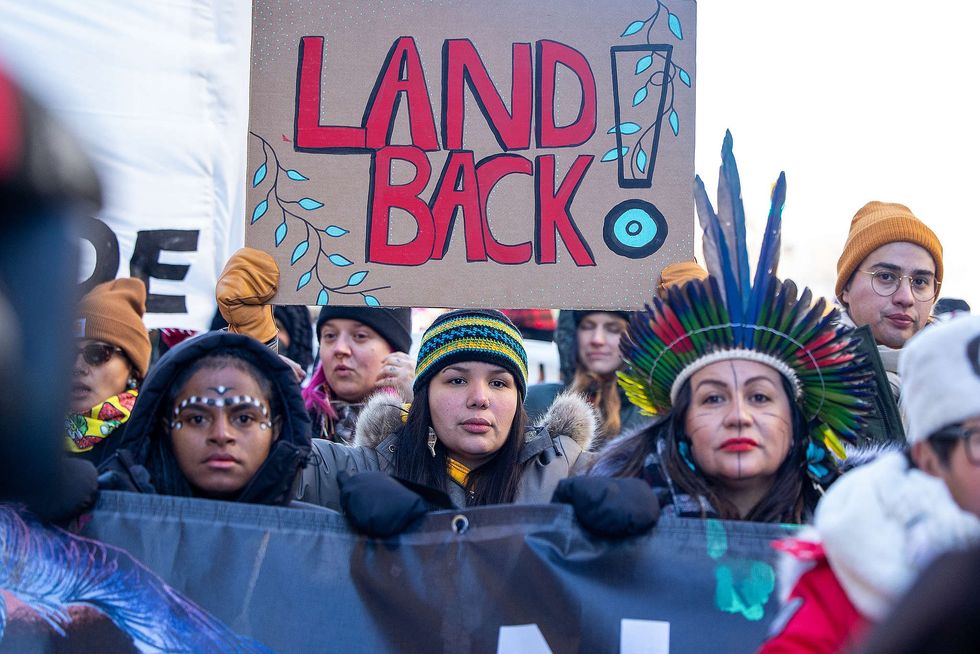 Indigenous leaders spearheaded a march during biodiversity talks in Canada in 2022. (Photo: Toma Iczkovits/Greenpeace)
Global government spending on activities leading to biodiversity conservation is estimated at $154 billion per year only, while estimates of the total amount of subsidies and other perverse incentives are much higher as mentioned above. The redirection of these financial flows could generate major funding for the very actions the GBF recognises are at the heart of biodiversity conservation. It could also ensure a just transition in sectors like industrial agriculture and forestry that continue to harm not just biodiversity, but also the communities that depend on these sectors for their livelihoods.
As governments are preparing their plans on how to implement the commitments they have made in the historic Kunming-Montreal Global Biodiversity Framework, we urge them to adopt regulations of the finance sector, control financial flows, and stop and reverse the destruction of natural ecosystems.
The people’s movement against the governments and institutions that are destroying nature is growing stronger every day
For centuries, Indigenous peoples and local communities have opposed the injustice and destruction of nature. Over the last few decades, an international people’s movement to defend natural ecosystems has developed, bringing together millions of people and growing stronger every day.
In October, hundreds of environmental activists blockaded the offices of Rabobank in the Netherlands and demanded that the bank stop financing industrial agriculture, which is destroying biodiversity, and pay for the damage caused.
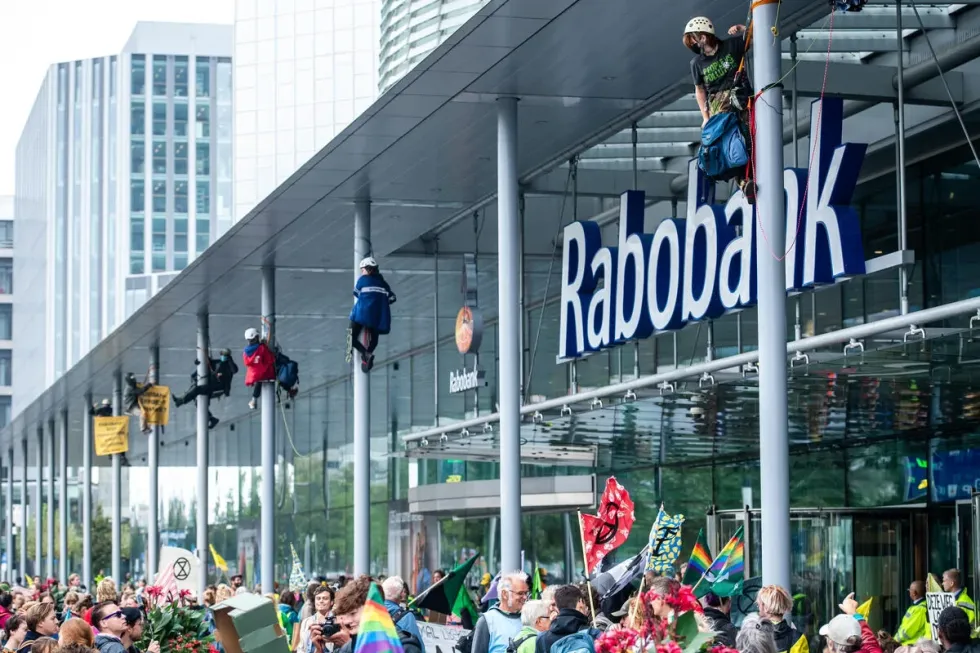 Activists blocked the entrances to Rabobank headquarters in the Netherlands in 2023. (Photo: Marten van Dijl/Greenpeace)
Rabobank, a Dutch bank, is a case in point. The bank has made billions by financing companies that destroy nature over many years, both in its home country, the Netherlands, and elsewhere, for example in our two home countries, Brazil and Indonesia.
In recent years, many other banks and financial institutions that are bankrolling extinction have been the target of damning reports and powerful actions in many countries around the world, including JP Morgan, Barclays, Standard Chartered, and Deutsche Bank.
It is impossible to protect and restore natural ecosystems without tackling the international finance that allows so many industries to pollute and destroy with impunity. Governments must come up with serious and time bound plans to reform the financial system. Only a powerful people’s movement, fully involving Indigenous Peoples and local communities, can force them to do so.
"Our work identifies hundreds of species—including 370 critically endangered and endangered species—in need of protections, and we also know data gaps mean the true figure could be much higher," said a study co-author.
New research identifying the hundreds of at-risk plant and animal species that lack international trade protections under a decades-old treaty led experts to call for key biodiversity-saving reforms on Tuesday.
The Convention on International Trade in Endangered Species of Wild Fauna and Flora (CITES) entered into force in 1975 and there are now 184 parties to the agreement, which currently protects nearly 41,000 species—including over 6,600 animals and 34,300 plants—from overexploitation.
"CITES listings should respond to the best available information on a species' status and be adopted where they will be likely to benefit the species," said University of Oxford research fellow Dan Challender, lead author of the analysis, in a Tuesday statement.
Challender worked with ecologists and wildlife trade experts at the International Union for Conservation of Nature (IUCN), the United Nations Environment Program World Conservation Monitoring Centre (UNEP-WCMC), and the Zoological Society of London for the study, published last week in the journal Nature Ecology & Evolution.
"CITES includes 59% (1,307 species), leaving two-fifths overlooked and in potential need of international trade regulation."
The paper explains that because "there is no established method to systemically determine which species are most at risk from international trade to information potential trade measures under CITES," the research team developed a mechanism using IUCN's Red List of Threatened Species, which includes assessments over 150,000 species.
"While our research shows CITES performs moderately well at identifying species in need of trade regulation, it also suggests that hundreds of species are overlooked," said Challender. "Cross-referencing data from the Red List with CITES listing information brings these potential protection gaps to light."
The team found that "of 38,245 globally threatened and near threatened species, 5.8% (2,211 species) are likely to be threatened by international trade." Of those at risk, "CITES includes 59% (1,307 species), leaving two-fifths overlooked and in potential need of international trade regulation." In other words, 904 species lack protections.
"Our work identifies hundreds of species—including 370 critically endangered and endangered species—in need of protections, and we also know data gaps mean the true figure could be much higher," noted study co-author Kelly Malsch of the UNEP-WCMC.
The endangered or critically endangered species that researchers said require safeguards from trade include 31 types of rays and sharks caught for fins and meat as well as 23 species of palm traded for horticulture.
Both Malsch and Challender expressed hope that the countries behind the treaty will use the new findings to inform future conference of the parties meetings. The next summit is scheduled for 2025.
"To achieve the aims of both CITES and the new Global Biodiversity Framework on tackling nature loss, it is vital that the international trade in animal and plant species is both sustainable and does not threaten the survival of the species in the wild," said Malsch, referencing an international plan agreed to in December. "We hope that CITES parties will be able to use our new methodology in future to ensure that CITES listings are based on the best available science."
The paper also points out that the number of species threatened by local and national resource depletion "is four times greater than species likely threatened by international trade," indicating the broader challenges faced by endangered plants and animals worldwide.
"To effectively address the overexploitation of species," the study stresses, "interventions focused on achieving sustainability in international trade need to be complemented by commensurate measures to ensure that local and national use and trade of wildlife is well-regulated and sustainable."
As Common Dreams reported in December, the Global Biodiversity Framework—whose overarching goal is protecting 30% of all land and water—did not alleviate fears about looming extinctions. While some U.N. and civil society leaders lauded the deal, others, particularly representatives of the Global South, sounded the alarm about corporate capture of protection efforts, promotion of agribusiness, and failures to adequately involve Indigenous peoples.