
SUBSCRIBE TO OUR FREE NEWSLETTER
Daily news & progressive opinion—funded by the people, not the corporations—delivered straight to your inbox.
5
#000000
#FFFFFF
To donate by check, phone, or other method, see our More Ways to Give page.


Daily news & progressive opinion—funded by the people, not the corporations—delivered straight to your inbox.
The recent COP16 underscored the need for inclusive conservation strategies in Latin America, where social conflicts and environmental vulnerabilities intersect. A Universal Basic Income could be the answer.
The recent 16th Conference of Parties (COP16) to the United Nations Convention on Biological Diversity, or COP16, has highlighted the urgent need to rethink conservation strategies, particularly in Latin America, where the convergence of social conflict and environmental vulnerability creates a complex, high-stakes landscape.
The global environmental crisis, manifesting in the accelerated loss of biodiversity, is exacerbated by deep socio-economic inequalities. Yet communities most affected by environmental degradation are often those that can play a crucial role in its protection. Traditional approaches are no longer sufficient; conservation efforts must be both innovative and inclusive. Therefore, it is vital that communities are included in the formulation of policies that impact their lives. And to take an active role in conservation, they require support through financing mechanisms tailored to their specific needs.
The intersection of conservation and social justice is not merely an ideal; it is an urgent necessity that we must embrace to achieve a sustainable future for all.
In this regard, Universal Basic Income (UBI) emerges as an essential tool for empowering vulnerable communities and promoting equitable conservation strategies. It is not merely about mitigating environmental impacts; these actions also strengthen community resilience and contribute to peace, helping to prevent conflicts. However, the true potential of UBI is only fully realized when supported by financing mechanisms such as Cap and Share.
The Cap and Share model generates socio-economic equality through emission reductions and biodiversity protection. And by redirecting these resources towards UBI, we can create a virtuous cycle in which vulnerable communities benefit directly from conservation actions.
Cap and Share enables communities to receive regular, unconditional payments, providing them with crucial financial security. This not only alleviates pressure on natural resources but also facilitates active community participation in the conservation of their surroundings. UBI is not simply economic assistance; it is a model of climate justice that ensures those most affected by climate change receive direct support, empowering them to become agents of change.
In Colombia, where the intersection of urgent environmental challenges and violent conflict is particularly evident, a pilot project implementing UBI could be pivotal. This initiative would provide regular income to affected communities, offering them economic relief and the opportunity to engage in conservation practices. Such a project would not only generate immediate benefits for the communities involved but also serve as a vital case study for scaling UBI initiatives across similar contexts. The evidence gathered from this pilot could demonstrate the effectiveness of UBI in reducing poverty, enhancing food security, and fostering peaceful sustainable practices, thereby making a compelling case for broader implementation.
Global evidence suggests that regular income from UBI can have significant positive effects on food security and community autonomy. Communities receiving cash transfers can diversify their income sources and improve their agricultural practices, thereby reducing pressure on ecosystems. In Colombia, this could mean a reduction in practices that contribute to deforestation, as communities empowered by financial security are more likely to invest in sustainable land management.
Armed conflict in Colombia has left deep scars on the country’s social and environmental fabric. Displaced communities and areas of high ecological degradation serve as constant reminders of the interconnectedness of social and environmental issues. Restoring the environment and reducing inequalities must be tackled together to achieve lasting peace. Implementing UBI, supported by Cap and Share, could be a crucial step toward rebuilding the relationship between communities and nature, creating a foundation for sustainable development.
As we look forward, it is essential that the conversation around inclusive financing does not stall. Every dollar allocated to conservation should be seen as an investment in the communities that care for our most precious ecosystems. Both international and national actors must recognise the importance of these initiatives and collaborate to ensure that vulnerable communities have access to the resources they need.
The implementation of UBI, alongside mechanisms like Cap and Share, not only offers an economic solution but also addresses the root causes of social and environmental injustice. In doing so, we not only protect biodiversity and ecosystems but also build more just and resilient societies, capable of facing present and future challenges. The intersection of conservation and social justice is not merely an ideal; it is an urgent necessity that we must embrace to achieve a sustainable future for all.
Concluding this chapter of COP16, it is clear that the path to effective conservation must be inclusive. Promoting dialogue around financing mechanisms that empower vulnerable communities is essential to ensure that conservation strategies are fair and effective. Only by doing so can we strengthen the resilience of our communities and contribute to a more equitable world, where nature and humanity coexist in harmony. A pilot project in Colombia can provide the necessary evidence to scale these initiatives, offering a replicable model on a larger scale, which can be advocated in upcoming scenarios such as COP29 and COP30.
"Biodiversity finance remains stalled after a deafening absence of credible finance pledges from wealthy governments and unprecedented corporate lobbying," said one campaigner.
Officials at the international biodiversity conference that began in October were forced on Saturday to suspend talks without reaching an agreement on a key issue of the summit—a detailed finance plan for a dedicated biodiversity fund—after the meeting went into overtime and delegates began leaving.
The failure to reach an agreement on biodiversity finance was denounced by the head of environmental group Greenpeace's delegation at the 16th Conference of Parties (COP16) to the United Nations Convention on Biological Diversity (CBD), which took place over two weeks in Cali, Colombia.
"Governments in Cali put forward plans to protect nature but were unable to mobilize the money to actually do it," said An Lambrechts. "Biodiversity finance remains stalled after a deafening absence of credible finance pledges from wealthy governments and unprecedented corporate lobbying... Closing the finance gap was not merely some moral obligation but necessary to the protection of people and nature that grows more urgent each day."
Lambrechts added that with international leaders now preparing to attend the 2024 U.N. Climate Change Conference, or COP29, in Baku, Azerbaijan this month, "the non-decision on a fund damages trust between Global South and North countries."
The conference was aimed at ramping up progress toward meeting goals set by the Kunming-Montreal Global Biodiversity Framework in Canada in 2022. That framework calls for the protection of 30% of land and sea areas and the restoration of 30% of degraded ecosystems by 2030.
In Canada, delegations also agreed to phase out subsidies that are harmful to nature and to provide $200 billion per year for the protection of biodiversity by 2030, including $30 billion per year that would be transferred from rich to poor countries. A larger goal of ultimately generating $700 billion to protect nature was also part of the agreement.
About $15 billion was transferred in 2022, according to the Organization for Economic Cooperation and Development (OECD), and nations have pledged about $400 million to a Global Biodiversity Framework Fund.
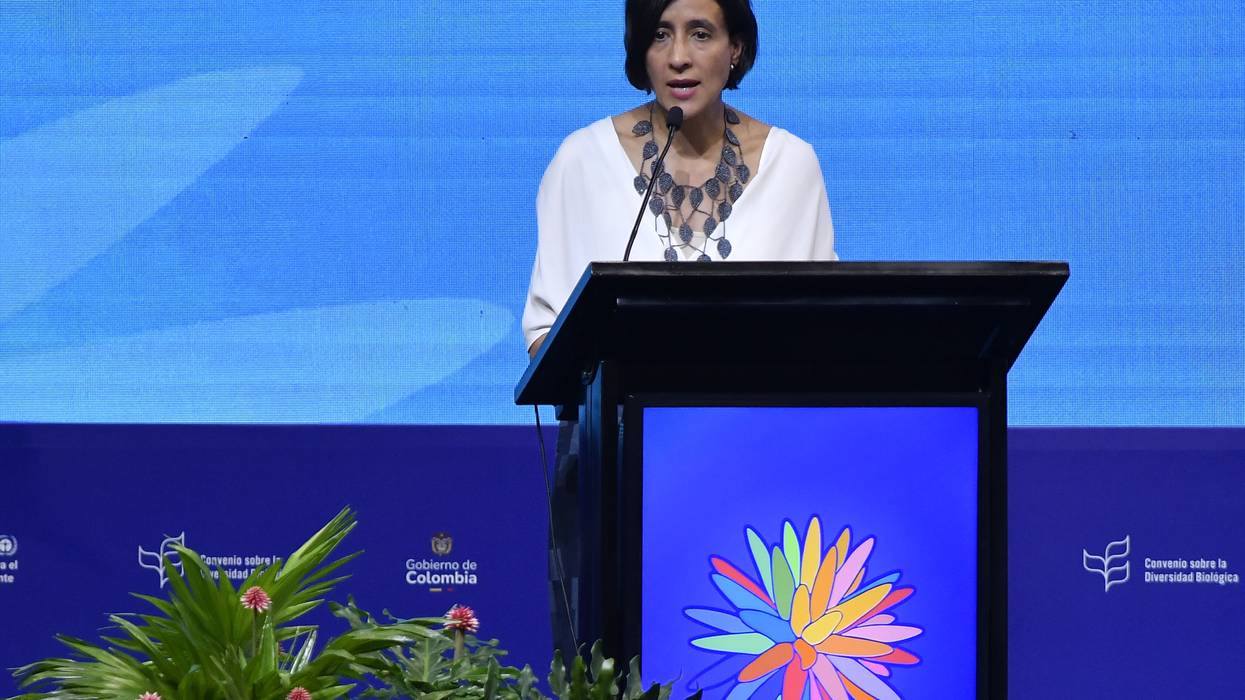
But in Cali in recent days, Colombian environment minister Susana Muhamad offered a draft proposal for the establishment of a dedicated biodiversity fund—a priority for developing nations at the conference—only to have delegations including those from the European Union, Switzerland, and Japan reject the proposal.
"Two years ago, we made a commitment to do better and be better," said Jiwoh Abdulai, minister of environment and climate change for Sierra Leone. "This COP has neither delivered that additional funding nor given us confidence that governments will work together to deliver it in a transparent and urgent manner."
The Forests & Finance Coalition—which includes Amazon Watch, Rainforest Action Network (RAN), and Friends of the Earth U.S., among others—called the result of finance discussions at the meeting "disappointing."
"This latest development makes it all the more critical that banks and investors are stopped from financing destructive sectors that continue to drive nature loss and human rights abuses," said Tom Picken, RAN's forests and finance director.
Lambrechts acknowledged that "big pharma and big agribusiness failed to block a game-changing deal on corporate responsibility to pay up for nature protections."
COP16 delegates devised a plan to create a fund that would share the profits generated from digitally sequenced genetic data taken from plants and animals with the communities—mostly in the Global South—that the species come from.
Companies that make money from cosmetics, medicines, and other products that use digitally sequenced genetic data would pay into the fund, but the final agreement made participation voluntary, saying only that companies "should" contribute.
Indigenous delegates celebrated the creation of a permanent body within the CBD to represent the interests of Indigenous groups—a "historic victory," according to Leila Salazar-López, executive director of the nonprofit Amazon Watch.
A work plan was approved by the convention to expand the role of Indigenous people, local communities, and Afro-descendant people in the protection of biodiversity.
"Thanks to this new body and work plan approval, future COPs will work, amongst many other important issues, on land tenure, traditional knowledge and governance by Indigenous Peoples," said Isaac Rojas, forests and biodiversity coordinator for Friends of the Earth International (FOE). "It's a milestone in the struggle of Indigenous peoples for their rights. We congratulate them and share their joy following this win. But we have to remain vigilant, because these achievements may turn out to be empty words in view of the push for several false solutions."
FOE warned that false solutions, particularly biodiversity offsetting, were pushed heavily by corporations at the conference.
Corporate interests called for biodiversity credits—"tradeable assets intended to represent 'measurable outcomes'—such as protecting or restoring certain species or ecosystems, or parts of them," according to FOE. "Similar to carbon credits, they allow corporations to buy and sell these, to meet regulations or voluntary sustainability claims."
Nele Marien, forests and biodiversity co-coordinator for FOE, said Saturday that "corporations were here pushing very hard for all kinds of false solutions, for example on biodiversity offsetting, which had a lot of traction."
"They argue that they can keep pushing into new territories, and destroying these ecosystems, promising that they will compensate for this," said Marien. "This is simply impossible, because we don't have space in the world to compensate for these losses. Biodiversity offsetting is a mechanism that further perpetuates destruction, undermines human rights, and damages environmental justice."
A spokesperson for the CBD, David Ainsworth, told reporters that the conference would resume at a later date.
Estefania Gonzalez, deputy campaign director for Greenpeace Andino, said delegates were "able to take advantage of COP16 to bring much of the priority agenda of the Global South to the center of the negotiations, fighting to the last minute to reach agreements on financing."
But she added that "the resource mobilization committed by developed countries must be fulfilled immediately without further excuses."
"It is unacceptable that rich countries, besides failing to meet the $20 billion commitment," she said, "were unwilling to seek consensus on one of the most crucial issues: financing."
"The very limited progress we've seen so far in the negotiations at COP16 is insufficient to address the very real implications of getting this wrong," one expert said.
As a major international biodiversity summit approaches its Friday conclusion, environmental advocates fear that world leaders will not make the conservation and financial commitments needed to halt the destruction of nature.
The 16th meeting of the Conference of the Parties (COP16) to the Convention on Biological Diversity launched in Cali, Colombia on October 21. It is the first international meeting since nations pledged to protect 30% of land and ocean ecosystems by 2030 and generate $700 billion a year to fund the protection of nature, with a smaller goal of $200 billion per year by 2030.
Yet nations are not on track to meet these goals, even as studies released this month warn that vertebrates have declined on average by nearly three-quarters in the last half-century and that over a third of analyzed tree species are at risk of extinction.
"Each passing day without the fulfillment of agreed commitments is a missed opportunity to protect biodiversity."
"The very limited progress we've seen so far in the negotiations at COP16 is insufficient to address the very real implications of getting this wrong," Yadvinder Malhi, a University of Oxford professor of ecosystem science, told The Guardian. "Biodiversity is continuing to decline at an alarming rate. I really hope that the crunch discussions this week yield those commitments, for the sake of a flourishing future for people and for our planet."
World leaders failed to meet a single one of the biodiversity targets set for 2020 in Aichi, Japan. There was hope, after nations agreed to a Global Biodiversity Framework during the Kunming-Montreal talks that concluded in December 2022, that the next decade would be different. Yet progress so far has been lagging.
Ahead of COP16, nearly 85% of countries missed the deadline to submit new national biodiversity strategies and action plans, according to an analysis from Carbon Brief. Since the deadline passed, only five more countries had submitted plans as of October 25.
An official progress report published Monday by the United Nations Environment Program World Conservation Monitoring Center and the International Union for Conservation of Nature concluded that only 17.6% of land and 8.4% of the ocean are currently protected. To meet the 30 by 30 goal, nations will need to protect a land area the size of Australia and Brazil put together and a marine area larger than the Indian Ocean within the next six years.
"This report is a clear reminder that with only six years remaining until 2030, the window is closing for us to equitably and meaningfully conserve 30% of the Earth," IUCN director general Grethel Aguilar said in a statement. "The '30 by 30' is an ambitious target, but one that is still within reach if the international community works together across borders, demographics, and sectors."
A major stumbling block to meeting any targets is the question of who will pay for it, how, and how much. This has emerged as a central point of contention in the talks, with Global South nations and environmental justice advocates calling on the wealthier nations of the Global North to do more.
Wealthier countries have pledged $20 billion a year in public money by 2025, yet the African delegation said that the idea these countries would reach the goal was "wishful thinking," The Guardian reported.
On Monday, the U.K., Germany, France, Norway, and four other countries promised $163 million. But Alice Jay, Campaign for Nature's director of international relations, said actually meeting the target "would require them to announce $300 million each month from now to 2025, and then keep that up each year until 2030."
"Countries from the Global South expect more from the Global North," Nigeria Environment Minister Iziaq Kunle Salako said. "Finance is key in the context of implementing all the targets."
Brian O'Donnell, director of the Campaign for Nature, told The Guardian that progress had been "too slow."
"I think political prioritization of nature is still too low," O'Donnell said. "This is reflected by progress on the targets. Several target[s] are very easy to measure: 30x30 has metrics on area and quality, finance has a dollar figure. We have new data on both that show we're not on pace."
O'Donnell added that it was "disturbing' to approach countries about their finance plans and be received as if making an unrealistic demand, rather than a follow-up on a pledge the country had already made.
"To me, that is a reflection of not a true commitment to this," he said.
As the second week of negotiations began on Sunday, Greenpeace called on wealthier nations to step up and also to offer funds for Indigenous and local communities that are on the frontlines of protecting biodiversity in their territories.
"Each passing day without the fulfillment of agreed commitments is a missed opportunity to protect biodiversity," Estefania Gonzalez, Greenpeace Andino's deputy campaigns director, said in a statement. "Countries with greater resources have both the capacity and responsibility to drive change, by meeting the agreed goals and supporting those facing the greatest impacts of biodiversity loss."
An Lambrechts, a biodiversity politics expert at Greenpeace International, said that progress had partly been held up by lobbying efforts from the private sector, as has notably been the case at international climate talks as well.
"Well-paid industry representatives are doing their worst to undermine progress to ensure they can continue profiting off nature for free," Lambrechts said. "We need less big promo shows for false solutions like 'biodiversity credits' and more of the new money for actual nature protection that is absent so far. What is clear in Cali is the world is ready for global action on biodiversity if governments can deliver a real outcome at COP16."
Indigenous advocates have also called for money to be sent to them directly, rather than through intermediaries.
"Very little reaches the territories," Tabea Cacique, a member of the Asháninka people of the Interethnic Association for the Development of the Peruvian Rainforest, said at the talks, as El País reported. "Do not look at us as Indigenous peoples who cannot manage the funds; teach us."
Yet even as funding remains illusive, the stakes are high.
"Nature is life," U.N. Secretary-General António Guterres said in an address at COP16 on Tuesday, "and yet we are waging a war against it. A war where there can be no winner."
"Every year, we see temperatures climbing higher," he continued. "Every day, we lose more species. Every minute, we dump a garbage truck of plastic waste into our oceans, rivers, and lakes. Make no mistake. This is what an existential crisis looks like."
In his address, Guterres called for "making peace with nature."
"Biodiversity is humanity's ally," he said. "We must move from plundering it to preserving it. As I have said time and again, making peace with nature is the defining task of the 21st century."
"The industry's operations and the use of its products disrupt fragile ecosystems, destroy habitats, and pollute air, water, and soil, pushing countless species to human-induced extinction."
With just a few more days of the United Nations biodiversity summit in Cali, Colombia, 140 organizations collectively called on government representatives to pursue "an immediate halt" to new planet-heating oil and gas projects and "a managed decline of existing activity."
The letter—signed by civil society groups, Indigenous peoples, and social movements—advocates "prioritizing areas of high biodiversity importance" and stresses the need for "a full, fair, fast, funded, and feminist phaseout of all fossil fuels and to halt and reverse biodiversity loss."
"Oil and gas activity threatens biodiversity at every stage—from exploration and production to transportation and end use," the letter states. "The industry's operations and the use of its products disrupt fragile ecosystems, destroy habitats, and pollute air, water, and soil, pushing countless species to human-induced extinction. The risk oil and gas activity poses to biodiversity grows as these operations expand into vulnerable ecosystems."
"Effective biodiversity protection is not possible without halting the expansion of oil and gas activity."
"Places like the Amazon, including the mouth of the Amazon River, are experiencing significant environmental and social impacts from oil and gas activity," the letter notes. "Deforestation, habitat destruction, and pollution of water sources are threatening biodiversity in one of the world's most critical ecosystems, and severely disrupting the fundamental human rights and livelihoods of Indigenous peoples."
The coalition—which includes Amazon Watch, Center for International Environmental Law, Earthjustice, Greenpeace, Oil Change International, Waterkeepers Alliance, and World Wide Fund for Nature—has a list of recommendations for attendees of the 16th meeting of the Conference of the Parties to the Convention on Biological Diversity (COP16).
The groups want summit attendees to "recognize the threat that oil and gas activity poses to all biodiversity, particularly in areas of high biodiversity importance." Regarding such vital areas, they want attendees to "identify concrete actions currently being taken and that will be taken in the future to immediately reduce oil and gas activities" as well as "adopt a decision to immediately halt" new fossil fuel activities in such spaces.
The organizations are also calling for a "fossil fuel-free zone" in the Amazon and prioritizing "the protection of environmental and human rights defenders." According to Global Witness, at least 196 such activists were killed in 2023 alone, bringing the total since 2012 to 2,106.
Additionally, the coalition wants COP16 attendees to "enhance equitable international cooperation to ensure that countries with the greatest historical responsibility for driving biodiversity loss and the production and use of fossil fuels move first and fastest to halt the expansion of oil and gas activity, and pursue new enforceable international mechanisms, such as a fossil fuel nonproliferation treaty."
"Faced with an unprecedented planetary crisis, the time is now for parties to the Convention on Biological Diversity to fulfill their legal obligations and reaffirm their mandate to protect global biodiversity," the letter argues. "Effective biodiversity protection is not possible without halting the expansion of oil and gas activity, and eliminating the threat from ongoing oil and gas activity, particularly in areas of high biodiversity importance."
COP16 kicked off in Cali on October 21 and is set to wrap up on November 1. Reuters reported Tuesday that "countries were at an impasse over how to fund conservation and other key decisions... with nations pledging millions of dollars rather than the billions needed."
At COP15 in late 2022, countries finalized the Kunming-Montreal Global Biodiversity Framework, which aims to protect 30% of all land and water vital to species and ecosystems by 2030. To reach that goal, "protected and conserved areas must almost double in area on land and more than triple in the ocean, the U.N. Environment Program World Conservation Monitoring Center and the International Union for Conservation of Nature (IUCN) said Monday.
The IUCN also
warned Monday as part of its "Red List" that more than 16,000 of 47,000 analyzed tree species worldwide are at risk of extinction. The report followed similar warnings of wildlife population decline released ahead of COP16.
"Trees directly underpin the survival of a staggering array of species—including us," said one scientist.
More than one-third of Earth's tree species are at risk of extinction, with logging, forest destruction for agriculture and urban development, and human-caused global heating most responsible for this "frightening" development that threatens life as we know it, according to a report published Monday.
The 2024 Global Tree Assessment—released at the United Nations Biodiversity Conference (COP16) in Cali, Colombia and published as part of this year's International Union for Conservation of Nature (IUCN) "Red List" of threatened species—warns that more than 16,000 of the 47,000 tree species analyzed in the report are at risk of extinction.
The report blames deforestation and catastrophic global heating, caused by human burning of fossil fuels, as the main drivers of tree extinction. More than 5,000 tree species on the IUCN Red List are felled for construction timber, while 2,000 species are used for fuel, food, and medicines.
According to the report:
Trees now account for over one-quarter of species on the IUCN Red List, and the number of threatened trees is more than double the number of all threatened birds, mammals, reptiles, and amphibians combined. Tree species are at risk of extinction in 192 countries around the world...
The highest proportion of threatened trees is found on islands. Island trees are at particularly high risk due to deforestation for urban development and agriculture at all scales, as well as invasive species, pests, and diseases. Climate change is increasingly threatening trees, especially in the tropics, through sea-level rise and stronger, more frequent storms.
"Trees are essential to support life on Earth through their vital role in ecosystems, and millions of people depend upon them for their lives and livelihoods," IUCN director-general Grethel Aguilar said in a statement. "As the IUCN Red List celebrates 60 years of impact, this assessment highlights its importance as a barometer of life, but also, crucially, as a unique tool guiding action to reverse the decline of nature."
Climate, environmental, and biodiversity defenders pointed to the new report with alarm.
"The significance of the Global Tree Assessment cannot be overstated, given the importance of trees to ecosystems and people," said Eimear Nic Lughadha, senior research leader in conservation assessment and analysis at the U.K. Royal Botanic Gardens, Kew. "We hope this frightening statistic of 1 in 3 trees facing extinction will incentivize urgent action and be used to inform conservation plans."
Fran Price, the Worldwide Fund for Nature's forest practice lead, said in a statement that "IUCN's Global Tree Assessment paints a shocking picture of the state of the world's trees."
"Trees are invaluable allies in tackling climate change and a critical foundation of our natural world," Price added. "The report is an eye-opening reminder that current efforts are falling short in safeguarding these vital natural assets. It's time to take stronger action against illegal logging and trade and enact stronger laws that protect our trees."
David Hole, an IUCN-U.S. board member and Conservation International scientist, asserted that "trees directly underpin the survival of a staggering array of species—including us."
"This latest IUCN update is flashing a warning light that those green giants need more of our attention and support the world over," he continued. "Thriving, naturally diverse forests are essential in mitigating both climate change and biodiversity loss. Not only do they store more carbon, they are also more resilient to natural and human-driven threats."
"We know what we have to do," Hole added. "We need to provide real and effective protection for tree species across the globe—particularly those that are imminently threatened. And we must do that in ways that support local people and communities, and doesn't cut them off from what is often a critical resource."
There is hope: Besides cutting carbon emissions and combating deforestation, Hole pointed to the "enormous untapped potential" of restoring native trees in previously degraded agricultural lands.
"Not only could we store more carbon, we could also enhance food security, support biodiversity, and increase agricultural systems' resilience to the myriad pressures that climate change is increasingly placing them under," he said. "These are the types of innovative approaches that can make a big positive difference—and it is vital we start implementing them at scale."