

SUBSCRIBE TO OUR FREE NEWSLETTER
Daily news & progressive opinion—funded by the people, not the corporations—delivered straight to your inbox.
5
#000000
#FFFFFF
To donate by check, phone, or other method, see our More Ways to Give page.
Daily news & progressive opinion—funded by the people, not the corporations—delivered straight to your inbox.
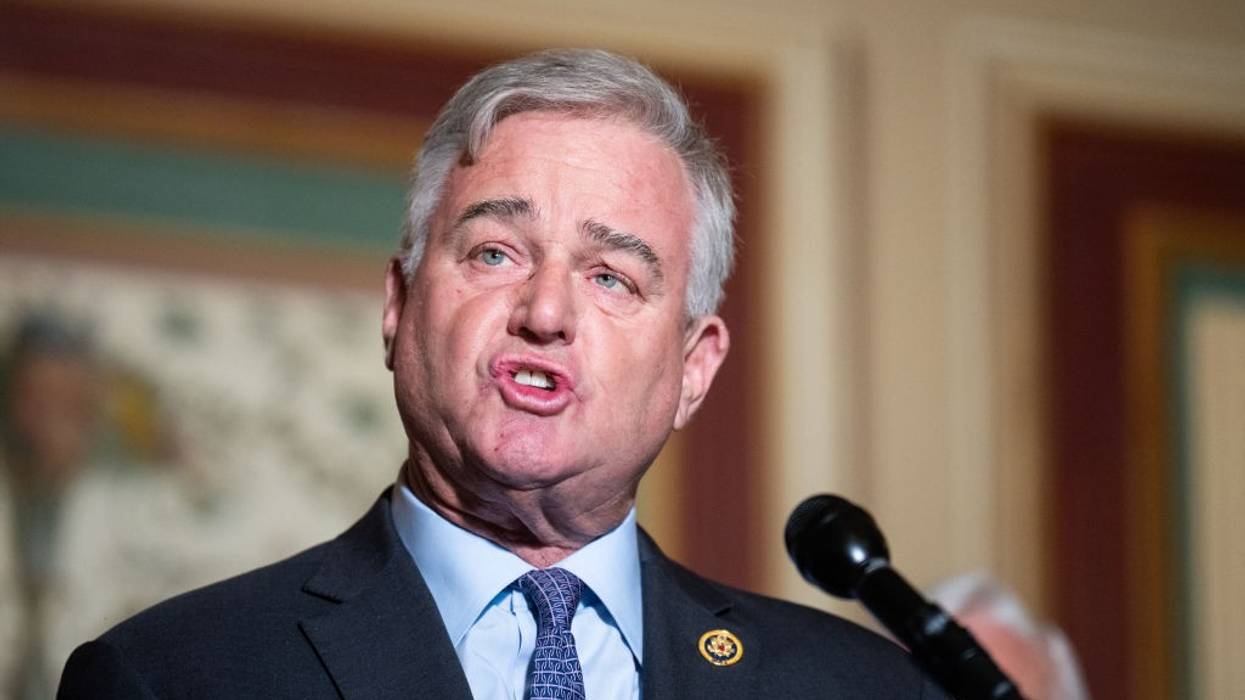
Prince George's County executive Angela Alsobrooks wins Democratic nomination for open U.S. Senate seat over retail wine magnate David Trone, who self-funded his campaign with over $60 million.
Despite spending over $61 million of his own money in the Democratic Primary, wealthy business owner and state Rep. David Trone came up short in Maryland's Democratic primary race for an open U.S. Senate seat on Tuesday, bested by Angela Alsobrooks, executive of Prince George's County.
Due to the self-funding of Trone, co-owner of the Total Wine & More retail chain, the primary became the most expensive in state history. Despite polls showing Trone as the clear favorite leading up to Tuesday's vote, Alsobrooks won by a full 12 points. According to the Baltimore Sun, with 100% of precincts reporting, the final tally was 54% to 41.9%.
"For anyone who has ever felt counted out, overlooked, and underestimated, I hope you know that the impossible is still possible," Alsobrooks, who had the support of most major players in the Maryland Democratic Party apparatus, told supporters during a victory speech on Tuesday night.
She vowed to defeat the Republican nominee for the seat, former two-term governor Larry Hogan, and said the Democratic Party was "united in our focus to keep the Senate blue."
Political observers took note of the unexpected margin of victory as well as the dynamic of Trone's outsized spending.
"So…. Not a single poll had Alsobrooks winning by anywhere close to double digits, elections absolutely can break late, and campaigns matter," said Colin Seeberger, senior communications director for the Center for American Progress. "Feels like there are some lessons to be learned here for, I don't know, future elections."
Fight Corporate Monopolies, a progressive advocacy group opposed to concentrations of corporate power, opposed Trone based on his fealty to monopoly interests during the primary and called him "just another billionaire bully who thinks he can buy himself a Senate seat."
The group ran one ad comparing Trone to former president Donald Trump and documenting his attacks on rival small businesses and workers:
“I will f*#%ing end you. I will execute you!” - David Trone to a delivery worker.
That’s a billionaire bully for you. pic.twitter.com/cjyuJ3GAVq
— Fight Corporate Monopolies (@fightmonopolies) May 13, 2024
Following Tuesday's defeat, Faiz Shakir with Fight Corporate Monopolies, said: "I believe [our] ad against Trone—both in timing and in message—played a key role in changing the trajectory of the Senate race."
John Nichols, veteran political reporter for The Nation, said: "Maryland Democratic voters rejected mega-rich corporate monopolist David Trone in their Senate primary and instead chose highly qualified Prince George's County Executive Angela Alsobrooks to take on Republican Larry Hogan. Good move."
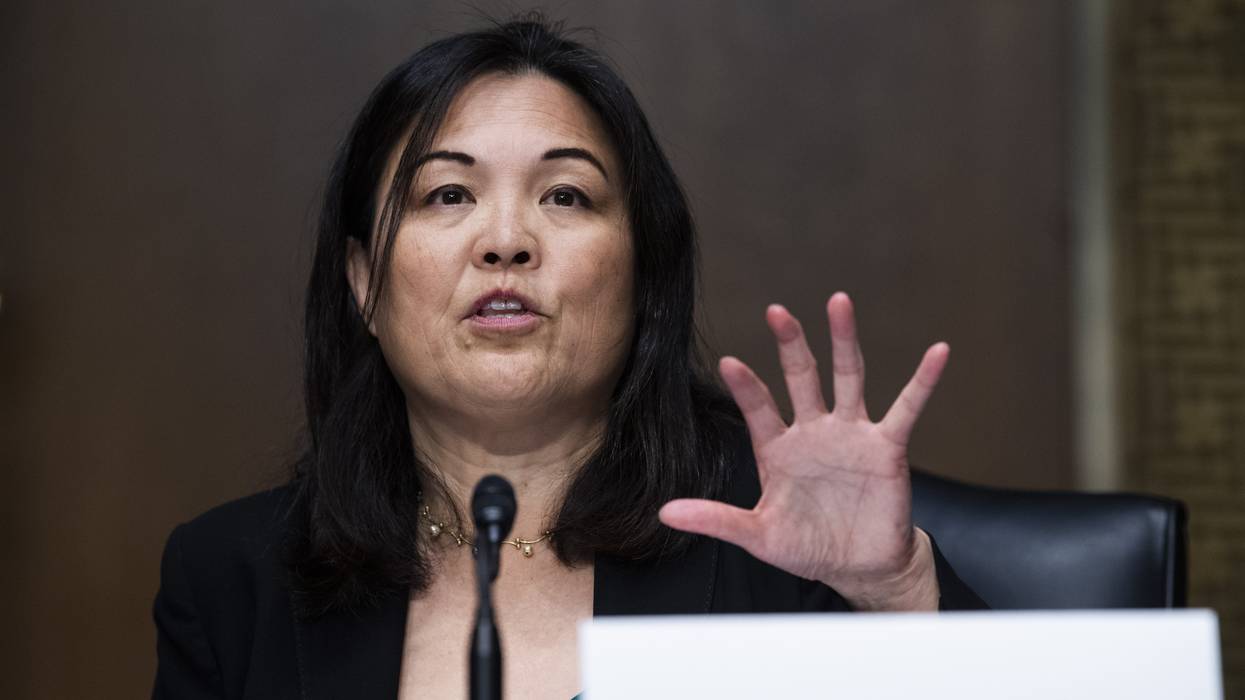
"She's really been a champion her entire career for all workers, regardless of immigration status, regardless of economic status," said one advocate.
Progressives on Tuesday applauded as U.S. President Joe Biden nominated Julie Su to succeed outgoing Labor Secretary Marty Walsh—a choice the nation's largest federation of unions said will "continue the Department of Labor's historic legacy of pro-union leadership."
"Julie Su is a leader who stands up for dignity, safety, and fair pay for all working families including immigrant and marginalized communities," continued the AFL-CIO, calling on the U.S. Senate to promptly confirm Su, who is currently Biden's deputy labor secretary.
The president noted that before working in the Biden administration, Su "led the largest state labor department in the nation" as California's labor commissioner from 2011-18.
In that role, Su oversaw "a renaissance in enforcement activity" against employers who violated labor laws, according to the U.S. Labor Department. She launched a historic, multilingual "Wage Theft Is a Crime" campaign, using multimedia to reach low-wage workers, inform them about their rights, and encourage them to feel safe speaking out against abuses of labor law.
"Julie Su is the real deal and she will do everything in her power to put working people central to the agenda."
Years before leading California's Labor Department, in the mid-1990s as a recent law school graduate, Su helped defend more than 70 Thai undocumented immigrants who had been enslaved in a garment sweatshop in El Monte, California. The case is widely studied in law school classes and by advocates and rights organizers, NBC News reported in 2021 when Su was nominated to serve as deputy labor secretary.
"What an inspiring pick," Helen Brosnan of the advocacy group Fight Corporate Monopolies tweeted, noting Su's anti-slavery case.
Biden said Su has proven herself to be "a champion for workers" as she has "cracked down on wage theft, fought to protect trafficked workers, increased the minimum wage, created good-paying, high-quality jobs, and established and enforced workplace safety standards."
The president selected Su after reportedly being urged by House Speaker Emerita Nancy Pelosi (D-Calif.) to nominate former Democratic Congressional Campaign Committee (DCCC) Chair Sean Patrick Maloney, who was a member of the corporate-friendly New Democrat Coalition before losing his reelection campaign last year and who has been blamed for allowing the Democrats to lose control of the U.S. House.
"Great to hear that we won't see Sean Patrick Maloney return to power anytime soon," said organizer Joshua Sauberman.
A number of progressives strongly urged Biden to nominate Sara Nelson, international president of the Association of Flight Attendants-CWA, to succeed Walsh, with Sen. Bernie Sanders (I-Vt.) telling the president in a letter that Nelson "has been a leading voice for worker rights and is a very strong communicator of progressive values."
Nelson has been a vocal critic of a widening gap between CEO and worker pay and was a key negotiator of provisions in the pandemic-era CARES Act, which temporarily banned airline stock buybacks and capped executive compensation.
Despite his support for Nelson, Sanders was one of the first lawmakers to respond to the news of Su's nomination, expressing confidence that she "will be an excellent secretary of labor."
Nelson also expressed strong support for Biden's choice, saying the nomination is "fantastic news for the country!"
Other labor advocates shared their hope that as secretary of labor, Su will push forward efforts to strengthen workers' rights in the fast-growing renewable energy sector.
"Renewables workers—and our planet—need someone like Su at the helm of the Department of Labor to push for and deliver on much-needed change. Right now, renewable energy jobs are scaling up across the country to meet the demand of the Inflation Reduction Act's unprecedented investment in clean energy," said Matthew Mayers, executive director of the Green Workers Alliance. "But the industry still relies on low-road subcontractors and temp agencies, who frequently short-change workers and promise jobs that never materialize."
"This industry—and many more across America—will need to fundamentally change," Mayers added. "Julie Su knows this from first-hand experience. She has been a fighter to win these changes, and we look forward to working with her as we demand more and better green jobs."
Immigrant rights groups have also pushed Biden to nominate Su, with the National Immigration Law Center (NILC) saying earlier this month that her "track record shows her commitment to protecting everyone's fundamental rights at work."
"She's really been a champion her entire career for all workers," Raha Wala of the NILC told Bloomberg Law Tuesday, "regardless of immigration status, regardless of economic status."
A coalition of anti-monopoly advocates cheered Friday after reporting confirmed that the U.S. Department of Justice has launched an antitrust investigation into Live Nation, the owner of Ticketmaster.
"We are thrilled to see the Department of Justice Antitrust Division investigate Live Nation-Ticketmaster's ongoing monopoly abuse of fans, artists, venues, and live events professionals," the Break Up Ticketmaster Coalition said in a statement.
The probe predates the debacle that began this week when Ticketmaster's website malfunctioned as millions of people attempted to purchase tickets for pop star Taylor Swift's upcoming concert tour, according to The New York Times, which reported:
Members of the Antitrust Division's staff at the Justice Department have in recent months contacted music venues and players in the ticket market, asking about Live Nation's practices and the wider dynamics of the industry, said the people, who spoke on the condition of anonymity because the investigation is sensitive. The inquiry appears to be broad, looking at whether the company maintains a monopoly over the industry, one of the people said.
Nevertheless, the bungled presale of Swift tickets drew fresh attention to the negative consequences of Live Nation's 2010 acquisition of Ticketmaster, a merger greenlighted by the Obama administration.
Earlier this week, as Common Dreams reported, Democratic Reps. Alexandria Ocasio-Cortez (N.Y.), Ilhan Omar (Minn.), and other lawmakers called on the Biden administration to "break up Ticketmaster."
Prior to the intervention of progressive members of Congress, the Break Up Ticketmaster Coalition launched a campaign last month to urge President Joe Biden's Justice Department to dismantle Live Nation's monopoly power. The effort quickly attracted tens of thousands of artists, fans, and policymakers.
"This is a day of optimism and hope for over 40,000 people who have called on the DOJ to break up Live Nation-Ticketmaster, a corporation that has bent and broken the industry to its will since its entities merged in 2010," the coalition said Friday.
As the Times reported:
When the Justice Department approved the merger--over significant opposition from the music industry--it required the company to sell some parts of its business. It also reached a legal settlement with the company that forbade Live Nation to threaten concert venues with losing access to its tours if those venues decided to use ticketing providers other than Ticketmaster. Those terms were set to last for 10 years, until 2020.
In late 2019, after an investigation, the Justice Department found that Live Nation had repeatedly violated this provision of its decree. It extended the terms of the settlement by five years, to 2025, and adjusted some of the agreement's language to clarify what the company was allowed to do when negotiating ticketing deals with venues
Members of the Justice Department staff have asked whether Live Nation is complying with the agreement as part of their new inquiry, said one of the people with knowledge of the matter. Officials at the agency have grown increasingly wary of such settlements, believing the best way to settle antitrust concerns is through changes to a company's structure.
The Break Up Ticketmaster Coalition is made up of a wide range of groups, including the American Economic Liberties Project, Artist Rights Alliance, Demand Progress, Fight Corporate Monopolies, More Perfect Union, Music Workers Alliance, Sports Fans Coalition, and the Union of Musicians and Allied Workers.
The campaign "is bringing together a diverse array of sports and music fans, artists, unions, and independent venue owners for one common goal: restore competition to the live events marketplace," said the coalition. "This is an amazing moment and a crucial first step to achieving that goal."
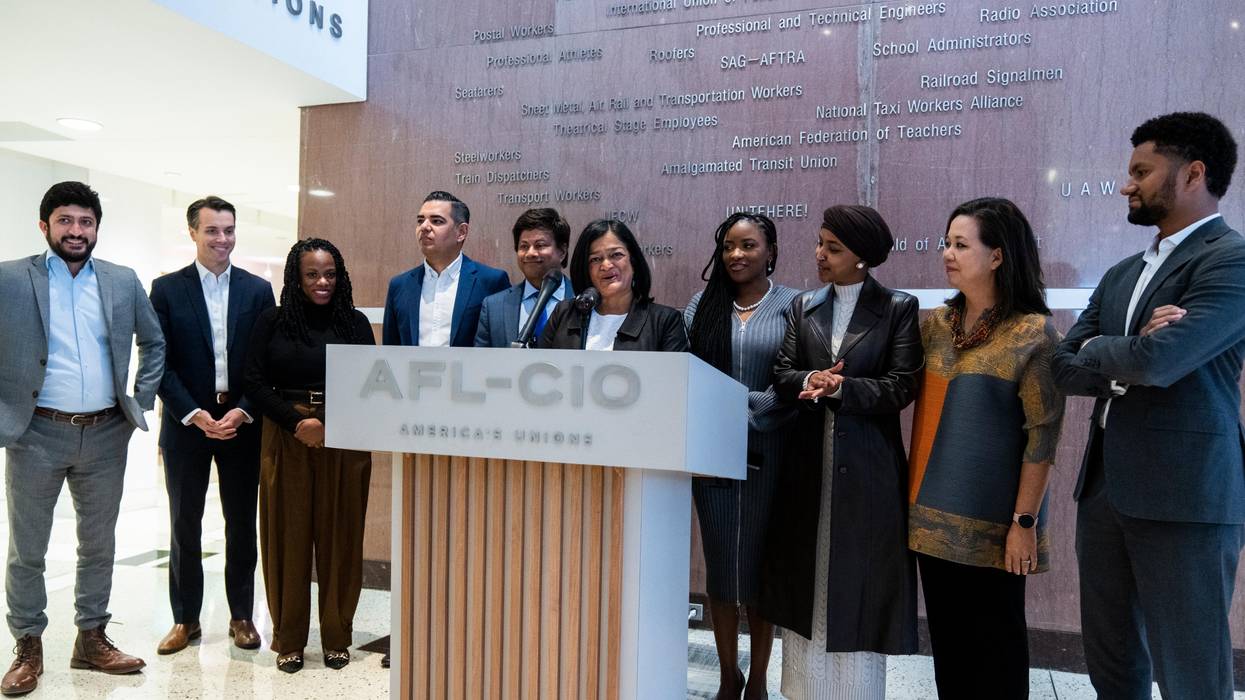
The economic justice group Fight Corporate Monopolies on Tuesday said the Democratic Party must take note of the midterm electoral victories of a number of progressive candidates who have been outspoken about their plans to fight corporate greed, and enact a legislative agenda to combat what the group called a "corporate power crisis" in the United States.
"Legislators have the next two years to enact an economic populist, pro-democracy agenda--one that breaks through partisan divides--that would rebalance power away from monopolies, corporate special interests, and Wall Street," said the organization as it unveiled its Corporate Power Agenda.
The 19 policy recommendations focus on making everyday life more affordable for Americans, strengthening antitrust enforcement, and protecting small businesses from monopolization.
The agenda was released a week after progressives including Reps.-elect Greg Casar (D-Texas), Summer Lee (D-Pa.), Delia Ramirez (D-Ill.), and Sen.-elect John Fetterman (D-Pa.) won midterm races after campaigning on ensuring that "corporations pay their fair share," passing the Protecting the Right to Organize (PRO) Act, and closing "the unnecessary gap between skyrocketing corporate profits and working people's poverty wages."
The election results showed that American voters are demanding their representatives in Congress aggressively fight corporate greed, said Fight Corporate Monopolies (FCM).
"Democrats can seize our massive electoral victories to fight for bold solutions for the majority of voters who want to see politicians break the chokehold corporations have on our political system, economy, and democracy," said Helen Brosnan, the group's executive director. "Small businesses are decimated by monopolies, workers are crushed by corporate bosses, and families are fed up with Wall Street taking home record profits while they struggle--but we've seen that it doesn't have to be this way."
"Small businesses are decimated by monopolies, workers are crushed by corporate bosses, and families are fed up with Wall Street taking home record profits while they struggle--but we've seen that it doesn't have to be this way."
Passing legislation to outlaw price fixing and price gouging--supported by 76% of voters, according to FCM--would "instantly caution executives against collusive behavior that results in higher prices and excess profits, and bar those convicted of price fixing from continuing to work in their industry, introducing further deterrents that are essentially nonexistent today."
The Democrats could also pass the Ending Corporate Greed Act, sponsored by Sens. Bernie Sanders (I-Vt.) and Ed Markey (D-Mass.) to adopt an economy-wide excess profits tax and ensure corporations, whose profit margins hit a 70-year high in 2021, are contributing to the greater good rather than further enriching their CEOs and shareholders.
To show that the party stands with workers over corporations, said FCM, the Democrats should pass the PRO Act to make it easier for workers to unionize and the Workplace Mobility Act, which would free an estimated 30 to 50% of American workers--including many in low-wage jobs--from being forced to sign noncompete agreements.
Policy recommendations for confronting the outsized influence corporations have on policymaking include closing the fundraising loophole that allows candidates and super PACs to coordinate their activities, "allowing corporations and billionaire donors to directly influence elections," and banning stock buybacks, which "skyrocketed over the last two decades, hitting a record of $881.7 billion in 2021."
To stop corporations from buying back their own shares instead of using profits to increase production and worker compensation, Democrats could pass the Reward Work Act, which includes a provision rescinding a 1982 rule that allowed stock buybacks--which had previously been treated as illegal market manipulation.
The Corporate Power Agenda also focuses heavily on confronting monopolization, which according to FCM has affected 75% of U.S. industries in the past two decades.
"Monopolization is happening in big markets, like search engines, online commerce, airlines, seeds and chemicals, and social networks," said the group. "It's happening in small markets as well, in hospitals, prison phone services, syringes, portable toilets, funeral caskets, mixed martial arts, and so on."
"At the same time, politicians at the federal and state level have stood by and cheered on these monopolies as they've amassed power over our economy and our lives," added FCM.
The trend toward corporate concentration has left Americans feeling that "society and politics are out of their control," said the group, as households struggle to cope with the rising cost of goods and services while earning take-home pay that is "up to 30% lower than it should be."
To confront corporate monopolies, FCM called on Democrats to:
Nidhi Hegde, director of strategy and programs at the American Economic Liberties Project, said the agenda "will enable elected leaders who ran on fighting for working families to make it a reality at the federal, state, and local level."
"People are ready for a progressive, pro-democracy, pro-worker agenda to take on corporate control," said FCM on social media. "We just need leaders to have the courage to enact it."
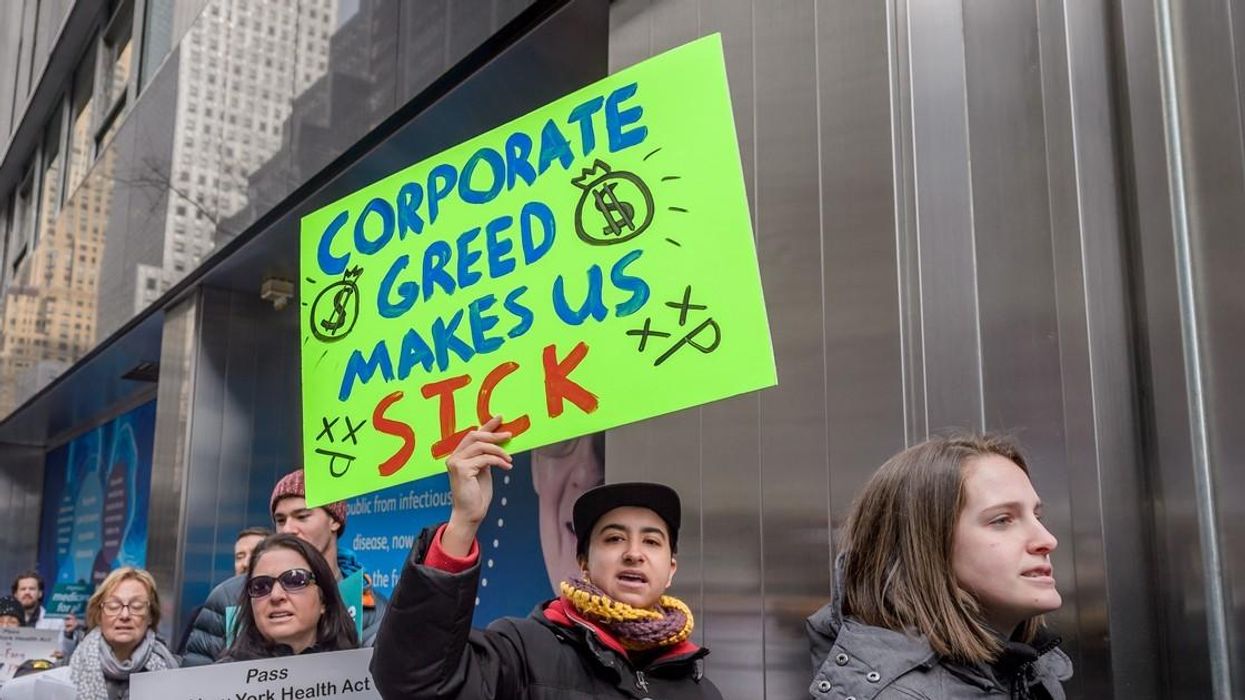
Federal data published Thursday shows that nonfinancial corporate profits in the U.S. surged to an all-time record of $2 trillion in the second quarter of 2022 as companies continued jacking up prices, pushing inflation to a 40-year high to the detriment of workers and consumers.
According to figures released by the Commerce Department's Bureau of Economic Analysis (BEA), corporate profit margins over the past three months were the widest they've been since the 1950s as ongoing price hikes pad the bottom lines of large businesses--and eat into the paychecks of employees.
"Megacorporations are a key driver of high prices--and we need bold action to rein them in."
"We can argue until the cows come home about the cause of inflation," Chris Becker, senior economist at the Groundwork Collaborative, wrote in response to the new data. "But we can't lose sight of the basic moral point that it is outrageous that corporations are seeing skyrocketing profits while purchasing power for so many American households is declining."
Bloomberg noted Thursday that "with household budgets squeezed by the rising cost of living, some firms have been able to offset any slip in demand by charging more to the customers they've retained."
"Across the economy, adjusted pretax corporate profits increased 6.1% in the April-to-June period from the prior quarter--the fastest pace in a year--after falling 2.2% in the first three months of the year," the outlet continued. "Profits are up 8.1% from a year earlier."
Rakeen Mabud, the Groundwork Collaborative's chief economist, said in a statement that the "astronomical corporate profits confirm what corporate executives have been telling us on earning calls over and over again: They're making a lot of money by charging people more, and they don't plan on bringing prices down anytime soon."
"Corporate profiteering continues in full force--and all of us are paying the price," Mabud added. "This data should be a wake-up call for policymakers. Megacorporations are a key driver of high prices--and we need bold action to rein them in."
The BEA numbers came after oil companies, food giants, and other major businesses reported record-shattering profits in the second quarter of this year as they take advantage of Russia's war on Ukraine, the ongoing coronavirus pandemic, and supply chain disruptions to drive up prices.
According to one recent analysis, the profits of eight top oil companies--including Chevron, ExxonMobil, and Shell--are up 235% compared to last year.
"Working families are still reeling from the immoral price-gougers who jacked up their expenses under the guise of inflation."
"The glaringly obvious takeaway from this new data is that market power is a key driver of rising prices," said Sarah Miller, executive director of the American Economic Liberties Project. "Policymakers need to use this new information--which confirms what working families across the country know all too well--to attack concentrated corporate power immediately and aggressively across the board."
"That means levying excess profits taxes, ensuring big penalties for price-fixing, and resourcing enforcement agencies to prosecute price-gouging and other forms of corporate abuse," Miller added. "And it means banning large mergers, stock buybacks, and 'payoffs for layoffs' to help build durable market power for working people and consumers and level the playing field for small businesses and entrepreneurs."
The newly enacted Inflation Reduction Act includes a corporate minimum tax, limited drug-pricing reforms, and a small levy on stock buybacks, but experts say the measure by itself is unlikely to meaningfully curtail companies' power to set prices as they please for the benefit of their executives and shareholders.
The Federal Reserve, meanwhile, appears poised to continue hiking interest rates aggressively in its bid to tame inflation, risking mass layoffs and a recession that would disproportionately harm ordinary people.
"While corporations enjoy record profits and CEOs get millions more in bonuses, workers are still waiting in vain for better working conditions and working families are still reeling from the immoral price-gougers who jacked up their expenses under the guise of inflation," said Helen Brosnan, executive director of Fight Corporate Monopolies.
"Our politicians have a choice: stand up to corporate monopolies and their corrupting influence or stand by while they take advantage of working people trying to pay their bills," Brosnan continued. "Until then, it's fair for voters to continue to wonder whose side you're on, and whose interests you're protecting."

In the streets of the nation's capital and on its cable television networks, progressives are demanding that Senate Majority Leader Chuck Schumer immediately schedule votes on a pair of antitrust bills designed to rein in Big Tech's growing power--something he promised to do by "early summer."
"Schumer has a choice: Side with greedy monopolies or the American people."
On Wednesday, the progressive advocacy group Fight Corporate Monopolies released a new ad, its first cable buy in the D.C. market, criticizing the New York Democrat for delaying bipartisan legislative momentum to crack down on technology giants' increasingly concentrated power.
The new ad suggests that Schumer's familial and financial connections to Big Tech--he has secured big checks from industry executives while one of his daughters lobbies for Amazon and the other works for Facebook--have contributed to his ongoing refusal to hold votes on the American Innovation and Choice Online Act and the Open App Markets Act.
"It's now obvious that Sen. Schumer is Big Tech's last line of defense against a growing majority in Congress that is fighting to loosen the industry's vise grip on our economy," Helen Brosnan, executive director of Fight Corporate Monopolies, said in a statement. "While the senator publicly states that Big Tech regulation is a priority, his close familial ties to tech monopolies and recent cozying up to tech lobbyists tell a different story."
"In his refusal to advance bipartisan Big Tech legislation to the floor," said Brosnan, "Sen. Schumer's behavior demonstrates that when elected officials of both parties prioritize the interests of monopoly power, small businesses, workers, and consumers lose."
Rather than bringing popular antitrust legislation aimed at curbing the power of tech monopolies to the Senate floor, Schumer has been hosting private fundraising meetings with the CEOs of companies that would be affected.
On Tuesday, Schumer reportedly assured a group of donors that the American Innovation and Choice Online Act is unlikely to pass. However, the bill's co-sponsors--Sens. Amy Klobuchar (D-Minn.) and Chuck Grassley (R-Iowa)--say they have the 60 Senate votes needed to overcome a filibuster and want to bring the measure to the floor before the legislative session ends in less than two weeks.
Outside Bistro Bis, the Capitol Hill restaurant where the high-dollar fundraiser was held, progressive activists protested, greeting Schumer with signs reading, "Call the Vote" and "Stop Chuckin' Up to Big Tech."
"After promising an 'early summer' vote on two critical antitrust bills, Sen. Schumer has failed to keep his word," said Maria Langholz, communications director for Demand Progress. "We showed up tonight to make sure that, even as he was meeting behind closed doors with big donors, Sen. Schumer is forced to hear the voice of the people who are clamoring to rein in Big Tech."
Demonstrators also parked a mobile billboard outside the restaurant urging Schumer to assign a date for floor votes on both antitrust proposals.
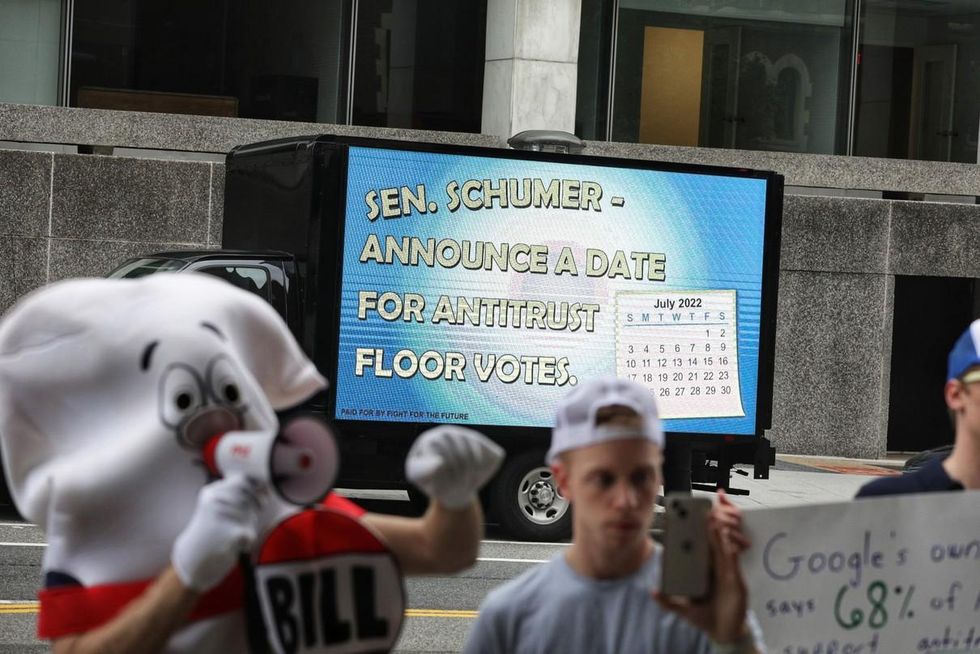
"Since Sen. Schumer has failed for months to schedule a vote," said Even Greer, director of Fight for the Future, "we thought we'd help him out by once again sending our mobile billboard to the most convenient place possible--tonight's fundraising dinner, an event he surely prioritized."
For weeks, Fight for the Future's mobile billboard, dubbed the "Chuck Truck," has been circling Schumer's neighborhood playing Last Week Tonight's recent takedown of Big Tech.
"This time the billboard was a giant calendar that should have made it easy for him to keep his promise to bring these bills to a vote with no further delays," said Greer.
Klobuchar told Bloomberg News on Tuesday that Schumer "promised a vote on this bill and we take him at his word."
"We have growing momentum and the support to pass the bill despite the fact that the companies have spent an atrocious amount of money on lobbyists and TV ads spreading false information," she added.

The Federal Reserve's decision Wednesday to hike interest rates by 75 basis points--the largest increase since 1994--heightened fears among economists that the central bank's attempt to tame inflation risks plunging the U.S. economy into recession and inflicting more pain on vulnerable workers.
The Fed's move came on the heels of worse-than-expected federal data showing that inflation jumped 8.6% in May compared to a year earlier, prompting central bank officials to pursue more aggressive federal-funds rate increases, the Fed's blunt tool to rein in consumer prices.
"Relying on the Fed to bring down prices is like treating someone's fever by putting them in a freezer."
But progressive economists have argued for months that interest rate hikes--which are aimed primarily at slowing demand--are the wrong medicine for inflation driven in large part by skyrocketing gas prices and supply-chain disruptions caused by the pandemic.
"Relying on the Fed to bring down prices is like treating someone's fever by putting them in a freezer," argued Robert Reich, the former head of the U.S. Department of Labor. "It doesn't treat the underlying disease, and could make things far worse."
With the Fed expected to continue pushing up rates at a similar pace in the coming months, analysts are growing increasingly concerned that the central bank will induce an economic slowdown and throw millions out of work in its bid to tackle inflation--a potential echo of the infamous Volcker shock of the 1980s.
"As is well understood, much of the inflation we now see stems from factors that have little to do with the strength of the U.S. economy," said Dean Baker, senior economist at the Center for Economic and Policy Research. "The soaring price of oil is due to Russia's invasion of Ukraine and subsequent sanctions. Fed rate hikes will not bring down the price of gas."
Jerome Powell, the chair of the Federal Reserve, admitted as much during a press conference following the Federal Open Market Committee's closed-door meeting on Wednesday.
"Lots of countries are looking at inflation of 10%, and it's largely due to commodities prices," said Powell, a Trump appointee renominated by President Joe Biden in November. "Gas prices--you know, all-time highs and things like that. That's not something we can do something about."
Powell told reporters that while the Fed is not actively trying to cause a recession in a bid to bring down prices, "there's always a risk of going too far" with rate hikes. Powell also acknowledged that "wages are not principally responsible for the inflation that we're seeing," though just last month he said the central bank's goal is to "get wages down" even amid evidence that workers' share of income is declining.
In a blog post on Wednesday, Reich stressed that "wages are lagging behind inflation."
"A more accurate description of what we're now seeing might be called 'profit-price inflation'--prices driven upward by corporations seeking increased profits," Reich argued, pointing to a recent analysis by the Economic Policy Institute showing that record-shattering corporate profits have been contributing disproportionately to inflation.
"I understand the Fed's urgency, but it has entered dangerous territory," Reich wrote. "If the Fed continues down this path--as it has signaled it will--the economy will be plunged into a recession. Every time over the last half-century the Fed has raised interest rates this much and this quickly, it has caused a recession."
"A recession will be especially harmful to people who are most vulnerable to downturns in the economy--who are the first to be fired (and last to be hired again when the economy turns upward): lower-wage workers, disproportionately women and people of color," he added. "The Fed is making a big mistake."
Baker, for his part, noted that Powell is the "first chair in recent decades to explicitly recognize the full employment side of the Fed's dual mandate and note the huge benefits of low unemployment to Black and Hispanic workers, people with criminal records, and other groups disadvantaged in the labor market."
"In keeping with this recognition," Baker said, "the Fed would be well-advised to resist the frenzy of inflation fighters who want to see a whole series of large rate hikes."
Rampant inflation, a problem that is hardly unique to the U.S., has become a significant economic and political issue for the Biden administration, particularly as the pivotal midterm elections approach.
In an op-ed for the Wall Street Journal late last month, Biden declined to criticize the Fed's approach to combating inflation, writing that he has "appointed highly qualified people from both parties to lead that institution."
"The Federal Reserve has a primary responsibility to control inflation," the president wrote. "My predecessor demeaned the Fed, and past presidents have sought to influence its decisions inappropriately during periods of elevated inflation. I won't do this... I agree with their assessment that fighting inflation is our top economic challenge right now."
Biden proceeded to voice support for legislative action to drive down housing and prescription drug costs, Democratic priorities that are stalled in the Senate due largely to Sens. Joe Manchin (D-W.Va.) and Kyrsten Sinema (D-Ariz.). On Tuesday, the president sent a letter to the top executives of major U.S. oil and gas companies imploring them to ramp up production to reduce prices.
But recent survey data indicates that voters overwhelmingly want the president to more forcefully crack down on price-gouging corporations as a way to bring down costs at gas pumps, grocery stores, pharmacies, and elsewhere across the economy. Voters also support a windfall tax on oil and gas giants that are exploiting Russia's war on Ukraine to rake in huge profits.
"Ahead of the midterms, voters across the nation are eager to support candidates who embrace economic populism and prove to the American people that corporations are no longer above the law," said Helen Brosnan, executive director of Fight Corporate Monopolies.

With inflation running rampant in the United States and the Biden administration scrambling for a solution to what's become a major political and economic crisis, new polling data and swing-state focus group results shared exclusively with Common Dreams suggest one approach would be especially effective: Challenging corporate greed.
Conducted by the research firm GBAO on behalf of Fight Corporate Monopolies, the recent national surveys and focus groups in two key battleground states show that voters are particularly responsive to and supportive of messaging that connects price hikes to profiteering by big business.
"Do you stand with working families hit with higher costs or will you allow corporations to keep jacking up prices?"
For example, GBAO finds that 74% of voters say they would be more likely to back a candidate who supports outlawing price gouging as a way to "crack down on companies using inflation and the pandemic to raise prices." Voters, facing pain at the pump, become even more supportive when the surging profits of oil and gas companies are mentioned.
"There is hardly any difference across party lines in engagement on these policies, suggesting an opportunity for either party to define itself as a champion on corporate accountability," GBAO notes in a memo provided to Common Dreams.
Speaking for themselves during focus group sessions held in April--when inflation was up 8.3% compared to the year before, the highest level in four decades--voters in Wisconsin and Arizona confirmed their view that corporate profit-seeking is contributing to the price hikes U.S. consumers are seeing at grocery stores, gas stations, restaurants, and elsewhere.
One voter, identified as a Black woman from Wisconsin, said that corporations are using inflationary pressures across the U.S. and global economy as a "convenient excuse to line pockets."
Another, identified as a Latina from Phoenix, said that "there is a greed factor in the raising of prices."
"I think they go up whether there's a pandemic or not," she added, "but companies are covering their losses from the last couple of years."
Inflation in the U.S. has only gotten worse since April as Russia's war on Ukraine roils global energy markets and corporations push higher costs onto consumers, even after raking in record profits in 2021.
Federal data published last week showed that inflation was up 8.6% in May compared to a year earlier, exceeding analysts' expectations and sparking fears of more aggressive interest rate hikes from the Federal Reserve, whose chair Jerome Powell has expressed a desire to "get wages down."
In a statement responding to the latest figures, President Joe Biden vowed that his administration will "continue to do everything we can to lower prices for the American people."
The president also briefly hit on price gouging by major fossil fuel companies. It is "important," Biden said, "that the oil and gas and refining industries in this country not use the challenge created by the war in Ukraine as a reason to make things worse for families with excessive profit-taking or price hikes."
Progressives have urged Biden to more forcefully highlight that dynamic even as top members of his own administration--including Treasury Secretary Janet Yellen--dismiss it and Powell pushes the widely disputed notion that modest wage increases are fueling inflation.
In recent months, administration officials have been locked in an internal battle over whether to publicly connect corporate profiteering and consolidation to surging prices. As the Washington Post reported in February, members of the White House Council of Economic Advisers have "raised objections to the idea that a spike in prices was due to corporate power."
But outside economists have said the connection is clear. In an April blog post, Josh Bivens of the Economic Policy Institute pointed to data indicating that growing corporate profit margins "account for a disproportionate share of price growth."
On top of evidence showing that the argument tying record profits to rising inflation is accurate, Fight Corporate Monopolies executive director Helen Brosnan noted that it is also very popular. Polls released over the past several months, including those carried out by GBAO, have consistently found that voters blame corporate greed for the inflation spike.
"The results of our massive survey effort couldn't be clearer," Brosnan said. "Ahead of the midterms, voters across the nation are eager to support candidates who embrace economic populism and prove to the American people that corporations are no longer above the law."
In a new letter shared with Common Dreams, Fight Corporate Monopolies cites its polling data and focus group results to implore the White House to take "immediate, bold action" to combat corporate price gouging.
"The American people want to know what side you're on: Do you stand with working families hit with higher costs or will you allow corporations to keep jacking up prices, outsource more jobs, avoid paying taxes, and evade prosecution for clear crimes?" reads the letter, sent to the White House last week. "People across the country--and across party lines--want corporate giants and their enablers held to account. They are poised to reward leaders who crack down on corporate actors who threaten our economy and our democracy."
"The president should bring the major oil companies and tell them we're gonna have a windfall profits tax on what they're doing."
"You have the tools at your discretion, we urge you to publicly show a wholesale approach to combat corporate power," the letter adds.
Progressive lawmakers and advocacy groups have recently stressed that Biden can take a number of steps to drive down prices without needing approval from Congress. In March, the Congressional Progressive Caucus (CPC) called on the president to use his executive authority to slash prescription drug costs, which are rising faster than inflation as pharmaceutical companies set sky-high prices and reap the rewards in their bottom lines.
The CPC also recommended that Biden "fight cost increases for working families and protect workers by developing an inter-agency task force to investigate, prosecute, and deter white-collar crime, including anti-competitive and price-gouging business behaviors as well as firms' exploitation of heightened inflation to pad profits."
Democratic lawmakers have also introduced legislation that would hit large oil and gas companies with a windfall profits tax, an overwhelmingly popular proposal. The White House has signaled that it is open to supporting the bill, but the measure has not received a vote in the House or the Senate.
"Major oil companies made $35 billion in profit in the first quarter of this year, and at the end of the year it is estimated that they're gonna give $88 billion in stock buybacks to their wealthy shareholders," Sen. Bernie Sanders (I-Vt.) said during an event Monday. "So I do think we have to do something about the outrageously high price of gas."
"I think the president should bring the major oil companies in," Sanders added, "and tell them we're gonna have a windfall profits tax on what they're doing in order to stop them from ripping off the American people."

Rep. Alexandria Ocasio-Cortez on Monday took aim at corporate profiteers, calling for "consequences" for those who price gouge under the pretext of record inflation and international crises.
Responding to a tweet from MSNBC host Stephanie Ruhle, who asked "what's going on" with gas prices averaging $4.43 a gallon nationwide, Ocasio-Cortez (D-N.Y.) replied: "Profiteering. And there should be consequences for it."
Echoing Ocasio-Cortez, fellow "Squad" member Rep. Ilhan Omar (D-Minn.) tweeted that " Big Oil CEOs need to be held accountable for profiteering."
Last week, Sen. Sheldon Whitehouse (D-R.I.) introduced the Big Oil Windfall Profits Tax to target fossil fuel companies profiteering amid Russian President Vladimir Putin's invasion of Ukraine. The measure is co-sponsored by Sens. Jeff Merkley (D-Ore.), Elizabeth Warren (D-Mass.), and Bernie Sanders (I-Vt.). Rep. Ro Khanna (D-Calif.) simultaneously introduced a House version.
In a separate tweet Monday, Ocasio-Cortez highlighted a failure by lawmakers to hold fossil fuel companies accountable--especially those who take money from the industry.
Targeting Sen. Joe Manchin (D-W.Va.)--who opposes government funding for electric vehicle infrastructure while raking in hundreds of thousands of dollars in campaign cash from carbon polluters and profiting handsomely from his family's coal business--Ocasio-Cortez tweeted that it is "truly bizarre" how such conflicts of interest are "totally allowed" but "what's not acceptable is raising that fact and questioning the connection."
Last week, Common Dreams reported that 82% of respondents to a survey conducted by the advocacy group Fight Corporate Monopolies believe that inflation--which recently reached a 40-year high--is fueled by corporations hiking prices in pursuit of profit.

On the heels of fresh data showing that the U.S. inflation rate jumped to a new 40-year high last month, a new survey found that more than 80% of American voters believe costs are rising in part because "big corporations are jacking up prices" while raking in record profits.
Released Friday by the advocacy group Fight Corporate Monopolies, the poll showed that 82% of registered U.S. voters blame big companies for at least some of the recent inflation spike and want elected officials to "take on powerful CEOs and rein in corporate greed to lower prices."
"Rising prices is the top economic issue for most voters, and they want elected officials to challenge corporate greed to lower prices," Helen Brosnan, executive director of Fight Corporate Monopolies, said in a statement. "Political leaders should directly address rising prices, release plans to combat corporate greed's role in driving prices higher, and put forth arguments that center CEOs and big corporations."
The new survey, based on a sample size of 1,000 respondents, comes as progressives in Congress continue spotlighting corporate price-gouging as a key culprit behind rising prices nationwide even as the White House abandons that narrative, despite data indicating it resonates with voters.
With gas prices surging amid Russia's onslaught against Ukraine, Democrats in the House and Senate introduced legislation on Thursday that would impose a "windfall tax" on oil companies in an effort to "curb profiteering."
"Last year, oil and gas companies made $174 billion in profits," Sen. Bernie Sanders (I-Vt.), a co-sponsor of the legislation, wrote in a Twitter post. "This year they're on track to make more. We cannot allow Big Oil to use Ukraine and 'inflation' as an excuse to rip off Americans."