
SUBSCRIBE TO OUR FREE NEWSLETTER
Daily news & progressive opinion—funded by the people, not the corporations—delivered straight to your inbox.
5
#000000
#FFFFFF
To donate by check, phone, or other method, see our More Ways to Give page.


Daily news & progressive opinion—funded by the people, not the corporations—delivered straight to your inbox.
"If you can sign up with one click, you can cancel with one click," said New York City's democratic socialist mayor.
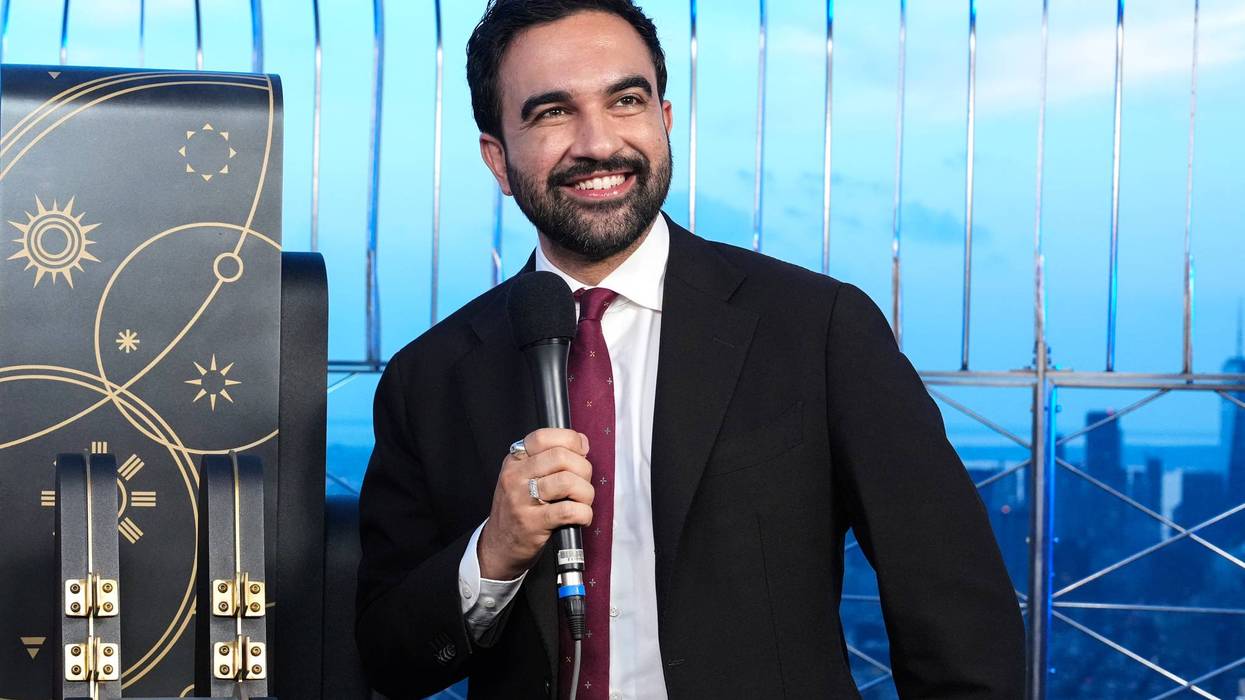
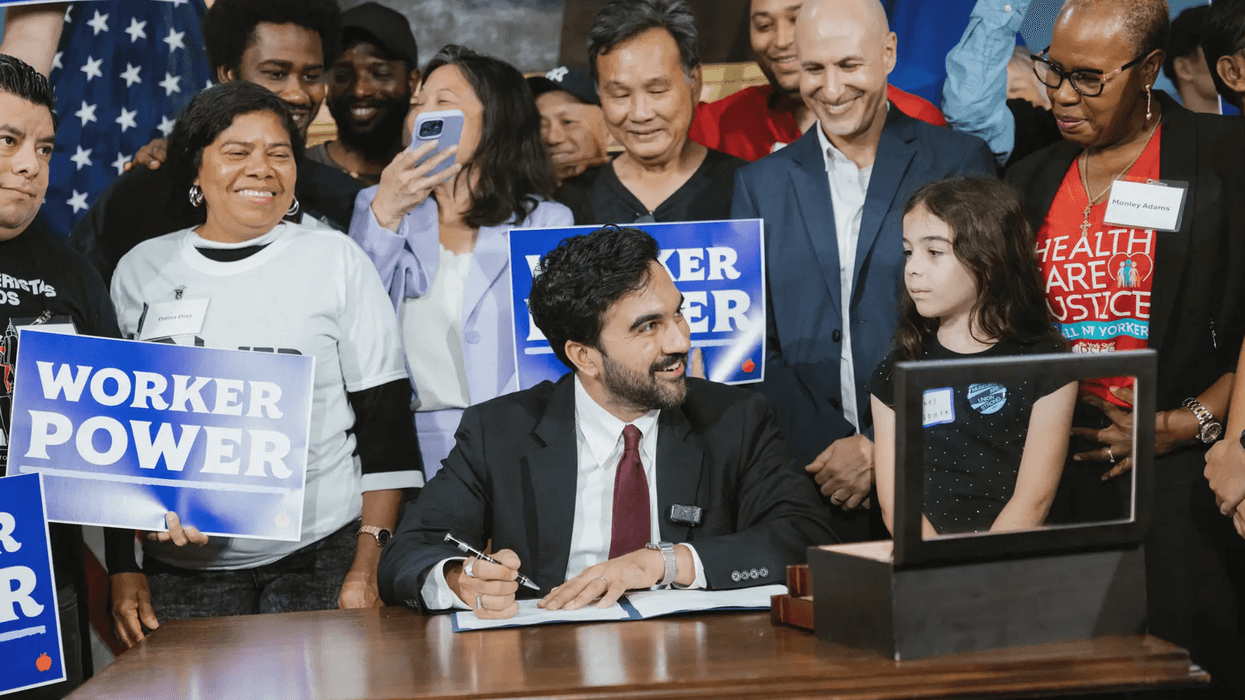
In a move proponents say will save constituents up to $162.5 million annually, Mayor Zohran Mamdani and other New York City officials on Friday unveiled a "click-to-cancel" rule aimed at ensuring people can end online subscriptions as easily as they start them.
Days after entering office in January, Mamdani signed a pair of executive orders, "Combating Hidden Junk Fees" and "Fighting Subscription Tricks and Traps"—his 9th and 10th mayoral edicts—to protect consumers and make it easier "for New Yorkers to know the real price of what they are buying and to stop paying for the services they no longer want."
Following up on the orders, Mamdani and New York City Department of Consumer and Worker Protection (DCWP) Commissioner Samuel A.A. Levine proposed a rule "requiring transparent, all-in pricing that bans hidden junk fees, alongside a final 'click to cancel' rule that guarantees consumers can cancel subscriptions as easily as they sign up for them."
The landmark proposal is part of Mamdani's affordability agenda, which includes the rent freeze and universal childcare programs he's partially enacted, as well as the free city buses, municipal grocery stores, affordable housing expansion, and redistributive taxation his administration is pursuing.
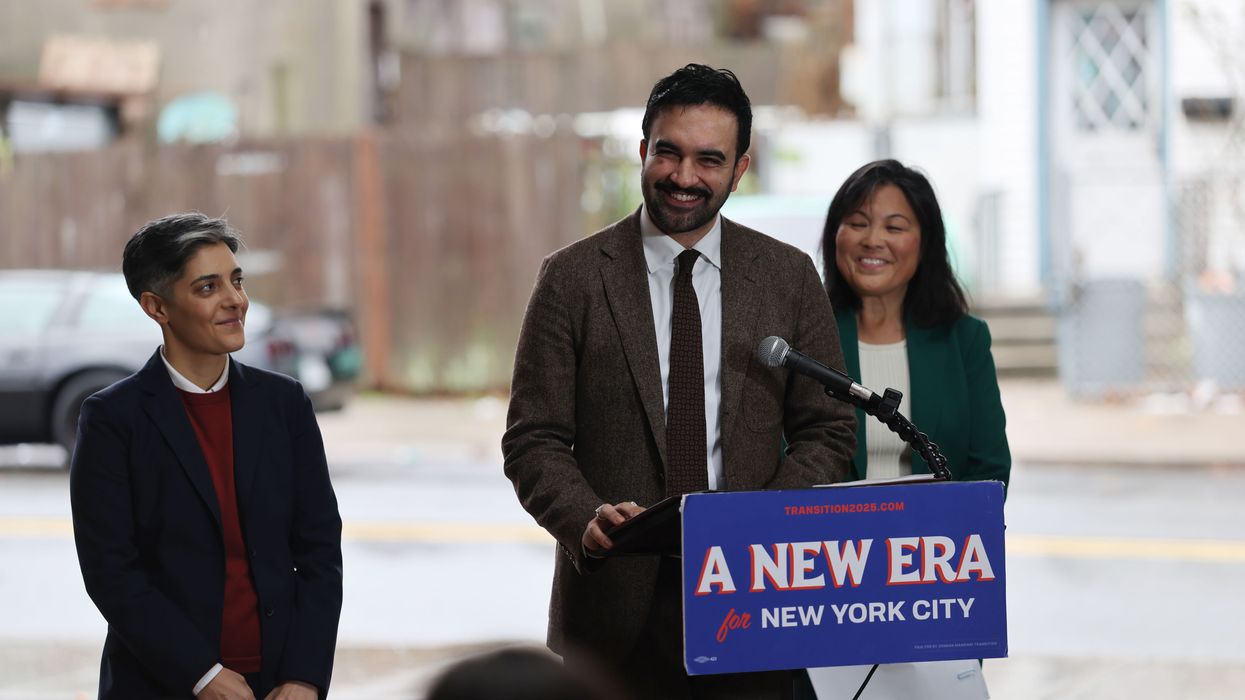
“For years, companies have built their business model around making it harder for working people to hold onto their money,” Mamdani said during a Friday press conference at Asser Levy Recreational Center in Manhattan's Kips Bay neighborhood. “Whether it’s hidden fees that suddenly appear at checkout or subscriptions that take one click to sign up for and a dozen steps to cancel, the result is the same: Working people pay more while corporations profit. That ends now. If you can sign up with one click, you can cancel with one click.”
Levine said that “these two rules will ensure that the price you see is the price you pay—no hidden charges, no endless subscription services, and no advantages for businesses that cheat. Requiring companies to compete on price will lower costs for all New Yorkers and level the playing field for honest businesses.”
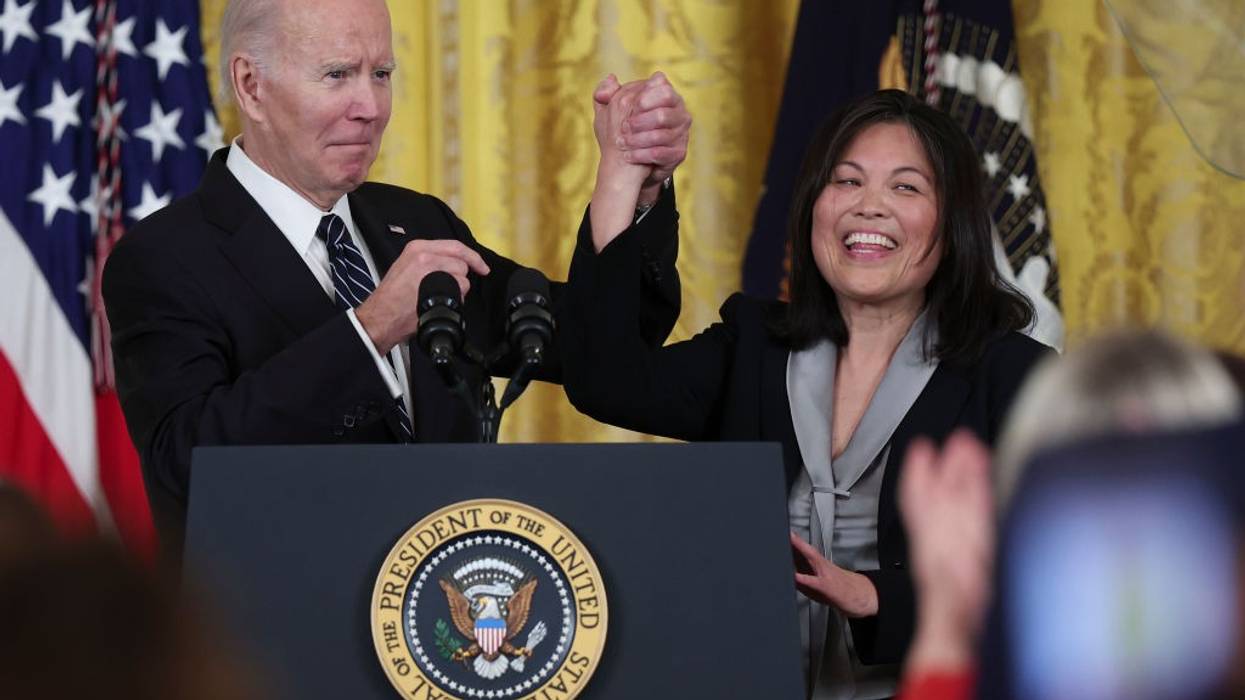
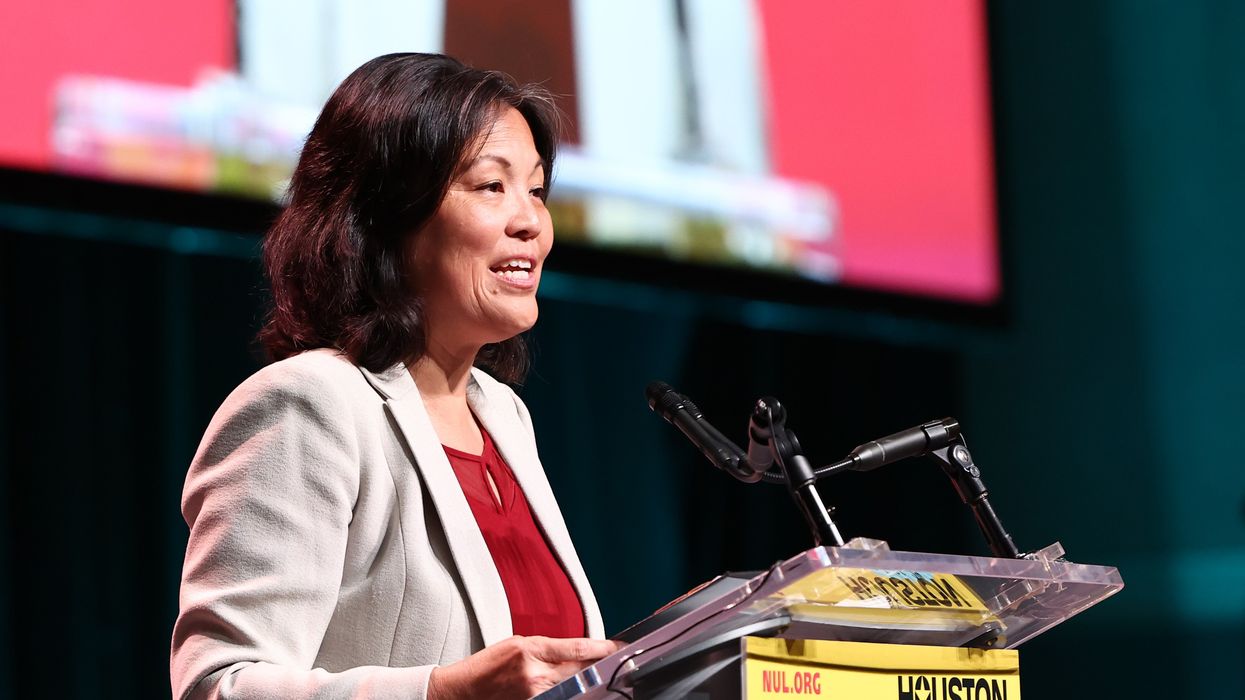
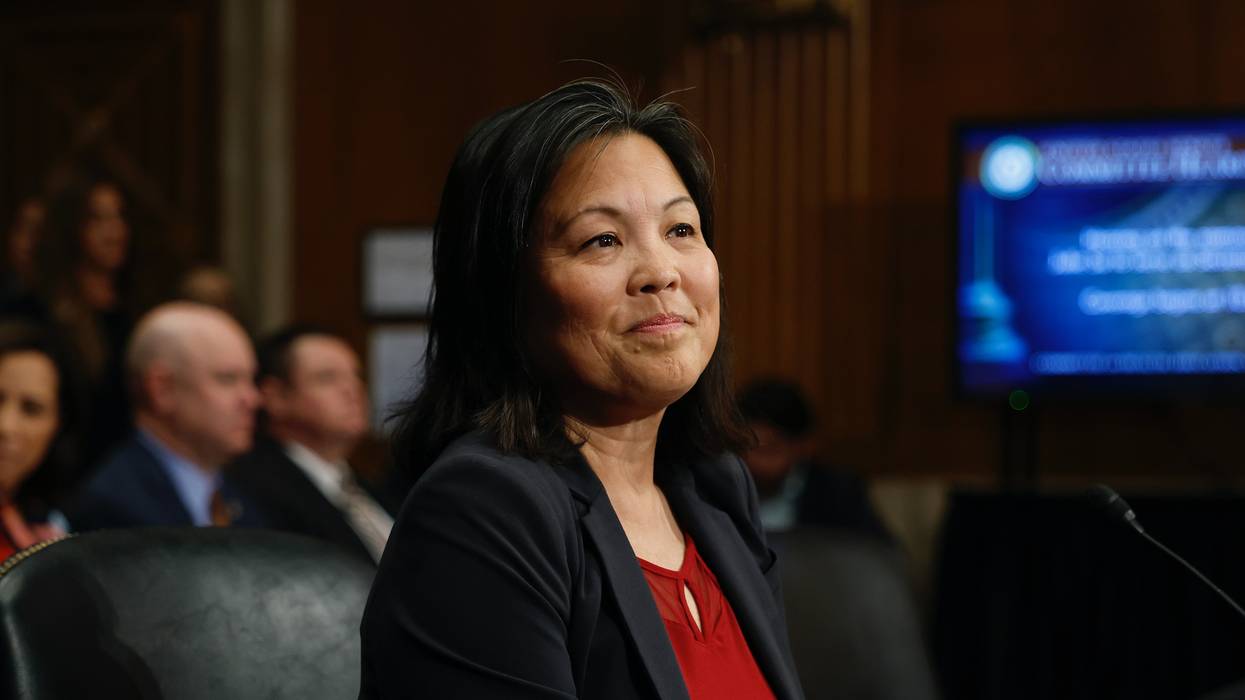
Deputy Mayor for Economic Justice Julie Su spoke at the press conference, saying, “Every dollar a family loses to a hidden fee or a subscription they couldn’t cancel is a dollar stolen from them, a dollar that could have gone toward rent, groceries, childcare, or anything else."
"And just as important, the hours spent trying to cancel a subscription or membership you no longer want is stolen time," the former acting US labor secretary added. “That’s what affordability means in practice—closing the small holes that drain people’s paychecks and their time month after month. These rules put New Yorkers back in control.”
Former Federal Trade Commission Chair Lina Khan—who implemented a similar rule while serving in the role during the Biden administration before it was killed after President Donald Trump returned to office—also spoke Friday, arguing that “nobody should be trapped in subscriptions they can’t escape or stuck paying junk fees they can’t avoid."
“These predatory tactics cheat people out of billions of dollars each year," she added. "With today’s rules, Commissioner Levine and DCWP are cracking down on corporate ripoffs, protecting families and honest businesses alike. The Mamdani administration’s work to tackle the affordability crisis and promote economic fairness continues to set a new standard nationwide, modeling effective governance and a relentless focus on using all of the city’s levers to improve life for New Yorkers.”
"What a thrilling day for the working class of New York City," said one local labor leader.
In a move cheered by advocates for the working class, New York City Mayor-elect Zohran Mamdani said Friday that former acting US Labor Secretary Julie Su will serve as the city's first-ever deputy mayor for economic justice.
"Welcome to a new era, Julie Su," Mamdani, a Democrat, said in a social media post announcing the appointment. "As former US secretary of labor, Julie played a central role in fighting for workers, ensuring a just day's pay for a hard day's work, and saving the pensions of more than a million union workers and retirees."
Speaking at a Friday press conference in Staten Island with Mamdani and Deputy Mayor for Housing nominee Leila Bozorg, Su said: "In the richest city in the richest country in the world, no one should be treated as disposable. Dignity on the job is not a privilege but a right, justice is not abstract but it is felt in a paycheck you can live on, a schedule that you can build a life around, a workplace where your voice matters, and a city that has your back.”
Su, who had previously served as California labor secretary and deputy US labor secretary, was nominated by former President Joe Biden to permanently lead the Department of Labor. However, Republicans and some right-wing Democrats in the US Senate blocked her appointment, so Biden installed her in an acting capacity, in which she served from March 2023 until the end of the Democrat's administration in January.
During her tenure, Su championed gig workers; fought to preserve pensions for retirees; pushed for workplace protections from Covid-19 and environmental harms; and helped negotiate labor agreements for healthcare professionals, flight attendants, and others.
Su will now work with Mamdani, a democratic socialist, as he seeks to deliver on his campaign promises of free public childcare and municipal buses, a freeze on rent-stabilized housing, and city-owned grocery stores to residents of the nation's largest city.
"What a thrilling day for the working class of New York City to have the first-ever deputy mayor for economic justice to ensure that our issues are front [and] center at every level of city government," New York Taxi Workers Alliance executive director Bhairavi Desai said in a statement.
"With the appointment of the esteemed Julie Su—who is unafraid and unbought by corporate interests—Mayor-elect Zohran Mamdani is cementing the highest, uncompromised, and effective standards for a better life for New Yorkers abandoned and betrayed in decades past," Desai added.
The NYC Central Labor Council of the AFL-CIO said on Bluesky: "Big news! Julie Su as deputy mayor for economic justice brings deep experience enforcing labor law, fighting wage theft, and standing up for working families."
"She’s known and respected across the labor movement, including here in NYC," the council added. "Looking forward to working with a proven champion for workers at City Hall!"
Service Employees International Union international president April Verrett said on X that Su "has spent her career standing with workers and holding powerful interests to account."
"Bringing her into City Hall says New York is done talking and ready to throw down for the people who keep this city moving," she added.
"People never gave a shit about us until now, when they finally realized that the chain is being broke now."
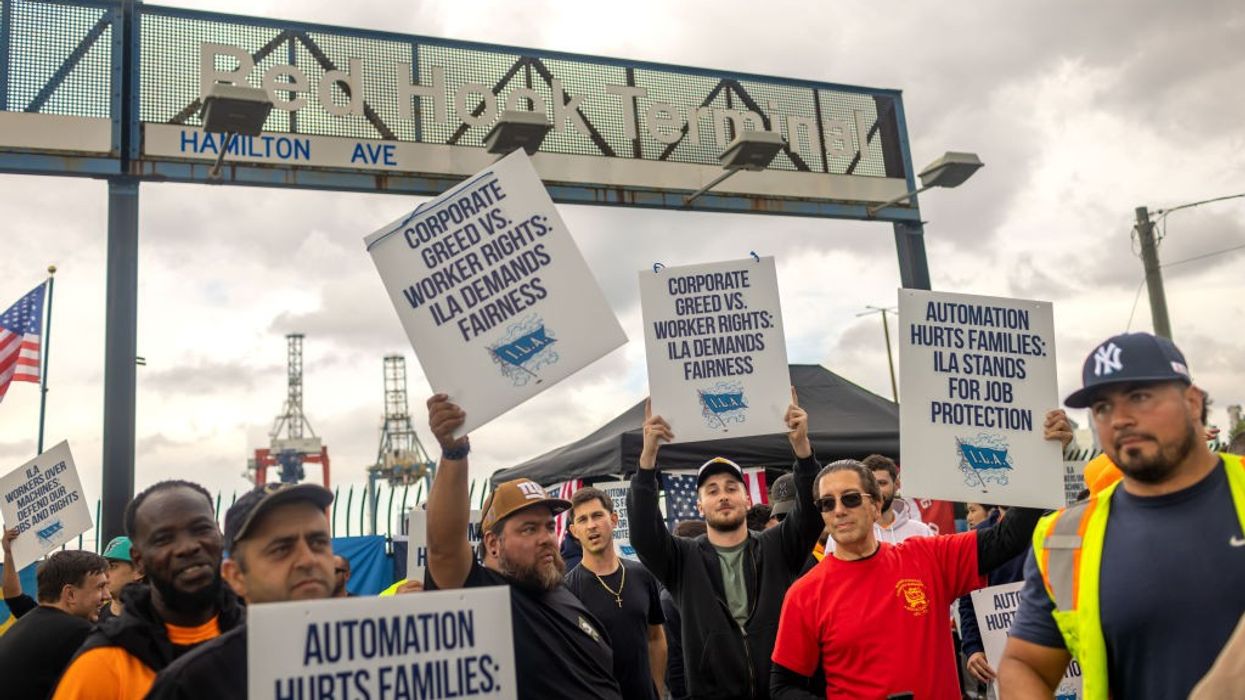
Amid concerns over fallout from the dockworker strike at ports up and down the East Coast, the head of the International Longshoremen's Association stressed in a Fox News appearance Tuesday that it's greedy companies, not 45,000 striking workers, who are to blame for any economic impacts that may follow from the labor dispute.
"They don't care," ILA president Harold Daggett said of shipping companies. "It's not fair. And if we don't put our foot down now, they would like to run over us, and we're not gonna allow that."
The Fox reporter then said, "You are gonna grind the economy to a halt here on the East Coast and the Gulf Coast."
Daggett fired back: "Not us—they are! Don't spin it now because you're Fox News... They have the capital to settle this thing."
Longshoreman President Harold Daggett praises Secretary of Labor Julie Su, and attacks the corporations whose greed has seen them make $400 billion in profit by jacking up prices since the start of the pandemic. pic.twitter.com/IO2hizqpOX
— More Perfect Union (@MorePerfectUS) October 1, 2024
Reuters reported Wednesday that "the strike, the ILA's first major stoppage since 1977, is worrying businesses that rely on ocean shipping to export their wares or secure crucial imports. It affects 36 ports—including New York, Baltimore, and Houston—that handle a range of containerized goods ranging from bananas to clothing to cars."
As the Fox reporter emphasized the impacts of the strike, Daggett said, "Now you start to realize who the longshoremen are, right?"
"People never gave a shit about us until now, when they finally realized that the chain is being broke now," he continued. "Cars won't come in. Food won't come in. Clothing won't come in. You know how many people depend on our jobs? Half the world!"
"And it's time for them, and time for Washington, to put so much pressure on them to take care of us," he added. "Because we took care of them, and we're here 135 years and brought them where they are today and they don't want to share!"
The ILA members walked off the job just after midnight on Tuesday, following the collapse of negotiations with the United States Maritime Alliance (USMX). The union is pushing for annual raises and protections from automation in the six-year contract.
Democratic President Joe Biden has power to break the strike—thanks to the anti-union law known as the Taft-Hartley Act—but has said he doesn't plan to do so. The ILA has welcomed the involvement of Biden's acting secretary of labor, Julie Su, whom Daggett called "terrific."
"We took care of them... and brought them where they are today and they don't want to share!"
In a Wednesday statement, the union leader said that his members "are grateful for the wisdom, courage, and leadership" of Su.
"Our ILA rank-and-file members will continue to strike for fair wages and their share of the foreign ocean carriers record billion-dollar profits and we are grateful to have the support of the U.S. Labor Department," Daggett declared.
His comments came in response to Su saying Tuesday that "over the last week and more, I have spent hours on the phone and in meetings with the parties urging them to find a way to reach a fair contract. This country's port workers put their health and safety on the line to keep working through the pandemic so we could get the goods we needed as Covid raged and these workers will help communities recover from the devastating effects of Hurricane Helene."
"As these companies make billions and their CEOs bring in millions of dollars in compensation per year, they have refused to put an offer on the table that reflects workers' sacrifice and contributions to their employer's profits," she added. "The American economy has defied all expectations thanks to the Biden-Harris administration's leadership. There is room for both companies and their workers to prosper. The parties need to get back to the negotiating table, and that must begin with these giant shipping magnates acknowledging that if they can make record profits, their workers should share in that economic success."
Biden—who blocked a rail strike in 2022 but then last year became the first sitting president to walk a picket line—put out a similar statement in support of longshoremen on Tuesday, saying on social media that "it's time those ocean carriers offered a strong and fair contract that reflects ILA workers’ contribution to our economy and to their record profits."
Vice President Kamala Harris, the Democratic nominee for the November election, piled on with a Wedneday campaign statement highlighting that "this strike is about fairness. Foreign-owned shipping companies have made record profits and executive compensation has grown. The longshoremen, who play a vital role transporting essential goods across America, deserve a fair share of these record profits."
Harris pointed out that her Republican opponent, former President Donald Trump, "wants to pull us back to a time before workers had the freedom to organize," noting that "as president, he blocked overtime benefits for millions of workers, he appointed union-busters to the [National Labor Relations Board]—and just recently, he said striking workers should be fired."
"Donald Trump makes empty promise after empty promise to American workers, but never delivers. He thinks our economy should only work for those who own the big skyscrapers, not those who actually build them," she added. "As president, I will have workers' backs and finally pass the [Protecting the Right to Organize] Act. And I will fight for an opportunity economy—where every person has the chance not just to get by but to get ahead."
GOP leaders in the region are "truly astonished that workers might not trust their corporate overlords with their working conditions, pay, health, and retirement," said one critic.
Since six Southern Republican governors last week showed "how scared they are" of the United Auto Workers' U.S. organizing drive, Tennessee Volkswagen employees have voted to join the UAW while GOP policymakers across the region have ramped up attacks on unions.
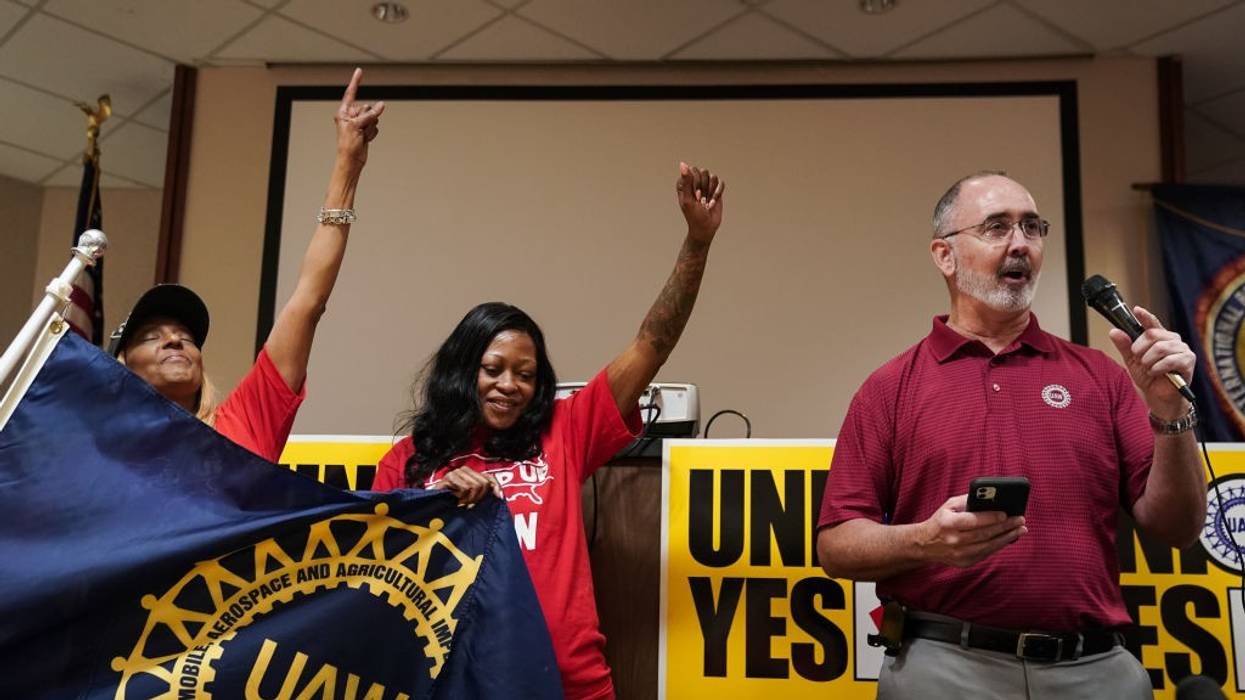
The UAW launched "the largest organizing drive in modern American history" after securing improved contracts last year with a strike targeting the Big Three automakers—General Motors, Ford, and Stellantis. The ongoing campaign led to the "landslide" victory in Chattanooga last week, which union president Shawn Fain pointed to as proof that "you can't win in the South" isn't true.
The Tennessee win "is breaking the brains of Republicans in that region. They're truly astonished that workers might not trust their corporate overlords with their working conditions, pay, health, and retirement," Thom Hartmann wrote in a Friday opinion piece.
"The problem for Republicans is that unions represent a form of democracy in the workplace, and the GOP hates democracy as a matter of principle."
"The problem for Republicans is that unions represent a form of democracy in the workplace, and the GOP hates democracy as a matter of principle," he argued. "Republicans appear committed to politically dying on a number of hills that time has passed by. Their commitment to gutting voting rolls and restricting voting rights, their obsession with women’s reproductive abilities, and their hatred of regulations and democracy in the workplace are increasingly seen by average American voters as out-of-touch and out-of-date."
Just before voting began in Chattanooga, GOP Govs. Kay Ivey of Alabama, Brian Kemp of Georgia, Tate Reeves of Mississippi, Henry McMaster of South Carolina, Bill Lee of Tennessee, and Greg Abbott of Texas claimed that "unionization would certainly put our states' jobs in jeopardy" and the UAW is "making big promises to our constituents that they can't deliver on."
The next nationally watched UAW vote is scheduled for May 13-17 at a Mercedes-Benz plant in Vance, Alabama.
"Workers at our plant are ready for this moment," Mercedes employee Jeremy Kimbrell said last week. "We are ready to vote yes because we are ready to win our fair share. We are going to end the Alabama discount and replace it with what our state actually needs. Workers sticking together and sticking by our community."
As workers gear up for the election, the Alabama House of Representatives on Tuesday voted 72-30 for a bill that would withhold future economic incentive money from companies that voluntarily recognize unions rather than holding secret ballots. The state Senate previously passed a version of the legislation but now must consider it with the lower chamber's amendments.
The Associated Press noted that "Georgia Gov. Brian Kemp signed similar legislation on Monday" and that Tennessee already has one on the books.
With his signature on Senate Bill 362, "Kemp's aim is to thwart future organizing attempts by workers at automotive plants in Georgia, such as those operated by Hyundai Motor Group," according to The Atlanta Journal-Constitution.
As the newspaper detailed:
Georgia has been a right-to-work state since 1947, when Congress passed the Taft-Hartley Act, allowing workers to refuse to join a union or pay dues, even though they may benefit from contracts negotiated by a union with their employer. Just 5.4% of workers in the state belonged to a union in 2023, according to the U.S. Bureau of Labor Statistics.
But the National Labor Relations Act of 1935, also known as the Wagner Act, protects the right for workers to form a union and collectively bargain for better wages and working conditions.
The new Georgia law is expected to be challenged in court, labor experts have said.
Acting U.S. Labor Secretary Julie Su told the AP on Thursday that she is not sure if the department will challenge the laws, given the National Labor Relations Board's responsibilities, but she stressed that "there are federal standards beneath which no worker should have to live and work."
In terms of joining a union, "that choice belongs to the worker, free from intervention, either by the employer or by politicians, free from retaliation and threats," Su said. "And what we are seeing is that workers who were thought to be too vulnerable to assert that right are doing it, and they're doing it here in the South."
The U.S. labor chief also slammed "unacceptable" union-busting efforts by companies and suggested that protecting the right to unionize is part of President Joe Biden's "promise to center workers in the economy."
"He has said he's the most pro-worker, pro-union president in history, and we are going to make good on that promise. And that includes making sure that workers have the right to join a union," Su said of the president.
Biden's commitment to workers and unionizing rights has caught the attention of GOP leaders. The governors' joint statement nodded to the UAW's January endorsement of the president, who is seeking reelection in November, and South Carolina's leader attacked the administration earlier this year.
During his January State of the State speech, McMaster declared that "we will not let our state's economy suffer or become collateral damage as labor unions seek to consume new jobs and conscript new dues-paying members. And we will not allow the Biden administration's pro-union policies to chip away at South Carolina's sovereign interests. We will fight. All the way to the gates of hell. And we will win."
News From the States reported Friday that "of all the foreign-owned automakers in South Carolina, BMW would be the most likely mark in the near term if enough of its workers show interest. The massive plant near Greer—the manufacturer's only U.S. production facility—employs some 11,000 people, twice the number of workers at Volkswagen in Tennessee and Mercedes in Alabama. It has operated in the Upstate for nearly 30 years and is in the process of adding electric vehicle lines."
However, a UAW spokesperson told the outlet that they don't yet have the numbers for the BMW and Volvo facilities in the state, and Marick Masters, a Wayne State University professor who studies the union, said: "I don't think they're writing anybody off but they know the history of unionization. And I would say South Carolina is a very inhospitable place for unions."
"Democrats are delivering for working people!" declared Rep. Pramila Jayapal as the AFL-CIO noted that GOP ex-President Donald Trump "gutted the rules that required overtime pay for millions of workers."
Roughly 4.3 million U.S. workers will now be eligible for overtime pay under a new rule finalized Tuesday by President Joe Biden's Labor Department—in stark contrast to his Republican predecessor's rules that severely limited the number of workers who were eligible for required compensation when they worked more than 40 hours per week.
Under the new rule, employers will be required to pay overtime premiums to salaried workers who work more than standard full-time hours if they earn less than $1,128 per week, or about $58,600 per year.
Former President Donald Trump, now the presumptive Republican presidential nominee, may now have to defend his 2020 rule that set the overtime pay threshold at just $35,500 per year, leaving out millions of workers.
U.S. Rep. Pramila Jayapal (D-Wash.) noted that the updated rule was "a major piece" of the Executive Action Agenda released by the Congressional Progressive Caucus, which she chairs.
"This is a HUGE pro-worker initiative by President Biden," said Jayapal. "Democrats are delivering for working people!"
Acting Labor Secretary Julie Su, who Biden has nominated to fill the role permanently, said it is "unacceptable" that lower-paid workers "are spending more time away from their families for no additional pay," while hourly workers are eligible for overtime pay.
"This rule will restore the promise to workers that if you work more than 40 hours in a week, you should be paid more for that time," said Su. "The Biden-Harris administration is following through on our promise to raise the bar for workers who help lay the foundation for our economic prosperity."
The Labor Department posted a chart on social media showing how under Trump's policy, only workers who earn less than $688 per week are eligible for required overtime pay. The full rule is set to go into effect in January 2025.
The chart offers a "good split screen with the GOP," said Slate reporter Mark Joseph Stern.
"It isn't just that Trump's Department of Labor fought overtime pay—it's also that Trump appointed anti-labor judges who are about to block Biden's new rule," he said.
The former Republican president's appointed judges could also block a new Federal Trade Commission rule introduced on Tuesday, which blocks companies from including noncompete clauses in workers' contracts.
"Both reforms happened because of Biden and in spite of Republicans," said HuffPost labor reporter Dave Jamieson.
Along with the overtime rule, the Labor Department announced a new policy aimed at safeguarding people's retirement savings from their financial advisers' conflicts of interest.
The finalized retirement security rule requires "trusted investment advice providers to give prudent, loyal, honest advice free from overcharges," said the department. "These fiduciaries must adhere to high standards of care and loyalty when they recommend investments and avoid recommendations that favor the investment advice providers' interests—financial or otherwise—at the retirement savers' expense."
"Under the final rule and amended exemptions, financial institutions overseeing investment advice providers must have policies and procedures to manage conflicts of interest and ensure providers follow these guidelines," the agency said.
Liz Shuler, president of the AFL-CIO, said the nation's largest labor federation has "been pushing for the fiduciary and overtime rules since the Obama administration."
"It's really this simple," said Shuler. "Every worker deserves their fair share of the wealth they help create and every worker deserves to make sure their hard-earned money is secure."
Praising the policy, one economist said that employer misclassification "robs workers of labor rights and threatens their economic security."
Democrats in Congress and unions were among those applauding on Tuesday as the U.S. Department of Labor announced its final rule to provide guidance on when employers can treat workers as independent contractors under the Fair Labor Standards Act.
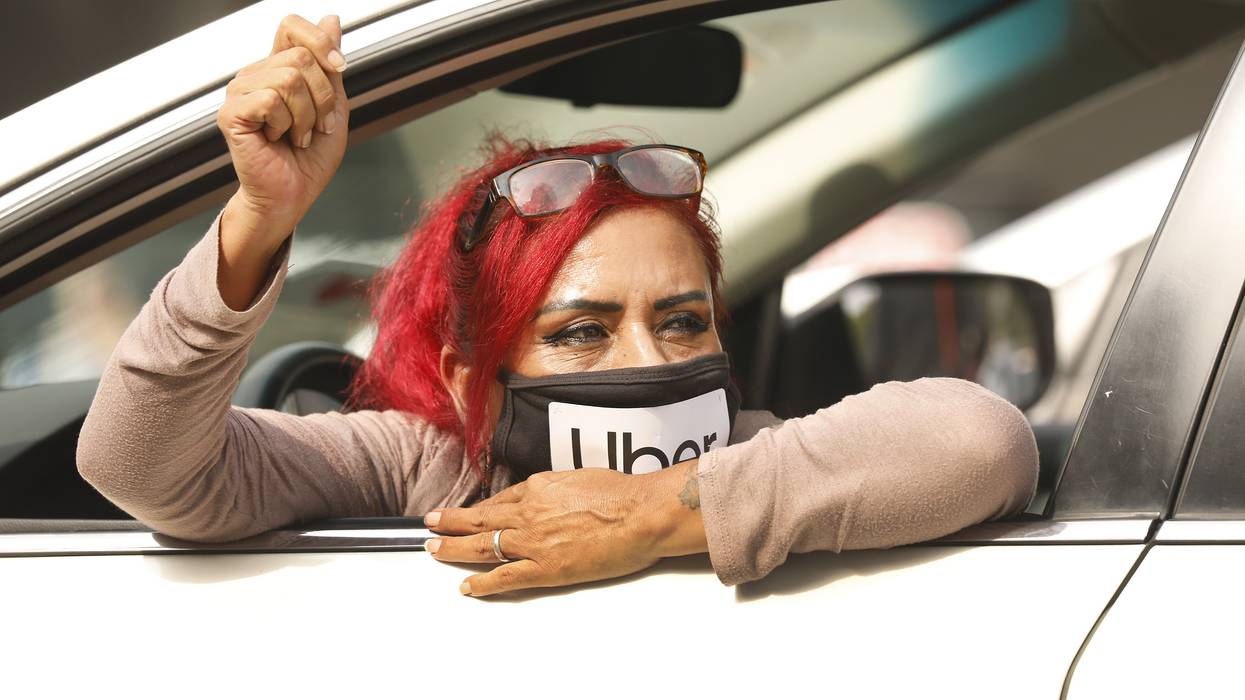
"Misclassifying employees as independent contractors is a serious issue that deprives workers of basic rights and protections," acting Labor Secretary Julie Su said in a statement. "This rule will help protect workers, especially those facing the greatest risk of exploitation, by making sure they are classified properly and that they receive the wages they've earned."
Welcoming the rule—set to take effect in March—the Teamsters said on social media that "it's long past time for American employers to recognize and respect their employees, to stop exploiting loopholes to pay workers less and deprive them of benefits, and to honor every worker's right to organize and collectively bargain a union contract."
Economic Policy Institute (EPI) president Heidi Shierholz highlighted that the rule rescinds a Trump-era
policy and, like Su, stressed how "employer misclassification of workers as independent contractors robs workers of labor rights and threatens their economic security."
"Many workers are harmed by employer misclassification—particularly those in the lowest-wage and most difficult jobs, such as nail salon workers, truck drivers, and construction workers," Shierholz said. "A previous EPI analysis found that in 11 commonly misclassified occupations, workers misclassified as independent contractors lose out on thousands of dollars in earnings and benefits per year, compared with workers doing the same job with employee status."
"Since this rule was proposed, opponents of this rule have waged an all-out misinformation war, claiming that independent entrepreneurs and business owners will now be forced into employee status against their will," the economist noted. "The reality is that if the Trump administration's rule was allowed to stand, workers with far less power to actually set the terms and conditions of their employment—not bonafide contractors—would have continued to lose out on basic worker protections, earnings, and benefits to which they should be entitled."
The Washington Post reported Tuesday that "the rule is expected to face an onslaught of legal challenges from companies. It has faced extensive criticism from businesses and industry groups, including those representing Uber, Lyft, DoorDash, and other ride-share and delivery platforms. But labor officials say they have carefully considered possible litigation and are confident that the rule would withstand a court challenge."
Some Republicans in Congress are already taking aim at the policy, with U.S. Senate Committee on Health, Education, Labor and Pensions (HELP) Ranking Member Bill Cassidy (R-La.) threatening to challenge it under the Congressional Review Act.
Meanwhile, Senate HELP Committee Chair Bernie Sanders (I-Vt.), a longtime labor rights advocate, praised the administration's new move to "stop unscrupulous employers from deliberately misclassifying their workers and cheating them out of hard-earned wages," adding that "when 60% of Americans live paycheck-to-paycheck, workers need labor laws that protect them, not allow them to be ripped off."
Congressional Progressive Caucus (CPC) Chair Pramila Jayapal (D-Wash.) also offered praise, saying that "I am thrilled to see the Biden administration continuing to put its pro-worker commitment into action with this new final rule."
"With gig work playing a larger role in our economy, it's more important than ever that workers are protected under federal law and have access to all the rights to which they're entitled," she said. "This new policy will
ensure that the workers who have fallen through the cracks—from rideshare and delivery drivers to janitors and home care workers—will finally be able to access Social Security benefits and unemployment insurance and be guaranteed overtime and minimum wage pay."
"The rule is also an essential check on large, wealthy corporations who have skirted their obligations to these workers even as their labor makes the companies" profits possible," she continued, adding that the CPC looks forward to working with President Joe Biden and Su to ensure it "is implemented fairly and equitably across the country and industries."
The department's announcement came a day after Biden renominated Su as labor secretary—a decision also celebrated by progressives, including Jayapal and Sanders, who called on the Senate to stop stalling.
"Julie Su has spent her career as a dedicated public servant, fighting tirelessly for working people, especially the lowest-wage workers, domestic workers, immigrant workers, and workers of color," Jayapal pointed out. "She deeply understands how the Department of Labor should work and the needs of our modern economy."
"There is so much work still to do to raise wages, lower costs, and fight for the working people of this country, and we need Labor Secretary Su to achieve it," the CPC leader added. "We urge the Senate to move swiftly and finally confirm this extremely qualified nominee."
Sanders said that "I strongly support Julie Su's renomination to serve as Secretary of Labor. Her strong pro-worker track record as acting Secretary shows beyond a shadow of a doubt that she is the right person for the job. Her tireless and consistent work for working families across the country should continue as secretary of labor and I urge my colleagues to support her nomination."
"The labor movement is putting high-wage, high-road labor standards into action and workers are rebuilding America, union strong," said the AFL-CIO.
About 200,000 U.S. construction workers will benefit from new collective bargaining requirements announced by President Joe Biden and Acting Labor Secretary Julie Su on Monday, as the administration unveiled a final rule implementing an executive order that was introduced last year.
Under the new rule, federal agencies will be required to enact project labor agreements (PLAs) for large-scale federal construction projects that cost $35 million or more.
The General Services Administration (GSA) officially has amended federal regulations under Executive Order 14063, and the new rule will go into effect 30 days from this coming Friday, when it is set to be published in the Federal Register.
With the PLA requirement in place, contractors, subcontractors, and unions will have to negotiate set terms for project construction, giving nearly 200,000 construction workers collectively bargained wages, benefits, and safety protections, regardless of their union membership status.
"In President Biden's America," said Su on Monday, "'union' is not a bad word. It's the reason America is strong."
Biden said that under the new rule, projects funded by his Investing in America jobs plan "will move faster and without delays."
"Workers will have the security and peace of mind that collectively bargained wages and benefits bring, better pathways to good-paying jobs, and stronger health and safety protections," said the president.
The announcement was made Monday at the Anthony J. Celebrezze Federal Building in Cleveland, Ohio, where the GSA is working to modernize the building to ensure veterans can receive support services.
"Contractors and unions at this site have entered into a PLA that helps the parties address the unique coordination challenges posed by large projects," said the White House in a fact sheet about the new rule. "The PLA covering the Celebrezze Federal Building project also supports equitable workforce development pathways into the trades and registered apprenticeship."
Sean McGarvey, president of North America's Building Trades Unions, said the new rule "is welcome news for the responsible use of taxpayer dollars" and the protection of workers who help complete federal projects.
"Project labor agreements ensure that large-scale projects are completed on time, with the highest quality, efficiency, and safety," said McGarvey. "Time and again, PLAs have proven to address labor supply issues, prevent work stoppages, protect workers' classification, strengthen health and safety standards, and achieve substantial, direct cost savings by standardizing contract terms for highly skilled craft workers."
"PLAs also boost community economies through local hiring goals and recruitment of workers into apprenticeship and pre-apprenticeship job training programs," McGarvey added, "that uplift historically marginalized communities into middle-class construction careers."
While welcoming the move, the head of the Congressional Progressive Caucus also urged the president to "not to consider the job done with this proposed rule, and pursue a relentless commitment to fair overtime pay."
Labor rights advocates within and beyond Congress celebrated on Wednesday after the Biden administration proposed a federal rule to restore and extend overtime protections to 3.6 million more salaried workers earning up to about $55,000 a year.
"For over 80 years, a cornerstone of workers' rights in this country is the right to a 40-hour workweek, the promise that you get to go home after 40 hours or you get higher pay for each extra hour that you spend laboring away from your loved ones," said Julie Su, who is acting secretary at the U.S. Department of Labor (DOL) because her nomination is stalled in the U.S. Senate.
"I've heard from workers again and again about working long hours, for no extra pay, all while earning low salaries that don't come anywhere close to compensating them for their sacrifices," she said. "Today, the Biden-Harris administration is proposing a rule that would help restore workers' economic security by giving millions more salaried workers the right to overtime protections if they earn less than $55,000 a year. Workers deserve to continue to share in the economic prosperity of Bidenomics."
Informed by 27 listening sessions, the rule would ensure most salaried workers earning less than $1,059 per week get overtime pay after 40 hours; clarify which administrative, executive, or professional employees should be overtime exempt; automatically update the salary threshold every three years in line with earnings data; and restore overtime protections for U.S. territories.
"This proposal is a crucial step in creating a stronger, fairer economy."
"Once again, the Biden administration is listening to workers' voices by taking these much-needed steps to strengthen overtime protections," declared Rebecca Dixon, president and CEO of the National Employment Law Project. "Ensuring this proposed rule is finalized and implemented as soon as possible is essential because workers don't deserve to wait any longer for the benefits this rule will provide."
Economic Policy Institute president Heidi Shierholz—a former DOL chief economist—similarly praised the proposal, saying that "EPI is encouraged to see this important regulation move forward. The overtime threshold has not been properly updated for nearly 50 years, robbing millions of workers of their basic wage and hour rights under the Fair Labor Standards Act."
"Currently, a worker making just $36,000 a year can be required to work 50- or 60-hour workweeks with no additional pay," she noted. "This proposal would ensure that employers have 'skin in the game' when they ask these workers to work long hours. As a result, these workers will either get those extra hours back or they will get higher wages when they do work long hours—whether through salary increases or by earning time-and-a-half overtime pay. This proposal is a crucial step in creating a stronger, fairer economy."
Congressional Progressive Caucus (CPC) Chair Pramila Jayapal (D-Wash.) also applauded the DOL's move to "advance this key pillar of worker justice" while stressing that "it doesn't go far enough," leaving "too many behind when a larger increase to the threshold could give millions more families breathing room in their budgets at a time when they desperately need it."
The congresswoman highlighted the CPC's "long history of advocating for bold action" under then-President Barack Obama in 2014, 2015, and 2016, as well as in the caucus' 2022 and 2023 executive action agendas under Biden, who was Obama's vice president.
"Our caucus understands this is about basic fairness: People should be paid for every hour they work," Jayapal emphasized. "It is also about economic justice: Workers should not be forced to donate their time over 40 hours per week to their employers, especially for those who work at wealthy corporations that are raking in record profits."
“The CPC called for the overtime threshold to be raised to $80,000 per year, which would cover 55% of workers at one-and-a-half times their regular pay—and grant fair pay to 26 million new workers," she added. "We urge President Biden not to consider the job done with this proposed rule, and pursue a relentless commitment to fair overtime pay, which would be a powerful demonstration of his pro-worker commitment. We cannot rest until we've exhausted every option to ease the burden on working- and middle-class people."
The current threshold of $35,568 was previously raised from $23,660 in 2019 under then-President Donald Trump—the current front-runner for the 2024 GOP presidential nomination. With only a few longshot Democratic challengers, Biden is expected to face the Republican nominee next year.
The Associated Press reported Wednesday that "the new rule could face pushback from business groups that mounted a successful legal challenge against similar regulation that Biden announced as vice president during the Obama administration, when he sought to raise the threshold to more than $47,000."
Publication of the administration's notice of proposed rulemaking kicks off a 60-day public comment period. Jessica Looman, principal deputy administrator at the DOL's Wage and Hour Division, said Wednesday that "public input is essential as we consider the needs of today's workforce and industry demands, and we encourage continued stakeholder input during the public comment period."
"We are committed to ensuring that all workers are paid fairly for their hard work," she said. "For too long, many low-paid salaried workers have been denied overtime pay, even though they often work long hours and perform much of the same work as their hourly counterparts. This proposed rule would ensure that more workers receive extra pay when they work long hours."
"Julie Su has already done what Sen. Manchin says she can't," Sen. Mazie Hirono argued, noting how the nominee "brought labor and industry together to avert a potentially catastrophic port strike."
Right-wing Democratic U.S. Sen. Joe Manchin said Thursday that he'll oppose President Joe Biden's nomination of Julie Su to head the Labor Department, a move that could torpedo the progressive acting secretary's confirmation chances in a divided Senate.
"I believe the person leading the U.S. Department of Labor should have the experience to collaboratively lead both labor and industry to forge compromises acceptable to both parties," Manchin (D-W.Va.)—a recurrent obstructor of his own party's agenda—said in a statement.
"While her credentials and qualifications are impressive, I have genuine concerns that Julie Su's more progressive background prevents her from doing this and for that reason I cannot support her nomination to serve as secretary of labor," he added.
Manchin's opposition does not necessarily sink Su's nomination. However, Sens. Jon Tester (D-Mont.) and Kyrsten Sinema (I-Ariz.) have not yet said if she will get their votes. She may not need them, as a 1946 law allows the deputy labor chief to indefinitely "perform the duties of the secretary until a successor is appointed."
Still, some Senate Democrats said they were optimistic about Su's confirmation chances.
"I think she'll be a very good labor secretary," Senate Majority Leader Chuck Schumer (D-N.Y.) said Tuesday. "And we're working hard to get her approved."
Sen. Sherrod Brown (D-Ohio) told NBC News that "she's gonna have enough votes. We're gonna confirm her."
Sen. Tammy Duckworth (D-Ill.) said in a statement that Su is "the most qualified candidate to be our next labor secretary."
"There is no one more ready and prepared to lead the department on day one than she is," Duckworth added.
As Roll Call reports:
Su's nomination has been the subject of lobbying by outside groups, according to first-quarter disclosures. At least 23 companies and interest groups lobbied on the nomination, including 10 that publicly oppose Su and nine that support her.
Groups opposing Su—including the National Restaurant Association, the National Federation of Independent Businesses, and the Flex Association, a group that represents rideshare companies—reported spending at least $3.4 million on lobbying in the first quarter of this year on the nomination and other policy issues.
Unions and civil rights groups have come to Su's defense, disclosing about $2.1 million on first-quarter lobbying spending. Supporters include the Service Employees International Union, American Federation of Government Employees, the Leadership Conference on Civil and Human Rights, and the Society for Human Resource Management.
Su, who previously served as labor secretary of California and deputy U.S. labor secretary, made a name for herself representing some of the most vulnerable workers in the nation, including as the lead attorney in a case involving Thais trafficked in a Los Angeles-area sweatshop.
The 54-year-old has been serving as acting head of the Labor Department since former Labor Secretary Marty Walsh resigned in March to take a job leading the National Hockey League Players Association.
In April, Sen. Bernie Sanders (I-Vt.) asserted that opposition to Su "has nothing to do with her qualifications" and "everything to do with the fact that [she] is a champion of the working class who will stand up against the forces of corporate greed."
Last week, the Leadership Conference on Civil and Human Rights reaffirmed its support for Su, tweeting that "there is no one more prepared to move into this role and lead the department as it undertakes its critical mission to protect working people."
This is not the first time that Manchin—who is up for reelection next year and is widely suspected of considering a presidential run—has opposed one of Biden's Labor Department nominations. Along with Sinema and Sen. Mark Kelly (D-Ariz.), he effectively ended David Weil's bid to head the agency's Wage and Hour Division by voting last year against advancing his nomination.
"Su possesses deep expertise in civil rights and workplace rights and is exceedingly qualified to serve as secretary of labor," said one group. "We urge all senators to support her confirmation."
Labor rights advocates on Wednesday renewed calls for the U.S. Senate to swiftly confirm Julie Su, President Joe Biden's next pick for labor secretary and "a champion for working families," after an 11-10 panel vote.
The Senate Committee on Health, Education, Labor, and Pensions (HELP) vote fell along party lines, with Chair Bernie Sanders (I-Vt.) and Democratic members supporting Su—who is facing an intense corporate-led opposition campaign.
"Working families have been struggling for the last many decades while we have massive income and wealth inequality," Sanders said in his opening remarks to the committee.
"Julie Su is the best candidate for secretary of labor. Everywhere she goes, workers win."
"The working families of this country, in the Labor Department, are entitled to have a secretary who is gonna stand up and fight for them," he continued, "who understands that we've gotta raise the minimum wage, that we need paid family and medical leave like every other major country on Earth does, that... we need strong overtime rules so that when people are working 50 or 60 hours a week, they get the time-and-a-half that they need, that workers have a right to join unions and not be subject to illegal anti-union activities."
From working as a civil rights lawyer to leading the California Labor and Workforce Development Agency to serving as deputy secretary at the U.S. Department of Labor, Su "has made it clear she is prepared to stand up for working families," he added, later noting that the candidate is backed by not only organized labor and workers but also the Los Angeles Area Chamber of Commerce.
Ahead of the HELP Committee vote, the International Brotherhood of Teamsters said that "Su is the ally that workers need at the helm of the agency" and urged the panel to support her.
After the panel advanced the candidate, the Teamsters called on Senate Majority Leader Chuck Schumer (D-N.Y.) "to bring Su's nomination to the floor immediately."
AFSCME president Lee Saunders said in a statement Wednesday that "Julie Su is the best candidate for secretary of labor. Everywhere she goes, workers win."
"Her tenacity, her experience, and her ability to engage all stakeholders means she has what it takes to expand on the progress made for working people under the Biden administration," Saunders added. "We applaud the Senate HELP Committee for advancing Julie Su's nomination, and we urge senators to confirm her without delay."
Liz Schuler, president of the AFL-CIO, tweeted that "Julie Su is one of the most accomplished, hardworking, and brilliant nominees this nation has ever seen for secretary of labor."
The conference and various other groups showed their support on social media with the hashtags #ConfirmSu and #StandWithSu.
The Labor Department "was founded to protect American workers and retirees," tweeted the American Federation of Teachers. "Julie Su has the experience, passion, and leadership to lead it."
Given the current divisions in the chamber and Sen. Dianne Feinstein's (D-Calif.) extended absence, Su's confirmation is far from guaranteed. All eyes are on the other two Independents—Sens. Kyrsten Sinema (Ariz.) and Angus King (Maine)—and a small handful of more right-leaning Democrats: Sens. Mark Kelly (Ariz.), Joe Manchin (W.Va.), and Jon Tester (Mont.).
Citing a Biden administration official, CNN reported Wednesday that "the White House has been engaging in a number of high-level efforts to galvanize support for Su. That includes holding nightly war room calls to track real-time updates and 15-20 external check-in calls per day across labor and business groups."
The network noted that "along with assembling together a diverse slate of supporters—which includes a long list of major union groups, stakeholder groups, and lawmakers—the White House has also enlisted Marty Walsh, who left his role as Biden's labor secretary earlier this year, to help get Su's confirmation across the finish line."