
SUBSCRIBE TO OUR FREE NEWSLETTER
Daily news & progressive opinion—funded by the people, not the corporations—delivered straight to your inbox.
5
#000000
#FFFFFF
To donate by check, phone, or other method, see our More Ways to Give page.


Daily news & progressive opinion—funded by the people, not the corporations—delivered straight to your inbox.
Progressives on Tuesday cheered news that the Democratic Congressional Campaign Committee is officially lifting a controversial ban on political consultants or firms who worked for candidates mounting primary challenges against incumbent House lawmakers.
"We have primaries to make sure we have the best and the brightest in every party. So primaries should be unemcumbered by outside forces."
--Rep. Marie Newman (D-Ill.)
Politico reports DCCC chair Rep. Sean Patrick Maloney (D-N.Y.) pronounced the end of the ban Tuesday morning, fulfilling a promise he made while campaigning for the position. The policy, which was implemented in 2019, prohibited the DCCC from hiring or even recommending contractors offering services to primary candidates running against Democratic House incumbents.
Progressives seethed at the proscription, which they said unfairly targeted them. Rep. Ro Khanna (D-Calif.), then vice-chair of the Congressional Progressive Caucus, called the policy "an unprecedented grab of power" and "a slap in the face of Democratic voters."
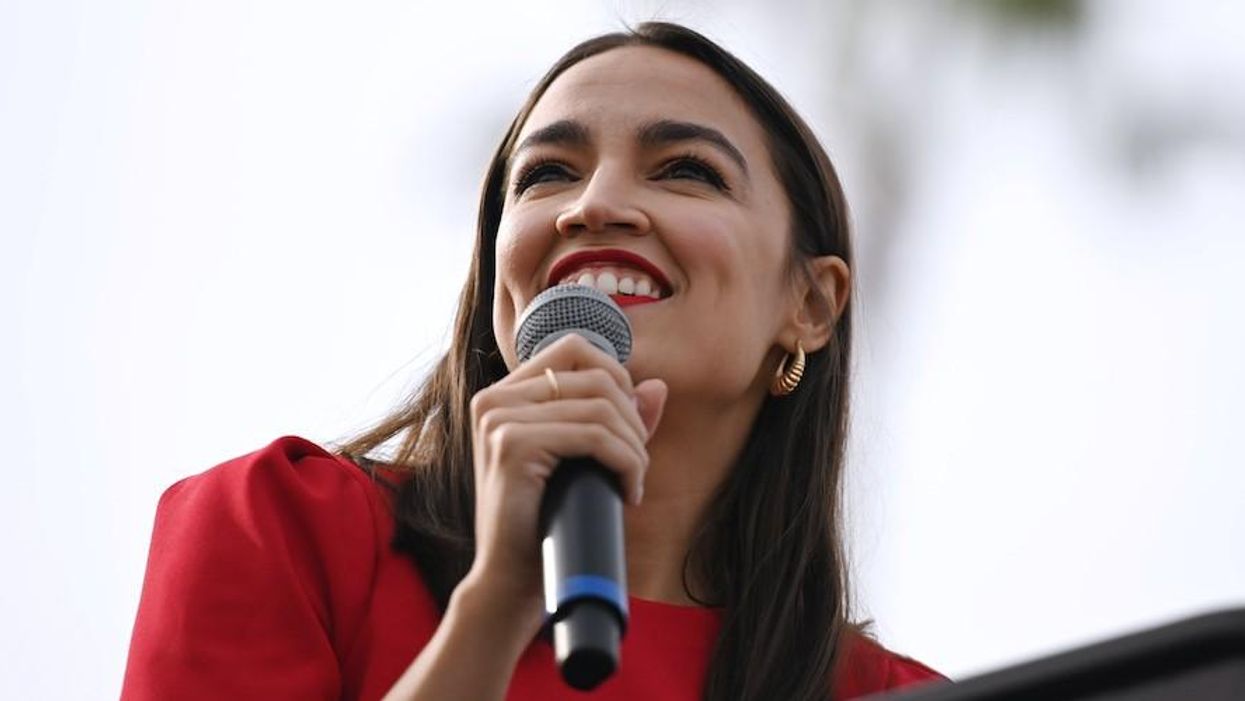
Despite concerns that the policy could continue unofficially, leftist lawmakers applauded the shift. "It's an enormous win," Rep. Alexandria Ocasio-Cortez (D-N.Y.) told Politico. "The escalation and aggression against the progressive wing of the party with an explicit forward-facing 'blacklist' created a lot of dissuasion against candidates even considering grassroots organizing firms."
Ocasio-Cortez--who got to Congress by defeating a 10-term Democratic incumbent in 2018--added that the ban's end would open "a door for our party to leverage strength from all parts of it."
Rep. Marie Newman (D-Ill.), whose successful 2020 campaign against conservative Democratic incumbent Rep. Dan Lipinksi was beset by consultant cancellations due to the ban, also welcomed its demise.
"We have primaries to make sure we have the best and the brightest in every party," Newman told Politico. "So primaries should be unencumbered by outside forces."
Last month, Maloney told Politico that the ban--which was implemented under his DCCC predecessor, Rep. Cheri Bustos (D-Ill.)--never "made sense" to him.
However, Maloney also said that "no one should be looking for work around here if they want to go after one of our members at the same time," prompting concerns that the ban could still persist in practice.
The short-lived official ban was welcomed by centrist Democrats seeking to stymie progressive upstarts. It was embraced by members of the Congressional Black Caucus as entrenched incumbents tried--and sometimes failed--to ward off newcomers like Rep. Cori Bush (D-Mo.), the Black Lives Matter activist who last year ousted Rep. Lacy Clay, a Democrat whose family had represented St. Louis in Congress for half a century.
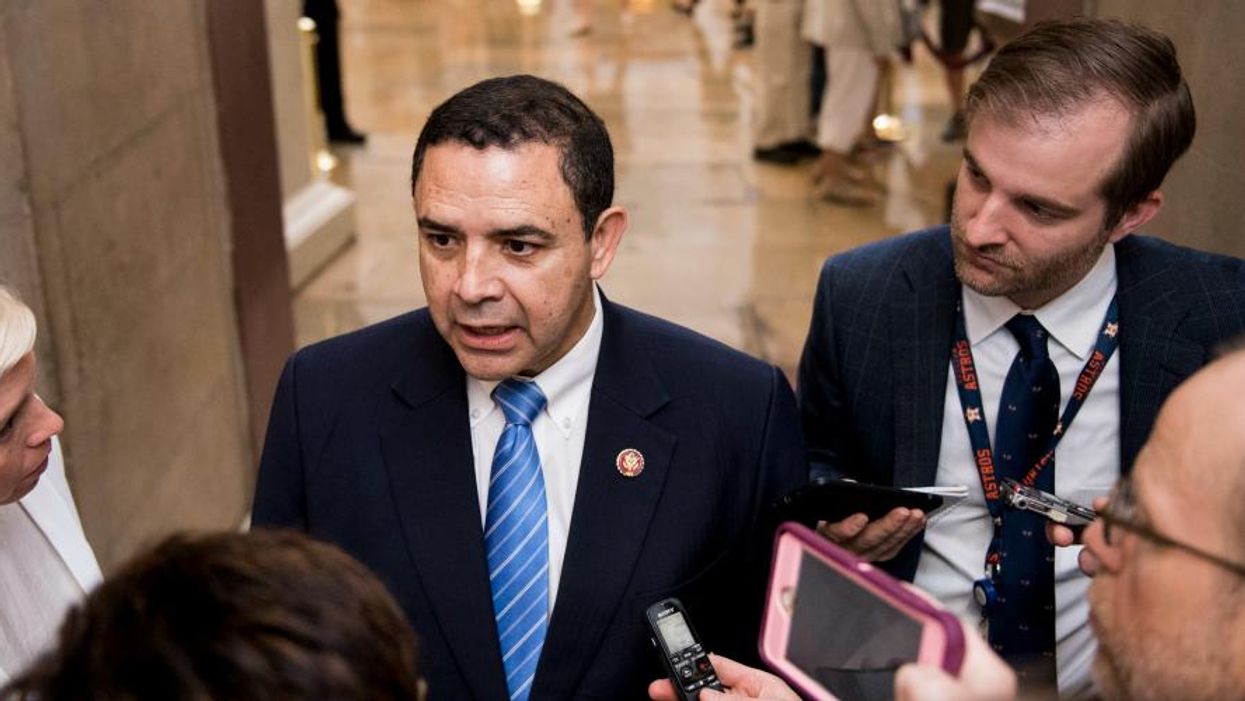
The Communications Workers of America, a labor union with 700,000 members, called on the Democratic Congressional Campaign Committee this week to cut off support to the seven House Democrats who "betrayed working people" by voting against a pro-labor bill that passed the House earlier this month.
"I urge the DCCC to no longer provide services for any incumbent House members who turn their back on working people."
--Christopher Shelton, CWA
The Democrats who voted against the Protecting the Right to Organize (PRO) Act--which would eliminate state-level "right-to-work" laws and expand workers' bargaining rights--are Reps. Henry Cuellar (Texas), Stephanie Murphy (Fla.), Lucy McBath (Ga.), Kendra Horn (Okla.), Kurt Schrader (Ore.), Joe Cunningham (S.C.), and Ben McAdams (Utah.).
"They must be denied the support of the Democratic Party for refusing to stand with working Americans," CWA president Christopher Shelton wrote to DCCC chair Rep. Cheri Bustos (D-Ill.) in a letter (pdf) dated Feb. 18. "I urge the DCCC to no longer provide services for any incumbent House members who turn their back on working people."
"We have no tolerance for anti-worker electeds," CWA tweeted Thursday.
McBath, Horn, McAdams, and Cunningham are all freshmen in toss-up seats, Politico reported Wednesday.
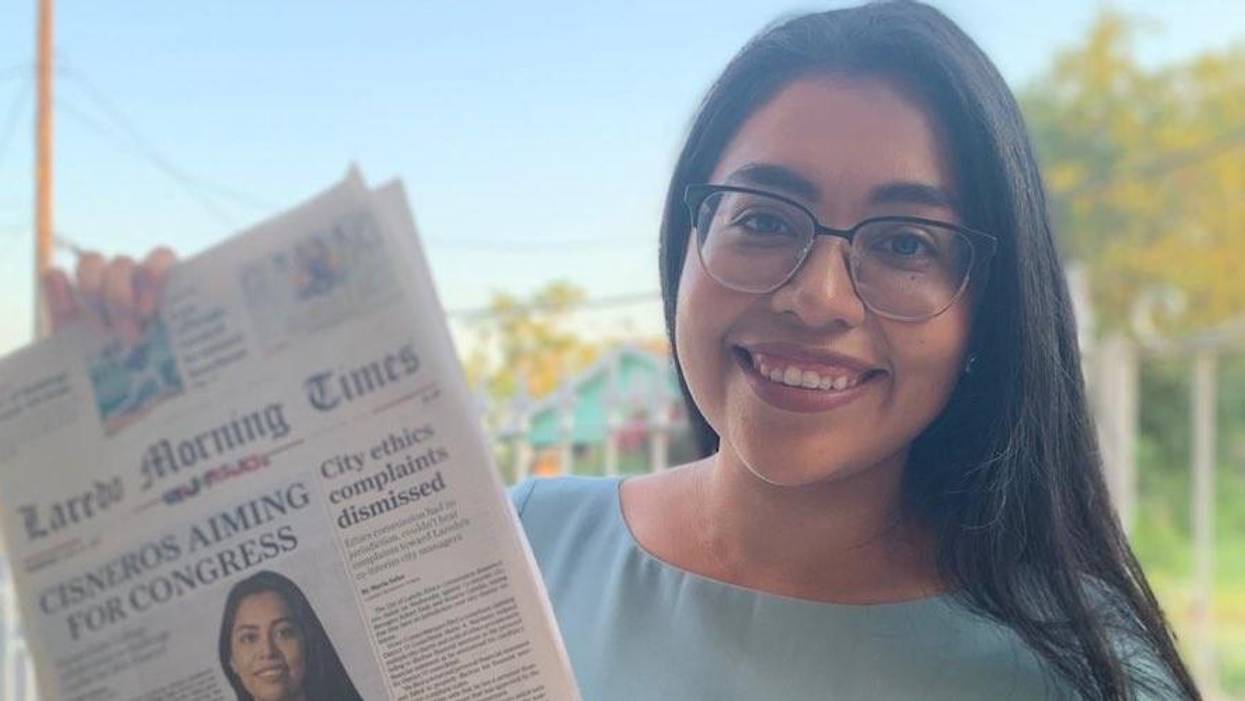
Cuellar, a Koch-backed Democrat who has voted with President Donald Trump nearly 70% of the time, is facing a tough primary challenge from progressive attorney Jessica Cisneros in Texas' 28th District.
Cisneros has racked up union endorsements and nearly $1 million in donations despite the DCCC's blacklist policy, which cuts off funding and support for vendors that assist Democratic primary challengers.
CWA District 6 endorsed Cisneros last October.
"Jessica just exemplifies the kind of person we need more in Congress," Shane Larson, senior director of government affairs and policy for CWA, told The Intercept this week. "It's one thing for our union to want to see Henry Cuellar replaced because he votes with corporations and Wall Street time and time again, but Jessica is really such a phenomenal person and phenomenal candidate, and she represents the kind of people who just do not have representation in Congress today."
Rep. Alexandria Ocasio-Cortez, the popular freshman Democrat from New York whose first year in office has shaken up the American political establishment, announced Friday that her re-election bid raised $1 million in January, a huge amount of money for a congressional campaign.
"That's not normal for the House," tweeted The Intercept's Ryan Grim of the congresswoman's haul.
In early January, Ocasio-Cortez announced she was starting a political action committee aimed at supporting progressive candidates for Congress after a year of attacks on primary challengers to incumbents from the Democratic Congressional Campaign Committee (DCCC). As Common Dreams reported, the DCCC established a so-called "blacklist" banning vendors who work with primary challengers from DCCC-approved clients in March 2019.
The fallout from that decision--and the support for anti-choice, right-wing incumbents like Reps. Dan Lipinski (D-Ill.) and Henry Cuellar (D-Texas) from party leaders despite both men having primary election challengers more aligned with the party's values--has exposed divisions in the party between the old guard and a progressive upswell from the grassroots.
The frustration was noted by progressive Democrat Eva Putzova, who is running to unseat incumbent Rep. Tom O'Halleran (D-Ariz.).
"The DCCC loves to tip the scales," said Putzova.
"They don't care about democracy," she added, "they care about power."
Ocasio-Cortez, as one of the most visible young progressives in the party, is being targeted by right-wing Democrats and Republicans alike in her re-election campaign.
But the congresswoman's January haul indicates Ocasio-Cortez is well-prepared to face her opponents.
"Our team is floored," the campaign told supporters in a press release announcing the $1 million in funds for January. "The energy of this movement is at an all-time high, and that foreshadows a lot of great things for our future."
Progressives welcomed the news as an indication they are winning the battle for the soul of the party.
"Shake this entire system to the core," tweeted radio host Benjamin Dixon.
Rep. Alexandria Ocasio-Cortez leant the campaign of progressive primary challenger Jessica Cisneros some star power on Tuesday when the New York Democrat endorsed the Texas lawyer in her quest to unseat Rep. Henry Cuellar.
Cuellar, a conservative Democrat, is one of the top targets for the progressive group Justice Democrats in the 2020 primary cycle.
"The people of South Texas deserve a Democrat like Jessica who is going to fight for real people, not big corporate donors like the Koch Brothers, GEO Group, and Exxon," said Ocasio-Cortez. "When Jessica is elected, not only will I no longer be the youngest person in Congress--I'll have a strong new ally in the fight for Medicare for All, getting corporate money out of politics, and fixing our broken immigration system."
The endorsement came just days after Ocasio-Cortez endorsed Sen. Bernie Sanders (I-Vt.) in his run for the 2020 Democratic presidential nomination.
In a tweet, Cisneros welcomed the opportunity to break Ocasio-Cortez's record.
Cuellar's team in June dismissed Cisneros as a pawn of Justice Democrats who was using their talking points to hit the congressman. Cuellar spokesperson Colin Strother declined to provide examples of the talking points to Common Dreams other than Cisneros citing Cuellar's record.
An anti-choice, pro-corporation legislator, Cuellar votes with President Donald Trump 52.8% of the time. House Speaker Nancy Pelosi (D-Calif.) enthusiastically endorsed Cuellar in September.
Despite the uphill battle, Cisneros' campaign shows signs of life. The lawyer has raised over $460,000 thus far, her campaign announced on October 4.
"I'm not accepting a dime from corporate PACs or lobbyists," Cisneros said at the time. "In Congress, I'll advocate for the values and concerns of real people down here in South Texas, not corporate special interests."
In her endorsement, Ocasio-Cortez warned supporters that the road to elect Cisneros would be long--but in the end, Cisneros in Congress would be a boon to the progressive cause.
"I can tell you from experience: the pathway to power for people like Jessica is blocked every step of the way," said Ocasio-Cortez. "But when we elevate leaders like Jessica, who are deeply connected to the problems and struggles facing her community, we have the power to make change for the better."
Progressive group Justice Democrats took aim at House Speaker Nancy Pelosi Monday for her endorsement over the weekend of Rep. Henry Cuellar, a right wing Democrat from Texas who is a top target for the party's left in the 2020 primary elections.
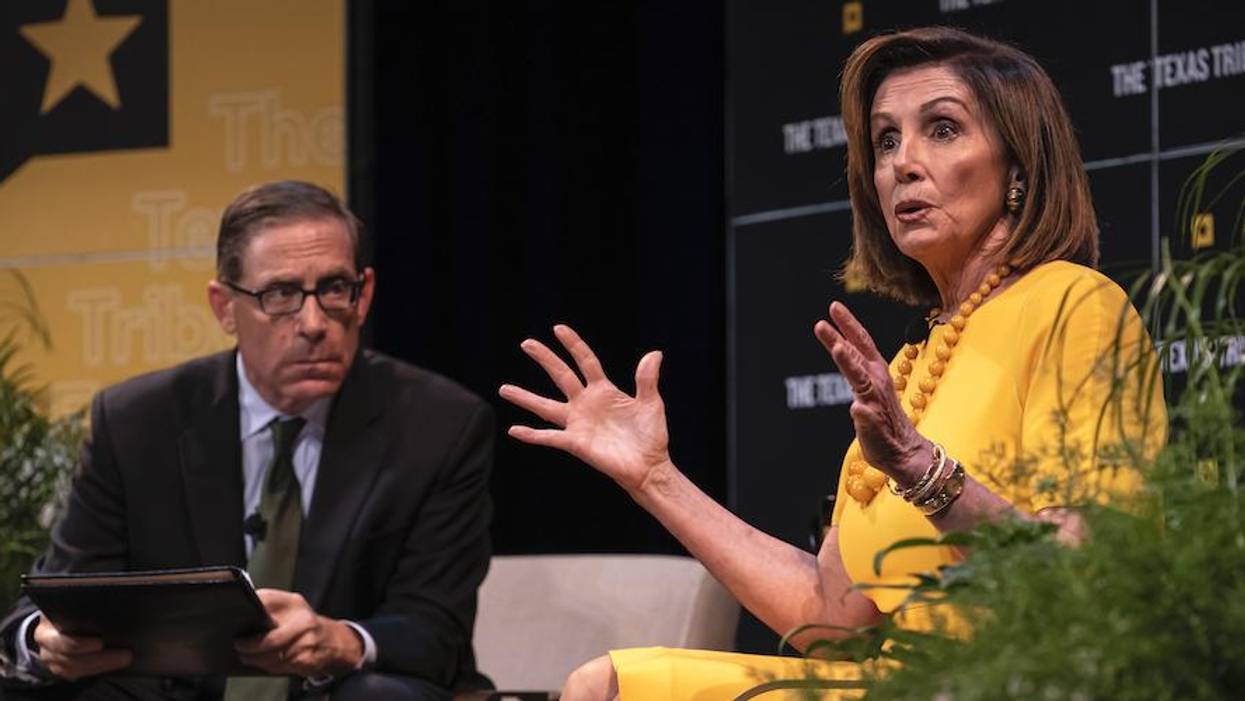
Pelosi publicly endorsed Cuellar on Saturday during an appearance at The Texas Tribune Festival in Austin.
"Absolutely, absolutely, absolutely," said Pelosi. "I'm very, very proud of Henry's work in the Congress and I'm proud to support him."
The speaker's endorsement came hours after a public announcement of suppport from Rep. Cheri Bustos (D-Ill.), the head of the Democratic Congressional Camapaign Committee (DCCC).
"Henry Cuellar knows that district like the back of his hand," Bustos told reporters at a briefing, also in Austin, on Saturday morning. "I completely support him."
As Common Dreams reported, Justice Democrats recruited human rights lawyer Jessica Cisneros in June to challenge Cuellar.
Sen. Elizabeth Warren (D-Mass.) endorsed Cisneros on September 9.
"The people of Texas' 28th district are ready for systematic change and deserve a Democrat that will be on the side of working people; not the side of big money and obstructionist Republicans," Warren said. "I believe Jessica Cisneros is that fighter."
In June, Cuellar spokesman Colin Strother told Common Dreams that Cisneros was a stooge who was "using many direct quotes from Justice Democrats" to attack Cuellar, though Strother was unable to provide an example other than Cisneros referring to Cuellar's voting record.
On Monday, the group took aim at Pelosi for the Cuellar endorsement.
"Nancy Pelosi endorsed someone who calls himself a 'Democrat' but fundraises for Republicans and receives support from the NRA, private prisons, Big Oil, and the Koch Brothers," said Justice Democrats executive director Alexandra Rojas.
"While Pelosi and the DCCC back Rep. Cuellar, the Democratic Party should be embracing our most fundamental values and put voters ahead of big corporate donors," Rojas continued. "This moment in our nation's history demands leadership with clarity on where we stand on reproductive rights, gun violence, climate change, and the influence of corporate money in our democracy."
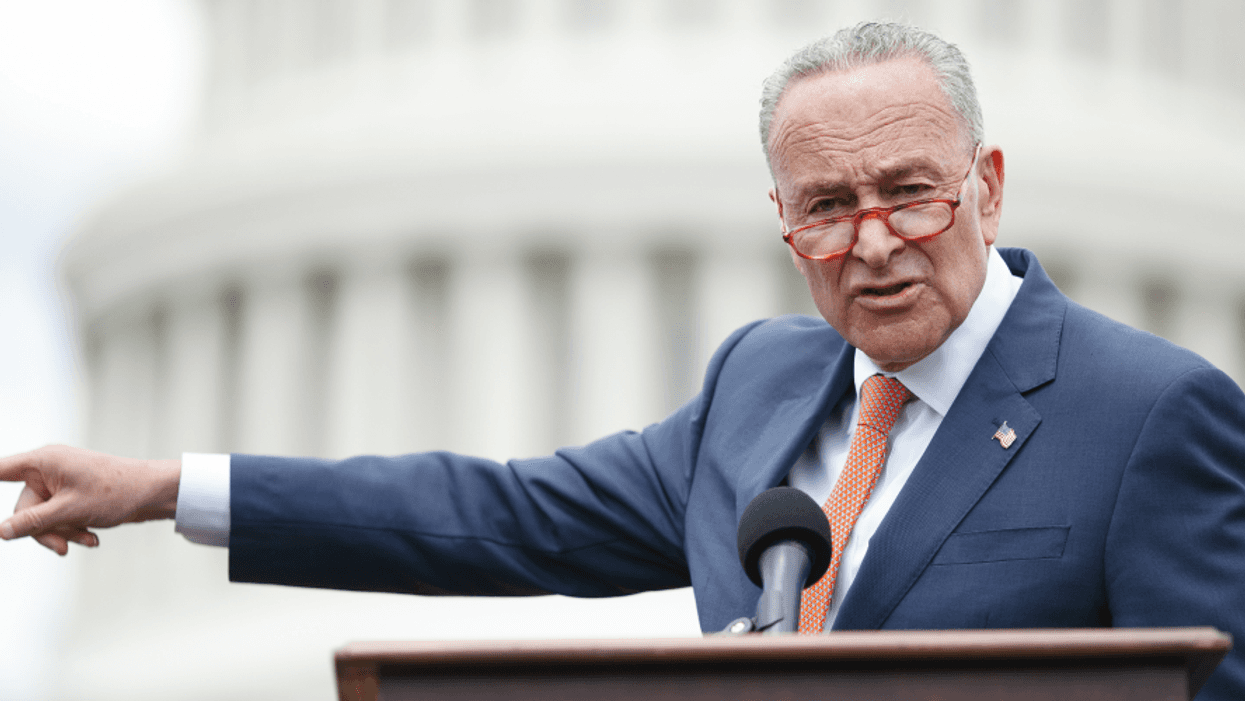
Months after the DCCC formally announced it would blacklist consultants who work with primary challengers against incumbent Democrats, the Democratic Senatorial Campaign Committee--controlled by Senate Minority Leader Chuck Schumer--is reportedly taking the policy of its House counterpart "one step further" by undermining progressive candidates attempting to flip Republican-held seats.
The Intercept reported Thursday that Andrew Romanoff, a Medicare for All and Green New Deal supporter running for Sen. Cory Gardner's (R-Colo.) seat, has had "multiple consultants" turn down offers to work on his campaign due to "pressure from the DSCC."
"They're threatening people's livelihoods, if people dare break with what the insiders in Washington want. It's extortion."
--Heather Brewer, campaign manager for Maggie Toulouse Oliver
The DSCC, which has endorsed former Colorado Gov. John Hickenlooper in the Senate Democratic primary, "pressured consultants from at least five firms not to work with" Romanoff, according to The Intercept.
"They've made it clear to a number of the firms and individuals we tried to hire that they wouldn't get any business in Washington or with the DSCC if they worked with me," Romanoff said. "It's been a well-orchestrated operation to blackball ragtag grassroots teams."
On Twitter, Romanoff suggested his support for Medicare for All and the Green New Deal is unacceptable to the Democratic establishment, which has thrown its support behind the anti-Medicare for All and pro-fracking Hickenlooper. As Sludge reported just before The Intercept's story was published, the DSCC "raked in cash from healthcare and fossil fuel lobbyists before endorsing Hickenlooper."
"Shameless, but not surprising," Romanoff said. "I support a Green New Deal and Medicare for All. Those priorities don't sit well with the party bosses and powerbrokers in Washington--but I'm not running to represent them."
Waleed Shahid, communications director for Justice Democrats, asked on Twitter whether the DSCC is going to interfere in the same way against Rep. Joe Kennedy III (D-Mass.), a more conservative Democrat running to oust progressive incumbent Sen. Ed Markey (D-Mass.).
According to the Intercept, the DSCC's efforts to squash progressive campaigns are not limited to Colorado:
If the DSCC's intervention in Colorado is any indication, the Democrats' Senate campaign arm is taking the blacklist one step further, by discouraging consultants from working not only for challengers to incumbent Democrats, but also for progressives running against the establishment's preferred candidate in a seat currently held by the GOP...
Individuals connected to a handful of campaigns across the country said they've heard about interventions by national Democrats, either in the form of the DSCC pressuring consultants not to work with progressive candidates, or Senate Minority Leader Chuck Schumer telling people not to run for office in the first place.
Writer Aaron Freedman said the DSCC's tactics are "arguably even worse than the DCCC blacklist--Schumer is blackballing progressives in open primaries for GOP-held seats."
The DSCC, which is ostensibly headed by Sen. Catherine Cortez Masto (D-Nev.), denied to The Intercept that it has an explicit policy of blacklisting consultants and firms that work with progressive challengers.
But the campaign arm's early interventions are infuriating progressives and depriving viable candidates of the resources and staff necessary to sustain a Senate campaign.
"First they came for the House candidates; now they're gonna come for the Senate candidates," Heather Brewer, manager of New Mexico Secretary of State Maggie Toulouse Oliver's Senate campaign, told The Intercept. "They're threatening people's livelihoods, if people dare break with what the insiders in Washington want. It's extortion."
The tweet seems harmless enough, on the surface. The Democratic Senatorial Campaign Committee's account slapped its logo atop a John Hickenlooper for Colorado ad and gave the presidential dropout a big thumbs up.
Hickenlooper, the DSCC wrote, "is running against Cory Gardner--the most vulnerable Republican up in 2020! If we want to end the gridlock, cut the costs of health care and prescription drugs, and act on climate -- we need to flip this #COSen seat."
The Democratic Party endorsing a former Democratic governor in a Senate race may not sound like a headline. Still, it's one of those "Why do they have to be such dicks?" moves that leads progressives to think the Party is thumbing the scale against them.
The tweet seems harmless enough, on the surface. The Democratic Senatorial Campaign Committee's account slapped its logo atop a John Hickenlooper for Colorado ad and gave the presidential dropout a big thumbs up.
Hickenlooper, the DSCC wrote, "is running against Cory Gardner--the most vulnerable Republican up in 2020! If we want to end the gridlock, cut the costs of health care and prescription drugs, and act on climate -- we need to flip this #COSen seat."
The Democratic Party endorsing a former Democratic governor in a Senate race may not sound like a headline. Still, it's one of those "Why do they have to be such dicks?" moves that leads progressives to think the Party is thumbing the scale against them.
Hickenlooper had people booing the words "public option." It was like watching the Unknown Comic address the Bundestag. There are Democrats who are uninspiring on the stump, but Hickenlooper is one of the party's few outright gong acts with liberal voters.
Still, why not run for Senate, in a race Democrats desperately need if they want to regain the chamber? One reason might be that as recently as February, Hickenlooper gave a speech in which he said, "I'm not cut out to be a Senator." Apparently, he has too much of an executive temperament for the job.
Despite this, and despite the fact that Hickenlooper's in-state approval rating has plunged eight points since his punchline presidential run, the party is backing him against a large field of primary contenders that includes former Colorado House Speaker Andrew Romanoff. Doing so sets up the Colorado Democratic primary to be a flashpoint contest similar to the Connecticut Senate primary of 2006, with Hickenlooper as the V-neck sweatered analog to Joe Lieberman.
Back then, Lieberman's bomb-happy advocacy for the War on Terror created an open party schism. Antiwar Democrats were forced to challenge Lieberman via the candidacy of Ned Lamont, winning a primary thanks largely to grassroots and Internet advocacy.
The party and much of the national punditocracy responded with horror to Lamont's 2006 primary win. David Brooks of the New York Times famously said it proved "Polarized primary voters shouldn't be allowed to define the choices in American politics."
Though Lieberman ultimately retained his seat by running as an independent, the 2006 Connecticut primary standoff showed support of the Iraq war was no longer a tenable position within the Democratic electorate. This began a change in party consensus on that issue (even if the Democrats remain divided on the issue of military intervention overall).
A similar situation is developing with regard to climate issues. While Green New Deal proposals and urgent climate action are popular with Democratic voters, neither the party itself nor much of the national press seem to have warmed up to the idea. The unspoken logic behind backing Hickenlooper is that name recognition and proven fundraising ability trump all in tossup races.
On the other hand, Colorado is now a solidly a blue state. The incumbent Senator Cory Gardner is its only statewide office-holding Republican. Polls suggest any Colorado Democrat would fare well against Gardner, among the more unpopular Senators. The state just elected a very liberal governor. If ever there were a time to observe the Prime Directive of non-interference, it would be in a Colorado Senate race.
Outright endorsements by the DSCC in primaries are not common, but when they have happened, the beneficiary tends to be the party's idea of an "electable" moderate. In 2016, the committee backed Katie McGinty over John Fetterman in Pennsylvania. She lost to Republican Patrick Toomey. This year it has backed several "moderates" already, including Nancy Pelosi acolyte Ben Ray Lujan in New Mexico against Maggie Oliver. (Both candidates back the Green New Deal and Medicare for All.)
The endorsement of Hickenlooper would have made sense under back when politicians who took gobs of industry money could believably market themselves as moderates or centrists. Today, voters see corporate donations as competition. They don't want to share political leaders with oil and gas companies, or health insurance companies, or weapons contractors.
By deciding to publicly back Hickenlooper, who has a history of lavish support from energy companies, the Democratic Party is making a statement about what side of the corporate donation argument it backs. It seems determined to sink or swim with its Hickenloopers and Joe Manchins, continuing to push the unconvincing line that hackery is synonymous with electability.
It took Joe Lieberman taking a primary L for the party to see the light about Iraq. Perhaps Colorado will be the scene for an epiphany on climate change.
The latest shakeup over a lack of diversity in senior leadership at the Democratic Congressional Campaign Committee shows that House Democrats' campaign arm remains out of touch with the values of its grassroots Democratic voters.
This first became evident in March when DCCC Chair Cheri Bustos announced a "blacklist" policy, which sought to stifle the people-powered democratic process by requiring political consultants to sign a loyalty pledge to incumbent Democrats. Recent comments from black and Latino lawmakers about a lack of diversity in senior leadership, as well as complaints about a tone-deaf approach to issues relating to race, show that the DCCC continues to refuse to evolve and change. Instead, there seems to be an implicit policy of silencing new voices and sidelining historically marginalized communities in order to protect the power of the status quo.
At a time when President Trump is openly voicing racist rhetoric and seeking to divide us, the Democratic Party has to be a model of the America we are proud to be--an America that welcomes new voices, embraces diversity and opens the doors of power wide.
This spring, Our Revolution met with Rep. Bustos after holding rallies outside her office and delivering more than 30,000 petitions opposing the blacklist policy. After promising to follow up with us, Rep. Bustos has remained silent--and the blacklist policy has remained in place. The recent staff shakeup is another symptom of the same problem.
Our nation is a diverse melting pot of hard-working Americans. Sadly, not all politicians are doing their best to serve all their constituents. Not all Democrats are created equally, and some are not aligned to the principles and morals of their congressional district.
Congressman Daniel William Lipinski of Illinois' third congressional district is one of the Democratic Party's more conservative members. Lipinski voted against the landmark Affordable Care Act in 2010 and is anti-abortion. In 2018, he survived a close primary against author and small businesswoman Marie Newman. On April 16, Newman officially announced that she will challenge Lipinski in a rematch for the spring 2020 primary.
Even though the party doesn't need to fear losing a seat in this solidly Democratic area, the DCCC is trying to handpick its preferred candidate, rather than let Chicago-area voters decide which candidate is best for them without outside interference.
Democrats are a diverse coalition of voters seeking real change and a return to the ideals of shared prosperity with racial, gender, climate, social and economic equality for all. Democratic congressional candidates in Mississippi and California may not agree on everything, but voters deserve the right to choose an alternative if the current representative is not reflecting their values and morals or fulfilling their needs.
No congressional district is the same, and a one-size-fits-all candidate is not good for the Democratic Party. Banning vendors and consultants who help Democratic primary challengers is wrong. The blacklist policy deters all future leaders looking to make a difference.
At Our Revolution, we are committed to fighting for the political change that is so desperately needed in American politics. We need an economy that works for everyone. We need health care for all. We need a political system that works for the people, not the deep-pocketed special interests. In 2020 and beyond, we need candidates on the ballot who make these issues their top concerns. We need candidates who are responsive to the people, who have said over and over again that the issues that they care about are affordable health care, fighting climate change, high-quality public education and so much more.
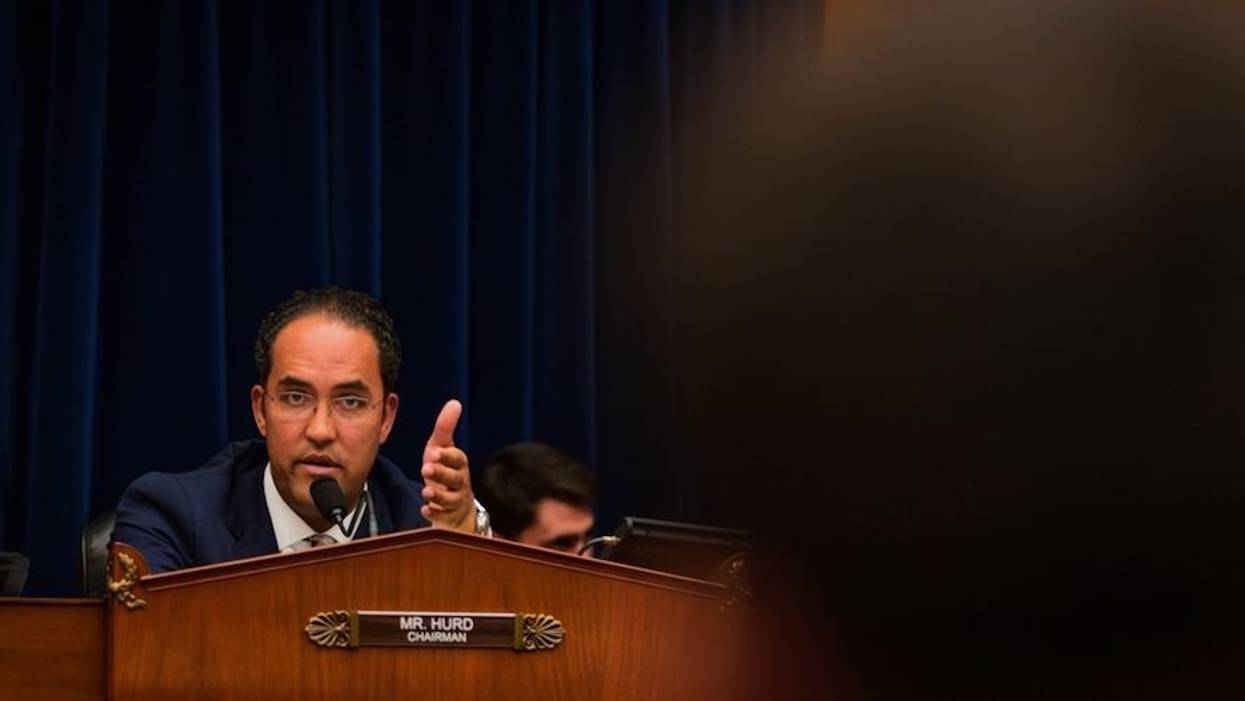
Texas Republican Rep. Will Hurd announced Thursday he will not seek another term in 2020, making him the latest GOP member of Congress to make such a declaration as the party's future is suddenly in doubt even as it dominates two-and-a-half branches of government.
Hurd won a narrow re-election fight against Democrat Gina Ortiz Jones in 2018, edging her out by less than 1,000 votes.
In a Twitter post in response to Hurd's retirement, Jones said she was running again.
"After years of serving our country, first in the CIA and then in Congress, I respect Congressman Hurd's decision to serve in a new capacity," tweeted Jones. "From San Antonio to Socorro and everywhere in between, Texans are ready for new leadership in Washington and I'm ready to serve."
In retiring, Hurd had progressives wondering what Republicans know the rest of us don't.
"Can't stop thinking about the time my cat suddenly bolted across the house and dove under the couch two seconds before an earthquake hit," tweeted New Republic writer Matt Ford of Hurd's retirement.
Hurd made the announcement on his Twitter page, saying he was leaving "in order to pursue opportunities outside the halls of Congress to solve problems at the nexus between technology and national security."
As the only black Republican in the House, Hurd was often referred to as the "future of the GOP" by media outlets like Politico, which profiled Hurd in 2017. The magazine quoted former Texas GOP Chairman Tom Mechler as saying of Hurd that "The sky is the limit. This guy is incredible."
A former CIA intelligence officer, Hurd has served as the representative for Texas' 23rd district since 2015. His retirement shifted the district into a "lean Democratic" lane by the Cook Political Report and may signal that at least some members of the GOP sense change is coming in next year's elections.
As Splinter's Paul Blest noted:
Hurd is the ninth Republican House member to announce his retirement so far this year, as opposed to just two on the Democratic side. While the majority have relatively safe seats--Rep. Mike Conaway represents one of the most conservative districts in the whole country--the list includes a bunch of Republicans in swing districts, such as Rep. Rob Woodall of Georgia, who also won his race by less than 500 votes, and Texas Rep. Pete Olson, who won re-election by five points.
DCCC spokesman Avery Jaffe told The Hill that the party was hopeful they could win the 23rd, pointing to President Donald Trump's national unpopularity and the changing demographics in Texas as indicators that a political shift is coming.
"Hurd has been a lockstep supporter of the worst of Washington Republicans' policies and he sealed his fate when he pledged to vote for Donald Trump in 2020," said Jaffe. "Democrats will win this seat and if Will Hurd doesn't believe he can keep his job in a changing Texas, his colleagues must be having second thoughts too."
In a statement, the executive director of the Texas Democratic Party, Manny Garcia, said that Hurd's retirement was just another indicator that Texas could go blue.
"Texas is the biggest battleground state," said Garcia. "Republicans know it, and Texas Democrats damn sure know it."
Taking Hurd's seat would send a message beyond just flipping the seat, as journalist David Dayen pointed out out on Twitter.
"Should Democrats take Will Hurd's seat next year, and retain the others in the region, they will have secured every seat along the Mexican border," said Dayen.
A survey released Wednesday found that right-wing talking points against Medicare for All lose their effectiveness when met with a clear progressive counter-argument.
The YouGov/Progressive Change Institute poll (pdf) first asked voters straightforwardly whether they support or oppose "a 'Medicare for All' healthcare system, where all Americans would get their health insurance from the government."
Fifty-one percent of respondents said they support Medicare for All and 38 percent said they oppose it.
"I hear every single day from the insurance companies and the drug companies, 'People love their health insurance companies.' That is not true. People do not love their health insurance companies."
--Sen. Bernie Sanders
Support for Medicare for All fell significantly, though, when the survey next incorporated right-wing framing into the questions.
Asked if they would support or oppose "a national Medicare for All plan if you heard that it would require 180 million Americans to move from private insurance to the Medicare for All plan," 38 percent of respondents expressed support while 44 percent said they oppose the policy.
And when the survey framed Medicare for All as a tax increase on American families--as CNN moderator Jake Tapper did during the 2020 Democratic presidential debate Tuesday night--just 41 percent of respondents said they would support it and 46 percent expressed opposition.
But support for Medicare for All jumped back up when the survey paired the right-wing talking points with a strong progressive response.
"Some say it would require 180 million Americans to move from private insurance to the Medicare for All plan," the poll reads. "Others say that people don't actually love their insurance companies, they love their doctors. And under Medicare for All you would always have healthcare, even if you are fired or switch jobs--and you would be able to go to any doctor you want."
"Hearing these two arguments," the survey asked, "would you (support or oppose) Medicare for All?"
After viewing the progressive response, 52 percent of respondents said they support Medicare for All and 35 percent said they oppose it.
The same jump occurred when the framing of Medicare for All as a tax increase was countered with the progressive argument that Americans would "pay a premium to the government that is less than what you pay for healthcare now, and you would wind up with more money in your pocket overall."
Fifty percent of respondents said they would support Medicare for All after hearing the progressive response to the right-wing framing, compared to 41 percent without the progressive response.
Mike Casca, co-founder of MVMT Communications--a progressive consulting firm created to help Democratic primary challengers overcome the DCCC blacklist--said the "bottom line" of the survey is that "right-wing attacks aren't effective when we rebut them forcefully."
"We can win this battle and guarantee healthcare as a human right," tweeted Casca, "but we need a nominee who is going to fight hard for Medicare for All."
Sen. Bernie Sanders (I-Vt.), a 2020 Democratic presidential candidate and the lead sponsor of the Medicare for All Act of 2019 in the Senate, cited the survey in an interview on MSNBC's "Morning Joe" Thursday morning.
"The difficulty of polling is obviously how you phrase it," said the Vermont senator. "But if you phrase the question to say: would you be supportive of an expansion of Medicare to cover all of our people, where you have freedom of choice--which my bill does--in terms of the doctor or the hospital that you go [to], where there [are] no co-payments, no deductibles, no out-of-pocket expenses, but you will pay more in taxes, the answer is people do support that proposal."
"Now, I hear every single day from the insurance companies and the drug companies, 'People love their health insurance companies.' That is not true," said Sanders. "People do not love their health insurance companies."
In response to the argument that Medicare for All would force people off their insurance, Sanders said tens of millions of Americans lose their private insurance plans each year under the current for-profit system.
"When we have Medicare for All," said Sanders, "you will have far more stability than you currently have."