SUBSCRIBE TO OUR FREE NEWSLETTER
Daily news & progressive opinion—funded by the people, not the corporations—delivered straight to your inbox.
5
#000000
#FFFFFF
To donate by check, phone, or other method, see our More Ways to Give page.

Daily news & progressive opinion—funded by the people, not the corporations—delivered straight to your inbox.
One commentator noted that Brazil's Supreme Court "refused to cave to imperialist threats" from the Trump administration.
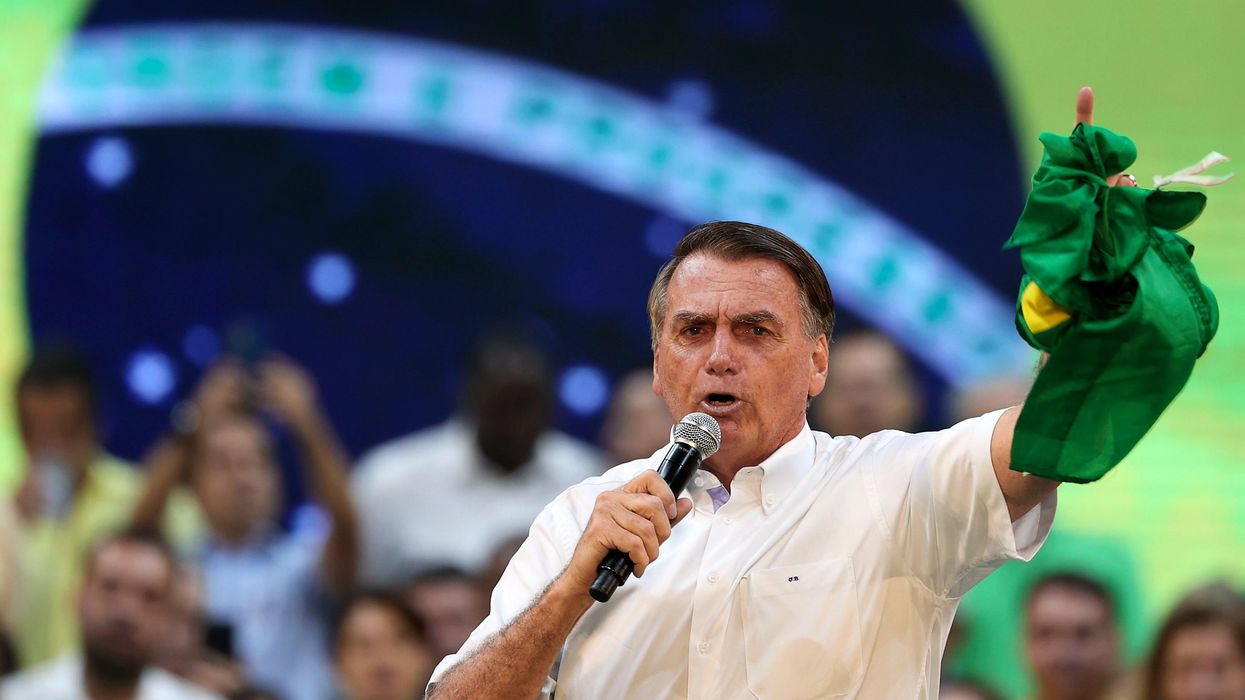
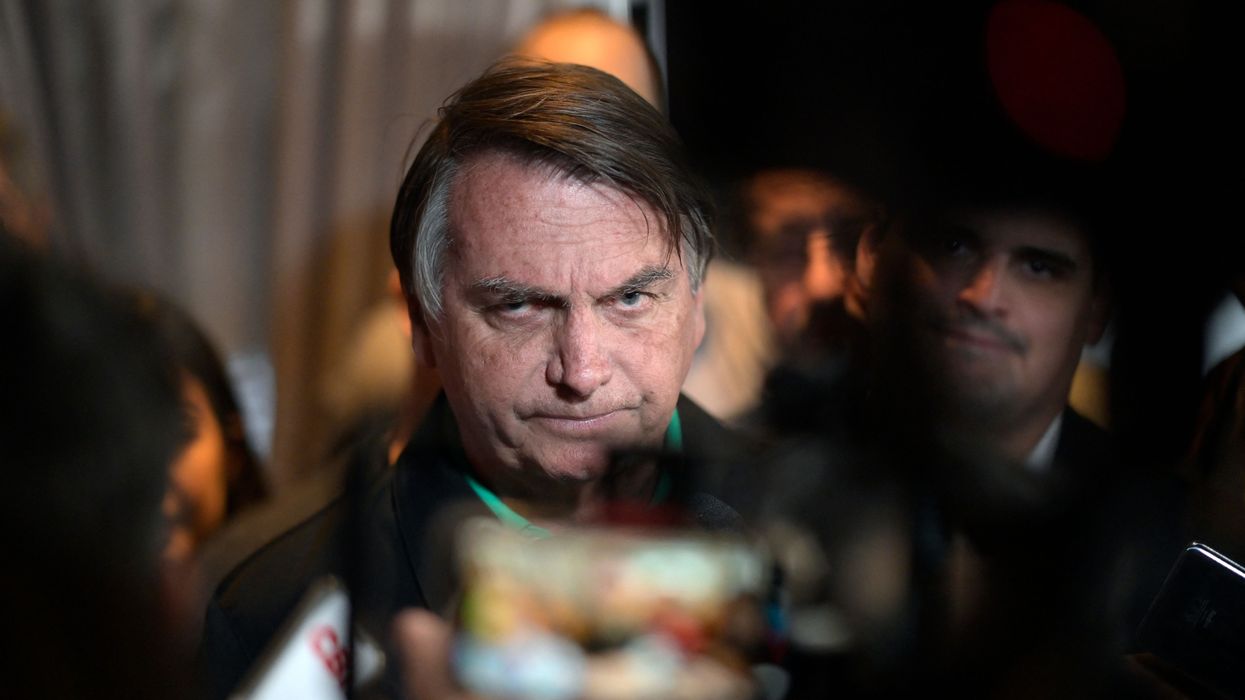
Former Brazilian President Jair Bolsonaro was sentenced to over 27 years behind bars Thursday after four of five Supreme Court justices on a panel voted to convict the far-right leader and seven associates of plotting a military coup and assassination of current President Luiz Inácio Lula da Silva and other officials.
"This criminal case is almost a meeting between Brazil and its past, its present, and its future," said Justice Cármen Lúcia Antunes Rocha, on Thursday cast the third and decisive vote to convict the former president and seven co-plotters, referring in part to the two decades of US-backed military dictatorship, during which Bolsonaro served as an army paratrooper.
Lúcia joined Justices Flávio Dino, Cristiano Zanin, and Alexandre de Moraes—who, along with Lula and Brazilian Vice President Geraldo Alckmin were targeted for assassination by the plotters—in voting to convict the defendants of attempting to subvert Lula's victory in the 2022 presidential election.
The defendants—who in addition to Bolsonaro include army generals and former Defense Ministers Walter Braga Netto and Paulo Sérgio Nogueira de Oliveira; former Institutional Security Minister Augusto Heleno Ribiero; admiral and former Navy Commander Almir Garnier Santos; former Justice Minister Anderson Torres; and former presidential adviser Márcio Mirando—were found guilty of crimes including attempting a coup, involvement in an armed criminal organization, attempting the violent abolition of democratic rule of law, and aggravated damage of the state's assets.
Lt. Col. Mauro Cid, a former Bolsonaro aide who turned state's witness, was sentenced Thursday to two years of confinement under open conditions, the most lenient form of carceral punishment in the Brazilian justice system.
"The government wanted to remain in power by simply ignoring democracy—and that is what constitutes a coup d'état," Moraes said ahead of his vote on Tuesday. "The leader of the criminal group made it clear—publicly and in his own words—that he would never accept defeat at the ballot, a democratic loss in the elections, and that he would never abide by the will of the people."
Bolsonaro was sentenced to 27 years, 3 months in prison, with penalties for the other convicted defendants still uncertain as of Thursday evening. Bolsonaro, who is 70 years old, denies any wrongdoing. He is currently under house arrest and could remain there until after exhausting the appeals process. He is already banned from running for any office until 2030 due to his abuse of power related to baseless claims of electoral fraud.
Justice Luiz Fux voted Thursday to absolve Bolsonaro, asserting that there was "absolutely no proof" that the former president took part in or was even aware of the coup and assassination plot.
However, Lúcia argued that there was copious evidence indicating that Bolsonaro and his accomplices acted "with the purpose of eroding democracy and institutions."
"They acted to hijack the soul of the republic," she said. "The case files show a coordinated criminal enterprise by the defendants, who adopted the methods of a digital militia to attack the judiciary, the electoral system, and the electronic voting machines."
The landmark verdict came amid acute political polarization in Latin America's biggest democracy and threats from the office of US President Donald Trump to unleash American "military might" in defense of the "Trump of the Tropics," as Bolsonaro is often called. The Trump administration has already slapped 50% tariffs on Brazilian imports and has sanctioned Moraes.
US Secretary of State Marco Rubio responded to Thursday's developments by vowing on social media that "the United States will respond accordingly to this witch hunt."
Like Trump in 2020, Bolsonaro made many baseless allegations that his loss in the 2022 election was due to fraud, fueling lies and conspiracy theories that led to the January 8, 2023 mob attacks on government buildings. Around 1,500 Bolsonaro supporters were arrested in the days following the storming of Congress and the presidential offices.
While many right-wing Brazilians were outraged by the convictions, leftist lawmakers and others applauded what Lula's Workers' Party (PT) called "a historic moment for Brazil."
Brazilian Secretary of Institutional Affairs Gleisi Hoffmann (PT) said on social media, "The conviction of Jair Bolsonaro and his accomplices by the Federal Supreme Court expresses the vigor of democracy and national sovereignty."
"They were convicted in due legal process, based on compelling evidence of the crimes they committed," she continued. "It is a historic, unprecedented decision so that they may never again dare to attack the rule of law and the will of the people expressed at the ballot box."
"It is also the proud response of Brazil's judiciary to the economic sanctions and absurd coercion of the Donald Trump government, in conspiracy with the traitors to the homeland in the service of Bolsonaro," Hoffmann added. "Today... Brazil told the world that crimes against democracy are intolerable. And they are unforgivable."
Federal Deputy Talíria Petrone (Socialism and Liberty-Rio de Janeiro) called Thursday "the greatest day ever," while former colleague Jean Wyllys also hailed this "great day."
Erika Hilton, a Socialism and Liberty federal deputy representing São Paulo, taunted Bolsonaro with the prospect of a lengthy stay at a notorious maximum security penitentiary.
Federal Deputy Benedita da Silva (PT-Rio de Janeiro) said on social media that "democratic Brazil is proud and celebrating the firm decision" of the high court, "whose members suffered countless threats, including death threats, from the conspirators against the democratic rule of law."
Referring to the United States, da Silva praised the justices, who "did not bow to the threats to our sovereignty from the greatest external power."
"Now we have to defeat the amnesty coup of the convicted plotters that they are still trying to pass," she added, a reference to efforts by the right-wing Congress to pass clemency legislation for Bolsonaro. "No amnesty!""Well, look at this thing called 'accountability,'" said one MSNBC host.
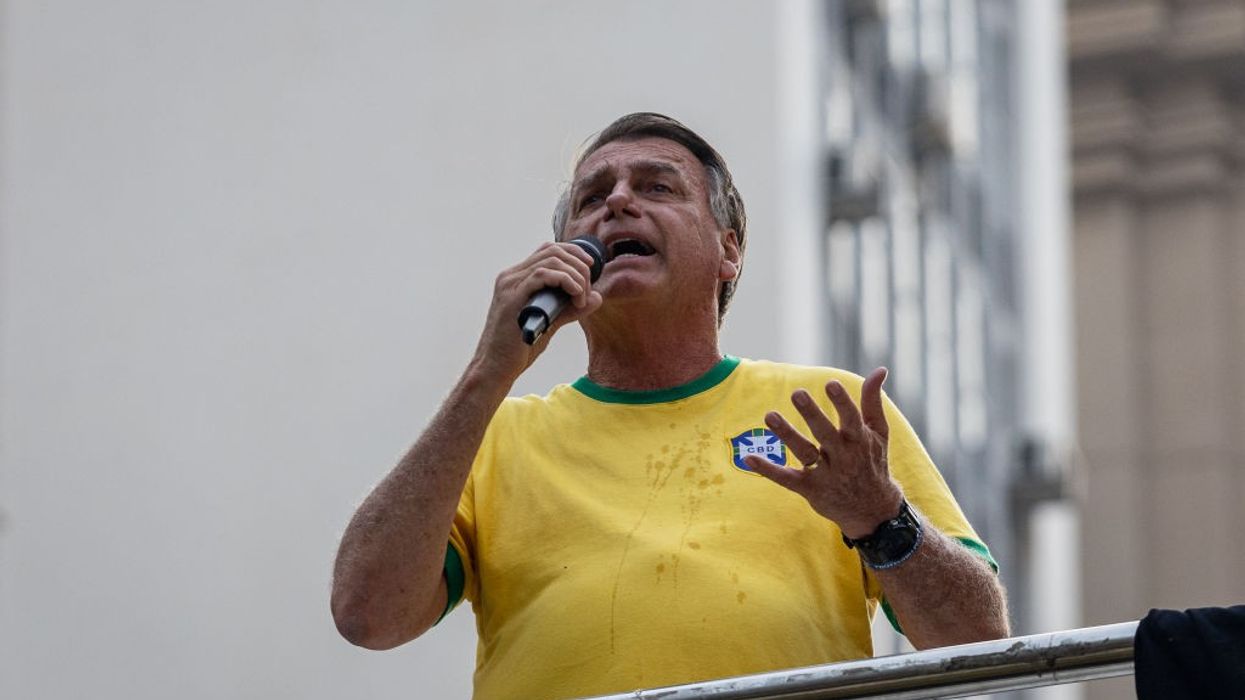
The Brazilian Federal Police on Thursday indicted former President Jair Bolsonaro and 36 others for allegedly plotting the "violent overthrow of the democratic state" after the country's current leftist president, Luiz Inácio Lula da Silva, defeated the right-wing leader in 2022.
"The final report has been sent to the Supreme Court with the request that 37 individuals be indicted for the crimes of the violent overthrow of the democratic state, coup d' etat, and criminal organization," police said in a statement about the conclusion of the two-year investigation.
As The New York Times explained: "Although the police in Brazil can make recommendations about criminal prosecutions, they do not have the power to formally charge Mr. Bolsonaro. The country's top federal prosecutor, Paulo Gonet, must now... decide whether to pursue charges against Mr. Bolsonaro and compel him to stand trial before the nation's Supreme Court."
The recommendations for charges came after the arrest of four members of the military and a federal police officer earlier this week over an alleged plot to kill Lula and Vice President Geraldo Alckmin before they were sworn in, as well as Supreme Court Justice Alexandre de Moraes. Police said that "a detailed operational plan called 'Green and Yellow Dagger' was identified, which would be executed on December 15, 2022, aimed at the murder of the elected candidates for president and vice president."
According to CNN, "Police reportedly allege that Bolsonaro had 'full knowledge' of a plan to prevent Lula and his government from taking office after his election victory."
Summarizing a conversation with a columnist, Bolsonaro said on social media Thursday that "we have to see what is in this indictment by the Federal Police. I will wait for the lawyer." He also said that Moraes "does everything that the law does not say" and "I cannot expect anything from a team that uses creativity to denounce me."
Bolsonaro has repeatedly denied any wrongdoing, including with two other pending cases: In March he was indicted for allegedly falsifying his Covid-19 vaccination data and in July he was indicted for crimes including embezzlement related to alleged misappropriation of diamond jewelry and other state property. Those indictments came after Brazil's highest election authority last year barred him from running for any public office for eight years over his lies about the 2022 contest.
In addition to Bolsonaro, the other three dozen people indicted on Thursday include "some of the most important members of his far-right administration," The Guardian reported. As the newspaper detailed:
They included Bolsonaro's former spy chief, the far-right Congressman Alexandre Ramagem; the former defense ministers, Gen. Walter Braga Netto and Gen. Paulo Sérgio Nogueira de Oliveira; the former minister of justice and public security, Anderson Torres; the former minister of institutional security, Gen. Augusto Heleno; the former navy commander Adm. Almir Garnier Santos; the president of Bolsonaro's political party, Valdemar Costa Neto; and Filipe Martins, one of Bolsonaro's top foreign policy advisers.
Also named is the right-wing blogger grandson of Gen. João Baptista Figueiredo, one of the military rulers who governed Brazil during its 1964-85 dictatorship.
The list contains one non-Brazilian name: that of Fernando Cerimedo, an Argentinian digital marketing guru who was in charge of communications for Argentina's president, Javier Milei, during that country's 2023 presidential campaign. Buenos Aires-based Cerimedo is close to Bolsonaro and his politician sons.
Given that Bolsonaro previously traveled to the United States when faced with legal trouble shortly after his loss two years ago, in this case, "precautionary measures have been issued, including a ban on international travel, which led to the confiscation of Bolsonaro's passport months ago," EL País noted Thursday.
Bolsonaro was among the right-wing leaders around the world who celebrated U.S. President-elect Donald Trump's victory earlier this month. The Brazilian—who is sometimes called the "Trump of the Tropics" and like the American incited an insurrection after his last electoral loss—said that the impact of Trump's win "will resonate across the globe... empowering the rise of the right and conservative movements in countless other nations."
Trump's return to office is expected to at least stall if not end his various legal issues, including for trying to overturn his 2020 loss.
"Fraud has always been the specialty of Bolsonaro, the Father of Lies," said the chair of the left-wing Workers' Party.
Brazil's Federal Police on Tuesday indicted former President Jair Bolsonaro for allegedly falsifying his Covid-19 vaccination data and criminal association, marking the first time the far-right leader has been criminally charged.
Federal Police Detective Fábio Alvarez Shor said in his indictment report that Bolsonaro and aides forged vaccination records "to cheat current health restrictions" ahead of a trip to the United States—which at the time required visitors to be vaccinated against the coronavirus.
"The investigation found several false insertions between November 2021 and December 2022, and also many actions of using fraudulent documents," the detective wrote.
In addition to Bolsonaro, Moro Cid, a top aide, and Gutemberg Reis, a federal lawmaker, were also indicted. Cid previously told investigators that Bolsonaro asked him to falsely record that the president and his 12-year-old daughter had been vaccinated. Fourteen other associates are also implicated in the alleged crimes.
Investigators previously alleged that "the objective of the group was to hold together in relation to their ideological agenda; in this case, to sustain the rhetoric regarding their attacks on the coronavirus vaccine."
Gleisi Hoffmann, a federal lawmaker who chairs the leftist Workers' Party of current Brazilian President Luiz Inácio Lula da Silva, responded to the indictment on social media, writing, "Fraud has always been the specialty of Bolsonaro, the Father of Lies."
If fully convicted, Bolsonaro—who denies any wrongdoing—faces 12-16 years behind bars.
Bolsonaro is a notorious Covid-19 vaccine skeptic who once suggested that getting the shot could turn people into alligators. The president's policies and actions sparked massive nationwide protests during the height of the pandemic. His administration also came under fire for intentionally stalling coronavirus vaccine deals with Pfizer and for allegedly conditioning the purchase of other vaccine stockpiles on bribes.
An investigation by Brazilian lawmakers into Bolsonaro's handling of the Covid-19 pandemic accused him of "crimes against humanity" and blamed his policies for more than 300,000 deaths. Paulo Gonet, Brazil's top prosecutor, was slated to meet with federal lawmakers on Tuesday to consider pandemic-related charges against Bolsonaro.
A 2021 study examining the Covid-19 pandemic in Brazil concluded that 400,000 lives could have been saved had the Bolsonaro administration enacted more stringent social distancing rules and started vaccinating people sooner.
Last year, Brazil's Superior Electoral Court banned Bolsonaro from holding office again until 2030 after finding that he abused power by making baseless claims of fraud in the 2022 presidential election, which he lost to Lula, who served as president from 2003-10.
Bolsonaro faces numerous additional investigations, including a probe of his role in the far-right uprising in Brasília, the capital, on January 8, 2023. A congressional inquiry found that Bolsonaro was the "intellectual and moral author of a coup movement" that culminated in the storming of government buildings last year. The lawmakers behind the inquiry recommended indictments for Bolsonaro and associates.
Some former top military officials have recently turned on Bolsonaro, accusing their erstwhile supreme commander—who was an army officer during Brazil's U.S.-backed military dictatorship—of pushing them to stage a coup to keep him in power.
Lula said Monday that Bolsonaro failed to carry out a coup "not only because some people who were in charge of the armed forces didn't want to do it and accept the president's idea, but also because the president is a big coward."
While SB1 is one of many antidemocracy laws enacted by 19 states in the year after the 2020 election, it stands out for its sheer number of restrictive and discriminatory provisions, which largely target Latino and Black voters.
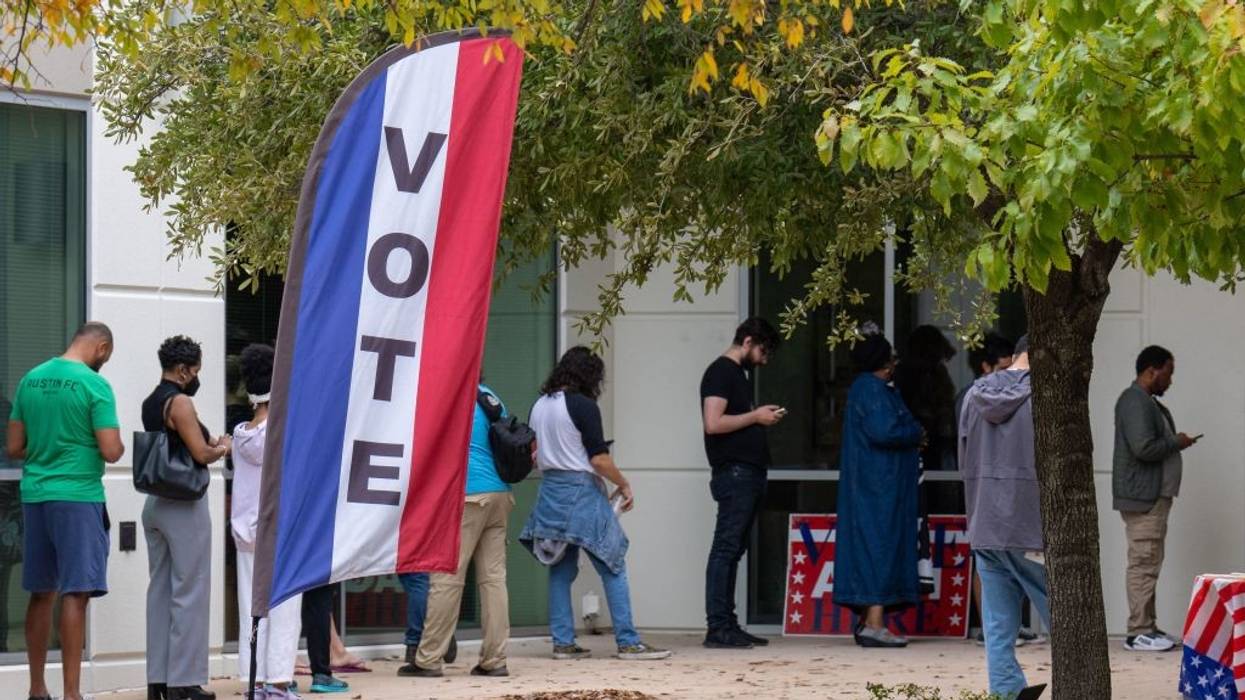
Trial began Monday in a major federal lawsuit challenging a wide-ranging and discriminatory voter suppression law Texas enacted in 2021. The Brennan Center, the Mexican American Legal Defense and Educational Fund, and our other co-counsel represent a wide swath of Texans, including election administrators, community groups, civil rights and voting organizations, and faith-based groups. Over the course of the trial, we will show how Senate Bill 1 violates the Constitution, the Voting Rights Act, and the Americans with Disabilities Act.
While SB1 is one of many antidemocracy laws enacted by 19 states in the year after the 2020 election, it stands out for its sheer number of restrictive and discriminatory provisions, which largely target Latino and Black voters. This is likely the only challenge to such an extensive restrictive voting law that will go to trial between now and the 2024 election.
Among its host of restrictive provisions, the law establishes onerous new rules for voting by mail and curbs voter outreach activities. It also hinders voting assistance for people with language barriers or disabilities and restricts election officials’ and judges’ ability to protect voters from harassment by poll watchers. Like the dozens of restrictive state voting laws that have been enacted nationwide in the last three years, SB1’s proponents claim that it is intended to fight voter fraud. Indeed, its myriad provisions appear to respond directly to baseless claims peddled by Donald Trump and his fellow election deniers about the security of mail-in voting and election administration.
In a state that was already the toughest in the nation to register and vote, Texans now have an even harder time staying on the voter rolls, casting their ballots, and ensuring their ballots are counted.
Yet Texas has never found evidence of widespread fraud—and not for lack of trying. Without the pretext of making elections more secure, SB1 is simply an unconstitutional effort to suppress eligible voters in marginalized communities. It seems no coincidence that after people of color surged in turnout in Texas’s 2018 and 2020 elections, the legislature passed a law that restricts methods of voting favored by Black and Latino voters and impairs voter assistance to those with limited English proficiency or limited literacy.
The plaintiffs in the case, LUPE v. Texas, can attest to the various ways SB1 has created obstacles to the ballot box that infringe on the constitutional right to vote. Voters of color have been disproportionately impacted by these burdens, violating their right to equal protection, the 15th Amendment’s protection against race-based disenfranchisement, and the Voting Rights Act. Our plaintiffs’ anecdotal experiences are backed by state voting records in the wake of the law’s enactment. Brennan Center research shows that just a single provision—which has recently been blocked by a judge—led to massive disenfranchisement with major racial disparities in Texas’s 2022 primaries.
The law’s new rules for mail-in voting required people to write the last four digits of their driver’s license number or social security number on their mail ballot application and mail ballot envelope. Officials had to reject an application or ballot if the number provided didn’t match the number on file in a voter’s registration record, even if that person was eligible to vote. These mismatches weren’t always the result of someone writing the number incorrectly but rather providing a correct number that didn’t coincide with the ID they used when they registered to vote—which could have been more than a decade ago. Tens of thousands of applications and mail ballots were tossed solely for having a missing or mismatched ID number, and nonwhite voters were at least 30% more likely than white voters to have their application or mail ballot rejected. A significant portion of those prevented from voting by mail ultimately didn’t vote at all.
Similarly, the law curtails the ability of people with disabilities or with limited English or literacy skills to get help voting, denying them the equal voting access and assistance they’re entitled to under the Americans with Disabilities Act and the Voting Rights Act. In particular, SB1 imposes new requirements and penalties for voter assisters that have deterred volunteers from aiding voters at the polls. It also makes it a crime to compensate or receive compensation for helping people vote by mail, which prohibits civic organizations from supporting community members who have trouble filling out the forms. Several witnesses will speak to how these provisions made it difficult for them to secure the help they needed to vote in the 2022 election.
Voters aren’t the only ones struggling under SB1. The law also targets election officials and poll workers, who are already facing a torrent of threats, harassment, and abuse. One provision makes it a crime for poll workers to “take any action” that would make a partisan poll watcher’s observation “not reasonably effective.” This unconstitutionally vague directive gives poll workers no clear sense of what they can and can’t do to stop poll watchers from harassing or intimidating voters, leaving poll workers fearful of being prosecuted just for doing their jobs. In the face of this uncertainty, some experienced poll workers have declined to sign up for future elections.
The heavy burdens that Texas’s law imposes at every stage of voting are becoming increasingly apparent. In a state that was already the toughest in the nation to register and vote, Texans now have an even harder time staying on the voter rolls, casting their ballots, and ensuring their ballots are counted. And in the two years since SB1’s enactment, state legislators around the country have continued to push legislation aimed at restricting voting access for Black, Latino, and vulnerable voters and making elections more susceptible to partisan meddling. Leaving these unconstitutional voter suppression measures unchallenged can only serve to spur further attacks on the freedom to vote in Texas and beyond.
"Mr. Trump, like any defendant will have to make the trial date work, regardless of his schedule," said the judge.
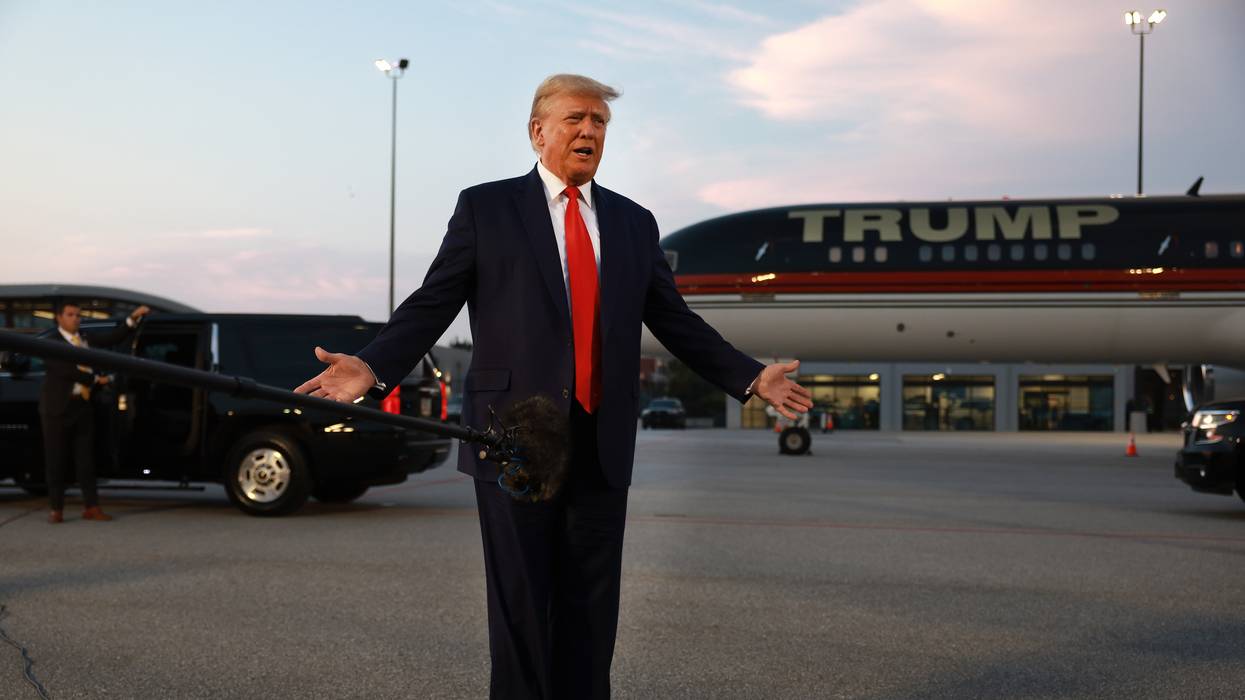
U.S. District Judge Tanya Chutkan on Monday scheduled former President Donald Trump's trial for the federal case stemming from his efforts to overturn the 2020 election and provoke the January 6, 2021 insurrection for March 4, 2024.
Chutkan, whom former President Barack Obama appointed to the U.S. District Court for the District of Columbia, rejected Special Counsel Jack Smith's proposed January 2, 2024 trial date and the Trump legal team's bid to push it until April 2026, after the next presidential election.
"Setting a trial date does not depend and should not depend on a defendant's personal and professional obligations," Chutkan reportedly said in court Monday. "Mr. Trump, like any defendant will have to make the trial date work, regardless of his schedule."
After Trump announced his current presidential campaign last year, U.S. Attorney General Merrick Garland appointed Smith, the special counsel also responsible for the federal case involving the ex-president's handling of classified documents.
Despite four ongoing legal cases for which he faces a total of 91 charges, Trump is leading the crowded field of candidates for the 2024 Republican presidential nomination by a significant margin, according to various polls. The GOP nominee is expected to face Democratic President Joe Biden, who beat Trump in 2020 and is now seeking reelection.
The charges mark a significant milestone in the story of Trump’s years-long effort to deny the legitimacy of the election he lost and to overturn Joe Biden’s victory.
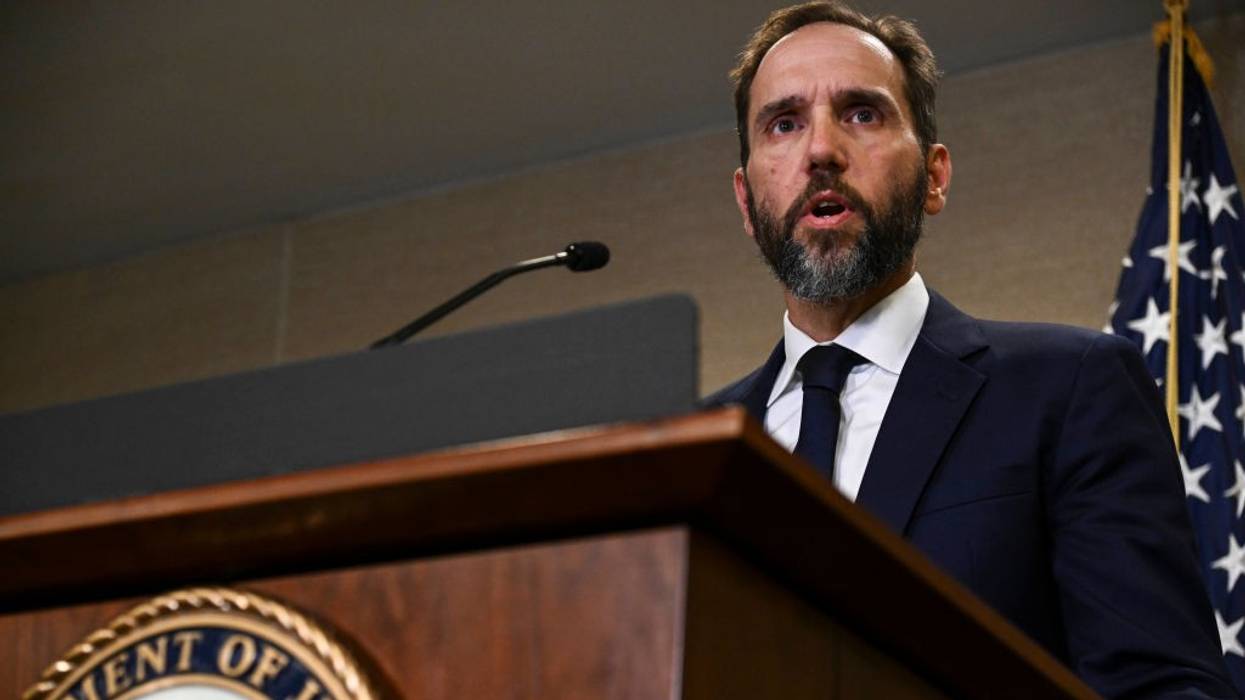
Special Counsel Jack Smith filed charges against former President Trump Tuesday on multiple charges, including conspiring to defraud the United States, obstructing an official proceeding, and conspiring to injure, oppress, threaten a person in the “free exercise or enjoyment of any right or privilege secured to him by the Constitution or laws of the United States.” The charges mark a significant milestone in the story of Trump’s years-long effort to deny the legitimacy of the election he lost and to overturn Joe Biden’s victory.
The indictment amounts to another in a series of emphatic rejections of election denial since the 2020 election.
Judges were the first to reject Trump’s particular brand of election denial. In the weeks after the election, the Trump campaign and political allies filed 62 lawsuits challenging the results in various states. All of them failed to affect any election result, rejected by state and federal judges appointed by members of both parties—including some by Trump himself. Some of the lawsuits were so flimsy—based on clear falsehoods and no evidence at all—that they lead to disciplinary sanctions for the lawyers who filed them. (The only claim that held up—that Pennsylvania voters who didn’t provide proper identification at the poll couldn’t go back and fix the issue more than three days later—didn’t come remotely close to changing the result in the state and wouldn’t have favored any particular candidate regardless.)
Early on, election denial seemed to give candidates an advantage in both fundraising and votes in Republican primaries. But in the general election, candidates who cast doubt on President Biden’s win fared poorly.
The people themselves then had their say. Voters last year repudiated Trump’s election denial. In the 2022 elections, many candidates echoed Trump’s claims that the presidential election was stolen, including in battleground-state races for senator and governor. Some, running for offices that will oversee future elections like secretary of state, centered their pitch to voters around the Big Lie. But it was not a winning strategy.
Early on, election denial seemed to give candidates an advantage in both fundraising and votes in Republican primaries. But in the general election, candidates who cast doubt on President Biden’s win fared poorly. Election deniers underperformed other candidates from the same party in their state, especially in races for secretary of state, which in most states is the official in charge of elections. In fact, while some election deniers won in deep red states, across all battleground states, every election denier running for statewide office lost.
A federal prosecutor has now weighed in, charging that the actions Trump took under the pretext of election denial were criminal. These charges are yet another confirmation that no widespread fraud took place in the 2020 presidential election. Every recount, law enforcement investigation, and serious journalistic inquiry across the nation has reached the same conclusion. And it’s been revealed that Fox News hosts pushing this conspiracy theory didn’t even believe the claims, according to text messages obtained in defamation lawsuit against the company brought by Dominion Voter Systems and settled for a punishing sum.
Over the last two years, election denial has been proven false so many times that another debunking is unremarkable—this one, however, is historic in that it comes with charges against a former president.
"The decisions being made in statehouses this year and next will help determine how the 2024 election is conducted," a new report warns.
Republican legislators in more than three dozen states have introduced nearly 200 bills this year that would make it easier for them to rig electoral outcomes, according to a report published Thursday.
A Democracy Crisis in the Making—compiled by the States United Democracy Center, Protect Democracy, and Law Forward—found that right-wing lawmakers in 38 states unveiled 185 bills from January 1 through May 3 that would enable legislatures to "politicize, criminalize, or interfere with elections." Of those proposals, 15 were enacted or adopted into law in 11 states while three others were vetoed by Arizona's new Democratic governor, Katie Hobbs.
Thursday's report—the latest update of an analysis originally published two years ago—makes clear that "the subversion threat is very much still alive." The number of "election subversion" bills introduced during the first four months of 2023 is roughly on par with the hundreds put forward in the early months of 2021 and 2022. Eventually, 56 of those anti-democratic proposals from the past two years became law in 26 states.
"Legislators are trying to make it harder for trusted election officials to do their jobs, and easier for partisan politicians to overturn the will of the voters."
Since former President Donald Trump launched his deadly coup attempt following his loss in the 2020 presidential contest, GOP-controlled states have enacted dozens of voter suppression laws and redrawn congressional and state legislative maps in ways that disenfranchise Democratic-leaning communities of color and give Republicans outsized representation, which could help the far-right secure minority rule for years to come.
In addition to impeding ballot access, Republican lawmakers are further undermining the country's procedural democracy by obstructing the administration of free and fair elections, the new report notes.
Researchers identified five forms of interference that increase the risk of "election subversion," which they defined as instances when "the declared outcome of an election does not reflect the true choice of the voters." The methods are:
"Legislators are trying to make it harder for trusted election officials to do their jobs, and easier for partisan politicians to overturn the will of the voters. While many may think this threat abated after the midterms, it most certainly did not," Maya Ingram, a senior policy development counsel at the States United Democracy Center, told NBC News on Thursday. "In fact, legislators are coming up with new ways to interfere with elections."
Several Republican candidates who parroted Trump's incessant lies about President Joe Biden's 2020 victory lost in last year's midterms. But more than 210 others—including at least two who participated in the January 6 rally that descended into an attack on the U.S. Capitol—won congressional seats and races for governor, secretary of state, and attorney general, underscoring how election denialism is now entrenched in the GOP and poses a threat to U.S. democracy for the foreseeable future.
"The decisions being made in statehouses this year and next will help determine how the 2024 election is conducted," the report warns. "Many of these bills are designed to inject confusion and delays into the election process, which increases the likelihood of attempted subversion and can give rise to disinformation, further eroding public trust and confidence in election results."
"Although a few of the bills that we have tracked would explicitly allow state legislatures or other actors to overturn the will of voters—what we sometimes refer to as direct subversion—the vast majority do not," says the report. "Bills that indirectly make subversion more likely are far more prevalent. A more probable scenario is a relatively close election, followed by efforts to create confusion and doubt about the results. Partisan actors could then claim that the true will of the voters cannot be determined, and engineer the outcome of their choice."
Nevertheless, "this legislative session has seen an increase in bills pushed by election deniers that would nullify election results if certain conditions are met," the report continues. "These bills are closely related to some of the direct subversion bills that we've seen in the past, in that they would allow the will of the voters to be disregarded."
NBC News summarized how two pieces of recently unveiled legislation could wreak havoc:
Republican legislators in Texas proposed a bill—H.B. 5082—that would give state officials the authority to order new elections in counties whose populations exceed 1 million people if there is "good cause" to conclude that 2% of polling places ran out of ballots and did not receive replacements. Such counties—like Harris County, which includes Houston—are home to a large share of the state's Democratic voters.
Arizona Republicans introduced a bill—H.B. 2078—that would, if it is enacted, allow candidates, political party county chairs, and certain ballot measure state committees to request post-election investigations that, under the law, would result in audits by the secretary of state.
While such audits should, in theory, be straightforward affairs, critics of the Arizona bill, and bills like it, note that election deniers were on the ballot in secretary of state races last year in 12 states—including Mark Finchem in Arizona. While Finchem lost, the scenario prompted enormous concerns about how such an audit might be conducted with an election denier overseeing it.
"The decisions that states make today will determine how elections are run in 2024," Ingram told the outlet. "Even when these bills don't become law, they keep lies and conspiracy theories alive and sustain the election denier movement."
According to a survey conducted in early 2022 by the Brennan Center for Justice, one in six election officials nationwide have experienced threats related to their job, and 77% say they feel such threats have increased in recent years. This spring, the Brennan Center found that 11% of current election officials are "very or somewhat likely" to step down before November 2024.
The new report urges voters to "be awake" to the "persistent threat" of election subversion and calls on state legislatures to "focus their efforts on the nonpartisan administration of elections, protecting election officials, and respecting the will of the people."
"Until they do," it warns, "our democracy is still far too close to a crisis."
"Billionaires spending a billion dollars on a shopping spree for democracy should wake us all up to the threat posed by nearly unlimited wealth applied without limits to our elections," said the head of Americans for Tax Fairness.
Americans for Tax Fairness on Monday released the group's latest report on "the threat posed to American democracy by billionaire political spenders," revealing that last year their collective congressional campaign contributions topped $1 billion for the first time.
"That 'Billionaires' Billion' was almost three-quarters more than the tycoons' total spending on the last midterms, in 2018, and 300 times more than what billionaires spent on congressional races as recently as a dozen years ago," states the ATF report.
"The Billionaires' Billion—contributed by fewer than 500 individuals—represented about one of every nine dollars raised from all sources in the 2022 elections," the analysis continues, noting that 15 of the nation's richest households were responsible for $658 million, or nearly two-thirds, of the contributions.
"Nearly 80% of billionaire cash—$782 million—went to outside campaign groups," the document adds, and in eight key races that decided which party controlled the Senate, "billionaire donations supported Republican candidates over Democratic ones by almost a 5-1 margin."
Democrats initially secured a slim majority in the Senate—including the two Independents who caucus with the party—after Sen. Raphael Warnock (D-Ga.) won a runoff against GOP challenger Herschel Walker in December, but that victory was quickly tempered when Democratic Sen. Kyrsten Sinema of Arizona became an Independent just days later.
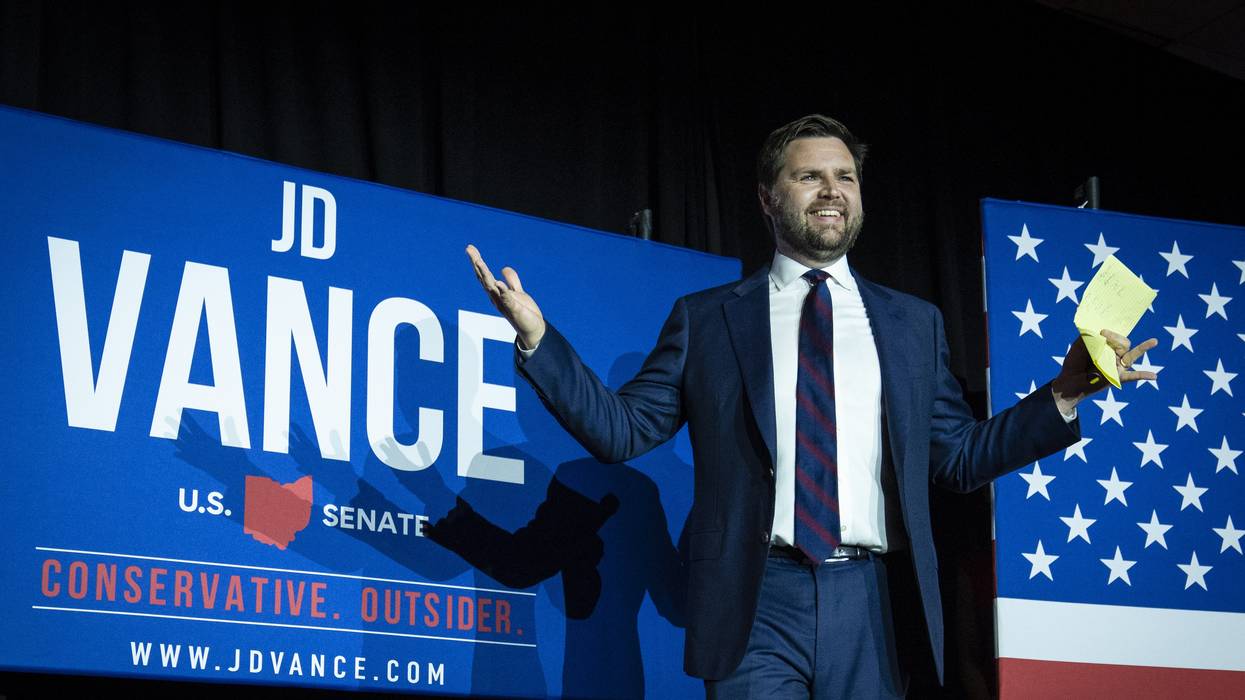
Although Republicans lost five of the eight key Senate races, the ATF report explains, not only did billionaire spending encourage candidates to focus on positions favored by their wealthy benefactors, but also, in North Carolina, Ohio, and Wisconsin—won by GOP Sens. Ted Budd, J.D. Vance, and Ron Johnson, respectively—the superrich overwhelmingly backed the party and "Republican billionaires outspent the much smaller pool of Democratic billionaires by at least 9-to-1 in each race."
The GOP did seize control of the House of Representatives in last year's midterms—enabling their efforts to quash recent legislative victories and priorities of congressional Democrats and President Joe Biden, including the ongoing battle over whether to raise the debt ceiling to avert the first-ever U.S. default, which economists warn would be catastrophic for the global economy.
The current makeup of Congress makes it exceptionally difficult to pass any legislation—including campaign finance reforms that critics of billionaires' influence on the American political system have increasingly demanded since the U.S. Supreme Court's 2010 Citizens United v. Federal Election Commission ruling, which loosened restrictions on political spending.
"Billionaires spending a billion dollars on a shopping spree for democracy should wake us all up to the threat posed by nearly unlimited wealth applied without limits to our elections," ATF executive director David Kass declared Monday. "There are well-known solutions to the problem, including overturning Citizens United and effectively taxing the biggest sources of billionaire wealth, which now often go lightly taxed if at all."
"Those tax reforms include taxing wealth like work by equalizing the top tax rate on investment and wage income, and closing the stepped-up basis loophole that allows investment gains to go untaxed forever," Kass added. "All that's needed is for Congress to heed the call of the American people to unrig a corrupt system."
In March, Biden unveiled a budget blueprint—which included various tax reforms—that then-ATF executive director Frank Clemente said "plainly shows whose side he's on: working families struggling with the high cost of healthcare, childcare, housing and more—not the wealthy elite and their big corporations rolling in dough and dodging their fair share of taxes."
However, the GOP continues to make clear that the party only plans to serve the rich with tax breaks, not force them to pay more. Citing three unnamed sources, The Washington Post reported Monday that "the White House recently gave Republican congressional leadership a list of proposals to reduce the deficit by closing tax loopholes during the ongoing negotiations over the federal budget and the debt ceiling. But Republican negotiators rejected every item."
"On a phone call last week, senior White House officials floated about a dozen tax plans to reduce the deficit as part of a broader budget agreement with House Republicans, including a measure aimed at cryptocurrency transactions and another for large real estate investors," according to the Post. "They were all swiftly rejected by the GOP aides on the call."
GOP leaders in some of state legislatures are using their expanded power to implement rules that undermine the usual deliberative process and allow controversial bills to be fast-tracked.
While Democrats defied historical trends in the 2022 midterm elections by blocking the Republican "red wave" that many pundits predicted would overtake the U.S. Congress, last year's election resulted in significant GOP gains in Southern state legislatures, bolstering their control of the region's politics.
Republicans gained about 55 legislative seats in Southern states in 2022 and now hold majorities in all of the region's legislative chambers except for the Virginia Senate. The GOP's largest gains came from West Virginia and Florida, where they gained 17 and 14 seats respectively.
Now GOP leaders in some of these legislatures are using their expanded power to implement legislative rules that undermine the usual deliberative process and allow controversial bills to be fast-tracked.
Take West Virginia, for instance. The state constitution mandates that a bill be "fully and distinctly read" three times in both the Senate and the House of Delegates "unless in case of urgency" — an exception requiring 80% of members present to suspend the rule. But last month, the state Senate suspended those constitutional rules to allow it to pass bills without having them go through committees, hearings, or debates — or even without making the text of the bills publicly available. On the first day of the legislative session alone, the Senate passed 23 bills this way. Among them was the "Anti-Racism Act of 2023," an updated version of a controversial proposal from last year that limits how subjects like racial discrimination are taught in K-12 public schools.
"This robs the public of the thoughtful, transparent process we are owed," the American Civil Liberties Union of West Virginia wrote on Twitter.
In Tennessee, the Republican House supermajority voted last month to limit debate on legislation, claiming it's for efficiency. The new rules cut the speaking time for any lawmaker recognized on the floor from 10 minutes to five. They also change how special caucus groups are recognized. For example, members of the state's Black Caucus told News Channel 5 that it appears they now will need approval from the speaker, as well as the leaders of both parties.
Democrats blasted the move. "We need more transparency in government, not less," House Democratic Caucus Chair John Ray Clemmons of Nashville told The Tennessee Holler.
In North Carolina, this year’s legislative session began with a temporary House rules change eliminating the requirement for legislative leaders to give two days' notice before holding a vote to override a veto by Democratic Gov. Roy Cooper, who has vetoed more bills than all of his predecessors combined. This would make it easier for Republicans in the House — where after last year's midterms the GOP is just one seat shy of holding a veto-proof supermajority — to hold override votes without all Democratic members of the chamber being present. Republicans hold a supermajority in the state Senate after gaining two seats last year.
North Carolina's Republican legislative leaders have a history of scheduling proposed veto override votes to frustrate Democrats’ efforts to block them. In 2019, for example, House Republicans were able to override Cooper's veto of their budget plan by taking the vote when some Democrats were missing because a GOP legislative leader told them it would be a non-voting session. That same year, Democrats say GOP lawmakers tried to capitalize on a lawmaker's breast cancer diagnosis to overturn Cooper's veto of an anti-abortion bill.
Noting the previous attempts to ram through controversial limits on abortion, Jillian Riley of Planned Parenthood South Atlantic called the change "a shameful power grab meant to thwart the will of the people,"
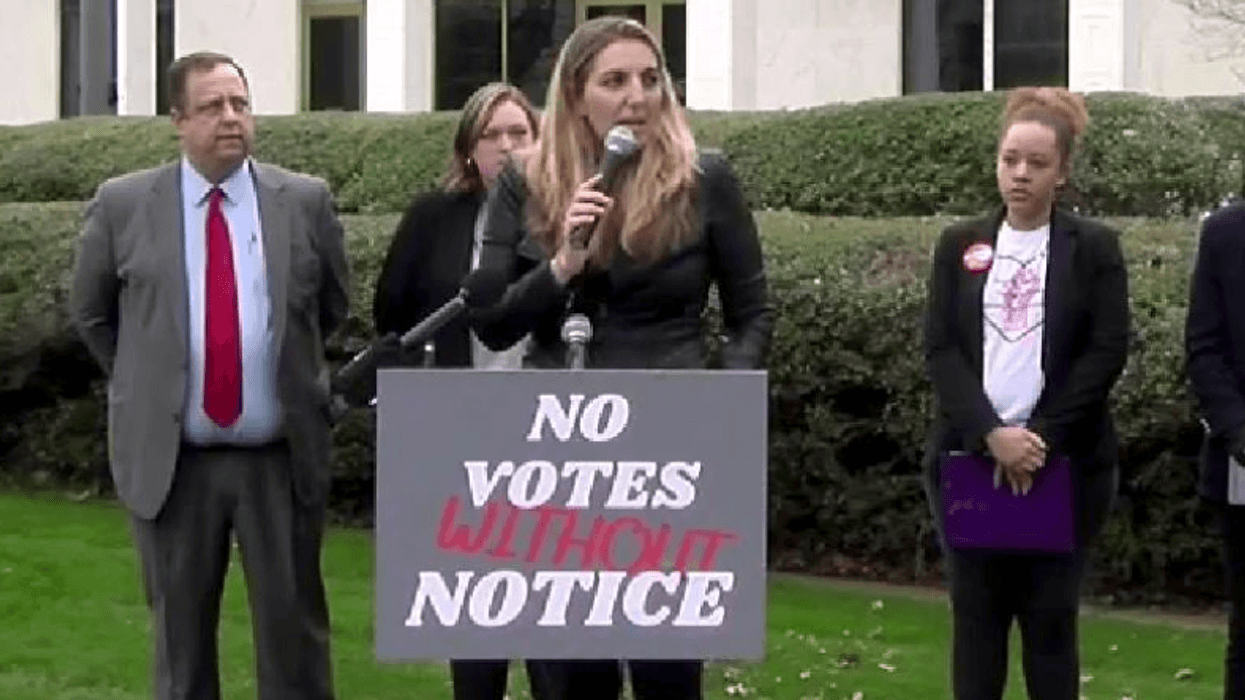
A coalition of civil rights organizations and other progressive groups recently held a press conference to protest House Speaker Tim Moore's rules change and demand greater transparency and accountability from the state legislature. Participants said the change will undercut the democratic process and result in the passage of regressive policies on abortion access, LGBTQ rights, and protections for immigrants and the environment.
"Again and again, Speaker Moore has demonstrated that he prefers to do anything necessary to enact his extreme agenda," said Dan Crawford, director of government relations at the NC League of Conservation Voters.
Among the legislation that the opponents of the rules changes are particularly worried about is the so-called "Parents' Bill of Rights", which would prohibit education about sexual orientation and gender identity in K-4 public school curriculum and require schools to notify parents about any changes in the name or pronoun used by their child. Republican lawmakers have also discussed proposals to further restrict abortion and to require voter ID.
A vote on making the temporary rule change permanent is expected in the coming weeks.
"It is incredibly racist to brag about lowering Black and Brown turnout, it is also unacceptable to have these comments and views held by an election official," said one advocacy group.
Voting rights advocates in Wisconsin on Thursday called on a far-right conspiracy theorist and member of the state's election authority to resign following revelations that he boasted about suppressing Black and Brown Milwaukee voters during last year's midterms.
Urban Milwaukee first reported that Bob Spindell, chairman of the 4th Congressional District GOP and a member of the Wisconsin Elections Committee (WEC), gloated in an email to thousands of Republicans that "we can be especially proud of the city of Milwaukee (80.2% Dem Vote) casting 37,000 less votes than cast in the 2018 election, with the major reduction happening in the overwhelming (sic) Black and Hispanic areas."
"From participating in a criminal conspiracy to overturn the 2020 election results, to now boasting about the suppression of votes from people of color, Spindell clearly cannot be trusted to fairly and adequately carry out a position directly related to the integrity of the Wisconsin election system."
Spindell explained that "this great and important decrease in Democrat votes in the city" was due to a "well thought out multifaceted plan," which included negative ads targeting Black voters, Republican lawsuits that increased voting restrictions, and an effort to convince Democratic voters to stay home on Election Day.
"While this is incredibly disturbing, we are not surprised by this recent revelation of additional Republican tactics used for voter suppression," the political action group Black Leaders Organizing for Communities (BLOC) said in response to Spindell's email. "Many of us have been sounding the alarm about how sinister voter suppression tactics have become, and Spindell's comments reinforce what we already knew."
"It is incredibly racist to brag about lowering Black and Brown turnout, it is also unacceptable to have these comments and views held by an election official," BLOC added. "We join calls from various grassroots partners... to rescind Spindell's appointment to the Wisconsin Election Commission."
Chris Walloch, executive director of A Better Wisconsin Together, a progressive research hub, tied Spindell's email to the official's support for former President Donald Trump's "Big Lie" about the last presidential election.
"There's no easier way to put it—Spindell is a Trump faction conspiracy theorist who has actively tried to sabotage and influence the outcome of Wisconsin elections based upon his own partisan bias," Walloch said in a statement.
"From participating in a criminal conspiracy to overturn the 2020 election results, to now boasting about the suppression of votes from people of color, Spindell clearly cannot be trusted to fairly and adequately carry out a position directly related to the integrity of the Wisconsin election system," Walloch added. "Wisconsinites deserve better, and we are demanding better."
Spindell was already a controversial figure. A prominent purveyor of Trump's "Big Lie," he was one of 10 fake Republican electors who plotted to fraudulently hand Trump a second White House term.
"The comments Commissioner Spindell made are not only egregious, they are the antithesis to what a true democracy is all about," Samuel Liebert, the Wisconsin state director for the advocacy group All Voting Is Local, said in a statement. "Nobody should be celebrating the disenfranchisement of Wisconsin voters, least of all an election official serving on the Wisconsin Elections Commission."
"The targeting of Black and Brown voters and the rejoicing over tens of thousands of us casting fewer ballots than in previous elections is alarming and leaves little doubt that barriers to the ballot and the spreading of disinformation regarding voting and elections have specifically been implemented and utilized to prevent us from voting," he continued.
"No matter our color, background, or zip code, most Wisconsinites believe that voters pick our leaders, our leaders do not pick their voters," Liebert added. "Elections officials, such as those serving on the WEC, should deliver the promise of American democracy to all, regardless of party affiliation."