SUBSCRIBE TO OUR FREE NEWSLETTER
Daily news & progressive opinion—funded by the people, not the corporations—delivered straight to your inbox.
5
#000000
#FFFFFF
To donate by check, phone, or other method, see our More Ways to Give page.
Daily news & progressive opinion—funded by the people, not the corporations—delivered straight to your inbox.
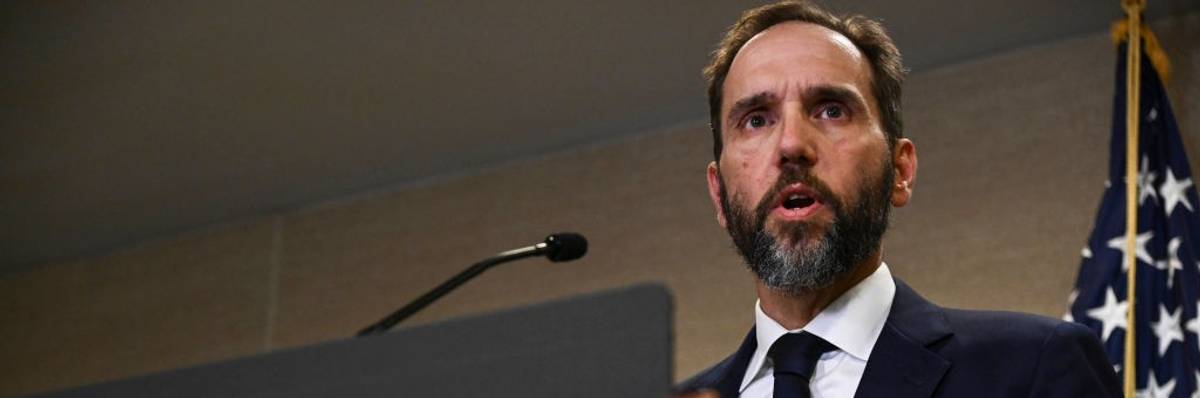
Special Counsel Jack Smith announces indictment of former President Donald Trump during a press conference on August 1, 2023 in Washington, D.C.
The charges mark a significant milestone in the story of Trump’s years-long effort to deny the legitimacy of the election he lost and to overturn Joe Biden’s victory.
Special Counsel Jack Smith filed charges against former President Trump Tuesday on multiple charges, including conspiring to defraud the United States, obstructing an official proceeding, and conspiring to injure, oppress, threaten a person in the “free exercise or enjoyment of any right or privilege secured to him by the Constitution or laws of the United States.” The charges mark a significant milestone in the story of Trump’s years-long effort to deny the legitimacy of the election he lost and to overturn Joe Biden’s victory.
The indictment amounts to another in a series of emphatic rejections of election denial since the 2020 election.
Judges were the first to reject Trump’s particular brand of election denial. In the weeks after the election, the Trump campaign and political allies filed 62 lawsuits challenging the results in various states. All of them failed to affect any election result, rejected by state and federal judges appointed by members of both parties—including some by Trump himself. Some of the lawsuits were so flimsy—based on clear falsehoods and no evidence at all—that they lead to disciplinary sanctions for the lawyers who filed them. (The only claim that held up—that Pennsylvania voters who didn’t provide proper identification at the poll couldn’t go back and fix the issue more than three days later—didn’t come remotely close to changing the result in the state and wouldn’t have favored any particular candidate regardless.)
Early on, election denial seemed to give candidates an advantage in both fundraising and votes in Republican primaries. But in the general election, candidates who cast doubt on President Biden’s win fared poorly.
The people themselves then had their say. Voters last year repudiated Trump’s election denial. In the 2022 elections, many candidates echoed Trump’s claims that the presidential election was stolen, including in battleground-state races for senator and governor. Some, running for offices that will oversee future elections like secretary of state, centered their pitch to voters around the Big Lie. But it was not a winning strategy.
Early on, election denial seemed to give candidates an advantage in both fundraising and votes in Republican primaries. But in the general election, candidates who cast doubt on President Biden’s win fared poorly. Election deniers underperformed other candidates from the same party in their state, especially in races for secretary of state, which in most states is the official in charge of elections. In fact, while some election deniers won in deep red states, across all battleground states, every election denier running for statewide office lost.
A federal prosecutor has now weighed in, charging that the actions Trump took under the pretext of election denial were criminal. These charges are yet another confirmation that no widespread fraud took place in the 2020 presidential election. Every recount, law enforcement investigation, and serious journalistic inquiry across the nation has reached the same conclusion. And it’s been revealed that Fox News hosts pushing this conspiracy theory didn’t even believe the claims, according to text messages obtained in defamation lawsuit against the company brought by Dominion Voter Systems and settled for a punishing sum.
Over the last two years, election denial has been proven false so many times that another debunking is unremarkable—this one, however, is historic in that it comes with charges against a former president.
Dear Common Dreams reader, It’s been nearly 30 years since I co-founded Common Dreams with my late wife, Lina Newhouser. We had the radical notion that journalism should serve the public good, not corporate profits. It was clear to us from the outset what it would take to build such a project. No paid advertisements. No corporate sponsors. No millionaire publisher telling us what to think or do. Many people said we wouldn't last a year, but we proved those doubters wrong. Together with a tremendous team of journalists and dedicated staff, we built an independent media outlet free from the constraints of profits and corporate control. Our mission has always been simple: To inform. To inspire. To ignite change for the common good. Building Common Dreams was not easy. Our survival was never guaranteed. When you take on the most powerful forces—Wall Street greed, fossil fuel industry destruction, Big Tech lobbyists, and uber-rich oligarchs who have spent billions upon billions rigging the economy and democracy in their favor—the only bulwark you have is supporters who believe in your work. But here’s the urgent message from me today. It's never been this bad out there. And it's never been this hard to keep us going. At the very moment Common Dreams is most needed, the threats we face are intensifying. We need your support now more than ever. We don't accept corporate advertising and never will. We don't have a paywall because we don't think people should be blocked from critical news based on their ability to pay. Everything we do is funded by the donations of readers like you. When everyone does the little they can afford, we are strong. But if that support retreats or dries up, so do we. Will you donate now to make sure Common Dreams not only survives but thrives? —Craig Brown, Co-founder |
Special Counsel Jack Smith filed charges against former President Trump Tuesday on multiple charges, including conspiring to defraud the United States, obstructing an official proceeding, and conspiring to injure, oppress, threaten a person in the “free exercise or enjoyment of any right or privilege secured to him by the Constitution or laws of the United States.” The charges mark a significant milestone in the story of Trump’s years-long effort to deny the legitimacy of the election he lost and to overturn Joe Biden’s victory.
The indictment amounts to another in a series of emphatic rejections of election denial since the 2020 election.
Judges were the first to reject Trump’s particular brand of election denial. In the weeks after the election, the Trump campaign and political allies filed 62 lawsuits challenging the results in various states. All of them failed to affect any election result, rejected by state and federal judges appointed by members of both parties—including some by Trump himself. Some of the lawsuits were so flimsy—based on clear falsehoods and no evidence at all—that they lead to disciplinary sanctions for the lawyers who filed them. (The only claim that held up—that Pennsylvania voters who didn’t provide proper identification at the poll couldn’t go back and fix the issue more than three days later—didn’t come remotely close to changing the result in the state and wouldn’t have favored any particular candidate regardless.)
Early on, election denial seemed to give candidates an advantage in both fundraising and votes in Republican primaries. But in the general election, candidates who cast doubt on President Biden’s win fared poorly.
The people themselves then had their say. Voters last year repudiated Trump’s election denial. In the 2022 elections, many candidates echoed Trump’s claims that the presidential election was stolen, including in battleground-state races for senator and governor. Some, running for offices that will oversee future elections like secretary of state, centered their pitch to voters around the Big Lie. But it was not a winning strategy.
Early on, election denial seemed to give candidates an advantage in both fundraising and votes in Republican primaries. But in the general election, candidates who cast doubt on President Biden’s win fared poorly. Election deniers underperformed other candidates from the same party in their state, especially in races for secretary of state, which in most states is the official in charge of elections. In fact, while some election deniers won in deep red states, across all battleground states, every election denier running for statewide office lost.
A federal prosecutor has now weighed in, charging that the actions Trump took under the pretext of election denial were criminal. These charges are yet another confirmation that no widespread fraud took place in the 2020 presidential election. Every recount, law enforcement investigation, and serious journalistic inquiry across the nation has reached the same conclusion. And it’s been revealed that Fox News hosts pushing this conspiracy theory didn’t even believe the claims, according to text messages obtained in defamation lawsuit against the company brought by Dominion Voter Systems and settled for a punishing sum.
Over the last two years, election denial has been proven false so many times that another debunking is unremarkable—this one, however, is historic in that it comes with charges against a former president.
Special Counsel Jack Smith filed charges against former President Trump Tuesday on multiple charges, including conspiring to defraud the United States, obstructing an official proceeding, and conspiring to injure, oppress, threaten a person in the “free exercise or enjoyment of any right or privilege secured to him by the Constitution or laws of the United States.” The charges mark a significant milestone in the story of Trump’s years-long effort to deny the legitimacy of the election he lost and to overturn Joe Biden’s victory.
The indictment amounts to another in a series of emphatic rejections of election denial since the 2020 election.
Judges were the first to reject Trump’s particular brand of election denial. In the weeks after the election, the Trump campaign and political allies filed 62 lawsuits challenging the results in various states. All of them failed to affect any election result, rejected by state and federal judges appointed by members of both parties—including some by Trump himself. Some of the lawsuits were so flimsy—based on clear falsehoods and no evidence at all—that they lead to disciplinary sanctions for the lawyers who filed them. (The only claim that held up—that Pennsylvania voters who didn’t provide proper identification at the poll couldn’t go back and fix the issue more than three days later—didn’t come remotely close to changing the result in the state and wouldn’t have favored any particular candidate regardless.)
Early on, election denial seemed to give candidates an advantage in both fundraising and votes in Republican primaries. But in the general election, candidates who cast doubt on President Biden’s win fared poorly.
The people themselves then had their say. Voters last year repudiated Trump’s election denial. In the 2022 elections, many candidates echoed Trump’s claims that the presidential election was stolen, including in battleground-state races for senator and governor. Some, running for offices that will oversee future elections like secretary of state, centered their pitch to voters around the Big Lie. But it was not a winning strategy.
Early on, election denial seemed to give candidates an advantage in both fundraising and votes in Republican primaries. But in the general election, candidates who cast doubt on President Biden’s win fared poorly. Election deniers underperformed other candidates from the same party in their state, especially in races for secretary of state, which in most states is the official in charge of elections. In fact, while some election deniers won in deep red states, across all battleground states, every election denier running for statewide office lost.
A federal prosecutor has now weighed in, charging that the actions Trump took under the pretext of election denial were criminal. These charges are yet another confirmation that no widespread fraud took place in the 2020 presidential election. Every recount, law enforcement investigation, and serious journalistic inquiry across the nation has reached the same conclusion. And it’s been revealed that Fox News hosts pushing this conspiracy theory didn’t even believe the claims, according to text messages obtained in defamation lawsuit against the company brought by Dominion Voter Systems and settled for a punishing sum.
Over the last two years, election denial has been proven false so many times that another debunking is unremarkable—this one, however, is historic in that it comes with charges against a former president.