

SUBSCRIBE TO OUR FREE NEWSLETTER
Daily news & progressive opinion—funded by the people, not the corporations—delivered straight to your inbox.
5
#000000
#FFFFFF
To donate by check, phone, or other method, see our More Ways to Give page.
Daily news & progressive opinion—funded by the people, not the corporations—delivered straight to your inbox.
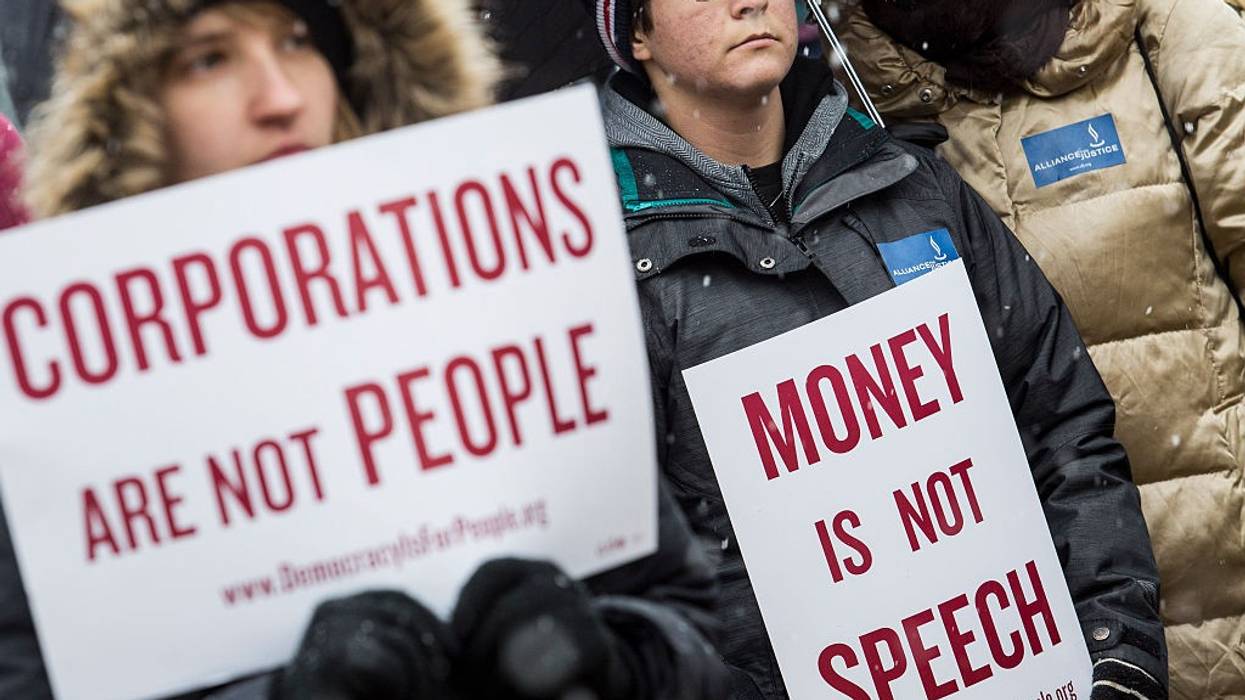
"The far-right Supreme Court hijacked the Constitution to let corporations spend in our elections. But we are not powerless. We can fight back," said US Rep. Greg Casar.
The state of Hawaii has passed a law that poses a direct challenge to the infamous 2010 Citizens United Supreme Court ruling, which opened the door to unlimited corporate spending in US elections.
Democratic Hawaii Gov. Josh Green on Thursday signed into law a bill that takes aim at the court's ruling that corporations are effectively people with full free speech rights who can face no limits on what they can contribute to political organizations.
As explained by More Perfect Union, the law, which is set to take effect next July, classifies corporations as "artificial persons" who do not have a constitutional right to make political donations.
"The bill could limit the influence of super PACs," noted More Perfect Union, "and be a model to challenge the influence of money in politics."
Democratic Hawaii state Sen. Jarrett Keohokalole, a supporter of the law, said on Thursday he was proud that Hawaii has become "the first state in the nation" to take direct action challenging Citizens United.
"As elected leaders, we do not serve artificial entities," Keohokalole said. "We serve the people."
“We do not serve artificial entities. We serve the people.” @SenatorJarrett on Hawaii making history by getting dark and corporate money out of politics. #CitizensUnited pic.twitter.com/Se6HQyvRu8
— American Progress (@amprog) May 14, 2026
US Rep. Greg Casar (D-Texas), chair of the Congressional Progressive Caucus, hailed the law as "big news" that should inspire opponents of limitless corporate political spending across the US.
"The far-right Supreme Court hijacked the Constitution to let corporations spend in our elections," said Casar. "But we are not powerless. We can fight back."
The new law passed despite opposition from Hawaii Attorney General Anne Lopez, who argued that defending it in court could be difficult and expensive.
The law's passage earned praise from campaign finance watchdogs who have long called for overturning Citizens United and reestablishing guardrails for corporate cash in US democracy.
Michael Beckel, who directs the Money in Politics project for the advocacy group Issue One, said the Hawaii law is a "model for the country" that other states should rush to emulate.
"This measure... is among the most innovative and impactful ideas to curb corporate and dark money spending in campaigns since the Supreme Court’s disastrous Citizens United ruling in 2010," Beckel said. "Those looking to bring more transparency and accountability to elections should embrace this powerful proposal and follow Hawaii’s lead."
End Citizens United, the nonprofit campaign finance reform organization dedicated to overturning the 2010 Supreme Court ruling, also pushed other states to look at Hawaii's law as a roadmap for their own legislation.
"Hawaii has provided a blueprint for how to prevent super PACs from spending dark money by passing state law," the group said in a social media post. "Let this win be a testament to the ability states have to put power back in the hands of everyday people by neutralizing the effects of the Citizens United ruling."
Tom Moore, senior fellow at the Center for American Progress, praised the Hawaii law in an interview with The Associated Press, calling it "a brave and bold step to get corporate and dark money out of America’s politics" that "will send a powerful message that will be heard loud and clear across the Pacific and across the mainland."

"Unlike Graham, who rejects corporate PAC money and refuses to sell out, Sen. Collins has never met a corporate PAC check she didn't like," said the head of End Citizens United.
Graham Platner, the presumptive Democratic candidate to challenge Republican Sen. Susan Collins in Maine, continues to rake in endorsements, and on Wednesday won support from End Citizens United, which advocates for reversing the US Supreme Court decision that opened the floodgates to unlimited corporate spending in elections.
The oyster farmer and military combat veteran launched his campaign last August with an advertisement declaring that "billionaires" and "the oligarchy" are "the enemy." He has run on campaign finance reform, taxing the rich, Medicare for All, ending "pointless wars" and President Donald Trump's "deportation machine," tackling the childcare crisis, supporting public schools, boosting unions, raising wages, and defending democracy as well as "our air, our water, our land, and our climate."
"Graham Platner understands that people in Maine are fed up watching the same politicians make promises while life keeps getting more expensive and nothing changes," said End Citizens United president Tiffany Muller in a statement. "He's running a campaign rooted in the belief that Washington will never work for working families as long as billionaires, corporations, and special interests are able to buy access and influence at the highest levels of government."
Platner has joined End Citizens United's "Unrig Washington" program, which advocates for a ban on congressional stock trading, refusing corporate political action committee (PAC) contributions, and cracking down on dark money.
"Unlike Graham, who rejects corporate PAC money and refuses to sell out, Sen. Collins has never met a corporate PAC check she didn't like," Muller said of the five-term senator. "She has spent decades rewarding her biggest donors in exchange for campaign contributions. We’re proud to endorse Graham, and we look forward to helping expose Sen. Collins' corruption."
Platner collected $4.1 million from small donors in the first quarter of 2026, and polling has given him an edge over both Collins and Democratic Maine Gov. Janet Mills, who suspended her primary campaign late last month, citing a lack of financial resources.
"The race has never really been about me or any one person," Platner said after Mills' exit. "It's about a movement of working Mainers who are fed up with being robbed by billionaires and the politicians who own them. We are now taking back our power."
The Democrat delivered a similar message about building "a movement to get money out of politics" and "a government that represents working people" in a Wednesday statement welcoming support from a group that's long worked to overturn the 2010 decision Citizens United v. Federal Election Commission.
"We don't take a dime of corporate PAC money, and we're going to keep it that way, because our politics has been bought and paid for by billionaires for far too long," Platner said. "It's long past time to overturn Citizens United and take on establishment politicians like Susan Collins, who have enriched the ultrawealthy and themselves on the backs of working people in this country. I'm grateful to be endorsed by End Citizens United and to have their support in this fight."
In addition to taxing billionaires and getting money out of politics, Platner has taken aim at the Supreme Court—which has had some turnover since 2010, and since then faced rising public scrutiny for justices' ethics concerns as well as recent decisions from the right-wing supermajority.
Platner said last month that "if we held Supreme Court justices to the same standards that we held federal judges, there is a compelling case for the impeachment and removal of at least two"—likely referring to Justices Clarence Thomas and Samuel Alito, who have come under fire for covertly accepting gifts from billionaires.
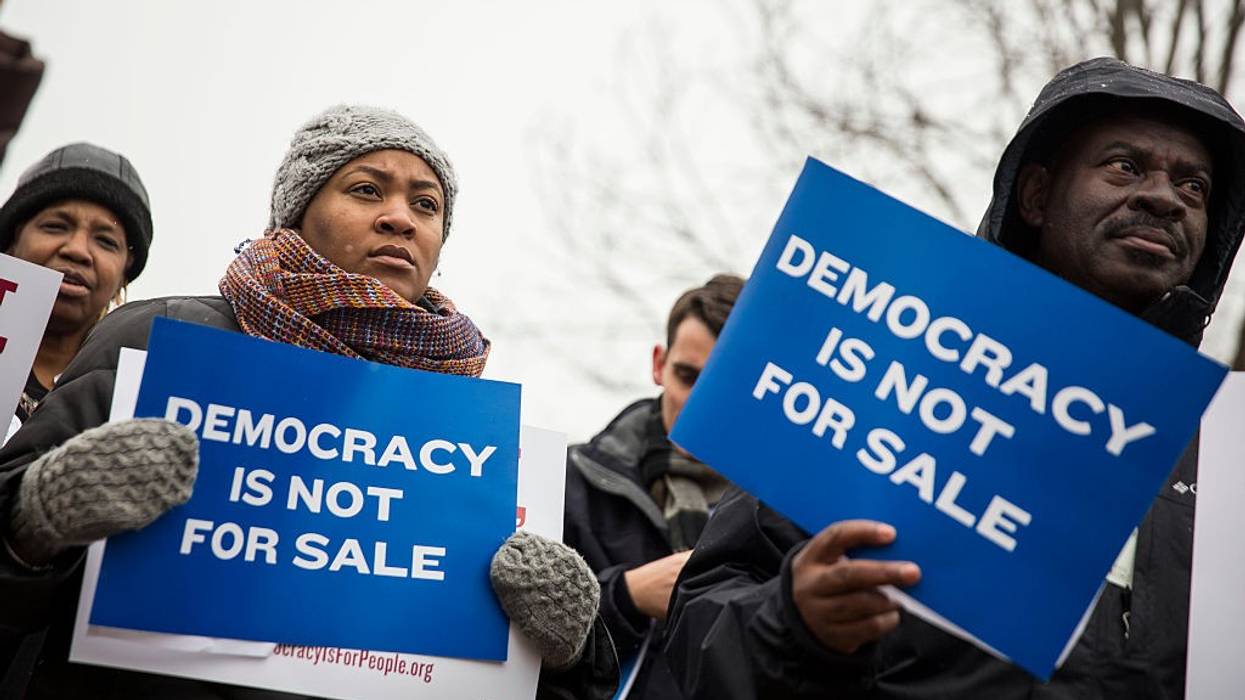
"As long as Citizens United remains the law of the land, our democracy will remain broken," said one campaigner.
As President Donald Trump triumphantly returned to the White House thanks in part to a tsunami of campaign cash from oligarchs and corporate interests, democracy defenders on Tuesday marked the 15th anniversary of the U.S. Supreme Court ruling that unleashed such spending by urging action to overturn the decision.
In a nation where corporations and moneyed interests already wielded disproportionate power and influence over elections, Citizens United v. Federal Election Commission reversed campaign finance restrictions dating back to the era of Gilded Age robber barons. The ruling affirmed that political spending by corporations, nonprofit organizations, labor unions, and other groups is a form of free speech protected by the 1st Amendment that government cannot restrict. The decision ushered in the era of super PACs—which can raise unlimited amounts of money to spend on campaigns—and secret spending on elections with so-called "dark money."
In his Citizens United dissent, Justice John Paul Stevens asserted that "in a functioning democracy the public must have faith that its representatives owe their positions to the people, not to the corporations with the deepest pockets," and warned that the ruling "will undoubtedly cripple the ability of ordinary citizens, Congress, and the states to adopt even limited measures to protect against corporate domination of the electoral process."
"Over the last 15 years, the American people have watched with disgust as both parties welcomed the unfettered sale of our democracy and elections to the highest bidders."
Since then, nearly $20 billion has been spent on U.S. presidential elections and more than $53 billion on congressional races, according to data compiled by OpenSecrets. Spending on 2024 congressional races was double 2010 levels, while presidential campaign contributions were more than 50% higher in 2024 than in 2008, the last election before Citizens United.
Ultrawealthy megadonors played a critical role in Trump's 2024 victory. Some of them have been rewarded with Cabinet nominations and key appointments in "an administration dominated by billionaires and corporate interests," as Americans for Tax Fairness executive director David Kass described it.
"Fifteen years ago today, the Supreme Court gave billionaires and special interests unprecedented power to rig our democracy with its disastrous Citizens United decision. Yesterday, Donald Trump was sworn in, ushering in the wealthiest administration in American history," Tiffany Muller, president of the advocacy group End Citizens United, said on social media Tuesday. "Citizens United paved the way for Trump II."
Alexandra Rojas, executive director of the progressive political action committee Justice Democrats, said in a statement that "over the last 15 years, the American people have watched with disgust as both parties welcomed the unfettered sale of our democracy and elections to the highest bidders."
"Citizens United legalized economic inequality as a political tool for the wealthy to exploit," Rojas added. "A decade-and-a-half later, working-class people cannot afford to run for office and everyday voters' voices are drowned out by billionaire-funded super PACs. As long as Citizens United remains the law of the land, our democracy will remain broken."
Justice Democrats noted: "Yesterday, Donald Trump was inaugurated as president in what was maybe one of the most openly corporate-sponsored inaugurations in American history. In just one row seated in front of Trump's Cabinet members, four men had the combined wealth of just under $1 trillion."
"Billionaires and corporations are paying their way to gain influence in the Trump administration and they can expect a massive return on their investment, at the expense of everyday people," the group added.
It's no surprise, say critics, that corporate profits and plutocrat wealth have soared to new heights during the Citizens United era.
"Citizens United allowed corporations to buy candidates and elections. Citizens United legalized political bribery. Citizens United let wealth dominate our elections," the consumer watchdog Public Citizen said Tuesday. "Overturn Citizens United."
Positing that "Citizens United turned our democracy into an auction," Congressman Mark Pocan (D-Wis.) wrote on social media Tuesday that "our government is supposed to be of the people, by the people, and for the people—not corporations and billionaire elites. We must #EndCitizensUnited and put the American people back in charge."
Democratic lawmakers have introduced numerous bills, including proposed constitutional amendments, to reverse Citizens United. While Congress has not been able or willing to address the issue, 22 states and the District of Columbia, as well as more than 800 local governments across the country, have passed measures calling for a constitutional amendment to overturn the ruling, according to Public Citizen.
"This is a moment to
usher in a new era in the Democratic Party that rejects the growing oligarchy in this country by rejecting the unprecedented level of billionaire and corporate spending that has a stranglehold over both parties," Justice Democrats said on Tuesday. "Now is the moment to tirelessly center working people and expose the big money corruption that Citizens United has brought onto both parties. By rejecting their influence, working-class people may finally have the promise of a party that actually serves them."
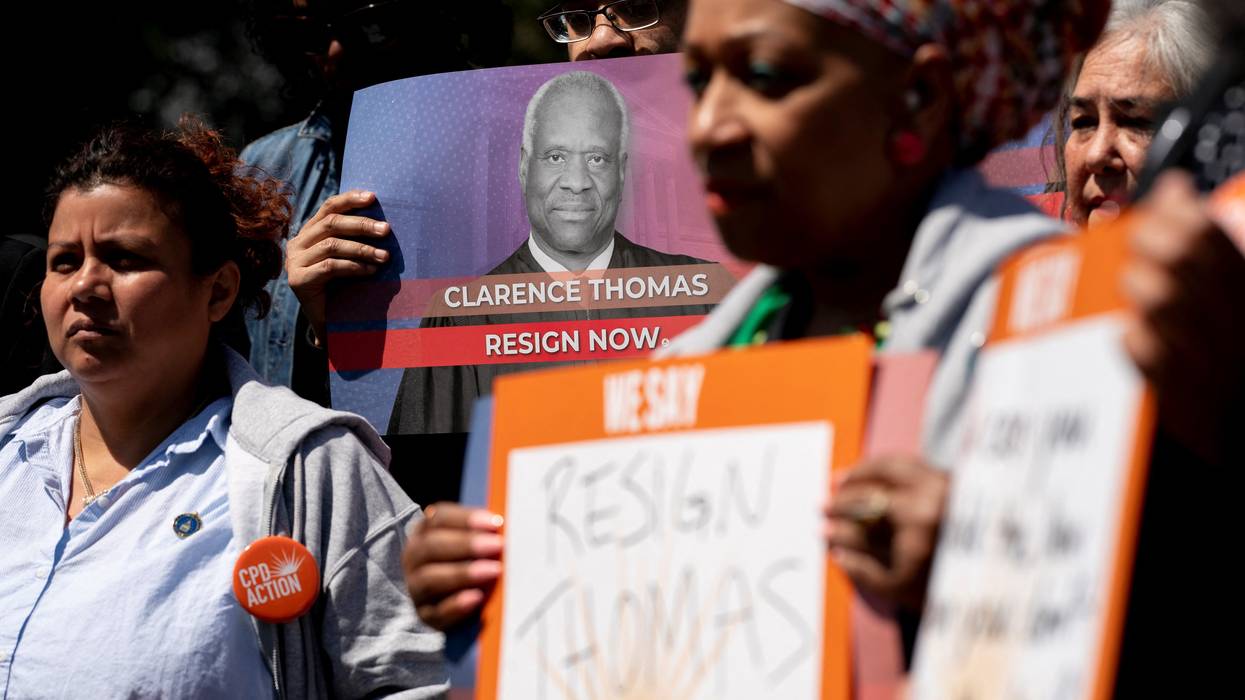
"Americans can see through the court's failed attempt at a code of conduct," said one group. "It's time for Congress to take action and pass actual ethics reform."
Nearly three-quarters of U.S. voters want federal lawmakers to pass a stricter ethics policy for the nation's Supreme Court, according to polling results released Tuesday by the progressive advocacy group Demand Justice.
The poll was conducted by YouGov after the Supreme Court announced last week that it had formally adopted a new code of conduct following months of outrage over reporting on relationships between right-wing justices and billionaires. YouGov explained to those surveyed that justices have been criticized for failing to disclose taking gifts and travel from political donors.
YouGov also told voters that supporters of a stricter ethics code say the newly adopted policy "has no way to actually enforce the rules" and believe "Congress should continue to investigate corruption allegations," while opponents of congressional action believe members of the court should be "allowed to determine their own rules without interference" and trusted to enforce them.
Across party lines, 74% of voters agreed that Congress should approve a stricter ethics code and continue to probe "the ties between justices and political megadonors," including 90% of Democrats, 70% of Independents, and 57% of Republicans.
In response to the findings, End Citizens United said that "Americans can see through the court's failed attempt at a code of conduct. It's time for Congress to take action and pass actual ethics reform."
As Common Dreams reported when the new code was announced last week, critics have condemned it as a "toothless PR stunt" intended to curb media coverage of potential corruption and "halt momentum for transparency and real reform."
Amid a wave of reporting about Justices Clarence Thomas and Samuel Alito's connections to billionaire megadonors and Leonard Leo—who leads the Federalist Society, a primary force in pushing U.S. courts to the right—Democrats on the Senate Judiciary Committee passed the Supreme Court Ethics, Recusal, and Transparency (SCERT) Act in July.
However, the bill is unlikely to win approval from the full Senate or GOP-controlled House of Representatives. Still, the Senate panel—chaired by Sen. Dick Durbin (D-Ill.)—is expected to continue its probe, possibly with subpoenas targeting Leo and Thomas benefactor Harlan Crow.
Demand Justice was among over a dozen groups that last week called on the committee to issue subpoenas, arguing that "we must learn the full scope of these hidden efforts to improperly influence the Supreme Court and the extent of Justices Thomas' and Alito's ethical wrongdoings."
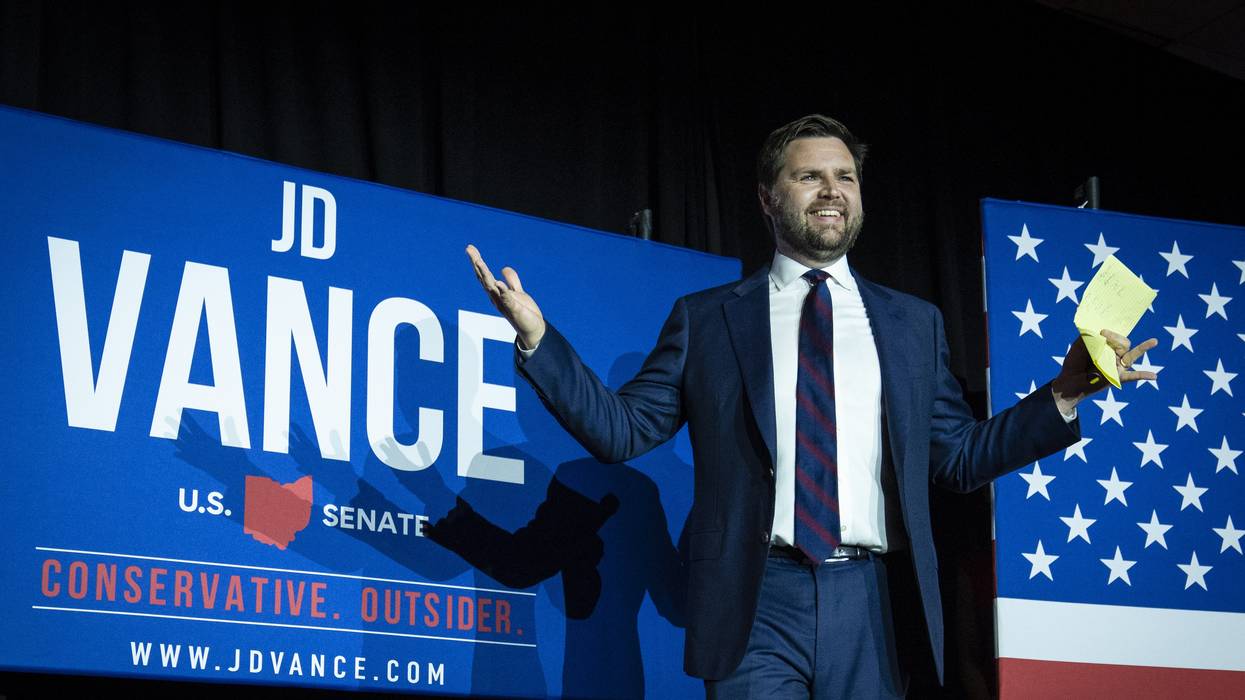
"Billionaires spending a billion dollars on a shopping spree for democracy should wake us all up to the threat posed by nearly unlimited wealth applied without limits to our elections," said the head of Americans for Tax Fairness.
Americans for Tax Fairness on Monday released the group's latest report on "the threat posed to American democracy by billionaire political spenders," revealing that last year their collective congressional campaign contributions topped $1 billion for the first time.
"That 'Billionaires' Billion' was almost three-quarters more than the tycoons' total spending on the last midterms, in 2018, and 300 times more than what billionaires spent on congressional races as recently as a dozen years ago," states the ATF report.
"The Billionaires' Billion—contributed by fewer than 500 individuals—represented about one of every nine dollars raised from all sources in the 2022 elections," the analysis continues, noting that 15 of the nation's richest households were responsible for $658 million, or nearly two-thirds, of the contributions.
"Nearly 80% of billionaire cash—$782 million—went to outside campaign groups," the document adds, and in eight key races that decided which party controlled the Senate, "billionaire donations supported Republican candidates over Democratic ones by almost a 5-1 margin."
Democrats initially secured a slim majority in the Senate—including the two Independents who caucus with the party—after Sen. Raphael Warnock (D-Ga.) won a runoff against GOP challenger Herschel Walker in December, but that victory was quickly tempered when Democratic Sen. Kyrsten Sinema of Arizona became an Independent just days later.
Although Republicans lost five of the eight key Senate races, the ATF report explains, not only did billionaire spending encourage candidates to focus on positions favored by their wealthy benefactors, but also, in North Carolina, Ohio, and Wisconsin—won by GOP Sens. Ted Budd, J.D. Vance, and Ron Johnson, respectively—the superrich overwhelmingly backed the party and "Republican billionaires outspent the much smaller pool of Democratic billionaires by at least 9-to-1 in each race."
The GOP did seize control of the House of Representatives in last year's midterms—enabling their efforts to quash recent legislative victories and priorities of congressional Democrats and President Joe Biden, including the ongoing battle over whether to raise the debt ceiling to avert the first-ever U.S. default, which economists warn would be catastrophic for the global economy.
The current makeup of Congress makes it exceptionally difficult to pass any legislation—including campaign finance reforms that critics of billionaires' influence on the American political system have increasingly demanded since the U.S. Supreme Court's 2010 Citizens United v. Federal Election Commission ruling, which loosened restrictions on political spending.
"Billionaires spending a billion dollars on a shopping spree for democracy should wake us all up to the threat posed by nearly unlimited wealth applied without limits to our elections," ATF executive director David Kass declared Monday. "There are well-known solutions to the problem, including overturning Citizens United and effectively taxing the biggest sources of billionaire wealth, which now often go lightly taxed if at all."
"Those tax reforms include taxing wealth like work by equalizing the top tax rate on investment and wage income, and closing the stepped-up basis loophole that allows investment gains to go untaxed forever," Kass added. "All that's needed is for Congress to heed the call of the American people to unrig a corrupt system."
In March, Biden unveiled a budget blueprint—which included various tax reforms—that then-ATF executive director Frank Clemente said "plainly shows whose side he's on: working families struggling with the high cost of healthcare, childcare, housing and more—not the wealthy elite and their big corporations rolling in dough and dodging their fair share of taxes."
However, the GOP continues to make clear that the party only plans to serve the rich with tax breaks, not force them to pay more. Citing three unnamed sources, The Washington Post reported Monday that "the White House recently gave Republican congressional leadership a list of proposals to reduce the deficit by closing tax loopholes during the ongoing negotiations over the federal budget and the debt ceiling. But Republican negotiators rejected every item."
"On a phone call last week, senior White House officials floated about a dozen tax plans to reduce the deficit as part of a broader budget agreement with House Republicans, including a measure aimed at cryptocurrency transactions and another for large real estate investors," according to the Post. "They were all swiftly rejected by the GOP aides on the call."
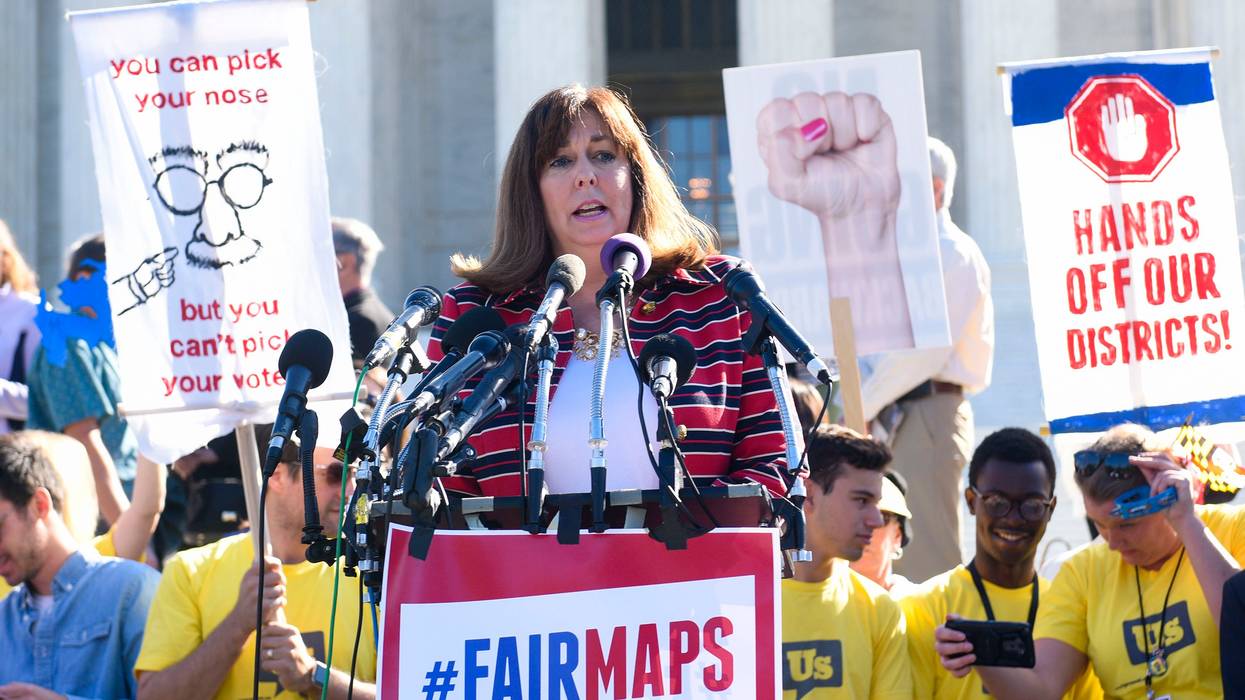
"Her tireless work on behalf of women, workers, and marginalized communities will have a lasting impact," said End Citizens United.
Progressive groups and activists showed an outpouring of love and admiration for Karen Hobert Flynn, the president of Common Cause, after her death from an undisclosed cause was reported by the pro-democracy group on Friday.
Hobert Flynn, who joined Common Cause in 1985 as an organizer and program director, was named president of the watchdog in 2016 after serving as executive director and chair of the group's Connecticut branch.
"Today, democracy lost one of its fiercest defenders: Karen Hobert Flynn," Common Cause board chair Martha Tierney said in a statement.
"A trailblazer and powerful advocate, Karen dedicated her career to reforming our government so it served everyone," Tierney noted. "Under her leadership of Common Cause in Connecticut, she secured landmark reforms—including winning Connecticut's groundbreaking full public finance system, numerous ethics laws, and disclosure laws."
Tierney continued:
During turbulent times for our country and our organization, she led Common Cause with tenacity and grace, never backing down from holding the White House accountable and never losing sight of the non-partisan vision for a more inclusive and representative democracy...
In her last year of life, she led a national coalition in the fight to protect and strengthen the right to vote for all and oversaw the largest national non-partisan election protection program for the 2022 midterms. Within Common Cause, she started the 50-year-old organization's process to become a more equitable workplace and doubled down on the commitment to secure an inclusive democracy for all.
"May her memory give us strength as together we carry forward her legacy of fighting for a government that lives up to the ideals of its people," Tierney added.
Other progressives also remembered Hobert Flynn's life and work.
"Such devastating news today with the loss of Common Cause's Karen Hobert Flynn," wrote Citizens for Responsibility and Ethics in Washington president Noah Bookbinder. "A great person and a fierce leader in the fight for democracy. Heartbreaking."
The Leadership Conference on Civil and Human Rights tweeted that "we're so deeply saddened to learn of the passing of Karen Hobert Flynn—a brilliant leader, dedicated advocate, and fierce defender of our democracy."
The National Disability Rights Network hailed Hobert Flynn as "a fierce civic advocate" who "will be missed by friends, family, and all who fight to make our democracy stronger."
End Citizens United remembered a "remarkable individual who touched the lives of so many in the fight to protect democracy."
"Her tireless work on behalf of women, workers, and marginalized communities will have a lasting impact," the group added.

"It's time to ensure our democracy works for all people by getting big money out of politics and ensuring every voter's voice is heard," said Rep. Pramila Jayapal.
To end an era in which wealthy corporations and billionaires have been given free rein to spend nearly unlimited money on political campaigns, Democrats in the U.S. House on Thursday proposed a constitutional amendment that would overturn the hugely consequential Citizens United v. Federal Election Commission decision by U.S. Supreme Court, saying the ruling "has dangerously eroded" the government's ability to serve the public interest.
Reps. Adam Schiff (D-Calif.), Pramila Jayapal (D-Wash.), Dean Phillips (D-Minn.), and Jim McGovern (D-Mass.) led dozens of co-sponsors in introducing the Democracy for All Amendment two days before the 13th anniversary of the Citizens United decision, in which the court struck down a ban on corporate independent expenditures.
According to Schiff, the constitutional amendment—which the congressman first proposed in 2013—would:
The proposal, said the campaign finance reform group End Citizens United, "strikes at the heart" of the 2010 ruling.
"It would affirm the right of the people to pass state and federal laws by restoring Congress' and the states' authority to place [limits] on political spending," said the group.
In addition to overturning Citizens United, the Democrats aim to overturn the "fundamental flaws" and legal precedents that underpinned the court's reasoning in 2010 and in "an entire line of cases dating back to the 1976 Buckley v. Valeo decision, which prevented meaningful regulation of campaign expenditures by corporations and special interest groups."
"Citizens United was one of the most egregious enablers of special interest money, but it was only the latest in a long line of Supreme Court cases that opened the floodgates. To truly rein in dark money, we must amend our Constitution," Schiff's office said. "The Democracy for All Amendment will close legal loopholes that wealthy megadonors, corporations, and special interest groups have exploited for far too long, and return power to the people once and for all."
The 2010 ruling allowed special interest groups and corporations to create super PACs, which can accept unlimited donations—including from "dark money groups" whose contributors are hidden from the public—and spend unlimited amounts of money on campaigns.
John Bonifaz, president and co-founder of Free Speech For People, said the amendment would allow for overall campaign spending limits and public campaign financing systems and would end the big money dominance of our elections."
The Democracy for All Act would affirm, said Jayapal, that "corporations are not people and money is not speech."
"In every election following Citizens United, billions of dollars of dark money have been dumped into our electoral system, giving corporations and the richest Americans outsized power and influence," said the congresswoman. "It's time to ensure our democracy works for all people by getting big money out of politics and ensuring every voter's voice is heard."

"Santos has become a punchline in the national media, but these campaign finance violations are no joke," said one researcher at an ethics watchdog that filed a Federal Election Commission complaint against him.
Serial liar and Republican U.S. Congressman George Santos was the subject of four complaints filed Monday by advocacy groups alleging campaign finance and ethics violations, including an alleged scheme to hide the true and unknown source of over $700,000 in campaign funds.
End Citizens United filed separate complaints with the Department of Justice (DOJ), Federal Election Commission (FEC), and Office of Congressional Ethics (OCE) over Santos' (N.Y.) campaign spending, fundraising, and financial disclosures.
"All this takes place amid Santos' compulsive lying about his entire background—and a pattern of serious reporting problems the FEC already knows about, including excessive contributions."
The group said in a statement that its DOJ complaint "argues that Santos violated the Ethics in Government Act by not only filing a required financial disclosure almost a year late, but likely making several omissions related to various purported assets he holds."
The complaint with the OCE alleges Santos "violated federal law by soliciting campaign contributions in exchange for attending a swearing-in event on Capitol grounds," the statement added. The FEC filing "focuses on a purported $700,000 personal loan that he made to his campaign that the group says either came from a 'shell company' or was a prohibited corporate contribution."
The OCE complaint also alleges that nearly 40 payments of $199.99 made by the Santos campaign constitute an attempt to evade federal laws requiring receipts for campaign purchases over $200.
End Citizens United president Tiffany Muller told Insider's Brian Metzger, who first reported the group's complaints, that "Congressman Santos has shown a blatant disregard for the law and has flagrantly brushed aside the transparency voters deserve from their elected officials."
"His actions are not only unethical, but illegal, and call into question his ability to serve," Muller added. "The FEC, the DOJ, and the OCE should immediately begin investigations and hold him accountable for his shady and unlawful actions."
Meanwhile, a similar complaint filed Monday by the Campaign Legal Center (CLC) alleges that Santos concealed the sources of his 2022 campaign's funding, that he lied about campaign spending, and that he illegally used campaign funds for personal spending.
According to the complaint, Santos, campaign treasurer Nancy Marks, and unknown accomplices hatched a straw donor scheme to conceal the source of $705,000 that the congressman claimed to loan to his campaign. They are also accused of lying on FEC disclosure forms and other reporting violations; and of unlawfully spending campaign funds on personal expenses like the house Santos rented during his 2022 run.
"All this takes place amid Santos' compulsive lying about his entire background—and a pattern of serious reporting problems the FEC already knows about, including excessive contributions. The FEC sent the Santos campaign 20 letters in the 2022 cycle about these," CLC senior researcher Roger G. Wieand tweeted Monday.
"We think that rather than Santos making overnight millions from a business he can't explain, he, and others unknown, engaged in a scheme to provide secret, illegal contributions to his campaign," Wieand continued.
"Santos has become a punchline in the national media, but these campaign finance violations are no joke," he added. "We think the people of New York's 3rd District deserve truth and transparency about where Santos' money came from and how it was spent. We're asking the FEC to investigate."
CLC senior vice president and legal director Adav Noti said in a statement:
George Santos has lied to voters about a lot of things, but while lying about your background might not be illegal, deceiving voters about your campaign's funding and spending is a serious violation of federal law. That is what we are asking the Federal Election Commission to investigate. As the agency responsible for enforcing America's campaign finance laws, the FEC owes it to the public to find out the truth about how George Santos raised and spent the money he used to run for public office, and to ensure accountability for Santos' illegal conduct.
The new complaints follow a January 3 OCE
filing by the liberal super PAC American Bridge 21st Century requesting an investigation of Santos' alleged failure "to file timely, accurate, and complete financial disclosure reports," as well as the possibility "that he may have even falsified information on his disclosure report."
Monday's filings also came after a Republican New York prosecutor last month announced an investigation into Santos' "numerous fabrications and inconsistencies" involving his education, employment, and property ownership history as well as his racial and religious background.
As the complaint notes, "Santos is also wanted in Brazil for using stolen checks to make fraudulent purchases in 2008—a crime for which he was charged by Brazilian authorities and to which he reportedly confessed in 2010."
The barrage of ethics complaints against Santos comes as House Republicans—who now narrowly control the lower chamber under Speaker Kevin McCarthy (R-Calif.)—plan to gut the nonpartisan Office of Congressional Ethics.
The watchdog group Citizens for Responsibility and Ethics in Washington tweeted Monday; "We cannot stress this enough: Kevin McCarthy's plan to gut the Office of Congressional Ethics in the rules vote tonight would be a disaster for everyone except corrupt politicians."
The consumer advocacy group Public Citizen also noted Monday that "McCarthy plans to gut the Office of Congressional Ethics TONIGHT."
"The same office that investigates any congressional wrongdoing," the group added. "The same office that would investigate George Santos and [former President Donald] Trump's cronies. Pay attention. This isn't a coincidence."