
SUBSCRIBE TO OUR FREE NEWSLETTER
Daily news & progressive opinion—funded by the people, not the corporations—delivered straight to your inbox.
5
#000000
#FFFFFF
To donate by check, phone, or other method, see our More Ways to Give page.


Daily news & progressive opinion—funded by the people, not the corporations—delivered straight to your inbox.
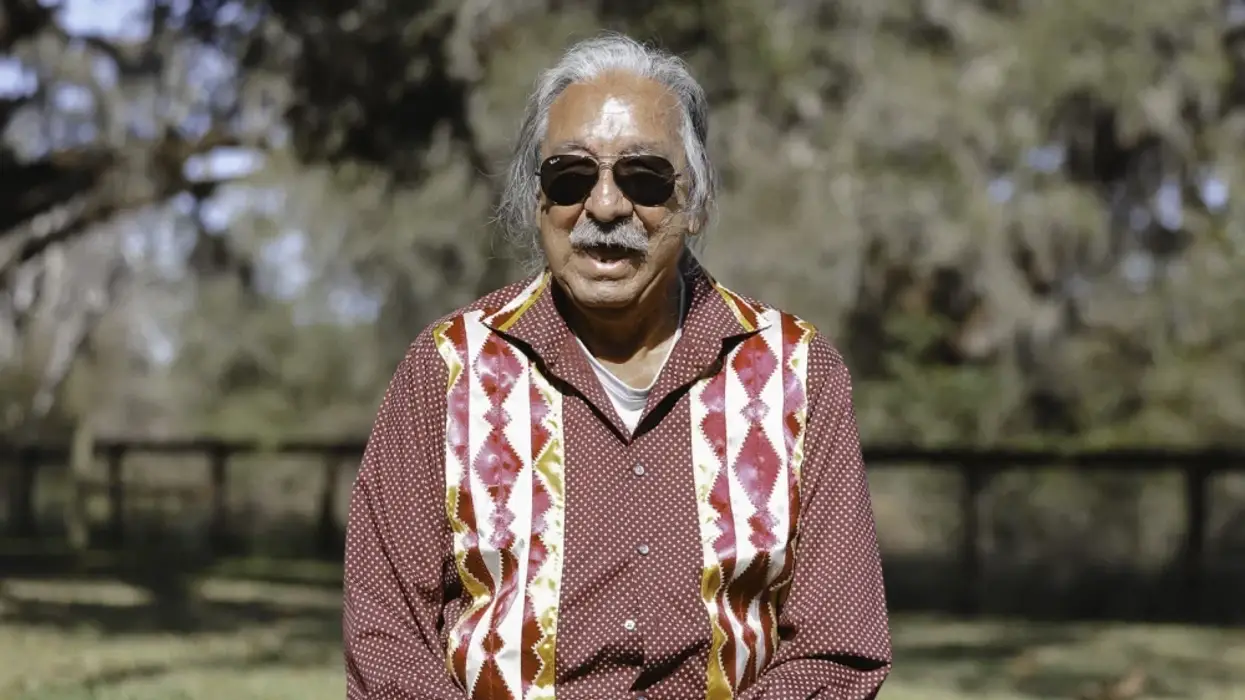
The release of Leonard Peltier after nearly half a century in prison offers a chance for a reflection on the nature of justice and how we treat each other.
“...I write today from a position rare for a former prosecutor: to beseech you to commute the sentence of a man I helped put behind bars.”
Thus begins one of the most stunning letters I have ever read, written almost four years ago by former U.S. Attorney James H. Reynolds to then-President Joe Biden, pleading with him to exonerate former American Indian Movement (AIM) leader Leonard Peltier, who had been convicted of murdering two FBI agents at South Dakota’s Pine Ridge Reservation in 1975.
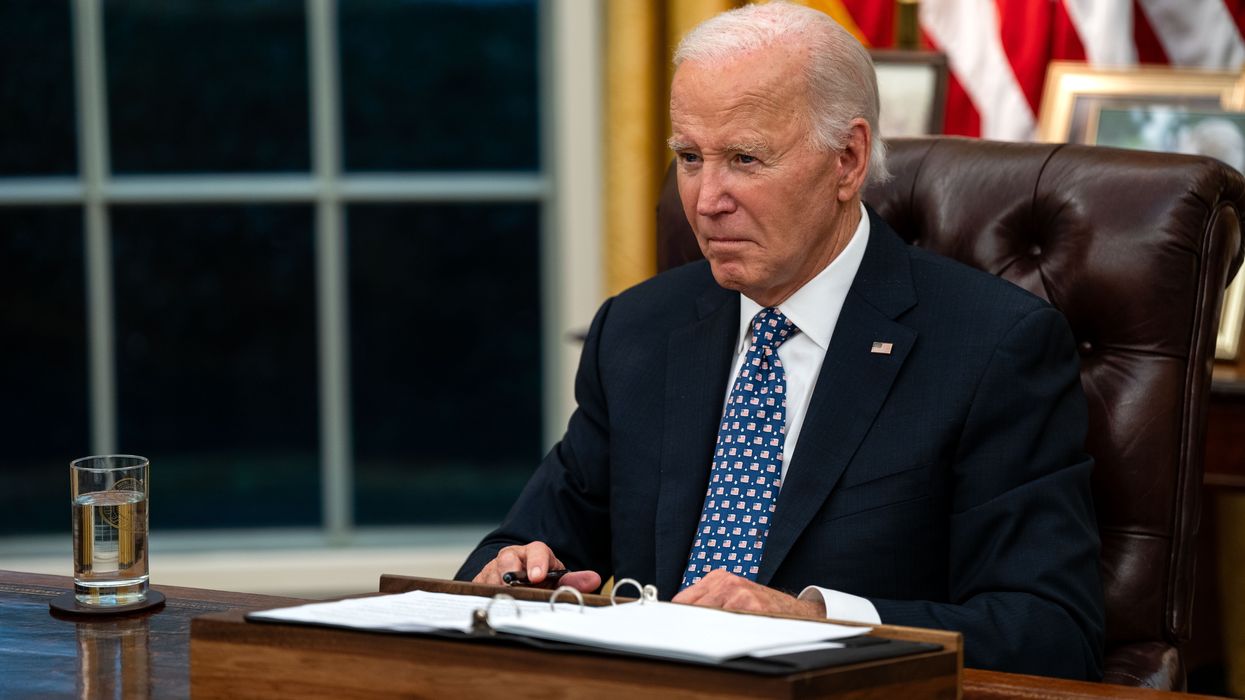
In one of his last acts before leaving office, Biden did so: freeing Peltier, now 80 years old and beset with health problems, after nearly half a century in federal prison, allowing him to serve the rest of his sentence—lifetime imprisonment—from the Chippewa reservation in North Dakota that is his home. Peltier was released from prison on February 18.
Hey, big news—kind of. Much of the mainstream coverage has been careful to present it as simply a kind-hearted act by the U.S. Department of Justice, allowing an elderly, convicted murderer to spend his final years under home incarceration. It has downplayed not only the serious flaws in the case against Peltier and the worldwide demands for his release—from Amnesty International, from Pope Francis, from Nelson Mandela, and so many others—it has avoided any mention of the larger context: that white America has long been at war with the continent’s Native population, taking their land and attempting to obliterate their culture, essentially declaring them to be subhuman.
For that reason, the fact that Reynolds’ letter is now poking itself into the present news cycle is utterly mind-boggling.
The Pine Ridge shootings occurred on June 26, 1975, when two FBI agents entered the reservation to arrest a resident for stealing a pair of cowboy boots. According to Peltier-supporters’ account, the agents entered private property without identifying themselves. Many AIM members happened to be present at the time. A shootout took place—the reason uncertain—and the two agents, along with a Pine Ridge resident, were killed. The reservation was soon surrounded by about 150 police and FBI officers. Peltier, a Native rights activist, was among those arrested and eventually became the focal point of the government’s case.
Reynolds’ letter to Biden continues: “Leonard Peltier’s conviction and continued incarceration is a testament to a time and a system of justice that no longer has a place in our society. I have been fortunate enough to see this country and its prevailing attitudes about Native Americans, progress dramatically over the last 46 years.”
He then goes into detail about the case itself, explaining: “We were not able to prove that Mr. Peltier personally committed any offense on the Pine Ridge Reservation. As a result, we shifted our stance on the theories of guilt throughout the prosecution and appeal.”
Ultimately, the entirety of the case against Peltier, he writes, was that he was present at the reservation and was in possession of a weapon. There was no evidence that he shot the agents—or evidence against anyone else at the reservation. Indeed, The Guardian, writing about the case, notes that a witness who testified that she saw Peltier shoot the agents “later said she had been coerced into testifying and recanted her testimony.”
All of which sets the context for the largest point Reynolds makes to Biden, transcending the case itself and looking directly at the country’s evolving social consciousness:
“I believe,” he writes, “that a grant of executive clemency would serve the best interests of justice and the best interests of our country. In my opinion, to continue to imprison Mr. Peltier any longer, knowing what we know now, would serve to continue the broken relationship between Native Americans and the government.”
“I urge you to chart a different path in the history of the government’s relationship with its Native people through a show of mercy rather than continued indifference. I urge you to take a step toward healing a wound that I had a part in making. I urge you to commute Leonard Peltier’s sentence and grant him executive clemency.”
All I can do is let these words sit there for a moment. My God, this is a larger look at the nature of justice than I would expect from at actual member of the Department of Justice. Mr. President, let us take action now to begin healing our broken relationship with Native Americans. Let us look at ourselves!
It took Biden several years to take action on Peltier’s incarceration, and it’s not as though Biden’s commutation was also an exoneration—a declaration of his innocence... nor was it an apology for the nation’s, or for Europe’s, five centuries of land theft and cultural dehumanization of Indigenous people of the Americas.
But let me dig for a moment into the words of Peltier himself, who has written an account of how, as a nine-year-old boy, he (along with his sister and a cousin) were taken from their homes and sent off to... uh, boarding school, perhaps more accurately called dehumanization school, the point of which was to take away their language, their culture, their humanity. Upon arrival, the children were stripped naked, forced into hot showers, then “they put DDT all over us. The poison even got in our eyes and mouths.”
The children were told it was to kill lice and other insects—but in reality it was no doubt to eliminate the “Indian” in them. “They made it clear we were hated,” he wrote. “With every look, with every cruel word, they continued a war our ancestors had fought since their ancestors landed here back in 1492.” Some of the kids wound up committing suicide; they were buried in unmarked graves on the school grounds.
Peltier also noted: “We spoke our language. We sang our songs. And we prayed in our languages, all in secret.”
Proof of his guilt—he broke the rules!
He concluded his boarding school memories by writing: “You don’t treat people badly like that. I rise only when I help you rise. Despite all those beatings, I still believe it. It’s a law, like physics, and it’s true. You get nowhere being mean and disrespecting the feelings of others, especially the most vulnerable. I have seen both kinds of people and more than my share of evil ones, and I know I’m right. I rise only when I help you rise.”
This isn’t what the boarding school taught, but apparently this is what he learned. And now, his intention is to teach it to the world.
"They may have imprisoned me but they never took my spirit!" said Peltier. "I am finally going home."
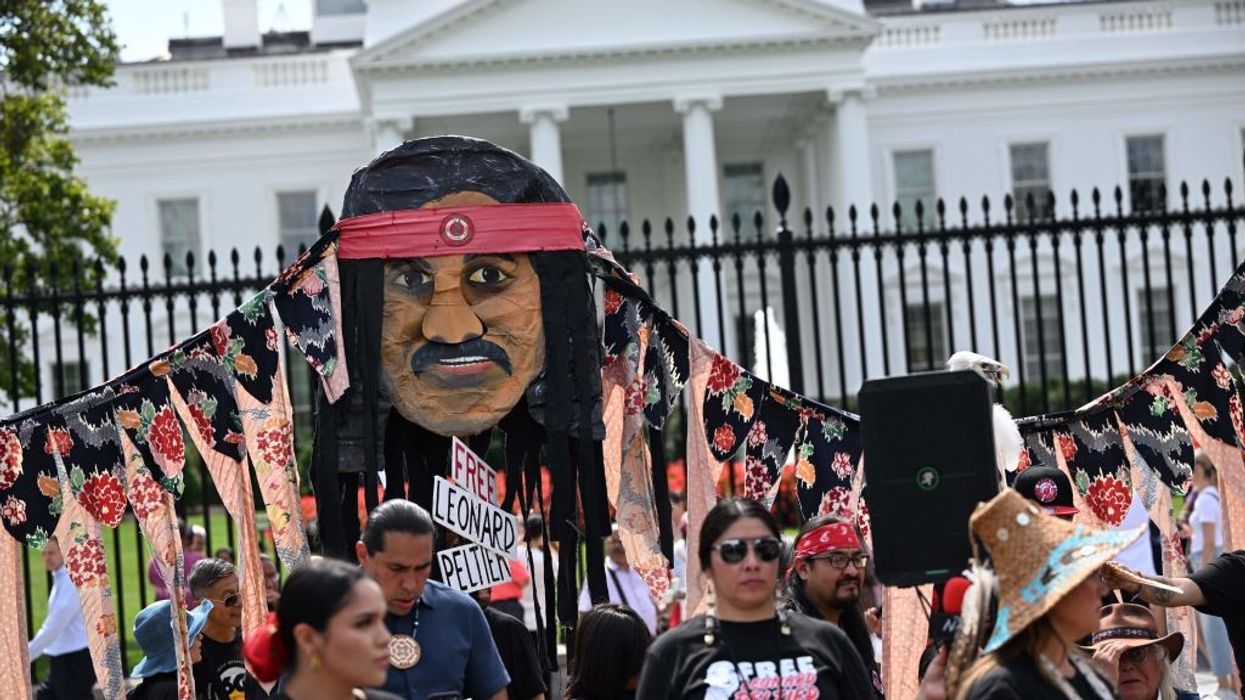
Indigenous rights and criminal justice reform advocates on Tuesday celebrated as Native American political activist Leonard Peltier, who has maintained his innocence for nearly 50 years since being sentenced to life in prison for the killing of two FBI agents, walked out of a high-security prison in Florida and headed home to North Dakota.
"Today I am finally free," said Peltier in a statement to the Native news outlet Indianz.com. "They may have imprisoned me but they never took my spirit! Thank you to all my supporters throughout the world who fought for my freedom. I am finally going home. I look forward to seeing my friends, my family, and my community. It's a good day today."
Advocates for Peltier, who is 80 years old, have long called for a presidential pardon and celebrated in January when former President Joe Biden announced he was commuting Peltier's sentence. He will serve out the rest of his sentence in home confinement.
Nick Tilsen, CEO of the advocacy group NDN Collective, noted that before his conviction Peltier was one of thousands of Indigenous children who were taken from their families and sent to boarding schools, where many suffered abuse.
"He hasn't really had a home since he was taken away to boarding school," Tilsen told The Associated Press. "So he is excited to be at home and paint and have grandkids running around."
"Leonard's step outside the prison walls today marks a step toward his long overdue freedom and a step toward reconciliation with Native Americans."
Peltier, an enrolled member of the Turtle Mountain Band of Chippewa Indians in North Dakota, was convicted of two counts of first-degree murder and given two consecutive life sentences after prosecutors accused him of shooting two FBI agents at point-blank range during a confrontation at the Oglala Sioux Indian Reservation in Pine Ridge, South Dakota in 1975.
Peltier has always maintained that he did fire a gun during the confrontation, but from a distance and in self-defense. A witness who claimed that she saw Peltier shoot the agents later said she had been coerced into testifying and recanted her testimony.
Lynn Crooks, the federal chief prosecutor in the case, later admitted that the government "knew we hadn't proved" that Peltier was guilty.
The American Indian Movement, which fought for Native American treaty rights and tribal self-determination and in which Peltier was active, was subject to FBI surveillance and harassment when the shooting took place.
Kevin Sharp, an attorney and former federal judge who has represented Peltier and filed numerous clemency petitions for him, said the violent confrontation in 1975 was "unquestionably" a tragedy that was "only further compounded by the nearly 50 years of wrongful incarceration for Leonard Peltier."
"Misconduct by the government in the investigation and prosecution of Mr. Peltier has been a stain on our system of justice," said Sharp. "Leonard's step outside the prison walls today marks a step toward his long overdue freedom and a step toward reconciliation with Native Americans."
The AP reported that Peltier left USP Coleman in Sumterville, Florida in an SUV on Tuesday morning and didn't stop to speak to members of the press who were gathered outside.
Amnesty International, which has long campaigned for Peltier and considers him a political prisoner, applauded his release.
"Leonard Peltier's release is the right thing to do given the serious and ongoing human rights concerns about the fairness of his trial, his nearly 50 years behind bars, his health, and his age," Paul O'Brien, executive director of Amnesty International USA, said in a statement. "While we welcome his release from prison, he should not be restricted to home confinement."
Tilsen said that Peltier's "wrongful incarceration represented the oppression of Indigenous Peoples everywhere."
"Peltier's liberation is invaluable in and of itself," said Tilsen. "His release today is a symbol of our collective power and inherent freedom."
"The victory of freeing Leonard Peltier is a symbol of our collective strength—and our resistance will never stop," vowed one Indigenous organizer.
Just minutes before leaving office, Joe Biden on Monday commuted the life prison sentence of Leonard Peltier, the elderly American Indian Movement activist who supporters say was framed for the murder of two federal agents during a 1975 reservation shootout.
"It's finally over, I'm going home," Peltier, who is 80 years old, said in a statement released by the Indigenous-led activist group NDN Collective. "I want to show the world I'm a good person with a good heart. I want to help the people, just like my grandmother taught me."
While not the full pardon for which he and his defenders have long fought, the outgoing Democratic president's commutation will allow Peltier—who has been imprisoned for nearly a half-century—to "spend his remaining days in home confinement," according to Biden's statement, which was no longer posted on the White House website after Republican President Donald Trump took office Monday afternoon.
🚨BREAKING🚨 Leonard Peltier Granted Executive Clemency After 50 years of unjust incarceration and the tireless efforts of intergenerational grassroots organizing and advocacy, our elder and relative Leonard Peltier has been granted executive clemency.
[image or embed]
— NDN Collective ( @ndncollective.bsky.social) January 20, 2025 at 9:02 AM
"Tribal Nations, Nobel Peace laureates, former law enforcement officials (including the former U.S. attorney whose office oversaw Mr. Peltier's prosecution and appeal), dozens of lawmakers, and human rights organizations strongly support granting Mr. Peltier clemency, citing his advanced age, illnesses, his close ties to and leadership in the Native American community, and the substantial length of time he has already spent in prison," Biden explained.
Biden Interior Secretary Deb Haaland, the first Indigenous cabinet secretary in U.S. history, said in a statement: "I am beyond words about the commutation of Leonard Peltier. His release from prison signifies a measure of justice that has long evaded so many Native Americans for so many decades. I am grateful that Leonard can now go home to his family. I applaud President Biden for this action and understanding what this means to Indian Country."
Congressman Raúl Grijalva (D-Ariz.), who last month led 34 U.S. lawmakers in a letter urging clemency for Peltier, said in a statement that "for too long, Mr. Peltier has been denied both justice and the pursuit of a full, healthy life at the hands of the U.S. government, but today, he is finally able to go home."
"President Biden's decision is not just the right, merciful, and decent one—it is a testament to Mr. Peltier's resilience and the unwavering support of the countless global leaders, Indigenous voices, civil rights and legal experts, and so many others who have advocated so tirelessly for his release," Grijalva added. "While there is still much work to be done to fix the system that allowed this wrong and so many others against Indian Country, especially as we face the coming years, let us today celebrate Mr. Peltier's return home."
NDN Collective founder and CEO Nick Tilsen said Monday that "Leonard Peltier's freedom today is the result of 50 years of intergenerational resistance, organizing, and advocacy."
"Leonard Peltier's liberation is our liberation—we will honor him by bringing him back to his homelands to live out the rest of his days surrounded by loved ones, healing, and reconnecting with his land and culture," Tilsen continued.
"Let Leonard's freedom be a reminder that the entire so-called United States is built on the stolen lands of Indigenous people—and that Indigenous people have successfully resisted every attempt to oppress, silence, and colonize us," Tilsen added. "The victory of freeing Leonard Peltier is a symbol of our collective strength—and our resistance will never stop."
Amnesty International USA executive director Paul O'Brien said that "President Biden was right to commute the life sentence of Indigenous elder and activist Leonard Peltier given the serious human rights concerns about the fairness of his trial."
While Peltier admits to having participated in the June 26, 1975 gunfight at the Oglala Sioux Reservation at Pine Ridge, South Dakota, he denies killing Federal Bureau of Investigation agents Jack Coler and Ronald Williams.
As HuffPost senior political reporter Jennifer Bendery recapped Monday:
There was never evidence that Peltier committed a crime, and the U.S. government never did figure out who shot those agents. But federal officials needed someone to take the fall. The FBI had just lost two agents, and Peltier's co-defendants were all acquitted based on self-defense. So, Peltier became their guy.
His trial was rife with misconduct. The FBI threatened and coerced witnesses into lying. Federal prosecutors hid evidence that exonerated Peltier. A juror acknowledged on the second day of the trial that she had "prejudice against Indians," but she was kept on anyway.
The government's case fell apart after these revelations, so it simply revised its charges against Peltier to "aiding and abetting" whoever did kill the agents—based entirely on the fact that he was one of dozens of people present when the shootout took place. Peltier was convicted and sentenced to two consecutive life terms.
American Indian Movement (AIM) activist Joe Stuntz Killsright was also killed at Pine Ridge when a U.S. Bureau of Indian Affairs agent sniper shot him in the head after Coler and Williams were killed. Stuntz' death has never been investigated.
Some Indigenous activists welcomed Peltier's commutation while also remembering Annie Mae Pictou Aquash, an Mi'kmaq activist who was kidnapped and murdered at Pine Ridge in December 1975 by her fellow AIM members. Some of Aquash's defenders believe her killing to be an assassination ordered by AIM leaders who feared she was an FBI informant.
Before leaving office, Biden issued a flurry of eleventh-hour preemptive pardons meant to protect numerous relatives and government officials whom Trump and his allies have threatened with politically motivated legal action.
However, the outgoing president dashed the hopes of figures including Steven Donziger, Charles Littlejohn, and descendants of Ethel Rosenberg, who were
seeking last-minute pardons or commutations.
There are only a few days left for Biden to heed calls for clemency coming from a diverse array of rights groups.
Outgoing U.S. President Joe Biden announced commutations on Friday for approximately 2,500 people who have been convicted of non-violence drug crimes—a move that was cheered by rights groups and brings his total number of pardons and commutations to the highest of any president.
But Biden has so far stopped short of granting clemency to a number of high profile individuals whose cases—while all very different—have generated significant public interest and sympathy. They include: the former IRS contractor Charles Littlejohn, the environmental lawyer Steven Donziger, Indigenous activist Leonard Peltier, and WikiLeaks founder Julian Assange.
The cases have prompted a flurry of calls from various groups for Biden to take action on the cases before he hands over the White House to President-elect Donald Trump on January 20.
Littlejohn was sentenced in January 2024 to the five years in prison for unauthorized disclosure of tax information to the media. In 2020, The New York Times published a story based on information leaked by Littlejohn revealing that Trump paid only $750 in federal income taxes the year he won the presidency and in 2017. Later, journalists at ProPublica used documents made available by Littlejohn to report on how the wealthiest 25 individuals in America were able to get away with paying very little in income tax between 2014 and 2018.
Given the nature of his case, Kenny Stancil of the Revolving Door Project and Bob Lord of the Institute for Policy Studies, wrote in December that Littlejohn "very well could be on Trump's enemies list" and urged Biden to commute his sentence.
"The longer Littlejohn languishes in jail, the more he is at risk of retribution from Trump," wrote Stancil and Lord, who also highlight that Littlejohn was given the statutory maximum sentence for his crime.
On Thursday, millionaire Abigail Disney penned a defense of Littlejohn, writing that Biden should commute his sentence because he "did the nation a great service by spotlighting the urgent need for tax reform in a country being ripped apart by extreme and rising inequality."
Indigenous leaders and the human rights organization Amnesty International are calling for clemency for another man who is currently behind bars: the Indigenous rights activist Leonard Peltier, who was convicted in 1977 of having murdered two FBI agents and has spent the majority of his life in prison, despite concerns about the fairness of his trial and conviction.
Peltier had his request for parole and compassionate release denied last year, meaning clemency is "likely his only chance for freedom," according to Amnesty International.
"All of us see a little bit of ourselves in Leonard Peltier, and that's why we fight so hard for him," said Nick Tilsen, the founder and CEO of NDN Collective, an Indigenous rights group. "This is about paving a path forward that gives us the opportunity to have justice and begin to heal the relationship between the United States government and Indian people. And so, this decision is massive."
Meanwhile, 50 human rights and environmental groups sent a letter in early January to President Biden, urging him to pardon U.S. human rights lawyer Steven Donziger, who secured a multibillion settlement for Indigenous plaintiffs against Texaco (later acquired by Chevron) in an Ecuadoran court over the company's destructive oil pollution in the Amazon, but was later charged with criminal contempt of court in the U.S. for withholding evidence in a countersuit brought by Chevron. Donziger was disbarred in 2018, and then spent time in both prison and under house arrest.
Rep. Jim McGovern (D-Mass.), who has called for Donziger's pardon, recently told Democracy Now! that "Chevron has spent countless millions and millions of dollars going after Steven Donziger and not helping a single person in Ecuador deal with what they left behind. We have to stand up to corporate excesses in this country."
"If President Biden would pardon him, I think that would be a signal that maybe things are beginning to change," he added.
Also this week, press freedom and civil liberties organizations demanded that Biden pardon WikiLeaks founder and publisher Julian Assange, who last year—as a way to avoid extradition to the U.S. after languishing for years in a British prison—pleaded guilty to a felony charge under the U.S. Espionage Act of conspiring to obtain and disclose classified national military documents. Per the terms of the plea deal, he was allowed to return to his native Australia and is no longer incarcerated.
Freedom of the Press Foundation director of advocacy Seth Stern said in a statement Thursday that Assange's case "normalized the criminalization of work national security journalists do every day—talking to sources, obtaining documents from them, and publishing those documents."
"A pardon won't undo the harm the case has done to the free press or the chilling effect on journalists who now know their work can land them behind bars at the whim of the Department of Justice. But it will help reduce the damage," he said.
"It's a big slap in the face for us once again," said one of the disgraced judge's victims.
Victims of a scheme in which a pair of Pennsylvania judges conspired to funnel thousands of children into private detention centers in exchange for millions of dollars in kickbacks expressed outrage following U.S. President Joe Biden's Thursday commutation of one of the men's sentences.
In 2010, former Luzerne County Judge Michael Conahan pleaded guilty to federal racketeering charges and was sentenced to more than 17 years in prison after he and co-conspirator Mark Ciavarella shut down a county-run juvenile detention facility and then took nearly $3 million in payments from the builder and co-owner of for-profit lockups, into which the judges sent children as young as 8 years old.
"It's a big slap in the face for us once again," Amanda Lorah—who was sentenced by Conahan to five years of juvenile detention over a high school fight—told WBRE.
Sandy Fonzo, whose son killed himself after being sentenced to juvenile detention, said in a statement: "I am shocked and I am hurt. Conahan's actions destroyed families, including mine, and my son's death is a tragic reminder of the consequences of his abuse of power."
"This pardon feels like an injustice for all of us who still suffer," Fonzo added. "Right now I am processing and doing the best I can to cope with the pain that this has brought back."
Many of Conahan's victims were first-time or low-level offenders. The Pennsylvania Supreme Court would later throw out thousands of cases adjudicated by the Conahan and Ciaverella, the latter of whom is serving a 28-year sentence for his role in the scheme.
Conahan—who is 72 and had been under house arrest since being transferred from prison during the Covid-19 pandemic—was one of around 1,500 people who received commutations or pardons from Biden on Thursday. While the sweeping move was welcomed by criminal justice reform advocates, many also decried the president's decision to not grant clemency to any of the 40 men with federal death sentences.
Others have called on Biden—who earlier this month pardoned his son Hunter Biden after promising he wouldn't—to grant clemency to people including Indigenous activist Leonard Peltier and environmental lawyer Steven Donziger.
"There's never going to be any closure for us."
"So he wants to talk about Conahan and everybody else, but what is Joe Biden doing for all of these kids who absolutely got nothing, and almost no justice in this whole thing that happened?" said Lorah. "So it's nothing for us, but it seems that Conahan is just getting a slap on the wrist every which way he possibly could still today."
"There's never going to be any closure for us," she added. "There's never going to be, somehow, some way, these two men are always going to pop up, but now, when you think about the president of the United States letting him get away with this, who even wants to live in this country at this point? I'm totally shocked, I can't believe this."