
SUBSCRIBE TO OUR FREE NEWSLETTER
Daily news & progressive opinion—funded by the people, not the corporations—delivered straight to your inbox.
5
#000000
#FFFFFF
To donate by check, phone, or other method, see our More Ways to Give page.


Daily news & progressive opinion—funded by the people, not the corporations—delivered straight to your inbox.
Groups linked to world's richest man are spending big on a state-level race that has been called the "first referendum on Musk-ism" since Trump's return to White House.
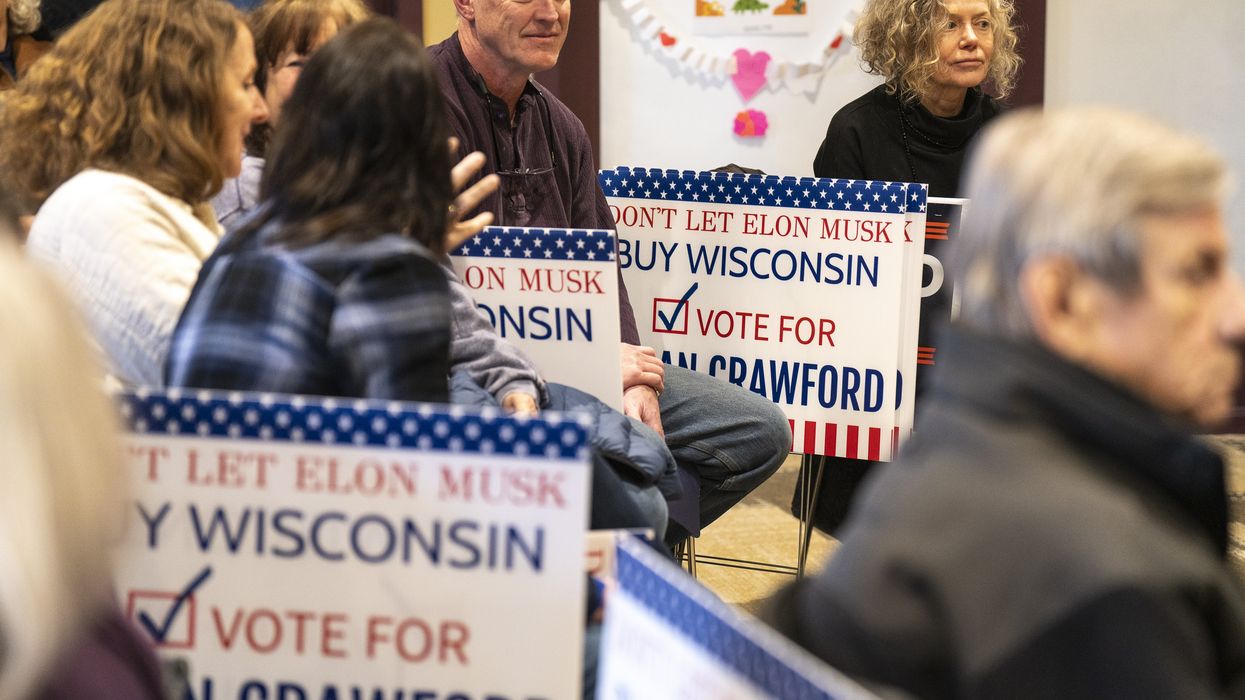
The world's richest man, billionaire Elon Musk, has been accused of bribing Wisconsin voters into aligning with him politically ahead of a charged election to select a new Wisconsin Supreme Court justice, a race that Musk-backed groups have contributed millions of dollars toward.
Musk's super political action committee, America PAC, is currently circulating a petition opposing "activist judges" and offering registered Wisconsin voters $100 if they sign the petition. Musk and U.S. President Donald Trump recently pushed for a federal judge to be impeached after he ruled against the Trump administration—part of their broader attack on the federal judiciary.
Writer and commentator Dean Obeidallah reposted reporting about the petition and wrote: "Elon Musk now bribing Wisconsin voters as he seeks to BUY a Supreme Court seat in Wisconsin. The election is April 1. We need to win this. If you have friends in Wisconsin please urge them to vote for Judge Susan Crawford. Say NO to OLIGARCHY!"
"This is what a broken campaign finance system looks like," added former Secretary of Labor and professor at the the University of California, Berkeley Robert Reich on X.
On April 1—the final day to participate in Musk's petition—voters in Wisconsin will decide a contest between Crawford, a liberal Dane County judge, and former Republican attorney general and current Waukesha County Circuit Judge Brad Schimel. The election will determine the ideological swing of the state's highest court, which since 2023 has had a liberal majority for the first time in over a decade.
According to the The New York Times, the petition from Musk serves to "drive attention from the news media, increase awareness and voter registration among conservative voters, and help America PAC collect data on the most energized Wisconsinites who are likely to turn out for the conservative candidate, Brad Schimel."
While Wisconsin Supreme Court races are officially nonpartisan, meaning candidates do not run as Democrats and Republicans, the battle lines are clearly demarcated. Schimel is running "an unapologetically MAGA campaign," according to Mother Jones.
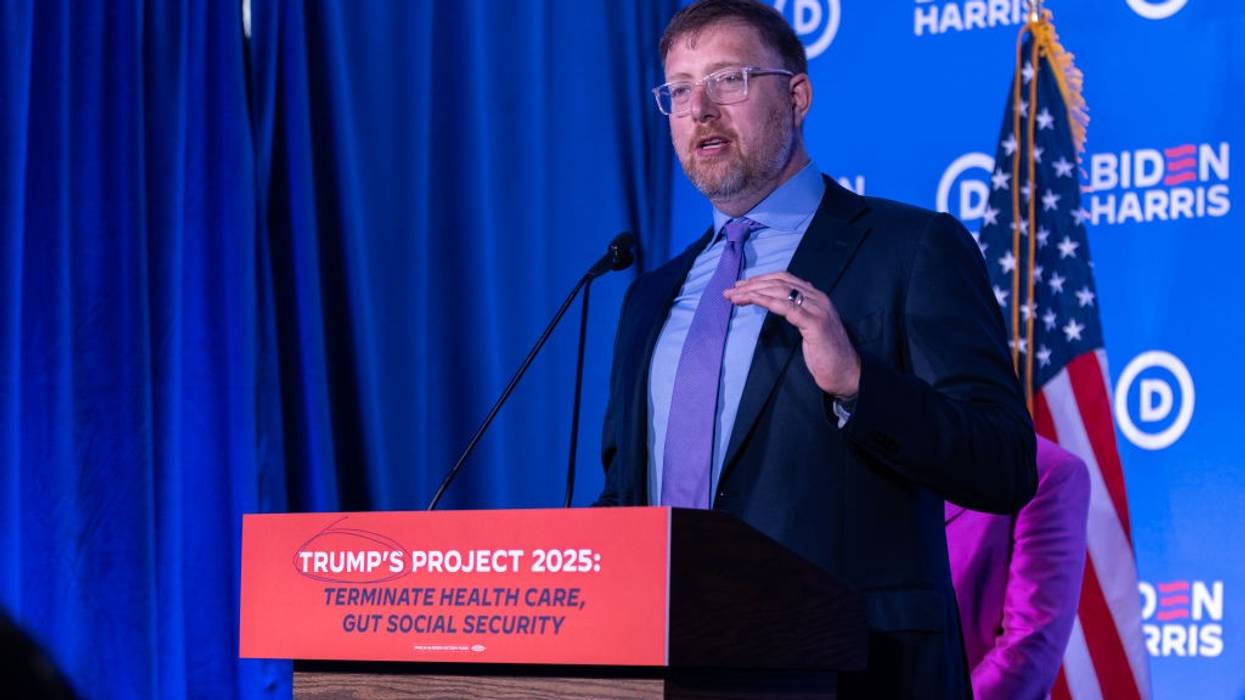
Building America's Future, a group linked to Musk, and America PAC, "have spent more than $11 million attacking progressive Judge Susan Crawford and supporting the Trump-aligned candidate Brad Schimel," Mother Jones reported on March 12. Wisconsin Democratic Party Chair Ben Wikler put the figure higher. At a rally in Eau Claire, Wisconsin on Tuesday he told attendees that groups backed by Musk have spent $13.2 million on ads attacking Crawford, per Wisconsin Public Radio.
In addition to the stakes around the ideological bent of the court, the election also has national implications. "The Wisconsin Supreme Court race is the first referendum on Musk-ism," Wikler recently told Mother Jones. Similarly, The American Prospect reported Friday that "if Schimel wins, it will be a reminder that Trump and Musk's agenda doesn't stop in Washington, D.C."
"I think that Democrats and progressives across the board are in a defensive posture at all levels. The sky is falling. The federal bureaucracy is being destroyed," Thomas Nelson, a Democratic county executive in Outagamie County, Wisconsin, told the Prospect, speaking of the race's national consequences. "And it's only a matter of time [until] we're going to sustain direct hits on the ground in local government."
The tactic of the petition also echoes a controversial maneuver used by Musk during the 2024 presidential race, when he offered a million-dollar gift each day to a registered voter from a battleground state who has signed America PAC's petition in support of the First and Second Amendments.
The recent race for DNC chair raises questions about how the progressive wing of the party can and should move forward toward 2028.
Just before starting to write my lament about what a dramatic step backward the recent campaign for Democratic National Committee chair had been, I opened an Our Revolution email that told me, “We beat back the party establishment at the DNC.”
Now Our Revolution being a direct organizational descendent of the 2020 Bernie Sanders presidential campaign, and me having been a 2016 Sanders convention delegate, I feel pretty confident that our ideas of who “we” means are pretty much the same. So what accounts for the widely divergent takes?
For those who haven’t been following this, Minnesota’s Democratic-Farmer-Labor Party Chair Ken Martin was just elected to lead the DNC for the next four years, defeating Wisconsin Democratic Party Chair Ben Wikler by a 246.5–134.5 vote margin. There was no contested election four years ago, because by tradition a just-elected president selects the new chair; contested elections generally follow defeats. In the last one, in 2017, former Obama administration Secretary of Labor Tom Perez won the job, beating Minnesota Rep. Keith Ellison in a second round of voting, 235--200.
At the moment there is no one obviously positioned to take up the Sanders’ mantle in the 2028 presidential campaign.
Ellison’s candidacy came in the wake of his having been just the second member of Congress to support Sanders in the prior year’s presidential primaries, and the fact that Sanders people harbored serious grievances with the DNC over its perceived favoritism for the ultimate nominee, Hillary Clinton, lent a distinct edge to the election, bringing it considerably more buzz than the one that just occurred. At the time, former Massachusetts Rep. Barney Frank, a vociferous opponent of Sanders’ run—who had once declared, “The most effective thing liberals and progressives can do to advance our public policy goals... is to help Clinton win our nomination early in the year”—now thought there was “a great deal to be said for putting an active Sanders supporter in there,” so as to clear the air “of suspicions and paranoia.” But Clinton and Barack Obama apparently didn’t think so, and Clinton’s past Obama cabinet colleague, Perez, took up the torch in a race that produced a level of grassroots involvement seldom if ever before seen in this contest.
Although the office is traditionally considered organizational rather than ideological and the 2017 candidates did run on those issues, the underlying political differences were obvious to all. This time around, the race was generally understood to involve little if any political disagreement on the issues. By way of explaining its support for new party chair Martin, Our Revolution characterized runner-up Wikler, as “an establishment candidate backed by Nancy Pelosi, Hakeem Jeffries, and Chuck Schumer, and bankrolled by the billionaire class.” We understand that election campaigns are about sharpening the perception of differences between the candidates, but still this seems a rather thin, flimsy basis for hailing the vote as an anti-establishment triumph, given that Martin has publicly stated that he doesn’t want the party to take money from "those bad billionaires" only from "good billionaires;”and one of the two billionaires who gave a quarter million dollars to Wikler’s campaign was George Soros—probably the DNC’s model “good billionaire.” Besides Musk/Bezos/Zuckerberg probably aren’t thinking of donating anyhow. Oh, and Chuck Schumer actually supported Ellison eight years ago.
Actually, “we” did have a horse in the race—2020 Sanders campaign manager Faiz Shakir. Shakir, who has been running a nonprofit news organization called More Perfect Union, dedicated to “building power for the working class,” argued that Democrats needed a pitch for building a pro-worker economy to go with their criticism of U.S. President Donald Trump’s policy proposals. His viewpoint presented a serious alternative to that of Martin, who told a candidates forum that “we’ve got the right message... What we need to do is connect it back with the voters,”—seemingly a tough position to maintain following an election in which NBC’s 20-state exit polling showed the majority of voters with annual household incomes under $100,000 voting Republican, while the majority of those from over-$100,000 households voted Democrat. But even though Shakir was a DNC member and thereby able to get the 40 signatures of committee members needed to run, he entered the race far too late to be taken for a serious contender and ultimately received but two votes.
Mind you, none of this critique comes as a criticism of the work of the two state party chairs who were the principal contenders. Martin touts the fact that Democrats have won every statewide election in Minnesota in the 14 years that he has chaired the party, and anyone who understands the effort that goes into political campaign work can only admire that achievement. Nor is Our Revolution to be criticized for taking the time to discern what they thought would be the best possible option in a not terribly exciting race that was nevertheless of some importance.
At the same time it’s hard not to regret the diminished DNC presence of the “we” that Our Revolution spoke of, after “we” legitimately contended for power in the last contested election. Certainly this lack of interest was in no small part a consequence of the extraordinary circumstances that produced a presidential nominee who had not gone before the voters in a single primary—for the first time since Hubert Humphrey in 1968.
More importantly, it raises a serious question for those of us who believe that the structure and history of the American political system require the left’s engagement in the Democratic Party—uncomfortable and unpleasant as that may be at times. As the social scientists like to say, politics abhors a vacuum, and absent a national Democratic Party presence for the perspective that motivated the Sanders campaigns, people seeking action on the big questions on the big stage may start to look elsewhere. And elsewhere always looms the possibility of the cul-de-sac of yet of another third party candidacy that holds interesting conventions and debates, but ultimately receives only a small share of the vote, but a large share of the blame for the election of a Republican president.
At the moment there is no one obviously positioned to take up the Sanders’ mantle in the 2028 presidential campaign. But we may have to make it our business to find one.
"Voters—and all Americans—deserve better than two corporate-controlled parties," asserted the leader of Our Revolution.
The head of a leading U.S. progressive group on Thursday accused the Democratic National Committee—which will choose new leadership this weekend—of trying to silence rank-and-file activists and voters, showing that the Democratic Party's governing body is failing to connect with the working-class Americans who helped deliver the White House and Congress to Republicans.
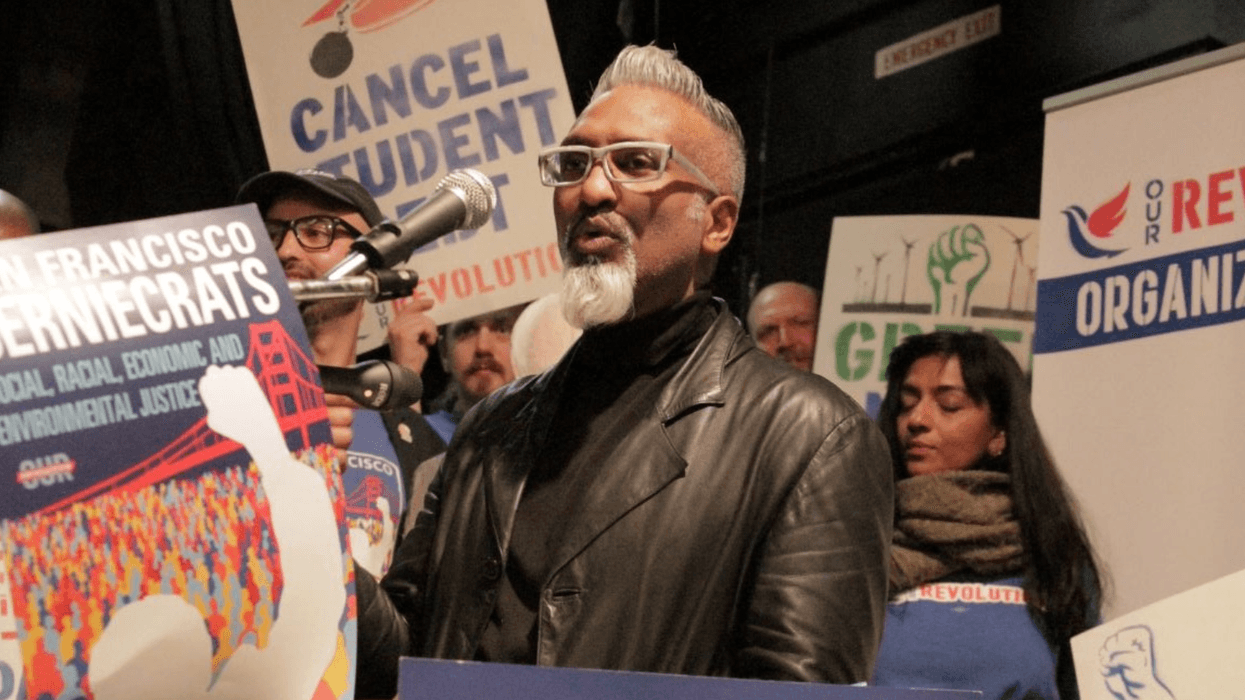
"This moment demands a Democratic Party that provides more than just reactive opposition to an administration bent on rigging our economic and political systems in favor of the wealthiest and most powerful individuals on Earth," Joseph Geevarghese, the executive director of Our Revolution, an offshoot of Sen. Bernie Sanders' (I-Vt.) 2016 presidential campaign, said in a statement ahead of Thursday evening's final DNC candidate forum. "It demands leaders who put the party's grassroots base ahead of the donor class and articulate a real vision that rejects [Republican President] Donald Trump's corporate rule—starting with renouncing corporate money themselves."
"Unfortunately," Geevarghese lamented, "Democratic leadership is failing disastrously to meet this urgent mandate. Ahead of tonight's forum, the DNC is actively working to silence rank-and-file Democratic activists and base voters calling for a ban on dark money in primaries and the rejection of corporate funding. In a last-minute move, they shut the event off from the public and even deliberately shared the wrong address for where grassroots supporters are allowed to gather."
Trump has forged an unholy alliance between state and corporate power. With the help of Big Tech, Big Oil and other oligarchs, he is ushering in a new era of authoritarian capitalism in America. Where is the Democratic Party? Where is the leadership and where is the opposition required in this mom
— Our Revolution ( @our-revolution.bsky.social) January 28, 2025 at 10:15 AM
A post-election survey of 5,000 Our Revolution members found that only 14% of respondents were "very confident" that the Democratic Party and its leaders in Congress, state houses, and city halls will fight against the worst parts of Trump's agenda. Furthermore, 88% of survey respondents said they support efforts to transform the Democratic Party into a real opposition party and to get the party to reject corporate money and power, while the remaining 12% said they've already given up on the Democratic Party.
Forty-one percent of survey respondents said they want Our Revolution to primarily focus on fighting Trump and oligarchs, 32% said the group should concentrate on taking back the Democratic Party from the corporate class, and the remaining 27% think Our Rev should prioritize electing progressive candidates.
An
Our Revolution petition signed by more than 10,000 active grassroots Democratic volunteers, donors, and local and state party leaders is calling on the DNC to:
"The question to my mind now is that if there is consensus around the working class confronting oligarchy, then what new ideas are we bringing to the table in how we utilize the power and authority of the DNC?" Shakir said in interview published Thursday by The Guardian. "My election would send the strongest message that we're doing something different."
As The Guardian's Joan Greve noted:
Shakir faces an uphill battle to capture the chair position. He only announced his candidacy earlier this month, while the front-runners in the race—Ken Martin, chair of the Minnesota Democratic-Farmer-Labor Party, and Ben Wikler, chair of the Wisconsin Democratic Party—have been campaigning for two months. Ahead of the leadership elections on Saturday, Martin claims to have already secured the support of at least 200 DNC members, which would put him within striking distance of a winning majority, although his opponents have questioned that whip count.
Undaunted, Shakir said he is the best candidate for refocusing the Democratic Party on serving its working-class base.
"Can we open the doors and let people in? Can we start from the premise that this is a people-powered organization?" he told Greve. "That we could be and should be in service to others beyond ourselves, that is the core of what I would believe as a kind of organizing philosophy of the Democratic party right now to rebuild the brand."
"The nation is calling upon the Democratic Party to say, 'Hey, we need you,'" he added. "I'm trying to fight the notions of insularity among groups of people who understandably are focused on reforming structures within the DNC. But we've got to think beyond the DNC.
"We will have learned nothing about the last four years if we proceed as normal with a failing Democratic brand."
Longtime progressive strategist Faiz Shakir, who managed Sen. Bernie Sanders' 2020 presidential campaign, announced his late entry into the race for Democratic National Committee chair earlier this week, expressing frustration with what he described as the current crop of candidates' apparent "lack of vision and conviction for what to do to restore a deeply damaged Democratic brand."
"As I have listened to our candidates, I sense a constrained, status-quo style of thinking," Shakir wrote in a Medium post. "We cannot expect working-class audiences to see us any differently if we are not offering anything new or substantive to attract their support."
Shakir's decision to join the race comes two weeks before DNC's hundreds of members are set to vote on who will lead the organization in the wake of the disastrous 2024 elections, which saw Republicans win a trifecta at the federal level and Democrats continue to hemorrhage working-class support.
Shakir, the founder of More Perfect Union—a progressive media organization whose mission is to help build working-class power—said he's come away from recent DNC candidate forums and conversations with the view that "we wrongly perceive a powerlessness about the role of chair, confining it merely to being some kind of pass-through financial vehicle to distribute funds to various other entities."
"The grandest reforms I've heard so far revolve around procedural, internal changes to budgeting and consultant work, and we offer pablum around national war rooms and permanent campaigns that have no substance guiding them, deferring critical judgment about what to actually say and do to some other place and time or persons," Shakir wrote in his Medium post. "We must be bolder than that!"
"If we learned anything from our last four years, it should be that we must break some norms and get more compelling, interesting, and dynamic to win," he added. "We can't continue to defer critical political judgments to a donor class or some other outside actors. To be a multiracial working-class party, we must prove we are on their side in the fight against corporate greed."
Shakir, who previously served as a senior adviser to former Senate Democratic Leader Harry Reid, said he envisions a DNC that is "an organizing army" that backs workers in their fight against corporate abuses; "its own powerful media outlet" that features "working-class heroes taking on corporate greed" and airs "educational pieces about the aims and ambitions of the Silicon swamp surrounding [President-elect Donald] Trump; and a body that "actively involves the grassroots in surfacing interesting policy ideas and building civic organization around community service, faith, sports, culture, and entertainment."
"Most importantly," he wrote, "we have to strategically pick big fights with the elite and selfish oligarchs now entering government 'service' not just to decry their looting but to paint the picture of how we would wield power in a very different way."
Shakir joins a field in which two candidates—Wisconsin Democratic Party chair Ben Wikler and Minnesota Democratic-Farmer-Labor Party chair Ken Martin—are widely seen as the frontrunners. But the race has so far lacked the kind of enthusiasm that Shakir argues is badly needed.
As Politico reported Sunday, there has been "little daylight" between the DNC chair candidates and the contest has had "all the excitement of watching a euchre tournament, full of Midwestern niceness befitting its two frontrunners but short on big ideas or disagreements over how to salvage their fortunes."
In an interview with The Associated Press, Shakir said that it is "almost like we've moved on and not even deliberated or grasped what were the challenges."
"We will have learned nothing about the last four years," he warned, "if we proceed as normal with a failing Democratic brand."
Shakir's candidacy quickly received the backing of Sara Nelson, international president of the Association of Flight Attendants-CWA.
"I am proud to endorse Faiz Shakir as chair of the Democratic National Committee," Nelson wrote in a social media post. "Faiz not only has the right working-class credibility, vision, and insight for this moment, but he also has the vast experience needed to operate and rebuild the DNC."
"The party is at a critical moment, and we need to embrace changing [the] status quo," Nelson added. "Faiz's vision and conviction is clear: use the authority and resources of the DNC to build power for working people—the promise of America. He is the leader the party needs at this moment."
"If we're gonna win, the only path is representing regular, everyday Americans who are about to get screwed by Trump and the oligarchs," said the head of Our Revolution.
Amid intense nationwide debates about what Democrats should learn from devastating electoral losses to Republicans last November, progressive groups on Monday night held a two-hour virtual forum for candidates seeking Democratic National Committee leadership roles.
"This forum is different than the official Democratic forums that are now underway," Joseph Geevarghese, executive director of Our Revolution, said in his opening remarks. His group organized the event with Progressive Democrats of America (PDA), RootsAction, and the State Democratic Party Progressive Network.
These organizations "represent the progressive, working-class base, the Warren-Sanders wing, of the Democratic Party," said Geevarghese, referring to U.S. Sens. Elizabeth Warren (D-Mass.) and Bernie Sanders (I-Vt.), whose 2016 presidential campaign led to the formation of Our Revolution.
Participants in Monday's forum are preparing to face off against a Republican-controlled Congress and U.S. President-elect Donald Trump, who is set to be sworn in next week. Since the GOP's November victories, Sanders, who caucuses with Democrats, has been a leading critic of, in his words, "the big money interests and well-paid consultants who control the Democratic Party."
Geevarghese similarly said Monday that "we don't believe, I don't believe, that the corporate hacks who got this party into trouble in the first place are gonna be the ones to save us," and "we need a Democratic Party that is on the side of America's working class."
"Give up on being the corporate party. Trump has got that locked up," he urged party leadership. "If we're gonna win, the only path is representing regular, everyday Americans who are about to get screwed by Trump and the oligarchs."
The DNC elections are scheduled for February 1, and The American Prospect last week published a previously secret list of "448 active members of the national committee, including 200 elected members from 57 states, territories, and Democrats Abroad; members representing 16 affiliate groups; and 73 'at-large' members who were elected as a slate appointed in 2021 by the party chairman, Jaime Harrison."
Harrison, who has been hostile to arguments that Democrats lost last year because working-class voters felt abandoned by them, is not seeking another term. Seven candidates to replace him joined Monday's forum: Quintessa Hathaway, Ken Martin, Martin O'Malley, Jason Paul, James Skoufis, Ben Wikler, and Marianne Williamson. Robert Kennedy Houton and Nate Snyder did not participate in the livestreamed event, which had over 25,000 viewers and is available below.
Since last month, Our Revolution has been circulating a petition that calls on Democratic Party leaders to adopt four key reforms: ban dark money in primaries and reject corporate money; invest in state parties and grassroots organizing; make the budget transparent and hold consultants accountable; and adopt a progressive platform and small-donor democracy.
During the forum, chair candidates were asked what they planned to do to curb the influence of corporate interests and lobbyists in the party, particularly dark money political action committees (PACs).
"We need to make sure we call out the dark money in our politics, and it's corrosive," said Martin, who chairs Minnesota's Democratic-Farmer-Labor Party and is endorsed by several key Democrats from his state. "These billionaire donors and these large corporations who are trying to essentially subvert the will of the people, they do it by buying people off."
Martin said the party must ensure "that we are only taking money from people and entities that share our values" and pledged that under his leadership, the DNC wouldn't take money from corporations that are union-busting or "preying on" the most vulnerable people in U.S. communities, and would focus on small-dollar donor programs.
Wikler, who chairs the Wisconsin Democratic Party, called for building "a party strong enough to be able to resist the people who are trying to ransack this nation top to bottom, to divide us across our identities, to divide us by cutting us apart, in order to rip off everybody, no matter what our skin color is, no matter who we love, no matter how we pray or whether we pray."
He suggested that Democrats can fight big money in politics "by choosing the fights that we fight and choosing those not based on who's making donations, but choosing those based on actually delivering change in the lives of working people, and stopping the far-right ultrawealthy from rigging this country to ensure that working people don't have a voice."
Wikler is backed by key leaders in his state plus Senate Minority Leader Chuck Schumer (D-N.Y.). He and Martin are widely seen as front-runners in the chair race, though Wikler has faced some scrutiny for his relationship with billionaire LinkedIn co-founder Reid Hoffman, who has poured millions into Wisconsin politics.
Chair candidates were also asked about whether to reform the process for at-large members, and the responses were mixed, with some supporting a change to the bylaws and others favoring the current approach but recognizing the importance of being thoughtful about appointments.
The forum also featured remarks from two potential vice chairs, Shasti Conrad and James Zogby, as well as Jane Kleeb, who is running to head the Association of State Democratic Committees (ASDC), currently led by Martin.
Zogby is the founder of the Arab American Institute, a strong advocate of progressive priorities including Palestinian rights, and a longtime DNC member. He explained Monday that although he initially considered stepping aside after the last cycle, "to this day, I'm the only Arab American in a leadership role in the party and I'm not giving it up."
Sharing some of his frustrating experiences at the DNC over the past three decades, Zogby said that "we need accountability and transparency," particularly with the budget. He railed against a "sick, corrupt system" in which consultants "never lose an election" because they make money either way and called for investments in state parties.
In a Monday opinion piece published by Common Dreams hours before the forum, PDA executive director Alan Minsky wrote that "rank-and-file Democrats want a progressive party. Unfortunately, the defining feature of American politics in the neoliberal era is that money matters more than people. The heretofore dominant wing of the Democratic Party, aka the party 'establishment,' is first and foremost a money-raising behemoth."
"This is why progressives must bring their A-game," he argued. "Many party loyalists embrace centrist policies out of a misguided notion of pragmatism. Our goal is not to chase these Democrats away, but to persuade them to support something more ambitious and inspiring. We have a very compelling case to make on all fronts. We can win them over."
Calls for major shifts within the party aren't just happening in and around events for potential Democratic leaders—who participated in the first DNC-sanctioned forum on Saturday and are set to join another one co-hosted by Politico in Michigan on Thursday.
As Common Dreams reported earlier Tuesday, the Sunrise Movement, a youth-led climate group, and several allied organizations, launched an open letter calling on DNC leadership candidates to revive a ban on corporate donations to the committee and to prohibit super PAC spending in Democratic primaries.
Also on Tuesday, the PAC Justice Democrats—which helped elect leaders like Congressional Progressive Caucus Chair Greg Casar (D-Texas) and Rep. Alexandria Ocasio-Cortez (N.Y.)—launched a 50-state effort to recruit "everyday, working-class people to run for Congress after a cycle of unprecedented spending from the billionaire class and right-wing super PACs in Democratic primaries."
"Until party leadership leads the way to take big money out of politics, ends the billionaire influence over our elections and policies, and puts the needs of working-class people back at the center of its agenda," said Justice Democrats, "voters will see its populist platitudes as lip service."
"The influence of corporate money in the Democratic Party is undermining Democrats' ability to win elections," said one organizer.
As Democratic National Committee members prepare to vote on the next party chair in February, leading progressive advocacy groups on Tuesday launched an open letter to candidates to warn that Democratic leaders "must decisively show that the party is for the people—not billionaires or corporations."
To do that, said the Sunrise Movement and several allied organizations, the winning candidate must pledge to revive the Obama-era ban on corporate lobbyist donations to the DNC and to ban super PAC spending in Democratic primaries.
The groups, which also include Gen-Z for Change, Justice Democrats, and the Green New Deal Network, are calling on candidates to sign the "People, Not Billionaires" pledge.
The committee is voting on the new chair on February 1, days after President-elect Donald Trump is set to take office and three months after the Democratic Party suffered devastating losses in the federal elections.
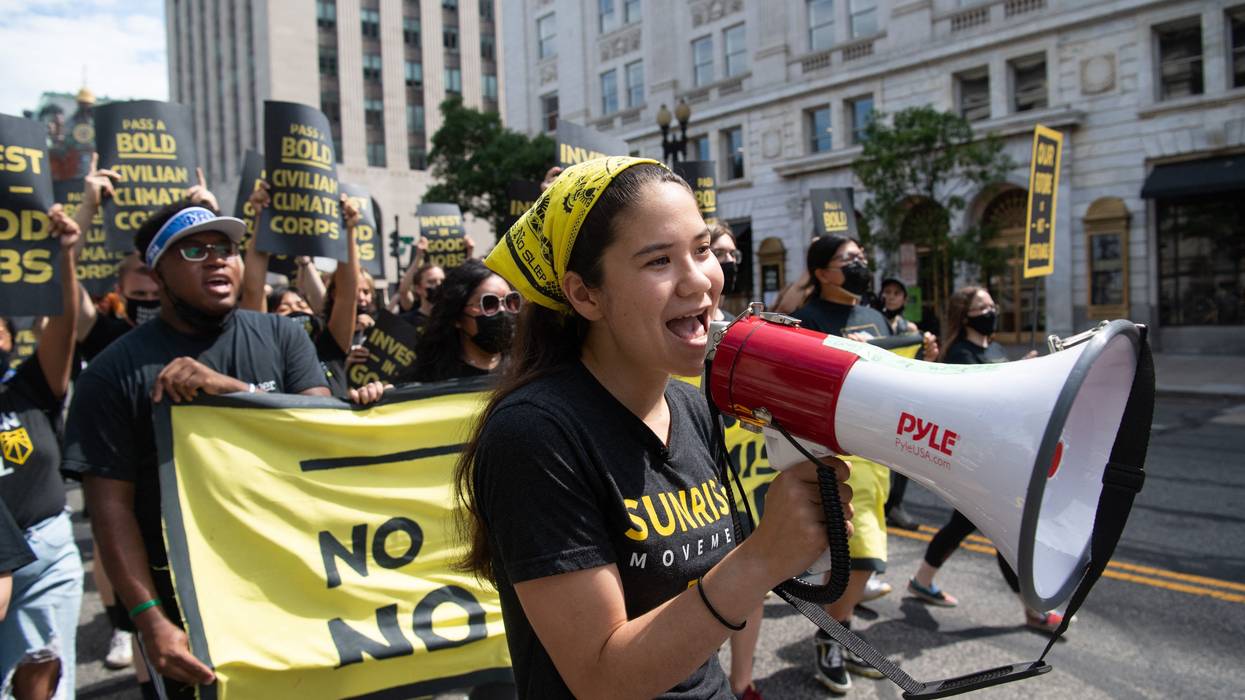
"The influence of corporate money in the Democratic Party is undermining Democrats' ability to win elections," said Aru Shiney-Ajay, executive director of the Sunrise Movememt. "It's time for the Democratic Party to represent everyday Americans and return power to the people."
As a presidential candidate in 2008, Barack Obama introduced a ban on DNC donations from corporate lobbyists and PACs, promising, "We are going to change how Washington works."
The restriction was rolled back in 2016, angering economic justice and pro-democracy advocates who warned the move was "out of touch with the clear public rejection of the role of political money in Washington," as Democracy 21 founder Fred Wertheimer told The Washington Post at the time.
On Tuesday, the Sunrise Movement said reinstating the ban on lobbyist and PAC donations is essential for the Democrats to "decisively show that the party is for the people—not billionaires or corporations."
The pledge reads:
I pledge to build a party that delivers for everyday people and fights to end the corrosive influence of big money in our politics. I will work to ensure that billionaire donors cannot shape the Democratic party or Democratic party primaries.
I will revive President Obama's ban on contributions from corporate lobbyists and PACs to the DNC.
I will use every tool at my disposal to ban SuperPAC spending in Democratic primaries, including: (a) forming and chairing a committee of DNC members to investigate how to end SuperPAC influence in Democratic primaries; (b) I will urge and support state Democratic parties to ban SuperPAC spending over $5,000 in Democratic primaries (c) I will cut ties between the DNC and any donors or consultants that work with those SuperPACs.
With super PACs being "bankrolled by oil CEOs, crypto moguls, and GOP billionaires like Elon Musk," said Sunrise, the wealthiest people and corporations in the country are being given "free rein to buy our elections—and defeat candidates who represent the needs of working people."
Efforts to ban super PAC spending in primaries will ensure that "candidates who represent the voices of working people" have a chance of winning the support of voters, "rather than being undermined" by wealthy groups.
The progressive think tank Data for Progress found in a poll in December that 70% of all voters—and 80% of Democrats—support a ban on super PAC spending in Democratic primaries. Three-quarters of voters said that without such spending, elected officials would be "more responsive to their voters."
"The Democratic Party must be the party of the people—not billionaires or corporations," said Shiney-Ajay. "Young people are organizing for a future where our democracy works for us, not the wealthy few."
Candidates for the DNC chairmanship include Ben Wikler, Wisconsin Democratic Party chair; Ken Martin, chair of the Minnesota Democratic–Farmer–Labor Party; former Maryland Gov. Martin O'Malley; and former presidential candidate Marianne Williamson.
Progressive lawmakers including Sen. Bernie Sanders (I-Vt.) and Rep. Ro Khanna (D-Calif.) have spoken out in recent months about corporate and super PAC spending, with Sanders saying in August, "If you're serious about the power of money in politics, you can say today, sorry, no super PACs allowed in primaries."
Corporate lobbyists and big-time fundraisers are among the Democratic National Committee members set to decide on the organization's leadership in the coming weeks.
With the Democratic National Committee set to vote on its next chair in just over three weeks, a progressive magazine on Friday published in full a previously secret list of the DNC members who will decide on the next leader of the party organization in the wake of the disastrous November election.
The American Prospect's Micah Sifry reported that he obtained the closely guarded list from a "trusted source with long experience with the national party."
"This person thinks it's absurd that the party's roster of voting members is secret," Sifry wrote. "Indeed, since there is no official public list, each of the candidates running for chair and other positions has undoubtedly had to create their own tallies from scratch—making it very likely our list comes from a candidate's whip operation."
Based on the DNC's public statements, it was known that the DNC has 448 active members who will decide on key leadership posts in the coming weeks. But the identities of the individuals were, until Friday, kept under wraps.
Michael Kapp, a DNC member from California, told the Prospect that the committee's leadership "holds tightly to the list to prevent any organizing beyond their control."
"Knowing who has actual voting power over the DNC's governance may give grassroots activists around the country who care about the party's future some greater capacity to focus their efforts on the people who actually pull the levers."
The newly revealed list includes more than 70 "at large" members who were all "whisked into their current positions on the DNC roster by [outgoing chair] Jaime Harrison in 2021," Sifry wrote.
"According to DNC bylaws, at-large members must be voted in by the rest of the membership, but the current class was put forward by Harrison as a single slate that was voted on up-or-down as a bloc," Sifry added. "The hacks definitely stand out among Harrison's handpicked cohort. Those include top fundraisers Kristin Bertolina Faust and Alicia Rockmore of California, Carol Pensky of Florida, and Deborah Simon of Indiana, as well as David Huynh of New York, whose main claim to fame appears to be his work as a consultant to now-jailed cryptocurrency hustler Sam Bankman-Fried when he appeared to be the Next Big Funder of the Democrats in 2021-2022."
The list also includes several lobbyists—such as Scott Brennan, a DNC member from Iowa who works for a lobbying firm with clients such as JPMorgan Chase and PhRMA—as well as union leaders, including American Federation of Teachers president Randi Weingarten.
The DNC membership list was revealed as the organization prepares to vote on key leadership posts, including the committee's chair and vice chair positions.
Wisconsin Democratic Party chair Ben Wikler, Minnesota Democratic-Farmer-Labor Party chair Ken Martin, and former Maryland Gov. Martin O'Malley are among the contenders for the chairmanship.
James Zogby, a longtime DNC member and outspoken progressive, is running for a vice chair post with the goal of improving "accountability and transparency" at the committee and curbing the influence of dark money—something the DNC has repeatedly refused to address.
Sifry acknowledged Friday that "making the DNC's membership roster public may have little overall effect on the direction of the organization."
"It is, after all, highly dependent on big money and exquisitely attuned to the political needs of the party’s leading officials in Congress," he noted. "According to OpenSecrets, the top contributors to the DNC in the 2023-2024 cycle, after House Democratic Leader Hakeem Jeffries' campaign organization, were Bain Capital ($2.9 million), Google parent company Alphabet ($2.6M), Silicon Valley venture capital firm Kleiner Perkins ($2.5M), community media conglomerate Newsweb Corp. ($2.5M), Jeffrey Katzenberg’' holding company WndrCo ($2.5M), Microsoft ($2.4M), Reid Hoffman’s VC firm Greylock Partners ($2.4M), real estate developer McArthurGlen Group ($2.2M), and hedge fund Lone Pine Capital ($2.2M)."
However, Sifry added, "knowing who has actual voting power over the DNC's governance may give grassroots activists around the country who care about the party's future some greater capacity to focus their efforts on the people who actually pull the levers."
"What they do with that potential," he wrote, "is up to them."
The Senate leader called the Wisconsin Democratic Party chair "one of the best organizers in the country" and said he "knows how to win."
Wisconsin Democratic Party Chair Ben Wikler on Thursday said Senate Majority Leader Chuck Schumer's endorsement of him for a top national leadership role is evidence that the veteran senator, while firmly an establishment politician, "knows the enormous stakes of this moment."
The most prominent lawmaker to endorse a candidate in the race for Democratic National Committee chair, Schumer (D-N.Y.) said that following the party's bruising losses in the November elections, Democrats in power "should view this moment as a challenge."
"We must listen to the American people, learn from the results, and move forward stronger," said Schumer. "That's why I am enthusiastically supporting Ben Wikler to be the next chair of the Democratic National Committee."
Schumer highlighted Wikler's successes since he began leading the Wisconsin Democrats, which he's done since 2019. In November, his fundraising and state-wide organizing helped secure a victory for Sen. Tammy Baldwin (D-Wis.) despite Vice President Kamala Harris' loss in the state in the presidential election. The party also flipped 14 seats in the state legislature.
After former Republican Gov. Scott Walker and his party "dismantled workers' rights and voting rights, rigging Wisconsin to keep the GOP in power through the courts and the legislature," Schumer said in his statement, "Ben didn't despair. He rolled up his sleeves and helped unify the Democratic Party and reignite Wisconsin Democrats from the grassroots up. This year's election shows the results."
He called Wikler, a former senior adviser to the progressive grassroots group MoveOn, "one of the best organizers in the country... a proven fundraiser, [and] a sharp communicator."
"Most importantly, he knows how to win," said Schumer.
Wikler announced his candidacy to chair the DNC in early December, weeks after President-elect Donald Trump won the White House race and Republicans took control of the House and Senate in the upcoming Congress.
To win future elections, Wikler said at the time, "we've got to make sure that we are reaching people with the message that we are on their side and fighting for them."
Wikler has also received the endorsements of MoveOn and the centrist advocacy group Third Way.
Members of the DNC are set to vote on the chair on February 1, following four candidate forums in January.
At the forums, Wikler is expected to speak along with fellow contenders including 2020 Democratic presidential candidate Marianne Williamson, former Maryland Gov. Martin O'Malley, and the chair of Minnesota's Democratic-Farmer-Labor (DFL) Party, Ken Martin.
Martin was considered an early frontrunner in the race, winning endorsements from 100 out of 448 DNC members early last month.
He also has a strong fundraising and organizing background, having led the DFL since 2011, when the party was struggling to get out of debt. The party has not lost a statewide race since 2006, and is now in a strong financial position.
Martin's messaging has been similar to Wikler's since the race started, with the Minnesota leader calling on Democrats to emphasize that they—not Republicans—are fighting for workers' rights and policies to make families' lives easier.
"The majority of Americans now believe that the Republican Party best represents the interests of the working class and the poor, and the Democrats are for the wealthy and the elite. That's a damning indictment on our party, and clearly our brand as Democrats," Martin told NPR in late December. "We're fighting for people, people who are working harder than they ever have before."
Days after the two Midwestern leaders entered the race, Greg Sargent of The New Republic interviewed them both, along with O'Malley, about what the Democratic Party can do to counter the "information gap," which has been worsened by the $20 million Tesla CEO and X owner Elon Musk "dumped into a brazen pro-Trump propaganda campaign" run by a "shadowy outfit called the RBG PAC."
Wikler offered "the most concrete agenda for dealing with" the problem, said Sargent. The Wisconsin leader said Democrats "must appear far more on right-leaning political shows—not just Fox News but also podcasts and YouTubes and streamed interviews and the like—especially in nonpolitical spaces," in order to "disrupt the right-wing narrative about Democrats."
Wikler also said the party must invest resources in building an "independent, progressive media ecosystem," where leaders would do "high-profile interviews... with the express goal of elevating and empowering it, something the GOP does with Fox News."
Responding to Schumer's endorsement on Thursday, Wikler said that as chair of the DNC, he would "show voters that we are the party of working families everywhere by choosing fights that show who we are for—and who Trump and the GOP are for."
"As Trump and the GOP again seek a multi-trillion-dollar tax cut for billionaires and big corporations, paid for by working people," he said, "Democrats can make clear that we're against those seeking to rig the country for those at the top, and for a country that works for working families."
"The Democratic Party can win," the former progressive organizer argued, "when voters know that we're the ones fighting for them against those who will seek to rip them off to add an extra billion dollars to their bank account."
Current chair of the Wisconsin Democratic Party Ben Wikler on Sunday officially threw his hat in the ring to take over the national party, leading with a promise to put the working class at the center of its organizing efforts following a crushing defeat to Donald Trump's far-right Republicans in November's election.
"If we're going to take on Trump, Republican extremists, and move our country forward, the Democratic Party needs to be stronger," Wikler said in a statement. "I'm running for Chair of the Democratic National Committee to unite the party, fight everywhere, and win."
With the term of current Democratic National Committee chair Jaime Harrison expiring in the new year, Wikler said his focus will be on lifting up the needs of working-class people, improving communication strategies, and running a more aggressive political operation.
"The soul of the Democratic Party is the fight for working people," Wikler said. "Ours is the party that built the middle class, that won breakthroughs on civil rights, women's rights, workers' rights, freedom and opportunity for all—and has so much more to do."
If we’re going to take on Trump, Republican extremists, and move our country forward, the Democratic Party needs to be stronger. I'm running for Chair of the Democratic National Committee to unite the party, fight everywhere, and win. Join me. 🧵 pic.twitter.com/lCAmEC6Gox
— Ben Wikler (@benwikler) December 1, 2024
Wikler, who got his start in state-level politics in his home state and later played a leading role at the national progressive advocacy group MoveOn, notes that while Trump and the Republicans made gains across the board against Democrats in the 2024 election, the swing was much less in Wisconsin where Wikler has rebuilt the party over recent years, taking back majorities in the state legislature and other key fights.
"What has made a difference in Wisconsin," he said, "can make a difference everywhere. We need a nationwide permanent campaign."
In an interview with the New York Times published Sunday, Wikler acknowledged that a significant explanation about the Democratic loss of the presidential race—as well as Republican's winning control of both chambers of Congress—was that too many voters simply don't believe Democrats take their economic concerns seriously or think the party is capable of addressing them.
"It's clear from this election that there are many voters, especially those hardest hit by rising prices, those who experienced the pandemic-era financial support slipping away, who voted primarily on the economy," he said. "We’ve seen in the United States and worldwide if you have to break pills in half to be able to afford your groceries, that is going to be the top-of-mind issue when you go to the ballot box."
The Democratic Party can win, Wikler argued, "when voters know that we're the ones fighting for them against those who will seek to rip them off to add an extra billion dollars to their bank account."
Calling Wikler a "party builder," The Nation's political correspondent John Nichols, also a Wisconsin native, said Wikler joins "an increasingly crowded list of contenders for the post, including Minnesota DFL chair Ken Martin, former Maryland Gov. Martin O’Malley and New York state Sen. James Skoufis."
In response to the announcement, former labor secretary Robert Reich gave his endorsement to Wikler in a Sunday blog post, calling him someone who "can turn the Democratic Party into a party that's once again on the side of the little guy."
With the Democratic Party in the midst of deep soul-searching following Vice President Kamala Harris' devastating defeat to Trump, progressives have called for a major rethink. Sen. Bernie Sanders (I-Vt.), who ran for the Democratic Party's presidential nomination both in 2016 and 2020 as a challenge to its corporate leanings, said last week that getting big money out of politics should be a top priority for the party's leadership going forward.
"If the Democratic Party is to become a democratic party, the first job of a new DNC Chair is to get super-PAC money out of Democratic primaries," Sanders said. "AIPAC and other billionaire-funded super-PACS cannot be allowed to select Democratic candidates."
Former Ohio state senator Nina Turner, a close Sanders' ally, said the same on Sunday, shortly after Wikler's announcement. "Every candidate running for DNC Chair must commit to getting dark money and corporate money out of the Party. Period," tweeted Turner.
Sanders, Turner, and other progressive voices have been adamant that without a real strategy to win back working-class families, the Democrats are lost.
Randi Weingarten, union president of the American Federation of Teachers, said Wikler "understands how to organize and communicate."
Reich embraced Wikler's call for a new, bolder organizing strategy as well as his record in Wisconsin. "Wikler organized and mobilized voters in a state that Republicans had rigged to ensure total dominance and control. Ben unrigged that system," Reich wrote. "He turned Wisconsin into a year-round organizing and fundraising powerhouse, winning seven of the last 10 statewide elections since he took over."
Reich also explained why it's important that someone like Wikler be the replacement for the outgoing Harrison, a former lobbyist and a staunch ally of the corporate wing of the Democratic Party establishment.
"For years, the Democratic National Committee has been little more than a fundraising machine, which means it's been tilted toward sources of big money—billionaires, big corporations, and Wall Street," argued Reich. "That's precisely the problem. That's why the DNC cut Bernie Sanders off at the knees when he ran against Hillary Clinton in 2016. That's why starting in the 1980s the Party began turning its back on the working class."
"There's no way the Party can speak for the majority of working people in America," concluded Reich, "when it's reluctant to bite the hands that feed it."