

SUBSCRIBE TO OUR FREE NEWSLETTER
Daily news & progressive opinion—funded by the people, not the corporations—delivered straight to your inbox.
5
#000000
#FFFFFF
To donate by check, phone, or other method, see our More Ways to Give page.
Daily news & progressive opinion—funded by the people, not the corporations—delivered straight to your inbox.
“Israel’s military attorney general just gave his soldiers license to rape—so long as the victim is Palestinian," said one Israeli rights group.
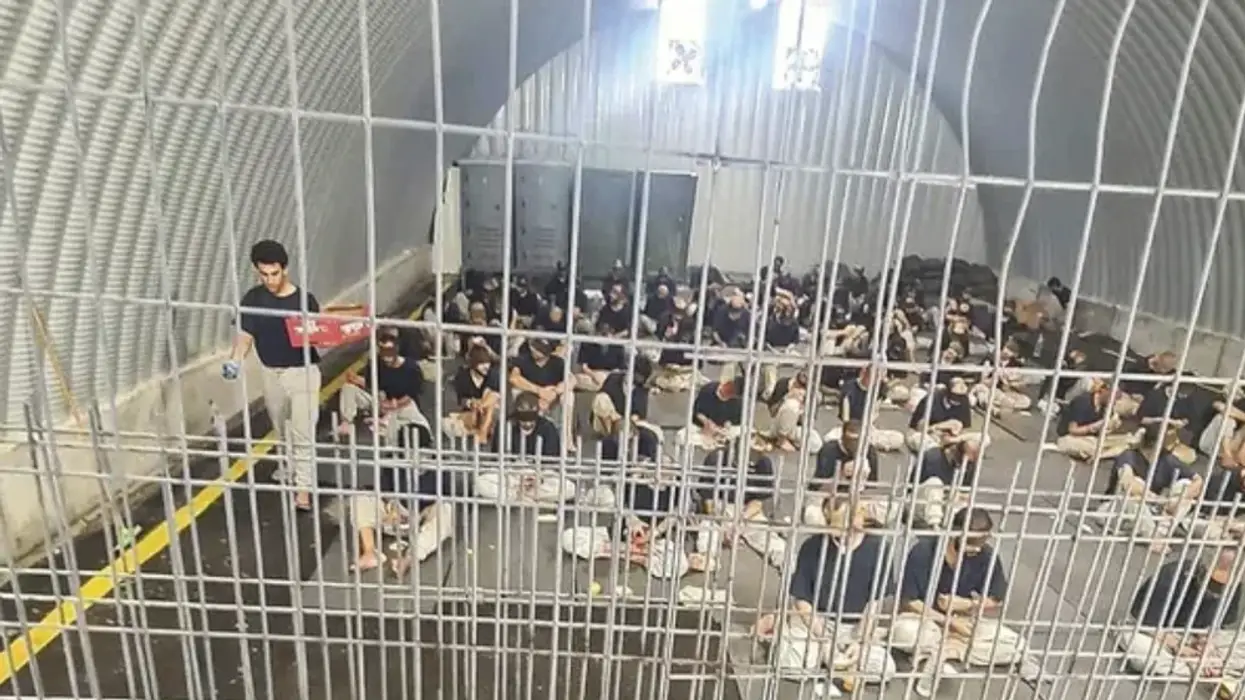
The Israel Defense Forces on Thursday dismissed the indictments of five soldiers accused of raping a Palestinian prisoner at the notorious Sde Teiman prison in July 2024—an attack that sparked worldwide outrage.
The IDF spokesperson's office said the decision to drop the indictments of five reserve members of Force 100—a special unit of the military police responsible for guarding and controlling high-risk detainees—"was made following an examination of all the considerations, evidence, and relevant circumstances."
"Among the factors taken into account were the complexity of the evidentiary basis in the case and the implications of the release of the security detainee to the Gaza Strip, which created significant consequences for the evidentiary aspect of the case," the office added. "These developments created exceptional circumstances that affect the ability to continue the criminal proceedings while preserving the right of the defendants to a fair trial.”
The dismissal of the indictments, according to The Jerusalem Post, does not mean the soldiers have been exonerated.
The five soldiers were caught on video assaulting a Palestinian prisoner at Sde Teiman on July 5, 2024. Although they used riot shields in a bid to conceal the nearly 15-minute attack, medical reports cited in the case show the victim suffered serious rectal injuries requiring surgery, a ruptured bowel, punctured lung, and fractured ribs. An Israeli medical staffer said that the victim arrived at the hospital in critical condition.
Israeli Prime Minister Benjamin Netanyahu—who is wanted by the International Criminal Court in The Hague for alleged war crimes and crimes against humanity in Gaza—welcomed the dismissal of the indictments, which he said had "damaged Israel's reputation in the world in an unprecedented manner."
Israeli President Israel Katz raised eyebrows by asserting that "the role of the IDF's legal system is to protect and safeguard IDF soldiers who engage heroically in war against cruel monsters, and not the rights of the terrorists of Hamas."
Netanyahu and Katz both called the prosecution of the Sde Teiman reservists a "blood libel."
The Defense Minister of Israel says it was "blood libel" to go after Israeli soldiers caught on camera raping a Palestinian.
[image or embed]
— Prem Thakker ツ (@premthakker.bsky.social) March 12, 2026 at 9:24 AM
Israeli Finance Minister Bezalel Smotrich similarly welcomed the dismissals, declaring that "now all that's left is to ensure that the ousted military advocate general stands trial.”
Smotrich was referring to Yifat Tomer-Yerushalmi, who admitted last year to authorizing the leak of the Sde Teiman assault video in order to "confront the false propaganda against the law enforcement officials in the military" by those who denied the allegations against the soldiers.
Human rights groups and others condemned the decision to kill the case, with the Public Committee Against Torture in Israel (PCATI) posting on social media that "Israel's military attorney general granted his soldiers a rape license—as long as the victim was Palestinian."
PCATI said that dismissing the indictments "adds to a long series of decisions and actions taken by the army... which cover up the violent violations that have occurred in Israeli prisons and detention facilities Increasingly since October 7, 2023."
Contrasting the failure to hold the reservists accountable with the draconian prison sentences given to Palestinians who resist Israel's illegal occupation, US Congresswoman Ilhan Omar (D-Minn.) said on Bluesky: "Just so that we are clear, Israel drops criminal charges on five Israeli soldiers who were caught on camera sexually assaulting a Palestinian detainee. But Israel will keep kids in prison for decades because they were throwing rocks? Make it make sense."
Canadian journalist Justin Ling said that "the abuse inflicted on Palestinian detainees at Sde Teiman prison—including the murder of a Palestinian doctor—was inhumane."
"This one case, brought because the abuse was *caught on camera*, was a small sign that rule of law in Israel still worked," he added. "The Israeli government has dropped the case."
Israeli-American academic Shaiel Ben-Ephraim also noted the strength of the case, including the video footage of the assault.
"They had witness testimony," he added. "It was a slam-dunk case. Guards I talked to in Sde Teiman said this case was just the tip of the iceberg. And now they are dropping the charges. Of course."
Former Palestinian prisoners, IDF soldiers, and Israeli medical professionals have all said they witnessed torture and other abuse of detainees at Sde Teiman and other facilities. Victims ranged in age from children to the elderly.
According to an analysis by Israeli journalist Yuval Abraham, at least 98 Palestinians have died in Israeli prisons and military detention centers during the war. Many bodies of former Palestinian prisoners returned by Israel have shown signs of torture, execution, and mutilation.
The IDF has announced investigations into the deaths of dozens of Palestinian prisoners in its custody during the genocidal war on Gaza launched after the Hamas-led attack of October 7, 2023.
Nine Israeli soldiers were initially arrested in connection with the recorded Sde Teiman assault. Five of them were indicted in February 2025.
While many Israelis condemned the alleged rape of the Sde Teiman prisoner, others rallied around the accused soldiers—especially on the far right. National Security Minister Itamar Ben-Gvir hailed the reservists as “our best heroes.” Smotrich called them “heroic warriors.”
Smotrich and others demanded an investigation into the video showing the attack—not in order to seek justice for the victim, but rather to find out who leaked the damning footage.
The soldiers' arrests outraged many on the Israeli right. At least one Cabinet member and several members of the Knesset, Israel's legislative body, joined a mob that in August 2024 stormed two military bases where they believed the arrested suspects were being held.
Other Israelis, including journaist Yehuda Schlesinger, called for legalizing the torture of Palestinian prisoners, because "they deserve it," and "it's great revenge."
Last year, Israel blocked a request from United Nations sex crimes experts to probe alleged sexual violence perpetrated by Hamas fighters during the October 7, 2023 attack, reportedly to avoid attendant scrutiny of rapes and other abuses allegedly committed by Israeli forces against imprisoned Palestinians.

With the intervention of two more nations, 18 have now joined in support of the case, initially brought by South Africa.
The Netherlands and Iceland have joined the case before the International Court of Justice, accusing Israel of genocide in Gaza.
On Wednesday, both nations filed declarations under Article 63 of the ICJ statute, which allows parties to the Convention on the Prevention and Punishment of the Crime of Genocide to intervene in cases involving the interpretation of that convention.
The case was filed in 2023 by South Africa, which cited numerous instances of Israeli leaders using genocidal rhetoric amid an onslaught of attacks against civilians.
Since October 2023, official estimates from the Gaza Ministry of Health have found that more than 72,000 people have been killed, though independent reviews have placed the death toll much higher.
Several independent humanitarian organizations, including Amnesty International, Human Rights Watch, and the Israel-based organization B'Tselem, have concurred with the intervening parties that Israel's conduct has constituted "genocide."
Article II of the 1948 Genocide Convention defines "genocide" as acts "committed with intent to destroy, in whole or in part, a national, ethnical, racial or religious group." Among these acts are killing, inflicting serious bodily or mental harm, deliberately inflicting conditions of life to bring about their destruction, imposing measures to prevent births, or forcibly transferring their children to other groups.
In its filing before the ICJ, the Netherlands—home to The Hague, where the ICJ is located—argued that Israel's forcible displacement of more than 1 million civilians, killing of more than 20,000 children according to official estimates, and blocking humanitarian aid to use starvation as a weapon of war, are all acts that, when paired with statements from Israeli officials, imply genocidal intent.
The Dutch urged judges on the court to "take account of starvation or the deliberate withholding of humanitarian aid for the purpose of establishing specific intent, in particular when this occurs on the basis of a concerted plan of a consistent pattern of conduct.”
Iceland in particular emphasized Israel's conduct toward the children of Gaza, saying that "attacks on children, including killing and causing serious bodily or mental harm, require special scrutiny as they are particularly indicative of intent to destroy the group."
The pair of European nations brought the total of countries participating in the proceedings up to 18—among them are Belgium, Brazil, Belize, Colombia, Ireland, Mexico, Spain, and Turkey.
The United States, under the Trump administration, meanwhile, has cut off foreign aid to South Africa for its role in launching the case against Israel, which receives billions of dollars in US military assistance annually.
Iceland's intervention in the genocide case marks the first time it has participated in a substantive case before the ICJ, according to the Icelandic news outlet RÚV.
"With Iceland's participation in South Africa's case before the International Court of Justice, we are using our voice in support of international law and human rights," said its minister for foreign affairs, Þorgerður Katrín Gunnarsdóttir. "And we can be proud of that."
While its decisions are legally binding and could require Israel to cease violations of the Genocide Convention, the ICJ is not a criminal court.
However, Israeli Prime Minister Benjamin Netanyahu and former Defense Minister Yoav Gallant have each been issued arrest warrants as part of separate war crimes proceedings by the International Criminal Court (ICC), which have thus far not been enforced.
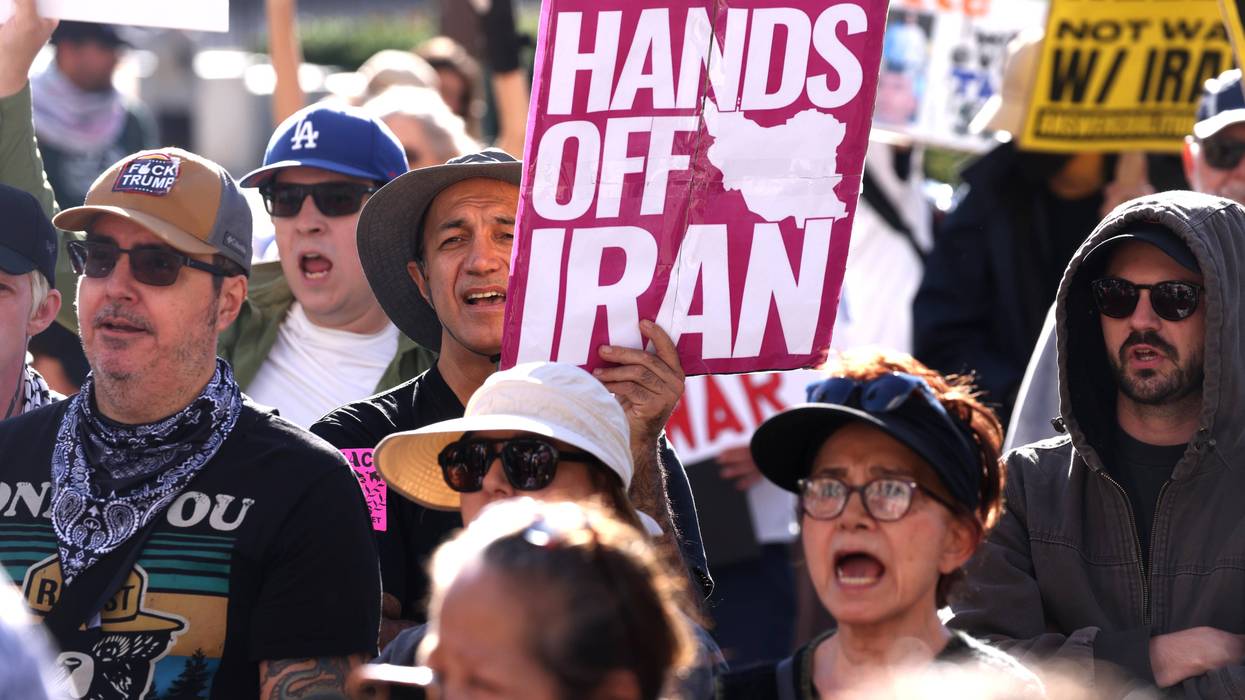
"Every penny wasted on bombing children and families in Iran would be better spent on healthcare and affordable housing in America."
On the heels of Pentagon officials privately telling Congress that just the first six days of President Donald Trump and Israel's assault on Iran cost Americans more than $11.3 billion, over 250 groups on Thursday collectively told lawmakers on Capitol Hill to "vote against any additional funding for Trump's unconstitutional war on Iran, including the reported supplemental appropriations bill that could provide $50 billion or more."
"By launching a war against Iran, Trump has violated the Constitution, defied international law, flouted the will of the American people, and has put millions of lives across the region at risk," wrote the coalition, led by the ACLU, MoveOn, Public Citizen, and Win Without War. Other signatories include Common Cause, the Council on American-Islamic Relations, Friends of the Earth, Greenpeace, Indivisible, Jewish Voice for Peace, National Nurses United, Oxfam America, and the Service Employees International Union.
"President Trump's illegal war has already shown the costs war imposes—American service members killed and injured, thousands of civilians killed in fighting, skyrocketing oil prices, a conflict spiraling over a dozen countries in unexpected ways, and more," noted Christopher Anders, director of the ACLU's Technology and Democracy Division.
In addition to the joint operation against Iran, Israel is bombing Lebanon and has again cut off the Gaza Strip from humanitarian aid. Iran has retaliated by targeting Gulf states that host US military bases.
The coalition warned Congress that "a vote for President Trump's Pentagon supplemental funding package would be a vote to commit the US even further to this crisis, which has already killed seven US service members and nearly 2,000 people from across the region, and which endangers the lives of many more."
The letter stresses that the US Constitution empowers only Congress to declare war. Despite this, a short list of Democrats and nearly all Republicans in the GOP-controlled Senate and House of Representatives have refused to advance war powers resolutions that would end Trump's war of choice in Iran.
"Waging a war of choice that costs an estimated $1 billion a day not only fails to address the economic squeeze and healthcare crisis facing working Americans, it also diverts federal funding that could otherwise be utilized," the letter argues. Sara Haghdoosti, chief of program for MoveOn Civic Action, declared that "every penny wasted on bombing children and families in Iran would be better spent on healthcare and affordable housing in America."
The National Priorities Project at the Institute for Policy Studies, another signatory, has previously highlighted that the war's estimated daily price tag could cover the daily costs of federal nutrition assistance for more than 40 million Americans, as well as daily Medicaid costs for the roughly 16 million people expected to lose health coverage due to the 2025 GOP budget package.
The US Department of Defense has never passed an audit, and as the letter points out, "the Pentagon budget already now totals more than $1 trillion, after the extra $150 billion the agency received in the tax and budget reconciliation bill."
New: We joined 250+ national organizations urging Congress to reject any more funding for President Trump's reckless and illegal war on Iran. Congress must listen to the American people and invest our tax
s towards the urgent needs of our communities, not more disastrous war.
[image or embed]
— FCNL (@fcnl.bsky.social) March 12, 2026 at 4:00 PM
"The $50 billion that the administration reportedly seeks for a new Pentagon supplemental," the letter says, "would be enough to restore food assistance for 4 million Americans that was taken away in the tax and budget reconciliation bill, establish universal pre-K education, and pay for the annual construction of more than 100,000 units of housing, among other possible priorities."
"The choice before Congress is whether it will choose to prevent this unconstitutional war from dragging out and potentially escalating or enabling dangerous and deadly protracted conflict," the coalition concluded. "We urge you to refuse funding for this illegal war that Congress never authorized and a majority of the American people oppose."
According to Shayna Lewis, deputy director of Win Without War, "It's outrageous that Trump is even asking for more money to spend on bombs when his spiraling war is killing civilians abroad and driving up prices for everyone at home, all with no end in sight."
"Congress," Lewis said, "should tell Trump clearly: not one more penny for this foolish, destructive war."
"With whistleblowers, journalists, and civil liberties under significant attack and government decision-making shrouded in increasing secrecy, reining in the abuses of the Espionage Act could not be more urgent.”
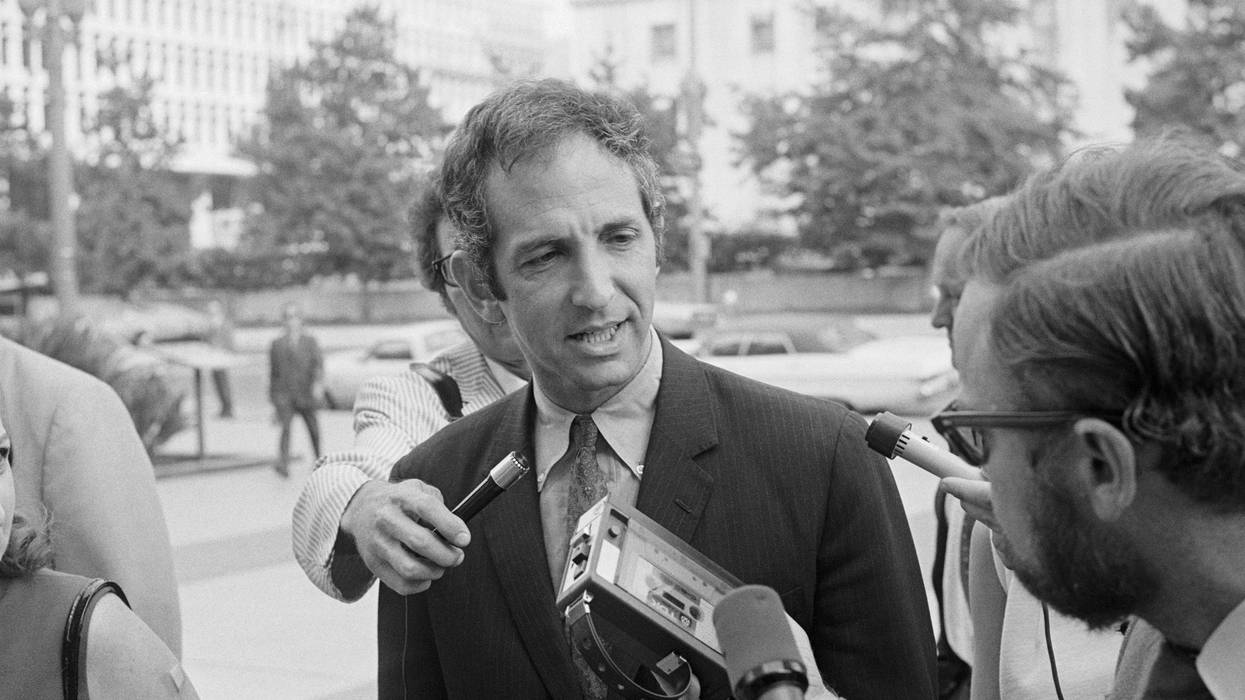
Warning that the Espionage Act has been used to "persecute and criminalize" dissenters, journalists, and whistleblowers numerous times since it was passed into law, US Rep. Rashida Tlaib on Thursday introduced the Daniel Ellsberg Press Freedom and Whistleblower Protection Act to "rein in" the 109-year-old law.
The proposal is named for the military analyst-turned-activist who disclosed decades of deception by the US government regarding Vietnam when he leaked the Pentagon Papers to the press in 1971—an act that led the government to charge Ellsberg with espionage, conspiracy, and other crimes before the case was thrown out over the Nixon administration's misconduct.
In the cases of Ellsberg, former National Security Agency contractor Edward Snowden, WikiLeaks founder Julian Assange, and other journalists and whistleblowers, "Espionage Act prosecutions have been used to silence dissent and undermine government transparency and are a clear violation of the First Amendment and the fundamental right to due process," said Tlaib (D-Mich.).
“Alerting the public to government wrongdoing is not a crime,” said the congresswoman. “The Espionage Act has been abused by administrations of both parties to target whistleblowers and journalists for sharing critically important information with the public. With whistleblowers, journalists, and civil liberties under significant attack and government decision-making shrouded in increasing secrecy, reining in the abuses of the Espionage Act could not be more urgent.”
Tlaib noted that in addition to past administrations using the Espionage Act to prosecute media sources and whistleblowers who alerted the public about mass surveillance, torture, drone assassinations, and war crimes in Iraq and Afghanistan, the FBI raided the home of a Washington Post reporter in January in connection to the prosecution of a government whistleblower.
The proposed legislation would limit the scope of the Espionage Act to foreign agents and government employees who have a legal duty to protect classified information—prohibiting the use of the law to prosecute publishers, journalists, or members of the public.
It would also increase due process standards and safeguards for whistleblowers who disclose government wrongdoing, war crimes, or abuses of power to the public. The legislation would create and affirmative public interest defense and require the government to prove that a whistleblower acted with the specific intent of harming the US or aiding a foreign power.
Under the Daniel Ellsberg Press Freedom and Whistleblower Protection Act, said Jenna Leventoff, senior policy counsel for the ACLU, "the government could no longer abuse [the Espionage Act] to silence those sharing information that is beneficial to the public."
“For too long the Espionage Act has been used to persecute and silence whistleblowers, journalists and publishers,” said Leventoff. “But journalism is not a crime—it is a First Amendment protected activity that protects our democracy by allowing the public to hold our nation’s leaders to account."
The Espionage Act was originally passed to crack down on those who spread information that could interfere with the war effort during World War I, and "from its inception," said Chip Gibbons, policy director at Defending Rights and Dissent, "the law has been used to stifle public debate and has become the go to weapon against whistleblowers and now journalists."
"Public servants who witness egregious crimes like torture, mass surveillance of Americans, or the killing of civilians, and seek to alert the American people about them are whistleblowers," said Gibbons. "Yet, using the Espionage Act the government prosecutes them as though they were spies. And with the government going further and prosecuting a journalist under the Espionage Act, the threat not just to press freedom, but to our very democracy, posed by this antiquated law is growing. Rep. Tlaib’s bill is desperately needed as it is well past time to bring the Espionage Act in line with the First Amendment.”
Tlaib noted that before his death in 2023, Ellsberg expressed public support for the reforms the congresswoman had proposed, when she introduced them as an amendment to the National Defense Authorization Act.
“For half a century, starting with my own prosecution, no whistleblower charged with violating the Espionage Act of 1917 has had, or could have, a fair trial," said Ellsberg in 2022. "These long-overdue amendments would remedy that injustice, protect the First Amendment freedom of the press, and encourage vitally needed truth-telling.”