'Your Tax Dollars Being Used to Raise Your Gas Prices': US-Israel Bomb Major Iranian Oil Depots
Scenes from Tehran on Saturday were described as "apocalyptic" and widely condemned.
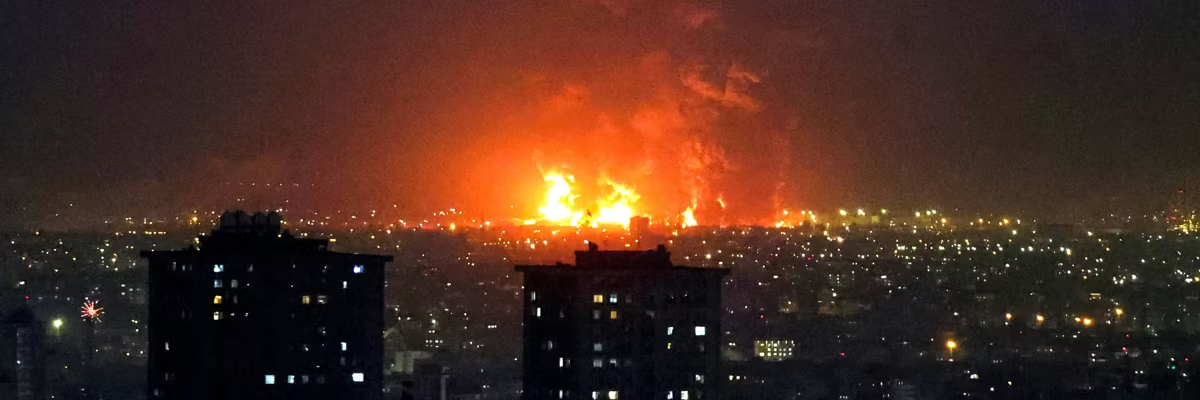
In what was described as a "major escalation" of an attack already denounced as an illegal war of choice, the US-Israeli military coalition bombed major oil depots and other fossil fuel infrastructure in and around Tehran on Saturday, unleashing huge fireballs, turning streets to fire, and sending plumes of black smoke into the night sky while garnering fresh condemnation from the international community.
"Your tax dollars being used to raise your gas prices," Dr. Abdul El-Sayed, the Michigan Democrat running for the US Senate, said in reaction to dramatic footage of the explosions circulating online.
"Scenes from Tehran look apocalyptic," said Assal Rad, a fellow at the Arab Center in Washington, DC, sharing footage of the massive fire storm.
Scenes from Tehran look apocalyptic. This is a city of 10 million people.
pic.twitter.com/gVj2GvrJBI
— Assal Rad (@AssalRad) March 7, 2026
Separate footage showed the Aqdasiyeh Oil Depot in flames with Iranian first responders trying to create a perimeter around the inferno:
'آتشسوزی انبار نفت اقدسیه از فاصله نزدیک'
ویدیوی دریافتی از سوهانک، انتهای بزرگراه ارتش #تهران'
شنبه ۱۶ اسفند #Iran #Tehran pic.twitter.com/ikqloDGwbm
— Vahid Online (@Vahid) March 7, 2026
"Iran is being destroyed," declared British journalist Owen Jones.
In the wake of last week's attack, ordered by US President Donald Trump and carried out in conjunction with Israeli forces, the price of crude futures jumped by 35%, which CNBC characterized as "the biggest weekly gain in the history of the futures contract dating back to 1983."
On Friday, Qatar’s energy minister, Saad al-Kaabi, told The Financial Times that crude prices could reach $150 per barrel in the coming weeks if the Strait of Hormuz remained closed to tanker traffic. Kaabi warned this could “bring down the economies of the world," though Trump has said he is not worried about gas prices, saying Thursday: "If they rise, they rise."
Meanwhile, others on Saturday shared video of a city streets of Tehran blazing with fire as oil from a destroyed depot flowed into sidewalks and sewer tunnels.
Spill of oil in the sewage system has created a flowing burning river in parts of #Tehran after oil depots were bombed earlier tonight, setting the streets in the Iranian capital on fire. pic.twitter.com/tHIFE6Z5EW
— Living in Tehran (LiT) (@LivinginTehran) March 8, 2026
"I don’t know how many times I can say this but my god," said Iranian political commentator Kev Joon in a social media post, describing what he was seeing as "apocalyptic," unprecedented, and intentionally cruel.
"I have never seen something like this," he added. "These are gutters and streams that run the sides of streets on almost every street and alley in Tehran. They are destroying a city in ways we haven’t witnessed before."
According to the New York Times:
Iran’s Ministry of Oil said in a statement that multiple oil storage depots in the provinces of Tehran and Alborz had been targeted.
The Israeli military confirmed in a statement that it had attacked several fuel storage and energy complexes in Tehran, saying the facilities were being used by Iran’s armed forces. Israel’s military called it a “significant strike” aimed at dismantling the military infrastructure of the government.
"What is happening tonight is that US and Israel are targeting oil depots and desalination plants," said Joon. "These aren’t military targets. They’re the infrastructure of everyday life. This isn’t a liberatory war. It’s an attempt to break the backs of Iranian people."
We are at a crossroads
This country and this world are at a monumental crossroads. In a few short weeks, US voters will have an opportunity to beat back the forces of fascism and confront the billionaires who are rigging the economy, our media system, and our democracy, making it increasingly impossible for ordinary people to get by. We’re not just talking about the election. We’re talking about what must be done once these fascist elements are vanquished from power. We need a bolder set of solutions than what either major party has so far been willing to offer and a working-class movement ready to fight like hell for it. Trump didn't emerge from nowhere. The conditions that fueled MAGA authoritarianism were created by decades of radical neoliberal economic policies and a corrupt political system dominated by corporate interests. They slashed taxes on the super-rich, promising that the benefits would trickle down. They said giveaways to the corporate titans would make life more affordable for the rest of us. It was all bullshit. And when a bitter, betrayed populace searches for someone to blame, right-wing demagogues have little trouble finding scapegoats. People know when they're being lied to, but you won't hear any of this from the corporate media. Only independent journalism—powered and funded by people who believe in building a better world—can deliver truly trustworthy daily news. Our Fall Campaign is underway, and we need your help. To power our newsroom through the rest of the year, we need to raise $125,000 by midnight on October 31. So if you share our vision, please contribute whatever you can to sustain our work. |
In what was described as a "major escalation" of an attack already denounced as an illegal war of choice, the US-Israeli military coalition bombed major oil depots and other fossil fuel infrastructure in and around Tehran on Saturday, unleashing huge fireballs, turning streets to fire, and sending plumes of black smoke into the night sky while garnering fresh condemnation from the international community.
"Your tax dollars being used to raise your gas prices," Dr. Abdul El-Sayed, the Michigan Democrat running for the US Senate, said in reaction to dramatic footage of the explosions circulating online.
"Scenes from Tehran look apocalyptic," said Assal Rad, a fellow at the Arab Center in Washington, DC, sharing footage of the massive fire storm.
Scenes from Tehran look apocalyptic. This is a city of 10 million people.
pic.twitter.com/gVj2GvrJBI
— Assal Rad (@AssalRad) March 7, 2026
Separate footage showed the Aqdasiyeh Oil Depot in flames with Iranian first responders trying to create a perimeter around the inferno:
'آتشسوزی انبار نفت اقدسیه از فاصله نزدیک'
ویدیوی دریافتی از سوهانک، انتهای بزرگراه ارتش #تهران'
شنبه ۱۶ اسفند #Iran #Tehran pic.twitter.com/ikqloDGwbm
— Vahid Online (@Vahid) March 7, 2026
"Iran is being destroyed," declared British journalist Owen Jones.
In the wake of last week's attack, ordered by US President Donald Trump and carried out in conjunction with Israeli forces, the price of crude futures jumped by 35%, which CNBC characterized as "the biggest weekly gain in the history of the futures contract dating back to 1983."
On Friday, Qatar’s energy minister, Saad al-Kaabi, told The Financial Times that crude prices could reach $150 per barrel in the coming weeks if the Strait of Hormuz remained closed to tanker traffic. Kaabi warned this could “bring down the economies of the world," though Trump has said he is not worried about gas prices, saying Thursday: "If they rise, they rise."
Meanwhile, others on Saturday shared video of a city streets of Tehran blazing with fire as oil from a destroyed depot flowed into sidewalks and sewer tunnels.
Spill of oil in the sewage system has created a flowing burning river in parts of #Tehran after oil depots were bombed earlier tonight, setting the streets in the Iranian capital on fire. pic.twitter.com/tHIFE6Z5EW
— Living in Tehran (LiT) (@LivinginTehran) March 8, 2026
"I don’t know how many times I can say this but my god," said Iranian political commentator Kev Joon in a social media post, describing what he was seeing as "apocalyptic," unprecedented, and intentionally cruel.
"I have never seen something like this," he added. "These are gutters and streams that run the sides of streets on almost every street and alley in Tehran. They are destroying a city in ways we haven’t witnessed before."
According to the New York Times:
Iran’s Ministry of Oil said in a statement that multiple oil storage depots in the provinces of Tehran and Alborz had been targeted.
The Israeli military confirmed in a statement that it had attacked several fuel storage and energy complexes in Tehran, saying the facilities were being used by Iran’s armed forces. Israel’s military called it a “significant strike” aimed at dismantling the military infrastructure of the government.
"What is happening tonight is that US and Israel are targeting oil depots and desalination plants," said Joon. "These aren’t military targets. They’re the infrastructure of everyday life. This isn’t a liberatory war. It’s an attempt to break the backs of Iranian people."
- 'A Declaration of War': Israel Accused of Bombing Iranian Consulate in Syria ›
- This Illegal US-Israeli Attack on Iran Is Also an Assault on the United Nations ›
- Israel's Unprovoked Bombing of Iran Violates International Law. Full Stop. ›
- Israel's Assault on Iran Is Unambiguously Criminal ›
- Climate Group Says Rich Nations 'Must Tax Fossil Fuel Windfall Profits' Tied to Iran War | Common Dreams ›
- Opinion | Nuking Iran Would Mean Stepping Beyond the Brink of Evil | Common Dreams ›
- IEA Chief Warns Only 'Weeks' of Oil Inventories Left Thanks to Trump's Iran War | Common Dreams ›
In what was described as a "major escalation" of an attack already denounced as an illegal war of choice, the US-Israeli military coalition bombed major oil depots and other fossil fuel infrastructure in and around Tehran on Saturday, unleashing huge fireballs, turning streets to fire, and sending plumes of black smoke into the night sky while garnering fresh condemnation from the international community.
"Your tax dollars being used to raise your gas prices," Dr. Abdul El-Sayed, the Michigan Democrat running for the US Senate, said in reaction to dramatic footage of the explosions circulating online.
"Scenes from Tehran look apocalyptic," said Assal Rad, a fellow at the Arab Center in Washington, DC, sharing footage of the massive fire storm.
Scenes from Tehran look apocalyptic. This is a city of 10 million people.
pic.twitter.com/gVj2GvrJBI
— Assal Rad (@AssalRad) March 7, 2026
Separate footage showed the Aqdasiyeh Oil Depot in flames with Iranian first responders trying to create a perimeter around the inferno:
'آتشسوزی انبار نفت اقدسیه از فاصله نزدیک'
ویدیوی دریافتی از سوهانک، انتهای بزرگراه ارتش #تهران'
شنبه ۱۶ اسفند #Iran #Tehran pic.twitter.com/ikqloDGwbm
— Vahid Online (@Vahid) March 7, 2026
"Iran is being destroyed," declared British journalist Owen Jones.
In the wake of last week's attack, ordered by US President Donald Trump and carried out in conjunction with Israeli forces, the price of crude futures jumped by 35%, which CNBC characterized as "the biggest weekly gain in the history of the futures contract dating back to 1983."
On Friday, Qatar’s energy minister, Saad al-Kaabi, told The Financial Times that crude prices could reach $150 per barrel in the coming weeks if the Strait of Hormuz remained closed to tanker traffic. Kaabi warned this could “bring down the economies of the world," though Trump has said he is not worried about gas prices, saying Thursday: "If they rise, they rise."
Meanwhile, others on Saturday shared video of a city streets of Tehran blazing with fire as oil from a destroyed depot flowed into sidewalks and sewer tunnels.
Spill of oil in the sewage system has created a flowing burning river in parts of #Tehran after oil depots were bombed earlier tonight, setting the streets in the Iranian capital on fire. pic.twitter.com/tHIFE6Z5EW
— Living in Tehran (LiT) (@LivinginTehran) March 8, 2026
"I don’t know how many times I can say this but my god," said Iranian political commentator Kev Joon in a social media post, describing what he was seeing as "apocalyptic," unprecedented, and intentionally cruel.
"I have never seen something like this," he added. "These are gutters and streams that run the sides of streets on almost every street and alley in Tehran. They are destroying a city in ways we haven’t witnessed before."
According to the New York Times:
Iran’s Ministry of Oil said in a statement that multiple oil storage depots in the provinces of Tehran and Alborz had been targeted.
The Israeli military confirmed in a statement that it had attacked several fuel storage and energy complexes in Tehran, saying the facilities were being used by Iran’s armed forces. Israel’s military called it a “significant strike” aimed at dismantling the military infrastructure of the government.
"What is happening tonight is that US and Israel are targeting oil depots and desalination plants," said Joon. "These aren’t military targets. They’re the infrastructure of everyday life. This isn’t a liberatory war. It’s an attempt to break the backs of Iranian people."
- 'A Declaration of War': Israel Accused of Bombing Iranian Consulate in Syria ›
- This Illegal US-Israeli Attack on Iran Is Also an Assault on the United Nations ›
- Israel's Unprovoked Bombing of Iran Violates International Law. Full Stop. ›
- Israel's Assault on Iran Is Unambiguously Criminal ›
- Climate Group Says Rich Nations 'Must Tax Fossil Fuel Windfall Profits' Tied to Iran War | Common Dreams ›
- Opinion | Nuking Iran Would Mean Stepping Beyond the Brink of Evil | Common Dreams ›
- IEA Chief Warns Only 'Weeks' of Oil Inventories Left Thanks to Trump's Iran War | Common Dreams ›