

SUBSCRIBE TO OUR FREE NEWSLETTER
Daily news & progressive opinion—funded by the people, not the corporations—delivered straight to your inbox.
5
#000000
#FFFFFF
To donate by check, phone, or other method, see our More Ways to Give page.
Daily news & progressive opinion—funded by the people, not the corporations—delivered straight to your inbox.
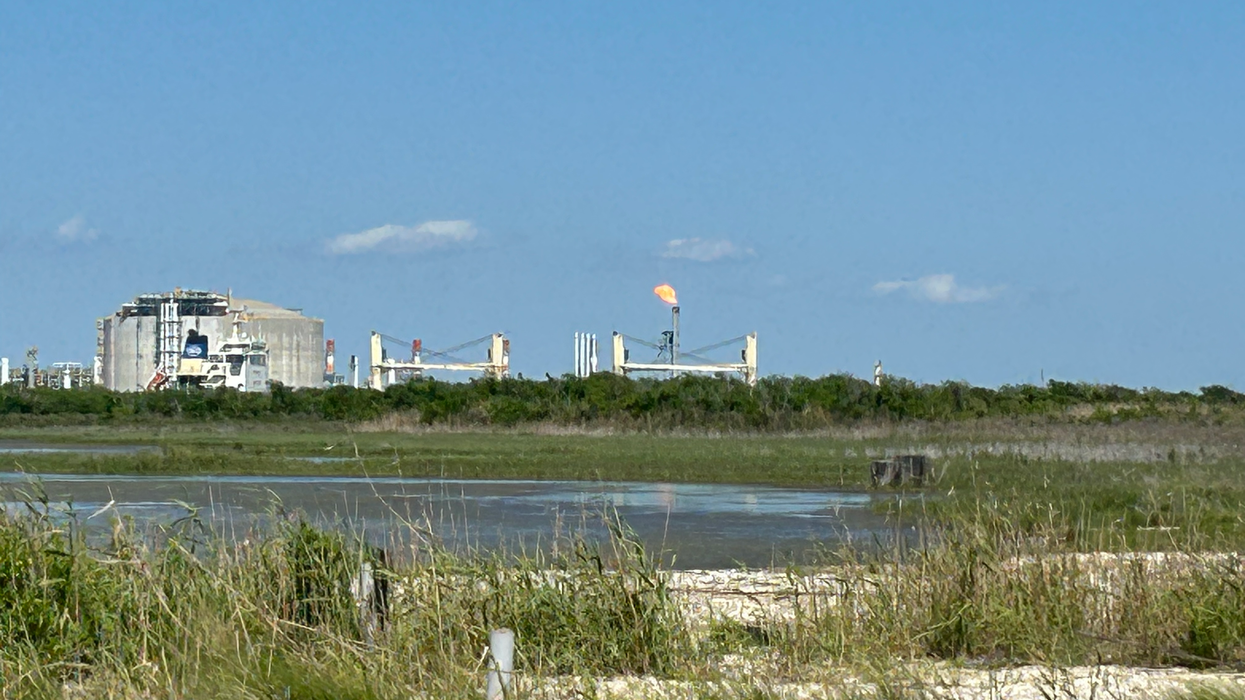
"We always have had to take matters into our own hands, and we have protected ourselves against enormous companies," one local campaigner said.
Louisiana advocates and their allies are not giving up in their fight to stop the liquefied natural gas buildout that threatens the health and well-being of Gulf Coast communities—not to mention the stability of the global climate—even as the Trump administration doubles down on its commitment to expanding LNG infrastructure.
In a briefing on Tuesday, community members, local advocates, and international campaigners shared how they would continue to push back against Venture Global, an LNG company that has amassed a record of ecosystem destruction and air pollution violations at its currently operating Calcasieu Pass export terminal in Cameron Parish, Louisiana. Despite this, the Trump administration's Department of Energy granted conditional approval for the company’s nearby Calcasieu Pass 2 (CP2), undoing the pause that the outgoing Biden administration had placed on it and other LNG approvals as it considered the public interest ramifications of LNG exports.
Yet Gulf Coast campaigners, who are used to dealing with a lax regulatory environment at the state level, were not defeated.
"Anybody who reports here in Louisiana regularly understands that we've never been protected by our regulatory environment. Never," Anne Rolfes, who directs the Louisiana Bucket Brigade, told reporters. "And so we always have had to take matters into our own hands, and we have protected ourselves against enormous companies."
One key strategy that the Louisiana Bucket Brigade and others have used to get around the regulatory rubber stamping of bad actors is to raise public awareness of how the companies turning coastal Louisiana into a sacrifice zone really operate.
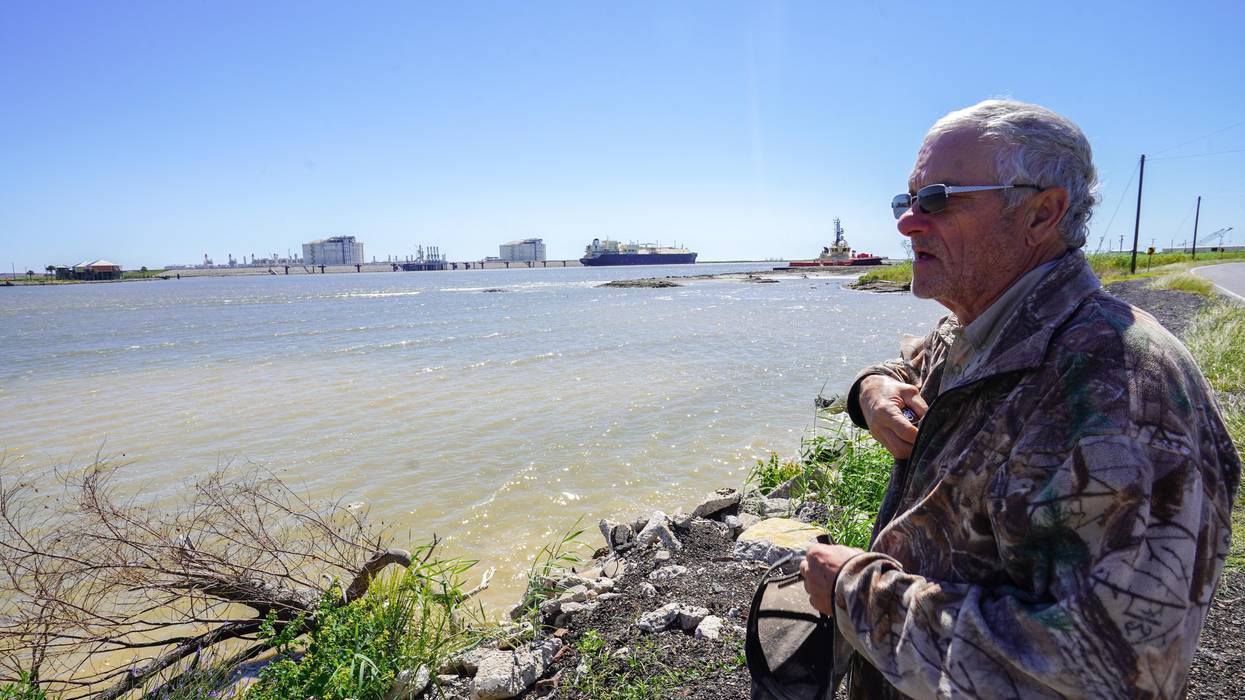
Case in point is Venture Global. Rolfe and John Allaire—a 40-year veteran of the oil and gas industry who lives next door to the Calcasieu Pass terminal—laid out its short but extensive record of environmental violations and unethical business practices.
Even before the original Calcasieu Pass began exporting, in January 2022, it had to clear a space for tankers to access the facility.
"It's understood that this is a volatile fuel to lock into, that you don't want to rely on a fuel that Vladimir Putin and Donald Trump control."
"They pumped hundreds of thousands of cubic yards of black viscous sludge from their marine berth out into the front of the Gulf of Mexico," Allaire said. "And that was the first indication of what was to come with Venture Global."
Since it began operating, the company has added air, noise, and light pollution to the water pollution that has devastated local fisheries.
Allaire has taken hundreds of videos and photos of flaring incidents.
"The light pollution is unbelievable," he said. "At night, I can literally read a book when the flares are going, and I'm over a mile away from their flare stacks."
Allaire's observations are backed up by the official record. In June 2023, the Louisiana Department of Environmental Quality sent Venture Global a compliance order detailing over 2,000 air permit violations from its first 10 months of operation, Allaire said. The company has yet to resolve the complaint, and the state sent them a warning letter in March covering their 2024 and 2025 rule-breaking.
The company also has a history of failing to report its flares and other excess emissions to the Department of Environmental Quality as required by the Clean Air Act.
If they reported and then investigated their violations, "that would enable them to really understand what's happening at their facility so that they could prevent future problems," Rolfe said. "They absolutely aren't doing that."
In March, the Louisiana Bucket Brigade and the Habitat Recovery Project notified Venture Global of intent to sue the company over Clean Air Act violations at its Calcasieu Pass facility.
But the environmental groups aren't the only ones suing Venture Global. The company stretched its commissioning phase—during which it is considered still in the process of establishing itself and can sell its products to the highest bidder rather than honoring its contracts—for three years and three months, beginning normal operations just this April.
"This is absolutely off from the industry norm," Rolfe said.
Now, other major fossil fuel companies, including Shell and BP, are pursuing arbitration claims against Venture Global for breach of contract. Investors have joined a class-action lawsuit against it, saying it violated federal securities law by misrepresenting its prospects.
Yet Venture Global has huge ambitions for the region. In addition to Calcasieu Pass and CP2, it wants to build three other export terminals in coastal Louisiana and more than triple its capacity from 30 million tons per annum (MTPA) of liquid gas—already over a quarter of the 88 MTPA exported by the U.S. exports in 2024—to 104 MTPA.
"As a review, they're flouting the Clean Air Act. They've manipulated the commissioning phase. They're being sued by everybody they've done business with. Is this a company that our country and our state should put such faith in?" Rolfe asked.
She answered her own question: "Of course, our answer is no."
Another strategy the Louisiana Bucket Brigade and their allies seek to employ is to delay Venture Global's ambitions long enough for the economic reality of the LNG boom to catch up with it.
In addition to the approval of CP2, Australian company Woodside announced on Monday that it had approved a Louisiana LNG project worth $17.5 billion. Yet the Institute for Energy Economics and Financial Analysis concluded in April that the massive growth in LNG capacity would exceed dwindling demand within two years.
"It's understood that this is a volatile fuel to lock into, that you don't want to rely on a fuel that Vladimir Putin and Donald Trump control. So people are trying to get off of gas," Rolfe said.
"The economics are going to catch up with them. I just want it to be before they destroy the coast of Louisiana."
This means that LNG companies like Woodside and Venture Global are behaving "like a kid in a candy store," Rolfe continued. "That kid, unchecked, will eat so much, they'll throw up. I think the same is true with this industry. Unchecked, it will do itself harm."
The key is therefore to stall the buildout long enough that many projects become infeasible. This tactic has worked for frontline communities during the first Trump administration, Rolfe said. Through a combination of public pressure, records requests, and legal action, community advocates were able to delay the construction of a plastic plant proposed by the Chinese company Wanhua Chemical U.S. Operation, LLC, which would have released the World War 1-era nerve gas phosgene into the already pollution-burdened St. James Parish.
The economic outlook for the plant had always been "dubious" Rolfe said, and eventually the company gave up on trying to build it.
"They could have gotten approval and gotten on their way within a month. But our suit and then our constant presence and making them table things and so forth, drew it out and let the economics catch up with them," Rolfe said.
Rolfe added that the gas industry has similarly gotten ahead of itself.
"They're greedy, right? They want to grab all the candy they can, and the economics are going to catch up with them. I just want it to be before they destroy the coast of Louisiana."
Another strategy to slow down the building of new LNG facilities like CP2 is to target the one thing, in addition to permits and funds, that they can't move forward without: insurance.
Insurance is one sector in which the economic impact of the climate crisis is already being felt, as Ethan Nuss, senior energy finance campaigner at Rainforest Action Network, explained.
For example, major insurer Chubb earns $1.5 billion a year in premiums from the fossil fuel industry, which was already canceled out early this year with the $1.5 billion in pre-tax losses they took from the Los Angeles wildfires. On a local level, some insurers have pulled out of Louisiana all together to avoid insuring against climate-fueled extreme weather events.
"Once they are really educated about the permit violations and the legal risks and the true risk landscape that they're facing by taking on this client, many of them are very concerned."
"This is not a time to build something like CP2 that would deepen the climate crisis," Nuss said.
Because insurers are on the books for both fossil fuel projects and the damage for climate disasters, and because many of them have climate and human rights policies, they are vulnerable to growing pressure from the climate movement to drop the oil and gas clients costing them so much money.
RAN in February published the names of the major insurers for Venture Global's Calcasieu Pass, which it obtained via a Freedom of Information Act request. These included Chubb subsidiary ACE American Insurance Company, AIG subsidiary National Union Fire Insurance Co., Allianz, Swiss Re, AXA, and Tokio Marine subsidiary Houston Casualty Company.
"That has kicked off a global effort to reach out to those insurers and begin to educate them about what is happening in Southwest Louisiana, the impacts from Calcasieu Pass, and what associated risks they're facing," Nuss said.
As a result of these efforts, Swiss Re has agreed to meet with the fishing community of Southwest Louisiana, to talk about the "devastating impacts on their livelihoods" from Calcasieu Pass' operations.
"Often with these global financial institutions, they aren't fully aware of what's really happening on the ground. That client is maybe just another line on the spreadsheet. But once they really start hearing the stories, once they are really educated about the permit violations and the legal risks and the true risk landscape that they're facing by taking on this client, many of them are very concerned," Nuss said.
Nuss hopes that, once fully informed, insurers would decide any project of Venture Global's is a "very risky business that they don't want to be involved in."
"Greenlighting this terminal is simply selling out the American public to further boost the profits of fossil fuel companies," said one environmental attorney.
A region in southern Louisiana that has already been deemed a "sacrifice zone" by human rights experts—due to the high levels of pollution caused by the petrochemical and fossil fuel industry facilities that operate throughout the area—is now likely to face even more public health threats following the Trump administration's conditional approval of a new liquefied natural gas export terminal.
The U.S. Department of Energy (DOE) on Wednesday granted conditional authorization for Venture Global's Calcasieu Pass 2 (CP2) LNG export terminal in Cameron Parish, allowing the company to export LNG to countries that don't have free trade agreements with the United States.
The project was halted in 2024 when former President Joe Biden paused the issuance of new LNG export permits for non-free trade agreement partners, and climate campaigners have called for CP2 and other LNG projects to be permanently blocked because of the greenhouse gas emissions and local pollution they would cause.
In December, the Biden administration released an analysis showing that more LNG exports would increase household energy costs.
The Natural Resources Defense Council (NRDC) noted that emissions from CP2 are estimated to reach the equivalent of more than 47 million gas-powered cars or 53 coal-fired power plants—even as Venture Global claims the project would export enough fossil gas to replace 33 coal-fired plants.
"Greenlighting this terminal is simply selling out the American public to further boost the profits of fossil fuel companies," said Gillian Giannetti, senior attorney at NRDC. "LNG extraction and export floods frontline communities with dangerous pollution, raises U.S. energy costs, and further locks in our dependence on dirty fossil fuels."
NRDC sued the Federal Energy Regulatory Commission over its approval of CP2 in September 2024, arguing FERC violated the law by not considering "adverse environmental and socioeconomic impacts" when it approved the terminal despite its determination that "the ambient air quality around the project will exceed the national air quality standards for multiple air pollutants."
FERC rescinded its approval and planned to make additional assessments after the lawsuit, but DOE's announcement on Wednesday came before the commission had made its final determination.
By conditionally authorizing the project, said Giannetti, the DOE violated "the public interest" and announced "the latest in a long line of giveaways to the fossil fuel industry from the Trump administration."
"NRDC sued over FERC's approval of this project, and we will be closely examining the legality of this DOE approval, as well," said Giannetti.
The export terminal approval announced by Energy Secretary Chris Wright is the administration's fifth—and largest—LNG approval since President Donald Trump lifted Biden's freeze on new export permits. The finished facility would have the capacity to export 3.96 billion cubic feet of LNG per day and produce 20 million tons of LNG per year.
CP2 would also be adjacent to Venture Global's Calcasieu Pass LNG facility and less than two miles from the proposed Commonwealth LNG facility, in an area with more low-income residents than 88% of the country. Venture Global's existing LNG project in the area "has already exposed the surrounding community to dangerous air pollution well in excess of permit limits in over 130 incidents since it began operations in 2022," said Sierra Club.
"Fishermen have reported a dramatic impact on their livelihoods since the commencement of Calcasieu Pass operations, highlighting the severe negative impact of gas exports on the local economy and environment," added the group.
The conditional approval was announced a week after the Environmental Protection Agency revealed plans to shutter all 10 of its environmental justice offices, ending the agency's work to address systemic injustices in places like Cameron Parish and Louisiana's "Cancer Alley."
"As a mom living in Sulphur [Louisiana], I feel a profound responsibility to protect my children's future," said Roishetta Ozane, founder and CEO of the Vessel Project of Louisiana, an environmental justice and mutual aid group. "The decision to authorize the CP2 LNG facility is a direct threat to our health and safety. We cannot allow our community to become a sacrifice zone for corporate interests. The proposed facility, with its potential for devastating air pollution and harmful impacts on our local environment, jeopardizes everything we hold dear. Our children deserve clean air, safe water, and a thriving ecosystem. I completely oppose this project and all others like it for the sake of my children and everyone else."
Mahyar Sorour, director of Beyond Fossil Fuels policy for Sierra Club, said CP2 "will be a disaster for local communities devastated by pollution."
"American consumers who will face higher costs, and the global climate crisis that will be supercharged by the project's emissions," said Sorour. "The Federal Energy Regulatory Commission had to reconsider its approval of the project after it failed in 2024 to consider the cumulative impacts of air pollution. By conditionally approving exports from this massive project, Trump's Department of Energy is once again failing to protect the American people from an unnecessary LNG project set to generate billions for corporate executives and leave everyday people with higher energy costs."
"Despite his hollow promises on the campaign trail," Sorour added, "Trump continues to fail to prioritize the livelihoods and future of our country over the profits of the dirty fossil fuel industry."
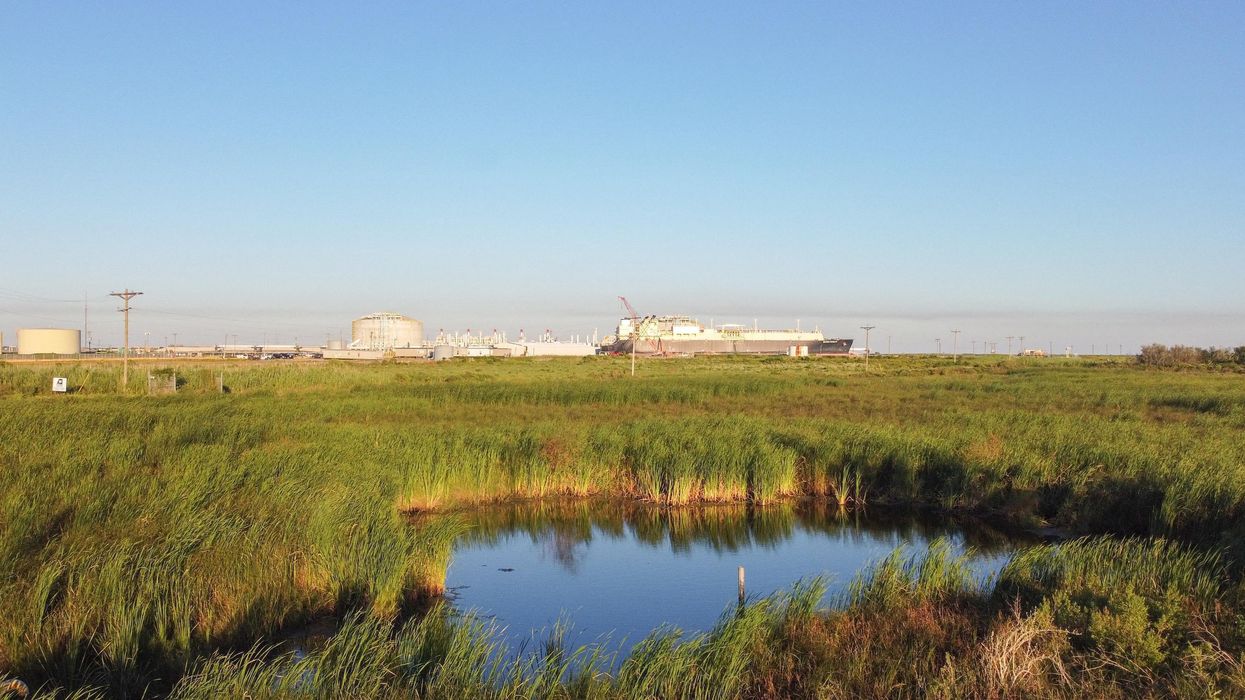
"We are happy about the delay, but these projects don't ever need to be approved and neither does any other LNG facility," one frontline advocate said.
Frontline communities along the Gulf Coast were granted a "temporary reprieve" last week when the Federal Energy Regulatory Commission moved to pause its approval of the controversial Calcasieu Pass 2 liquefied natural gas export terminal while it conducts an assessment of its impact on air quality.
FERC approved Venture Global's CP2 in late June despite opposition from local residents who say the company's nearly identical Calcasieu Pass terminal has already wracked up a history of air quality violations and disturbed ecosystems and fishing grounds in Louisiana's Cameron Parish, harming health and livelihoods.
"This order reveals that FERC recognizes that CP2 LNG's environmental impacts are too great to pass through any real scrutiny" Megan Gibson, a senior attorney with the Southern Environmental Law Center (SELC), said in a statement on Monday.
"FERC's pause on construction may give us some temporary reprieve, but this project never should have been authorized in the first place."
FERC's decision follows a request for a rehearing of its June decision filed by frontline residents and community groups including For a Better Bayou and Fishermen Involved in Sustaining Our Heritage (FISH) as well as the Sierra Club and the Natural Resources Defense Council. In their request, the groups and individuals pointed to errors the commission had made in its approval decision.
"With this order, it seems FERC is finally willing to acknowledge that it has not done enough to properly consider the cumulative harm on communities caused by building so many of these LNG export terminals so close together," Nathan Matthews, a Sierra Club senior attorney, said in a statement. "Prohibiting construction of CP2 LNG while FERC takes another look at the environmental impact of this massive, polluting facility is the right thing to do."
"Still," Matthews continued, "FERC must take concrete steps to properly evaluate the true scope of the dangers posed to communities from gas infrastructure moving forward and avoid making unwarranted approvals in the future."
FERC's decision comes over four months after the D.C. Circuit Court remanded the commission's approval of Commonwealth LNG, also in Louisiana, over concerns that it had not fully assessed the impacts of that project's air pollution emissions. Now, frontline advocates are urging FERC to do its due diligence as it weighs the environmental impacts of CP2.
"Through the lenses of optical gas imaging, we've seen massive plumes of toxic emissions, undeniable proof that these projects poison the air we breathe," James Hiatt, director of For a Better Bayou, said of LNG export facilities. "Modeling must use the latest data from the most local sources to fully capture the harm these facilities inflict on Cameron Parish. Anything less is a betrayal of our community. FERC must choose justice over profit and stop sacrificing people for polluters."
Gibson of SELC said that FERC had already repeated some of the errors in its CP2 approval in its new order.
"This continued failure to fulfill its regulatory duty is not just an oversight—it is a failure to protect vulnerable communities and our economy from the real potential harms of this massive export project," Gibson said.
FERC's decision comes as the fate of the LNG buildout itself hangs in the balance. The Biden administration's Department of Energy is currently rushing to complete its renewed assessment of whether or not LNG exports serve the public interest. Environmental and frontline groups have argued that they do not because of local pollution, the fact that they would raise domestic energy bills, and their contribution to the climate emergency. CP2 alone would spew 8,510,099 metric tons of carbon dioxide-equivalent per year, which is about the same as adding 1,850,000 new gas cars to the road.
While President-elect Donald Trump has promised to "drill, baby, drill" and is likely to disregard any Biden administration conclusions, a strong outgoing statement against LNG exports would help bolster legal challenges to Trump energy policy.
At the same time, Bill McKibben pointed out in a column on Tuesday that the administration's pause on LNG export approvals while it updates its public interest criteria has acted to slow the industry's expansion, and that FERC's reconsideration of CP2 could add to this delay.
"The vote for the new review is 4-0, and bipartisan," McKibben wrote. "It could slow down approvals for the project till, perhaps, the third quarter of next year. And that's good news, because the rationale for new LNG exports shrinks with each passing month, as the gap between the price of clean solar, wind, and battery power, and the price of fossil fuel, continues to grow."
Ultimately, frontline Gulf Coast advocates want to see the LNG buildout halted entirely.
"I, along with the fishermen in Cameron, Louisiana, know firsthand how harmful LNG exports are, and see the total disregard they have for human life as they poison our families and seafood," said FISH founder Travis Dardar, an Indigenous fisherman in Cameron, Louisiana. "FERC's pause on construction may give us some temporary reprieve, but this project never should have been authorized in the first place. As far as anyone who believes in the fairytale of LNG being cleaner, we have paid with our communities and livelihoods. It's time to break these chains and turn away from this false solution."
Roisheta Ozaine, a prominent anti-LNG activist and founder of the Vessel Project of Louisiana, said that she, as a mother in an environmental justice community, saw "firsthand how LNG facilities prioritize profit over the well-being of our families. Commonwealth and CP2 are no different."
"We are happy about the delay, but these projects don't ever need to be approved and neither does any other LNG facility," Ozane continued. "My children are suffering from health conditions that threaten their daily lives, all while regulatory agencies and elected officials turn a blind eye. It's time for our leaders to put people before profit and prioritize the health of our communities over the pollution that harms us. We deserve a future where our children's health is safeguarded, not sacrificed."

"Even with FERC's reckless decision to approve CP2, the project cannot move forward without all federal permits, including those currently paused by the Department of Energy," one climate advocate said.
In what the Sunrise Movementcalled a "disastrous decision," the Federal Energy Regulatory Commission voted 2-1 on Thursday to approve a certification for Venture Global's controversial Calcasieu Pass 2 liquefied natural gas terminal. The approval comes despite the fact that the company's first Calcasieu Pass terminal violated its air pollution permits more than 2,000 times during its first year in operation.
While expected, FERC's decision was widely condemned by climate justice advocates and frontline community groups. At the same time, CP2's opponents emphasized that the plant is unlikely to be built while the Department of Energy has paused the approval of LNG exports while it considers their impacts on the climate, consumers, and local communities.
"A rubber stamp from FERC is business-as-usual for fossil fuel projects," Lukas Ross, climate and energy justice deputy director at Friends of the Earth, said in a statement. "Thankfully CP2 has a long way to go and we intend to fight it every step of the way. No amount of lobbying will make this project anything other than a climate and environmental justice nightmare."
"We refuse to sink. We are going to fight them here. We are going to fight them at home. This is far from over."
Environmental groups say that CP2 is a "carbon bomb" that would emit 20 times more climate pollution over its lifetime than the Willow oil drilling project in Alaska.
"CP2 is a climate catastrophe," the Sunrise Movement wrote on social media. "It would produce more emissions than 46 coal-fired power plants and spew air pollution into marginalized communities."
It is also a key test case for a massive LNG buildout that threatens to raise domestic energy prices and shatter national climate goals.
As 350.org and Third Act co-founder Bill McKibbenpointed out in a Thursday column following the approval:
There's a huge pool of frackable gas sitting in the Permian Basin of Texas. The only way to monetize most of it is to ship it to Asia, persuading the fast-growing economies there to use it instead of wind and sun to make electricity. This scramble has been underway for about eight years, and LNG exports are already a giant industry; if Big Gas gets its way, within a few years American LNG exports from the Gulf of Mexico will be doing more climate damage than everything that happens in Europe.
Indeed, while the Virginia-based Venture Global has advertised its project as a boost to European energy security, around 65% of CP2's long-term Supply and Purchase Agreements are with Asia-Pacific oil companies, commodity speculators, or users.
The company also has a history of running roughshod over domestic environmental regulations and dismissing the needs and concerns of impacted communities. Its Calcasieu Pass plant, which is "technologically identical" in design to the proposed CP2, began operating in January 2022. Since then, residents of Cameron Parish, Louisiana, have reported frequent flaring, noise pollution, an uptick in cancer and other ailments, and fishing grounds polluted with dredging material.
"Make no mistake: CP2 is a carbon bomb threatening frontline communities with increased pollution and exacerbating the climate crisis," Allie Rosenbluth, United States program manager at Oil Change International, said in a statement. "Expanding LNG infrastructure jeopardizes the health and safety of nearby communities, undermines efforts to reduce fossil fuel dependency, and drives the climate crisis, economic instability, and conflict."
The one dissenting vote on FERC, outgoing Democratic Commissioner Allison Clements, justified her decision in part due to the project's potential to harm its neighbors.
"The commission has not adequately addressed the project's environmental and socioeconomic impacts, including adverse impacts on environmental justice communities," Clements said.
Following the vote, frontline leaders vowed to keep fighting the plant's construction.
"We refuse to sink. We are going to fight them here. We are going to fight them at home. This is far from over," said Travis Dardar, an Indigenous Cameron Parish fisherman who founded Fishermen Involved in Sustaining our Heritage (F.I.S.H.) to protest the LNG boom's impact on Gulf fishing.
However, activists also expressed an understanding that FERC was not the most favorable terrain in the fight.
Speaking outside FERC headquarters, Vessel Project of Louisiana founder Roishetta Ozane said it was time to "write off" the agency, according to E&E News.
"We're going to say that FERC is a rogue agency that does not care about communities," she said. "But who can do something while we are here is this administration. We need to continue to put pressure on the Department of Energy."
The DOE announced a pause on LNG export approvals in January while it revises the agency's criteria for what constitutes an export decision in the public interest. Since then, environmental advocates have called for the pause to be made permanent.
FERC's CP2 approval, they say, has clarified the stakes.
"Even with FERC's reckless decision to approve CP2, the project cannot move forward without all federal permits, including those currently paused by the Department of Energy," Rosenbluth said. "This illustrates just how critical the Department of Energy's pause and process to redefine 'public interest' are. President [Joe] Biden and the Department of Energy must listen to frontline communities and do all they can to permanently stop CP2 and all new LNG export terminals."
"If Trump and the GOP triumph, get ready for government of Big Oil by Big Oil for Big Oil until the Earth shall perish, which shouldn't take long."
Jamie Henn of Fossil Free Media agreed.
"FERC has always been a rubber stamp for new gas export facilities—that's why we zeroed in on getting the Department of Energy to pause new export licenses and do a proper assessment," Henn wrote on social media. "With today's shameful decision, pressure is on POTUS and DOE to do the right thing."
Kelsey Crane, senior policy advocate at Earthworks, said: "FERC has once again threatened the Biden administration's own climate and environmental justice policies by advancing what could be the third largest fracked gas export project in Southwest Louisiana. If CP2 is constructed, Louisianans will be forced to breathe dirtier air, pay higher energy bills, and lose important livelihoods in the fishing industry. The United States will emit more greenhouse gas pollution and continue delaying the impending, just transition to clean energy."
"President Biden cannot allow this decision to stand and has to stop letting his agencies approve new fossil fuel projects in the Gulf South," Crane concluded.
McKibben wrote, "The only thing standing between CP2 and construction (and the only thing that can prevent the construction of a dozen more of these death stars in the nest few years) is the Department of Energy, aka the president of the United States."
While McKibben said that Venture Global could build CP2 without the export approval, he argued it was unlikely to do so until either the Biden DOE lifts the pause or former U.S. President Donald Trump, who has promised to do so, is elected president.
Because of Trump's pro-fossil fuel stance, McKibben argued that FERC's CP2 decision also underscores the stakes of the 2024 election.
"If Trump and the GOP triumph, get ready for government of Big Oil by Big Oil for Big Oil until the Earth shall perish, which shouldn't take long," he wrote.
While Biden is not guaranteed to extend the LNG export pause if reelected, "at least there will be a fight, and it will be one of the climactic battles of the fossil fuel era," McKibben said.
Speaking outside the FERC hearing, Ozane said the numbers on the climate justice side were growing.
"It was just two to three of us… and now it's hundreds," she told the crowd. "We are building power. We are building people power. We make the difference."
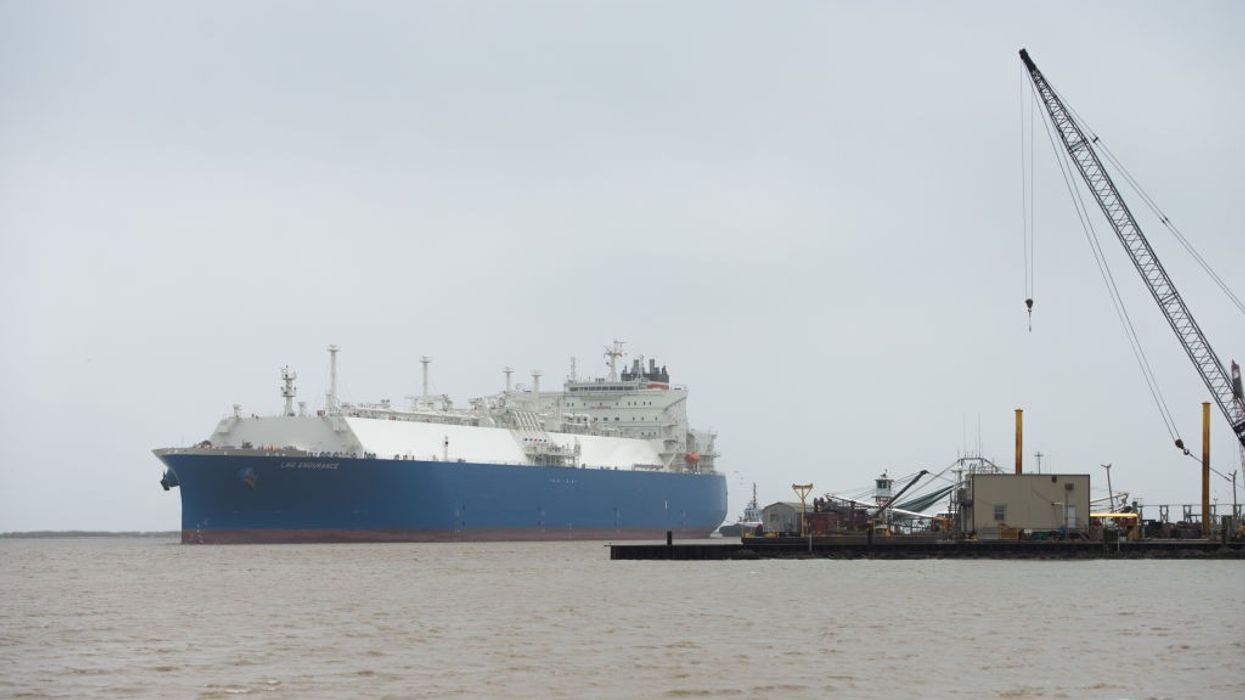
"FERC's approval of this massive new LNG export facility would cut through the heart of President Biden's LNG pause, realizing one of the largest fossil fuel export projects ever proposed in the United States," an expert said.
The Federal Energy Regulatory Commission will formally consider issuing a permit for the Calcasieu Pass 2 export terminal, a major fossil fuel infrastructure project in Louisiana that environmental campaigners oppose, according to a notice the agency released Thursday.
It will come to a vote at the agency's June 27 meeting, E&E News reported.
Environmentalists campaigned against the project last year but quieted down after the Biden administration paused all liquefied natural gas (LNG) exports to non-Fair Trade Agreement countries in January.
The planned terminal, owned by Venture Global and often called CP2, has been noticeably absent from FERC meeting agendas since last July, when the agency published the environmental impact statement. Venture and other corporate interests have pressured the agency to move the project, which is located near the Gulf of Mexico in western Louisiana, up on the agenda—and finally gotten their wish.
Advocacy groups urged the federal agency to deny the permit.
"FERC's approval of this massive new LNG export facility would cut through the heart of President [Joe] Biden's LNG pause, realizing one of the largest fossil fuel export projects ever proposed in the United States," Food & Water Watch policy director Jim Walsh said in a statement.
"Biden claims to be concerned by the devastating climate and environmental impacts of continued LNG development, yet the country is on track to export more and more LNG for years to come—with or without his temporary partial pause," he added.
FERC announced it will vote on the CP2 LNG export facility next week. While the current LNG export pause is still a hurdle for the facility, Venture Global could start construction if they get FERC's approval. https://t.co/p7C25drePj
— Sara Sneath (@SaraSneath) June 21, 2024
CP2 is modeled on the existing Calcasieu Pass terminal (CP1), which began operations in January 2022 and has been the subject of scrutiny not just for its role in the distribution of fracked gas but also for a series of deviations from permitted activities, including alleged flaring that the company didn't report and the accidental release of 180,099 pounds of gas.
The planned site for CP2 is an area of wetlands next to CP1. Venture says that it's already started off-site construction and spent billions of dollars on CP2 and, with speedy government approval, would begin shipping LNG from the facility in 2026, according to LNGPrime.
If FERC were to approve the project, the U.S. Department of Energy would still have a statutory duty to approve future exports, but DOE is required to do so quickly, Walsh of Food & Water Watch told Common Dreams. Still, a key holdup for Venture would be the pause on exporting LNG to countries without free trade agreements—many of the company's contracts are with such countries, Walsh said.
FERC's slowness to place CP2 on its agenda was "welcomed," Walsh said, but "a real victory will be FERC rejecting this project, and failing that, President Biden's DOE denying their export license."
Walsh expressed concern that the U.S. "continues to ramp up export capacity even as we have a pause on new LNG export approvals."
Environmental and community groups have called on the Biden administration to ban LNG exports permanently, as Common Dreams reported last month, and a key part of that effort is blocking CP2 and closing CP1, they contend.
The groups have allies at the national level who've tried to draw attention to a project whose importance has often been overlooked.
Environmental campaigner and journalist Bill McKibben, who wrote a piece about CP2 for The New Yorker last year, has called the project "an environmental justice train wreck." He wrote in Common Dreams that CP2 is like Keystone XL "but with perhaps even more at stake." He also said that it could end up creating more than 20 times the emissions of the controversial Willow project in Alaska.
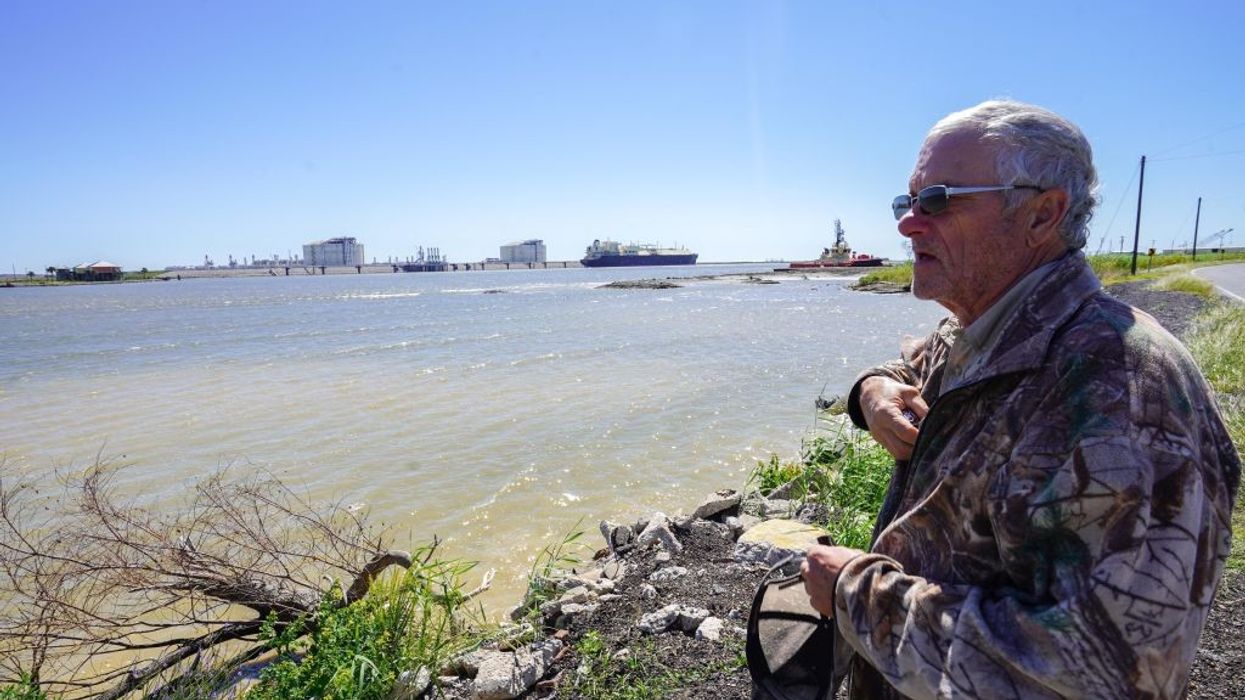
"You cannot say that tripling or quadrupling the level of exports from today's record highs is not going to result in significant financial harm," one expert said.
Gulf Coast community advocates on Tuesday called for U.S. President Joe Biden to permanently ban the export of liquefied natural gas.
In January, Biden's Department of Energy (DOE) announced a pause on approvals for new LNG exports to non-Free Trade Agreement countries so it could develop a new metric for whether these exports are in the public interest. The new metric should consider factors such as energy prices and the climate emergency, the administration said. The move was widely welcomed by climate and environmental justice groups, but it earned instant backlash from the fossil fuel industry and their allies in Congress.
In a Tuesday press briefing, frontline Louisiana fisherman and founder of the group Fishermen Involved in Sustaining our Heritage (F.I.S.H.) Travis Dardar, Louisiana Bucket Brigade director Anne Rolfes, and energy policy expert Tyson Slocum spoke about the harm that the LNG export boom has already done to Gulf ecosystems, livelihoods, and communities and why permitting more would be disastrous for the region, the country, and the climate.
"We've seen the destruction that just one of these plants has, so to be in the public interest to build all these other ones would be… a ridiculous notion," Dardar told reporters. "I mean, this is literally destroying people's lives."
Dardar described how life changed in Cameron Parish, Louisiana, after Venture Global built its first Calcasieu Pass terminal, which began operations in early 2022.
"We went from sitting on the porch at night, and you could hear the beach, to the roar of the plant, to the point where they would shoot, literally vibrate pictures off the walls and the flares would make nighttime seem like daytime," he said.
People began to get sick from cancer and other mysterious illnesses. Dardar was threatened with truancy charges because his children had missed so many school days due to ailments that doctors have failed to diagnose.
"It's awful to watch these people who are from Louisiana act as lobbyists, even when they're congresspeople, act as lobbyists for a company that is actually destroying our culture."
Dardar also detailed impacts to the fishing industry. LNG barges create large waves that have sunk and destroyed fishing boats, dredging has polluted the water with sediment, and the catches of fish and shrimp have "decreased dramatically."
"Cameron used to be No. 1 for shrimping, and now they call it No. 1 LNG capital of the world. You know, that leaves a bitter taste in my mouth," Dardar said.
Dardar and other fishers in the region are now mobilizing to stop Venture Global from building a second planned terminal, Calcasieu Pass 2 (CP2).
He noted that politicians and others who support Venture Global's plants either live in other parts of the state or moved out of Cameron Parish.
"They know better than to live there, but yet they're willing to sacrifice the people in the industry for, you know, money, greed," Dardar said.
But the people left behind are not seeing any benefits.
"We're living this nightmare," he said.
Rolfes of Louisiana Bucket Brigade said that one reason Venture Global had been able to get away with operating in such a destructive way was because the state of Louisiana has long been "controlled by the petrochemical industry."
This makes it all the more important, Rolfes said, that the DOE rule the LNG export boom is not in the public interest.
"This is why we need intervention at the federal level," she said.
She also criticized current and former Louisiana politicians who put the oil and gas industry over the well-being of their own constituents. She highlighted a letter sent by House Majority Leader Rep. Steve Scalise (R-La.) and Rep. Clay Higgins (R-La.) to Federal Energy Regulatory Commission Chair Willie Phillips on April 16, in which they urged FERC to approve CP2.
In the letter, they recycled debunked industry talking points, such as the argument that gas is a "clean-burning" fuel and that exports will help U.S. allies "transition away from Russian gas."
In fact, new science has shown that methane leaks make fossil gas at least as much of a climate pollutant as coal and Europe is moving quickly away from gas all together and toward renewable energy sources.
"At the highest levels of Congress, they are acting on behalf of Venture Global," Rolfes said.
She also pointed to the example of former Sen. Mary Landrieu (D-La.), who now works at law firm Van Ness Feldman and posted on Facebook Monday that the firm was "proud" to represent Venture Global, which she called an "outstanding company"
"This is who is in the debate regarding the public interest," Rolfes said. "On our side, it's fishermen, fishing families, and people who are worried about the prices of energy. And on their side, it's a damn Venture Global lobbyist."
Rolfes added, "It's awful to watch these people who are from Louisiana act as lobbyists, even when they're congresspeople, act as lobbyists for a company that is actually destroying our culture."
Slocum, who directs Public Citizen's energy program and works as a professor at University of Maryland Honors College, said that restoring LNG exports wouldn't just work against the interests of frontline communities in the Gulf.
"The record volumes of methane gas that we're currently exporting have extraordinary impacts on domestic energy markets that have exposed working families and businesses across the United States to higher prices," Slocum said.
He also gave the history of why the DOE must consider the public interest before it approves shipping gas abroad: It dates to the Natural Gas Act of 1938, which placed this condition on future exports.
"It is inconceivable that it is in the public interest to force the poorest American families to bear higher and more volatile energy burdens."
"The Biden administration's decision to pause pending reviews was required by the law," Slocum said, "because the standards developed to assess the public interest that were conducted during the Trump administration were irrelevant and based upon extraordinarily poor data and methodologies."
As to what the DOE will eventually determine, Slocum said it has historically relied on an overall cost-benefit analysis. In this case, it would consider jobs created and money made from export operations on one hand and higher prices and impacts on local communities and industries on the other. Slocum said that the planned LNG expansion could not be considered in the public interest "by any metric."
"You cannot say that tripling or quadrupling the level of exports from today's record highs is not going to result in significant financial harm," he said.
At the same time, the Biden administration has also mandated that regulatory agencies need to complete a "distributional analysis," meaning they most consider how policies will impact people depending on their income levels. In the case of LNG exports, any increase in prices will necessarily hit low-income families and individuals harder.
"It is inconceivable that it is in the public interest to force the poorest American families to bear higher and more volatile energy burdens, to prioritize bigger profits for commodity traders, LNG exporters, and foreign markets," Slocum said.
He concluded, "Any honest assessment would have to conclude that additional LNG exports fail the public interest test."
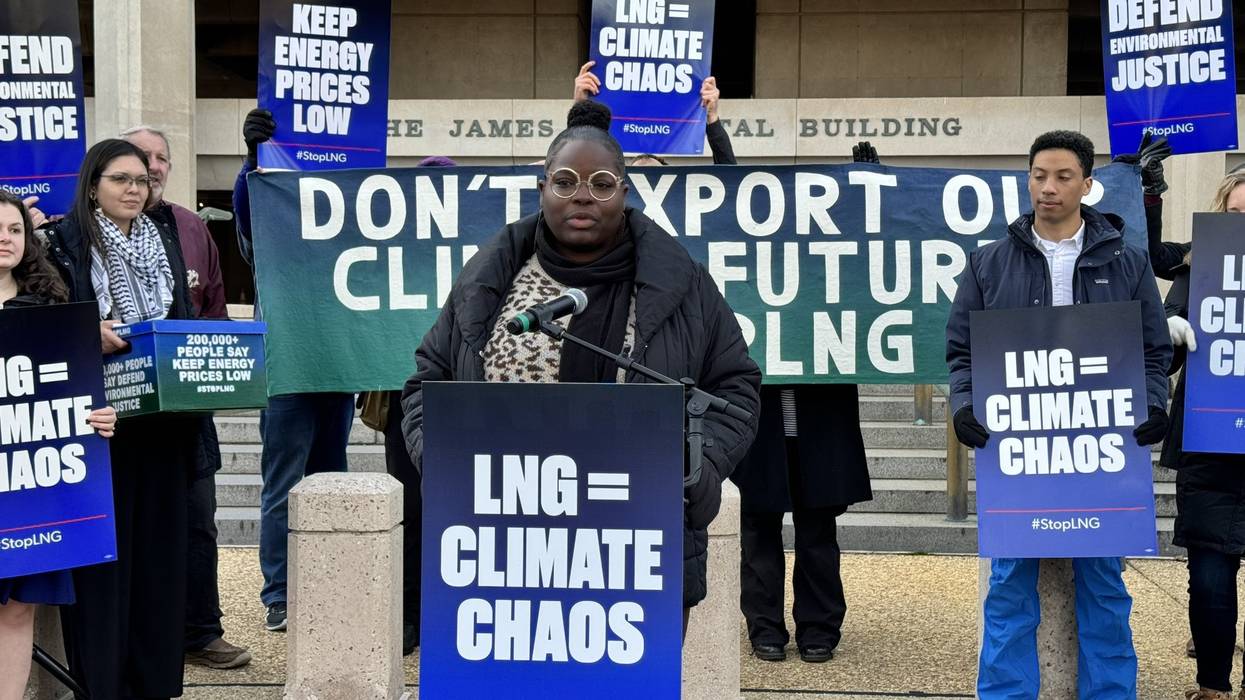
"I won't allow for them to continue to poison my kids," one Gulf Coast environmental justice advocate said.
Climate advocates and frontline community leaders published a letter Tuesday urging concerned individuals to join them in Washington, D.C., in early February for a sit-in at the Department of Energy where they will demand that it end the expansion of liquefied natural gas exports.
Stopping the LNG buildout has emerged as a major priority for the climate movement in recent months, as just one proposed project, Venture Global's Calcasieu Pass 2 (CP2) facility, would emit 20 times more climate pollution than the controversial Willow oil drilling project in Alaska. But CP2 is only one of more than 20 LNG export facilities planned for the Gulf Coast, which would have combined emissions that exceed those of the European Union or 850 coal plants, Stop LNG said in a statement.
"If [President Joe Biden] wants to be a true climate president, his administration will stop the approval of new LNG facilities. If not we'll keep pushing until they do," letter signatory and Gulf Coast environmental justice organizer Roishetta Ozane wrote on social media. "I won't allow for them to continue to poison my kids."
The action is planned for February 6-8 at the Department of Energy.
"We're writing to ask you to do something hard but important: Come to Washington D.C. in the middle of this winter, to join a demonstration and, if you can, risk arrest in a large-scale civil disobedience action," the letter—which was signed by several prominent activists including Alexandria Villaseñor, Bill McKibben, Jane Fonda, Rebecca Solnit, and Varshini Prakash—begins.
The planned direct action builds on months of pressure on the administration to stop the planned expansion of LNG exports, including a petition to the DOE signed by more than 300,000 people and a letter to Biden signed by more than 170 scientists. Polling from Data for Progress and Fossil Free Media found that 60% of likely voters would support the Biden administration limiting LNG exports.
"We need the DOE to tell the president the truth: Expanding LNG damages our climate, and economy, and the communities forced to live alongside these facilities."
"It's time to convince the Department of Energy to stop licensing new export terminals for liquefied natural gas," Tuesday's letter reads. "Time after time they've approved these proposals, so the U.S. is now the biggest exporter of gas on Earth—and that volume could quadruple if the industry has its way. There's no bigger climate bomb left on planet Earth."
There are signs the administration is paying attention to the growing clamor and may be open to a change in policy. On Monday, Politico reported that the DOE was reviewing its decision-making process for approval LNG projects to make sure that it was considering the climate, economic, and security impacts.
"This would be smart policy and good politics," Jamie Henn of Fossil Free Media posted in response to the news.
The letter states that organizers "need the administration to stop CP2—the next big facility up for approval—and all other facilities by committing to a serious pause to rework the criteria for public interest designation, incorporating the latest science and economics, before any such facility is permitted," the letter reads.
"We need the DOE to tell the president the truth: Expanding LNG damages our climate, and economy, and the communities forced to live alongside these facilities," it continues. "That includes the land, water, and air in Louisiana and Texas, where most of these facilities are built—it's why some of us have fought on the front lines for years. We've rushed kids with asthma attacks to the hospital, seen our fishing spots and beaches polluted with chemicals, and breathe air filled with poisons everyday. We know what's at stake."
The letter writers said that they had committed "to keep this action peaceful in word, mood, and action."
Those who cannot travel to D.C. may participate in solidarity actions from their home. Those who do plan to participate should sign up on stoplng.org. They will need to complete online training, including one session the night before risking arrest.
"2023 saw the hottest weather on this planet in at least 125,000 years; we think it is an honor to rise in defense of the planet we love, and the places where we live," the letter concludes. "Thank you for considering joining in."
Experts warn that expanding liquefied natural gas infrastructure will put the United States "on a continued path toward escalating climate chaos."
Echoing recent calls from frontline leaders, green groups, and healthcare workers, 170 scientists on Tuesday pressured U.S. President Joe Biden to reject a proposed liquefied natural gas terminal in Louisiana known as CP2 and other pending LNG projects.
"We are scientists who write to you with ever-increasing urgency as our climate continues to deteriorate to implore you to stop the dash to increase exports of liquified natural gas (LNG)," wrote the scientists, including Rose Abramoff, Robert Howarth, Mark Jacobson, Peter Kalmus, Michael Mann, Sandra Steingraber, Farhana Sultana, and Aradhna Tripati.
While stressing their opposition to Venture Global's Calcasieu Pass 2 (CP2) project, they also emphasized that "the magnitude of the proposed buildout of LNG over the next several years is staggering."
"As scientists we are telling you in clear and unambiguous terms that approving CP2 and other LNG projects will undermine your stated goals of meaningfully addressing the climate crisis."
"For years, the science has been overwhelmingly clear that we must stop expanding fossil fuel extraction and infrastructure and rapidly transition to renewable energy. We have simply no runway left and little margin for error," the scientists warned. "In fact, we are rapidly passing tipping points that are further escalating the climate crisis."
"Altogether, the science to date shows that spiraling emissions of the climate super-pollutant methane are a major contributor to the ongoing failure to meet agreed-upon global emissions targets and stabilize the climate," they explained. "The science also shows that LNG facilities are inherently leaky operations and prodigious emitters of methane."
Their letter cites a forthcoming study by Howarth, a Cornell University scientist, that shows LNG is at least 24% worse for the climate than coal.
CP2 alone would produce over 20 times more planet-heating pollution than ConocoPhillips' Willow oil project in Alaska, which the Biden administration is also under fire for greenlighting. The letter highlights that "these climate-wrecking emissions are on top of prodigious amounts of toxic air pollutants, including carcinogenic benzene, released into local environments both from the LNG facilities themselves and the upstream drilling and fracking operations that feed them."
"LNG plants and their associated infrastructure pose serious health harms to surrounding communities and worsen environmental injustice," the scientists pointed out. "These facilities are disproportionately located in communities of color and low-income communities on the Gulf Coast already overburdened with pollution."
"You have often said that your policies will be guided by listening to the science," they wrote to Biden. "As scientists we are telling you in clear and unambiguous terms that approving CP2 and other LNG projects will undermine your stated goals of meaningfully addressing the climate crisis and put us on a continued path toward escalating climate chaos. We implore you to turn back from this course, reject CP2 and other fossil fuel export projects, and put us on a rapid and just trajectory off fossil fuels."
Opposition to CP2 may already be having some effect. Advocates had expected the Federal Energy Regulatory Commission to consider the project this fall but so far, the agency hasn't. Louisiana Bucket Brigade director Anne Rolfes said last week that "every month it is not on the agenda, we consider a victory because it means that it's not getting part of the federal approval that it needs."
While Venture Global lacks the permission required for CP2, the Biden administration has infuriated frontline communities, scientists, and voters concerned about the climate emergency by expanding LNG exports, enabling projects like Willow and the Mountain Valley Pipeline, and continuing fossil fuel lease sales for public lands and waters.
Biden, who was elected in 2020 after running on bold climate promises, is now seeking reelection next year and could again face Republican former President Donald Trump, a major ally to the fossil fuel industry.
The president "must reject new fossil fuel projects, starting with CP2, that poison communities and that will harm young people far into the future," Michele Weindling, political director of the youth-led Sunrise Movement, said Friday. "He can't one day cave to fossil fuel millionaires and the next throw a bone to young people. That's not how science works, and young voters know it."
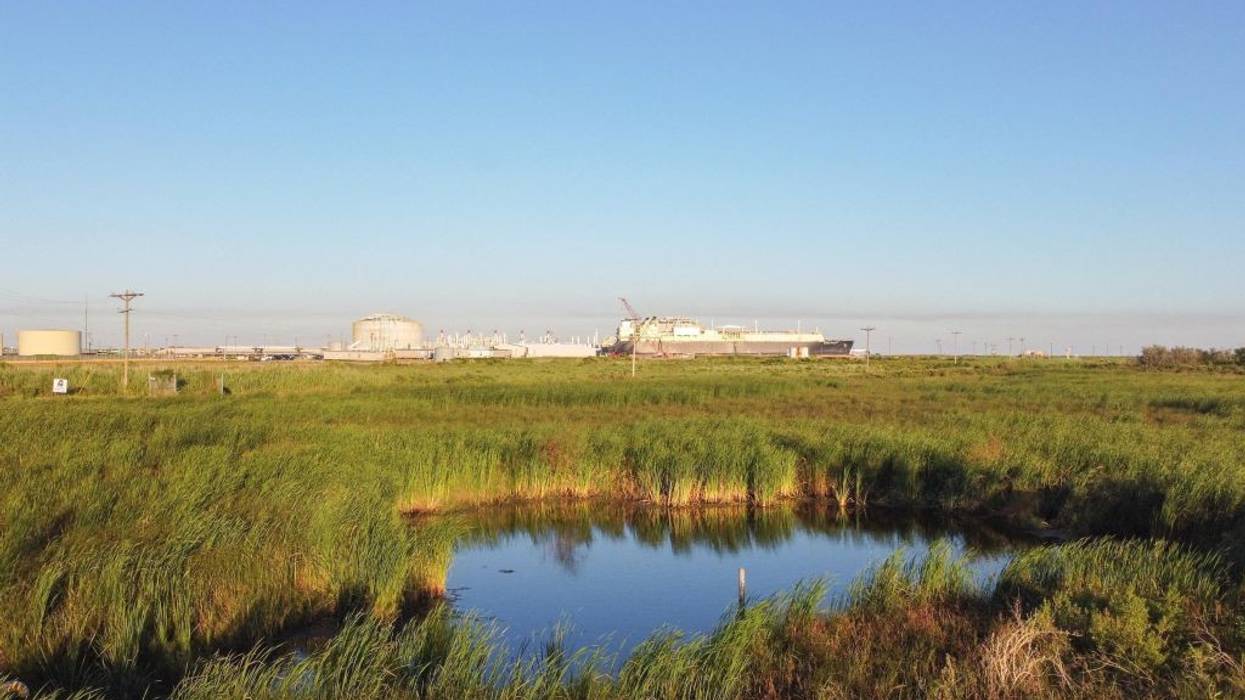
A new report from the Louisiana Bucket Brigade documents how Venture Global's history of violations and evasions has continued into 2023.
Venture Global's existing Calcasieu Pass liquefied natural gas terminal experienced operational problems for more than 63% of the first half of 2023, according to a Louisiana Bucket Brigade report released Wednesday.
The findings build on the terminal's record of permit violations during its first year in operation and come as Venture Global seeks federal approval for the Calcasieu Pass 2 (CP2) facility, which would emit 20 times more greenhouse gases than the controversial Willow oil drilling project in Alaska.
"Calcasieu Pass needs to be shut down, and this company should not get any other permits," report co-author Anne Rolfes, who directs the Louisiana Bucket Brigade, said in a press briefing.
"I think that it's fair to say that there's reason to fear that these other facilities that Venture Global is building will have the same kind of air emission problems that we're seeing at the Calcasieu Pass facility."
The Louisiana Bucket Brigade has been keeping tabs on Venture Global's Calcasieu Pass facility since it released 180,099 pounds of gas in an accident the day before it began operating at the start of 2022.
"That's enormous," Rolfes said. "And for me, that kind of set the scene for this facility."
The company went on to violate its air permit more than 2,000 times during 2022, and then asked the Louisiana Department of Environmental Quality (LDEQ) to respond to the violations by increasing its pollution limits.
"The plan is to retroactively make everything legal," Rolfes said. "And if that sounds crazy, welcome to Louisiana."
But Rolfes and other frontline advocates don't believe Venture Global should be trusted with an expanded permit. During both 2022 and 2023, it failed to submit letters to LDEQ and to the U.S. Environmental Protection Agency (EPA) within seven days of any incidents, as mandated by the Clean Air Act. All the information the Louisiana Bucket Brigade has been able to gather comes from Venture Global's Title V Semiannual Monitoring reports for the first and second halves of 2022 and the first half of 2023, as well as from the careful documentation of people who live close to the facility and observed many more gas flares and sirens then the company reported.
In 2023, for example, the plants' neighbors observed flaring on 34 days that Venture Global failed to mention in its report for the first half of the year.
"If we didn't have these neighbors who were documenting the problem, Venture Global would be getting away with this," Rolfes said.
Even when it does submit reports, Venture Global's information is vague. For example, the 2023 report combined with neighbor testimony found the terminal experiencing problems on 115 of 181 days, or 63.5% of the year so far. However, one of those incidents was a 78-day accident that Venture Global said only lasted only five hours. If this strange report is omitted, then neighbors documented flaring on 69 more days than the company admitted.
Another concern raised by the report is that Venture Global does not appear to have taken steps to fix the underlying issues causing these accidents.
In 2022, the company said that issues with its turbines caused more than half of its permit violations, but that it had taken action to solve the problem. Despite this, it again stated that the turbines were behind 75% of 2023's permit violations.
"If this issue had been resolved in 2022, as Venture Global stated, why are the facility's turbines still the primary source of the problem?" the report authors asked.
This is concerning because Venture Global has said that CP2 and another LNG facility it is currently building in Plaquemines Parish, will be "technologically identical" to Calcasieu Pass.
Calcasieu Pass was built using modular construction, with parts including the power source made by Baker Hughes in Italy and then shipped to Louisiana for assembly, journalist Sara Sneath said during the briefing. When the entire power operation was assembled, the turbines emitted beyond permitted levels.
"I think that it's fair to say that there's reason to fear that these other facilities that Venture Global is building will have the same kind of air emission problems that we're seeing at the Calcasieu Pass facility," Sneath said.
Finally, the report raised alarms about what the LNG buildout is doing to Louisiana's fishing industry. Dredging to make room for large LNG tankers is polluting the estuary and harming fish, and the tankers themselves stir up enough silt and dirt to make fishing in the area impossible for half a day.
"What makes Louisiana, Louisiana?" Nathan, a third-generation crabber from Cameron, Louisiana, asked in the report. "It's not LNG plants. It's not refineries. It's seafood and the culture behind the seafood. I want to preserve that so my kids can experience it like I did, and the generations of fishermen before me."
The report makes six recommendations:
There is evidence that opposition from climate advocates and local communities is making a difference on the federal level. Rolfes said advocates had expected CP2 to be on FERC's agenda for the fall, but it was not listed for October, November, or December.
"Every month it is not on the agenda, we consider a victory because it means that it's not getting part of the federal approval that it needs," Rolfes said, adding that she took it as a sign that "our work has some momentum."
"We do believe that we've reached the ears of the Biden administration," Rolfes said.
"It's supposed to be a very clean type set up, but we're not seeing it here down where I live," one local advocate and expert said.
Frontline Louisiana activists are warning that the company behind the proposed "carbon bomb" Calcasieu Pass 2, or CP2, liquefied natural gas terminal already has a history of environmental violations.
Venture Global's Calcasieu Pass terminal, which began operations in January 2022, racked up more than 2,000 deviations from its air permit during its first year alone. Now, the Arlington-based company is seeking approval for CP2, which it says will be "technologically identical" to its first facility, Louisiana Bucket Brigade campaign coordinator Shreyas Vasudevan said during a Tuesday press briefing.
"Why are we moving forward with the permitting for CP2 when this facility in just one year has such an egregious history?" Vasudevan asked.
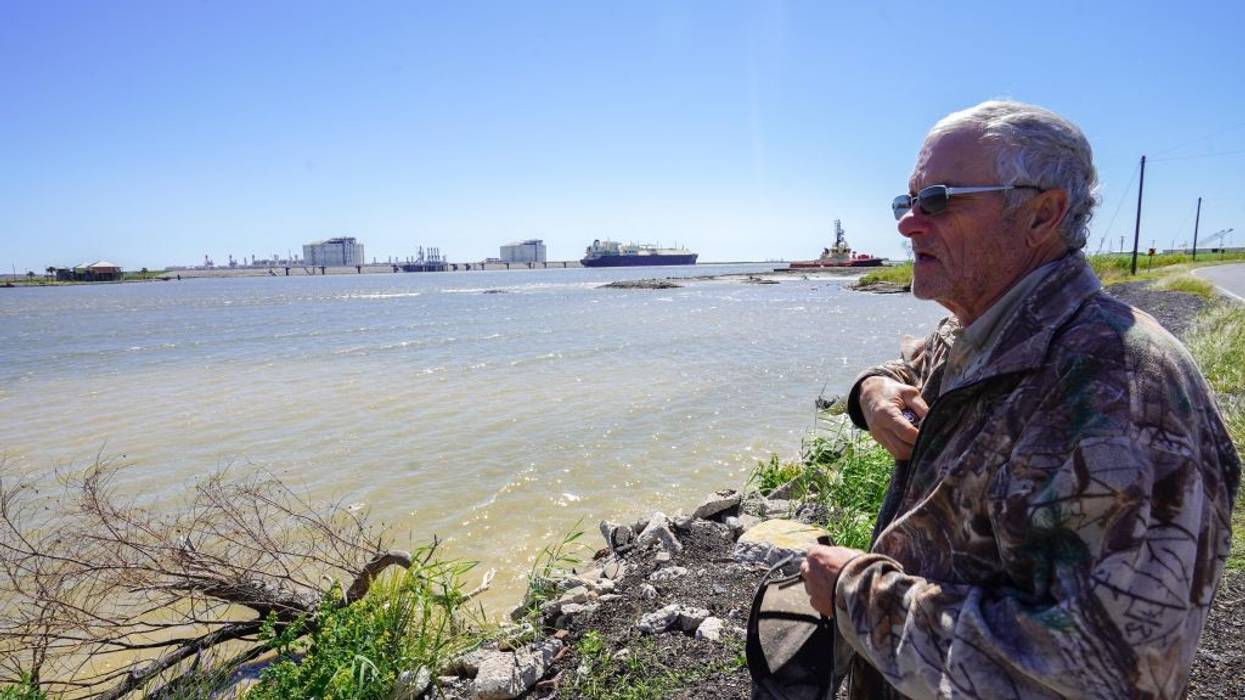
John C. Allaire, a retired environmental engineer for both BP and Amaco, lives about 1,600 meters across the river from Venture Global's Calcasieu Pass in Lousiana's Cameron Parish. For the past 22 months, he has kept a record of every time he has seen gas flare from the facility.
"They've got about a 30-to-40 foot flame on their flare this morning," Allaire told reporters Tuesday. "They were flaring yesterday."
The facility got off to an inauspicious start when, on January 18, 2022, the day before it began exporting LNG, it released 180,099 pounds of gas in an accident it later determined "could have been prevented" if it had followed established procedures, according to a 2022 Louisiana Bucket Brigade report.
"There's a huge discrepancy between what they've also reported for this year and what's been seen at the facility."
Allaire then observed flaring on 91 of the facility's first 131 days in operation, or 68% of its first five months.
Flaring is an emergency means of burning off waste gas. Calcasieu Pass' environmental impact statement, prepared by the Federal Energy Regulatory Commission (FERC), said that the facility "would avoid flaring at night, during low visibility conditions, and during peak migration seasons." Yet Allaire observed flares both at night and during the peak migration season for non-tropical birds.
In its semiannual monitoring report, submitted to the Louisiana Department of Environmental Quality (LDEQ) on March 30, 2023, Venture Global admitted that Calcasieu Pass had exceeded its permitted amount of emissions more than 2,000 times in 2022.
"In total, out of 343 days of operation last year the facility was in violation of their permit for 286 days, meaning they were only in compliance for 17% of their time in operation last year," Allaire wrote in his analysis of the report.
In response to the report, LDEQ issued a compliance order, but Venture Global responded by insisting it had "solved all of these issues and that because of that, this compliance order is unnecessary," Vasudevan said.
Yet continued monitoring by Allaire belies that claim. He told reporters he has continued to observe flaring on many more days than Venture Global admitted to accidents in its most recent September 30 report.
"There's a huge discrepancy between what they've also reported for this year and what's been seen at the facility," Vasudevan said.
This follows the company's pre-established reporting pattern. An initial semiannual monitoring report for the first half of 2022 claimed only 32 violations, while a revised report published later disclosed more than 70 during the same time period.
Allaire continues to hear alarms sound and smoke and particulate matter pollution rise out of the facility's flares and smoke stacks.
"It's supposed to be a very clean type set up, but we're not seeing it here down where I live," Allaire said.
Venture Global's LNG exporting has polluted the water as well as the air. Around 22 months ago, the company pumped the silt and mud from its marine berth for LNG tankers out into the Gulf of Mexico 400 yards from Allaire's beachfront.
The dredge material transformed what "used to be a nice sand and shell beach," Allaire said.
"You walk into the water, and as you get ankle deep, you sink, and as you get knee deep, you sink. And as you get waist deep, you're in this black viscous sludge that they pumped out," Allaire said.
"It is clear that fishermen have not been able to have adequate community input."
Allaire isn't the only Gulf resident who has been impacted by the release of dredging material.
"That has been a consistent problem that's been experienced in the town of Cameron," Vasudevan said. "And so fishermen have been complaining of marshes being filled with mud."
In this regard, say advocates, Venture Global has not been honest with regulators. It told FERC that it was listening to the concerns of fishers through a Community Advisory Group, even as it acknowledged that no shrimpers or commercial fishers were actual members. It did say that police jurors and other local government officials were involved, but when the Louisiana Bucket Brigade filed a public records request with the Cameron Parish Police Jury, the jury responded that they had not participated in Venture Global's group.
"It is clear that fishermen have not been able to have adequate community input," Vasudevan said, "and the permitting for CP2 must be halted until their concerns are completely understood and addressed."
While Venture Global is pumping pollutants into Louisiana's air and water, it's not actually pumping much money into the economy beyond employing a few workers, Allaire said.
That's because the company, which sold around $18.2 billion-worth of LNG cargo since March of 2022 according to Reuters, has been granted a 10 year industrial tax exemption from the Louisiana Board of Commerce and Industry. For 2022, that means the company escaped paying $184.6 billion that would have otherwise helped fund schools, pave roads, and supply first responders, Allaire told reporters.
"There's all kinds of downside with the flaring, the increased air pollution, the noise pollution, the light pollution. And it's just crazy that they won't contribute anything to the local economy here," Allaire said.
"The last thing that people in these communities need is another project of this magnitude."
That trade-off is partly why advocates are wary of CP2, what Vasudevan called Venture Global's "bigger and badder" proposed site which would be located across the Calcasieu River from the original. FERC could approve the new facility by the end of 2023.
If it does, 350.org and Third Act co-founder Bill McKibben said, it would be "an environmental justice train wreck."
"The last thing that people in these communities need is another project of this magnitude," McKibben said during the briefing.
And its impact would extend far beyond southwest Louisiana. During its lifetime, critics warn, CP2 would lead to 20 times the greenhouse gas emissions that would be released over the lifetime of the controversial Willow oil drilling project in Alaska.
"That we would even consider doing that, anything like that in 2023, which the scientists have now told us is the hottest year we've experienced on this planet in 125,000 years, that's obscene and dangerous," McKibben said.