

SUBSCRIBE TO OUR FREE NEWSLETTER
Daily news & progressive opinion—funded by the people, not the corporations—delivered straight to your inbox.
5
#000000
#FFFFFF
To donate by check, phone, or other method, see our More Ways to Give page.
Daily news & progressive opinion—funded by the people, not the corporations—delivered straight to your inbox.

"We are now in truly uncharted territory and as the climate keeps warming, we are bound to see new records being broken in future months and years," one expert said.
July 21 was Earth's hottest day on record, overtaking the record set last July during the
hottest year in millennia.
The European Copernicus Climate Change Service (C3S) found that Sunday's average air surface temperature soared to 17.09°C , or 62.76°F, according to preliminary data. While that is only 0.1°C warmer than the previous record—set on July 6, 2023—it was nearly 0.3°C higher than the pre-2023 record, set at 16.8°C on August 13, 2016.
"What is truly staggering is how large the difference is between the temperature of the last 13 months and the previous temperature records," C3S Director Carlo Buontempo said in a statement. "We are now in truly uncharted territory and as the climate keeps warming, we are bound to see new records being broken in future months and years."
The news follows a year of shattered temperature records as El Niño combined with the climate emergency to heat air and ocean to levels well above average. While El Niño conditions ended in April, scientists still predict that 2024 could overtake 2023 as the hottest year on record.
As of June 2024, the past 13 months have all been the hottest of their kind on record. June 2024 was also the 12th month in a row to see its average temperature meet or surpass 1.5°C above preindustrial levels—the most ambitious temperature goal enshrined in the Paris agreement.
Scientists have warned that the only way to keep global temperatures from rising further is to rapidly phase out the use of oil, gas, and coal and transition to renewable energy.
"These recurring record-breaking temperatures are a scorching red flag, but it's not too late to reverse course."
Before Sunday, the last hottest day on record was July 6, 2023, which was also the fourth consecutive day to break that record. The previous record was set at 17.08°C, or 62.74°F, according to Copernicus. However, since the 2016 temperature record was first broken on July 3, 2023, 57 days in the past year have also surpassed it.
What's more, C3S found that the last 10 years have been the 10 years on record with the highest average daily temperatures.
"The difference in the highest daily average temperature between the lowest ranked of those 10 years (2015) and the previous record before 2023 (13 August 2016) was 0.2°C. The jump from the 2016 record to 2023/2024 is about 0.3°C, highlighting how substantial the warmth of 2023 and 2024," C3S said.
Record-breaking temperatures have also brought extreme weather.
On Sunday, Florida meteorologist Jeff Berardelli wrote on social media that "the most anomalously warm places were Antarctica and Western Canada where several hundred wildfires blaze, many out of control."
C3S also said that Sunday's record was in part driven by "much-above-average temperatures over large parts of Antarctica."
The warmest day on record also coincided with heatwaves in Russia, Europe, and the U.S., Reuters reported.
C3S predicted that temperatures would continue to rise in the short term.
"In the coming days, we are expecting the daily global average temperature to further increase and peak around 22 or 23 July 2024 and then go down, but with possible further fluctuations in the coming weeks," the agency said.
In the longer term, temperature trends will depend on whether policymakers can take ambitious action to reduce greenhouse gas emissions and halt the destruction of natural carbon sinks.
"These recurring record-breaking temperatures are a scorching red flag, but it's not too late to reverse course," Oceana Campaign director Joseph Gordon said in a statement. "When you're on the path to destruction, the best thing you can do is turn around."
Gordon recommended one thing U.S. President Joe Biden in particular could do to stop runaway climate change.
"One of the most immediate and impactful ways to address greenhouse gas emissions is to prevent new offshore drilling in the United States," Gordon said. "Offshore drilling drives climate change throughout its entire process. President Biden must permanently protect our coasts from offshore drilling and move us toward a clean energy future."
An earlier version of this article misstated the difference between the new temperature record and the pre-2023 record.

"As remarkable as this might appear, it is not really surprising as the continuous warming of the climate system inevitably leads to new temperature extremes," said the head of the E.U. climate service.
Last month was the warmest February on record, the European Union’s climate service said Wednesday, marking the ninth consecutive month of unprecedented heat as the climate crisis continues to drive up global temperatures.
Climate scientists say the climate crisis, without a doubt, is to blame for increased temperatures.
Not only was it warm above sea level—global ocean temperatures also reached a record high last month. That's not just for February but for any month on record.
"Ocean warming has prompted concerns about the mass bleaching of coral reefs. It also raises global sea levels and can help to fuel higher intensity hurricanes," the BBC reports. "Unusually warm waters may also have been a factor in another exceptional month for Antarctic sea ice. The three lowest minimum extents in the satellite era have now occurred in the last three years."
The #C3S's monthly climate bulletin is out now:
📈 February 2024 was globally the warmest on record;
📈 Global Sea Surface Temperatures hit record highs.
▶️https://t.co/XEmBnArhh6 pic.twitter.com/uUubVY9c05
— Copernicus ECMWF (@CopernicusECMWF) March 7, 2024
Arctic sea ice is also disappearing, and the Arctic could be virtually ice-free during the summer within a decade.
"February joins the long streak of records of the last few months," said Carlo Buentempo, director of the Copernicus Climate Change Service. "As remarkable as this might appear, it is not really surprising as the continuous warming of the climate system inevitably leads to new temperature extremes."
“The climate responds to the actual concentrations of greenhouse gases in the atmosphere so, unless we manage to stabilize those, we will inevitably face new global temperature records and their consequences,” Buentempo added.
The last year has been over 1.5°C above pre-industrial averages—1.56°C, to be exact—but that won't signify a breach of the goals set in the Paris Agreement unless temperatures remain elevated for the next few years.
"A year ago, the fact that the global temperature for a particular month would reach 1.5°C above the pre-industrial level would have been considered exceptional," Julien Nicolas, a senior scientist at Copernicus, told The New York Times.
The world will have to get off of fossil fuels in order to halt runaway warming, and this year could help determine the future of the climate, considering one of the people running to lead the nation appears destined to unleash billions of tons of additional planet-warming emissions should he return to office.

After 2023 was the hottest year in human history, experts warn that 2024 "has strong potential to be another record-breaking year."
While global policymakers continue to drag their feet on phasing out planet-heating fossil fuels, scientists around the world "are freaking out" about high ocean temperatures, as they told The New York Times in reporting published Tuesday.
A "super El Niño" has expectedly heated up the Pacific, but Times reporter David Gelles spoke with ocean experts from Miami to Cambridge to Sydney about record heat in the North Atlantic as well as conditions around the poles.
"The sea ice around the Antarctic is just not growing," said Matthew England, a University of New South Wales professor who studies ocean currents. "The temperature's just going off the charts. It's like an omen of the future."
Rob Larter, a marine geophysicist with the British Antarctic Survey who watches polar ice levels, told the paper that "we're used to having a fairly good handle on things. But the impression at the moment is that things have gone further and faster than we expected. That's an uncomfortable place as a scientist to be."
Last week, Jeff Berardelli, WFLA's chief meteorologist and climate specialist, also highlighted the warm North Atlantic and that "all signs are pointing to a busy hurricane season" later this year.
Noting that in the middle of this month, sea surface temperatures in the North Atlantic were around 2°F higher than the 1990-2020 normal and nearly 3°F above the 1980s, Berardelli explained:
That may not sound like a lot, but consider this is averaged over the majority of the basin shown in the red outline in the image above. A deviation like that is unheard of... until now.
To put it into more relatable terms, considering what's been normal for the most recent 30 years, the statistical chance that any February day would be as warm as it is right now is 1-in-280,000. That's not a typo. This is according to University of Miami researcher Brian McNoldy...
And that 1-in-280,000 is compared against a recent climate, which had already been warmed substantially by climate change. If you tried to compare it against a climate considered normal around the year 1900, the math would become nonsensical. Meaning an occurrence like this simply would not be possible.
McNoldy also stressed the shocking nature of current conditions to the Times, telling Gelles that "the North Atlantic has been record-breakingly warm for almost a year now... It's just astonishing. Like, it doesn't seem real."
The new comments from McNoldy and other scientists come on the heels of various institutions and experts worldwide recently confirming that 2023 was the hottest year in human history. Research also showed that it was the warmest year on record for the oceans, which capture about 91% of excess heat from greenhouse gases.
As Common Dreams reported last month, Adam Scaife, a principal fellow at the United Kingdom's Met Office, said that "it is striking that the temperature record for 2023 has broken the previous record set in 2016 by so much because the main effect of the current El Niño will come in 2024."
That's the warm phase of the El Niño Southern Oscillation, a climate phenomenon that also has a cool phase called La Niña expected later this year. Still, Scaife warned that "the Met Office's 2024 temperature forecast shows this year has strong potential to be another record-breaking year."
Throughout the record-shattering 2023, experts also expressed alarm. After an April study showed that the ocean is heating up faster than previously thought, the BBC revealed that some scientists declined to speak about it on the record, reporting that "one spoke of being 'extremely worried and completely stressed.'"
In July, when a buoy roughly 40 miles south of Miami recorded a sea surface temperature of 101.1°F just after a "100% coral mortality" event at a restoration site, Florida State University associate professor Mariana Fuentes told NPR that "if you have several species that are being impacted at the same time by an increase in temperature, there's going to be a general collapse of the whole ecosystem."
The following month, the European Union's Copernicus Climate Change Service announced that the average daily global ocean surface temperature hit 69.7°F, and deputy director Samantha Burgess said, "The fact that we've seen the record now makes me nervous about how much warmer the ocean may get between now and next March."
"The more we burn fossil fuels, the more excess heat will be taken out by the oceans, which means the longer it will take to stabilize them and get them back to where they were," Burgess emphasized at the time.
Last year ended with a United Nations climate summit that scientists called "a tragedy for the planet," because the final deal out of the conference—led by an Emirati oil CEO—did not demand a global phaseout of fossil fuels.
Azerbaijan, which is set to host this year's U.N. conference in November, has similarly selected a former fossil fuel executive to lead the event. The country also plans to increase its gas production by a third during the next decade.
"The science is clear: Transformative and comprehensive climate action, including a rapid transition away from fossil fuels and investments in resilience, are essential to ensure a livable future for generations to come."
A pair of U.S. agencies confirmed Friday that not only was 2023 by far the warmest year on record, it also capped off the hottest decade ever documented—underscoring the need for far more ambitious action to rapidly phase out fossil fuels.
The U.S. National Aeronautics and Space Administration (NASA) and the National Oceanic and Atmospheric Administration (NOAA) maintain separate temperature records, as do other institutions and scientists worldwide.
"NASA and NOAA's global temperature report confirms what billions of people around the world experienced last year; we are facing a climate crisis," declared Bill Nelson, NASA's administrator. "From extreme heat, to wildfires, to rising sea levels, we can see our Earth is changing."
"It's driven primarily by our fossil fuel emissions, and we're seeing the impacts in heatwaves, intense rainfall, and coastal flooding."
NASA, whose records date back to 1880, found that Earth's average surface temperature last year was about 1.2°C above the average for the agency's baseline period, which is 1951-1980, and 1.4°C above the late 19th-century average.
"Every month from June through December 2023 came in as the hottest month on record. July ranked as the hottest month ever recorded," NASA noted in an article explaining last year's record heat, which addresses greenhouse gases, the El Niño Southern Oscillation (ENSO), warming oceans, decreasing aerosols, and an undersea volcanic eruption.
"The exceptional warming that we're experiencing is not something we've seen before in human history," emphasized Gavin Schmidt, director of NASA's Goddard Institute for Space Studies. "It's driven primarily by our fossil fuel emissions, and we're seeing the impacts in heatwaves, intense rainfall, and coastal flooding."
NOAA, which has a climate record back to 1850, similarly found that the average land and ocean surface temperature last year was 1.18°C above the 20th century and 1.35°C above the preindustrial average, or 1850-1900. Sarah Kapnick, the agency's chief scientist, said that "after seeing the 2023 climate analysis, I have to pause and say that the findings are astounding."
"Not only was 2023 the warmest year in NOAA's 174-year climate record—it was the warmest by far," she highlighted. "A warming planet means we need to be prepared for the impacts of climate change that are happening here and now, like extreme weather events that become both more frequent and severe."
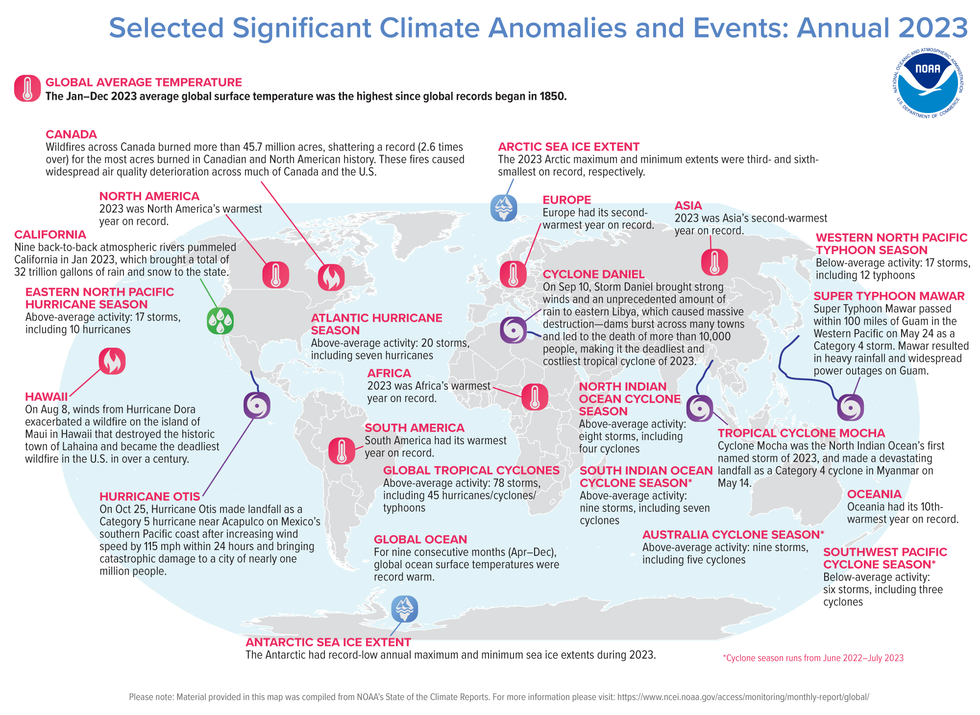
Both agencies found that the 10 hottest years in their records have all been in the past decade. NOAA pointed out that there is a one-in-three chance that this year will be even warmer than 2023, and a 99% chance that 2024 will be among the five hottest years.
"We will continue to see records broken and extreme events grow until emissions go to zero," Kapnick warned. "Government policy can address both emissions, but also actions to reduce climate impacts by building resilience."
NASA and NOAA's findings are in line with not only scientists' predictions amid extreme conditions last year but also data released Tuesday by the European Union's Copernicus Climate Change Service and Friday by the United Kingdom's Met Office—which has records back to 1850 and found that the global average temperature for 2023 was 1.46°C above the preindustrial baseline.
"It is striking that the temperature record for 2023 has broken the previous record set in 2016 by so much because the main effect of the current El Niño will come in 2024," said Adam Scaife, a principal fellow at the U.K. agency. "Consistent with this, the Met Office's 2024 temperature forecast shows this year has strong potential to be another record-breaking year."
El Niño and La Niña are the warm and cool phases of the climate phenomenon ENSO in the Pacific Ocean. As Common Dreams reported Thursday, a study published in Advances in Atmospheric Sciences found that 2023 was the hottest year on record for the world's oceans, which capture an estimated 91% of excess heat from greenhouse gases.
Government scientists were not the only ones who responded with alarm to the new climate data this week. Kristina Dahl, a principal climate scientist at the Union of Concerned Scientists, said Friday, "The latest data confirms heartbreaking and unprecedented scientific truths: The last decade has been the hottest in human history while heat-trapping emissions are continuing to rise."
"During this consequential decade, nations across the globe must swiftly reduce their heat-trapping emissions and enact widespread climate adaptation policies to limit the devastating climate harms and the toll they take on humans and ecosystems," she stressed, noting the "unrelenting onslaught of climate impacts" communities have already ensured. "Continuing to make only incremental policy changes will further jeopardize the safety of people around the world, especially those on the frontlines of the climate crisis."
Dahl argued that "as the largest historical emitter of global carbon emissions and the wealthiest nation, the United States has a moral imperative to lead on aggressive climate action. The science is clear: Transformative and comprehensive climate action, including a rapid transition away from fossil fuels and investments in resilience, are essential to ensure a livable future for generations to come."
"It's time for U.S. policymakers to place the needs of people over ill-gotten corporate profits by resisting and rejecting the potent allure of greenwashing narratives and false solutions that the fossil fuel industry has long pushed upon elected officials."
"Fortunately, the United States already has proven technologies to do this, including energy efficiency, renewable energy, and energy storage, at its fingertips," she added. "It's time for U.S. policymakers to place the needs of people over ill-gotten corporate profits by resisting and rejecting the potent allure of greenwashing narratives and false solutions that the fossil fuel industry has long pushed upon elected officials."
While making historic progress on climate during his first term, U.S. President Joe Biden has also faced criticism from scientists and campaigners for backing some false solutions, enabling more fossil fuel projects, and skipping COP28, the United Nations climate summit held late last year.
Global scientists called COP28—which was led by an oil CEO in the United Arab Emirates—a "tragedy for the planet" because its final agreement did not endorse a phaseout of fossil fuels, and have already expressed concerns about COP29, given host country Azerbaijan's recent announcement that the upcoming conference will also be overseen by an oil executive.

Noting the global temperature records "obliterated" thoughout the year, one expert said that "the sense of urgency for ambitious climate action going into COP28 has never been higher."
European Union scientists said Wednesday that this year is "virtually certain" to be the warmest on record globally, bolstering demands for bolder action to tackle the climate emergency amid preparations for a United Nations summit later this month.
The Copernicus Climate Change Service (C3S) found that last month was the hottest October ever documented, with an average surface air temperature of 15.3°C—0.85°C higher than the 1991-2020 average and 0.40°C above the previous record from 2019.
October also set a new record for average sea surface temperature and "marked the sixth consecutive month that Antarctic sea ice extent remained at record low levels for the time of year," C3S revealed. "Arctic sea ice extent reached its seventh lowest value for October, at 12% below average."
C3S director Carlo Buontempo told Bloomberg Green that "the difference between the temperature of this October and the average temperature of October in the last 30 years is extraordinarily large, much larger than the anomaly of any of the other years that were record-breaking."
"We are already in uncharted territory," he warned. "We are already experiencing a climate that we have never seen in our life or in our history."
C3S deputy director Samantha Burgess
noted in a statement that the "exceptional temperature anomalies" of last month follow "four months of global temperature records being obliterated."
This year featured a historically hot summer and a September that Buontempo previously described as "just mind-blowing," given that it was at the time "the most anomalous warm month of any year" in the service's data going back to 1940.
The service also found that January to October had the highest global mean temperature for that period, 0.10°C higher than the 10-month average for 2016, currently the hottest year on record.
Given that finding, Burgess explained, "we can say with near certainty that 2023 will be the warmest year on record, and is currently 1.43°C above the preindustrial average."
While C3S can only directly account for just over eight decades, when data from the U.N. Intergovernmental Panel on Climate Change is considered, "then we can say that this is the warmest year for the last 125,000 years," she told Reuters.
"September really, really surprised us," Burgess continued. "So after last month, it's hard to determine whether we're in a new climate state. But now records keep tumbling and they're surprising me less than they did a month ago."
Responding to the C3S report, Imperial College London climatologist Friederike Otto stressed that "I think the most important thing to highlight here is that this is not just another record or another big number that is statistically interesting. The fact that we're seeing this record hot year means record human suffering."
"Within this year, extreme heatwaves and droughts made much worse by these extreme temperatures have caused thousands of deaths, people losing their livelihoods, being displaced, etc. These are the records that matter," Otto added. "That is why the Paris agreement is a human rights treaty, and not keeping to the goals in it is violating human rights on a vast scale."
Human activity has already heated up the planet by about 1.1°C, relative to preindustrial levels. The Paris agreement aims to keep global temperature rise this century well below 2°C, with a target of 1.5°C—goals that will be at the center of COP28, the U.N. summit that is set to kick off in Dubai, United Arab Emirates on November 30.
Burgess declared that "the sense of urgency for ambitious climate action going into COP28 has never been higher."
Despite persistent warnings from climate scientists and other experts that the world needs to rapidly phase out planet-heating fossil fuels, governments and banks continue to dump money into the polluting industry, as a report from the U.N. and global partners reiterated Wednesday.
"Governments are literally doubling down on fossil fuel production; that spells double trouble for people and planet," said United Nations Secretary-General António Guterres. "We cannot address climate catastrophe without tackling its root cause: fossil fuel dependence."
"COP28 must send a clear signal that the fossil fuel age is out of gas—that its end is inevitable," he emphasized. "We need credible commitments to ramp up renewables, phase out fossil fuels, and boost energy efficiency, while ensuring a just, equitable transition."
"Breaking heat records has become the norm in 2023," said one scientist. "Global warming continues because we have not stopped burning fossil fuels. It is that simple."
Climate scientists across the world have been alarmed over the past three months by fast-spreading wildfires, prolonged and deadly heatwaves, and numerous shattered heat records across the northern hemisphere both in the oceans and on land—and data released Tuesday confirmed that the past three months have been the hottest summer on record, driven by humans' continued emission of heat-trapping gases and compounded by El Niño.
The Copernicus Climate Change Service (C3S), the European Union's climate agency, found that the global average temperature during June, July, and August reached 16.77°C (62.18°F), which was 0.66°C or 1.18°F above the 1991-2020 average.
The previous temperature record was set in 2019 and was 0.29°C (0.5°F) lower than this year's high.
Last month was the hottest August on record "by a large margin," said the World Meteorological Organization, with the average temperature 1.5°C higher than the preindustrial average.
United Nations Secretary-General António Guterres said Wednesday the world is experiencing the consequences of "our fossil fuel addiction," which "scientists have long warned" would be unleashed if humans continue extracting oil and gas instead of rapidly shifting to renewable energy sources.
"Our planet has just endured a season of simmering—the hottest summer on record. Climate breakdown has begun," said Guterres.
"In the southern hemisphere Antarctic sea ice extent was literally off the charts, and the global sea surface temperature was once again at a new record. It is worth noting that this is happening BEFORE we see the full warming impact of the El Niño event."
C3S released the data as the Eastern United States experienced a "dangerous heatwave," with cities including New York and Washington, D.C. announcing heat advisories.
As the World Weather Attribution (WWA) said earlier this summer, the extreme heat felt across North America and Europe in July—the hottest month ever on record, followed by August—would have been "virtually impossible" without planetary heating and the climate crisis.
Scientists at the WWA also found that the hot, dry conditions that allowed wildfires to spread rapidly in Eastern Canada were made twice as likely by the climate emergency, and independent scientists at Climate Central determined that the current heat forecast in the United Kingdom—with temperatures over 33°C or 91°F expected in London on Saturday—was made five times more likely.
Friederike Otto, a senior lecturer on climate change and the environment at Imperial College London, told The Guardian that "breaking heat records has become the norm in 2023."
" Global warming continues because we have not stopped burning fossil fuels," said Otto. "It is that simple."
Scientists last observed a powerful El Niño warming event, which is marked by very high temperatures in the Pacific Ocean near the equator, in 2016, which currently holds the record for the hottest January-August period, followed by this year.
El Niño is still developing this year, and experts have warned that next summer could see even more intense heatwaves and wildfires as the effects of the warming phenomenon are typically observed the year after it develops.
"The northern hemisphere just had a summer of extremes—with repeated heatwaves fueling devastating wildfires, harming health, disrupting daily lives, and wreaking a lasting toll on the environment," said Petteri Taalas, secretary-general of the WMO. "In the southern hemisphere Antarctic sea ice extent was literally off the charts, and the global sea surface temperature was once again at a new record. It is worth noting that this is happening BEFORE we see the full warming impact of the El Niño event."
Mark Maslin, professor of earth system science at University College London, told The Guardian that the news from C3S "is a wake-up call to international leaders that we must rapidly reduce carbon emissions now."
"Let us hope this message hits home at COP28... this December and action actually happens," Maslin said.
Advocates have raised alarm about the appointment of Sultan Ahmed Al Jaber, CEO of the United Arab Emirates' Abu Dhabi National Oil Company, to lead the United Nations Climate Change Conference, also known as COP28, later this year.
"Surging temperatures demand a surge in action," said Guterres. "Leaders must turn up the heat now for climate solutions. We can still avoid the worst of climate chaos—and we don't have a moment to lose."

If rapid action isn't taken, "It could well be that this is what will be a cool summer in the future," one scientist said.
The climate crisis—driven by the burning of fossil fuels—has significantly increased the likelihood of the dangerous heatwaves that baked three different continents this July.
Without climate change, the heatwave that broke records in China would have been a one-in-250 year event and the temperatures measured in Mexico and the U.S. and in Southern Europe would have been "virtually impossible," World Weather Attribution (WWA) concluded in a report released Tuesday.
"Unless the world rapidly stops burning fossil fuels, these events will become even more common and the world will experience heatwaves that are even hotter and longer-lasting," the report authors warned.
"The world hasn't stopped burning fossil fuels, the climate continues to warm and heatwaves continue to become more extreme. It is that simple."
The study authors looked at three regional periods of high heat this month:
During this period, Death Valley, California, recorded a temperature of 53.3°C, as Carbon Brief reported, and Phoenix, Arizona, sweltered through at least 110°F highs for a record 20 days in a row.
Southern Europe, meanwhile, endured the back-to-back Cerberus and Charon heatwaves that brought temperatures above 40°C to areas in Spain, Greence, Bosnia, France, and Italy, where Rome broke its high temperature record to reach 41.8°C July 18.
Two days earlier, China recorded its highest temperature ever at 52.2°C in the township of Sanbao. Beijing also broke its record for the number of days above 35°C in a year, with July 18 marking the 27th.
All of this heat took a toll on human health, with several deaths reported in the U.S. and more than 200 in Mexico, WWA said. Heat also killed people in China, Italy, Greece, Cyprus, Spain, and Algeria and sent many more to the hospital.
And the cause of all this is clear, according to the scientists of the WWA initiative. They used peer-reviewed methods to assess how global heating from the burning of oil, gas, and coal influenced the chance and severity of these extremes. They found that the heatwave in China was made at least 50 times more likely by the postindustrial temperature rise and that the others were made at least 1,000 times more likely but most probably would not have occurred at all.
What's more, without climate change, all three heatwaves would have been significantly less hot: The climate crisis made the European heatwave 2.5°C warmer in Southern Europe, the North American heatwave 2°C warmer, and the Chinese heatwave around 1°C warmer.
While an ongoing El Niño event likely nudged temperatures up slightly in some regions, it was not the primary driver of the heat. In fact, it's "very small compared to the effect of climate change," one study author said at a press conference reported by Carbon Brief.
"The result of this attribution study is not surprising. The world hasn't stopped burning fossil fuels, the climate continues to warm and heatwaves continue to become more extreme. It is that simple," Friederike Otto, a study coauthor and senior lecturer in climate science at the Grantham Institute for Climate Change and the Environment at Imperial College London, said in a statement reported by CNN.
The research team emphasized the need to act, both to reduce greenhouse gas emissions and to protect people from more frequent heat extremes.
"Such heatwaves are no longer rare and the most important thing is, these extremes kill people, particularly destroying the lives and livelihoods of the most vulnerable," Otto said, according to The Guardian.
In the short term, adaptations can include heat action plans and early warning systems, while longer-term strategies include changes to urban planning to cool cities or efforts to make the electric grid more resilient, Julie Arrighi from the Red Cross Red Crescent Climate Center said at the press conference, as Carbon Brief reported.
" Extreme heat is deadly and rapidly on the rise," she said, according to The Guardian.
But it's also essential to stop emitting greenhouse gasses. Otto endorsed the call for an agreement to phase out fossil fuels at the upcoming COP28 UN climate conference in the United Arab Emirates. The summit has already faced controversy due to the appointment of Sultan al-Jaber—also the CEO of the UAE's state oil company—to preside over it.
If such rapid action isn't taken, "It could well be that this is what will be a cool summer in the future," Otto said, as CNN reported.
The study authors found that heatwaves as extreme as this summer's could occur every two to five years if temperatures are allowed to rise to 2°C above pre-industrial levels.
"We still have time to secure a safe and healthy future," Otto said, as The Guardian reported. "If we do not, tens of thousands of people will keep dying from heat-related causes each year."
"To be extremely clear: this is not normal," said the Union of Concerned Scientists as nearly 120 million people in the U.S. faced extreme weather alerts.
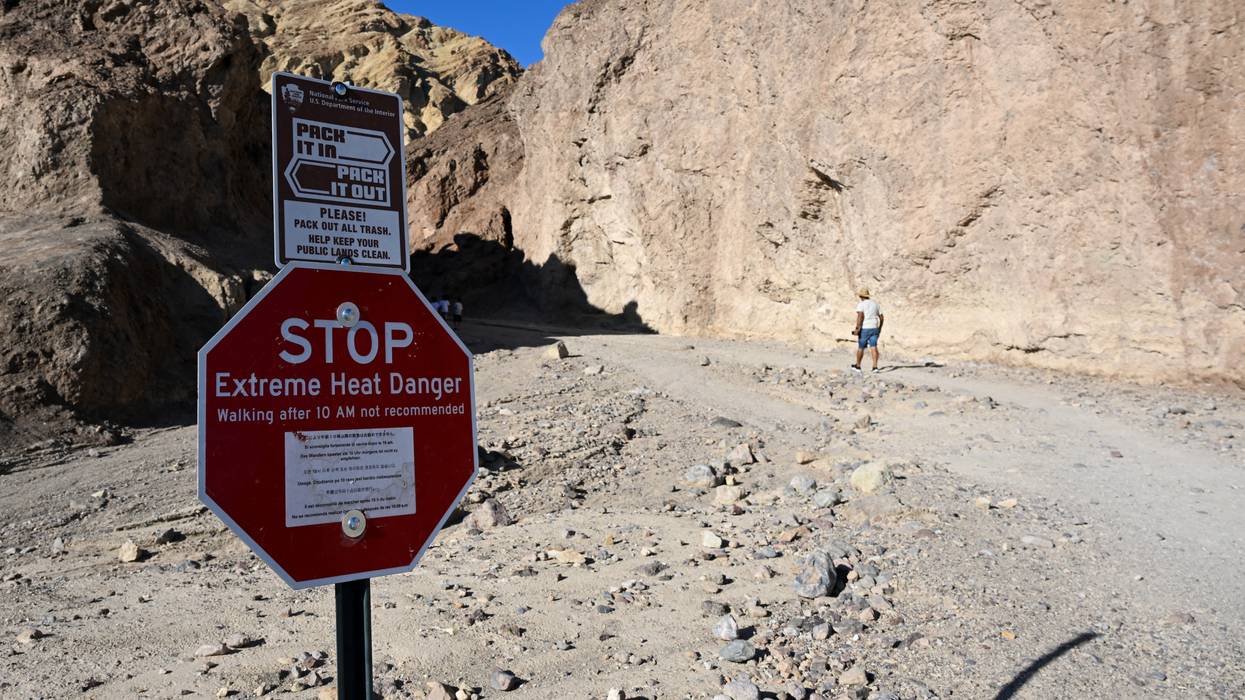
The weekend heat forecast in the United States on Friday signaled that new temperature records being set in quick succession is a trend that is here to stay, as meteorologists predicted California's Death Valley could reach 131°F on Sunday.
If the National Weather Service's projection is correct, the desert region will endure the hottest temperature in the planet's recorded history.
The desert set the present global temperature record in 2020, reaching 130°F. Climatologists say an often-cited heat record of 134°F, allegedly observed in Death Valley in 2013, was likely not a credible recording.
The agency warned of the potential new record one day after the National Oceanic and Atmospheric Administration (NOAA) and the National Aeronautics and Space Administration (NASA) said that last month was the hottest June since scientists began keeping heat records in the 1880s.
On Wednesday, the World Meteorological Organization announced that last week was the planet's hottest on record.
"With extreme heat on the rise because of climate change, it is critical that policymakers and regulators take steps to ensure our communities are protected."
In the United States, a heat dome—in which an area of high pressure traps heat underneath it—now stretches from the West Coast to the Southeast. The Union of Concerned Scientists (UCS) included Death Valley in its map of regions currently facing extreme heat on Friday, but people in the area are just some of the more than 118 million in the U.S. who are currently subject to "extreme weather alerts," the group said.
"To be extremely clear: this is not normal," said UCS. "Decades of dependence on fossil fuels, decades of deception and obstruction on the part of the fossil fuel industry, and decades of inaction by policymakers who have been in their thrall have landed us where we are today. This has to stop."
With nearly 120 million people at risk of wildfires, flooding, extreme heat, or tropical storms, the UCS has dubbed the time between roughly May and October as "Danger Season" and warned that "climate change impacts in the United States are at their peak and increasingly likely to collide with one another" in the next several months.
During this danger season, said the group, 43% of extreme heat alerts have been made more likely by the climate crisis and the continued extraction of fossil fuels.
"With extreme heat on the rise because of climate change, it is critical that policymakers and regulators take steps to ensure our communities are protected and our infrastructure is more resilient to extreme weather; that fossil fuels are quickly and sharply phased down while we rapidly transition to clean energy; and fossil fuel companies are held accountable for the damage their products have caused," said UCS.
California Natural Resources Secretary Wade Crowfoot added that the climate emergency is "supercharging" heatwaves and making wildfires more frequent and extreme in the state.
"As we get deeper into the summer and vegetation that grew up during the wet spring dries out, we are seeing an uptick in wildfire activity," he said in a statement.
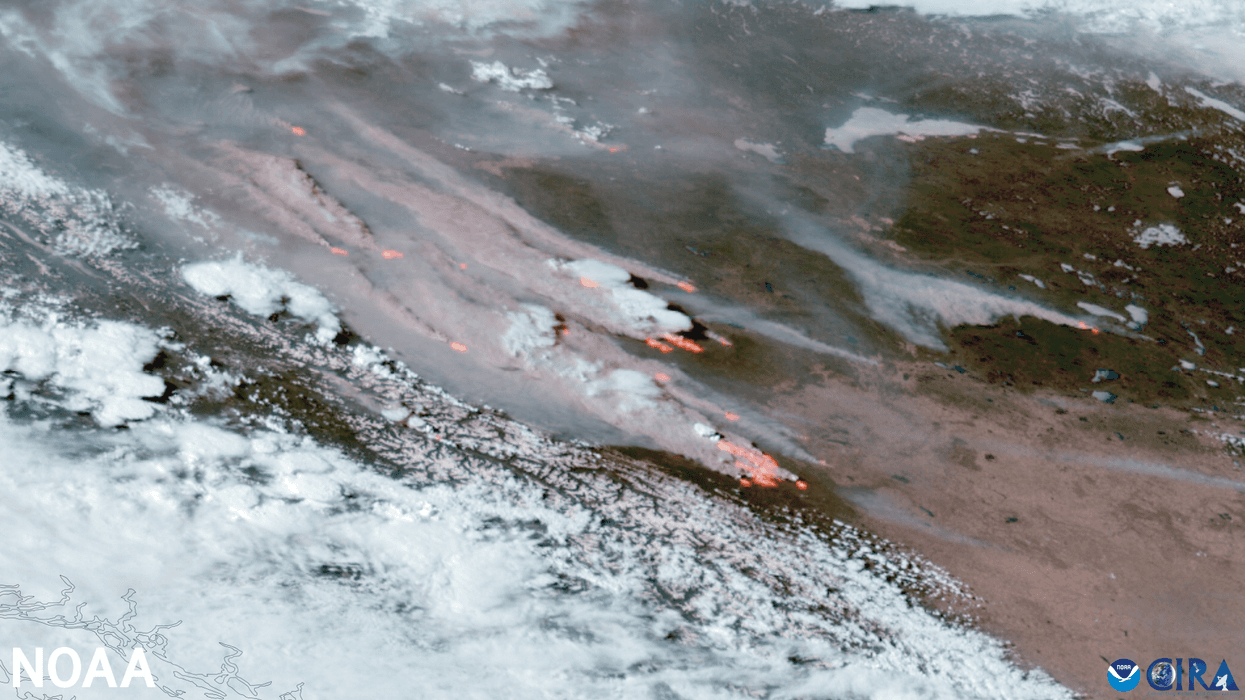
Some scientists predict that 2023 could be the warmest year on record, as a developing El Niño exacerbates the impacts of the climate crisis.
Following a May of record ocean temperatures and a June of record air temperatures, scientists are warning that 2023 could be the hottest year on record.
For a brief period in June, average global air temperatures even topped 1.5°C above preindustrial levels, the temperature goal enshrined by the Paris climate agreement.
"The world has just experienced its warmest early June on record, following a month of May that was less than 0.1°C cooler than the warmest May on record," the European Union's Copernicus Climate Change Service (C3S) Deputy Director Samantha Burgess said in a statement. "Monitoring our climate is more important than ever to determine how often and for how long global temperatures are exceeding 1.5°C. Every single fraction of a degree matters to avoid even more severe consequences of the climate crisis."
Overall, global mean surface air temperatures for early June were higher than previous C3S data for the month "by a substantial margin," the service said. Between June 7 and 11, those temperatures were above 1.5°C, peaking at 1.69°C June 9, Agence France-Presse reported.
This is not the first time that averages have poked above the 1.5°C target for a limited time. In fact, ironically, the first time was around the negotiating of the Paris agreement in December 2015.
"As it happens, a strong El Niño was close to its peak at the time, and it is now estimated that for a few days the global mean temperature was more than 1.5°C higher than the preindustrial temperature for the month," C3S said. "This was probably the first time this had occurred in the industrial era."
"The global surface temperature anomaly is at or near record levels right now, and 2023 will almost certainly be the warmest year on record."
While there have been more incidents between 2015 and now, they were typically in the Northern Hemisphere winter and early spring. This is the first time averages have risen above 1.5°C in June.
The breach is a "stern warning sign that we are heading into very warm uncharted territory," Melissa Lazenby, a lecturer in climate change at Sussex University in the U.K., told Sky News.
It also comes amidst other concerning climate indicators. On Wednesday, the National Oceanic and Atmospheric Administration (NOAA) in the U.S. announced that average ocean surface temperatures for May reached a record high for the second month in a row. May 2023 overall was the third warmest May on record, and sea ice in Antarctica dwindled to record low levels for the month.
NOAA's findings came a week after it declared that El Niño conditions had arrived, which could exacerbate the impacts of the climate crisis to raise temperatures and fuel more extreme weather events.
"The global surface temperature anomaly is at or near record levels right now, and 2023 will almost certainly be the warmest year on record," University of Pennsylvania climate scientist Michael Mann told The Guardian. "That is likely to be true for just about every El Niño year in the future as well, as long as we continue to warm the planet with fossil fuel burning and carbon pollution."
Already this year, warm spring temperatures have had consequences, from unprecedented wildfires in Canada that smothered the Eastern and Midwestern U.S. in smoke to a fish die-off in the Gulf of Mexico.
"With climate change and global warming, it's been an interesting start to the season," NOAA climatologist Rocky Bilotta said during a press call reported by The New York Times.
University of California, Los Angeles climate scientist Daniel Swain told ABC News that the high ocean temperatures were caused by a mixture of the climate crisis, the developing El Niño, the 2022 Hunga Tonga-Hunga Ha'apai volcano eruption, and a reduction in shipping emissions that has removed cooling aerosols from the atmosphere.
If such warming persists, it could have serious consequences because warmer oceans fuel stronger tropical storms and a warmer atmosphere holds more moisture that can worsen flooding events. The World Meteorological Organization (WMO) warned in May that there was a 66% chance that El Niño would work with climate change to push at least one year's average temperature past 1.5°C above preindustrial levels between 2023 and 2027.
C3S noted that the 1.5°C and 2°C temperature targets were based on averages over 20 to 30 years. However, the service added, "as the global mean temperature continues to rise and more frequently exceed the 1.5°C limit, the cumulative effects of the exceedances will become increasingly serious."
Scientists and activists said these breaches, and other recent temperature anomalies and extreme weather events, should serve as a warning to policymakers to act quickly to phase out fossil fuels and reduce greenhouse gas emissions.
"Without stronger emission cuts, the changes we are seeing are just the start of the adverse impacts we can expect to see," Cornell University atmospheric scientist Natalie Mahowald told The Guardian. "This year and the extreme events we have seen so far should serve as a warning."
Activist Bill McKibben meanwhile said the scariest element of recent weather news was that "the world isn't reacting rationally to it."
"The rapid warming over the next couple of years is likely to be our last opportunity to really act coherently as a civilization to reduce the magnitude of this crisis, and so far we are blowing it," he wrote Thursday.
Indeed, U.N. climate talks in Bonn, Germany, which were intended to prepare the way for the COP28 climate conference in the United Arab Emirates in November and December, ended Thursday with an impasse between the E.U. and climate vulnerable countries who want faster emissions cuts and a fossil fuel phaseout, and developing countries that want more climate finance from the Global North, as AFP explained.
"The gap between the Bonn political performance and the harsh climate reality feels already absurd," Li Shuo, a senior global policy adviser at Greenpeace East Asia, told AFP. "Climate impacts stay no longer on paper. People are feeling and suffering from it now."
U.N. Secretary-General António Guterres warned during a press conference Thursday that current national policies put the world on track for 2.8°C of warming by 2100.
"That spells catastrophe," Guterres said. "Yet the collective response remains pitiful."
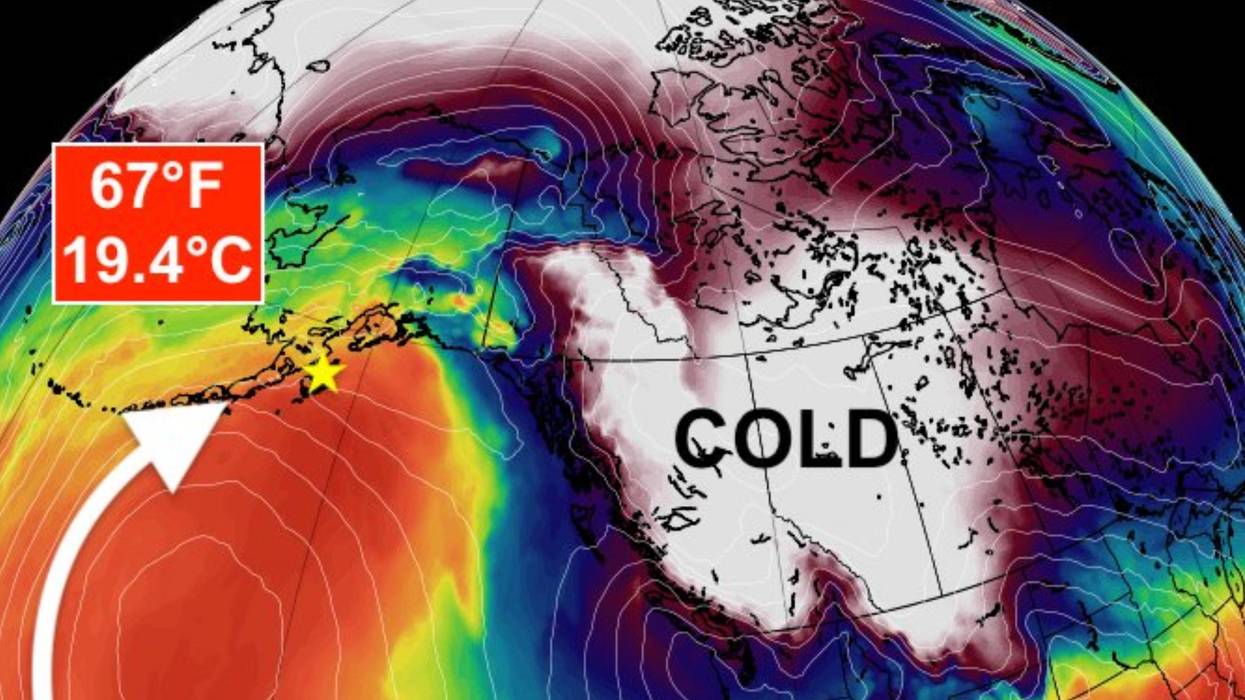
As parts of Alaska obliterated high-temperature records earlier this week, meteorologists and climate scientists warned that extreme heat and rainfall are the new normal in the nation's largest state and other Arctic and subarctic zones.
"In and around the Arctic... temperatures have been rising around twice as fast as the rest of the planet."
On Sunday, the town of Kodiak in southern Alaska hit 67degF--seven degrees warmer than the daytime high in San Diego--and shattering the December record for Alaska by nine degrees, according to the National Weather Service. The town also broke the local December record by more than 20 degrees.
"I would not have thought such a thing possible," Rick Thoman, a climate specialist at the Alaska Center for Climate Assessment and Policy, tweeted Tuesday.
CNN meteorologist Brandon Miller said that "we've become somewhat numb to these 'never before seen' extremes in temperature and weather as climate change continues to push the envelope on what is possible all over the globe."
"In and around the Arctic this is especially true, where temperatures have been rising around twice as fast as the rest of the planet," he added.
Warmer air is wetter air, as higher temperatures mean the atmosphere can store more water vapor. Miller said this explains why more intense rainstorms and flooding are increasing along with global temperatures.
"Each degree Fahrenheit of warming can hold about 4% more water vapor," he said, "and much of Alaska was 40 degrees Fahrenheit or above average temperatures for late December."
Parts of Alaska have suffered record rainfall this month. CNN reports Fairbanks has been inundated with 4.75" of liquid-equivalent precipitation for the month--more than 10 times the historical average.
A study published last month in Nature Communications noted that "as the Arctic continues to warm faster than the rest of the planet, evidence mounts that the region is experiencing unprecedented environmental change," with "the hydrological cycle... projected to intensify throughout the 21st century [and] increased evaporation from expanding open water areas and more precipitation."
The paper projected that Arctic winters will experience more rain than snow beginning sometime in the 2060s.
Extreme temperatures aren't just occurring during the Alaskan winters. In July 2019, Anchorage recorded an all-time high of 90degF. In July 2021, the record-breaking heatwave during which Lytton, British Columbia, set a Canadian record of 121degF triggered a 2.7-magnitude cryoseism, or "ice quake," near Juneau, Alaska's capital, as 92-degree heat melted glacier ice that subsequently saturated into the soil and then rapidly refroze.
Wildfires--which accelerate global heating by releasing massive amounts of carbon dioxide into the atmosphere--are also increasing along with Alaska's rising temperatures.
Scientists also warn that thawing Arctic permafrost in the northern parts of the state constitutes a "geological time bomb" set to release potentially devastating quantities of methane--a super-potent greenhouse gas whose emissions are roughly 87 times more potent than carbon dioxide emissions over a 20-year period--into the atmosphere.