SUBSCRIBE TO OUR FREE NEWSLETTER
Daily news & progressive opinion—funded by the people, not the corporations—delivered straight to your inbox.
5
#000000
#FFFFFF
To donate by check, phone, or other method, see our More Ways to Give page.
Daily news & progressive opinion—funded by the people, not the corporations—delivered straight to your inbox.
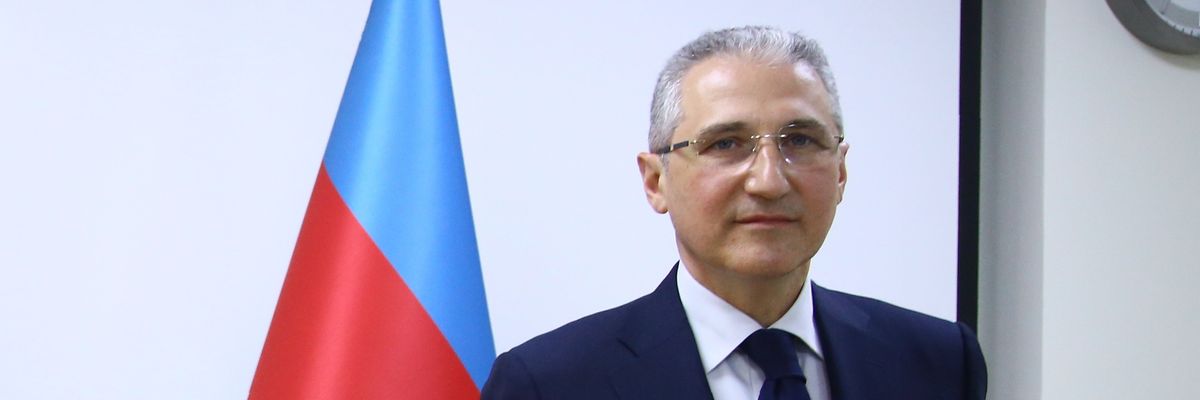
Minister of Ecology and Natural Resources of Azerbaijan Mukhtar Babayev was pictured during a meeting with Turkey's agriculture minister on March 17, 2021.
"Is there a point at which legitimate climate advocates cease legitimizing COP?" asked one campaigner. "It's more than clear this gathering has been fully co-opted by fossil fuels."
Less than a month after COP28 adjourned with a deal chock-full of loopholes for the fossil fuel industry, the host nation of the next United Nations climate summit has appointed an official who spent more than 20 years working for a state-owned oil and gas company to preside over the next round of global talks later this year.
Azerbaijan's choice of Mukhtar Babayev, who currently serves as the country's ecology and natural resources minister, to head the November talks was announced Thursday by the United Arab Emirates—which hosted COP28—and confirmed Friday by the United Nations.
"Bad case of déjà vu," the advocacy group Global Witness said Friday in response to the news, alluding to the fact that COP28 was also led by an oil and gas industry insider.
The appointment sparked outrage and warnings that COP29 is already poised to end similarly to COP28, which was overrun with a record number of oil and gas lobbyists—a fact reflected in the final outcome, which did not include any commitments to phase out planet-warming fossil fuels.
"Is there a point at which legitimate climate advocates cease legitimizing COP?" asked Tara Houska, founder of the Giniw Collective. "It's more than clear this gathering has been fully co-opted by fossil fuels. Is directing our energy to fighting over a conference worthwhile?"
Collin Rees, a campaigner at Oil Change International, called the decision "outrageous" in a series of social media posts.
"We need a rapid shift away from the business-as-usual wrecking the climate, but Azerbaijan starts the COP29 cycle by appointing a lifelong oil man to lead the U.N. climate talks," Rees wrote. "This is deeply worrying + pushes us closer to the abyss. COP29 must feature serious progress on rich countries PAYING UP to help the entire world achieve a fair, funded transition away from oil, gas, coal, and dangerous fossil-fueled distractions like [carbon capture and storage]."
Climate Home News reported that because Azerbaijan's media is "severely restricted, there is not much information publicly available about Babayev other than his official ministry biography and leaked U.S. diplomatic cables" published by WikiLeaks.
What is known is that Babayev spent 26 years at the State Oil Company of the Azerbaijan Republic, where he worked on marketing before being appointed to serve as the company's vice president of ecological affairs.
The UAE said Thursday that Yalchin Rafiyev, Azerbaijan's deputy foreign minister, will be Babayev's lead negotiator at COP29.
"Rafiyev is a newcomer to climate diplomacy," Climate Home News reported. "He did not attend the COP26 or COP27 climate talks and his active X (formerly known as Twitter) account has only mentioned climate change once in over six years."
Widely regarded as a petrostate, Azerbaijan is a major exporter of crude oil and natural gas. According to the International Energy Agency, Azerbaijan's oil and gas sector accounts for 90% of the country's total exports. BP is the country's largest foreign investor.
Mohamad Adow, founder and director of Power Shift Africa, told The Associated Press that it is "concerning to be once again having the world's climate negotiations coordinated by a petrostate that has a big interest in oil and gas production."
"He's got a huge job to do," Adow said of Babayev. "He needs to start working on getting rich countries to deliver serious, long-term finance that will tackle the climate crisis."
Dear Common Dreams reader, It’s been nearly 30 years since I co-founded Common Dreams with my late wife, Lina Newhouser. We had the radical notion that journalism should serve the public good, not corporate profits. It was clear to us from the outset what it would take to build such a project. No paid advertisements. No corporate sponsors. No millionaire publisher telling us what to think or do. Many people said we wouldn't last a year, but we proved those doubters wrong. Together with a tremendous team of journalists and dedicated staff, we built an independent media outlet free from the constraints of profits and corporate control. Our mission has always been simple: To inform. To inspire. To ignite change for the common good. Building Common Dreams was not easy. Our survival was never guaranteed. When you take on the most powerful forces—Wall Street greed, fossil fuel industry destruction, Big Tech lobbyists, and uber-rich oligarchs who have spent billions upon billions rigging the economy and democracy in their favor—the only bulwark you have is supporters who believe in your work. But here’s the urgent message from me today. It's never been this bad out there. And it's never been this hard to keep us going. At the very moment Common Dreams is most needed, the threats we face are intensifying. We need your support now more than ever. We don't accept corporate advertising and never will. We don't have a paywall because we don't think people should be blocked from critical news based on their ability to pay. Everything we do is funded by the donations of readers like you. When everyone does the little they can afford, we are strong. But if that support retreats or dries up, so do we. Will you donate now to make sure Common Dreams not only survives but thrives? —Craig Brown, Co-founder |
Less than a month after COP28 adjourned with a deal chock-full of loopholes for the fossil fuel industry, the host nation of the next United Nations climate summit has appointed an official who spent more than 20 years working for a state-owned oil and gas company to preside over the next round of global talks later this year.
Azerbaijan's choice of Mukhtar Babayev, who currently serves as the country's ecology and natural resources minister, to head the November talks was announced Thursday by the United Arab Emirates—which hosted COP28—and confirmed Friday by the United Nations.
"Bad case of déjà vu," the advocacy group Global Witness said Friday in response to the news, alluding to the fact that COP28 was also led by an oil and gas industry insider.
The appointment sparked outrage and warnings that COP29 is already poised to end similarly to COP28, which was overrun with a record number of oil and gas lobbyists—a fact reflected in the final outcome, which did not include any commitments to phase out planet-warming fossil fuels.
"Is there a point at which legitimate climate advocates cease legitimizing COP?" asked Tara Houska, founder of the Giniw Collective. "It's more than clear this gathering has been fully co-opted by fossil fuels. Is directing our energy to fighting over a conference worthwhile?"
Collin Rees, a campaigner at Oil Change International, called the decision "outrageous" in a series of social media posts.
"We need a rapid shift away from the business-as-usual wrecking the climate, but Azerbaijan starts the COP29 cycle by appointing a lifelong oil man to lead the U.N. climate talks," Rees wrote. "This is deeply worrying + pushes us closer to the abyss. COP29 must feature serious progress on rich countries PAYING UP to help the entire world achieve a fair, funded transition away from oil, gas, coal, and dangerous fossil-fueled distractions like [carbon capture and storage]."
Climate Home News reported that because Azerbaijan's media is "severely restricted, there is not much information publicly available about Babayev other than his official ministry biography and leaked U.S. diplomatic cables" published by WikiLeaks.
What is known is that Babayev spent 26 years at the State Oil Company of the Azerbaijan Republic, where he worked on marketing before being appointed to serve as the company's vice president of ecological affairs.
The UAE said Thursday that Yalchin Rafiyev, Azerbaijan's deputy foreign minister, will be Babayev's lead negotiator at COP29.
"Rafiyev is a newcomer to climate diplomacy," Climate Home News reported. "He did not attend the COP26 or COP27 climate talks and his active X (formerly known as Twitter) account has only mentioned climate change once in over six years."
Widely regarded as a petrostate, Azerbaijan is a major exporter of crude oil and natural gas. According to the International Energy Agency, Azerbaijan's oil and gas sector accounts for 90% of the country's total exports. BP is the country's largest foreign investor.
Mohamad Adow, founder and director of Power Shift Africa, told The Associated Press that it is "concerning to be once again having the world's climate negotiations coordinated by a petrostate that has a big interest in oil and gas production."
"He's got a huge job to do," Adow said of Babayev. "He needs to start working on getting rich countries to deliver serious, long-term finance that will tackle the climate crisis."
Less than a month after COP28 adjourned with a deal chock-full of loopholes for the fossil fuel industry, the host nation of the next United Nations climate summit has appointed an official who spent more than 20 years working for a state-owned oil and gas company to preside over the next round of global talks later this year.
Azerbaijan's choice of Mukhtar Babayev, who currently serves as the country's ecology and natural resources minister, to head the November talks was announced Thursday by the United Arab Emirates—which hosted COP28—and confirmed Friday by the United Nations.
"Bad case of déjà vu," the advocacy group Global Witness said Friday in response to the news, alluding to the fact that COP28 was also led by an oil and gas industry insider.
The appointment sparked outrage and warnings that COP29 is already poised to end similarly to COP28, which was overrun with a record number of oil and gas lobbyists—a fact reflected in the final outcome, which did not include any commitments to phase out planet-warming fossil fuels.
"Is there a point at which legitimate climate advocates cease legitimizing COP?" asked Tara Houska, founder of the Giniw Collective. "It's more than clear this gathering has been fully co-opted by fossil fuels. Is directing our energy to fighting over a conference worthwhile?"
Collin Rees, a campaigner at Oil Change International, called the decision "outrageous" in a series of social media posts.
"We need a rapid shift away from the business-as-usual wrecking the climate, but Azerbaijan starts the COP29 cycle by appointing a lifelong oil man to lead the U.N. climate talks," Rees wrote. "This is deeply worrying + pushes us closer to the abyss. COP29 must feature serious progress on rich countries PAYING UP to help the entire world achieve a fair, funded transition away from oil, gas, coal, and dangerous fossil-fueled distractions like [carbon capture and storage]."
Climate Home News reported that because Azerbaijan's media is "severely restricted, there is not much information publicly available about Babayev other than his official ministry biography and leaked U.S. diplomatic cables" published by WikiLeaks.
What is known is that Babayev spent 26 years at the State Oil Company of the Azerbaijan Republic, where he worked on marketing before being appointed to serve as the company's vice president of ecological affairs.
The UAE said Thursday that Yalchin Rafiyev, Azerbaijan's deputy foreign minister, will be Babayev's lead negotiator at COP29.
"Rafiyev is a newcomer to climate diplomacy," Climate Home News reported. "He did not attend the COP26 or COP27 climate talks and his active X (formerly known as Twitter) account has only mentioned climate change once in over six years."
Widely regarded as a petrostate, Azerbaijan is a major exporter of crude oil and natural gas. According to the International Energy Agency, Azerbaijan's oil and gas sector accounts for 90% of the country's total exports. BP is the country's largest foreign investor.
Mohamad Adow, founder and director of Power Shift Africa, told The Associated Press that it is "concerning to be once again having the world's climate negotiations coordinated by a petrostate that has a big interest in oil and gas production."
"He's got a huge job to do," Adow said of Babayev. "He needs to start working on getting rich countries to deliver serious, long-term finance that will tackle the climate crisis."