

SUBSCRIBE TO OUR FREE NEWSLETTER
Daily news & progressive opinion—funded by the people, not the corporations—delivered straight to your inbox.
5
#000000
#FFFFFF
To donate by check, phone, or other method, see our More Ways to Give page.
Daily news & progressive opinion—funded by the people, not the corporations—delivered straight to your inbox.
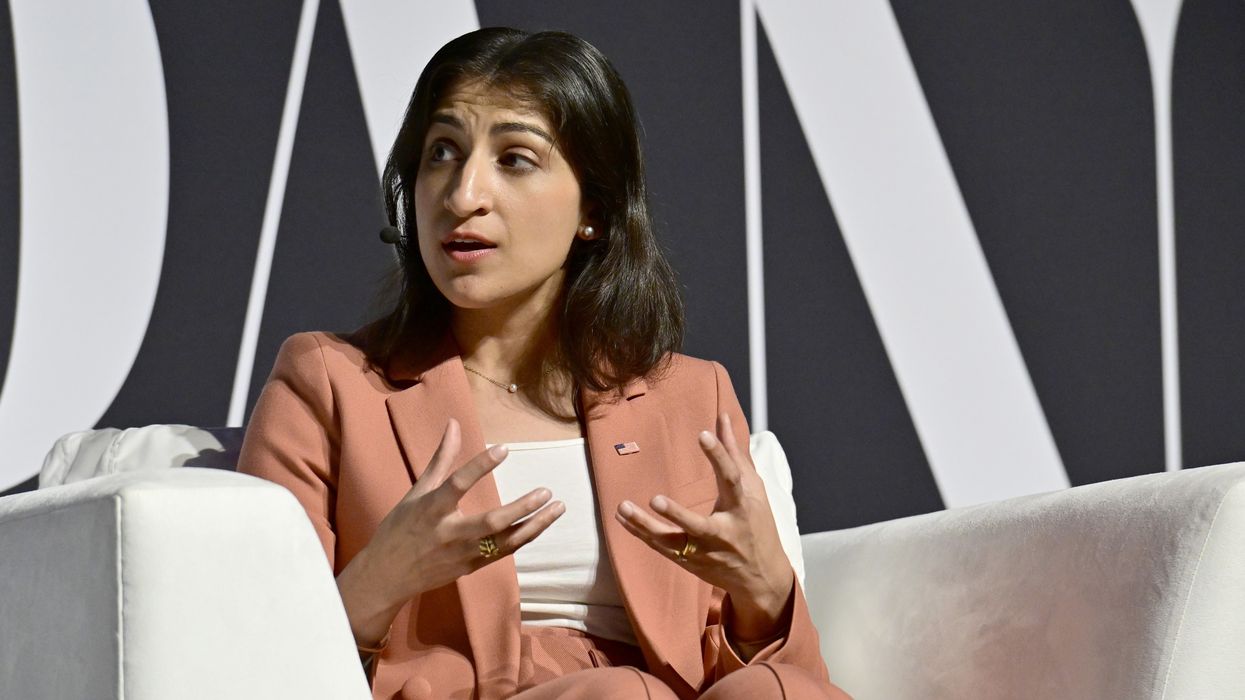
"This meritless dismissal is a win for monopolists and billionaires," said the senior legal counsel for the American Economic Liberties Project.
The U.S. Federal Trade Commission on Thursday dismissed a price discrimination lawsuit against the drink and food giant PepsiCo, a move that former FTC Chair Lina Khan, who served under former President Joe Biden, called "disturbing behavior."
The lawsuit, filed only a few days before U.S. President Donald Trump returned to the White House, accused PepsiCo of providing a big box retailer customer, Walmart, with pricing advantages, while increasing prices for competing customers and retailers.
"This lawsuit would've protected families from paying higher prices at the grocery store and stopped conduct that squeezes small businesses and communities across America," Khan wrote on X on Thursday. "Dismissing it is a gift to giant retailers as they gear up to hike prices."
The three members of the FTC, all Republicans, voted 3-0 to drop the suit. Current FTC Chair Andrew Ferguson, who was named chairman by Trump, cast the lawsuit as a "nakedly political effort to commit this administration to pursuing little more than a hunch that Pepsi had violated the law." He also said that the FTC under Biden "rushed to authorize the case." Ferguson also opposed the lawsuit when the FTC first voted to pursue it.
Antimonopoly groups were quick to criticize Thursday's move.
"This meritless dismissal is a win for monopolists and billionaires," said Lee Hepner, senior legal counsel at the American Economic Liberties Project, in a statement on Thursday. "Adding insult to injury, the agency dropped the case just one day before the parties were due to justify extensive redactions in the complaint, denying the public the ability to review the facts and judge the merits for themselves. This is a corporate pardon for Walmart and PepsiCo."
Open Markets legal director Sandeep Vaheesan said the move illustrates that despite their rhetoric, the current FTC commissioners are "not willing to faithfully apply the law enacted by Congress."
Stacy Mitchell, co-director at the Institute for Local Self-Reliance, which is an advocate for independent businesses, called it "effectively an endorsement of the predatory tactics Walmart uses to crush local grocery sores, create food deserts, and drive up prices."
The agency had sued PepsiCo under the Robinson-Patman Act, a 1936 law intended to prevent price discrimination but has been little used in recent decades.
The announcement of the dropped lawsuit came the same day it was reported that the FTC is investigating the progressive watchdog group Media Matters for America over potential coordination with other groups, including the Global Alliance for Responsible Media, which was a World Federation of Advertiser initiative. Media Matters president Angelo Carusone confirmed in a statement to Axios that the investigation is over claims Media Matters and other groups coordinated advertising boycotts of the social media site X.
X's owner, billionaire Elon Musk, who has played a core role in the Trump administration, has ongoing lawsuits against both the World Federation of Advertisers and Media Matters.
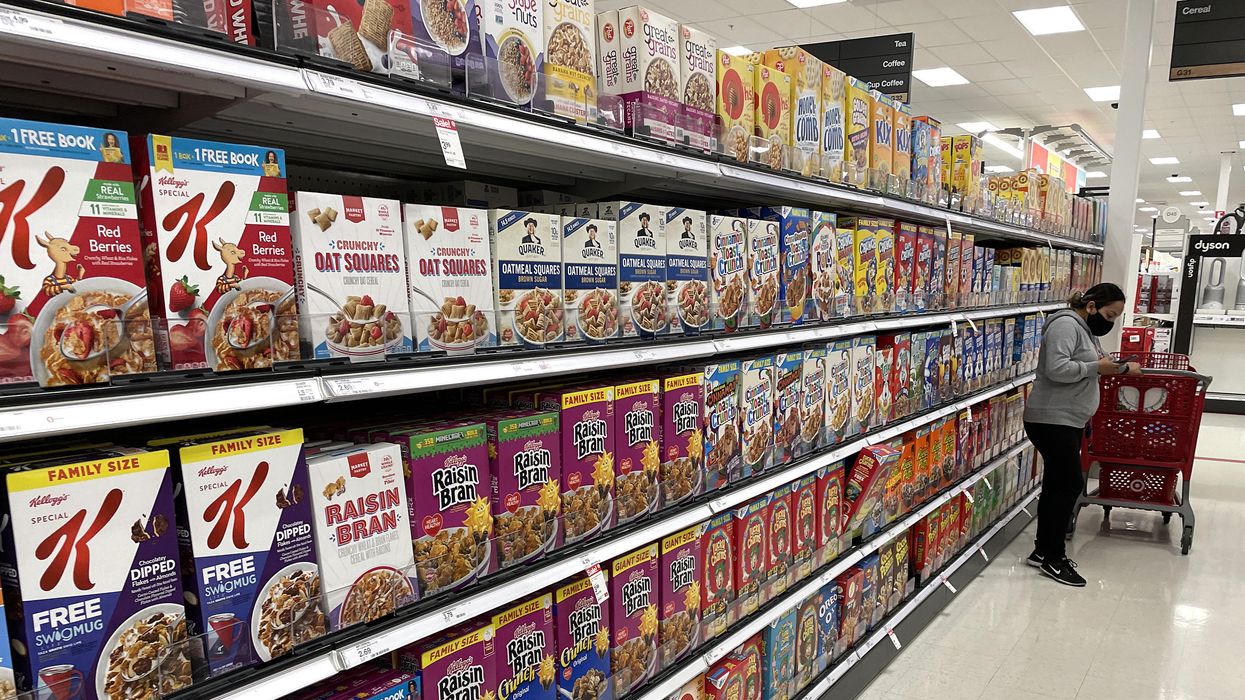
"While shrinkflation is not new, it is arguably the most deceptive pricing practice companies use," reads the report.
Executives in corporate earnings meetings call it "price pack architecture," but economic justice advocates, Democrats in Congress, and in recent days, Cookie Monster of "Sesame Street" have a different term for companies' practice of reducing the weight or size of a product while charging the same amount for it: shrinkflation.
Major corporations like PepsiCo and Utz have not only kept prices high even as pandemic era supply chain and labor issues have eased—a practice recognized as "greedflation"—but have also increasingly been reducing the size of products like snacks, drinks, and even essentials like toilet paper rolls, a new analysis from Groundwork Collaborative shows.
"While shrinkflation is not new, it is arguably the most deceptive pricing practice companies use and has come under renewed scrutiny as Americans face grocery prices 25% higher than prior to the pandemic," reads the report, titled Big Profits in Small Packages. "We find that as much as 10% of inflation in key product categories can be attributed to shrinkflation."
Companies have claimed to customers that shrinking goods is for the public good, with General Mills telling NPR that reducing its "family size" cereal boxes from 19.3 ounces to 18.1 ounces without reducing the cost would allow for "more efficient truck loading leading to fewer trucks on the road and fewer gallons of fuel use, which is important in... reducing global emissions."
To investors, though, executives made no mention of wanting to reduce fuel use or emissions from transportation in a 2021 earnings call, saying the strategy was simply aimed at managing the company's "list pricing" and "promotional optimization," according to Groundwork's report.
"In quarterly earnings calls with investors and analysts, corporate executives are candid about their future plans to downsize product quantities by playing with 'price pack architecture', as well as the profits they plan to derive from doing so," reads the report.
One French grocery chain pulled PepsiCo's snack and drink products from its shelves in January due to its pricing practices after having issued a warning to companies about shrinkflation. In the U.S., however, the company told reporters in 2022, "We took just a little bit out of the bag so we can give you the same price, and you can keep enjoying your chips."
"During this period of high inflation, where rising prices are putting a squeeze on household budgets, shrinkflation just adds insult to injury," said Lindsay Owens, executive director of Groundwork Collaborative and author of the report.
Former Labor Secretary Robert Reich recently pointed to a number of examples of shrinkflation in popular products, including the shrinking of PepsiCo's 32-ounce Gatorade bottle to just 28 ounces for the same price and Nabisco's decision to provide 12% less product in its family size box of Wheat Thins.
The report identified Kimberly-Clark, the maker of diapers, sanitary products, toilet paper, and other personal care products that are essential to millions of families, as a "repeat shrinkflation offender."
CEO Mike Hsu reasoned on a 2023 earnings call that the company can easily get away with shrinking their products since customers have no choice but to use them.
"If the price goes up on bath tissue, generally doesn't mean you're going to use the bathroom less, right?" Hsu said regarding its decision to provide smaller rolls in its Cottonelle toilet paper packages and to make its Scott toilet paper, as Groundwork found, "thinner and rougher with 20% less paper fiber."
Shrinkflation, along with greedflation and the use of algorithms to determine pricing, have made it "increasingly clear that prices are untethered from market fundamentals and instead largely reflect a company's market and pricing power," Owens said late last month.
The group called on Congress to pass the Shrinkflation Prevention Act, which was introduced last month by Sen. Bob Casey (D-Penn.) and would require the Federal Trade Commission (FTC) to classify shrinkflation as an unfair or deceptive practice and regulate it as such. The FTC and state attorneys general would be authorized to confront companies' use of shrinkflation in civil actions.
Groundwork also urged lawmakers to reform the tax code in order to disincentivize companies from using shrinkflation and other "aggressive pricing strategies."
The Institute on Taxation and Economic Policy found in a recent report that some of the biggest companies practicing shrinkflation paid "incredibly low effective tax rates" between 2018-22, thanks to former President Donald Trump's Tax Cuts and Jobs Act.
"Companies will have less incentive to overcharge customers," said Groundwork, "if they have to ship a greater share of the spoils to the Treasury Department."
"After an unprecedented 10 interest rate hikes in a row, it's clear the corporate profiteering epidemic will persist no matter how many times the Fed doubles down," said Liz Zelnick of Accountable.US.
An analysis released Tuesday shows that executives at some of the top publicly traded companies in the United States aren't exactly being coy about using their pricing power to hike costs for consumers and boost revenues and profits—which are then dished out to wealthy shareholders.
The progressive watchdog group Accountable.US noted in its new report that "some of the largest general consumer S&P 500 companies have admitted to benefiting from increased prices as their net profits increased year-over-year and they rewarded shareholders with billions in handouts."
The report quotes directly from the executives of Kimberly-Clark, PepsiCo, General Mills, Tyson Foods, and other major U.S. companies.
Nelson Urdaneta, Kimberly-Clark's chief financial officer, said during the company's earnings call in April that "pricing has continued to be the big driver behind our top-line growth over the last three quarters."
The company, which sells consumer products such as toilet paper and diapers, "saw its [fiscal year] 2022 net income increase 6.3% year-over-year to nearly $2 billion and rewarded shareholders with $1.7 billion in stock buybacks and dividends," Accountable.US found.
On Tyson's earnings call in February, chief financial officer John Tyson hailed the "significant pricing power of our portfolio, with a year-over-year increase of 7.6%." Tyson stressed that the company will "continue to support and grow the dividend for our shareholders."
According to Accountable.US, Tyson "saw its net income increase from $3 billion in FY 2021 to over $3.2 billion in FY 2022 and rewarded shareholders with $1.35 billion in handouts—$652 million more than the previous year, including a 948.5% increase in stock buybacks."
"Corporate greed is a stubborn thing and requires serious action from Congress."
The new analysis came shortly after the Bureau of Labor Statistics released data showing that the consumer price index rose 4% in May compared to the previous year, the smallest increase since 2021.
Further evidence of cooling inflation sparked a fresh round of calls for the Federal Reserve to stop hiking interest rates before it pushes the economy into recession. The Fed is widely expected to announce Wednesday that it is pausing rate increases for the month of June, but it could resume the hikes as soon as the following month.
"The Fed should not only pause tomorrow but pause going forward and see how these 10 rate hikes play out," Rakeen Mabud, chief economist at the Groundwork Collaborative, said in an appearance on Yahoo Finance Tuesday morning.
Liz Zelnick, director of economic security and corporate power at Accountable.US, said in a statement that "after an unprecedented 10 interest rate hikes in a row, it's clear the corporate profiteering epidemic will persist no matter how many times the Fed doubles down."
The New York Times reported late last month that even as the prices of key raw materials have fallen in recent months, "many big businesses have continued raising prices at a rapid clip" and signaled that "they do not plan to change course"—which helps explain data showing that U.S. corporate profits rose to a record level in the first quarter of 2023.
"PepsiCo has become a prime example of how large corporations have countered increased costs, and then some," the Times noted. "Hugh Johnston, the company's chief financial officer, said in February that PepsiCo had raised its prices by enough to buffer further cost pressures in 2023. At the end of April, the company reported that it had raised the average price across its snacks and beverages by 16% in the first three months of the year. That added to a similar price increase in the fourth quarter of 2022 and increased its profit margin."
Zelnick said Tuesday that "higher interest rates haven't stopped S&P companies, especially in the Big Food industry, from inflating consumer prices despite reporting billions in extra net earnings and over a trillion dollars in giveaways to wealthy investors."
"Corporate greed is a stubborn thing and requires serious action from Congress," she added. "The Fed has not seen an adequate return on its investment in a policy that has already created fissures in the economy that could lead to recession. It's just not worth it."

The chief economist at the global investment bank UBS, the world's largest wealth manager, argued in an op-ed for the Financial Times on Wednesday that inflation in the United States "is more a product of profits than wages" and criticized Federal Reserve Chair Jerome Powell for refusing to acknowledge that fact as he plows ahead with massive interest rate hikes.
"Powell's public remarks offer little insight into how he expects higher rates to tame inflation," Paul Donovan of UBS Global Wealth Management wrote just ahead of the Fed's latest interest rate increase of 75 basis points. "This is the current inflation story. Companies have passed higher costs on to customers. But they have also taken advantage of circumstances to expand profit margins. The broadening of inflation beyond commodity prices is more profit margin expansion than wage cost pressures."
"Even a major bank's chief economist now admits that corporations are price gouging under the guise of inflation."
"Despite negative real wages, consumers have carried on consuming," Donovan added. "Consumers seem to be buying stories that seem to justify price increases, but which really serve as cover for profit margin expansion... This unconventional inflation means higher unemployment and lower wages are not the only possible cure for it. Policy has more routes to lower inflation if the cause is about profits."
Thus far, though, the Powell-led Federal Reserve has primarily used interest rate increases in its as-yet unsuccessful effort to bring down inflation, even as critics warn that such an approach harms workers and risks a devastating recession without tackling the primary drivers of price increases.
At his Wednesday press conference, Powell once again conceded that rate hikes "don't directly affect for the most part food and energy prices," two major sources of inflation dictated by profit-seeking corporations such as Exxon, Chevron, and PepsiCo.
"We increased prices at the beginning of the fourth quarter based on what we knew at that point," Pepsi's chief financial officer said on the company's earnings call last month. "And going forward, with the investments that we've made in brands, I still think we're capable of taking whatever pricing we need."
During his public appearance Wednesday, Powell wasn't asked a single question about the role corporate profiteering has played in causing high inflation even as executives boast about their enormous pricing power.
Progressive advocates and economists who have been spotlighting corporate America's inflationary profiteering for months seized on Donovan's Financial Times op-ed as further evidence that their data-driven argument is gradually piercing the mainstream, even as Powell ignores it.
"Even a major bank's chief economist now admits that corporations are price gouging under the guise of inflation," the American Economic Liberties Project tweeted Thursday.
Christian Hallum, tax justice lead at Oxfam International, added that "skyrocketing profits are to blame for inflation, according to the chief economist at UBS Global Wealth Management."
"Maybe we should tax windfall profits instead of trying to create unemployment through interest rate hikes?" Hallum suggested.
Here is my National Mandate. Close all fast-food chains. Put orange cone roadblocks on all Dunkin' Donuts drive-thrus. Ban the sale of Coca-Cola and Pepsi. The war was not between those two Colas; it was a war against the human body.
The masks mask the elephant in the room. No human being can make a potent immune system with a diet of processed food and sugar. This promiscuous virus seems to have a field day with the obese and the immune-compromised. The national and worldwide addiction to sugar presents a feeding frenzy for a virus that, like all viruses, feeds on sugar. Where are the scientists and leaders who can guide the populations of the world to actually combat the virus by starving it and also by strengthening its targets? We are told to behave like boxers in a corner with our gloves up to our faces as we are pummeled.
We need to resuscitate the slogan Resist and put it at the center of our actual physical bodies. The Thymus gland makes T-cells. Thymus is a Greek word for courage and anger; two strong words that will strengthen resistance.
Ireland determined recently that the rolls produced by the fast-food chain Subway have too much sugar in it to be called bread. This just begins to tell the tale. Biden, Fauci, and the posse of "experts" say nothing about what evolution and nature has made clear - T-cells are our Personal Protective Device. You cannot make powerful T-cells from a Big Mac, fries and Coke or a cream filled, white flour doughnut. A virus can present itself to a human body and a human body armed with healthy T-cells will most likely evict it quickly and not give it a chance to colonize and inflame. The primary exhortation from the top should be about about this aspect of human health.
Government guidance and a support stipend is the best path forward. Like Victory gardens during WWII, there ought to be individual citizen projects of cultivating potent health as the wall of resistance to this virus which, like a predator, will pick out the weak targets in a herd.
I can't speak for the rest of the world but America seems to have a romance with disease. Cable stations exist to sell drugs and as they do, they romanticize disease. The wistful looks of the stricken, the sentimental music, the loving looks of spouse and family on the patient all work to make the disease seem to be a pathway to love and enlightenment, and the patented drug you must take forever will keep you alive long enough to bask in this glow. Hopefully one day we will look at these commercials the way we look at doctor-recommended cigarette ads from the 1950's we now watch on Youtube with horror and macabre amusement.
In the case of COVID, we are presented with numbers and charts and interviews with beleaguered hospital workers. Experts tell us what they know and what they don't know both ending up by the end of the interview to be useless. By omission or myopia, these experts seem to be saying to all of us is, "Eat any junk you want and live any way you care to but wear a mask and wash your hands and stay six feet apart." This has always had the echo of six feet under - a distance that has the hint of death to it.
The ultimate infantilizing of the citizenry - mask, wash up, and go to your room. Not to say that these prescriptions don't have a place at this moment but to me, if this is all you've got, it smacks of impotence and surrender and a serious abdication.
Driving here in Connecticut in the morning I will pass a line at the drive-thru at Dunkin' Donuts - 20 cars long. Burger King will do "no contact delivery." It's not the contact that's the real or only risk factor it's what is being delivered. Processed, sugar-laced food is like sludge in a human body and a human body can only make new cells with what it is being given. The revolution does indeed start in the kitchen.
Until the feckless and myopic experts begin to take this point as seriously as they do the mask instruction, no matter how much obedience they are able to influence, we will continue to have more spikes than the shoe franchise at a Trump golf course.
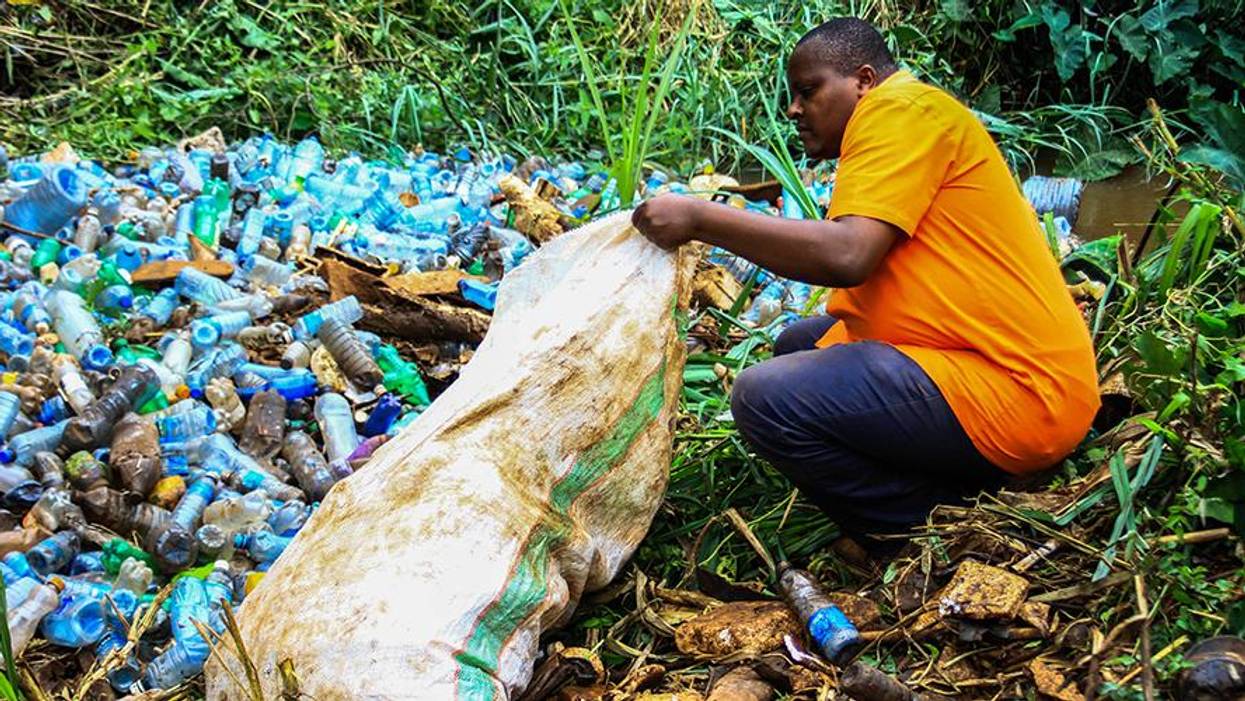
Analysis released Thursday of the world's top 10 biggest plastic polluters in 15 countries reveals how major corporations hide behind the veneer of corporate responsibility while actively working to thwart regulatory legislation around the globe.
"This report is a damning expose of the tactics employed by the plastics industry and shines a welcome light on the shadowy world of corporate lobbying," Natalie Fee, founder of City to Sea, which supported the research conducted by the Changing Markets Foundation, said in a statement.
"For too long," said Fee, "the true cost of plastic production has been externalized, meaning plastic producers continue to get away with ecocide while waste management companies, consumers and marginalized communities around the world are left to deal with millions of tons of toxic plastic waste."
The report--titled "Talking Trash: The Corporate Playbook of False Solutions,"--exposes how Coca-Cola, Colgate-Palmolive, Danone, Mars Incorporated, Mondelez International, Nestle, PepsiCo, Perfetti Van Melle, Procter & Gamble, and Unilever deploy "tactics to undermine legislation in individual countries are in fact part of a global approach by Big Plastic to ensure that the corporations most responsible for the plastic crisis evade true accountability for their pollution."
According to Changing Markets Foundation Thursday, the investigations found:
"This report exposes the two-faced hypocrisy of plastic polluters, which claim to be committed to solutions, but at the same time use a host of dirty tricks to ensure that they can continue pumping out cheap, disposable plastic, polluting the planet at a devastating rate," said Nusa Urbanic, campaigns director for the Changing Markets.
"Plastic is now pouring into the natural world at a rate of one garbage truck a minute, creating a crisis for wildlife, the climate and public health," Urbanic continued. "The responsibility for this disaster lies with Big Plastic--including major household brands--which have lobbied against progressive legislation for decades, greenwashed their environmental credentials, and blamed the public for littering, rather than assuming responsibility for their own actions."
Big Plastic jumped at the opportunity presented by the Covid-19 pandemic--which has caused a surge in single-use plastic consumption--to pressure lawmakers to roll back current regulations and prevent new ones, according to the report.
Additionally, Changing Markets noted that plastic pollution has devastating effects on the environment and is a key contributor to the climate crisis.
According to the group:
"The plastic pollution crisis is a deeply interconnected climate crisis, a biodiversity crisis, and a public health crisis all combined... Plastic saturates almost every surface of the planet--from the deepest abysses to the highest mountains and remotest islands--causing an unprecedented crisis for wildlife... Virgin-plastic production is a major contributor to climate change, generating enough emissions--from the moment they leave the ground as fossil fuels, and throughout their entire life cycle--to use up 10 to 15% of our entire carbon budget by 2050 at current rates of growth. Disposal of plastics through incineration and backyard burning also contributes to climate change and creates a toxic fallout undermining human and planetary health."
The industry's contribution to the global climate emergency is nothing new, but progressive legislators continue to face an uphill battle when it comes to regulating these powerful corporations.
President Donald Trump, for example, has called climate change a "hoax," and, despite pleas from environmental advocacy groups and progressive lawmakers, many Democratic lawmakers, including House Minority Leader Nancy Pelosi (D-Calif.) and Senate Majority Leader Chuck Schumer (D-N.Y.)--as well as presidential nominee Joe Biden--still do not support the Green New Deal.
Urbanic urged lawmakers to act to protect the planet.
"The voluntary initiatives and commitments by the industry have failed," she said in a statement. "Policymakers should look past the industry smokescreen and adopt proven, progressive legislation globally to create the systemic change that this crisis so urgently needs."

Washington Redskins owner Dan Snyder announced Friday that he would conduct a "thorough review" of his NFL team's racist name, which has been the target of protests for decades by Indigenous people and other critics who say the name amounts to a harmful slur.
Snyder's announcement comes after at least five decades of public actions by Indigenous tribes and civil rights organizations, but the catalyst for the review appeared to be demands made by the team's corporate partners.
FedEx, which sponsors the Redskins' home stadium and whose CEO is a partial owner of the team, released a statement Thursday saying, "We have communicated to the team in Washington our request that they change the team name."
Nike also removed Redskins merchandise from its online store on Thursday. The two companies, along with PepsiCo, last week received letters from 87 of their investors--worth a collective $620 billion--calling on them to end their business partnerships with the Redskins unless the team changed its name.
Snyder's signal that a potential name change could be forthcoming came after decades of outcry from Indigenous people, all of which he dismissed in 2013 by claiming he would "never change the name."
In 1968, the National Congress of American Indians launched its first campaign aimed at removing harmful stereotypes and images from U.S. media and popular culture. Four years later, 11 activists approached the team for the first time to request a name change, and in 1992, an estimated 3,000 people demonstrated at the Super Bowl to demand the change in the largest-ever protest over the issue.
"Money changes everything," the anti-bigotry campaign Sleeping Giants tweeted on Friday.
Snyder's announcement came amid historic racial injustice protests across the U.S., sparked by the killings of George Floyd, Breonna Taylor, and Ahmaud Arbery.
Snyder has also faced recent pressure from elected officials to change the Redskins' name, as he aims to move the team from FedEx Field in Maryland to RFK Stadium in Washington, D.C., the city the team represents. The stadium sits on government-owned land and lawmakers including Del. Eleanor Holmes Norton (D-D.C.) have demanded the name change before Snyder purchases the stadium.
"He has got a problem he can't get around, and he particularly can't get around it today, after the George Floyd killing," said Norton.
Rep. Raul Grijalva (D-Ariz.) has also demanded the name be changed, saying it is up to Snyder to "step into this century."
"There is no way to justify" keeping the name, Grijalva said Thursday.
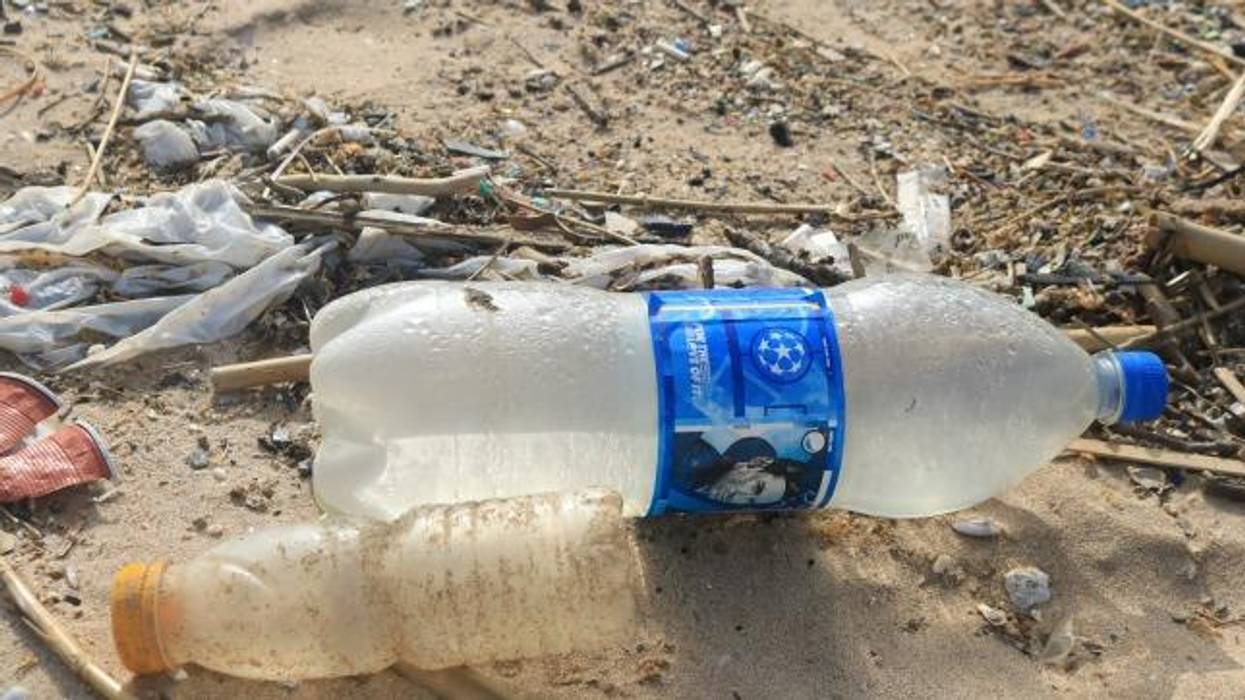
A new report out Wednesday from a global environmental coalition named the corporate giants responsible for the most global plastic pollution in a recent tally--with Coca-Cola and Nestle topping the list--even as those same companies engage in greenwash efforts to continue "the plastic pollution crisis."
"This report provides more evidence that corporations urgently need to do more to address the plastic pollution crisis they've created," said Von Hernandez, global coordinator of the Break Free From Plastic movement, in statement.
For its analysis, the coalition engaged in a "brand audit." That means "identifying, counting, and documenting the brands found on plastic and other collected packaging waste to help identify the corporations responsible for pollution," in other words, finding "the companies polluting the most places with the most plastics."
The tally took place last month on World Cleanup Day, and involved over 70,000 volunteers in 51 countries across six continents. They gathered and assessed "476,423 pieces of plastic waste, 43 percent of which was marked with a clear consumer brand," the report said.
The top 10 most frequently identified companies were Coca-Cola, Nestle, PepsiCo, Mondelez International, Unilever, Mars, P&G, Colgate-Palmolive, Phillip Morris, and Perfetti Van Mille.
What did it take for Coca-Cola to take top spot--a dubious honor it takes for the second year in a row?
"A total of 11,732 branded Coca-Cola plastics were recorded in 37 countries across four continents," the report said, "more than the next three top global polluters combined."
Nestle and PepsiCo, meanwhile, still claim spots two and three, respectively, swapping the positions they held in the coalition's 2018 audit.
"We must continue to expose these real culprits of our plastic and recycling crisis."
--Denise Patel, Global Alliance for Incinerator Alternatives (GAIA)Break Free From Plastic's name-and-shame effort has a clear goal: "Only by highlighting the real culprits can we push them to change their packaging and destructive throwaway business model." In addition, said the group, it's "a powerful tool to challenge the corporate narrative that plastic pollution is a waste management issue caused by individual consumers."
Companies may tout that their plastic products are recyclable, but that's an incomplete description, said the report. Labeling a product recyclable provides no guarantee that it will actually get recycled. The report noted that "since the 1950's, only 9 percent has actually been recycled globally."
Even if the product is recycled, that's no "magic solution."
This is because plastic polymer chains get shorter when they are recycled, which means the quality deteriorates. A plastic bottle can only be recycled a few times and in reality most recycled plastic is made into clothing, construction materials, or other products that will not get recycled again.
What's more, the production of plastic generally relies on climate-wrecking fossil fuels and causes air pollution, while the use of it can threaten consumers who face potentially leaching chemicals. All of these problems, the report said, "disproportionately impact the world's poorest communities," who are often the dumping ground for wealthier nations' plastic waste.
"The products and packaging that brands like Coca-Cola, Nestle, and PepsiCo are churning out is turning our recycling system into garbage," said Denise Patel, U.S. Coordinator for the Global Alliance for Incinerator Alternatives (GAIA). "China has effectively banned the import of the U.S. and other exporting countries' 'recycling,' and other countries are following suit. Plastic is being burned in incinerators across the world, exposing communities to toxic pollution. We must continue to expose these real culprits of our plastic and recycling crisis."
The industry response to the crisis is of no help.
"In the face of the undeniable evidence provided by the global brand audits, top industry polluters have been quick to acknowledge their role in perpetuating the plastic pollution crisis, but have been equally aggressive in promoting false solutions to address the problem," said the report, noting that they do so as they "reap billions of dollars while avoiding paying the full cost of their design and production choices."
These "false solutions, such as switching to paper or 'bioplastics' or embracing chemical recycling, are failing to move society away from single-use packaging and only continue to perpetuate the throwaway culture."
From the report:
Nestle for example has committed to making all of its packaging recyclable or reusable by 2025, but has no clear plans for reducing the total amount of single-use plastic it puts into the world, and the company sells over a billion products a day in single-use packaging. Coca Cola has recently unveiled a single-use plastic bottle using plastic collected from the oceans, and in 2009 they promoted a plastic bottle made from plants. None of these products will stop or reduce Coke's growing plastic pollution, and reinforce the myth that single-use plastic can be sustainable. And finally, PepsiCo has joined the Alliance to End Plastic Waste that brings together plastic producers, oil companies and other consumer goods companies to promote beach cleanups and improving recycling as a way to ensure future demand for petrochemicals to make more plastic. Efforts like these, and others focused on making packaging recyclable or compostable, do not get to the heart of the problem and all but guarantee the plastic pollution crisis will grow worse.
"Real solutions," said the report, "must change systems and power structures."
That means looking at examples set by so-called "zero waste" communities, who boost waste reduction, recycling, and composting. Business must also get on board with "the one true solution: reduction and reuse."
That's because, according to Hernandez, "Recycling is not going to solve this problem."
"Break Free From Plastic's nearly 1,800 member organizations are calling on corporations to urgently reduce their production of single-use plastic," said Hernandez, "and find innovative solutions focused on alternative delivery systems that do not create pollution."
Pepsi has been vying for advertising dominance in Atlanta, Coca-Cola's home turf, while Coke's pre-game commercial embraces diversity, a message that feels political in today's climate. This follows a growing trend of major brands taking progressive stances on social issues from toxic masculinity, solidarity with Colin Kapaernick and Brexit. But is the moral high ground yours to take when it's not reflected in your business model?
PR campaigns aside, both Coca-Cola and PepsiCo are major contributors to the plastic crisis. Last summer my organization, The Story of Stuff Project, helped coordinate hundreds of 'brand audits' in collaboration with the #breakfreefromplastic movement. Adding a twist to the traditional beach clean up, volunteers identified the type and brands associated with 187,000 pieces of plastic pollution collected across the world. The companies with the biggest plastic footprint? Coca-Cola, PepsiCo, and Nestle.
Although much of today's packaging is inherently problematic, the second most commonly found item in our audit was plastic bottles (PET). It's one of the few types of plastic that can be widely recycled so long as it's collected, and herein lies the challenge of a product designed to be consumed 'on the go.' Enter an ingenious solution: container deposits. By adding a refundable deposit to the price of a bottle you incentivize its return for recycling.
It's a proven measure that reduces the chances of a bottle of Coke or Pepsi from getting landfilled or polluting the environment after use. It's virtually eliminated polluted bottles in Michigan and Oregon, two of the US's ten states with 'bottle bills'. Their systems recover over 90% of their beverage bottles, as opposed to 20% - 30% of bottles collected on average in curbside recycling across the US.
Rather than embrace this solution, Coca-Cola and Pepsi embrace industry lobbying groups that undermine such legislation.
But rather than embrace this solution, Coca-Cola and Pepsi embrace industry lobbying groups that undermine such legislation. Last December, a group of legislators backed by the Michigan Soft Drink Association attempted to rush through legislation in lame-duck season to end Michigan's world-class deposit system. These skirmishes occur periodically to weaken existing systems as well as obstruct new container deposit laws addressing the plastic blighting their communities.
But the growing stature of the plastic crisis is forcing the idea into consideration. Coca-Cola Europe recently completed a 180-degree turn and is now participating in shaping an effective container deposit system in the UK. While at last week's World Economic Forum in Davos, James Quincey, the CEO of Coca-Cola stated that the "value" of their packaging was the key to higher recycling rates.
These companies are presumably concerned that container deposits don't revolve around convenience: a concern that embodies the "disposable" mindset that led us to the current plastic crisis. Polling across locations where container deposits exist, however, show high levels of support for the system. I believe that's because, in an age where plastic is entering our air, water, and food, contributing to part of the solution can feel rewarding.
Globally, one million plastic bottles are sold every minute. By endorsing container deposits, the big brands can reduce their plastic footprint, their carbon emissions, and celebrate a transformative shift on the plastics crisis. Those sound like good ingredients for next year's winning Super Bowl commercial.
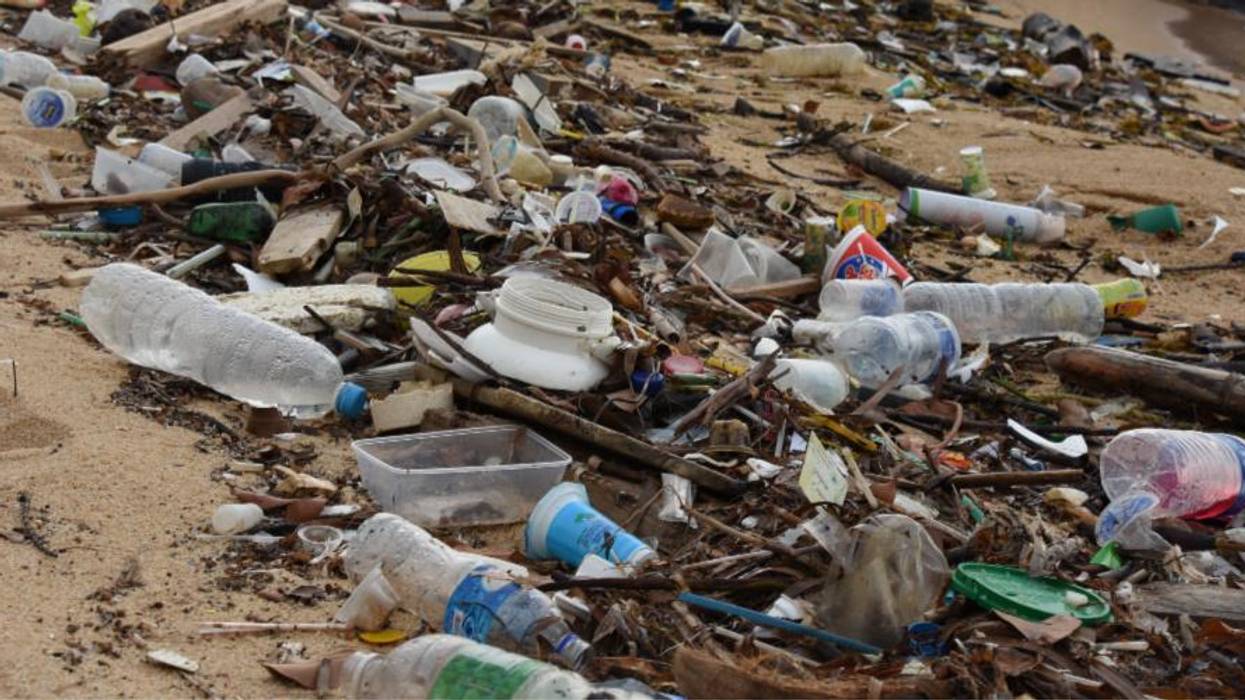
Environmentalists cautiously celebrated "a victory for our oceans, for the environment, and for future generations" on Wednesday as the European Parliament voted overwhelmingly in favor of a proposal to outlaw the most common single-use plastic products across Europe.
"The European Parliament has made history by voting to reduce single-use plastics and slash plastic pollution in our rivers and ocean," responded Justine Maillot of Surfrider Foundation Europe, on behalf of Rethink Plastic, a coalition of environmental groups on the continent.
"Citizens across Europe want to see an end to plastic pollution," Maillot added. "It's now up to national governments to keep the ambition high, and resist corporate pressure to continue a throwaway culture."
MEPs voted 571-53--with 34 abstentions--to advance the proposal initially introduced in May. As BBC News reports, "The measure still has to clear some procedural hurdles, but is expected to go through." Negotiations among representatives from national governments, the European Parliament, and the European Commission to finalize the law could begin as early as November.
While campaigners have raised alarm about potential loopholes as well as covert lobbying by Coca-Cola, Nestle, PepsiCo, and Danone, they welcomed the widespread support for the measure, which would ban single-use plastic cotton buds, straws, plates and cutlery, beverage stirrers, balloon sticks, oxo-degradable plastics, and expanded polystyrene food containers and cups across the EU by 2021.
Although the ban, unfortunately, will not extend to very light-weight single-use plastic bags, Greenpeace EU chemicals policy director Kevin Stairs said that with Wednesday's vote, "we're one step closer to protecting people and wildlife from the plastic that's choking our rivers and seas, turning up everywhere, from the Antarctic Ocean to the salt on our tables."
Appearing on euronews ahead of the vote, Stairs discussed the threat that plastics pose not only to the world's waterways, but also human health. Earlier this week, a pilot study found, for the first time in documented history, microplastics in human waste.
Philipp Schwabl, who conducted the human stool study, presented his findings--which have not yet been peer reviewed or published--at a conference in Vienna on Tuesday and hopes to expand his research, according to National Geographic. Recent studies have increasingly heightened concerns about the impact of plastics on the planet and all species that inhabit it.
Plastic pollution has become "one of our planet's greatest environmental challenges," declared a United Nations report released in June. "Our oceans have been used as a dumping ground, choking marine life and transforming some marine areas into a plastic soup. In cities around the world, plastic waste clogsdrains, causing floods and breeding disease. Consumed by livestock, it also finds its way into the food chain."
In addition to banning some of the most common single-use plastics, which make up more than 70 percent of marine litter, the EU measure also aims to set national reduction targets for non-banned plastics, cigarette butts, and lost or abandoned fishing gear.
"Today's vote paves the way to a forthcoming and ambitious directive," said MEP Frederique Ries, the Belgian politican who drafted the approved EU plans. "It is essential in order to protect the marine environment and reduce the costs of environmental damage attributed to plastic pollution in Europe, estimated at 22 billion euros by 2030."