

SUBSCRIBE TO OUR FREE NEWSLETTER
Daily news & progressive opinion—funded by the people, not the corporations—delivered straight to your inbox.
5
#000000
#FFFFFF
To donate by check, phone, or other method, see our More Ways to Give page.
Daily news & progressive opinion—funded by the people, not the corporations—delivered straight to your inbox.
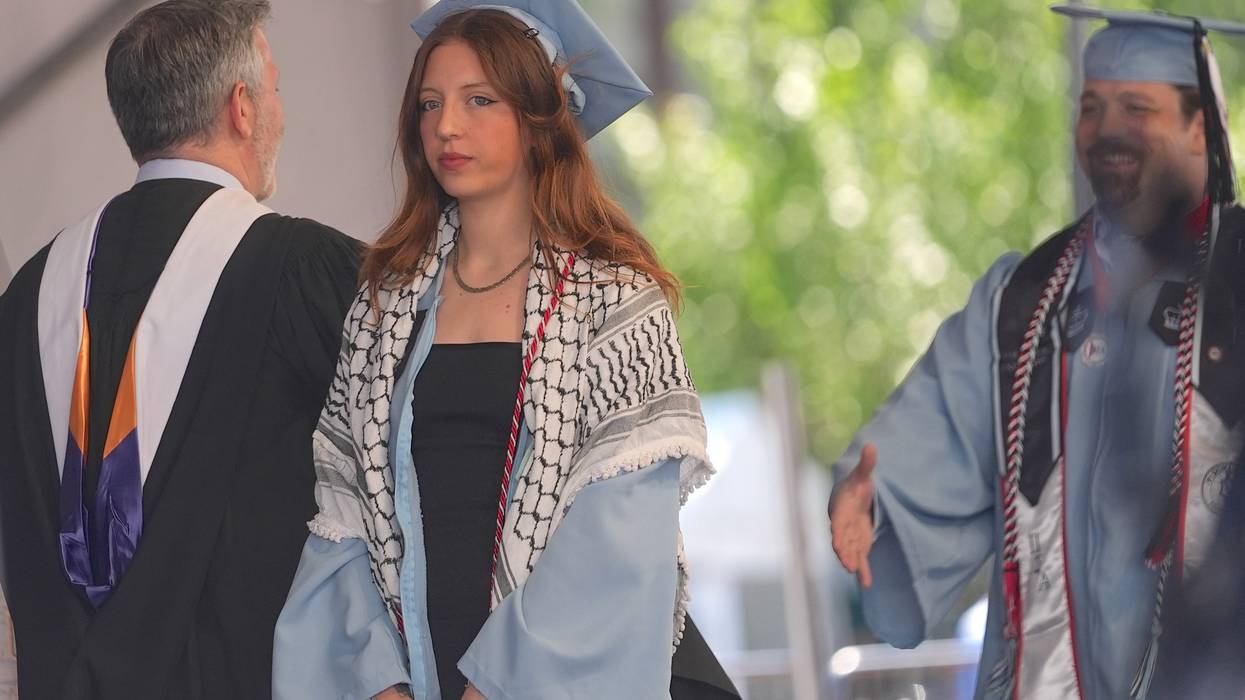
"You arrested us!" graduates shouted at one point in acting president Claire Shipman's address.
Columbia University administrators seemed intent on proceeding with an undergraduate commencement ceremony Tuesday as though the Ivy League school hasn't been at the center of student-led anti-genocide protests and government efforts to crack down on free speech for more than a year—but graduating students ensured the school's treatment of student organizers was front-and-center.
As acting president Claire Shipman approached the podium to address students at Columbia College's graduation, she was immediately met with loud booing.
She addressed the response, saying she knows many students feel "some amount of frustration" with her and the administration—but many of the graduates appeared uninterested in hearing from the university leader less than two weeks after she authorized the New York Police Department to enter the campus and arrest dozens of student protesters for occupying the university library in solidarity with Palestinians.
The Trump administration announced shortly after the arrests that they were reviewing the visa status of the student protesters—their latest escalation against pro-Palestinian organizers at the school.
"You arrested us!" graduates shouted at one point in Shipman's address, as she congratulated the Class of 2025 for making it "through one of the most rigorous schools in the world."
Mahmoud Khalil, the 2024 graduate who helped lead negotiations with administrators last year regarding divestment from Israel's military operation in Gaza, was also top-of-mind for many students who started chanting, "Free Mahmoud!" early in Shipman's speech.
"The work of your generation will be to shape these interesting times," Shipman said as the chants rang out.
More than two months after immigration agents arrested Khalil outside his on-campus apartment, he remains in detention in a Louisiana Immigration and Customs Enforcement (ICE) facility. University trustees allegedly gave Khalil's name to the Trump administration ahead of his detention and the Trump administration's revocation of his green card, and administrators did not provide him with protection earlier this year when he told them he feared being swept up in the White House's plans to crack down on free speech.
The Trump administration is pushing to deport Khalil, claiming the pro-Palestinian views he expressed at student protests are detrimental to U.S. foreign policy interests. Khalil was one of thousands of U.S. college students who took part in protests calling for schools to divest from companies that benefit from Israel's assault on Gaza, which has killed more than 53,000 Palestinians in 19 months and has included a blockade on humanitarian aid, pushing the civilian population toward famine.
Since stepping in as acting president in March, Shipman has met with faculty that object to Columbia's capitulation to the Trump administration; mentioned the names of Khalil and Mohsen Mahdawi, another student who was marked for deportation but subsequently freed; and started a website for students who fear deportation.
But students' response on Tuesday suggested they've taken more notice of Shipman's summoning of the NYPD earlier this month and the school's agreement to the Trump administration's demands aimed at rooting out what the White House claims is "antisemitism"—including imposing a ban on masks, appointing an administrator to oversee Middle Eastern and Palestinian studies, and hiring dozens of "special officers" authorized to swiftly remove students from campus.
Students erupted in jeers and laughs when Shipman praised the Class of 2025 for being "curious, determined, and open-minded," and again chanted, "Free Mahmoud!" at another point in the speech.
A larger commencement ceremony is scheduled for Wednesday. Columbia University Apartheid Divest called on members of the school community to attend a protest action coinciding with the graduation.
"No commencement as usual under genocide," read a social media post announcing the protest.
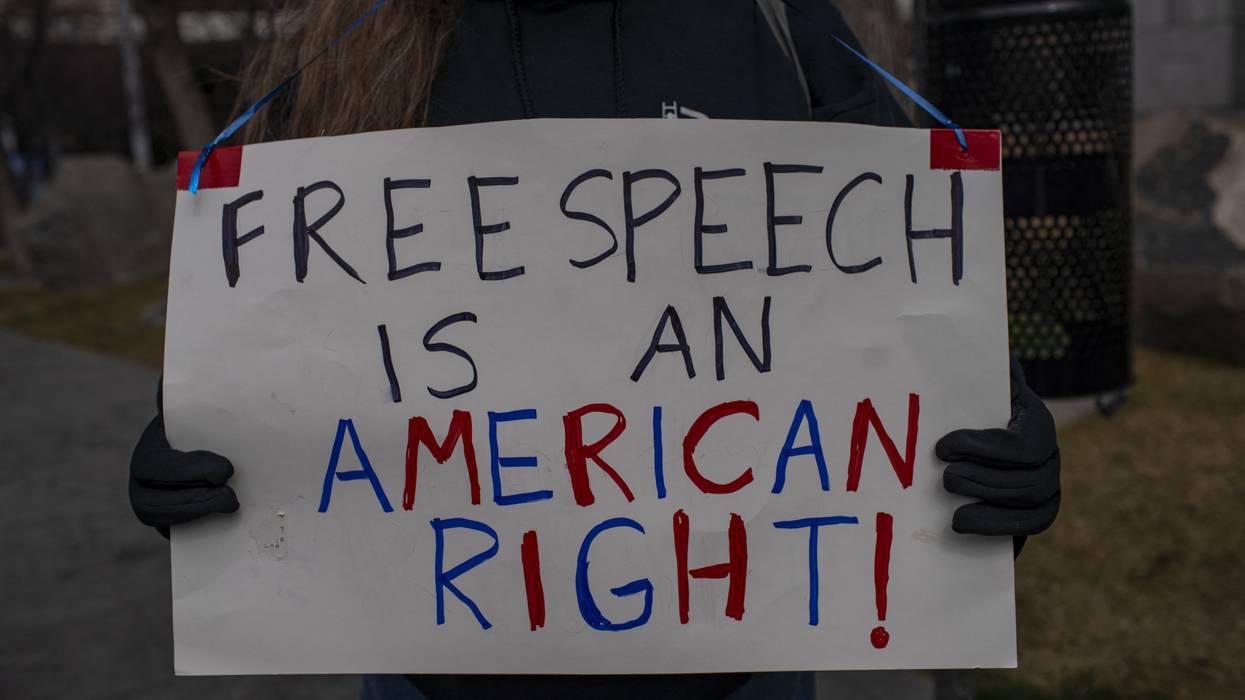
"In little more than 100 days, President Trump and the agencies under his control have threatened First Amendment rights through a breathtaking array of actions."
In an open letter on Monday, seven leading free speech organizations in the United States warned that the capitulation of universities and other institutions to President Donald Trump's demands for suppressed speech affect not just those organizations, their employees, and their students—but the state of U.S. democracy itself.
The Knight First Amendment Institute at Columbia University spearheaded the letter that was signed by the ACLU, the Committee to Protect Journalists, the Foundation for Individual Rights and Expression, the Freedom of the Press Foundation, PEN America, and Reporters Without Borders USA.
"If First Amendment freedoms are compromised, our democracy will be compromised, too," wrote the groups. "Democracy and free speech are inextricably linked. If we are to govern ourselves, we must be able to inquire, speak, write, associate, and protest without fear of governmental retaliation."
It followed several recent victories for some international students who have been arrested for expressing opposition to the United States' support for Israel. Tufts University student Rümeysa Öztürk was marked for deportation and sent thousands of miles away from her home in Massachusetts to a detention facility in Louisiana for writing an op-ed calling on her school to divest from companies benefiting from Israel's assault on Gaza—and was released earlier this month, with a judge saying her detention was a clear assault on the First Amendment.
"If our democracy is to survive, the freedoms of speech and the press need a vigorous, determined defense. Leaders of this country's most powerful, well-resourced, and prestigious institutions must play a larger part in this effort."
Georgetown University scholar Badar Khan Suri was released from immigration detention in Texas last week; he was apparently targeted by the Trump administration for his support for Palestinian rights and because his father-in-law, Ahmed Yousef, was a former adviser to a Hamas leader. Yousef has publicly condemned Hamas' October 2023 attacks.
Columbia graduate Mohsen Mahdawi wore a keffiyeh over his robe at commencement on Monday in solidarity with Palestinians—and received a standing ovation—less than a month after he was freed from detention. He had also been marked for deportation for organizing pro-Palestinian protests.
But another Columbia graduate, Mahmoud Khalil, remains in an Immigration and Customs Enforcement (ICE) detention center in Louisiana more than two months after being accosted at his campus apartment along with his pregnant wife and hustled into an unmarked car by immigration agents for his role in last year's pro-Palestinian protests.
The open letter on Monday did not mention Columbia University by name, but condemned universities and organizations that have capitulated to the White House.
Columbia trustees allegedly collaborated with ICE to detain Khalil, and when threatened with the revocation of $400 million in federal grants and contract, agreed to take a number of steps the Trump administration claimed were aimed at "fighting antisemitism." The school agreed to impose a ban on masks, appointed an administrator to oversee Middle Eastern and Palestinian studies, and hire "special officers" with the authority to swiftly remove people from campus.
"The logic that leads even powerful institutions to compromise or submit in these circumstances is of course easy to understand," reads the open letter. "But when one institution 'bends the knee,' its peers face increased pressure to do the same. Each surrender makes the assertion of First Amendment rights more costly and more perilous. We fear that if major institutions continue to submit rather than stand on their rights, the freedoms of speech and the press will be seriously and perhaps irrecoverably weakened."
Along with its attacks on higher education, the Trump administration has targeted major law firms—terminating their federal contracts and limiting their employees from entering federal buildings—in retaliation for their representation of his political opponents.
Some law firms have filed legal challenges against the president—and won—but others, including Skadden, Arps, Slate, Meagher & Flom, have negotiated with the administration, offering pro bono legal services and promising to end diversity, equity, and inclusion initiatives.
"These actions call for a forceful, uncompromising response. Some institutions have countered in exactly this way, to their credit," wrote the free speech groups on Monday. "It has been disheartening, however, to see so many others capitulating to the administration's unconstitutional demands rather than asserting their rights."
The letter also condemned the Trump administration's decision to bar legal scholars from providing information to the International Criminal Court, which has issued a warrant for the arrest of Israeli Prime Minister Benjamin Netanyahu; its rule banning The Associated Press from White House press briefings for its refusal to call the Gulf of Mexico by Trump's chosen name, the "Gulf of America"; and the Federal Communications Commission's threat to revoke the licenses of TV and radio networks if the president disagrees with their news coverage.
"In little more than 100 days, President Trump and the agencies under his control have threatened First Amendment rights through a breathtaking array of actions," reads the letter. "If our democracy is to survive, the freedoms of speech and the press need a vigorous, determined defense. Leaders of this country's most powerful, well-resourced, and prestigious institutions must play a larger part in this effort."
Jameel Jaffer, executive director of the Knight First Amendment Institute, warned that "First Amendment freedoms will wither if institutional leaders don't assert and defend them."
"This letter is meant to be a call to duty," he said, "and to civic courage.”
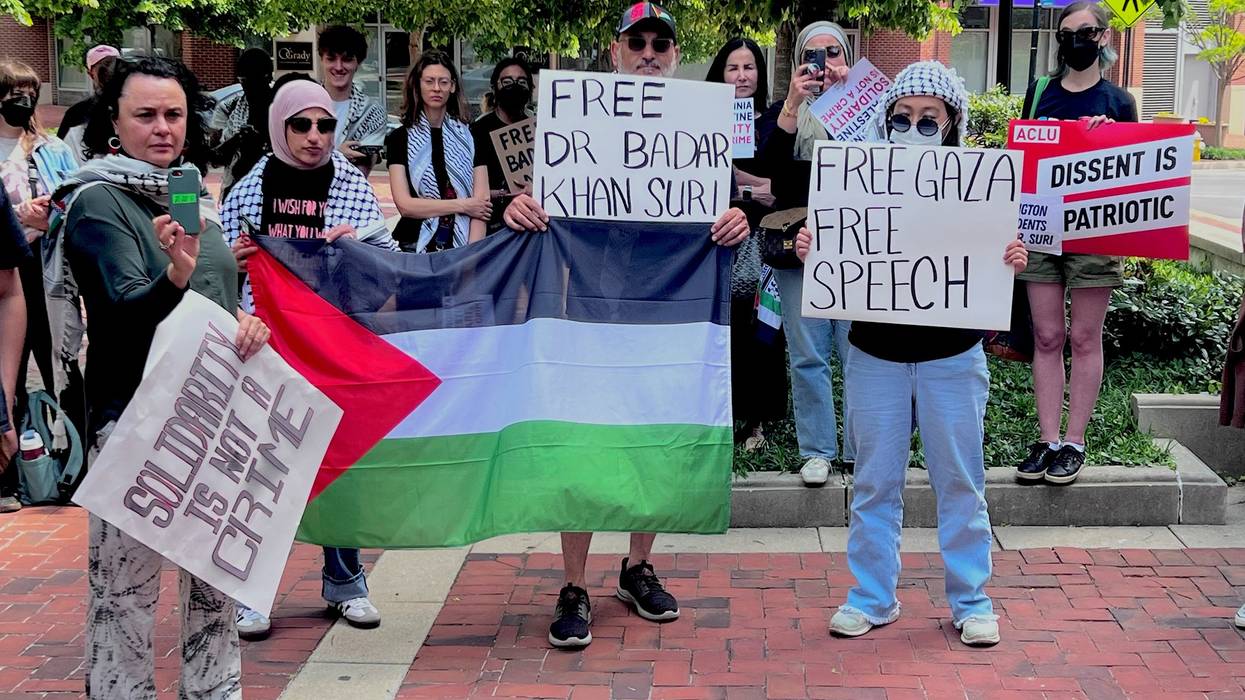
"My only 'crimes' making me a 'national security threat' are my marriage to a United States citizen of Palestinian origin and my support for the Palestinian cause," wrote Badar Khan Suri in an op-ed published on Tuesday.
After roughly two months of detention in a U.S. Immigration and Customs Enforcement facility, Georgetown University academic Badar Khan Suri is set to be released from custody following an order from a federal judge on Wednesday.
Khan Suri, an Indian national, was abducted by masked Department of Homeland Security (DHS) agents outside his home in Virginia in March—a scene similar to the arrests of foreign students who have supported Palestinian rights or criticized the U.S.-backed Israeli assault on the Gaza Strip.
In recent weeks, Mohsen Mahdawi, a Palestinian Columbia University student, and Rümeysa Öztürk, a Tufts University student, were both released from ICE detention after being arrested by federal immigration agents.
Judge Patricia Giles of the Eastern District of Virginia ordered Khan Suri's release on the condition that he attend other hearings in the case in person and continue living in Virginia, according to CNN.
Khan Suri, a postdoctoral fellow at Georgetown University, was teaching in the United States on a valid visa at the time of his arrest and is married to a U.S. citizen.
An attorney for Khan Suri, Hassan Ahmad, has indicated in media interviews that he believes Khan Suri was targeted because his father-in-law is Ahmed Yousef, a former adviser to the Hamas leader, Ismail Haniyeh. Yousef has publicly criticized Hamas' October 7, 2023 attack on Israel, according to The New York Times.
"My only 'crimes' making me a 'national security threat' are my marriage to a United States citizen of Palestinian origin and my support for the Palestinian cause," Khan Suri wrote in an op-ed published by Truthout on Tuesday.
"My beliefs do not allow me to ignore the pain of Palestinians. As a political prisoner, I face deprivation—of sleep, food, hygiene, and, worst of all, contact with my loved ones—but I take solace in knowing that I endure this ordeal for the children of Palestine, and I see my suffering as nothing compared to theirs," he wrote.
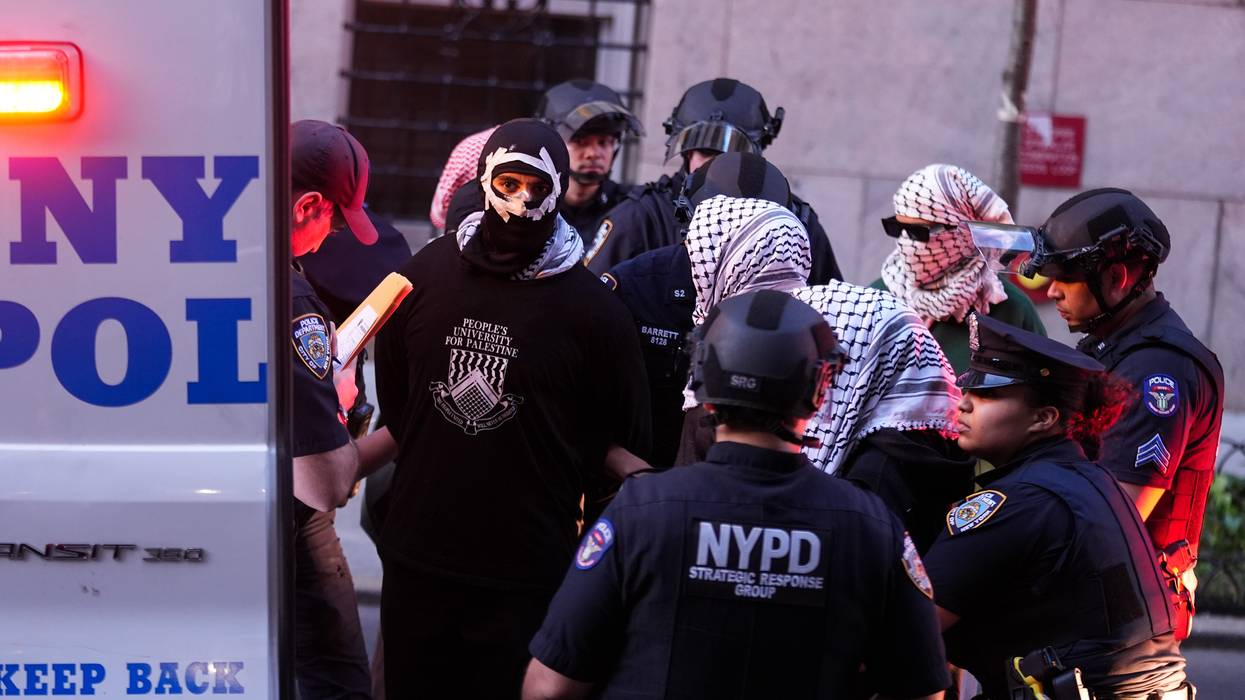
"Repression breeds resistance—if Columbia escalates repression, the people will continue to escalate disruptions on this campus," wrote Columbia University Apartheid Divest.
The New York Police Department arrested dozens of pro-Palestinian protestors on Columbia University's campus on Wednesday evening—prompting U.S. Secretary of State Marco Rubio to announce on X that the federal government is reviewing the visa status of those involved in the action.
On Wednesday afternoon, masked protestors, many wearing keffiyehs, gathered in Columbia's Butler Library. Video of the protest posted to social media shows demonstrators inside the library chanting "free Palestine."
Columbia has been under intense scrutiny from the Trump administration in recent months over the school's alleged failure to protect Jewish students. Critics say the administration is weaponizing antisemitism to attack Palestinian rights advocates. In March, the school faced backlash for making policy changes in line with demands from the Trump administration following the administration's decision to freeze $400 million in federal grants for the school.
Late Wednesday, U.S. Secretary of State Marco Rubio wrote on X: "We are reviewing the visa status of the trespassers and vandals who took over Columbia University's library. Pro-Hamas thugs are no longer welcome in our great nation."
In January, U.S. President Donald Trump signed an executive order with the professed aim of rooting out antisemitism at higher education institutions, and vowed to target foreign-born students who have engaged in "pro-jihadist" protests.
Acting university president Claire Shipman authorized the NYPD to enter campus around 7 pm on Wednesday in response to the rally in the library, according to the Columbia Daily Spectator. The student paper reported that the NYPD arrested roughly 75 protesters and began leading them out of the library shortly thereafter.
The Daily Spectator also reported that there were altercations between the police and protestors after the arrests made in connection to the library protest.
Eighty people "who did not comply with verbal warnings by the NYPD to disperse" were taken into custody, according to the NYPD, per reporting from CNN. Seventy-eight of those taken into custody were arrested and two others were issued summonses, the NYPD told the outlet. CNN noted that it's not clear how many of those arrested came from the protest inside the building.
The group Columbia University Apartheid Divest wrote on Substack on Wednesday that the protestors renamed the library in honor of Palestinian activist Basil al-Araj.
The organizers said that the action at the library "shows that as long as Columbia funds and profits from imperialist violence, the people will continue to disrupt Columbia's profits and legitimacy. Repression breeds resistance—if Columbia escalates repression, the people will continue to escalate disruptions on this campus."
In May of last year, the NYPD swept an occupation of Hamilton Hall and arrested dozens of student protestors.
Wednesday's events come not long after arrests by federal immigration agents of multiple noncitizens who had been active in pro-Palestine actions on Columbia's campus.
In March, federal immigration agents arrested pro-Palestinian activist and former Columbia student Mahmoud Khalil, who is currently languishing in an U.S. Immigration and Customs Enforcement facility in Jena, Louisiana. Another Palestinian green-card holder active in Columbia's student protest movement, Mohsen Mahdawi, was also arrested by federal immigration agents, but last month was released on bail.
Both of those cases have generated significant national attention.
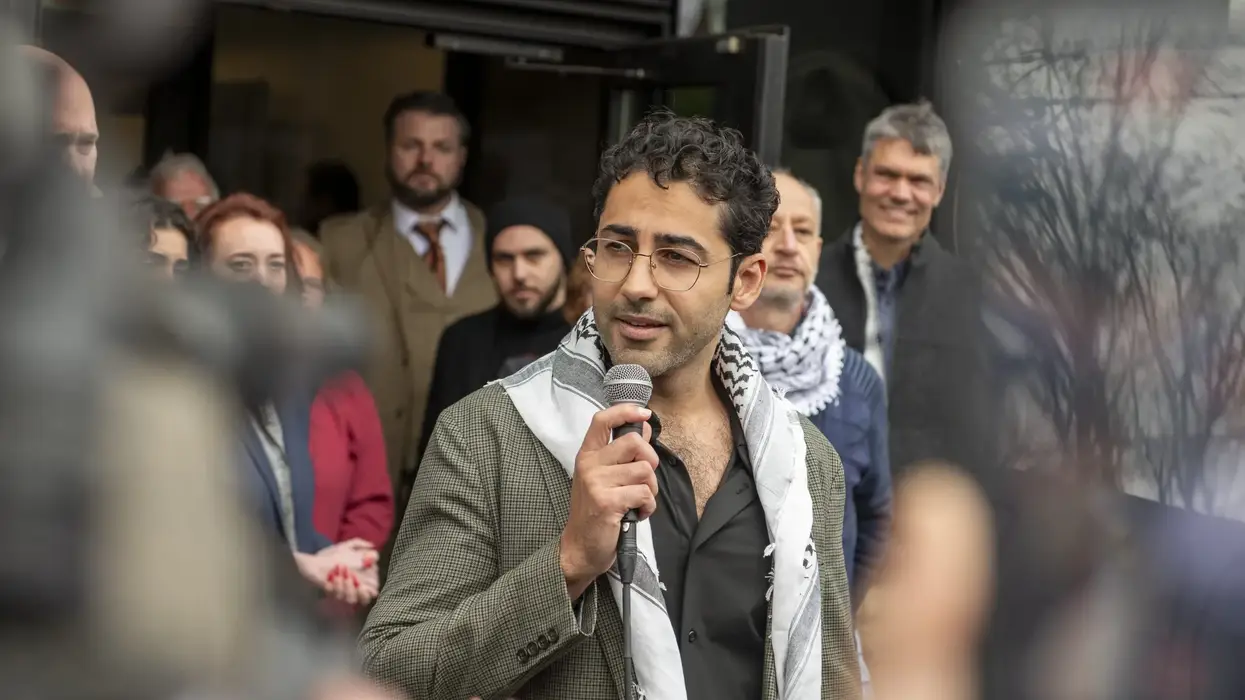
Mohsen Madhdawi is now free, but the fight for immigrant justice goes on for all those illegally detained for speaking their mind or asserting their constitutional rights of free speech and assembly.
You may not have heard but Immigration and Customs Enforcement (ICE) planted a covert informant within a migrant rights organization, engaged in widespread electronic and physical surveillance of its members, and utilized other government agencies to collect information about them, which led to the detentions, and at times deportations, of some of its key members. They did this to freeze the organization’s political speech and put an end to their organizing.
You may or may not be surprised that this started during the Obama administration and ending during Trump’s first term—well before the onslaught of constitutional and human rights abuses against politically active immigrants (and others) that we have seen over the last several weeks.
The use of immigration enforcement to freeze political speech is not new; in fact, it’s a practice that dates far back in the country’s history.
However, it’s possible the current administration is pushing the practice to a breaking point and waking the U.S. public up to its gross and extreme injustices. And we just may have seen one of the first signs of this breaking point with the release of Palestinian rights activist and green card holder Mohsen Mahdawi on Wednesday.
To start, the organization mentioned above is a powerful and internationally recognized migrant rights group, Migrant Justice, which has been organizing migrant workers in the state of Vermont’s dairy industry since 2009. Migrant Justice is perhaps best known for its work improving conditions for migrant workers on farms sourced by the ice cream brand Ben & Jerry’s (now owned by Unilever) but out of necessity expanded its organizing to include fighting for protections from police and ICE collaborations, winning access to drivers’ licenses for undocumented residents in Vermont, successfully organizing workers in the construction industry, expanding access to in-state tuition and financial aid for undocumented residents in the state, and fighting to keep many immigrants out of detention (among other ongoing campaigns and programs).
For its successes, however, the group garnered much attention from the country’s increasingly belligerent and internally focused immigration enforcement agencies.
“I've brought you a famous person,” an ICE officer boasted when he brought Enrique Balcazar, one of the organization’s lead organizers, into detention, mockingly referring to the national recognition Balcazar had gained for his work.
The depth to which ICE knew the details of Migrant Justice members’ lives, references to colleagues and friends and family, and a specific refusal for those detained to contact other Migrant Justice members, whom the officers specified by name, all revealed that ICE had been surveilling the group down to the minute details of their lives through what Migrant Justice has since shown were illegal means and reasons.
However, Migrant Justice, being who they are, sent the Trump administration back to their corner.
In a subsequent lawsuit filed by the group in 2018 against the Department of Homeland Security, they argued that ICE did not have probable cause to go after its members, and none of them fit the high priority ‘criminal’ profile of immigration cases that ICE claims to focus on. Instead, Migrant Justice argued, they had been targeted specifically for their successful organizing and that the federal government was attempting to retaliate and freeze their speech by harassing, intimidating, and deporting them. In so doing, ICE infringed on their First Amendment rights.
Migrant Justice went on to engage in an ongoing public campaign in support of their case, with large support in the state of Vermont including rallies at the Federal courthouses in Burlington, garnering national attention.
ICE eventually said uncle. By 2020 DHS settled outside of court with Migrant Justice. As a part of the stipulations of the settlement, ICE implemented a policy in which employees are obligated to act “in accordance with the First amendment, including its commitment to not profile, target on account of, or discriminate against any individual or group for exercising First Amendment rights.” This new wording clarified that all migrants (regardless of status) are protected under this constitutional right.
However, several years later, the Trump administration is at it again, as we have seen with the detention and attempted disappearance of Palestinian rights activists and other organizers of various backgrounds and immigration statuses. Once again, we see an executive branch using immigration enforcement in attempts to freeze speech. A few of those recently detained for their speech include Georgetown Professor Badar Khan Suri; Columbia University student Mohsen Mahdawi, Tufts University Student Rumeysa Ozturk; Columbia University student Mahmoud Khalil; Aditya Wahyu Harsono; Farmworker union leader Alfredo “Lelo” Juarez Zeferino; and 37 workers at a roofing company in Washington state who had not too long ago attempted to unionize.
This is not to mention the more than 1,000 international students across 160 colleges that had their visas or legal status revoked or the countless others taken from their homes, places of worship, schools, vehicles, you name it, and detained or deported without due process—another constitutionally protected right.
And just last Monday evening, Border Patrol agents detained eight farmworkers associated with Migrant Justice on a dairy farm in Northern Vermont, in addition to one other who was on his way to deliver groceries to farm workers on that very same farm. Migrant Justice is now rallying for their release.
The connection between Migrant Justice’s ongoing struggle and what is happening to Palestinian rights activists today is not lost on the group.
In fact, these farmworkers were held in the same room as Mohsen Mahdawi prior to his release.
In an earlier speech at a rally for Palestinian rights activist Mahmoud Khalil, Balcazar, stated:
“…for this organizing, the struggle in which we find ourselves, we have faced persecution from immigration authorities. Immigration uses the threat of detention and deportation to keep us silent, just as they do with Mahmoud Khalil and all the immigrant students who are fighting against the genocide in Gaza.”
He continued:
“I went through what Mahmoud Khalil is going through today…but thanks to the brave and powerful solidarity of the community, [we] won back our freedom. We fought our case to stay in this country and denounced ICE’s abuse of power. It was a long fight, but we won. And we are going to win the freedom of Mahmoud Khalil. We demand that this government respect the constitutional right of freedom of expression! Free Mahmoud Khalil now!”
In their case, Migrant Justice and their legal representation (ACLU, Center for Constitutional Rights, and others) had followed in a long line of court cases that have proven that immigrants, of all statuses, are protected under the U.S. constitution; and thus the U.S. government cannot use immigration enforcement to retaliate for political reasons.
The history of case law in the U.S. is quite clear:
And Migrant Justice’s case influenced coinciding cases that had similarly dealt with the question of First Amendment rights for immigrant organizers. Notably, shortly after the settlement, migrant rights activists Maru Mora-Villalpando and Ravi Ragbir won their respective cases against ICE and the right to remain in the country.
The U.S. Department of Justice has, throughout history, repeatedly attempted to deny constitutional rights for documented and undocumented immigrants alike. And, of course, there are cases that have not fallen in favor of immigrant plaintiffs, often due to abstract (and arguably unconstitutional) legal practices such as the Plenary Power doctrine, in which the court has at times deferred jurisdictional authority over matters of immigration to the Executive branch.
Despite some legal setbacks for immigrant rights over time, however, the federal court system has increasingly taken up immigrant rights cases, and despite some cases to the contrary, have mostly shown in undeniable ways that immigrants are included within the U.S. Constitution’s protections. I argue that this has happened in tandem with public protest, immigrant rights campaigns, and a shift in public opinion.
At this point, any case against the federal government on the grounds of constitutional rights for immigrants in the U.S. should be cut and dry. But it’s painfully obvious we should not feel comfortable resting on those laurels. We know this administration is breaking the law – denying rights that they have no authority to take away. So, what is to be done?
As history has shown us, rights aren’t won or protected in the courts alone, in a vacuum. Any legal scholar will tell you; it is the timbre of public opinion, and protest, that the courts often react to when making these decisions. Public opinion, can certainly affect the way the federal courts lean, as was seen in the civil rights movement and its relationship to the massive gains made during the years of the Warren Court era (1953-1969). While rights won through civil rights movements are latent within the constitutional expression “we the people,” those words only come into fruition when people challenge the forms of power within American democracy that seek to border, territorialize, and limit inclusion of those rights to just a select few.
The same is possible for all persons present in this country regardless of immigration status. While mass public outrage increased during Trump’s first term, it is building arguably to new heights today, particularly against its most publicly visible acts like the disappearance of Palestinian rights activists and the mass deportation of immigrants to a prison known for its torturous conditions in El Salvador.
Last weekend saw another round of mass protests across the country against the Trump administration’s extra-judicial actions. Last weekend also saw the U.S. Supreme Court block the Trump administration from sending another group of Venezuelan migrants to El Salvador with no due process. And we saw a federal judge order the Trump administration to transfer Rumeysa Ozturk to Vermont, stating, "The government cannot undermine the justice system and attempt to manipulate a case's jurisdiction by secretly transporting and imprisoning someone over a thousand miles from home." And after a considerable amount of pushback, including 65 lawsuits, the Trump administration appears to be reversing its attempts to strip thousands international students of their visas through the SEVIS system.
The Supreme Court is today stacked with judges implanted by Trump in his first term. And yet, today, they appear to be, in some cases, holding him accountable to the law, in what I might argue is in lockstep with immigrant rights activists and the supporting public opinion that is only made known by those growing crowds of protesters who dare to continue speaking out.
For the last two weeks I have attended morning rallies outside of the Federal courthouses in Burlington for the release of Mohsen, the same place we rallied for in support for Migrant Justice’s case against ICE almost 7 years ago. The crowd last Wednesday was big. The crowd Wednesday was even bigger. One can assume that the chants of “Free Mohsen!” and “Free them all!” could be heard inside the court room.
And the whole world heard that same crowd burst out when Mohsen walked free from building, peace signs in the air.
What history tells us is that we must continue showing up in protest in the streets, outside of court rooms, outside of detention centers, in our public spaces, and show the courts, and all of our branches of government for that matter, where our alliance lies: not with some rogue executive branch bent on ruling at will, but in the principles laid out in the U.S. constitution, those of equal dignity and rights for all.
As Mohsen said today: “From this place, in front of this court, me standing here with you, among you, it sends a message that is loud and clear not only to Vermont but to the rest of America: We the people will hold the constitution accountable to the principles and values we believe in.”
The Trump administration has shown it is willing to defy court orders, and has now detained a judge for refusing to comply with an extrajudicial action by the Trump administration. Mohsen has court dates ahead of him yet. And there is a long road ahead for any of the current cases mentioned here. As some have suggested, the country may by on the brink of a constitutional crisis.
That is one reason why we all need to continue to protest and make our voices heard. Today, at your local May 1 rally is a great time to do so.
Today we remember (again) that together, working in tandem and in support of migrant activists from all backgrounds, we can all actually affect these processes.
I write this from the chilly state of Vermont one month into Spring. If you listen closely, you can hear a great thawing, as protesters continue to speak out in favor of the inalienable human, civil, and constitutional rights of all persons in the U.S. As the movement grows, perhaps we could be witnessing an American Spring in the name of human dignity, at least if we continue to fight for it. Its mud season in Vermont. Our boots are still laced up, but the heavy coats are being put away for the year. There is still some snow in the mountains, but the ice is sure to melt.
*A small portion of this article is excerpted from my book, Migrant Justice in the Age of Removal, recently published by University of Georgia Press.
The court's order for the release of the detained student protest leader, said one lawyer, "is a victory for all people in this country invested in their ability to dissent and speak and protest."
This is a breaking story… Please check back for possible updates...
Mohsen Mahdawi, a Palestinian student targeted for deportation by the Trump administration because he participated in anti-genocide protests at Columbia University, was released on bail Wednesday following an order from Vermont-based U.S. District Judge Geoffrey Crawford.
Politico reported that upon his release, Mahdawi shared a message for President Donald Trump outside the courthouse.
"I am saying it clear and loud," Mahdawi declared. "To President Trump and his Cabinet: I am not afraid of you."
When Mahdawi, a green-card holder, arrived at a Colchester, Vermont immigration office to complete the process of becoming a U.S. citizen earlier this month, he was arrested by masked, hooded federal agents and put in an unmarked vehicle.
Mahdawi has been held at the Northwest State Correctional Facility in St. Albans since U.S. District Judge William Sessions III blocked the Trump administration's attempt to send him to a detention facility in Louisiana, like other student organizers.
His legal team—including attorneys with the ACLU and Creating Law Enforcement Accountability & Responsibility (CLEAR)—is arguing in court that Mahdawi's detention violates his constitutional rights, including free speech and due process.
"Nobody should fear detention for exercising their rights under the First Amendment. We are delighted that the court recognized that Mohsen is not a flight risk and that he should be released while his case proceeds," said Nathan Freed Wessler, deputy director of the ACLU's Speech, Privacy, and Technology Project, in a Wednesday statement.
CLEAR staff attorney Shezza Abboushi Dallal also welcomed the development: "The court's order to free Mohsen today is a victory for Mohsen, in his just pursuit of continued advocacy for Palestinian lives, and it is a victory for all people in this country invested in their ability to dissent and speak and protest for causes they are morally drawn to. We will continue our legal battle for Mohsen until his constitutional rights are fully vindicated."
Vermont's congressional delegation—Rep. Becca Balint (D) and Sens. Bernie Sanders (I) and Peter Welch (D.)—said in a joint statement Wednesday that "we are relieved that Mohsen Mahdawi was released on bail... and that the constitutional right to due process has prevailed."
"Mohsen Mahdawi is here in the United States legally and acted legally. He should never have experienced this grave injustice," they added. "The Trump Administration's actions in this case—and in so many other cases of wrongfully detained, deported, and disappeared people—are shameful and immoral. This is an important first step. We will continue the fight against President Trump's assault on the rule of law.”
The trio has been advocating for Mahdawi since his arrest. Welch visited him in detention last week and Sanders was among several lawmakers who spoke at a Tuesday rally organized by Balint outside the U.S. State Department in Washington, D.C.
"Mohsen Mahdawi is a cherished member of our community in Vermont, and I want to do everything that I can to elevate his story, because it is an indication of just how far from our values we have strayed," Balint said.
"This administration needs to know that we are watching very carefully what they are doing, that we care about our rights," she stressed, addressing the importance of taking to the streets to protest Trump's actions. "It is about standing up for all of our rights, but it's also about giving Mohsen Mahdawi and other people like him the understanding that we are standing with him."
Highlighting some other cases that have made headlines during Trump's first 100 days, Balint said that "people right now, in our country, are being disappeared by this administration. Children with cancer are being shipped off illegally—babies. Students are being harassed, and detained, and intimidated, and threatened. Why? Because they exercised free speech rights and the right to assemble. These are the rights that are basic to who we are—or who we say we are—as Americans."
Mahdawi grew up in a Palestinian refugee camp in the West Bank, which remains illegally occupied by Israel. Sanders noted Tuesday that "he has used his voice to advocate for peace, justice, and dignity for Palestinians and Israelis."
Speaking out against Mahdawi's arrest, the senator said that "not only was this action cruel and inhumane, most importantly, it was illegal, it was unconstitutional."
"This is not just about Mohsen Mahdawi. It is about you and you and you," he continued, pointing to members of the crowd. "If you can pick up a legal resident off the streets, throw them into a car, and put them in jail without any due process, that could happen to you."
Sen. Chris Van Hollen (D-Md.)—who recently traveled to El Salvador to meet with Kilmar Abrego Garcia—and Reps. Maxine Dexter (D-Ore.), Maxwell Frost (D-Fla.), Pramila Jayapal (D-Wash.), Ayanna Pressley (D-Mass.), Rashida Tlaib (D-Mich.), and Nydia Velázquez (D-N.Y.) also delivered remarks on Tuesday, as did leaders from Demand Progress and Indivisible.
Many of them pointed to others swept up in the Trump administration's effort to crush critics and carry out mass deportations, including Abrego Garcia, who was mistakenly deported to a megaprison in his native El Salvador alongside hundreds of Venezuelan migrants; former Columbia organizer Mahmoud Khalil; Badar Khan Suri, a postdoctoral fellow at Georgetown University; and Tufts University Ph.D. student Rümeysa Öztürk.
A federal district court judge had ordered the Trump administration to transfer Öztürk, a Turkish national, from Louisiana to Vermont by Thursday for a hearing on her petition challenging her detention. However, the government appealed, and the U.S. Court of Appeals for the 2nd Circuit on Tuesday halted the directive. Arguments for the appeal are now scheduled for next week.
Öztürk's legal team, which also includes the ACLU and CLEAR, said in response to Tuesday's decision that "Rümeysa Öztürk never should have been arrested and detained, period. We are ready to argue her case before the 2nd Circuit Court of Appeals, and we won't stop fighting until she is free."
Also on Tuesday, a U.S. district judge in New Jersey rejected the Trump administration's attempt to shut down Khalil's lawsuit arguing that the government is unlawfully detaining him for his political views. Like Öztürk and Mahdawi, his legal team includes the ACLU and CLEAR.
"The court has affirmed that the federal government does not have the unreviewable authority to trample on our fundamental freedoms," Noor Zafar, senior staff attorney with the ACLU's Immigrants' Rights Project, said Tuesday. "This is a huge step forward for Mahmoud and for the other students and scholars that the Trump administration has unlawfully detained in retaliation for their political speech, and a rebuke of attempts by the executive to use immigration laws to weaken First Amendment protections for political gain."
Khalil recently missed the birth of his child, due to his detention. His wife, Noor Abdalla, said Tuesday that "as I am now caring for our barely week-old son, it is even more urgent that we continue to speak out for Mahmoud's freedom, and for the freedom of all people being unjustly targeted for advocating against Israel's genocide in Gaza."
"I am relieved at the court's finding that my husband can move forward with his case in federal court," added Abdalla, a U.S. citizen. "This is an important step towards securing Mahmoud's freedom. But there is still more work to be done. I will continue to strongly advocate for my husband, so he can come home to our family, and feel the pure joy all parents know of holding your first-born child in your arms."
All of these cases are expected to continue to move through the federal judicial system. One case—Abrego Garcia's—has already reached the U.S. Supreme Court. Despite the high court's right-wing supermajority, which includes three Trump appointees, the justices earlier this month unanimously ordered Trump to facilitate Abrego Garcia's return to the United States.
During a Tuesday interview, ABC News anchor Terry Moran suggested that Trump could bring Abrego Garcia home to his family in Maryland with one phone call, saying: "You could get him back. There's a phone on this desk."
Trump responded: "I could... And if he were the gentleman that you say he is, I would do that." The president then accused him of being a member of the gang MS-13, which Abrego Garcia has denied.
On Wednesday, Trump's homeland security secretary, Kristi Noem, told CBS News that Abrego Garcia "is not under our control. He is an El Salvador citizen. He is home there in his country. If he were to be brought back to the United States of America, we would immediately deport him again."
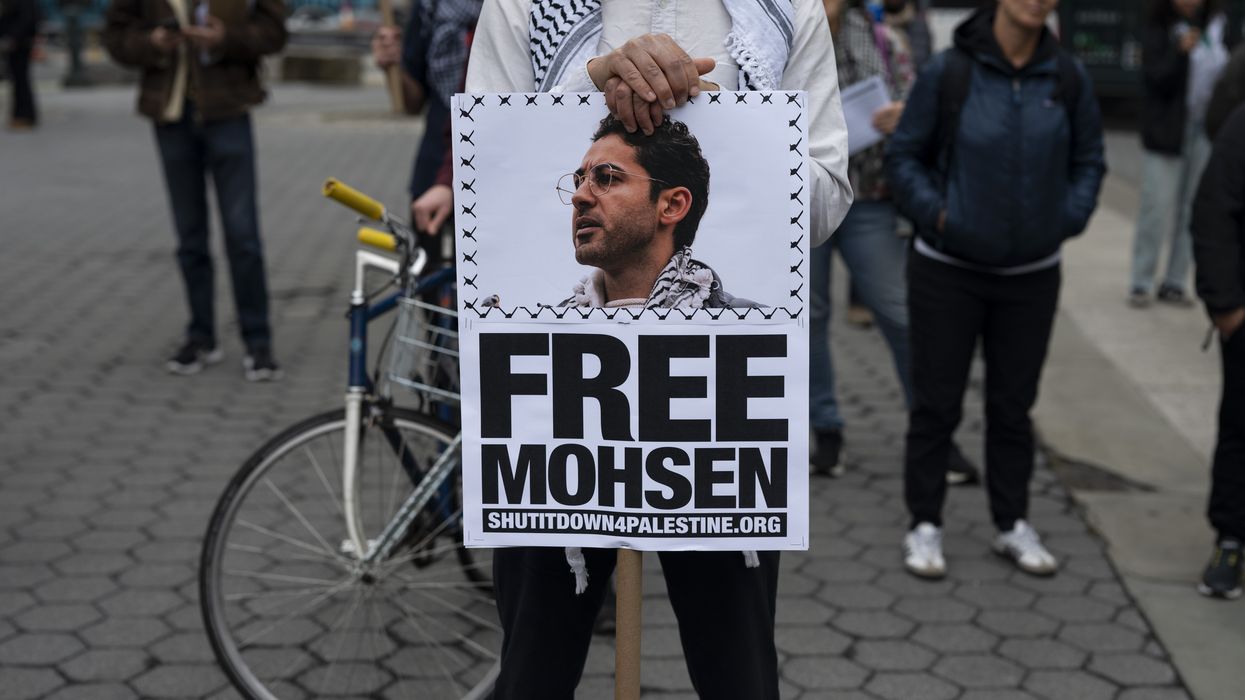
The Ozturk and Mahdawi cases are scheduled soon in the U.S. District Court of Vermont, but only you get to decide the verdict in the court of public opinion.
Unless something goes awry, both Rumeysa Ozturk and Mohsen Mahdawi will be in a Vermont courtroom in the next few weeks. Both will contest the government’s right to abduct and imprison people with no due process, because they exercised their constitutionally protected freedom of speech. Both prisoners ask for the ancient right of habeas corpus, a remedy for wrongful detention which prevented kings of England from throwing people in jail arbitrarily. The courts will decide whether freedom of speech and due process for everyone are still the law of the land.
But you and I will decide whether we, the people, will allow illegal arrests like these, or whether we will protest so loudly that the government dare not continue them. Why should we be concerned? What happened here? In the crush of so many outrages, it’s easy to lose track how these two cases involve the same core issues and yet are different in some important respects.
One contrast is that Mahdawi had a public role in organizing and protesting with a Columbia Palestinian students’ union until March 2024, when he withdrew because he advocated for Palestine as a safe place for Jews and Palestinians alike. Ozturk’s only “crime” is co-authoring a column in the Tufts University newspaper asking that the University acknowledge the genocide of more than 50,000 of the Palestinian people, and act accordingly. A State Department investigation before her arrest found no link at all to terrorism or antisemitism. Ozturk literally has been locked up only because of her written words, while Mahdawi was out on the streets exercising his right to free speech.
Can anyone really believe that a column in a university newspaper or demonstrations on a college campus could have “potentially serious adverse foreign policy consequences for the United States” under the Immigration and Nationality Act?
Another contrast is that Mahdawi reacted to doxxing and false accusations by going underground, and was interviewed by CBS News the day before his arrest. He was prepared. Ozturk was fearful but continued her private life. When Mahdawi reported at the “honey trap” of a long-awaited citizenship interview, he was accompanied by allies who videoed him being taken away in handcuffs. He knew what he was walking into, and decided it was worth the risk because the interview might fulfill his dream: U.S. citizenship. He had the immediate attention of his lawyers, his neighbors, and the press.
The contrast with Rumeysa Ozturk’s arrest and abduction could not be greater. The unsuspecting 30-year-old woman was walking in broad daylight to an interfaith center when six masked agents swooped down on her, grabbed her phone, handcuffed her, and marched her to an unmarked vehicle. For 24 nightmarish hours, Ozturk was whisked across state lines to New Hampshire and then Vermont where she was held overnight, and at dawn flown to Louisiana where she has been imprisoned ever since. Her statement says that she initially thought she was in the hands of killers, not police. Ozturk’s repeated requests to call her lawyer were refused.
While Mahdawi says he is “in good hands” in a Vermont prison, Ozturk has described a nightmarish situation at the detention center in Louisiana. Both in her written statement to the court, and in her conversations with the senator and representatives who visited her, she described 24 women and a mouse in a cell meant for 14. In sum, “unsanitary, unsafe, and inhumane.” Ozturk has also been deprived of asthma medication and healthcare, and her hijab was removed without consent.
For all these differences, the cases have some similarities apart from involving the Palestinian cause. Both people have extensive support from their communities. The classic white-steepled church in Hartland, Vermont was packed with Mahdawi’s neighbors who wanted to help him any way they could. The District judge had never seen so many letters of support (almost 100). Ozturk is also highly regarded. In addition to letters from the President of Tufts University (whom her column criticized) and many colleagues and faculty, 27 national Jewish organizations supported her in an amicus brief. They of all people should understand the dangers of abducting people on the street because of what they say, with no due process.
In both landmark cases, judges specifically ordered that the prisoners not be moved from the state where they were arrested. Mahdawi is still in Vermont because the judge’s order was sought and granted immediately. The agents who abducted Ozturk hurtled across the Massachusetts border and crossed three state lines before 24 hours had passed. The Trump administration contends that Ozturk’s petition is invalid because it wasn’t filed in the right state—despite the fact that they prevented her from communicating until she was in Louisiana.
Both Ozturk and Mahdawi were the victims of doxxing, and false information spread through networks of extremists who targeted them. Ozturk’s column was her only public statement on the Palestinian issue, and the Trump administration had to stretch to find something amiss—that her words were in sympathy with a group that was later temporarily banned on campus. Far from being an antisemite as charged, Mahdawi was the leader of a protest where he led the whole group in chanting, “Shame on you” at a demonstrator who cursed the Jewish people.
The basis for the Trump administration’s action in both situations is vague and alarming. Can anyone really believe that a column in a university newspaper or demonstrations on a college campus could have “potentially serious adverse foreign policy consequences for the United States” under the Immigration and Nationality Act?
Rumeysa Ozturk and Mohsen Mahdawi are petitioning for one of the oldest rights in our common law, because their rights under the U.S. Constitution—to speak and to have due process of law—have been violated in numerous ways. Whether you are in Vermont with its traditions of free speech and direct democracy, or in any of the other 49 states where the Bill of Rights is still alive, speak for them. Speak to your president who has jailed them and his officials, your senators and representative, every form of media you read or see, your state and local government. Stand by the road with a sign, and invite your neighbors to join you. Talk to all the organizations you belong to and connect with people, regardless of their political beliefs. Most people feel that no one in our country should be abducted and jailed arbitrarily.
The rights you save might be your own. In fact, they are—at least for now.
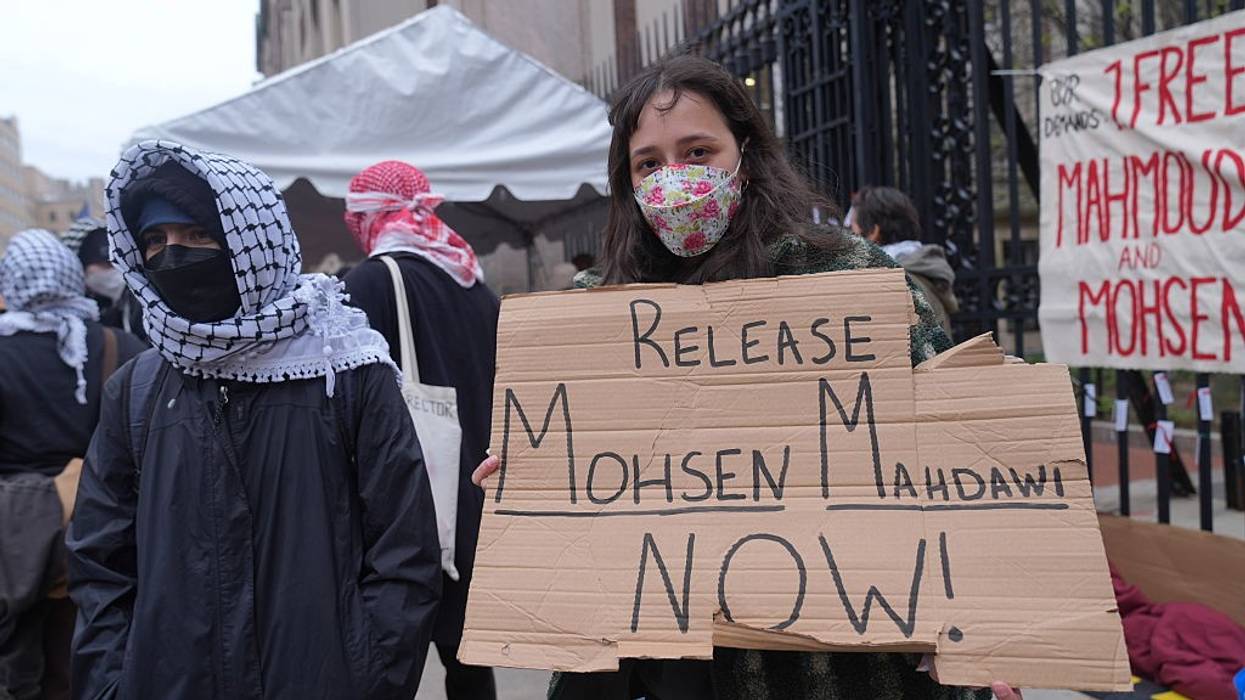
One attorney said that the former Columbia University organizer "sits in a jail cell because of his lawful speech," while another reminded supporters that Mahdawi "has not been charged with any crime."
Attorneys for Mohsen Mahdawi, a Palestinian student organizer at Columbia University and permanent U.S. resident caught up in the Trump administration's crusade against Palestine defenders, argued in federal court Wednesday that their client was illegally arrested and detained for his constitutionally protected speech and should be immediately freed.
In what Mahdawi's legal team hailed as a "victory," U.S. District Judge Geoffrey W. Crawford extended a temporary restraining order issued last week by Judge William Sessions III to prevent federal officials from transferring Mahdawi from Vermont, where he is being held at the Northwest State Correctional Facility in St. Albans. Crawford also scheduled a new hearing for Mahdawi on April 30.
Addressing the nearly 100 letters submitted in support of Mahdawi, Crawford said that "no one has ever provided anything like that before," adding, "These were quite striking in geographic and philosophical breadth, including many members of the Jewish community."
Mahdawi, who is 34 years old and has been a green-card holder for a decade, was arrested on April 14 by masked Immigration and Customs Enforcement (ICE) agents during an appointment for his citizenship test in Colchester, Vermont. He was steps away from naturalization; instead, federal agents attempted to force Mahdawi onto a plane bound for Louisiana, where other Palestine defenders are being held pending deportation proceedings.
Mahdawi's lawyers are seeking his immediate release.
"We ask this court to suspend this unlawful retaliation and slow the grave threat to free speech posed by his continued detainment by releasing Mr. Mahdawi on bail," his legal team said in a filing.
Luna Droubi, an attorney on the team, said after the hearing that "Mohsen Mahdawi sits in a jail cell because of his lawful speech."
"What the government provided thus far only establishes that the only basis they have to currently detaining him in the manner they did is his lawful speech," Droubi added. "We intend on being back in one week's time to free Mohsen."
"What the government provided thus far only establishes that the only basis they have to currently detaining him in the manner they did is his lawful speech."
Like the numerous other pro-Palestine activists arrested—critics say kidnapped—and detained by the Trump administration, the government concedes that Mahdawi committed no crime. However, under the Immigration and Nationality Act of 1952, the secretary of state can expel noncitizens whose presence in the United States is deemed detrimental to foreign policy interests.
The U.S. Department of Justice (DOJ) argued that Mahdawi should be deported because letting him remain in the country "would have serious adverse foreign policy consequences and would compromise a compelling U.S. foreign policy interest."
Trump administration officials including Secretary of State Marco Rubio have cited President Donald Trump's executive order ostensibly aimed at combating antisemitism and his edict authorizing the deportation of noncitizen students and others who took part in protests against Israel's genocidal assault on Gaza as justification for Mahdawi's arrest and detention.
However, Mahdawi has repeatedly condemned anti-Jewish hatred, including during a 2023 interview on CBS News' "60 Minutes" in which he asserted that "the fight for freedom of Palestine and the fight against antisemitism go hand in hand because injustice anywhere is a threat to justice everywhere."
VTDigger reported that hundreds of people gathered outside the Burlington, Vermont courthouse Wednesday to show support for Mahdawi and demand his release. Nora Rubinstein of Middletown Springs, Vermont said she was rallying in defense of "democracy and freedom" and to help the U.S. "return to the democratic principles this country was founded on."
"It's time to end the shredding of our democracy, the shredding of our Constitution," Rubinstein added.
On Monday, Mahdawi told U.S. Sen. Peter Welch (D-Vt.), who visited him behind bars, that "I wanted to become a citizen of this country because I believe in the principles of this country."
"The most important rights [are in] the Bill of Rights, which includes free speech on the top of these rights, freedom of assembly, freedom of press, freedom of having religion or not having religion at all," he added.
As Welch visited Mahdawi, Columbia University students, faculty, and alumni once again chained themselves to a fence to protest his detention and demand the release of not only Mahdawi but also of fellow Columbia activists and permanent U.S. residents Mahmoud Khalil and Yunseo Chung, as well as other student Palestine defenders including Rümeysa Öztürk, Badar Khan Suri, and others.
On Tuesday, a delegation of Massachusetts Democrats—U.S. Sen. Ed Markey and Reps. Jim McGovern and Ayanna Pressley—visited Khalil and Öztürk at the Louisiana ICE detention facility where they are being held. Markey accused the Trump administration of jailing the activists in Louisiana in a bid to have "the single most conservative circuit court of appeals in the United States of America" hear the case.
Mahdawi's lawyers said they believe their client will soon be free.
"We are very hopeful that he will be released," attorney Cyrus Mehta told supporters and media gathered outside the Burlington courthouse on Wednesday. "The judge wants to move quickly, and he realizes that this is a case of great importance for this country."
"What we're seeing here is unprecedented where they are so hell-bent on detaining students," Mehta added. "These are not hardened criminals. These are people who have not been charged with any crime, they have also not been charged under any of the other deportation provisions of the immigration act."
One of the attorneys read the crowd a statement from Mahdawi in which he said that "this hearing is part of the system of democracy" that "prevents a tyrant from having unchecked power."
"I am in prison," he added, "but I am not imprisoned."

"I wanted to become a citizen of this country because I believe in the principles of this country," Mahdawi told a U.S. senator.
In an interview with Sen. Peter Welch on Monday, Columbia University student organizer Mohsen Mahdawi described how his arrest by immigration agents earlier this month took place right as he was preparing to answer questions on a citizenship test about the bedrock principles and rights afforded to everyone in the U.S.—particularly freedom of speech.
"I wanted to become a citizen of this country because I believe in the principles of this country," Mahdawi told the Vermont Democratic senator during a visit to the Immigration and Customs Enforcement (ICE) detention center where he has been held for more than a week. "The most important rights [are in] the Bill of Rights, which includes free speech on the top of these rights, freedom of assembly, freedom of press, freedom of having religion or not having religion at all."
Welch visited Mahdawi as Columbia students chained themselves to a fence at the Ivy League school, demanding his release along with that of Mahmoud Khalil, another leader of pro-Palestinian campus protests who was detained last month and is being held at a detention facility in Jena, Louisiana with the Trump administration pursuing his deportation.
Mahdawi, a green-card holder for the past 10 years, arrived at an immigration office in Colchester, Vermont last week to finalize his application to become a naturalized citizen—only to be handcuffed and arrested by armed, plainclothes federal agents wearing masks.
Welch noted in his talk with Mahdawi that Secretary of State Marco Rubio wrote in a memo that as a student speaking out against Israel's U.S.-backed war on Gaza and the West Bank, Mahdawi could "potentially undermine" the Middle East peace process. Mahdawi is one of several student activists who have been detained for protesting in solidarity with Palestine, and hundreds have had their visas revoked as the Trump administration claims to be fighting antisemitism.
On Friday, a federal judge in Georgia's Northern District ordered ICE to restore the legal status of 133 of the students who had had their F-1 visas revoked.
"The Constitution protects everyone on American soil, so the Trump administration cannot ignore due process to unjustifiably threaten students with the loss of immigration status, and arrest and deportation," said Akiva Freidlin, senior staff attorney at the ACLU-Georgia, which had filed a lawsuit over the visa revocations.
Rubio also invoked the Immigration and Nationality Act in the administration's effort to deport Khalil; a provision within the law allows the government to initiate the deportation of lawful permanent residents by claiming they threaten U.S. foreign policy.
"Basically, he is describing being anti-war as antisemitic," said Mahdawi. "How could that be possible when my partners, most of my partners at Columbia's campus and beyond, are Jews and Israelis. My work has been centered on peacemaking, and all I am doing, I am being a human."
Posting a video of his talk with Mohsen on social media, Welch urged Americans to "listen to his message" of empathy, which the organizer said extends to Jewish people in the U.S. and Israel.
"My empathy," he said, "extends beyond the Palestinian people... And my hope and my dream is to see this conflict, if one might say, to see an end to the war, an end to the killing, to see a peaceful resolution between Palestinians and Israelis."
"How could this be a threat to anybody except the war machine that is feeding this?" said Mahdawi.
Mahdawi urged his supporters "to continue working for the democracy of this country and for humanity," and said, "The war must stop."

"By singling out Jews as a homogeneous group to be protected at the expense of other marginalized groups and minorities, the administration is in fact fostering anti-Jewish sentiments," wrote a group of Israeli academics.
Jewish voices ranging from academics in Israel to a coalition of mainstream American Jewish organizations this week spoke out against the Trump administration, arguing that the White House's has used the fight against antisemitism as a pretext for targeting higher education. Some said the tactic actually makes Jews less safe.
In January, U.S. President Donald Trump signed an executive order with the purported aim of rooting out antisemitism at higher education institutions, and vowed to target foreign-born students who have engaged in "pro-jihadist" protests.
Since then, Trump immigration officials have detained multiple people involved in pro-Palestine campus demonstrations on Columbia University's campus, including Palestinian green-card holders Mahmoud Khalil and Mohsen Mahdawi.
The administration's antisemitism task force in February announced investigations into several of universities, and has also targeted funding at multiple universities.
In response to these developments, hundreds of Israeli academics—both in and outside of Israel—signed an open letter published Thursday, alleging the Trump administration is cynically using the goal of combating antisemitism to crack down on Columbia University and other U.S. universities.
"By singling out Jews as a homogeneous group to be protected at the expense of other marginalized groups and minorities, the administration is in fact fostering anti-Jewish sentiments," according to the letter, which also notes the signatories are alarmed by the persecution of Palestinian and pro-Palestinian students and faculty.
"We condemn the weaponization of Jewish students' safety as grounds to silence, harass, suspend, punish, or deport pro-Palestinian members of U.S. academia," the letter states.
Other figures in U.S. academia also aired similar concerns this week.
University of Southern California journalism professor Sandy Tolan, who has written a book about Israel-Palestine, argued in commentary published Wednesday by Rolling Stone that the administration's "witch hunt" in higher education settings "has little to do with actual antisemitism."
"If it did, Trump would have fired Elon Musk immediately after his straight-armed salute on Inauguration Day—a gesture widely interpreted as a 'Sieg Heil,'" he wrote of Trump's billionaire adviser.
Similarly, the Jewish president of Wesleyan University, Michael Roth, told NPR on Thursday that Trump's scrutiny on universities "is like using antisemitism as a cloak to do other things, to get universities to express loyalty to the president." Earlier in April, Roth wrote an opinion piece for The New York Times making this same point.
According to the anti-Zionist group Jewish Voice for Peace, over 30 prominent Jewish scholars of antisemitism, Holocaust studies, and Jewish history on Thursday challenged the Trump administration's embrace of the International Holocaust Remembrance Alliance's definition of antisemitism, which critics say conflates legitimate criticism of Israeli policies and practices with anti-Jewish bigotry. The group said this definition has been used as a tool for the administration to attack higher education.
Meanwhile, a coalition of 10 organizations representing three out of four of the major Jewish denominations in American Jewry issued a statement on Tuesday taking issue with what they called a "false choice" between combating antisemitism and protecting democracy and the rule of law.
"In recent weeks, escalating federal actions have used the guise of fighting antisemitism to justify stripping students of due process rights when they face arrest and/or deportation, as well as to threaten billions in academic research and education funding. Universities have an obligation to protect Jewish students, and the federal government has an important role to play in that effort; however, sweeping draconian funding cuts will weaken the free academic inquiry that strengthens democracy and society, rather than productively counter antisemitism on campus," wrote the coalition, which was brought together by the progressive Jewish Council for Public Affairs, but also included conservative groups like the Rabbinical Assembly.
"There should be no doubt that antisemitism is rising," the coalition wrote, but "these actions do not make Jews—or any community—safer. Rather, they only make us less safe."