

SUBSCRIBE TO OUR FREE NEWSLETTER
Daily news & progressive opinion—funded by the people, not the corporations—delivered straight to your inbox.
5
#000000
#FFFFFF
To donate by check, phone, or other method, see our More Ways to Give page.
Daily news & progressive opinion—funded by the people, not the corporations—delivered straight to your inbox.
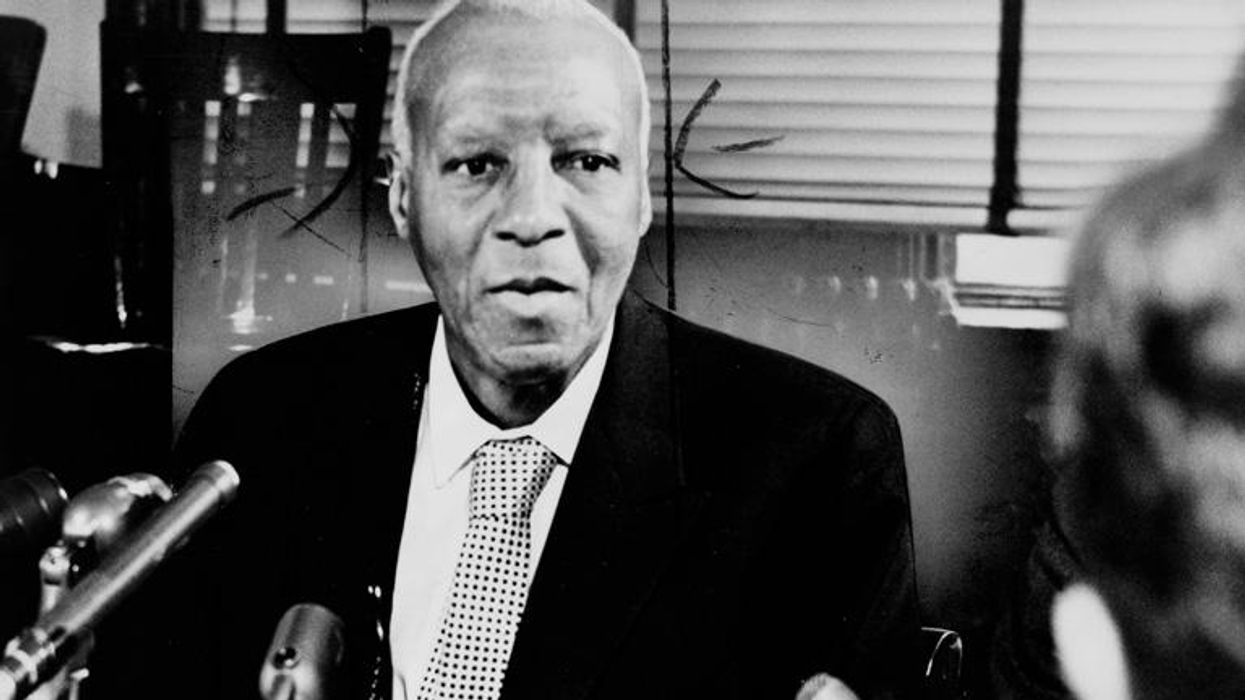
This term has become a dog whistle for those who wish to diminish the accomplishments of Black women like VP Kamala Harris, wrongly suggesting that they are unqualified for their well-earned positions.
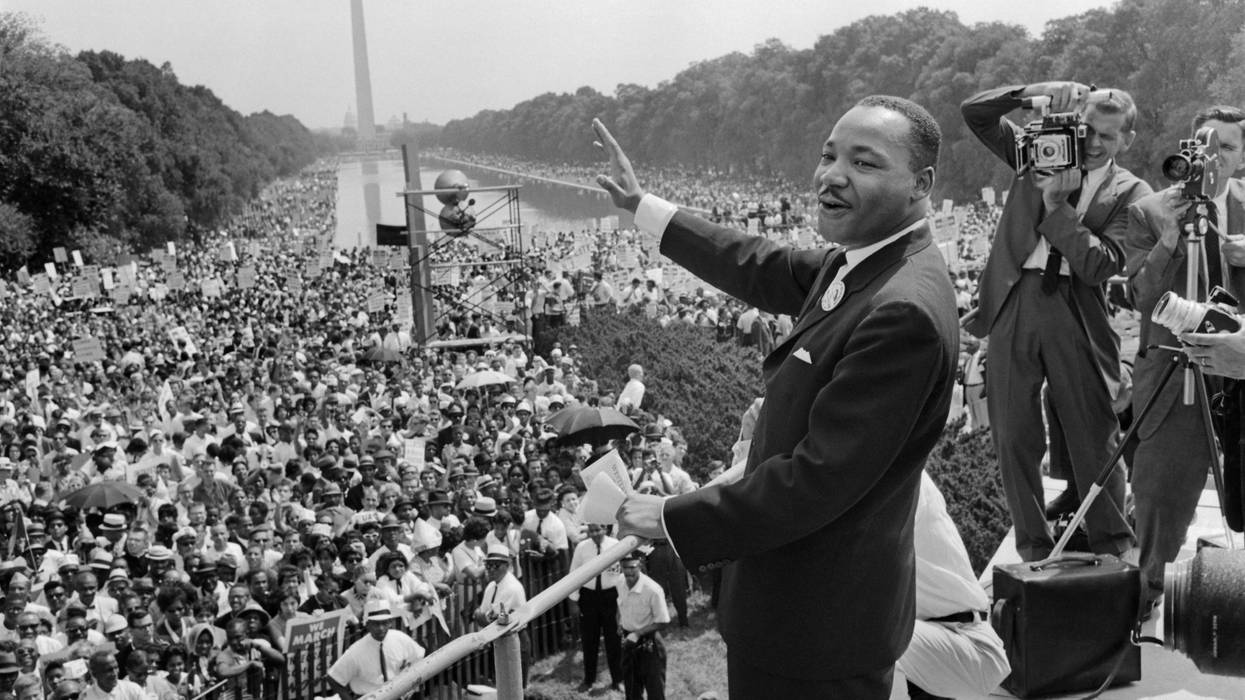
August 28, 1963 marks one of the most significant events in our nation’s history. On that day, more than a quarter million people assembled to participate in the historic “March on Washington for Jobs and Freedom,” where Reverend Dr. Martin Luther King Jr. delivered his iconic “I Have a Dream” speech and demanded the civil and economic rights of Black Americans that were promised in the founding documents of this nation. That call to action, shared by many gathered in the nation’s capital, is one that still reverberates today.
The origins of this march trace back over two decades to 1941, when labor organizer A. Philip Randolph, along with activist Bayard Rustin, created the March on Washington Movement, which was designed to place pressure on the federal government to establish employment protections for Black people. Randolph and Rustin were both motivated to end segregation and racial discrimination that denied Black Americans fair opportunities in employment. Randolph eventually became the director of the March on Washington for Jobs and Freedom, while Rustin became one of the central organizers of the 1963 march. Through their efforts, Randolph, Rustin, and many others brought people from all over the nation to Washington, D.C., to use their collective power to foster lasting change. The impact of the March on Washington contributed to the eventual signing of the Civil Rights Act the following year.
While this may be well-known—and for some, distant—history, some of the same social ills that the marchers sought to eliminate are still with us with renewed intensity. And the progress and equality they have fought for is once again under attack, this time by conservative organizations who are using hard-fought civil rights laws and anti-discrimination legislation against the very people these laws were designed to protect.
On August 28, 2024, I share this pledge once again with our nation, with the hope that we as a society will continue to uphold this promise and stand against that which threatens diversity, equity, and inclusion.
Our nation is once again fighting against a wave of race-based attacks against marginalized communities, this time under the guise of opposing Diversity, Equity, and Inclusion (DEI) efforts. So far this year, at least 37 federal lawsuits targeting DEI programming have been filed. The year before that, at least 65 bills were introduced to limit DEI in higher education across 25 states. This coordinated campaign aims to rid our nation of DEI offices and programs, end anti-bias trainings, and stop funding for the support for diversity. As studies have consistently shown, employers and educational institutions that emphasize and encourage diverse workforces and student bodies regularly outperform their counterparts among various measures.
Although many in this anti-DEI movement claim that racism no longer exists in our nation and thus nullifying the need for diversity, there is no denying the facts: Racial wealth divides persist, and people of color continue to endure systemic discrimination. Yet, some flatly reject the myriad data on the clear benefits of having diverse workforces and classrooms, and the pressure campaign launched by the conservative movement has caused many businesses to fold and abolish their DEI commitments and efforts completely.
And this movement is now becoming more blatant with its racist motivations, not only attacking universities and businesses, but also directly attacking people of color. We see it in the grotesque attacks on the first woman of color nominated for president, Vice President Kamala Harris, where right-wing activists have pejoratively labeled her as a “DEI hire.” This term has become a dog whistle for those who wish to diminish the accomplishments of Black women, wrongly suggesting that they are unqualified for their well-earned positions, and that but for their race and gender, they would not be where they are. Make no mistake: Right-wing organizations and activists are now using the term “DEI hire” as a slur to strip away the achievements of people of color who are in positions of power.
It is vital that we fight back against unfounded and dangerous attacks on DEI. Our nation cannot achieve the equality we hold as a moral imperative if we allow the progress we’ve made to be eroded. We can all look to the past as a road map to chart a better future where we fight for a nation–and world–free of discrimination and inequality. Following Dr. King’s speech, A. Philip Randolph invited those in attendance at the march to take a pledge:
Standing before the Lincoln Memorial on the 28th of August, in the centennial year of emancipation, I affirm my complete personal commitment to the struggle for jobs and freedom for Americans. To fulfill that commitment, I pledge that I will not relax until victory is won. I pledge that I will join and support all actions undertaken in good faith in accord with the time-honored Democratic tradition of nonviolent protest, of peaceful assembly, and petition, and of redress through the courts and the legislative process. I pledge to carry the message of the march to my friends and neighbors back home and arouse them to an equal commitment and equal effort. I will march and I will write letters. I will demonstrate and I will vote. I will work to make sure that my voice and those of my brothers ring clear and determine from every corner of our land. I pledge my heart and my mind and my body unequivocally and without regard to personal sacrifice, to the achievement of social peace through social justice.
As we commemorate the March on Washington, let us reflect on the past so that it emboldens us to fight for the future. And so, on August 28, 2024, I share this pledge once again with our nation, with the hope that we as a society will continue to uphold this promise and stand against that which threatens diversity, equity, and inclusion. It is up to us to ensure that the progress made by those who marched is not undone by those who seek to divide us, and that the labor and freedoms of all Americans remain protected.
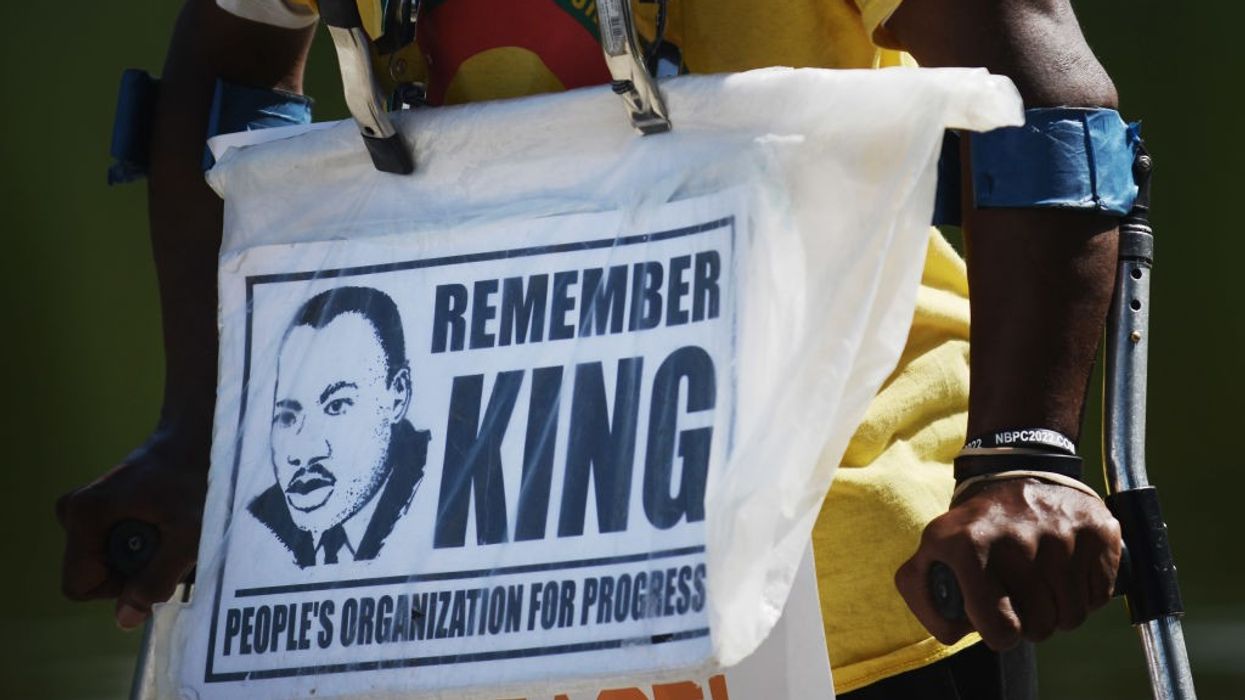
In a divided America, there is at least one universal left, and that is the shared world we inhabit.
It may not surprise readers of this newsletter when I say that my great American hero is the Reverend Martin Luther King Jr. To mark the 60th anniversary of the March on Washington, I’ve been reading Jonathan Eig’s very fine new biography and re-reading for the umpteenth time the unsurpassable three-volume account of King and the civil rights movement by Taylor Branch.
And as ever I come back to the same place: King’s heroism came from his unmatched ability to combine the prophetic and the practical. We have plenty of great Americans who exemplified one or the other, but perhaps only Lincoln comes close to mixing them with the same alchemical power. King had many tools that lent him strength: He was able to listen, capable of keeping his ego in check, naturally empathetic, grounded from youth in the (not inconsiderable) politics of the church. He had the support of a strong family and a stronger wife; all of that allowed a kind of low-key and appropriate messianism that never overwhelmed him. He wasn’t a saint (the job description of prophets and saints are very different) but he was radiant.
But King also had the advantage of timing. He spoke to an America that could—in its middle—be moved by the two appeals that were his specialty: to the shared Christian faith of the great majority of Americans, and to a shared sense of America’s unique small-d democratic history. He was, obviously, no sucker: He knew as well as anyone the limits of both that faith and that history. But through those lenses America could glimpse his deeper truths.
This summer almost everyone has a) sucked smoke b) dodged floods c) endured preposterous heat. Many have hit the trifecta.
We’re not in that America any more, which perhaps helps explain why the many speakers at this weekend’s 60th anniversary of the March reached fewer souls. There’s little that’s universal left to appeal to in a deeply divided America. Which is why, as my last book argues, it was probably unwise of progressives to surrender the flag and the cross, but that Jordan has been crossed in reverse.
Still, there is at least one universal left, and that is the shared world we inhabit. No one invoked this more movingly on the weekend than Rev. Lennox Yearwood, one of King’s great heirs. The founder of the Hip Hop Caucus (and a board member with me at Third Act), Yearwood used his two minutes to get a lot across:
We stand here because climate change is a civil rights issue. We have a right to clean air and a right to clean water. And it’s critical for us to understand that this climate crisis that is happening from California to Arizona, where our mothers and fathers are literally cooking to death in their homes… And we understand right now that to be in this movement… that we must be intersectional environmentalists. And that means that we must connect the dots and break the silos. That means that racial justice is climate justice. And climate justice is racial justice. And we understand that we must connect a dot between voter suppression and healthcare and education. We understand that we must fight for those who are fighting for clean water in Jackson, Mississippi. And we must fight for those who are in Atlanta, Georgia, saying, stop cop city.
We applaud this administration for what they’ve done with the Inflation Reduction Act and the bipartisan infrastructure law. We applaud them, but that’s not enough because you can’t put up solar panels on Monday and build pipelines for liquified natural gas on Tuesday. You can’t put renewable energy on Wednesday and discuss an all-of-the-above strategy for fossil fuels on Thursday. And so what we are calling for right now are three main things that first, that we must stop the expansion of petrochemicals across this country right now. And secondly, we must ban vinyl chloride, that explosive chloride that exploded in East Palestine. And the last thing, if the administration is watching right now, we must declare a climate emergency!
To unpack a little, as the scholars say, it seems to me that Yearwood is making at least two key points. One is that there are specific parts of the climate crisis that are far worse for poor people of color, here and around the world, and that empowering them is a key task, both for practical reasons of power and moral reasons of justice. It’s a point made with great grace by Rhiana Gunn-Wright, the transcendently nerdy author of the Green New Deal, in an essay that came out this morning in Hammer & Hope, the new online magazine of Black politics and culture. As Gunn-Wright put it
More than 170,000 green jobs have been created in the wake of the IRA, a majority of them in red states, some of which, like Texas and Georgia, have the largest and fastest-growing Black populations in the country.
I should be happy about that. I want to be happy about that. By “derisking” clean technology through public subsidies and other forms of industrial policy, the IRA is succeeding, at least in its mission to spur private investment in clean energy and low-carbon goods. And after 40 years of exclusively neoliberal economic policy, that is something to celebrate. But the transition to clean energy, like every other economic transition, is inherently distributive and redistributive—especially in a capitalist society—and this time, we need Black people to significantly benefit. Yet, with the exception of a few targeted policies, the IRA and the debates that have emerged since its passage suggest that the U.S. is again (at this big age!) relying on white supremacy to decide how to allocate the power and resources that come from going green.
Her recommendations are tremendously useful (the whole essay is essential reading), and they include some clear specifics:
For the green transition to be equitable, racial justice must thread through all the decisions about how it is structured and how public resources are distributed. One of the best ways to do this is to expand Justice40, a Biden administration initiative that aims to direct 40% of the benefits of federal clean energy and other climate investments to disadvantaged communities. The White House should update that order to include all of the programs in the IRA, and agencies should ensure that 40% of the funding (not nebulous “benefits”) are going to the communities identified by the White House’s new screening tool to identify communities that have faced historical environmental and economic injustices. In programs where it is not possible to ensure that 40% of funding reaches frontline communities, as with individual tax credits, agencies need to create partnerships with community organizations and local governments to try to increase tax-credit participation among eligible Black households.
This seems inarguable to me. But to the degree that it requires a big movement to get it done, it requires an elevated sense of justice that I’m not sure we have at the moment. In King’s world, a concern for justice grew out of both religion and patriotism, and with those gutted it’s harder to reach the broad middle.
But it also—and this is the second part of Yearwood’s message—seems inarguable that we have a rare moment to establish that new universal. This summer almost everyone has a) sucked smoke b) dodged floods c) endured preposterous heat. Many have hit the trifecta. Yes, some people have had it worse than others, and since this is America those people are likely to be poor and Black. But we’re at the point where everyone can start to feel the threat. (Even asocial billionaires, though they tend to respond by buying up land they imagine will offer an escape). That collective fear/sadness/anger/maybe a little hope constitutes a shared self-interest—one that we can build on to make the kind of broad movement that might make justice real again.
I think it’s likely we’ll get to see this strategy play out in the months ahead at a place that Gunn-Wright mentions in her essay: Calcasieu Pass, Louisiana, site of yet another proposed giant LNG terminal. And I imagine that Yearwood, concentrating on his work with Beyond Petrochemicals, will be heavily involved. But that is a story to come.
For now, enough to end with this thought. Were MLK still alive (and it’s not impossible—his friend and colleague Harry Belafonte was born two years earlier and just died in May) it seems certain to me that the climate crisis would be at the top of his agenda, because he was drawn to any project that emphasized commonality. The Poor People’s Campaign, which he was building when he was murdered, was a multiracial effort to unite impoverished people for radical change; the climate movement is perhaps the first truly global campaign, designed to bring everyone who lives beneath our shared sky on board. As Dr. King put it, “We are caught in an inescapable network of mutuality, tied in a single garment of destiny.” Climate change is the ultimate proof of that truth.
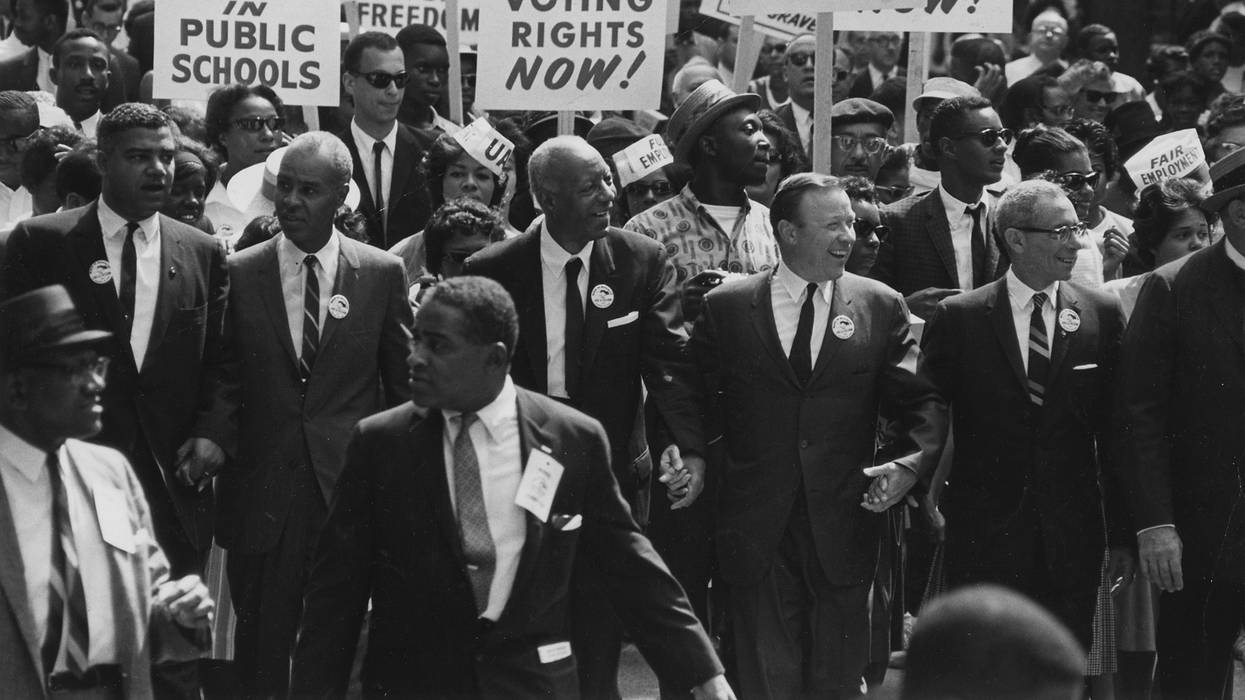
The entire event remains a historic turning point in the ongoing struggle for civil rights, leaving an indelible mark on the history of the United States, while also inspiring future generations to continue the fight for equality.
The 1963 March on Washington for Jobs and Freedom, celebrating its 60th anniversary this month, is widely remembered for the Reverend Martin Luther King Jr.’s iconic “I Have a Dream” speech. However, this historic event, envisaged for the 100th anniversary of the Emancipation Proclamation, was about much more than a single speech. It brought together a diverse coalition of activists and leaders who passionately advocated for civil rights and equality in a way that transcended the eloquent but limited confines of a singular dream.
The seeds of the March on Washington were planted in 1941 by African American labor leader A. Philip Randolph, who proposed a mass demonstration in the nation’s capital to demand economic opportunities and an end to racial discrimination. After President Franklin D. Roosevelt issued an Executive Order banning racial discrimination in defense industries, Randolph relented. However, the idea of a march on Washington persisted, and in 1963, Randolph and other civil rights leaders revived it, this time expanding its scope to address broader issues of racial equality.
While the “I Have a Dream” speech has become synonymous with the march, it is important to acknowledge the voices of other influential speakers who shared their visions and perspectives on that day. One such speaker was the late distinguished Congressman John Lewis. Representing the youthful and fearless Student Nonviolent Coordinating Committee, Lewis delivered a searing critique of the U.S. government, emphasizing the urgency of achieving equality and justice for African Americans.
Women played a noteworthy, if often overlooked, part in the March on Washington.
“We want our freedom, and we want it now!” he defiantly boomed from a podium overlooking the National Mall.
Walter Reuther, the president of the United Automobile Workers, was also an impactful speaker. The influential labor leader’s speech acknowledged the labor movement’s long-standing commitment to social justice and workers’ rights. While emphasizing the importance of fair wages, decent working conditions, and job opportunities, Reuther claimed that the struggle for Black civil rights encompassed not only the termination of racial discrimination but also the improvement and empowerment of the working class.
Women played a noteworthy, if often overlooked, part in the March on Washington. Anna Arnold Hedgeman, an African American civil rights activist and educator, was the only woman on the organizing committee. Battling the deeply ingrained sexism that failed to appreciate the momentous role that women had played in the movement, she leveraged her estimable skills not only to ensure the demonstration’s success, but also to compel its leaders to include a tribute to Black women.
Another influential woman associated with the march was African American civil rights activist and legal scholar Pauli Murray. In a letter to Randolph, Murray delivered a scorching rebuke of march leaders for excluding women beyond token recognition—poignantly underscoring the intersections of race and gender discrimination. “It is indefensible to call a national march on Washington and send out a call which contains the name of not a single woman leader,” she wrote. “‘Tokenism,’” she continued, “is as offensive when applied to women as when applied to Negroes, and... I have not devoted the greater part of my adult life to the implementation of human rights to now condone any policy which is not inclusive.”
The 1963 March on Washington remains a historic turning point in the ongoing struggle for civil rights, leaving an indelible mark on the history of the United States, while also inspiring future generations to continue the fight for equality. As such, the legacy of the march continues to reverberate through the country, connecting with contemporary issues of civil rights and social justice in 2023. The spirit of the march lives on in the ongoing struggles for justice and equity.
Black Lives Matter (BLM), one of the most prominent movements of recent years, has echoed the calls for justice that resonated during the 1963 march. BLM seeks to address systemic racism, particularly in relation to police brutality and the criminal justice system. The movement emphasizes the value of Black lives and demands an end to the violence and disproportionate treatment faced by Black individuals. Its significance lies in its ability to mobilize communities, raise awareness, and push for meaningful reforms to combat racial injustice.
The legacy of the march lives on through the Black Lives Matter movement, the fight against police brutality, and efforts to ensure voting rights.
Learning from the shortcomings of the March on Washington, BLM notably embraced the intersection of race and gender rights by actively taking on issues of sexism and discrimination, including against the LGBTQ+ community.
Efforts to end police brutality have become a focal point in the fight for civil rights and social justice. The tragic killings of numerous unarmed Black people, often at the hands of law enforcement, have sparked public outrage and animated protests and calls for police accountability and reform. These movements draw inspiration from the march, as they aim to continue the work of dismantling structures that perpetuate discrimination and ensuring equal protection under the law for all.
Another crucial issue tied to the march’s legacy is the fight to protect and expand voting rights, including newly proposed legislation named for Congressman Lewis. The march occurred during a time when African Americans faced significant barriers to voting, and its participants advocated for equal access to the ballot box. Today, voter suppression efforts continue to disproportionately impact communities of color, while activists and organizations work toward dismantling these barriers and promoting voter participation as a fundamental means of taking part in the democratic process. It is also a path toward achieving other significant civil rights goals and objectives—such as fair housing.
In 2023, the relationship between the 1963 march and contemporary civil rights and social justice issues is undeniable. The legacy of the march lives on through the Black Lives Matter movement, the fight against police brutality, and efforts to ensure voting rights. These movements, inspired by the spirit and determination of the march’s participants, continue to challenge systemic inequities, and strive for a more just and inclusive society. As we reflect on the progress made since 1963, the struggle for civil rights and social justice remains as critical today as it was then, reminding us that the fight for equality is an ongoing journey.
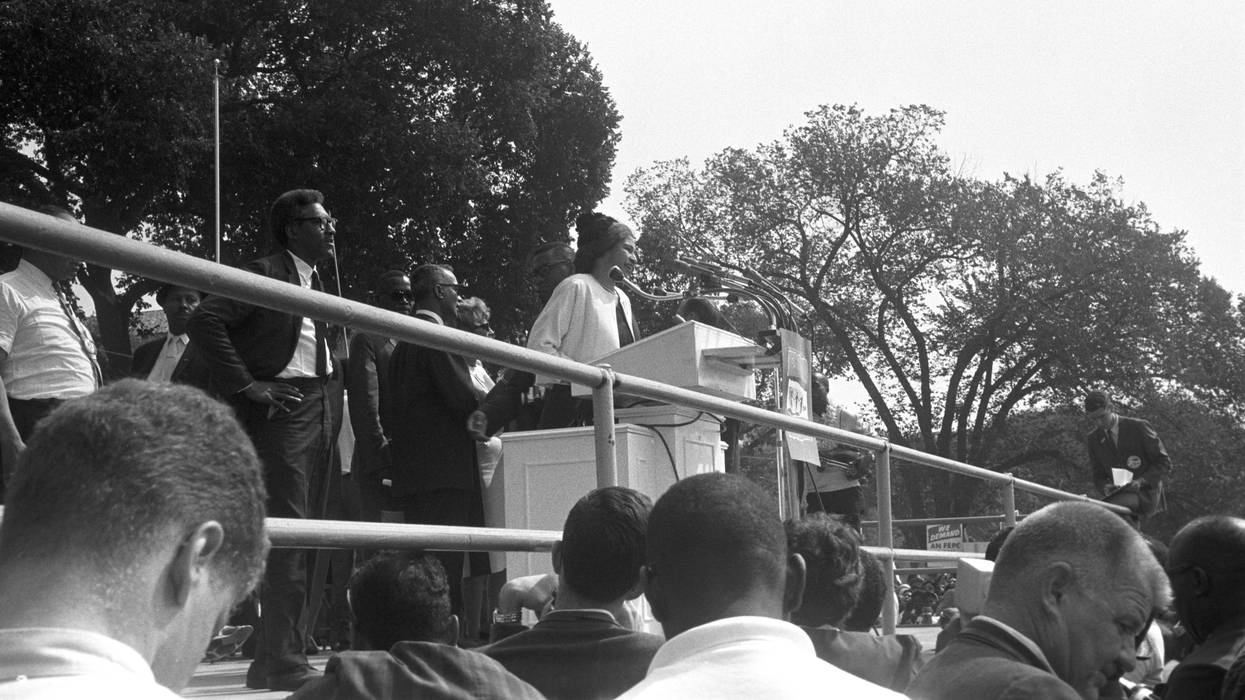
"Extremist lawmakers are using state capitols to subvert our democracy and erode voting rights, denying living wages, and suppressing access to healthcare, all while concentrating this rich nation's wealth," said Hanna Broome of AME Zion Church.
Six decades after civil rights and labor groups held the March on Washington for Jobs and Freedom, women from across the country plan to come together Monday evening for a virtual "She Speaks" mass assembly to honor female leaders from 1963 and draw attention to issues that persist today.
"While numerous brave and brilliant women—including Rosa Parks, Dorothy Day, Fannie Lou Hamer, Anna Arnold Hedgeman, Diane Nash, Dorothy Height, and Mahalia Jackson—were central voices behind the March on Washington, they were not given the chance to speak," organizers said in a statement. "Sixty years later, thousands of women are joining together at the Lincoln Memorial and speaking out to ensure not another anniversary goes by where women's voices aren't central to the conversation."
As Meghan Weaver of Stanford University's Martin Luther King Jr. Research and Education Institute detailed last year, Parks said a quick "hello" and "thank you" to the 1963 crowd, the NAACP's Daisy Bates delivered a couple of brief remarks, and actress and activist Lena Horne shouted "Freedom!" into the microphone. According to the researcher, activist and entertainer Josephine Baker "spoke for just over two minutes, in the longest address that day by a woman."
Speakers for Monday's event include Hanna Broome of AME Zion Church; Rev. Kazimir Brown of Repairers of the Breach; Mary Kay Henry of the Service Employees International Union; Rabbi Sheila Katz of the National Council of Jewish Women; Roz Pelles of the Center for Public Theology & Public Policy at Yale Divinity School; Ai-Jen Poo of the National Domestic Workers Alliance; Joy Reid of MSNBC; Karen Georgia A. Thompson of United Church of Christ; and members of Black Voters Matter, Beloved Community, and the League of Women Voters.
"Women refuse to stay silent as we fight back against the most pressing issues harming our communities today," declared Broome. "Right now across the country, extremist lawmakers are using state capitols to subvert our democracy and erode voting rights, denying living wages, and suppressing access to healthcare, all while concentrating this rich nation's wealth into fewer and fewer hands."
"Until the systemic injustices that have been plaguing our communities end," she vowed, "we will continue to make our voices heard across the nation."
During the assembly—set to be livestreamed at 6:00 ET—speakers plan to "demand a lifesaving agenda that includes living wages, voting rights, reproductive healthcare, and more," according to organizers.
"Sixty years ago, the agenda of the March on Washington was to raise the minimum wage 75% to a living wage, expand and protect voting rights, secure healthcare for all, and expand the Labor Standards Act to end racial discrimination," noted Bishop William Barber, who is expected to speak at the event. "Today, we are not finished with that agenda."
"Right now, 73 million women make up our nation's poor and low-wealth population. And millions of these women continue to be impacted by voter suppression," he added. "At a time when poverty is the fourth leading cause of death in our nation, these women are calling on all people of moral conscience—regardless of race, gender, or political affiliation—to join the fight for the moral soul of our nation and call out these attacks on our rights. We need all voices in this movement. This 60th anniversary is not an occasion just for nostalgia, it is a moment for action."
To act today, based on the fierce urgency of now, we must make the investments to eliminate racial disparities within one generation.
It’s now been 60 years since the March on Washington for Jobs and Freedom—and the Reverend Martin Luther King, Jr.’s “I Have a Dream” speech.
At the rally, Dr. King famously proclaimed that all people, Black as well as white, have a “promissory note” from their government guaranteeing “the inalienable rights of life, liberty, and the pursuit of happiness.” He lamented that “America has defaulted on this promissory note” to Black citizens.
Six decades later, despite incremental progress on some fronts, the check has still come back marked “insufficient funds.” But with enough political will, we can clear it quickly. That’s the conclusion of our new report, Still a Dream: Over 500 Years to Black Economic Equality.
For many important economic indicators, the pace of progress has been so incremental that it would still take centuries for Black Americans to reach parity with whites.
There are important signs of progress to mark. The unthinkably high rate of Black poverty has diminished since King’s time, falling from 51% in 1963 to 20% by 2021. But with 1 in 5 Black Americans still living in poverty—and 1 in 12 whites—it’s hardly a moment to pop the champagne bottle.
Other positive indicators include a sharp increase in Black high school attainment over the last 60 years and a significant decline in Black unemployment. For many important economic indicators, however, the pace of progress has been so incremental that it would still take centuries for Black Americans to reach parity with whites.
For example, the Black-white income gap has barely narrowed at all. In 1967, African Americans earned 58 cents for every dollar earned by whites. By 2021, that had risen to just 62 cents on the dollar. At this rate of progress, it would take Black households 513 years to reach income parity with their white counterparts.
Progress in narrowing the racial wealth divide has been even slower. In 1962, Blacks had 12 cents of wealth for every dollar of white wealth. By 2019, the last year of comprehensive data, Blacks had just 18 cents for every dollar of white wealth. At this pace, it would take 780 years for Black wealth to equal white wealth.
There has been essentially no progress in narrowing the gap between white and Black rates of homeownership, another key indicator of wealth and well-being. Sixty years later, there remains roughly a 30 percentage point gap, with 44% of Black households owning a home compared with 74% of whites.
In part, our country’s failure to bridge the racial economic divide reflects the growing inequality in our society overall.
During the last 40 years, America has experienced extreme levels of income and wealth inequality, with most gains flowing into the hands of the wealthiest—and mostly white—1%. This has contributed to the stalling of progress toward racial equity, along with government withdrawal from investments such as affordable housing.
What could put us back on track? Without a doubt, the persistent Black-white divide requires racially targeted commitments to individual asset-building and other forms of reparations.
But other programs—including full employment, a government jobs program, universal healthcare, and a massive commitment to homeownership—would reduce racial inequality and lift up all those suffering from 40 years of stagnant wages, regardless of their race.
Many of these investments could be paid for by wealth taxes aimed at reducing dynastic concentrations of wealth and power, among other efforts to get the very wealthy to pay their fair share in our unequal country.
At the Lincoln Memorial 60 years ago, King exclaimed: “We have come to this hallowed spot to remind America of the fierce urgency of now. This is no time to engage in the luxury of cooling off or to take the tranquilizing drug of gradualism.”
Taking over half a millennium to close our racial economic divide is gradualism in the extreme.
To act today, based on the fierce urgency of now, we must make the investments to eliminate racial disparities within one generation.
Sixty years after bouncing the check, it is time to fulfill America’s promise with a bold response.
Both Dr. Martin Luther King Jr. and A. Philip Randolph passionately tied the fight against racism to the larger war for economic opportunity, workers' rights, and environmental justice.
The 60th anniversary of the March on Washington offers an occasion to celebrate and reflect on the tireless activism of figures like A. Philip Randolph and Dr. Martin Luther King Jr. While their calls for justice and equality are well documented, one pivotal piece of their vision remains especially relevant today: environmental stewardship.
Both Dr. Martin Luther King Jr. and A. Philip Randolph passionately tied the fight against racism to the larger war for economic opportunity, workers' rights, and environmental justice.
Detroit, with its intricate tapestry of labor rights interwoven with racial challenges, provided the atmosphere in which Dr. King crafted parts of his infamous speech. The city represented the crossroads of race, work, economic, and environmental obstacles that America faced.
As we reflect on the goals of the March on Washington and the subsequent Freedom Budget that came from it, it becomes clear that our commitment to justice should be holistic, encompassing not just economic and racial equity, but environmental justice as well.
In the 1930s, President Franklin D. Roosevelt's Civilian Conservation Corps (CCC) laid the groundwork for what would be a significant employment program that benefited not only the environment but also society. Corps members received room, board, and clothes. Their salary was $30 (slightly more for veterans) per month and they sent $25 a month home to their families. The CCC's lesser-known narrative involves its 250,000 African American members, the "Hidden Figures," who worked against the odds, combating societal prejudices while preserving the land and its natural resources.
An amendment calling to pay $50-$80 a month to the young men of the CCC was defeated. If King and Randolph's plea for a $2 ($19 in 2023 dollars) federal minimum wage remains unmet 55 years later, it serves as a stark reminder that our commitment to equity must be unwavering and forward-thinking. We must understand the difference between poverty wages, nonprofit industrial complex wages, and wages that provide economic security.
Today, the values of the CCC are echoed in programs like AmeriCorps' National Civilian Community Corps (NCCC), FEMA Corps, Resilience Corps, and the Climate Corps. However, as we seek to emulate the successes of the past, we must also recognize areas where more investment is needed.
Home ownership and affordable rental options are the backbone of the American dream, yet current real estate trends leave many behind. To ensure the young people dedicating their lives to service can still dream, agencies and federal matching funds need to be boosted, and higher wages for corps members must become a priority. Furthermore, if smaller, low-budget nonprofits—often helmed by individuals from marginalized communities—are to be true partners in this endeavor, the federal government must grant them more matching fund waivers.
As we train the next generation of environmental stewards, it's crucial that their skills translate into long-term, high-paying jobs. The African American members of the 1930s CCC, despite their contributions, often found themselves with limited opportunities post-service. Today's Corps members should not only be trained in labor-intensive roles but also equipped for roles in the burgeoning green economy, ensuring their sustainability in the workforce.
Moreover, collaboration with higher education institutions to provide scholarships and college matches for corps members can bridge the gap between service and higher education, much like some did for the African American CCC members in the 1930s. Historically, HBCUs have played a commendable role in offering opportunities for higher education to corps members. Their partnership in providing scholarships and facilitating academic transitions has been invaluable.
Yet, the responsibility of fostering the next generation of environmental stewards shouldn't rest on HBCUs alone. More public and private universities, along with registered apprenticeship programs and labor unions need to join this effort. By fostering partnerships and offering educational opportunities, we can broaden the horizons for corps members, ensuring they are not only trained for immediate roles but are also equipped for the long-term challenges of a green economy.
Environmental justice is intrinsically linked to public health, which is why the role of the Public Health Corps in this dialogue is paramount. Pollution, inadequate access to clean water, heat islands, and other environmental hazards disproportionately affect marginalized communities. As we reflect on the goals of the March on Washington and the subsequent Freedom Budget that came from it, it becomes clear that our commitment to justice should be holistic, encompassing not just economic and racial equity, but environmental justice as well.
As we honor the legacy of the March on Washington and of Dr. King's reflections in Detroit, let's remember that the fight for justice spans multiple fronts. Sixty years later, may we be inspired by the past, act in the present, and lay down a path for a more equitable, greener future.

'Our legacy of resistance & building never ends'
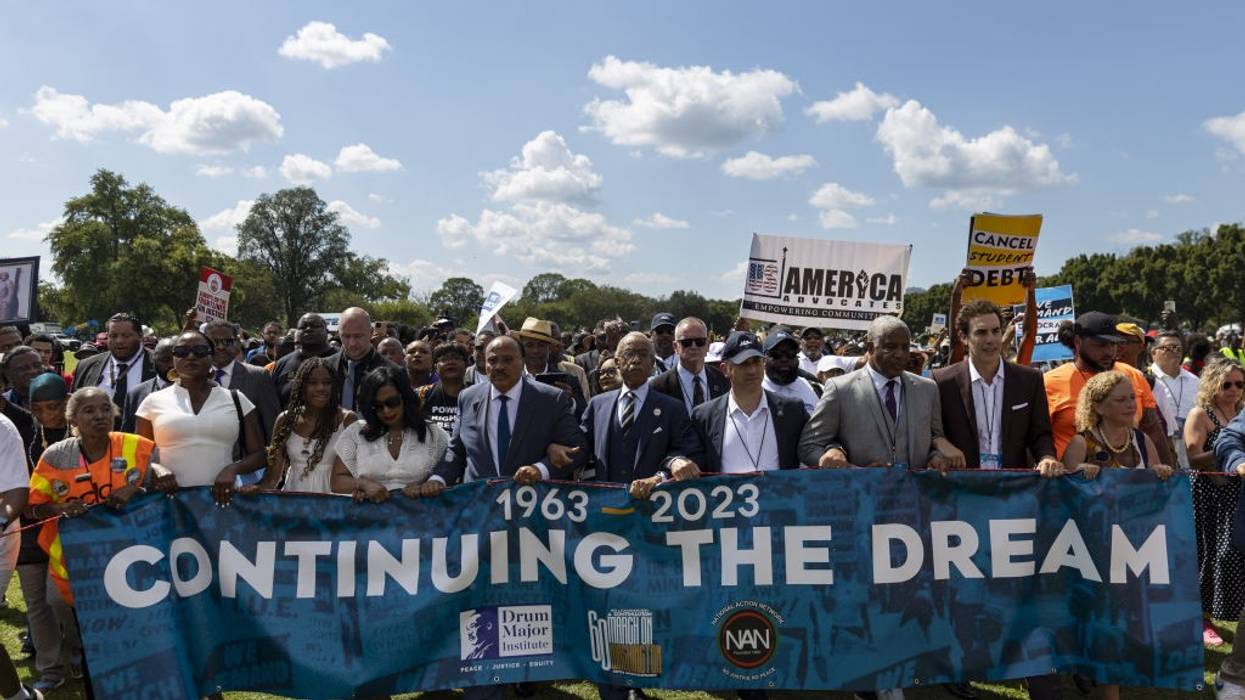
Tens of thousands of Americans converged on Washington Saturday to commemorate the 60th anniversary of the March on Washington for Jobs and Freedom, a turning point in the 1960s U.S. civil rights movement at which Martin Luther King Jr gave his galvanizing "I have a dream" speech.
Organizers say today's march was not a commemoration but a continuation of the demands made in 1963.
Martin Luther King Jr.'s only grandchild Yolanda Renee King, 15, told the gathering that if she could speak to her grandfather today, she would say, "I am sorry we still have to be here to rededicate ourselves to finishing your work."
"Sixty years ago, Dr. King urged us to struggle against the triple evils of racism, poverty, and bigotry," she said. "Today, racism is still with us. Poverty is still with us. And now gun violence has come for our places of worship, our schools, and our shopping centers."
"When people say my generation is cynical, we say cynicism is a luxury we cannot afford," she said. "I believe that my generation will be defined by action, not apathy."
“We have made progress, over the last 60 years, since Dr. King led the March on Washington,” said Alphonso David, president and CEO of the Global Black Economic Forum. “Have we reached the mountaintop? Not by a longshot.”
On March 7, 1965, 25-year-old John Lewis, already a veteran of the Freedom Rides, Mississippi's Freedom Summer and Martin Luther King Jr.'s March on Washington, walked ahead of 600 civil rights activists as they crossed the Edmund Pettus Bridge in Selma, Alabama, on the first leg of what was meant to be a peaceful march for voting rights.
As they stepped off the end of the bridge, a posse of 150 state troopers and deputy sheriffs attacked them, wielding clubs, bullwhips and tear gas. Lewis was beaten to within an inch of his life. But he took the horrible pummeling of "Bloody Sunday" and survived to lead another march a week later. This time they kept going -- all the way to the state capitol in Montgomery, 50 miles away.
Fifty-one years later, on Wednesday, on the floor of the House of Representatives, John Lewis, now 76 and a member of Congress for nearly three decades, took another courageous and principled stand. Many of his Democratic colleagues joined him for a sit-in on the floor of the House chamber itself, the same kind of protest he and his fellow activists used so effectively during the 1960s.
This time they were agitating against one of the most grievous human rights horrors of all: the gun violence running amok in America, including the recent abomination of 49 deaths at that nightclub in Orlando, Florida. There have been nearly 100,000 gun deaths in the United States since the school murders in Newtown, Connecticut, just three and a half years ago.
In Selma in 1965, television cameras sent pictures of what was happening on the Pettus Bridge around the country and a shocked American public took to heart how deep the wounds remained between black and white. On Wednesday, Republican House leadership, as cruel and cold-of-heart as those Alabama state troopers, gaveled the House out of session so the cameras of C-SPAN could not show the American people the courage of those House members sitting on the floor and telling the National Rifle Association and its bought-and-paid-for politicians to go to hell.
Despite the GOP's attempt to shut television's probing eye, the demonstrators used social media like Facebook and Twitter to get out their story, putting their cell phones to good use and sending out photos and video of their action across the country and the world (C-SPAN wound up putting much of their footage on the air). Lewis tweeted, "Sometimes you have to get in the way. You have to make some noise by speaking up and speaking out against injustice and inaction. #goodtrouble."
In a letter to Republican House Speaker Paul Ryan, Rep. Lewis and his colleague Rep. Katherine Clark asked, "What is this Congress waiting for? ...We stand with thousands of brokenhearted families who have not been served by this Congress and millions more who are counting on us to find the moral courage to do the right thing. We stand together in our refusal to sit by while this Congress abdicates its fundamental responsibility to protect American families from harm."
Once again, the Republican leaders of Congress have been revealed for what they are: useful stooges of the gun merchants who would sell to anyone -- from the mentally ill to a terrorist-in-waiting to a lurking mass murderer. And the Republican Party once again has shown itself an enabler of death, the enemy of life, a threat to the republic itself.
Today, John Lewis said, "The time is always right to do right. Our time is now." The heroism on the Pettus Bridge turned the tide against the inhumanity of segregation. Today's protest in the House of Representatives might mark the beginning of the end of the gun industry's grip on American life and liberty.
Save
With just days ahead of the Democratic primary in South Carolina on Saturday, filmmaker Spike Lee is the latest high-profile celebrity to come out and urge potential black voters to throw their support behind Bernie Sanders--the only candidate, he argues, who has an agenda capable of disrupting the "rigged" system that constantly undermines the nation's poor, the working class, and the politically disempowered.
"Bernie takes no money from corporations. Nada. That means he is not on the take." --Spike Lee"Wake up! Wake up, South Carolina!" declares Lee in a radio spot now playing across the state. "This is your dude, Spike Lee. And I know that you know that the system is rigged! And for too long, we've given our votes to corporate puppets. Sold the okie doke. Ninety-nine percent of Americans were hurt by the Great Recession of 2008, and many are still recovering... And that's why I am officially endorsing my brother, Bernie Sanders."
Lee continues: "Bernie takes no money from corporations. Nada. That means he is not on the take. And when Bernie gets to the White House... He will do the right thing. How can we be sure? Bernie was at the March on Washington with Dr King. He was arrested in Chicago for a protest of segregation in public schools. He has fought for wealth and education equality throughout his career. No flipping, no flopping. Enough talk, time for action."
Listen:
While Hillary Clinton continues to dominate the latest polls in South Carolina, the Sanders campaign hopes that a better-than-expected result in the state, fueled by an insurgent swing of black voters, could signal that his "political revolution" still has the unrecognized power to unseat the status quo as the primary race continues toward Super Tuesday on March 1 and the convention in July.
Evidenced by a new wave of campaign ads themed along racial justice lines and featuring prominent black surrogates, both the Clinton and Sanders campaigns have been courting black voters in South Carolina and across the country. As the Guardian notes on Tuesday, "African Americans account for more than half of South Carolina's Democratic primary electorate."
Over the weekend, Clinton released a new ad featuring actor Morgan Freeman. Meanwhile, actor and social activist Danny Glover has been on the campaign trail in South Carolina promoting Sanders.
Though only Saturday's results will tell just how much support Sanders was able to win among South Carolina voters, an interview with Black Agenda Report editor Glen Ford, posted online Tuesday at The Real News Network, examines the complex--and often contradictory--dynamic that keeps a majority of black voters, despite being more left-wing on issue after issue, wedded to the corporate wing of the Democratic Party.
"Black folks are the most left-leaning constituency in the United States; that's been shown generation after generation," explained Ford. "But we don't behave that way in national elections. And this year, much as in previous years, what we're seeing is that the black vote acts as the bulwark of the most reactionary wing of the Democratic party, the right wing of the Democratic party, and its standard-bearer this time around, Hillary Clinton."
According to Ford, if Sanders cannot break through the "brick wall" of black voters who have so far not come to him in sufficient numbers, his presidential campaign is "doomed."
Watch:
When I was growing up in Columbia, South Carolina, I was awoken by one singular task from my mother. "Get out of South Carolina," she would sermonize. This would be repeated to me regularly and in different ways. "Get out of South Carolina and don't come back." Sometimes she would say, "Don't get trapped here."
My mother, who birthed me at 14-years old, and was the first to graduate college in her family, pushed me to pursue college outside the state and to never return because, she would say, South Carolina would trap and kill me. Maybe it was the way my uncle was coerced to admit to a crime he didn't commit that resulted in him being sentenced to 14 years in prison. Maybe it's the way South Carolina unapologetically praises its racist history by flying the confederate flag on the state grounds. Or maybe it was the way my guidance counselor suggested I go to community college because "that's all you'll probably get."
As a black boy growing up there, South Carolina was never my home. I've felt more at home at Howard University, when I could share a similar sentiment of displacement, pride and fury for the way in which black people like me are treated in America. I realized I was not a South Carolinian (nor did I want to be) when I recognized South Carolina didn't care about me or anyone who looked like me--nothing had changed for black life since I was kid. Black children are shipped from poverty-stricken neighborhoods to sub-par schools with little to no resources and excess police that patrol neighborhoods, some of which have a curfew. If you're black and lucky enough not to be arrested, you may get a service job and be able to make minimum wage. My mother wanted to break that cycle.
When I recognized this trend, I began to believe I had no home and was seemingly alone. It turns out I was only partially right: I am not alone--the Charleston massacre is a stark reminder of that.
My blood and the blood of the oppressed is boiling to extraordinary proportions as we learn that a young white man, Dylann Storm Roof, entered the Emanuel African Methodist Episcopal Church in Charleston, South Carolina, where he slaughtered nine church members during a prayer meeting, claiming, "I have to do it. You rape our women and you're taking over our country, and you have to go."
The feeling I feel right now is being felt across the country. It is the rebirth of the black radical--the generational development of a group of activists indignant over the subjugation, demise, and murder of its people. And it's not the first time. It has reemerged through the history of America.
It was in the early 1900s, following the Civil War, when we saw it in the rise of the New Negro Movement. Progressive minds such as Hubert Harrison, W.E.B. Du Bois, and Alain Locke--individuals that used art, literature and intellect to combat Jim Crow laws--were the apparent black radicals of their time. Again in the 1950s, following the murder of 14-year old Emmett Till, and in the 1960s with the assassination of civil rights activist Medgar Evers and incessant police repression, there was an extreme surge in the civil rights movement. Led by the likes of Malcolm X, Martin Luther King Jr., and Ella Baker, the movement used a diverse series of protest tactics to focus on policy and social change--emphasis on social change.
There were the Birmingham Riots of 1963, the Selma and Montgomery marches, and the March on Washington, where King delivered the speech that made him what the FBI called, "the most dangerous and effective Negro" in America. This was also America's introduction to the Black Panther Party, which focused on reducing poverty and improving health in the black community but also staunchly protesting against police brutality, the murder of black people, and the all-too-common terrorism inflicted on black communities. In this sense, black radicalism proved to be a diverse and cross-generational practice from a variety of activists. That is similar to what we see growing today--from the #BlackLivesMatter movement and #SayHerName to the recently launched StayWoke.org. We take different avenues, but there is one thing we share: the burning need for justice and the end of racism.
The apathy of drive-by social media activism has waned with every publicized example of unchecked police brutality and domestic terrorism. The Charleston massacre is no different; it will show that there is not, and never has been, a question of whether we as black Americans are capable of galvanizing beyond the gabs of activists, politicians and talking-heads. It is only a question of when, in what form and concentration. It could be in the form of black Twitter or it could be a series of marches. It could be political conversations and campaigns or it could be rioting, but if the past has taught us anything, it is that activism against racism and police violence is diverse and, at time, interdependent.
It is happening now--on the campuses of colleges and universities across the nation, in the community and church centers of predominantly black neighborhoods, in barbershops and hair salons, on group chats, on Instagram and black Twitter. Watching what's unfolded in Charleston, we're looking beyond mythic stories to discuss more impactful and radical actions and to leverage that shared feeling of hurt when we heard that nine people were slaughtered in a black church.
I am not a South Carolinian; I am the re-birth of the black radical and this time, the cause du jour is serving as a catalyst more so than a trending topic. And when the radicalism of my generation fully emerges from behind the curtain of traditional marches and tactics, there will be little acquiescence offered. The seemingly hollow musings of President Obama will go unnoticed, and the gait of the disenfranchised and attacked black youth will move like a levanter out of the concrete. The only thing to stop it will be drastic and unequivocal change in American policies, practices and moral consciousness.