

SUBSCRIBE TO OUR FREE NEWSLETTER
Daily news & progressive opinion—funded by the people, not the corporations—delivered straight to your inbox.
5
#000000
#FFFFFF
To donate by check, phone, or other method, see our More Ways to Give page.
Daily news & progressive opinion—funded by the people, not the corporations—delivered straight to your inbox.
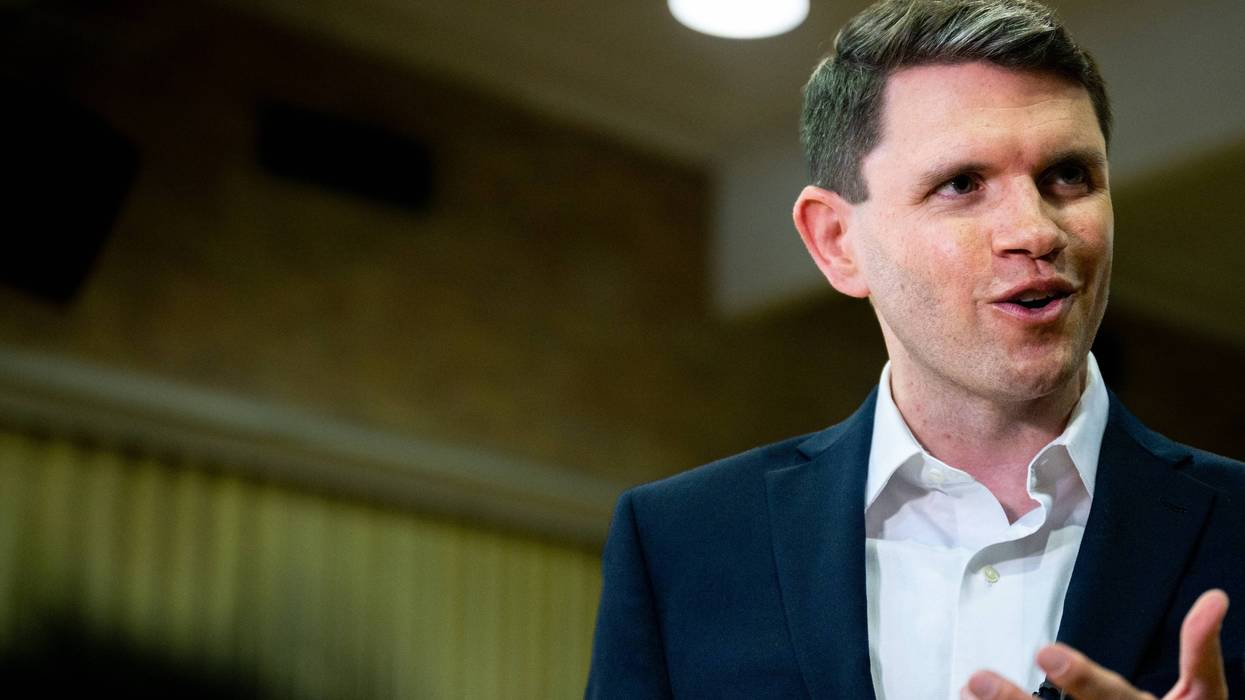
Talarico spokesman JT Ennis said the smear campaign was "a lie designed to promote a pathetic conspiracy theory."
A right-wing smear campaign against Texas Democratic US Senate candidate James Talarico fell apart in mere hours on Sunday.
On Sunday afternoon, MAGA influencers Nick Sortor and Rhein Amacher posted a 45-second audio recording on social media that they claimed was of an employee at an Ohio mental health center stating that Talarico had been discharged from the facility on Saturday.
Right-wing social media accounts had spent days spreading rumors about Talarico undergoing mental health treatment after the Texas Democrat stepped away from the campaign trail for more than a week after coming down with the flu.
Problems with the influencers' narrative quickly emerged, as the recording indicated that Talarico was discharged from the Ohio facility on Saturday, and by that point the Democratic Senate hopeful had already returned to the campaign trail, making a public appearance on Friday at the Austin City Limits festival.
On Sunday night, the official social media account of Lindner Center Hope, the facility where the Texas Democrat was purportedly staying, posted a statement that "James Talarico has never received treatment" there.
The Bulwark later obtained a recording of the entire six-minute phone call showing that the employee repeatedly denied having any record of anyone named James Talarico at the facility.
After minutes of being badgered by Amacher about Talarico's presence, the employee indicated that he must have already been discharged, which is why she had no record of him.
Will Sommer, a reporter for The Bulwark who specializes in tracking far-right disinformation and conspiracy theories, noted in a Sunday social media post that some of the MAGA influencers have started taking down posts they wrote promoting the audio recording.
Talarico responded to the botched smear campaign on Sunday night by writing on his social media account, "I've never even been to Ohio.”
Talarico spokesman JT Ennis called the smear campaign "a lie designed to promote a pathetic conspiracy theory."
"Last week James Talarico was home in Austin, Texas," Ennis added, "recovering from the flu."
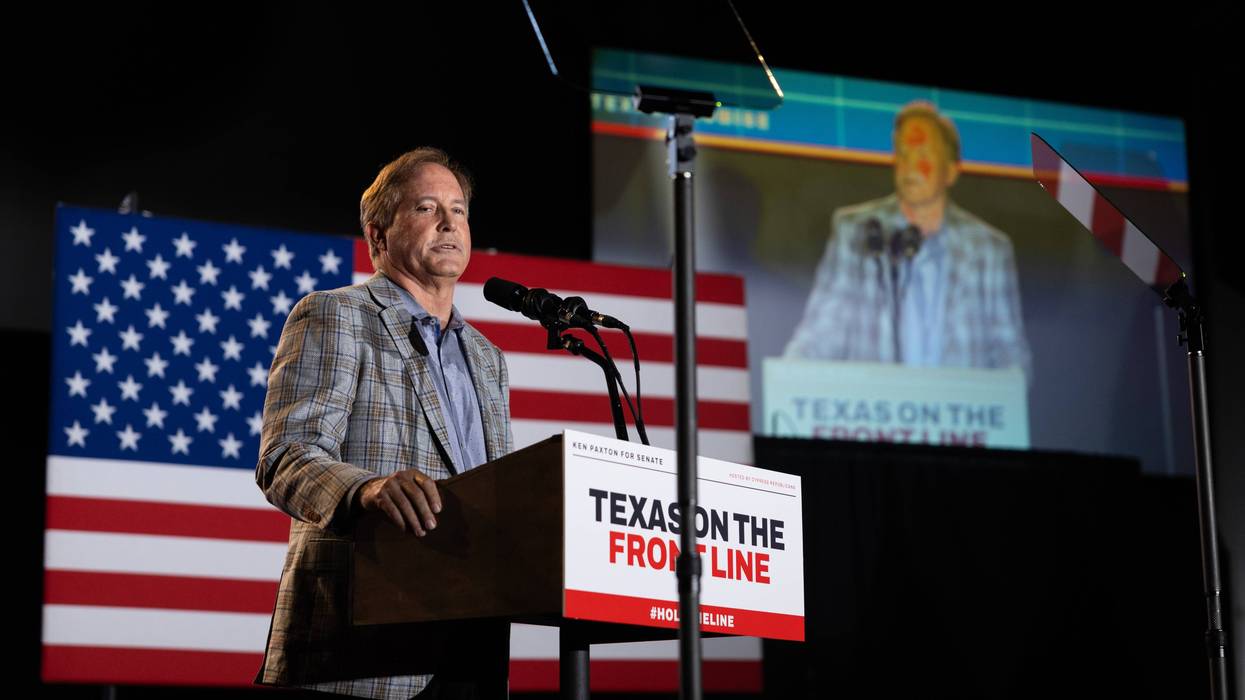
"Here’s a tip: Always bet that he did the thing."
The campaign of Texas Democratic US Senate candidate James Talarico on Tuesday unleashed a new attack ad against his Republican rival, Texas Attorney General Ken Paxton, that targeted his long history of outrageous scandals.
The ad, titled "ScanDuel," is a parody of mobile betting apps such as FanDuel and DraftKings, and it invites viewers to place bets on whether Paxton really engaged in a wide range of scandalous behavior.
In an unsurprising twist, the narrator of the mock ad suggests would-be bettors will always make money if they wager that the Paxton scandal is true.
NEW AD: Introducing SCANDUEL! The only betting app where you can parlay Ken Paxton’s scandals — and get paid! Here’s a tip: Always bet that he did the thing. 💰 https://t.co/Hir2F2UALC
— Team Talarico (@TeamTalaricoHQ) October 6, 2026
The ad starts by touting ScanDuel as "the only betting app where you can parlay Ken Paxton offering a plea deal to a pedophile with Ken Paxton voting to protect puppy abusers."
The plea deal mentioned in the ad refers to the case of Adam Hoffman, an attorney based in Waco, Texas, who had been indicted on a charge of continuous sexual abuse of a minor.
After Hoffman's first trial ended with a hung jury, Paxton's office reached a bargain with the accused child molester in which he would plead guilty to lesser charges and serve a single day in prison. Additionally, Hoffman would not have to register as a sex offender.
The judge overseeing the case mandated that Hoffman serve 60 days in jail, but he ultimately served only half that time.
Paxton's protection of puppy abusers, meanwhile, refers to Paxton's 2015 legal opinion used by university Texas A&M to deny public records requests from animal rescue organizations about hundreds of dogs that faced abusive treatment at one of its research labs.
As reported by The Houston Chronicle at the time, Paxton's opinion held that Texas A&M was under no obligation to release its records because doing so would violate "the confidential relationship between the veterinarian and the veterinarian's client."
Legal experts raised objections to this reasoning, given that the animals obtained by the research lab came from shelters, and thus had no owners who could give consent for the records' release.
Other Paxton scandals referenced in the Talarico ad include sworn testimony from a process server who said the Texas AG fled in a truck driven by his wife to avoid being served a subpoena, and Paxton mysteriously receiving regular income cumulatively worth more than $1 million from a cellphone tower located on the property of a hospital where he was previously a board member.
"Here's a tip," the ad says. "Always bet that he did the thing."

During the same speech, Cruz tied Democrats' rhetoric to the 9/11 attacks, the murder of Charlie Kirk, and assassination attempts against Trump.
While speaking at a midterm convention for Republicans on Thursday night, Sen. Ted Cruz blamed left-wing rhetoric for fomenting violence. But the Texas senator did not react when an attendee in the crowd shouted loudly that three different Democratic politicians "should be shot."
During the speech in Dallas, which took place on the one-year anniversary of the assassination of right-wing activist Charlie Kirk, and a day before the 25th anniversary of the September 11 terrorist attacks, Cruz said that "the hate that killed Charlie Kirk, that knocked down the Twin Towers, that led to two assassination attempts on President [Donald] Trump... just keeps getting worse and worse," and claimed that it had overtaken the Democratic Party.
Cruz said the party was being swept over by "a new and dangerous red-green alliance: communists and Islamists," and singled out specific figures.
Joining persistent attacks from fellow Republicans against New York City Mayor Zohran Mamdani's Muslim faith, Cruz lamented, "On 9/11, could anyone have imagined that Comrade Mamdani would be the mayor of New York?"
Cruz then referenced a comment Mamdani, a member of the Democratic Socialists of America, made during a 2021 meeting of the organization's youth wing in which he said workers "seizing the means of production" was an "end goal." Though Mamdani has not used similar rhetoric since beginning his campaign for mayor, Cruz seized upon the old comments nonetheless.
"When Mamdani says he wants to ‘seize the means of production,’ he means it," Cruz said.
It was then that a shout rang out from the crowd: "He should be shot!"
Cruz did not react, moving on to discuss Abdul El-Sayed, the Democratic US Senate nominee for Michigan, who is a former public health official for Detroit.
"When Abdul El-Sayed says he has an obligation to Sharia law, he means it," Cruz continued, twisting a comment El-Sayed made to The New York Times in 2009, when he was a 24-year-old medical student, referring to his personal decision to use a Sharia-compliant mortgage because Islam prohibits interest.
On the 2026 campaign trail, El-Sayed has clarified he has no desire "to push Sharia law on anyone else… because we live in an America where you should have the freedom of your religion.”
Again, the audience member shouted, "He should be shot!"
Cruz then turned to Texas state Rep. James Talarico (D-50), the Democratic nominee for US Senate, whom he said also "means it," when he "says he wants to dismantle capitalism."
He was referring to comments that Talarico made at a Sierra Club candidate forum in 2020 when he spoke of "climate change, white supremacy, and capitalism" as "oppressive systems" that "work together." Talarico has since said the comments "missed the mark."
Once again, the rallygoer shouted, "He should be shot!" Cruz did not react.
A spokesperson for Cruz declined to say whether the senator heard the violent shouts when asked about it by The Washington Post. The Post noted that while it was unclear if Cruz heard the remarks, several other speakers during the convention responded when hecklers interrupted them, and Trump reacted to shouts from the crowd repeatedly.
Cruz's social media account has posted a clip of the speech in which the shouts of "he should be shot" are audible, which remains online.
El-Sayed told CNN's Kaitlan Collins on Thursday night that the call for violence frightened him.
“Look, I’m a dad with two daughters, and I hope those daughters get to grow up and live with their dad,” the 41-year-old candidate said. “This is what has become the norm in our politics. I mean, literally calls to violence and the inability for anybody to actually call it out.”
“Democracy is supposed to be the process by which we solve our problems peacefully,” he continued. “We can learn to disagree agreeably, and when you hear that kind of call to violence, it should be shuddering to all of us. We have a responsibility to lower the temperature, to realize that this is not a bloodsport, where you’re just trying to bash the other guy.”
Mamdani and Talarico have not publicly responded to the calls for violence at the time of publication. However, other Democrats have called them out and criticized Cruz's silence.
Rep. Delia Ramirez (D-Ill.) wrote in a social media post that Cruz "had the opportunity to end the calls for violence, instead he riled people up."
She added that Cruz "owes Mamdani, El-Sayed, Talarico, and the communities they are fighting to represent an apology."
House Minority Whip Katherine Clark (D-Mass.) wrote that "every single Republican should denounce this dangerous rhetoric immediately—starting with Ted Cruz."
At the time of publication, Cruz had not made a public statement on the incident. Multiple outlets reported that his office has not responded to requests for comment.
Rep. Kristen McDonald Rivet (D-Mich.) described Cruz's lack of a response to the violent shouts as "a shameful profile in cowardice."
"Political violence is a big problem," she added. "Rather than egging on, real leaders call it out. It needs to stop, regardless of party.”
Cruz's office did not immediately respond to a request for comment from Common Dreams on Friday about whether he condemned the call for violence and whether he believed that he bore similar responsibility for individuals' reactions to his political rhetoric that he ascribes to Democratic politicians.
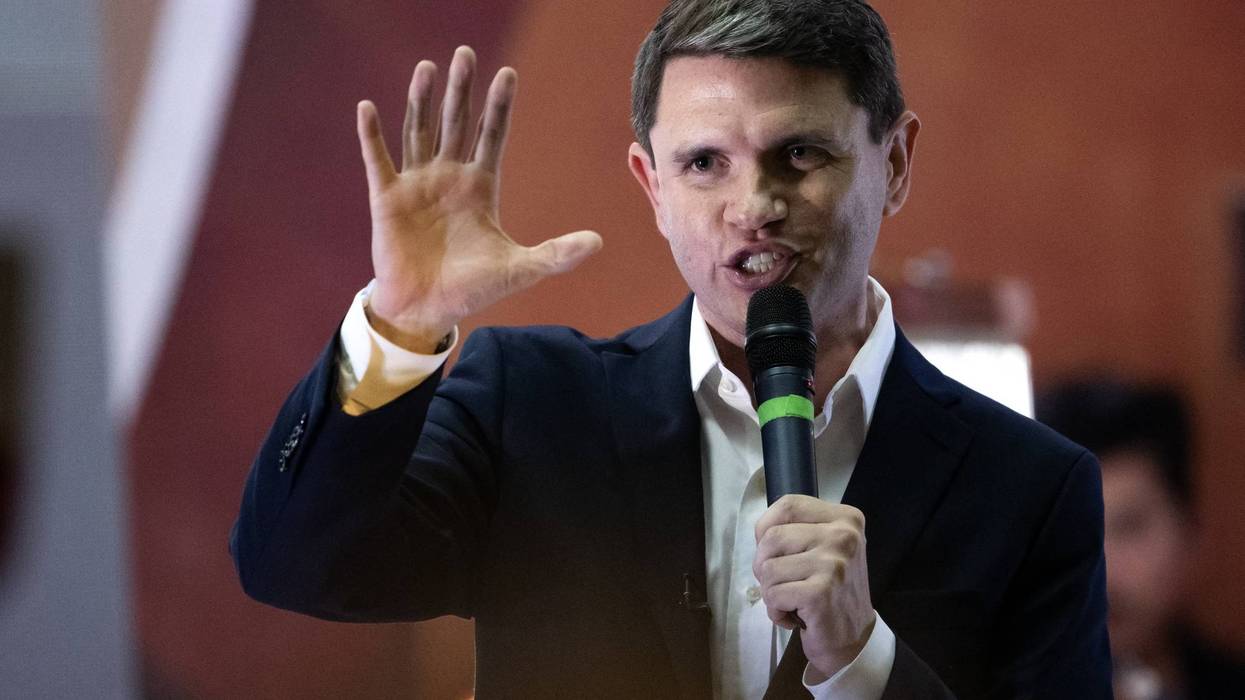
“The most powerful people in this county, the most powerful people in this country, don’t want us to be able to vote easily."
Texas Democratic Senate nominee James Talarico is pushing for one of Texas' most important swing counties to drop plans to close nearly a third of its polling places before November's midterms.
Amid public outcry, the Commissioners Court for Tarrant County—which contains Fort Worth and borders Dallas—plans to hold a vote on Tuesday on whether to shutter 92 of the polling places used in the 2022 election, many of which serve the city's poorer and minority populations.
If Democrats flip the Senate this November, the road to that outcome will almost certainly run through Texas. A Democrat has not won a statewide election there since 1994, but Talarico may be in a position to break the trend—leading Republican Attorney General Ken Paxton in most polls.
Tarrant County narrowly supported then-Rep. Collin Allred, the Democratic challenger to Sen. Ted Cruz (R-Texas) in 2024. Talarico said the closure of polling places was meant to suppress turnout and help Republicans cling to their advantage in the state.
“The most powerful people in this county, the most powerful people in this country, don’t want us to be able to vote easily,” Talarico said at a press event Sunday, during which he argued that the closures would result in longer travel for voters and lower turnout, especially in heavily Black and Latino communities.
"We're here fighting for the rights of everybody," Talarico added. "The problem is when we let voting rights become a partisan issue. That's when we walk down a very dangerous path in this country."
Proponents of the closures have described them as a way for the county to save money, rather than a political tactic.
“We’re clearly not trying to suppress the vote,” state Rep. Matt Shaheen (R-66), the chairman of the Texas House Elections Committee, told the Associated Press. “That’s a silly accusation.”
But Republican officials in Tarrant County have, in the past, explicitly tied closures of certain voting locations to partisan aims. In 2024, Republican County Judge Tim O'Hare attempted, unsuccessfully, to remove several early voting sites on college campuses, a move that the county's GOP chairman said would have been "a serious win for Republicans in Tarrant County."
In 2025's off-year elections, Republicans voted 3-2 to reduce the number of polling locations by more than a third and cut funding for free bus rides to the polls for low-income residents. The previous year, they introduced new rules blocking what they derided as "left-wing" groups from registering voters inside county buildings.
At the state level, meanwhile, Texas has carried out unprecedented mid-decade redistricting to hand more US House seats to Republicans at the behest of President Donald Trump. And following Trump's false assertions that his loss in the 2020 election was marred by fraud, Texas introduced several new restrictions on mail-in voting that were found to have significantly reduced turnout.
Tuesday's scheduled vote in Tarrant County comes after commissioners opted to table an earlier proposal that would have shuttered nearly half the county's polling places.
An analysis of that plan showed that the lowest-income third of ZIP codes would lose nearly 58% of their Election Day polling sites, while the highest-income third would lose just under 22%. Majority-minority ZIP codes would have lost nearly 52% of their polling places, while majority-white ones would have lost just a third of theirs.
A similar analysis has not yet been conducted for the new proposal. But civil rights groups still argue that the proposal will disenfranchise many voters.
"Cutting the number of poll sites, especially at such a large scale, will harm Tarrant County voters and their right to participate in the democratic process—and cause particular harm to Black, Latino, and [Asian American and Pacific Islander] voters who already face significant barriers to exercising that fundamental right," wrote groups including the ACLU, the Legal Defense Fund, and the Texas Civil Rights Project, in a letter to the Commissioners' Court on Friday.
They emphasized that the polling places slated to close under the new proposal were clustered in areas such as south and southeast Fort Worth and central and eastern Arlington, which have predominantly nonwhite populations.
Tarrant County Commissioner Alisa Simmons, a Democrat who is running to unseat O'Hare as county judge and spoke alongside Talarico on Sunday, argued that while it was an improvement on the earlier proposal, "dropping 92 Election Day polling places is crazy."
"We should not compare this proposal to the worst proposal," she said. "We should compare it to the access that Tarrant County voters actually had in 2022."
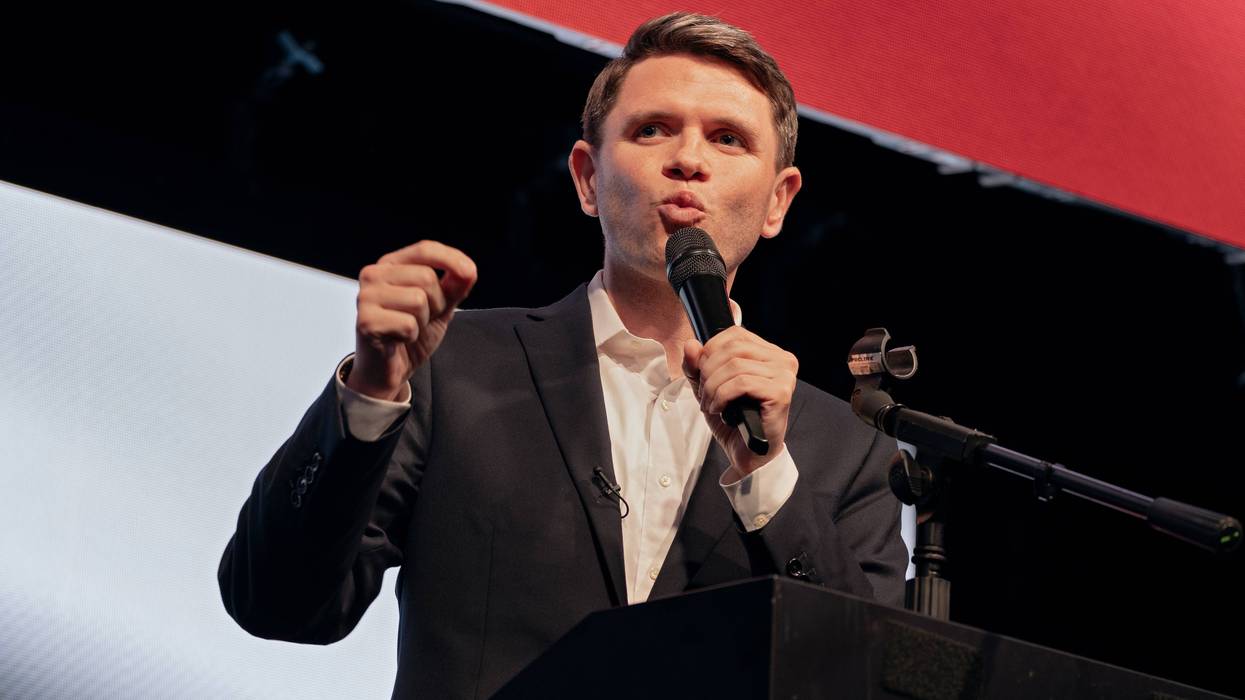
"Vote for James Talarico. He won't steal your pen."
A pilfered $1,000 Montblanc pen, courthouse security camera footage, and a man with a long memory have become unlikely stars of a new ad released on Friday in Texas' hotly contested US Senate race.
Democratic nominee James Talarico's campaign released the ad, which spotlights a 2012 incident in which his Republican opponent, Texas Attorney General Ken Paxton purloined the posh pen accidentally left behind by attorney Joe Joplin in the Collin County Courthouse, which the ad notes is "the same courthouse where Paxton would later be indicted for investment fraud" for allegedly scamming his own friends by convincing them to invest in a failing tech company while he made a commission.
"Paxton walked up to the trays next to the metal detectors, rummaged through them, and came across someone else's expensive Montblanc pen. He decided to take it for himself," the ad states, showing courthouse security video of the incident.
The pen, the ad's narrator continued, "was a special gift" from Joplin's wife.
"When Joe realized it was missing, he contacted courthouse security," the ad says. "This is the footage they pulled. Ken Paxton, on camera, stealing this man's pen. After the police got involved, Joe got his pen back. He could have pressed charges, but he decided against it."
"Because Joe's a nice guy, and he'd never take someone else's pen," the clip continues. "But he also hasn't forgotten who took his."
The ad then cuts to a shot of Joplin saying, "Hi, I'm Joe Joplin, and I endorse James Talarico for the United States Senate."
Then, this tagline: "Vote for James Talarico. He won't steal your pen."
While viewers undoubtedly got a good laugh out of the ad—and some may have ponied up $6 for a pen labeled "Not Ken Paxton's" for sale on Talarico's campaign website—the candidate's team is using it to illustrate the character of a man the Democrat has repeatedly called "the most corrupt politician in America."
🚨MERCH DROP🚨Get your very own "Not Ken Paxton's Pen" today:store.jamestalarico.com
[image or embed]
— Team Talarico (@teamtalaricohq.bsky.social) August 14, 2026 at 10:22 AM
In addition to Paxton's 2015 securities fraud indictment—a case that ultimately ended in a 2025 deal in which he pleaded no contest, received deferred adjudication, completed community service, and paid restitution—the Republican attorney general was impeached by the GOP-controlled Texas House in 2023 over allegations including bribery, abuse of office, and misuse of public resources. The state Senate subsequently acquitted him.
Dan Cogdell, the Houston attorney who represented Paxton during his impeachment, has endorsed Talarico.
Talarico has also argued that Paxton used the power of his office to enrich himself and wealthy political supporters, portraying him as a politician who puts personal and donor interests ahead of ordinary Texans. Talarico's campaign claims Paxton's net worth has increased by 7,000% since he entered office, and that he now owns 11 homes.
“He has taken bribes from wealthy donors and then turned around and blocked overtime pay for Texas workers and gutted our healthcare,” Talarico said during a campaign rally in late May. “This is why he was impeached by his fellow Republicans. That’s why he was indicted for fraud and defrauding investors.”
“The movement that we’re building is a lot bigger than any one politician or any one political party,” Talarico added. “We are running against this corrupt system. Ken Paxton embodies that system."
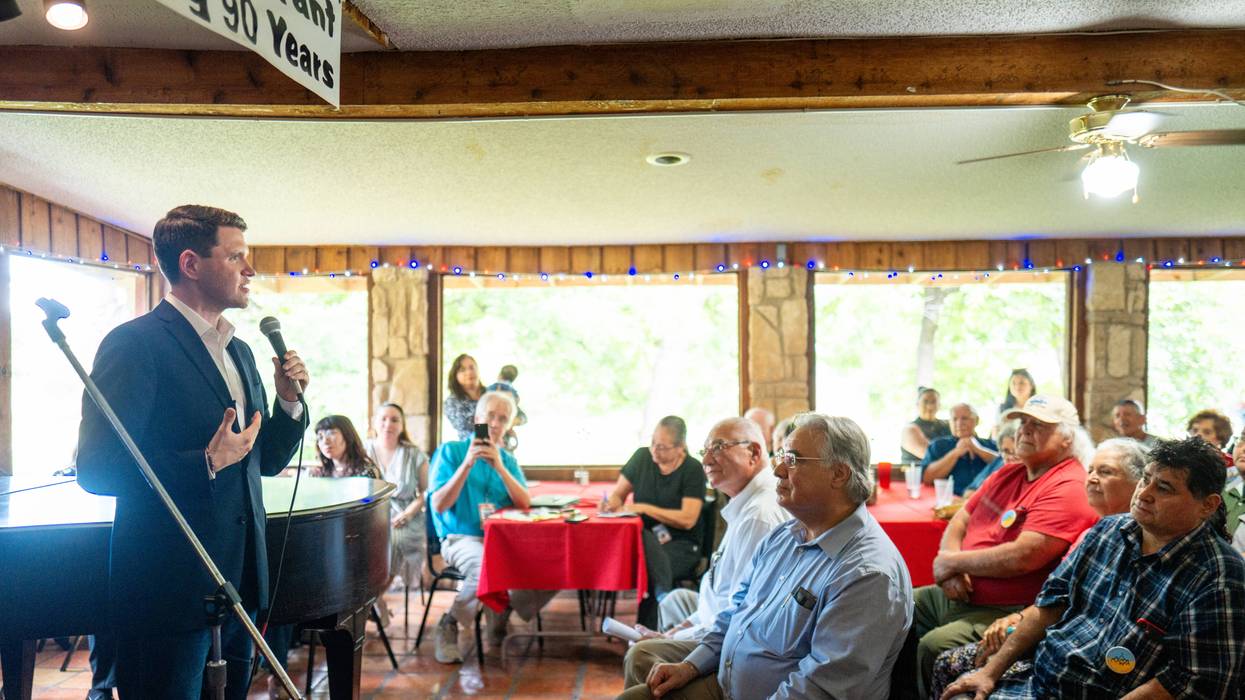
"The top 1% put the American Dream behind a paywall," said the Texas Democrat as he unveiled a framework for his economic vision.
Politicians from both sides of the aisle have come to realize in recent years that "affordability" and "cost of living" are key issues voters want to hear about on the campaign trail, with nearly all respondents to a Harris Poll last month reporting they believe the US is currently in an affordability crisis.
But on Wednesday, before 1,300 Texans in the city of Arlington, state Rep. James Talarico (D-50), the Democratic US Senate candidate, contextualized the crisis for voters.
Talarico provided a history lesson that explained how—while his opponent, Attorney General Ken Paxton, has blamed the Biden administration for rising costs and the struggles of working Texans—"this affordability crisis isn't something that happened over the last five years. This affordability crisis has been 50 years in the making."
While introducing his economic platform, "The New American Dream," Talarico held the audience's attention as he explained the Powell Memo—a document formally titled “Attack on American Free Enterprise System,” which Virginia-based corporate lawyer Lewis Powell wrote in 1971 for his client, the US Chamber of Commerce.
The memo, said Talarico, provided "a blueprint for how corporations could amass political power, reverse the gains of the Great Society and the New Deal, and rig the system for themselves."
"The Powell memo outlined a strategy. Unite corporate special interests, privilege corporate perspectives in the media, appoint sympathetic judges to the court, and buy politicians in both political parties," continued Talarico. "And it worked. Republicans and some Democrats sold the false gospel of trickle-down economics."
.@JamesTalarico: 50 years ago, a corporate lawyer named Lewis Powell circulated a memo around DC — a blueprint for how corporations could amass political power, reverse the gains of the Great Society and the New Deal, and rig the system for themselves.
The Powell memo outlined a… pic.twitter.com/ne7f23iXP3
— Team Talarico (@TeamTalaricoHQ) August 6, 2026
In the memo, Powell—who was appointed to the US Supreme Court by President Richard Nixon just months after he delivered the blueprint to the powerful Chamber of Commerce—outlined how the interests of corporate America should be framed as "individual freedom" that the country must protect.
Private companies should use political influence "aggressively and with determination" to stop "the stampedes by politicians to support any legislation related to 'consumerism' or to the 'environment,'" wrote Powell, and should show no "reluctance to penalize politically those who oppose” the corporate effort.
“Strength lies in organization, in careful long-range planning and implementation, in consistency of action over an indefinite period of years, in the scale of financing available only through joint effort, and in the political power available only through united action and national organizations," the memo argued.
"Trickle-down economics is not a theory, it is theft."
The result of that "long-range planning" and "consistency of action over an indefinite period of years," said Talarico, is the current political system—in which corporate interests pour billions of dollars into elections to support favorable candidates, Congress passes massive tax breaks for billionaires, and working families are left struggling to afford healthcare, childcare, and other essentials.
"Trickle-down economics is not a theory, it is theft," he said. "Since the late 1970s, megadonors and corporate special interests have been buying politicians in both political parties. And then those politicians turned around and rigged the economy to benefit their wealthy donors at our expense. We have an affordability crisis because we have a corruption crisis."
He added that five decades after the Powell Memo, "the top 1% put the American Dream behind a paywall"—pointing to the extreme wealth of tech CEOs like Amazon founder Jeff Bezos and SpaceX CEO Elon Musk, while "one in five Texas children live in poverty."
The American Dream has become an American Nightmare.
It’s too expensive to buy a home.
It’s too expensive to get married and have kids.
It’s too expensive to retire comfortably.
The top 1% put the American Dream behind a paywall. pic.twitter.com/gfhM2weVY0
— James Talarico (@jamestalarico) August 6, 2026
David Sirota of The Lever, whose team produced the award-winning 2024 podcast "Master Plan," which details the history and influence of the Powell Memo, applauded Talarico for speaking directly to voters about the long history behind today's "affordability crisis."
"Talarico is recounting—and promising to fight—the master plan that we exposed. And he’s making that promise in one of America’s most high-profile Senate races," said Sirota.
Talarico's event in Arlington marked the beginning of a monthlong tour across Texas in which he plans to roll out his plans to begin reversing the decades of damage done by the Powell Memo and politicians from both major parties who have prioritized corporate interests over working Americans.
The candidate's agenda includes raising the minimum wage; closing billionaire tax loopholes and ending tax breaks for the top 1% of earners in President Donald Trump's One Big Beautiful Bill Act; passing universal childcare; permanently expanding the child tax credit; passing an anti-corruption package to ban super political action committees; and providing down payment assistance for first-time home buyers.
"People are working hard every day," said Talarico. "They're playing by the rules. But those rules of today weren't written for us. They were written for billionaires."
"We need to make this type of undisclosed AI political advertising illegal yesterday," one tech journalist said.
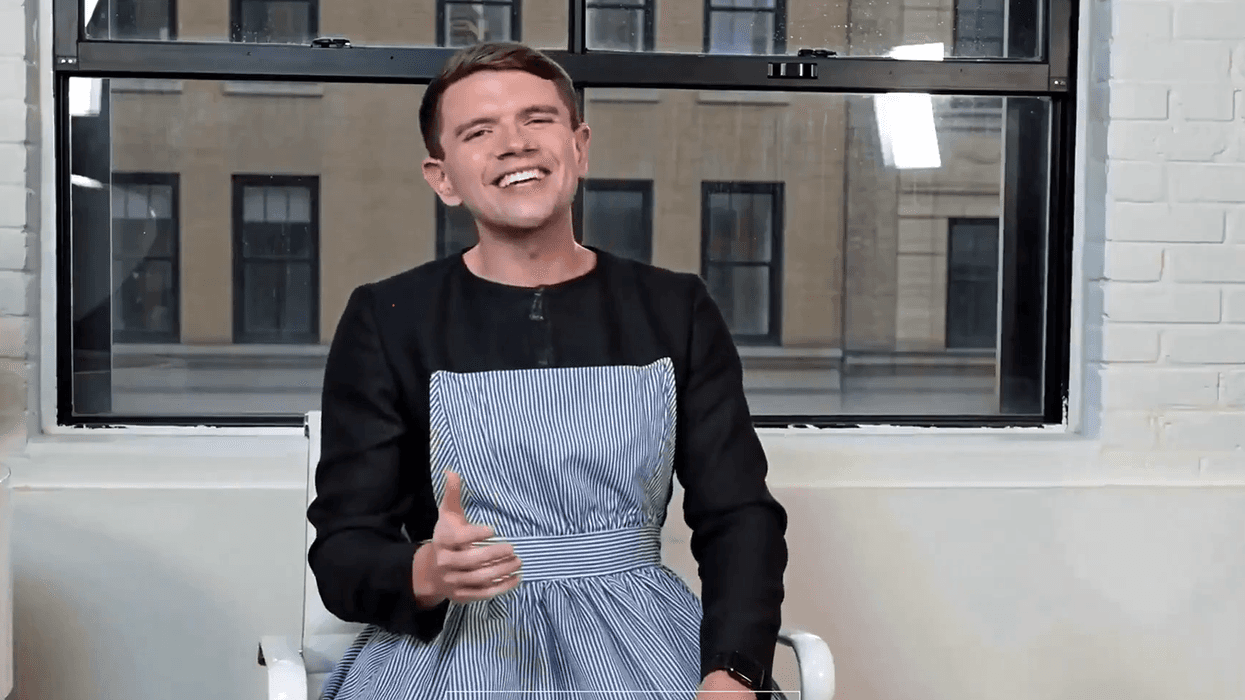
Republicans are once again using artificial intelligence to attack US Senate candidate James Talarico. This time, they're spending big to air an ad featuring the Democratic nominee for Texas in a dress singing a song about transgender children.
It follows a previous video posted by the Senate GOP's official social media channels in March featuring an uncanny AI rendering of Talarico reading what they described as "extreme statements" he'd previously made on X (then known as Twitter) discussing his views on religion and support for the LGBTQ+ community.
Now, a Trump-aligned dark money group known as Citizens for Sanity is taking it even further. According to a report from The Daily Caller on Tuesday, the group has spent "six figures" on an ad campaign portraying the Texas state representative in a dress singing a parody of "My Favorite Things" from The Sound of Music about trans kids.
“Boys in white dresses with blue satin sashes. Girls dosed with hormones til they grow mustaches. Changing the gender of all your offspring. These are a few of my favorite things," Talarico is shown belting out in the ad.
The ad references comments made by Talarico in 2023 in which he celebrated the trans youth who had shown up, along with other activists, at the Texas state capitol to hold a protest in opposition to Senate Bill 14, which sought to ban transition-related medical care for transgender minors, part of a wave of hundreds of pieces of legislation proposed across the US attacking LGBTQ+ individuals.
Speaking on a podcast, Talarico said: “I love—I’m just going to say this because it’s on my mind—the trans children who showed up yesterday at the state Capitol to advocate for their humanity. They shouldn’t have to, but it was an inspiration to watch.”
As Talarico became the Democratic nominee in Texas, where he'll face off against Republican Attorney General Ken Paxton in November, official Republican channels have spliced the comments to portray Talarico as a creep.
One post in March, from the Republican National Committee Research account on X with 1.3 million views, quotes the interaction dishonestly, as follows:
HOST: "Something that you love that's not family or friends?"
TALARICO: "Trans children."
The ad is in line with others put out by Citizens for Sanity in 2022, when it spent a staggering $93 million attacking Democrats in swing districts. As The Guardian explained in 2024:
The group... flooded the airwaves in battleground states and swing districts with deeply offensive and often misleading ads. Some ads targeted LGBTQ+ rights and attacked “Biden and his radical allies” for supporting “the woke left’s war on girls’ sports” and the “woke war on our children”. Others pictured Latino immigrants and characterized them as criminals “draining your paychecks, wrecking your schools, ruining your hospitals [and] threatening your family”, declaring that “Joe Biden and the Democrats have erased our southern border.”
With AI deepfakes playing an increasing role in political campaigning—especially among Republicans—the group is discovering new frontiers for misinformation in this year's election.
The 15-second spot it plans to roll out across Texas makes no indication of the fact that it was generated with AI, nor of the fact that Talarico never actually uttered any of the words in the song.
Like many other states, Texas has a law prohibiting the use of AI deepfakes to deceive voters during elections. However, it would not apply to this ad, since it is limited to state races and only applies within 30 days before the vote.
Lawmakers in the state have introduced legislation to strengthen the law by scrapping the 30-day rule and requiring disclosures on paid political content generated with AI. But despite some bipartisan support, the reforms failed to pass through the GOP-controlled Legislature.
While this new Talarico ad would be unlikely to fool most voters, others—like the one released by the Senate GOP in March—are already realistic enough to influence even savvy viewers, explained Sandra Cai, the founder of Plurall AI, an AI deepfake and fraud detection platform.
"By the time a viewer questions what they saw, the impression is already made," she said in a social media post. "The 2026 midterms laid bare an uncomfortable truth: Disclosure labels are easy to miss and easy to ignore. The tools to produce these ads are cheap, fast, and widely available. Regulation remains a patchwork, often applying only in the final weeks before an election."
On the left, the Talarico ad has led to familiar bewilderment that such misleading material has not been outlawed.
"We need to make this type of undisclosed AI political advertising illegal yesterday," said the liberal tech journalist Taylor Lorenz.
And while some Talarico opponents boasted that they were "going to win the midterms by programming boomers with AI brainrot ads," others on the right said they were also disturbed by the trend.
"James Talarico is awful," said Frank DeVito, senior counsel at the right-wing Napa Legal Institute. "But this use of AI to generate a video of a political opponent saying or doing what he did not really say or do is not good."
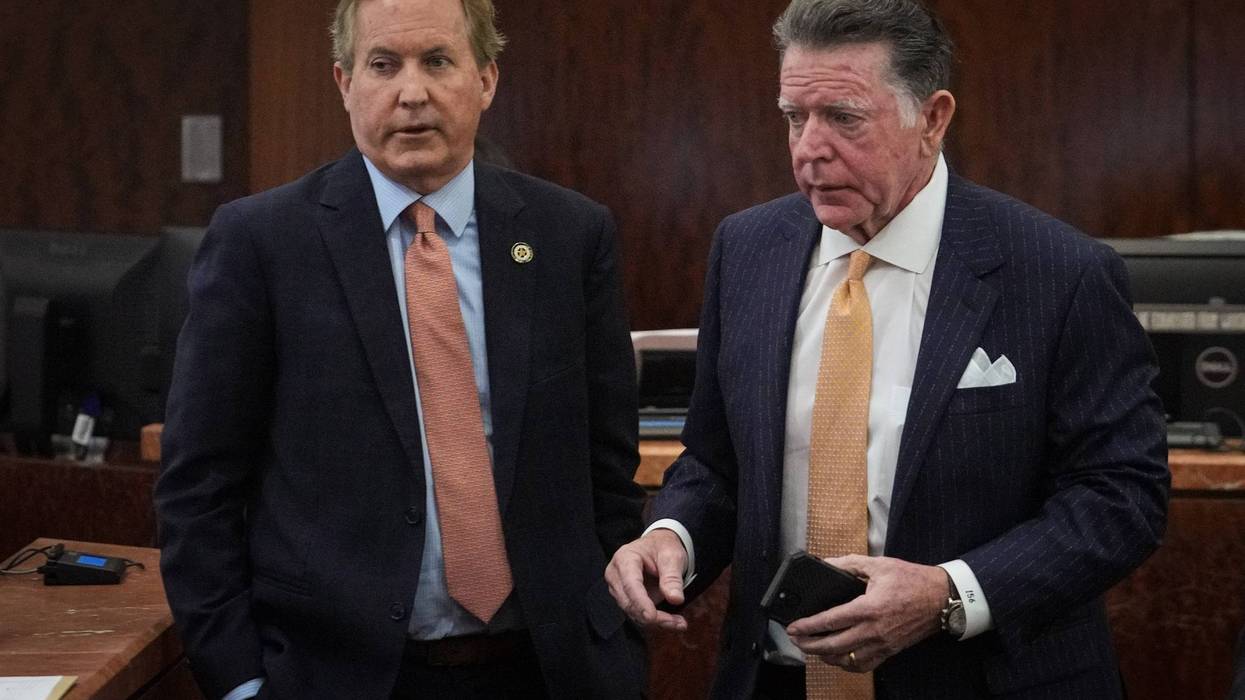
“Republicans have had control of Texas for 30 years,” said lawyer Dan Cogdell. "We are last in the country in healthcare, bottom for education, first in school shootings, first in most uninsured.”
James Talarico, the Democratic Texas state representative hoping to flip Sen. John Cornyn's seat blue this November, just received the endorsement of a rather unlikely figure: his opponent’s longtime defense lawyer.
Dan Cogdell, the Houston attorney who represented Texas Attorney General Ken Paxton for nearly a decade, said on Monday that his former client was too focused on serving President Donald Trump and had "lost sight" of the goal to serve Texans.
Cogdell defended Paxton in 2023 when he was impeached by the GOP-controlled Texas House of Representatives for allegedly accepting bribes from a campaign donor, and in a separate securities fraud case that began in 2015 and lasted nearly a decade.
“I defended Ken Paxton for years in the impeachment trial and in state criminal cases. But in my view, respectfully, I think Ken has lost sight of his core mission, which is to represent the people of Texas,” Cogdell said on his podcast, where he hosted Talarico, the 37-year-old state representative, who won the Democratic primary in March.
“Unlike Ken, I believe to my core that James Talarico believes in unity over division and that he knows how to assemble not only Democrats, but Independents and Republicans, and we need that right now,” Cogdell continued.
According to NOTUS, which first reported on Cogdell's endorsement, the attorney had donated $6,500 to Paxton's Senate campaign last year, but turned around to give Talarico a $1,000 donation in March.
Paxton won the Republican Senate primary last month after Trump intervened to support him over Cornyn.
Cogdell has, in recent years, broken with Trump, referring to him last year as “the greatest threat to democracy our country’s ever seen," comments that were used in anti-Paxton attack ads.
But as he's pursued a Senate run, Paxton—who attempted to help the president overturn his loss in the 2020 election—has only doubled down on his Trump loyalty. In the president's second term, the attorney general has directed Texas law enforcement to help with his national mass deportation campaign, backed his efforts to carry out ruthless partisan redistricting, and pursued legal action against the Democratic fundraising platform ActBlue.
Talarico is hoping to become the first Democrat to win a statewide election in Texas in over 30 years. Cogdell said he would represent a much-needed change.
“Republicans have had control of Texas for 30 years. Enough is enough. We are last in the country in healthcare, bottom for education, first in school shootings, first in most uninsured,” he said. “We are in a war we shouldn’t be in. Gas is so expensive, I literally can’t fill up my truck because most pumps shut off at $125.00, and at over $5.00 a gallon, that’s not even a full tank.”
Talarico, who is tied or slightly leading Paxton in recent polls, seized on Cogdell’s endorsement to welcome disgruntled Cornyn supporters into the Democratic tent after a bitter primary.
“If you voted for John Cornyn, you have a place in this campaign,” Talarico said. “If you’re a Republican tired of the corruption you’re seeing in government, you have a place in this campaign. Even if you’re Ken Paxton’s impeachment lawyer, you have a place in this campaign. We are building a people-powered movement that welcomes Republicans, Democrats, and independents alike.”
A key pest control office "lost 1,300 employees due to cuts and firings" said one public health expert. "That’s the thing about prevention: You don’t notice it when it works, only when it is gone."
Democratic US Senate candidate James Talarico called on the Trump administration to reverse the massive job cuts at the US Department of Agriculture—some of the largest that were imposed last year as President Donald Trump and his then-adviser Elon Musk embarked on a "slash-and-burn exercise" to reduce the government workforce—as the agency announced Wednesday that it had detected the country's first case of New World screwworm since 1966.
The parasitic fly was found in a three-week-old calf in La Pryor, Texas, after months of warnings from Texas agricultural officials and the state's $15 billion cattle industry that the flesh-eating pest, whose larvae exclusively feed on the living tissue of warm-blooded animals, could soon make its way to the US after spreading through Latin America in recent years. Mexico reported its first case in 2024 and saw a 53% increase in the number of cases in animals between July-August 2025.
"Following a historic drought that has reduced our herd size and driven up prices," said Talarico late Wednesday, "the New World screwworm outbreak is further disrupting supply chains that impact all of us who rely on the cattle industry—from meatpacking facilities to feedlots to grocery stores."
"We must fully staff the USDA so that the federal government can provide clear and predictable guidance for ranchers and work alongside the Texas government and the cattle industry to keep pests like the New World screwworm out of our herd," said Talarico.
Catharine Young, a senior fellow at the Harvard T.H. Chan School of Public Health, noted that the USDA's Animal and Plant Health Prevention Service "helps prevent threats like screwworm from ever reaching US livestock."
"In 2025, it lost 1,300 employees due to cuts and firings," said Young. "That’s the thing about prevention: You don’t notice it when it works, only when it is gone."
The Department of Government Efficiency also cut funding that supported outbreak investigations, response efforts, and testing laboratories in 22 countries and helped build laboratories for testing.
The parasite does not pose a food safety threat, according to officials. A top concern is that an outbreak could raise beef prices—which have already been driven up by the fact that the US cattle herd is the smallest it's been in 75 years following years of drought conditions, the surging costs associated with ranching, and corporate consolidation.
The USDA estimates that an outbreak could cost Texas' economy $1.8 billion in losses before it is contained.
The pest can infect humans—and 41 human cases were reported in Mexico last year—but experts say such cases are rare and that the detection of screwworm in Texas poses little risk to the public.
Instead of spreading from animal to animal, screwworm females lay eggs in animals' open wounds. The larvae then burrow into living flesh and feed on tissue, causing severe infections and death if the livestock goes untreated.
For decades, agricultural officials deployed a technique that successfully eradicated screwworm in the US: releasing sterilized male flies into affected areas. Female flies generally only mate once in their lifespan, so those that mate with a sterile male produce no offspring.
The USDA has begun releasing sterile flies into the part of South Texas where the parasite was found and is investing in sterile fly production facilities in the state. It has also established a 12-mile quarantine zone around the affected area.
US officials are also reportedly working with Mexico and Panama to use the sterile fly technique in those countries.
Agriculture Secretary Brooke Rollins said Wednesday that US has deployed 8,000 traps capable of detecting screwworm, and blamed the case in South Texas on "the open-border policies of the last administration and the resulting illicit cattle movement."
Rollins had denied screwworm was in the United States a day before she confirmed the case at a press conference on Wednesday.
Experts believe pandemic-era disruptions to sterile fly programs, increased movement of livestock and people, and weather conditions that have allowed the parasite to thrive may all have contributed to the screwworm's gradual journey toward the US.
Texas Agriculture Commissioner Sid Miller said Wednesday that "for months, the screwworm has advanced rapidly through Mexico in spite of the USDA’s existing gameplan," and called on the Trump administration to approve the deployment of the Screwworm Adult Suppression System, which uses bait and insecticides and was tested by the US in the 1970s to eradicate the parasite.
“We have the ability to shut that and eradicate that screwworm," Miller told The Texas Tribune. "We can do it in about 60 days. USDA has the tools and the knowledge to do it.”
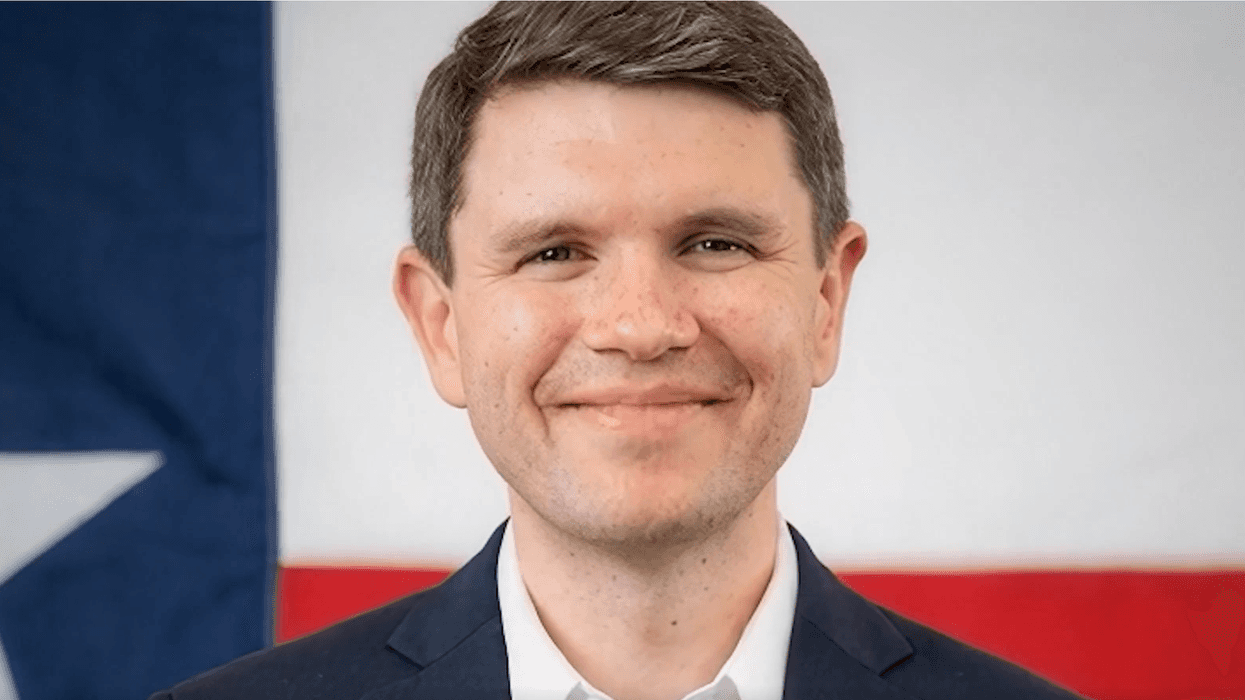
“Political deepfakes are a profound threat to our democracy, because there is no realistic way for voters to understand they are seeing fake representations,” said the co-president of Public Citizen.
In the latest example of Republicans using artificially generated deepfakes to attack their opponents, the Senate GOP’s official social media account has posted an attack ad depicting a synthetic version of Texas Democrat James Talarico, a state representative and US Senate candidate.
The video, posted on Wednesday to the National Republican Senatorial Committee (NRSC) page on X, portrays a frighteningly realistic approximation of Talarico's (D-50) appearance and voice.
The state representative, who won the Democratic nomination for Texas’ US Senate seat in a primary earlier this month, is depicted reading an array of old social media posts that the NRSC described as “extreme statements praising transgenderism, twisting Christian beliefs, and advocating for open borders.”
The posts were all real. Talarico did indeed state, following a spate of mass shootings against minorities in 2021, that "radicalized white men are the greatest domestic terrorist threat in our country." He also did say that his office had added personal pronouns to official business cards out of respect for transgender Texans, that he believed God was "nonbinary," and that he was "the only teenage boy at Planned Parenthood's March for Women's Lives in 2004."
However, all of the posts are at least several years—if not more than a decade—old. The video also depicts its AI simulacrum of Talarico smiling and reminiscing fondly about the posts, which he never actually did.
"So true," he is depicted saying after reading the tweet about "radicalized white men." "I love this one too," he says before reading the post about "pronouns."
Aside from a small, translucent watermark in the bottom-right corner of the video, labeling it "AI Generated," there is no indication that the video is a fabrication.
While both sides of the aisle have dabbled in the use of AI to attack their opponents, Politico's Adam Wren has noted that deepfakes were not being deployed equally and have become central to the "approach" of the GOP in campaigns.
In October, after Republicans made a similar video showing a simulated Senate Minority Leader Chuck Schumer (D-NY) celebrating the government shutdown, Wren noted the frequency with which such tactics were being used by Republican campaigns at both the state and federal level:
Other examples of AI-generated advertising have also come from Republicans. An ad for Mike Braun, now governor of Indiana, last year used AI to fake scenes, without disclosing it. President Donald Trump’s account regularly posts clearly fake videos of the president ridiculing opponents...
The [NRSC] released one hitting Democratic Maine Gov. Janet Mills as she launched her Senate campaign, and one simulating a Democratic group chat.
Deepfakes have also been deployed heavily by social media accounts for President Donald Trump's White House to degrade opponents.
Earlier this year, the official account posted a photo of an organizer who’d been arrested during a protest against US Immigration and Customs Enforcement (ICE), doctored to portray her uncontrollably crying, when actual photos of the event show her appearing stone-faced and stoic while being led away in handcuffs.
While more than half of all US states have legislation regulating the use of AI deepfakes for election-related content, the consumer advocacy group Public Citizen has said such content needs to be addressed at the federal level.
The group has called on the Federal Elections Commission (FEC) to designate the use of AI for deceptive political messaging as fraudulent misrepresentation and on Congress to pass legislation banning the practice and requiring AI-generated content to be prominently labeled.
Robert Weissman, the co-president of Public Citizen, told Common Dreams that the deepfake of Talarico "is a disgrace and the NRSC should put it down immediately."
"Political deepfakes are a profound threat to our democracy, because there is no realistic way for voters to understand they are seeing fake representations rather than real video," Weissman said. "This deepfake has an 'AI-generated' watermark, but it’s all but invisible–sort of like an admission of wrongdoing, more than an effort at transparency.”