
SUBSCRIBE TO OUR FREE NEWSLETTER
Daily news & progressive opinion—funded by the people, not the corporations—delivered straight to your inbox.
5
#000000
#FFFFFF
To donate by check, phone, or other method, see our More Ways to Give page.


Daily news & progressive opinion—funded by the people, not the corporations—delivered straight to your inbox.
"Trump is more focused on finishing his billion-dollar ballroom than lowering prices for American families," said one critic.
Federal data released Tuesday showed US inflation rising to the highest level it's been since May 2023, as President Donald Trump's Iran War has led to increases in the costs of both energy and food.
The latest Consumer Price Index (CPI) released by the US Bureau of Labor Statistics finds that prices in April posted a year-over-year increase of 3.8%, above economists' expectations of a 3.7% increase, driven by energy prices that surged nearly 18% from April 2025.
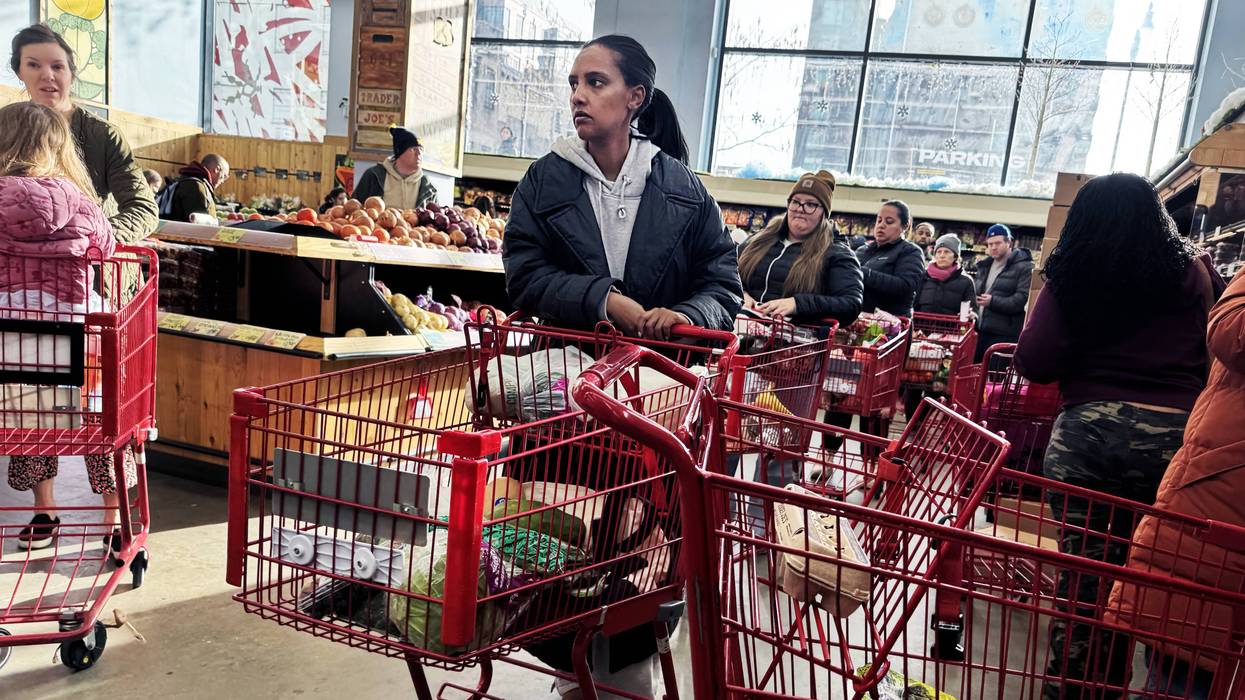
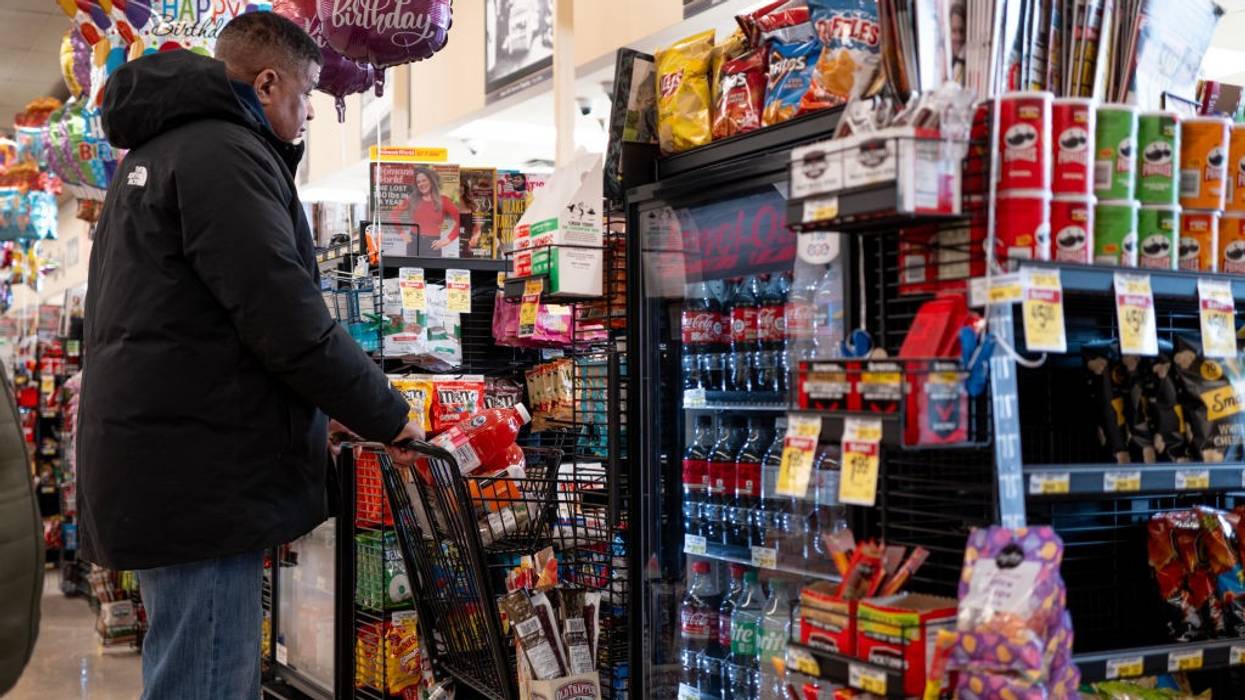
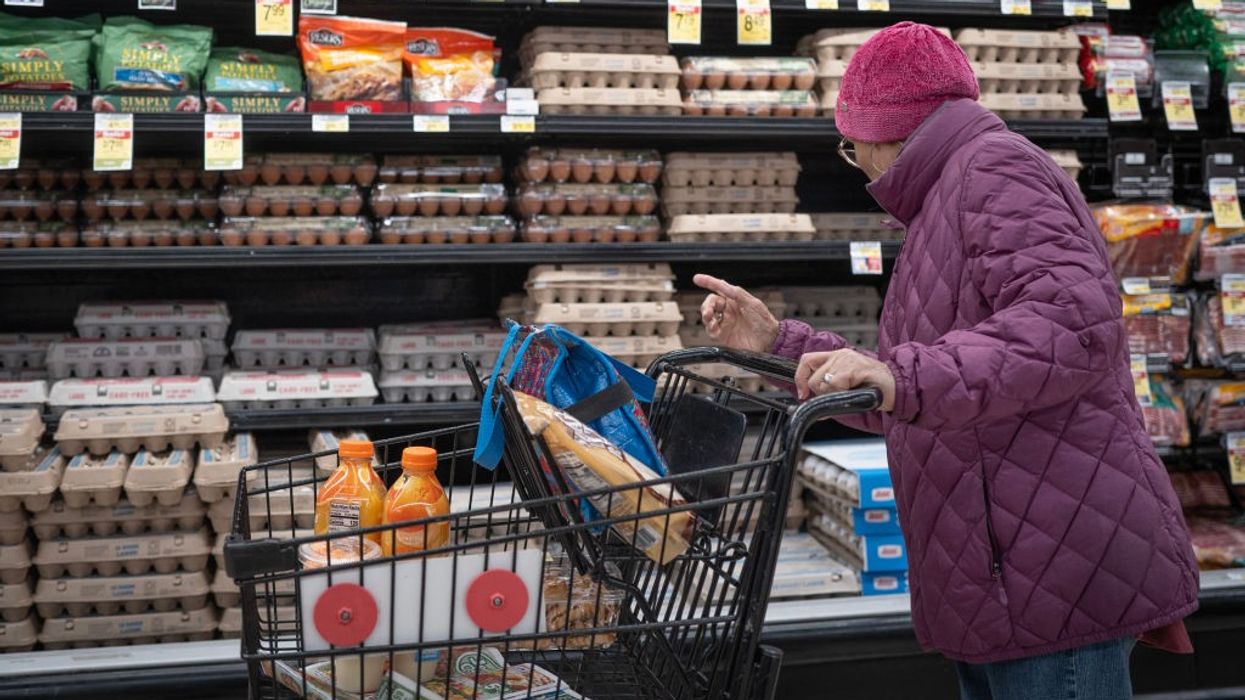
The price of groceries also notched significant increases during the month, the report notes.
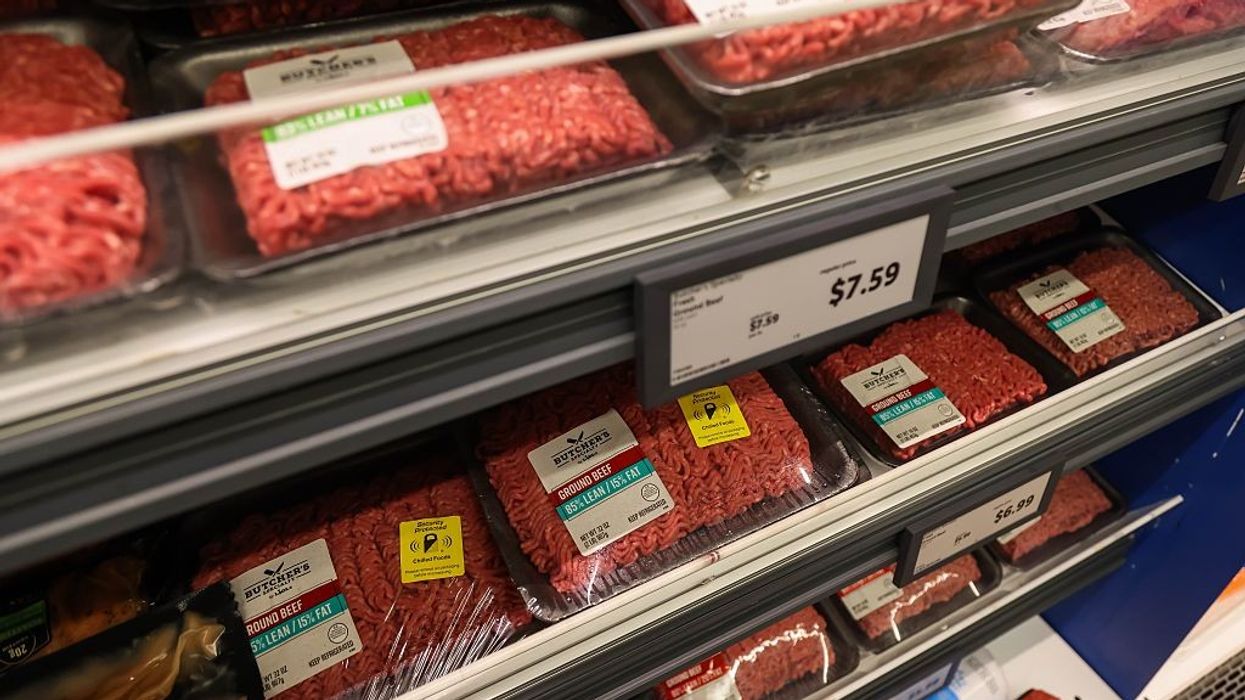
"Five of the six major grocery store food group indexes increased in April," says the report. "The index for meats, poultry, fish, and eggs increased 1.3% over the month as the index for beef rose 2.7%. The fruits and vegetables index increased 1.8% in April and the nonalcoholic beverages index rose 1.1%. The index for dairy and related products increased 0.8% over the month and the index for cereals and bakery products rose 0.1% in April."
Economists said the new CPI report showed significant trouble ahead for American consumers, who last month registered record-low sentiment in the University of Michigan’s Surveys of Consumers, driven in large part by anxiety over price increases caused by the Iran war.
Joseph Brusuelas, chief economist at RSM, told The Wall Street Journal that "the American economy has entered a new chapter where inflation appears to have stepped up," and predicted that "median American families are going to find it very challenging to adjust going into the second half of the year."
Heather Long, chief economist at Navy Federal Credit Union, observed that the cost of living in April rose above average monthly wage gains, meaning US consumers are no longer just treading water but falling behind.
"Inflation is now eating up all wage gains for the first time in about three years," she wrote. "This is painful for Americans and a true financial squeeze."
University of Michigan economist Justin Wolfers highlighted just how much the latest CPI report exposes the false promises President Donald Trump made during the 2024 presidential campaign.
"Trump campaigned on bringing down the cost of living 'starting on day one,'" he wrote, "and then: started a trade war; deported much of the farm workforce, bombed Iran, allowed healthcare subsidies to expire, cut food assistance, ran an interest-rate boosting deficit, and attacked Fed independence."
Rep. Brendan Boyle (D-Pa.) similarly ripped Trump's economic mismanagement in the wake of the CPI report.
"From his tariff taxes to his disastrous war in Iran, President Trump is making life even harder for American families," said Boyle. "Today’s inflation data confirms what everyone can see: costs are out of control, and President Trump is responsible."
The latest CPI data comes as a poll from CNN released Tuesday shows a record-high 70% of Americans disapprove of Trump's handling of the economy, with 75% of US voters saying the president's unprovoked war of choice with Iran has had a negative effect on their financial situations.
Trump's approval on the economy was a strength throughout his first term, even as polls showed him to be otherwise unpopular. As noted by CNN senior political reporter Aaron Blake, Trump's disapproval on the economy "never even reached 50% in his first term," but has now been at over 60% for the last year.
Alex Jacquez, chief of policy and advocacy at Groundwork Collaborative, said in a statement that "Trump chose to reignite inflation with his illegal and reckless war in Iran, and more than two months in, there’s no offramp in sight."
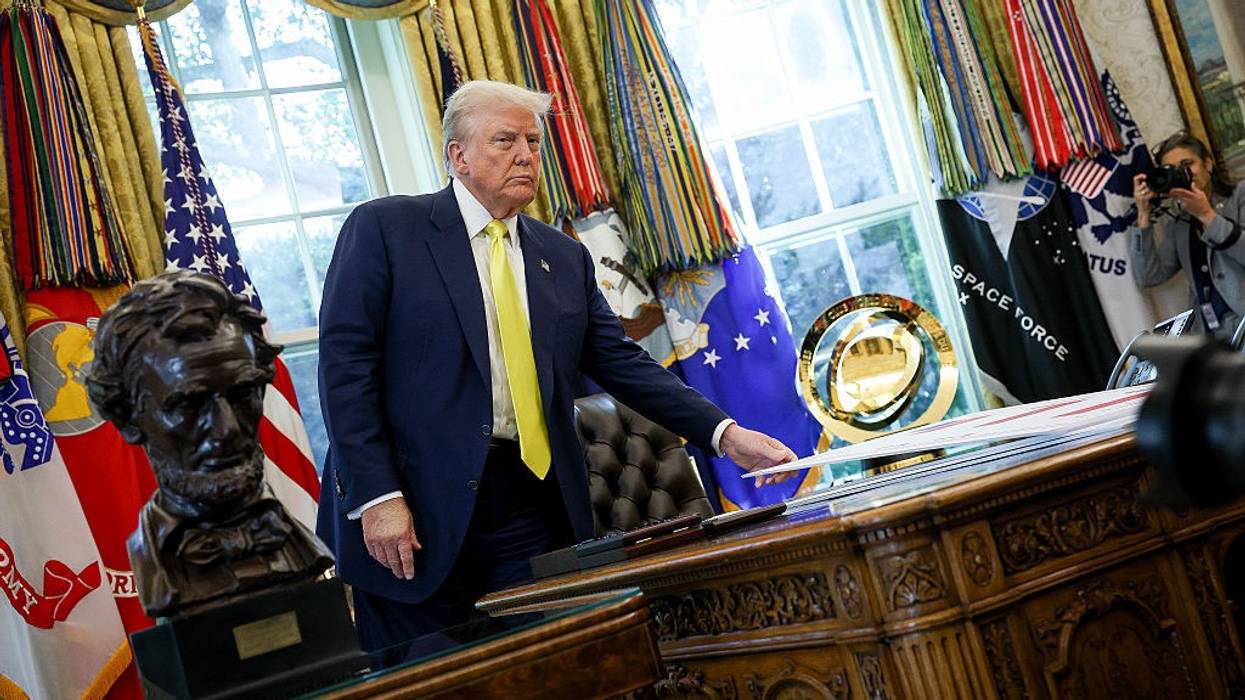
"Every day the war continues, prices climb higher and will stay there for months after it ends," said Jacquez. "As Americans continue to rank cost of living and inflation as their most important issues, Trump is more focused on finishing his billion-dollar ballroom than lowering prices for American families.”
“The toll of Trump’s war in Iran won’t stop at the pump,” warned one expert. “Price hikes on summer vacations, groceries, and electronics are coming."
New data from the US Bureau of Labor Statistics showed that inflation soared in March thanks in large part to increased energy costs stemming from President Donald Trump's illegal war with Iran.
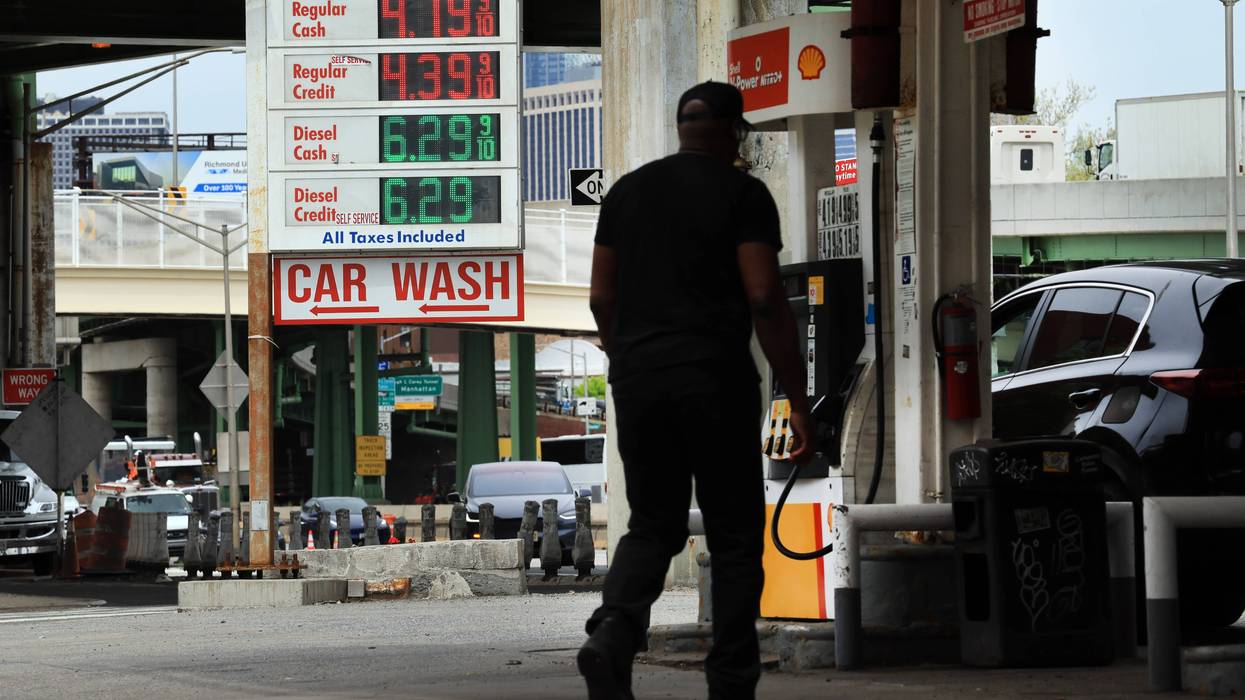
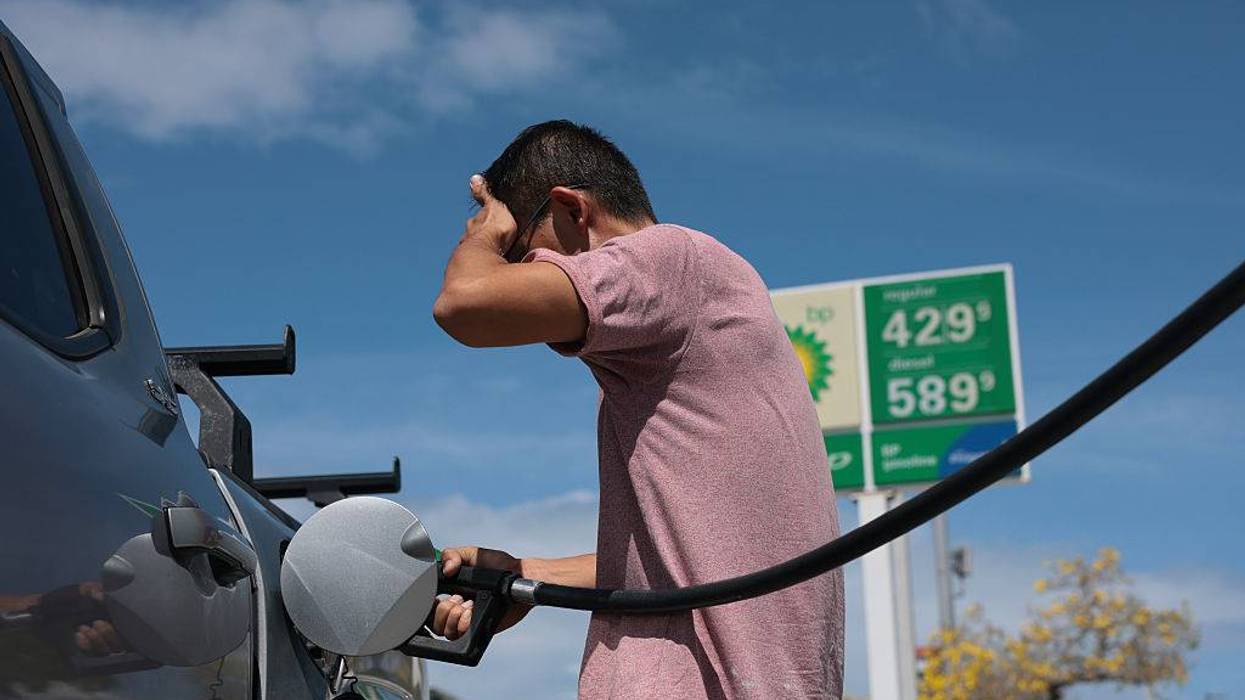
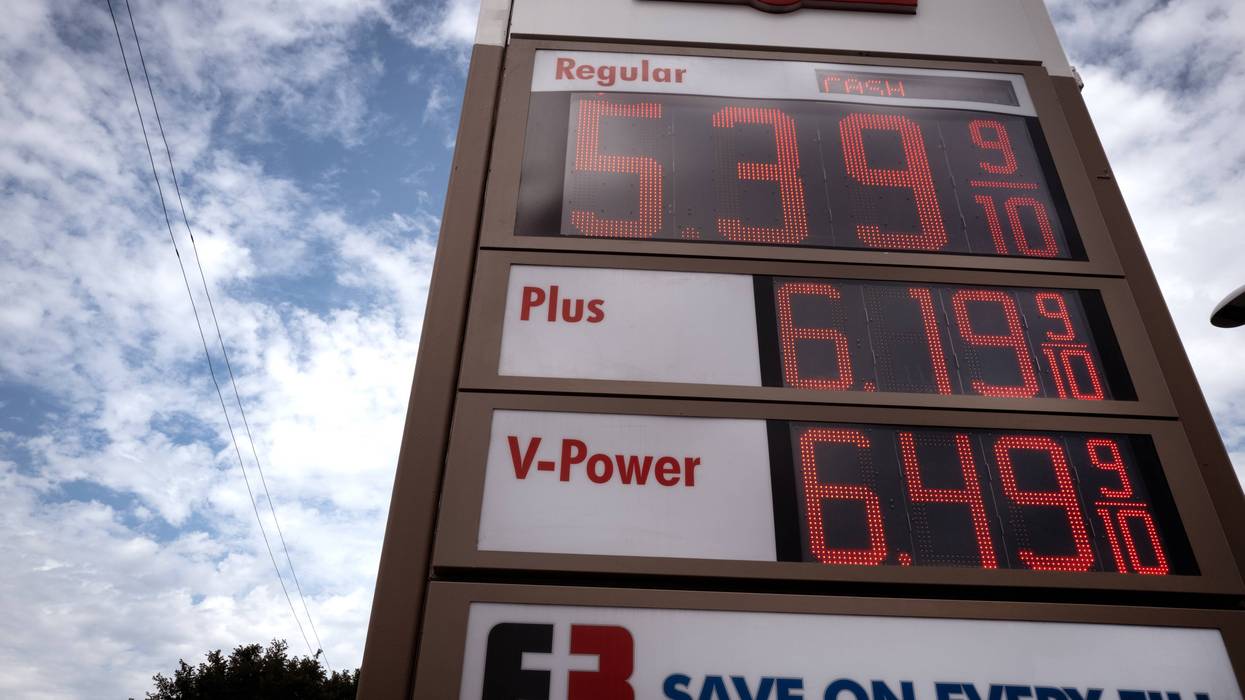
According to the BLS, the Consumer Price Index (CPI) posted a month-over-month gain of 0.9% in March, led by a 10.9% increase in energy prices including a massive 21.2% increase in gasoline.
On a yearly basis, total prices rose by 3.3% from where they were in March 2025—the highest annual inflation rate since April 2024.
University of Michigan economist Justin Wolfers commented in a social media post that inflation in March was "up sharply, and there's more to come," while describing the data as "the first numbers showing economic effects of the war in Iran."
New York Times economics reporter Ben Casselman observed that the 3.3% rise in inflation was "the fastest inflation rate of Trump's second term," and that "the jump was driven almost entirely by higher energy prices, the direct result of the war with Iran."
Heather Long, chief economist at Navy Federal Credit Union, flagged a particularly worrying aspect of the BLS report, which is that "wage growth is almost entirely eaten up by inflation now."
"Wage growth was +3.5% in March for the past 12 months. Inflation was +3.3% in March for the past 12 months," Long explained. "This is the squeeze many households are feeling. Their pay won't be able to keep up with this level of inflation. (And yes it was the same situtation in 2022)."
Elizabeth Pancotti, managing director for policy and advocacy at Groundwork Collaborative, said that the spike in inflation "comes as no shock to anyone who has filled up their gas tank in the past month," and predicted the damage wouldn't be limited to fuel prices.
"The toll of Trump’s war in Iran won’t stop at the pump," Pancotti said. "Price hikes on summer vacations, groceries, and electronics are coming down the pike as his war stokes chaos in supply chains around the world. By pursuing this illegal war, the president has made it clear that he’s putting American families last."
Sen. Chris Murphy (D-Conn.) stated that "between the war and tariffs and general incompetence, Trump is deliberately ruining the economy."
The Republican Party tried to put its best spin on the numbers by boasting that core inflation, which excludes the prices of food and energy, did not rise as much as anticipated.
"Core inflation just came in LOWER than expected for the month of March!" the GOP wrote in a social media post. "President Trump continues defying the 'experts' and beating expectations."
However, the GOP's post got several angry replies from followers who argued that core inflation mattered little when energy prices are spiking and gas prices are averaging $4.15 per gallon.
As Vox senior editor Benji Sarlin noted, former President Joe Biden's White House regularly pointed to core inflation numbers while trying to ease voters' anxiety about rising prices, but with little success.
"Congrats to all the Trump White House folks explaining the difference between topline inflation and core inflation during an oil shock today, I’m sure the Biden WH alums will be very sympathetic," Sarlin wrote. "People on social media also love it when you say inflation is actually pretty good if you just exclude gas, try it out."
Recent data show the costs of groceries, healthcare, and electricity have all been rising faster than overall inflation.
With the rising cost of groceries, housing, healthcare, and other essentials a central issue facing communities across the United States due to the Republican agenda, one expert believes that commonly cited economic statistics aren’t capturing the depth of working families' struggles.
Gene Ludwig, former US comptroller of the currency under President Bill Clinton, is arguing that the Consumer Price Index (CPI) no longer delivers an accurate portrait of families' hardships because it does not focus enough on the core costs that impact working people on a daily basis.
As reported by Bloomberg on Monday, Ludwig believes the CPI tracks too many goods that are either luxury purchases or are only bought sporadically. A relevant measure of inflation, he told the outlet, should primarily include goods that are essential to living, such as groceries, housing, healthcare, and energy.
Ludwig and his colleagues at the Ludwig Institute for Shared Economic Prosperity have developed their own measurement called True Living Cost (TLC), which focuses on core household needs and excludes items such as plane tickets and golf carts that are included in the CPI formula.
Prices as measured by the TLC have grown 1.3 times faster than prices as measured by the traditional CPI over the last 24 years, which may explain why US consumer sentiment has remained low even during times when the unemployment rate and the rate of inflation have been falling.
The biggest gap between TLC and CPI has been in measuring the cost of healthcare, as TLC shows that the rise in costs has been much more severe than what has been shown in traditional inflation statistics.
"In the CPI, medical care mostly measures reimbursements to providers made by private insurers and Medicare, in addition to patient payments, but the TLC tracks only households' out-of-pocket expenses and contributions to medical and dental plans," explained Bloomberg. "The CPI shows medical costs have doubled since 2001, whereas the TLC shows they’ve almost tripled, largely from a massive rise in premiums."
Ludwig's arguments about traditional inflation measures not capturing the true state of Americans' fiscal stability were backed up by a report from The Washington Post on Sunday, which examined recent trends in housing, healthcare, food, and utility prices, and found that all of them have been rising faster than the top-line rate of inflation as measured by CPI.
The Post cited the most recent CPI data showing that natural gas bills have risen by nearly 14% over the last year, while electricity bills have surged by 6% over the same period. Grocery prices also registered their biggest spike since 2022, thanks in part to US President Donald Trump's tariffs on imported staple foods such as coffee and bananas.
Mark Zandi, chief economist at Moody’s Analytics, told the Post that these costs are not mere luxuries that people can sacrifice until their financial situation improves.
"It’s not that they have a choice," he said. "We’re talking about things that people must buy. They have to live somewhere... They have to heat their homes. They need lights."
A recent CNN report focused on factors related to the most recent spike in grocery prices and found that Trump's policies were to blame for at least two of them.
Most directly, CNN found that the tariffs on imported foods resulted in higher prices at the grocery store checkout line. Additionally, the Trump administration's crackdown on undocumented farm workers has harmed the supply of food that's grown domestically, which has also resulted in price increases.
And finally, CNN reported that droughts exacerbated by human-caused climate change have also hurt supplies of beef and oranges, which have led to further price squeezes.
David Ortega, a food economist at Michigan State University, told CNN that Trump's current policy agenda "is more likely to increase the price of food" than make it more affordable.
Given the rising cost of staple groceries, many Americans have been turning to cheaper alternatives. According to The New York Times, sales of Hamburger Helper have grown by 14.5% over the last year, which is a sign that shoppers are bypassing more expensive cooking ingredients in favor of low-cost, easy-to-make meals.
Additionally, the Times report found that sales of foods that are "commonly purchased by consumers when financial times get tough—such as rice, canned meats such as tuna, and boxes of macaroni and cheese—have also been strong.
Sally Lyons Wyatt, global consumer packaged goods and food service industry adviser at research firm Circana, told the Times that US shoppers right now seem to be "looking for foods that fill them up for the least amount of money."
"The middle-class squeeze from tariffs is here," observed one economist.
New economic data released on Thursday revealed fresh signs of stress for the US economy and working families.
A new Consumer Price Index report from the Bureau of Labor Statistics (BLS) found that overall inflation rose by 2.9% year-over-year in August, while core inflation—a measure that excludes commodities such as food and energy—rose 3.1%, the highest reading recorded since this past January.
Both of these numbers were in line with economists' consensus estimates, although they still showed inflation trending in the wrong direction during a time when the US labor market is also showing signs of weakness.
Looking deeper into the report reveals that the cost of groceries continues to be a major pain point for US consumers, as food prices jumped by 0.6% on the month and 2.7% year-over-year.
The report comes days after US President Donald Trump said in a radio interview, "We have no inflation. Prices are down on just about everything."
New York Times economics reporter Ben Casselman said that the spike in food prices was notable because it came after a long period in which food inflation had been coming down.
"Grocery prices are once again rising relatively rapidly," he observed in a social media post. "Food inflation had eased significantly, and had been running well below overall prices, but that's no longer true."
Heather Long, the chief economist at Navy Federal Credit Union, singled out some particularly important household staples in the report that she argued were very likely being impacted by President Donald Trump's tariffs.
Among other things, Long said that coffee was now 21% more expensive than it was a year ago, while living room and dining room furniture saw a 10% year-over-year increase, and the price of toilet paper rose by an annualized 5%.
"The middle-class squeeze from tariffs is here," she said. "Inflation hit 2.9% in August, the highest since January and up from 2.3% in April. It's troubling that so many basic necessities are rising in price again: Food, gas, clothing, and shelter all had big cost jumps in August. And this is only the beginning."
Mike Konczal, senior director of policy and research at the Economic Security Project and a former member of President Joe Biden's National Economic Council, said that the new report shows "inflation is broadening" given that the "percent of items that had at least a 3% annualized price increase over the last month" increased to nearly 60%, which is the highest percentage seen in years.
The inflation report was not the only troubling economic indicator, however.
The BLS also revealed that jobless claims in the US jumped to 263,000 last week, which was significantly higher than the 235,000 claims expected by economists. Joe Weisenthal, the co-host of the Bloomberg "Odd Lots" podcast, noted that this was the highest total for weekly jobless claims in nearly four years.
Long also flagged the worrying jobless claims number and predicted that it was just the start of a further downturn in the US economy.
"'Cost cutting' is back among CEOs and that is corporate speak for more layoffs," she said. "It's going to be a rough few months ahead as the tariffs impacts work their way through the economy. Americans will experience higher prices and (likely) more layoffs."
"Reckless tariff policy is wreaking warrantless chaos on our economy, with grocery giants shifting market uncertainty onto consumers," said Accountable.US president Caroline Ciccone.
As leading grocery chains increase prices on essentials, they are blaming US President Donald Trump's tariffs for raising the cost of living for households across the country.
According to the Consumer Price Index, the price of food has increased by 3% in the past year, with meats, poultry, fish, and eggs getting 5.6% more expensive from June 2024 to June 2025.
In a poll published this month by the Associated Press and the National Opinion Research Center, 90% of Americans reported that they considered the cost of groceries a source of stress, with 53% describing it as a "major" source of stress.
In earnings calls and public statements, executives of many of America's largest and most profitable grocery retailers are citing Trump's tariffs as justification for passing on the costs to consumers, according to a new report released on Tuesday by Accountable.US.
In a first-quarter earnings call in May, Walmart CEO Doug McMillon said that while the company was better positioned than others to absorb the cost of tariffs, they would still "result in higher prices" for consumers. Since then, some grocery items at America's largest retailer have shown 40% hikes that have outraged consumers, fueling calls for a boycott.
On another call Thursday, McMillon said, "We've continued to see our costs increase each week, which we expect will continue into the third and fourth quarters."
"Trump's tariffs are making groceries more expensive," said Accountable.US. "Everyday Americans pay the cost while corporations and the wealthy profit."
Costco's chief financial officer, Gary Millerchip, told shareholders in May that the company "saw inflation as a result of tariffs because we import certain fresh items from Central and South America."
Kroger's CFO, Todd Foley, projected similar hikes to fresh food prices beginning in March. Though Foley said the impact would not likely be as significant as those experienced by their international competitors, he said the tariffs would likely cause "mid-single digit effects" on the costs of produce imported from Mexico and Canada.
Albertsons CEO Susan Miller has acknowledged that the company is raising prices on some goods to compensate for tariffs. But it has also turned the screws on its suppliers, demanding that they eat the cost of the new levies.
In the American Prospect, David Dayen described the latter as an example of how the tariffs were helping monopolies consolidate their power.
"Albertsons holds a significant market share in the grocery market, particularly in the western United States," he wrote. "Independent grocers, however, typically don't have the same ability to dictate terms to suppliers, and therefore will have to take whatever they can get."
Many of the companies currently raising prices have previously been caught or even admitted to price-gouging consumers to take advantage of inflation in the wake of the Covid-19 pandemic. The tariffs, a regressive tax that Trump has suggested as a way to offset the massive tax cuts given to the wealthy, have further exacerbated that pain.
"While Trump grants massive tax cuts to massive corporations and the ultra-rich," said Accountable.US President Caroline Ciccone, "his reckless tariff policy is wreaking warrantless chaos on our economy, with grocery giants shifting market uncertainty onto consumers."
"Trump was handed a stable economy," said one economist. "I expected them to screw up either the labor market, prices, or growth. I didn't expect them to fumble all three."
Belying U.S. President Donald Trump's promise to "end inflation"—and his subsequent claim that he's "solved" it—new federal economic data released Tuesday showed increased inflation in July resulted from businesses in some sectors are passing the costs of Trump's tariffs on to consumers.
The consumer price index (CPI) figures, released by the U.S. Bureau of Labor Statistics (BLS), measure the cost of staple goods across the economy and offer a detailed look at inflationary impacts in a variety of areas. The overall CPI rose 2.7% in July from year-ago levels, a similar increase from June. So-called "core" inflation, which excludes volatile energy and food, rose 3.1% in July, the highest level in five months.
While White House Council of Economic Advisers Stephen Miran claimed that July's CPI shows that there is "no evidence whatsoever" that Trump's trade war has spurred price increases, economic experts have repeatedly predicted the cost of tariffs would ultimately be passed to consumers.
Natalie Baker, director of economic analysis at the Center for American Progress, a public policy research and advocacy group, said in a statement that "the consistent upward trend in inflation is the latest sign that President Trump's reckless trade war and the resulting economic uncertainty are wreaking havoc on family budgets and the American economy."
"Combined with the lackluster jobs report and recent [gross domestic product] numbers, this is a clear warning sign that the president's policies are raising prices and squeezing consumers," Baker adeed. "It's a chilling reminder that the risk of stagflation is growing by the day."
The Democratic National Committee weighed in on the numbers, with communications director Rosemary Boeglin saying that "Donald Trump is steering the economy off a cliff, as core inflation rises to over 3%."
"Working families are already cutting back on basic necessities as Trump's billionaire-first agenda makes life more expensive," Boeglin continued. "While his budget explodes the deficit and enables the largest wealth transfer in history from the working and middle classes to the ultrawealthy, Trump's erratic trade war continues to accelerate inflation and jack up prices."
"While Trump profits off the presidency, hardworking Americans are struggling to get by with no end in sight," she added.
House Budget Committee Ranking Member Brendan Boyle (D-Pa.) said in a statement: "Donald Trump was elected to bring down costs. Instead, he's made the problem worse."
"Trump's Big Ugly Law gives away trillions to billionaires, paid for by cutting healthcare for millions of Americans," Boyle added. "The American people simply can't afford the policies of Donald Trump and the GOP."
Mike Konczal—an economic adviser to former President Joe Biden who is now the senior director of policy and research at the progressive nonprofit Economic Security Project—called July's CPI "overall worse than I expected, with the background of government disinvestment and deportations weakening potential growth."
"Trump was handed a stable economy," Konzcal added. "I expected them to screw up either the labor market, prices, or growth. I didn't expect them to fumble all three."
"The cost of this incompetence will be felt by working people first," said one economist.
Less than two weeks after firing the U.S. Bureau of Labor Statistics commissioner, baselessly claiming that she had released manipulated jobs data, President Donald Trump on Monday appeared to have found a "solution" to the problem of weak economic numbers that have been plaguing his administration: a new nominee to lead the agency who, according to one conservative economist, is "as partisan as it gets."
The president announced on his Truth Social platform that he was nominating E.J. Antoni, the chief economist for the right-wing Heritage Foundation's Hermann Center for the Federal Budget, to lead the BLS, saying Antoni "will ensure that the Numbers released are HONEST and ACCURATE."
"Our economy is booming," he declared.
The announcement was made days after Trump demanded the firing of Erika McEntarfer, the commissioner who served under both him and former President Joe Biden. McEntarfer, Trump suggested, had released a false jobs report saying that only 73,000 jobs were added to the economy in July and that previous estimates had overstated the new job numbers by 258,000.
Economists say the discrepancy between the actual job numbers and the earlier projections was not unusual and likely explained by "seasonal adjustments and more complete survey responses," as Axios reported. There is no evidence that McEntarfer manipulated the data to harm Trump politically, as the president suggested, or that she did the same during the Biden administration "in the hopes" of getting Democratic nominee Kamala Harris elected president.
But experts wondered if Americans can trust that Antoni, should he be confirmed to lead the BLS, won't manipulate jobs data to support the appearance of what Trump calls a "booming" economy—one in which grocery prices have once again jumped, according to the consumer price index (CPI) numbers that the bureau released Tuesday. Tariffs imposed by the president have driven up the cost of imported goods.
"Antoni has repeatedly and unfairly attacked the agency he'd be set to run, contributed to the right-wing Project 2025 policy blueprint, and in his role at the Heritage Foundation has stretched the truth about the economy to make partisan political claims," said Josh Bivens, chief economist at the Economic Policy Institute.
Antoni, who earned his Ph.D. in economics in 2020, is listed as the fifth contributor to Project 2025, the right-wing policy agenda that calls for the gutting of the federal government. He has called for the U.S. Labor Department to be staffed by far more political appointees instead of career civil servants.
He said on former Trump aide Steve Bannon's podcast that the absence of a Trump appointee in the top position at the BLS is "part of the reason why we continue to have all of these different data problems," but Brian Albrecht, chief economist at the International Center for Law and Economics, highlighted on the social media platform X a number of instances of Antoni "completely not understanding economic statistics, being partisan hack, or both."
For example, in February Antoni used data showing the total population growth of native-born Americans to claim that foreign-born workers have benefited from "all net job growth"—but as economist Jeremy Horpedahl of the Arkansas Center for Research in Economics noted, using data on working-age, native-born Americans would have rendered a far more accurate analysis.
"The working-age, native-born population hasn't been growing for the past decade," said Horpedahl at the time. "If you use the working-age populations, you will see that native-born Americans have higher employment rates, which are also at record highs."
Having called the CPI an "Orwellian trick" used to mask high inflation, Antoni is unlikely to put much stock in the index numbers that were released Tuesday, which Yale University economist Ernie Tedeschi said straightforwardly show that "the prices of consumer goods are higher right now than they would be without tariffs."
Antoni has long been critical of the agency he's been nominated to lead, saying last week, "There are better ways to collect, process, and disseminate data—that is the task for the next BLS commissioner, and only consistent delivery of accurate data in a timely manner will rebuild the trust that has been lost over the last several years."
The nominee "has never worked in statistics collection," said Joseph Politano, who writes about monetary policy at Apricitas Economics. "He is five years out of his Ph.D. He's only ever written one economics paper. His explicit, only qualifications are that he works in ultraconservative think tanks and believes Trump's conspiracies about the BLS. Grim stuff."
The criticism of Antoni was bipartisan, with Stan Veuger, a senior fellow at the conservative American Enterprise Institute, calling him "utterly unqualified and as partisan as it gets."
Bivens warned that Trump's selection of Antoni "makes it clear that he expects the BLS commissioner to only release data that shows the economy is booming—even if it means the data must be manipulated or changed by political appointees."
"This move is undemocratic—and economically dangerous," said Bivens. "The economy runs on reliable data... Trump's attempt to politicize BLS means that policymakers and the public wouldn't be able to trust the data. If this happens, confidence in U.S. data will collapse and reasonable economic decision-making will be impossible. This manufactured chaos will reduce business investment and consumer spending, making a recession—and soaring unemployment—far more likely in coming months. Between illegal firings of public servants, starving data agencies of needed resources, and now political intimidation, the U.S. looks set to run into the next economic downturn flying blind."
"The cost of this incompetence," he added, "will be felt by working people first."
"Today's inflation report confirms what we already knew: Trump's tariffs are a tax on working-class Americans and additional tariffs would hurt them even more."
Inflation figures released Tuesday by the U.S. Bureau of Labor Statistics offered what economists described as early evidence that President Donald Trump's erratic tariff policies are driving up prices across the nation's economy, from household appliances to groceries to apparel.
The Consumer Price Index (CPI) rose 2.7% in June compared to the previous year, according to the new data—the highest reading since February. Separate figures released by the Labor Department showed that real wages declined slightly in June, underscoring the impact of rising prices.
"Trump's Big Beautiful tariffs are showing up in the data," wrote Dean Baker, a senior economist at the Center for Economic and Policy Research. "It's very MAGA!"
Baker highlighted coffee prices—which were up 2.2% in June—and noted that "prices will go much higher if Trump carries through with his threat of a 50% tax on coffee imported from Brazil because they are prosecuting someone for trying to overthrow the government."
According to the Labor Department, the "food at home" index—which tracks grocery costs—rose 0.3% in June and is up 2.4% compared to a year earlier. Beef and ice cream prices rose to record highs last month, and toys, shoes, and other categories also registered increases.
"The impact of tariffs is becoming more salient," said Ernie Tedeschi, director of economics at Yale University's Budget Lab. "Apparel, which had seen cool inflation the last two months, grew 0.4% in June. Household furnishings grew 1%. Video and audio electronics grew 1.1%."
Leor Tal, campaign director at the progressive advocacy coalition Unrig Our Economy, said in a statement that "today's inflation report confirms what we already knew: Trump's tariffs are a tax on working-class Americans and additional tariffs would hurt them even more."
" Republicans in Congress should intervene and put a stop to this, but so far they've just doubled down on policies that line the pockets of the ultra-rich while hurting hardworking families," said Tal.
"President Trump promised to bring prices down. Instead, he and Republicans have made things worse."
Democratic lawmakers immediately seized on the new government data as proof that, despite his campaign promises, Trump's agenda is driving up costs for American consumers—a problem that they said will intensify if the president follows through on the tariff threats he recently leveled at the European Union, Brazil, and other U.S. trading partners.
"For those saying we have not seen the impact of Trump's tariff wars, look at today's data," Sen. Elizabeth Warren (D-Mass.) said in a statement. "Americans continue to struggle with the costs of groceries and rent—and now prices of food and appliances are rising."
"Trump has announced even more tariffs, including 50% on Brazil and 30% on the European Union," Warren added. "Families were already getting crushed, and the president's making it worse."
Rep. Brendan Boyle (D-Pa.), the top Democrat on the House Budget Committee, warned that the Republican budget measure that Trump signed into law earlier this month—which includes trillions of dollars in tax cuts primarily for the wealthy and historic cuts to Medicaid and food assistance—"will raise costs even further, on everything from groceries to healthcare, all while showering billionaires with tax breaks."
"President Trump promised to bring prices down. Instead, he and Republicans have made things worse," said Boyle. "American families are already struggling, and they simply can't afford another round of this president's lies and his reckless economic policies."
"Working families are seeing their grocery bills and other prices skyrocketing thanks to President Trump's erratic trade policies, and they know full well who is to blame," said one critic.
Amid rising consumer prices and inflation likely to increase due to President Donald Trump's mercurial tariffs, a poll published Tuesday revealed that a majority of surveyed voters disapprove of the U.S. leader's fiscal stewardship and blame him for the nation's economic woes.
Groundwork Collaborative and Data for Progress surveyed 1,213 likely U.S. voters, 55% of whom said they somewhat or strongly disapprove of the way Trump is handling rising prices. That figure soared to 90% among Democratic respondents, while 79% of Republicans said they approve of the president's leadership on the issue.
Nearly two-thirds of those surveyed said they blame Trump for current inflation levels, including 96% of Democrats, 73% of Independents, and 31% of Republicans.
"Prices are on the rise, and so are Americans' doubts in President Trump's ability to do anything about it."
A majority of respondents also indicated concern over the rising cost of groceries, clothing, electronics, furniture and home goods, and new automobiles.
On Tuesday, the U.S. Bureau of Labor Statistics announced that the pace of inflation eased slightly last month to 2.3%, down from 2.4% in March. Meanwhile, the bureau's consumer price index (CPI)—which measures the average change over time for the cost of a basket of staple goods—inched up 0.2% on a seasonably adjusted basis in April.
"Prices are on the rise, and so are Americans' doubts in President Trump's ability to do anything about it," Groundwork Collaborative executive director Lindsay Owens said on Tuesday. "Working families are seeing their grocery bills and other prices skyrocketing thanks to President Trump's erratic trade policies, and they know full well who is to blame."
"Instead of working to bring down costs, Trump and his allies in Congress are doing exactly the opposite: slashing the safety net and asking working families to shoulder the burden to pay for a massive tax handout to billionaires and corporations," Owens added.
Experts warned of even higher consumer prices in the near future as the effects of Trump's tariffs take hold. Some of his taxes on imports are active, while others are being negotiated.
"There isn't a lot of evidence of tariffs boosting the CPI in April, but this shouldn't be surprising as it takes time," said Ryan Sweet, the chief U.S. economist at Oxford Economics.
Seema Shah, chief global strategist at Principal Asset Management, said in a note to investors that "inflation numbers will now be further whipsawed by the U.S./China trade truce announcement."
The new survey also comes as House Republicans push a bill that would dramatically slash spending on vital social programs in order to pay for a massive tax cut that would overwhelmingly benefit corporations and the wealthiest households. Former Democratic U.S. Labor Secretary Robert Reich slammed the proposal as "trickle-down economics on steroids."
A
separate survey conducted by Harris and published Monday by The Guardian showed that Americans are reconsidering major events like marriage, having children, and buying a home amid rising economic anxiety stoked by Trump's policies.
"The only egg prices Donald Trump is lowering," quipped the DNC chair, "is our nest eggs."
For the third straight month, U.S retail egg prices have hit a record high, despite falling wholesale prices, no bird flu outbreaks, and President Donald Trump's campaign promises—and recent misleading claims.
On Thursday, the U.S. Bureau of Labor Statistics' Consumer Price Index (CPI) reported the average retail cost of a dozen eggs rose from $5.90 in February to $6.23 last month.
Egg prices continue to increase despite bird flu outbreak slowing finance.yahoo.com/news/egg-pri...
[image or embed]
— Yahoo Finance (@yahoofinance.com) April 10, 2025 at 6:22 AM
Earlier this week, Trump claimed that "eggs are down 79%" due to his administration's work, a possible reference to the wholesale price, which does not reflect retail cost due to the role that profit-hungry industrial producers and grocery cartels play in inflating prices.
Trump also said that egg prices "are going down more," a statement that contradicts not only recent trends but also his own administration's Food Price Outlook, which forecasts a 57.6% increase in egg prices for 2025, with a prediction interval of 31.1%-91.5%.
Recent record egg prices have largely been driven by an avian flu epidemic that has forced farmers to cull over 166 million birds, most of them egg-laying hens. However, no farms are currently reporting any bird flu outbreaks.
On Tuesday, Cal-Maine Foods, the nation's largest egg producer, announced quarterly profits of $509 million, more than triple its gains from a year ago. The Mississippi-based company, which produces around 20% of U.S. eggs, also enjoyed a more than 600% increase in gross profits between fiscal years 2021-23, according to the consumer advocacy group Food & Water Watch (FWW).
Yet even as its profits soared, Cal-Maine still took $42 million in federal compensation for losses due to bird flu.
The top five egg producers own roughly half of all U.S. laying hens. The biggest of those corporations is Cal-Maine, which just announced quarterly profits of $509 million — more than 3x what it made a year ago. Corporate concentration + bird flu = a price-hiking free for all.
— Robert Reich (@rbreich.bsky.social) April 9, 2025 at 10:31 AM
Last month, the U.S. Justice Department's antitrust division launched an investigation of alleged price-fixing by the nation's largest egg producers, including Cal-Maine, which isn't even the largest recipient of avian flu-related government assistance. Versova, which operates farms in Iowa and Ohio, has been allotted more than $107 million in federal bird flu relief, The Washington Post reported Wednesday. Hillandale Farms, a Pennsylvania-based company sold last month to Global Eggs, received $53 million in avian flu-related subsidies.
"For those companies to be bailed out and then turn around and set exploitative prices, it just adds insult to injury for consumers," Thomas Gremillion, director of food policy at the Consumer Federation of America, told the Post. "Absolutely, it's unfair."
FWW research director Amanda Starbuck took aim at the corporate food system, saying Thursday that "the industry is proving itself effective at extracting enormous profits out of American consumers."
"We are all paying for it—at the store, with food shortages, and with the growing threat of the next pandemic," she continued.
"Restoring sanity to the grocery aisle will require immediate action to transform our food system," Starbuck added. "To lower egg prices, the Trump administration must take on the food monopolies, hasten and prioritize its investigation into corporate price fixing, and stop the spread of factory farms."
The fresh CPI figures weren't all bad news, as the index saw its first decline in five years, falling 0.1% mainly on the strength of lower oil prices. The 12-month increase in consumer prices also slowed from 2.8% to 2.4%.
However, the mildly positive CPI news was overshadowed by the economic uncertainty caused by Trump's mercurial global trade war, including a ramped-up 145% tariff on imports from China, one of the top U.S. trading partners, and ongoing stock market chaos.
"The only egg prices Donald Trump is lowering," Democratic National Committee Chair Ken Martin quipped earlier this week, "is our nest eggs."