

SUBSCRIBE TO OUR FREE NEWSLETTER
Daily news & progressive opinion—funded by the people, not the corporations—delivered straight to your inbox.
5
#000000
#FFFFFF
To donate by check, phone, or other method, see our More Ways to Give page.
Daily news & progressive opinion—funded by the people, not the corporations—delivered straight to your inbox.

Today’s Consumer Price Index (CPI) report shows prices surged 3.3% over the past year in March. Prices jumped by 0.9% in the past month alone. The spike in prices was largely driven by the energy price shock from Trump’s war with Iran, which has skyrocketed oil prices and pushed gasoline above $4 per gallon. This report is the first full snapshot of inflation since the onset of the conflict. Even with a two-week ceasefire in place, global supply chains are still disrupted and the inflationary shockwaves will continue to hit Americans’ wallets for months to come.
Groundwork Collaborative's Managing Director of Policy and Advocacy Elizabeth Pancotti shared her reaction:
“Today’s inflation report comes as no shock to anyone who has filled up their gas tank in the past month. The toll of Trump’s war in Iran won’t stop at the pump – price hikes on summer vacations, groceries, and electronics are coming down the pike as his war stokes chaos in supply chains around the world. By pursuing this illegal war, the president has made it clear that he’s putting American families last.”
BACKGROUND
Rising energy prices are driving the spike in inflation. Energy prices in March surged 12.5% over the past year and 10.9% in March alone. Gasoline prices have risen from just under $3 before the conflict to over $4 a gallon, and diesel has climbed more than 50% to $5.68, just 13 cents below its record-high in June 2022. Rising gasoline prices accounted for nearly three-fourths of the increase in headline inflation last month.
The fallout of Trump’s agenda doesn’t stop at the gas pump. Core CPI, which excludes food and energy, rose 2.6% over the past year, up from 2.5%, and 0.2% over the past month.
The fragile ceasefire can’t reverse the damage that is already done. Even if the conflict was fully resolved and traffic through the Strait of Hormuz resumed without disruptions, prices would continue to rise in the months to come as higher input costs pass through to consumers. Steel, aluminum, plastics, and fertilizer prices have all spiked, and this rise in input costs is still working through supply chains.
The Groundwork Collaborative is dedicated to advancing a coherent and persuasive progressive economic worldview and narrative capable of delivering meaningful opportunity and prosperity for everyone. Our work is driven by a core guiding principle: We are the economy. Groundwork Collaborative envisions an economic system that produces strong, broadly shared prosperity and power for all people, not just a wealthy few.

"Allowing corporations to make political payments in order to make enforcement go away is hardly a model for governing that supposedly prioritizes 'law and order,'" said one researcher.
The Trump administration's canceled enforcement actions against at least 205 corporations accused of wrongdoing have been cases of powerful companies "getting what they paid for," according to a new report by government watchdog Public Citizen.
Building on an analysis it released earlier this week regarding hundreds of canceled investigations and dismissed lawsuits against companies, many of which have ties to the administration, the group on Thursday published a follow-up report detailing just how much some of the corporations paid to have their legal troubles wiped away.
Companies that have benefited from the cancellation of enforcement have given $210.5 million in contributions and pledges to MAGA, Inc. and other super political action committees (PACs) that worked to elect President Donald Trump and other Republicans in 2024 and are continuing to back right-wing candidates in the midterms.
As Common Dreams reported Wednesday, SpaceX and Tesla CEO Elon Musk has benefited from at least eight canceled actions, with lawsuits filed against the former company by the Department of Justice’s Civil Rights Division and the National Labor Relations Board dismissed and an investigation into data center pollution presumably closed. Tesla has avoided three investigations that the National Highway Traffic Safety had begun and one that the Department of Labor has opened into contract compliance.
The cancellations didn't come for free, Public Citizen said. Musk—who also served in the administration last year and is now helping with a Pentagon project—donated $5 million to MAGA, Inc. and has pledged to spend $100 million to help elect Republicans this year.
“Corporations and ultrawealthy executives with enormous financial interests before the federal government are pouring extraordinary sums into the president’s political operation,” said Public Citizen co-president Robert Weissman. “Once the check is cashed, the administration is pulling back enforcement actions meant to punish corporate misconduct. It’s a great deal for the corporate wrongdoers—at the expense of their victims and the American people.”
Crypto.org is another top beneficiary of Trump's favorable treatment of the cryptocurrency industry, Wall Street, Big Tech, and large corporations that have pledged to help push his far-right agenda in the elections.
The Securities and Exchange Commission had been investigating allegations that the crypto platform was trading unregistered securities. The probe was abruptly closed in March 2025, after the company gave $35 million to MAGA, Inc. and $2 million to Keep America Great, another super PAC aligned with the president.
“Once the check is cashed, the administration is pulling back enforcement actions meant to punish corporate misconduct."
Gemini, co-founded by Tyler and Cameron Winklevoss, had been facing a similar investigation, but it was also closed after the company gave $20 million to MAGA, Inc.—on top of $10 million each that the two founders personally donated.
"Allowing corporations to make political payments in order to make enforcement go away is hardly a model for governing that supposedly prioritizes 'law and order,'" wrote Rick Claypool, research director for Public Citizen, in the report. "On the contrary, it is indicative of a profoundly unjust and arbitrary mode of enforcement organized around the principles of rewarding insiders, punishing outsiders, and concentrating power in the hands of an increasingly authoritarian president."
He noted that while the Trump administration has demonstrated little interest in addressing corporate wrongdoing, "enforcement personnel and resources are being channeled toward punishing immigrants, activists, and perceived political opponents."
"Restoring the rule of law will be a challenge for the future," wrote Claypool, "and the path forward will require a rebalance of priorities that ensures that corporations and the powerful cannot pay to protect themselves from federal enforcement that holds them accountable when they break the law."
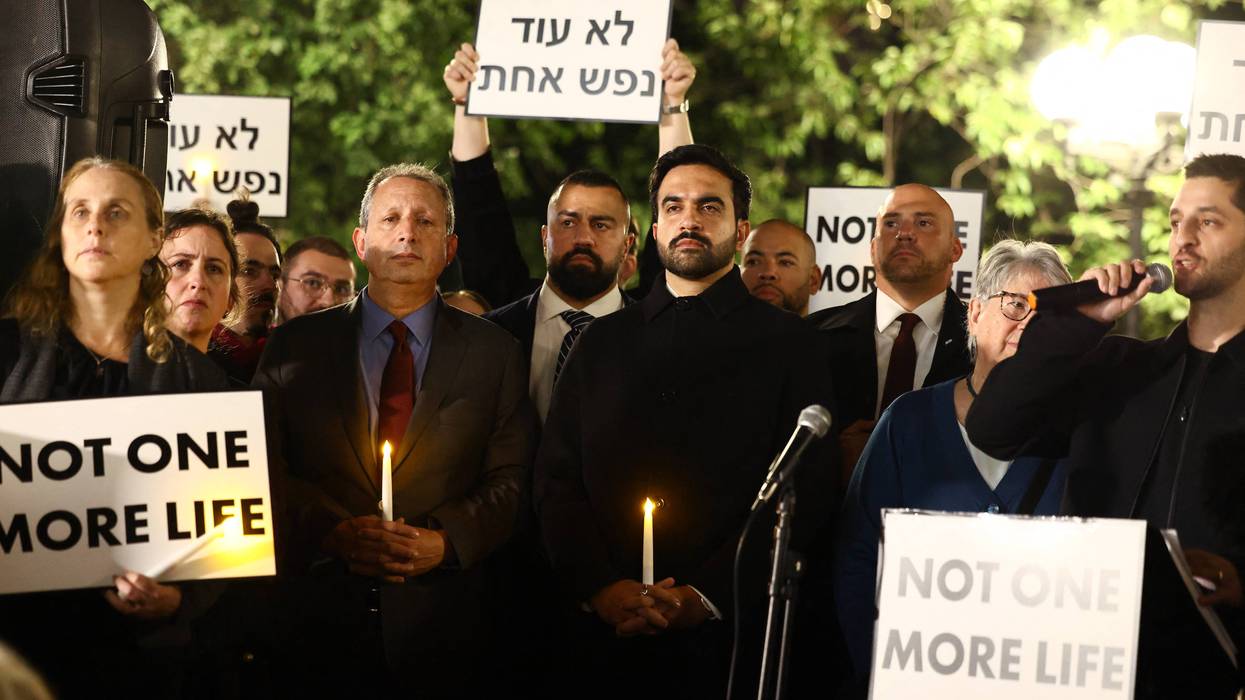
"That to me is a part of what it means to believe in a sense of humanity, that we need not choose between which death we will mourn and which we will ignore."
New York City Mayor Zohran Mamdani said during a press conference on Thursday that "there must be room to mourn" both the Israelis killed during the Hamas-led October 7 attack three years ago and the Palestinians killed in the Israeli government's subsequent genocidal assault on Gaza.
“I believe that there must be room to mourn every single life," said Mamdani, echoing the sentiment he expressed in a statement 24 hours earlier marking the three-year anniversary of the October 7 attack—and the start of Israel's military response.
At Thursday's press conference, a reporter noted that Mamdani "got it from both sides yesterday," referring to criticism the New York City mayor received from both pro-Israel and pro-Palestinian voices in response to his statement. Mamdani's statement described the Hamas-led attacks as "horrific war crimes" and the Israeli government's response as a "devastating, ongoing genocide."
Asked if he "made any missteps that inflamed tensions" and whether he would, in hindsight, alter the language of his statement or decide against attending a vigil hosted by the anti-occupation group Israelis for Peace—where the mayor faced jeers from protesters accusing him of complicity in genocide—Mamdani responded: "There must be room to mourn the lives of the more than 1,100 Israelis that Hamas killed there years ago. There must be room to mourn the 74,000 Palestinians that the Israeli government has killed since."
"There must be room to reckon with the ways in which so many New Yorkers' lives have been shattered," he continued. "And that to me is a part of what it means to believe in a sense of humanity, that we need not choose between which death we will mourn and which we will ignore. That we can reckon with the fact that all of it is to be opposed."
Video footage from the Wednesday night vigil shows Mamdani standing expressionless alongside Brad Lander, a Democratic congressional candidate who is Jewish, as protesters shout at the mayor, calling him a "traitor."
Lander, the former New York City comptroller, told reporters that protesters at the vigil sometimes drowned out the reading of testimony from loved ones of people killed in the October 7, 2023 attack and in the Israeli government's assault on Gaza.
“From where I sit, Mamdani is a very strong supporter of Palestinian freedom and human rights,” said Lander. “I don’t know what world leaders have done more.”
During his press conference on Thursday, Mamdani said of those protesting him, "This is what I signed up for."
Mamdani is stone-faced as the protesters call him a traitor and sellout. https://t.co/oXducpYsMR
— Peter Sterne (@petersterne) October 8, 2026
Mamdani also faced hysterical backlash from pro-Israel members of his party. Rep. Dan Goldman (D-NY), who lost to Lander in the Democratic primary for New York's 10th congressional district, denounced Mamdani's statement as "reprehensible" and declared that it would "offend and further upset those same people he pretends to grieve with."
Rep. Debbie Wasserman Schultz (D-Fla.) falsely accused Mamdani of "desecrating the memory of murdered, innocent Jews" and "refusing to even condemn Hamas."
Mamdani didn't back away from his criticism of the Israeli government in response to such attacks.
"The Israeli government used and continues to use that day, those war crimes, as a justification for an ongoing genocide against Palestinians," Mamdani told reporters on Thursday. The mayor also stressed "our federal government's complicity in funding so much of the weaponry" that has been used by the Israeli military in Gaza.
"We have to extend human rights to all people," said Mamdani, "and that has to include Palestinians."
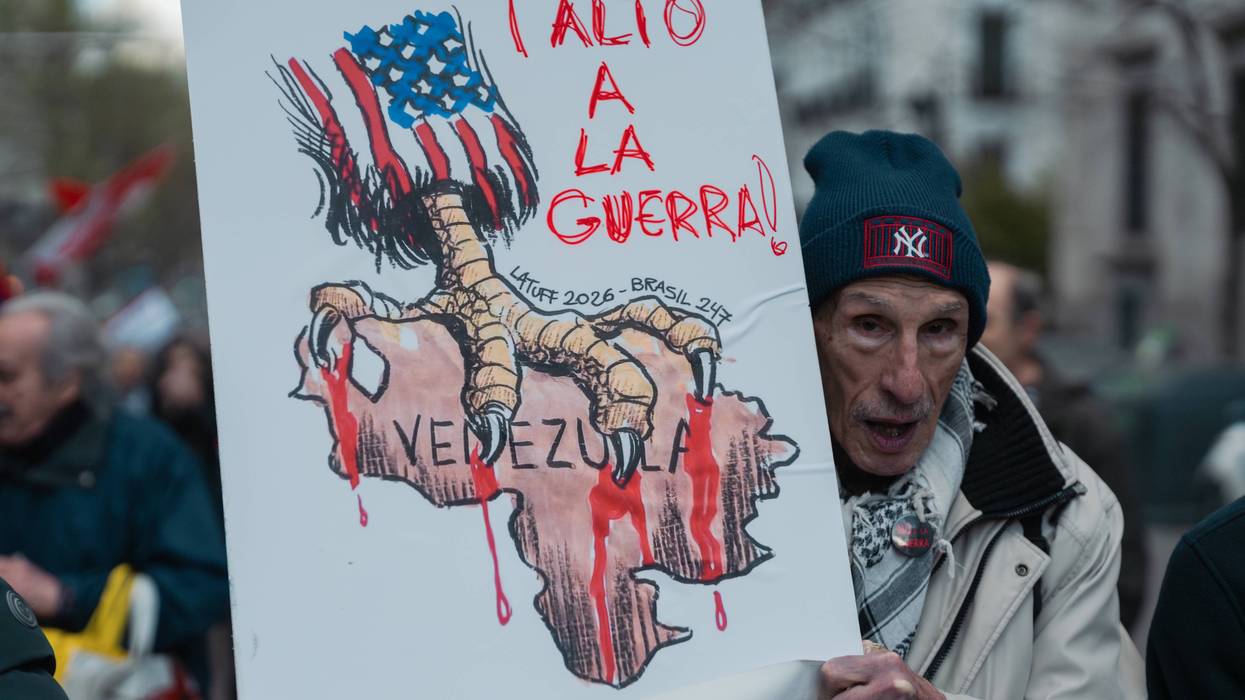
The indictment claims he and others "presided over a system of repression that relied on violence against political opposition, arbitrary detention, and the torture of detainees, including United States citizens."
Former US President George W. Bush, Vice President Dick Cheney, and officials in their administration were never prosecuted for the torture that was infamously part of their global War on Terror, but the United States on Thursday hit deposed Venezuelan leader Nicolás Maduro and his wife, Cilia Flores, with a conspiracy to commit torture charge.
The couple has spent months in Brooklyn's Metropolitan Detention Center since being abducted from the Venezuelan capital, Caracas, in early January by American forces, at the direction of US President Donald Trump—who is now controlling the South American country's oil industry. They have pleaded not guilty to previous federal charges, including narco-terrorism conspiracy. Their joint trial in the Southern District of New York is scheduled for June.
As CNN previewed late Wednesday, the superseding indictment released Thursday alleges that, "to undermine Venezuelan democracy and entrench themselves in power," the couple and other leaders "presided over a system of repression that relied on violence against political opposition, arbitrary detention, and the torture of detainees, including United States citizens."
"That torture included electric shock, asphyxiation, rape, forced nudity, prolonged isolation, starvation, punishment cells, and psychological torture, such as threats to harm and kill victims' families, including children," the filing says. Maduro, now 63, "presided over this system of repression and torture, commanded the law enforcement and military units and officers responsible for committing torture, ordered that particular individuals be illegally detained and tortured, and received updates on the torture of specific prisoners."
CNN noted that "Maduro's lawyer is challenging the legality of the arrest and argues the former president should have immunity since the alleged conduct occurred while he was in office. The Venezuelan government is not joining in claiming immunity on his behalf, according to the prosecution."
The updated indictment also claims that Flores, a 69-year-old former National Assembly president and attorney general, "helped develop this system of repression and ordered that individuals be tortured to protect her family members' illegal activities."
As Trump carries out a murderous bombing campaign against boats allegedly trafficking drugs that experts have denounced as blatantly unlawful, US Attorney General Todd Blanche wrote on social media Thursday that "these additional charges reflect the dedication of this administration to delivering justice for the victims of torture, narcoterrorism, and organized crime."
According to The Associated Press, "A message seeking comment was sent to Maduro's lawyer; Flores was in court for a previously scheduled hearing, where her attorney said he hadn’t yet had time to review the new allegations."
At that hearing, her attorney sought to move her from the Brooklyn jail to house arrest, citing health issues. However, US District Court Senior Judge Alvin Hellerstein, an appointee of former President Bill Clinton, denied that request, determining that Flores was a flight risk.
Meanwhile, Cheney died last year, at the age of 84, and 80-year-old Bush recently marked the 25th anniversary of the September 11 terrorist attacks with a new series of paintings. Shortly before that, in late August, the US Court of Appeals for the 4th Circuit dismissed a historic verdict against military contractor CACI Premier Technology for torture at Abu Ghraib in Iraq.
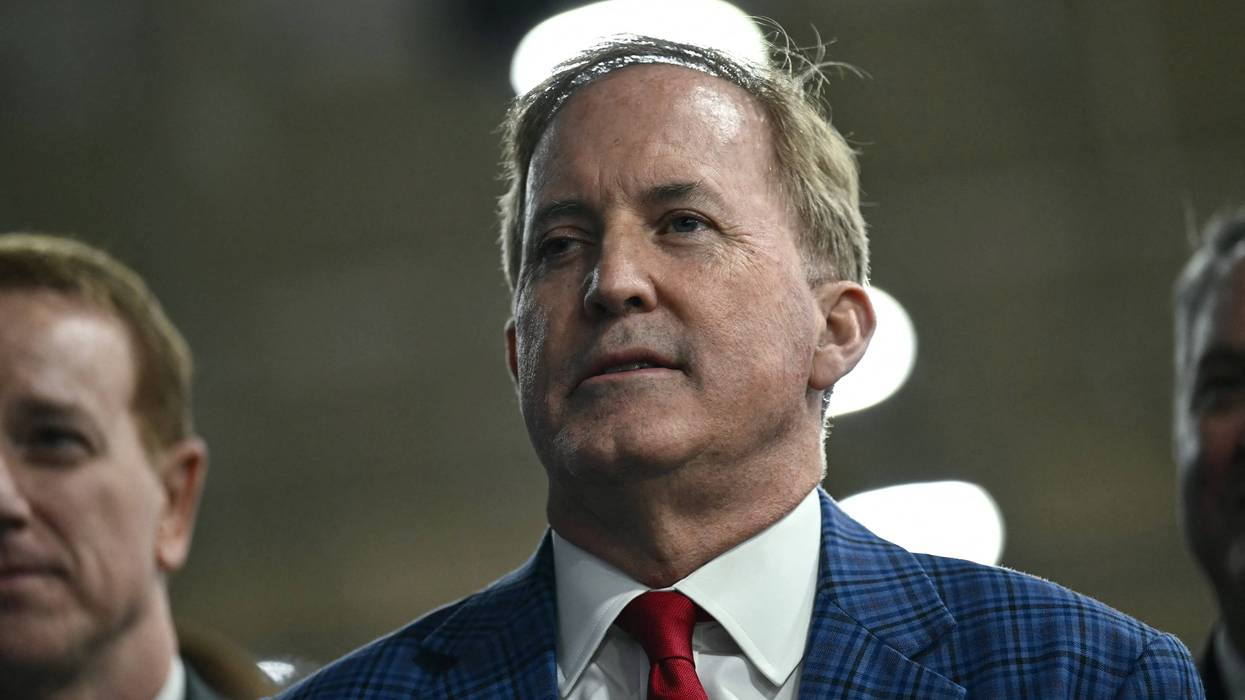
“This is a sick man who thinks it’s a joke to push over a million Texans into poverty by stealing their hard-earned benefits."
Ken Paxton, the Republican Party’s nominee for the US Senate in Texas, expressed a willingness to cut programs such as Social Security in a leaked recording published by The Texas Tribune on Thursday.
In the recording, which was made during a private meeting with donors and lobbyists last month, Paxton said he'd target "mandatory spending" programs—which include Social Security, Medicare, and Medicaid—when asked about addressing the US fiscal deficit.
“Making some reasonable cuts to mandatory spending—you’re gonna have to do it," Paxton said. "Or there is no solution. That’s just the reality. We have to suck it up."
BREAKING: Even more leaked audio of a secret Ken Paxton meeting just revealed him advocating for cutting Social Security and Medicare — while laughing with lobbyists about cutting their taxes. This guy is genuinely evil. https://t.co/tvl829v5CD
— Democratic Wins Media (@DemocraticWins) October 8, 2026
The Texas attorney general, who is currently locked in a tight electoral battle against Democrat James Talarico, ruled out tax increases to close the fiscal gap and said he'd back cutting taxes even further.
When lobbyist Jeanne Haggerty told Paxton that she'd "really like to pay my fair share of taxes, which is less than I’m paying right now," Paxton replied, "I'm with you on that," adding that "I think tax cuts will actually generate more revenue."
Paxton's claim flies in the face of decades' worth of evidence showing showing tax cuts result in less revenue for the federal government.
In a statement given to The Texas Tribune, Paxton denied that he planned to support cuts to Social Security or Medicare, even though those two programs make up the bulk of mandatory spending.
“We have to solve the national debt while keeping the promises we made to everyone who paid into these programs,” Paxton said. “The fake news keeps spinning the same cherry-picked audio to mislead Texans and take my words out of context. I have never said I would take away entitlements from those who deserve or earned them.”
The social media account of the Texas Democratic Party pounced on Paxton's leaked remarks.
"Paxton is literally laughing with lobbyists while talking about cutting Social Security and healthcare for Texans," the Texas Democrats wrote. "This guy is just plain evil."
Alex Lawson, executive director of Social Security Works, delivered a similarly scathing assessment of the Texas Republican.
"This is a sick man who thinks it’s a joke to push over a million Texans into poverty by stealing their hard-earned benefits," Lawson said. "This is a man who should not be allowed anywhere near the levers of power, since clearly he thinks working people are a joke to be laughed at with the billionaire donors he works for."
This is now the fourth leaked recording of Paxton to emerge in recent weeks. Prior recordings have featured the Texas Republican complaining about President Donald Trump's Dallas midterm convention and his illegal war with Iran hurting his campaign, as well as griping about a lack of control over his own campaign's messaging.

"He thinks he can use my name and my faith to distract us from the suffering his policies are inflicting on us at the pump, at the grocery store, and at the doctor's office."
After President Donald Trump launched yet another hateful attack on Abdul El-Sayed's name and Muslim faith, the Democratic Michigan US Senate nominee on Thursday accused the Republican of trying to distract voters from the cost-of-living crisis caused by GOP policies.
"He knows my name is Abdul. He says it every day," El-Sayed said in a social media post. "But he's not just attacking me. He's attacking all of us. He thinks so low of us."
"He thinks he can use my name and my faith to distract us from the suffering his policies are inflicting on us at the pump, at the grocery store, and at the doctor's office," the 41-year-old physician added. "He thinks we don't know any better. It's time for change."
Trump's latest bigoted broadside against El-Sayed came Wednesday on the president's Truth Social network, where he called the Democrat a "RADICAL Extremist, Terrorist Sympathizer" and repeatedly referred to him as "Mohammed." Trump also claimed that El-Sayed "goes back to the days of the Jihad."
The president also affirmed his "COMPLETE AND TOTAL ENDORSEMENT" of El-Sayed's Republican opponent, former Congressman Mike Rogers.
El-Sayed, a former Wayne County health director, won the Democratic nomination in August and, if elected next in next month's midterms, would be the first Muslim to serve in the US Senate.
Trump's latest comments are part of an escalating campaign against El-Sayed that is often more focused on his Muslim faith rather than his policy proposals.
Last month, the president posted side-by-side photographs of himself and First Lady Melania Trump and El-Sayed and his wife, Dr. Sarah Jukaku, under the misspelled caption "Two VERY DIFFERENT America's." The post was condemned by the Council on American-Islamic Relations as "racist and bigoted."
Trump has also falsely accused El-Sayed of hating Jewish people.
The attacks echo Trump's long record of anti-Muslim rhetoric and are, critics allege, partly meant to deflect attention from the failure of Republicans to deliver results for working people and the betrayal of the president's promises of no new wars and lower consumer costs.
"I invite the president to focus on what I'm saying," El-Sayed previously said. "I want to get money out of politics, put money in your pocket, and pass Medicare for All."

Protests across Europe have focused on education cuts, while a Gen Z-led movement has spearheaded demonstrations over voting rights in India.
"We are going to sweep away the old world," said the deputy of the French National Assembly on Thursday, highlighting a rapidly growing global protest movement, largely led by students and young people, against austerity measures.
Clémence Guetté, a member of the left-wing French party La France Insoumise, or France Unbowed, added that "the youth wants to change everything," posting on social media a video of a massive demonstration in Paris—just one of several cities across France where students have led more than 250,000 people in protests demanding education funding and decrying cuts in the proposed 2027 national budget.
But Guetté noted that while France's growing protests—and the violent response of the police—have captured international attention, with thousands of people demanding the resignation of President Emmanuel Macron in Place de la Bastille, Paris on Thursday, the movement against austerity and corrupt governance has spread across Europe and is also gaining traction across Latin America and South Asia.
"The youth of the world are rising up," said Guetté.
The protests against education cuts, dilapidated school buildings, and crowded classrooms in France began in mid-September in lower-income Parisian suburbs before spreading nationwide.
As they have shown no sign of slowing down, thousands of miles away in India, the Generation Z-led Cockroach Janta Party (CJP)—so named because the chief justice of the Supreme Court derided unemployed young people as "cockroaches" this year—has spearheaded calls for the resignation of the country's top Election Commission official.
The Election Commission has been accused of an illegal purge of voters over its “special intensive revision” of voter rolls, which has included removing more than 130 million names.
The CJP initially took to the streets over the summer to demand the resignation of the Indian education minister, due to leaks of the country's medical school entrance exam, which had delayed university admissions for millions of students and forced them to retake the intense exams. CJP organizers said the scandal has led to the suicides of more than 20 students.
Those protests were ultimately successful in forcing Education Minister Dharmendra Pradhan out of office.
Thousands of supporters joined a demonstration in Bengaluru on Thursday as the CJP condemned the detention on Wednesday of politician Rahul Gandhi, a leader of the opposition against Prime Minister Narendra Modi, as well as other protesters.
Leaders of the mass protest movement on Thursday rejected allegations that the protests, which have also been met with violence from police, are "destabilizing the country."
"When you declare living people as dead [on voter rolls] for your political gains, that is destabilizing the country," said one organizer.
When you declare living people as “Dead” for your political gains, that is destabilising the country. https://t.co/FZTPkKgBJk
— Cockroach Janta Party - CJP (@Cockroachisback) October 8, 2026
As Common Dreams reported Wednesday, Spain residents have also been inspired in recent days to take to the streets by the tens of thousands following the eviction of María del Carmen Abascal Martín, an 87-year-old woman who died this week before she was able to return home, as the demonstrations over housing justice were underway.
After Maricarmen's eviction on September 23, the Spanish Socialist Workers’ Party, led by Prime Minister Pedro Sánchez, announced new rental regulations and protections for vulnerable tenants, but lawmakers rejected the package. Sánchez responded by dissolving the legislature and calling for snap elections in November.
Meanwhile, tens of thousands of people have marched in Madrid, Valencia, and other cities to demand a general strike and affordable housing across Spain, where the average rent has doubled over the last 10 years.
More than 1,000 people have set up encampments at Puerta del Sol in Madrid and Plaza Catalunya in Barcelona, saying they will not leave until the government takes concrete steps to protect tenants.
🇪🇸 Maricarmen Abascal, the 87-year-old woman whose eviction sparked housing protests in #Spain, has died, Madrid's tenants' union said on Wednesday.Abascal became a symbol of Spain's housing market on September 23 when she was evicted from her life-long Madrid home on a stretcher after the real estate firm that owned the apartment drastically hiked the rent.
— FRANCE 24 English (@France24_en) October 8, 2026
In Chile, student unions led protests last week against proposed education cuts in the country's 2027 budget, put forward by conservative President Jose Antonio Kast. Chilean national police blocked people from marching through Santiago last Thursday toward La Moneda presidential palace, with officers firing water cannons and tear gas at the crowd.
According to the undersecretary of the interior, at least 17 people were arrested, and Kast condemned the protests.
One commentator on the social media platform X called on the public to connect "the dots on these Gen Z protests."
Across the globe, they said, "young people can't get hired. Can't afford rent. Can't afford a house. Can't see a future."
"The streets are the only place left," they added. "This is going global."
Another recent entry into the international protest movement came last week in Belgium, where students in Liège were reportedly directly inspired by the France protests to speak out against rising education costs and overcrowding in schools.
The city's main train station was temporarily closed on Thursday and traffic was disrupted, and more than 100 protesters were arrested.
“We support each other because we’re facing pretty much the same issues,” Alfred, a 19-year-old student, told Reuters of the connection between the Belgian and French unrest.
Students in Italy, Ireland, and Germany have also called for protests over soaring university costs and government disinvestment in education, particularly as worldwide energy costs have gone up due to the US-Israeli war on Iran.
In Rome and Turin, high school students began occupying their schools on Monday under the slogan, "Let's do as in France."

One American journalist, who has covered Israeli settler violence in the West Bank, called Huckabee aide David Milstein "a literal traitor."
A top aide to Mike Huckabee, the US ambassador to Israel, is being called a "traitor" following revelations that he manipulated embassy reports to portray the government of Prime Minister Benjamin Netanyahu in a positive light, including covering up a report about nine US citizens killed by Israeli settlers and security forces in the West Bank.
Previous reporting by Responsible Statecraft has exposed how the aide, David Milstein—the stepson of right-wing radio host Mark Levin, a close friend of both President Donald Trump and Netanyahu—had instilled what State Department officials described as a culture of fear surrounding any information that portrays Israel negatively.
This included suppressing reports of massacres of Palestinian aid-seekers by Israeli soldiers at sites run by the Gaza Humanitarian Foundation, removing content critical of Israel from official press statements, confronting and pushing for the firing of colleagues he viewed as insufficiently pro-Israel, and advocating for the State Department to refer to the West Bank as "Judea and Samaria," a name preferred by Israelis seeking to annex the territory.
Based on discussions with 15 people who work with Milstein in Washington and Jerusalem and several internal cables and memos, The New York Times revealed on Thursday that the senior aide has gone even further than previously known.
In March, Sen. Chris Van Hollen (D-Md.) and 30 other senators requested that the State Department press Israel to provide details on the cases of nine Palestinian Americans killed in the West Bank since 2022 by Israeli settlers and security forces.
One of them, 19-year-old Nasrallah Abu Siyam, had been fatally shot the previous month while trying to stop settlers from stealing livestock from his West Bank village.
Embassy officials compiled a report on the status of Israel's investigations into Siyam's killing and the eight others. According to the Times:
Its central findings suggested that, in most cases, investigations had made little progress, that some cases had been closed, and that no one had been charged in any of the killings, these officials said.
Instead of forwarding the report, Mr. Milstein argued that the embassy should send a letter saying that Israel was properly handling the investigations, two officials briefed on the discussions said.
On May 4, Paul D. Guaglianone, a State Department official, sent a letter responding to Mr. Van Hollen, saying that the embassy, which had reduced staff because of the Iran War, was focused on security cooperation with Israel and protecting Americans against Iranian attacks. (The intense fighting had wound down nearly a month earlier, after a ceasefire was struck on April 8.)
The letter, provided to the Times by Mr. Van Hollen’s office, said the embassy was working with Israel to “ensure accountability for these deaths.”
The response did not reassure Mr. Van Hollen.
"If you don’t get accountability, you endanger more American citizens,” he said in a phone interview.
The Times report comes as violence by Israeli settlers against Palestinians in the West Bank, which is often backed by Israel's military and security forces, is at a historic high, according to the United Nations, and is drawing condemnation and sanctions from around the world.
As of September 18, the UN Office for the Coordination of Humanitarian Affairs had recorded more than 1,600 settler attacks causing Palestinian casualties or property damage this year—an average of nearly seven per day.
Just nine days before the Times investigation was published, the Senate narrowly voted down a resolution, introduced by Van Hollen, which would have compelled the State Department to produce an unclassified report on Israeli abuses in the West Bank, including the killings of the nine Palestinian Americans.
The resolution specifically requested that the department turn over all credible information it possessed on these killings within 30 days.
 Palestinians attend the funeral of Nasrallah Abu Siyam, who was killed after Israeli settlers opened fire during a raid on the town of Mukhmas, northeast of East Jerusalem, on February 19, 2026. (Photo by Issam Rimawi/Anadolu via Getty Images)
The Times also showed that Milstein had actively undermined Trump's own policy. In March, as Israel approved a record number of new settlements at a time, staff members at the US Embassy in Jerusalem prepared an urgent report warning that it could be a prelude to Israel's full annexation of the West Bank. This would fly in the face of not just international law, but also Trump's own public position opposing a formal Israeli takeover of the occupied territory.
The Times reported that Milstein stopped the report from ever making it to Washington.
He also reportedly prevented the drafting of another report in April warning that the dramatic expansion of settlements could spark a Palestinian uprising. In another cable, Milstein praised Netanyahu for his “unprecedented new initiatives to combat” rising violence in the West Bank.
This characterization starkly diverges from a UN Human Rights Office report written in February, which found that the Israeli government and military had played a central role in facilitating settler violence—including by arming settlers, providing equipment and policing powers, participating in attacks alongside them, and routinely failing to hold perpetrators accountable.
Huckabee—an evangelical Zionist who believes Israel has a biblical right to the West Bank and openly supports Israeli settlement expansion—vehemently defended Milstein and lambasted The New York Times' reporting.
"The NY Slimes w/ cowardly 'anonymous sources' did a hit piece on David Milstein," he wrote on social media. "I personally and categorically refute the elements of your proposed ‘story’ and I’m surprised that you expect to be taken seriously with such nonsense without even one named source."
The State Department responded to the report by telling the Times that “the entire team at State remains focused on advancing President Trump’s America First agenda.”
But critics have described Milstein's actions as anything but "America First."
"NYT reports that a Huckabee top aide is a literal traitor, actively covering up Israeli killings of American citizens and falsifying embassy reports about Israel’s role in settler violence," said Jasper Nathaniel, an independent American journalist who has reported extensively on attacks against Palestinians from the West Bank.
Matt Duss, the executive vice president of the Center for International Policy and a former foreign policy adviser to Sen. Bernie Sanders (I-Vt.), said that if a Democratic Congress is elected in November, it "should investigate further how Milstein suppressed information and stonewalled congressional inquiries into the murder of American citizens, if he’s not fired by then, which obviously he should be."

"Candidates should seek support from the AI industry at their own peril."
Polling data released Thursday shows that American voters in several key states view campaign cash from the artificial intelligence industry and Big Tech CEOs as more politically poisonous than donations from the American Israel Public Affairs Committee, Wall Street executives, and cryptocurrency firms.
The poll from Data for Progress and Guardrails Action, an advocacy group that supports strong AI regulations, surveyed more than 3,000 likely voters in Iowa, Michigan, and Ohio and found "a battleground electorate that is skeptical of the AI industry across party lines, wants guardrails against its harms, and treats AI money in politics as a red flag."
Around 85% of surveyed voters in the three states said they were either very or somewhat concerned about AI companies and tech executives "spending money to influence" the 2026 midterm elections. By comparison, roughly 72% of voters in Iowa, Michigan, and Ohio expressed concern about AIPAC cash, which has become increasingly toxic amid Israel's genocidal assault on Gaza.
"This polling bears out what we have been saying all year: Candidates should seek support from the AI industry at their own peril,” said Shaunna Thomas, executive director of Guardrails Action. "What took AIPAC and the NRA years has been accomplished by the AI industry in just a few months. Candidates who sought support from corporate AI super PACs may find that support to be a huge liability in November."
Super PACs with ties the two leading AI firms in the United States, OpenAI and Anthropic, have spent more than $55 million so far on 2026 races, backing both Republicans and Democrats. Rep. Greg Casar (D-Texas), the chair of the Congressional Progressive Caucus and an outspoken supporter of strict AI regulations, has called on all of his fellow Democrats to reject campaign cash from AI industry billionaires and predicted that AI industry cash would soon be "as toxic as AIPAC."
The new polling out Thursday shows that roughly three-quarters of voters in Iowa, Michigan, and Ohio "would be less likely to support a candidate who receives funding from super PACs backed by AI companies or their executives, including about 3 in 5 Republicans."
The survey also shows that voters "take AI seriously as a force that will reshape the country, and they are skeptical that the people building it have their interests in mind," Guardrails Action and Data for Progress write in a memo.
"About 3 in 5 agree AI could eventually pose a risk to the survival of humanity (65%, 61%, and 60%), including a majority of Republicans (59%, 60%, and 54%)," the groups observed. "And a similar percentage in all three states believe AI is a threat to American democracy, though by slightly smaller margins."
Thomas of Guardrails Action said Thursday that "voters understand that the billionaires controlling this technology aren’t looking out for us, they’re only interested in accruing more money and power for themselves."
"Americans are deeply concerned about what AI will do to our society and who controls this unprecedented technology," said Thomas. "People are looking for commonsense guardrails on AI and we are seeing broad support for a wide range of policy proposals to regulate it."
The survey shows that voters across the three states support regulating AI development and taking action to mitigate the economic impacts of the technology. Around three-quarters of survey respondents said they support a "guaranteed jobs program" for Americans laid off due to AI and a system that would guarantee healthcare to everyone who loses their job due to AI advancements.

"She was so desperate for me to send that $100,000, she said, 'If you do this for me... I will be your ride or die in Trump World."
A former Republican congressional candidate and donor to President Donald Trump's campaign went on the record Thursday to level allegations of corruption against Kimberly Guilfoyle, the Trump-appointed US Ambassador to Greece.
Appearing on ABC News' "Good Morning America," Eric Deters said that Guilfoyle offered him access to top officials in the Trump administration if he paid off her $100,000 credit card debt.
"It was all quid pro quo," Deters said. "She was so desperate for me to send that $100,000, she said, 'If you do this for me... I will be your ride or die in Trump World."
Kimberly Guilfoyle, the U.S. Ambassador to Greece, is facing growing ethics questions after a former Trump donor accused her of offering access to top officials in exchange for cash. Jay O’Brien reports. https://t.co/WqkSyPxamv
— Good Morning America (@GMA) October 8, 2026
Deters' claims are backed up by text messages published on Wednesday by The Wall Street Journal, which show Guilfoyle begging him to help pay off her American Express bill ahead of her July 2025 confirmation hearing.
In the texts, Guilfoyle gave Deters pointers on how to help her without leaving a paper trail, informing him that the payment "won’t show up anywhere if you wire money to American Express."
In an interview with the Journal, Deters said that he ultimately didn't send Guilfoyle the money, as she'd made promises of favors to him in the past without ever delivering.
Among other things, the former Trump donor explained, he once offered to pay Guilfoyle $1 million in exchange for securing him an interview on Tucker Carlson's show. While Guilfoyle said she could get Carlson to agree to the interview, she was unable to convince him.
"She never came through on anything," Deters explained.
An attorney representing Guilfoyle told the Journal that she disputed the authenticity of the text messages with Deters, but declined to provide any specifics.
US Secretary of State Marco Rubio, who is currently in Greece, refused to comment on the corruption allegations when asked by reporters on Thursday.
"Our job is not to respond every time somebody gives the media something without any advanced warning, without any chance to look at it," Rubio said. "That's not the way you run an organization, and that's not a serious way to conduct the policy of our country. So I'm not going to comment on a story that literally posted a few hours ago."
Rubio bristled at questions about WSJ’s Guilfoyle story before departing Greece. “I’m not going to comment.” Video via @ralexdc https://t.co/MLy2rcihdJ
— John Hudson (@John_Hudson) October 8, 2026
Rep. James Walkinshaw (D-Va.), a member of the House Oversight Committee, wrote in a Wednesday social media post that Guilfoyle's efforts to hide elicit transactions was doomed to failure.
"The Trump cartel can't hide this," Walkinshaw wrote. "Corruption leaves a paper trail. It’s time to Investigate every message and dollar."
Democracy Defenders Action co-founder Norm Eisen, who served as US ambassador to the Czech Republic under President Barack Obama, expressed astonishment at the Guilfoyle texts.
"I was an ambassador myself and I've never seen anything like this," Eisen wrote. "She denies it, but you can smell this one from Athens!"
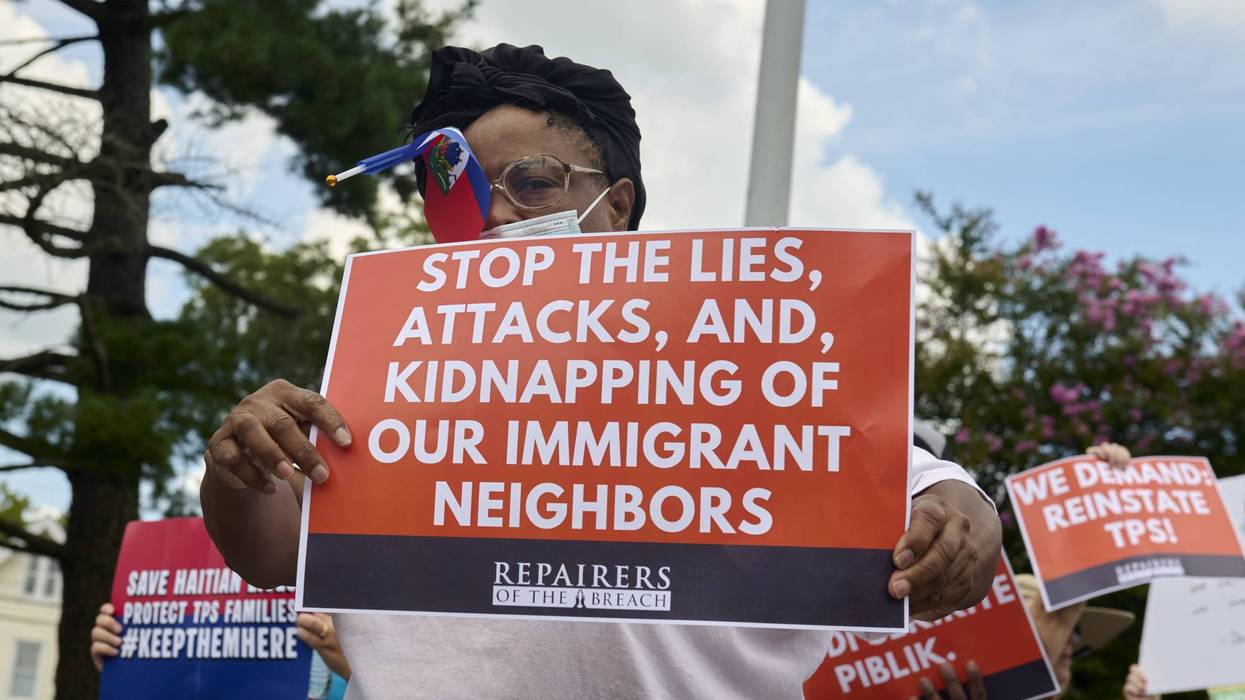
Since being deported, Ahmed Soliman "has been confined under armed guard, assaulted, held at gunpoint, and, most recently, arrested, hooded, beaten, and held incommunicado," said the judge.
A lawyer for Ahmed Soliman, a 31-year-old Phoenix man who has been arbitrarily detained in Equatorial Guinea since April, when US immigration agents forced him onto a plane under the Trump administration's third-country deportation policy, expressed cautious optimism and relief on Wednesday after a federal judge ruled that the Department of Homeland Security must return Soliman to the United States.
"We all frankly broke into tears of relief, and hope" when the ruling in the US District Court of Arizona was handed down, Dana Camilleri, a senior attorney at Green Evans-Schroeder, told the Arizona Daily Star.
District Judge John C. Hinderaker, who was appointed by President Donald Trump, ordered DHS to "take all reasonable steps within their control" to facilitate Soliman's return to the US.
Soliman's removal to Equatorial Guinea violated his due process rights under the Fifth Amendment of the US Constitution, said Hinderaker, who said the man has faced "irreparable harm" after being "unlawfully" deported.
As Common Dreams reported last month, human rights advocates have warned that Soliman has been placed at risk of being tortured in Equatorial Guinea, where he and dozens of other people deported by the Trump administration have been held at a decommissioned hotel in Malabo.
None of the prisoners have any ties to Equatorial Guinea, which Trump paid $7.5 million in one of several secretive deals, in exchange for taking deportees whom the US is barred from sending to their home countries due to their credible fear of persecution.
Last month, Soliman was targeted for arrest in Equatorial Guinea after he spoke out about the abuse that he and others have faced at the hotel.
He has since been held "incommunicado" at a jail, despite the fact that he has not been charged with a crime.
Soliman's family in Arizona "have been left waiting, without any assurance that he is safe—or even still alive," Jesse Evans-Schroeder, another lawyer representing him, told the Star.
A video that was shared with the press last month showed armed guards pointing a gun at Soliman and another man in the hotel lobby. According to Amnesty International, after the video was shared, Soliman was taken to an overcrowded jail where he has been denied food and access to counsel.
"The unrebutted record shows that, since his removal, [Soliman] has been confined under armed guard, assaulted, held at gunpoint, and, most recently, arrested, hooded, beaten, and held incommunicado, reportedly without food or water," Hinderaker wrote in his order.
Since Amnesty, United Nations rights experts, and US Rep. Adelita Grijalva (D-Ariz.) have raised alarm about Soliman's case, DHS has been dismissive of his ordeal, sneering in one social media post that a New York Times article on the case was a "poor excuse for a sob story" and that he and another detainee, Samson Birhane, "are CRIMINAL ILLEGAL ALIENS with rap sheets a mile long."
Soliman arrived in the US when he was 4, after his family fled Egypt, where they had faced persecution due to their political activities.
He lost his immigration status after being convicted of driving under the influence in 2021. Soliman has said in media interviews that he developed substance abuse problems as he came to terms with his identity as a gay man, having grown up in a conservative household.
He served two-and-a-half years in prison after the car accident that led to his conviction. While serving his sentence, Soliman "rehabilitated himself, confronting the 'self-hatred' he said led to his addiction," the Star reported.
US Immigration and Customs Enforcement ordered his deportation in October 2025. His attorneys had won protections against his deportation to Egypt, based on his LGBTQ+ identity and his family's history there.
But under the Trump administration's third-country deportation policy and deals with dozens of governments that the White House has spent $40 million brokering, about 25,000 people have been sent to countries where they have no ties. From there, many have been sent on to their home countries, while others have been detained and faced ill treatment.
When Soliman was forced onto a deportation flight in April, he was given no opportunity to contest the decision to send him to Equatorial Guinea, where homosexuality is effectively criminalized and where authorities are known to perpetrate arbitrary detentions and torture.
A federal court ruled last month that DHS must provide deportees with meaningful notice and an opportunity to be screened for a credible fear of being sent to the third country. The US Supreme Court stayed that ruling, clearing the way for the Trump administration to continue abruptly removing people from the country, as it did with Soliman. The court is set to hear arguments in DVD v. DHS, a case challenging the third-country deportations, in December.
On Wednesday, Hinderaker gave the Trump administration's lawyers three days to provide the court with an update on its progress in returning Soliman to the US. DHS has 30 days to appeal his ruling. Soliman could still be removed to another country later, but Hinderaker ordered DHS to give him a "meaningful opportunity" for a credible fear screening.
Camilleri told The American Prospect that the legal team was "still thinking of everyone who’s confined at the hotel there and wanting to get them home."
The judge's ruling was "a great step forward, but I’m a little cautious, honestly," she said.