

SUBSCRIBE TO OUR FREE NEWSLETTER
Daily news & progressive opinion—funded by the people, not the corporations—delivered straight to your inbox.
5
#000000
#FFFFFF
To donate by check, phone, or other method, see our More Ways to Give page.
Daily news & progressive opinion—funded by the people, not the corporations—delivered straight to your inbox.

It is disheartening to see the very tools of social change activism used by the civil rights movement getting ruthlessly dismantled thanks to the self-interest and greed of politicians and corporations.
Six Decades Ago, Dr. Martin Luther King, Jr. led the March on Washington, turning the tide of public opinion and leading to the passage of the Civil Rights Act of 1964 and the Voting Rights Act of 1965.
That legacy of protest and advocacy continues today but it is under attack, which is why we must be honest and critical as we reflect on the current status of civil rights and activism in the U.S.
As always, during this time of year when we honor Dr. King’s legacy and plan to celebrate Black History Month, we see a great deal of platitudinal quotes and simplified portrayals along with an underlying tone of proverbial pats on our collective backs for a job well done, for progress.
Dr. King’s life was tragically taken in Tennessee, and now, Sen. Marsha Blackburn, representing the same state, chooses to tarnish his legacy by undermining the spirit of democracy and activism that he dedicated his life for.
As an activist and community organizer, collective action in the form of protest was Dr. King’s primary tool. What would he make of the government reprisals we see across the globe against protesters? As a gifted orator and preacher, he used his voice as a catalyst for mobilizing people and shifting culture. What would he say about the proliferation in censorship and other tactics of repression and regressive policies?
We ask these questions because by doing so we are able to pave another path toward justice and a world that truly upholds the legacy of the civil rights movement. The attacks on dissent and free speech that we are seeing today are heartbreaking, but there’s also the tremendous will of people who refuse to give up, a resilience and staying power that is reminiscent of the civil rights movement.
Increasingly, protest is becoming a less viable instrument for social change and holding powerful entities such as elected officials, police, and corporations accountable. From the persecution of Cop City protesters in Georgia to the widespread attempts to squash civil disobedience, a strategy that Dr. King came to see as the necessary tool of the oppressed, we are witnessing a crisis unfold for social change organizing.
Thanks to the lobbying power of big corporations and police unions, hundreds of anti-protest bills have been introduced in the United States since 2017 in nearly all 50 states to interfere in the long legacy of American protest, with policies ranging from dramatically increased civil fines for protesters and criminal penalties for specific forms of protest.
Last week, Sens. Marsha Blackburn (R-Tenn.), and Thom Tillis (R-N.C.), introduced S. 3492, a federal bill that would create penalties for protesters who block or “attempt” or “conspire” to block public roads and highways. The “Safe and Open Streets Act” would essentially make the long-held practice of collective action in our nation’s history a crime punishable by a fine of an unspecified amount and incarceration in a federal prison for up to five years. The pretext of safety and open streets cannot overshadow the potential abuse and selective enforcement that is inherent in this and other anti-protest legislation.
The Equity Alliance, a Tennessee-based grassroots organization that works to build Black political power and where Tequila is the CEO, finds bitter irony in the fact that Dr. King’s life was tragically taken in Tennessee, and now, Blackburn, representing the same state, chooses to tarnish his legacy by undermining the spirit of democracy and activism that he dedicated his life for.
How far have we come if more than five decades after Selma, we are seeing protesters against Cop City, a multiplex police training facility in Georgia, being charged as domestic terrorists?
But this is not unique to the United States; individual freedoms are getting abrogated across the world. Countries such as Argentina and many countries across Europe are also seeing a steady and consistent effort by their governments to prevent people from speaking up, taking action, and putting pressure on their elected officials to listen to the will of the people.
More recently, we have seen a worldwide crackdown on protests against the war in Gaza, which also runs counter to the principles that Dr. King espoused around global solidarity. A year before his death, he famously made a speech at Riverside Church in New York City entitled “Beyond Vietnam: A Time to Break Silence,” in which he not only denounced the war but also the censorship of free speech. Moreover, Dr. King sought international connections and solidarity with movements for freedom across the globe from anti-colonialist struggles in Africa to the movement for Dalit freedom in India.
The ripple effects of right-wing repressive policies that we are seeing today along with the attacks on dissent and the severe injuries caused by the overuse of “less lethal weapons” against protesters would also be deeply disconcerting to him. The violent attacks on protesters by police forces and individuals invested in upholding the status quo would likely serve as a reminder of the brutality that came upon civil rights protesters in Selma in 1965 and the violence inflicted on Black bodies by white individuals for hundreds of years. How far have we come if more than five decades after Selma, we are seeing protesters against Cop City, a multiplex police training facility in Georgia, being charged as domestic terrorists?
Defending Rights and Dissent, a D.C.-based organization that works to strengthen participatory democracy and the right to political expression and where Sue is the executive director, has been tracking the settlements from police departments in the aftermath of the 2020 Black Lives Matter uprising. Police departments from across the country have paid out over $113 million to protesters that were harmed by police. We imagine this underhanded admission of culpability would be troubling to Dr. King because, on the one hand, yes, protesters have more legal recourse than protesters had during his time, but this is yet another reminder of the unchecked power of law enforcement and the continued and disproportionate violence inflicted on Black, Indigenous, and people of color.
And yet despite all these setbacks to progress and injustice, we believe that Dr. King would have been heartened by the millions of people around the world who refuse to be silenced. This is encouraging and surely a vestige of the influence that he and so many other social change movement leaders of the past set in motion for future generations.
Realistically speaking, we know the euphemistic arc toward freedom has been more of a zigzag line across history. The struggle for freedom and belonging is part of human existence; it is an unavoidable part of life. However, it is disheartening to see the very tools of social change activism used by the civil rights movement getting ruthlessly dismantled thanks to the self-interest and greed of politicians and corporations.
This time of year as we make time to honor Black freedom fighters, we must commit to a truthful assessment of where we are in carrying the torch of justice that Dr. King set aflame for the world and recommit to reigniting it by pushing back on all attempts to repress people power.

ALEC politicians considered model policies and resolutions related to an Article V constitutional convention, so-called “woke” capitalism, school curricula, the environment, gutting regulations, and more.
State lawmakers, corporate lobbyists, and right-wing operatives got together in Scottsdale, Arizona, last week for the 2023 States and Nation Policy Summit hosted by the American Legislative Exchange Council, or ALEC. The summit—one of the largest annual gatherings of the ALEC faithful, along with the summer meeting—caps off ALEC’s 50th anniversary year.
Following its 50th Annual Meeting in July, ALEC held a formal gala on October 4 at the National Portrait Gallery in Washington, D.C., where attendees were met with protests highlighting the pay-to-play group’s “50 Years of Harm.” ALEC also organized a “50th Anniversary Policy Day” at the U.S. Capitol that featured discussions on artificial intelligence; environmental, social, and corporate governance (ESG) investment strategies; school privatization; and the “state tax cut revolution,” as an agenda obtained by the Center for Media and Democracy (CMD) details.
Meeting at the four-star Westin Kierland Resort & Spa in Scottsdale, ALEC politicians considered model policies and resolutions related to an Article V constitutional convention, so-called “woke” capitalism, school curricula, the environment, gutting regulations, and more.
Among the slate of Republican politicians and other right-wing speakers were former Arizona Governor Doug Ducey, U.S. Speaker of the House Mike Johnson (via video), former U.S. Speaker of the House Newt Gingrich, Arizona State Supreme Court Justice Clint Bolick, and many others.
ALEC prioritized its push for an Article V constitutional convention early in the opening session with multiple speakers who advocated for the radical move to rewrite our nation’s founding document.
In his address, the new House speaker (and ALEC alumnus) called the size of the federal debt “the greatest present threat to our national security” and announced “plans for a bipartisan debt commission to study and propose solutions to begin reducing our debt and putting America back on a path to fiscal responsibility.”
Johnson has long supported the Convention of States, one of the right-wing groups lobbying for state resolutions to hold a constitutional convention. The group relies on ALEC as a tool to reach state legislators to back its extreme plan to rewrite the U.S. Constitution in order to drastically curtail federal powers and lock in minority rule.
He noted that several states are considering whether to file a case against Congress with the goal being “to get a case before the Supreme Court to force the Congress to discharge its constitutional responsibilities.”
ALEC used this most recent policy summit to double down on a strategy first presented in 2020 claiming that unrelated and outdated state resolutions should be counted to meet the threshold of the 34 state calls needed to hold a constitutional convention. Using this rationale, the threshold was reached in 1979, making Congress legally required to convene a constitutional convention immediately.
U.S. Rep. Jodey Arrington (R-Texas) presented the bill he has introduced (HCR 24) to do just that, claiming Congress has “failed in its constitutional duty to count applications and call a ‘Convention for proposing Amendments.’”
“Working with my friend and our fearless leader in the House, Speaker Mike Johnson, I’m going to continue to push to pass this important legislation to stave off a sovereign debt crisis, to rein in the reckless and wasteful spending in Washington, and to return power back to the sovereign states,” Arrington said.
David Walker, former comptroller general of the U.S., discussed steps being taken to force the issue in the courts. “The Federal Fiscal Sustainability Foundation (of which I’m a board member) has financed the drafting of a declaratory judgment filing by a prominent D.C. firm with significant Supreme Court experience,” Walker explained. He noted that several states are considering whether to file a case against Congress with the goal being “to get a case before the Supreme Court to force the Congress to discharge its constitutional responsibilities. We need more states to join this effort.”
Utah State Rep. Ken Ivory (R) also called on ALEC lawmakers to urge the Supreme Court to act. “Please join us in the state of Utah as we look into the legal mechanisms that we have under the Constitution… to declare that Congress must count the applications,” Ivory implored. “And if, as we believe, we’ve already achieved 34 applications to Congress for a fiscal responsibility convention, call [it]… and hold a Convention of States.”
In a workshop titled “Article V: The People’s Voice and State’s Empowerment Tool,” ALEC lawmakers heard from “legal experts” who delved “into the merits of a Declaratory Judgment suit against Congress, specifically addressing its negligence since 1979 in calling a Convention for an inflation-fighting Fiscal Responsibility Amendment.”
Members of ALEC’s Federalism and International Relations Task Force heard a similar presentation called “Article V—Next Steps If the 34-State Threshold Was Met in 1979.”
Task force members then took a secret vote on a Resolution Demanding Congress Call the Fiscally Responsible Amendment Convention as Article V Mandated in 1979 Stipulating Ratification by State Convention, where “We the People Rule.” This resolution not only calls on Congress to hold a constitutional convention, it requires the states’ governors, attorneys general, and legislative councils “to seek judicial enforcement” if they fail to do so.
Attacks on so-called woke capitalism and sustainable investing were featured prominently throughout the summit.
ALEC’s Tax and Fiscal Policy Task Force held a discussion on “States Keeping Politics Out of Pensions” and reconsidered the Proxy Voting Integrity and Transparency Act that failed to pass at the annual meeting in July. Now that this model bill—which seeks to prevent government entities managing public pension plans from considering ESG factors when engaging in the proxy voting process—didn’t pass this time either, it’s likely dead.
At their meeting, members of the Energy, Environment, and Agriculture Task Force voted on making adjustments to the Model Policy Amending the Prudent Management of Institutional Funds Act, but it didn’t move. The changes would have prohibited the consideration of ESG factors in the management of public institutional funds.
This model is also hosted on the Heritage Foundation website, as are most anti-ESG model policies introduced at ALEC meetings over the past few years.
At the closing session, Andy Puzder, former CEO of CKE Restaurants, the parent company of the popular fast-food chains Carl’s Jr. and Hardee’s and a visiting fellow at Heritage, once again drummed up fears about ESG as a lens for investing, calling it a “Neo-Marxist investment strategy.”
Puzder has spoken at multiple ALEC meetings and drafted many of the anti-ESG bills the corporate bill mill has circulated since the summer of 2021, when it held its annual meeting in conjunction with the State Financial Officers Foundation, an association of right-wing state treasurers and other fiscal managers that is staunchly opposed to making decisions about public policy and funds based on factors such as climate change, equity and inclusion, and social justice.
At last year’s ALEC policy summit, Puzder compared the fight against ESG to his father’s generation’s fight against Nazism.
In addition to demonizing sustainable investing in his remarks last week, Puzder promoted the only anti-ESG model bill that has been approved by ALEC’s board of directors: the State Government Employee Retirement Protection Act. The bill, which he helped draft, prohibits anyone managing state, local, or university public pensions from considering the climate emergency or other social or political factors when investing pension funds.
Puzder also promoted anti-boycott bills that he refers to as “contracting legislation.” Originally called the Eliminate Political Boycotts Act but renamed at the December 2022 summit, this model bill bars companies with 10 or more employees from receiving state contracts if they take into account any “social, political, or ideological interests” to limit their commercial relations with fossil fuel, logging, mining, or agricultural businesses—and instructs legislatures to “insert additional industries if needed,” as CMD first reported.
ALEC’s board rejected the anti-boycott model due to opposition from the American Bankers Association, state bankers associations, and others.
ALEC lawmakers also considered passing The Science of Reading Act. This model bill would require all schools to adopt the “science of reading” method of instruction in place of older approaches to teaching students how to read, prohibit the use of any other reading curricula, and require all new teachers to take 80 hours of additional training “aligned with the science of reading.” The training must be “provided by an organization accredited by the International Dyslexia Association”—which offers a clue as to which special interests likely drafted the model bill, something ALEC keeps secret. This is totally at odds with the National Center on Improving Literacy, which maintains that the “science of reading” is a body of research and not “a program, an intervention, or a product you can buy.” The bill does not include language on funding.
The unfunded “science of reading” curriculum has proven to be difficult to roll out and expensive to implement for school districts in states where this new reading program is mandated by law. Education scholar Diane Ravitch argues that there is no such thing as “the science” of reading. “There are better and worse ways of teaching, but none is given the mantle of ‘science,’” Ravitch points out. “Calling something ‘science’ is a way of saying ‘my approach is right and yours is wrong.’”
ALEC politicians in the Energy, Environment, and Agriculture Task Force meeting debated An Act to Prevent Lawsuit Abuse Regarding Ethylene Oxide Emissions, which would protect medical device manufacturers and distributors from potential lawsuits that may stem from a new rule from the Environmental Protection Agency regulating emissions of the cancer-causing chemical.
ALEC lawmakers serving on the Federalism and International Relations Task Force also heard a presentation titled “Protecting State Critical Infrastructure—A National and Homeland Security Imperative” and voted on the Statement of Principles on Securing and Protecting Public Utility Infrastructure. The model legislation makes the case that protecting public utility infrastructure is a matter of both “homeland security” and “environmental protection.”
This may also suggest a renewed interest from ALEC in pushing its 2018 model policy designed to criminalize and quell environmental protests in and around fossil fuel infrastructure.
ALEC’s sister organization, the American City County Exchange (ACCE) also introduced a couple of model bills to attendees.
The Homelessness Crisis Mitigation Act would prevent cities or towns within a given county from addressing the critical needs of the unhoused “without first entering into a shared services agreement with [COUNTY] to provide said services.” This would create a significant hurdle for social service agencies and possibly prevent shelters or other temporary housing options from being offered to those in need.
The Local Taxpayer Protection Act would require the vote of two-thirds of a county legislature in order to increase property taxes, raising the threshold needed and making it more difficult for counties trying to finance policies and programs unfunded by state legislatures.
In the Commerce, Insurance, and Economic Development Task Force, members considered the Regulatory Sunset Act, which calls for any rule or regulation enacted or amended after the model’s passage to be terminated after five years and gives the legislature power to control any renewals. Regulatory agencies would have to notify the legislature a year in advance and provide a cost-benefit analysis for each regulation they wish to renew. This would create an extensive amount of additional work for state agencies and state legislatures, many of which operate part-time, and put health, environmental, workplace, and other regulations that keep Americans safe at risk of lapsing.
Other new model policies considered at the ALEC summit include:
Fossil fuel companies have contributed millions of dollars to legislators who sponsored such laws, according to a new report.
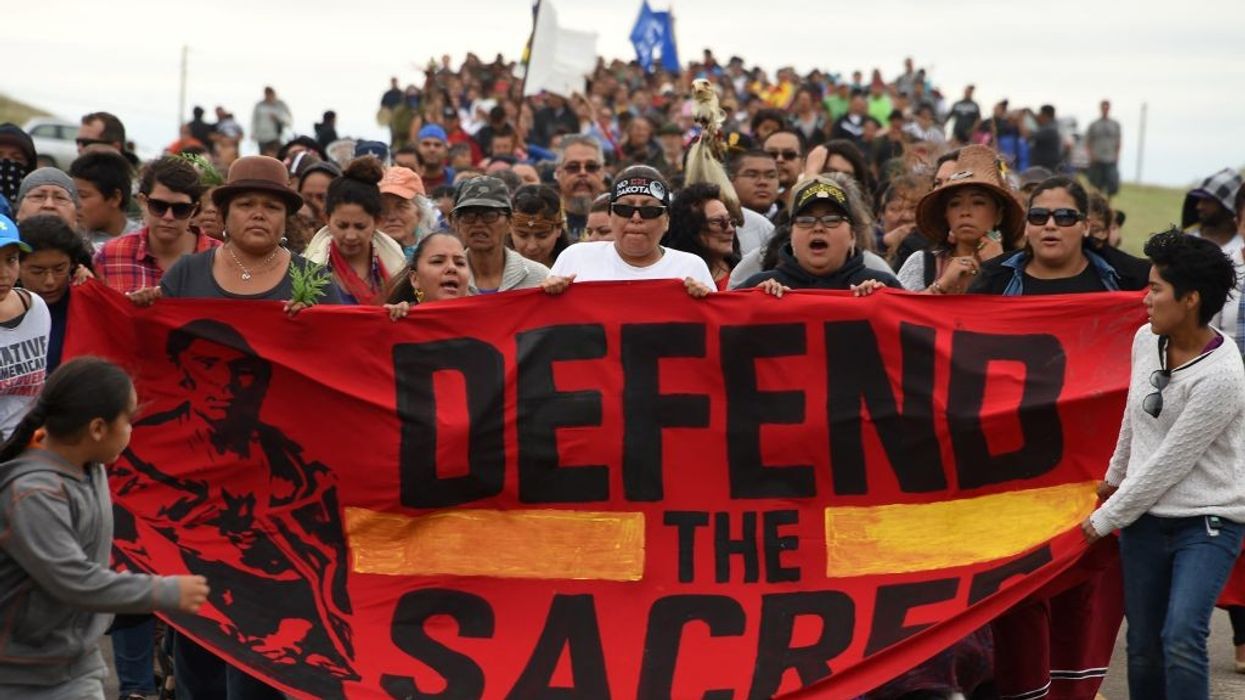
In the seven years since the massive protests against the Dakota Access pipeline at Standing Rock, the fossil fuel industry and their allies in politics and law enforcement have been hard at work to prevent a repeat: Around 60% of oil and gas infrastructure in the U.S. is now shielded by anti-protest laws that make direct action much riskier for activists and frontline communities who want to protect their local and global home from dangerous pollution, a new Greenpeace report has found.
The report, Dollars vs. Democracy 2023: Inside the Fossil Fuel Industry's Playbook to Suppress Protest and Dissent in the United States, reveals that fossil fuel companies made up nine of the 10 most determined lobbyists for anti-protest measures since 2017 and that 25 oil, gas, coal, and energy companies contributed more than $5 million to legislators who sponsored these laws.
"Our current climate emergency is a direct result of the oil and gas industry’s operations," Greenpeace USA executive director Ebony Twilley Martin said in a statement. "Frontline activists should not face extreme, life-altering legal risks for putting their bodies on the line to keep our planet habitable. Oil and gas companies are finding new and dangerous ways to delay the transition to clean energy and protect their own profits."
The oil and gas industry has played an outsize role in the spread of so-called "critical infrastructure" laws. These laws impose extra penalties for campaigners who trespass on the property of pipelines and other fossil fuel infrastructure, despite the fact that states already have anti-trespass laws on the books. In 2017, Marathon Petroleum and the American Fuel and Petrochemical Manufacturers pushed the American Legislative Exchange Council (ALEC) to adopt an anti-fossil fuel protest measure as one of its "model bills." ALEC is a shadowy network of corporations and lawmakers that prepares bill templates aligned with business interests that can be easily spread from state to state.
Since 2017, 18 states have passed critical infrastructure laws that now protect around 60% of oil and gas infrastructure, and four other states have passed slightly watered-down versions of these laws. In 2023 alone, lawmakers have introduced 23 anti-protest bills in 15 states, and four states have passed anti-fossil fuel protest laws. North Carolina passed the most draconian of the year. It classifies trespassing on an energy facility as a felony punishable with up to two years in prison and attempting to “obstruct, impede, or impair the services of transmissions of an energy facility" as felonies that carry up to 19 years in prison and $250,000 in fines. Oregon, Utah, and Georgia also passed more limited anti-protest laws.
The oil, gas, and coal industry has financed the spread of these laws: Nine of the top 10 lobbyists for these bills from 2017 to 2023 were Marathon, ExxonMobil, Enbridge, TC Energy, Koch Industries, Chevron, Energy Transfer, Williams Companies, and Valero. In addition, 25 fossil fuel companies gave $5 million to lawmakers pushing these laws, with the top five donors being Duke Energy, Dominion Energy, Marathon Petroleum, BNSF Railway Co., and Koch Industries.
"It is time to stop pretending that the fossil fuel industry is so vital to our national interest that it needs to be protected from any and all criticism; nothing could be further from the truth."
"The fossil fuel industry has lobbied for these extreme anti-protest laws to shut down criticism of them," Nicholas Robinson, senior legal advisor at the International Center for Not-for-Profit Law, said in a statement. "Climate change is an urgent challenge and all Americans, including the communities most impacted by these fossil fuel projects, have a right to have their voice heard, not silenced, at this critical moment for the planet."
Pushing anti-protest laws isn't the only way that the fossil fuel industry has tried to stifle protest. It also relies on a tactic known as strategic lawsuits against public participation (SLAPP). Almost three-quarters of the 116 SLAPP lawsuits filed since 2010 came from companies that also supported anti-protest laws, among them Energy Transfer, ExxonMobil, Murray Energy Corporation, Chevron, and TransCanada.
"We at Greenpeace USA are all too familiar with these tactics," Twilley Martin explained in a statement. "We are facing a $300 million lawsuit from Energy Transfer, the company behind the Dakota Access Pipeline. Energy Transfer alleges that we organized the massive Indigenous resistance at Standing Rock. They targeted Greenpeace as a proxy for the movement as a whole. Now, the industry is watching our lawsuit—and others—to see how effective this tactic will be in silencing protest."
Other ways that the fossil fuel industry quashes protest include having their private security collaborate with law enforcement—sometimes using physically harmful tactics against demonstrators—and by working to depict land defenders and environmental activists as radicals or terrorists.
To push back against the oil-and-gas-funded attack on protest and free speech, Greenpeace offers four policy recommendations:
"It is time to stop pretending that the fossil fuel industry is so vital to our national interest that it needs to be protected from any and all criticism; nothing could be further from the truth," Greenpeace USA senior researcher Andres Chang, who wrote the report, said in a statement. "Black, Brown, Indigenous, and low-income communities are getting hit by climate change and polluting oil and gas projects first and hardest, and their voices need to be heard, not silenced."

The first step in fighting back is to develop a shared understanding of militarization of law enforcement, stigmatization of protest, and corporate capture of government as an intertwined strategy to undermine democracy.
The fight in Atlanta over Cop City, a massive police training facility, has turned into ground zero for overlapping crises facing our country: the climate emergency, vast political and economic inequality, ever-militarizing police forces, and systemic racism.
If we want a democracy healthy enough to solve these crises, it’s worth paying attention to what is happening in the South River Forest.
On May 31, in a disturbing move shortly before Atlanta’s City Council approved more funding for the facility, Georgia law enforcement arrested three members of the Atlanta Solidarity Fund, which provides activists with legal support and bail money.
Organized bail support for activists is a longstanding tradition, exemplified by the historical precedent of churches and community groups raising funds to bail Martin Luther King, Jr. and other civil rights leaders out of jail. Now, however, the authorities are deeming such acts “money laundering” and “charity fraud.”
In reality, the fund was targeted for supporting the Stop Cop City movement, which opposes the police training facility.
“When private corporate donors are able to fund militarized training facilities for the police, they are essentially buying off the police. They are making it clear who the police work for.”
Many in the community fear the Cop City facility will be used to train police in counterinsurgency, further militarizing an already armed and equipped force. In a city with wide wealth and income disparities, more militarized policing fits into what community activist Micah Herskind describes as “the state’s retreat from the provision of social welfare and the interrelated build-up of policing and imprisonment to manage inequality’s outcomes.”
The facility is largely funded by the corporate-backed Atlanta Police Foundation (APF), whose donors include Amazon, JP Morgan Chase, Home Depot, and Wells Fargo. Militarized policing is a growing concern in the United States, and corporate-funded militarized policing raises further unease about law enforcement becoming directly beholden to corporate interests.
As local resident Brad Beadles put it, “When private corporate donors are able to fund militarized training facilities for the police, they are essentially buying off the police. They are making it clear who the police work for.”
Cop City also has adverse environmental justice effects. Building the facility will require cutting down part of an urban forest adjacent to a majority-Black, working class community.
Urban forests provide critical environmental benefits for nearby residents. They filter pollutants from the air, store carbon, and mitigate floods and the urban heat island effect. Destroying community access to nature and outdoor recreation also negatively impacts mental health, as individuals with less access to green spaces have higher prevalence of mental distress, anxiety, and depression.
Cutting down forests anywhere in an age of climate crisis is a bad idea, but doing it next to a working-class Black community is particularly egregious when there are already nationwide racial disparities in urban heat island exposure and access to greenspaces. By 2050, summer high temperatures in the Atlanta metropolitan area are predicted to be 4.1 degrees Fahrenheit hotter than they are today, making preservation of Atlanta’s tree coverage all the more imperative.
The arrests of the bail fund organizers are only one example of state repression against the Stop Cop City movement.
In a January raid on a protest encampment in the forest, police killed Manuel Esteban Paez Terán, an activist also known as Tortuguita. Police claim Tortuguita shot first, but have refused to provide proof. Results from two independent autopsies contradict the official story, raising the possibility that this was a cover-up of a “friendly fire” accident between police officers—or worse, an assassination.
Activists in the movement have also been arrested on “domestic terrorism” charges for having muddy shoes or having legal support numbers written on their arms—prosecutorial overreach with clear intent to intimidate.The state is using violence and terror to try to stamp out a movement opposing a facility meant to train law enforcement in violence and terror.
Residents of Atlanta have spoken out against Cop City. A September 2021 City Council hearing on the subject received 17 hours of testimony, with about 70% against the project. The Council approved the project regardless.
In June 2023, the Council held a hearing on approving more public funding for Cop City. This time, they heard 13 hours of testimony, with the overwhelming majority in opposition. Once again, the Council approved the funding anyway.
The criminalization of protest in Atlanta is part of a years-long trend.
In a 2020 Institute for Policy Studies report called Muzzling Dissent: How Corporate Influence over Politics Has Fueled Anti-Protest Laws, we examined state repression of oil and gas infrastructure protesters with so-called “Critical Infrastructure Protection” laws.
Similar to the Cop City project in Atlanta, the communities impacted by the oil and gas projects we studied had high levels of economic insecurity and were overwhelmingly Black, Indigenous, or poor white people. We examined pipeline resistance struggles in three different states—a Black environmental justice community in Louisiana with the highest rates of cancer in the country, an Indigenous nation fighting to protect their cultural resources in Minnesota, and impoverished Appalachian communities in West Virginia.
The fossil fuel industry is weaponizing the term “critical infrastructure protection”—which is historically associated with safeguarding infrastructure that serves a vital function for communities, such as roads and bridges—to restrict the ability of communities to protect themselves against destructive oil and gas projects.
Versions of “Critical Infrastructure Protection” legislation in Louisiana and West Virginia (which have the laws on the books), and Minnesota (where the legislature passed a bill that was subsequently vetoed by the governor), all included similar language that identified varying types of fossil fuel infrastructure as “critical infrastructure” and criminalized entering these sites with the threat of felony charges.
Many versions of the bill also held supposed “co-conspirators” of such activities liable. These types of charges criminalize participation in a group or social movement involved in protesting, which parallels many of the police repression tactics against Stop Cop City, also known as the Defend the Atlanta Forest movement.
Forest defenders who were arrested in Atlanta have often faced “domestic terrorism” enhancement charges in addition to “felony trespassing” due to their association with the “Defend the Atlanta Forest” movement, which prosecutors claim is a “criminal organization” under the Racketeer Influenced and Corrupt Organizations Act (RICO).
In Muzzling Dissent, we identified how the fossil fuel industry is weaponizing the term “critical infrastructure protection”—which is historically associated with safeguarding infrastructure that serves a vital function for communities, such as roads and bridges—to restrict the ability of communities to protect themselves against destructive oil and gas projects.
Similarly, the State of Georgia and the City of Atlanta are now weaponizing RICO, a 1970s law to prosecute violent mafia activity, against an autonomous and decentralized environmental justice movement.
“Critical Infrastructure Protection” laws are most successful in states with the most concentrated fossil fuel industry power at a time when domestic oil and gas production is at a record high.
In all three of our case studies, the “Critical Infrastructure Protection” bills were led by state legislators who took large campaign donations from oil and gas companies. In fact, the original model text for the bills was drafted by the American Legislative Exchange Council (ALEC)—a nonprofit heavily funded by the fossil fuel industry and closely tied to many of the policy makers who passed the bills.
Muzzling Dissent was ultimately an illustration of how unfettered corporate power leads to the criminalization of community resistance against wealthy, private interests. Similarly, it’s no coincidence that Cop City is being built in a heavily corporatized city.
Atlanta is also home to Coca-Cola, UPS, Delta Airlines and Home Depot—each of which are represented on the APF’s Board of Directors, with the recent exception of Coca-Cola.
Atlanta has been dubbed the “Silicon Peach” because of its position as one of the fastest growing urban technology hubs in the United States. In addition to a booming technology sector, recent tax cuts for the film industry have made Atlanta a new hotspot for high-budget entertainment studios.
Atlanta is also home to Coca-Cola, UPS, Delta Airlines and Home Depot—each of which are represented on the APF’s Board of Directors (with the recent exception of Coca-Cola, which stepped down after Color of Change exposed the corruption and controversies surrounding the foundation).
The unwillingness of the majority of elected officials in Atlanta to acknowledge the widespread opposition to Cop City is a testament to the power of the corporate-backed APF.
The recent Congressional intervention to force construction of the Mountain Valley Pipeline (MVP) is also consistent with the trend of powerful corporate interests promoting militarized state repression to protect their interests against the popular will.
Sen. Joe Manchin (D-W. Va.), the architect of the provision benefiting MVP in the debt ceiling bill, gets the most oil and gas industry money of any federal legislator. And Senate Majority Leader Chuck Schumer (D-N.Y.), who made the back-room deal with Manchin to force the pipeline’s approval, has received more than $300,000 from MVP developer NextEra Energy.
While the MVP deal does not directly criminalize dissent, it closes off regulatory and legal tools for project-impacted communities to fight back, making protest and direct action even more indispensable. It requires regulatory agencies to issue all permits for the project without going through the customary review process that projects usually have to go through, cutting communities out of intervening in permitting processes by filing comments in regulatory dockets. It also exempts permits issued to the MVP from judicial review, closing off the courts as another venue for communities to fight back.
Despite their opponents’ best efforts, Atlanta Forest Defenders have not given up on democracy.
When the so-called “proper channels” for communities to resist harmful corporate projects are made inaccessible, protest tactics are sometimes seen as the only choice left for those fighting to defend their communities. And as the crackdown in Atlanta shows, such protest tactics can lead to activists being locked up, creating a chilling effect for those engaging in dissent.
This trend is a serious threat to social movement organizing. The first step in fighting back is to develop a shared understanding of militarization of law enforcement, stigmatization of protest, and corporate capture of government—not as isolated evils, but as an intertwined strategy to undermine democracy.
In the meantime, Stop Cop City organizers are circulating a petition to put the issue before voters on the ballot for municipal elections on November 7. If the organizers collect enough signatures to put the decision on Cop City question on the ballot, voters will get to choose whether or not to lease the city-owned land for the project. Despite their opponents’ best efforts, Atlanta Forest Defenders have not given up on democracy. They are taking their case against Cop City directly to the people of Atlanta, asserting organized people power as the antidote to concentrated corporate power.
"We should not have to risk arrest and imprisonment for exercising our constitutional rights, including freedom of speech and equal protection under the law," asserted one of the plaintiffs.
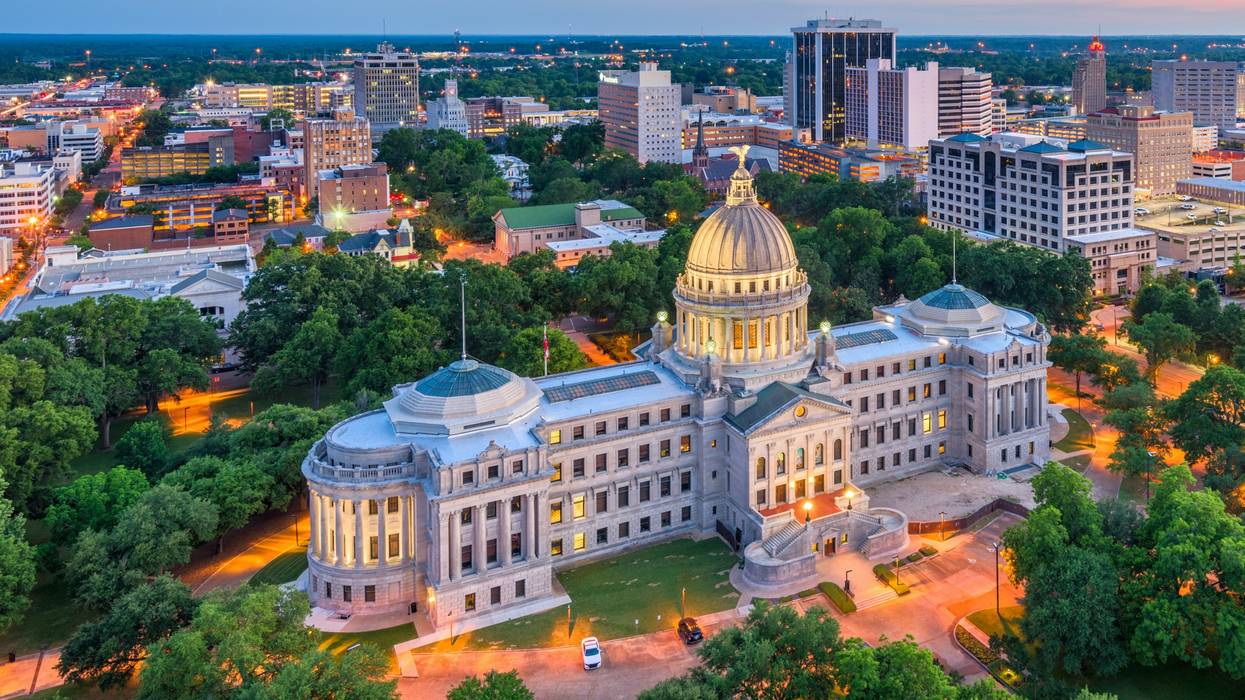
Progressive advocacy groups are suing Mississippi officials over a new state law requiring permission to hold public protests near state government buildings in the capital city of Jackson.
A lawsuit filed last week by JXN Undivided Coalition, Mississippi Votes, Mississippi Poor People's Campaign, Black Voters Matter, and a trio of activists challenges S.B. 2343, which is set to take effect on July 1. The legislation required prior approval from Public Safety Commissioner Sean Tindell or Capitol Police Chief Bo Luckey for public demonstrations on the grounds of or near state government buildings including the Capitol Complex, Governor's Mansion, state Supreme Court, and other edifices.
"The JXN Undivided Coalition and its members have for years engaged in the deeply American tradition of peacefully gathering on public property to convey to elected officials what matters most to us," the group said in a statement on Monday. "What matters most to us is the right to vote and the right of political self-determination for Jackson residents."
"We have spoken, and the state has responded with a sweeping prohibition of speech next to properties in Jackson occupied by state officials absent prior authorization," JXN Undivided Coalition added. "We should not have to risk arrest and imprisonment for exercising our constitutional rights, including freedom of speech and equal protection under the law."
According to the suit:
This year, Mississippi made peaceful protests on public sidewalks and streets next to state government buildings in Jackson without written prior permission from one of two state officials. The new law... is an unconstitutional prior restraint that does not further a constitutionally sufficient or permissible purpose. Those who peacefully protest without state government authorization and who are charged with crimes for doing so may be prosecuted and sentenced to prison. This chills protected speech.
As the Associated Press reported Monday:
Critics say the majority-white and Republican-controlled Legislature passed the laws to take away local autonomy in Jackson and surrounding Hinds County, which are both majority-Black and governed by Democrats. Supporters of the laws say they are trying to control violent crime.
Several protests have been held near state government buildings in downtown Jackson during the past year, including some in January, February, and March against the legislation dealing with courts and policing. The Poor People's Campaign held events on a street outside the Governor's Mansion last fall to protest what organizers said was the state’s inadequate investment in Jackson's struggling water system.
In recent years, numerous states have passed laws criminalizing or restricting protest activity and protecting motorists who kill or injure protesters under certain circumstances.