

SUBSCRIBE TO OUR FREE NEWSLETTER
Daily news & progressive opinion—funded by the people, not the corporations—delivered straight to your inbox.
5
#000000
#FFFFFF
To donate by check, phone, or other method, see our More Ways to Give page.
Daily news & progressive opinion—funded by the people, not the corporations—delivered straight to your inbox.
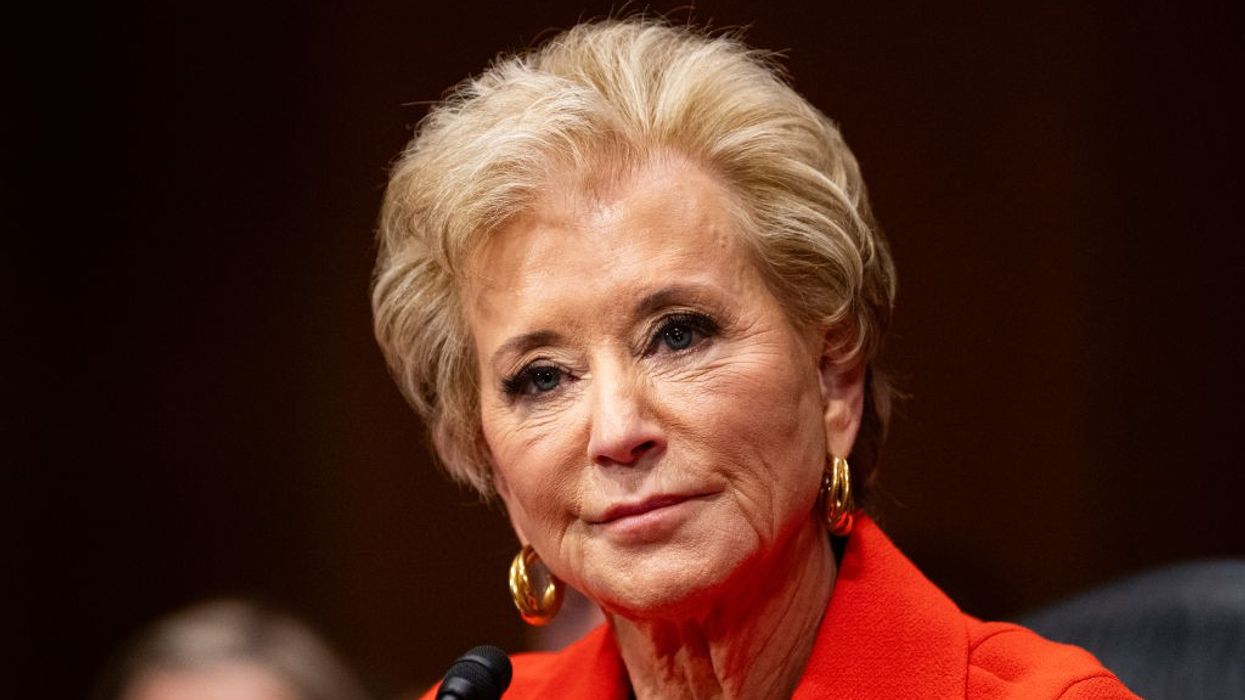
One civics education advocate said the program, which will push schools to teach history content written by PragerU, Hillsdale College, and Turning Point USA, "smacks of authoritarianism."
President Donald Trump’s Department of Education has announced that it will partner with right-wing think tanks and organizations to develop and spread what it claims is “patriotic education”—but which critics worry is nothing less than ahistorical propaganda—in American "schools across the nation."
Earlier this week, the Trump administration redirected $137 million initially meant for programs aimed at minority students toward what it described as "American history and civics education."
Education Secretary Linda McMahon announced Wednesday that the money will be directed toward discretionary grants aimed at K-12 schools alongside the announcement of new civics curriculum and programs being drawn up by the 250 Civics Education Coalition—a consortium of more than 40 right-wing groups. The goal, McMahon said, was to advance education that "emphasizes a unifying and uplifting portrayal of the nation's founding ideals" in advance of the nation's 250th anniversary in 2026.
It is not Trump's first crack at instilling the nation's youth with a "patriotic education." In the waning days of his first term in office, Trump unveiled the 1776 Report, which, education columnist Jennifer Berkshire recently noted in The Baffler, "was widely panned by actual historians for its worshipful treatment of the Founding Fathers, its downplaying of slavery, and its portrayal of a century-old 'administrative state' controlled by leftist radicals."
While little has been publicized yet about what McMahon's new endeavor will look like in practice, it is known the kinds of people and organizations who will be crafting it. The civics initiative is being led by the America First Policy Institute, a MAGA-aligned think tank that has been responsible for staffing Trump's second administration and has received over $1 million from his political action committee, the Save America PAC. Until 2023, McMahon herself served on the board of AFPI.
In 2022, the group presented a piece of model legislation for a "Civics Course Act" to be introduced in states. It included requirements for students to spend ample time studying the nation's founding documents and figures while banning the teaching of what it called the "defamatory history of America’s founding," which suggests that slavery or inequality are in any way inherent to the nation's institutions.
It also banned the concepts of "systemic racism" and "gender fluidity" and forbade teachers from giving students course credit for engaging with "social or public policy advocacy."
Also included in the coalition is Hillsdale College, a private Christian liberal arts school in Michigan that has proposed its own K-12 curriculum, which Vanity Fair notes "has been criticized for revisionist history, including whitewashed accounts of US slavery and depictions of Jamestown as a failed communist colony."
Another participant is PragerU, the overtly partisan and often factually loose YouTube channel that has been tasked with creating children's educational content in nearly a dozen red states.
The group has produced content venerating figures notorious for practicing slavery, like colonist Christopher Columbus and Confederate Gen. Robert E. Lee. Its videos have argued, among other things, that climate change is a myth, that European fascism was a "far-left" ideology, and that Israel has "the world's most moral army."
The pro-Trump youth group Turning Point USA will also be involved in crafting the curriculum. Its longtime leader, Charlie Kirk, who was assassinated in Utah last week, went on a crusade last year to, in his words, "tell the truth" about Martin Luther King Jr., whom he described as "an awful person," while claiming his signature achievement, the 1964 Civil Rights Act, was a "huge mistake."
An offshoot of Kirk's group, Turning Point Education, said Kirk's assassination has increased its resolve to promote a "God-centered, virtuous education" in US public schools.
The 250 Civics Education Coalition has not yet published a curriculum. But according to the Department of Education, it will be rolling out "a robust programming agenda" over the next 12 months.
During Trump's second term, he has undertaken an effort to purge federal museums and national parks of what one executive order called "improper ideology," which has resulted in the erasure of exhibits and monuments to Black and Native American history. Last month, he lamented that the Smithsonian Museum focuses too much on "how bad slavery was" and ordered a review of the museum's content.
Federal websites, meanwhile, have systematically eliminated many pages that acknowledged the accomplishments of nonwhite historical figures or important events in women's and LGBTQ+ history.
Critics in the education world view Trump's effort to use grants to induce them to adopt his preferred curriculum as an illegal effort to propagandize children.
"The law is clear," said education historian Diane Ravitch in a blog post. "Federal officials are prohibited from seeking to influence or direct curriculum in any way."
Since 1970, the federal government has been barred by law from "any direction, supervision, or control over the curriculum" of public schools.
"Civic education is and must be non-partisan," said Ted McConnell, the executive director of the Campaign for the Civic Mission of Schools. "While the funding is long sought, this is the wrong approach and smacks of authoritarianism."
Update: This piece has been slightly updated to better clarify what is understood about the nature of the civics initiative.

"This is, unfortunately, what we mean when we say that anti-LGBTQ extremism hurts all of us, whether you are LGBTQ or not," one campaigner said after the death of Lauri Carleton.
LGBTQ+ rights advocates and allies have expressed heartbreak and outrage since Friday, when Laura "Lauri" Ann Carleton was fatally shot by a man who made disparaging comments about a pride flag displayed at Mag.Pi, her California clothing store.
The San Bernardino County Sheriff's Department said in a statement that deputies found Carleton "suffering from a gunshot wound" at her Cedar Glen shop Friday evening and emergency medical personnel pronounced her dead at the scene. The 66-year-old is survived by a husband and a blended family of nine children, according to her website.
After fleeing the scene on foot, an unnamed male suspect "armed with a handgun" died in "a lethal force encounter" with law enforcement, the sheriff's department said. "Through further investigation, detectives learned the suspect made several disparaging remarks about a rainbow flag that stood outside the store before shooting Carleton."
As The New York Times reported Sunday:
Ms. Carleton's daughter Ari Carleton, 28, said that her mother was "fearless" and put the needs of others ahead of her own. Ms. Carleton had been a pillar in the community, she added.
When a rare blizzard struck the area this year, Ms. Carleton and her husband, Bort Carleton, converted her shop into a relief center.
"She opened up a free shop where she and my dad just gave out supplies to those in need who had been impacted by the storms," Ari Carleton said in a phone interview on Sunday, adding, "That really sums up who she was as a person."
Ms. Carleton preached "love, acceptance, and equality," her daughter said, and those values were reflected in her store, Mag.Pi, where she carried a collection of personally curated, high-quality, and ethically sourced clothes, and sometimes her own designs.
"I just want the world to remember her for who she was," added Ari Carleton. "And that she passed away in a place that she cherished, doing what she loved and defending something that was so important to her."
Carleton's daughter also noted that multiple people have removed the pride flag outside her mother's shop over the past two years.
Film and television director Paul Feig, whose work includes Bridesmaids and Freaks and Geeks, was a friend of Carleton. He explained on Instagram that she was killed by a "man who didn't like that she had a large pride flag hanging outside of her shop. He ripped it down and when she confronted him about it he shot and killed her."
"We are all devastated for her husband Bort and her family and the LGBTQ+ community, for whom Lauri was such a true ally," Feig said. "Her alleged murderer was later shot and killed by the San Bernardino police and so no longer poses a threat to the community. But this intolerance has to end. Anyone using hateful language against the LGBTQ+ community has to realize their words matter, that their words can inspire violence against innocent loving people. Let's all keep moving forward with tolerance and love. Let's not let Lauri's tragic death be in vain."
The shooting sparked several other tributes from local and national organizations as well as rights advocates across the country.
"Lauri did not identify as LGBTQ+, but spent her time helping and advocating for everyone in the community," Lake Arrowhead LGBTQ+ wrote on Facebook, describing Carleton as a friend and supporter. "She will be truly missed."
Sharing photographs of pride flags and flowers left outside her shop, Mountain Provisions Cooperative
said in part:
In loving memory of our dear friend, mom to many, ally, organizer, entrepreneur, founding member, and soul of our co-op Lauri Carleton.
Lauri was a pillar in our community, an immovable force in her values for equality, love, and justice. If you knew Lauri you know she loved hard, laughed often, and nurtured and protected those she cared about. She was a force, she loved to crack jokes, and wanted to live as joyful of a life as possible. We will continue to stand for the values she so selflessly stood for. Her death will not be in vain.
"The tragic, targeted killing of Lauri over the Pride flag displayed at her Lake Arrowhead store was senseless and, unfortunately, part of a growing number of attacks on LGBTQ people and our allies," noted Sarah Kate Ellis, president and CEO of GLAAD, which along with the Anti-Defamation League has tracked over 350 anti-LGBTQ+ threats and attacks this year.
"No one should feel unsafe or be attacked for who they are or for simply supporting the LGBTQ community," Ellis declared. "Lauri's murder is the latest example of how anti-LGBTQ hatred hurts everyone, whether they are LGBTQ or not. We know a supermajority of Americans support LGBTQ people, and this horrific act of violence is not indicative of American values."
National Center for Transgender Equality executive director Rodrigo Heng-Lehtinen said Monday that "the rainbow flag is a symbol of freedom, love, and hope in the LGBTQ community. In a time when our people are being attacked with anti-LGBTQ laws, rhetoric, and violence around the country, allyship from our non-LGBTQ neighbors is a powerful declaration of love. It should not be dangerous to love your neighbors."
"This is, unfortunately, what we mean when we say that anti-LGBTQ extremism hurts all of us, whether you are LGBTQ or not. Schools lose their teachers. Cities and towns lose their doctors. Families lose their loved ones. Communities lose their friends and neighbors. All of us are harmed whether we realize it or not," the campaigner continued. "Our hearts are with Laura's family and friends, and the LGBTQ community of San Bernardino County."
Many mourners connected rising attacks on the LGBTQ+ community to right-wing media and MAGA Republicans—referring to members of the GOP who have rallied behind former President Donald Trump's "Make America Great Again" slogan and policies.
"As attacks on LGBTQ+ rights have increased from the right-wing media and MAGA Republicans, so have hate crimes," the gun violence prevention group Giffords said on X, formerly known as Twitter. "Laura should still be here."
Education historian Diane Ravitch took aim at Republican Florida Gov. Ron DeSantis—one of Trump's challengers for the GOP's 2024 presidential nomination—and Moms for Liberty, a group that opposes LGBTQ+ and racially inclusive school curriculum.
"Homophobic rhetoric by DeSantis and Moms 4 Liberty has deadly consequences. Hate kills," Ravitch wrote on X.
Congressional Equality Caucus Chair Mark Pocan (D-Wis.), who is gay, also weighed in: "Hey GOP lawmakers. Want to know why all your rhetoric about cloth is dangerous? A woman was killed for displaying a pride flag as you fan the flames of hatred to get the votes of extremists. You should be ashamed. Blood is on your lips. Anti-woke is hate."
Democratic California Gov. Gavin Newsom said: "This is absolutely horrific. A shop owner has been shot and killed by a man after he criticized the pride flag hanging outside her business. Lauri leaves behind her husband and nine children. This disgusting hate has no place in CA."
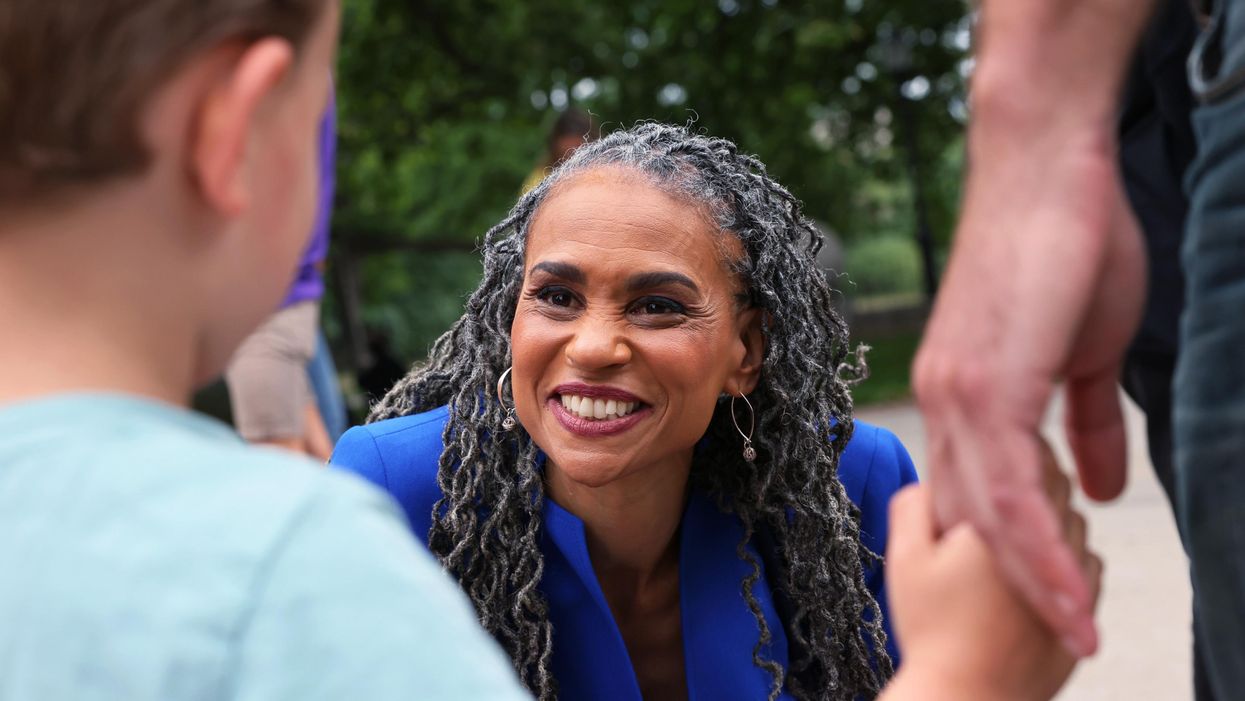
I endorse Maya Wiley for the Democratic candidate for Mayor of New York City.
There are many candidates in the Democratic primary for Mayor of New York City. Whoever is chosen will be the next mayor because the city is 3/4 Democrat and the Republican field is weak (Michael Bloomberg spent $100 million of his own money to win the mayoralty as a Republican and one of his top priorities was to persuade the state legislature to give him total control of the public schools).
My first choice initially was Scott Stringer, the City Comptroller, who has deep experience as a citywide official. Stringer was endorsed by the United Federation of Teachers because of his strong support for public schools. But his chances began to fade when a woman stepped forward to accuse him of groping her twenty years earlier.
Then two men emerged at the top of the polls: Andrew Yang and Eric Adams. Both have received large donations from GOP billionaires who support more charter schools.
The next top contender was Kathryn Garcia, a longtime city bureaucrat who has competence and experience. She was endorsed by the New York Times and the Daily News. With all of Garcia's plans for change, the one area where she is weakest is education. Thanks to Bloomberg, NYC has mayoral control of the schools. Garcia has promised to lift the cap on charter schools (New York City already has nearly 300), to protect the elite public high schools, and to open more of them. she has shown little or no interest in helping the 88% of students who are in the public schools for which she would be responsible. She is a graduate of the city's public schools, but treats them as an afterthought. For this reason, I cannot support her.
I endorse Maya Wiley. Wiley is a civil rights lawyer whose values and vision align with my own. She is not beholden to billionaires or the powerful real estate industry. In the debates, she shined as a fearless and principled advocate who did not defer to the front runners. She is committed to improving the lives of children, families, and communities. She is opposed to lifting the charter cap. A Mayor with a clear vision can hire outstanding talent to manage the city's huge bureaucracy. What matters most is that she has a clear vision, grounded in a commitment to the public good.
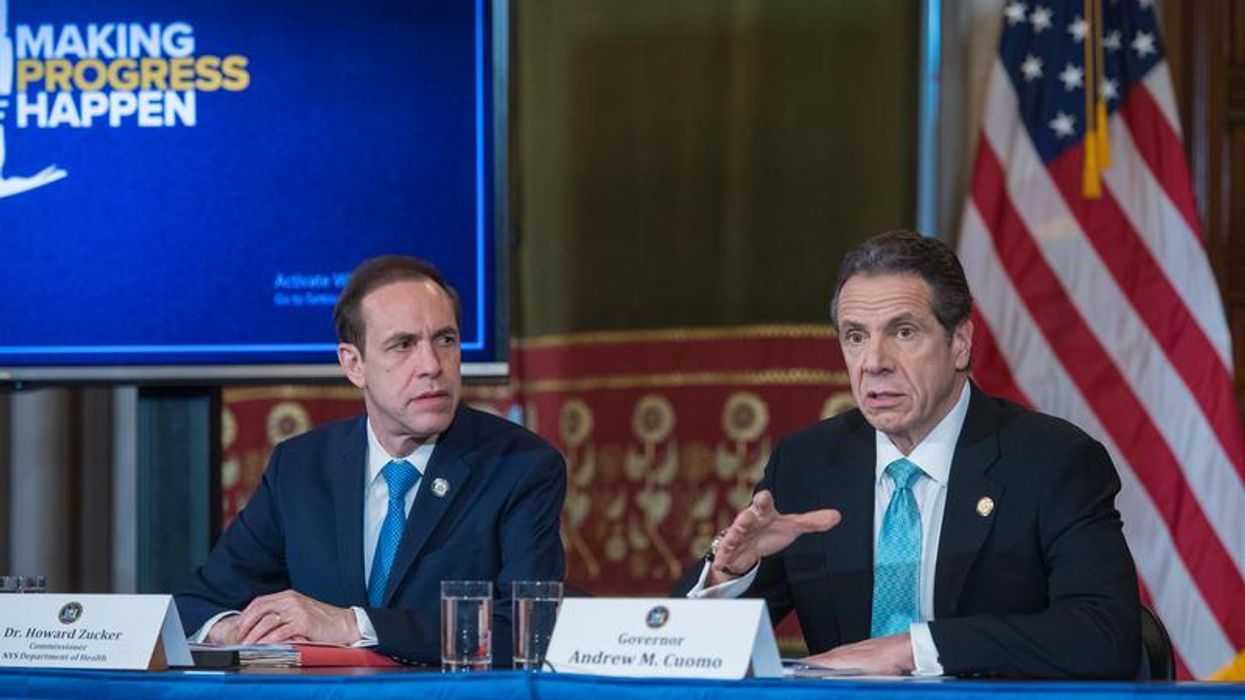
New York Governor Andrew Cuomo announced Wednesday that he has tapped a second billionaires to "reinvent" education in New York state after the pandemic. According to the New York Post, Cuomo sees distance learning as "the wave of the future," so who better to enlist as his advisers than Bill Gates and now Eric Schmidt of Google.
Reporter Rebecca C. Lewis of "City and State" just tweeted this report:
Cuomo has announced the third billionaire to lead state efforts amid the coronavirus crisis: former Google CEO Eric Schmidt will be focused on new technology utilization. He joins Michael Bloomberg, who's doing contact tracing, and Bill Gates, who's doing education
Neither Bill Gates nor Eric Schmidt is an educator. They made their fortune selling software. Selling stuff to schools does not make you an education expert.
Obviously Cuomo thinks that the future of education is online.
He seems oblivious to the eagerness of parents and students alike to return to real live teachers in real school buildings. Parents want to return to work, students want to see their teachers and their friends, and they want to return to their activities and sports. Teachers want to see their students. No one but Cuomo--and probably Bill Gates and Eric Schmidt--wants remote learning to become permanent.
Please someone tell Governor Cuomo that the state Constitution and laws delegate all authority over education to the Board of Regents, and gives zero authority to him.
The pandemic is turning into a grand opportunity for the foxes to raid the henhouse under cover of darkness. Parents, teachers, and students want a safe and orderly return to real education taught by real teachers in real schools.
Why doesn't Gov. Cuomo listen to parents and teachers and students, who will tell him to reinvent schools by fully funding them? They want smaller class sizes, well-maintained facilities, experienced teachers, a well-stocked library with a librarian, programs in the arts, a nurse and social worker and guidance counselor in every school. They don't want the massive budget cuts that the Governor has in store nor do they want the distance learning that they are currently experiencing to become permanent.

The headquarters of the Walton/Walmart billionaires is in Bentonville, Arkansas, so it is not surprising that the Walton Family Foundation and the members of the family (net worth: $100 billion) have decided to privatize the public schools of Arkansas.
Arkansas is a poor state. It doesn't have an abundance of private schools that are as good as its underfunded public schools but the Waltons want every child to have a voucher or a charter school to attend.
Legislators are easy to buy in a poor state. The Waltons own quite a few.
The Arkansas Education Association did the research and described the empire that the Waltons have constructed in service to their goal of owning and privatizing the public schools of Arkansas. In the Walton plan, there will be no "public schools," only privately managed charter schools and vouchers for religious schools.
The AEA report lays out the Walton Empire of Privatization in detail, with their bought and paid for think tanks and academics:
Although this report includes a lot of names, it is just one slice of the nationwide effort to plunder our public schools. These organizations have a vast infrastructure and deep pockets that can seem daunting, but our students are counting on us to stand up and speak out.
While they may have more cash, we have the power of numbers and common sense. Arkansas's taxpayers and students would be better served by investing our scarce resources to improve our neighborhood public schools and helping all of the students who attend them.
Our public schools are the anchor of our communities, and the best way to expand opportunity for all. This idea does not require twisted statistics, or market tested language to trick people into supporting it. It's as old as the country itself.
Do you think any member of the Walton Family ever feels ashamed of the damage they are wreaking on our democracy?
What about their minions? Have they no shame?
Correction: An earlier version of this post original cited the Arkansas Education Association as the Alabama Education Association. That error has been corrected.
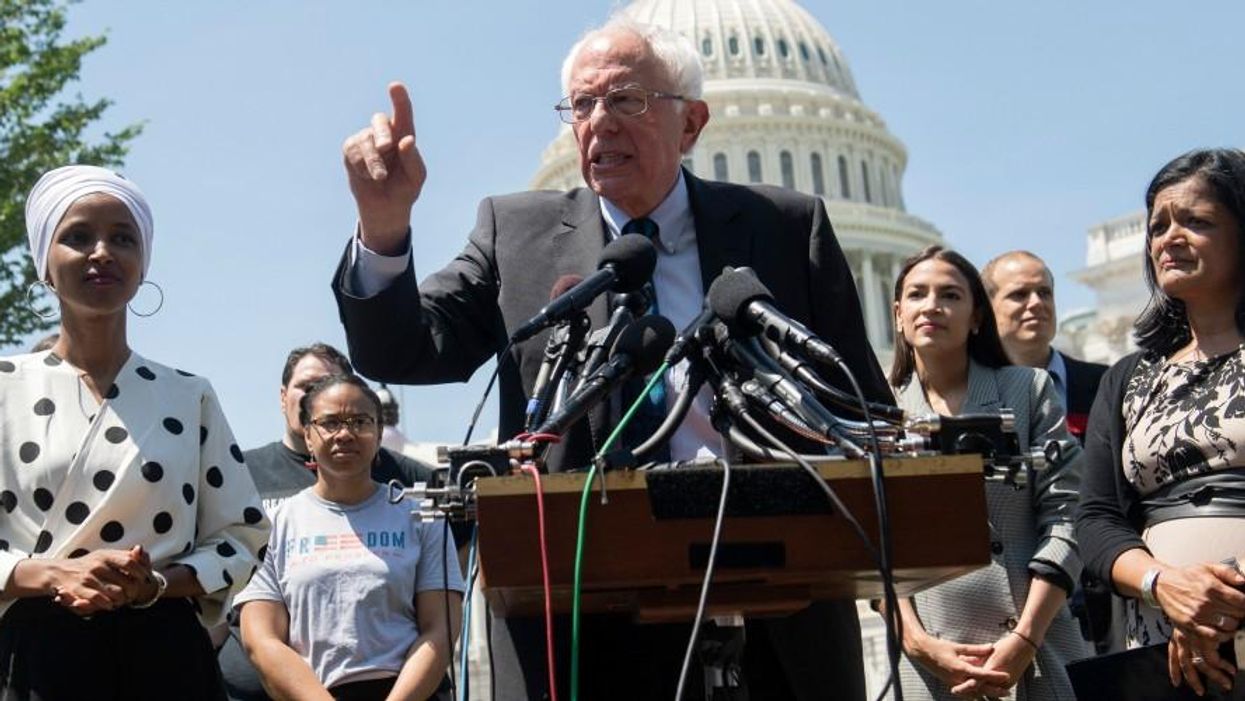
New York Times reporter Sydney Ember has a problem with Bernie Sanders--which may be why the paper has her cover him.
Ember is supposed to write reported articles, not op-eds, but she consistently paints a negative picture of Sanders' temperament, history, policies and/or political prospects in the over two dozen pieces she's done on him. This makes sense, given the New York Times' documented anti-Sanders bias, which can be found among both editors and reporters alike.
The paper was caught making significant changes, without acknowledging them, to a 2016 article on Sanders hours after it went up: It changed the headline (from "Bernie Sanders Scored Victories for Years via Legislative Side Doors," to "Via Legislative Side Doors, Bernie Sanders Won Modest Victories"); deleted a positive quote from a campaign advisor; and added two negative paragraphs. Even after the paper's public editor chastised the Times for the practice known as stealth editing, the editors defended the changes because they "thought [the article] should say more about his realistic chances." In its original form, the article didn't cast enough doubt on Sanders' viability and ability to govern, in other words.
"Ember's articles on Sanders (sometimes co-written with other Times reporters) often quote as neutral authorities individuals who are on the other side of a wide ideological divide, with longstanding antipathies to Sanders' left socioeconomic perspective."
Ember came to the New York Times with a resume limited to the finance industry: She was an analyst for BlackRock, the biggest global investment management corporation, and the largest investor in coal plant developers in the world. (Her husband, Mike Bechek, is also in the investment business; he was a senior associate consultant at Bain Capital, where his father was CEO.)
Ember was hired by the Times in 2014 to cover advertising and marketing for the paper's business vertical Dealbook. She started covering politics in May 2018, and immediately got the enviable assignment of covering one of the leading contenders for the 2020 Democratic nomination.
Ember has a multi-prong approach to undermining Sanders: She went to great lengths to avoid calling him the frontrunner until he was "no longer" one; she attributes his political positions to attention-getting, self-serving ulterior motives; frames even his victories and the popularity of his ideas as weaknesses; cherry-picks polls; presents opinions as facts (claiming he's "outflanked on the left by rising stars like Alexandria Ocasio-Cortez, Ayanna Pressley and Beto O'Rourke"); and creates false equivalency between Sanders and Donald Trump.
But for the sake of time and length, this piece focuses on her selection and misrepresentation of sources, which have already drawn scrutiny. Brad Johnson, a political analyst with a background in climate science pointed out that Ember quoted a source without mentioning that she's a corporate lobbyist; journalist Zaid Jilani noted that Ember failed to disclose that another source was a senior advisor for a Hillary Clinton Super PAC. Education scholar Diane Ravitch devoted a blog post to the reporter's "shameful" reporting on Sanders' education policy, questioning the authority of her sources.
Ember's articles on Sanders (sometimes co-written with other Times reporters) often quote as neutral authorities individuals who are on the other side of a wide ideological divide, with longstanding antipathies to Sanders' left socioeconomic perspective. Moreover, many of these "experts" are corporate lobbyists, whose work in a particular area is not guided by academic, journalistic or other professional standards, but by the economic and political interests of their clients. Ember spins the identity of her authorities, who are themselves professional spinners.
Consider Ember's March 1 article, which opened with the kind of unflattering headline her stories often bear: "Bernie Sanders Is Making Changes for 2020, but His Desire for Control Remains." (Headlines, of course, are chosen by editors, not reporters, but in these stories they reflect the slant of the text.) The piece ended on a typically ominous note: "Even if Mr. Sanders does talk more about himself, his competition presents a new set of challenges that his own biography may only compound," Ember wrote. She brings in an expert to prove her point: "'At the end of the day, he is still an old white man,' said Tracy Sefl, a veteran Democratic strategist."
Sefl is hardly a disinterested authority; she's a paid political consultant and media specialist who worked as a surrogate and senior advisor for Hillary Clinton. Other outlets mention Sefl's experience working for Clinton when they cite her, including the New York Times, which has identified her as someone "supporting Mrs. Clinton," someone who "worked for Mrs. Clinton," and a "Democratic consultant and Hillary Rodham Clinton supporter."
A New York Times story (10/22/07) on the 2008 Clinton campaign's relationship with the right-wing Drudge Report identified Sefl as someone "who has established a friendly working relationship with Mr. Drudge--and through whom Mrs. Clinton's campaign often worked quietly to open a line of communication." The paper also noted that her "fingerprints are usually impossible to spot." Sefl admitted in an interview (Chicago, 7/13/15):
My solo consultancy doesn't have a name, quite purposely so. I do often collaborate with other consultants, including Republicans--within reason--when the work warrants it.
Reporter Zaid Jilani caught Ember's omission, tweeting that she didn't "note [Sefl] was senior adviser to Ready for Hillary Super PAC or that she was a hired gun at a Republican-led firm Navigators Global." The piece has since been updated--without notice--to describe Sefl as "a veteran Democratic strategist and formerly a senior adviser to the Super PAC Ready for Hillary."
Sefl's choice of phrase, "an old white man," is surely a crude description for someone who, as he has explained, has a strong Jewish identity, shaped in part by his father's side of the family having been "wiped out" in the Holocaust, and growing up a working-class Jew in Brooklyn. If successful, Sanders would be the first Jewish president of the United States. But Sefl's dismissive description is consistent with the way Clinton campaign loyalists and much of corporate media continue to weaponize identity politics against Sanders, erasing not only his Jewish identifty, but also his anti-racist record and his supporters of color.
Ember's February 17 article, "Bernie Sanders Stumbled With Black Voters in 2016. Can He Do Better in 2020?," published two days before Sanders announced his candidacy, predicted that "his weak track record with black voters -- a vital base in the Democratic Party -- could be a potential threat to his candidacy." Echoing the conventional wisdom of the 2016 campaign, the piece made no mention of the CNN poll issued two months earlier that found Sanders had a higher approval rating with nonwhite voters than any other major candidate.
Ember's March 29 article, "Bernie Sanders Says 'No' to Incrementalism, Highlighting Divide Among Democrats," started with a neutral enough headline, but ended with a harsh critique by a fierce Sanders opponent, whose politics the reporter misrepresents:
"The path to the White House and to majorities has to be in a pragmatic, progressive area," said Jim Kessler, executive vice president for Policy at Third Way, a center-left think tank. "If you go too far left, Donald Trump gets re-elected and Republicans control both houses of Congress."
"Our heads are in the clouds, but our feet are also on the ground at the same time," he added. He cited his group's universal healthcare plan, which he said was "just as ambitious" as Mr. Sanders' proposed "Medicare for all." There was, however, a key difference.
"It just doesn't blow up the system," Mr. Kessler said. "It builds on the existing system."
But Third Way is a fiscally conservative, not a "center left," think tank. Given the state of public opinion, a group that pushes to cut Social Security and Medicare, and calls raising taxes on billionaires "soaking the rich," is to the right of centrist. In 2013, of 29 trustees on Third Way's board, 20 were investment bankers, three were CEOs and two were corporate lawyers.
Third Way's "about" section reads, "Our work is grounded in the mainstream American values of opportunity, freedom and security." They continue, "But we identify as center-left, because we see that space in US politics as offering the only real path for advancing those ideals in the century ahead." For Third Way, identifying as "center-left" is lip service, a strategic necessity in a nation that has moved to the left and whose demographics promise a more diverse and left electorate to come.
Ember chooses the label that Third Way uses for itself, because if she accurately identified its corporatist mission and positions, she could not use one of its leaders as an objective authority on the efficacy of Bernie Sanders' proposal of free healthcare for all. It would be obvious that Third Way's healthcare plan was in no way as ambitious as Sanders', and that it was using the term "universal" to undermine single payer.
Reflecting its function as a corporate advocate for moving the Democratic Party to the right, Third Way has consistently disparaged Sanders and progressive politics in general. In a 2013 Wall Street Journal op-ed (12/2/13), Kessler (and Third Way co-founder and president Jon Cowan) declared that "economic populism is dead," urging Democrats not to follow Elizabeth Warren and Bill deBlasio "over the populist cliff." Kessler singled out Sanders in a USA Today op-ed (12/15/17), declaring, "Take It From Voters, Democrats Don't Want a Bernie Sanders."
In October 2018, Third Way's executive vice president Matt Bennet (who can be seen in this video refusing to disclose how much money his think tank gets from Wall Street) disqualified Sanders as a presidential candidate: "The exception is Sen. Sanders. We're open to everybody except for him." That would seem to make the organization an odd source to go to to evaluate Sanders' policy proposals.
But Ember turned to Kessler again in her April 27 article, "Bernie Sanders Opens Space for Debate on Voting Rights for Incarcerated People," to comment on Sanders' call to enfranchise the incarcerated:
"There's a difference between felons who are in prison for nonviolent offenses and those who are in for capital offenses," said Jim Kessler, executive vice president for policy at Third Way, a center-left think tank. Mr. Sanders' remarks, he added, "seemed like a bit of a stumble."
The comment seemed like a bit of a stumble for Kessler, into an area where he has no evident expertise, and, interestingly, where Third Way hardly wades.
Ember's May 17 article, "Mayor and 'Foreign Minister': How Bernie Sanders Brought the Cold War to Burlington," presented as problematic and incriminating the senator's support of Nicaraguan Sandinistas and his opposition to the CIA-backed Contra rebels trying to overthrow them--whose systematic pattern of gross human rights violations in the 1980s included death squad assassination, kidnapping, rape, mutilation and torture. In a subsequent interview, Ember's first and apparently most pressing question to Sanders was whether he had heard an anti-American chant at a rally he and approximately 499,999 other people attended. Her second question was whether he would have stayed at the event if he had heard it.
While NBC's Meet the Press (5/19/19) and New York's Jonathan Chait (5/27/19) accepted and amplified Ember's framing, other journalists and historians familiar with Latin American history condemned the piece as context-lacking "neo-McCarthyite," "'anti-American' baiting," "only slightly more subtle than Fox News." Calling the piece "fundamentally ahistorical" "bothsidesism," the Long Version's Jonathan Katz (5/20/19) wrote that Ember doesn't "have much experience covering foreign affairs in general or Latin America in particular. It shows." Journalist Ryan Cooper (The Week, 5/29/19) quipped, "Americans should be very concerned about Bernie Sanders' record of opposing mass murder."
For this article on Sanders' foreign policy past, Ember thought it would be appropriate to get a quote from a significant player in the Iran/Contra scandal:
Otto J. Reich, a former special envoy for Latin America who helped oversee Nicaragua policy for the Reagan administration, said that by the middle of the 1980s a politician like Mr. Sanders "should have known better" than to fawn over Mr. Ortega.
Reagan's "Nicaragua policy" involved illegally funding the terrorist Contras in an effort to overthrow the elected Sandinista government. And he oversaw it as director of the now defunct State Department's Office of Public Diplomacy, working with CIA propaganda experts and Army psy-ops specialists, leaking hoaxes, spreading rumors, smearing, and pressuring and threatening reporters, in order to whitewash the Contras and demonize the Sandinistas.
Reich's office was condemned by the U.S. Comptroller General, the General Accounting Office, the Congressional Iran/Contra Committee and a House Foreign Affairs committee for conducting "prohibited, covert propaganda activities," including psychological operations (psy-ops) "beyond the range of acceptable agency public information activities."
Ember, though, offers Reich as an expert witness on Sanders' Cold War activities:
"He has, by virtue of these travels and associations, joined up with some of the most repressive regimes in the world," Mr. Reich said of Mr. Sanders, alluding to his visit to Nicaragua and subsequent trips to the Soviet Union and Cuba.
Speaking of travels and associations, as well as Cuba, Ember fails to mention that Reich has worked as a lobbyist for Bacardi-Martini and Lockheed Martin, and tried to get an anti-Castro terrorist a US visa.
As historian Greg Grandin told me in an interview (Katie Halper Show, 6/4/19):
The Office of Public Diplomacy was one of the most corrupting and degrading instruments of democracy you can imagine.... It was a destabilization and disinformation campaign.
"People like Sydney Ember," he noted, are "the product of that reeducation."
Back to domestic issues, Ember ended her May 23 article, "Sanders' Education Plan Renews Debate Over Charter Schools and Segregation," on a predictably down note:
But while the charter-school issue might be relevant in cities, Mr. Loadholt said, it was hardly top-of-mind for voters in the state's expansive rural areas, where charter schools are rare. "To a hammer, everything is a nail," he said. "And to Sanders, everything is an issue created by millionaires and billionaires."
Ember describes Jarrod Loadholt as "a Democratic strategist who has worked on education policy in South Carolina." This obfuscating description was one of the many things that led Diane Ravitch to write her blog post, "The New York Times vs. Senator Bernie Sanders. " I'll let Ravitch explain:
The real stinker in the Times' article comes at the end, where the writers quote someone unfamiliar to me. I know many education activists in South Carolina, but I have never run across Jarrod Loadholt.... I googled. He is a lawyer and lobbyist in Washington, DC, who was born in South Carolina. I can find no evidence of any involvement by him in any education issues. His specialty seems to be consumer finance. Why was he called upon to put down Senator Sanders' factual statement that the Waltons, the DeVos family and hedge fund managers are behind the push for charter schools? Senator Sanders made his statement in South Carolina, and Loadholt was born there. South Carolina has dreadful education policy. When did Loadholt work on it and with what results? To the naked eye, he was called upon as a Beltway insider to cut Bernie Sanders down with a false statement. Shameful.
In fact, there are no traces of Loadholt having worked on any education policy. When I tweeted out Ravitch's piece, he responded, "Lol. I guess if you're a lawyer or a lobbyist, you could at no point in your life worked on ed policy in SC." When I asked him if he had worked on education policy, he replied, "My quote speaks for itself. And it's like a month old." Loadholt has also tweeted that Sanders is "like a rash."
Loadholt does have experience as a lobbyist and currently works at Pine Street Strategies, a lobbying firm whose clients include Anheuser-Busch and the National Bankers Association (NBA). It was in his capacity as an NBA lobbyist that Loadholt defended a sweeping rollback of Dodd/Frank banking regulations. Dubbed the Bank Lobbyist Act by critics, which included the NAACP, the bill made it easier for banks to discriminate against communities of color. Loadholt, however, dismissed the concerns: "[Black] banks don't have the luxury of waiting on a perfect bill.... If we thought the [bill] did substantial damage to African-Americans, we would not support it."
Then there's the June 12 article, originally headlined "Sanders Delivers Defense of His Democratic Socialist Philosophy" and later renamed "Bernie Sanders Calls His Brand of Socialism a Pathway to Beating Trump," where Ember quoted as an authority Mary Anne Marsh, whom she described as "a Democratic strategist in Boston who worked for Senators Senators John Kerry and Edward M. Kennedy." Marsh did not mince words in her assessment of Sanders' politics, policies and electability:
Most Democrats running don't subscribe to Bernie Sanders's democratic socialism and his economic policies. Ultimately, Bernie Sanders giving this speech will appeal to his base and no one else, and it gives fodder to Trump and the Republicans.
But the woman linking Sanders' socialist rhetoric to a Trump victory is not just a Democratic strategist. When reporters at places like the Financial Times, CNBC, NPR, Yahoo! Business and Jewish News Services quote her, they cite her as a principal at the Dewey Square Group, a lobbying and public relations firm. Dewey Square's corporate clients have included Allegiance Healthcare Corporation, Blue Cross/Blue Shield, Coca-Cola, Collegiate Funding Services, Countrywide Mortgage, DuPont, General Motors Corporation, Grocery Manufacturers of America (GMA), Mortgage Insurance Companies of America, Purdue Pharma, Starbucks, United Health Group. The US Chamber of Commerce hired the firm to fight for caps on damages that can be paid in lawsuits; the National Restaurant Association paid them to fight against a law that made it easier for unions to organize workers and Fix the Debt, to push its austerity astroturf campaign which to cut Social Security, Medicare and Medicaid.
When Dewey Square was caught (CJR, 2/24/09) tricking senior citizens into signing letters to the editor on behalf of its client Medicare Advantage, Marsh tried to blame the hapless victims who had been lured to events with door prizes and free food and were unaware of what they were signing, positing, "The time that elapsed between the meetings when the seniors saw the letters and the letters' arrival at the newspaper may have clouded some memories."
Her career as a lobbyist for many of the industries that would be most impacted by Sanders' proposals might explain Marsh's obvious animus against the candidate, as displayed in the May 20 edition of her weekly Fox News column, "Bernie Sanders' Incredible Shrinking Candidacy--Why He Won't Be Dem Nominee." One of Sanders' apparent insurmountable weaknesses, she wrote, is that people "remember Sanders didn't support Clinton in the general election against Trump." People with better memories recall that Sanders was one of the most energetic surrogates for Clinton on the campaign trail, campaigning constantly for her in battleground states (New Yorker, 11/4/16).
Marsh is right when she says that "most Democrats running don't subscribe to Bernie Sanders's democratic socialism," which is why he's seen as a unique threat to those who promote rapacious profiteering in the areas of finance, health care, education and the military. Third Way made that clear, once again, at a conference they held last week, where its co-founder Matt Bennett singled out Sanders' vision from his opponents': "One is a Democratic capitalist narrative.... The other is a socialist narrative," notably omitting the "Democratic" descriptor for the latter.
By presenting her sources as objective authorities, instead of paid lobbyists and austerity ideologues, Ember both conceals and advances their agenda, undermining the integrity of the Fourth Estate, our democracy, and one of the most popular politicians.
The Internet is a costume party in which everyone comes dressed in an opinion, or rather dozens of them or an endless array, one right after another. An opinion is, traditionally or at least ideally, a conclusion reached after weighing the evidence, but that takes time and so people are dashing about in sloppy, ill-formed opinions or rather snap judgments which are to well-formed opinions what trash bags are to evening gowns. If opinions were like clothes, this would just be awkward, but opinions are also like votes. They shape the discourse and eventually the reality of the world we live in. Journalists used to say that everyone is entitled to their own opinion, but not their own facts, but opinions are supposed to be based on facts and when the facts are wrong or distorted or weaponized, trouble sets in.
There was actually a nice victory over distortion and insinuation a couple of weeks ago. The Washington Post put out a story on May 23 that was titled "While teaching, Elizabeth Warren worked on more than 50 legal matters, charging as much as $675 an hour." (If you look it up now, the title has been changed to not shout about the money any more.) It was kind of a nonstory: one of the nation's leading bankruptcy lawyers, while teaching at one of the nation's most distinguished law schools, did some work on the side, as law professors apparently often do.
If you didn't know anything about legal experts' compensation rates, $675 an hour might seem high, and the whole thing seemed to be trying to suggest that there was something shady about the whole thing. Perhaps women are not supposed to earn a lot of money, though we knew from the sideswipes about Alexandria Ocasio-Cortez's waitress work that we are not supposed to work in low wage jobs either. Perhaps women are always either too much or not enough. For the record, I am wildly enthused about Warren as a presidential candidate, but I was enthused about accuracy a long time before she came along, and this is a story mostly about accuracy and its opposites. The stories I'm relating could be told about any number of other candidates who've been misrepresented in ways that have stuck as smears.
One of the two journalists, Annie Linskey, had penned an earlier Post story whose headline suggested a desperate reaching for controversy: "Elizabeth Warren reshaped our view of the middle class. But some see an angle." The story declared there had been, "a bitter dispute over the integrity of Warren's work that shadowed her for years as she climbed the academic ladder," which turned out to be one angry competitor whose claims about her integrity didn't hold up, according to others in the field. One of the peculiarities of journalism is that "evenhandedness" can degenerate into pretending that everyone is equivalent, that the fossil fuel industry and the scientists have equally valid positions on climate change, that everyone has to have a scandal and all scandals are approximately the same size.
Response to the Washington Post's story about her $675 an hour was a best case scenario. A barrage of legal experts, lawyers, and law school professors (and Congresswoman Alexandria Ocasio-Cortez) hit social media, while readers hit the Washington Post with 2,700 comments; those that I read were all scathing. By the end of the day, Slate had a story headlined "Washington Post Discovers That Elizabeth Warren Was Paid a Reasonable Fee for Providing Legal Services to Unobjectionable Clients" and Esquire and New York Magazine had also mocked the Post's insinuations.
The first round may be malicious, the second is gullible, and then the weaponized information becomes what everyone thinks they know.
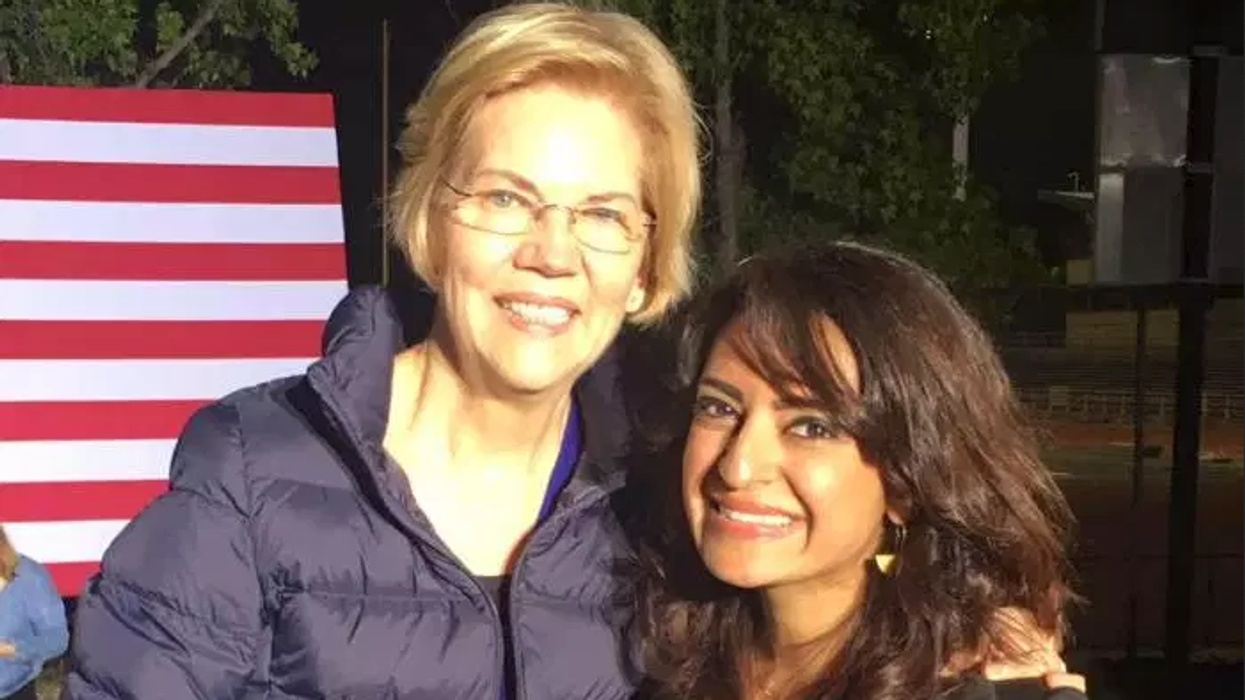
Eight days later, things didn't go as well, perhaps because the misinformation didn't start out in a high-profile outlet. Warren spoke at a big outdoor gathering--the crowd was estimated at 6,500--in Oakland, California, and a young woman introduced her. The introduction was full of praise for public education, for Warren's plan to make preschool affordable by taxing billionaires, for her college debt plan, for "full funding of cradle to college funding as a cornerstone of her presidency." The speaker, Sonya Mehta, had taught kindergarten for five years at an Oakland school that became a nonprofit charter school the year she started, at age 24, and then gone on to work for a ballot campaign to increase public school funding in the county, then for an Oakland educational nonprofit focused on teacher sustainabilty called The Teaching Well.
But an education blogger in Pennsylvania called her a "charter school lobbyist," and then education policy figure Diane Ravitch said on her blog that Warren "was introduced by a representative of Great Oakland Public Schools, a billionaire-funded anti-teacher, pro-charter, pro-'reform' operation." By the end of the week, The Progressive had stated, with a link to the education blogger's piece, that "her introduction at an Oakland rally by a former charter school teacher associated with a charter lobbying organization was seen by some as a calculated signal that she is more supportive of charter schools than her progressive rival, Bernie Sanders."
Seen by some as a calculated signal is both vague and incriminating: we never find out who the some are, but the implication of "calculated signal" is that Mehta was chosen to make a political statement and that that statement is pro-charter school. The calculated signal: would it matter unless Warren was the one making it? So is that an assertion Warren was involved in the decision, or is the vague language a way to have it both ways? The carelessness with which they represented this young woman of color--who had not previously been in the public eye--was also disconcerting.
For the record, Warren has been an ardent public school supporter, a critic of for-profit charter schools, and a fierce opponent of education secretary Betsy DeVos. She's promised she would put a public school teacher in DeVos's job; if elected, she'd also put a former public school special education teacher, herself, in the White House.
In the Bay Area so much heat was arising from the charges that I contacted Mehta to try to shed some light on the situation. This is what she told me: she has never been a lobbyist. She has never been a representative or employee of Great Oakland Public Schools. She was a fellow there in 2014-2015, while working full-time as a teacher, which, she told me, meant she went to a three-hour meeting once a month for several months. She volunteered with the organization later and she supports, she says, "aspects of its work on district budget oversight and parent organizing."
She also told me she helped unionize the school she taught at, supported the 2019 Oakland teacher's strike (which was evident in a social media post of hers earlier this year), went to the state capitol with the strikers to advocate for more public school funding, and works for an organization that also supported the strike directly. She's ardent about Elizabeth Warren and public education and public funding for public education, as she made clear in her short speech.
None of these commenters actually know why Mehta was chosen, or who chose her or what the campaign knew about her, so there isn't a basis for a conclusion about what the campaign thinks, insofar as campaigns think, or to assume that Warren was directly involved in the choice. Therefore they and their readers cannot conclude that it reflects on what Warren believes or intends, but some did anyway. "I don't know" is often the most accurate thing you can say, but it is not the kind of opinion you can dress up in for a party--though it is the kind of statement you can publish as journalism.
The falsehoods and insinuations seem to have influenced a lot of people, and I heard from locals that Warren was losing support and supporters over this. Some of that is on people who were careless about their criteria for reaching a conclusion, but I've seen how this works with earlier smears about earlier candidates: the first round may be malicious, the second is gullible, and then the weaponized information becomes what everyone thinks they know, or a vague unease, or a fuzzy suspicion. It dilutes, a smear becoming a stain becoming a taint.
In my own dreams of educational reform, there's a curriculum focused on how to research anything and check everything, how to understand what is and isn't substantiated by the facts, when you do and don't have the evidence to draw a conclusion, and how to live with the uncertainty and mystery that abound in all of us. Such an education would inoculate against the propaganda, lies, distortions, and rumors that circulate so freely now, on the left and in the center as well as on the right. In the meantime, the responsibility for the news rests with consumers as well as producers, or rather when we accept and repeat statements we too become producers of the beliefs that shape this world. It behooves us to do so with care.
For years, the safe havens for education policy debate in the Democratic Party have been expanding pre-K programs and providing more affordable college, but in the current presidential primary contest, another consensus issue has been added to the party's agenda: salary increases for K-12 classroom teachers. Kamala Harris has gotten the most press for coming out strongly for raising teacher wages, but other frontrunners including Joe Biden, Pete Buttigieg, and Bernie Sanders have also called for increased teacher pay.
But what will happen when a consensus issue like teacher salary increases comes into conflict with a lightning rod issue like charter schools? That's a scenario currently playing out in Florida.
A recent law passed by the majority Republican Florida state legislature and signed by newly elected Republican Governor Ron DeSantis will force local school districts to share portions of their locally appropriated tax money with charter schools, even if those funds are raised for the express purpose of increasing teacher salaries in district-operated public schools. (Charter schools in Florida, as in many states, do not receive funds that are raised through bond referendums, mill levies, or other forms of local funding initiatives.)
Florida teachers have openly opposed the new law, and local school districts have taken it to court to have it overthrown. But given this new law, it's not at all hard to imagine a scenario, even at the national level, where Democrats pushing to increase funds for teacher pay will have to confront an expanding charter school industry--and now voucher programs--that would claim their portion of that money to use as private institutions for whatever purposes they wish.
"An Effort to Redefine Public Schools"
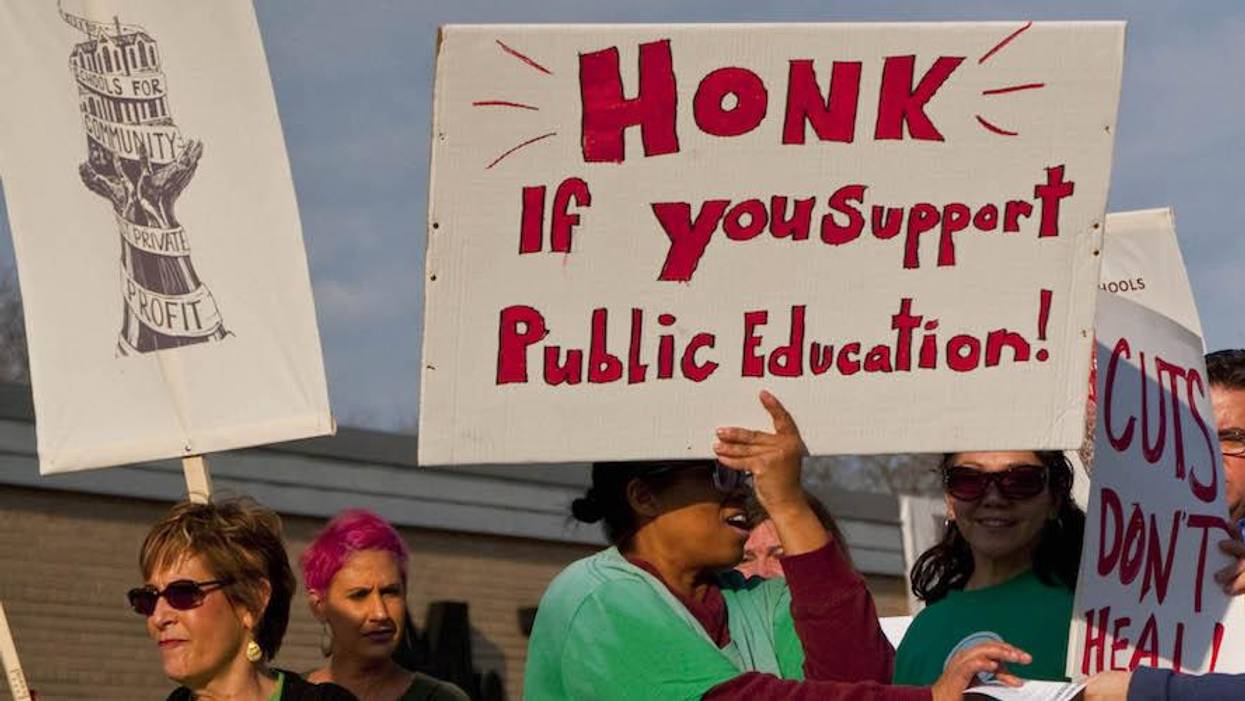
"The problem with charter schools isn't that they're competing with public schools; it's that they're supplanting public schools," says Justin Katz in a phone call. Katz, who is president of the Palm Beach County Classroom Teachers Association, recently helped organize a rally in West Palm Beach where more than 200 teachers and public school advocates showed up to voice their opposition to distributing funds raised by local tax increases to charter schools.
The protest "was very specific, local, and personal," Katz explains, because voters in the county had approved $200 million in funding for their schools in a measure that specified increases could be used for teacher raises in traditional public schools and not for funding charter schools.
The referendum was overwhelmingly approved by more than 72 percent of voters. But under the proposed new law, a proportional share of 10 percent, or about $20 million a year, would have gone to the county's 49 charters. Only a final hour amendment in the state's Senate averted the loss, when the bill was altered to apply to future bond referendums only.
The language of the referendum that was passed was "crystal clear," Katz says, that money raised by the bond efforts would not go to charter schools. But the loophole being used to argue for charters to get their share is the use of the term "public schools."
The new law is "an effort to redefine what are public schools," he says, in order to give charter schools a right to claim a portion of any publicly raised education funds, regardless of the intent for raising the money. He fears that once charters claim that right, private schools in the state's school voucher programs will claim it too.
What Katz fears aligns to Governor DeSantis' recent comment that "if the taxpayer is paying for education, it's public education," which seems to mean that virtually any education provider--charter schools, private schools, and even homeschooling--is "public education" and therefore has rightful claim to public funds meant for teachers, local schools, and any initiative voters approve, regardless of the intent.
Public Money to "Non-Public" Schools
"Our objection to sharing bond referendum money with charter schools is that it's not what the money was intended for," says Anna Fusco, the president of the Broward Teachers Union.
Broward, the county immediately to the south of Palm Beach, also recently passed a local referendum that raised $93,000, enough funding to boost teacher salaries by as much as $8,000. Like the Palm Beach initiative, the Broward referendum funds were intended not to go to charters, although the language was not as specific. Broward has over 90 charter schools educating 45,919 students, over 20 percent of the district's students.
Fusco says, "it was fair to not include charters in the referendum" for several reasons. Because nearly half the charter schools in the state are managed by for-profit companies, new funding voters had approved for teachers could instead be used to expand profits for charter management companies.
Fusco also believes many charter schools are "non-public" because they "get to choose their students." Studies have shown Florida's charter schools, compared to public schools, serve significantly lower percentages of low-income students, students with disabilities, and students who struggle with English.
She also points to other recent legislation that gave charter schools access to state funding for building leases and executive pay and big new loopholes for bypassing local school boards and employing uncertified teachers. She contends the law undermines the charter industry's argument for needing local referendum money. And because of the new loopholes, bond referendum money would now go to charter schools even though they can bypass the very school boards that pushed for the bonds, and even if the money was earmarked for wage hikes for certified teachers, charters could use the money to hire uncertified teachers who lower the status of the teaching profession.
A "Long Game People Haven't Noticed"
"This is part of an incremental and deliberate effort to take apart our public school system," says Karen Castor Dentel in a phone call. Castor Dentel is a board member of Orange County Public Schools and former Democratic member of the Florida House of Representatives. A native of Florida and graduate of the state's public schools, she taught in an elementary school last year, and her mother was Florida Education Commissioner from 1987 to 1994.
Castor Dentel sources the assault on the state's public schools to former Governor Jeb Bush, who initiated a series of reforms he called the A+ Plan that included imposing a school grading system based on test scores. Gradually the test-based system was used to evaluate teachers too--including evaluating teachers based on the scores of students they don't even teach.
Bush's plan also called for changing teachers' salary increases from a traditional step plan based on seniority and continuing education to a system of bonuses and merit-pay schemes based on test scores and other measures. The most preposterous of these schemes based teacher bonuses on scores they earned on their college entrance exams. Districts are now rushing to abandon these plans.
"The purpose of this was to shame schools and teachers," Castor Dentel insists. "We already knew which students needed help and which schools and teachers needed more support. But it's easier to label schools and teachers failing and hand everything over to a private charter operator than it is to do what these schools and communities actually need."
While Bush's plan cracked down on teachers, it loosened the regulatory environment for charter schools and provided them with new funding sources. By the time Bush left office in 2007, charter schools across the state had grown from a modest 30 to well over 300. Today there are 655.
The educational success of the A+ Plan continues to be hotly debated, but it's undeniable that the welfare of public school teachers in the state suffered significantly under its regime.
The state has dropped to 46 on a national scale of average teacher salaries, and at least one credible analysis has deemed the state the fifth worst state in the nation to be a teacher.
Due to low pay, deteriorating employee benefits, and demoralizing working conditions, Florida teachers have refused to work beyond school hours, increasingly called in sick, and are leaving their jobs at higher rates. The state now has an acute teacher shortage and struggles to fill vacant positions. And in what's being called a "silent strike," experienced teachers are leaving the profession early, and people who would be highly qualified for teaching are choosing other employment opportunities.
In the meantime, charter schools have flourished and now account for nearly all the state's growth in student enrollment.
"It's been a long game," Castor Dentel says. "The agenda has been imposed so slowly over the past 20 years that people don't notice. It's a cancer that started in Florida and is now spreading everywhere."
Have Democrats Found Their Way?
If the Florida model for education is a disease, Democrats have certainly been infected. Much of what was in Bush's A+ Plan formed the policy agenda of the Obama administration, which also pushed for evaluating schools and teachers based on test scores and expanding charter schools.
"Democrats have been promoting a conservative 'school reform' agenda for the past three decades," education historian and bestselling author Diane Ravitch observed. "Whatever the motivations, the upshot is clear: The Democratic Party has lost its way on public education."
But because presidential hopefuls are rallying around teacher salary increases, have Democrats found their way back?
No doubt, what got Democrats to pay attention to the plight of school teachers was the series of teacher protests staged across the country last year and into this. The highly visible strikes emboldened candidates running in 2018 midterm elections to campaign for increasing investments in public schools. The teacher uprisings also took the schools issue away from Republicans and made it less about "accountability" and more about the massive cuts political leaders in both parties have enacted to the system.
In Florida, teachers are forbidden to strike by law and the state constitution. "Any teachers engaging in such action would endanger their professional status," explains Fusco. "They could lose their licenses and jobs for life and lose their pensions too. Our union will never, ever encourage a walk out."
However, the laws haven't stopped teachers from speaking out against efforts to divert local tax dollars for teacher pay to charter schools. Their protest messages are about educating voters on the impact of charters rather than opposing them outright.
Teachers who protested in Palm Beach County, according to Castor Dentel, "made their protests more about the responsible use of tax dollars."
"Parents and voters are just starting to get engaged, but they aren't always clear on the issues," she says. "They don't understand that charter schools aren't really like public schools."
"For now, our effort to push back has to rely on educating people on what these bills in the state legislature are really doing," says Fusco. "We hope people who aren't in education and don't even have children in schools listen to us."
"This obsession with crushing public schools to promote privately operated things that are being called 'public' is not universally accepted," says Katz, "and people are just starting to sour on it."
Maybe Democrats will too.
To learn more about school privatization, check out Who Controls Our Schools? The Privatization of American Public Education, a free ebook published by the Independent Media Institute.
Click here to read a selection of Who Controls Our Schools? published on AlterNet, or here to access the complete text.
This article was produced by Our Schools, a project of the Independent Media Institute.
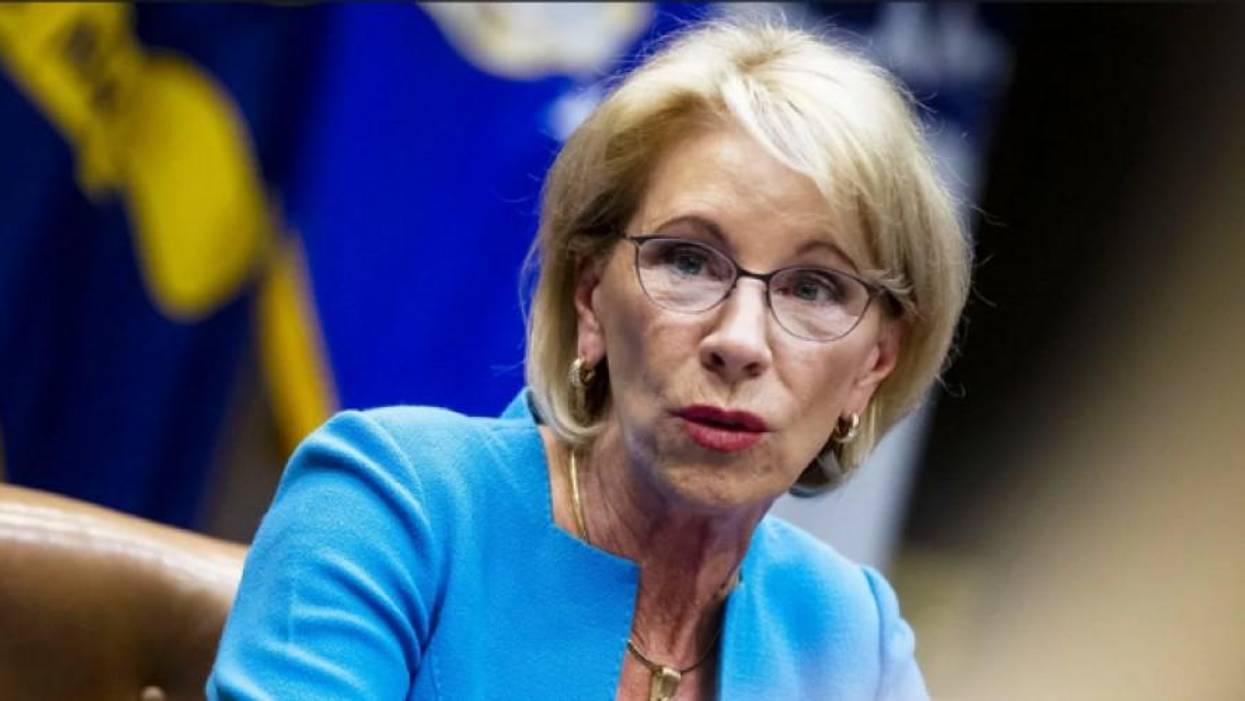
During a series of recent congressional hearings in Washington, D.C., U.S. Secretary of Education Betsy DeVos had to respond to a recent report finding the U.S. Department of Education has been scammed for hundreds of millions of dollars by fraudulent or mismanaged charter schools. Her responses reveal not only her inability to counter legitimate concerns over the spread of charter schools but also the charter school industry's resistance to honestly address a chronic problem with its schools.
The report, which I co-authored with Network for Public Education Executive Director Carol Burris, found that up to $1 billion awarded by the federal government's Charter Schools Program (CSP) went to charter schools that never opened or opened for only brief periods before being shut down for mismanagement, poor performance, lack of enrollment, and fraud. Our calculation was that a least a third of the $4.1 billion spent by the CSP was wasted.
Members of Congress repeatedly referred to these findings when questioning the secretary's management of charter school grants and her proposal to increase funding for the program to $500 million annually. In response, DeVos first attempted to deny the problem, saying, "You are always going to have schools that don't make it."
When Democratic representatives continued their questions, DeVos then tried to distract attention from the problem, arguing there was a need for "more" charters, "not less."
In the most recent exchange, DeVos pivoted to attacking the report authors personally rather than disproving their findings, saying, "The study was really funded by and promoted by those who have a political agenda against charter schools."
That final exchange in particular raised the hackles of my coauthor Burris, who quickly delved deeper into the data to find that incidents of financial fraud, waste, and mismanagement in the charter school grant program are likely worse than our first estimate.
Federal Money Wasted on Defunct Charters Is Actually Worse
DeVos' lame defense of the federal government's charter school grant program before Congress should draw more scrutiny of the program rather than alleviate concerns.
By denying, distracting, and personally attacking the report authors, she encouraged us to delve further into the evidence that much of the money awarded by the program went to charter schools that are, at best, bungling attempts to start up education businesses that should never have been financed to begin with or, at worst, scam operations that willfully intended to make off with taxpayer money and not suffer any negative consequences.
In an "open letter" to the secretary on Valerie Strauss' Answer Sheet blog site for the Washington Post, Burris and Diane Ravitch--an education historian, bestselling author, and cofounder of the Network for Public Education--write:
"Dear Secretary DeVos,
We were deeply disappointed by your public dismissal of the Network for Public Education's report ... As Secretary of Education you too should be concerned about the blatant waste of taxpayer dollars and the misrepresentations applicants make in order to secure those funds. Most of what we document in the report predates your time in office, so you should not be dismissive or defensive about what occurred on your predecessors' watch. However, if you do not address the root causes, the problems will continue."
'Something Is Wrong'
Burris and Ravitch contend the report is "based on fact, not opinion," and to demonstrate its veracity, they present compelling new evidence that the original estimate of one-third of the $4.1 billion in grant money being wasted on defunct charter schools is likely a low-ball assessment.
For instance, they point to grant money awarded between 2006 and 2014 to start up or expand charter schools in Michigan, DeVos' home state. Of the more than 250 schools receiving grant money, at least 109, 42 percent, either never opened or closed. The amount of money wasted on these defunct charters totals $20,272,078. Despite this enormous waste, Burris and Ravitch note with alarm, DeVos' department in 2018 gave Michigan yet another grant of $47,222,222 to start up or expand even more charters.
"As anxious as you are to open new charter schools," they modestly propose, "if nearly half of them do not make it, we suggest that something is wrong with the selection process."
The charter school failure rates Burris and Ravitch find in Michigan are similar to rates in other states that received very large grants.
In Ohio, of the roughly 290 charter schools that received federal grants from the CSP during the same time period, 117 schools, 40 percent, also never opened or are now closed. The amount of waste to taxpayers totals $35,926,693.
In Louisiana, 51 of the 110 charter schools, 46 percent, that received funding through the CSP failed.
In California, of the more than 780 charter schools that received grant funds, 297 schools, 38 percent, closed or never opened, resulting in $103,467,332 in wasted education funds.
In Florida, of the some 500 schools getting federal grants, 184 schools, 36 percent, never opened or closed, representing a loss of $34,781,736 in lost federal tax dollars.
Keep in mind, this is an accounting from 2006 to 2014. Hundreds of millions more have been disbursed to charters by the grant program since then, including under DeVos' watch. And now she wants to increase the program's budget to half-a-billion dollars annually.
It's Not Just the Money
When a charter that received grant money from the federal government suddenly closes, the loss of money is not limited to the federal government.
Local school districts also take a hit because of the loss of funds to students who transferred to the schools and the unrecovered costs the charter accumulated while it was in operation, frequently amounting to many thousands of dollars. In other words, the whole community takes a financial hit, which can result in the district having to make across-the-board budget cuts that eliminate teacher positions and programs in public schools all children attend.
But the pain inflicted from charter school fraud and malfeasance goes beyond money.
With every new charter school that said it would open and didn't, or opened and then quickly closed, there were families and kids who fell for the marketing pitch and ran after promises of new and better education opportunities that turned out to be a mirage.
In a California community, one of the schools that received a $600,000 grant, Iftin University Prep High School in San Diego, closed mid-year, abandoning the remaining students and disbanding the senior class who then had to find other schools to complete their high school diplomas.
Another California charter school that received a $575,000 federal grant, City High School in Los Angeles City, closed abruptly in the middle of the school year, leaving 116 students scrambling to find new schools. The school never had a permanent facility, which led to students to drop out when the program that had been promised to them never materialized.
In, Florida, where an average of 20 charter schools close per year, similar tragic stories have played out.
Acclaim Academy, a charter school in Orange County, which received a federal grant of $175,000, closed with only three weeks left in the school year, with less than a day's notice given to parents and teachers. "The big question is what is going to happen to the students," a local reporter wondered.
A Florida chain of charter schools operated by Richard Milburn Academy Inc. received at least two grants totaling $375,000 for schools that never opened. The chain is notorious for operating charter schools rife with fraud and mismanagement, including two schools that closed after administrators manipulated grades, two shut down for low academic performance, and one that was closed after half the graduating class received diplomas despite lacking sufficient credits.
In Michigan, a Detroit charter school, University Yes Academy, that received an $830,000 CSP grant promised high school students academic courses and school programs it never delivered. The school had five principals in three years. An audit of the school could not account for $300,000 of Title I funds. After the money went missing, the school switched to a different management firm run by the same person. Then the school's contract was transferred to a third management firm, which closed the school a week before classes were to start, leaving students and families stranded and high school seniors uncertain of how they would graduate and get diplomas.
An Ohio charter school that received a grant of $414,530, Mahoning Valley Opportunity Center, suddenly closed in the middle of the year without explanation. Teachers who showed up for work and found the doors locked had to comfort a student sobbing in front of the closed school.
These stories are not only tragic for the teachers, families, and children directly affected, but also for the communities that hoped these schools would bring new jobs, education opportunities, and the prospect of a better future for all their citizens, but instead turned out to be empty promises. No amount of money can account for that crime.
To learn more about school privatization, check out Who Controls Our Schools? The Privatization of American Public Education, a free ebook published by the Independent Media Institute.
Click here to read a selection of Who Controls Our Schools? published on AlterNet, or here to access the complete text.
This article was produced by Our Schools, a project of the Independent Media Institute.

Florida has the worst education policies of any state in the nation, and it is about to get even more destructive, more ignorant, more backward.
Read this alarming article and remember that Betsy DeVos points to Florida as a model.
A model, yes. A model of how religious extremists, rightwing ideologues, and uneducated political hacks can destroy public education, drive away teachers, and fund "schools" that indoctrinate students in religious dogma.
The post was written by Kathleen Oropeza Parent Activist in Orlando.
Jeb Bush started the descent into the swamp of ignorance. Now the torch is carried by Ron DeSantis, who wants to arm teachers, expand the state's voucher programs to include middle-class families with income up to $100,000 a year, reduce the power of local school boards so they can't block new charter schools, and undercut public schools in every way their little minds can imagine.
Oropeza writes:
"Pay attention, because what happens in Florida usually shows up in the thirty or so other states under GOP control.
"Step one for DeSantis was to stock the State Supreme Court with three conservative judges. Next, DeSantis charged the Board of Education with appointing Richard Corcoran as State Commissioner of Education. As the immediate past Speaker of the Florida House, Corcoran was the architect of the "school choice" expansions logrolled into multi-subject, opaque omnibus bills that became law over the past several sessions.
"DeSantis, a known Trump ally, made it clear in his proposed education vision to legislators before the the start of the 2019 session that they should "send me a bill" for a new private school tax-funded voucher program. The DeSantis voucher became SB 7070/HB 7075, the radical Family Empowerment Scholarship Program. Funded through the Florida Education Finance Program from property taxes, this is a dangerous co-mingling of the already thin dollars designated for Florida's district public schools.
"In a state that prizes high-stakes accountability for its public-school students, these vouchers go to unregulated private schools that maintain their right to discriminate against certain students, charge more than the voucher for tuition, teach extreme curriculums, and are not required to ensure student safety or hire certified teachers. This dramatic expansion of private religious school vouchers, once meant for low-income recipients, is morphing into a middle-class entitlement program for families of four making close to $100,000 a year....
"On teacher pay, DeSantis wants to double down on the awful policy of providing bonuses instead of raises viaSB7070. Teacher pay in Florida ranks 45th in the nation: $47,858 on average. The state is struggling with a massive teacher shortage projected by the Florida Department of Education to reach 10,000 vacancies by the start of next school year."
As Oropeza points out, no one ever bought a home with a one-time bonus (except on Wall Street).
"DeSantis supporter Representative Kim Daniels continues to insert religion into public schools this session by sponsoring HB 195. This is model legislation from ALEC-like Christian Nationalist Project Blitz. Daniels, a Democrat, passed a 2018 law requiring "In God We Trust" to be displayed in public schools. This year Daniels is pushing Blitz legislation requiring public high schools to offer a religion class that teaches only Christianity."
Another bill allows schools to withdraw any book that is "morally offensive," such as Frank McCourt's "Angela's Ashes." Expect to see demands to remove a lot of "morally offensive" classics by authors such as John Steinbeck, Ernest Hemingway, Harper Lee, and Mark Twain.
"Another bill, HB 330 by Senator Dennis Baxley, the original sponsor of Florida's Stand Your Ground law, seeks to revise curriculum standards and force public schools to teach "science" theories such ascreationism and alternate views to subjects such as climate change."
Florida is indeed a model: a model of kakistocracy.
Look it up.