
SUBSCRIBE TO OUR FREE NEWSLETTER
Daily news & progressive opinion—funded by the people, not the corporations—delivered straight to your inbox.
5
#000000
#FFFFFF
To donate by check, phone, or other method, see our More Ways to Give page.


Daily news & progressive opinion—funded by the people, not the corporations—delivered straight to your inbox.
One ACLU expert said the move sets "a terrible precedent that would only embolden dictators and autocrats and dangerously weaken respect for human rights at home and abroad."
The ACLU on Thursday condemned President Donald Trump's administration for refusing to participate in a United Nations mechanism "that calls for each UN member state to undergo a peer review of its human rights records."
The president's decision to ditch the Universal Periodic Review (UPR) follows a February executive order withdrawing from various world bodies, including the United Nations Human Rights Council (UNHRC), which he previously abandoned during his first term.
"The Trump administration's decision to boycott the UPR puts the US among the ranks of the worst violators of human rights," said Jamil Dakwar, director of the ACLU's Human Rights Program. "This move is a chilling attempt to evade accountability, setting a terrible precedent that would only embolden dictators and autocrats and dangerously weaken respect for human rights at home and abroad."
"The ACLU will continue to hold the Trump administration accountable for US human rights obligations and calls on Congress and state and local elected officials to join the fight to defend human dignity and everyone's basic rights and freedoms as promised by the Universal Declaration of Human Rights," Dakwar added.
trump/rubio say they're not participating in part b/c the council doesn't condemn human rights violators. THIS IS TOTAL BS. JOURNALISTS - please do not be stenographers on this. the council is far/very far from perfect. but it has been a major voice condemning violations globally.
— David Kaye (@davidakaye.bsky.social) August 28, 2025 at 11:22 AM
The Trump administration has faced mounting criticism since the February order, including after it missed an August 4 deadline to submit a national report in preparation for the next cycle of the UPR, set to take place in November.
After that deadline passed, the UPR Project at the United Kingdom's Birmingham City University and the UPR Academic Network released a joint statement noting that the US "participated in its previous three cycles of UPR in 2010, 2015, and 2020 and engaged as a recommending UN member state from the UPR's inception in 2008 until recently."
"The UPR is a nonconfrontational, cooperative mechanism which enables constructive dialogue between states on human rights. It is also a method of national self-reflection involving dialogue between civil society and the state," the signatories stressed, calling on the US to resume cooperation and other UN member states, UNHRC President Jürg Lauber, and the wider international community "to take appropriate steps and measures" encouraging the administration to do so.
The Lebanese Center for Human Rights (CLDH) reshared that statement on social media Thursday, declaring that the US position is "threatening global human rights accountability and international dialogue," and this is a "critical moment for human rights!"
The ACLU and CLDH comments came after Agence France-Presse confirmed the Trump administration's refusal to participate in the review, reporting on a Thursday letter that the US mission sent to UN High Commissioner for Human Rights Volker Türk.
According to AFP:
Thursday's letter said that the UPR system, which was created after the establishment of the rights council in 2006, was meant to be "based on objective and reliable information and conducted in a manner that ensures equal treatment" of all countries.
"However, this is not the case today," it charged, adding that "the United States objects to the politicization of human rights across the UN system, as well as the UN's unrelenting selective bias against Israel."
It also accused the UN of "ignoring human rights abuses in China, North Korea, Cuba and Venezuela," which it said had "tarnished the UPR process" and other rights council mechanisms.
UNHRC spokesperson Pascal Sim told the news agency that "since the inception of the UPR in 2008, the secretariat has occasionally received requests from states to postpone reviews," often due to national crises, and the council will discuss how to proceed on the US review when it meets for a month beginning September 8.
Thursday's letter and the backlash come after US Secretary of State Marco Rubio and his department put out an annual report on other nations' human rights conditions earlier this month—a day after a coalition of LGBTQ+ and human rights groups sued over the administration's delay in releasing the congressionally mandated publication.
Amanda Klasing, Amnesty International USA's national director of government relations and advocacy, said at the time that the report made "clear that the Trump administration has engaged in a very selective documentation of human rights abuses in certain countries." Other critics highlighted Israel as an example of this.
Charles Blaha, a former State Department official who now serves as a senior adviser at DAWN, which advocates for democracy and human rights in the Middle East, called it "functionally useless for Congress and the public " and "nothing more than a pro-Israel document."
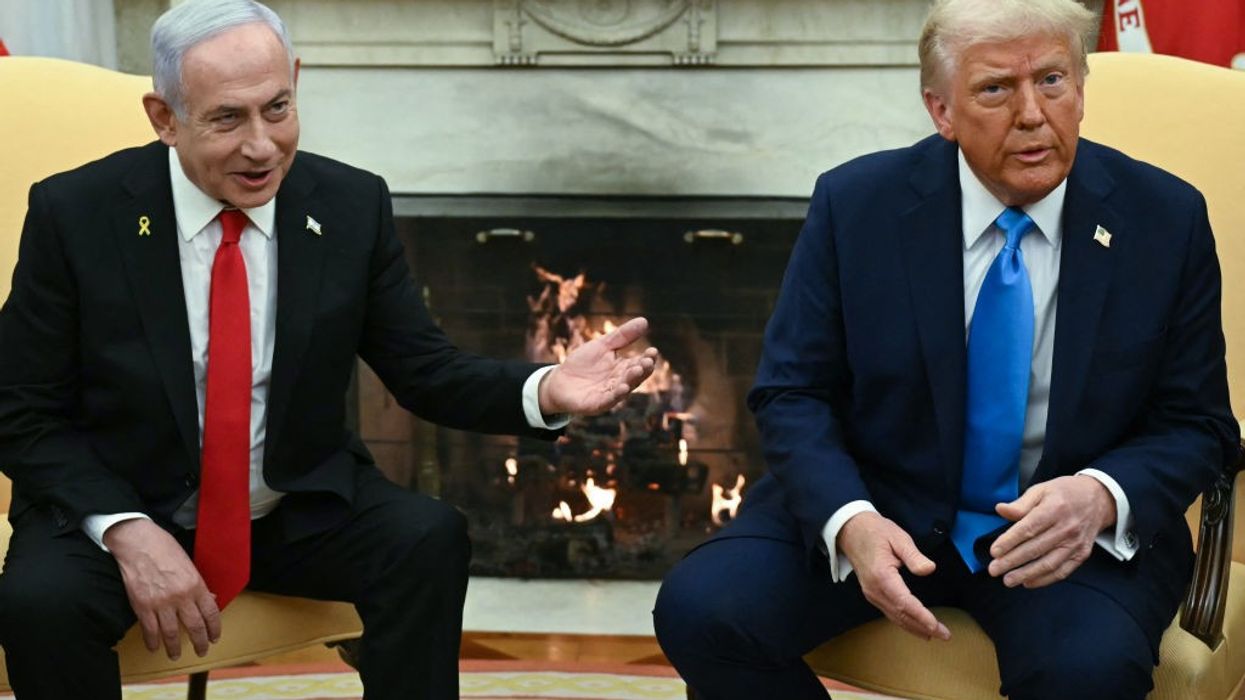
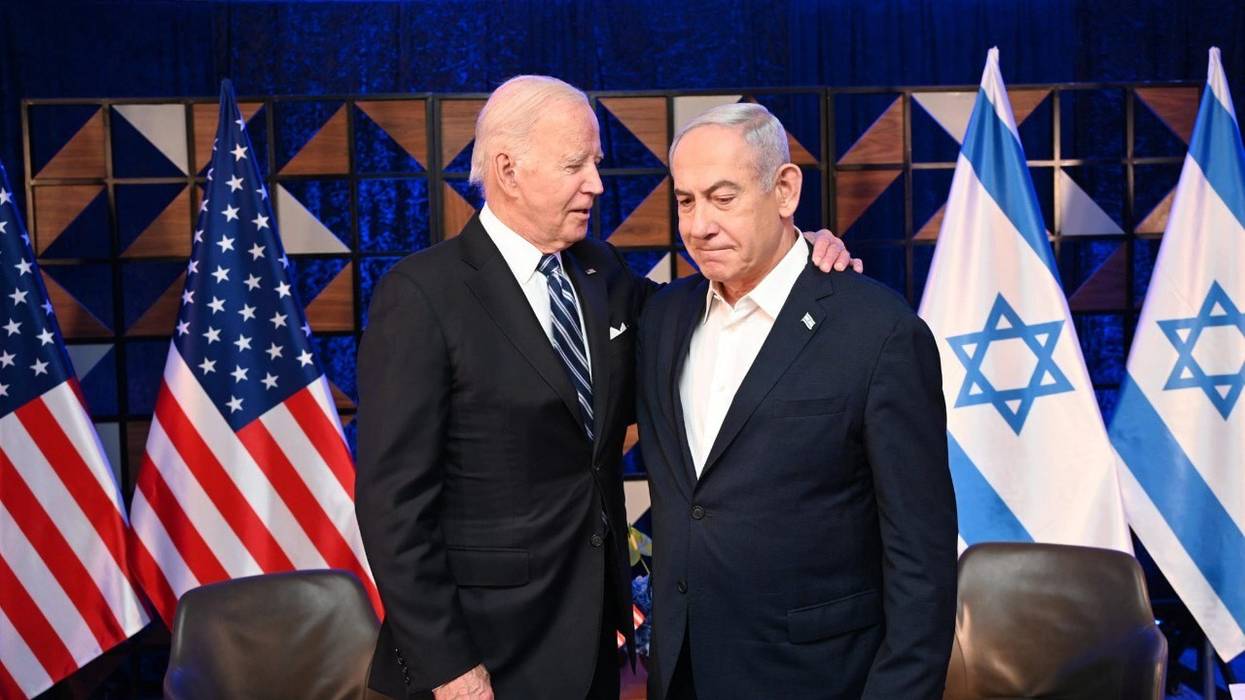
Standing beside Israeli Prime Minister Benjamin Netanyahu, Trump said that "the U.S. will take over the Gaza Strip," which would be emptied of Palestinians.
U.S. President Donald Trump said Tuesday that the United States will "take over" Gaza after emptying the embattled enclave of nearly all its native Palestinians, sparking a firestorm of criticism that included allegations of intent to commit ethnic cleansing.
Speaking during a press conference with fugitive Israeli Prime Minister Benjamin Netanyahu on Tuesday, Trump told reporters, "The U.S. will take over the Gaza Strip, and we will do a job with it too."
"We'll own it and be responsible for dismantling all of the dangerous unexploded bombs and other weapons on the site, level the site, and get rid of the destroyed buildings—level it out and create an economic development that will supply unlimited numbers of jobs and housing for the people of the area," Trump continued.
"We're going to develop it, create thousands and thousands of jobs, and it will be something that the entire Middle East could be very proud of," he said, evoking the proposals of varying seriousness to build Jewish-only beachfront communities over the ruins of Gaza.
Trump said that U.S. developers will "level it out" and build the "Riviera of the Middle East" after Palestinians—"all of them"—leave Palestine's coastal enclave.
Doubling down on his January call for the removal of most of Gaza's population to Egypt and Jordan—both of which vehemently rejected the proposal—Trump said that "it would be my hope that we could do something really nice, really good, where [Palestinians] wouldn't want to return."
"Why would they want to return?" asked Trump. "The place has been hell."
Asked how many Palestinians should leave Gaza, Trump replied, "all of them," citing a figure of 1.7-1.8 million Palestinians out of an estimated population of approximately 2.3 million people.
The forced transfer of a population by an occupying power is a war crime, according to Article 49 of the Fourth Geneva Convention—under which Israel's settler colonies in the occupied West Bank are also illegal.
"I don't think people should be going back to Gaza," Trump continued. "Gaza is not a place for people to be living, and the only reason they want to go back, and I believe this strongly, is because they have no alternative. If they had an alternative, they'd much rather not go back to Gaza and live in a beautiful alternative that's safe."
Asked if he would deploy U.S. troops to Gaza, Trump said that "we'll do what's necessary. If it's necessary, we'll do that."
Palestinian Ambassador to the U.N. Riyad Mansour responded by affirming that "our country and our home is the Gaza Strip."
"It's part of Palestine," he stressed. "Our homeland is our homeland."
Responding to Trump's remarks, Netanyahu praised his ally's "willingness to puncture conventional thinking" and stand behind Israel.
"[Trump] sees a different future for that piece of land that has been the focus of so much terrorism, so many attacks against us, so many trials and so many tribulations," Netanyahu told reporters as he stood beside the U.S. leader. "He has a different idea, and I think it's worth paying attention to this. We're talking about it. He's exploring it with his people, with his staff."
"I think it's something that could change history," Netanyahu added, "and it's worthwhile really pursuing this avenue."
There is currently a fragile cease-fire between Israel and Hamas in Gaza, where more than 15 months of Israeli bombardment, invasion, and siege have left more than 170,000 Palestinians dead, maimed, or missing and more than 2 million others forcibly displaced, starved, or sickened, according to local and international officials and agencies.
Numerous Israeli leaders have advocated the ethnic cleansing of Palestinians from Gaza and the Jewish recolonization of the coastal enclave, most of whose inhabitants are the descendants of Palestinians forcibly expelled from other parts of Palestine during the establishment of the modern state of Israel in the late 1940s. Palestinians ethnically cleansed during what they call the Nakba, or catastrophe, have since been denied their U.N.-guaranteed right of return to their homeland.
Last November, former Israeli Defense Minister Moshe Ya'alon acknowledged that the ethnic cleansing of northern Gaza was underway. Other Israeli political and military leaders have said that the so-called "Generals' Plan"—a strategy to starve and ethnically cleanse Palestinians from northern Gaza—was effectively in progress.
Palestinian-American journalist Ramzy Baroud responded to Trump's remarks in a video posted on social media Tuesday.
"Now, you would say, 'Wait a minute, Trump seems to be really, really determined, his heart is set on ethnically cleansing Palestinians, and this subject is back on the table,'" Baroud said. "The question is, whose table? It's not on the table of the Palestinian people."
Earlier Tuesday, Trump signed an executive order withdrawing the United States from the U.N. Human Rights Council (UNHRC) and continuing the freeze on funding for the U.N. Relief and Works Agency for Palestine Refugees in the Near East (UNRWA), which Israel has baselessly
accused of being a terrorist organization.
In a fact sheet viewed by multiple media outlets, the White House asserted that UNHRC "has not fulfilled its purpose and continues to be used as a protective body for countries committing horrific human rights violations."
"The UNHRC has demonstrated consistent bias against Israel, focusing on it unfairly and disproportionately in council proceedings," the White House continued. "In 2018, the year President Trump withdrew from the UNHRC in his first administration, the organization passed more resolutions condemning Israel than Syria, Iran, and North Korea combined."
UNHRC spokesperson Pascal Sim noted Tuesday that the U.S. has been an observer state, not a UNHRC member, since January 1, and according to U.N. rules, it cannot "technically withdraw from an intergovernmental body that is no longer part of."
The UNRWA funding pause is based on Israeli claims—reportedly extracted from Palestinian prisoners in an interrogation regime rife with torture and abuse—that a dozen of the agency's more than 13,000 workers in Gaza were involved in the Hamas-led October 7, 2023 attack. These claims prompted numerous nations including the United States to cut off funding for UNRWA last year. The U.S. had been UNRWA's biggest benefactor, providing $300-400 million annually to the lifesaving organization.
UNRWA fired nine employees in response to Israel's claim, even as the agency admitted there was no evidence linking the staffers to October 7. Faced with this lack of evidence, the European Union and countries including Japan, Germany, Canada, and Australia reinstated funding for UNRWA. Last March, then-U.S. President Joe Biden signed a bill prohibiting American funding for the agency.
Israeli lawmakers have also
banned UNRWA from operating in Israel, severely hampering the agency's ability to carry out its mission throughout Palestine, including in Gaza and the illegally occupied West Bank and East Jerusalem.
According to the most recent UNRWA situation report, at least 272 of the agency's workers have been killed by Israeli forces, which since October 2023 have bombed numerous schools, shelters, and other facilities used by the agency.
William Deere, the director of UNRWA's Washington, D.C. office, told PBS earlier this week that "there is no alternative to UNRWA."
"UNRWA performs a unique function in the U.N. system," Deere explained. "We are a direct service provider. We run... a healthcare network, we run an education system, we provide relief and social services."
As U.N. Secretary-General António Guterres said last month, "UNRWA has been carrying out activities in the occupied Palestinian territory for more than 70 years... and has thus accumulated unparalleled experience in providing assistance that is tailored to the specific needs of Palestine refugees."
Trump's executive order preceded his meeting with Netanyahu, who is wanted by the International Criminal Court after it issued arrest warrants for him and Yoav Gallant, his former defense minister, last November for alleged war crimes and crimes against humanity in Gaza. The tribunal also issued a warrant for Hamas leader Mohammed Diab Ibrahim Al-Masri.
The U.S. president's directives also followed his January freeze on foreign aid to countries except for Israel and Egypt, and his plan to shut down the United States Agency for International Development.
"There is reason to believe that these weapons are being used to commit grave violations of international law, such as the crime of genocide and war crimes."
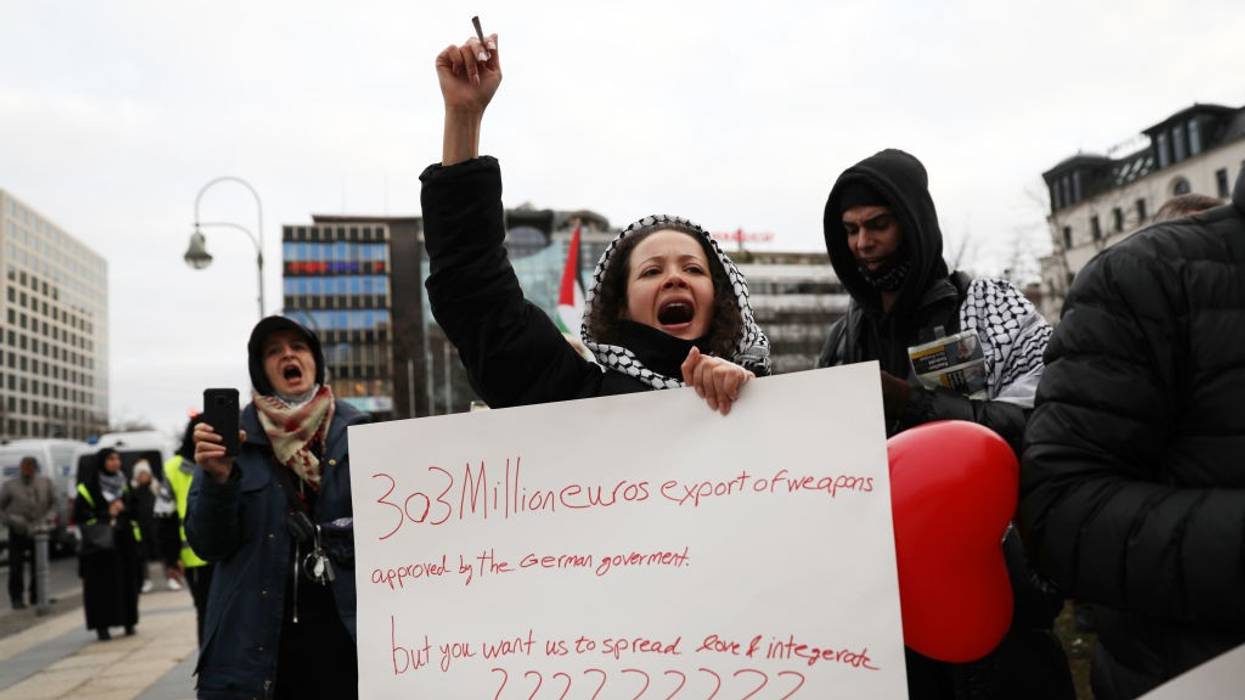
The Berlin-based Lawyers' Collective on Friday sued the German government in an effort to stop weapons transfers to Israel, whose government and military are waging a genocidal war against Palestinians in Gaza.
According to the Stockholm International Peace Research Institute, Germany is the second-largest arms exporter to Israel, providing 30% of its imported weaponry from 2019-23. The top exporter, the United States, provided 69% of Israel's imported armaments during that same period.
"As there is reason to believe that these weapons are being used to commit grave violations of international law, such as the crime of genocide and war crimes, the applicants are hereby demanding that the German government protect their right to life," groups supporting the lawsuit—including the European Legal Support Center, Palestine Institute for Public Diplomacy, Law for Palestine, and Forensis—said in a statement.
Ahmed Abed, an attorney in the case who is representing Palestinian families, said during a Friday press conference in Berlin that "Germany has a constitutional responsibility to protect human life."
"The German government must stop its arms exports to Israel, as they are in violation of international law," he added. "The government cannot claim that it is not aware of this."
According to the Lawyers' Collective:
In 2023, the German government issued arms exports licenses to Israel worth €326.5 million, the majority of which were approved after October 7, 2023, a tenfold increase compared to 2022. The German government is currently supporting the Israeli army by approving the supply of 3,000 portable anti-tank weapons, 500,000 rounds of ammunition for machine guns, submachine guns, or other fully or semi-automatic firearms, as well as other military equipment, while in early 2024 Germany was preparing the authorization of 10,000 rounds of 120mm tank ammunition...
The arms deliveries and support provided by the Federal Government to Israel violate the Federal Republic's obligations under the War Weapons Control Act. The criteria for the approval of arms exports include, among other things, that the weapons are not used against Germany's obligations to international law.
The groups said that since the International Court of Justice (ICJ) found in January that Israel is plausibly committing genocide in Gaza, they believe that "the delivery of weapons is contrary to these obligations."
In February, lawyers from some of the same groups involved in the new lawsuit sued senior German officials, including Chancellor Olaf Scholz, for "aiding and abetting" Israel's genocide in Gaza.
Last month, Nicaragua filed an ICJ lawsuit against Germany accusing its government of helping Israel commit genocide against Palestinians.
In addition to exporting hundreds of millions of euros worth of arms to Israel, Germany also suspended contributions to the United Nations Relief and Works Agency for Palestine Refugees in the Near East in response to unsubstantiated Israeli accusations that 12 of the agency's 13,000 workers in Gaza were involved in the Hamas-led October 7 attacks on Israel. This, as Palestinians starve to death.
The German government has been intensely criticized for its nearly unconditional support for Israel and for violently cracking down on pro-Palestinian protests. Numerous observers contend that Germany's actions are driven by historical guilt over the Holocaust, with some critics claiming the German government is weaponizing that guilt in order to demonize Palestinians and their defenders.
The new lawsuit came as the United Nations Human Rights Council on Friday voted 28-6 with 13 abstentions in favor of a resolution demanding that Israel be held accountable for possible war crimes and crimes against humanity in Gaza. The United States and Germany were the two biggest countries to vote against the measure.
Palestinian and international human rights officials say at least 33,173 Palestinians—most of them women and children—have been killed by Israel's bombing, invasion, and siege of Gaza since October 7. More than 75,800 others have been wounded, while over 7,000 Gazans are missing and believed dead and buried beneath the rubble of the hundreds of thousands of homes and other structures damaged or destroyed by Israeli attacks.
"Imagine how many lives could have been saved if this leverage had been used earlier, as so many urged."
The news late Thursday that Israeli officials had approved the reopening of the Erez crossing between Israel and northern Gaza to allow more humanitarian aid to reach starving Palestinians was greeted with cautious optimism by rights groups, as critics of U.S. President Joe Biden's Israel policy noted that the approval was granted shortly after Biden issued a warning to the Israeli government.
Biden reportedly threatened to condition future military support for Israel in a call with Israeli Prime Minister Benjamin Netanyahu on Thursday, marking the first time the president has used his leverage as the top international funder of the Israel Defense Forces (IDF) to influence Israel's actions in Gaza.
"Very good news coming just hours after Biden finally signaled a willingness to withhold aid," said Matt Duss, executive vice president at the Center for International Policy. "Imagine how many lives could have been saved if this leverage had been used earlier, as so many urged."
The Erez crossing was expected to receive humanitarian aid shipments starting Sunday, Israeli officials told CNN, with more aid entering Gaza through the Ashdod port the same day.
Jan Egeland, secretary general of the Norwegian Refugee Council, said the news offers a "glimmer of hope" but said Israel must demonstrate that the change in policy will have a meaningful impact on the lives of Gaza's 2.3 million residents, including 300,000 Palestinians who are believed to be trapped in Gaza and subsisting on just 245 calories per day due to Israel's monthslong blockade on nearly all humanitarian aid.
"Israel and its allies must ensure that aid can now flow freely to avert a famine, and that there will be a protection system for humanitarian workers that guarantees our security," said Egeland. "Most of all we need protection for Palestinian civilians, who have been indiscriminately killed during these last six months."
Biden's call to Netanyahu came days after Israel killed seven aid workers, including one American citizen, who were delivering relief with World Central Kitchen (WCK). The strike on the clearly-marked WCK convoy prompted ships carrying 240 tons of aid to turn back from Gaza.
The attack has prompted some of Biden's closest allies, including Sen. Chris Coons (D-Del.) to add their voices to calls that have consistently been made by international human rights experts, the United Nations, and progressive lawmakers for the U.S. to apply conditions to military aid for Israel in accordance with U.S. law.
Despite Biden's warning, he has also been pushing Congress this week to approve an $18 billion military aid shipment to Israel.
Stephane Dujarric, spokesperson to U.N. Secretary-General António Guterres, said the news of the Erez crossing reopening was "positive news but, of course, we will have to see how this is implemented."
"We need a humanitarian cease-fire and a massive influx of aid," said Dujarric.
Shortly after Israel made its announcement, the United Nations Human Rights Council voted overwhelmingly in favor of a resolution calling on countries to stop sending weapons to Israel.
Twenty-eight of 47 member countries supported the resolution, which demanded Israel be held accountable for possible war crimes, while six opposed it. Thirteen countries abstained.
The U.S. was among the countries that opposed the resolution, despite Biden's threat to condition aid to Israel.
Francesca Albanese, the U.N. special rapporteur on the occupied Palestinian territories, commended the countries that "voted to pass a resolution calling to halt arms transfers to Israel at this critical moment."
"Next step for all states is to enforce this as well as recent U.N. resolutions to stop the ongoing genocide in Gaza," said Albanese. "This is in line with states' obligations under international law including ICJ [International Court of Justice] provisional measures."
The ICJ last week ordered Israel to allow humanitarian aid into Gaza, where more than 25 children are among dozens who have died of starvation so far.
"Israel's genocide on the Palestinians in Gaza is an escalatory stage of a long-standing settler-colonial process of erasure."
The United Nations Human Rights Council on Monday published a draft report that found "reasonable grounds to believe" that Israel is committing genocide in Gaza, a move that came on the same day as the U.N. Security Council passed a resolution demanding an immediate cease-fire in the ongoing war.
The advance unedited version of the report—entitled Anatomy of a Genocide—concludes that Israel's far-right government and military "have intentionally distorted jus in bello principles, subverting their protective functions, in an attempt to legitimize genocidal violence against the Palestinian people."
"The overwhelming nature and scale of Israel's assault on Gaza and the destructive conditions of life it has inflicted reveal an intent to physically destroy Palestinians as a group," the draft report states, enumerating Israeli actions that violate Article II of the Convention on the Prevention and Punishment of the Crime of Genocide: "Killing members of the group; causing serious bodily or mental harm to group members; and deliberately inflicting on the group conditions of life calculated to bring about its physical destruction in whole or in part."
"Israel has de facto treated an entire protected group and its life-sustaining infrastructure as 'terrorist' or 'terrorist-supporting,' thus transforming everything and everyone into either a target or collateral damage, hence killable or destroyable," the paper continues. "In this way, no Palestinian in Gaza is safe by definition. This has had devastating, intentional effects, costing the lives of tens of thousands of Palestinians, destroying the fabric of life in Gaza, and causing irreparable harm to its entire population."
Israel
rejected the report as "an obscene inversion of reality."
According to Palestinian and international humanitarian officials, Israel's 171-day Gaza onslaught has killed at least 32,333 Palestinians, most of them women and children, while wounding nearly 75,000 others and displacing around 90% of Gaza's 2.3 million people. Thousands more Palestinians are missing and believed to be dead and buried beneath the rubble of bombed buildings. Disease and deadly starvation caused and exacerbated by Israel's siege and blockade of Gaza are spreading rapidly.
"Israel's genocide on the Palestinians in Gaza is an escalatory stage of a long-standing settler-colonial process of erasure," the draft report asserts. "For over seven decades this process has suffocated the Palestinian people as a group—demographically, culturally, economically, and politically—seeking to displace it and expropriate and control its land and resources."
Referring to the flight and ethnic cleansing of more than 750,000 Arabs from Palestine during the foundation of the modern state of Israel in 1948, the paper contends that "the ongoing Nakba must be stopped and remedied once and for all. This is an imperative owed to the victims of this highly preventable tragedy, and to future generations in that land."
"The ongoing Nakba must be stopped and remedied once and for all."
The draft report urges U.N. member states to "enforce the prohibition of genocide in accordance with their... obligations" under international law. In January, the U.N.'s International Court of Justice (ICJ) found that Israel was "plausibly" perpetrating genocide in Gaza and ordered the country's government to "take all measures within its power" to prevent genocidal acts. Human rights defenders say Israel has ignored the order.
"Israel and those states that have been complicit in what can be reasonably concluded to constitute genocide must be held accountable and deliver reparations commensurate with the destruction, death, and harm inflicted on the Palestinian people," the publication argues.
The draft report recommends measures including:
Israel on Monday informed the U.N. that it will no longer allow UNRWA convoys carrying food aid into northern Gaza, even as the Palestinians are starving to death, a move that one humanitarian campaigner called a "death sentence."
"This is a desperately dark day for LGBTI rights and for Uganda," said Amnesty International's deputy regional director for East and Southern Africa.
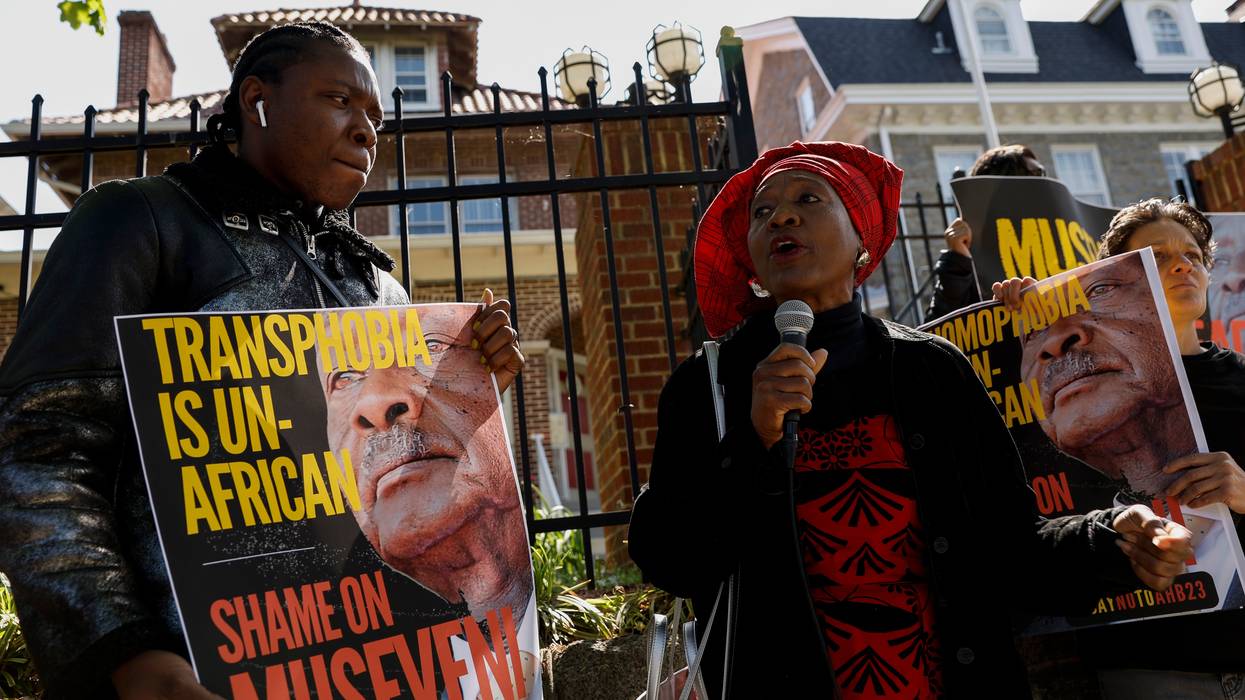
Human rights defenders around the world on Monday condemned Ugandan President Yoweri Museveni after he signed a bill criminalizing same-sex sexual acts between consenting adults and imposing the death penalty for "aggravated homosexuality."
Museveni, who is 78 and has ruled the African nation for nearly four decades, signed the Anti-Homosexuality Bill of 2023, under which people convicted of "aggravated homosexuality"—that is, same-sex sexual acts by HIV-positive people or with children, disabled people, or anyone deemed vulnerable—can be hanged to death. The law punishes same-sex acts with life imprisonment and attempted same-sex acts with 10 years behind bars. It also criminalizes the "promotion" of LGBTQ+ rights.
The bill was initially rejected by Museveni last month because he wanted it amended to include a "rehabilitation" option for LGBTQ+ people who "would like to live normal lives again," according to a presidential spokesperson. The legislation builds on a 2013 law under which life imprisonment was the most severe penalty for same-sex relations. Museveni has said that he finds gay people "disgusting."
"Despite our concerted efforts to stop the passage of the Anti-Homosexuality Bill, the president today has legalized state-sponsored homophobia and transphobia by signing this bill into law," Frank Mugisha, executive director of the advocacy group Sexual Minorities Uganda (SMUG), said in a statement.
"It will erode the rights of LGBTIQ individuals and put innocent Ugandans at crosshairs of grave violations from state and nonstate actors," Mugisha added. "We now look forward to the legal challenge in court, and the law being repealed."
Hours after Museveni signed the bill into law, 11 opponents including Ugandan parliamentary lawmaker Fox Odoi-Oywelowo petitioned the Constitutional Court seeking to block its implementation, the Monitor reports.
Amnesty International deputy regional director for East and Southern Africa Flavia Mwangovya said in a statement that "this is a desperately dark day for LGBTI rights and for Uganda."
"The signing of this deeply repressive law is a grave assault on human rights and the constitution of Uganda and the regional and international human rights instruments to which Uganda is a part," she continued.
"The Anti-Homosexuality Bill of 2023 will do nothing other than enshrine discrimination, hatred, and prejudice against LGBTI Ugandans and their allies into law," Mwangovya added. "It's unconscionable that they risk losing their lives, their freedom, their privacy, their freedom of expression, and their ability to live free from discrimination."
The United Nations Human Rights Council tweeted: "We are appalled that the draconian and discriminatory anti-gay bill is now law. It is a recipe for systematic violations of the rights of LGBT people and the wider population. It conflicts with the [Ugandan] Constitution and international treaties and requires urgent judicial review."
Josep Borrell, the European Union's high representative for foreign affairs and security policy, called the new law "contrary to international human rights law and to Uganda's obligations under the African Charter on Human and People's Rights, including commitments on dignity and nondiscrimination, and the prohibition of cruel, inhuman, or degrading punishment."
In the United States—which gives Uganda about $1 billion in annual assistance—President Joe Biden said in a statement that "the enactment of Uganda's Anti-Homosexuality Act is a tragic violation of universal human rights."
"I join with people around the world—including many in Uganda—in calling for its immediate repeal," Biden continued. "No one should have to live in constant fear for their life or being subjected to violence and discrimination. It is wrong."
"This shameful act is the latest development in an alarming trend of human rights abuses and corruption in Uganda," Biden asserted, adding that his administration is considering "sanctions and restriction of entry into the United States against anyone involved in serious human rights abuses or corruption."
Ugandan Parliamentary Speaker Anita Among said her U.S. visa had been revoked.
Even some congressional Republicans—some of whom back anti-LGBTQ+ legislation in the United States—condemned the new Ugandan law, including Sen. Ted Cruz of Texas, who called it "grotesque and an abomination."
Same-sex sexual acts were already illegal in Uganda—one of around 30 African and 60 world nations that criminalize such acts— under the 2013 law and legislation passed during colonization by Britain. Prior to colonization's imported homophobia, Uganda had a history of tolerating sexual diversity, including among the Baganda—the country's largest ethnic group—and Lango, who recognize a third gender, the mudoko dako. King Mwanda II, who ruled the Baganda people in the 1880s, was famously bisexual.
Right-wing evangelical Christians from the United States have played a key role in the introduction of anti-LGBTQ+ legislation in African nations.
Attacks on LGBTQ+ rights and people—including the murders of activists including David Kato and Brian Wasswa—have increased in Uganda this century.
Mugisha said the new law will "bring a lot of harm" to Uganda's already persecuted LGBTQ+ community.
"We feel so, so, so worried," he told Agence-France Presse.
Noting that communities like Huwara are often targeted by Israeli settlers, Amnesty's regional director urged Israel "to remove all settlements, which are war crimes under international law, and to dismantle its system of apartheid against Palestinians."
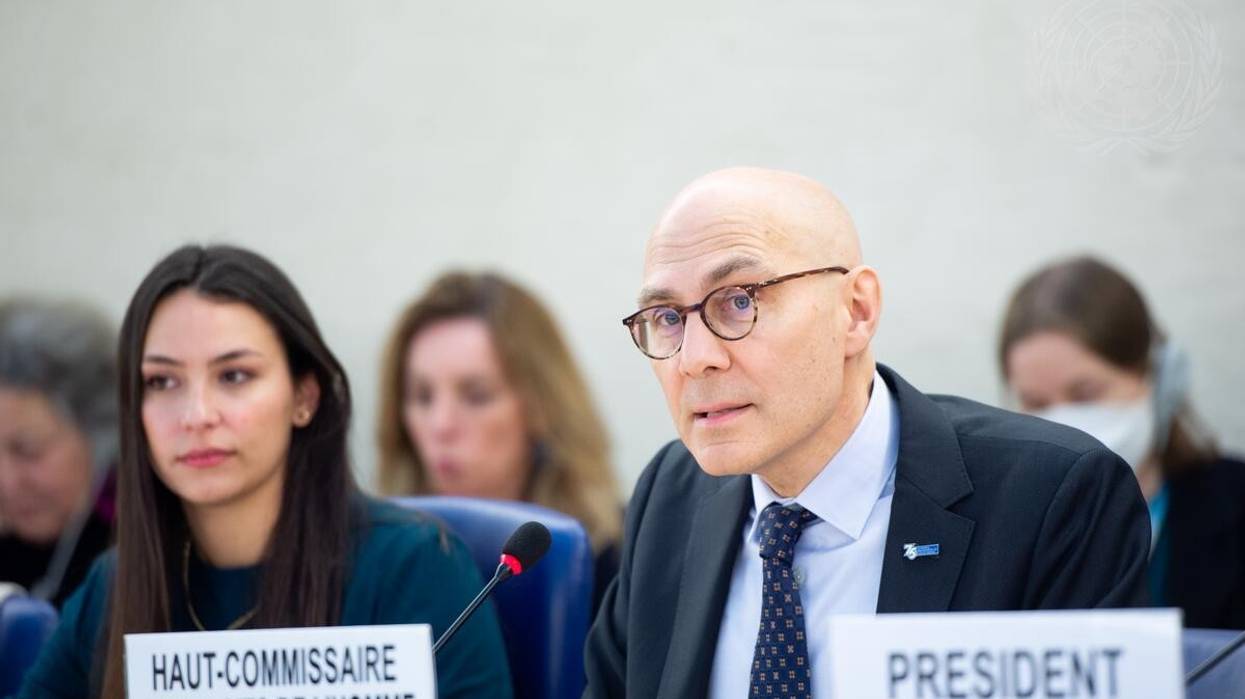
United Nations High Commissioner for Human Rights Volker Türk on Friday called out Israeli Finance Minister Bezalel Smotrich for saying that Huwara, a Palestinian village in the West Bank, "needs to be wiped out" and "the state of Israel should do it."
Smotrich's comment Wednesday came after Israeli settlers on Sunday rampaged through Huwara, killing a 37-year-old Palestinian man—mass violence that came just hours after a Palestinian gunman murdered a pair of Israeli brothers, who were 19 and 21.
While presenting a report on Israel's illegal occupation of Palestine and "the current intensification of violence" to the U.N. Human Rights Council, Türk blasted Smotrich's remark as "an unfathomable statement of incitement to violence and hostility."
"Over half a century of occupation has led to widening dispossession, deepening deprivation, and recurring and severe violations of their rights, including the right to life."
More broadly, Türk lamented that "the situation in the occupied Palestinian territory is a tragedy. A tragedy, above all, for the Palestinian people. Over half a century of occupation has led to widening dispossession, deepening deprivation, and recurring and severe violations of their rights, including the right to life. Nobody could wish to live this way—or imagine that forcing people into conditions of such desperation can lead to an enduring solution."
"2022 saw both the highest number of Palestinians killed by Israeli security forces in the past 17 years, and the highest number of Israelis killed since 2016," he highlighted. "This death toll has further, and sharply, deteriorated in the first weeks of 2023, and in the month that has just ended."
Türk's office found that over the reporting period, Israeli security forces frequently used lethal force, "regardless of the level of threat—and, at times, even as an initial measure, rather than as last resort." Researchers also documented "several cases of apparent extrajudicial, targeted killings" by such forces.
As the rights chief told the council, other key findings in the report include:
"The occupation is eating away at the health of both societies, on every level—from childhood to old age, and in every part of life," Türk stressed. "For this violence to end, the occupation must end. On all sides, there are people who know this."
The U.N. leader urged decision-makers in the region and around the world to heed the recommendations of his office's reports "and to step back from the precipice to which increasing extremism and violence have led."
While the settler attack on Huwara drew rare widespread rebuke—including from Israel's prime minister, Benjamin Netanyahu, and a pair of conservative Jewish organizations in the United States—the Israeli government's recent shift to the right has stoked fears that violence in the region will only get worse and more frequent.
As Beth Miller, political director of Jewish Voice for Peace Action, said earlier this week, "The Israeli settlers burning down Palestinian homes and attacking Palestinians in the street are supported by the Israeli military and the Israeli government."
Heba Morayef, Amnesty International's director for the Middle East and North Africa, declared Friday that "under Israel's apartheid system, impunity reigns."
"Despite the intensity and scale of Sunday's attacks, which resulted in the killing of one Palestinian and the wounding of nearly 400 more, and despite a rare show of international condemnation of settler violence, Israeli police yesterday released six suspects who were arrested in connection with the attacks," she noted. "Meanwhile two others have been issued with administrative detention orders, which violate international law."
Like Miller, Morayef emphasized that "Israeli authorities have long enabled and incited settler attacks against Palestinians, and in some cases soldiers have directly participated."
"State-backed settler violence is endemic in the occupied West Bank," she continued. "Towns and villages like Huwara, which was the epicenter of Sunday's attacks, are frequently targeted as they are surrounded by illegal settlements. For example, in October 2022, settlers broke into a school in Huwara where they smashed windows and beat teachers and pupils; less than two weeks later a café was set on fire, and groups of settlers assaulted Palestinian residents with pipes and rocks."
"Amnesty International reiterates its call on Israeli authorities to remove all settlements, which are war crimes under international law, and to dismantle its system of apartheid against Palestinians," Morayef added. "Apartheid is a crime against humanity and violence against civilians will continue for as long as it is in place."