

SUBSCRIBE TO OUR FREE NEWSLETTER
Daily news & progressive opinion—funded by the people, not the corporations—delivered straight to your inbox.
5
#000000
#FFFFFF
To donate by check, phone, or other method, see our More Ways to Give page.
Daily news & progressive opinion—funded by the people, not the corporations—delivered straight to your inbox.
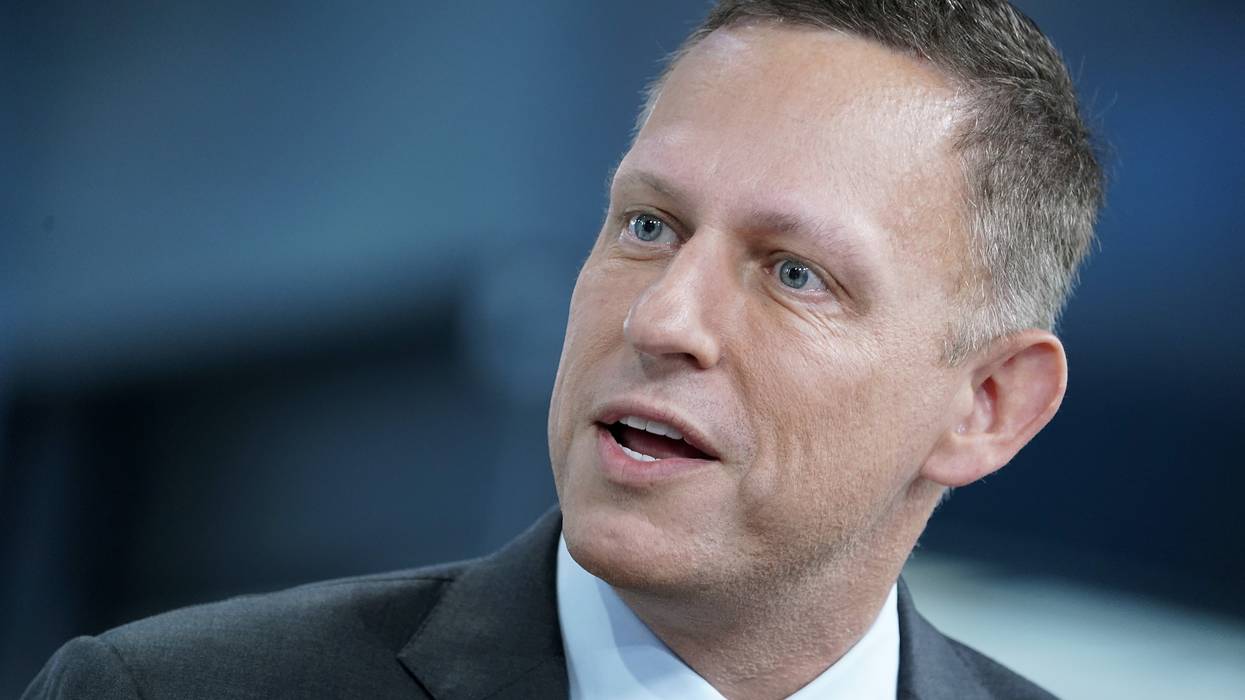
A small segment of the state’s 200-plus billionaires has stepped up to oppose Prop 40, a ballot proposal to tax billionaires, contributing millions to opposition groups and vocally speaking out against the one-time fee.
On November 3, 2026, California voters will vote on Proposition 40, a one-time 5% levy on the net worth of billionaires who were California residents on January 1, 2026. Ninety percent of the revenue would fund healthcare programs, with the remainder set aside for food assistance and education.
A small segment of the state’s 200-plus billionaires has stepped up to oppose Prop 40, contributing millions to opposition groups and vocally speaking out against the one-time fee.
In a brief report, California’s Billionaire Wealth Surge: Meet the 22 California Billionaires Opposing Prop 40 Billionaire Wealth Tax, we identified 22 California billionaires who are active funders and outspoken opponents of Prop 40. Together they have given over $150 million to oppose the initiative—with more rolling in every day. These 22 include a prince, several private jet flying chums of Jeffrey Epstein, and a bunch of crypto and tech bros designing the AI future for the rest of us.
Thiel’s wealth is 10,759 times the median wealth of a Californian household.
On January 1, 2025, these 22 billionaires had a combined wealth of $439.8 billion. By September 1, 2026, their wealth had grown to $722.1 billion.
In a little under 20 months, their combined wealth increased $282.6 billion, a gain of over 64%.
Just to be clear, these “snowflake billionaires” are whining, wailing, and donating money to fight a tax that would effectively require them to part with one-eighth of the wealth they’ve gained since January 1, 2025.
This group includes Google’s Sergey Brin who has been the single largest opposition donor, chipping in over $102 million to fight Prop 40. Brin has seen his wealth grow a whopping 70% in the last 20 months, from $148 billion on January 1, 2025 to $253 billion on September 1, 2026. Brin’s wealth is 83,498 times the median wealth of a Californian household, which is $303,000.
Palantir’s Peter Thiel gave $3 million to the No on 40 campaign and has called on other billionaires to move out of California. In the last 20 months, Thiel’s wealth increased a whopping 120.27%, from $14.8 billion on January 1, 2025 to $32.6 billion on September 1, 2026 (Forbes). Thiel’s wealth is 10,759 times the median wealth of a Californian household.
Chris Larsen, founder of cryptocurrency firm Ripple, has given over $5 million to the No on Prop 40 Campaign, along with another $5 million from Ripple and $12 million to Building a Better California. His personal wealth increased 23.5%, from $10.2 billion to $12.6 billion in the last 20 months. His wealth is 4,158 times the wealth of the median California family.
Venture capitalist John Doerr gave $10 million to No On 40. In the last 20 months, Doerr’s wealth increased 47.97%, from $14.8 billion on January 1, 2025 to $21.9 billion on September 1, 2026. Doerr’s wealth is 7,227 times the median wealth of a Californian household.
Three of the 20 saw their wealth decline over this 20-month period: Tony Xu, Marc Pincus, and Marco DeGeorge. But most have experienced substantial gains.
The number of billionaires in California has grown, with their average wealth remaining roughly between $9.1 to $9.4 billion. As of September 1, 2026, the 231 billionaires identified as living in California have a combined wealth of $2.117 trillion. Just 20 months ago, there were 178 billionaires in California with a combined wealth of $1.685 trillion.
To show how quickly billionaire wealth has accelerated since the pandemic, let’s go back in time six years. In early 2020, all 815 billionaires residing in the United States had a combined wealth of $2.9 trillion, only slightly more than what the 231 California billionaires have today in 2026.
Meanwhile, the median net worth of a California household has risen a marginal 5.2% increasing $15,000 from $288,000 in 2025 to $303,000 in 2026. A Californian with $1 billion dollars in wealth has 303 times the wealth of the median California household.
Under Prop 40, this billionaire will pay a one-time tax of $50 million to support healthcare, education, and food assistance for their fellow Californians leaving them $950 million to survive on.
In California, the state’s 231 billionaires (as of Sept 1, 2026) hold approximately $2.117 trillion in wealth ($2.3 trillion as of Sept 22, 2026) and pay incredibly low taxes on their riches.
According to an analysis published by economists Gabriel Zucman and Emmanuel Saez, from 2019 to 2025, while California billionaires’ wealth grew an average of over 15% per year, they paid, on average, just 0.26% of their wealth annually in state income taxes. Sergey Brin and Larry Page paid just 0.07% of their wealth annually in California income tax during that period. I guess we can see why they don’t want anything to change.
This analysis was prepared by the Institute for Policy Studies and Tax the Ultra-Rich Now (TURN). More detailed dossiers will be available soon. Press release HERE.
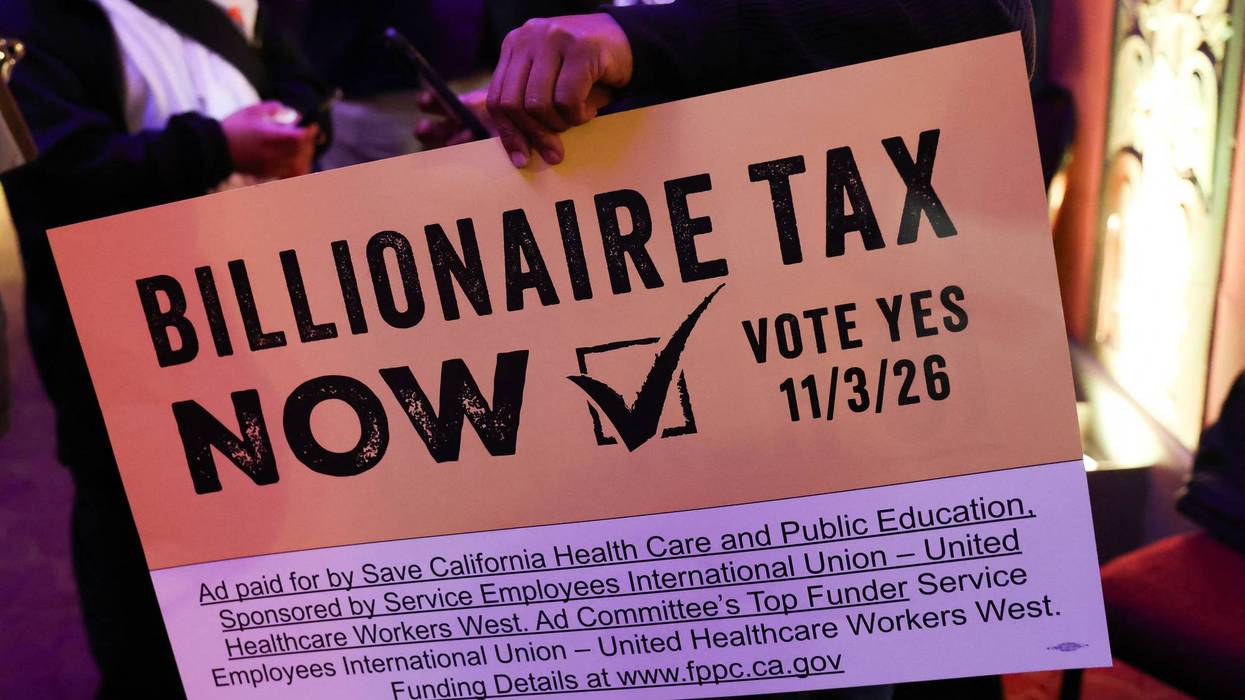
“What will allow California to thrive in the future," the economists said, "is not letting a handful of billionaires live tax-free: it is adequate public spending on health, education, and public infrastructure, key engines of economic growth."
As California voters head to the polls this November, their vote on whether to enact a first-of-its-kind billionaire wealth tax may mark "a turning point in the battle between democracy and oligarchy," says a group of Nobel Prize-winning economists.
The fight over Proposition 40—a ballot measure that would impose a one-time 5% tax on the net worth of those with $1 billion or more in order to fund the state's healthcare system—has heated up in recent weeks.
The initiative remains popular, with 52% of voters in the state supporting it, according to a poll out last week. But California's elite have lined up at least $156 million behind an aggressive campaign to kill it, with Google co-founder Sergey Brin alone giving at least $102 million.
And while the proposal has strong backing from progressive politicians and labor unions, some prominent Democrats have tried to stop it, most notably Gov. Gavin Newsom.
As the rich flood the airwaves with ads warning that taxing their wealth would bring about economic ruin, six Nobel laureates, all of whom have won the prestigious prize for their work in economics, signed an open letter on Saturday endorsing Prop. 40.
They are inequality scholar Daron Acemoglu, global poverty researcher Abhijit Banerjee, labor and public finance economist Peter Diamond, anti-poverty economist Esther Duflo, trade economist and columnist Paul Krugman, and inequality and globalization economist Joseph Stiglitz.
"Proposition 40 would be the first-ever tax on billionaire wealth enacted anywhere in the world," the economists wrote. "California is the right place to take this historic step."
They explained that the growing number of billionaires in the state in recent decades has helped to make California "one of the most unequal places in America." While the state's richest 0.001% of residents were worth a combined $700 billion a decade ago, its 250 billionaires are now worth about $2.3 trillion—equivalent to the entire annual income of the state's 20 million taxpayers.
"This extreme wealth has translated into extraordinary power," the economists wrote, citing data showing that during the 2024 election, billionaires accounted for 19% of all federal election spending in the US and that these same billionaires are now marshaling huge sums of money to oppose a tax that would affect them.
While acknowledging that many of California's wealthiest have "made important contributions, for which they have been amply rewarded," the researchers noted their use of loopholes in the tax system to effectively pay a lower tax rate than the average Californian.
Most billionaire wealth is held in the form of stocks and other assets whose gains are not generally subject to income tax until they are sold.
As a result, billionaires in the state paid about $3 billion in state income taxes per year from 2019-25, while their fortunes increased by about $1.4 trillion over the period. Dividing total state income tax by that increase equals roughly 1.6%. Meanwhile, the average California family pays about 5-6% of their annual income in state income taxes.
The economists argued that enacting a wealth tax would allow the state to play "catch-up," raising about $100 billion—enough to offset federal cuts to the state's Medicaid program enacted in the Republican budget legislation last year, which have helped to fuel thousands of layoffs at hospitals around the state.
They also disputed a common counterargument that the tax will spur billionaire flight from the state and "doom" Silicon Valley.
Not only would the tax apply to any billionaire living in the state as of January 1, 2026, meaning most would not have had time to relocate; they also pointed out that in 2026, after Prop. 40 was announced, California has attracted 80% of the nation's venture capital funding, compared to just 50% prior to 2025, according to data from PitchBook's Venture Monitor.
“What will allow California to thrive in the future," the economists said, "is not letting a handful of billionaires live tax-free: It is adequate public spending on health, education, and public infrastructure, key engines of economic growth to which it is only fair to ask the ultrawealthy to contribute.”
They added that passing Prop. 40 "isn’t just critical for Californians," but could "kickstart a movement to tax ultra-high-net-worth individuals in other states—and eventually at the federal level and in other countries."
The six Nobel laureates who signed Saturday's letter are not the first prominent economists to publicly advocate for the wealth tax. University of California, Berkeley economist Emmanuel Saez helped draft the proposal, while Gabriel Zucman, a chaired professor at the Paris School of Economics, has conducted research underpinning it. Paris School professor Thomas Piketty and former US Labor Secretary Robert Reich have also come out in support of the ballot initiative.
Responding to the letter from the Nobel laureates, Dutch historian and wealth tax advocate Rutger Bregman—whose School for Moral Ambition has worked alongside Zucman to promote similar initiatives around the world—said it was "really great to see" more celebrated economists speaking up in favor of the proposal.
"You don't have to be a radical leftist to see why it's a good idea," Bregman wrote on social media. "This is not going to be some kind of socialist revolution. The proposal is about restoring balance to a mixed economy. You could even argue it's about saving capitalism itself from oligarchs like Sergey Brin. I think that's exactly why Nobel Prize-winning economists are coming out in favor of this tax."
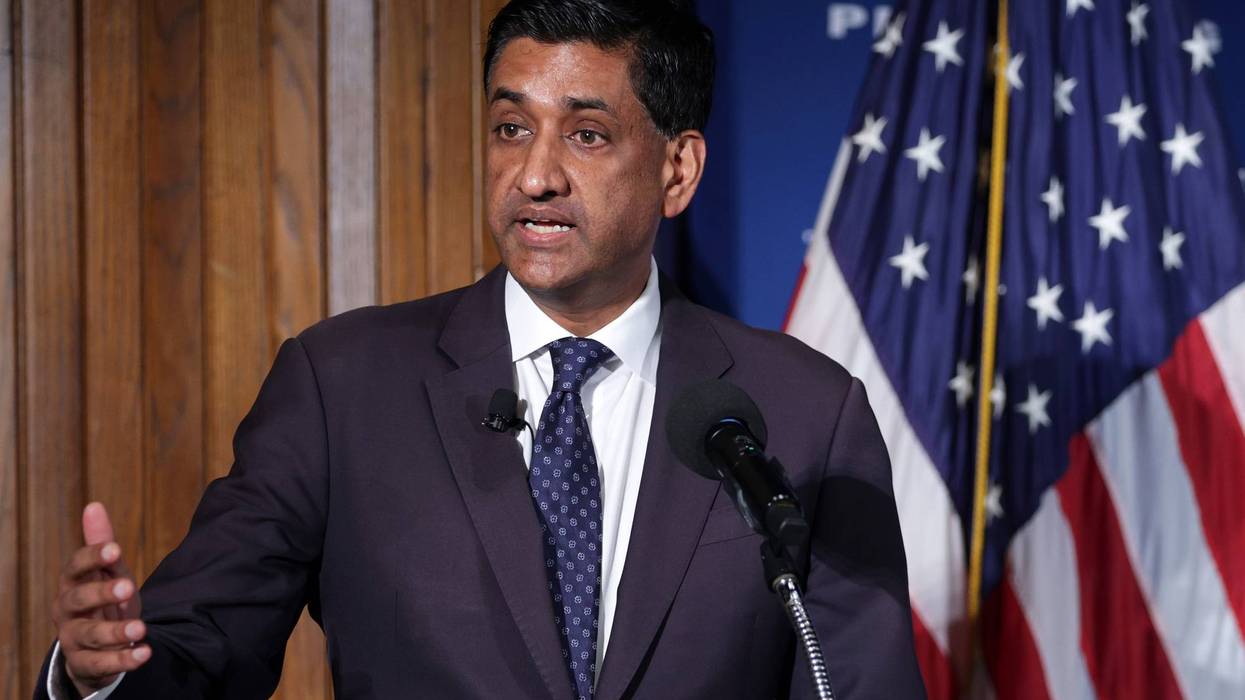
The question before us in California is not complicated. Are we going to stand with the three million people—our friends and neighbors—about to lose their health care, or with the billionaire class that would rather we looked away?
There are more billionaires in my district and the surrounding area than almost any other Member of Congress. Within fifty miles of my district sits nearly a third of the entire American stock market—over $20 trillion in value—and five companies worth more than a trillion dollars each. For years, I have fought for fairness in our tax policy. If America has been good to you, you must do good for America.
There are 938 billionaires in America. Together they are worth $8.2 trillion. The bill I wrote with Bernie Sanders asks them for 5 percent every year.
This is a simple tax on wealth. Every year, this tax evaluates the total value of a billionaire’s holdings, their stock, their companies, their real estate, and taxes 5 percent of it. Not their income, which they have arranged to be almost nothing. The wealth itself. The same way a family pays property tax on a house whether or not they sell it. We conduct this assessment on individual’s estates already when they die.
This billionaire wealth tax will raise $4.4 trillion over a decade. This is enough to establish a $60,000 salary floor for every public school teacher in America, cap child care at 7 percent of a family’s income, and restore the $1 trillion stripped from Medicaid and the ACA, with a $3,000 check left over for every household under $150,000.
California legislators have proposed a state tax to target similar excessive wealth. A proposition on the November ballot would levy a one-time 5 percent tax on the wealth of the state’s 250 billionaires. Accrued over 5 years, it would raise $100 billion to save health care for 3 million Californians. I am backing it.
Opposing these landmark taxes, Governor Newsom has suggested a “minimum income tax”. The focus of this tax is billionaires’ reported income, as well as the loans they take out to live on. An income tax, not a wealth tax. That is the problem. Newsom goes after that income, but billionaires have very little. Most take no salary at all. They borrow against their stock, live on the loans, and pass the fortune to their children without ever selling a share. The wealth underneath goes untouched.
Bernie and I tax the wealth itself, and our bill raises $4.4 trillion. Newsom’s tax on these borrowed assets only raises 1/44th of that. That’s why the tech oligarchs support Newsom’s proposal. They hope they can trick folks into making the issue go away.
Same billionaires, forty-four times the revenue from Bernie and I’s proposal compared to Newsom’s.
Tax what they own, not what they report.
I was criticized for the bill, as well as my support of California’s proposed Billionaire Tax. Many said that the wealth flight from California would devastate our economy. They were wrong. In Q1 of 2026, California received more venture capital investment than the rest of the country combined. Then the billionaires spent millions propping up my primary challenger. He received 6 percent of the vote.
And the tax should not stop at billionaires, it must reach centimillionaires. The tax has to reach all fortunes $50 million and up, and one already does. Every year it has been introduced, I have cosponsored the Ultra-Millionaire Tax Act. It starts at $50 million: 2 percent a year on wealth above that line, And it reaches the money inside irrevocable trusts, taxed to the grantor who set them up. Moving a fortune into a trust should not take it off the books from a wealth tax.
Supporters are right to call the fight in California the reverse Proposition 13 of our generation. In 1978, California voted for Prop 13 to cap property taxes, and that anti-tax revolt carried Ronald Reagan to the presidency two years later. This is that revolt in reverse: instead of capping taxes on property, we are taxing the extreme wealth at the top. This is a philosophical fight, and California is the test case for the nation.
So the question is not complicated. Are we going to stand with the three million Californians about to lose their health care, or with the billionaire class that would rather we looked away? Are we the party of working people, or just the party of the donor class? Are we going to return to the party of FDR, or keep telling ourselves we need to do what the donors want?
Are we willing to tax extreme wealth, or only willing to talk about it?
I know my answer. We cannot have a nation where 938 people grow $1.5 trillion richer in a year while a teacher in my district takes a second job to cover rent.