

SUBSCRIBE TO OUR FREE NEWSLETTER
Daily news & progressive opinion—funded by the people, not the corporations—delivered straight to your inbox.
5
#000000
#FFFFFF
To donate by check, phone, or other method, see our More Ways to Give page.
Daily news & progressive opinion—funded by the people, not the corporations—delivered straight to your inbox.
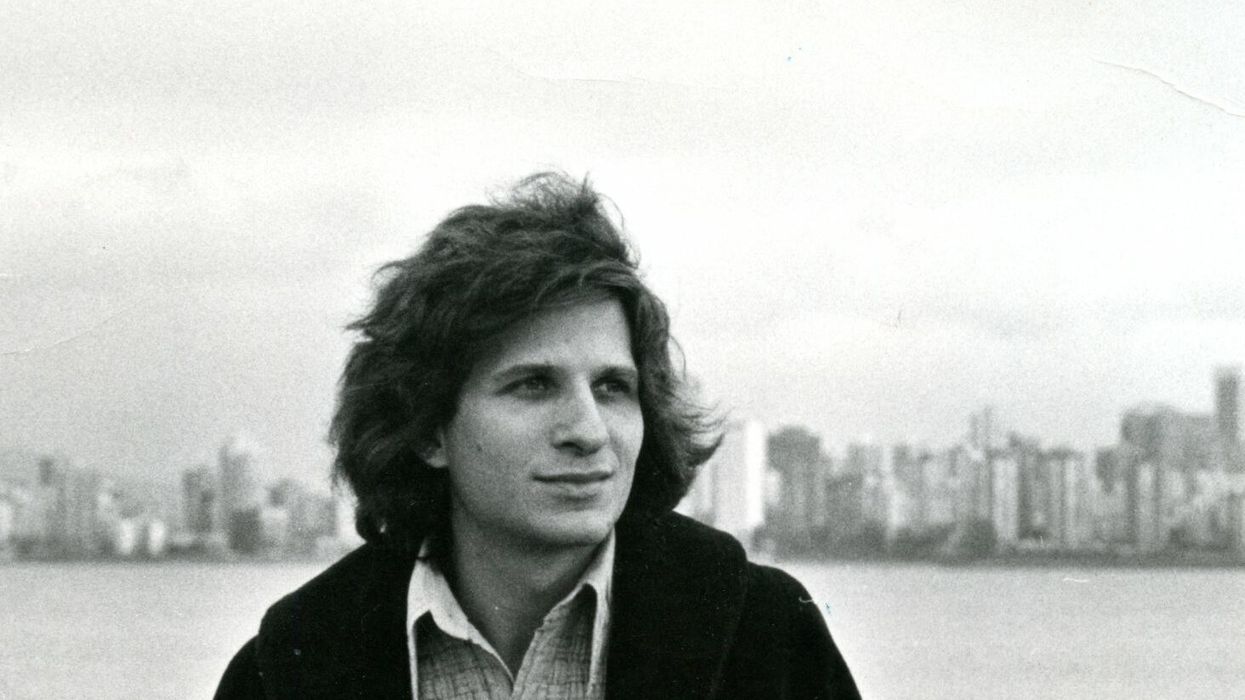
A new book by Mark Satin—Up From Socialism: My 60-Year Search for a Healing New Radical Politics—makes a powerful case that the real answer lies within.
As administrator of the Schumacher Center for a New Economics, I have spent decades trying to usher visionary, regenerative, and decentralist ideas into the American body politic. So have many of my counterparts in organizations across the country. But sometimes I think we’re no closer to making a difference on a national scale now than we were in the 1970s. What is holding us back?
The usual answers are “capitalism” and the two-party system. But the more experience I’ve gained, the more I’ve come to believe that those are just excuses, and the real answer lies elsewhere.
Mark Satin’s new book—Up From Socialism: My 60-Year Search for a Healing New Radical Politics—makes a powerful case that the real answer lies within: We visionary activists have been so internally divided, and so driven by ego and unexamined personal pain, that we’ve never been able to harness the life-giving ideas of people like Jane Jacobs, Ivan Illich, Hazel Henderson, David Korten, Kate Raworth, and E.F. Schumacher himself (all of whom turn up in Satin’s book) to a viable national political organization.
The last page reveals the “moral” of the book: “Only by becoming kind people can we create a kind world.”
Satin’s book reads like a novel, and it is admirably, some may say shockingly, specific. It spends a lot of time on activists’ parental, collegial, and love relationships, not just on their political organizing. And Satin finds all of it wanting. (He is as tough on himself as he is on anyone, which gives the book a feeling of heartache rather than blame. And there is redemption at the end!)
To stick to the political organizing—the first part of the book tries to demonstrate that the New Left of the 60s was an inadequate vehicle for us. Satin shows in devastating detail that the leading members of his Mississippi Student Nonviolent Coordinating Committee group were more interested in Black nationalism than in integrating the local schools. He shows that the older student leaders of his campus Students for a Democratic Society group were more interested in promoting socialism than in listening to the emerging ecological, decentralist, and humanistic-psychology ideas of younger students. And he shows that the leaders of the Toronto Anti-Draft Program (North America’s largest draft-resister assistance organization) were more interested in fomenting a Marxist revolution than in providing practical help to the resisters.
According to Satin, these and similar experiences led to the collapse of the New Left—and to the rise of thousands of independent feminist, ecological, spiritual, appropriate-technology, etc. organizations. In addition, two visionary organizations arose that aimed to synthesize such ideas and bring them into national politics.
The first of these, the New World Alliance, drew its Governing Council from a wide range of professionals, educators, businesspeople, and activists. It included three future Schumacher Society participants, Alanna Hartzok, John McClaughry, and Kirkpatrick Sale. But it fell apart after four years of constant bickering over policies, processes, and fundraising, often caused (Satin seeks to show) largely by personal jealousies and rivalries. At one point, spiritually oriented Planetary Citizens president Donald Keys accused McClaughry of being in league with the Devil! Some of the scenes in this chapter are so tragicomic that they’d work as skits on Saturday Night Live.
The chapter on the U.S. Green Party movement, though, is pure tragedy. By the mid-1980s, America was yearning for a major third party. Amazingly well-connected people were waiting in the wings to help the Greens get off the ground. But, instead, the principal organizers of the Greens—a spiritual feminist, an anarchist, a socialist, and two bioregionalists—created an organization in their own narrow image. As Satin sees it, this was a classic case of the organizers and their cohorts preferring to be big fish in a small pond. The resulting Green “movement” then engaged in phenomenally ugly infighting over the next decade—what happened to three Green women is truly sickening to read—and the Greens emerged in the end not as a major beyond-left-and-right political party capable of spearheading a regenerative economy and culture, but as a minor far-left protest party.
In more recent years, Satin found hope in what he calls the “radical centrist” or “trasnspartisan” movement—people and groups that are more interested in fostering cross-partisan political dialogue than in providing Correct Answers. He felt this would be an excellent way to insert the views of visionary thinkers into the national dialogue—and to win support for all kinds of local and regional experimentation. But he notes that the track record of radical-centrist groups like New America and No Labels has so far been disappointing. They’re as internally divided as the Greens and a lot snootier. What Satin really wants, he confides to us, is a new political movement of committed listeners, bold beyond-left-and-right synthesizers, and savvy organizers.
A powerful conclusion urges visionary activists to live more like ordinary Americans, in order to decrease arrogance and deepen understanding. The last page reveals the “moral” of the book: “Only by becoming kind people can we create a kind world.”
When E.F. Schumacher wrote his famous book Small Is Beautiful, he entitled his chapter about political economy “Buddhist Economics.” Later he must have had second thoughts about characterizing his ideas in such an oppositional way, for his later book, A Guide for the Perplexed, makes it clear that his ideas are consistent with the beliefs of all the great religions, including of course Christianity. When Satin argues that we visionary activists cannot move forward unless we (a). learn to be kind to self and others, and (b). listen to and learn from all engaged Americans, he is following in Schumacher’s footsteps. We should listen to him.
Mark Satin, Up From Socialism: My 60-Year Search for a Healing New Radical Politics (New York: Bombardier Books, distributed by Simon & Schuster, 2023), 380 pages, $21.95 pbk, $12.95 eBook.
One observer quipped that No Labels was calling it quits "to spend more time with their lobbyists."
Less than a month after No Labels announced it would nominate a "unity ticket" for the 2024 presidential election, the group said Thursday that it is abandoning its longshot third-party White House bid.
"No Labels has always said we would only offer our ballot line to a ticket if we could identify candidates with a credible path to winning the White House," the group said in a statement. "No such candidates emerged, so the responsible course of action is for us to stand down."
As Common Dreams reported last month, No Labels—whose own leader has admitted is "not in it to win it" but rather to "give people a choice"—has poured millions of dollars in dark money contributions into a quixotic run that critics like MoveOn executive director Rahna Epting warned could "swing the election to Donald Trump," the twice-impeached former Republican president and presumptive GOP nominee, 91 federal and state criminal charges notwithstanding.
No Labels had floated former Republican Maryland Gov. Larry Hogan and former South Carolina Gov. Nikki Haley, a failed 2024 GOP presidential contender, as possible "unity ticket" candidates. However, the group ultimately found no takers.
Top No Labels donors include billionaire and multimillionaire Trump supporters like Nelson Peltz, private equity executive Stephen Schwarzman of Blackstone, and former 20th Century Fox CEO James Murdoch. Louis Bacon, the billionaire CEO of hedge fund Moore Capital Management, donated $1 million each to No Labels and the Republican Party after giving the maximum allowable contribution to Sen. Kyrsten Sinema, formerly one of the conservative Democrats in Congress and now an Independent.
Even with all that financial backing, No Labels' path to the ballot has been dubious. MoveOn has urged states to investigate the group for allegedly misleading voters through deceptive canvassing methods that result in their disenfranchisement.
The U.S. two-party system has been criticized for monopolizing political power at the expense of democracy and voter choice by actively working to thwart all viable third-party and independent candidates. However, political pragmatists note what they say is the folly of running unwinnable races.
"Third-party candidates are the fools gold of this election," MoveOn said on social media, adding that neither No Labels nor conspiracy theorist Robert F. Kennedy "have ballot access in all 50 states and mathematically cannot win."
"They can only play spoiler," the group added.
However, while Democrats and Republicans often automatically gain ballot access, the two parties are largely behind state laws that create often insurmountable barriers for third-party and independent challengers.
Other progressives also welcomed the news of No Labels' withdrawal—but with a warning. Melanie D'Arrigo, executive director of the Campaign for New York Health, quipped on social media that No Labels was quitting "to spend more time with their lobbyists."
"Billionaires pump millions into No Labels, and in return, their politicians push policies that transfer wealth from the working-class back to billionaires," she added. "Just because they aren't running a presidential candidate doesn't mean they aren't still a serious threat to democracy."
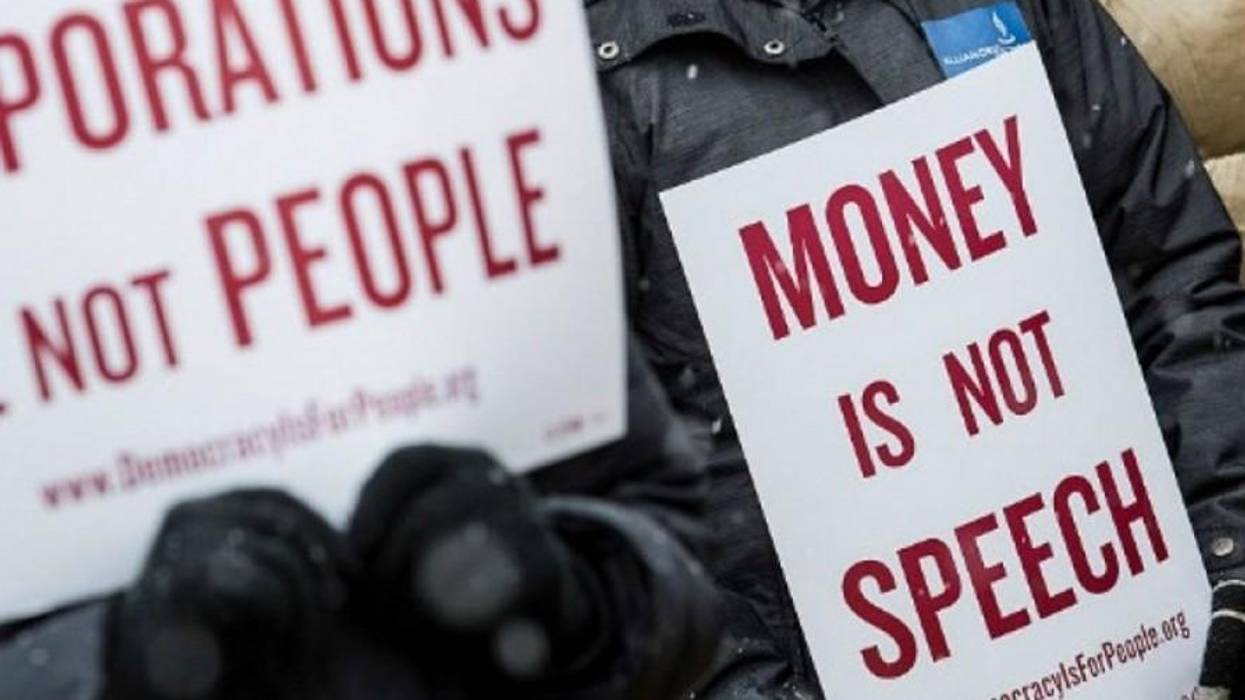
"Contributions from dark money groups and shell companies are outpacing all prior elections and may even surpass the roughly $660 million in contributions from unknown sources that flooded 2020 elections."
Dark money groups are spending at record levels in their efforts to influence the outcome of the 2024 U.S. elections, an analysis published Wednesday by OpenSecrets revealed.
According to the watchdog, the "unprecedented surge" in spending by dark money groups—which, thanks to the U.S. Supreme Court's 2010 Citizens United v. Federal Election Commission ruling don't have to disclose their donors—topped $162 million in 2023, "surpassing the level of dark contributions seen at the same point in any prior election cycle."
"So far this election cycle, contributions from dark money groups and shell companies are outpacing all prior elections and may even surpass the roughly $660 million in contributions from unknown sources that flooded 2020 elections—a cycle that attracted over $1 billion in total dark money," the group said.
According to OpenSecrets' analysis, super PACs and other dark money groups supporting Democrats have spent $85 million during this election cycle, while contributions backing Republicans have totaled $74 million so far. If the trend holds, this will be the fourth consecutive election cycle in which Democrats enjoyed a dark money advantage.
Americans for Prosperity Action, a right-wing hybrid PAC led by billionaire Charles Koch, has reported around $25 million in contributions so far this election cycle—far more than any other dark money group. Senate Majority PAC, which supports Democrats, has spent over $16.7 million, while the conservative Congressional Leadership Fund is in third place with more than $15.8 million in donations.
In an effort to tackle dark money's corrupting influence, U.S. Sen. Sheldon Whitehouse (D-R.I.) and Rep. Judy Chu (D-Calif.) last month introduced legislation aimed at closing a loophole that lets wealthy individuals make tax-free asset donations to dark money groups.
Dark money is back in the headlines amid scrutiny over the right-wing billionaires behind the upcoming No Labels third-party "unity" ticket and $100 million blitz unleashed by the American Israel Political Action Committee against Democrats who criticize Israel's genocidal war on Gaza.
"Their decision to move forward with a dark-money, Trump donor-funded third-party fantasy bid is shameful and puts millions of Americans at risk," said one opponent.
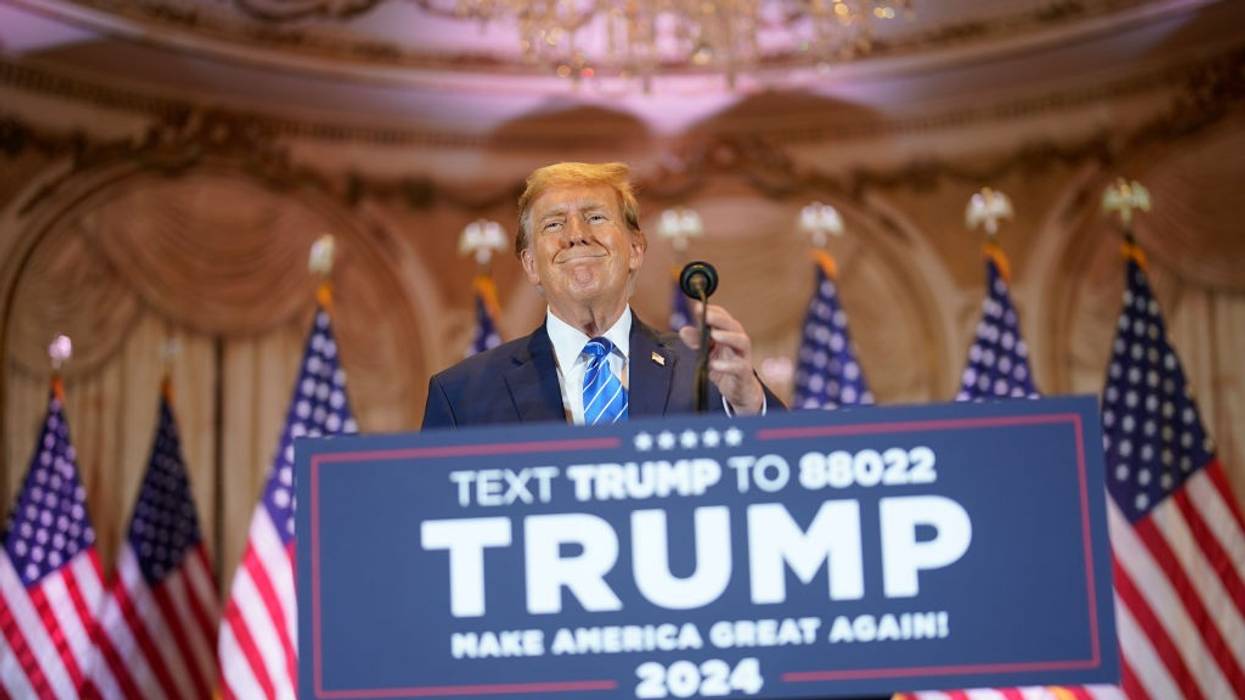
With Democratic U.S. President Joe Biden expected to face former GOP President Donald Trump in the November election, No Labels on Friday confirmed it is pushing ahead with plans for a third-party "unity" ticket that critics fear could help the Republican return to the White House.
"The consequences of the next presidential election could not be more serious or more existential, and, despite this, No Labels has put their dangerous, reckless thought experiment ahead of the rights and freedoms of millions of Americans and the future of our democracy," declared MoveOn Political Action executive director Rahna Epting. "Their decision to move forward with a dark-money, Trump donor-funded third-party fantasy bid is shameful and puts millions of Americans at risk."
"Their own founder said they are 'not in it to win it,' and several current and past supporters of No Labels have implored them to stand down. And yet, they have decided to pump millions of dollars of dark money into a run that would swing the election to Donald Trump," she warned. "Any candidates who join the No Labels presidential ticket will be complicit in making it easier for Donald Trump and MAGA extremists to win a second term in the White House."
"Any candidates who join the No Labels presidential ticket will be complicit in making it easier for Donald Trump and MAGA extremists to win a second term."
Epting's comments came after No Labels national convention chair Mike Rawlings said in a statement that "earlier today, I led a discussion with the 800 No Labels delegates from all 50 states. These citizen leaders have spent months discussing with one another the kind of leadership they want to see in the White House in 2024. These are some of the most civic-minded, thoughtful, and patriotic Americans I have ever met. They take their responsibility seriously."
"Even though we met virtually, their emotion and desire to bring this divided nation back together came right through the screen. I wasn't sure exactly where No Labels delegates would land today but they sent an unequivocal message: Keep going," he added. "They voted near unanimously to continue our 2024 project and to move immediately to identify candidates to serve on the unity presidential ticket. Every one of our delegates had their own explanation for wanting to move ahead."
No Labels is a dark money group with secret far-right donors.
It’s not trying to find the so-called “middle ground.”
It’s trying to put Donald Trump back in the White House.
Be warned. pic.twitter.com/5cJgBTFGNj https://t.co/PCluXaWhBQ
— Robert Reich (@RBReich) March 8, 2024
While Rawlings provided some examples of delegates' statements from the call, so did journalists who obtained recordings of it. The New Republic's Greg Sargent—who got the audio from Matt Bennett, co-founder of the Democratic-centrist group Third Way—reported on concerns about a No Labels candidate being a spoiler for Trump:
For instance, a No Labels leader in Idaho said that while members are all for a run, they believe the ticket should "only" be offered to a candidate who has a "reasonable path to succeed and not be a spoiler." A leader in Iowa said the candidate must be "strong" and have "the ability to win."
Many others echoed these sentiments. At one point a party member from New Hampshire said: "We are in it to win it. But we also don't want to look like liars when we're telling people that we're not going to be a spoiler."
However, participants in the call expressed support for pursuing a unity ticket, according to Politico's Shia Kapos and Daniel Lippman, who also obtained a recording and reported that "delegates compared what No Labels was doing to Abraham Lincoln delivering the Gettysburg Address and the Founding Fathers during the American Revolution."
Third Way's Bennett said in a statement Friday: "What part of 'no' is so hard to understand? Time and again, voters, candidates, and election experts have told No Labels that a third-party presidential ticket can't win and would help Trump."
As Andrew Perez and Nikki McCann Ramírez detailed Friday for Rolling Stone:
Over the past year, the dark-money group has been leading a reported $70 million campaign to secure ballot access nationwide for a potential 2024 "unity" ticket. No Labels has refused to disclose who's funding this effort, claiming that this is to protect its donors from "agitators and partisan operatives." Thanks to a quirk in America's broken system of campaign finance laws, the group will never be required to disclose who funded its ballot access effort—and would only have to start reporting donors if it were to formally back candidates.
So far, No Labels has secured ballot access in 16 states, and is trying to do so in 17 other states. The group has given no concrete hints as to which two divide-spanning politicians might run on its unity ticket, or to what party they might belong.
Outgoing U.S. Sen. Joe Manchin (D-W.Va.)—a right-winger who weighed a run for president—suggested last week that a No Labels ticket would be a spoiler, saying that "right now, if you can't get on 50 states and you're going to basically hit in some of the battleground states that could be very detrimental to what the outcome would be."
During Biden's State of the Union speech on Thursday night, Trump said that it was "interesting" that Manchin and retiring Sen. Mitt Romney (R-Utah)—the 2012 GOP nominee—were sitting together, "and nobody wants to talk to them."
"I think they'd make a great No Labels team!" added Trump—whose only remaining primary challenger, former U.N. Ambassador Nikki Haley, dropped out earlier this week. She has also publicly opposed running with No Labels.
Sen. Kyrsten Sinema of Arizona, an Independent who ditched the Democratic Party shortly after the 2022 election, revealed this week that she is not seeking another term in November but she is also "not running for president."
Another potential No Labels candidate, former Republican Maryland Gov. Larry Hogan, recently resigned from the group's board in frustration and has decided to run for Senate. He remains opposed to both major candidates, saying Thursday that "I'm like 70% of the rest of people in America who do not want Joe Biden or Donald Trump to be president."
While No Labels searches for candidates, the group's critics continue to warn of the consequences of its potential ticket.
"There is no path to victory for No Labels. They will only ensure a second Trump presidency that serves the interests of their billionaire and corporate special interest backers," End Citizens United president Tiffany Muller said Friday. "It's why they've fought every effort to play by the rules and disclose their donors."
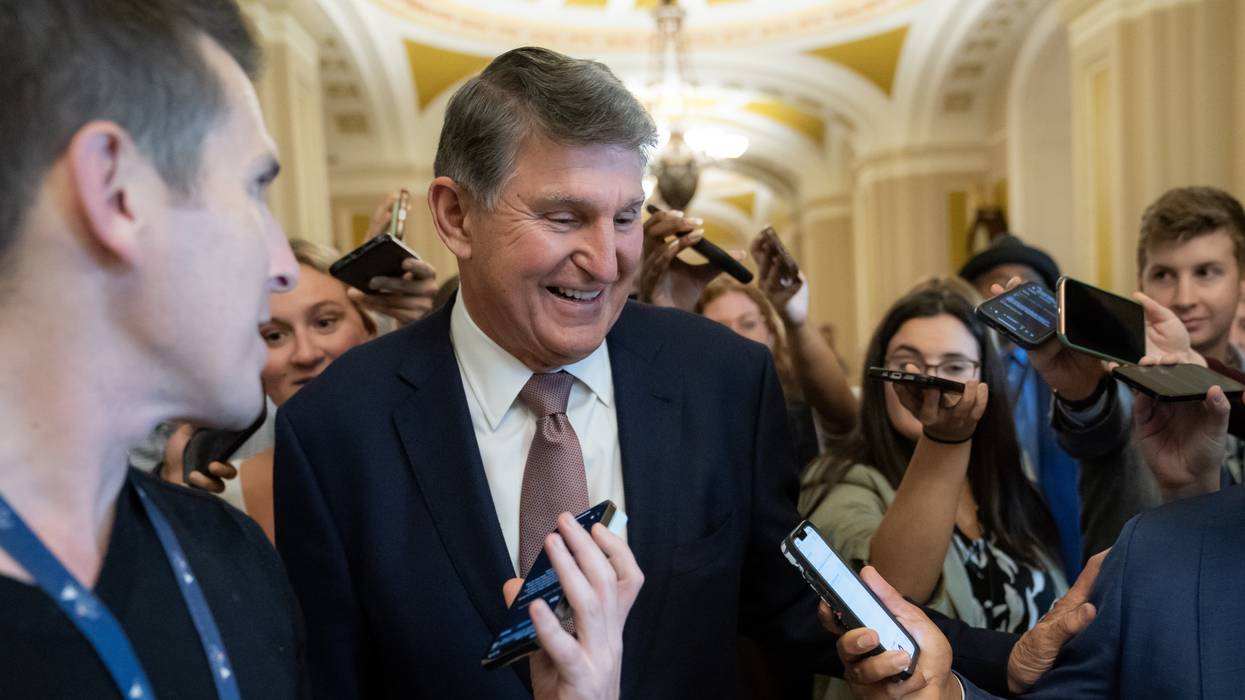
"He will stay in the spotlight until he's dragged out," one journalist said of the West Virginia Democrat.
Amid speculation that outgoing U.S. Sen. Joe Manchin may launch a third-party 2024 presidential run, the right-wing West Virginia Democrat known for battling his own party's agenda confirmed this week that he plans to start an extended trip around the country next month.
"I have made one of the toughest decisions of my life and decided that I will not be running for reelection to the United States Senate, but what I will be doing is traveling the country and speaking out to see if there is an interest in creating a movement to mobilize the middle and bring Americans together," Manchin said in a video released last month.
Asked about that statement during The Wall Street Journal CEO Council Summit on Tuesday, Manchin explained that "I start in January. I'll be two months on the road. And all we're trying to do is just mobilize people like myself who feel like they're homeless, politically homeless. I don't recognize the Democratic Party, and I have a D by my name."
"I have a lot of Republicans that don't recognize Republican Party, that have Rs by their name—so the Grand Old Party and I guess the Blue Dog Democrats, they're homeless, and I hear it every day," added the senator, who has thwarted fellow Democrats' legislative efforts to tackle the climate emergency and child poverty as well as expand abortion and voting rights.
Basav Sen at the Institute for Policy Studies took aim at the senator's climate record in a Wednesday opinion piece for The Hill, writing that "Manchin's career embodied the incredibly corrosive influence of fossil fuel money in politics" and his exit from the Senate "should spark a bigger conversation about the corruption that's become a defining feature of the U.S. political system."
As Sen detailed:
The outgoing lawmaker reportedly received more fossil fuel industry campaign money in the last cycle than any other federal legislator—and is himself a coal millionaire. Worse still, he leveraged his perch as the chair of the Senate Energy and Natural Resources Committee to enact policies benefiting his corporate donors and himself.
Manchin was the architect of a provision in the Inflation Reduction Act requiring oil and gas leasing on public lands and waters as a condition for any renewable energy leasing. He championed provisions in the Infrastructure Investment and Jobs Act that subsidize risky, unproven technologies such as carbon capture and storage and hydrogen energy, which greenwash continued fossil fuel production and use.
Perhaps his most infamous climate legacy is a deregulation bill known to the environmental justice movement as "Manchin's Dirty Deal." After three failed attempts to pass it by attaching it to must-pass government spending bills, Manchin finally managed to jam it into a bill averting a government default.
Manchin on Tuesday declined to say whether he will challenge Democratic President Joe Biden, who is seeking reelection in 2024, and the GOP nominee—the leading contender is former President Donald Trump—but he did criticize the current top candidates.
"Donald Trump shook it up; he'll break it this time if he gets back in," Manchin said. "And Joe Biden needs to wake up," he added, arguing that "the administration has been pushed so far left" and the president needs to move back to the "center" to win.
Regarding 2024, Manchin also said that "I will not be a spoiler. I've never been a spoiler in anything. I get into something, I get in to win." In a recent Journal survey, he got just 3% support as a presidential candidate with No Labels, a group that wants to run a "unity ticket" next year. In response to the results, he quipped it was "probably a bad poll" and chuckled.
During the Tuesday event, Manchin also railed against regulations, celebrated his successful effort to kill Biden's Build Back Better legislation in favor of the Inflation Reduction Act, and praised No Labels, saying that "I'm very proud of what they're been doing, what they're trying to do, to give options."
At least one high-profile political figure has signaled support for a Manchin run: Sen. Mitt Romney (R-Utah). The former Republican presidential nominee, who also isn't seeking reelection next year, was asked on television this past weekend if he would vote for Biden given his criticism of Trump. He said that "the Joe I would like to vote for is Joe Manchin."
Democrats fearful of how a Manchin presidential campaign could impact Biden's odd next year "have good cause to worry," Ry Rivard, a West Virginia native who spent several years reporting on state politics, wrote Sunday for Politico.
"A presidential run would be a fitting capstone for Manchin, who's built a career around putting his own interests ahead of his party," he asserted. "His brand of centrism has helped him survive West Virginia's rapid transformation from a blue to red state. But it also helped sow the seeds of the Democratic Party's demise back home."
Rivard wrote that Manchin's decision not to run for Senate again—against a former ally, Republican Gov. Jim Justice—was "no surprise," but he is also skeptical that the outgoing senator will actually run for president. He explained:
Manchin is hyper-competitive and hates to lose. He also knows how to read a poll: while Justice's complicated finances could generate some decent attack ads, he remains a formidable candidate. I couldn't imagine Manchin ending his public life with such a blow to his ego.
This makes it equally hard for me to imagine Manchin embarking on a long-shot, third-party presidential run, despite his suggestions otherwise. Seats on corporate boards, heading up an interest group, a Cabinet post, maybe. But not a presidential bid. It's not that he would hesitate to challenge a fellow Democrat—rather, losing an election might cost him whatever leverage he still has.
If Manchin did launch a No Labels-backed third-party run for president, "he would be remembered as the Democrat who ushered two Republicans into the governor's office in Charleston, and possibly a third into the White House," Rivard concluded. "But maybe that's the point."
They are working behind the scenes to get Trump, an existential threat to our democracy, back into the White House.
When I first came to Congress, I was enamored with the alleged ideal behind No Labels and their mission to take partisanship out of politics. A world where people can work together on ideas that help the American people despite ideological differences.
Boy was I wrong.
Their nonpartisan agenda is and always has been dishonest. My first disagreement with No Labels came when I realized they were only looking out for megadonor special interests, advocating for lowering taxes on the rich and powerful, and weakening regulations for big business, making it easier for them to exploit workers or the environment.
Now why would major Republican donor Harlan Crow give money to No Labels for a third-party candidate?
After a short while, I became concerned about who was funding them. One day, I called them to ask, and they told me they would “quietly remove me from their membership rolls.” I told them, “I don’t do anything quietly.”
I left the organization and the Problem Solvers Caucus. Then No Labels got involved in electoral politics. In 2014, they endorsed Republican Cory Gardner for Senate, despite the fact that he was challenging Mark Udall, the sitting Democratic senator from Colorado. So much for “no labels.”
Late last year, it was reported that the organization is rife with toxicity and corruption. No Labels is apparently taking a page out of the Donald Trump playbook.
Fast forward to today.
No Labels is now working behind the scenes to recruit a “third-party” candidate for president if President Joe Biden and Donald Trump are the two nominees. This is a recipe for disaster.
Instead of staying out of the current presidential race, No Labels is setting up this scheme to be a spoiler in the 2024 presidential election to prevent Biden from being reelected. They are working behind the scenes to get Trump, an existential threat to our democracy, back into the White House.
They know what they’re doing. No Labels doesn’t want a president in the White House who stands up to corporate interests like Joe Biden. They want someone like Donald Trump who turns a blind eye to rules, regulations, and laws.
No Labels isn’t even hiding it anymore. They just announced they are on the ballot in 10 states, including Arizona and Nevada where President Biden won by a very narrow margin in 2020.
No Labels knows that advocating for a third party is only going to take votes away from Joe Biden and attempts to give the electoral college victory to Donald Trump.
Candidates like Sen. Joe Manchin (D-W.Va.) or former Utah Republican Gov. Jon Huntsman will only take votes from Biden, not Trump.
No Labels is doubling down on this anti-democratic approach. One of their billionaire donors is Harlan Crow—the same Harlan Crow who has been acting as Justice Clarence Thomas’s benefactor, taking him and his extreme MAGA wife, Virginia Thomas, on trips all over the country.
Now why would major Republican donor Harlan Crow give money to No Labels for a third-party candidate? Because he understands it’s all just a ruse to get Donald Trump back into the White House. To cut taxes on the wealthiest Americans. To eliminate regulations for polluters. And to push for an extreme agenda.
Reporting has only begun to scratch the surface of these anti-democratic plans from No Labels. But until they break through, we need to speak out.
No Labels is counting on you and me to go along with their plan. They know many Americans are disillusioned with the two-party system and want to vote for someone other than a Democrat or Republican. But this is not the way to do it. This is sabotage in the most anti-democratic way. Don’t fall for their trap. Don’t be duped.
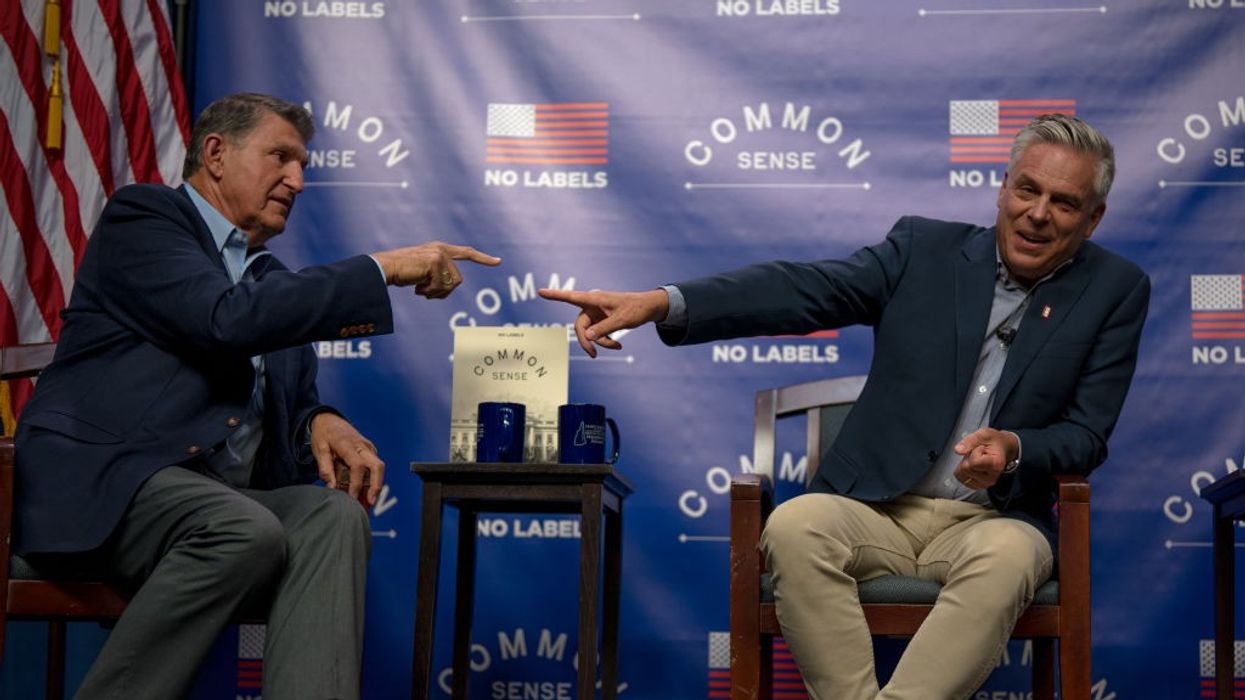
The supposed reform group won’t disclose the source of the hundreds of thousands of dollars it’s hauled in from right-wing corporate interests.
As John Mellencamp sings: “If you don’t stand for something, you’ll fall for anything.” True. And here’s an equally true twist on that aphorism: “If you stand for everything, you won’t amount to anything.”
In a remarkable achievement, a newly formed political organization calling itself “No Labels” has managed to fall into both traps, standing up for everything and nothing at all.
The fledgling entity is using every synonym in the book to assure everyone that it is a middle-of-the-road, bipartisan, centrist, both-sides party, offering hybrid liberal-conservative solutions that won’t offend anyone.
While they don’t stand for much, there is one huge, overriding issue that the No Labels hucksters strongly agree on: corporate money contaminating American politics. These “reformers” are in favor of it!
But wait—they’ve chosen a multimillionaire coal baron and multimillionaire son of a global plastics polluter to be their standard bearers. If they’re put on a presidential ticket, Democrat Joe Manchin and Republican Jon Huntsman could unite voters of both parties—against them!
While they don’t stand for much, there is one huge, overriding issue that the No Labels hucksters strongly agree on: corporate money contaminating American politics. These “reformers” are in favor of it!
Indeed, secret fat cat donations are the No Labelers’ financial lifeline, having already hauled in hundreds of thousands of dollars from right-wing corporate interests. Such as? No-no, say the founders—we can’t tell you who’s buying the “No Labels” label, for the funders don’t want the public to know their names or their special interests.
Of course, secret-funding of elections equals secret government—of, by, and for the funders. By standing against the people’s right to know, the group has put a flaming neon “fraud” label on their hokey “reform” movement. Huntsman even admits it, saying financial disclosure would be the right thing to do, but “that’s not the way you play the game.”
“The game?” Just what we need—another gang of corporate politicos who think governing America is a game to be won by hook or crook.
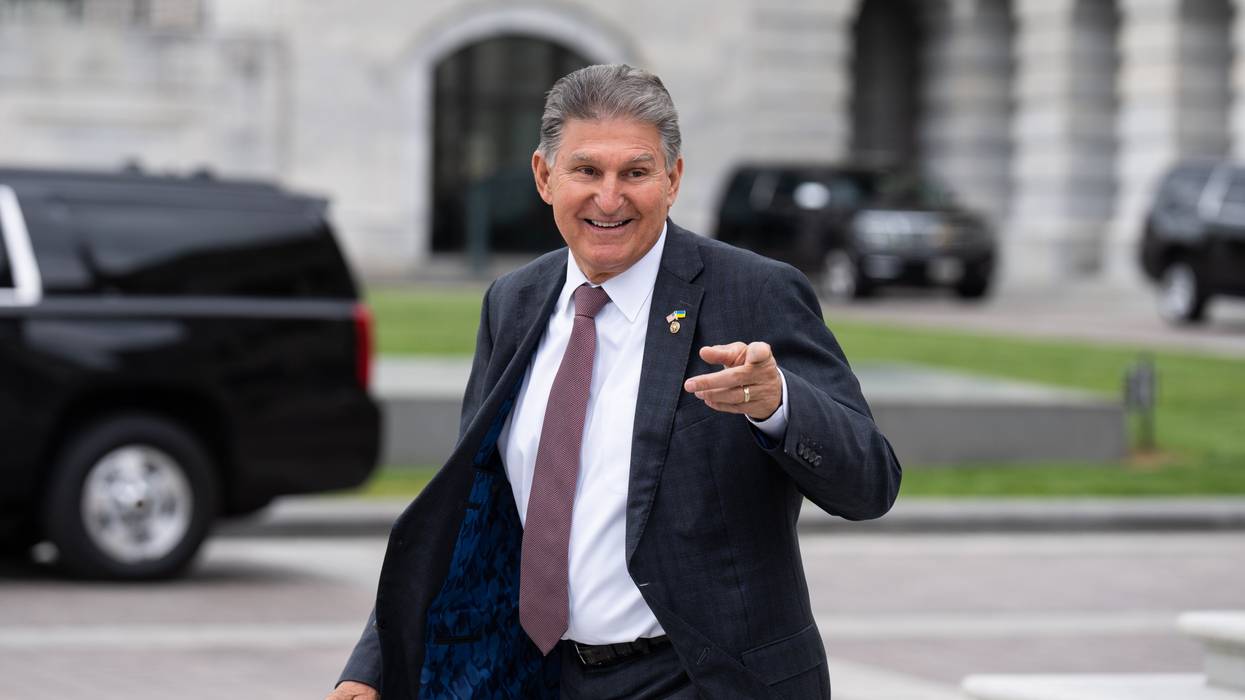
"One more time for the people in the back: No Labels, and their candidates like Joe Manchin and Kyrsten Sinema aren't 'bipartisan,'" said one progressive activist. "They are 'corporate-donor-first.'"
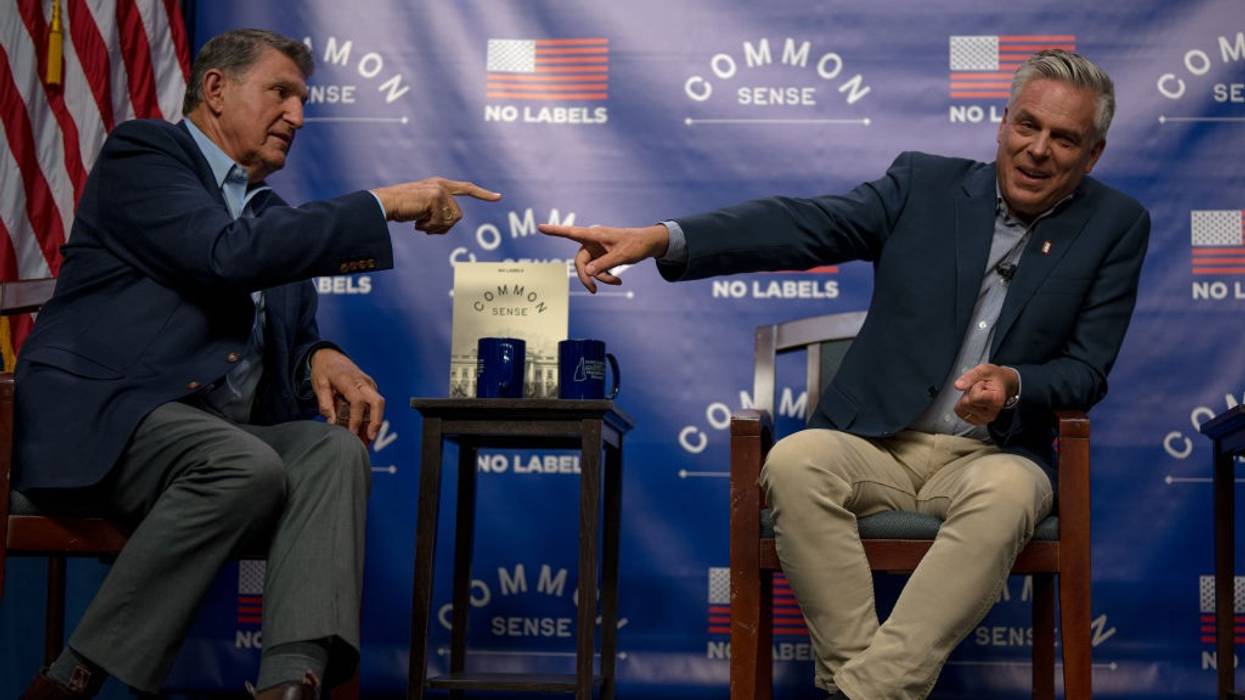
As U.S. Sen. Joe Manchin took his so-called "commonsense" message to a New Hampshire audience on Monday, critics blasted the right-wing West Virginia Democrat for promoting a political organization backed largely by Republican donors and—if he decides to run for president next year as many observers believe he might—possibly helping to return former President Donald Trump to the White House.
Speaking alongside fellow headliner and former Republican Utah Gov. Jon Huntsman at Monday's No Labels "Common Sense Town Hall" at Saint Anselm College in Manchester, New Hampshire—a key primary state—Manchin said that "I haven't made a decision" about running for president next year, when the coal baron and habitual saboteur of his own party's agenda is also up for Senate reelection.
Claiming that Republicans and Democrats have "gone too far right and too far left," Manchin said the two parties can't be moved toward moderation "unless they're threatened."
Manchin said that if voters have viable alternatives to what critics have called the two-party duopoly, Democrats and Republicans "are in trouble."
Rejecting the notion that he would act as a spoiler were he to run for president, Manchin said that "I've never been in any race I've ever spoiled, I've been in races to win. And if I get in a race, I'm gonna win."
Numerous observers derided the notion that No Labels—a billionaire-backed organization seeking to run a so-called "unity ticket" in 2024—is nonpartisan.
"No Labels is nothing more than a Republican front group," the Progressive Change Campaign Committee tweeted. "They're staffed by Republicans, bankrolled by Republicans, and their third-party gambit will only help elect MAGA Republicans like Trump. Joe Manchin just gives them the patina of bipartisanship."
In a message to Manchin, 2020 GOP presidential candidate and former Republican U.S. Congressman Joe Walsh said that "the world doesn't revolve around you."
"What your country is going through right now is bigger than you and your ambition," he added. "Don't even think about this No Labels bullshit idea of running for president. Put your country first dammit."
Journalist, political activist, and comedian Francesca Fiorentini said it is "hard to hold back the rage at the No Labels group trying to float Manchin as a third-party candidate."
"Make no mistake that billionaires would rather see Trump Part 2 than anyone taking action for working people."
"Make no mistake that billionaires would rather see Trump Part 2 than anyone taking action for working people," she added.
Melanie D'Arrigo, who leads the Campaign for New York Health—which is fighting for single-payer universal healthcare—tweeted a megaphone emoji with the message, "One more time for the people in the back: No Labels, and their candidates like Joe Manchin and Kyrsten Sinema aren't 'bipartisan.'"
Sinema, a senator from Arizona who is also up for reelection next year, switched from serving as a Democrat to an Independent in December after long facing criticism for obstructing the party's priorities.
"They are 'corporate-donor-first,'" D'Arrigo added. "They help donors who donate to both sides of the aisle and call it 'bipartisanship.'"
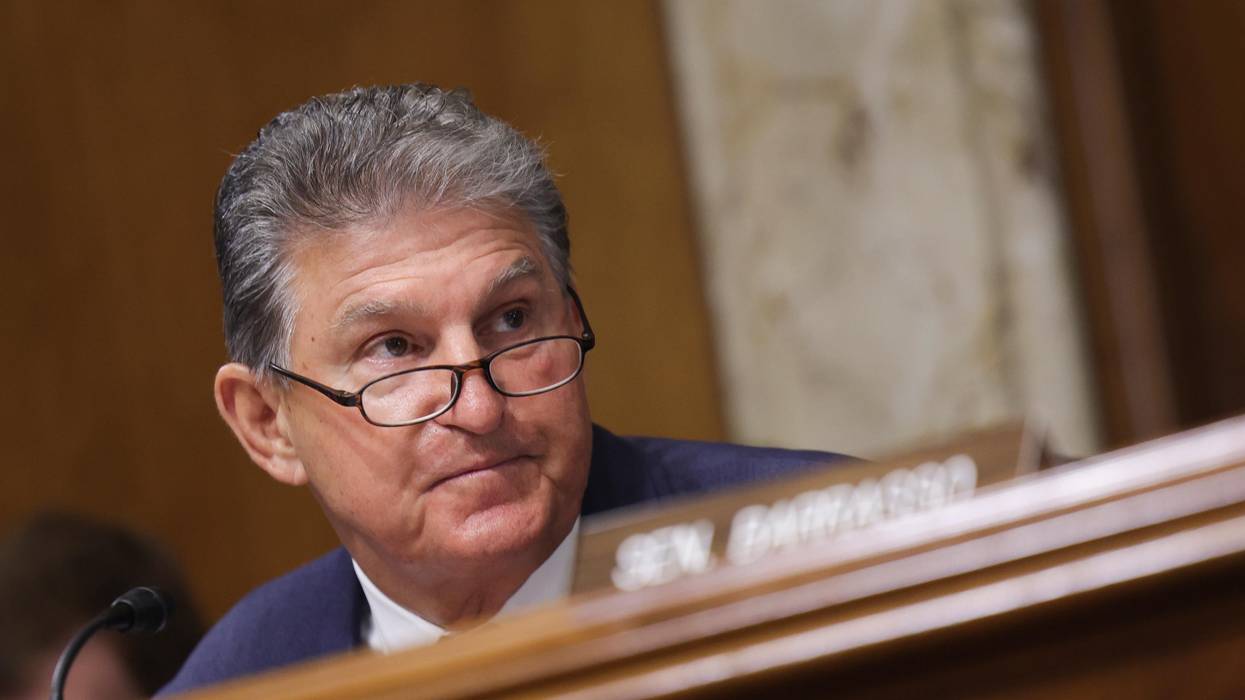
"It's difficult to imagine Manchin launching a third-party run with the knowledge that it would almost certainly result in his failure," wrote one journalist. "But anything's possible at this point."
U.S. Sen. Joe Manchin insisted Wednesday that his upcoming trip to New Hampshire to speak at an event hosted by a dark money group committed to fielding a third-party "centrist" presidential candidate has "nothing to do with" running for president 2024—although the right-wing West Virginia Democrat refused to rule it out.
No Labels—a billionaire-backed organization seeking to run a so-called "unity ticket" in 2024—announced Wednesday that Manchin and former Republican Utah Gov. Jon Huntsman Jr. are slated to deliver keynote speeches during the July 17 "Common Sense Town Hall" event at Saint Anselm College in Manchester, New Hampshire, a key primary state.
Asked by CNN Wednesday if he's got any plans to run against President Joe Biden next year, Manchin—who has often worked to stymie his own party's more progressive policies and practices—said that "this is a strictly a conference we're having for common sense."
"This is nothing about a third party, this is nothing about bringing up any office at all, it's about a dialogue for common sense, which is very hard to have here," he explained. "We're going around the country basically talking to people who want this commonality and commonsense approach to how we fix problems."
However, the senator—who is up for reelection next year—added that "I've never ruled out anything or ruled in anything."
HuffPost senior political reporter Igor Bobic wrote Wednesday that "Democrats are growing increasingly anxious about a possible 2024 election spoiler putting [former President] Donald Trump, the GOP front-runner, in the White House again."
According to Bobic:
A recent Echelon Insights poll found that Manchin would draw single digits if he decided to run for president on a third-party ticket. The June survey also found that Manchin would attract voters from both parties but pull more undecided voters in a race with Trump and Biden.
It's difficult to imagine Manchin launching a third-party run with the knowledge that it would almost certainly result in his failure. He could simply be maximizing his time in the limelight, as he often does, and positioning himself as a centrist who is unafraid of criticizing of Biden ahead of a tough Senate reelection fight. But anything's possible at this point.
It is unclear exactly how the Democratic Party would respond to a Manchin White House run, although if past challenges to what numerous critics have called the two-party monopoly on U.S. political power are any indicator, aggressive litigation could occur as Democrats try to keep a third-party candidate off state ballots or mired in exhaustive legal battles.
In 2004, for example, Democrats sued to keep Green Party presidential candidate Ralph Nader, founder of the consumer advocacy group Public Citizen, off the ballot in at least 17 states following a 2000 White House run in which he received nearly 3 million votes and was falsely blamed for handing Republican George W. Bush the presidency.
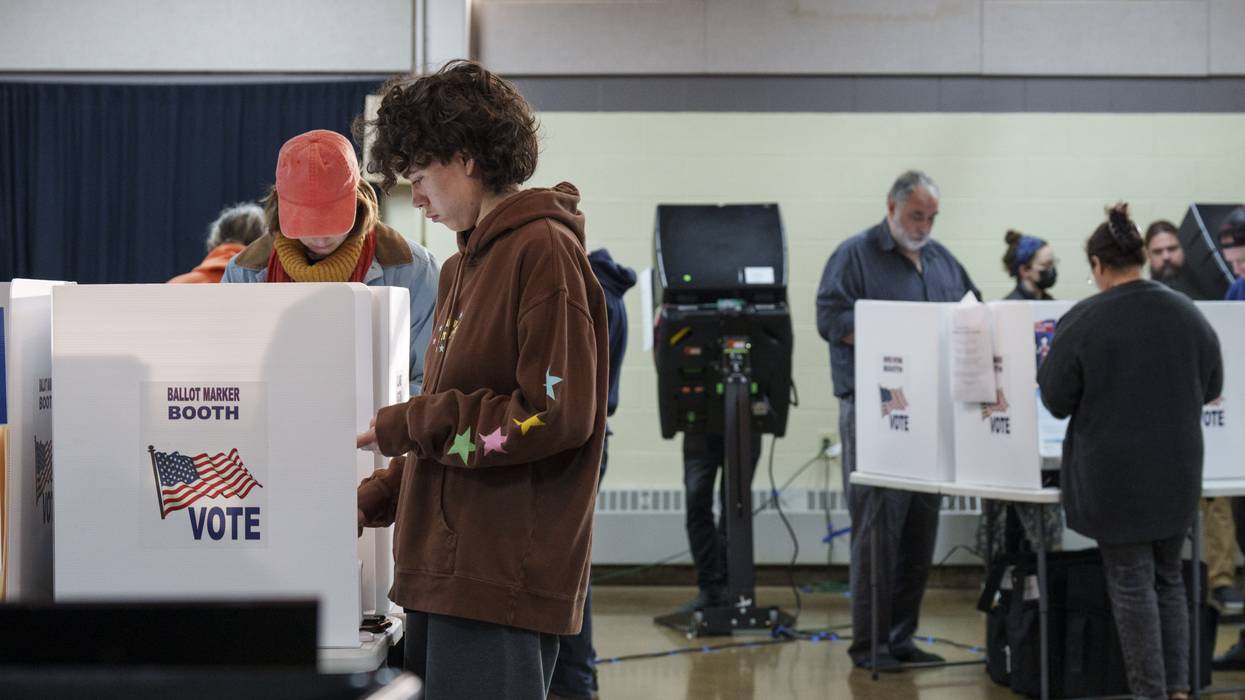
"No Labels should practice what they preach about uniting the country, stop misleading voters, and end their ill-advised and dangerous dark-money-funded third-party ticket," said MoveOn's executive director.
The grassroots progressive group MoveOn on Wednesday called on secretaries of state across the U.S. to open investigations into No Labels, the political organization that has reportedly managed to gather the support it needs to be included on 2024 election ballots in four states so far.
The group has done that, said MoveOn, by having canvassers mislead voters into signing party enrollment forms and making it look like it has more affiliated members in the states than it really does—all while disenfranchising those voters.
MoveOn Executive Director Rahna Epting wrote to secretaries of state to warn them that No Labels, which aims to run a so-called "unity ticket" in 2024 with a Democratic and a Republican candidate, is sending organizers into communities with what they claim are petitions to support the group's inclusion on ballots.
As Maine Secretary of State Shenna Bellows (D) warned residents of her state last month, the voters are actually signing an enrollment document and changing their party affiliation to No Labels.
"Voters were not informed that they were changing their political party to No Labels and, therefore, would be barred from participating in Democratic or Republican primaries, which are open only to registered members of those parties or to Independents," wrote Epting on Wednesday in a letter to Illinois Secretary of State Alexi Giannoulias (D).
In May, Bellows wrote to the director of ballot access for No Labels, Nicholas Connors, telling him that municipal clerks throughout Maine have alerted her office to dozens of voters who signed the group's "petition" and later realized they had been enrolled in the No Labels Party.
Dr. Ben Chavis, the Democratic co-chair of No Labels, told the Associated Press after Bellows wrote to the group that "suggesting that a majority of Maine voters who signed up with No Labels did not know what they were doing is not true."
According to Bellows, "these voters have further stated that No Labels organizers did not disclose—and the voters did not understand—that No Labels was asking them to change their party enrollment."
"To the extent representatives of No Labels are telling Maine voters that, by filling out voter registration cards, they are signing or supporting a 'petition,' No Labels should immediately cease and desist from doing so," she told Connors.
Epting asked secretaries of state across the country to "ensure these same practices cited in the Maine secretary of state's letter are not happening" in other states and that No Labels' operations in their jurisdictions are "legal and above board."
"Reports that No Labels is misleading voters and potentially violating election laws, are deeply concerning and call into question the group's entire operation," Epting told The Messenger on Wednesday. "We urge election officials in every state to ensure voters are protected from No Labels' deception."
No Labels has garnered criticism in recent weeks for its secrecy surrounding its donors, which a co-founder of the group admitted in a local news interview in Denver this week would "[open] people up to incredible scrutiny."
While the group has refused to publicly identify its funders, as Common Dreams reported in May, contributors in recent years have included Republican billionaire donor Louis Bacon and former President Donald Trump supporter Nelson Peltz.
A firm with ties to right-wing Florida Gov. Ron DeSantis (R) has also helped No Labels with its signature-gathering operation in Colorado, one of four states—along with Oregon, Arizona, and Alaska—where the group has managed to secure a spot on 2024 ballots.
"No Labels," Epting told The Messenger, "should practice what they preach about uniting the country, stop misleading voters, and end their ill-advised and dangerous dark-money-funded third-party ticket."